Roundup: New Easter songs, joint Easter-iftar dinner, and more

Here’s my new (nonthematic) playlist for the month of April!

But also, because Easter lasts through May 18, be sure to check out the 184 songs I handpicked for the season, which includes some new ones mixed in since the playlist’s original publication.

+++

NEW SONGS:

>> “He Lives” by Emma Nissen: Emma Nissen is a Latter-day Saint singer-songwriter from Arizona known for her gorgeous jazz vocals. Here she performs an original song about God the Father giving his Son, Jesus, to redeem the world through his life, death, and resurrection. “Let there be light, let there be love . . .”

>> “Living Among the Dead” by Caleb Stine: Alt-country singer-songwriter Caleb Stine, based in Baltimore, released this Johnny Cash–esque, resurrection-themed song just before Easter. The title and chorus come from the words the angels spoke to the women who went to Jesus’s tomb the Sunday after his death, looking for his body. “Why do you look for the living among the dead?” they asked. “He is not here but has risen. Remember how he told you, while he was still in Galilee, that the Son of Man must be handed over to the hands of sinners and be crucified and on the third day rise again” (Luke 24:5–7).

The first verse narrates that momentous visit to the tomb. The second verse fast-forwards to the present day and raises issues of poverty, mental illness, substance abuse, culture warring, and militarism, some caused and others exacerbated by the death-dealing policies or neglect of the government. Many people look to politicians for salvation, trusting in their often empty promises, embracing their divisive rhetoric, and ignoring major character flaws for the sake of power. This song cautions us not to go to a dry well for sustenance—not to quench our thirst for living water in places that cannot give it.

The third verse tells of a “thin man in a dusty hat” who regales the story of a carpenter who healed and fed people, who drove out demons from bodies and greedy opportunists from temple courtyards, who befriended those of little means and those who were ostracized. He addressed human suffering head-on with tenderness and self-sacrifice. When the chorus comes in a final time, I hear in it that this loving, serving, reconciling Christ is still living, his Spirit is still moving, and that we ought to get behind that movement, practicing resurrection where we live. “Be not of fear, be of light, lift your head.” As the body of Christ, we should follow him in doing the same deeds and proclaiming the same good news of liberation.

+++

BLOG POST: “50 Ways to Practice Resurrection during the 50 Days of Eastertide” by Tamara Hill Murphy: Spiritual director and writer Tamara Hill Murphy of Connecticut shares fifty simple ideas for celebrating the Easter season in your day-to-day, including retelling baptism stories, visiting a botanical garden, watching a movie that makes you laugh, swinging on the playground, cooking a new veggie recipe, building a new piece of furniture, or washing your car by hand. “I find a lot of joy . . . in seeing these ordinary choices during my day as ways to practice a life that trumps death, a resurrection kind of life,” Murphy writes.

+++

PODCAST EPISODE: “The Beauty—the Poetry—of Christian Experience” with Benjamin Myers, Faith & Imagination: I listen to at least a dozen podcast episodes a week, and this one has been one of my favorites of the past few months. Dr. Benjamin Myers is a literature professor at Oklahoma Baptist University and a former poet laureate of Oklahoma. Here, host Matthew Wickman interviews Myers about two of his six books: A Poetics of Orthodoxy: Christian Truth as Aesthetic Foundation (2020) and the poetry collection The Family Book of Martyrs (2022). They talk about the incarnation and its implications on art; the disclosure of the extraordinary in the ordinary; the inherently unsecular nature of all good poetry; how beauty mirrors grace; the importance of the humanities in Christian education (how it “thickens up” the soul); the obligation of Christian art to capture both the “something good” and the “something missing” of our lives; and how love calls us to the things of this world.

A few additional highlights for me:

  • Myers came to faith after attending a Lessons & Carols service, compelled by the beauty and truthfulness of the story it told.
  • “Beauty is not just in the eye of the beholder but also in the being of God.”
  • At 37:24, Myers reads a poem he wrote for his youngest daughter: “Elizabeth Discovers Rock and Roll.”

+++

INSTAGRAM VIDEO: from AJ+: On March 31 in the Borgerhout district of Antwerp, a mile-plus-long table set up along the Turnhoutsebaan brought together city residents for a joint Easter-iftar dinner. Easter is the most sacred feast of the Christian year, celebrating the resurrection of Jesus; on Easter Sunday, Christians break the forty-day fast they’ve held for the duration of Lent. Lent almost always overlaps in part with Ramadan, a Muslim holy month of fasting that commemorates the prophet Muhammad’s first revelation. On each day of Ramadan after sunset, the fast is broken with an evening meal called an iftar.
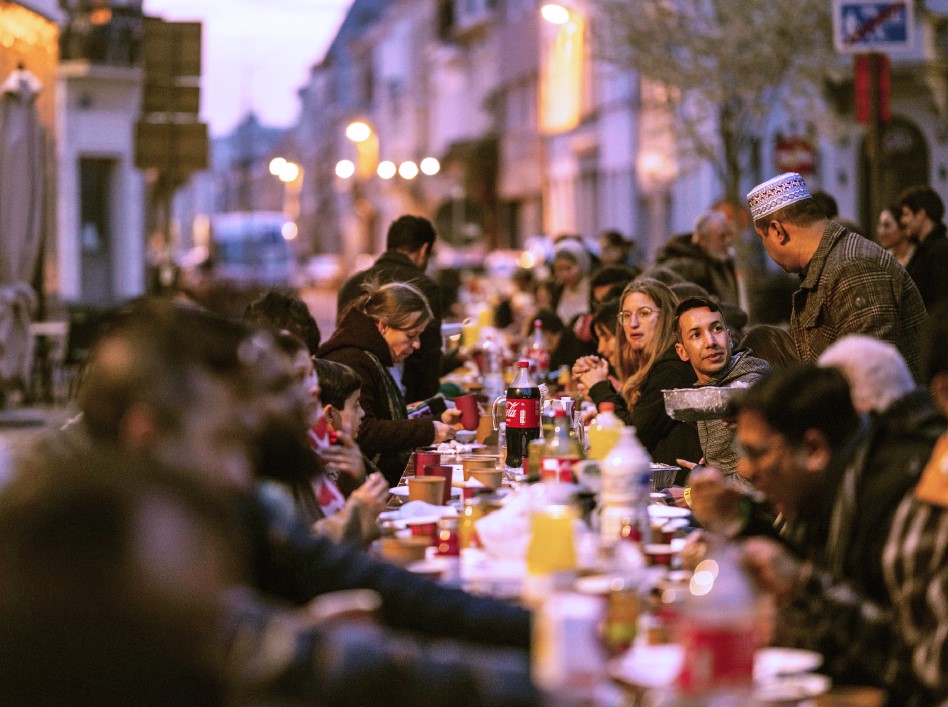
Easter-iftar dinner
Christians and Muslims in Antwerp broke their fasts together at an outdoor Easter-iftar dinner on March 31. Photo: Sanad Latifa.

Borgerhout carried out this interfaith initiative in collaboration with the FMV cultural association and other partners in the hopes of promoting dialogue, social cohesion, and connection. I love this idea of gathering folks together across lines of religious difference to enjoy community, good food, and spiritual celebration! For more information, see https://www.2kmsamenaantafel.be/.

+++

NEW ALBUM: Three Gifts by Liturgical Folk and Jon Guerra: Ryan Flanigan of Liturgical Folk and Jon Guerra have teamed up to release an EP of three songs, one for each of the three theological virtues: faith, hope, and love (1 Cor. 13:13). Here’s “the greatest of these”:

Advent, Day 12: Come, My Way

LOOK: Colored light in a Missouri chapel

Marianist Retreat Center Chapel
Arcade, Main Chapel, Marianist Retreat and Conference Center, Eureka, Missouri. The chapel was designed by Br. Mel Meyer, SM. Photo: Kelly Kruse.

Behold the natural light filtered through the stained glass windows of this Marianist chapel in Eureka, Missouri, bathing the walls and flat arches in color.

LISTEN: “Come, My Way” | Words by George Herbert, 1633 | Music by Ralph Vaughan Williams, 1911; arr. Edward A. David, 2013 | Performed by Fr. Austin Dominic Litke, OP; Fr. Bob Koopman, OSB; and Leah Sedlacek of Blackfriar Music, 2013

Come, my Way, my Truth, my Life:
such a way as gives us breath,
such a truth as ends all strife,
such a life as killeth death.

Come, my Light, my Feast, my Strength:
such a light as shows a feast,
such a feast as mends in length,
such a strength as makes his guest.

Come, my Joy, my Love, my Heart:
such a joy as none can move,
such a love as none can part,
such a heart as joys in love.

This phenomenal poem, “The Call,” is from The Temple by George Herbert (1633), a posthumously published collection of all his English-language poems. The famous British composer Ralph Vaughan Williams (1872–1958) set it to music in 1911, along with three of Herbert’s other religious poems (“Easter,” split into two parts, “Love [III],” and “Antiphon [I]”) for his composition Five Mystical Songs. Williams’s setting can be found in dozens of hymnals, usually under the title “Come, My Way, My Truth, My Life.”

In 2013, the media division of the Dominican Province of St. Joseph—one of four Dominican provinces in the United States, extending from New England to Virginia to Ohio—produced a music video featuring a new arrangement of the hymn by Edward A. David, who has a bachelor of music degree in classical piano performance from New York University. (He later went on to earn a master’s and doctorate in theology at Oxford and is now an ethicist.)

The project was inspired by Pope Francis’s call during the World Youth Day festivities in Rio de Janeiro in July 2013 to “take to the streets” in sharing the gospel. Scenes were filmed throughout New York City: at Brooklyn Bridge, Our Lady of Good Counsel Roman Catholic Church, Grand Central Station, Columbus Circle, and on the Staten Island ferry.

The filmmakers are graduates of NYU’s film school: A. Joshua Vargas, John S. Fisher, and Michael Crommett.

The singer in the video is Father Austin Litke, who at the time served as chaplain of NYU’s Catholic Center. He is currently an adjunct instructor at The Saint Paul Seminary and a visiting professor of Catholic studies at the University of St. Thomas.

For an acoustic performance by Ryan Flanigan, an Anglican church music director and the founder of Liturgical Folk, see here:


This post is part of a daily Advent series from December 2 to 24, 2023 (with Christmas to follow through January 6, 2024). View all the posts here, and the accompanying Spotify playlist here. Blackfriar Music’s and Ryan Flanigan’s recordings of “Come, My Way” are not on Spotify.

Roundup: Online convos with artists Marc Padeu (from Cameroon) and Emmanuel Garibay (from the Philippines), and more

NEW PLAYLIST: October 2021 (Art & Theology): This month’s playlist includes a benediction from the book of Jude; a percussion-driven setting of Francis of Assisi’s “Canticle of the Sun” by the Camaldolese monk Cyprian Consiglio; an Exodus-inspired song in Yorta Yorta, an indigenous Australian language, from the feature film The Sapphires; “Prodigal Son,” a little-known hymn by John Newton, from The Sacred Harp; a sixties gospel song by Shirley Ann Lee (famously covered by Liz Vice on her debut album); and closing out, in anticipation of All Saints’ Day on November 1, the jazz standard “When the Saints Go Marching In.” To save the playlist to your Spotify account, click the ellipsis and select “Add to Your Library.”

+++

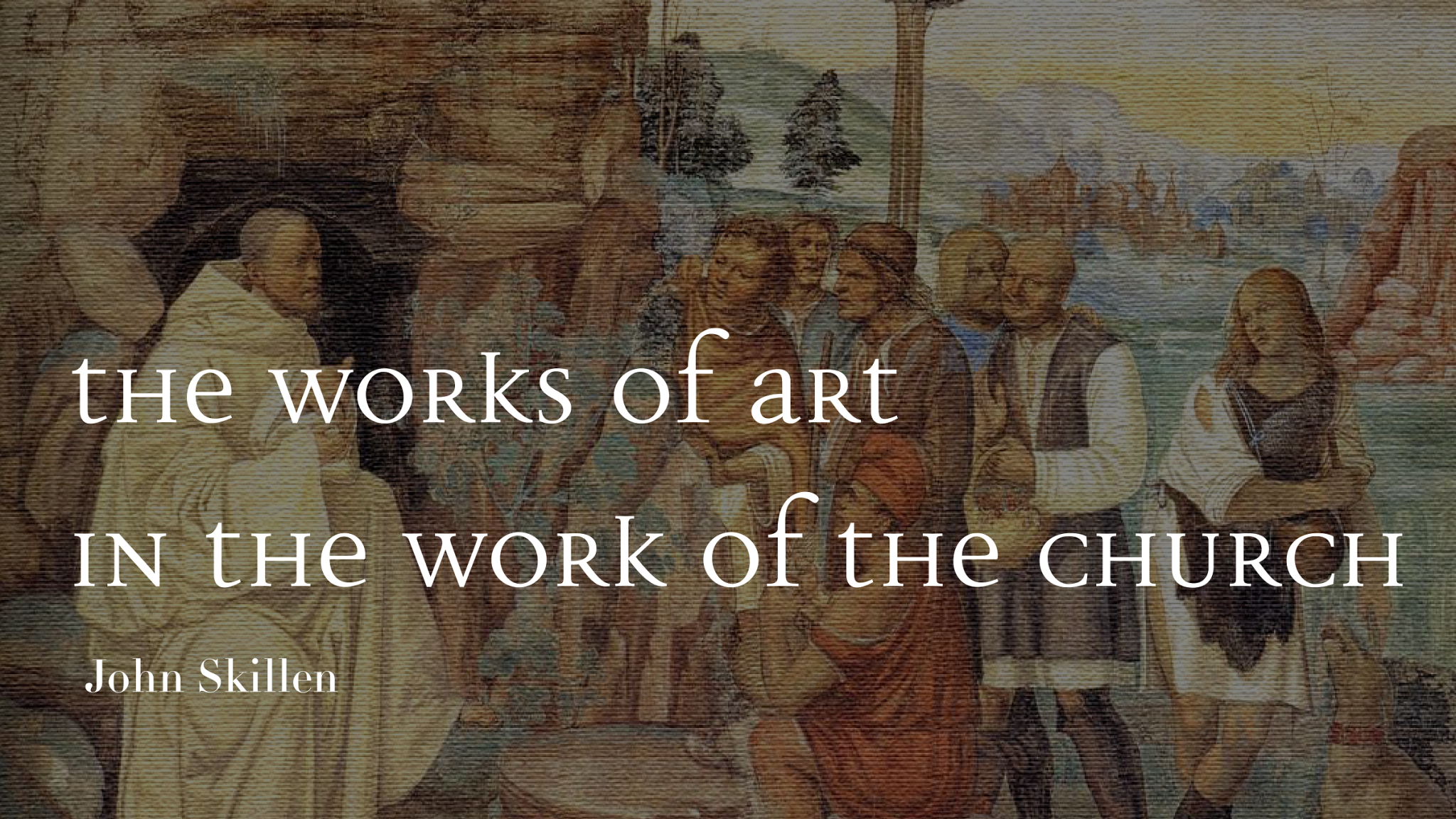
IN-PERSON LECTURE: “The Works of Art in the Work of the Church” by John Skillen, October 16, 2021, Crownsville, MD: The Eliot Society, an organization I work for, is hosting our first event in over a year and a half! It’s an art talk by Dr. John Skillen [previously], director of the Studio for Art, Faith & History in Orvieto, Italy. It will be at the home of two of our board members, so if you’re in the Washington–Baltimore metropolitan area two weekends from now, consider coming by! The event starts with hors d’oeuvres at 6:30 p.m., and an RSVP is requested.

The Works of Art in the Work of the Church

In recent decades, a growing number of Christians—even those from church traditions formerly suspicious of the arts—are warming up to the idea that artworks can serve in the various practices of the life of faith, and not only in iconographic form as images of Jesus in worship. Scripturally sound and aesthetically sophisticated works of art can guide our prayer, help catechize our children, and shape the environments of our missional work. Many of us will welcome some pointers for putting art back in its place in the settings where we live and work.

To help us imagine possibilities, John Skillen will offer examples from a long period of Christian history when the arts were put to work in the collective life of the church in more places and in more ways than most of us nowadays can imagine. Not only churches but also hospitals, orphanages, the meeting rooms of parachurch organizations, baptisteries and bell towers, dining halls and cloisters in monasteries, town halls and civic fountains and public squares—all were places of serious decoration and design expected to be compatible with Christian faith.

No sphere of religious and civic life was off-limits for imagery able to instruct, to prompt memory, and to inspire emotion and action—the three functions of art most commonly cited during the Middle Ages to defend its value.

+++

UPCOMING ONLINE CONVERSATIONS:

Padeu, Marc_Le souper a Penja
Marc Padeu (Cameroonian, 1990–), Le souper a Penja, 2019. Acrylic on canvas, 82 7/10 × 106 3/10 in. (210 × 270 cm).

>> “Caravaggio in Cameroon: Marc Padeu and Jennifer Sliwka in Conversation,” October 14, 2021, 11 a.m. EST (4 p.m. BST): I spoke about Padeu’s Le souper a Penja at a recent seminar on “Picturing Jesus,” so I’m looking forward to hearing the artist himself discuss it along with the larger body of work it’s a part of. Hosted by the National Gallery in London.

Artist Marc Padeu lives and works in Cameroon. Intriguingly, his monumental paintings – exploring tender and complex relationships between family, friends, lovers and working communities – often draw on Italian Baroque compositions and especially those of Caravaggio.

Marc Padeu joins Dr Jennifer Sliwka, specialist in Italian Renaissance and Baroque art. Her research explores how 17th-century painters developed innovative approaches to religious painting, imbuing their works with an immediacy, power, and dynamism.

Together, the speakers will take Padeu’s Le Souper a Penja and its relationship to Caravaggio’s Supper at Emmaus as a jumping-off point for conversation, exploring Padeu’s wider interest and understanding of historical works, his adoption and adaptation of the visual language of the Baroque and how these inform his evocations of contemporary life in Cameroon.

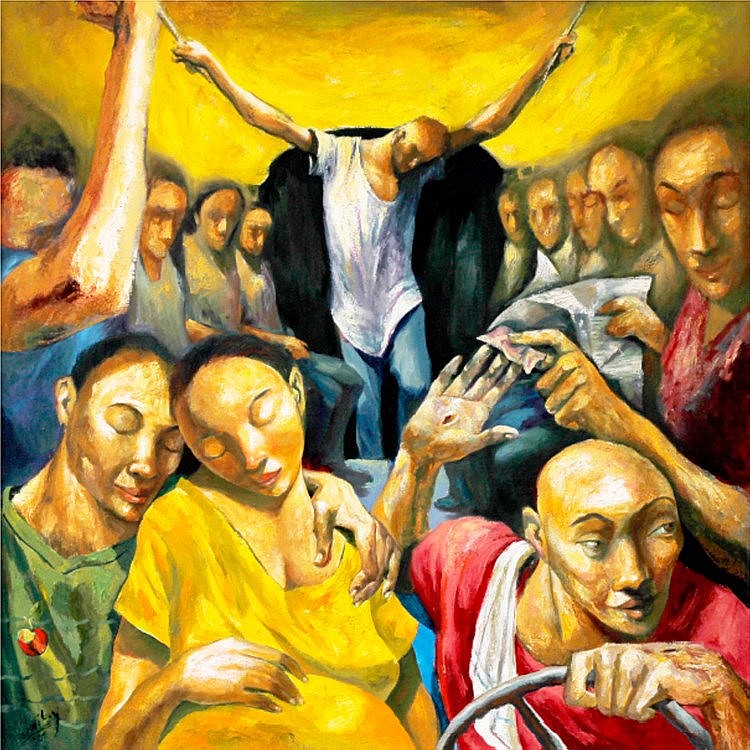
>> “In the Studio with Emmanuel Garibay,” November 11, 2021, 8:30 a.m. EST: The Overseas Ministries Study Center at Princeton Theological Seminary is hosting a conversation with Filipino artist Emmanuel “Manny” Garibay, a social realist painter who served as the 2010–2011 OMSC artist in residence. “It is the richness of the poor that I am drawn to and which I am a part of, that I want to impart,” he says. His paintings often portray Jesus among the marginalized and dispossessed and critique the church’s “compliance with greed, corruption, and social inequality.” Garibay’s children Alee, Nina, and Bam, who are also accomplished artists, will be present for the conversation as well. For more on Garibay, see this Q&A from the OMSC and the Image journal essay “Recognizing the Stranger: The Art of Emmanuel Garibay” by Rod Pattenden.

Garibay, Emmanuel_Kaganapan
Emmanuel Garibay (Filipino, 1962–), Kaganapan, 2006. Oil on canvas, 48 × 48 in. (122 × 122 cm).

+++

NEW SONGS:

>> “Keep Watch (Noelle’s Lullaby)” by Liturgical Folk, a setting of a Compline prayer from the Book of Common Prayer, on the new family album Matins & Vespers:

>> “Psalm 91” by Poor Bishop Hooper, released as part of the EveryPsalm project, through which the duo offers original weekly Psalm-based songs for free download:

New Easter Music

As the church continues in this fifty-day season of Eastertide to celebrate the resurrection of Christ, here are some songs I’ve come across for the occasion and really enjoyed. A few are brand-new, while others are new performances.

Good Shepherd New York, a church in Manhattan, has a phenomenal team of in-house musicians and collaborators from coast to coast. They provide music for weekly digital worship services as well as release recordings under the name Good Shepherd Collective. Check out their Easter service from April 4! The songs are listed below.

  • MEDLEY: “Christ the Lord Is Risen Today” by Charles Wesley / “Celebrate Jesus” by Gary Oliver (1:35)
  • “Here Comes the Sun” by the Beatles (3:50)
  • “Morning Has Broken” by Eleanor Farjeon (6:59)
  • “Easter Dawn” by David Gungor (11:31)
  • “Because He Lives” by Bill Gaither (15:27)
  • “Waymaker” by Donald Vails (20:45)

The GSC has posted “Here Comes the Sun” as a standalone video on Instagram. It features Brennan Smiley on lead vocals and acoustic guitar; Liz Vice on harmonizing vocals; Charles Jones on Hammond organ; John Arndt on piano; Jesse Chandler on flute, clarinet, and saxophone; Joseph M on electric guitar; Tyler Chester on bass guitar; and McKenzie Smith on drums. The art and stop-motion animation are by Boston-based artist Soyoung L Kim.

+++

“Hallelujah” (Chorus) from the Messiah by George Frideric Handel, 1742 | Performed by the Orquesta Barroca Catalana (Catalan Baroque Orchestra), the Barcelona Ars Nova choir, and 352 other singers, 2020 [HT: Global Christian Worship]

Last year the Fundación la Caixa in Barcelona launched project #YoCanto Aleluya, soliciting professional and amateur singers alike throughout Spain and Portugal to be part of a “virtual choir,” a phenomenon that has exploded since the pandemic has made live musical concerts a health risk. Participants were asked to submit a video of themselves singing Handel’s famous “Hallelujah” chorus. Igor Cortadellas of Igor Studio then developed a concept for digitally merging all 352 submissions by projecting them on the interior architecture of Barcelona’s Basilica of Santa Maria del Mar (or overlaying them in postproduction?), and he directed a small team to execute this vision. What a feat! The final video was released a few months ago at Christmastime.

“Hallelujah” concludes part 2 of 3 of the oratorio, which covers Christ’s passion and death, resurrection, ascension, and the first spreading of the gospel. The words of the chorus are taken from Revelation 19:6, 11:15, and 19:16. For another blog post featuring an excerpt from Handel’s Messiah, see the Artful Devotion “Worthy Is the Lamb.”

+++

“Easter Dawn” | Words by Malcolm Guite, 2012 | Music by Zebulon M. Highben, 2021: A conductor, composer, and scholar of sacred music, Dr. Zebulon M. Highben serves as director of chapel music at Duke University. This year he wrote a choral setting of Malcolm Guite’s sonnet “Easter Dawn,” about Mary Magdalene’s encountering the risen Christ on Easter morning. Sung by the Duke Chapel Choir, it premiered last Sunday as part of the chapel’s Easter service and will be part of the online spring concert “Faith & Hope & Love Abide: Meditations on Resurrection,” which goes live tomorrow (April 11) at 4 p.m. EDT (view the program).

+++

“Keep the Feast (Pascha Nostrum)” by Ryan Flanigan: For this new song, Ryan Flanigan of Liturgical Folk adapted the words of the Pascha Nostrum (“Our Passover”), a traditional Christian hymn for Eastertide that, after the Reformation, was preserved in English in the Book of Common Prayer. It is based on 1 Corinthians 5:7–8, Romans 6:9–11, and 1 Corinthians 15:20–22. Flanigan wrote a fun new melody for it, which he demos here.

+++

“Zinda Yeshua (Jesus Is Alive)” by Blesson Varghese and James Bovas: This Hindi-language Easter song is from Grace Ahmedabad, an Assemblies of God church in the Indian state of Gujarat. James Bovas sings lead, with Priscilla Mozhumannil on supporting vocals. See the YouTube description for a full list of credits. [HT: Global Christian Worship]

+++

“Judah’s Lion” | Words by Fulbert of Chartres, ca. 975–1028, and Rick Barnes, 2016 | Music by Rick Barnes, 2016 | Performed by Covenant Presbyterian Virtual Choir and Orchestra, Birmingham, Alabama, 2021

Roundup: Norman Rockwell updated; snow-crystal photography; Good Samaritan icon; and more

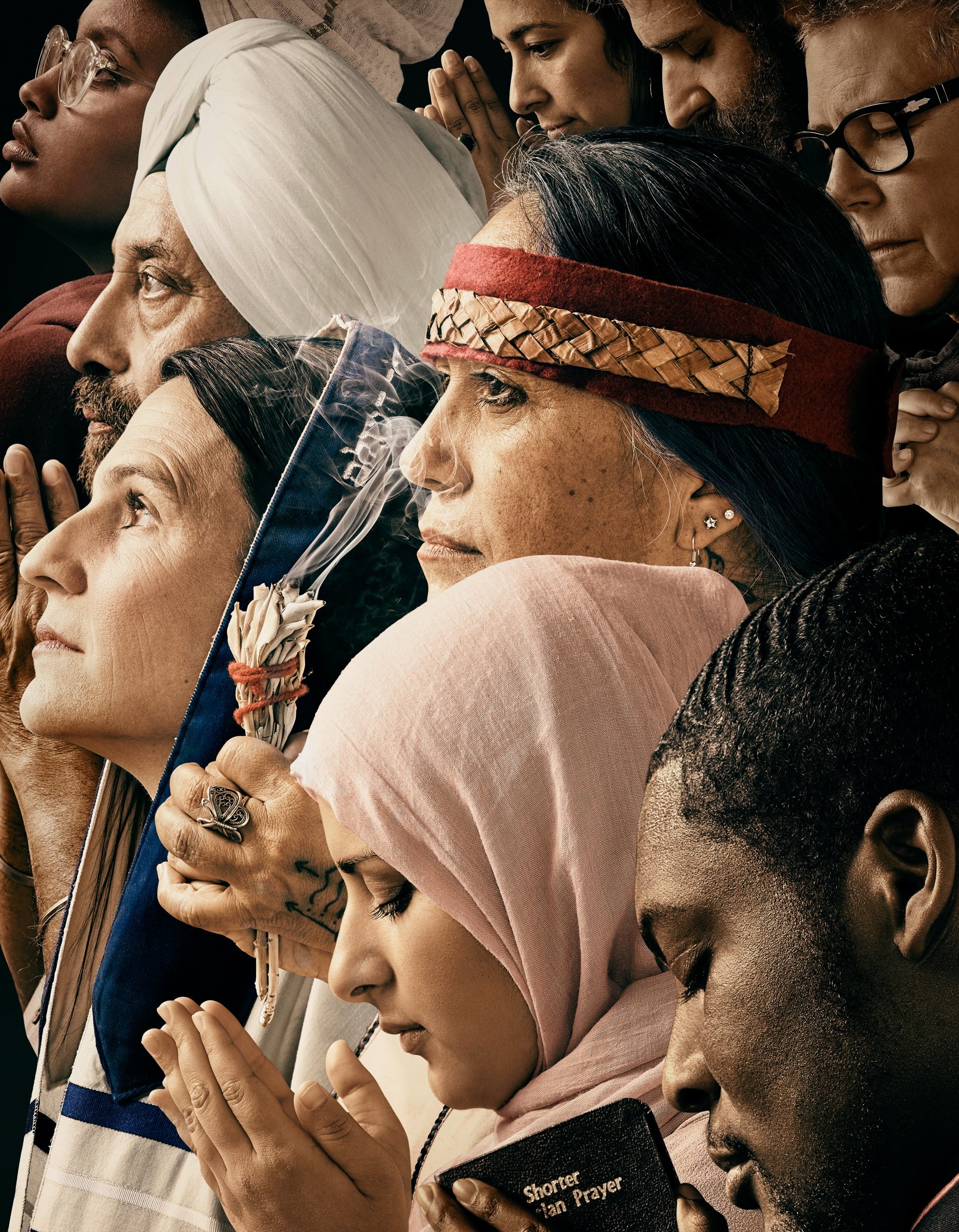
Freedom of Worship by Hank Willis Thomas and Emily Shur
Hank Willis Thomas (American, 1976–) and Emily Shur (American), Freedom of Worship, 2018. While Norman Rockwell’s illustration of the same name contains specific representations of Protestantism, Catholicism, and Judaism, this reinterpretation goes even further to include Islam, Native American spirituality, and Sikhism.

NEW PHOTOGRAPH SERIES: “The Four Freedoms” by Hank Willis Thomas and Emily Shur: In his 1941 State of the Union address, President Franklin D. Roosevelt insisted that people in all nations share Americans’ entitlement to four basic freedoms: freedom of speech, freedom of worship, freedom from want, and freedom from fear. This famous speech became the basis for Norman Rockwell’s set of four illustrations, originally published in the Saturday Evening Post in 1943, that have become some of history’s most iconic representations of the American idea.

Artist Hank Willis Thomas and photographer Emily Shur decided to reimagine these scenes with a cast that’s more representative of American diversity. One of the eighty-two final images they created is published on the cover of the current issue of Time magazine. It and others will form the backbone of a national billboard campaign by the nonpartisan organization For Freedoms to encourage civic engagement. “We believe that if artists’ voices replace advertising across the country, public discourse will become more nuanced,” their website says.

+++

IN CONCERT: Eric and I went to see brother-sister folk duo The Oh Hellos (Tyler Heath and Maggie Heath Chance) in Baltimore earlier this month and had a great time. My favorite song from their set list was “Soldier, Poet, King,” which describes Jesus’s coming in all three roles—perfectly appropriate for the upcoming Advent season! Jesus, the Word of God, comes to tear down Satan’s kingdom and establish his just rule in our lives and world (1 John 3:8bRev. 19:11–16). The final verse affirms Jesus’s status as Messiah, the waited-for “Anointed One,” and celebrates his power marked by humility, even unto death. The blood he wears into battle is his own.

There will come a soldier
Who carries a mighty sword
He will tear your city down
O lei o lai o lord

There will come a poet
Whose weapon is his word
He will slay you with his tongue
O lei o lai o lord

There will come a ruler
Whose brow is laid in thorn
Smeared with oil like David’s boy
O lei o lai o lord

The Oh Hellos’ nationwide tour continues through the end of the year, so visit their website to see if they’ll be stopping near you.

+++

NEW ALBUM: Crumbs by Liturgical Folk: Liturgical Folk (previously here and here) released its third album this month, which “build[s] on the themes of eucharist and the mission of the church to bring peace and reconciliation to the world.” The title comes from the track “Prayer of Humble Access,” a verbatim setting from the “Holy Eucharist Rite I” in the Book of Common Prayer that alludes to the story of the Syrophoenician woman.


Most of the song texts on the album come from that traditional Anglican prayer-book and were set to music by Ryan Flanigan, though a few texts are contemporary. “Lord, Lord, Lord,” for example, was written in the wake of the August 9, 2014, shooting of Michael Brown in Ferguson, Missouri, and amid the subsequent escalation of racial tensions in the country. “As a privileged, white, middle class, American man,” Flanigan wrote,

I felt for the first time in my life the systemic injustice against black males in our country. What I found most troubling, besides death itself, was the response of some white, privileged people to the shooting, particularly the response of some Christians on social media and the News. When we should have been mourning with those who mourn, confessing our fears and sins, and seeking reconciliation, many of us turned a blind eye or, worse, assumed a posture of defensiveness and denial. I wrote this song as a corporate confession of sin to God and our fellow men, a plea for God to forgive us and restore our broken trust with him and with those we’ve failed to love.

+++

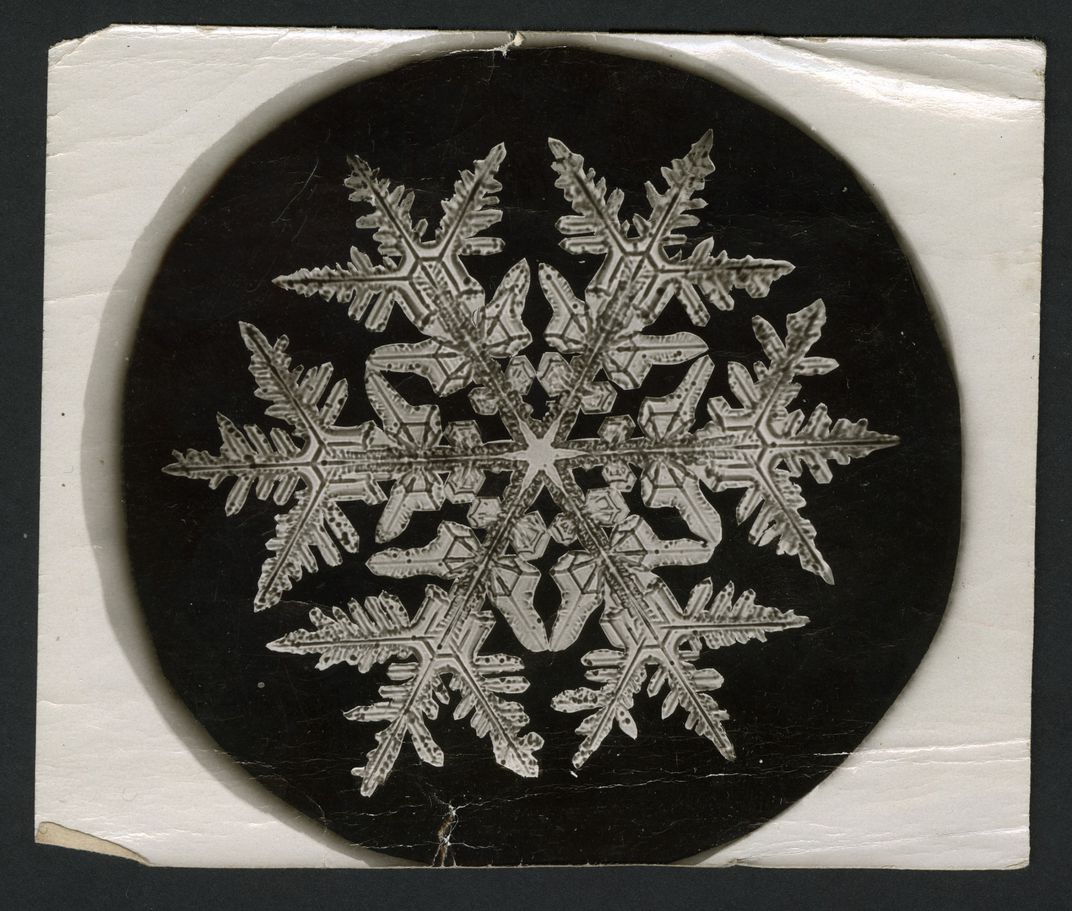
WORLD’S FIRST SNOWFLAKE PHOTOS: “The Man Who Revealed the Hidden Structure of Falling Snowflakes”: Maryland saw its first snow of the season this week, as did most of the East Coast, which means Twitter saw a flurry of snowflake images! The Smithsonian posted about Wilson “Snowflake” Bentley (1865–1931), whose perfection of innovative photomicrographic equipment and techniques (which included chilled velvet and a turkey feather) enabled him to photograph thousands of individual snowflakes without their melting, providing valuable scientific records of snow crystals and their many types.

The first person to photograph a single snowflake, . . . Wilson A. Bentley used a microscope with his bellows camera—plus years of trial and error—to get a photo of one flake in 1885. But he didn’t stop there. Bentley went on to take thousands more, . . . which helped support the belief that no two snowflakes are alike. In 1903, he sent 500 prints of his snowflakes to the Smithsonian, hoping they might be of interest to our Secretary. The images are now part of the Smithsonian Archives.

Snowflake photo by Wilson Bentley

Snowflake photo by Wilson Bentley

+++

BALKAN ICON: “Transforming a Parable: The Good Samaritan”: Run by David Coomler, a museum researcher, Icons and Their Interpretations discusses aspects of traditional Russian, Greek, and Balkan iconography, inviting people to submit photos of icons for identification of subject or meaning, and translation of inscriptions. Recently he wrote about a fourteenth-century Serbian Orthodox fresco that, like many of the church fathers, promotes an allegorical reading of the parable of the good Samaritan. In this interpretation, the man en route to Jerusalem is Adam, or Everyman, who is beaten by demons; the priest and the Levite represent the law of Moses and the priesthood of Aaron, which cannot help the wounded man. But the “good Samaritan,” Jesus, stoops down to save, carrying the man not on a beast of burden but on his own back, to an “inn,” the church. He hands two “coins,” the Bible and tradition, to the innkeeper, and promises to return. See further image details and commentary at the web link above.

Good Samaritan fresco (Balkans)
Parable of the Good Samaritan (see bottom register), 14th century. Fresco in the narthex of the Patriarchal of Pech, a Serbian Orthodox monastery in Kosovo.

Good Samaritan fresco (Balkans) (detail)

+++

OBITUARY: Christian composer Kurt Kaiser dies at 83: On November 12, Kaiser passed away at his home in Waco, Texas, after a six-decade-long career in composing, playing, arranging, and producing Christian music. A Gospel Music Hall of Famer and a progenitor of CCM, he’s best known for his song “Pass It On,” but I know him for “Oh How He Loves You and Me,” two renditions of which are posted below; the first is a solo performance by Vanessa Williams with gospel piano accompaniment by Richard Smallwood, and the second is performed a capella in four-part harmony by Kaoma Chende with the use of overdubbing.