
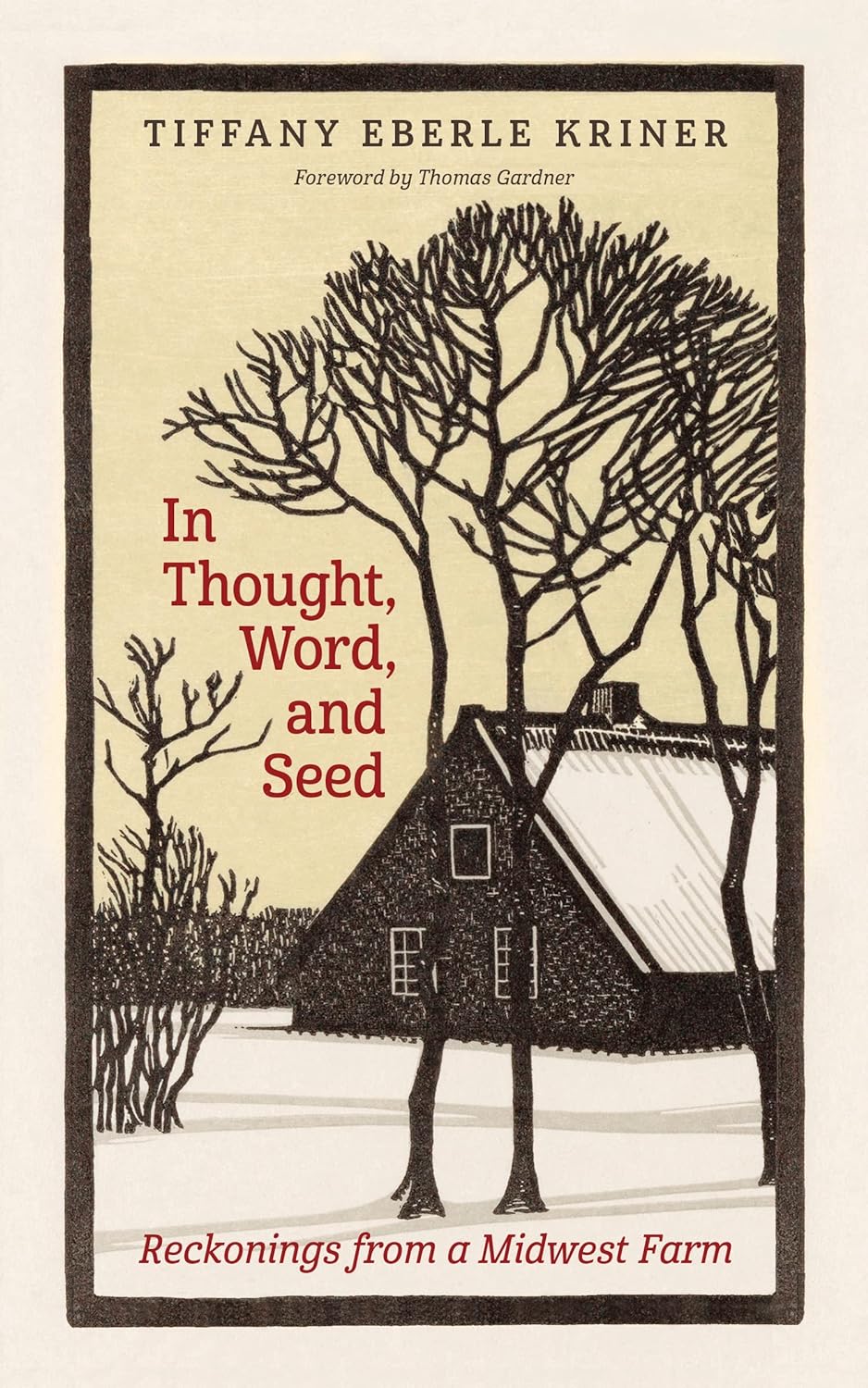
NEW BOOK: In Thought, Word, and Seed: Reckonings from a Midwest Farm by Tiffany Eberle Kriner: As a freelance copyeditor, I’ve worked on many projects for Eerdmans, and this has been one of my favorites: an essay collection by Tiffany Kriner, a Wheaton English professor and farmer from Illinois. It’s a unique blend of literary criticism, nature writing, and memoir. Virgil, George Eliot, James Baldwin, and Walt Whitman are among the authors she engages, respectfully weaving their stories into and around her own experiences of cultivating sixty acres of land and raising livestock with her husband, Josh. Today is the book’s official release date, and I can’t recommend it enough!
+++
(FIVE-WEEK) ONLINE COURSE: “Notes of Rest: Receiving Rest from Scripture and Black Music in Our Restless World,” taught by Julian Davis Reid: On Monday evenings from October 9 to November 6, pianist, speaker, and writer Julian Davis Reid, MDiv, of Chicago will be leading five, seventy-five-minute virtual discussions and meditations on the theme of rest, explored through the lenses of scripture and Black music. “Salvation,” “Sabbath,” “Sleep,” “Stillness,” and “Sanctuary” are the organizing principles. “The purpose of the class is to help the Body of Christ hear God’s invitation to rest,” Reid told me. “The means of getting there is through a mixture of artistic reflection and practical theology grounded in biblical analysis, reflection questions, and musical performance.” No prior musical knowledge is required.
The spiritual “Give Me Jesus” is an example of one of the songs Reid will be playing and guiding participants through (this recording is from his 2021 album Rest Assured, with album art by Shin Maeng):
This course is presented by the Candler Foundry, an initiative of Emory University’s Candler School of Theology that aims to make theological education accessible to everyone. It’s only $29! Reid has been leading Notes of Rest sessions since 2021, and he is currently accepting bookings from churches, universities, and parachurch ministries; you can contact him through his website.
+++
SONGS:
>> “Garden Will Bloom” by the Good Shepherd Collective, feat. Diana Gameros: Released this July as a single, “Garden Will Bloom” was written by Diana Gameros, Jon Guerra, and Kate Gungor at Laity Lodge, an ecumenical retreat center in Texas, and produced by David Gungor. It’s a song that speaks hope to one’s own soul, encouraging persistence through seasons of no yield. The music video was filmed and directed by Jeremy Stanley.
>> “Sing, Sing, Sing (Psalm 96)” by Wendell Kimbrough: This is my favorite track from Wendell Kimbrough’s latest album, You Belong.
+++
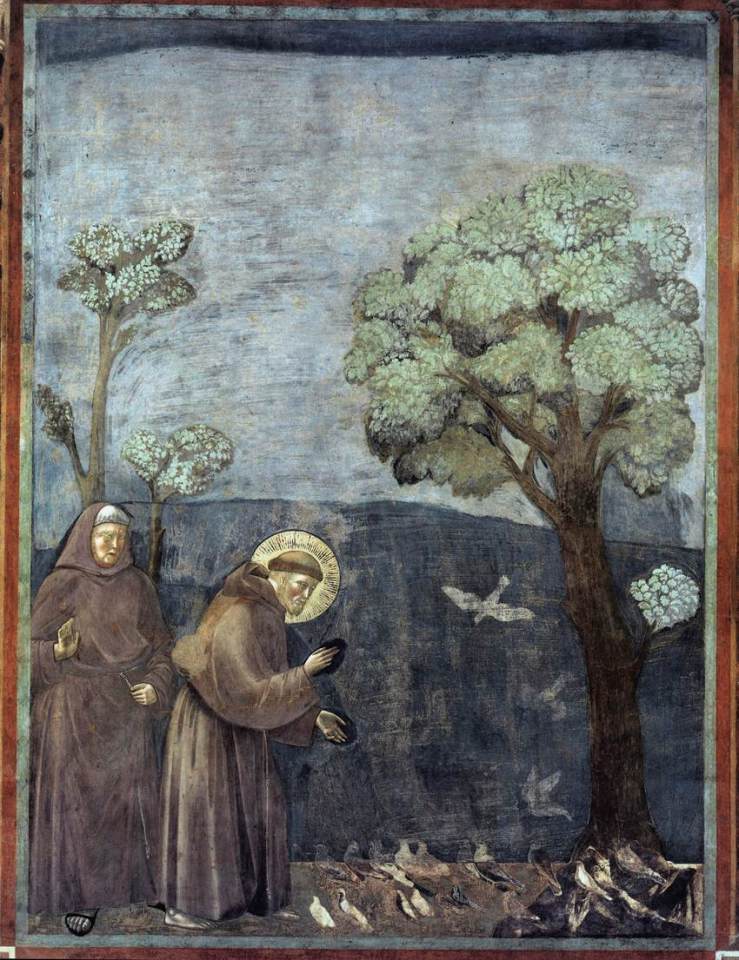
POEM: “Saint Francis and the Birds” by Seamus Heaney: Giovanni di Pietro di Bernardone (ca. 1181–1226), better known as Francis of Assisi, was an Italian mystic and friar who founded the religious order named after him, the Franciscans. Because of his love for all God’s creatures, he is considered the patron saint of animals, and his feast day is October 4. One story about him says he preached to the birds, as he believed the gospel is for them too, and that they, too, have a duty to praise God. This poem by the Nobel Prize–winning Seamus Heaney evokes Saint Francis’s sermon to his feathered friends.
From the blog archives: For another poem about this legend, see “Saint Francis Endeth His Sermon” by Louise Imogen Guiney. For a brilliant literary essay by Kimberly Johnson on Francis’s “Canticle of the Creatures” (which evolved into the hymn “All Creatures of Our God and King”), see here.
+++
INTERVIEW: “The Artist’s Gift of Reckless Courage” with Betty Spackman: Comfort, confront, teach, heal—those are just a few of the actions the arts can perform, says Canadian installation artist Betty Spackman in this insightful interview for Radix Magazine (available in audio format wherever you get your podcasts, and in print). Spackman discusses misconceptions about artists and the arts, the expansive definition of “creativity,” the gifts artists offer the church, and the charge of elitism. She also gives advice to pastors and to artists.
Here are just two snippets:
- “The artist can reveal the heart of God in unique ways, and that gives us a responsibility. We can be vessels of wonder and light, through sound and image and movement and story. . . . By their very nature, [artists] are more open to thinking outside the box, to going past the status quo, to dreaming and to imagining. . . . Scripture tells us a child will lead us and it is childlike faith that will lead us forward. Perhaps what we can learn from artists is to be more childlike.”
- “When someone paints their pain, or sings it, or dances it, our response should not be to ignore or condemn it because it’s not pretty or is outside of our worldview. We should find out what it is, and then respond in a meaningful way to the person who made it. The arts are really a place of opportunity to both express and to listen to the grief of the world, and Christians need to be there to do both.”
 Art & Theology