Roundup: Yom Kippur tune, DITA concert, Lilias Trotter, and more

SPOTIFY PLAYLIST: September 2023 (Art & Theology): Another monthly gathering of good, true, and beautiful music of a spiritual bent from a variety of sources, ranging from a Victorian lullaby to a hymn revamp by Ike and Tina Turner to a traditional Yom Kippur melodic motif reimagined to a bluesy saxophone prayer to an old-time song about Noah from the southern US to a Christian praise song sung by a Miskito church community in their native tongue. Two selections from the playlist are below.

>> “Abodah” by Ernest Bloch, performed by Sheku Kanneh-Mason: Ernest Bloch was a Swiss-born American composer who drew heavily on his Jewish heritage in his work. Abodah (עֲבוֹדָה) (more commonly transliterated avodah) is Hebrew for “service,” “work,” or “worship,” a word often used in relation to the ritual service that used to be performed by the Jewish high priest in Jerusalem each year on Yom Kippur (the Day of Atonement), before the temple was destroyed; described in Leviticus 16, it involved confession of sin and animal sacrifices.

“May the offering of our lips be accepted as a replacement for the sacrifice of bulls,” the rabbis now say—and thus present-day Yom Kippur liturgies feature poetic recitations from Leviticus 16 and related Mishnah texts, “an expression of the Jewish people’s yearning both for spiritual liberation and redemption,” writes Neil W. Levin. More conservative congregations will vocalize prayers for a rebuilding of the temple and the restoration of sacrificial worship. But for an example of a seder avodah from the Reform tradition, see here. Yom Kippur is celebrated on September 24–25 this year.

Bloch’s Abodah composition is based on a tune, part of a canon of tunes known as the missinai (lit. “from Sinai”), that originated in the Ashkenazi communities of medieval Germany and that is still used today in Ashkenazi synagogues on Yom Kippur. Bloch composed the piece for piano and violin, but it’s arranged here for solo cello and performed by the internationally acclaimed Sheku Kanneh-Mason [previously].

For Christians, the atonement rituals from Leviticus find their fulfillment in the once-for-all self-sacrifice of Jesus, and though this solemn tune has its roots in the Jewish faith tradition, its meditation on human sin and divine forgiveness can cross religious boundaries.  

>> “I’ll Fly Away” (Yo volaré) from We the Animals: This spare, a cappella performance of a 1929 southern gospel song by Albert E. Brumley plays during the opening credits of the film We the Animals (2018), sung by Josiah Gabriel, one of the three main child actors. I’m interested in how and why religious songs are employed in nonreligious films, and this one was really effective in establishing not only the tone of the movie but also its theme of freedom.

Based on a semiautobiographical novel of the same name by Justin Torres, We the Animals follows three Puerto Rican brothers ages seven and up navigating a volatile family life in rural upstate New York. There’s violence and tenderness, depression and joy, and I appreciate its exploration of complicated masculinity, and how nuanced the character of the father is. (Torres has said that the process of writing the book was partly about finding empathy for his father who was abusive, and that the story is really about love and grace in a family.) In the film, flying is used as a visual metaphor for the youngest son’s, the narrator’s, rising above captivity (mainly psychological) and coming to a place of existential flourishing. The film is excellent, as is the book, though beware the R rating. Streaming on Netflix and Hulu.

+++

UPCOMING CONCERT: “Beyond Measure: An Evening of Music in Celebration of Abundantly More,” dir. Jeremy Begbie, September 8, 2023, Duke Divinity School, Durham, NC: To celebrate the release of Dr. Jeremy Begbie’s book Abundantly More: The Theological Promise of the Arts in a Reductionist World, Duke Initiatives in Theology and the Arts is presenting a special concert with the New Caritas Orchestra, conducted by Begbie. It will take place next Friday at 7:30 p.m. at Goodson Chapel on the campus of Duke Divinity School, and no tickets or registration are required. The program will explore the power of music—along with words and images—to expand our theological imagination, and it will be followed by a reception and book signing.

I suspect it will be similar in format to Begbie’s “Home, Away, and Home Again: The Rhythm of the Gospel in Music” event, which I attended in 2017 and was wonderful. (View the video recording below.) In his lecture-concerts, Begbie interweaves composer biography, musical analysis, theological commentary, storytelling, and performance to help audiences truly hear and appreciate the music. In “Home, Away, and Home Again,” he discusses the technical term “tonic” (the note upon which all other notes of a piece of music are hierarchically referenced, the one that gives the piece its sense of stability), demonstrating with various examples how 90 percent of Western music starts at home, goes places, then arrives back home but changed. Along the way he discusses themes of war, despotism, (up)rootedness, loss, hope, the resurrection, and new creation. Featured composers include Béla Bartók, Antonín Dvořák, Aaron Copland, Ennio Morricone, Leonard Cohen, and Benny Goodman.

+++

UPCOMING CONFERENCE: “Poets of Presence: Faith, Form, and Forging Community,” October 27–28, 2023, Loyola University, Chicago: Sponsored by Presence: A Journal of Catholic Poetry and The Francis and Ann Curran Center for American Catholic Studies at Fordham University, this poetry conference will feature the keynotes “The Art of Faith and the Faith of Art” by Christian Wiman and “The Forge and the Fire: God in the Blacksmith Shop” by Angela Alaimo O’Donnell. There will be workshops on writing formal poetry, translating poetry, and an editor’s secrets for successful submissions, among others, and poetry readings. I was excited to see Paul J. Pastor [previously] on the list of presenters! Cost: $60.

+++

DOCUMENTARY: Many Beautiful Things: The Life and Vision of Lilias Trotter, dir. Laura Waters Hinson (2015): Available for free on YouTube, this seventy-minute documentary shines a light on Lilias Trotter (1853–1928), an English painter and protégé of the leading Victorian tastemaker John Ruskin who, instead of pursuing an art career as Ruskin had urged her to do, became a Christian missionary in Algiers for forty years—as a single woman, self-funded (all the missions agencies rejected her because she had a heart condition that made her physically vulnerable). Her ministry centered on the women in the kasbah—teaching them to read, helping them attain economic independence. She also befriended a Sufi brotherhood whose members were eager to hear her talk about God. In Many Beautiful Things, Michelle Dockery of Downton Abbey voices words from Trotter’s books, journals, and correspondence, and art director Austin Daniel Blasingame has deliciously animated her art! (See behind the scenes of that process.) Sleeping at Last supplied the original soundtrack.

While in North Africa, Trotter continued making sketches and watercolors, documenting the everyday life that surrounded her—people, bees, flowers, sunsets. These are minor works/studies, not intended for the art market, but they were for Trotter a major way of delighting in God’s creation. I don’t like how the marketing of the film leans heavily into the narrative of “Oh, look at Lilias, so selfless and heroic, sacrificing artistic fame for service, she really could have been tops if she hadn’t given it up,” as it wrongly suggests that evangelistic or nonprofit work is more God-honoring than art making, or that recognition in one’s field is not something a Christian should desire. The film itself mostly avoids that way of looking at it, focusing instead on Trotter’s faithfulness in responding to a call that was particular to her and then finding ways to integrate art, as an avocation, into her new life in Algiers. “Her art . . . wasn’t lost in Algeria. If anything, it was fed,” says biographer Miriam Rockness. As viewers, we’re asked to reexamine our conception of success.
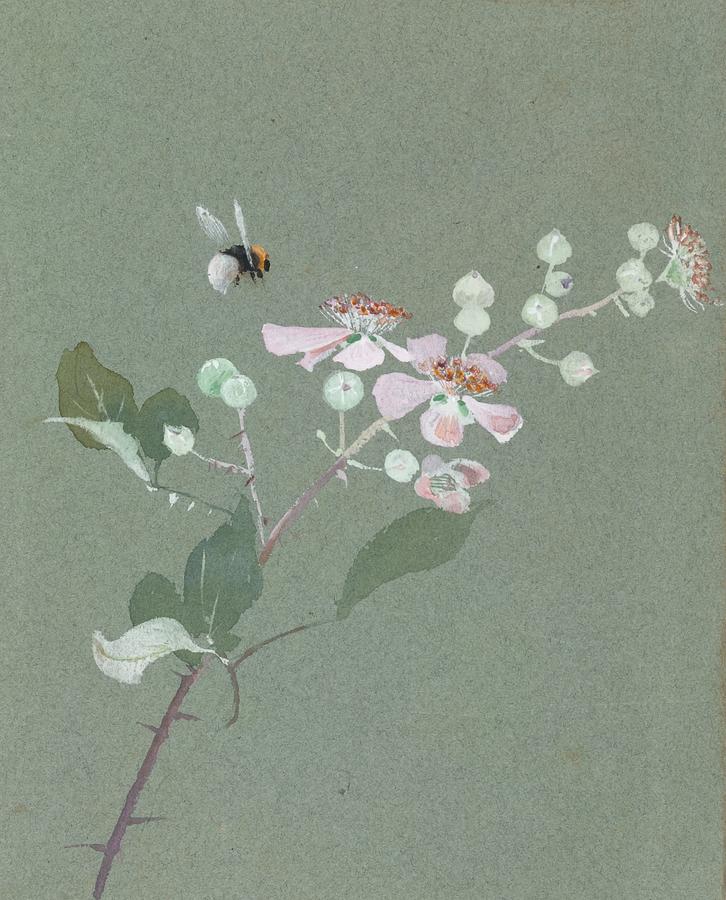
Trotter, Lilias_Desultory bee
Watercolor by Lilias Trotter, July 9, 1907

I had never heard of Lilias Trotter before watching this documentary (thanks for the recommendation, Sarah!), but now I’m glad to know about her. Learn more at https://liliastrotter.com/, and follow the Lilias Trotter Legacy on Instagram, Facebook, and/or Twitter. Also, the current issue of Christian History magazine (no. 148) is devoted entirely to Trotter; you can download a free copy (or purchase a physical one) here.
Teach Us to Number Our Days (Artful Devotion)

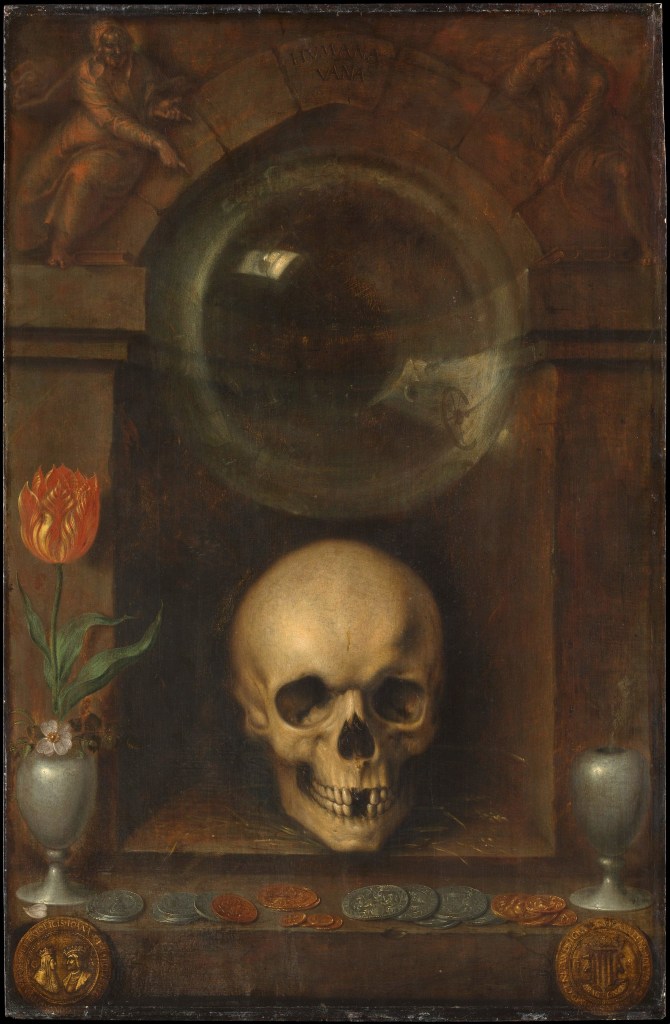
Jacques de Gheyn II (Netherlandish, 1565–1629), Vanitas Still Life, 1603. Oil on wood, 32 1/2 × 21 1/4 in. (82.6 × 54 cm). Metropolitan Museum of Art, New York.

Lord, you have been our dwelling place
in all generations.
Before the mountains were brought forth,
or ever you had formed the earth and the world,
from everlasting to everlasting you are God.

You return man to dust
and say, “Return, O children of man!”
For a thousand years in your sight
are but as yesterday when it is past,
or as a watch in the night.

You sweep them away as with a flood; they are like a dream,
like grass that is renewed in the morning:
in the morning it flourishes and is renewed;
in the evening it fades and withers.

. . .

The years of our life are seventy,
or even by reason of strength eighty;
yet their span is but toil and trouble;
they are soon gone, and we fly away.

. . .

So teach us to number our days
that we may get a heart of wisdom.

—Psalm 90:1–6, 10, 12

+++

MUSIC: Élégie in E-flat Minor, op. 3, no. 1, by Sergei Rachmaninoff, 1892 | Performed by Sheku Kanneh-Mason, with Isata Kanneh-Mason, 2017

I’ve mentioned these stellar sibling musicians on the blog before, when I shared Sheku’s arrangement of “In the Bleak Midwinter.” In fact, all seven Kanneh-Mason siblings, ranging in age from eleven to twenty-four, are musical—and of an exceptionally high standard! Their debut album as a family, Carnival, dropped November 6; it is a collaboration with Oscar-winning actor Olivia Colman and children’s author Michael Morpurgo.

Sheku Kanneh-Mason released Rachmaninoff’s Élégie, from Morceaux de fantaisie, as a single in 2017. He has two solo records: Elgar (2020) and Inspiration (2018).

Isata Kanneh-Mason has also recorded as a solo artist: see Romance: The Piano Music of Clara Schumann (2019).

+++

Vanitas (from the Latin vanus, “empty”) is a subgenre of still life painting, especially common in the Low Countries in the seventeenth century, that shows, through symbolism, the brevity of life and the transience of earthly pleasures.

Art historian Ingvar Bergström discusses Vanitas Still Life by Jacques de Gheyn II (Jacob de Gheyn) at length in the 1970 journal article “De Gheyn as a ‘Vanitas’ Painter.” The commentary that follows is derived from that.

In de Gheyn’s painting, a skull sits inside a stone niche on a bed of dry grass, a reminder that “all flesh is grass, and all the goodliness thereof is as the flower of the field: the grass withereth, the flower fadeth . . .” (Isaiah 40:6–7; cf. 1 Peter 1:24). Sitting on the left side of the ledge, the tulip and the wild rose with the fallen petal symbolize how man “cometh forth like a flower, and is cut down” (Job 14:2). The smoking urn on the other side references Psalm 102:3: “my days are consumed like smoke.” Between these two are a spill of Spanish coins and a Dutch military medal, and propped up against the ledge on each side is a gold ten-ducat coin showing, on the obverse, Joanna and Charles as sovereigns of Aragon. The message is that beauty, riches, and worldly power and honors all come to an end.

Lest this message somehow be missed, HUMANA VANA (“human vanity”) is carved into the top of the arch. The inscription is flanked by fictive sculptures of Heraclitus and Democritus, the weeping and laughing philosophers of Greek antiquity. Both figures point to a soap bubble (“Man is but a bubble” is a classical aphorism), which, if read in light of the traditional iconography of the two philosophers, doubles as a globe.

de Gheyn II, Jacques_Vanitas Still Life (bubble detail)

The bubble mirrors a number of disparate objects, which are difficult to make out. Bergström identifies a trophy group along the middle axis of the bubble: a crown in the center with various weapons converging upon it. At the top is an upturned moneybag with coins streaming out. Most discernible is the wheel of torture at the bottom right, and above that is a leper’s rattle, which lepers in some areas were required to shake to alert others to their proximity; these are symbols of human frailty. Also reflected “are a caduceus (probably signifying commerce) and a pair of bellows (signifying luxury?). Playing cards, backgammon with dice, and drinking vessels allude to vain pleasures and pastimes. The highlight of the sphere mirrors a burning heart, pierced by an arrow—an image of earthly love, of luxury” (153).

Though the painting doesn’t explicitly reference our lectionary reading from Psalm 90, it does complement the psalmist’s reflection on how short and precarious life is—it’s like a wilting flower, a burning candle, a fragile bubble. Here today, gone tomorrow. Which is why it’s so important to live wisely while we still can.

+++

To access another Artful Devotion for AProp28, on 1 Thessalonians 5:1–11, click here.


This post belongs to the weekly series Artful Devotion. If you can’t view the music player in your email or RSS reader, try opening the post in your browser.

To view all the Revised Common Lectionary scripture readings for Proper 28, cycle A, click here.

Roundup: Sheku Kanneh-Mason, Hanukkah lamps, building walls, and more

NEW MUSICAL ARRANGEMENTS FOR ADVENT/CHRISTMAS

For cello and piano: “In the Bleak Midwinter,” arr. Sheku Kanneh-Mason: Sheku Kanneh-Mason is a multi-award-winning cellist from England who, since being named 2016 BBC Young Musician of the Year, has gone on to release, this January with Decca, his first full-length album (a chart topper), to perform as a soloist at the marriage ceremony of Prince Harry and Meghan Markle, and to serve, for the 2018–19 season, as a Young Artist in Residence at the Royal Liverpool Philharmonic. Time magazine recently listed him as one of 25 Most Influential Teens of 2018. He’s nineteen years old.

Stream on Spotify | Purchase on iTunes

In a recent recording session at Abbey Road Studios, Sheku performed one of his own arrangements with his sister Isata Kanneh-Mason, a pianist who, like him, is on scholarship at the Royal Academy of Music. Sheku is the third of seven siblings, and all of them are musical. They competed together in 2015 on Britain’s Got Talent and regularly perform together. See the CBS Sunday Morning featurette “The family that plays together.”

This piece is, in the truest sense of the word, awesome. Gustav Holst’s melody, which the duo plays straightforwardly for the first verse, is already beautiful; Sheku’s creative coloring of each subsequent verse, utilizing different playing techniques, elevates the song’s beauty even more. I could listen to this on repeat all day long. Oh wait. I have.

For jazz trio and voice: “Love Came Down” and “Comfort Ye,” arr. Deanna Witkowski: This fall, jazz pianist and composer Deanna Witkowski released recordings of two of her arrangements of Advent/Christmas classics: Christina Rosetti’s “Love Came Down at Christmas” and, just last month, “Comfort Ye,” whose seventeenth-century text (based on Isaiah 40:1–8) is by Johann Olearius, with a later English translation by Catherine Winkworth. Witkowski is on piano, Daniel Foose is on bass, and Scott Latzky is on drums, making up the Deanna Witkowski Trio. Sarah Kervin is the vocalist.

“Love Came Down” (gospel/funk) – Purchase track on Bandcamp | Purchase piano/vocal score

“Comfort Ye” (gospel/R&B) – Purchase track on Bandcamp | Purchase choral (SAT) / piano score

+++

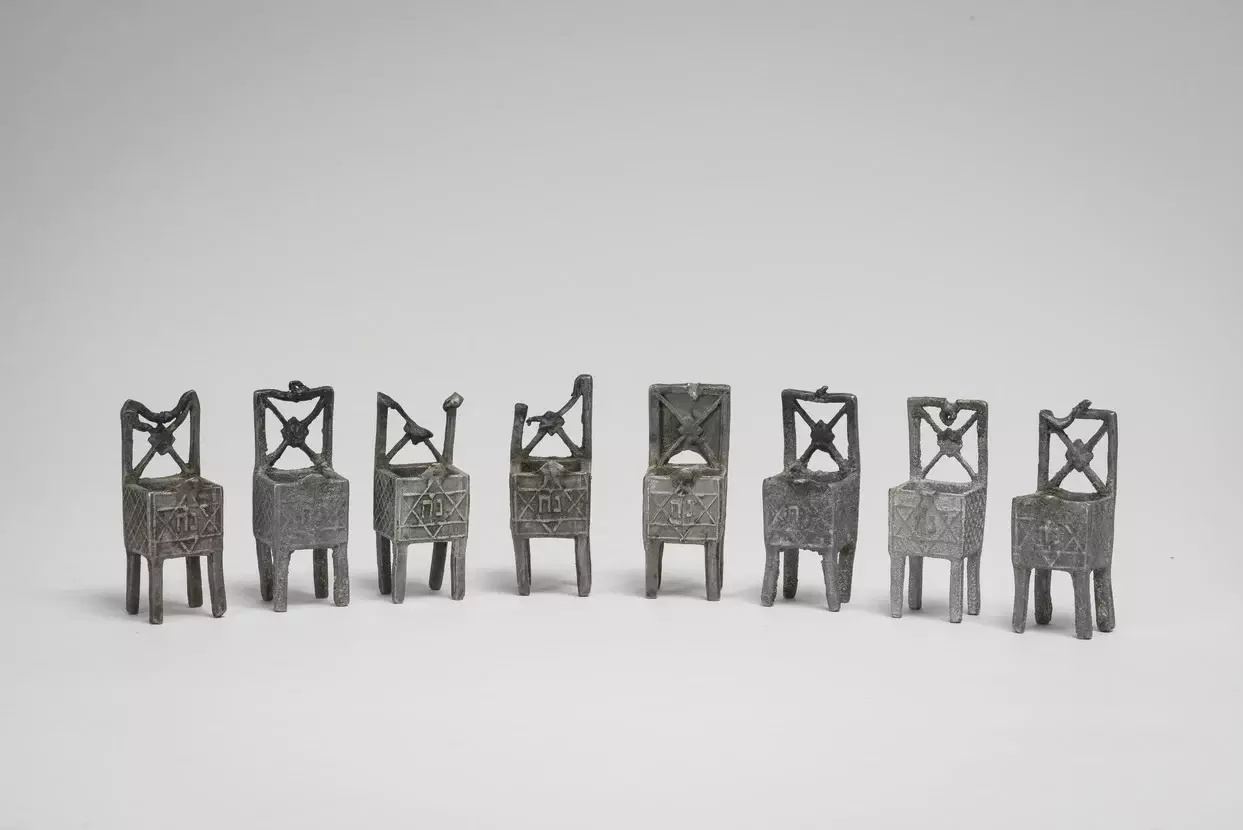
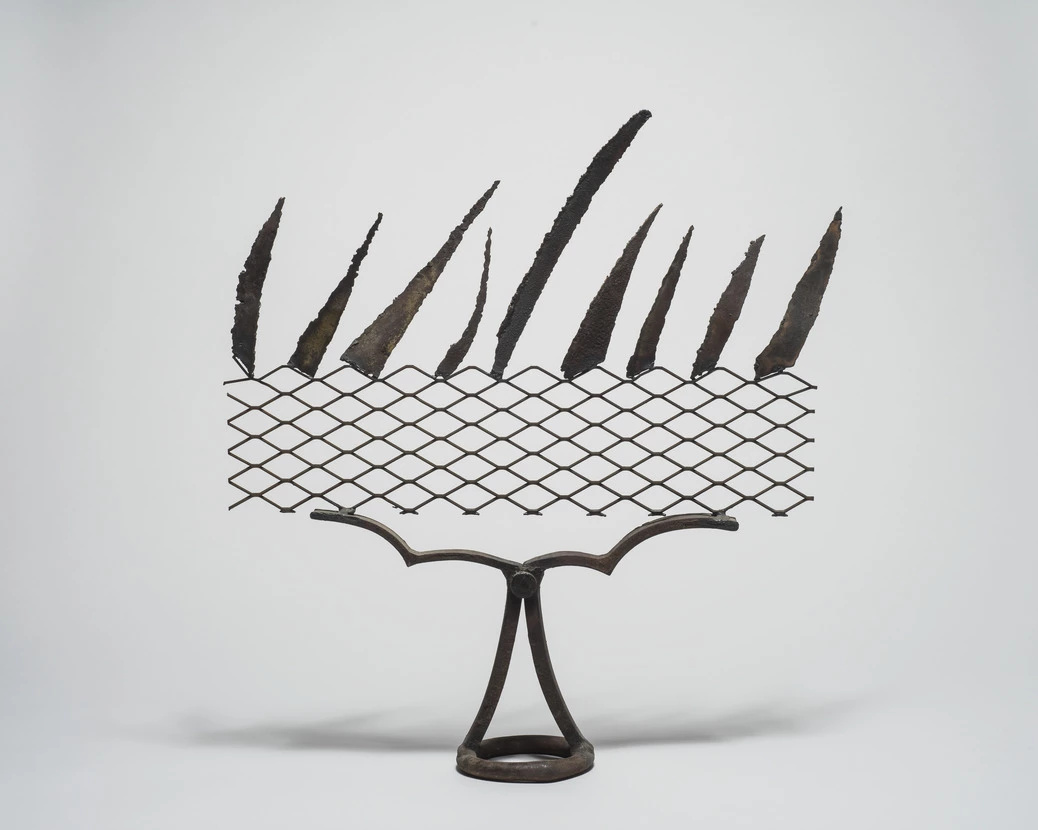
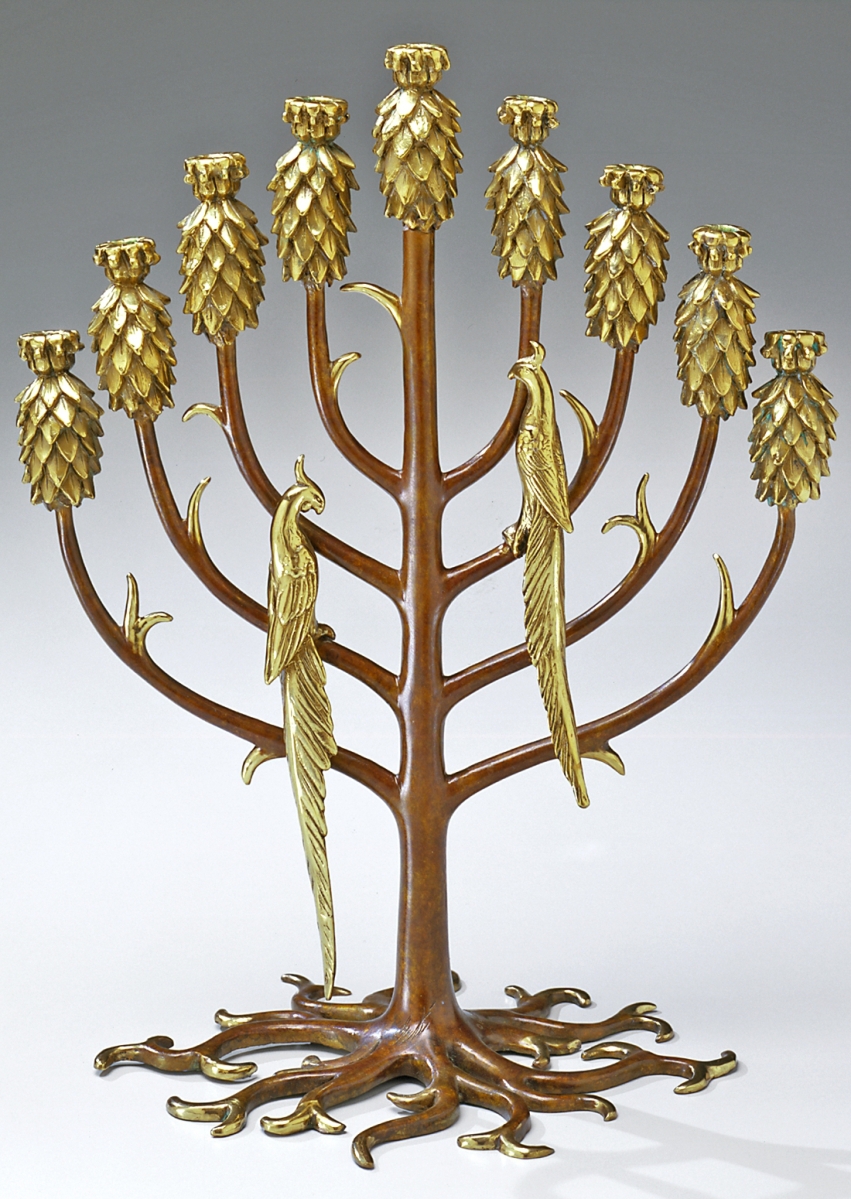
ART EXHIBITION: “Accumulations: Hanukkah Lamps,” Jewish Museum, New York City, October 12, 2018–February 9, 2020: This year’s Hanukkah celebrations have just passed (December 2–10), but the Jewish Museum in New York is still running, for quite a while, its exhibition of eighty-one Hanukkah lamps from its collection of nearly 1,050—the largest collection of Hanukkah lamps in the world. The lamps in the current show represent four continents, six centuries, and a range of materials. I’m most drawn to the modern ones, which rethink traditional ideas about the ritual object.

Hanukkah lamp (Belarus)
Hanukkah lamp from Stolin (Belarus), ca. 1885. Cast lead and tin, each 2 7/8 × 1 × 15/16 in. (7.3 × 2.5 × 2.4 cm). Jewish Museum, New York.

Kagan, Larry_Menorah Memories
Larry Kagan (American, 1946–), Menorah Memories, 1981–82. Welded steel scraps, 21 1/4 × 19 × 4 1/2 in. (54 × 48.3 × 11.4 cm). Jewish Museum, New York.

Erte_Tree of Life (menorah)
Erté (Romain De Tirtoff) (French, 1892–1990), Tree of Life, 1987. Polished bronze, 15 1/2 × 12 1/2 × 7 9/16 in. (39.4 × 31.8 × 19.2 cm). Jewish Museum, New York.

+++

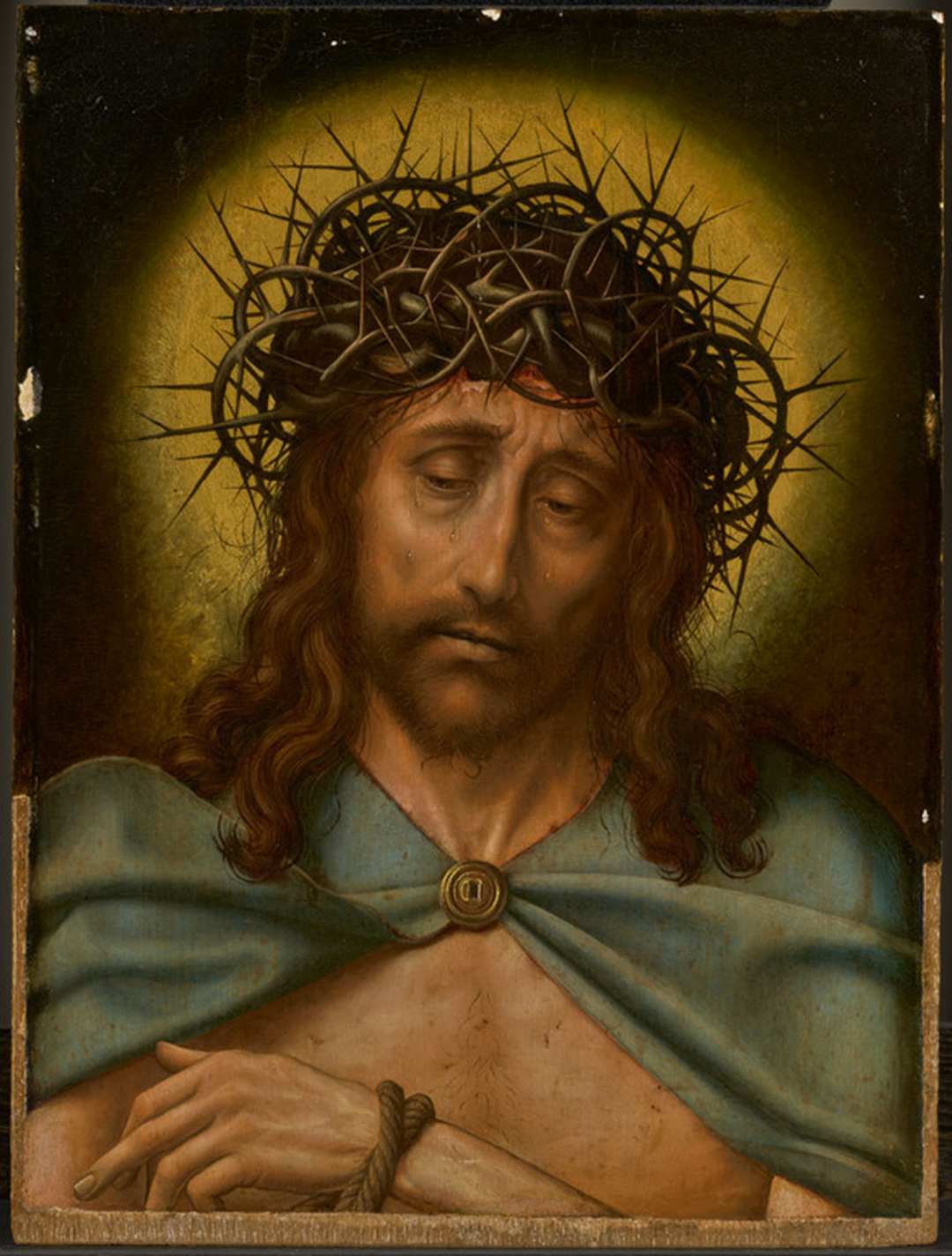
ART ACQUISITION: Christ as the Man of Sorrows by Quentin Metsys: On November 27 the J. Paul Getty Museum announced its acquisition of Christ as the Man of Sorrows by Quentin Metsys (alternatively spelled Massys), one of the leading painters in sixteenth-century Antwerp, known for his delicate modeling and crisp details. For centuries, the painting has been in a private collection, previously unknown to art historians; the Getty purchased it in a private sale. Its discovery and attribution expands Metsys’s oeuvre and is already attracting much attention from scholars. After a short period of conservation and technical study, it will go on view in spring 2019, exhibited to the public for the first time in modern history. It is the first work by Metsys in the Getty’s collection.

Christ as the Man of Sorrows by Quentin Metsys
Quentin Metsys (Netherlandish, 1466–1530), Christ as the Man of Sorrows, ca. 1520–30. Oil on panel, 19 1/2 × 14 1/2 in. J. Paul Getty Museum, Los Angeles. [pre-conservation]

+++

SONG: “Why We Build the Wall” by Anaïs Mitchell: Hadestown is a 2016 stage-musical adaptation of a 2010 folk-opera concept album of the same name, both by singer-songwriter Anaïs Mitchell. It invites audiences on an epic journey to the underworld and back, following two intertwining love stories—that of Orpheus and Eurydice and of Hades and Persephone. I was struck by the current US political resonances of the song “Why We Build the Wall,” which Mitchell says she wrote in 2006. In this A Prairie Home Companion broadcast, Mitchell sings as Hades, king of the underworld, leading her minions in an anthem that celebrates the importance of a nonporous border. She is joined by Chris Thile on mandolin and vocals and by the First-Call Radio Players. The song starts at 1:07.

+++

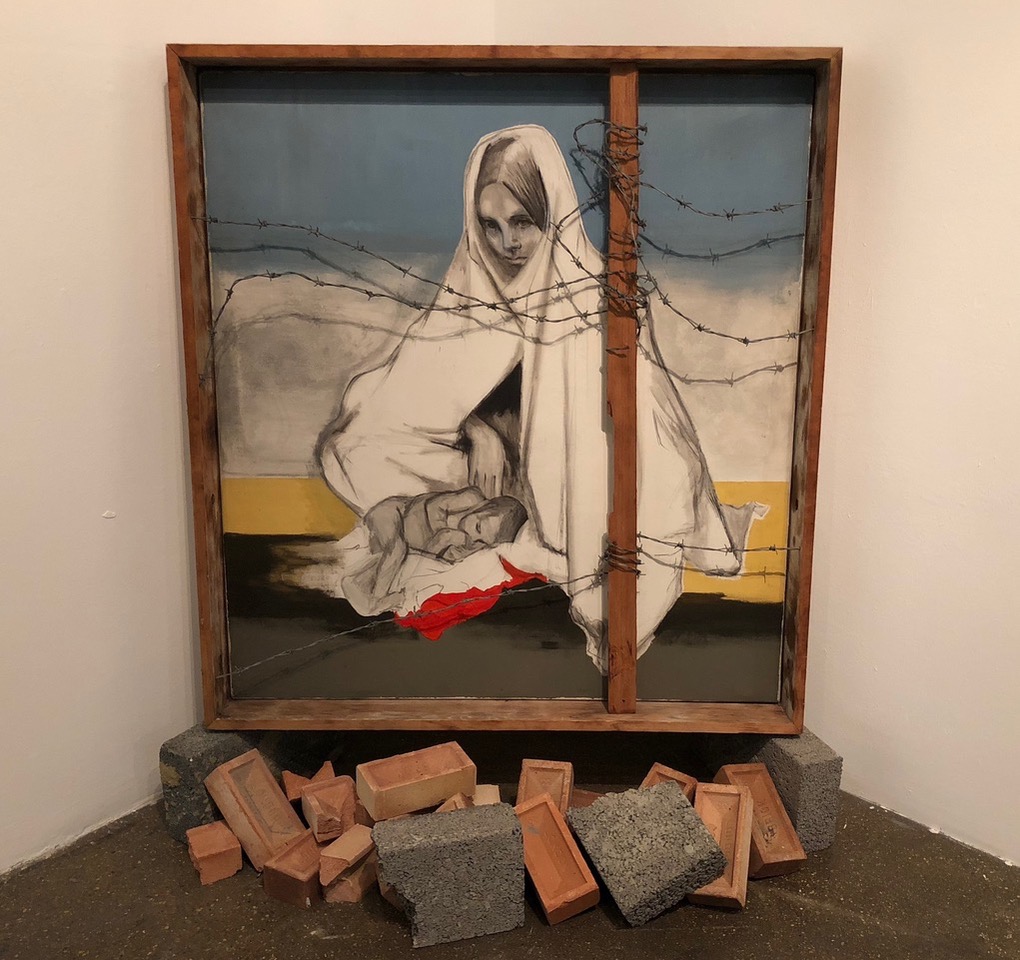
VISUAL MEDITATION: Mother and Child by Gilly Szego: In a recent contribution to ArtWay, Anglican vicar Jonathan Evens reflects on a work by UK artist Gilly Szego, the wife of a Hungarian refugee. Szego painted Mother and Child in response to the expulsion of South Asians from Uganda in 1972 following a wave of Indophobia. St.-Martin-in-the-Fields, one of London’s most prominent churches, displayed the painting that year, helping to raise awareness of these refugees’ plight and that of others around the world. The figures could easily be read as the Virgin Mary and Jesus, who were themselves displaced from their homeland.

Mother and Child by Gilly Szego
Gilly Szego (British, 1932–), Mother and Child, 1972. Oil on canvas with wood frame and barbed wire, 52 × 48 in.

Evens shares some words from Rev. Dr. Sam Wells, St. Martin’s current vicar:

Jesus is a displaced person in three senses. Fundamentally, he is the heavenly one who sojourned on earth. And it didn’t go well: as John’s Gospel puts it, ‘He came to what was his own, and his own people did not accept him’ (John 1:11). Then he finds himself a refugee in Egypt, his parents fleeing Herod’s persecution. Third, he spends his ministry as an itinerant preacher and healer, with nowhere to lay his head.

Meanwhile the story of Israel is one of migration from beginning to end. Adam and Eve leave the Garden; Noah and family sail away from destruction; Abraham follows God’s call; Joseph and family head down to Egypt; Moses leads the people back; Judah is taken into exile in Babylon; Ezra and Nehemiah tell of the return. None of these people were going on a package holiday: they were refugees, asylum seekers or trafficked persons. There is precisely one verse commanding the children of Israel, ‘You shall love your neighbour as yourself’; there are no less than 36 verses saying ‘love the stranger.’ Care of the alien is how Israel remembers its history with gratitude.