I’m late in notifying you about my June 2025 playlist (a random compilation of faith-inspired songs I’ve been enjoying lately), but be sure to check it out on Spotify.
Romare Bearden (American, 1911–1988), The Block, 1971. Cut-and-pasted printed, colored, and metallic papers, photostats, graphite, ink marker, gouache, watercolor, and ink on Masonite, 4 × 18 ft. (121.9 × 548.6 cm). Metropolitan Museum of Art, New York. Photo: Victoria Emily Jones.
+++
PODCAST EPISODE: “The Body as Sacred Offering: Ballet and Embodied Faith” with Silas Farley, For the Life of the World, April 30, 2025: An excellent interview! “Silas Farley, former New York City Ballet dancer and current Dean of the Colburn School’s Trudl Zipper Dance Institute, explores the profound connections between classical ballet, Christian worship, and embodied spirituality. From his early exposure to liturgical dance in a charismatic Lutheran church to his career as a professional dancer and choreographer, Farley illuminates how the physicality of ballet can express deep spiritual truths and serve as an act of worship.”
I was especially compelled by Farley’s discussion of turnout, the rotation of the leg at the hips—foundational to ballet technique. It gives the body an “exalted carriage” and allows for “a more complete revelation of the body,” he says, because you see more of the leg’s musculature that way. This physical positioning, he says, reflects the correlative “spiritual turnout” that’s also happening in dance, and that Christians are called to in life—a posture of openness and giving. He cites the theological concept of incurvatus in se, coined by Augustine and further developed by Martin Luther, which refers to how sin curves one in on oneself instead of turning one outward toward God and others.
Farley also discusses how liturgical dance is like and unlike more performative modes of dance (“liturgical dance . . . is a kind of embodied prayer . . . a movement that goes up to God out of the body”); how discipline and freedom go together; the body as instrument, and how dancers cultivate a hyperawareness of their bodies; the two basic design elements of ballet, the plié and the tendu, and their significance; his formation, from ages fourteen to twenty-six, under the teaching of Rev. Dr. Tim Keller at Redeemer Presbyterian Church; the Four Loves ballet he choreographed on commission for the Houston Ballet, based on a C. S. Lewis book (see promo video below, and his and composer Kyle Werner’s recent in-depth discussion about it for the C. S. Lewis Foundation); Songs from the Spirit, a ballet commissioned from him by the Metropolitan Museum of Art (see next roundup item); Jewels by George Balanchine, a three-act ballet featuring three distinct neoclassical styles; “Hear the Dance” episodes of City Ballet the Podcast, which he hosts; and book recommendations for kids and adults.
+++
SITE-SPECIFIC BALLET: Songs from the Spirit, choreographed by Silas Farley: Commissioned by MetLiveArts [previously], Songs from the Spirit by Silas Farley is a three-part ballet for seven dancers that interprets old and new Christian spirituals, having grown out of an offertory Farley gave at Redeemer Presbyterian Church based on the song “Guide My Feet, Lord.” Staged in the museum’s Assyrian Sculpture Court, the Astor Chinese Garden Court, and the glass-covered Charles Engelhard Court of the American Wing, the ballet progresses from “Lamentation” to “Contemplation” to “Celebration.” Here’s a full recording of the March 8, 2019, premiere:
For the project, Farley solicited new “songs (and spoken word poetry) from the spirit” from men who were currently or formerly incarcerated at San Quentin State Prison in California, whose creative talent he learned about through the Ear Hustle podcast. Recordings of these contributions form about half the score, while the other half consists of traditional spirituals sung live by soprano Kelly Griffin and tenor Robert May. My favorite section is probably “Deep River” at 26:54, a duet danced by Farley and Taylor Stanley, picturing a soul’s “crossing over” to the other side, supported by an angelic or divine presence, or perhaps one who’s gone before.
In his artistic statement, Farley says he wanted to invite viewers “to accompany us [dancers] on this journey: from darkness to light, bondage to freedom, exile to home.”
I am struck by how a contemporary work that is, in Farley’s words, so “unequivocally Christ-focused and Christ-exalting” was welcomed, even made financially possible, by a prestigious secular institution. I find apt Farley’s response when asked by Macie Bridge from the Yale Center for Faith & Culture about his consideration of his audiences (see previous roundup item):
All the people coming to the performance are hungry in different ways. Some are longing for beauty. Some are longing for a prophetic image of a better world. Some are longing to see something reflected back to them from their own lives. And I’m just trusting that as I offer the artwork as an act hospitality, and as I offer the artwork as an act of adoration and worship back to God, that in his own beautiful, winsome, totally personalized way, he’ll meet each of the audience members in the way they need to be met.
+++
ARTWORK: Dreaming with the Ancestors by Charlie Watts and Tricia Hersey [HT: Visual Commentary on Scripture]: Tricia Hersey is a poet, performance artist, spiritual director, and community organizer living in Atlanta, Georgia. She is the founder of The Nap Ministry, an organization that promotes rest as a form of resistance against capitalism (which fuels contemporary grind culture) and white supremacy, and the author of the New York Times best-selling Rest Is Resistance: A Manifesto (2022) and We Will Rest! The Art of Escape (2024). She pursued graduate research in Black liberation theology, womanism, somatics, and cultural trauma, earning a master of divinity degree from Candler School of Theology at Emory University.
Charlie Watts and Tricia Hersey, Dreaming with the Ancestors, 2017. Archival digital print photograph, 76.2 × 101.6 cm.
The photograph Dreaming with the Ancestors, taken by Charlie Watts, portrays Hersey reclining on a wooden bench inside an open brick enclosure and above rows of cotton plants. Dressed in a soft yellow gown, she closes her eyes in rest, practicing what she calls “the art of escape”—from the incessant demand of productivity and overwork, from oppression of body and spirit, from noise that drowns out voices of wisdom.
In We Will Rest!, Hersey advises:
Every day, morning or night, or whenever you can steal away, find silence. Even if for only a few minutes. Look for quiet time, quiet breathing, quiet wind, quiet air. It is there. Even if it’s cultivated in your body by syncing with your own heart beating. Guilt and shame will be a formidable and likely opponent in your resistance. We expect guilt and shame to surface. Let them come. We rest through it. We commit to our subversive stunts of silence, truth, daydreaming, community care, naps, sleep, play, leisure, boundaries, and space. Be passionate about escape. (107)
The album also includes a cover of Zoe Mulford’s “The President Sang Amazing Grace,” written in response to the racially motivated mass shooting at Mother Emanuel AME Church in Charleston, South Carolina, on June 17, 2015 (its ten-year anniversary is next Tuesday). In his eulogy at the funeral of one of the nine victims, Rev. Clementa Pinckney, President Barack Obama chose “the power of God’s grace” as his theme, and he closed by singing the first stanza of “Amazing Grace,” a moving gesture that Mulford’s song remembers.
Other songs on Grace Will Lead Me Home address John Newton’s love for his wife Polly, his impressment into naval service, and his friendship with William Cowper. There are also songs that grapple with the harm and suffering Newton inflicted on others through his involvement in the slave trade, and that wonder at his hymn’s being so mightily embraced not only by the Black church, many of whose members are descendants of enslaved Africans, but also by other traumatized communities, who insist amid all the wrongs and afflictions they’ve suffered that God is amazingly gracious.
It’s a myth that John Newton (1725–1807), who converted to Christianity in 1748 after surviving a turbulent sea voyage, immediately gave up his employment as a slave trader upon embracing Christ. In fact, he was soon after promoted from slave ship crew member to captain and sailed three more voyages to Africa as such, trafficking human beings for profit until 1754, when his ill health forced him to retire. But he continued to invest in slaving operations for another decade, until becoming a priest in the Church of England. It wasn’t until 1788, in the pamphlet Thoughts Upon the African Slave Trade, that he publicly denounced slavery and confessed his sin of having participated in that evil institution, and this was the start of his abolitionism.
+++
SONG: “Amazing Grace,” performed by the Good Shepherd Collective: This adaptation of “Amazing Grace” premiered at Good Shepherd New York’s digital worship service on June 1. Listen via the Instagram video below, or cued up on YouTube. The vocalists are, from right to left, Charles Jones on lead, Solomon Dorsey (also on bass), Jon Seale, Dee Wilson, and Aaron Wesley. James McAlister is on drums, Michael Gungor is on electric guitar, and Tyler Chester is on keys.
>> The Divine Dark, vol. 1: This three-song EP was released December 15, 2024, on Re-Echo Records, a new label for music created by artists from Resurrection Philadelphia church. “The Divine Dark is an ongoing series of original arrangements and compositions for devotion, contemplation, and edification. The series takes its name from a phrase that emerged in the fifth century among Christian mystics to describe the ineffable unknowableness of God . . . in all his kindness, grace, and mystery.”
The first volume features new arrangements by Joshua Stamper [previously] of two seventeenth-century German hymns (both translated into English by Catherine Winkworth, and sung here by Sarah Long), plus one new hymn that Stamper wrote with his wife, Kory Stamper, whose refrain is taken from Psalm 127:4. The songs quietly explore the mysteries of salvation, the Eucharist, and God’s sovereignty as well as some of the paradoxes of God’s character, such as his being both storm and shelter (wild and thundering, but also safe and enfolding).
Volume 2 of The Divine Dark is likely to release later this year.
>> It Is Good to Be Here with You by Nick Chambers: Out today, the first full-length album by singer-songwriter Nick Chambers. These songs of spiritual seeking touch on sobriety, divine nearness, ambiguity and wonder, the pursuit of understanding or insight, the longing to be held and loved, and more. Chambers deftly weaves voices from scripture—the blind beggar Bartimaeus, who cried out to Christ for mercy; the sons of Korah, who thirsted for God like a deer thirsts for water; the apostle Paul, who experienced a frustrating tension between desire and action—with his own poetic voice, finding companionship with those ancient seekers who were transformed by their encounters God. There’s reference to the wrestling patriarch Jacob, the blazing bush-vision of Moses, Elijah in a wilderness cave, the mount of Transfiguration, the eighth day of creation. Besides biblical texts, the songs bear influences from writers Rainer Maria Rilke, Madeleine L’Engle, Gregory of Nyssa, and Esther de Waal.
The album features some co-writing contributions by Jon Guerra (“Hold Me”), Paul Zach (“A Sweeter Word,” “Always Already”), and Tyson Matthews (“It Is Good to Be Here with You”).
My favorite tracks: “To an Unknown God,” “Hear,” “Thanks Be to God.”
+++
NEW ART COMMISSION: Memorial to Enslaved Persons by Harmonia Rosales, King’s Chapel, Boston:Harmonia Rosales, an Afro-Cuban artist born and raised in Chicago and living in Los Angeles, is at work on a three-part commission for the historic King’s Chapel at 58 Tremont Street in Boston, a church originally built in wood in 1686 and then rebuilt in stone in the 1750s. One of the oldest churches in the United States, it (and its adjacent burying ground) is one of the stops along the Freedom Trail, and it still has an active congregation.
Conceptual image of the mural by Harmonia Rosales that’s being installed this year on the ceiling of King’s Chapel in Boston, Massachusetts
Despite being in the North, King’s Chapel has links to the slave trade. Historical documents reveal that at least 219 persons, most of them of African descent but at least two of them Native American, were enslaved by ministers and members of the church throughout its history, and that even after slavery was abolished in Massachusetts in 1783, donations to the church continued to flow in from people whose wealth depended on Southern slave labor, such as textile magnates. You can read more details in Slavery and King’s Chapel, the thirty-two-page report published by King’s Chapel’s Ad Hoc Committee on Slavery in 2018.
Until at least the mid-nineteenth century, people of color, both enslaved and free, who attended King’s Chapel were relegated to the balcony seats. We know the names of 182 enslaved attendees from the church’s baptismal, marriage, and burial registers. “As a community of faith,” the church writes on its website, “we are working to recover, honor, and remember these long-overlooked members of our community. We hope to make their lives and their presence in early Boston visible in new and powerful ways as we tell a more complete version of our history for our congregation, our city, and the 4 million people who walk the Freedom Trail each year.”
In addition to setting up a “living fund” to “provide monetary support for programs and engagement centered around reparative justice and reconciliation in the community,” the church has hired artist Harmonia Rosales, in partnership with the MASS Design Group, to create a physical commemoration of this history, which has three components: a figurative sculpture in the church’s courtyard, a collection of bronze birds perched throughout the church’s exterior and grounds, and a trompe l’oeil ceiling mural in the sanctuary. The memorial will be unveiled later this year. Here are two videos about it:
>> “How a Freedom Trail landmark is reckoning with its ties to slavery,” GBH News, July 19, 2023: This news segment features interview clips of Cassandra Dumay and Jessie Sage O’Leary, Boston University journalism students who are inquiring further into King’s Chapel’s links to the colonial slave trade; Rev. Joy Fallon, senior minister at King’s Chapel; Marissa Cheifetz, director of the King’s Chapel History Program; and memorial committee member David Waters.
>> “VCS Creative Conversations: Ben Quash with Harmonia Rosales,”Visual Commentary on Scripture,February 27, 2025: Theologian and VCS director Ben Quash sits down with artist Harmonia Rosales inside King’s Chapel to discuss her latest commission for that space, plus her paintings Birth of Oshun, The Creation of God, Strangler Fig, and more. Raised in the Santería religious tradition, in her art Rosales draws Yoruba deities (the orishas) into play with Christian ones and centers Black women. Speaking of the VCS’s commitment to showcasing biblical engagement from diverse vantage points, Quash tells Rosales, “We’ve always said that these conversations should not just be about the Bible’s importance to Christians or Jews, but the Bible’s importance to those of other traditions, as something to bounce off, to use, sometimes to object to. And you are a wonderful example of how to do that in a way that’s constantly creative and generous.”
+++
ARTICLE: “At the Cloisters, Sor Juana’s Words Ring Out in Song” by Elisabeth Vincentelli, The New York Times:Primero Sueño (First Dream) is a new opera by Magos Herrera and Paola Prestini that adapts to music the seventeenth-century mystical poem of the same title by the Mexican Catholic nun Sor Juana Inés de la Cruz, one of the greatest literary works of the Hispanic Baroque. Commissioned by the Metropolitan Museum of Art’s Department of Live Arts (MetLiveArts) and VisionIntoArt, it was conceived as a processional opera that meanders throughout the Met Cloisters, audience in tow—an appropriate choice, as the poem is about the soul’s journey. It premiered January 23, with Herrera playing Sor Juana, the nun in black, “sing[ing] in an earthy mezzo that complements the heavenly harmonies of the six nuns in white, performed by the German vocal ensemble Sjaella.” Accompaniment was provided by harps, hand percussion, theorbo, and Spanish guitar. Here’s a trailer (not filmed on location):
Magos Herrera, center, as Sor Juana in a rehearsal of the opera Primero Sueño at the Met Cloisters. Photo: Earl Wilson / The New York Times.
The Cloisters—a building designed to evoke a medieval European monastery and housing a sizeable portion of the Met’s medieval art collection—is one of my favorite spaces in all of New York. What a delight that Herrara, Prestini, and team utilized its halls and rooms as staging ground for this dramatic, musical reimagining of a historic sacred poem by a pioneering female Christian writer.
+++
INTERFAITH ART EXHIBITION: Cloud of Witnesses: Images of Faith and Divinity Today, St John’s Waterloo, London, March 4–April 27, 2025: A juried exhibition featuring the work of twenty-six artists from the UK, funded and supported by Art + Christianity; The God Who Speaks; St John’s Church, Waterloo; the Catholic Bishops’ Conference of England and Wales; Culham St Gabriel Trust; and Bible Society. Click here to view the exhibition catalog.
The image used for the cover of the exhibition catalog is Life 1, a linocut by Svetlana Atlavina consisting of fifty golden concentric circles that she said represent the vibrations of the heart—the sounds constantly being emitted from our cardiac valves, which mean we’re alive.
Svetlana Atlavina, Life 1, 2024. Handmade linocut with gold ink on 300g white Somerset paper, 70 x 50 cm.
The work that I find most compelling is the eight-piece series of COME AND REST photographs by Kirsty Kerr.
Kirsty Kerr, COME AND REST: Bethnal Green Library, 2018. Photograph of a public intervention, from a series, 30.5 × 44 cm. Documentation by Will Alcock.
COME AND REST documents a series of public interventions informed by the demolition and rebuilding of Bethnal Green Mission Church. Taking letters from a scripture text that had hung on the old building (Jesus’ words: ‘Come to me and I will give you rest’), Kirsty spelt the phrase in Bethnal Green locations, recording the process with local filmmaker Will Alcock. The words were a gentle yet radical proclamation: of welcome, refuge, and quiet protest against loneliness and exhaustion often synonymous with city life. The act of spelling them out became a performed prayer, symbolic of the church’s continued presence and God’s enduring invitation.
Against the backdrop of this racially and religiously diverse neighbourhood, the words were both witnessed to and overlooked by passers-by of all faiths and none.
Kerr displayed Christ’s invitation in fields and basketball courts, on street corners and scaffolding and bandstand steps, outside subway stops and housing estates and libraries. View the full series here, using the right scroll arrow. I also enjoyed exploring the artist’s other projects on her website.
+++
EVENT: Taste of Heaven Intercultural Worship Festival, Coventry Cathedral, May 24, 2025: Organized by Intercultural Churches UK. “The Taste of Heaven Festival will be an exciting opportunity to celebrate the rich cultural diversity and creativity of the UK church through live performances, workshops, food and worship. The festival will take place in the iconic venue of Coventry Cathedral and its beautiful surrounding ruins. The day will trace our history of increasing diversity, by highlighting different cultural worship expressions from Celtic to Choral, South Asian and Caribbean, to more recent immigrant communities including Middle Eastern, African, and Hong Kong. It will culminate in a celebration of Intercultural Worship, demonstrating how churches can draw from different cultural streams in their corporate worship.” Tickets range from £10 to £25. Register here. [HT: Global Christian Worship]
+++
SPOTIFY PLAYLIST: April 2025 (Art & Theology): The song selections on my short monthly playlists are somewhat random—a smorgasbord of what I’ve been listening to, a mix of brand-new releases and older faves—but for thematic playlists keyed to where we are in the liturgical calendar during April, see my Lent Playlist, Holy Week Playlist (I’m especially proud of this one!), and Eastertide Playlist.
Charles White (American, 1918–1979), Mother Courage II, 1974. Oil on canvas, 49 3/4 × 39 7/8 in. National Academy of Design, New York.
She lay, skin down in the moist dirt, the canebrake rustling with the whispers of leaves, and loud longing of hounds and the ransack of hunters crackling the near branches.
She muttered, lifting her head a nod toward freedom, I shall not, I shall not be moved.
She gathered her babies, their tears slick as oil on black faces, their young eyes canvassing mornings of madness. Momma, is Master going to sell you from us tomorrow?
Yes. Unless you keep walking more and talking less. Yes. Unless the keeper of our lives releases me from all commandments. Yes. And your lives, never mine to live, will be executed upon the killing floor of innocents. Unless you match my heart and words, saying with me,
I shall not be moved.
In Virginia tobacco fields, leaning into the curve of Steinway pianos, along Arkansas roads, in the red hills of Georgia, into the palms of her chained hands, she cried against calamity, You have tried to destroy me and though I perish daily,
I shall not be moved.
Her universe, often summarized into one black body falling finally from the tree to her feet, made her cry each time into a new voice. All my past hastens to defeat, and strangers claim the glory of my love, Iniquity has bound me to his bed,
yet, I must not be moved.
She heard the names, swirling ribbons in the wind of history: nigger, nigger bitch, heifer, mammy, property, creature, ape, baboon, whore, hot tail, thing, it. She said, But my description cannot fit your tongue, for I have a certain way of being in this world,
and I shall not, I shall not be moved.
No angel stretched protecting wings above the heads of her children, fluttering and urging the winds of reason into the confusions of their lives. They sprouted like young weeds, but she could not shield their growth from the grinding blades of ignorance, nor shape them into symbolic topiaries. She sent them away, underground, overland, in coaches and shoeless. When you learn, teach. When you get, give. As for me,
I shall not be moved.
She stood in midocean, seeking dry land. She searched God’s face. Assured, she placed her fire of service on the altar, and though clothed in the finery of faith, when she appeared at the temple door, no sign welcomed Black Grandmother. Enter here.
Into the crashing sound, into wickedness, she cried, No one, no, nor no one million ones dare deny me God, I go forth along, and stand as ten thousand. The Divine upon my right impels me to pull forever at the latch on Freedom’s gate.
The Holy Spirit upon my left leads my feet without ceasing into the camp of the righteous and into the tents of the free.
These momma faces, lemon-yellow, plum-purple, honey-brown, have grimaced and twisted down a pyramid of years. She is Sheba and Sojourner, Harriet and Zora, Mary Bethune and Angela, Annie to Zenobia.
She stands before the abortion clinic, confounded by the lack of choices. In the Welfare line, reduced to the pity of handouts. Ordained in the pulpit, shielded by the mysteries. In the operating room, husbanding life. In the choir loft, holding God in her throat. On lonely street corners, hawking her body. In the classroom, loving the children to understanding.
Centered on the world’s stage, she sings to her loves and beloveds, to her foes and detractors: However I am perceived and deceived, however my ignorance and conceits, lay aside your fears that I will be undone,
Maya Angelou (1928–2014) was an African American poet, storyteller, civil rights activist, and lecturer, most famous for her autobiography I Know Why the Caged Bird Sings (1969). She began her career as a singer, dancer, and actress but started writing in the late 1950s, often combining personal narrative with advocacy for racial and gender equality. In 1960 she worked as the northern coordinator for Martin Luther King Jr.’s Southern Christian Leadership Conference, before moving to Egypt and then Ghana with her son. She returned to the US in 1965 to help Malcolm X build the Organization of Afro-American Unity.
In addition to seven autobiographies and multiple poetry collections, Angelou also wrote children’s books, cookbooks, essays, short stories, stage plays, screenplays, documentaries, and music (including film scores). She was a recipient of three Grammys for her spoken-word albums, an Emmy nomination for her portrayal of Kunta Kinte’s grandmother in the miniseries Roots (1977), the National Medal of Arts (2000), the Presidential Medal of Freedom (2010), the Literarian Award (2013), and many other honors. Recurring themes in her literary works include hardship and loss, love, social justice, Black beauty, the strength of women, and the human spirit.
I often wonder what would happen if I could come face to face with a grandparent, a great-great-great-grandparent. Suppose you did? Just imagine. What would happen? Not a specter, a real person, 200 years old, who said, “So . . . You’re the reason I took the lash, you’re it, huh? So you’re the reason I took the auction block, and stayed alive . . . you’re it, are you? How is it with you? How are you doing with the gifts I gave you?”
She went on to describe how her grandmother and mother used to sing the African American spiritual “I Shall Not Be Moved” around the house. Its lyrics are based on Jeremiah 17:7–8: “Blessed are those who trust in the LORD, whose trust is the LORD. They shall be like a tree planted by water, sending out its roots by the stream. It shall not fear when heat comes, and its leaves shall stay green; in the year of drought it is not anxious, and it does not cease to bear fruit” (cf. Ps. 1:3; 62:6).
Angelou then talked about the importance of “being flexible so one can bend, resilient so that one can stand erect after being knocked down,” before proceeding to read her poem “Our Grandmothers.”
The poem celebrates the strong Black women who have gone before, that great cloud of witnesses, the ancestors, who stood firm in the face of all kinds of adversity, giving life to succeeding generations. The queen of Sheba (who gifted gold, spices, and jewels to King Solomon of Israel, as 1 Kings 10 relates, and who the ancient historian Josephus said ruled over Ethiopia and Egypt), abolitionist Harriet Tubman, writer Zora Neale Hurston, and educator and philanthropist Mary Bethune are among the women named. Self-assertive, tenacious, filled with holy desire, steadfast in the pursuit of freedom and justice.
Angelou is one of the most banned authors in the United States, particularly in high schools, where some districts deem her books inappropriate for their use of racial epithets and frank depictions of violence, including sexual assault. “Our Grandmothers” is mild by comparison to her first autobiography, but it does allude to lynching and rape and contains a litany of vulgar, demeaning names. She does not want to sugarcoat these realities, this history.
While acknowledging the suffering endured by Angelou’s female forebears, the poem is triumphant in tone. It’s that refusal to despair, that holding on to faith, that Angelou so admires and that impels her to join in that old refrain, composed in chains and having carried her people through countless trials and acts of resistance: “Like a tree planted by the water, I shall not be moved.”
New Mount Pilgrim commemorates the Maafa, the Great Migration, and martyrs of urban violence and instills hope with trilogy of rose windows, which include an African Christ
Designed by Charles L. Wallace and built in 1910–11, the French Romanesque–style church at 4301 West Washington Boulevard in Chicago’s West Garfield Park neighborhood was originally home to one of the largest Irish Catholic parishes in the city: St. Mel’s (named after Mél of Ardagh, a nephew of St. Patrick from the fifth century). They had the interior decorated with stained glass windows made by the studio of F. X. Zettler in Munich, portraying biblical figures and other saints—all as Caucasian, as was customary at the time and, frankly, still is. St. Mel’s, which merged with Holy Ghost Catholic Church in 1941 (whose parishioners were mainly of German descent), was a flourishing congregation. But in the late 1960s, white people began leaving the neighborhood as Black people moved in, and St. Mel’s membership waned until eventually the church closed its doors in 1988.
After the building had stood vacant for several years, in 1993, the Catholic Archdiocese of Chicago sold it to New Mount Pilgrim Missionary Baptist Church, a local Black congregation founded in 1950. The church leaders found that, due to lack of maintenance, the three large rose windows had structural issues that needed to be addressed. Rather than repairing the windows, they decided to replace them with new ones that better reflected the faith stories of their own parishioners—their history, heritage, and aspirations as a community. Rev. Dr. Marshall E. Hatch Sr., who had become the church’s pastor just a month after they moved into the new building and still serves in that role, developed the concepts for the windows with input from the congregation and started fundraising. All three were fabricated by Botti Studio of Architectural Arts in nearby Evanston, Illinois.
The Maafa Remembrance Window
The most striking and theologically profound of the three new windows, and the one I flew to Chicago to see last summer, is the Maafa Remembrance window on the wall to the left of the front altar. Because the church is oriented south rather than the traditional east, this is, directionally speaking, the East Rose Window; it purposefully faces the Atlantic Ocean. It was dedicated December 17, 2000, the church’s fiftieth anniversary year. It replaced an image of the Assumption of Mary (which you can view here); read more about the church building’s original windows on the website of art historian Rolf Achilles.
Maafa Remembrance, 2000, based on an illustration from The Middle Passage by Tom Feelings. Stained glass, diameter 25 feet. New Mount Pilgrim Missionary Baptist Church, West Garfield Park, Chicago. Photo: Victoria Emily Jones.Six of the twelve apostles are pictured in these stained glass windows inherited by New Mount Pilgrim from the building’s former owner, St. Mel’s Catholic Church. They appear beneath the newer Maafa Remembrance window, commissioned to counterbalance the preponderance of sacred white personages with sacred Black ones and to tell a narrative of liberation. Photo: Victoria Emily Jones.
Maafa (mah-AH-fah) is a Swahili word meaning “great disaster” or “great tragedy.” Since the late 1980s it has been used to refer to the transatlantic slave trade of the sixteenth through nineteenth centuries, during which an estimated 12.5 million African men, women, and children were kidnapped from their homes and forcibly brought to the Americas to work plantations without pay (by and large), building the wealth of their white enslavers. Some scholars prefer the term “African Holocaust” or “Black Holocaust” to describe this historic atrocity.
Based on an illustration by Tom Feelings from his extraordinary book The Middle Passage: White Ships / Black Cargo (Dial, 1995), the East Rose Window commemorates the Maafa through an evocation of the Middle Passage, the second leg of the triangular trade route. On this harrowing two- to three-month voyage across the Atlantic Ocean, which ships made many times over chattel slavery’s multicentury duration, at least two million enslaved Africans died of malnutrition, dehydration, disease, captor-inflicted violence, or suicide.
The closeness of the place, and the heat of the climate, added to the number in the ship, which was so crowded that each had scarcely room to turn himself, almost suffocated us. This produced copious perspirations, so that the air soon became unfit for respiration, from a variety of loathsome smells, and brought on a sickness among the slaves, of which many died, thus falling victims to the improvident avarice, as I may call it, of their purchasers. This wretched situation was again aggravated by the galling of the chains, now become insupportable; and the filth of the necessary tubs, into which the children often fell, and were almost suffocated. The shrieks of the women, and the groans of the dying, rendered the whole a scene of horror almost inconceivable.
In Feelings’s image, an African Christ figure stretches his chained arms out, as if on the cross. His body is constituted by the famous schematic representation of the crowded lower deck of the Brookes slave ship’s human cargo hold, first created in England in 1788 and widely disseminated throughout the nineteenth century. The perspective is such that we’re looking down on a body-as-slave-ship gliding through the waters—but it’s also a crucifixion. The Son of God carries the suffering of the sons and daughters of God, feeling it in his own body. He wears the slave ship like a giant wound that will forever mark him because it has marked his ecclesial body, the church.
The window functions, on one level, as a lament. Consider it in light of the following poem by Lucille Clifton, which draws out the cruel irony of the actual names some ostensibly Christian slave ship owners gave their vessels.
“slaveships” by Lucille Clifton
loaded like spoons into the belly of Jesus where we lay for weeks for months in the sweat and stink of our own breathing Jesus why do you not protect us chained to the heart of the Angel where the prayers we never tell and hot and red our bloody ankles Jesus Angel can these be men who vomit us out from ships called Jesus Angel Grace Of God onto a heathen country Jesus Angel ever again can this tongue speak can these bones walk Grace Of God can this sin live
The speaker of the poem, an enslaved African, addresses Jesus, questioning why he allows them to be so brutally treated—stolen from their homeland, marched to the coast in chains, claustrophobically packed in ship holds for maximum profitability, and spat out onto auction blocks in a barbarous country that appears to practice the devil’s ways more than God’s. How can God abide such sin? What kind of grace is it that transports them into oppression?
Christian Wiman brilliantly unpacks this poem, noting Clifton’s cunningly subtle tweak of a prophetic passage from Ezekiel that promises resurrection, both of individuals and of a nation. Underneath its acerbity, there’s a certain hopefulness to the poem—a hope that this sin will die, this suffering be transformed. In both Ezekiel’s vision of the valley of dry bones and Clifton’s poem, Wiman writes,
the Word comes streaming again through, and by means of, the word. In terms of the poem, Jesus (the man) is on board Jesus (the ship), but he is in the hold, just as, when the worship services took place above the captured slaves on the Gold Coast of Africa, God, if he was anywhere, was underneath it all, shackled and sweating and merged with human terror.
Emmanuel, God-with-us.
Clinging to this truth, the psalmist declares, “If I make my bed in hell, behold, thou [God] art there” (Psalm 139:8b). In his great compassion, God descends with us into the depths, and bears us up.
The Maafa Remembrance window plays with the themes of descent and ascent. As Emmanuel, Jesus was below deck, in the miserable belly of the thousands of slave ships that traversed the Atlantic, suffering with those chained inside. Christ’s arms are draped with chains, notes Marshall Hatch Jr., the pastor’s son and cofounder and executive director of the MAAFA Redemption Project (more on that below), “but he’s rising. And at some point those chains will break. That’s the hopefulness that shines through.”
Thus, the window commemorates both tragedy and triumph. It honors those who died on the Middle Passage and through the institution of slavery more broadly while also honoring those who persevered all the way to freedom. Hatch Jr. says this Christ is “carrying within himself the memories of those who lost their lives on the journey to America. But also he’s carrying the legacy of those who survived. And we are that living legacy,” descendants of the Middle Passage.
The border around the window’s central image calls parishioners to “REMEMBRANCE.” They must remember their history, the Great Catastrophe their ancestors endured, and, having faced the truth, commit to ending slavery’s legacy of racism in America’s civic, social, and religious spheres and in their own psyches.
Two of the roundels in the bottom border show a map of Africa and a Communion table laid with kente cloth, a loaf of bread, and a flask of wine. The roundel between these two displays the open word of God, which guides Christians forward in our work of justice and reconciliation.
Art historian Cheryl Finley features New Mount Pilgrim’s Maafa Remembrance window in her book Committed to Memory: The Art of the Slave Ship Icon (Princeton University Press, 2022), which traces the origins of the Brookes schematic and its proliferation in mass culture and art. She identifies the window, twenty-five feet in diameter, as the largest example of the “slave ship icon” in the world and writes that, like the cross of Christ, the slave ship embodies both death and rebirth. It is “a site of death, of dying Africans, and of new life, of a people who would persevere in the face of slavery and unspeakable cruelty to become a free people who helped define the modern era” (6).
“The children will need to know that this symbol, this window, is a representation of not only the pain but also the possibilities of a great and mighty God,” Rev. Dr. Gregory Thomas told the Chicago Tribune in 2000. Thomas was a theology professor at Harvard Divinity School, where Hatch Sr. served a fellowship sabbatical semester in 1999 and first encountered Feelings’s Middle Passage book.
In the window, slavery is interpreted in light of the paradox of the cross. Theologian James H. Cone famously interpreted another, later icon of Black suffering—the lynching tree—in light of the same in his essential book The Cross and the Lynching Tree (Orbis, 2011). He opens the book by explaining why and how the cross has held such power for the Black church:
The cross is a paradoxical religious symbol because it inverts the world’s value system with the news that hope comes by way of defeat, that suffering and death do not have the last word, that the last shall be first and the first last.
That God could “make a way out of no way” in Jesus’ cross was truly absurd to the intellect, yet profoundly real in the soul of black folk. Enslaved blacks who first heard the gospel message seized on the power of the cross. Christ crucified manifested God’s loving and liberating presence in the contradictions of black life—that transcendent presence in the lives of black Christians that empowered them to believe that ultimately, in God’s eschatological future, they would not be defeated by the “troubles of this world,” no matter how great and painful their suffering. Believing this paradox, this absurd claim of faith, was only possible through God’s “amazing grace” and the gift of faith, grounded in humility and repentance. There was no place for the proud and the mighty, for people who think that God called them to rule over others. The cross was God’s critique of power—white power—with powerless love, snatching victory out of defeat. (2)
A powerful reclamation of Christian iconography, New Mount Pilgrim’s Maafa Remembrance window weds Black history and Christian theology to offer its predominantly African American congregation a communal symbol that honors what they’ve been through as a people and reminds them that they worship a risen Christ who breaks chains and brings life out of death.
The North Star / Great Migration Window
The East Rose Window covered in the previous section is narratively the first in the trilogy of newly commissioned windows, but the first of the three to be fabricated and installed, earlier in 2000, was the North Rose Window, called the North Star or Great Migration window. It commemorates those who traveled north on the Underground Railroad to escape slavery, and, a few generations later (from about 1910 to 1970), as part of a mass movement to escape Jim Crow oppression.
North Star / Great Migration, 2000. Stained glass, diameter 25 feet. New Mount Pilgrim Missionary Baptist Church, West Garfield Park, Chicago. Photo: Victoria Emily Jones.
The North Star window shows a Black family unit, the father, in purple robe, lifting his newborn up to the heavens in a gesture of gratitude and pride. The child is backlit by the North Star, a beacon to freedom. The scene recalls the famous naming ceremony in the 1977 Roots miniseries, based on the best-selling novel by Alex Haley, in which Omoro Kinte, a Mandinka man living in The Gambia, carries his firstborn son, Kunta Kinte, to the edge of the village, raises him into the starry night sky, and exclaims, “Behold, the only thing greater than yourself!” This declaration affirms the child’s inherent worth and directs him toward worship of his Creator God.
During New Mount Pilgrim’s baby dedication ceremonies, the pastor raises the child in like manner while the parents vow to bring up the child in the nurture and admonition of the Lord and the congregation vows to support them in this task. This physical gesture of lifting up signifies surrender to God and hope that the next generation will carry the flame of faith out into the city of Chicago and the wider world. Because the North Star window is situated across from the pulpit, over the choir loft and organ, it is in full view of the dedicants.
Baby dedication ceremony, New Mount Pilgrim Missionary Baptist Church. Photo courtesy of Partnering for Community Impact.View from the pulpit of New Mount Pilgrim, facing the North Star window and the main entrance to the church. Photo courtesy of the church.
The inscription below the family in the window reads, “Lift holy hands,” a phrase taken from 1 Timothy 2:8, and the roundels in the border spell out the name of the church. The three portraits at the bottom are of the church’s longest-serving pastors: (from right to left) Rev. J. H. Johnson, the church’s first elected pastor; Rev. James R. McCoy, who served from 1965 to 1993; and Rev. Dr. Marshall Hatch Sr., who has served since 1993. Hatch Sr.’s father and McCoy both participated in the Great Migration, having moved to Chicago from Aberdeen, Mississippi, and so did the majority of the church’s founding members.
The North Star window fills the space previously occupied by a window depicting Saint Cecilia, a Roman virgin martyr.
The Sankofa Peace Window
The West Rose Window, known as the Sankofa Peace window, was the final one to be installed, replacing the clear panes that were there for over two decades. (New Mount Pilgrim sold the original window depicting Mary and the Christ child blessing and accepting the rosary from a male and female saint, to raise funds for the new one.) The Sankofa Peace window was dedicated on February 24, 2019 (watch the service here and view photos here), the year that marked the four hundredth anniversary of race-based slavery in America.
Sankofa Peace, 2019. Stained glass, diameter 25 feet. New Mount Pilgrim Missionary Baptist Church, West Garfield Park, Chicago. Photo: Victoria Emily Jones.
Sankofa is a Twi word from the Akan people of Ghana that means “go back and retrieve it,” a phrase that encourages learning from the past to inform the future. It comes from the proverb “Se wo were fi na wosan kofa a yenkyiri”—“It is not wrong to go back for that which you have forgotten,” to return to one’s roots to reclaim lost identity. The concept of Sankofa is traditionally symbolized by a mythical bird with its head turned backward while its feet face forward, carrying a precious egg in its mouth, which represents the knowledge of the past on which wisdom is based.
The Sankofa bird appears in the top center roundel of the window.
Hatch Jr., who preached at the window’s dedication service, discussed Sankofa as a spiritual discipline, highlighting how it can refer not only to returning to one’s cultural roots, but also to God, our Source. “Sankofa is the process of training my soul to reach back and remember the grace and the glory of God,” he says, which can fuel us for the forward journey. He quotes the famous gospel hymn that says, “My soul looks back in wonder how I got over.” We must regale one another with stories of where we’ve been and how far God has brought us, and remind ourselves and each other where we’re heading.
Besides the Sankofa bird, the other four adinkra symbols that New Mount Pilgrim chose to include in the window’s border are:
These are key guiding principles of the church, part of their missional purpose and identity. They seek liberation and peace for all, through the power of God, following the path of the Savior who is Love, who brings us back to who we most truly are.
One way the Sankofa Peace window looks backward while moving forward is through the memorialization of murdered Black American youth, from the civil-rights-era South and twenty-first-century Chicago. The portraits at the top depict the four girls who were killed by the Sixteenth Street Baptist Church bombing in Birmingham, Alabama, in 1963: Carole Robertson (age fourteen), Addie Mae Collins (fourteen), Denise McNair (fourteen), and Cynthia Wesley (eleven).
The five teens at the bottom, selected by members of New Mount Pilgrim’s youth leadership committee, were victims of Chicago violence from the previous decade or so. From left to right, they are:
Derrion Albert(1994–2009), age sixteen. On his way home from school, he got caught in the middle of a brawl between two rival factions of students and was beaten to death with a railroad tie. The crime was captured on cellphone video.
Laquan McDonald (1997–2014), age seventeen. He was shot sixteen times by a police officer while he was walking away.
Hadiya Pendleton (1997–2013), age fifteen. She was killed by a stray bullet while hanging out in a park with friends after her final honors exams.
Blair “Bizzy” Holt (1990–2007), age sixteen. He was fatally shot on a CTA bus while shielding his friend from gang gunfire.
Demetrius “Nunnie” Griffin Jr. (2000–2016), age fifteen. A lifelong member of New Mount Pilgrim, he was burned to death in a trash can in a West Side alley. His death was ruled a homicide, but his killer(s) have not been found. He had told his mother that a gang had been trying to recruit him.
All nine children are dressed in traditional African headwear.
Even as the window laments these unjust deaths, it also provides a vision of restoration. The central scene shows Jesus as the Good Shepherd, leading his children to green pastures and still waters lined with thatched-roof homes—an Edenic place of peace and rest. One might view this as the afterlife (Hatch Sr. told me the children are “going back to the Father’s estate”); but it could also be seen as a picture of Christ leading us into a future on this side of the parousia, where all God’s children are safe and thrive on earth as it is in heaven.
Hatch Sr. told me the window is about recovering a village mentality right in the heart of the city, embracing values like hospitality, family, mutual support, elder respect, and the protection and uplift of children. Whereas the North Star window visualizes the literal lifting up of a child, the Sankofa Peace window calls parishioners to do it metaphorically, through the building of strong community and advocacy for policies that prevent violence and tragedy.
The MAAFA Redemption Project
As a tangible outworking of the communal values expressed in its three rose windows, in 2017 New Mount Pilgrim established a workforce, social, and spiritual development program for young Black men in West Garfield Park, which is still running strong. (It graduated its seventh cohort last month!) Called the MAAFA Redemption Project, it is predicated on the belief that redemption and transformation must begin with the individual, and then that personal transformation can effect family and community transformation. The program emphasizes the importance of, as its website says, “remembering the past in order to create a more just and verdant present and future.”
Marshall Hatch Jr., director of the MAAFA Redemption Project (a ministry of New Mount Pilgrim MB Church), speaks with a group of participants about their experiences as young Black men living in West Garfield Park.
Using a dual direct-service and community-building approach, the program provides housing, job training, educational opportunities, psychotherapy, counseling, and wrapround social services to the young men who enroll. These supports are supplemented with programming that focuses on the arts, cultural identity development, spiritual enrichment, transformative travel, civic empowerment, and life coaching and mentoring.
The square-mile neighborhood of West Garfield Park has the highest rate of gun violence in Chicago and is one of the most crime-dense populations in the nation. The MAAFA Redemption Project seeks to recruit men between the ages of eighteen and thirty who are a part of this gun culture or at risk of becoming so, recognizing that young people are a neighborhood’s greatest resource for change. The project affirms the dignity and promise of the neighborhood’s Black and Brown youth and aims to instill hope in them, empowering them in activism against gun violence and the conditions that create it.
“The young people who come to us are tired of the subculture that only produces death, despair, and falling into the trap of the criminal justice system,” says Marshall Hatch Jr., the cofounder and executive director of the MAAFA Redemption Project. “They want something different for themselves and their loved ones.”
He continues, “We want to create the space for young men to see themselves differently, to reimagine themselves as men and leaders, pillars of this neighborhood. And so our goal is to embrace the truths that they give us of their experience but also challenge them to overcome, just as their ancestors overcame; to develop the inner resources to persevere and to challenge the system so that their sons, their daughters, don’t have to fight the same fights.”
The video storytelling unit NBC Left Field ran a wonderful segment in November 2018 that features the work of MAAFA Redemption Project:
I also recommend the feature-length documentary All These Sons (2021), directed by the Oscar-nominated Bing Liu and Joshua Altman (Minding the Gap) and streaming for free on Tubi, Amazon, and other services. MAAFA Redemption Project is one of the two Chicago antiviolence programs profiled, the other being the South Side’s Inner-City Muslim Action Network (IMAN) run by Billy Moore.
Most recently, MAAFA Redemption Project has partnered with other groups to build and share ownership of the Sankofa Wellness Village, a series of interconnected capital projects and social enterprises sited along the Madison and Pulaski corridor in West Garfield Park. Winner of the Chicago Prize awarded by the Pritzker Traubert Foundation, the village will be a sprawling, $50 million campus that will bring critical health, financial, and recreational resources back into the disinvested neighborhood, including a wellness center, a credit union, an art center, a business incubator and entrepreneurial support center, and pop-up fresh food markets.
The Sankofa Wellness Village breaks ground later this summer and is expected to open in late 2025.
Having identified the arts as an unmet need and desire of West Garfield Park residents, MAAFA Redemption Project has taken the reins on what will be called the MAAFA Center for Arts and Activism. They are working to restore the old St. Barnabas Episcopal Church to provide a space where residents can engage in intergenerational art making, relationship building, community organizing, political education, and civic empowerment.
Rendering of the future MAAFA Center for Arts and Activism in West Garfield Park, Chicago. Credit: Moody Nolan/Bureau Gemmel
“We’re part of a continuum of that liberation narrative of God,” Hatch Sr. says, referring to his church’s commitment to see their neighborhood flourish.
When in the nineties they inherited a grand church full of Eurocentric stained glass and other decoration from the Irish Catholic community that worshipped there previously, New Mount Pilgrim Missionary Baptist Church had some decisions to make. How would they honor the history of that sacred space while also making room for their own histories? What adjustments would have to be made to accommodate their different ecclesial and theological tradition? They made a few changes to the sanctuary, but they left most of it intact. The most significant change is the three new rose windows they commissioned to replace the old ones that were buckling. Once the first two were installed, Pastor Marshall Hatch Sr. told me, the space really started to feel like home.
Hatch Sr. spoke to me about “the power of art to reclaim an identity” for youth involved in or susceptible to gang violence. For sure, many local youth have been inspired by the Maafa Remembrance image in particular, which MAAFA Redemption Project uses as its logo, and thus it’s been widely visible throughout the neighborhood. And yet while the “under thirty” demographic is a particular focus of the church’s outreach efforts, the identity-forming power of art holds true for folks of any age. When a West Garfield Park resident enters the New Mount Pilgrim sanctuary for whatever reason—prayer, worship, respite, connection, religious education, compulsion from a family member—they can hopefully see themselves reflected in the imagery of the rose windows, and, in conjunction with the church’s music and preaching ministries, experience healing and revival.
Their culture, their history, their stories are sacralized in stained glass and integrated into the larger story of redemption God is telling.
Perhaps, from viewing the windows, they feel a deep identification with Christ in his crucifixion, or a sense of God’s presence with them in their suffering; perhaps they are dazzled by the dignity and endurance of their ancestors, or are compelled by the freedom Christ offers; perhaps that was one of their friends whose face shines down from the wall, or the niece or nephew of a friend, and they are turned toward somber remembrance of the lost life and moved to concrete action to reduce the city’s violence; perhaps they’re emboldened by the reminder that Christ goes with them as they seek transformation, as they bring to bear the gospel in this present age, in their own lives and the life of their community.
Visit the Church
Address: New Mount Pilgrim Missionary Baptist Church 4301 W. Washington Blvd. Chicago, IL 60624 (To see the windows in the sanctuary, I made a weekday appointment ahead of time with office manager Rochelle Sykes by calling the church at 773-287-5051. She let me in through the side door.)
The Middle Passage: White Ships / Black Cargo by Tom Feelings (Dial, 1995). This is an important work that every American should own a copy of. It consists of fifty-four powerful grayscale drawings that tell the story of the transatlantic slave trade’s Middle Passage. There’s no written narrative, but there is a brief introduction by the historian John Henrik Clarke. The book caught the attention of Marshall Hatch Sr. while he was a scholar-in-residence at Harvard Divinity School in 1999 and led him to reach out to Feelings for permission to have a stained glass window made based on one of the illustrations.
Committed to Memory: The Art of the Slave Ship Icon by Cheryl Finley (Princeton University Press, 2022). Thank you to Marshall Hatch Sr. for recommending this book to me. Finley, an art historian, explores how an eighteenth-century engraving of a slave ship became a cultural icon of Black resistance, identity, and remembrance, its radical potential rediscovered in the twentieth century by Black artists, activists, writers, filmmakers, and curators who have used it as a medium to reassert their common identity and memorialize their ancestors. It’s heavily illustrated and an insightful read, academic in tone but very accessible.
Painting the Gospel: Black Public Art and Religion in Chicagoby Kymberly N. Pinder (University of Illinois Press, 2016). This is where I first found out about the Maafa Remembrance window at New Mount Pilgrim. It’s one of sixty-some Black-affirming religious images from Chicago churches and their neighborhoods made between 1904 and 2015 that Pinder, an art historian, features, focusing on their intersection with the social, political, and theological climates of the times. Read my review here.
“Voices from Chicago’s Most Violent Neighborhood” by Andy Grimm, Chicago Sun-Times, 2023. The Sun-Times spent months last year talking to residents of West Garfield Park about why they’ve chosen to stay despite the rampant violence, and they’ve presented some of these stories in a well-designed, interactive web feature. One of the remarks that stands out to me is: “The most dangerous residents of the neighborhood are also the most endangered.”
In summer 2020, artists Dustin Klein and Alex Criqui projected images of Black lament and empowerment onto the Robert E. Lee Monument at Marcus-David Peters Circle in Richmond, Virginia, part of their Reclaiming the Monument project. Read more at bottom of post.
Song of the Agitators
“Cease to agitate!” we will, When the slave whip’s sound is still; When no more on guiltless limb Fetters print their circlet grim; When no hound athirst for blood Scours the thorny Georgian wood; When no mother’s pleading prayer, On the sultry Southern air, Quivereth out in accents wild, “Master, give me back my child!” In the day when men shall be Brethren, equal-born, and free— Day for which we work and wait— We will “cease to agitate”!
When our statute books proclaim To the world no more our shame, And a freeman’s rights shall hold Dearer than the Judas gold; When the Polar Star shall give Light to the last fugitive; When our border lakes shall rise On the last lone bondman’s eyes, And their waves for him no more Haste to clasp the Northern shore; In the day when men shall be Brethren, equal-born, and free— Day for which we work and wait— We will “cease to agitate”!
Written by an anonymous abolitionist during the days of race-based chattel slavery in the United States, this poem was originally published in the Ohio Star (Ravenna, OH) in 1852 and was reprinted shortly after in the Anti-Slavery Bugle (Oct. 9, 1852) (Lisbon, OH), the Liberator (Nov. 19, 1852) (Boston), and the Voice of the Fugitive (Dec. 16, 1852) (Windsor, Ontario).
The poem addresses those who, with the status quo working in their favor, would tell the enslaved to stop complaining about the injustices being perpetuated against them, stop ruffling feathers and demanding change, and instead just sit back and be content with the way things are.
The speaker of the poem responds with a defiant no; they and their fellow activists will stop agitating only when their cause is won. When the enslaver’s whip ceases to crack the air, and shackles no longer imprint themselves on ankles and wrists. When bloodhounds are no longer unleashed on freedom seekers, and children are no longer forcibly separated from their parents. When the country’s founding documents are scrubbed of their racism, and its legislation protects the rights of all Americans in equal measure. When the North Star and the Great Lakes are no longer needed to guide people, and offer passage, out of bondage, because everyone is already home and free.
Those who work for justice today still often encounter the demand “Cease to agitate!” “Stop stirring up trouble.” “Don’t be such a downer.” “Why are you so angry?” “Why can’t you just be grateful for the progress we’ve made?” “When will you ever be satisfied?”
Struck by its contemporary relevance, Detroit-born, Vancouver-based musical artist Khari Wendell McClelland adapted the above poem and set it to music. “I sing this song for all those who are living under tyranny, escaping tyranny, and searching for peace,” he wrote in a 2015 Facebook post sharing a demo video.
McClelland’s “Song of the Agitator” appears on his 2018 album, Freedom Singer. The album is dedicated to his great-great-great-grandmother Kizzy, who fled US slavery through the Underground Railroad to Windsor, Ontario, settling in Detroit after slavery was abolished.
While the first stanza he sings almost verbatim from the nineteenth-century source material, the second stanza he reworks to highlight present-day grievances:
Now here we are today Still pushing for equal pay And these treaty rights don’t hold They’re shiny like the Judas gold The stain of blood remains A mother’s only son slain Our kids are crying out for more Continually being ignored
And here’s how he’s adapted the refrain:
On that day we will be Family, equal-born, and free Dawn will come, night will cease We’ll rejoice, mind at ease For that day we’ll work and wait That’s when we’ll cease to agitate
In a Geopoetics podcast interview that aired February 25, 2023, McClelland said, “For some of us, it’s been hundreds of years of incredible terror. And, you know, it’s a great luxury to feel in this moment like something’s wrong.” He continues, “It’s good to be agitated—to want to make things be different. When we start to become a little too comfortable with things being out of sort, being unjust, that’s where . . . it’s a problem. . . . Agitation is actually . . . good fuel.”
About the images above:
The Robert E. Lee Monument in Richmond, Virginia, was erected in 1890 during the Jim Crow era to glorify the Confederate general (who fought against the Union to preserve slavery). A bronze equestrian statue atop a giant plinth in the center of one of the historic city’s traffic circles, it had been controversial from the beginning, with many of Richmond’s Black residents regarding it as an oppressive and traumatic presence.
After the murder of George Floyd, the monument became an epicenter of Black Lives Matter protests as well as a site of vandalism, and Virginia governor Ralph Northam announced on June 4, 2020, that it would be removed. While the legality of that intent was being litigated, light projection artist and Richmonder Dustin Klein, later joined by collaborator Alex Criqui, cast nightly image projections onto the statue—first of Black victims of police violence, and then of Black activists, writers, theologians, artists, and politicians and associated quotes. In October 2020, the graffiti-covered, image-lit Robert E. Lee Monument was declared the most influential American protest artwork since World War II by the New York Times.
On September 2, 2021, the Virginia Supreme Court upheld Northam’s decision, and the statue was removed shortly after.
To view more photos and learn more about Klein and Criqui’s Reclaiming the Monument project, see www.reclaimingthemonument.com.
mother emanuel ame church, charleston, sc, 1822: cross-ankle church, palmetto, ga, 1899: green leaf presbyterian church, keeling, tn, 1900: red top church, hopkinsville, ky, 1915: first baptist church, carteret, nj, 1926
Fisk Jubilee Proclamation
(choral)
O sing unto the Lord a new song . . . (Psalm 96)
O, sing . . . undo the world with blued song
born from newly freed throats. Sprung loose from lungs
once bound within bonded skin. Scored from dawn
to dusk with coffle and lash. Every tongue
unfurled as the body’s flag. Every breath
conjured despite loss we’ve had. Bear witness
to the birthing of our hymn from storied depths
of America’s sin. Soul-worn psalms, blessed
in our blood through dark lessons of the past
struggling to be heard. Behold—the bold sound
we’ve found in ourselves that was hidden, cast
out of the garden of freedom. It’s loud
and unbeaten, then soft as a newborn’s face—
each note bursting loose from human bondage.
Fulton Street M.E. Church, Chicago, IL, 1927: Second Baptist Church, Detroit, MI, 1930: Macedonia Baptist Church, Egg Harbor City, NJ, 1935: Mount Methodist Church, Henderson, NC, 1940: Negro Methodist Church, Loganville, GA, 1947
Source: Olio by Tyehimba Jess (Seattle and New York: Wave Books, 2016). Illustration by Jessica Lynne Brown, from Olio, p. 5. Used with permission. View the book page.
Hear Tyehimba Jess introduce and read his poem at the New York State Writers Institute in this video from 2017:
“Fisk Jubilee Proclamation” by Tyehimba Jess is the first in a heroic crown of sonnets from Jess’s second poetry collection, the Pulitzer Prize–winning Olio. A crown of sonnets is a circular sequence in which the last line of the first sonnet becomes the first line of the second sonnet, the last line of the second sonnet becomes the first line of the third sonnet, and so forth, until eventually the last line of the last sonnet becomes the first line of the first sonnet. What makes Jess’s crown “heroic” (part of the form’s technical name) is that it comprises fifteen sonnets, and the final one is made up of all the first or last lines of the preceding fourteen, in order. Quite the feat!
With this heroic crown, Jess honors the Fisk Jubilee Singers from the historically Black Fisk University in Nashville, Tennessee, a choral ensemble established in 1871 and still active today. Fisk was founded after the Civil War to educate freed men and women and other young African Americans. To raise money for the new school, music professor and treasurer George L. White formed a small choir of nine students to tour the United States. Their repertoire was the spirituals they and their parents sang on the plantations, songs that were rarely known at the time among northern white audiences—such as “Go Down, Moses,” “Steal Away to Jesus,” “Ezekiel Saw the Wheel,” “Joshua Fit the Battle of Jericho,” and “Roll, Jordan, Roll,” to name a few. The Fisk Jubilee Singers are credited with spreading and popularizing this uniquely Black American art form over the country and world.
The nine original Jubilee Singers, Fisk University, Nashville, Tennessee, ca. 1871. From left to right: Minnie Tate, Greene Evans, Isaac Dickerson, Jennie Jackson, Maggie Porter, Ella Sheppard, Thomas Rutling, Benjamin Holmes, Eliza Walker.
Their first eighteen-month stint took them to Ohio, Pennsylvania, New York, Connecticut, Rhode Island, New Jersey, Massachusetts, Maryland, and Washington, DC. Then in 1873, they toured Great Britain and continental Europe, performing for Queen Victoria and other prominent figures.
The name of the group comes from Leviticus 25, where God mandates that every fifty years, the enslaved are to be set free: “And you shall hallow the fiftieth year, and you shall proclaim liberty throughout the land to all its inhabitants. It shall be a Jubilee for you: you shall return, every one of you, to your property and every one of you to your family” (v. 10).
The Fisk Jubilee Singers took up God’s call to proclaim liberty far and wide, and they did so through their song. Written in the singers’ collective voice (hence the “choral” headnote), “Fisk Jubilee Proclamation” opens with an epigraph taken from Psalm 96:1: “O sing unto the Lord a new song . . .” (emphasis mine). The first line plays upon this biblical line by substituting three words that rhyme with the ones displaced: “O, sing . . . undo the world with blued song.”
Their song is blued because it was born out of deep suffering. And with it they undo the world—they open up those who were formerly closed off against them. They unravel racist stereotypes, asserting their sacred humanity.
They sing as an act of defiance. Whereas their enslavers had demanded them and their parents to be quiet and would often beat them into submission, now they are unapologetically loud, unbeaten—their words, like them, set free. They own their voices, which embody a range of nuance, from strong, vigorous, and sharp to soft and smooth. Tongue-tied no more, they burst loose from bondage with their new song of freedom. An unfurling of their body’s flag.
“Arise, shine, for thy light is come, and the glory of the Lord is risen upon thee” (Isa. 60:1). Tympanum, Fisk Memorial Chapel (built 1892), Fisk University, Nashville, Tennessee. Photo: Victoria Emily Jones. This chapel is the home performance site for the Fisk Jubilee Singers.
The poem is full of b alliteration: blued, born, bound, bonded, body’s, breath, bear, birthing, blessed, blood, behold, bold, (un)beaten, bursting, bondage. This letter is what’s known as a plosive consonant, because it makes a small explosive sound as you say it. Such an effect reinforces the idea of eruption.
Jess describes the choir’s singing as an act of childbirth, the hymn that has lain within them finally emerging, through painful labor, for all to hear. That hymn is “scored”—in the sense of its music being written on the page, but also bearing the marks of the slaver’s lash, that trauma, that story of violence and oppression, passed down to new generations. The “worn” in “soul-worn psalms” also has a double meaning, in that the singers wear their souls on the sleeves of their songs (or, the songs are dressed in soul) but also they are soul-weary.
Concurrent with the rise and ongoing performances of the Fisk Jubilee Singers were frequent attacks on Black places of worship. As the singers were spreading beauty and hope through the spirituals, white terrorists were spreading ugliness and hate. To remind readers of this context, Jess provides a litany of church names and dates across the top and bottom of the page of each Fisk Jubilee sonnet, indicating Black churches that were burned down, bombed, or sites of other kinds of racially motivated violence. In the back of the book Jess includes this note “On the Fisk Jubilee Choir testifying through fire . . .”:
The names of our burned and bombed black churches enfold the spirituals sung by our Jubilee choir. Inside each flame burns hum, prayer, and holy book. Each hymn inhabits heat and smolder; each biblical spark is kindled with story. There is no complete record of all such attacks upon the black congregational body, no complete accounting of all the pulpits, pews, and psalm books rendered into fire—these 148 stand in testimony to all the unnamed churches lost to arson and TNT, the slats and nails and sweat that doubled as schoolhouse and underground passageway, the pyres of pine and oak and cedar steeples that sheltered baptisms and home-goings, the silent crucifixions curled into ash. The AMEs and the Graces, the Tabernacles and all the many Firsts; the hand fans, tambourines, mourner’s benches, and collection plates; they rise in smoke like the songs that soaked through them and up to heaven’s blued, eternal door. (221)
The litany traces an unbroken line of violence from 1822 to 2015 and, true to the sonnet corona form, highlights a tragic circularity: Mother Emanuel AME Church in Charleston, South Carolina, is the earliest African American church to suffer arson that Jess found record of in his research, and that same church was the target of a mass shooting on June 17, 2015, which claimed nine victims. (Tomorrow is the eighth anniversary.) This murder occurred while Olio was in production with the publisher, and Jess knew he had to add it to the end of the poem sequence.
Despite such assaults on their dignity and personhood, the Fisk Jubilee Singers have always continued to praise, and that is their glorious legacy. They’ve carried forward the joys, sorrows, and faith of their community in song. The final, extraordinary poem in Jess’s Fisk Jubilee sequence is titled “We’ve sung each free day like it’s salvation.” It ends like this: “We’ve smuggled faith from slave shack to palace, / boiling the air with hallelujah’s balm— / each note bursting loose from bondage / to sing unto the world a new song.”
I wholly commend Olio to you, which is the most inventive volume of poetry I’ve ever read. It took Jess nearly eight years to write, and given its irregular nature, I imagine it also took a while for the designer and production team at Wave Books to work out! An olio is a miscellaneous mixture of heterogenous elements, a hodgepodge, but also, as an early page of the book notes, “the second part of a minstrel show which featured a variety of performance acts and later evolved into vaudeville.”
Part fact, part fiction, the book examines the lives of mostly unrecorded African American performers directly before and after the Civil War up to World War I, in “an effort to understand how they met, resisted, complicated, co-opted, and sometimes defeated attempts to minstrelize them,” as the publisher writes. It includes, for example, transcripts of interviews conducted by the fictitious Julius Monroe Trotter with an array of people who knew the ragtime composer Scott Joplin. It also includes syncopated sonnets (a form of contrapuntal poetry), which can be read up, down, diagonally, or interstitially—listen to Jess read and explain, for example, the sequence he wrote on the conjoined twins Millie and Christine McKoy, where the form stands in for the corpus of the sisters to represent their interconnected but independent narratives. But even for just the fifteen Fisk Jubilee sonnets alone, ten of which are in the voice of each of the original nine singers and their (white) conductor, the book is worth the price.
To learn more about what went into writing the Fisk Jubilee sonnets, read Jess’s blog post for the Poetry Foundation, “Flames of History / Rhythms of Song.” Also check out the interview with Jess published in the Interlochen Review, “Music, Literature, and the Struggle of Consciousness.” One thing that particularly stood out to me from the interview was, when asked about how he intertwines language and music in Olio, he said,
You have to remember in African American literature that we were deprived of the right of reading and writing for most of our history in this country. So, the song and the music became the literature. So, after emancipation, it’s impossible to really completely extract one from the other, because one was so instrumentally carrying so many stories for so long, for so many generations.
Tyehimba Jess (b. 1965) is a major poet whose work bridges slam and academic poetry and is imbued with deep archival research, often fusing music, history, and fiction. His first collection, leadbelly (2005), an exploration of the blues musician Huddie “Lead Belly” Ledbetter’s life, was chosen for the National Poetry Series by Brigit Pegeen Kelly. His second collection, Olio (2016), which celebrates the mostly unrecorded Black musicians, orators, and other performers of the nineteenth and early twentieth centuries, won the 2017 Pulitzer Prize. He teaches English at the College of Staten Island.
Juneteenth (June 19) is a federal holiday in the United States celebrating the liberation of enslaved African Americans in Texas in 1865. Abraham Lincoln had issued the Emancipation Proclamation on January 1, 1863, but it was not implemented in places still under Confederate control, and because Texas, being on the westernmost edge of the Confederacy, was farthest from the military action of the Civil War, Texans could conveniently continue to enslave, as there were no soldiers there to enforce the executive decree. But when Union troops, both white and Black, arrived in Galveston Bay on June 19, 1865, two months after the official end of the war, they saw to it by threat of force that the 250,000-plus enslaved Black people in the state were freed.
Also known as Emancipation Day or Jubilee Day (after the year of release mandated by ancient Israelite law), Juneteenth has been celebrated by African American communities in Texas ever since the first anniversary of the freeing event. Historically, the church has been at the center of these celebrations, as the formerly enslaved attributed their liberation to God, to whom they gave effusive thanks and praise. In the twentieth century, Juneteenth expanded into other states but still remained very niche, until 2021, when, after decades of lobbying by Black activists, President Joe Biden signed into law the Juneteenth National Independence Day Act, moving the holiday into the mainstream.
Juneteenth marks not only that one historic day but also, more broadly, freedom as an ongoing struggle. It’s not as if the illegalizing of chattel slavery, or even the passage of the Civil Rights Act of 1964, ended racial oppression or prejudices, which manifest today in, for example, the racial wealth gap, voter suppression, and disparities in policing. We have made important progress as a country, for sure, but there’s still a ways to go until everyone breathes free.
Bishop T. D. Jakes of The Potter’s House in Dallas says that Juneteenth must involve a reckoning with our nation’s sordid past and a commitment to identifying and rooting out whatever sordidness persists. “It’s vital we all must remember when liberty and justice is delayed or denied, it causes traumatic ripples throughout future generations. . . . As we collectively stop to acknowledge and learn from the delayed liberties of our nation’s ancestors, we must not allow those same systems to repeat injustices.”
In recognition of Juneteenth, I’ve compiled on Spotify 118 songs of Black joy, liberation, and faith. From Beyoncé to Duke Ellington, Adolphus Hailstork to Rhiannon Giddens, Mary Lou Williams to Richard Smallwood, these artists jubilate, extol, lament, protest, revel, testify, and hope.
I acknowledge the complications of me, a white person, offering this playlist. I have grappled with how to appropriately celebrate Juneteenth and how to balance its predominant tone of joy (am I allowed to feel joy?) with an honest accounting of past and present evils that mark the Black experience in America, especially slavery and its legacy. One basic piece of advice I’ve heard is to center Black voices. Listen to and lift up Black historians, Black theologians, Black novelists, Black songwriters, etc.
The Art & Theology Juneteenth Playlist combines sacred and so-called secular music written and/or performed by Black artists and exhibiting a spirit of defiant joy. It emphasizes the beauty, power, creativity, and divine belovedness of Black people.
Honoring the religious roots of Juneteenth and the faithful ongoing witness of the Black church, I have incorporated many Christian songs, especially those that speak to the imago Dei and to God’s faithfulness, guidance, and deliverance. The Bible is full of divine deliverance tales: the Israelites from slavery in Egypt; Daniel from the lions’ den; the three Hebrew boys from the fiery furnace; Jonah from the belly of the whale; Paul and Silas from prison. “Didn’t my Lord deliver Daniel? Then why not every man?” sings one spiritual. Another, “Go Down, Moses,” confronts Pharaoh, a stand-in for white Southern enslavers, with the demand “Let my people go,” while yet another exults in the toppling of Pharaoh’s power—“Pharaoh’s army got drownded.” The spiritual “Satan, We’re Gonna Tear Your Kingdom Down” addresses the Enemy directly, expressing resolve to overthrow demonic systems and ideologies, such as white supremacy.
There are also plenty of feel-good vibes on the playlist, lighter songs like Lee Dorsey’s “Occapella,” Count Basie’s “Jumpin’ at the Woodside,” and Jon Batiste’s “Freedom” (with its stylish, smile-inducing music video that I can’t get enough of!):
Its first verse is: “This joy that I have—the world didn’t give it to me. . . . The world didn’t give it, and the world can’t take it away.” “This strength,” “this love,” and “this peace” follow in subsequent verses—otherworldly qualities given to us by God, as Caesar makes explicit in the original, and which no one can ever steal from us. No matter what harm people may do to us, we still possess these inner gifts, which help us face whatever comes.
Composed in the antebellum South, “No More Slavery Chains for Me” (aka “Many Thousands Gone” or “No More Auction Block”) holds together proclamation and grief. The speaker boldly asserts her freedom: “No more slavery chains,” “no more auction block,” “no more peck of corn,” “no more driver’s lash,” “no more mistress’ call,” “no more children stole from me.” It could be spoken by someone who is still enslaved but who refuses to tolerate that condition any longer, or it could be spoken by someone recently freed, rejoicing in what she has escaped. But the solemn refrain, “Many thousands gone,” remembers the multitudes whom slavery has killed. Here’s a performance by mezzo-soprano Shirley Verrett, an international opera star active from the late 1950s through 1990s:
Often words fail to capture the emotional intensity one might feel. “Triptych: Prayer / Protest / Peace” by Max Roach, from his 1960 avant-garde jazz album We Insist!: Freedom Now Suite, featuring Abbey Lincoln, consists almost entirely of wordless vocal expressions, screaming, and sighing, along with drumming by Roach. It’s mournful and alarming. The only words are at the beginning of part 3: “I need peace.” Cued up here (starting at 5:50) is Lincoln and Roach’s performance of the first two parts of “Triptych” for a Belgian TV station that aired January 10, 1964. (The earlier song in the video is “Tears for Johannesburg,” from the same suite.)
In the liner notes for We Insist!, Nat Hentoff writes that “Triptych” is a “final, uncontrollable unleashing of rage and anger that have been compressed in fear for so long that the only catharsis can be the extremely painful tearing out of all the accumulating fury.”
From the same era and genre is “They Say I Look Like God” from The Real Ambassadors, a jazz musical by Dave Brubeck and Iola Brubeck that never made it to the stage but that was recorded in the studio in 1961 and released a year later. Sung by Louis Armstrong, the song opens with these humorous lines, which Armstrong delivers with chilling earnestness:
They say I look like God Could God be black? My God If all are made in the image of Thee Could Thou perchance a zebra be?
This is one-half of the first of four verses, all of which are interspersed with lines of scripture from Genesis 1 and 1 John 4 intoned, like a liturgical chant, by the trio Lambert, Hendricks & Ross, affirming the inherent goodness of Black folks, bearers of the divine breath. Verses 2 and 3 are addressed to God, pleading that he would show “that our creation was meant to be.” The final verse expresses longing for the day
When God tells man he’s really free Really free Really free Really free
The creation narrative of Genesis 1 is also where Sho Baraka’s “Black as Heaven” opens—with beautiful Blackness, sacred humanity. Historically the color white has been used to symbolize goodness, purity, and heaven, but Baraka turns that symbol inside out and declares that he is “black as heaven.” If God created all humans in his image and many of those humans have black skin, then Blackness is a reflection of God. The Creator loves what he created, and we should too.
Heaven is full of Black saints and will continue to fill with such. The song lists many from across the fields of politics, music, history, education, theology and homiletics, agricultural science, and the culinary arts: Dr. Martin Luther King Jr., King Ezana of Aksum, King Lalibela of the Zagwe dynasty, Mahalia Jackson, Athanasius, Mary McLeod Bethune, George Washington Carver, David Walker, Edna Lewis, Carter G. Woodson, Bishop G. E. Patterson, Sister Rosetta Tharpe. These men and women are all “black as gold,” not in the sense that they are commodities or currencies, but rather are holy, luminous; and black as life-giving soil.
This is one of the songs commissioned for the 2022 documentary Juneteenth: Faith and Freedom [previously], and it includes a rap by Mag44 of Zambia. There’s so much richness in it, and I encourage you to follow along and sit with the lyrics, investigating any unfamiliar references and, depending on your background, humbly receiving the critiques or gladly receiving the affirmations.
In addition to hip-hop and jazz, the playlist is full of songs from the civil rights movement, such as “Woke Up This Morning with My Mind.” This old gospel song was recorded by Roosevelt and Uaroy Graves in 1936 and adapted in 1961 by the Rev. Robert Wesby, a Baptist minister from Aurora, Illinois. Wesby first sang it while spending time in jail in Hinds County, Mississippi, as a Freedom Rider, replacing the repeated word “Jesus” with one of Jesus’s key platform goals, “freedom”: “Woke up this morning with my mind stayed on freedom.”
This song became an important one in civil rights marches, and is led in the above recording by the famous activist Fannie Lou Hamer. For subsequent verses, she sings “Walkin’ and talkin’ with my mind . . . ,” “Singin’ and prayin’ with my mind . . . ,” “Ain’t no harm to keep your mind . . .” Stayed on freedom.
“Ain’t No Grave” is another traditional gospel song, first recorded by Bozie Sturdivant in 1942 and then by Sister Rosetta Tharpe in 1946–47. It’s about the general resurrection, when the saints will be called up out of their graves, but it’s also about indestructibility, the refusal to be or stay buried. I chose a more recent arrangement performed by jazz vocalist Tiffany Austin [previously], from her 2018 album Unbroken:
Hers starts off with the percussive sounds of a ring shout, a style borrowed from the Gullah Geeche of South Carolina’s Sea Bird Islands, and then goes on to incorporate scat singing. It’s full of enthusiastic energy!
One of the most powerful songs on the playlist is “Make It Home” by Tobe Nwigwe, written after the murder of George Floyd in May 2020. The song is “for the nappy heads in heaven, with a nappy-head Christ by they side”—for Blacks who have died.
It’s also a prayer and a blessing for Blacks who are living. “I pray you catch a wave that doesn’t subside. . . . May your streets be paved with gold. Hope my whole hood make it home.” He prays that his friends, family, and neighbors are able to make it safely back to their homes each night and are not killed in the streets. But “home” operates on other levels as well. To be at home with yourself, for example, is to feel whole, confident, secure in your body. Home also implies belonging. And of course “home” can also mean heaven, that place of ultimate freedom and rest. Are we creating the necessary conditions for freedom and rest here on earth as it is in heaven?
Collectively, the songs on this playlist reflect the multifaceted spirit of Juneteenth, which encapsulates exultation, passion, power, praise, irrepressibility, resistance, sorrow, anger, and hope and trust. Like Juneteenth itself, the playlist is a looking back and a looking forward. We Americans are a people “on our way.” The work of emancipation is unfinished. These Black artists invite us to join the work.
I invite you, as a way of commemorating the holiday, to:
1. Choose one of the songs and pray from it.
2. Choose one of the artists and explore more of their oeuvre.
3. Choose one of the older songs and explore its origin and history, learning more about the context from which it arose and how it has been received over the decades. Listen to other renditions to see the different ways it’s been interpreted.
The image on the playlist cover is cropped from a photo I took a few years ago at Duke University Chapel of the linocut Ain’t No Grave by Steve A. Prince (2019), which shows a dancing winged figure emerging from the head of Carlotta Walls LaNier, the youngest of the Little Rock Nine, as she integrates the city’s high school in 1957. It is an embodiment of LaNier’s mighty spirit, and that of other Black “agents of God,” to use Prince’s term, who pursue freedom for themselves and others.
DOCUMENTARY: Juneteenth: Faith and Freedom, dir. Ya’Ke Smith: Released June 7 by Our Daily Bread Ministries, this film follows Where Ya From? podcast host Rasool Berry to Texas to talk with pastors, historians, activists, artists, and elected officials about the spiritual significance of America’s newest federal holiday, and to visit historic sites associated with it. You can watch the full seventy-five-minute film for free on YouTube. Here’s the trailer:
The interviewees, in order of appearance, are:
Dr. Michael W. Waters, pastor, Abundant Life African Methodist Episcopal Church
SPOTIFY PLAYLISTS by Lara Downes (with commentary!):
>> Songs for Freedom: A Juneteenth Playlist (2021): Award-winning pianist and NPR radio host Lara Downes curated an excellent Spotify playlist for Juneteenth last year—a mix of jazz, classical, and soul. It is full of wonderful surprises, introducing me to the work of several African American composers, new and old, such as Wynton Marsalis’s The Democracy! Suite for jazz ensemble; a symphony by William Grant Still titled “Song of a New Race”; “Adoration” by Florence Price (originally written for organ but arranged here for violin and piano); “Fanfare on Amazing Grace” by Adolphus Hailstork; and “Startin’ Sumthin’” by Jeff Scott, a French hornist who performs “urban classical chamber music.”
There are also several well-known names—Billie Holiday, Mahalia Jackson, Aretha Franklin, Nina Simone, Duke Ellington, John Coltrane, Stevie Wonder—and more recent popular artists like Jon Batiste and Rhiannon Giddens. Batiste’s arrangement of “What a Wonderful World” is gorgeous, and the music video—wow (see below). It features a group of Black nuns having fun around London—picnicking on a park bench, traversing monkey bars, sharing the gospel with passersby, eating cotton candy, riding bumper cars. It captures the tone of the song perfectly.
From Downes’s list I also really like the blues song “I Knew I Could Fly” by Allison Russell and Leyla McCalla, excerpted in the following featurette. It’s from the album Songs of Our Native Daughters, which sheds light on African American women’s stories of struggle, resistance, and hope.
Be sure to read the NPR article that introduces the playlist. Downes calls out nine of the musical selections with blurbs that provide some background, and throughout there is a smattering of historical photographs of Black flourishing in and around Washington, DC, from 1904 onward, taken by the Black-owned Scurlock Studio.
YWCA camp for girls. Highland Beach, Maryland, 1930. This photo is from the Scurlock Studio Collection at the Smithsonian National Museum of American History.
>> Songs to Believe In: A Juneteenth Playlist (2022): As I was formatting this post I realized that Downes just published a brand-new playlist for Juneteenth 2022. I haven’t had time to listen yet, but it looks awesome. “I offer you a collection of music that insists on the promise of freedom, however long in coming,” she writes. “Music that counters the shrieking dissonance of conflict with the radiant warmth of its harmonies, that offers us comfort in our sorrow and sustenance in our struggle. Songs that ground us with the steadiness of their rhythms and embrace us in the lines of their melodies. Music that brings us hope and faith and even joy, urging us to stand and fight another day, reminding us that what we are celebrating on this holiday is our freedom to believe, even in the hardest of times.”
+++
YOUTUBE PLAYLIST: Juneteenth Playlist by Victoria Emily Jones. Nineteen songs of freedom and faith—gospel, pop, funk, R&B, and spirituals. I wanted to choose all live performances or music videos so that there’s a visual element to engage.
One of the songs is “Clap Praise” by Diane White-Clayton, performed by Selah Gospel Choir. It’s a setting of Psalm 47, which opens, “Clap your hands, all you peoples; shout to God with loud songs of joy!”
Dr. Diane White-Clayton is a composer, conductor, pianist, and lecturer in ethnomusicology specializing in Black sacred music. I love the exuberance and all the body percussion in this widely performed piece of hers. I learned about Selah Gospel Choir through Bridge Projects, an art gallery in Los Angeles where they recently performed. The choir was founded in 2007 “as a space for people who want to sing gospel music birthed by the spirit of the Black church and the ancestry of Black community but are either unable to find it in their home place of worship or do not identify with being in a church at all.”
+++
DANCE WORK: Revelations, choreographed by Alvin Ailey: This classic thirty-six-minute work choreographed by the pioneering Alvin Ailey premiered in New York in 1960 and since then has been performed continually around the globe. This particular performance at Lincoln Center premiered online on December 6, 2020, as part of Alvin Ailey American Dance Theater’s virtual season during the pandemic. “Using African American spirituals, song-sermons, gospel songs, and holy blues, Revelations fervently explores the places of deepest grief and holiest joy in the soul.” Ailey said it was born of the “blood memories” of his childhood in rural Texas and his affection for the Baptist church that nurtured him.
All the numbers are great, but my favorite is “Wade in the Water” (part of the “Take Me to the Water” sequence that begins at 9:41). Second favorite: “Fix Me” (5:22).
Published last month by Brazos Press, the book consists of ten chapters, each one built around a theologically charged word or concept (such as “sin,” “image of God,” or “lament”) and a twentieth-century novel or poem(s) by a Black author that is then engaged through that lens. A potential danger with this approach is that the interpretations in either direction could be forced to fit into a box, but this turned out not to be the case at all. Reading Black Books is a two-way, mutually enriching exchange between theology and literature, one that is expansive rather than limiting and that takes each discipline seriously on its own terms.
Combining literary analysis and theological reflection, Atcho shows how “God’s truth addresses Black experience and how Black experience, as shown in the literature of our great writers, can prod readers from all backgrounds toward sharper theological thinking and more faithful living” (1). We are invited to inhabit the experiences of various characters and poetic voices and to be transformed as a result. As a middle-class white woman living in a Maryland suburb, I acknowledge that I move about the world with a very different set of experiences than those of people of color. With pastoral sensitivity but also directness, Atcho helps me enter into America’s racial narrative—and the narrative of the gospel!—from a different vantage point. This book is for Christians of any race who desire to be enlarged by story and to live more fully into the liberative arc of scripture.
Atcho provides enough context for each book—introducing us to characters, rehearsing relevant plot points, and highlighting specific scenes, often including quoted excerpts—that you don’t have to have read the work previously to benefit from his commentary. The book does contain spoilers, as all serious literary criticism almost inevitably will. But literature is way more than plot, and readers are encouraged to then engage with the primary texts in full on their own, equipped with frames for thinking about them and open to surprises.
I have attempted to come to this book about books as a guide who integrates my affections: my love for these stories, my love for what they say about Black experience in both trials and triumphs, and my love for Jesus and his kingdom.
Claude Atcho, p. 7
Chapter 1 examines the question “What does it mean to live as an image bearer when other image bearers try to limit your existence?” The protagonist of Ralph Ellison’s Invisible Man (not to be confused with H. G. Wells’s sci-fi novel The Invisible Man) is not physically invisible; rather, he is rendered invisible by others’ refusal to see him. Atcho discusses the need for white sight—our warped “inner eyes”—to be redeemed.
Chapter 2 explores how systemic sin exacerbates personal sin through the controversial character of Bigger Thomas in Richard Wright’s Native Son, a Black man from 1930s Chicago who kills two people (the first one accidentally). Is Bigger a victim or a perpetrator? The question is too simplistic. Bigger is both trapped by Sin and an agent of Sin, Atcho says. Atcho’s explication of Sin with a capital S and sin, little s, is sophisticated and illuminates for me broader discussions going on in contemporary culture. Sin is not just personally experienced and personally enacted; it is also a dominating force that’s been set loose in our world and that has become embedded in systems.
The focus of chapter 3 is James Baldwin’s semiautobiographical debut novel Go Tell It on the Mountain, “a critical generational portrait of the toxic Christian practice that emerges from belief in a loveless God” (40). Baldwin gestures toward true religion through negation—by presenting the character of Gabriel, the protagonist’s minister stepfather, as a promiscuous and abusive binge drinker with a lust for power.
Chapter 4 visits “Christ Recrucified” and the nine-hundred-line “The Black Christ” (read the first stanza here) by Harlem Renaissance poet Countee Cullen, unpacking the picture they paint of a Jesus who suffers for, like, and with us. Published in the 1920s, both poems compare the crucified Christ to a lynched Black man.
In chapter 5 Zora Neale Hurston’s Moses, Man of the Mountain, a folkloric retelling of the book of Exodus, opens up a quest into the doctrine of salvation. Atcho discusses salvation from and to, which story and script forms us most (the old empire or the coming kingdom?), the significance of the promised land, and Christian social concern as a biblical imperative.
The deliverance of the exodus elides the false dichotomy of a truncated salvation. Hurston’s Moses points in the same direction—toward imagining a fully orbed salvation, as did our enslaved ancestors: revelation and liberation.
Is it our attention, then, to be fixed on the sin of slavery or our slavery to sin? Personal piety in the power of the Spirit or social change in Jesus’s name? Liberation or revelation? In the exodus, the Lord frees his people so that they might exist in freedom for him. It is liberation through revelation and atonement. God’s revelation (Exod. 9:4, 16, 29; 10:1–2; 11:7; 14:4), the necessity of atonement (13:13, 15), the urgency of liberation (2:23–25), and the subsequent call to holiness (31:13; Lev. 20:8) cannot be isolated. In the exodus, each motif exists in relation, forming the full melody of salvation. The song of salvation is not played in only one key. The contextual pressures of human experience can force us, understandably at times, to prize piety or liberation when truly salvation expands and contains both—and more. (84–85)
Nella Larsen’s Passing—which was adapted into an acclaimed film last year—is the subject of chapter 6, on racism. The novella delves into the psyches of two light-skinned Black women in 1920s Harlem, one of whom passes for white in all settings as a means of survival, and the other of whom does so only when convenient. Atcho talks about the need to combat colorism with affirmation (e.g., “Black is beautiful”), with denial, and through the flesh of Christ.
Chapter 7 spotlights Beloved, a gothic novel by Toni Morrison that combines the historical and the supernatural to tell the story of a devoted mother named Sethe who is seeking freedom from enslavement. At one point she escapes with her children, but when the authorities find them she kills her two-year-old daughter (who is unnamed in the novel and referred to as “Beloved,” the sole word on her tombstone) rather than relinquish her to a life of slavery. Sethe is ultimately able to get away to an Ohio farmhouse, which becomes haunted by Beloved’s ghost.
Atcho discusses the traumas of enslavement that continue to compound and haunt the body, mind, and soul even after one becomes “free”; the need for righteous rage; enfleshment and bodily liturgy; chattel slavery’s theft of the mother-child relationship; memory as a muscle that needs to be exercised transparently, communally, and redemptively; new creation and anticreation; and exorcism, rescue.
One of the most compelling characters in the novel is Sethe’s mother-in-law, Baby Suggs. A shepherdess of bodies and souls, she creates a new space in the woods near the farmhouse where she enacts weekly liturgies of healing. She directs her people, in Atcho’s words, “to move and be in the sacred humanity that they are and that has so viciously been attacked by those who enslaved and debased them” (117). A key passage in Beloved describes this communal gathering:
After situating herself on a huge flat-sided rock, Baby Suggs bowed her head and prayed silently. The company watched her from the trees. They knew she was ready when she put her stick down. Then she shouted, “Let the children come!” and they ran from the trees toward her.
“Let your mothers hear you laugh,” she told them, and the woods rang. The adults looked on and could not help smiling.
Then “Let the grown men come,” she shouted. They stepped out one by one from among the ringing trees.
“Let your wives and your children see you dance,” she told them, and groundlife shuddered under their feet.
Finally she called the women to her. “Cry,” she told them. “For the living and the dead. Just cry.” And without covering their eyes the women let loose.
It started that way: laughing children, dancing men, crying women and then it got mixed up. Women stopped crying and danced; men sat down and cried; children danced, women laughed, children cried until, exhausted and riven, all and each lay about the Clearing damp and gasping for breath. In the silence that followed, Baby Suggs, holy, offered up to them her great big heart. . . .
“Here,” she said, “in this here place, we flesh; flesh that weeps, laughs; flesh that dances on bare feet in grass. Love it. Love it hard. Yonder they do not love your flesh . . .”
Baby Suggs then goes on to list various parts of the body—eyes, skin, hands, mouth, neck, liver, heart—contrasting what “yonder” men do to those parts (gouge, flay, chop, beat, hang, expose and feed to hogs) with each part’s innate belovedness. Atcho’s comments on this passage—a passage that has stuck with me ever since I first read the novel some fifteen years ago—are among the best in the book.
Chapter 8 is on the theme of lament, and it considers that biblical practice in relation to the poem “A Litany of Atlanta” by W. E. B. Du Bois while also looking at the Psalms and the cross. “There is . . . power in lament that names injustice for what it is,” Atcho writes. “By naming it as such and placing it before God as counter to his moral will, lament teaches us to make no peace with injustice or oppression” (137). Bearing true witness against evil, the poem was written in response to the three-day reign of racial terror that white men unleashed on a Black community in Atlanta in September 1906, killing, maiming, and destroying homes and businesses. It opens, “O Silent God, Thou whose voice afar in mist and mystery hath left our ears an-hungered in these fearful days— / Hear us, good Lord!”
Chapter 9 takes a look at another novel by Richard Wright, The Man Who Lived Underground, published for the first time last year, sixty-one years after the author’s death. (Publishers rejected it during Wright’s lifetime.) It follows Fred Daniels, a Black man who, after being picked up by police and relentlessly tortured, confesses to a double murder that he did not commit, then flees into the city’s sewer system. “The underground” confers on him a new knowledge of the world’s foundations of falsehood and injustice. At the end, he meets his demise.
To imagine a more just world, one must reckon with the world that is.
Claude Atcho, p. 145
Even though the novel promotes a worldview that is bleak and fatalistic, reading it can still be constructive, Atcho says; as Christians, we carry our hope to bleak texts. What would it look like to see this senseless world reconfigured into wholeness and justice? Atcho calls us to action, away from discrimination, violence, and power abuse and toward the pursuit of justice for all people on earth as it is in heaven.
It’s fitting that the last chapter centers on hope, particularly as expressed through Margaret Walker’s poem “For My People.” Atcho describes the poem as “a living history, an ode, an exhortation, a lament, a prayer” that “embodies the fiery passion of a communal hope, a bond of persons and destiny” (160, 166). While the majority of the poem addresses Walker’s Black kin, at the end she expands “my people” to embrace all of humanity, “all the adams and eves.”
+++
Throughout Atcho’s book we see the legacies of racial oppression in America—how it manifests today. Though the most recent of the featured literary works is from 1989, they all speak into our current moment. I appreciate how Atcho defines terms that show up a lot in public discourse, such as liberation and justice, comparing cultural definitions with biblical ones. But he leads with story. While in the public square our tendency is often to arm ourselves with arguments to bolster our views and defend against attacks, story has a way of disarming us. Abstract concepts become incarnate in the lives of characters. Literature can teach us the discipline of listening and can develop our empathy and understanding. It may prompt us to assess our own prejudices or complicities and impel us to repentance and real change.
Reading Black Books demonstrates the power of great literature to form us spiritually, regardless of the faith commitments of its author. Atcho presumes no theological agenda on the part of the writers, but rather chooses to read these works theologically—which can unlock more nuanced interpretations or deepened meaning. Applying a theological framework, Atcho draws out themes from the works that cannot be addressed quite as well, I’d say, without theological language. He connects our collective human story to God’s story.
The back matter includes discussion questions for each chapter.
Though I had previously read and studied all four poems Atcho discusses, I’ve read only one of the seven novels—and this despite my having been an English major in college! This book makes me want to read more for sure. I’ve already stocked up my library accordingly. I’m grateful to Atcho for reactivating my interest in fiction and for extending it in the direction of these seminal African American novels.
JULY PLAYLIST: The songs I’ve compiled this month on Spotify include Audrey Assad’s rewrite of a classic patriotic hymn [previously], a Bach partita with added words by Alanna Boudreau inspired by Dante’s Inferno, a Sotho interpretation of Psalm 23 by the Soweto Gospel Choir, a celebration of God as artist written and sung by a Franciscan friar from the Bronx, a song of testimony performed by blues musician Elizabeth Cotten and her great-granddaughter Brenda Evans, a multilingual song setting of Matthew 5:9 (“Blessed are the peacemakers . . .”) (again, with multigenerational participation!), Psalm 103 sung in Hebrew with ancient Middle Eastern instruments, and more.
+++
KICKSTARTER CAMPAIGN: Great Cloud by Nick Chambers: This is one of the creative projects I donated to this week. Chambers writes, “For over a decade, I have written music for the Church without much concern for the songs reaching beyond the particular place and people to which I belong. Now I want to release and share this music more widely. And you can help.
“I write songs to help give voice for people to pray, question, confess, doubt, lament, give thanks, and praise. Because I owe so much in this to the many faithful voices of history of the Church, this first record will be a collection of prayers of the saints—faithful voices such as Ephrem the Syrian, Teresa of Avila, Howard Thurman, and more.
“I have been planning with producer Isaac Wardell (The Porter’s Gate, Bifrost Arts) to record in early September in Paris near where he is currently based. The Porter’s Gate will be recording the same week, which means your support toward my $15k goal will go toward my record and travel costs, as well as allowing me to contribute in person to the next Porter’s Gate project.”
Here’s an example of Chambers’s singing-songwriting—a setting of Psalm 22:
+++
TED TALK: “Give yourself permission to be creative” by Ethan Hawke: I could listen to actor Ethan Hawke talk about any subject; he’s so interesting and passionate. (His recent conversation with the American Cinematheque on his new limited series The Good Lord Bird, for example, about abolitionist John Brown, was fascinating!) In this video he was asked to talk about creativity and the arts. He says,
There’s a thing that worries me sometimes whenever you talk about creativity, ’cause it can have the feel that it’s just nice, you know; or it’s warm or it’s something pleasant. It’s not. It’s vital. It’s the way we heal each other. In singing our song, in telling our story, . . . we’re starting a dialogue. And when you do that, healing happens. And we come out of our corners. And we start to witness each other’s common humanity. We start to assert it. And when we do that, really good things happen.
+++
TRANSPOSITIONS ESSAYS:
>> “‘Stop Working Me’: Jesse Pinkman as Child-Prophet in Vince Gilligan’s Breaking Bad” by Mary McCampbell: Jesse Pinkman from Breaking Bad, played by Aaron Paul, is one of my favorite TV characters of all time; I think I can truly say I’ve never been more emotionally invested in, or rooted harder for, any other. Mary McCampbell, author of the forthcoming book Imagining Our Neighbors as Ourselves: Empathy, the Arts, and the Religious Imagination (Fortress, 2021), writes about Jesse’s role as “child-prophet,” who sees and exposes with increasing clarity and conviction the amoral decay of the empire he helped Walt build. (Note: the article contains some series spoilers.)
>> “Revealing the Father: L. M. Montgomery, Dorothy L. Sayers, and Doctrine in Art” by Alicia Pollard: This article examines how the doctrine of God the Father shows up in Lucy Maud Montgomery’s novel Anne of Green Gables and Dorothy Sayers’s play The EmperorConstantine. The former chooses “the way of whimsical unorthodoxy”; the latter, “the way of passionate orthodoxy and reenchanted dogma as a living agent of truth.”
+++
SONG: “My Country ’Tis of Thee” (abolitionist version by A. G. Duncan, 1843): I wanted to post this for Juneteenth, but alas, I’m two weeks late. Just twelve years after Samuel Francis Smith wrote “My Country ’Tis of Thee,” a scathing rewrite by abolitionist A. G. Duncan was published in Massachusetts in the book Anti-Slavery Melodies. Exposing the hypocrisy of a nation that proclaimed life and liberty for all and yet perpetuated the evil institution of race-based chattel slavery, it’s a call to lament—“let wailing swell the breeze”—as well as an anticipation of coming liberation, God be praised. (Again, this was 1843, almost two decades before the Civil War.) This vocal arrangement and performance using Duncan’s alt lyrics is by Chase Holfelder, who sings the song in a minor key. [HT: Global Christian Worship]
My country, ’tis of thee, Stronghold of slavery, of thee I sing; Land where my fathers died, Where men man’s rights deride, From every mountainside thy deeds shall ring.
My native country, thee, Where all men are born free, if white’s their skin; I love thy hills and dales, Thy mounts and pleasant vales, But hate thy negro sales, as foulest sin.
Let wailing swell the breeze, And ring from all the trees the black man’s wrong; Let every tongue awake; Let bond and free partake; Let rocks their silence break, the sound prolong.
Our father’s God! to thee, Author of Liberty, to thee we sing; Soon may our land be bright, With holy freedom’s right, Protect us by thy might, great God, our King.
It comes, the joyful day, When tyranny’s proud sway, stern as the grave, Shall to the ground be hurl’d, And freedom’s flag, unfurl’d, Shall wave throughout the world o’er every slave.
Trump of glad jubilee! Echo o’er land and sea freedom for all. Let the glad tidings fly, And every tribe reply, “Glory to God on high,” at Slavery’s fall!

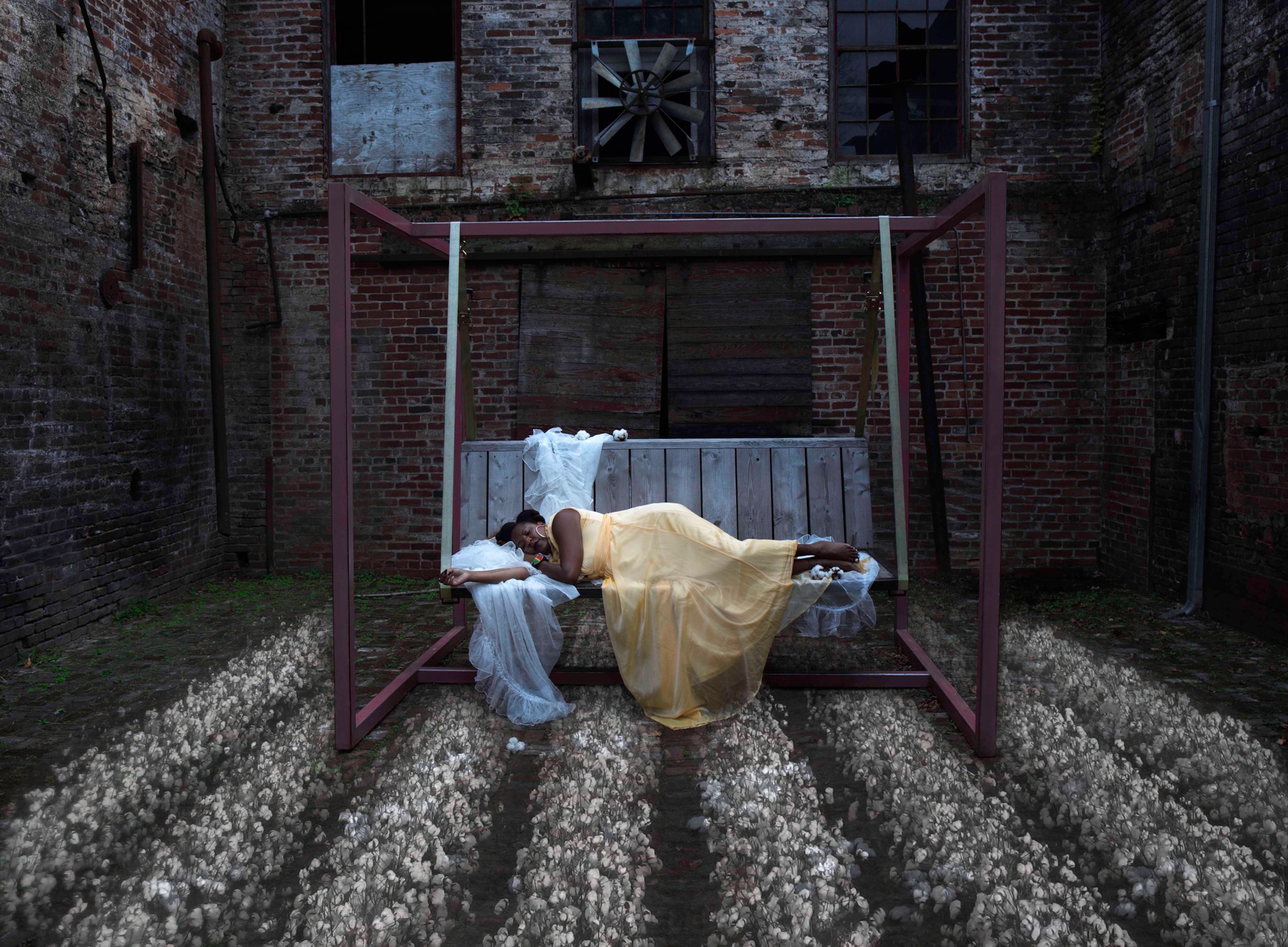
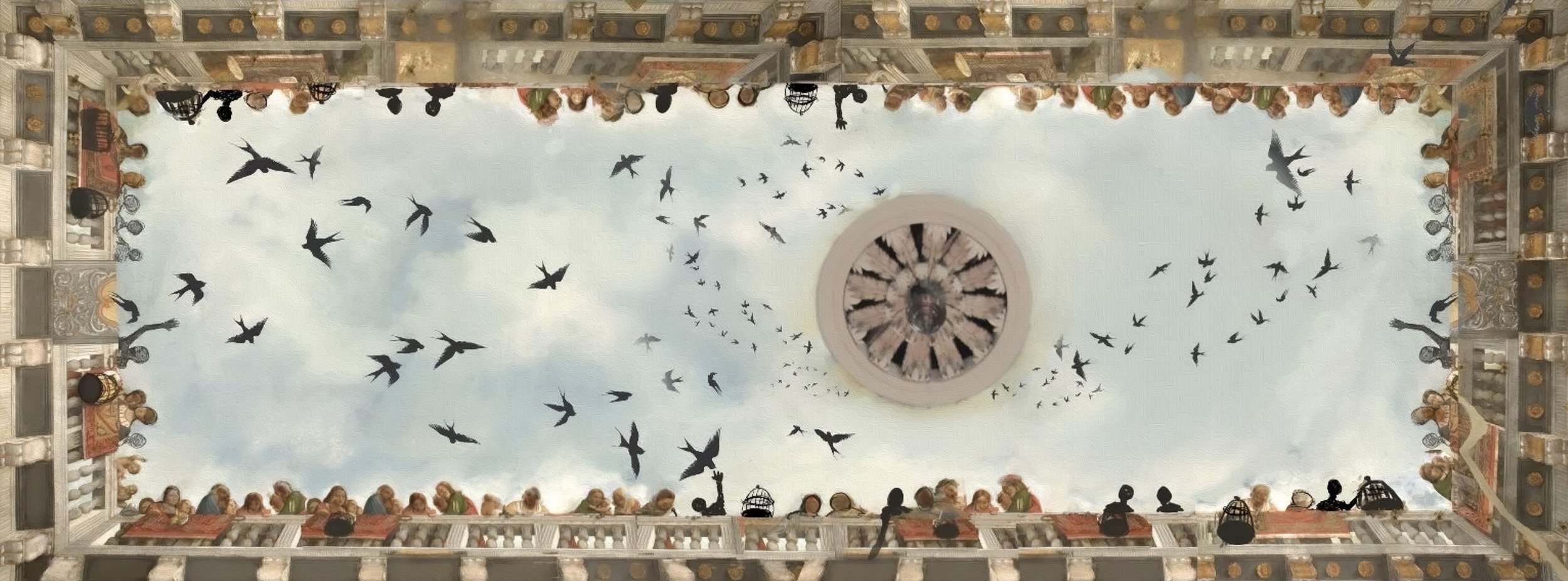
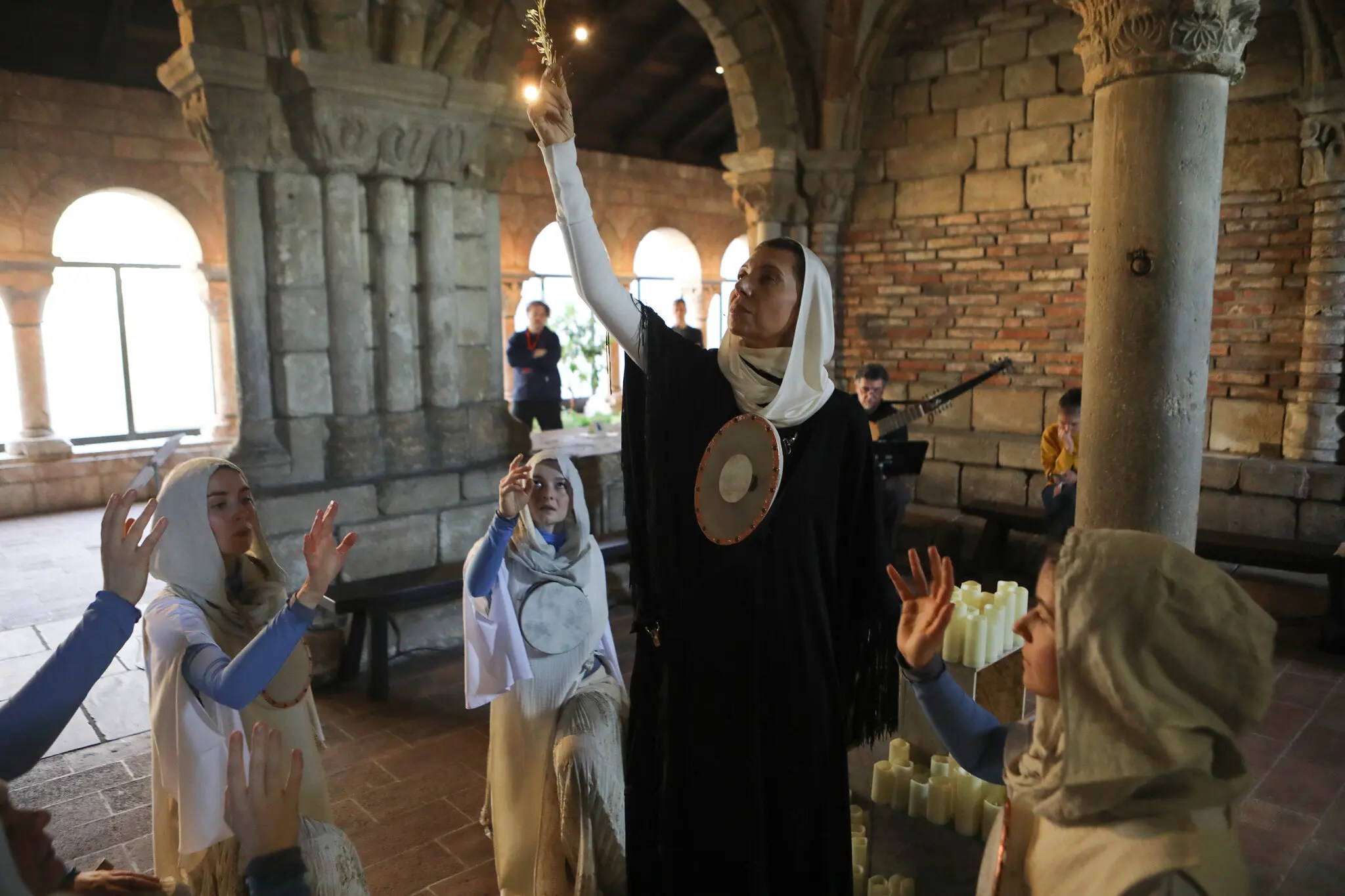

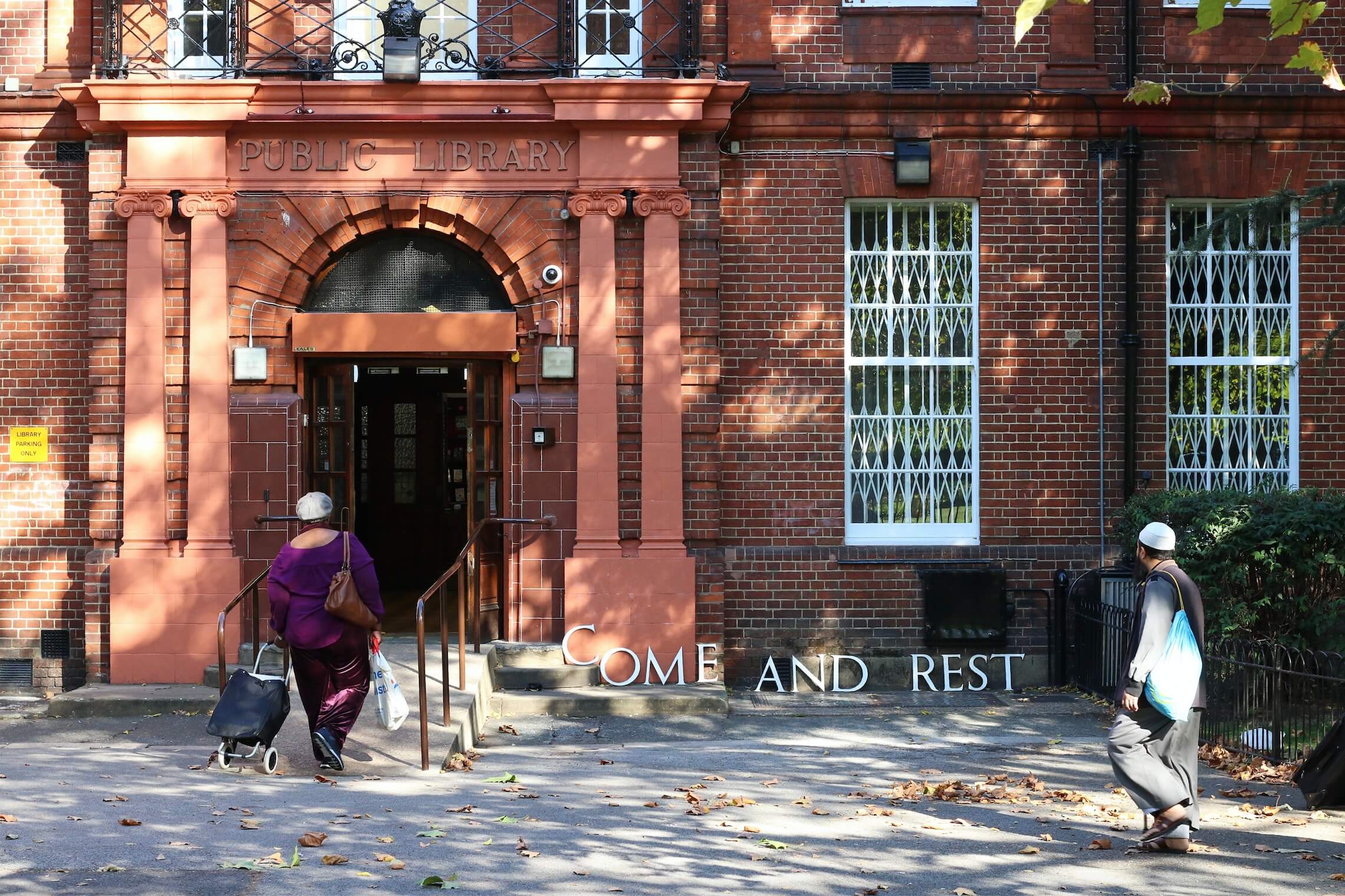
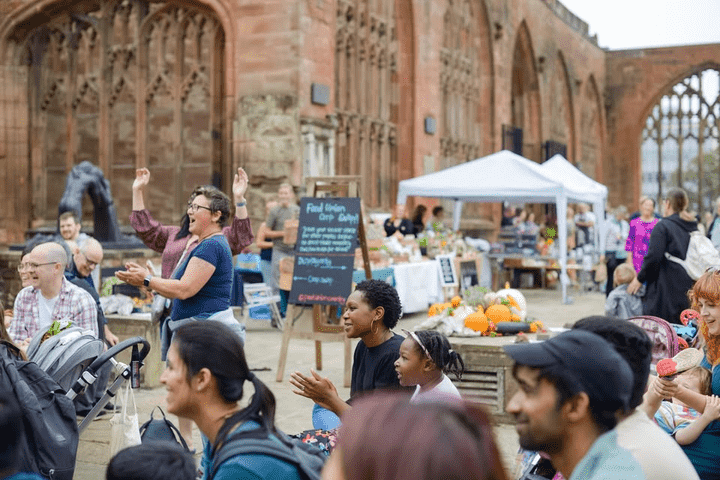

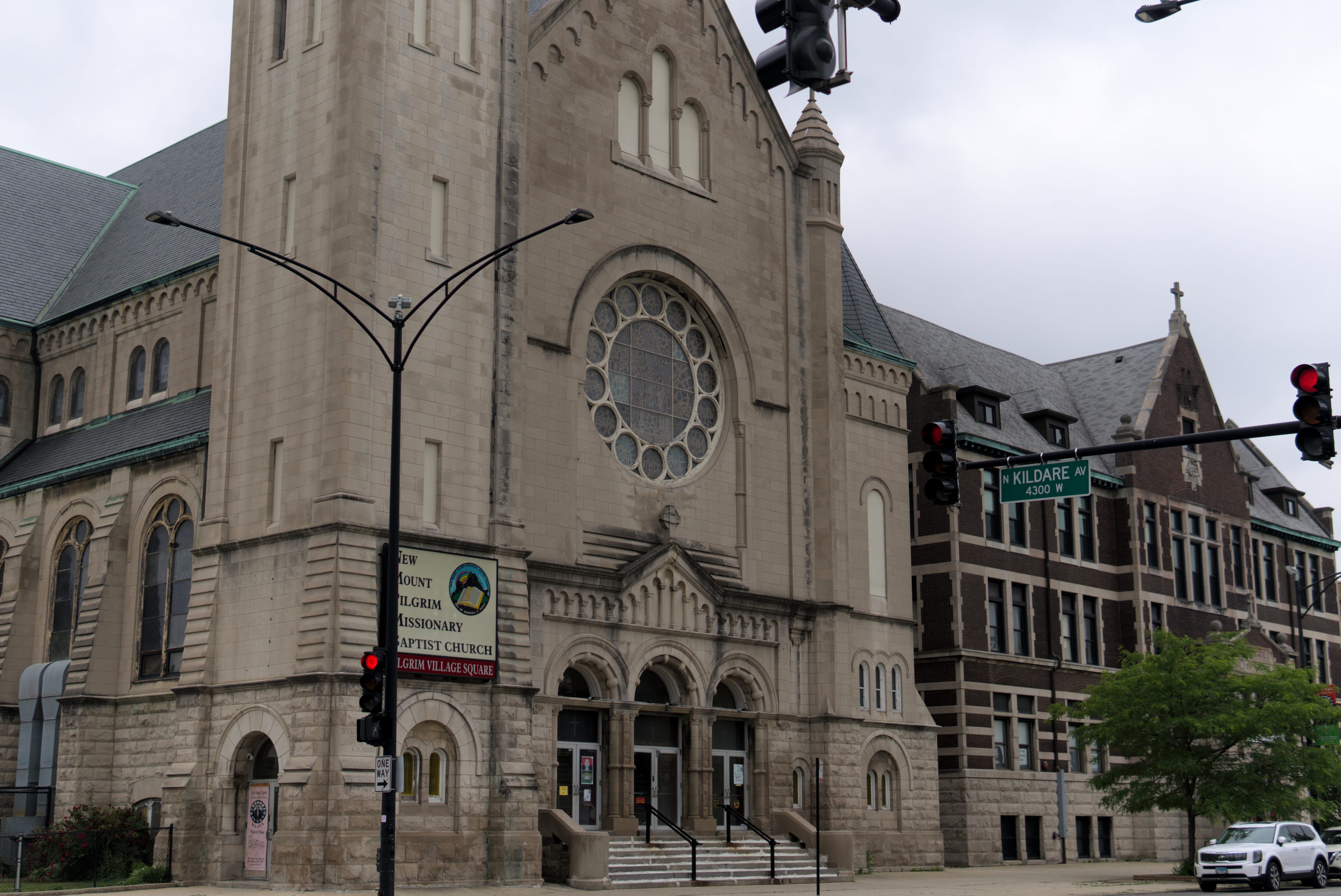


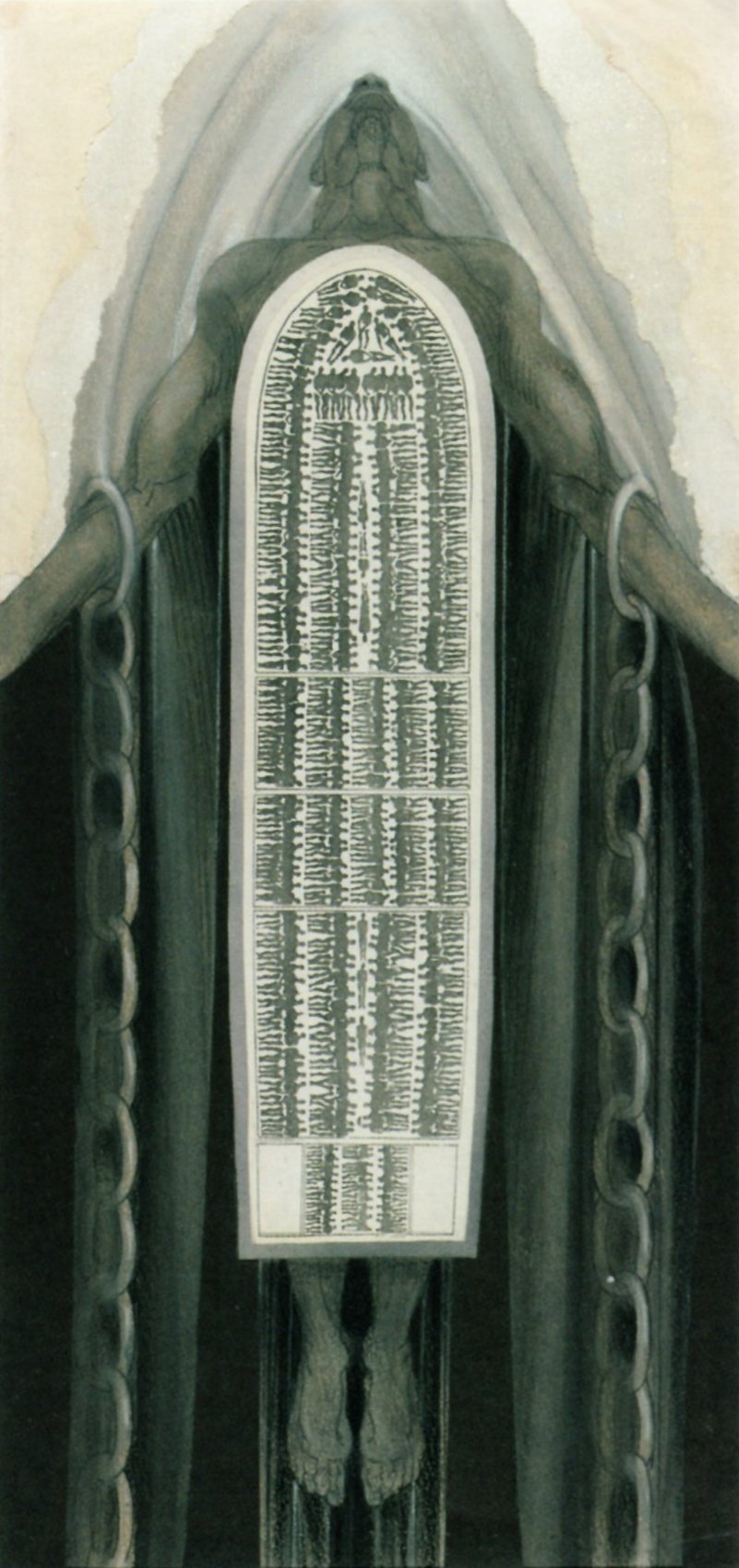


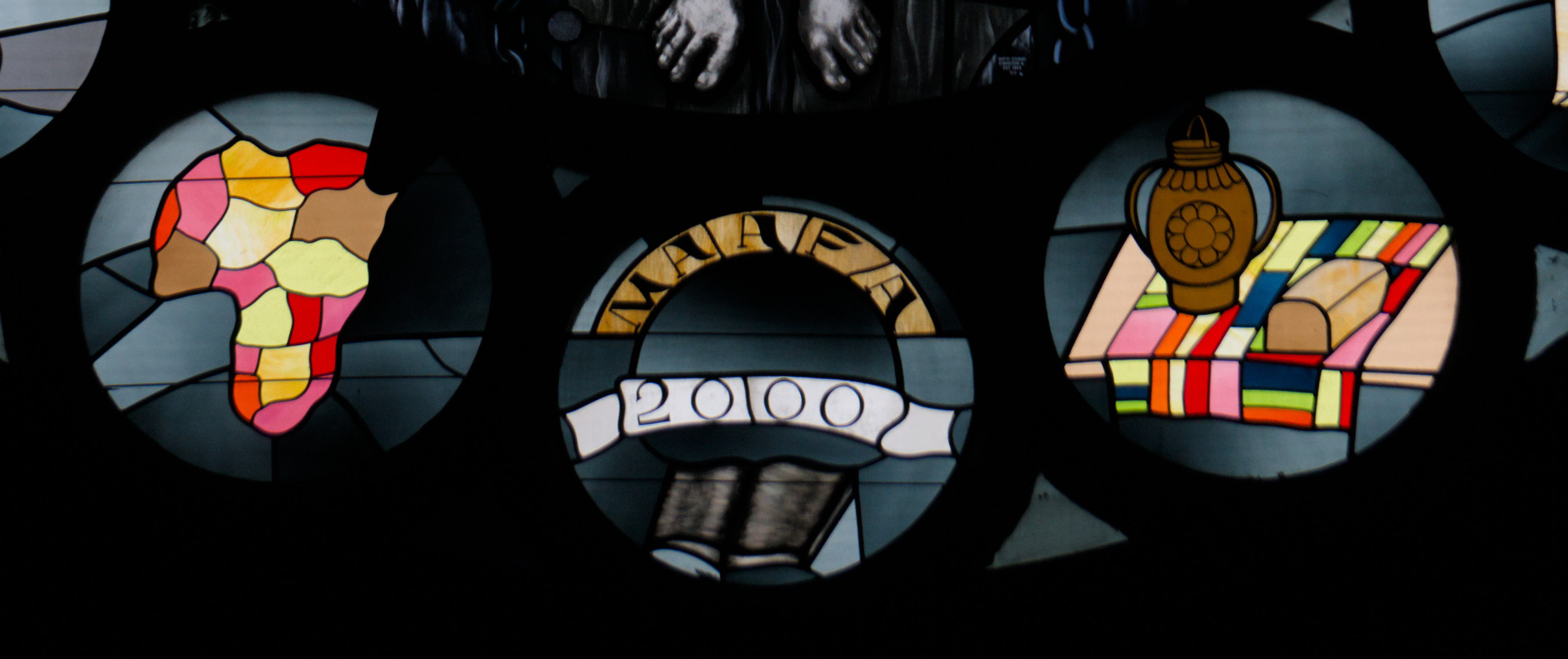


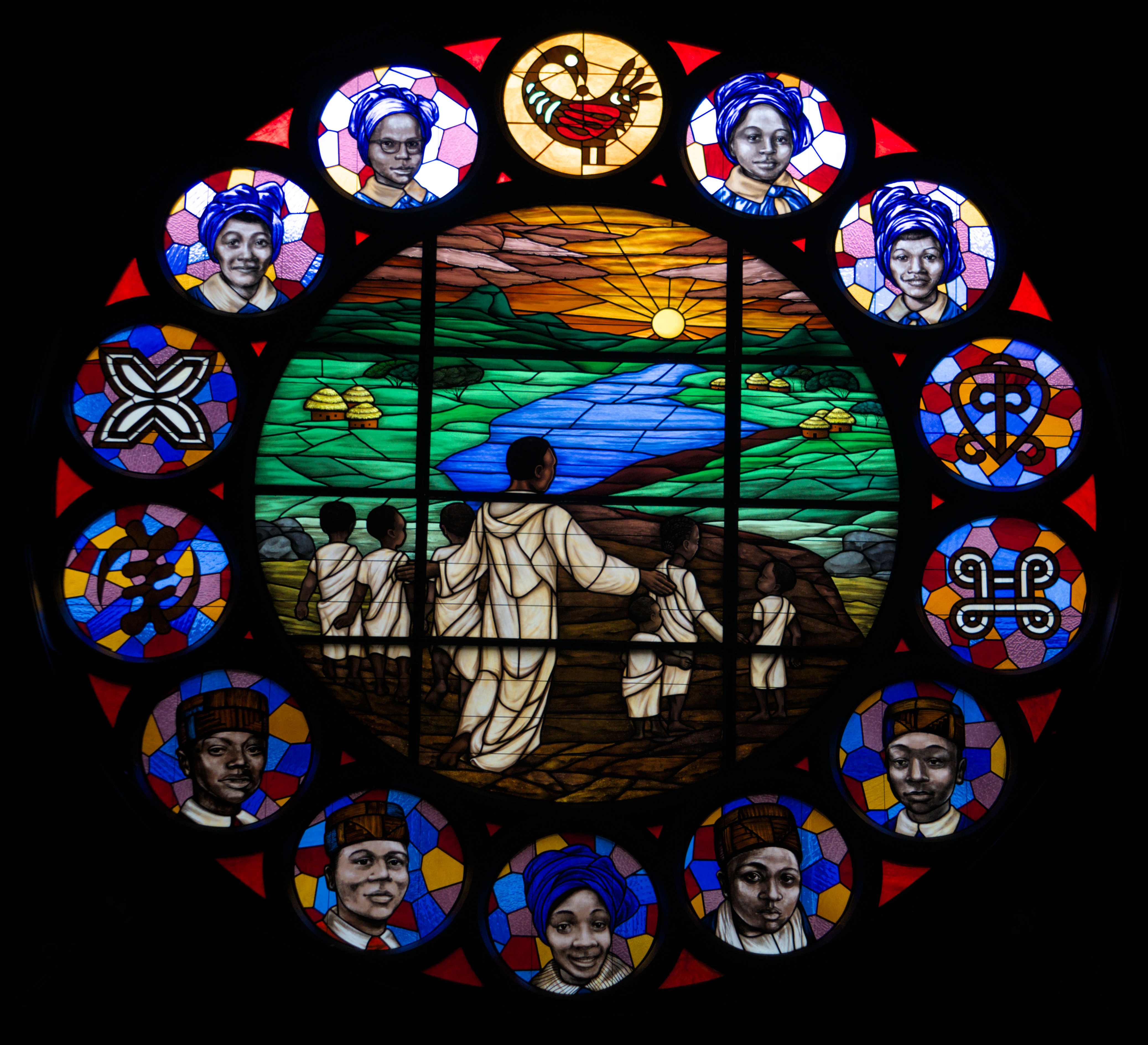



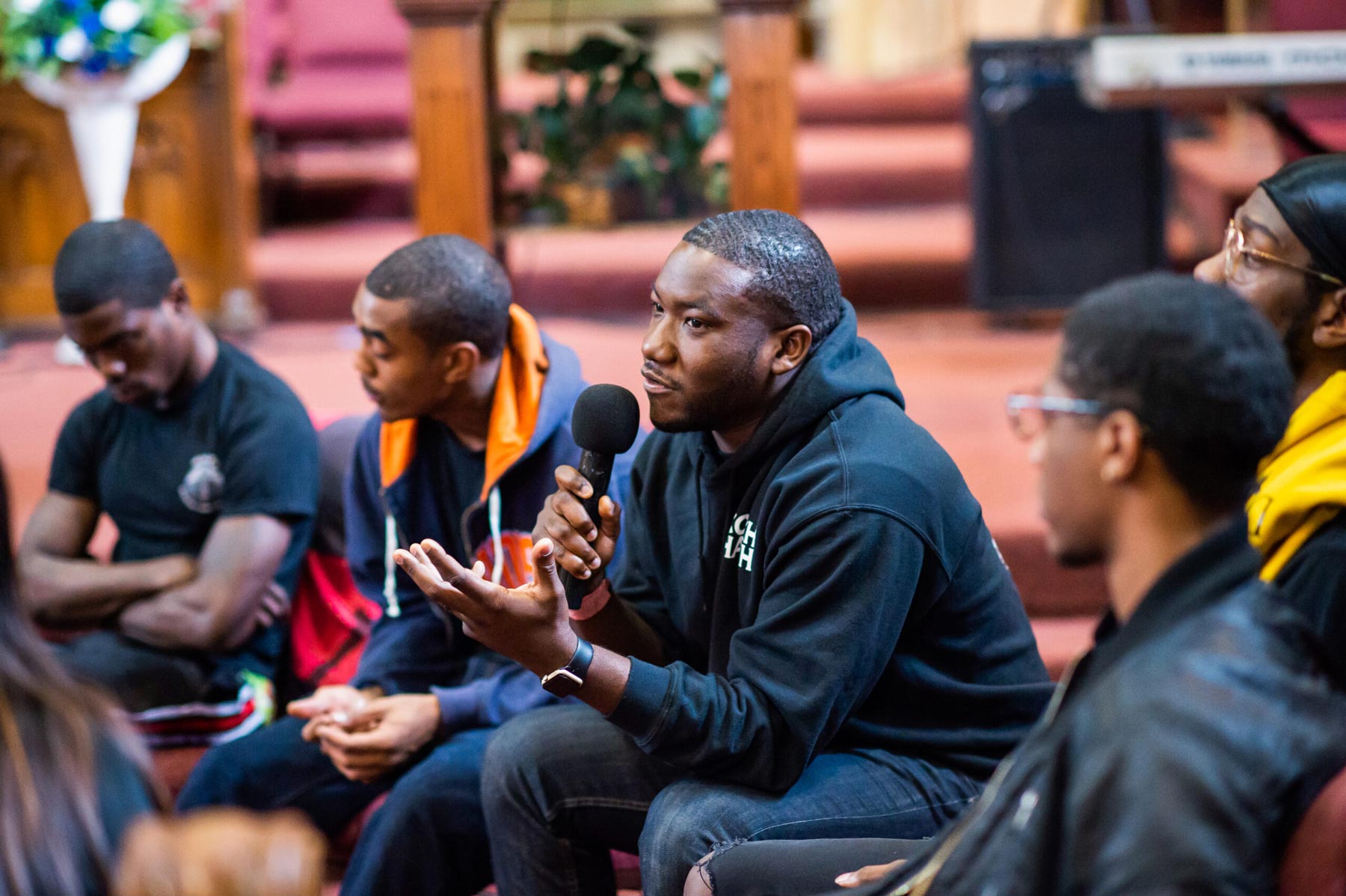


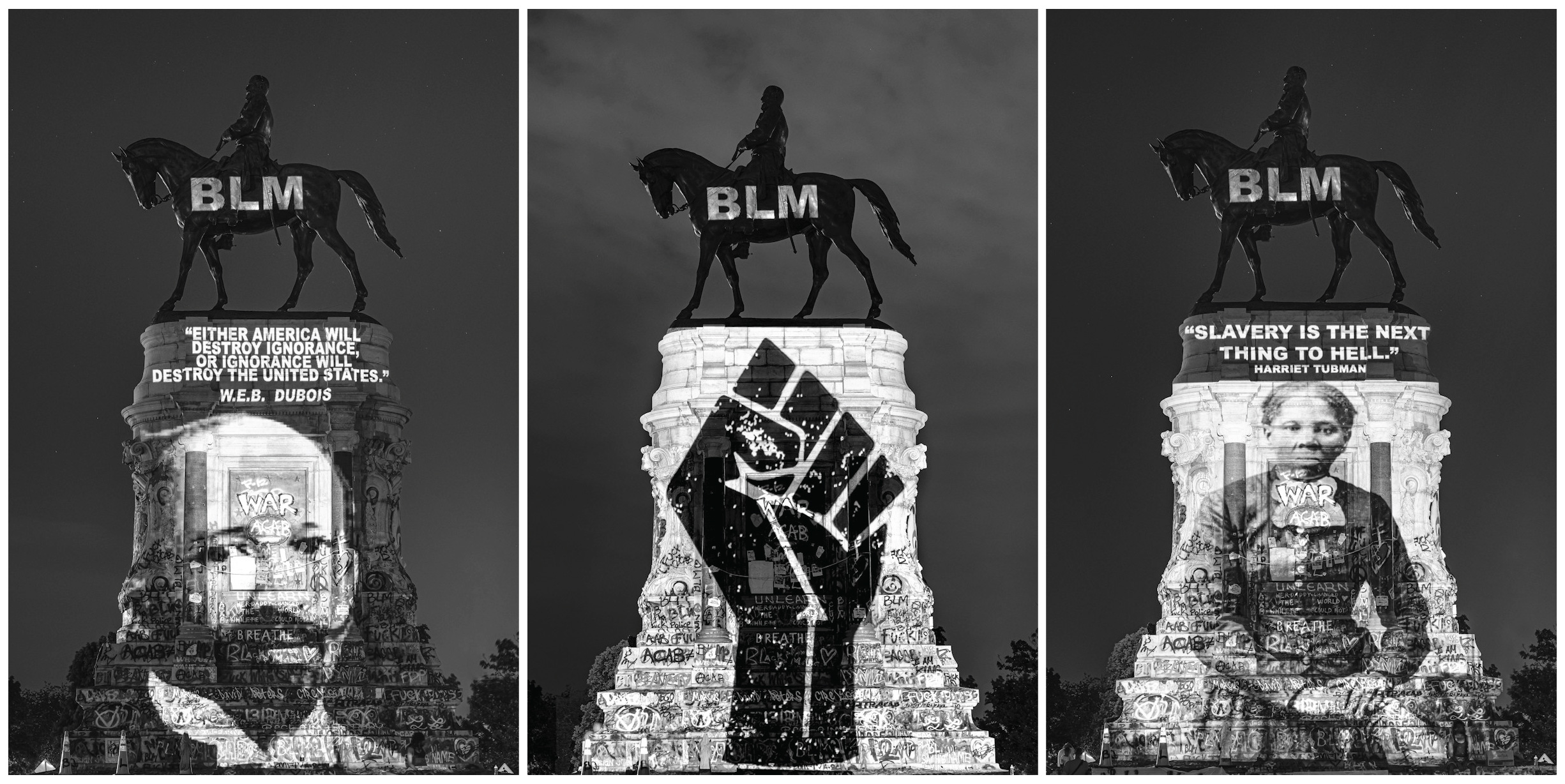
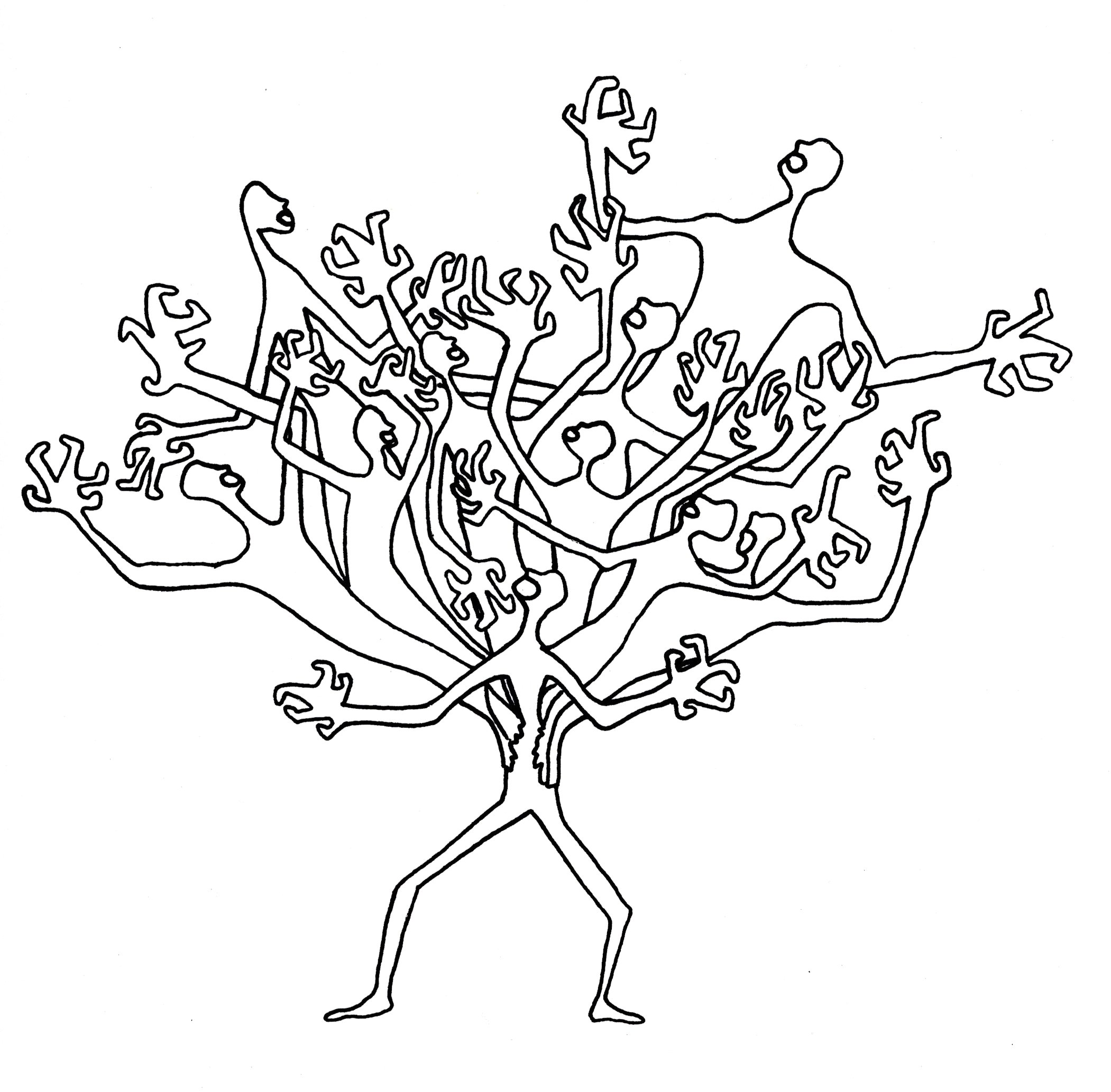

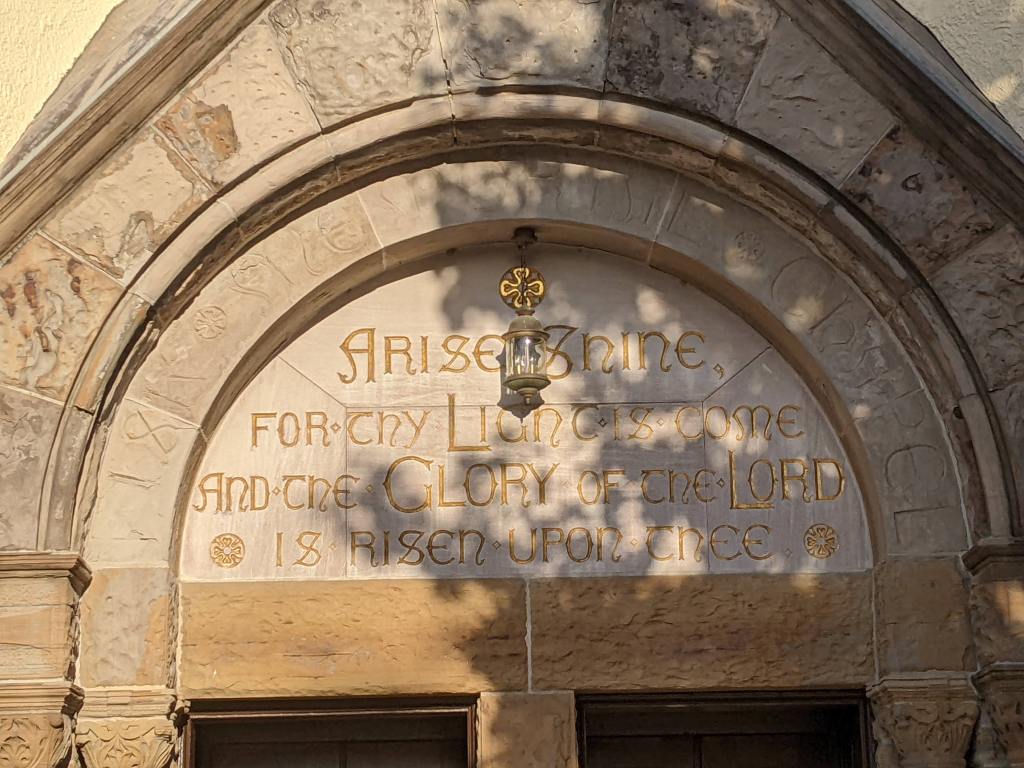


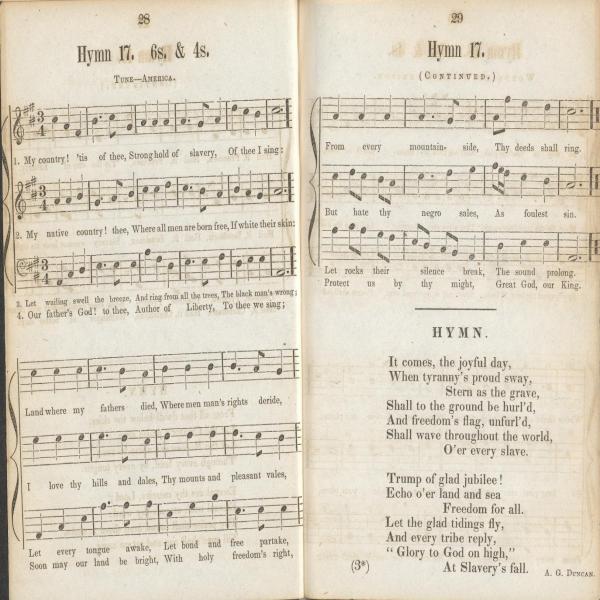
 Art & Theology