Roundup: Slaviiq in Alaska, Shrine of the Three Kings in Cologne, and more

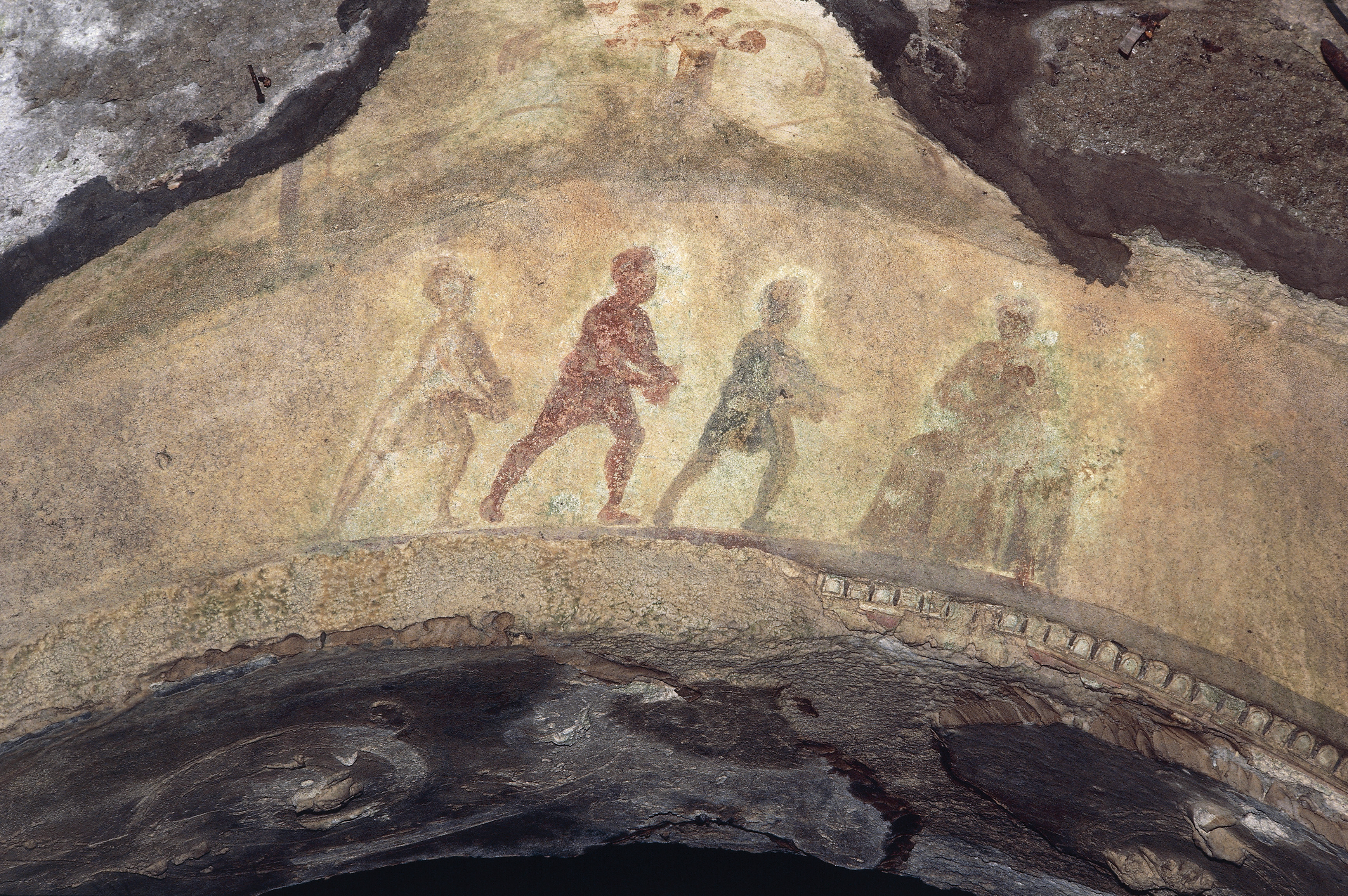
ARTICLE: “Witnessing the Divine: The Magi in Art and Literature” by Robin Jensen, Bible Review: In this 2001 article, art historian Robin Jensen traces the development of the tradition of the magi through early Christian art (catacomb frescoes, sarcophagi and funerary plaques, church mosaics) and literature.

Adoration of the Magi (catacombs)
The Adoration of the Magi, 3rd century. Fresco, Capella Graeca, Catacomb of Priscilla, Rome. Photo: Vincenzo Pirozzi.

+++

SONGS:

>> Slaviiq (“Starring”) carols in St. Paul, Alaska: In the mid-eighteenth century, Russian Orthodoxy was the first Christian denomination to take root in Alaska; Siberian trappers arrived as part of the “fur rush,” and many ended up marrying local Native women, bringing their religion into their new and growing families. Now Orthodoxy is widely practiced in Unangan (Aleut), Alutiiq (Kodiak), Yup’ik, and Tlingit communities.

Adapted from a custom originating in the Carpathian Mountains, Slaviiq (also spelled Slaviq, Slaaviq Selaviq, or Slavii), meaning “Starring,” is a multiday Native Alaskan Orthodox Christmas celebration beginning on the Feast of the Nativity of Christ on January 7. It involves processions into homes with a large decorated pinwheel star, caroling in English, Slavonic, and Native languages, traditional foods, prayers, and blessings.

The following video is a five-minute clip from a Slaviiq celebration in 2022 on Saint Paul Island, one of the homes of the Unangan people. Community members Aquilina Lestenkof and George Pletnikoff Jr. sing a few songs while a youth spins the Christmas star.

To learn more about the Slaviiq tradition, see:

>> “Bright Star,” arranged for string quartet by Ellie Consta and performed by Her Ensemble: Published in 1968, the Christmas song “Bright Star” was a collaboration between poet Janice Lovoos and composer Margaret Bonds [previously]. Her Ensemble, a UK-based women’s orchestra founded by violinist Ellie Consta to perform and promote music by female composers, encountered the song in 2021 through Lara Downes’s solo piano arrangement and decided to arrange it for strings. “We wanted to keep it as close to the original as possible because it’s just so beautiful as it is,” they write, “but we did add a couple of very subtle harmonics in the background to add a little extra Christmas charm!”

It’s an instrumental performance, but here are Lovoos’s lyrics:

Bright star, glist’ning star, shining on that holy night,
guiding shepherds in their flight to Bethlehem;

Bright star, guiding star, leading to a blessed abode,
three wise men on camels rode to Bethlehem;

Bright star, glimm’ring star, floating in your cobalt sea,
won’t you light the way for me as you did them in Bethlehem;

Sweet star, holy star, won’t you shine as bright today,
bright as when the Christ child lay
in his manger in the hay in Bethlehem, in Bethlehem.

>> “Songs of Thankfulness and Praise,” performed by Josh Bales: The Episcopal priest and singer-songwriter Josh Bales introduces an Epiphany hymn from 1862 by Christopher Wordsworth, nephew of the Romantic poet William Wordsworth. Observed annually on January 6, Epiphany (meaning “manifestation”) celebrates three events in which Jesus’s identity was made manifest: the visit of the magi, Jesus’s baptism in the Jordan, and Jesus’s first miracle at the wedding at Cana. The Western Church focuses on the magi, the Eastern Church on the baptism. Read the lyrics at Hymnary.org. The tune, SALZBURG, was composed by Jakob Hintze in 1678.

+++

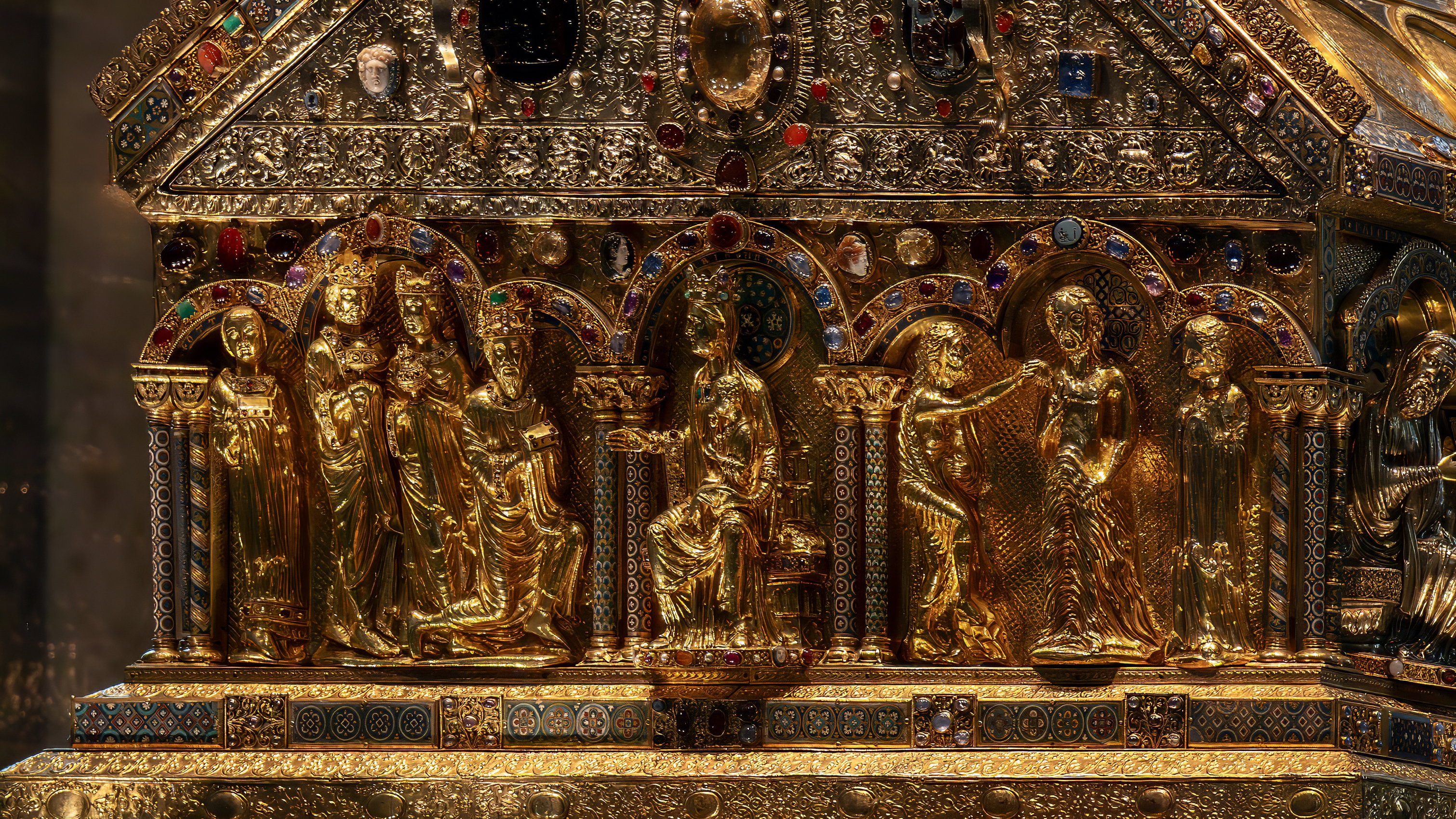
VIDEO: Nicholas of Verdun, Shrine of the Three Kings, Cologne Cathedral,” Smarthistory: I visited Cologne for the first time in fall 2025. I loved it. My only disappointment was that access to its cathedral’s most beautiful art object, the Shrine of the Three Kings, was obstructed, with the entire sanctuary and choir areas roped off, even though there was no Mass in session. I, a Protestant, was indifferent to the relics inside—the purported skulls of the magi—that have made Cologne an important pilgrimage destination since the Middle Ages. I merely wanted to see this extraordinary twelfth-century metalwork I had read about in art history books, the high point of Mosan art, from the renowned workshop of Nicholas of Verdun. If time had allowed, I could have paid for a tour that would have brought me a little closer but still at a distance. Instead, I had to resort to awkward viewing angles through metal bars.

However, a month after I returned home, Smarthistory uploaded a video that gives a closer look at the shrine, with lovely detail photographs by director Steven Zucker.  

Adoration of the Magi and Baptism (Cologne)
Nicholas of Verdun and workshop, Shrine of the Three Kings (front view), ca. 1181–1220. Oak, gold, silver gilt, copper, enamel, jewels, 155 × 112 × 224 cm. Cologne Cathedral, Germany. Photo: Steven Zucker.

The short end that faces out toward worshippers portrays, in pure gold, the Adoration of the Kings, with the three traditional sovereigns accompanied by a fourth, the Holy Roman emperor Otto IV. (He had paid for the shrine’s production—following the magi’s example, he donated a materially precious gift in homage to Christ.) To the right of this scene is the Baptism of Christ.

The figures on the sides represent prophets, apostles, and evangelists.

Roundup: Multilingual Easter song, modern performance of medieval mystery play, and more

SONGS:

>> “He Is Lord (In Every People),” adapt. Gregory Kay: In this video from 2021, members of Spring Garden Church in Toronto take turns singing the popular twentieth-century worship song (of unknown authorship) “He Is Lord” in their native languages: English, Portuguese, Arabic, Korean, and Chinese. Greg Kay, one of the church’s copastors, added a fun refrain that highlights the global character of Christianity and the lordship of Christ over all creation, which everyone joins in on. Love this idea! [HT: Liturgy Fellowship]

>> Easter Medley performed by Infinity Song, feat. Victory Boyd: Infinity Song is a sibling band from New York City that was led for years by Victory Boyd, who is now focusing on her solo music career; its current members, represented in this video from 2021, are Abraham, Angel, Israel, and Thalia “Momo” Boyd. (Victory is singing lead.) The group combines the songs “In the Name of Jesus” by David Billingsley, “Jesus Is Alive” by Ron Kenoly [previously], and “Redeemer” by Nicole C. Mullen into an Easter medley at Fount Church in New York.

>> “Yessu Jee Utheya” (یسوع جی اُٹھیا) (Jesus Is Risen), performed by Tehmina Tariq: Tehmina Tariq is a prolific gospel singer from Islamabad, Pakistan. Here she performs a song in Urdu by Nadir Shamir Khan (words) and Michael Daniel (music). Press the “CC” button on the YouTube video player to follow along with the lyrics. For a more recent Easter song that Tariq recorded, see “Zinda Huwa Hai Masih” (The Messiah Is Risen). [HT: Global Christian Worship]

+++

MEDIEVAL MYSTERY PLAY: The Harrowing of Hell from the York cycle, produced by the YMPST (York Mystery Plays Supporters Trust): From the mid-fourteenth to mid-sixteenth century in England, during the feast of Corpus Christi in early summer, villagers used to enact stories from the Bible on moveable stages called pageant wagons, which would wheel through town making various stops for performance. Playing the roles of sacred personages were not professional actors but members of the trade guilds. Such plays were banned in Tudor times but since the mid-twentieth century have enjoyed a revival.

One of the few complete surviving English mystery play cycles, consisting of forty-eight individual verse dramas of about twenty minutes each, is the York Mystery Plays, named after the historic town where they originated. One of the plays, assigned to the town saddlers, is The Harrowing of Hell. The following video is a 2018 performance sponsored by the York Mystery Plays Supporters Trust, also available on DVD. You can follow along with the script at TEAMS Middle English Texts, though note that the players do adapt it lightly. Learn more at https://ympst.co.uk/.

York Mystery Play (Harrowing of Hell)
A soul writhes in Hades, awaiting rescue by Christ, in the 2018 YMPST waggon play performance of The Harrowing of Hell

For a preview of the language, here’s Adam’s speech toward the end, after Christ binds Satan and casts him into a fiery pit (I love the alliterative phrase “mickle is thy might”!):

A, Jesu Lorde, mekill is thi myght
That mekis thiselffe in this manere
Us for to helpe as thou has hight
Whanne both forfette, I and my feere.
Here have we levyd withouten light
Foure thousand and six hundreth yere;
Now se I be this solempne sight
Howe thy mercy hath made us clene.

Modern English translation:

Ah, Lord Jesus, mickle [great] is thy might
That makest thyself in this manner
To help us as thou hast said
When both of us offended thee, I and my companion [Eve].
Here have we lived without light
For four thousand six hundred years;
Now see I by this solemn sight
How thy mercy hath made us clean.

The YMPST performance incorporates modern elements in the music and costuming, including an electric guitar–driven rendition of the American gospel song “Ain’t No Grave” at the opening and closing.

+++

ART COMMENTARIES:

Below are discussions of two medieval English artworks of the Harrowing of Hell, one of my favorite religious subjects. In modern-day parlance, the word “hell” (an English translation of the Greek “Tartarus” or “Hades” or the Hebrew “Sheol”) typically connotes a place of eternal torment where the damned go, but in Christian theology it was long used more broadly to refer to the compartmentalized netherworld where both righteous and unrighteous souls go after death to await the general resurrection that will take place at Christ’s return.

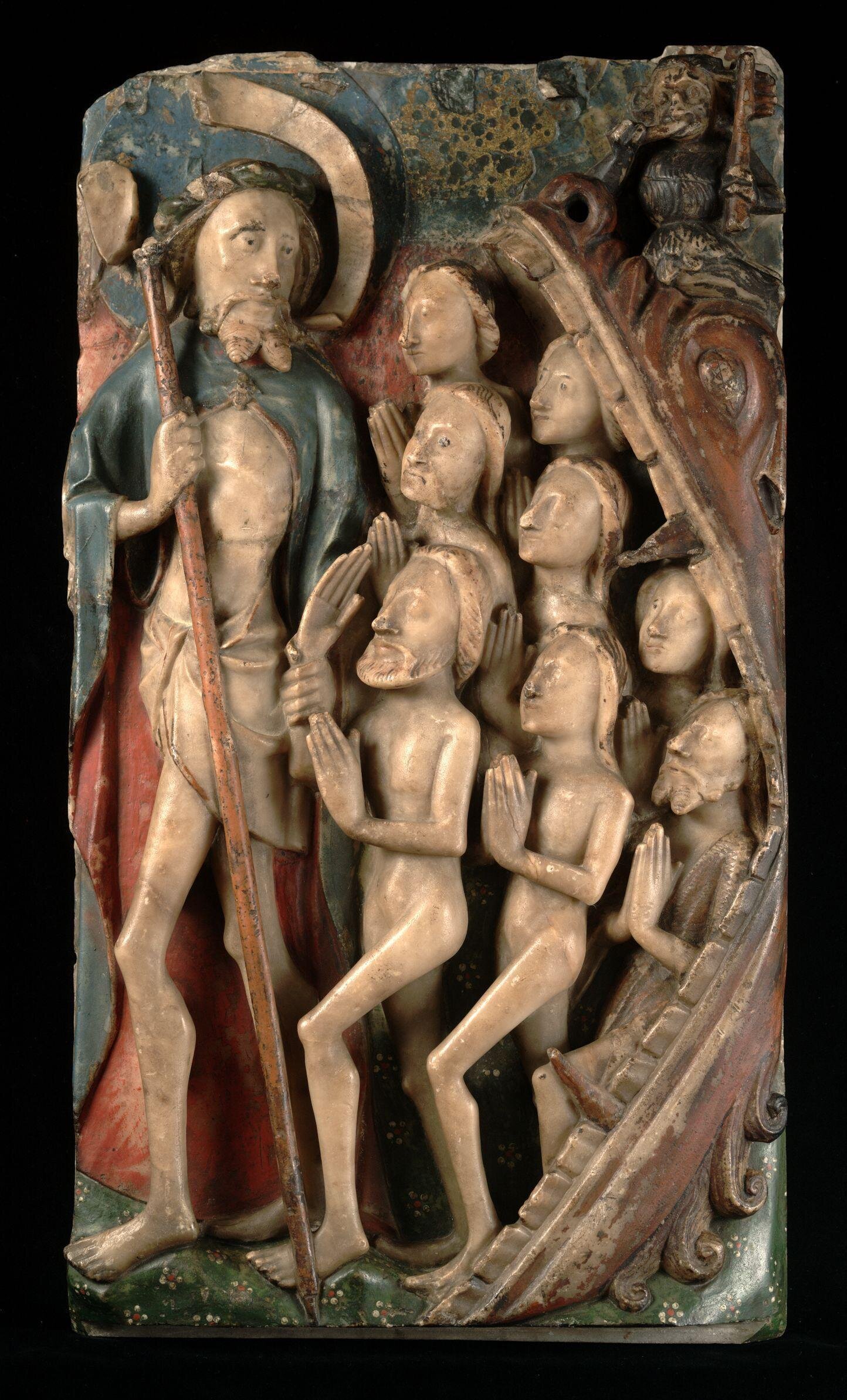
>> “The Harrowing of Hell” (Smarthistory video): Drs. Nancy Ross and Paul Binski discuss a fifteenth-century alabaster that’s in the collection of the Victoria and Albert Museum in London. What sticks out to me—the commentators mention it only briefly—is that Christ stands on a green, flowery lawn! The artist is probably alluding to the springtime, the new life, that Jesus’s resurrection ushered in: the redeemed exit the hellmouth, barefoot like their Lord, onto this lush grass. This detail reminds me a bit of Fra Angelico’s Noli me tangere fresco at San Marco in Florence.

Harrowing of Hell alabaster
The Harrowing of Hell, England, 15th century. Carved, painted, and gilt alabaster, 58 × 32 cm. Victoria and Albert Museum, London.

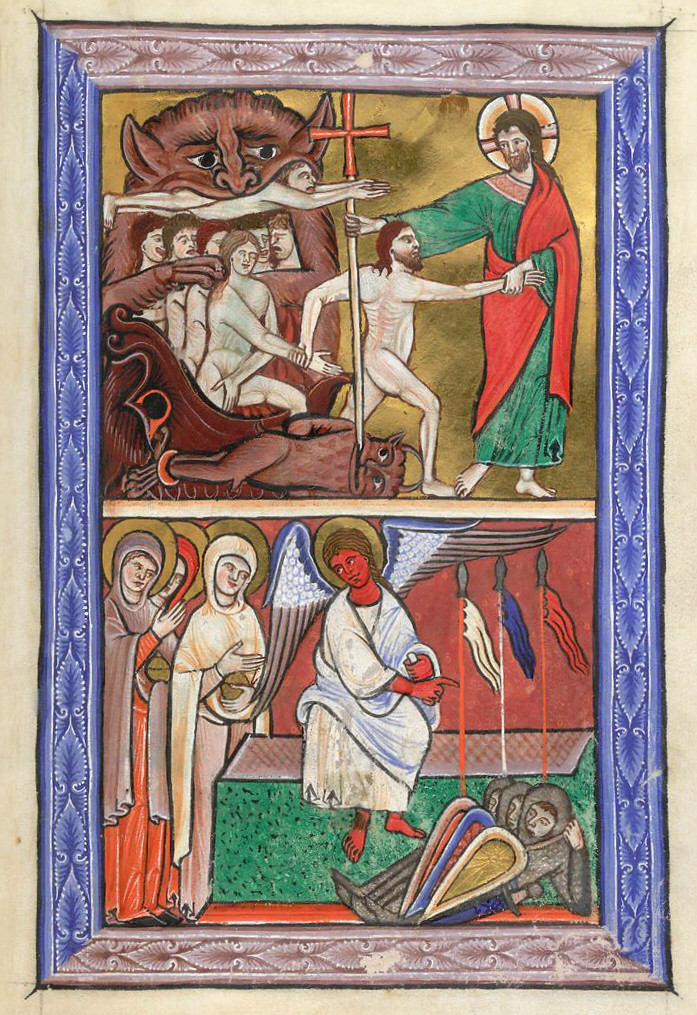
>> “Under the Earth” by Joanna Collicutt: The Visual Commentary on Scripture is a free online resource that provides material for teaching, preaching, researching, and reflecting on the Bible, art, and theology. For one of her three VCS-commissioned “visual commentaries” on Philippians 2:1–11, Rev. Dr. Joanna Collicut has selected an illumination of the Harrowing of Hell from a thirteenth-century psalter. The Christ Hymn that forms the meat of this passage celebrates Jesus’s descent and ascent, and in verse 10 it says that at his name, every knee will bow in heaven, on earth, and “under the earth.” This phrase had never stood out to me until now.

Resurrection (Arudel 157)
The Harrowing of Hell and The Holy Women at the Tomb, from an English psalter (BL Arundel 157, fol. 110), ca. 1220–40. Ink, tempera, and gold leaf on vellum, 29.5 × 20 cm. British Library, London.

Roundup: Jesus’s surprising path to kingship, Isenheim Altarpiece video, “Varsha,” and more

Heads up: For each day of Holy Week (March 24–30) and the Easter Octave (March 31–April 7), I will be publishing a short post that pairs a visual artwork with a piece of music as a way of inviting you into the narrative. Here are examples from previous years:

Holy Week Series 2023 | Easter Series 2023
Holy Week Series 2022 | Easter Series 2022
Holy Week Series 2021 | Easter Sunday 2021
Holy Week Series 2020 | Easter Sunday 2020

+++

VIDEO: “How Jesus Became the King of the World (That He Always Was)” by BibleProject: Written and directed by Jon Collins and Tim Mackie with art direction by Robert Perez, this six-minute animated video explores how Jesus brought God’s kingdom to earth and how we can live under God’s reign today.

+++

SONGS:

>> “Lead On, O King Eternal” (second verse), retuned by John Hatfield: This Palm Sunday hymn was originally written by Ernest W. Shurtleff in 1887 and paired with an older tune by Henry T. Smart. It has largely fallen out of favor due to its cringey first verse, with its militant language of battle and conquest. However, John Hatfield, a singer-songwriter from Houston, calls our attention to the second verse, which reframes what comes before, turning the martial imagery on its head. Our battle, Shurtleff writes in verse 2, is waged not with weapons but with holiness, peace, and deeds of love and mercy. “Let’s be about that, my friends,” Hatfield urges. In this Instagram video he sings “the better verse” of “Lead On, O King Eternal” to a new tune he wrote for it, self-accompanied on ukulele:

>> “Anointed One of God” by Tom Fisher: Written around 2004, Tom Fisher revisited this hymn of his in 2022, updating some of the lyrics. Where he hums, he originally had the word “Hallelujah,” but he wanted to experiment with something more subdued and to honor the tradition, observed in Roman Catholicism, Episcopalianism, and other denominations, of removing the “Alleluias” from worship services during Lent in recognition of the solemnity of the season. The song exalts Jesus as the Christ, literally “Anointed One” (messiah in Hebrew), who, contrary to expectations, fulfilled this identity by being crucified. According to Matthew’s and Mark’s Gospel accounts, an unnamed woman recognized Jesus’s messiahship at a house in Bethany two days before his death, pouring oil on his head—a prophetic act that named him king. The scent probably lingered in his hair and on his body as he went to the cross. [HT: Liturgy Fellowship]

>> “傷跡 (Scars)” by Takafumi Nagasawa, performed by Ruah Worship: A sibling group from Japan covers this contemporary worship song about Jesus taking up his cross and with it the weight of humanity’s sin. “The scars on your hands are the sign of your love for me,” goes the refrain. Turn on Closed Captioning for English subtitles.

+++

VIDEO: “The mystical brilliance of Grünewald’s Isenheim Altarpiece” by Smarthistory: This is one of my all-time favorite artworks—I’ve given talks on it, with a focus on its matchless Crucifixion panel—though I admit I’ve only seen it in books and on screens; it’s on my list of things to see before I die (it’s at the Unterlinden Museum in Colmar, France). Drs. Beth Harris and Steven Zucker have created this excellent video introduction to it, featuring wonderful photography and commentary and an animation that shows the altarpiece’s multiple configurations.

Isenheim Altarpiece (detail)
Matthias Grünewald (German, ca. 1470–1528), Crucifixion (detail) from the Isenheim Altarpiece, 1515

+++

INSTRUMENTAL INTERLUDE: “Varsha” by Reena Esmail, for cello or viola, from The Seven Last Words Project: Commissioned by Juilliard Historical Performance to compose an interlude between the “I Thirst” and “It Is Finished” movements of Haydn’s Seven Last Words of Christ, Reena Esmail wrote “Varsha” for cello, drawing on Hindustani raags that evoke rain. (She is one of seven composers who worked on the project, each contributing their own interlude.) In this video it’s performed by Madeleine Bouissou, who premiered it April 16, 2019, at the Cathedral of Saint John the Divine in New York City as part of The Seven Last Words Project.

Describing her artistic vision, Esmail writes, “Christ thirsts. Rain comes from the distance (Megh Malhaar). There is a downpour around him (Miyan ki Malhaar), but he grows slowly weaker. His next words make clear that even the rain is not enough: his thirst is of another sort, which cannot be quenched by water. And so, it is finished.”

Esmail is an Indian American composer living in Los Angeles, known for combining the worlds of Indian and Western classical music in her work.

Advent, Day 13: A star shall rise out of Jacob

LOOK: Virgin and Child with a Prophet catacomb fresco

Mary breastfeeding (Catacomb of Priscilla)
Virgin and Child with a Prophet, 3rd century. Fresco in the Catacomb of Priscilla on the Via Saleria, Rome. Photo: Scala / Art Resource. [view wider shot]

Deep in the Catacomb of Priscilla in Rome, one of the early Christian underground burial places (named after the donor of the land), is an arched ceiling fresco of a woman breastfeeding her child under an apple tree. Beside her a man points up to a star that’s resting over their heads among the fruit.

Dating to the third century, this image is the earliest known depiction of the Virgin Mary, and one of the oldest of Christ. The identity of the third figure is less sure, but it’s most likely the Gentile prophet Balaam, who, in the power of God’s Spirit, prophesied to King Balak of Moab that “a star shall come out of Jacob, and a scepter shall rise out of Israel” (Num. 24:17).

Although this prophecy had a more immediate fulfillment in King David, it has also been interpreted in a messianic sense since as early as Justin Martyr (ca. 100–165), who wrote, “And that he [Christ] should arise like a star from the seed of Abraham, Moses showed beforehand when he said, ‘A star shall arise from Jacob, and a leader from Israel’” (Dialogue with Trypho, chap. 106).

Irenaeus (ca. 130–200) wrote that the star the magi followed to seek out the newborn Christ was the one prophesied by Balaam (Against Heresies, bk. 3, chap. 9.2), and Origen (ca. 185–254) maintained that Numbers 24:17 was the Hebrew Bible verse the magi found that instigated their journey (Against Celsus, bk. 1, chap. 60).

Priscilla Catacomb arch
Arched ceiling detail from Gallery 3 of the Catacomb of Priscilla, Rome. The central image, in stucco, portrays a shepherd and two sheep, while at the far right, oriented in a different direction, is a fresco of the Virgin and Child. The artworks are damaged by age.

Other suggestions put forward as to the identity of the pointing figure in this catacomb fresco have been a magus; the Hebrew prophet Isaiah, who declared that “a virgin shall conceive” (Isa. 7:14) and enjoined his people to “arise, shine; for thy light is come, and the glory of the Lord is risen upon thee” (Isa. 60:1); and, from Hans-Ruedi Weber, John the Baptist, who “came as a witness to testify to the light, so that all might believe. . . . The true light, which enlightens everyone, was coming into the world” (John 1:6–9).

To explore more of the Catacomb of Priscilla, see the following Smarthistory video by Beth Harris and Steven Zucker. Today’s featured image is introduced at 3:35:

LISTEN: “There Shall a Star from Jacob Come Forth” (original title: “Es wird ein Stern aus Jacob aufgeh’n”), from Christus, Op. 97 | Original German text compiled by Christian Charles Josias von Bunsen, 1846, from Numbers 24:17 and the hymn “Wie schön leuchtet der Morgenstern” by Philipp Nicolai, 1599; English translation of lines 4–10 by Catherine Winkworth, 1863 | Music by Felix Mendelssohn, 1846–47, based on Nicolai’s hymn tune | Performed by the St. Olaf Choir, the St. Olaf Cantorei, the St. Olaf Chapel Choir, the Manitou Singers, Viking Chorus, and the St. Olaf Orchestra, dir. Robert Scholz, on Love Divine, Illumine Our Darkness: Christmas at St. Olaf, 2002

There shall a star from Jacob rise up,
And a sceptre from Israel come forth,
To dash in pieces princes and nations.

How brightly beams the morning star!
With sudden radiance from afar,
With light and comfort glowing!
Thy word, Jesus, inly feeds us,
Rightly leads us,
Life bestowing.
Praise, oh praise such love o’erflowing.

The musical work “Es wird ein Stern aus Jacob aufgeh’n” (There Shall a Star from Jacob Come Forth) is from an unfinished oratorio by Felix Mendelssohn (1809–1847), which the composer’s brother Paul gave the name Christus and published posthumously as Opus 97. The first performance took place in 1852.

The first three lines are taken from Numbers 24:17, while the latter portion is from the Lutheran hymn “Wie schön leuchtet der Morgenstern” (How Brightly Beams the Morning Star) by Philipp Nicolai, written in 1597 and first published in 1599 with the title “Ein geistlich Brautlied der gläubigen Seelen von Jesu Christo ihrem himmlischen Bräutigam, gestellet über den 45. Psalm des Propheten David” (A spiritual wedding song of the faithful soul about Jesus Christ, her heavenly groom, made over the 45th psalm of the Prophet David). The tune it was published with was adapted by Nicolai, it appears, from an older tune found in the Strasbourg Psalter of 1538—which is further adapted here by Mendelssohn.

In Mendelssohn’s piece, the first two lines about an emerging luminary from the lineage of Jacob are lovely and lofty, repeated in different and overlapping voices over the course of a minute-plus. But then the third line cuts in with emphatic force: “To dash in pieces princes and nations.” Its violence is jarring, very far from the peaceful sentiments we’re used to associating with this time of year! Even as it adds drama and interest to the composition, its militant language is unsettling.

But it does honor the larger context of Balaam’s prophecy:

So he [Balaam] uttered his oracle, saying,

“The oracle of Balaam son of Beor,
    the oracle of the man whose eye is clear,
the oracle of one who hears the words of God
    and knows the knowledge of the Most High,
who sees the vision of the Almighty,
    who falls down but with eyes uncovered:
I see him but not now;
    I behold him but not near—
a star shall come out of Jacob,
    and a scepter shall rise out of Israel;
it shall crush the foreheads of Moab
    and the heads of all the Shethites [a Moabite tribe].
Edom will become a possession,
    Seir [an alternative name for Edom] a possession of its enemies,
    while Israel does valiantly.
One out of Jacob shall rule
    and destroy the survivors of Ir [‘City’].”

(Num. 24:15–19)

The mercenary prophet Balaam had been hired by Balak, king of Moab, to curse Israel. See, the Israelites had escaped slavery in Egypt some forty years prior and were looking for land to settle. Having been refused passage through, they had just conquered Amorite country, which used to belong to Moab, and Balak feared Moab would be next.

Despite being a non-Israelite, Balaam heard words from Yahweh, Israel’s God. Balak recognized Balaam as an authority, as did others, and thought he might be persuaded for a fee to issue a prophecy in Moab’s favor. But Balaam told him he would speak only the words of Yahweh.

The passage above is the fourth and final oracle Balaam pronounced on this mission to Moab. In it he says that Moab and Edom would be conquered—a prophecy that came to pass with King David (2 Sam. 8:2–12; cf. Ps. 60:8).

Christians, as we have seen, often extract verses from longer Old Testament passages, prophetic or otherwise, and read into them messianic significance—pointers to Jesus Christ. Even the New Testament authors, and Jesus himself, did this. Did the Old Testament authors intend such meanings? Probably not in most places, not to the extent that premodern Christian interpreters suggested. (That’s not to say Jesus didn’t fulfill biblical prophecies. Quite the contrary!)

But many Christian biblical scholars acknowledge what’s been called the sensus plenior, or “fuller sense,” of scripture—a term popularized by Raymond E. Brown in his book The Sensus Plenior of Sacred Scripture (1955). Sensus plenior, Brown writes, is “that additional, deeper meaning, intended by God but not clearly intended by the human author, which is seen to exist in the words of a biblical text (or group of texts, or even a whole book) when they are studied in the light of further revelation or development in the understanding of revelation.”

Some people consider this kind of reading to be distortive. But others, including myself, consider it creative. Rabbinical literature often does the same thing: finds meaning in and beyond a scripture passage’s strict historical context that the original authors likely did not intend but that open up the text in new ways. Sensus plenior says that studying a book of the Bible only in its historical and immediate textual context and for what it would have meant to its original audience is limiting, incomplete. Of course, the opposite approach, which does run rampant in many Christian communities, is also problematic: divesting scripture passages of their contexts, reflexively backfilling all the Old Testament with “Jesus” at the expense of understanding the texts on their own terms.

I think the application of “To dash in pieces princes and nations” (a paraphrase from Balaam’s prophecy) to Jesus’s birth is confusing, as Jesus was nonviolent, rejecting conquest. Perhaps you could say that Christ’s rule would (rhetorically) dash Herod’s kingdom to pieces, as it challenged the modus operandi of empire. There’s a new caesar in town, a new king on the throne, and his law of love, his gospel of peace, trumps the laws and proclamations of all earthly rulers.

The last six lines of Mendelssohn’s song return to the sweet, gentle tones of the song’s opening, exulting in the radiant glory of Christ, the Morning Star (Rev. 22:16), who shines forth from the pages of God’s word.


This post is part of a daily Advent series from December 2 to 24, 2023 (with Christmas to follow through January 6, 2024). View all the posts here, and the accompanying Spotify playlist here

Roundup: Historiated crosses, English ballad carol of the Crucifixion, and more

Holy Week begins Sunday. I will be publishing short daily devotional posts during that time and through the first eight days of Easter. Also: don’t forget about the Art & Theology Holy Week Playlist and Eastertide Playlist! I’ve made some new song additions since last year, mixed in to preserve the narrative flow.

+++

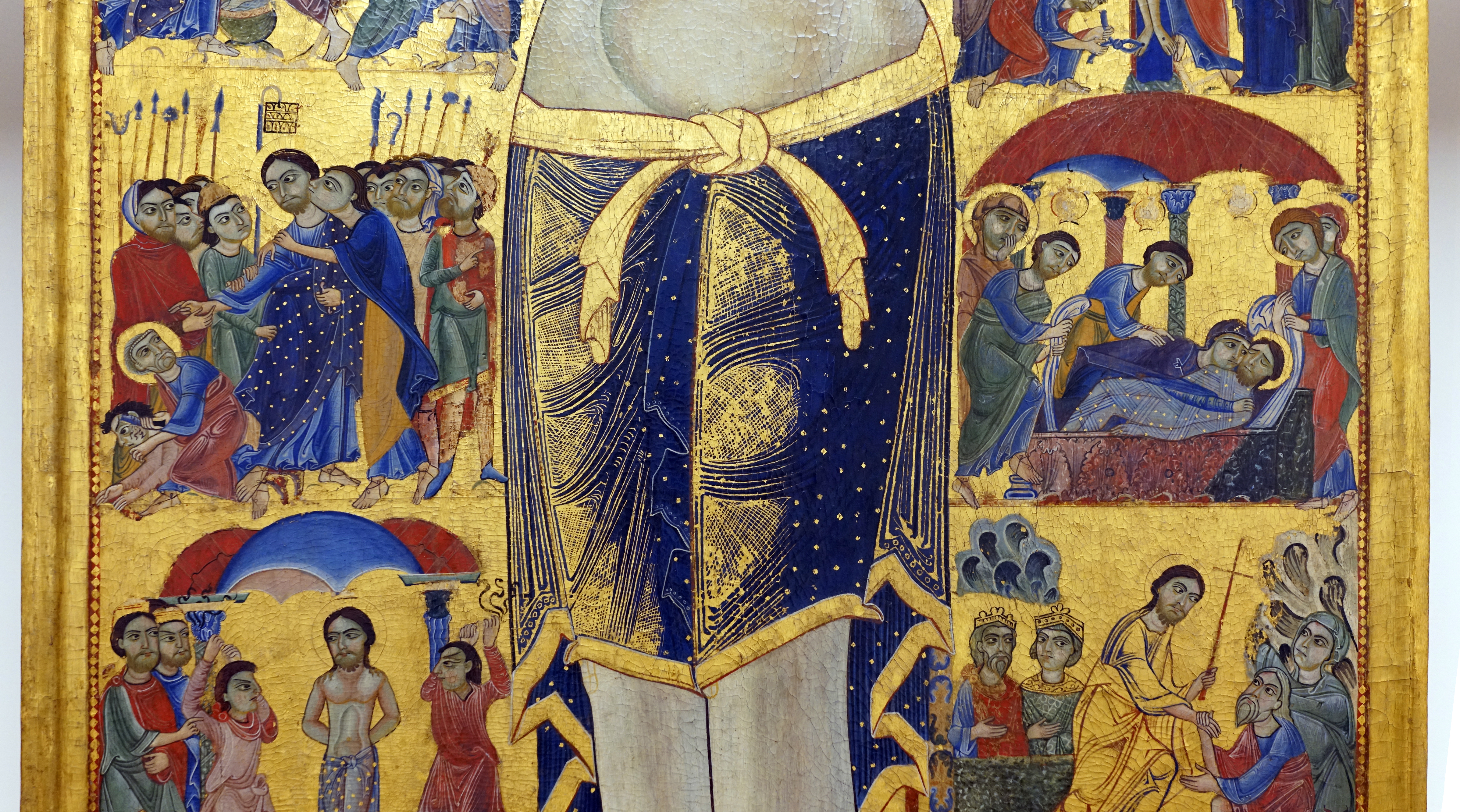
ART VIDEO: “The Crucifixion, c. 1200 (from Christus triumphans to Christus patiens)”: When I was a student in Florence for a semester, my first paper for my Italian history, art, and culture class traced the evolution of the painted wood-panel crucifix in late medieval Italy, from the Christus Triumphans (Triumphant Christ) type to Christus Patiens (Suffering Christ). I lived less than a five-minute walk from the Uffizi, which has in its collection a beautiful example of each—explored by Drs. Steven Zucker and Beth Harris in this short Smarthistory video. Longtime readers of the blog may recognize the latter, which I posted back in 2018.

Painted cross, Pisa (detail)
Painted cross (detail), Pisa, ca. 1180–1200. Tempera and gold leaf on wood, 277 × 231 cm. Galleria degli Uffizi, Florence, Inv. 432. [object record]

Zucker provides wonderful photos of both in high resolution on his Flickr page (start here and scroll right)—the full crosses and details of each apron scene—available for free noncommercial use under a Creative Commons license. And there are many other art historical images there as well!

+++

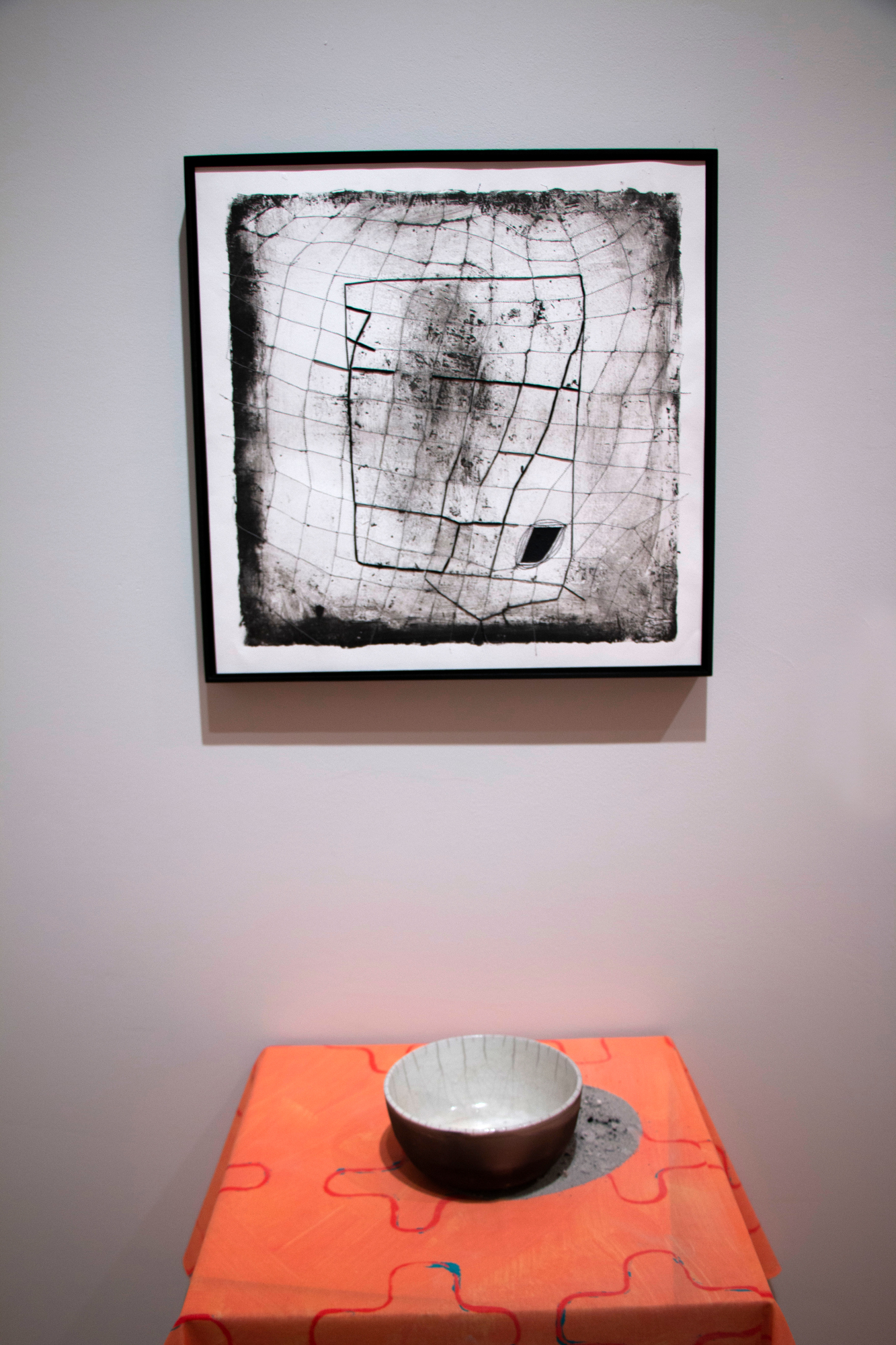
ONLINE EXPERIENCE: “Anamnesis: Journey through the Stations of the Cross”: This year visual artist Daniel Callis and the music and liturgy collective The Many collaborated on a self-guided set of online Stations of the Cross. There are fifteen total, which are being released one at a time every morning and evening from March 30 through April 5. Each station consists of an artwork, a prayer, a song, and a written meditation that help us enter into lament.

Callis, Dan_Grief Station 1
Daniel Callis (American, 1955–), Grief Station #1, Prognosis, 2022. Ink, oil, palm ash, fiber, clay, ash, fabric, 60 × 24 × 24 in. (total work). Photo courtesy of the artist.

The artworks are by Callis, and they’re from his Stations: Resurgam series, a body of work that was just exhibited this month at Green Art Gallery at Biola University in La Mirada, California. He began the series in January 2021 in response to the death of his son, Jeremy David Callis (1980–2020). It consists of fifteen mixed-media works on paper (his process involves printing, “wounding,” stitching, etc.) and fifteen raku-fired offering bowls that incorporate, from the cooling process, copies of letters, hospital documents, and drawings from Jeremy. “They are about pain and the absurd insistent pursuit of hope,” Callis says of the series. Resurgam is Latin for “I shall rise again.”

The songs are by The Many.

+++

BOOK EXCERPT from The Unvarnished Jesus: A Lenten Journey by Brian Zahnd: In this post from his blog, Pastor Brian Zahnd excerpts a passage from his book The Unvarnished Jesus (2019). “To interpret the meaning of the cross is more than a life’s work—in fact, it has and will remain the work of the church for millennia,” he writes. “The cross is the ever-unfolding revelation of who God is, and it cannot be summed up in a simple formula. This is the bane of tidy atonement theories that seek to reduce the cross to a single meaning. The cross is many things: It’s the pinnacle of God’s self-disclosure. It’s divine solidarity with all human suffering. It’s the shaming of the principalities and powers. It’s the point from which the satan is driven out of the world. It’s the death by which Christ conquers Death. It’s the abolition of war and violence. It’s the supreme demonstration of the love of God. It’s the re-founding of the world around an axis of love. It’s the enduring model of co-suffering love we are to follow. It’s the eternal moment in which the sin of the world is forgiven . . .” Read more.

+++

SONGS:

>> “The Leaves of Life”: “The Leaves of Life,” alternatively titled “The Seven Virgins,” is a traditional English ballad carol of Christ’s passion, first set down in the nineteenth century. It is narrated by (the apostle?) Thomas, who on a fateful Friday runs into the Virgin Mary and six of her companions, who are looking for Jesus. He directs them to the hill where Jesus is being crucified (“And sit in the gallery” may be a corruption of “The city of Calvary”). The women tearfully fly to the site, and Jesus tries to console his mother from the cross before breathing his last. The song ends with Thomas imbibing a strong scent of rose and fennel as he meditates on Christ’s love. [HT: Global Christian Worship]

Here the song is performed in the chapter house of Wells Cathedral in Somerset by William Parsons, founder of the British Pilgrimage Trust and author of Singing for Our Supper: Walking an English Songline from Kent to Cornwall, a book about the seven months he spent as a wandering minstrel. Parsons refers to it as a gypsy carol because Ralph Vaughan Williams collected one version of it from the Roma singer Esther Smith during his 1908–13 collecting trips that resulted in the publication, with Ella May Leather, of Twelve Traditional Carols from Herefordshire (1920).

>> “Were You There”: This African American spiritual is performed here by Pegasis, a vocal trio of sisters—Marvelis, Rissel, and Yaina Peguero Almonte—originally from the Dominican Republic but now living in Green Bay, Wisconsin. It’s as if they’re the three Marys singing their testimony! The song is on their 2016 album Peace Through Praise, which they released under the name The Peguero Sisters. Their harmonies are gorgeous.

+++

PODCAST EPISODE: “Malcolm Guite: Poems on the Passion”: In this special passion- and resurrection-themed Nomad devotional episode from 2018, Malcolm Guite reads and reflects on three of his poems, and David Benjamin Blower performs an original three-part song that he wrote in response and that has not been released elsewhere (see 4:30, 16:04, and 27:18).

Guite’s “Jesus dies on the cross,” part of his Stations of the Cross sonnet cycle, was inspired by a line from George Herbert’s poem “Prayer”: “God’s breath in man returning to his birth.” And his “Easter Dawn” [previously] is based in part on a sermon by the seventeenth-century Anglican bishop Lancelot Andrewes. Paraphrasing Andrewes, Guite says, “Jesus is the gardener of Mary [Magdalene]’s heart—her heart is all rent and brown and wintery, and with one word, he makes all green again.” Beautiful! For more on the theme of Jesus as gardener, see my 2016 blog post “She mistook him for the gardener.”

Roundup: “El Shaddai” (new song), everyday Black life in pictures, and more

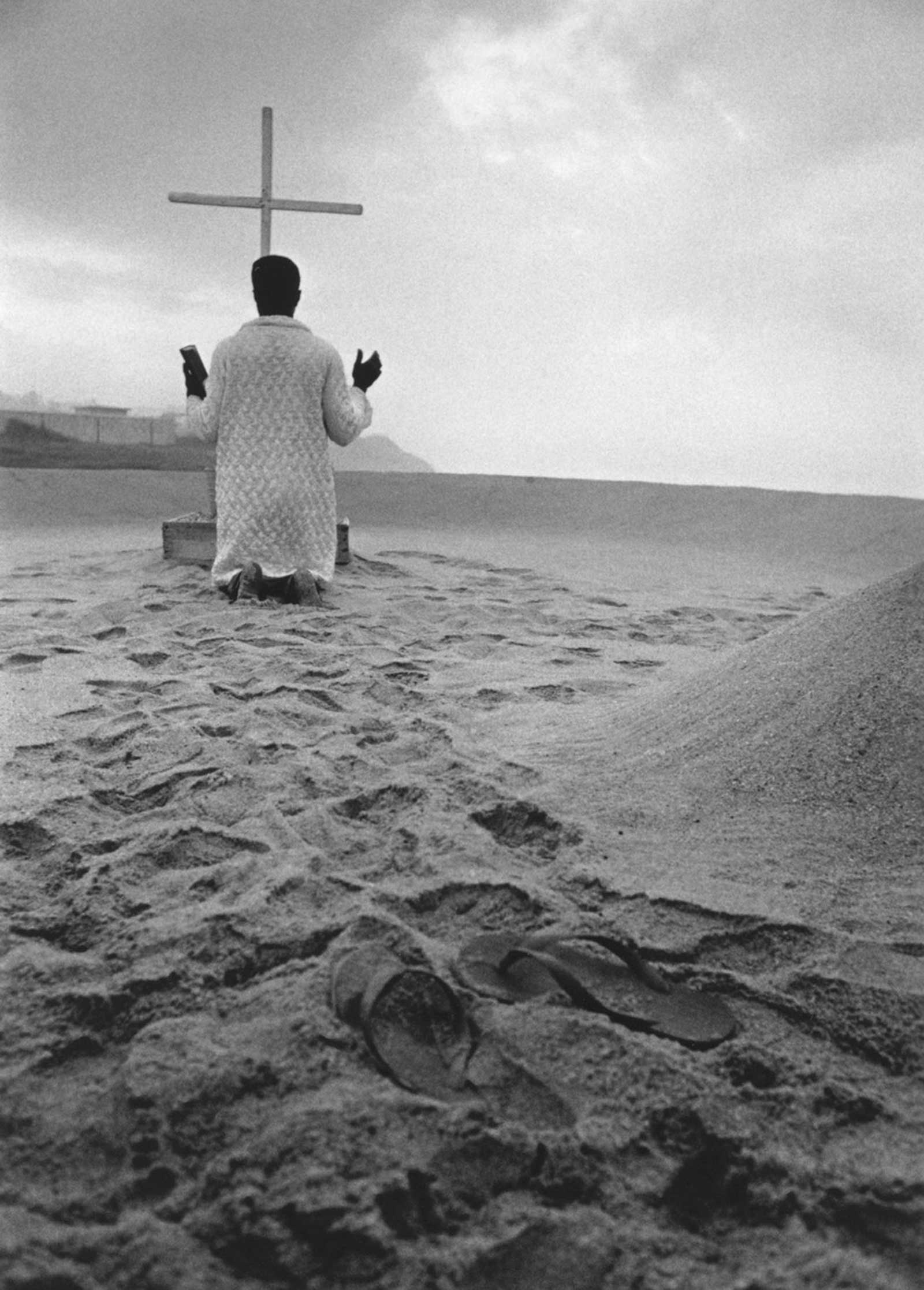
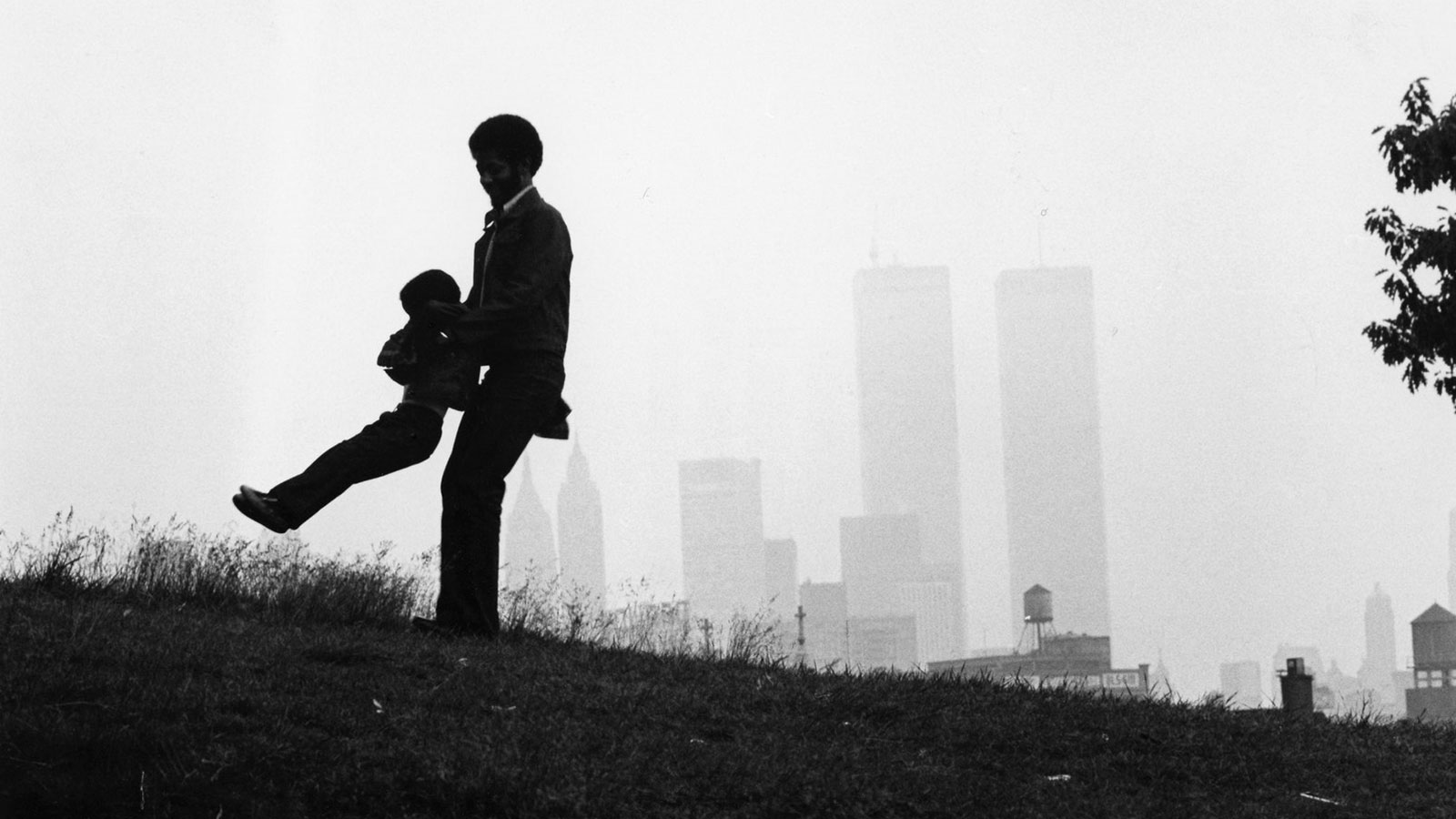
PHOTO COMPILATION: “Chester Higgins’s Life in Pictures”: Chester Higgins Jr. (b. 1946) is an American photographer whose work focuses on everyday Black life; “it is inside simple moments where I look for windows into larger meaning,” he says. He was a staff photographer for the New York Times for more than four decades, and his work is in the permanent collection of the Museum of Modern Art. This heavily illustrated New Yorker article is a good introduction to his oeuvre, in which religious belief and practice feature prominently. I found out about him through the photography compilation book Standing in the Need of Prayer: A Celebration of Black Prayer.

Higgins, Chester_Sunrise Prayer
Chester Higgins (American, 1946–), Sunrise Prayer on Osu Beach, Accra, Ghana, 1973

Higgins, Chester_Father Swinging Son, Brooklyn
Chester Higgins (American, 1946–), Father Swinging Son, Brooklyn, 1972

+++

SONGS:

>> “El Shaddai” by Victory: On January 27 singer-songwriter Victory Boyd, who goes professionally by the mononym Victory, released her latest single, “El Shaddai.” El Shaddai is an ancient Hebrew name for God whose original meaning is unclear but which is often translated into English as “God Almighty”—although “God of the Mountains,” “the Full-Breasted God” (referring to God’s nourishment of God’s children), or “the All-Sufficient One” have also been posited. Its first appearance in the Bible is in Genesis 17:1, where God tells Abram, “’I am El Shaddai; walk before me, and be blameless.”

Read the lyrics in the YouTube video description.

>> “Come Unto Me” by Take 6: A friend recently introduced me to the American a cappella gospel sextet Take 6. Formed in 1980 on the campus of Oakwood College in Huntsville, Alabama, and still active, they incorporate sophisticated jazz harmonies into the tradition of Black gospel “quartet” singing. They are featured on Spike Lee’s Do the Right Thing soundtrack and have won ten Grammys.

This 1988 performance for a Heritage USA TV spot features the group’s six original vocalists: Claude V. McKnight III, Mark Kibble, Mervyn Warren, David Thomas, Cedric Dent, and Alvin Chea.

>> “He’s Got the Whole World in His Hands” by Peter Collins: I love what Peter Collins does with this African American spiritual! This video was his submission to Tyler Perry’s #HesGotTheWholeWorldChallenge from 2020 (which I featured here). It didn’t make the final cut, but I’m so glad it’s out there.

+++

LITERARY EXCERPT from The Color Purple by Alice Walker: This short passage from Alice Walker’s 1982 Pulitzer Prize–winning novel is taken from a conversation between the protagonist, Celie, and her friend Shug, about pleasure, gratitude, and grace. Shug refers to God as “it” (“God ain’t a he or a she”), and her statement about the necessity of enjoying God’s good creation and being open to surprise provides the source of the title.

I’m embarrassed to say that although I saw and really liked the 1985 Steven Spielberg film adaptation of The Color Purple, I’ve never read the book! I plan to rectify that before December, when another film adaptation—of the 2005 stage musical based on Walker’s novel—is coming out, directed by Blitz Bazawule. It stars Fantasia, H.E.R., Colman Domingo (Euphoria), Taraji P. Henson (Hidden Figures), Danielle Brooks (Orange Is the New Black), Jon Batiste, and more.

+++

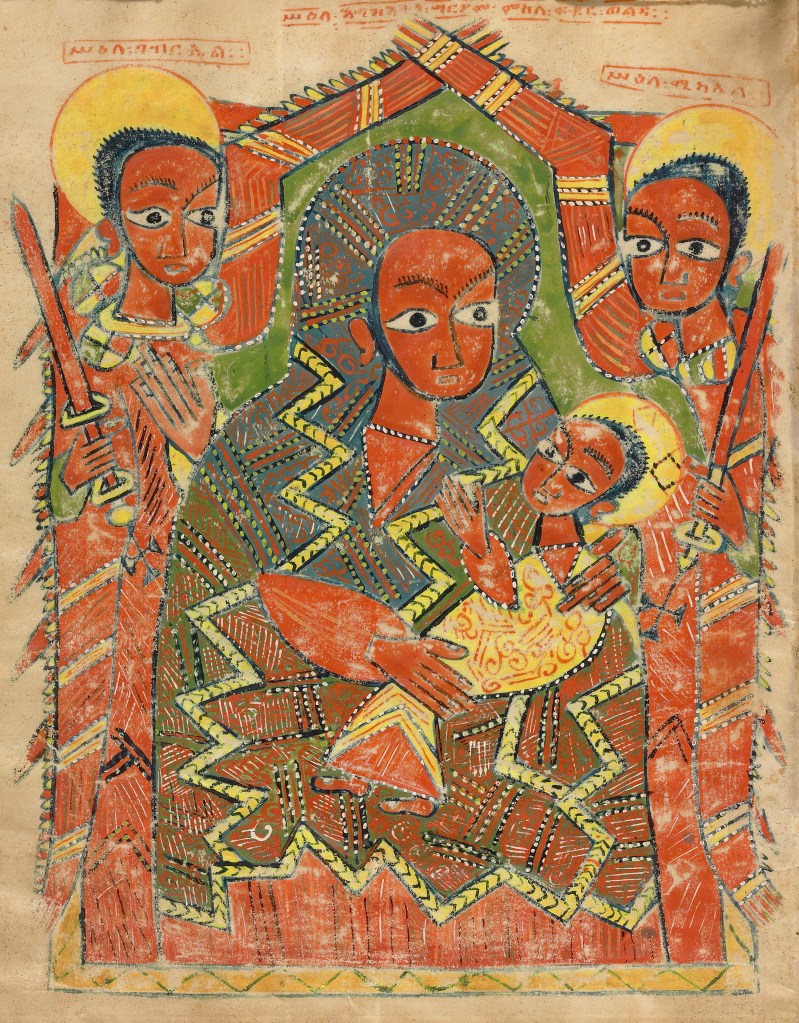
VIDEO: “Ethiopian Gospel Book”: In this six-minute instructional video, Dr. Beth Harris, executive director of Smarthistory, and Kelin Michael, a graduate curatorial intern of manuscripts at the Getty Museum, explore an early sixteenth-century Gospel book from Ethiopia. They discuss the book’s historical context and the formal qualities of its paintings, including the flatness of the figures and the colorful interlacing. They focus on a full-page illumination at the front of the Virgin and Child enthroned between two archangels, but they also touch on the book’s canon tables and its portrait of Saint John the Evangelist.

Virgin and Child (Ethiopian MS, Getty)
The Virgin and Child with the Archangels Michael and Gabriel, Ethiopia, ca. 1504–5. Tempera on parchment, 13 9/16 × 10 7/16 in. (34.5 × 26.5 cm). J. Paul Getty Museum, Los Angeles, Ms. 102, fol. 19v.