Advent, Day 3: Bethlehem

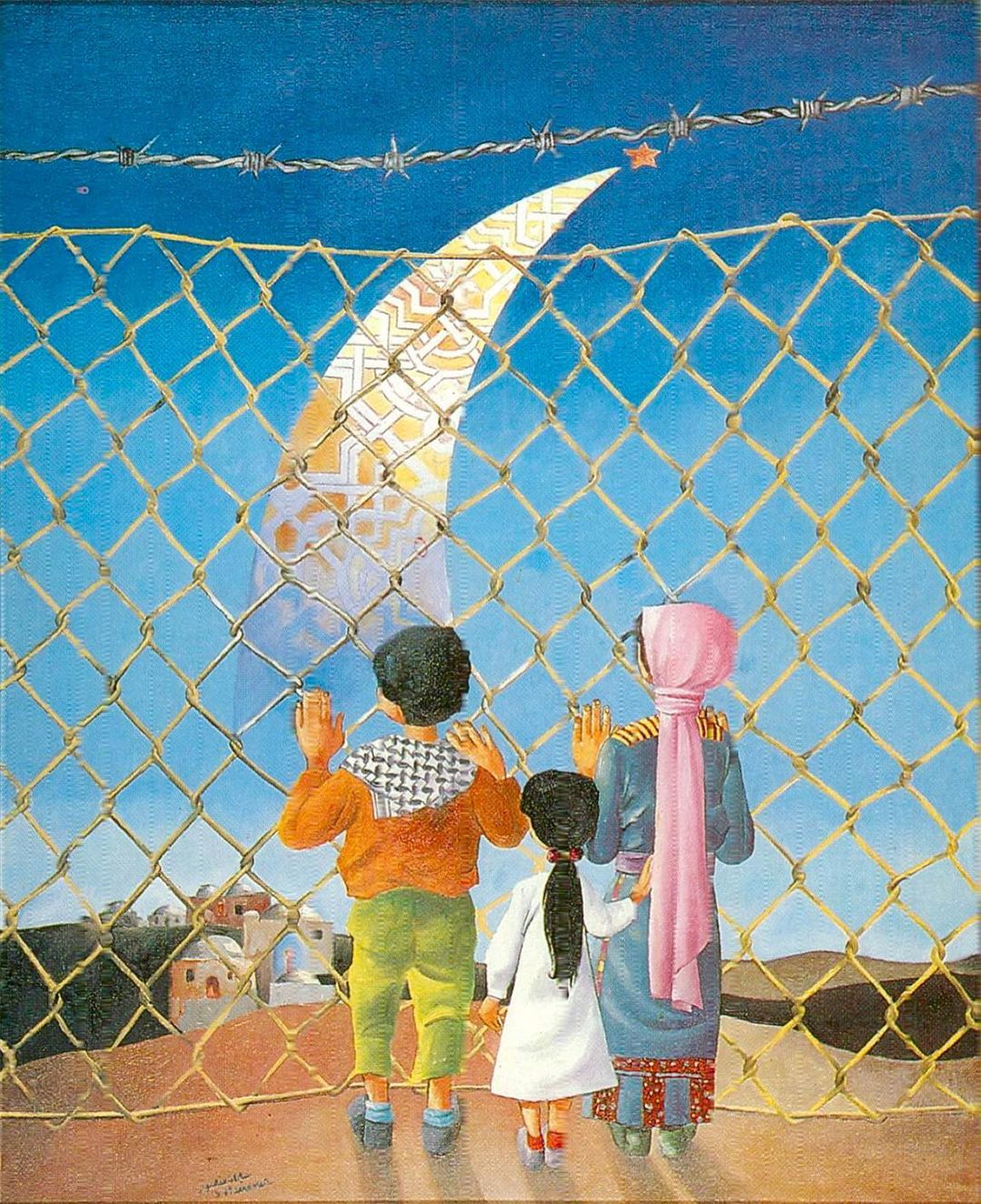
LOOK: The Way to Bethlehem by Sliman Mansour

Mansour, Sliman_The Way to Bethlehem
Sliman Mansour (Palestinian, 1947–), The Way to Bethlehem, 1990s. Acrylic on canvas.

LISTEN: “Bethlehem” by Jack Henderson | Performed by Over the Rhine, feat. Jack Henderson, on Blood Oranges in the Snow (2014)

Oh little town of Bethlehem
Have you been forsaken?
In your dark and dreamless sleep
Your heart is breaking
And in your wounded sky
The silent stars go by

Oh little town of Bethlehem
Be still tonight, be still

Mary, she was just a kid
Jesus was a refugee
A virgin and a vagabond
Yearning to be free
Now in the dark streets shining
Is their last chance of a dream

Oh little town of Bethlehem
Be still tonight, be still

Cradled by a crescent moon
Born under a star
Sometimes there’s no difference
Between a birthmark and a scar

Oh little town of Bethlehem
With your sky so black
May God impart to human hearts
The wisdom that we lack
Should you chance to find
A hope for all mankind

Oh little town of Bethlehem
Be still tonight, be still

Over the Rhine is Karin Bergquist and Linford Detweiler, a married, music-making couple from Ohio. In preparation for their album Blood Oranges in the Snow, they put out a call to a few select colleagues for assistance with the songwriting. Glasgow-based singer-songwriter Jack Henderson responded with a demo of “Bethlehem,” which “reinvents the nativity story as a very modern tale set amid the ongoing Palestinian-Israeli conflict,” he writes. Over the Rhine arranged it, with Henderson singing lead and Bergquist providing backing vocals.

“How ironic that the very birthplace of Jesus should prove to be one of the most conflicted, unpeaceful regions of the world,” Bergquist says. Bethlehem is located in the West Bank, a Palestinian territory that has been under the military occupation of Israel since 1967. Numerous checkpoints have been set up in and around the Bethlehem district to restrict Palestinian movement.

The lyrics to Henderson’s “Bethlehem” pick up lines from the traditional Christmas carol “O Little Town of Bethlehem,” transposing them to the present day and giving them a dark twist. Phrases like “dreamless sleep” and “silent stars,” which in the original carol connote inexpectant slumber and a hushed nighttime idyll, in their new context allude to the nightmare of occupation (unjust arrests and imprisonments, shootings, house demolitions, impoverishment, impeded access to essential services like water and hospitals) and the seeming silence of God. The second verse highlights the Holy Family’s vulnerable status after Herod deployed troops to exterminate Jesus in an attempt to protect his own power.

The refrain, “Be still tonight, be still,” is a prayer for the cessation of violence in the land of Jesus’s birth.

Roundup: Unique Nativity from Burgundy, Jamaican choral work for Epiphany, Vatican-sponsored art contest, and more

I’ve just published a new Spotify playlist for January (thirty spiritual songs on no particular theme), and I want to also remind you of my Epiphany Playlist.

+++

ANNOUNCEMENT: Vatican to hold Stations of the Cross art contest: Artists from across the globe are encouraged to participate in the Vatican-sponsored contest for fourteen new Stations of the Cross paintings. The winner will be announced September 30, 2024, awarded €120,000 (about $131,000), given a year to complete the commission, and then have their set of paintings exhibited in St. Peter’s Basilica during Lent 2026. The first step is to fill out an online application, which will become available January 8, with a deadline of January 31. Learn more at the link. (Update: The registration link is now live at https://contest.viacrucis2026.va/en/registration.)

+++

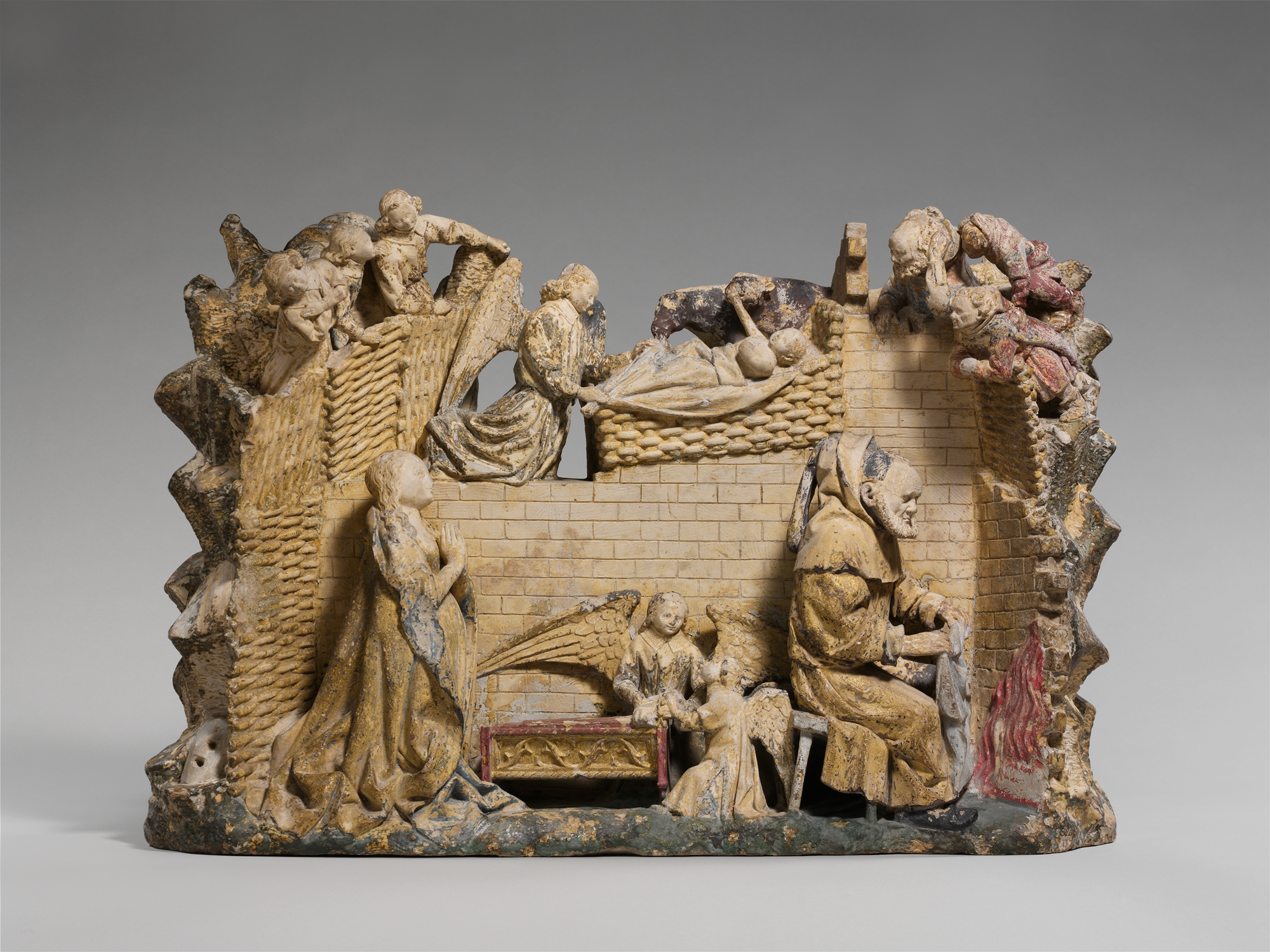
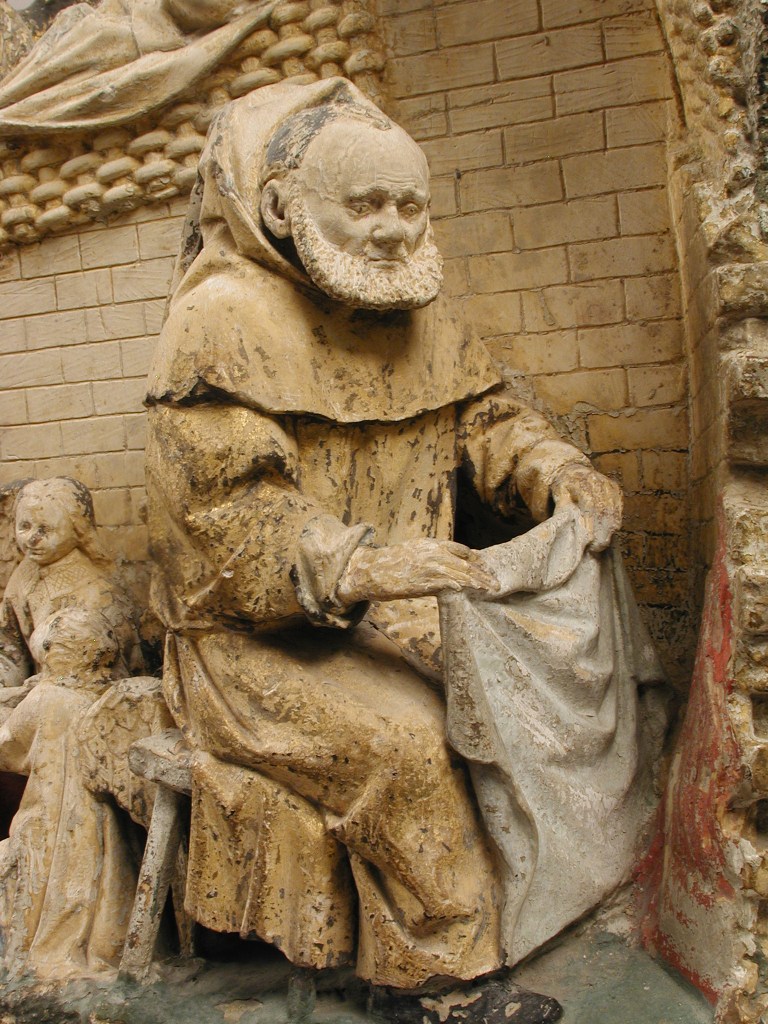
ART OBJECT: Burgundian Crèche, ca. 1450: In researching depictions of Joseph at the Nativity, I came across this charming little limestone-carved crèche from fifteenth-century Burgundy, France, acquired by the Metropolitan Museum of Art. Set inside a dilapidated brick interior patched with wattled matting, the scene portrays the infant Christ lying in a wattled manger that rests on a crumbling wall ledge. Such an unusual composition! I’m not sure why the infant is placed so precariously and at a height when there’s a carved cradle available on the ground, where angels kindly fluff his pillow, but I suppose it was to avoid overcrowding and for visual balance.

Burgundian creche
Circle of Antoine Le Moiturier (French, 1425–1495), Nativity, Burgundy, France, ca. 1450. Limestone with later paint and gilding, 17 3/4 × 25 7/8 × 7 1/4 in. (45.1 × 65.7 × 18.4 cm). Metropolitan Museum of Art, New York.

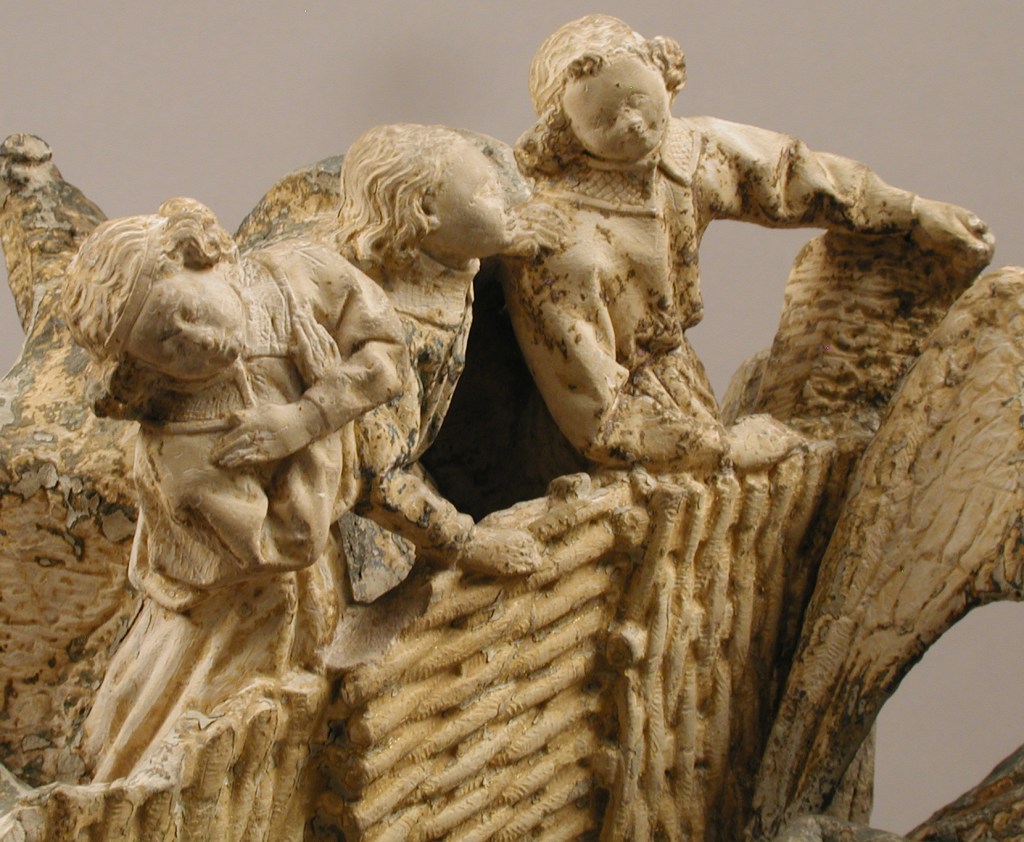
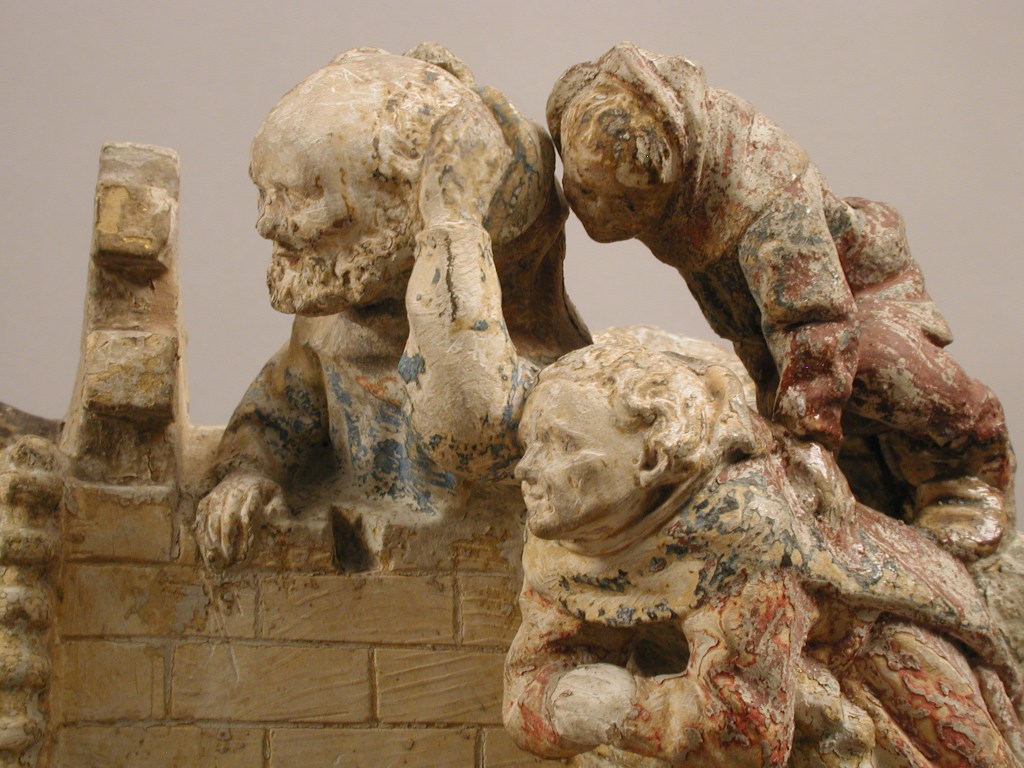
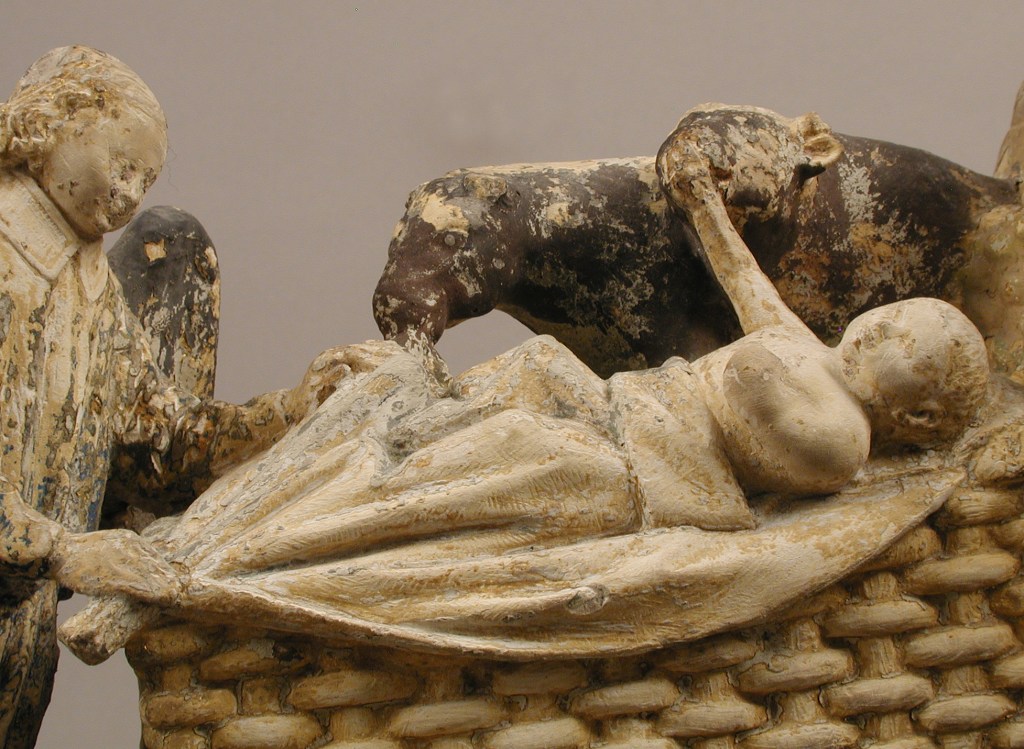
A donkey licks Christ’s feet while an ox licks his hand, which he appears to delight in, as he lifts his arm for better access. To the left and right of him are a trio of angels and shepherds, respectively, excitedly leaning in from outside to get a better look. Mary gazes up at her son in adoration while Joseph dutifully tends to a parental chore: drying one of Jesus’s freshly washed linens at the fire. (Dad doing laundry—huzzah!)

To learn more about this sculpture, see the journal article “Popular Imagery in a Fifteenth-Century Burgundian Crèche” by William H. Forsyth.

+++

ART COMMENTARY: On The Adoration of the Magi by Domenico Veneziano: From the Visual Commentary on Scripture comes this 2022 video, one in a series filmed on-site at the Gemäldegalerie in Berlin. Theologian Ben Quash and art historian Jennifer Sliwka discuss an early Italian Renaissance tondo depicting the Adoration of the Magi.

+++

SONGS:

>> “Rejoice with Exceeding Great Joy”: Written by Lanny Wolfe in 1978 and performed by Reggie Smith, Charlotte Ritchie, and Ladye Love Smith at Bill and Gloria Gaither’s Homecoming Christmas 2006:

>> “Star of Bethlehem”: Written by Noel Dexter, arranged by C. S. (Cedron) Walters, and performed by the Jamaica Youth Chorale at their 2019 Christmas concert. Noel Dexter (1938–2019) was a Jamaican composer, choir director, and music educator, and this is probably his best-known work. It’s set to a Nyabinghi rhythm.

When the star of Bethlehem arise, hallelujah
When the star of Bethlehem arise
Come show me where the young child born!

There were wise men coming from the east, hallelujah
There were wise men coming from the east
Come show me where the young child born!

They brought gold, frankincense, and myrrh . . .

Not a man can save my soul . . .
But Jesus!
Show me where the young child born!

+++

VIDEO: “#NatZooZen: Giant Pandas Mei Xiang and Tian Tian in the Snow”: This Smithsonian’s National Zoo cam footage from January 2021 shows two giant pandas at play, sliding down a snowy hill! So adorable. Tian Tian and Mei Xiang arrived at the National Zoo in 2000 and in 2020 produced a cub, Xiao Qi Ji. All three pandas returned to Beijing in November, having been lent to the US by China as part of a cooperative research program whose contract has expired.

Advent, Day 13: A star shall rise out of Jacob

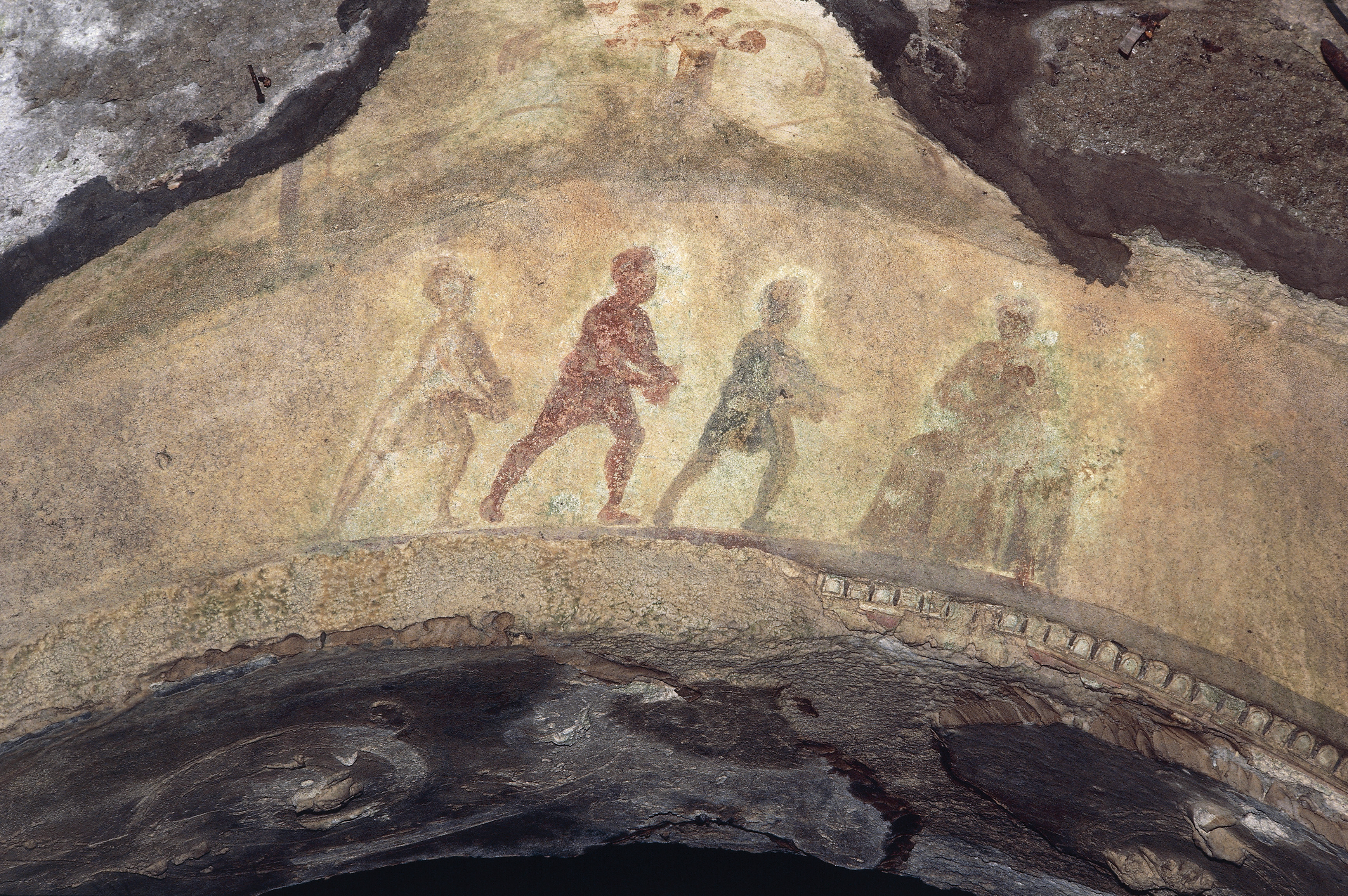
LOOK: Virgin and Child with a Prophet catacomb fresco

Mary breastfeeding (Catacomb of Priscilla)
Virgin and Child with a Prophet, 3rd century. Fresco in the Catacomb of Priscilla on the Via Saleria, Rome. Photo: Scala / Art Resource. [view wider shot]

Deep in the Catacomb of Priscilla in Rome, one of the early Christian underground burial places (named after the donor of the land), is an arched ceiling fresco of a woman breastfeeding her child under an apple tree. Beside her a man points up to a star that’s resting over their heads among the fruit.

Dating to the third century, this image is the earliest known depiction of the Virgin Mary, and one of the oldest of Christ. The identity of the third figure is less sure, but it’s most likely the Gentile prophet Balaam, who, in the power of God’s Spirit, prophesied to King Balak of Moab that “a star shall come out of Jacob, and a scepter shall rise out of Israel” (Num. 24:17).

Although this prophecy had a more immediate fulfillment in King David, it has also been interpreted in a messianic sense since as early as Justin Martyr (ca. 100–165), who wrote, “And that he [Christ] should arise like a star from the seed of Abraham, Moses showed beforehand when he said, ‘A star shall arise from Jacob, and a leader from Israel’” (Dialogue with Trypho, chap. 106).

Irenaeus (ca. 130–200) wrote that the star the magi followed to seek out the newborn Christ was the one prophesied by Balaam (Against Heresies, bk. 3, chap. 9.2), and Origen (ca. 185–254) maintained that Numbers 24:17 was the Hebrew Bible verse the magi found that instigated their journey (Against Celsus, bk. 1, chap. 60).

Priscilla Catacomb arch
Arched ceiling detail from Gallery 3 of the Catacomb of Priscilla, Rome. The central image, in stucco, portrays a shepherd and two sheep, while at the far right, oriented in a different direction, is a fresco of the Virgin and Child. The artworks are damaged by age.

Other suggestions put forward as to the identity of the pointing figure in this catacomb fresco have been a magus; the Hebrew prophet Isaiah, who declared that “a virgin shall conceive” (Isa. 7:14) and enjoined his people to “arise, shine; for thy light is come, and the glory of the Lord is risen upon thee” (Isa. 60:1); and, from Hans-Ruedi Weber, John the Baptist, who “came as a witness to testify to the light, so that all might believe. . . . The true light, which enlightens everyone, was coming into the world” (John 1:6–9).

To explore more of the Catacomb of Priscilla, see the following Smarthistory video by Beth Harris and Steven Zucker. Today’s featured image is introduced at 3:35:

LISTEN: “There Shall a Star from Jacob Come Forth” (original title: “Es wird ein Stern aus Jacob aufgeh’n”), from Christus, Op. 97 | Original German text compiled by Christian Charles Josias von Bunsen, 1846, from Numbers 24:17 and the hymn “Wie schön leuchtet der Morgenstern” by Philipp Nicolai, 1599; English translation of lines 4–10 by Catherine Winkworth, 1863 | Music by Felix Mendelssohn, 1846–47, based on Nicolai’s hymn tune | Performed by the St. Olaf Choir, the St. Olaf Cantorei, the St. Olaf Chapel Choir, the Manitou Singers, Viking Chorus, and the St. Olaf Orchestra, dir. Robert Scholz, on Love Divine, Illumine Our Darkness: Christmas at St. Olaf, 2002

There shall a star from Jacob rise up,
And a sceptre from Israel come forth,
To dash in pieces princes and nations.

How brightly beams the morning star!
With sudden radiance from afar,
With light and comfort glowing!
Thy word, Jesus, inly feeds us,
Rightly leads us,
Life bestowing.
Praise, oh praise such love o’erflowing.

The musical work “Es wird ein Stern aus Jacob aufgeh’n” (There Shall a Star from Jacob Come Forth) is from an unfinished oratorio by Felix Mendelssohn (1809–1847), which the composer’s brother Paul gave the name Christus and published posthumously as Opus 97. The first performance took place in 1852.

The first three lines are taken from Numbers 24:17, while the latter portion is from the Lutheran hymn “Wie schön leuchtet der Morgenstern” (How Brightly Beams the Morning Star) by Philipp Nicolai, written in 1597 and first published in 1599 with the title “Ein geistlich Brautlied der gläubigen Seelen von Jesu Christo ihrem himmlischen Bräutigam, gestellet über den 45. Psalm des Propheten David” (A spiritual wedding song of the faithful soul about Jesus Christ, her heavenly groom, made over the 45th psalm of the Prophet David). The tune it was published with was adapted by Nicolai, it appears, from an older tune found in the Strasbourg Psalter of 1538—which is further adapted here by Mendelssohn.

In Mendelssohn’s piece, the first two lines about an emerging luminary from the lineage of Jacob are lovely and lofty, repeated in different and overlapping voices over the course of a minute-plus. But then the third line cuts in with emphatic force: “To dash in pieces princes and nations.” Its violence is jarring, very far from the peaceful sentiments we’re used to associating with this time of year! Even as it adds drama and interest to the composition, its militant language is unsettling.

But it does honor the larger context of Balaam’s prophecy:

So he [Balaam] uttered his oracle, saying,

“The oracle of Balaam son of Beor,
    the oracle of the man whose eye is clear,
the oracle of one who hears the words of God
    and knows the knowledge of the Most High,
who sees the vision of the Almighty,
    who falls down but with eyes uncovered:
I see him but not now;
    I behold him but not near—
a star shall come out of Jacob,
    and a scepter shall rise out of Israel;
it shall crush the foreheads of Moab
    and the heads of all the Shethites [a Moabite tribe].
Edom will become a possession,
    Seir [an alternative name for Edom] a possession of its enemies,
    while Israel does valiantly.
One out of Jacob shall rule
    and destroy the survivors of Ir [‘City’].”

(Num. 24:15–19)

The mercenary prophet Balaam had been hired by Balak, king of Moab, to curse Israel. See, the Israelites had escaped slavery in Egypt some forty years prior and were looking for land to settle. Having been refused passage through, they had just conquered Amorite country, which used to belong to Moab, and Balak feared Moab would be next.

Despite being a non-Israelite, Balaam heard words from Yahweh, Israel’s God. Balak recognized Balaam as an authority, as did others, and thought he might be persuaded for a fee to issue a prophecy in Moab’s favor. But Balaam told him he would speak only the words of Yahweh.

The passage above is the fourth and final oracle Balaam pronounced on this mission to Moab. In it he says that Moab and Edom would be conquered—a prophecy that came to pass with King David (2 Sam. 8:2–12; cf. Ps. 60:8).

Christians, as we have seen, often extract verses from longer Old Testament passages, prophetic or otherwise, and read into them messianic significance—pointers to Jesus Christ. Even the New Testament authors, and Jesus himself, did this. Did the Old Testament authors intend such meanings? Probably not in most places, not to the extent that premodern Christian interpreters suggested. (That’s not to say Jesus didn’t fulfill biblical prophecies. Quite the contrary!)

But many Christian biblical scholars acknowledge what’s been called the sensus plenior, or “fuller sense,” of scripture—a term popularized by Raymond E. Brown in his book The Sensus Plenior of Sacred Scripture (1955). Sensus plenior, Brown writes, is “that additional, deeper meaning, intended by God but not clearly intended by the human author, which is seen to exist in the words of a biblical text (or group of texts, or even a whole book) when they are studied in the light of further revelation or development in the understanding of revelation.”

Some people consider this kind of reading to be distortive. But others, including myself, consider it creative. Rabbinical literature often does the same thing: finds meaning in and beyond a scripture passage’s strict historical context that the original authors likely did not intend but that open up the text in new ways. Sensus plenior says that studying a book of the Bible only in its historical and immediate textual context and for what it would have meant to its original audience is limiting, incomplete. Of course, the opposite approach, which does run rampant in many Christian communities, is also problematic: divesting scripture passages of their contexts, reflexively backfilling all the Old Testament with “Jesus” at the expense of understanding the texts on their own terms.

I think the application of “To dash in pieces princes and nations” (a paraphrase from Balaam’s prophecy) to Jesus’s birth is confusing, as Jesus was nonviolent, rejecting conquest. Perhaps you could say that Christ’s rule would (rhetorically) dash Herod’s kingdom to pieces, as it challenged the modus operandi of empire. There’s a new caesar in town, a new king on the throne, and his law of love, his gospel of peace, trumps the laws and proclamations of all earthly rulers.

The last six lines of Mendelssohn’s song return to the sweet, gentle tones of the song’s opening, exulting in the radiant glory of Christ, the Morning Star (Rev. 22:16), who shines forth from the pages of God’s word.


This post is part of a daily Advent series from December 2 to 24, 2023 (with Christmas to follow through January 6, 2024). View all the posts here, and the accompanying Spotify playlist here

Advent, Day 11: Watchman, Tell Us

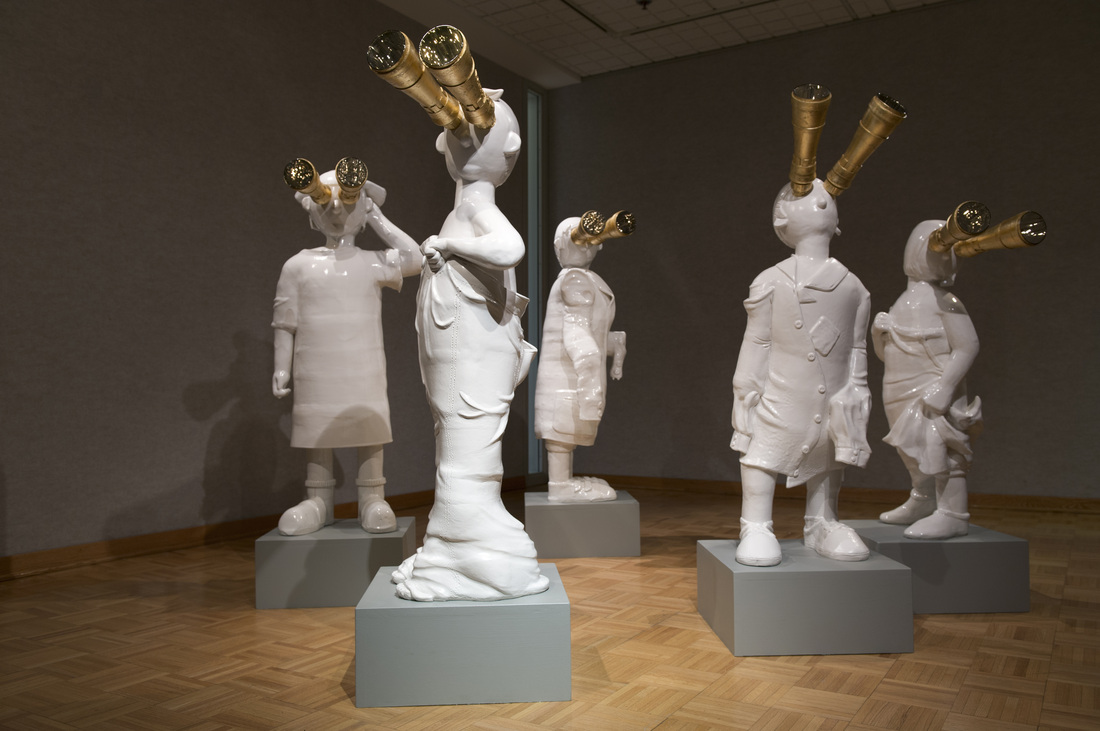
LOOK: Golden Binoculars by Namdoo Kim

Kim, Namdoo_Golden Binoculars
Namdoo Kim (Korean, 1985–), Golden Binoculars, 2013. Glass, ceramic, mixed media, each figure 42 × 20 × 20 in. Installation at the 2018 SOFA Chicago art fair (now Intersect Chicago).

LISTEN: “Watchman, Tell Us of the Night” | Words by John Bowring, 1825 | Music by Seth Thomas Crissman, 2016 | Performed by Seth Thomas Crissman and Rachel Yoder of The Walking Roots Band, 2016 (also on Hark! A Walking Roots Band Christmas, 2017)

Watchman, tell us of the night,
what its signs of promise are.
Traveler, o’er yon mountain’s height,
see that glory-beaming star.
Watchman, does its beauteous ray
aught of joy or hope foretell?
Traveler, yes; it brings the day,
promised day of Israel.

Watchman, tell us of the night;
higher yet that star ascends.
Traveler, blessedness and light,
peace and truth its course portends.
Watchman, will its beams alone
gild the spot that gave them birth?
Traveler, ages are its own;
see, it bursts o’er all the earth.

Watchman, tell us of the night,
for the morning seems to dawn.
Traveler, darkness takes it flight;
doubt and terror are withdrawn.
Watchman, let thy wanderings cease;
hie thee to thy quiet home.
Traveler, lo! the Prince of Peace,
lo! the Son of God is come!

Unfolding in alternating couplets, this nineteenth-century hymn from England presents a dialogue between a traveler and a watchman—that is, someone stationed at a vantage to look out for coming invasions or things out of the ordinary. The traveler asks the watchman what he sees and what its meaning is; the watchman responds that he sees a glorious star ascending up over the mountains, portending blessing and peace not just for the land of its rising but for all peoples. A beneficent invasion!

Lowell Mason wrote a tune specifically for this text in 1830, but I much prefer the newer one by The Walking Roots Band, featured above.


This post is part of a daily Advent series from December 2 to 24, 2023 (with Christmas to follow through January 6, 2024). View all the posts here, and the accompanying Spotify playlist here.

Advent Prelude: Guide Us

LOOK: Milky Way by Frida Hansen

Hansen, Frida_Milky Way
Frida Hansen (Norwegian, 1844–1931), Melkeveien (Milky Way), 1898. Tapestry, 260 × 345 cm. Museum für Kunst und Gewerbe (Museum of Arts and Crafts), Hamburg, Germany.

This art nouveau tapestry by Norwegian artist Frida Hansen received a gold medal at the world’s fair in Paris in 1900. It shows angelic figures unfolding a starry veil over the night sky. They glide forward above a band of Hebrew script that references the creation of the stars in Genesis 1.

The God who brought light in darkness in the beginning is bringing light again as we enter a new liturgical year.

Comprising the first five weeks of that new year, Advent-Christmas-Epiphany is a time of starlight, promise, and revelation. The first of the triad, Advent, is particularly concerned with themes of longing, waiting, lament, and future-oriented hope. We make ready our hearts to receive Christ—he who came to us first as a babe in a manger, in a vulnerable body like ours, to teach and suffer and redeem, and who is coming back one day in unveiled power and majesty to bring the fullness of God’s heavenly kingdom to earth.

Two millennia ago, God hung a special star in the sky for the magi to follow, guiding them on their way to the Christ child. May God similarly illumine our way to Christ as we seek him this season, giving us eyes to see and ears to hear the gospel of God-with-us and cultivating in us an eager readiness for Christ’s return.

I think of Hansen’s crowned young ladies as ushering us into the deep, dark blue of Advent to behold the signs that sparkle in scripture, foretelling a wondrous future.

For an excellent illustrated article about Hansen’s life and work, see “Frida Hansen: A leading star in European textile art” by Anne Sommerin Simonnæs.

LISTEN: “Star of Wonder” by Sara Groves, on O Holy Night, 2008; adapted and arranged from the refrain of “We Three Kings” by John Henry Hopkins, 1857

Star of wonder, star of light
Star of royal beauty bright
Guide us
O guide us
Won’t you guide us


Want to follow along with the music on Spotify? Most of the songs in this Advent blog series, and many more besides, can be found on the Art & Theology Advent Playlist.

Epiphany: Glory

And when Christ, who is your life, is revealed to the whole world, you will share in all his glory.

—Colossians 3:4

Epiphany, meaning “revelation,” is the capstone of the Christmas season. In this final post of this year’s Christmas series, I leave you with a striking, light-flecked painting from Japan and a slow-tempo Black gospel song from the US. What marvel, that God’s glory fills such places as ours, and that he invites us not only to behold his glory but also to participate in it.

May God’s light continue to guide and enfold you throughout the year, and may you never stop seeking his face.

To view a compilation of this season’s numbered Christmas posts, click here; for Advent, here.

LOOK: Morning Star by Hiroshi Tabata

Tabata, Hiroshi_Morning Star
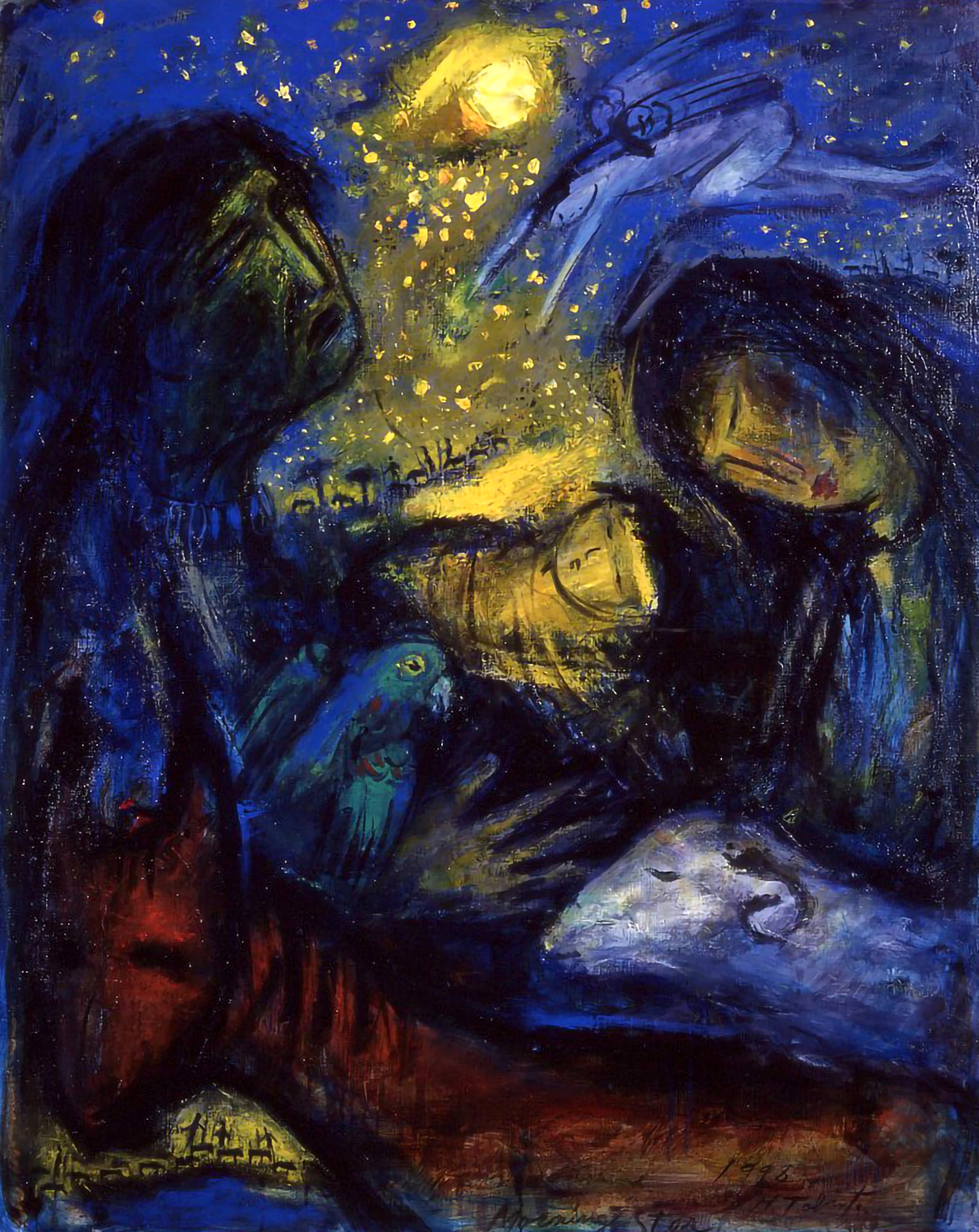
Hiroshi Tabata (田畑弘) (Japanese, 1929–2014), Morning Star, 1998. Oil on canvas, 90.9 × 72.7 cm. Private collection. Photo courtesy of the Estate of Hiroshi Tabata.

Born in Takaoka City, Hiroshi Tabata (1929–2014) studied art at the University of Toyama, later moving to France for two years for further art education. He exhibited his work throughout Japan and at Parisian salons. From 1966 to 1972 he lived intermittently in Brazil among the Xingu people, which led to his conversion to Christianity. From then on until his death, he painted biblical subjects. “The Bible is the ultimate theme for me,” he said; its world is “infinitely deeper” than we can comprehend.

In Tabata’s expressionistic Morning Star, starlight falls in a luminescent sheen over the face of the Christ child, whom Mary looks upon in tender adoration as Joseph wonders at the angelic activity above. The tight cropping around the Holy Family heightens the sense of intimacy. A sheep, donkey, and Amazon parrot (the latter a callback to his time in Brazil) crowd into the foreground, while on distant hills shepherds behold the glorious light display, hear the announcement that will propel them to their newborn Messiah. The wise men, too, are on their way. Epiphany is at hand. Heaven’s raining down (Isa. 45:8).

This visual reflection (by me) originally appeared in the Christmas/Epiphany 2022–23 edition of the Daily Prayer Project. Tabata’s art appears on the cover, by kind permission of his son-in-law. To view more biblical art by Tabata, see the beautifully produced, full-color book 田畑弘作品集 一つの星 (Hiroshi Tabata Works: Morning Star); the text is all Japanese.

LISTEN: “A Star Stood Still (Song of the Nativity)” | Words and music by Barbara Ruth Broderick and Johnny Broderick, 1956 | Performed by Mahalia Jackson with the Falls-Jones Ensemble, conducted by Johnny Williams, on Silent Night: Songs for Christmas, 1962

And we shall share
In the glorious light

In Bethlehem
The wind had ceased
The Lamb lay sleeping
On the hill

When all the earth
Was stilled with peace
Then lo, a star stood still

A star stood still
On yonder hill
Praise God that star still
Shining still

And we shall share
In the glory of love
Because a star stood still
That night a star stood still

A star stood still
On yonder hill
Praise God that star still
Shining still

And we shall share
In the glory of love
Because a star stood still
That night a star stood still

Note to readers: Art & Theology is noncommercial, but I do accept donations (monetary, or in-kind books!) to help keep it running. Learn more here.

Christmas, Day 12: Bright and Glorious

LOOK: Epiphany by John August Swanson

Swanson, John August_Epiphany
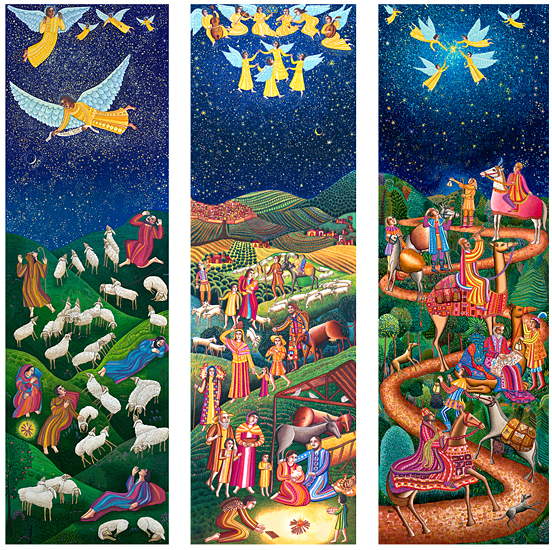
John August Swanson (American, 1938–2021), Epiphany, 1988. Serigraph, 38 × 12 in. Edition of 210. [for sale]

Tomorrow, January 6, is the feast of Epiphany, commemorating the visit of the magi to the infant Christ, an episode that represents God’s manifestation to the nations beyond Israel. Printmaker John August Swanson visualizes their journey in a starkly vertical composition that was conceived as the right wing of a triptych (three-paneled artwork), the other two panels depicting the Annunciation to the Shepherds and the Nativity. In subsequent years he added A Visit (depicting the Annunciation to Mary), Flight into Egypt, and Presentation in the Temple to the set.

Here’s what Swanson says about the piece:

Epiphany depicts the journey of the three Magi as they travel up a serpentine trail. One of the Wise Men is seated as he looks at a map of the constellations with his magnifying glass; his servant holds a lamp so that he can see. Another Magi searches with his telescope into the sky. They look up in search of their beautiful guiding star as angels surround and point to it. They have exotic birds, peacocks, and dogs among their animals. I have tried to capture the details of the many plants, bushes, and trees and to create a variety of colors of green.

I used many symbols within the tapestries draping the animals. These patterns depict the Lion of Judah, the lamp in the darkness, the rain falling on the parched ground, the key to the locked door, the crown and the heart, and the gates to the city.

This is part of a series of three images (triptych). They were inspired by the Mexican tradition that I am familiar with for Christmas. Families will each create a beautiful crèche (nacimiento) with many figures and animals, creating a whole environment with landscaping in miniature around the Nativity figurines.

His other inspirations for this set include the opera Amahl and the Night Visitors by Gian Carlo Menotti and the medieval stained glass windows in Chartres Cathedral.

Swanson, John August_Advent Triptych
John August Swanson, Advent Triptych, 1985–88 [for sale as poster or card]

John August Swanson (1938–2021) [previously] was born in Los Angeles of a Mexican mother and Swedish father. His father died when he was young, and he was raised in a multigenerational Mexican Catholic home. He studied serigraphy under Corita Kent [previously], and it became his primary medium. A serigraph is a type of print in which each color is individually layered by applying ink through a silkscreen onto paper. Epiphany has forty-eight individual colors.  

LISTEN: “Bright and Glorious” | Original Danish text (“Deilig Er Den Himmel Blaa”) by Nikolai F. S. Grundtvig, 1810 | English translation by Jens Christian Aaberg, 1927; first stanza adapted by the editors of the Lutheran Service Book and Hymnal, 1958 | Music by Seth Thomas Crissman and Greg J. Yoder, 2017 | Performed by the Walking Roots Band on Hark! A Walking Roots Band Christmas, 2017

[Watch the group sing the first stanza.]

Bright and glorious is the sky
Radiant are the heavens high
Where the golden star is shining
All its rays to earth inclining
Leading to the newborn king

Him they found in Bethlehem
Yet he wore no diadem
They but saw a maiden lowly
With an infant pure and holy
Resting in her loving arms

Guided by the star, they found
Him whose praise the ages sound
We, too, have a star to guide us
That forever will provide us
With the light to find our Lord

As a star, God’s holy word
Leads us to our King and Lord
Brightly from its sacred pages
Shall this light throughout the ages
Shine upon our path of life

The Walking Roots Band (TWRB) is an acoustic folk/bluegrass-ish music group steeped in Anabaptist hymn-singing traditions and based in Harrisonburg, Virginia. Several of its members are the creative forces behind The Soil and The Seed Project, a liturgy and arts initiative that launched in 2021.

Here they’ve retuned an Epiphany hymn from Denmark, which compares the star that led the magi to Jesus to the Bible, God’s word, which serves as a guiding light for spiritual seekers, leading us to Christ himself. Its pages offer countless epiphanies—revelations of God’s glory, opportunities for divine encounter. Its wisdom and truth can illuminate our paths if we let it.

Roundup: Religion and Contemporary Art

WEBSITE LAUNCH: The Foundation for Spirituality and the Arts: From a September 20 press release: “The Foundation for Spirituality and the Arts is pleased to announce the debut of our new website, fsa.art. Complementing in-person programming in Charleston and New York City, fsa.art functions as FSA’s online curatorial wing. It hosts both commissioned and curated content as well as a selection of features spotlighting significant artists, scholars, exhibitions, and publications from recent decades. We hope this site will be a valuable and inspiring resource that fosters dialogue, community, and innovation in the field of spirituality and the arts.”

FSA is “devoted to nurturing connections between spirituality and contemporary art. . . . By encouraging a mutual flow of creativity and faith from both artists and scholars, we hope to initiate fresh channels of spiritual enrichment from new depths of artistic expression. Nurturing innovative and experimental collaborations between a wide range of communities, we aspire to integrate estranged voices together in a spirit of harmony, openness, and inquisitiveness.”

At the heart of their programming is their annual series of residencies, open to visual artists, performers, composers, choreographers, curators, writers, and theologians. Visit their website to find out more, and follow them on Instagram @foundation.spirituality.arts. Below are four artworks I’ve encountered through their social media postings.

Kristen, Tom_Gemeinsam
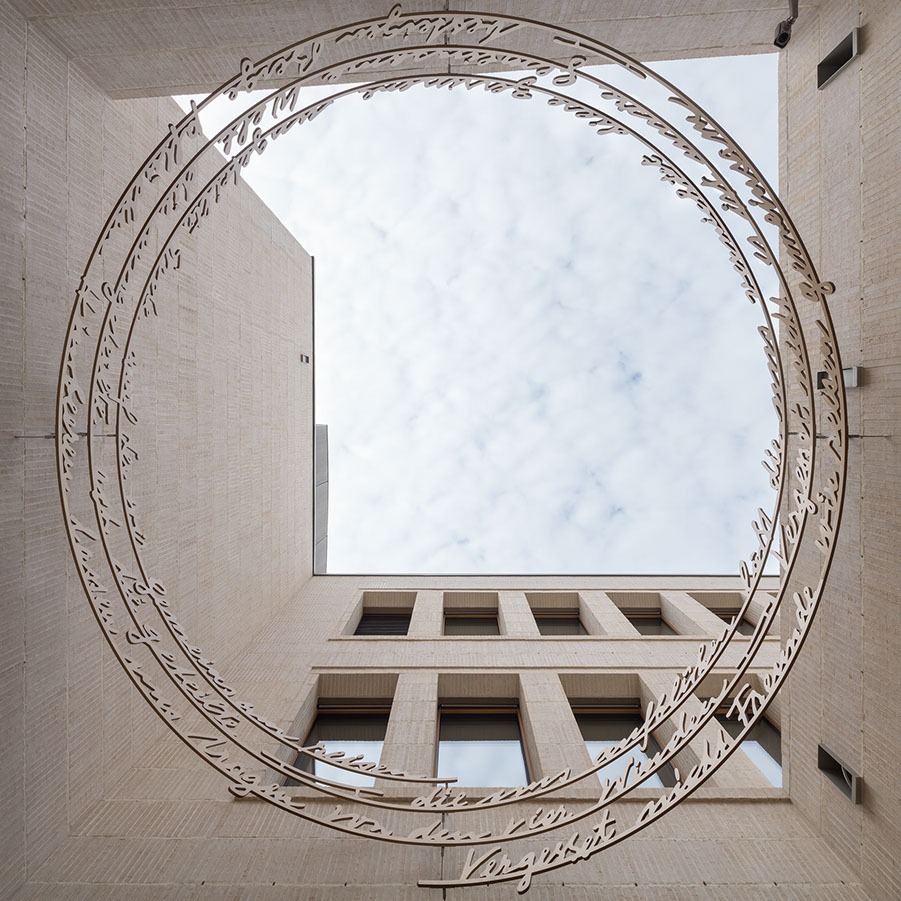
Tom Kristen (German, 1968–), Gemeinsam (Together), 2019. Jewish Synagogue and Community Center, Regensburg, Bavaria. Photo: Marcus Eben. Floating above the center’s atrium, this gilded bronze spiral text is taken from Rose Ausländer’s poem “Gemeinsam”: “Vergesst nicht, Freunde, wir reisen gemeinsam. . . . Es ist unsre gemeinsame Welt.” (“Don’t forget, friends: we travel together. . . . It is our common world.”)

Viola, Bill_Catherine's Room (still)
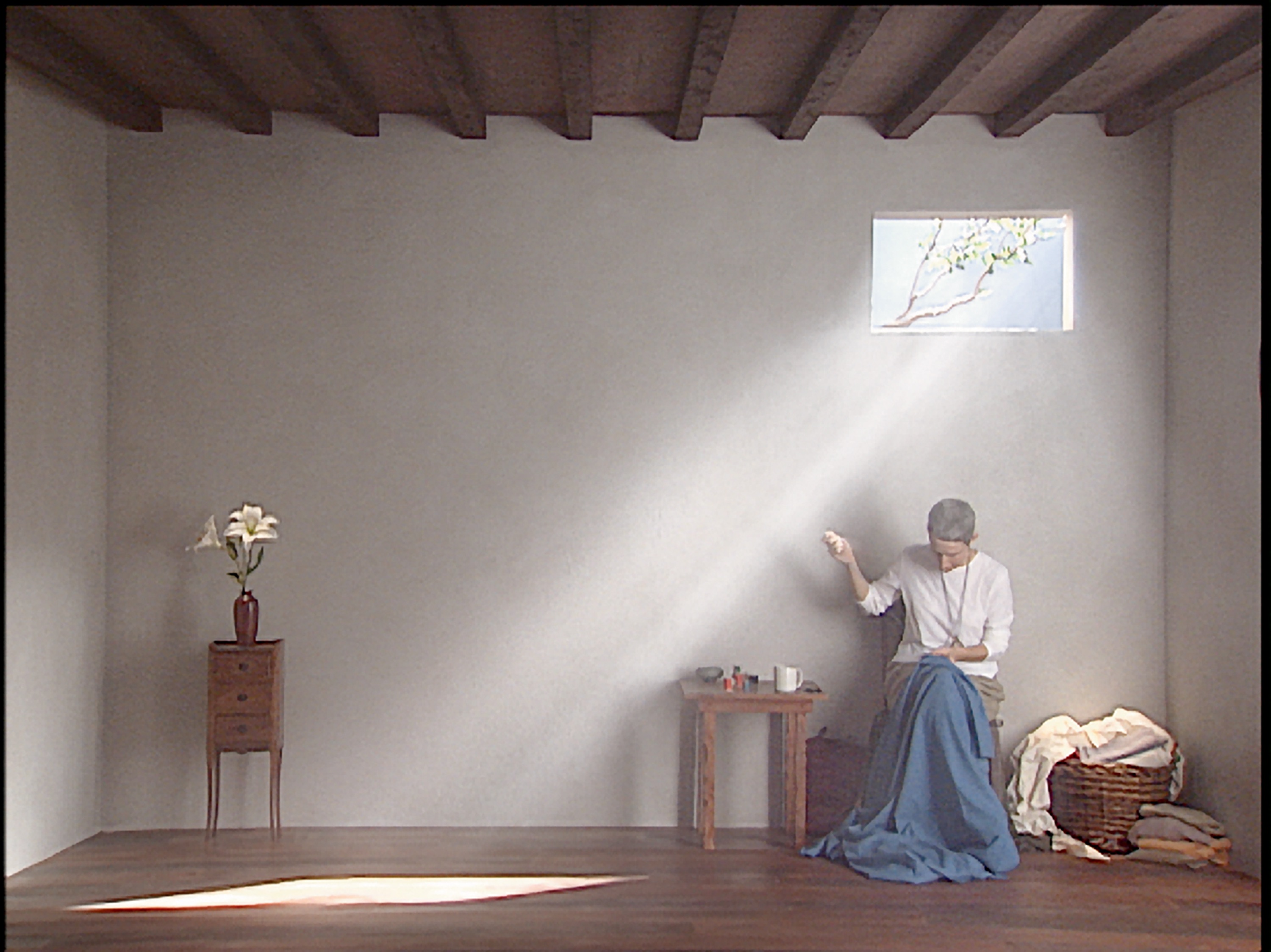
Bill Viola (American, 1951–), Still from Catherine’s Room, 2001. Color video polyptych on five flat panel displays, 18:39 minutes, performer: Weba Garretson. Photo: Kira Perov, courtesy Bill Viola Studio.

Agha, Anila Quayyum_Intersections
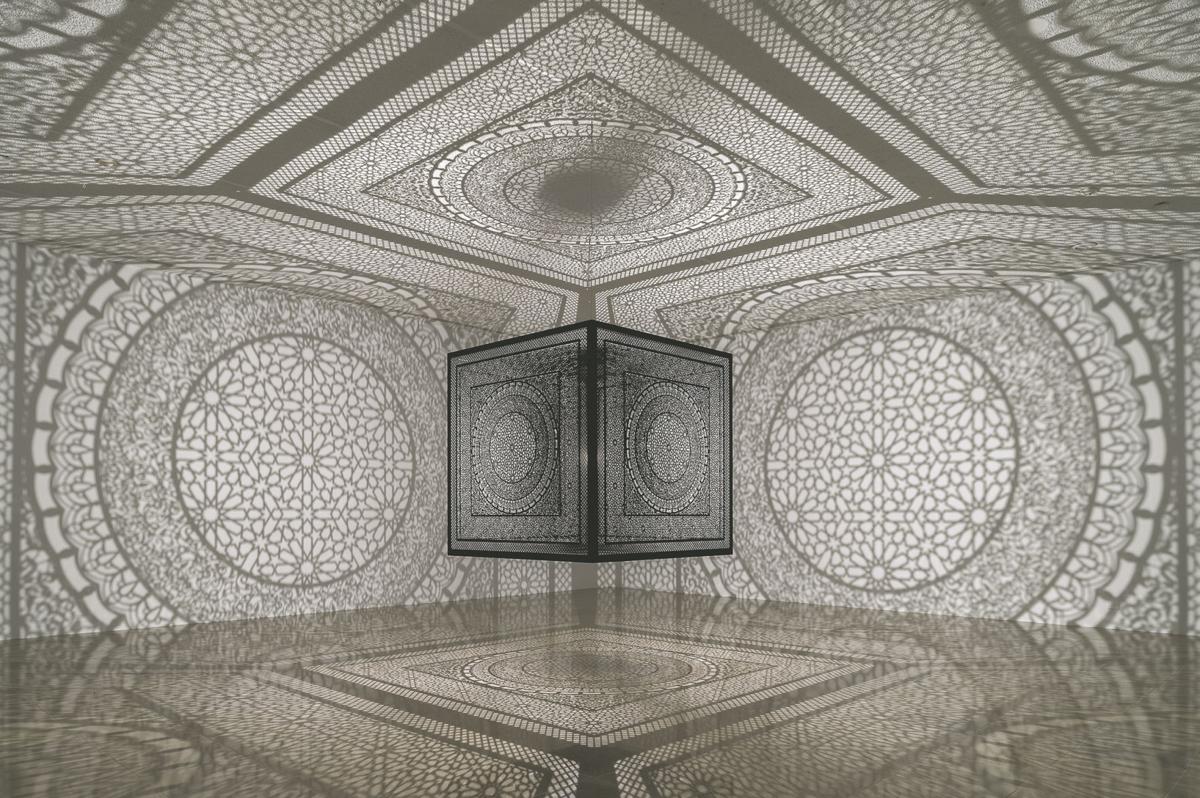
Anila Quayyum Agha (Pakistani American, 1965–), Intersections, 2013. Lacquered wood and halogen bulb, 78 × 78 × 78 in. (cast shadows: 43.5 × 43.5 × 16 ft.). Installation view at Rice Gallery, Houston, Texas, 2015.

Mingwei, Lee_Our Labyrinth
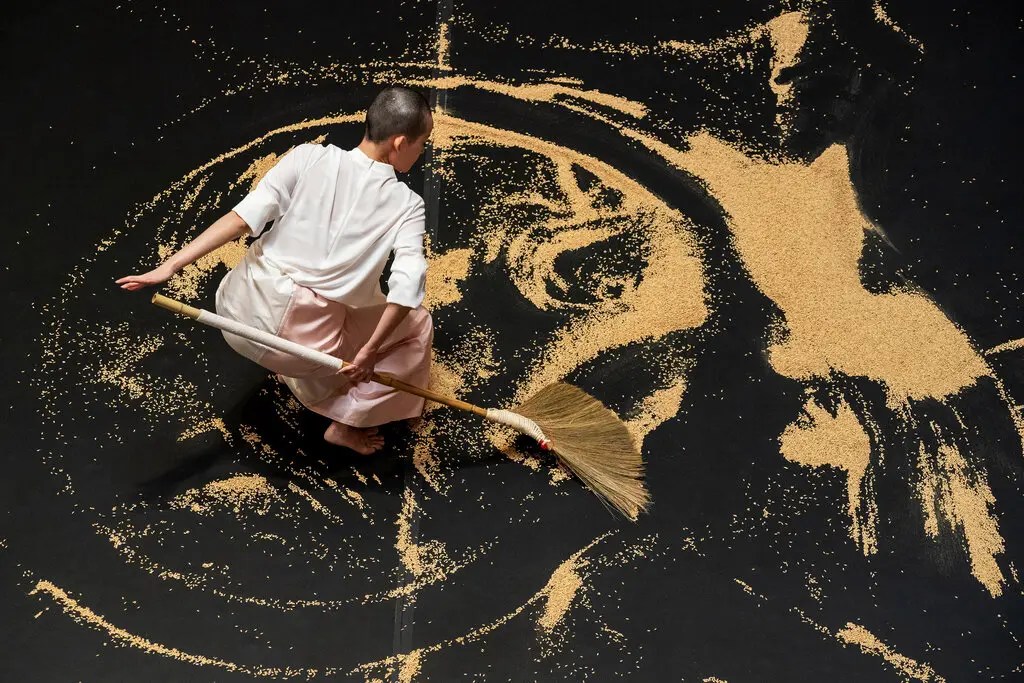
Lee Mingwei (Taiwanese American, 1964–), Our Labyrinth, 2015–present. Photo: Stephanie Berger. In this performance work, single dancers, dressed in floor-length sarongs and wearing ankle bells, take turns sweeping a mound of rice in patterns on the floor in a designated gallery space. This iteration from 2020 at the Metropolitan Museum of Art was a collaboration with choreographer Bill T. Jones, and the performer in the photo is I-Ling Liu. [Watch on YouTube]

+++

LECTURE: “The New Visibility of Religion in Contemporary Art” by Jonathan A. Anderson: Religion is becoming more visible in contemporary art and more discussable, says artist, art critic, and theologian Jonathan Anderson in his September 17 talk sponsored by Bridge Projects in Los Angeles. Danh Vo, Kris Martin, Andrea Büttner, Deana Lawson, Arthur Jafa, Genesis Tramaine, Hossein Valamanesh, Theaster Gates, Zarah Hussain, Francis Alÿs, Louise Bourgeois, Sol LeWitt, Sean Kelly, Gerhard Richter, James Turrell—these are just some of the many contemporary artists who have engaged substantively with religion in their work, either through form or content or through the ways in which they frame the work’s central questions. Curators and art historians are recognizing this more and more, and it’s being reflected in exhibitions and scholarship. Anderson highlights several such instances from the past two decades, celebrating religion’s increased visibility but also pointing out where there’s room for improvement. The talk starts at 6:36:

At 28:58, Anderson outlines four interpretive horizons, or fundamental hermeneutics, within which religion is becoming visible, intelligible, and meaningful in contemporary art: anthropological (31:00), political (37:43), spiritual (42:51), and theological (48:42). He discusses the problems and possibilities of each—ways in which it has been productive or insightful, and ways in which it’s limiting. The fourth horizon, the theological, is the least developed in the art world and the most contested, he says.

He concludes,

A more concentrated and well-developed mode of theological inquiry has much to contribute to the history, theory, and criticism of contemporary art without being reductive, but instead opening much of what’s going on in contemporary art. And so going forward, I do envision a mode of study that keeps all these horizons in view, and a mode of discourse that keeps all these horizons in view, while especially developing the potential for the modes of critical writing capable of addressing theological conceptualities, genealogies, and implications that are in play in so much of the art being made today. And that involves thinking better from both directions, developing concepts and capacities—skills, really—where art criticism might operate with a more agile, historically sensitive understanding of religion and theology (a richer theological intelligence), and theology might operate with a more agile, historically sensitive understanding of art and criticism (a richer art historical intelligence, or visual intelligence).

The last half hour is Q&A. What he says at 1:03:59 is fascinating! If you enjoyed this talk, check out, too, the one he gave ten years ago, “The (In)visibility of Theology in Contemporary Art Criticism,” which I published detailed notes on and which became a chapter in the book Christian Scholarship in the Twenty-First Century: Prospects and Perils, edited by Thomas M. Crisp, Steve L. Porter, and Gregg A. Ten Elshof.

As a side note, Anderson teaches two courses at Duke Divinity School, where he is a postdoctoral associate in the DITA program: “Contemporary Art and Theology” and “Visual Art as Theology.” The latter looks at the history of primarily Christian art as a domain of primary theological reasoning and biblical commentary, done in visual-spatial terms rather than in verbal-written terms. His hope is that divinity students—future biblical scholars, theologians, pastors, etc.—will become more literate in the visual-spatial forms of theology. I mention this because it’s what I’m about too!

+++

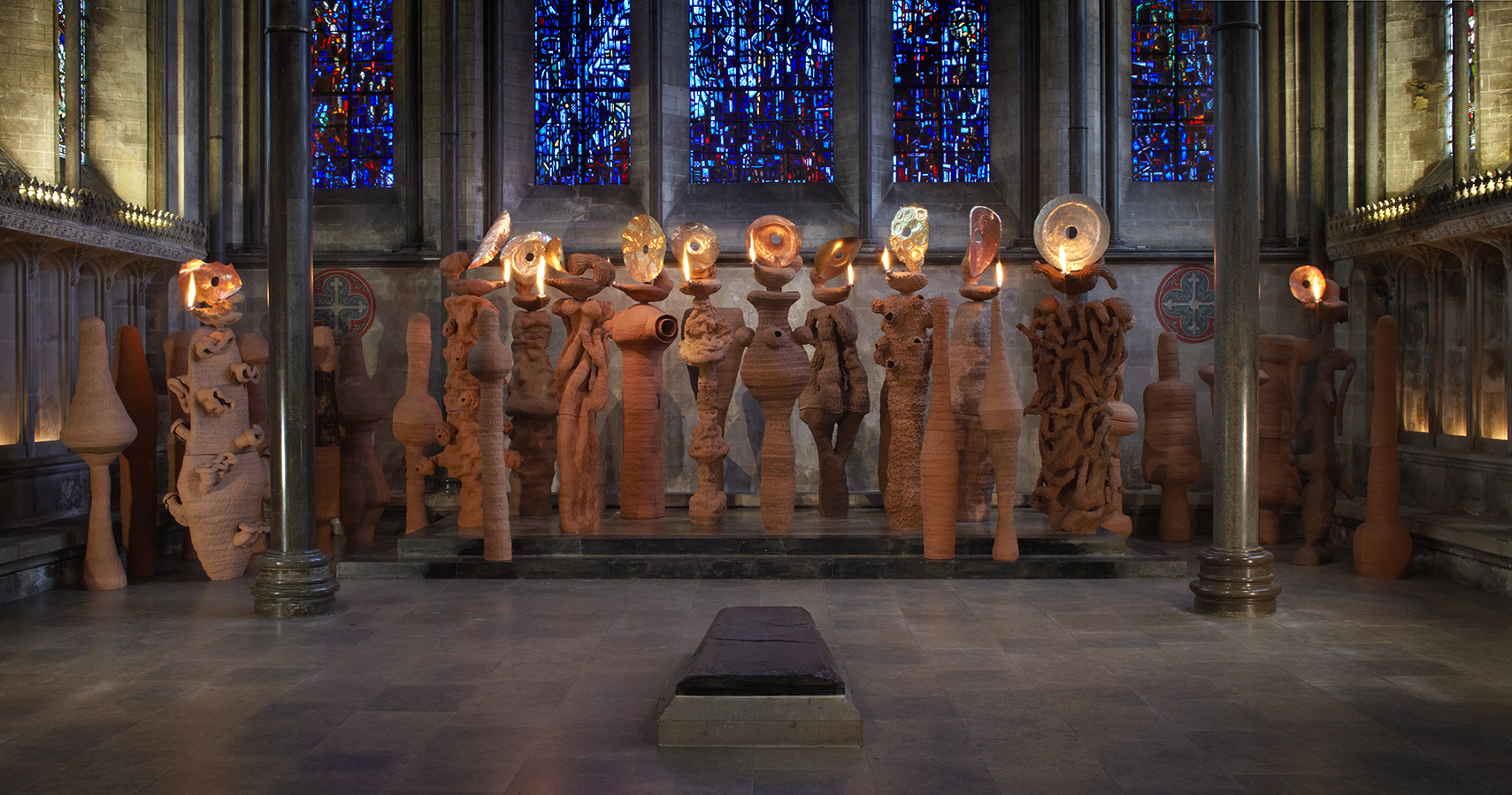
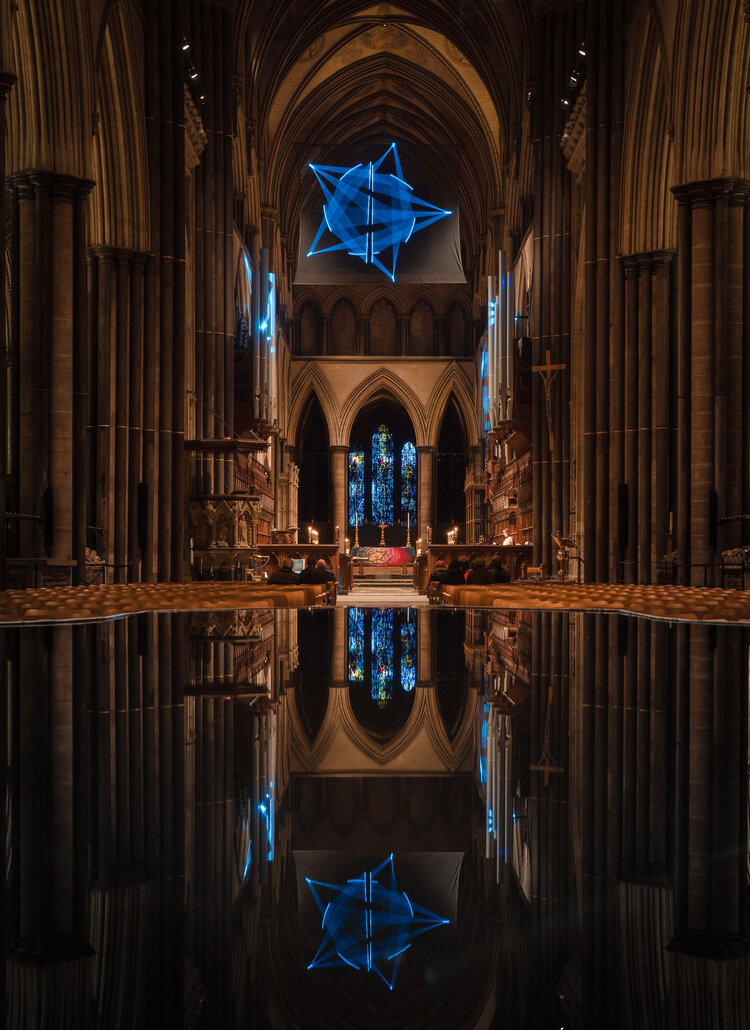
PODCAST EPISODE: “Jacquiline Creswell: Curating in Sacred Spaces,” Exhibiting Faith: Hosted by critic and art historian David Trigg, this is the first episode of a brand-new podcast about the intersection of art and faith, featuring a range of guests for whom those two elements have played a significant role. First up is Jacquiline Creswell, a visual arts adviser and curator who has, since 2009, organized more than forty-five exhibitions in sacred spaces. She has been central to the development of the visual arts programs at Salisbury, Ely, and Chichester Cathedrals. She discusses some of the projects she has worked on and how they’ve been received by the congregation and the wider public, how the setting of an artwork can alter its meaning and the way people engage with it, the logistical challenges of placing art in historic churches, and more.

I was interested to learn that she is from a Jewish background, even though most of her jobs have been with Christian institutions. Check out the eight objectives she lists on her website, which have guided her curatorial work and which I find exciting; the first is “To present artwork which is engaging, that encourages a spiritual response and may at times challenge conventional perceptions.”

Pope, Nicholas_Apostles Speaking in Tongues
Nicholas Pope (British, 1949–), The Apostles Speaking in Tongues Lit By Their Own Lamps, 1996, installed 2014. Thirty-three figures in terracotta, metal, wick, paraffin, and flame. Trinity Chapel, Salisbury Cathedral. Photo: FXP, London.

Haebich, Jayson_Star of Bethlehem
Jayson Haebich (born in Australia, living in Hong Kong and London), Star of Bethlehem, 2016. Interactive laser installation at Salisbury Cathedral, England.

New episodes of Exhibiting Faith are released once a month. The second (and latest) episode is an interview with Dubai-born, Birmingham-based textile artist Farwa Moledina, whose Women of Paradise (2022) scrutinizes the portrayal of Muslim women in the canon of Western art. Moledina also discusses her experience of Ramadan during lockdown and how it resulted in By Your Coming We Are Healed (2020), two sufras (floor mats for communal dining) made up of photographs of plated dishes submitted to her by participants in the virtual iftars she hosted, arranged according to Islamic design principles of symmetry, abstraction, and recurrence.

+++

SHORT FILM SERIES: At the Threshold: Theology on Film, dir. Sean Dimond: At the Threshold is the latest project from UNTAMED, a documentary film studio in Seattle that “pursue[s] stories of spiritual and narrative depth, with a bias for hope, risk, and redemption.” Filmed in Belgium, Germany, and the UK, it profiles six Christian theologians from Europe, each one humble, open-hearted, and reflective.

  1. “The Open Narrative of Love” with Lieven Boeve, Leuven, Belgium: Boeve reflects on how God interrupts people’s self-enclosed stories. Christianity, he says, is itself an open narrative, not a closed one, and it leads us not away from the world but right into it. One of the filming locations in this short is a rural landscape in Borgloon where Pieterjan Gijs and Arnout van Vaerenbergh built Reading between the Lines, an open-air chapel created to imagine a church inseparable from the world around it.
  2. “The Greater Part” with David Brown, St Andrews, Scotland: Brown talks about prayer, the Bible as part of a living tradition, the church’s call to be creatively other, and the only time he ever saw his father cry. He also cites some of the poets, novelists, and composers/singer-songwriters he admires.
  3. “The Radiance” with Perry Schmidt-Leukel, Muenster, Germany: “The fractcal structure of religious diversity” is of deep interest to Schmidt-Leukel, a Christian who draws insights from Buddhism and who was criticized by Cardinal Joseph Ratzinger for doing so.
  4. “Danseuse” with Ann Loades, Durham, England: A feminist theologian, Loades is one of only two people ever to be awarded a CBE for services to theology. The Christian tradition is responsible for the devaluation of women, she says, but that tradition also contains resources for its own transformation. She also discusses dance as prefiguring the resurrection body.
  5. “To Imagine That” with Garrick Allen, Glasgow, Scotland: Allen sees the book of Revelation as being about how to live in a system that is unjust. “This is John’s response to an oppressive system, and it gives us space to rethink what a just system would look like in our world—to begin to imagine that.”
  6. “Begin with the End” with Judith Wolfe, St Andrews, Scotland: “We have to take seriously the claim that we do not yet live in the world as it will be, and as we will be, and that we have to live towards an eschaton, a presence of God in the world, which is not only not yet apparent, but is not even comprehensible to us. So how do we live authentically in this life?”

From the studio: “Theology offers a home for the vast and the intimate. No question is foreclosed. Visually immersive, poetic, and global in scale, these narrative and theological short films invite viewers into a conversation about life and its limits which is as vibrant as it is challenging. This series isn’t about promoting theological ideas we necessarily agree with, but rather we are exploring the connections between vulnerable life, big questions, and the diversity of theological work being done today. It’s not that we are on the threshold of discovering God, but that perhaps God is already on the threshold of our lives, knocking to enter through our wounds, deepest desires, and questions.”

An Epiphany Blessing

Arise, shine; for your light has come,
    and the glory of the LORD has risen upon you.
For darkness shall cover the earth,
    and thick darkness the peoples;
but the LORD will arise upon you,
    and his glory will appear over you.

—Isaiah 60:1–2

LOOK: Comet by Antonello Silverini

Silverini, Antonello_Comet
Comet, a digital collage by Antonello Silverini (Italian, 1966–). Used with permission.

LISTEN: “May It Be” | Words by Roma Ryan, 2001 | Music by Enya, 2001 | Performed by Voces8, 2018

May it be an evening star
Shines down upon you
May it be when darkness falls
Your heart will be true
You walk a lonely road
Oh, how far you are from home

Mornië utúlië
Believe and you will find your way
Mornië alantië
A promise lives within you now

May it be the shadow’s call
Will fly away
May it be you journey on
To light the day
When the night is overcome
You may rise to find the sun

Mornië utúlië
Believe and you will find your way
Mornië alantië
A promise lives within you now

At the behest of composer Howard Shore, film director Peter Jackson approached Enya to write a song for his 2001 epic fantasy adventure The Lord of the Rings: The Fellowship of the Ring, the first in a trilogy. Enya brought her lyricist Roma Ryan on board, and together they wrote “May It Be.” The song, which plays during the movie’s end credits, contains two lines in the fictional Elvish language Quenya that J. R. R. Tolkien invented: “Mornië utúlië” and “Mornië alantië,” which translate to “Darkness has come” and “Darkness has fallen.”

The original recording by Enya, the London Voices, and the London Philharmonic Orchestra is gorgeous, but I’m partial to the 2018 rendition by the British vocal ensemble Voces8, arranged by Matthew Sheeran. It’s absolutely stunning. I must have listened to it at least a hundred times!

Why am I sharing this “secular” song (inspired by a tale of hobbits, elves, and wizards) on today’s feast of Epiphany, the grand finale of the Christmas season? I could have chosen one of the church’s many beautiful works of music written explicitly for this day (and I have in previous years, such as here, here, and here, not to mention yesterday’s festive feature)—perhaps something louder, brighter, more triumphant—but instead I wanted to cap off the Twelve Days of Christmas with a benediction. It’s from an unlikely source, sure, but it speaks well, I think, to where we’re at in the liturgical year.

According to Christianity, darkness entered the world with humanity’s rebellion against their Creator in the garden of Eden. Sin and death became a reality that, millennia later, we still grapple with. But a promise was spoken in the beginning, was born in a manger at Christmas, walked the dusty streets of Israel-Palestine teaching the Way and performing wonders, was nailed to a cross and buried but then rose from the grave and now lives in the hearts of millions. Jesus Christ is the embodiment of God’s promise of salvation and holistic restoration—shalom, the world set right again.

The light of Christ shone on the small Jewish town of Bethlehem at the Nativity and on the wider Gentile world at Epiphany (when the magi traveled from afar to receive personal revelation, an experience they brought back with them to their homelands), and it continues to shine, often in unexpected places.

Advent is a journey through the dark into the light that breaks at Christmas/Epiphany. Although in one sense morning has broken, in another sense this earth is still very much in darkness. Even the “children of light” (1 Thess. 5:5), those who have been reborn in Christ, experience (and sometimes, sadly, inflict) ache and horror as much as anyone else.

But hope has come. The Word has been spoken, redemption won, even if it’s not yet been consummated. We walk in the valley of shadows, but eventually the night will be vanquished, as Enya’s song says, and we will rise and greet the sun—or, to put a Christian inflection on it, the Son!

May we walk forward into 2022 true to our calling as sons and daughters of God. May we welcome God’s light and bear it to others, and trust the Promise that indwells us.

This is the final post in the 2021–22 Advent/Christmas series. Thanks for following! You can find a collation here (Advent) and here (Christmas). I will now return to my regular publication schedule of roughly one post a week.