
Lent starts next Wednesday, February 18, so I want to remind you about my Lent Playlist on Spotify. There are plenty of songs for contemplative listening throughout the season. I periodically add new entries to the bottom. Recent additions include a song by Amanda Held Opelt about being in the belly of a whale; “Living Water” by Sr. Miriam Therese Winter of the Medical Mission Sisters; Paul Zach’s cover of Johnny Cash’s “The Beast in Me”; and a setting of Matthew 4:17 by Seth Thomas Crissman of The Soil and The Seed Project, whose parallel verse, Mark 1:15, is commonly recited with the imposition of ashes on Ash Wednesday.
+++
VIDEO ART: Quarta-Feira de Cinzas / Epilogue (Ash Wednesday / Epilogue) by Rivane Neuenschwander with Cao Guimarães: When visiting the Museum of Modern Art in New York last month, I encountered a video work from Brazil that I found mesmerizing. The Perez Art Museum Miami describes it this way:
In Rivane Neuenschwander’s video Quarta-Feira de Cinzas / Epilogue (Ash Wednesday / Epilogue), made in collaboration with artist Cao Guimarães, ants become the protagonists of a captivating journey. Shot on Ash Wednesday, after the end of Brazilian Carnival, the video follows a colony of leafcutter ants as they traverse the rough terrain of a forest floor, transporting pieces of colored confetti to their underground nest. The video is set to a digitally composed soundtrack that blends ambient natural sounds with the sound of matchsticks dropping onto the floor. At the video’s end, we watch the ants descend into the darkness of their nest, intent, perhaps, on furnishing a celebration of their own.

You can watch a one-minute clip from the nearly six-minute video on Guimarães’s website: https://www.caoguimaraes.com/en/obra/quarta-feira-de-cinzas/.
Originating in the Middle Ages, Carnival—from the Latin carve vale, meaning “flesh, farewell!” (flesh = meat)—is a period of merrymaking before the solemn restraints of Lent. It’s primarily a secular folk custom, celebrated by many with hedonistic parties involving excessive drinking. But Carnival need not be debauched, and some Christians celebrate it with social gatherings, games, parades, and/or food traditions. A Polish Catholic coworker of mine would always bring pączki (jelly donuts) to the office on Fat Tuesday (Mardi Gras in French), the day before Ash Wednesday. Some churches host a pancake supper on that evening, using up eggs, milk, and sugar, ingredients that were historically forbidden during Lent, along with bacon and sausage. At The Liturgical Home, Ashley Tumlin Wallace describes Fat Tuesday as a transition day moving God’s people out of Epiphanytide.
Neuenschwander and Guimarães’s Ash Wednesday / Epilogue is, first and foremost, fun and playful. We don’t tend to think of insects having parties! I wonder what the ants are doing with those vibrant little metallized discs. But the video also, for me, captures something of the tone of the first day of Lent—a quiet sweeping up after the previous day’s festivities, the humans of this place having left their revelries to go to church, where they enter a time of penitence.
+++
BLOG POST: “Ash Wednesday” by Libby John: I really appreciated these four guided journal prompts that Libby John, founder of the Vivid Artistry creative collective, gave last Lent:
- What is something in my life I am seeking for God to renew and restore?
- What rhythms in my life need to be interrupted and reoriented to God’s heart for me?
- What are some ways I can surrender my schedule to help attune my senses to more of God’s presence?
- Am I bringing my whole self to God or do I divide and keep parts of my life from him?
+++
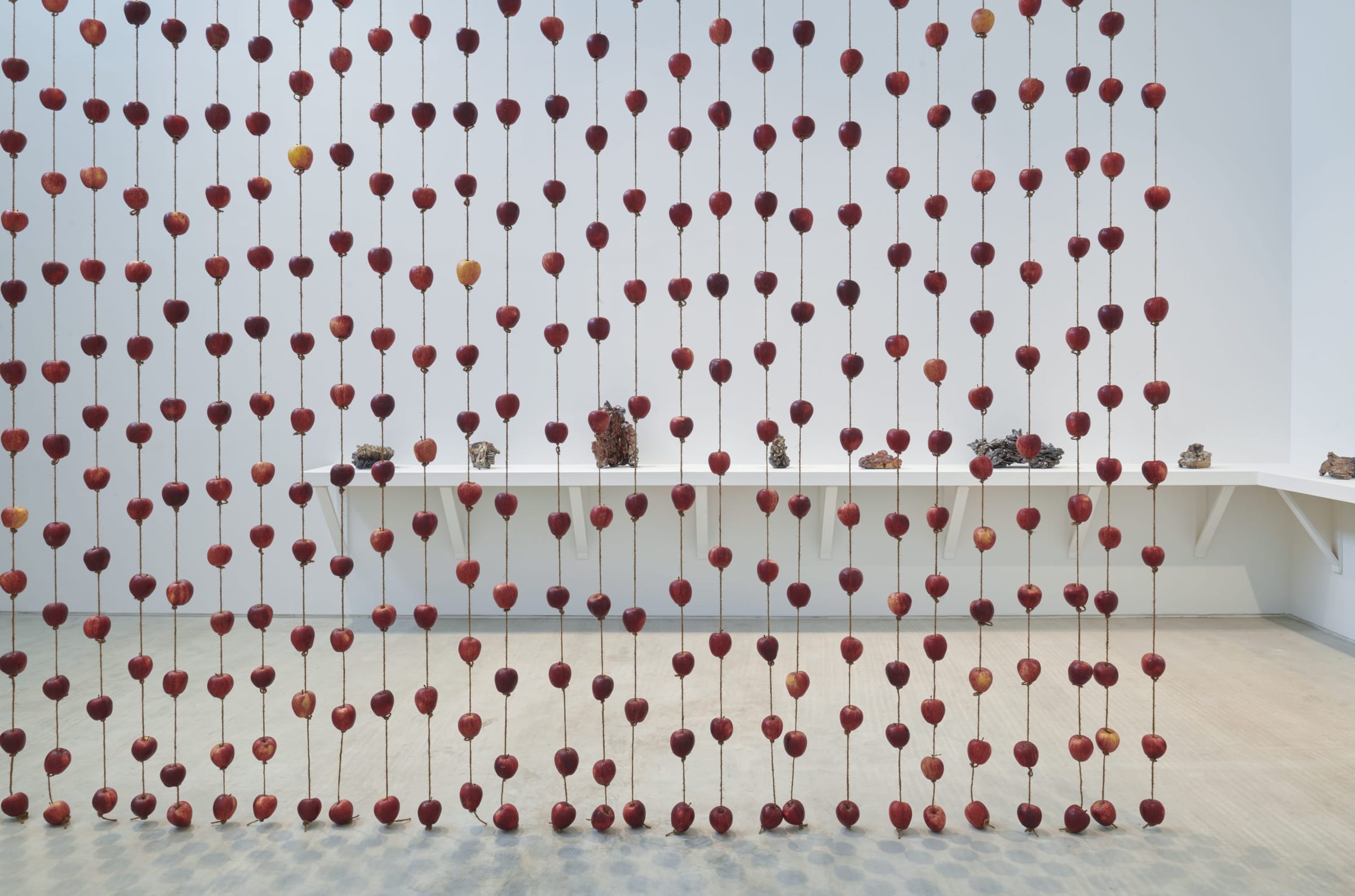
ARTICLE: “Anya Gallaccio’s Organic Mementos Mori” by Eliza Goodpasture, Hyperallergic: Rotting apples threaded with hanging twine, shriveling red daisies pressed between plexiglass, burning candles creating waxen landscapes on aluminum foil, a hundred-plus-year-old ash tree stricken with ash dieback disease—these were among the memento mori (reminders of death) installed at artist Anya Gallaccio’s exhibition preserve at Turner Contemporary in Margate, England, in fall 2024. “The potency of the transient works is so magnetic,” writes reviewer Eliza Goodpasture. “The Christian motif of dust to dust undergirds it all. . . . The artist reminds us that decay is full of energy—not just an ending, but part of an endless circle of life.”
+++
SONGS:
>> “Turning” by Deanna Witkowski: Deanna Witkowski is a jazz composer and pianist living in Chicago. She wrote this choral piece for Lent, a season in which the liturgies call us to turn away from sin and toward God. That’s what repentance means: changing direction. The first verse is taken from Psalm 119:36–40. “Turn our hearts, O Lord, from selfish gain to your commandments . . .”
For a 2023 performance by the Hendricks Chapel Choir at Syracuse University, see here. Purchase the score here.
>> “Miraculous Salvation” by Tenielle Neda: This song by the Australian singer-songwriter Tenielle Neda praises God for the grace he lavishes on us and for his great love. Backing vocals are provided by Chris Cho.
+++
CAROL TEXT: “Revert, revert” by James Ryman, ca. 1492: Medievalist Eleanor Parker shares this Lenten carol text by the fifteenth-century Franciscan friar James Ryman, from Cambridge University Library MS Ee 1.12. The burden (repeated stanza) is “Revert, revert, revert, revert; / O sinful man, give me thine heart”—an echo of Isaiah 44:22, “Return to me, for I have redeemed you.” Written in Christ’s voice, it calls us to remember how he took on our flesh, was baptized, and was flogged and crucified for our sakes. I think the shield in stanza 3 refers to the cross; the Via Dolorosa was a battlefield on which Christ fought the devil, and paradoxically, the instrument of his execution was the means of victory.


 Art & Theology