Roundup: Theological spinoff of “The Twelve Days of Christmas,” Advent art with Elissa Yukiko Weichbrodt, and four new Christmas song recordings

POEM SERIES: “Twelve Days of Advent” by Kate Bluett: This year on her blog, writer Kate Bluett [previously] is publishing a series of original metrical verses based loosely on the cumulative song “The Twelve Days of Christmas.” She calls it the Twelve Days of Advent and through it explores the theology of Christ’s coming. I love this creative, sacred spin on the popular seasonal ditty! Here’s where the series currently stands (my favorite poems are in boldface):

  1. “A Partridge in a Pear Tree”: Bluett imagines, in the tree of the knowledge of good and evil, a bird singing (representing, as I take it, God’s word), but Adam and Eve heed not his song, and, taking the tree’s forbidden fruit, find themselves exiled. The bird weeps for the alienation of his two friends, and wings his way east of Eden, into the home of a young maiden, a daughter of Eve, who receives him, shelters him, an act that leads to restoration. Bluett uses some of the language of late medieval English folksong, such as “with a low, low, my love, my love” and “welaway.”
  2. “Two Turtledoves”
  3. “Three French Hens”
  4. “Four Calling Birds”: This poem is brilliant. In it the four matriarchs in Jesus’s genealogy speak to Mary, tenderly calling her “Child” and rejoicing in her “bringing forth our life’s tomorrow.” Tamar, Rahab, Ruth, Bathsheba—they’ve long awaited redemption, and now they’re at its threshold. Mary’s yes to God’s call “set[s] [their] dry bones stirring, thrumming / with a hope [they’d] hardly dared.” They inform her that her vocation will involve great suffering (as we know, she’ll experience the brutal death of her son)—but her willingness to give up her son to the cross, to endure that rupture, will mean new life for the world.
  5. “Five Gold Rings”
  6. “Six Geese a-Laying”: Picking up the Isaianic language of the wilderness being made glad, the poetic speaker sings an eschatological vision of flocks coming home to “the orchard of the rood” (rood = cross) to lay and hatch eggs in nests once empty, now brimming with life.
  7. “Seven Swans a-Swimming”

I eagerly await the remaining five poems!

+++

SUBSTACK SERIES: “Art + Advent 2025” by Elissa Yukiko Weichbrodt: The art historian Elissa Yukiko Weichbrodt [previously], author of Redeeming Vision and the Loving Look Substack, is one of my favorite writers. This Advent she is writing a weekly series of art reflections centered on the themes of hope, peace, joy, and love.

>> “Week 1 // Hope: Abraham’s Oak and Sarah’s Laughter”: Looking at Henry Ossawa Tanner’s painting Abraham’s Oak, Weichbrodt writes about shadowy promise. She also considers, with reference to an early Byzantine mosaic of the Hospitality of Abraham, how to hope again after being wounded, as Sarah did, is a vulnerable thing. “As Advent begins, I find myself peering into a Tanner-like mist, seeing the dim outline of longed-for goodness taking shape in the distance. Sometimes I’m full of hope, but I’m also, like Sarah, sometimes full of armored laughter.”
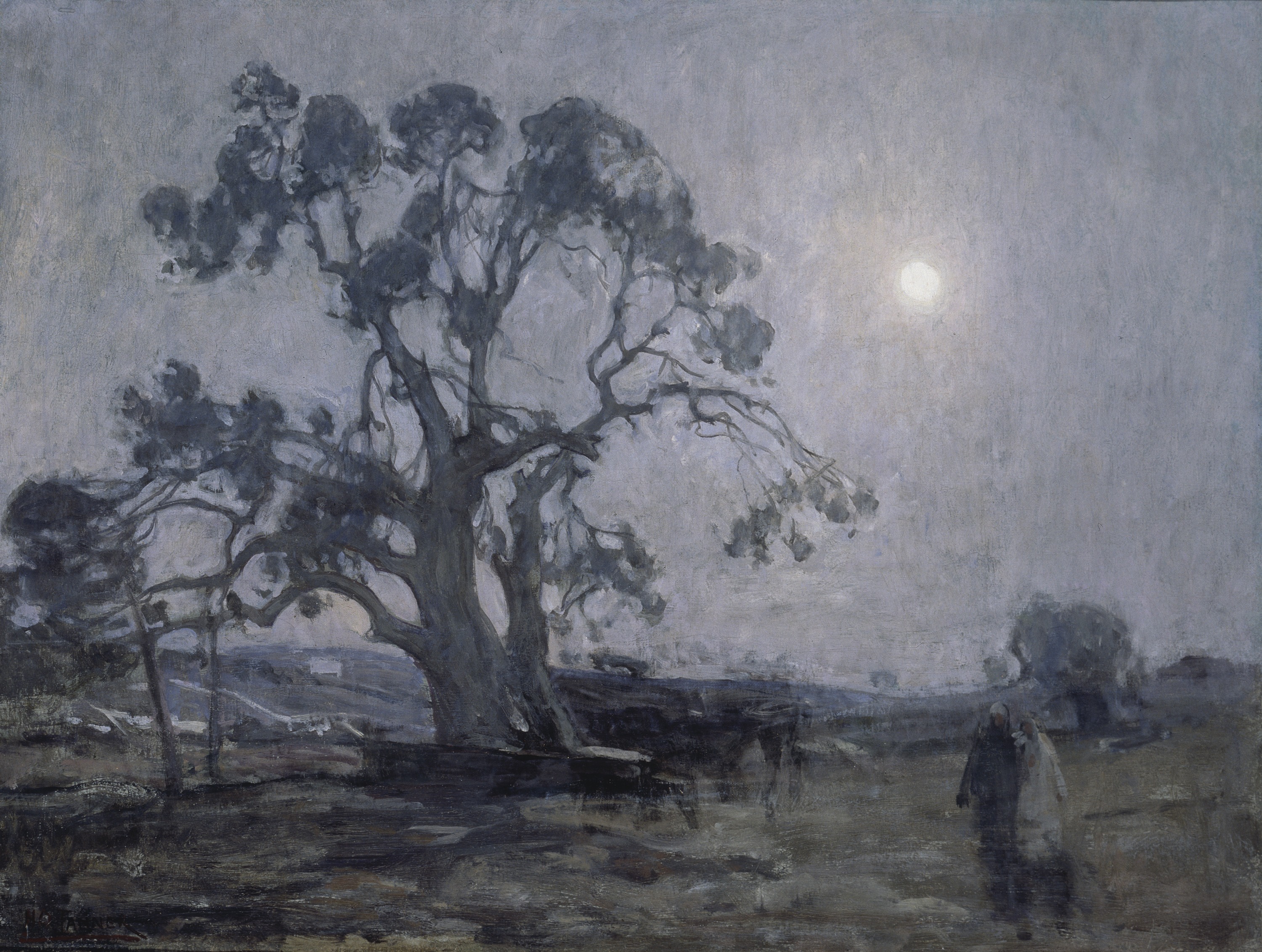
Tanner, Henry Ossawa_Abraham's Oak
Henry Ossawa Tanner (American, 1859–1937), Abraham’s Oak, 1905. Oil on canvas, 21 3/8 × 28 5/8 in. (54.4 × 72.8 cm). Smithsonian American Art Museum, Washington, DC.

>> “Week 2 // Peace: A Stitch Pulling Tight”: “How do we do repair work in a fraying world with our own, fraying selves? What thread can stitch together all these gaping wounds?” Weichbrodt asks. She looks at Mary Weatherford’s monumental painting Gloria (new to me!), finding in the hot coral neon light blazing across the canvas resonance with Renaissance paintings of the Annunciation, which portray the Light of the World as the stitch that mends the tear between God and humanity.
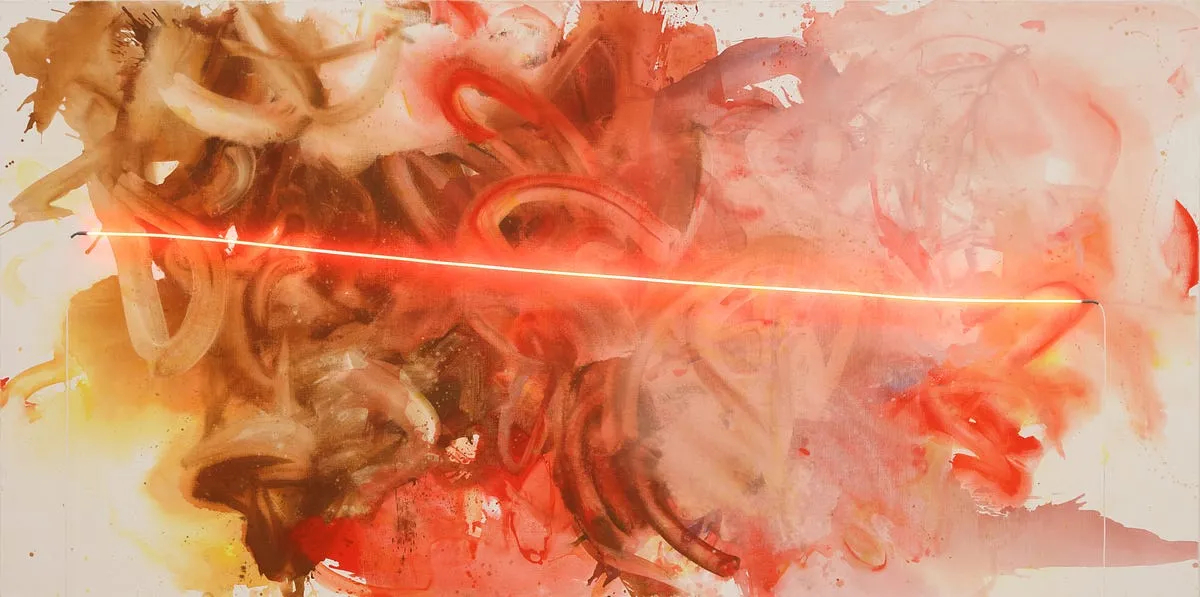
Weatherford, Mary_Gloria
Mary Weatherford (American, 1963–), Gloria, 2018. Flashe paint and neon on linen, 117 × 234 in. (297.2 × 594.4 cm). High Museum of Art, Atlanta.

>> “Week 3 // Joy: Far as the Curse Is Found”: In this post, Weichbrodt explores nine Visitation paintings and one extraordinary embroidery. “Every time I see [a Visitation artwork],” Weichbrodt writes, “I encounter joy. It’s not that Mary and Elizabeth are always smiling. Often, their expressions are quite serious. But joy—deep, sustained, sustaining joy—circulates between them like an electrical current.” Justice, threshold, and fecundity are among the supplementary themes touched on.
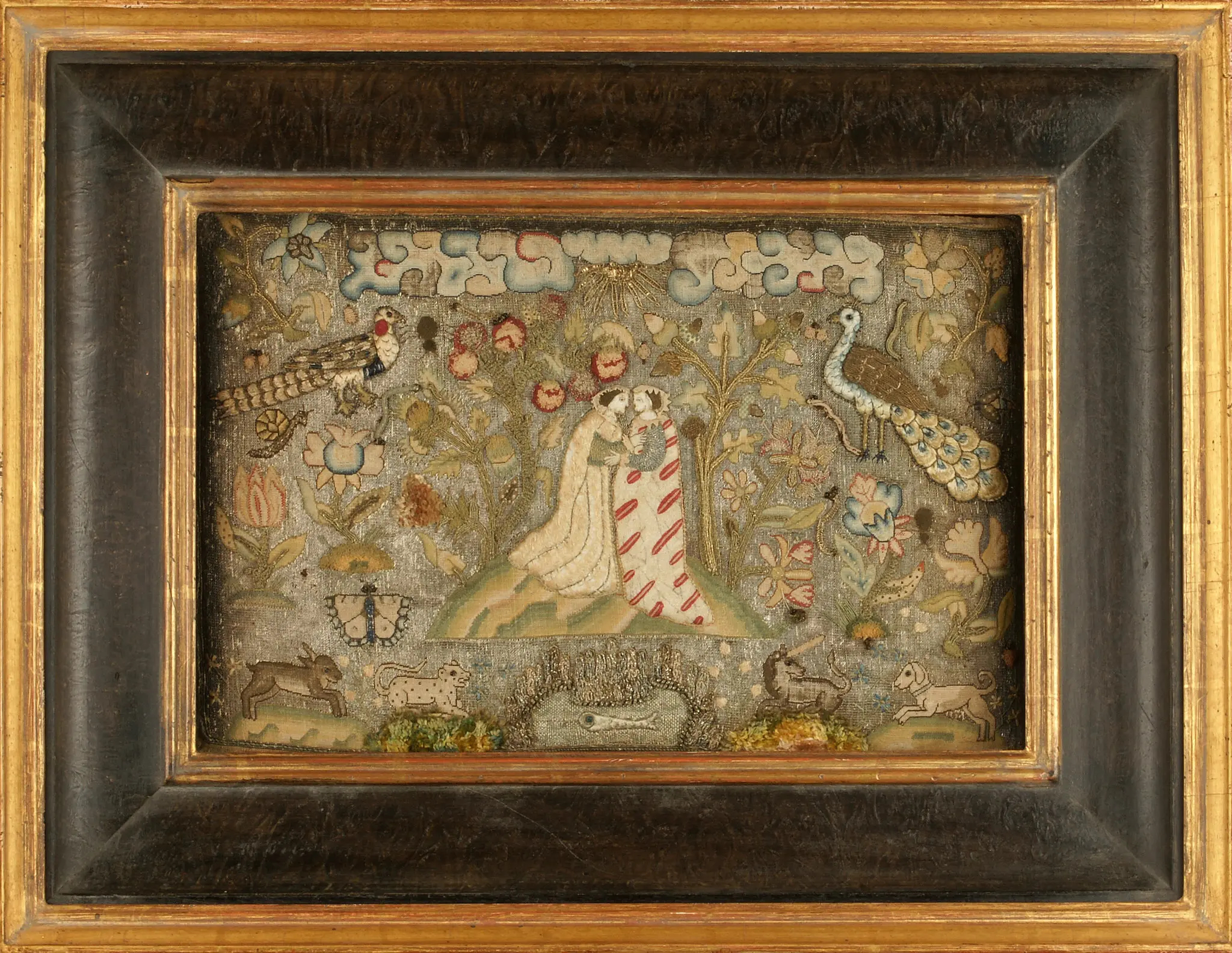
Visitation embroidery
The Visitation, England, first half of 17th century. Embroidery, 44.1 × 57 cm (framed). Ashmolean Museum, University of Oxford.

Weichbrodt’s final Advent 2025 post, on love, will be published this Saturday.

+++

SONGS:

Here are four newly released Christmas songs of note: two originals, one lyrical adaptation of a classic, and a new arrangement.

>> “War on Christmas” by Seryn: Seryn’s new album is titled War on Christmas. Here’s the title track:

The refrain is:

There is a war on Christmas
But it’s not the one you think
It’s in the news, it’s out of mind
It happens overseas
Cause as we sing the hymns and songs
With families by our sides
There is a war on Christmas
Someone’s fighting to survive

“War on Christmas” is a phrase some Christian conservatives in the US use to express their feeling of having their faith traditions attacked by the sinister forces of pluralism when people or signage greet them with a generic “Happy Holidays” instead of “Merry Christmas.” I roll my eyes big-time when I hear people complain about this, because it’s ridiculous for any American to assert that they are impeded from or ostracized for celebrating Christmas in this country, or to take offense that a stranger does not automatically assume their particular religious affiliation.

Seryn’s song affirms that yes, there is a war on Christmas—only it’s a war not against personal religious freedoms in America but against peace, love, and the other values Christ came to teach and embody. When humans wage literal wars with literal weapons, killing and maiming each other and inducing mass terror—that’s an assault against Christ’s mass, with its message of welcome and reconciliation. So, too, when we perpetuate hate, whether on personal, national, or global scales. As another Christmas song puts it, “Hate is strong and mocks the song of ‘Peace on earth, goodwill to men.’”

>> “O New Commingling! O Strange Conjunction!” by the Anachronists: The lyrics to this new song by the Anachronists [previously]—Corey Janz, Andrés Pérez González, and Jonathan Lipps—are a paraphrase from the sermon “On the Theophany, or Birthday of Christ” by Gregory of Nazianzus (ca. 329–390), one of the most influential and poetic theologians of the early church. Gregory delivered the sermon, labeled “Oration 38” in the Nicene and Post-Nicene Fathers series, at Christmastime in 380 in Constantinople, where he served as bishop. In section 13, the Anachronists’ source for the song, he expresses awe at the beautiful mystery of the Incarnation. Below is an excerpt from the public-domain NPNF translation.

The Word of God Himself—Who is before all worlds, the Invisible, the Incomprehensible, the Bodiless, Beginning of Beginning, the Light of Light, the Source of Life and Immortality, the Image of the Archetypal Beauty, the immovable Seal, the unchangeable Image, the Father’s Definition and Word—came to His own Image, and took on Him flesh for the sake of our flesh, and mingled Himself with an intelligent soul for my soul’s sake, purifying like by like; and in all points except sin was made man. . . . O new commingling; O strange conjunction; the Self-Existent comes into being, the Uncreate is created, That which cannot be contained is contained. . . . He Who gives riches becomes poor, for He assumes the poverty of my flesh, that I may assume the richness of His Godhead. He that is full empties Himself, for He empties Himself of His glory for a short while, that I may have a share in His fullness. What is the riches of His goodness? What is this mystery that is around me? I had a share in the image; I did not keep it; He partakes of my flesh that He may both save the image and make the flesh immortal. He communicates a second Communion far more marvelous than the first.

(Related post: Andy Bast sets to music a Nativity hymn by St. Ephrem)

>> “Away in a Manger (Then to Calvary)” by Sarah Sparks: Singer-songwriter Sarah Sparks [previously] released a new EP, Christmas Hymns, last month, comprising five classic carols, including one with revised lyrics that further draw out the significance of the Incarnation. I’m a big fan of Sparks’s voice and her no-frills acoustic style.

Away in the manger
No crib for a bed
The great King of Heaven
Does lay down his head
The stars he created
Look down where he lay
The little Lord Jesus
Asleep on the hay

And there in the manger
The Maker of earth
In riches and glory?
No, born in the dirt
With oxen and cattle
With shepherds and sheep
No stranger to weakness
He loves even me

And there in the manger
Is our Servant-King
He sits with the lowly
He washes their feet
Away in the manger
Then to Calvary
His birth, life, and death
And his raising for me

And there in the manger
Is my greatest friend
His mercy, his patience
His grace know no end
Be near me, Lord Jesus
For all of my days
In life and in death
Till we meet face to face

>> “Angels We Have Heard on High” by the Petersens: Last Friday the Petersens [previously] released a music video—shot at Wonderland Tree Farm in Pea Ridge, Arkansas—debuting their new bluegrass arrangement of one of my favorite Christmas carols. Banjo, mandolin, fiddle, acoustic guitar, dobro, upright bass—I love the instrumentation of the bluegrass genre and what it adds here, and the Petersens are consummate performers.  
Roundup: “A Radiant Birth,” Kate Bowler’s Advent Guide, messy family trees, and more

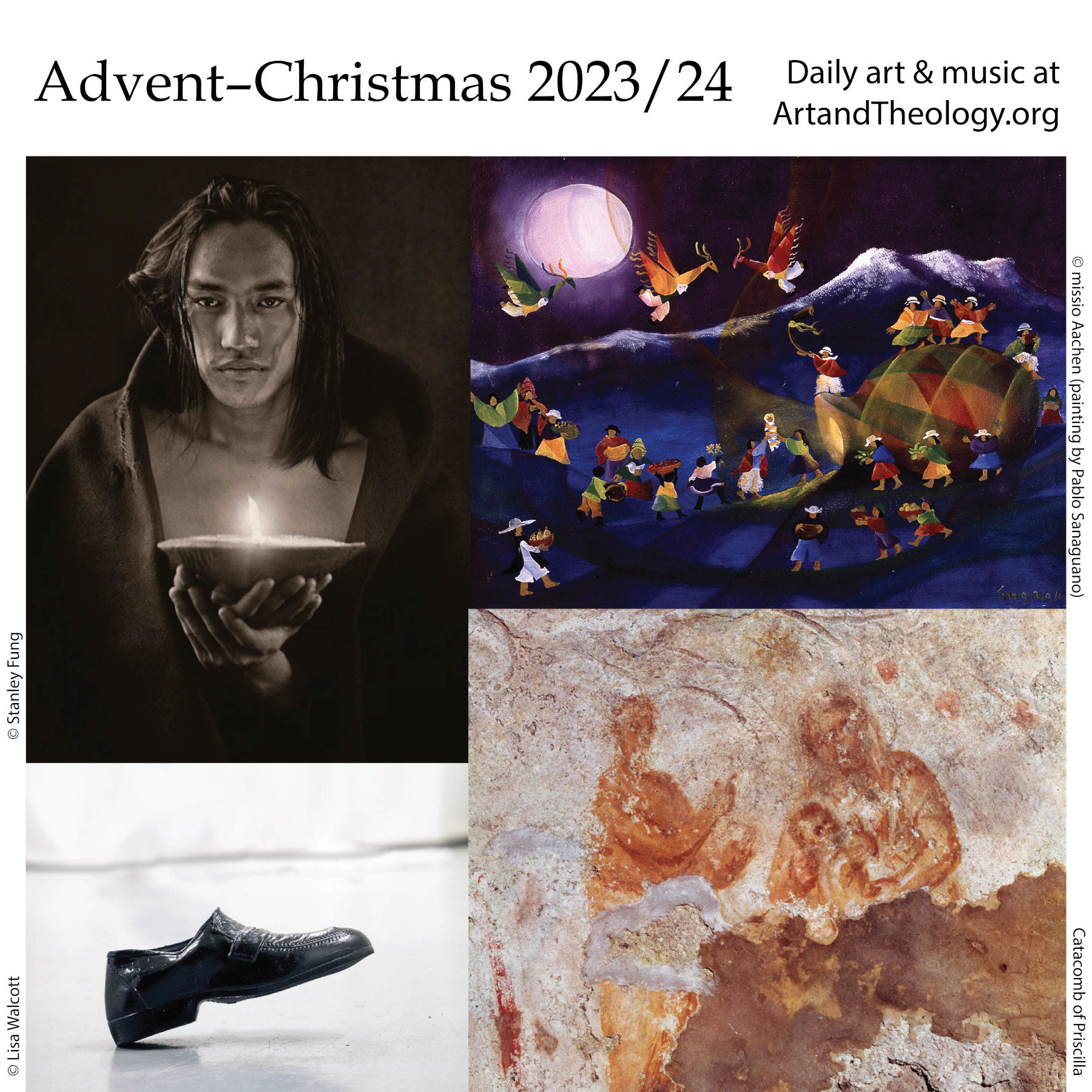
This year I’m continuing my Advent and Christmas tradition of daily art-music pairings on the blog, from December 2 (a prologue before the official start of Advent on December 3) through January 6, Epiphany. If you know of anyone who might be interested to follow along, they can subscribe here.

Advent 2023 promo

An ancient catacomb painting, a contemporary light installation, an Urdu anthem, a French West Indian carol, an Ethiopian tapestry, an impearled chasuble, a kinetic sculpture, a jazz rhapsody, a Byzantine-inspired piano quintet, an isicathamiya-style song, a Puerto Rican bulto, a Netherlandish altarpiece, and settings of Herbert, Blake, Wilbur, and Augustine—these are some of the gifts from artists on offer this season, inviting us to deepen our desire for and celebration of Christ Emmanuel, God with us.

+++

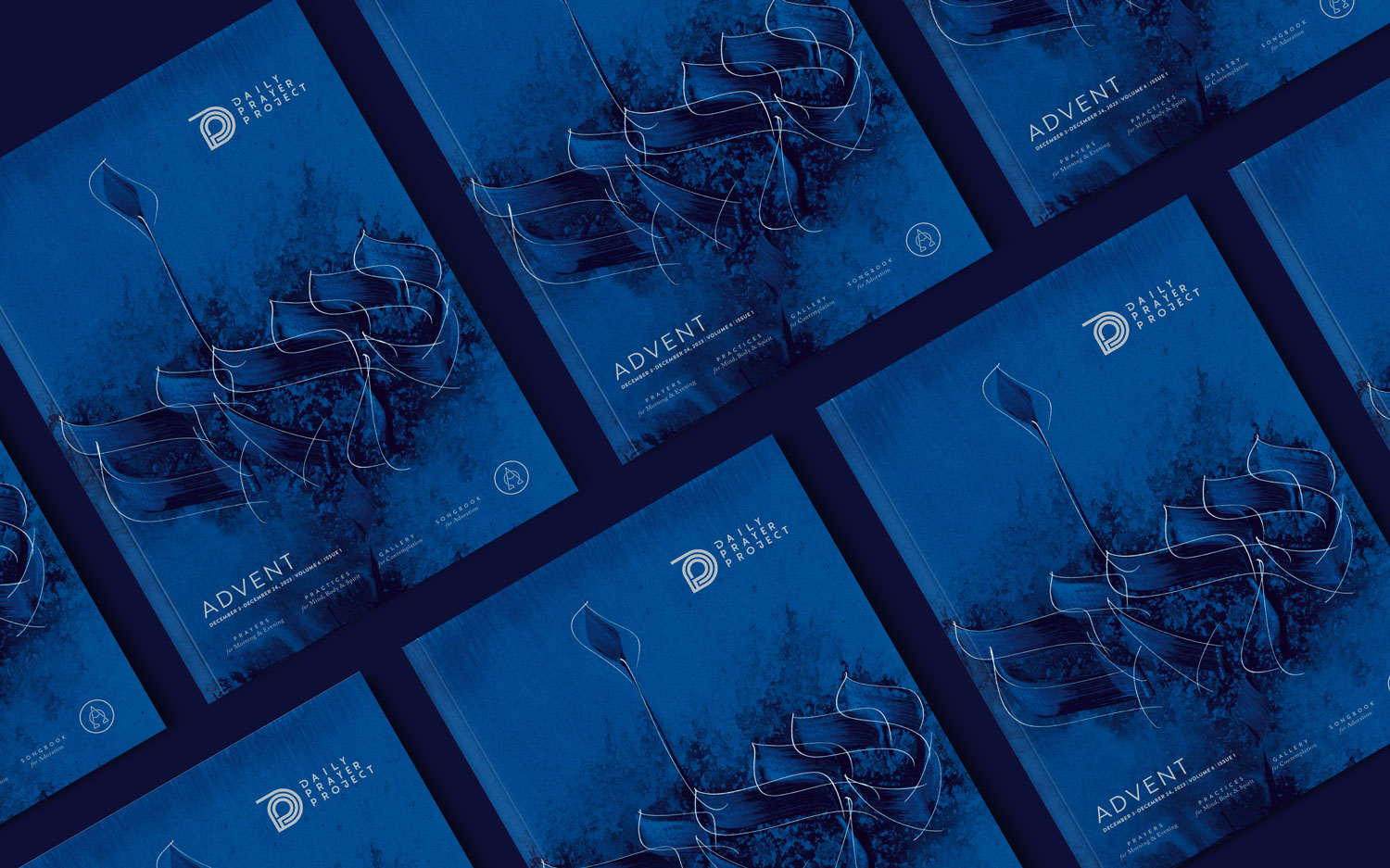
THE DAILY PRAYER PROJECT: Advent 2023: With Advent comes the start of a new liturgical year—which means a new volume of the Daily Prayer Project’s Living Prayer Periodical! Published in six editions a year, this periodical aims to “connect and unify Christians by resourcing them with daily prayers, practices, and music from the global-historical church, and visual art of spiritual and artistic value.” I curate the art. The cover image for Advent 2023—which, providentially, was finalized before the Hamas attack on Israel on October 7 and the ensuing retaliations—is a calligraphic rendering of the Hebrew word shalom by Michel D’anastasio, a French Catholic artist with Jewish ancestry. The lamed is like a candle held hopefully aloft against a dark-blue midnight.

Advent LPP

Rev. Joel Littlepage, who is the pastor of worship and formation at Grace Mosaic in Washington, DC, curates the prayers. Here’s Friday evening’s, from the church in New Guinea: “Lord, oil the hinges of our hearts’ doors, that they may swing gently and easily to welcome your coming.” Wednesday morning’s prayer is a responsive confession by Jorge Lockward, a Dominican song leader from New York, which begins, “Por tantas injusticias, perdón, Señor. Por tanta indiferencia, perdón, Señor.” (For so much injustice, forgive us, Lord. For so much indifference, forgive us, Lord.)

+++

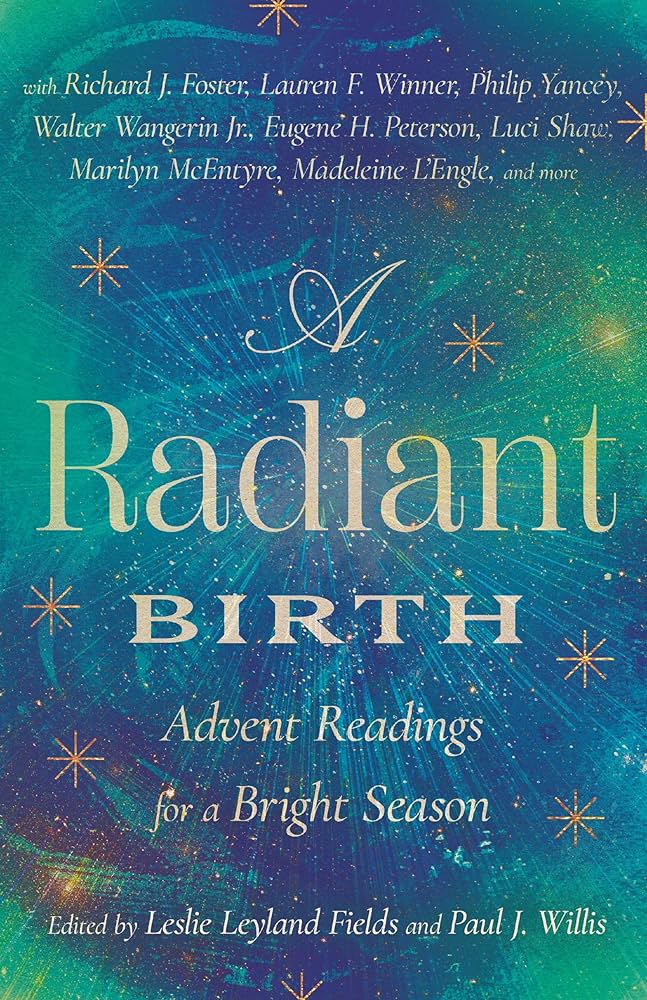
NEW BOOK: A Radiant Birth: Advent Readings for a Bright Season, ed. Leslie Leyland Fields and Paul J. Willis: New this fall from InterVarsity Press, this Advent devotional book is a multiauthor compilation of forty-two readings for Advent through Epiphany, consisting of literary essays, poems, and short stories. Contributors are affiliated with the Chrysostom Society and include Richard Foster, Lauren Winner, Madeleine L’Engle, Philip Yancey, Walter Wangerin Jr., Eugene Peterson, Luci Shaw, and Marilyn McEntyre. About one-third of the content is previously unpublished, including a wonderful little reader’s theater (pages 81–89) by Leslie Leyland Fields that I can imagine working really well as part of a church service (and I received confirmation from Fields that people may use it freely in such settings). I know the market is really thick with Advent books, and I’ve read a lot of them, but this one has to be one of my favorites—the selections are wonderful.

+++

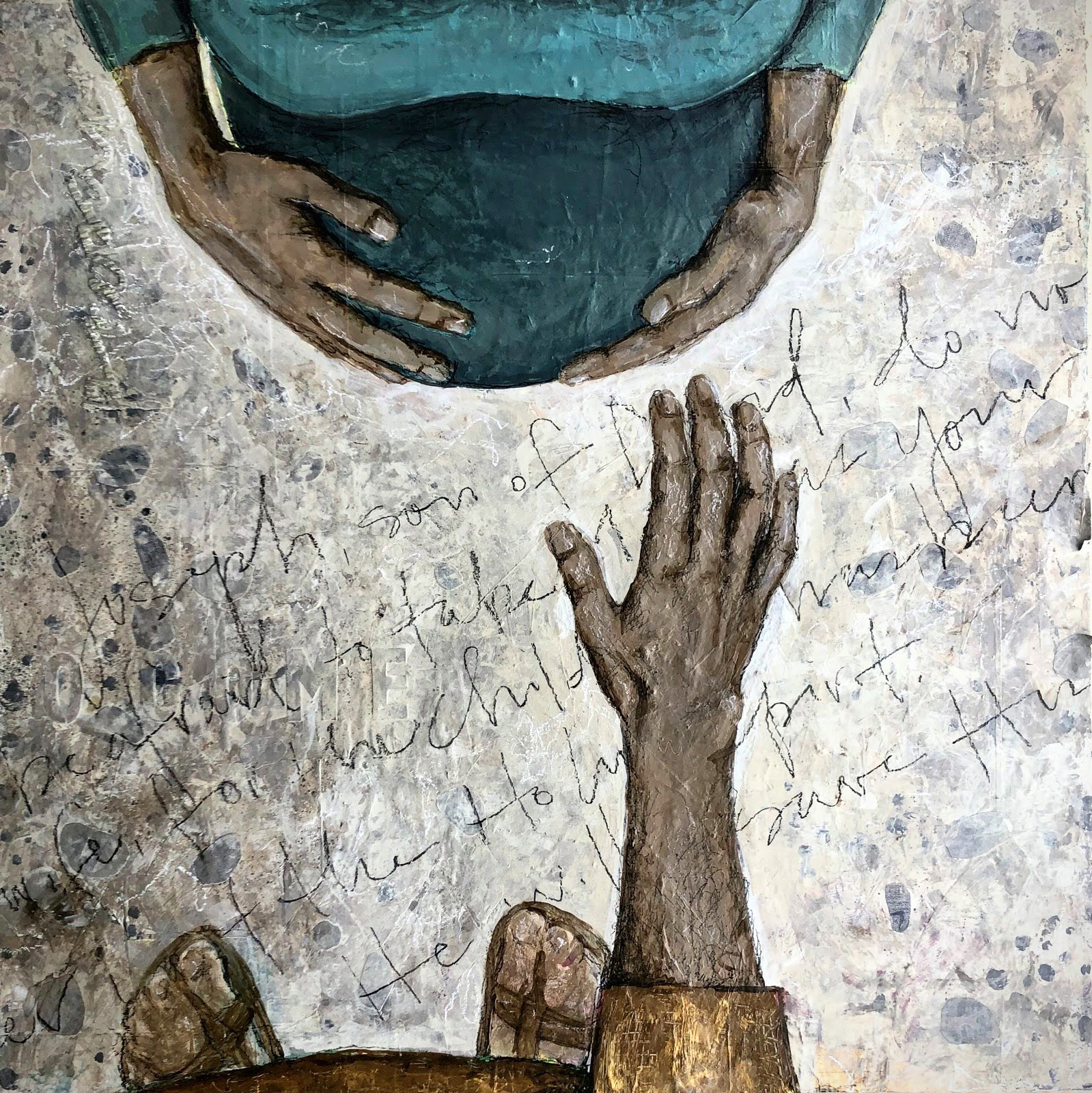
ART SERIES: Advent by Riki Yarbrough: For Advent 2018, artist Riki Yarbrough set herself a challenge: each day, create a 24 × 24-inch mixed media work corresponding to that day’s family devotions, structured around Jesus’s lineage. She didn’t have nearly enough canvases to last the duration of the season, so on day two “I woke up, took the very same canvas I had painted the day before, and worked right on top.” The final product was an artwork twenty-seven layers deep—the various people, prophecies, and foreshadowings adding weight and texture to the progressing story that culminated, in Yarbrough’s devotional program, with the infant Christ in a manger. “To cover the previous day’s work under the beauty of a new focus and set of Scriptures became both an offering and a sacrifice,” she said. “I wasn’t worried about meeting someone’s expectation or coming back to rework it later. I was simply conversing with the Lord over the truth of His Word in those wonderful moments on that particular day.”

Yarbrough, Riki_Joseph, Husband of Mary
Riki Yarbrough (American, 1975–), Joseph, Husband of Mary, 2018. Mixed media on canvas, 24 × 24 in.

Here’s a thirty-second time lapse of the Cain and Abel composition transforming into Noah:

In Advent 2022 Yarbrough reprised the daily challenge, this time executing her images on separate canvases. You can find this series on her Instagram @rikiyarbrough, starting with the candle image—but you can also purchase it in book form, as this month, Yarbrough released Advent in Art and Verse, combining full-color photos of all twenty-seven works from her 2022 Advent series with scripture passages and original poetic reflections. I received my copy, and my first impression was: what a beautiful design!

Advent in Art and Verse

I like the allusiveness of her paintings: a set of footprints, stalks of grain, a red cord, tongs gripping a hot coal, tree rings, harp strings, a split fig, a cairn—simple objects like these guide us through the narrative of the Old Testament and the opening pages of the New.

+++

SONG MEDLEY: “O Come, O Come, Emmanuel / Come, Thou Long-Expected Jesus” by the Petersens: In this video shot in Weddings at the Homestead in their hometown of Branson, Missouri, family bluegrass band The Petersens perform the two best-known Advent hymns—the one mournful, meditative, and minor key, the other bright and exuberant. They recorded both songs (released as two separate tracks) for their 2020 album Christmas with the Petersens.

+++

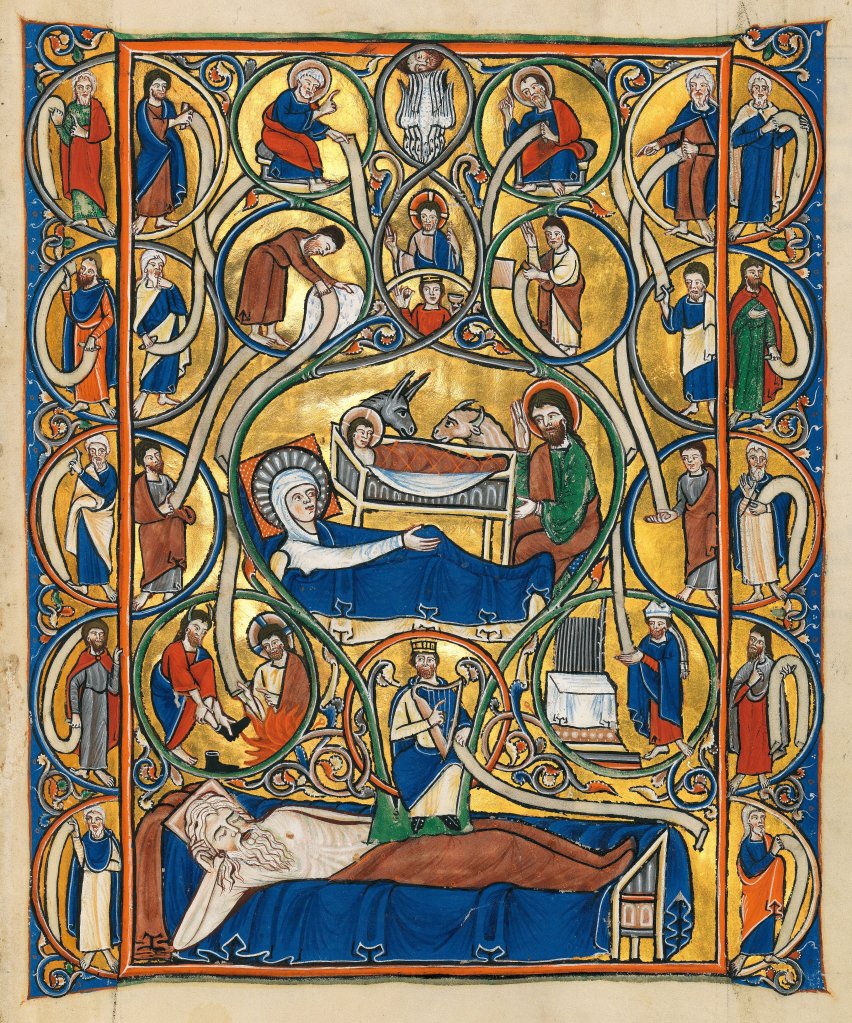
SUBSTACK POST: “O Come, Thou Rod of Jesse” by Grace Hamman, Medievalish 1.12, December 12, 2022: In last December’s installment of her monthly Medievalish newsletter, Grace Hamman considers Jesus’s family tree, visualized in the Middle Ages as what’s called, after Isaiah 11:1, the Tree of Jesse [previously here and here]. What does it mean that Jesus came from a real human family, a “complex web of generation, adoption, relationship, and dependence”? “The Son did not only take on flesh,” Hamman writes, “he took on David’s sometimes troublesome courage and cowlicks, Anne’s devotion and double-jointed pinky fingers. He comes from a line of real and complex people: faithless and faithful, abusers and abused, holy and broken. Baby Jesus is born into our funny human particularities and our burdensome histories, into created time and place.”

Tree of Jesse (English Psalter)
Tree of Jesse from an English Psalter in Latin, ca. 1190–1210. Bayerische Staatsbibliothek, Munich, BSB Clm 835, fol. 121r.

+++

PODCAST EPISODE: “The Season of Waiting (and Waiting . . . and Waiting),” Everything Happens with Kate Bowler, November 29, 2022: In this podcast episode from the beginning of last Advent, bestselling author Kate Bowler introduces the season as one of waiting. She explains the history of the Advent wreath, and takes calls from listeners who share Christmas traditions they observe to honor a loved one they’ve lost. Be sure to download Bowler’s 2023 Advent guide, titled Bless the Advent We Actually Have. Here’s an excerpt from Day 1:

Advent is a time marked by waiting. We wait for God to make all things right. For justice to be meted. For democracy to feel stable. For wrongs to be righted. For our communities to be safe spaces for the vulnerable. For our earth to heal. We wait for our lives to get easier—for us to have the financial security we need, for our relationships to be restored, for our bodies to ache less. We wait for our parents to understand us and our families to feel whole. We wait for our kids and grandkids to be healed or come back home. We wait for the grief to end.

But the waiting of Advent is one marked by hope. We wait with expectancy. With anticipation for the inbreaking of God to make all things new. . . .

Advent hope is gritty. It shirks all false optimism. It is hope as protest. Hope in the face of impossibilities. . . .

The excerpt Bowler reads in the podcast is from her 2022 Advent guide, The Season of Waiting (and Waiting . . . and Waiting . . .) (which you can also download for free, along with 2021’s A Good Enough Advent + Christmastide, at https://katebowler.com/advent/).

Christmas, Day 7: All Glory Be to Christ

LOOK: The Burning Bush by Sassandra

Sassandra_The Burning Bush
Jacques Richard Sassandra (French, 1932–), Le buisson ardent (The Burning Bush), late 1980s. Oil on canvas, 110 × 272 cm. Collection of the artist.

Last year when I was corresponding with the artist Sassandra about the New Jerusalem collage from his Apocalypse series, he sent me some photos of this painted triptych on the same subject. It’s called The Burning Bush. When open, it’s about nine feet across, and it shows Christ as the Good Shepherd standing in the river of life, which waters the roots of the tree of life, whose leafy branches extend all around. This is a depiction of the new heaven and new earth described in the book of Revelation, with angels posted at its twelve gates. (See Advent, Day 15.)

The image references other biblical passages as well. The lion and the lamb lying down together in peace—the lion having given up its carnivorous diet to eat straw instead of fellow creatures—is an allusion to the messianic kingdom prophesied in Isaiah 11. And the French inscription on the arch above Jesus and the bottom gatepost is the text of John 10:9: Je suis la porte. Si quelqu’un entre par moi il sera sauvé. (“I am the gate. If anyone enters by me, he will be saved.”) Jesus is the doorway through which we enter this glorious future.

Sassandra_The Burning Bush
Sassandra, Le buisson ardent (central panel)

It’s worth quoting the John passage in full, which rings loudly with the theme of sacrifice:

So again Jesus said to them, “Very truly, I tell you, I am the gate for the sheep. All who came before me are thieves and bandits, but the sheep did not listen to them. I am the gate. Whoever enters by me will be saved and will come in and go out and find pasture. The thief comes only to steal and kill and destroy. I came that they may have life and have it abundantly.

“I am the good shepherd. The good shepherd lays down his life for the sheep. The hired hand, who is not the shepherd and does not own the sheep, sees the wolf coming and leaves the sheep and runs away, and the wolf snatches them and scatters them. The hired hand runs away because a hired hand does not care for the sheep. I am the good shepherd. I know my own, and my own know me, just as the Father knows me, and I know the Father. And I lay down my life for the sheep. I have other sheep that do not belong to this fold. I must bring them also, and they will listen to my voice. So there will be one flock, one shepherd. For this reason the Father loves me, because I lay down my life in order to take it up again. No one takes it from me, but I lay it down of my own accord. I have power to lay it down, and I have power to take it up again. I have received this command from my Father.”

Two of the seven I AM statements that Jesus speaks in the Gospel of John are present here: “I AM the gate of the sheepfold,” “I AM the good shepherd.” The others are “I AM the bread of life,” “I AM the light of the world,” “I AM the resurrection and the life,” “I AM the way, the truth, and the life,” and “I AM the true vine.” Biblical scholars say that with these statements, Jesus was ascribing to himself the divine, if somewhat cryptic name that God disclosed to Moses in Exodus 3:14–15: I AM THAT I AM.

Sassandra_The Burning Bush (closed)
Sassandra, Le buisson ardent (closed)

Sassandra makes that connection in this triptych. When the wings are closed, the outer scene shows Moses before the burning bush, his shoes reverently removed, his arms raised in worship before the fiery Voice that calls him. Inscribed along the sides of these two exterior panels is Saint, saint, saint est le seigneur de l’univers! Toute la terre est pleine de sa gloire! (“Holy, holy, holy is the Lord of the universe! All the earth is full of his glory!”) (Isa. 6:3).

The artwork thus links Yahweh’s revelation to Moses as the great I AM with Christ’s apocalyptic appearing at the end of time. The wispy leaves on the tree of life on the interior panels appear as little flames, and Christ stands among them, the full revelation of God, who beckons us.

“Adonai” is one of the seven traditional O Antiphons, titles for Christ taken from the Old Testament and turned into short Advent refrains. It’s a Hebrew word that translates to “my Lord,” and it was used by the ancient Israelites to refer to God, as they regarded the divine name, I AM, as too sacred to be uttered. The “O Adonai” antiphon of Christian tradition recognizes that the God who spoke to Moses in the burning bush is the same God who speaks through Christ, and it entreats God to come deliver us from bondage, as he did the Israelites from Egypt:

O Adonai and ruler of the house of Israel,
who appeared to Moses in the burning bush and gave him the Law on Sinai:
come with an outstretched arm and redeem us.

Sassandra’s Burning Bush shows that deliverance—a landscape of liberation, where Christ, having given himself, holds us at rest in his arms and we are refreshed unceasingly by living water, and all creation sings God’s glory.

LISTEN: “All Glory Be to Christ” | Words by Dustin Kensrue, 2012 | Scottish folk melody, probably 17th century | Arranged and performed by The Petersens on Christmas with the Petersens, 2020

Should nothing of our efforts stand
No legacy survive
Unless the Lord does raise the house
In vain its builders strive [Ps. 127:1]
To you who boast tomorrow’s gain
Tell me, what is your life?
A mist that vanishes at dawn [James 4:13–14]
All glory be to Christ!

Refrain:
All glory be to Christ our king!
All glory be to Christ!
His rule and reign we’ll ever sing,
All glory be to Christ!

His will be done, his kingdom come
On earth as is above
Who is himself our daily bread [Matt. 6:10–11]
Praise him, the Lord of love
Let living water satisfy
The thirsty without price [Isa. 55:1; John 4:10; 7:37; Rev. 21:6]
We’ll take a cup of kindness yet
All glory be to Christ! [Refrain]

When on the day the great I Am [Exod. 3:14]
The faithful and the true [Rev. 19:11]
The Lamb who was for sinners slain [Rev. 5:6]
Is making all things new [Rev. 21:5]
Behold our God shall live with us
And be our steadfast light [Rev. 22:5]
And we shall e’er his people be
All glory be to Christ! [Refrain]

This traditional folk melody from Scotland is one of the most recognizable in the world. It is most associated with Robert Burns’s Scots poem “Auld Lang Syne,” a staple of New Year’s Eve parties. As the old year passes, it’s common to pause and consider what passes away with it and what will last, and to cast a renewed vision for the new year.

In December 2011 the American singer-songwriter Dustin Kensrue [previously] was inspired to write new lyrics for the tune AULD LANG SYNE. “The idea is that—especially at the beginning of the new year—we would dedicate all our efforts to bringing glory to Jesus Christ,” he said, “to acknowledge that anything else would be of no value, and to celebrate our redemption in him.” Kensrue’s lyrics are full of biblical allusions, whose chapter-verse references I’ve cited in brackets above.

Kings Kaleidoscope recorded “All Glory Be to Christ,” sung by Chad Gardner, on their Christmas EP Joy Has Dawned (2012). The music video was filmed on a carousel at a fair, a metaphor for the passage of time. The years go round and round as our world revolves around the sun. When the ride stops, will we have ridden wisely and well?

Rather than feature the original recording, I’ve chosen to feature a more recent version by The Petersens, a family bluegrass band from Branson, Missouri, because I absolutely love how they have reharmonized it, including starting it in a minor key. Ellen Petersen Haygood sings lead, and harmonizing vocals are supplied by her siblings Matt Petersen and Katie Petersen and her mom, Karen Petersen.

Wade in the Water (Artful Devotion)

Hambling, Maggi_Wall of Water II
Maggi Hambling (British, 1945–), Wall of Water II, 2011. Oil on canvas, 78 × 89 in. (198.1 × 226.1 cm). Photo: Douglas Atfield.

Then the angel of God who was going before the host of Israel moved and went behind them, and the pillar of cloud moved from before them and stood behind them, coming between the host of Egypt and the host of Israel. And there was the cloud and the darkness. And it lit up the night without one coming near the other all night.

Then Moses stretched out his hand over the sea, and the LORD drove the sea back by a strong east wind all night and made the sea dry land, and the waters were divided. And the people of Israel went into the midst of the sea on dry ground, the waters being a wall to them on their right hand and on their left. The Egyptians pursued and went in after them into the midst of the sea, all Pharaoh’s horses, his chariots, and his horsemen. And in the morning watch the LORD in the pillar of fire and of cloud looked down on the Egyptian forces and threw the Egyptian forces into a panic, clogging their chariot wheels so that they drove heavily. And the Egyptians said, “Let us flee from before Israel, for the LORD fights for them against the Egyptians.”

Then the LORD said to Moses, “Stretch out your hand over the sea, that the water may come back upon the Egyptians, upon their chariots, and upon their horsemen.” So Moses stretched out his hand over the sea, and the sea returned to its normal course when the morning appeared. And as the Egyptians fled into it, the LORD threw the Egyptians into the midst of the sea. The waters returned and covered the chariots and the horsemen; of all the host of Pharaoh that had followed them into the sea, not one of them remained. But the people of Israel walked on dry ground through the sea, the waters being a wall to them on their right hand and on their left.

Thus the LORD saved Israel that day from the hand of the Egyptians, and Israel saw the Egyptians dead on the seashore. Israel saw the great power that the LORD used against the Egyptians, so the people feared the LORD, and they believed in the LORD and in his servant Moses.

—Exodus 14:19–31

+++

SONG: “Wade in the Water,” African American spiritual

There have been many, many performances of this song over the years. For a nice, concise history of recordings, from gospel and doowop and choral to modern jazz, R&B, heavy rock, and northern soul, see this article by Mike Hobart. Below is a handful I’ve found and enjoy.

A gospel version by Brother John Sellers from 1959, driven by piano:

A choral arrangement by Paul T. Kwami, performed by the Fisk Jubilee Singers in 2019 (the soloist isn’t credited, but she’s amazing!):

Pegasis is a vocal trio of sisters from the Dominican Republic, formerly performing under the name The Peguero Sisters. Here they’re accompanied by guitar and shaker (this is the YouTube version, but the harmonies are cleaner on their 2016 album recording):

The Petersens apply their signature bluegrass stylings in their rendition, performed a few weeks ago in this video but also on their 2019 album Homesick for a Country:

According to oral lore, Harriet Tubman used the song “Wade in the Water” to communicate strategy to slaves traveling the Underground Railroad: its coded language alerted freedom seekers that bounty hunters were on their trail with bloodhounds and that they should jump into the river so that the dogs couldn’t track their scent. This popular myth about the song has not been confirmed, and the National Park Service, which preserves historical sites associated with the Underground Railroad and promotes research on the topic, suggests that it’s probably not true.

It is known, however, that it was sung at river baptisms, and still is, as the Exodus is seen as an archetype of baptism, of redemption through water. Not only that, but the song also draws on the pool of Bethesda passage in John 5, where people gathered to be healed: “For an angel went down at a certain season into the pool, and troubled the water: whosoever then first after the troubling of the water stepped in was made whole of whatsoever disease he had” (v. 4). (This verse is found in some early New Testament manuscripts but not the earliest and is therefore omitted from several modern translations.)

In the documentary God’s Greatest Hits, pastor and gospel recording artist Wintley Phipps says, “‘Wade in the Water,’ to me, . . . means people who are afraid of moving forward, progressing, taking a step, and facing uncertainty—go ahead, wade in the water. Take that step. As terrifying as it may seem at that very moment, it’s gonna be alright, and the miracle we seek is gonna happen.”

There’s the famous song “Bridge Over Troubled Water.” Well, in Exodus, God carves out a bridge through troubled water! Imagine walls of water standing multiple stories high on either side of you, filled with tiger sharks and other marine life. And you have to cross the sandy bottom in faith that those walls will hold up until you reach the other side.

“Wade in the Water” affirms that God is going to stir things up; he’s going to do something big. Just like he did when he brought Israel up out of Egypt.

For other songs based on the this week’s lectionary reading from Exodus, see my coverage of “Carol of the Exodus” and “Oh Mary, Don’t You Weep.”

+++

Maggi Hambling is one of Britain’s most significant painters and sculptors. Her nine “Walls of Water” paintings were made in 2010–11 and were first exhibited in 2014 at the National Gallery in London. Vast, intense, and energetic, they were inspired by her experience of giant waves crashing onto the seawall at Southwold, Suffolk, where she lives. “Through turbulence and exuberant colour, Hambling continues to affirm painting’s immediacy, saying, ‘The crucial thing that only painting can do is to make you feel as if you’re there while it’s being created – as if it’s happening in front of you’” (source).

Maggi Hambling (British, 1945–), Wall of Water V, 2011. Oil on canvas, 78 × 89 in. (198.1 × 226.1 cm). Photo: Douglas Atfield.

View other paintings from the series at Artsy.net.


This post belongs to the weekly series Artful Devotion. If you can’t view the music player in your email or RSS reader, try opening the post in your browser.

To view all the Revised Common Lectionary scripture readings for Proper 19, cycle A, click here.

Making Music in Quarantine

Here’s a quick roundup of some of the music videos and songs I’ve really enjoyed that have come about as a result of the COVID-19 pandemic.

“He Will Carry You”: A song by Scott Wesley Brown performed by Zanbeni Prasad on lead vocals, with her husband Benny Prasad on guitar and her sister-in-law Aruni Prasad on backing vocals. [HT: Global Christian Worship]

+++

“The Sun Will Rise”: One of The Brilliance’s early songs, from their 2010 self-titled album—sung here by Madison Cunningham [previously], Matt Maher, Liz Vice, Jayne Sugg, Tyler Chester, and David Gungor, with multiple contributing instrumentalists (see full list on YouTube).

+++

“Maren” (Have Mercy on Us): The First Lady of Ethiopia, Zinash Tayachew, sings a new gospel song whose Amharic title, ማረን, transliterated “Maren,” means “Have mercy on us,” a plea addressed to God. “Do not abandon us during this time when the world is terrorized by bad news,” she sings. [HT: Global Christian Worship]

+++

Apocalyptic Lockdown Blues, a new EP by David Benjamin Blower: One of my favorite singer-songwriters, from Birmingham, England. “Apocalyptic Lockdown Blues is a small oral history of a global pandemic,” Blower writes. “This is folk, rootsy and ambient, with sacred longings, poetry and politics, sung out of windows and accompanied by birdsong.”

+++

“A Celtic Prayer”: Produced by Jonathan Estabrooks, this video features the choir of Fifth Avenue Presbyterian Church in New York City singing a traditional Celtic blessing set to music by Barry Peters. It begins, “May the Christ who walks on wounded feet walk with you on the road.”

+++

Virtual May Morning 2020: May Day, May 1, is a public holiday in England, and for the past five hundred-plus years it has been an Oxford tradition to kick off the celebration at dawn by having the Choir of Magdalen College sing unaccompanied in the Renaissance style from the top of the college’s bell tower. Typically a crowd of thousands gathers for May Morning along High Street and on Magdalen Bridge, but this year the event was canceled due to COVID-19. However, Magdalen College pulled off a virtual choir! The boy choristers and lay clerks recorded their parts from home, under the direction of Mark Williams, which were combined in a video that was released online at 6 a.m. local time. [HT: Joy Clarkson]

The choir sings “Hymnus Eucharisticus,” a seventeenth-century Trinitarian hymn, and “Now Is the Month of Maying,” an English ballett (a light, dancelike part song similar to a madrigal) from 1595, about lads and lasses frolicking in the grass. The prayer in the middle is led by the Rev. Dr. Andrew Bowyer, dean of divinity. The actual church bells did ring out the hour like usual, with a celebratory chime following the performance (the chimes in the video were prerecorded).

+++

“Doxology”: One of the things I miss most about communal (in-person) worship is singing the Doxology together with my church family each week. As part of his “Covers from an Empty House” series, Ben Rector has posted a contemplative rendition at the piano, which captures the sense of both mourning and hope that so characterizes this global moment. [HT: TGC Arts & Culture Newsletter]

+++

“I Know Who Holds Tomorrow”: This song was written by Ira Stanphill in 1950 following a painful divorce. It’s covered here by The Petersens, a family bluegrass group from Missouri.

+++

Scott Avett [previously] has been posting #emptylivingroomconcert videos on Instagram since the beginning of the year—just him and his guitar (or banjo) and a sixty-second time limit. Here are a few. (He’s the writer of all these songs, I’m assuming.)