Pentecost roundup: Invocations; Holy Spirit as “lodes-mon”; organ improv; tongues of fire in a flower patch

SONGS:

Here are three sung invocations of the Holy Spirit, seeking his power, liberation, comfort, light, and renewal.

>> “Holy Spirit, Come with Power”: This hymn was written by Anne Neufeld Rupp in 1970, who set it to a Sacred Harp tune from 1844 attributed to B. F. White. It’s performed here by the Bel Canto Singers from Hesston College in Kansas, featuring Gretchen Priest-May on fiddle and Tim May on acoustic guitar.

I was introduced to this hymn through the Voices Together Mennonite hymnal, where it appears in both English and Spanish as no. 57.

>> “Mweya Mutsvene” (Holy Spirit, Take Your Place) by Joshua Mtima and The Unveiled: The Unveiled is a collective of Christian musicians from Harare, Zimbabwe, founded by Joshua Mtima in 2020. Here they sing one of their songs in Shona. An English translation is provided onscreen. [HT: Global Christian Worship]

>> “Ven Espíritu Divino (Secuencia de Pentecostés)” (Come, Spirit Divine) by Pablo Coloma, performed by Chiara Bellucci: The Spanish lyrics of this contemporary Christian song from the Latin American Catholic tradition are in the YouTube video description. They ask the Holy Spirit, “sweet guest of our souls,” to come bringing healing, regeneration, growth, joy, and charisms.

+++

SUBSTACK POST: “Veni Creator Spiritus: A Lush Middle English Hymn” by Grace Hamman, Medievalish: Dr. Grace Hamman shares Friar William Herebert’s (ca. 1270–ca. 1333) Middle English translation of the classic Latin Pentecost hymn attributed to Rabanus Maurus (ca. 780–856), “Veni Creator Spiritus” [previously]. Herebert uses words like vor-speker (for-speaker; i.e., intercessor), lodes-mon (lodesman; i.e., journeyman or navigator), and shuppere (shaper) as titles for the Holy Spirit.

+++

ORGAN WORK: “Improvisation on Veni Creator Spiritus” by Alfred V. Fedak: “Your congregation will hear the rushing of the Holy Spirit in this improvisatory prelude (taken from Fedak’s and Carl P. Daw’s oratorio The Glories of God’s Grace),” writes Selah Publishing. “Fedak effectively uses sweeping whole-tone scale passages and arpeggios to indicate the Spirit’s presence, while the pedal plays phrases of the hymn tune,” a medieval plainchant. The publisher has posted the following performance of the piece (audio only), by the composer himself, along with a selection of Pentecost art from the thirteenth to eighteenth centuries. [HT: Global Christian Worship]

There are many other works on organ (fantasias, partitas, fugues) based on the “Veni Creator Spiritus” tune; view a select list on Wikipedia.

+++

POEM: “Book of Hours” by Kimberly Johnson: “A pentecost of bloom: all the furred tongues / awag in the iris patch, windrush through the fireflower.” So opens the poem “Book of Hours” by Kimberly Johnson [previously], from her collection Uncommon Prayer (Persea, 2014). A book of hours is a genre of medieval prayer-book used by laypeople, which arranges prayers, scripture, and other devotional texts for reading at prescribed times of the day. Johnson’s “Book of Hours” draws on the fields of codicology (the study of manuscripts as physical objects) and botany to consider how God’s Spirit moves through and enlivens the material world, be it the irises, fire lilies, alyssum, and paperwhite narcissus in her garden, or the ink and natural pigments on calfskin—green verdigris, red cochineal, yellow curcumin—in the rare manuscripts library where she examines a book of hours whose embellished Latin text she can’t quite make out but whose beauty enraptures her nonetheless. These are but two untranslatable experiences of sensual, embodied communion with God that Johnson narrates in the collection, the paint flakes on her lips and the pollen on her wrist a chrism and a prayer.

Roundup: Andrew Wyeth’s Pentecost, moon in a cathedral, dandelion wishes, and more

VISUAL MEDITATION: Pentecost by Andrew Wyeth, written by Victoria Emily Jones: In 2017 I took a day trip up to Chadds Ford, Pennsylvania, to attend the major Andrew Wyeth retrospective organized by the Brandywine River Museum of Art. Though some critics dismiss him as a “regional nostalgist” who, in sticking to realism, failed to keep with the times, I was enthralled by his hundred-plus paintings on display, not least of which was Pentecost. Created in 1989, it shows a pair of old fishing nets blowing in the wind on the Maine island his wife purchased and revitalized. Wyeth was not religious, but he was fascinated by the supernatural, and his paintings are often celebrated for their spiritual quality, for the sense of presence they evoke. Click on the link to read my reflection on this painting, named after the annual Christian feast that the church celebrates today (June 9) in honor of the Holy Spirit’s descent.

Pentecost by Andrew Wyeth
Andrew Wyeth (American, 1917–2009), Pentecost, 1989. Tempera with pencil on panel, 20 3/4 × 30 5/8 in. Private collection. Photo © Artists Rights Society (ARS).

+++

SONG: “Come, Holy Ghost,” arranged and performed by Nichlas Schaal and friends: The ninth-century Latin invocation “Veni Creator Spiritus,” attributed to Rabanus Maurus, has been translated into English more than fifty times since the English Reformation, under such titles as “Come, Holy Ghost, our souls inspire” and “Creator Spirit, by whose aid.” Originally seven verses sung in Gregorian chant, the hymn is usually condensed to four verses in modern hymnals and paired with one of three tunes. This super-fun arrangement by the Schaals, so full of joy (and “la-da-da-das”!), uses a nineteenth-century translation by Edward Caswell and tune by Louis Lambillotte. I’ve been listening to it on repeat all week as I’ve been gearing up for Pentecost. [HT: Liturgy Letter]

Come, Holy Ghost, Creator blest,
And in our hearts take up thy rest;
Come with thy grace and heav’nly aid
To fill the hearts which thou hast made,
To fill the hearts which thou hast made.

O Comforter, to thee we cry,
Thou heav’nly gift of God most high,
Thou fount of life, and fire of love,
And sweet anointing from above,
And sweet anointing from above.

O Holy Ghost, through thee alone
Know we the Father and the Son;
Be this our firm unchanging creed,
That thou dost from them both proceed,
That thou dost from them both proceed.

Praise we the Lord, Father and Son,
And Holy Spirit with them one;
And may the Son on us bestow
All gifts that from the Spirit flow,
All gifts that from the Spirit flow.

+++

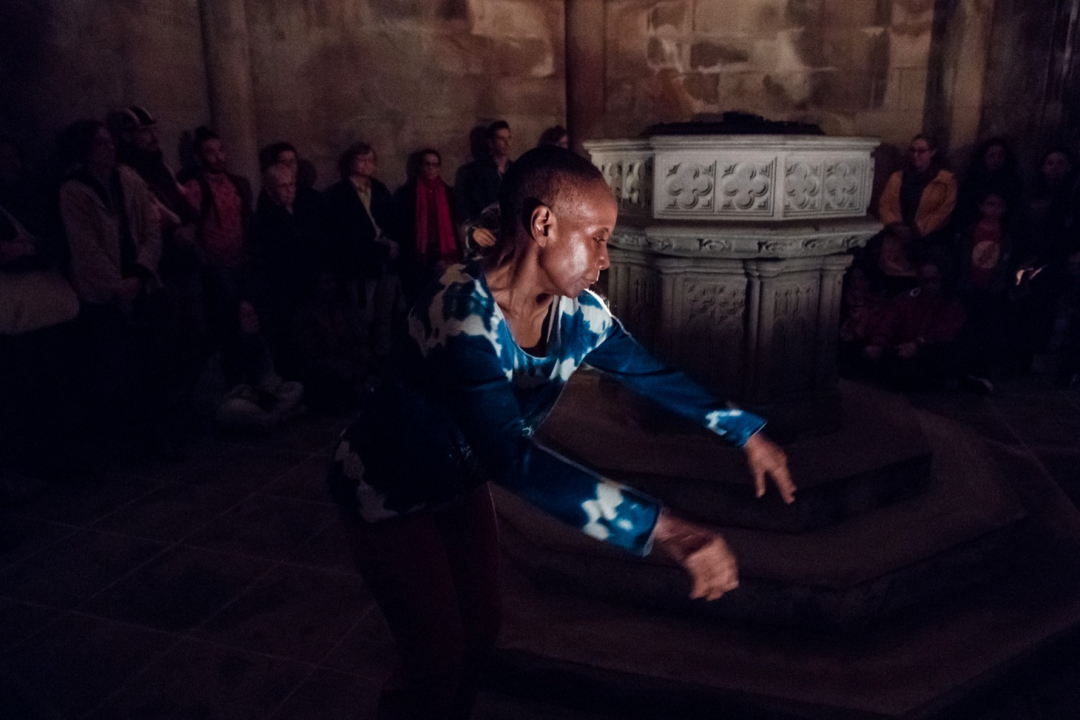
DANCE PERFORMANCES: Grounds That Shout!, curated by Reggie Wilson: It interests me to see how sacred spaces, especially Christian ones, inspire new artistic creations. Here’s one example from last month: “Curated by award-winning choreographer Reggie Wilson, Grounds that Shout! (and others merely shaking) is a series of performances that respond to the layered histories of Philadelphia’s religious spaces through contemporary dance, reflecting on the relationships and connections between practices of movement and worship. Over two weeks, eight choreographers and performance groups . . . perform[ed] in four historic Philadelphia churches, drawing from site and spirit to present original and re-situated works of dance.”

For “Souls a-Stirring” by Germaine Ingram, two female dancers shuffled around the large stone baptismal font at Church of the Advocate, sounding out rhythms as Ingram joined them and sang, “When temptation calls out to me / When dark clouds merge and follow me / I ask god to take my hand / Can he not / Can she not / Inspire a woman to teach God’s love?” Photo: Daniel Kontz/Hyperallergic.

+++

ART INSTALLATIONS

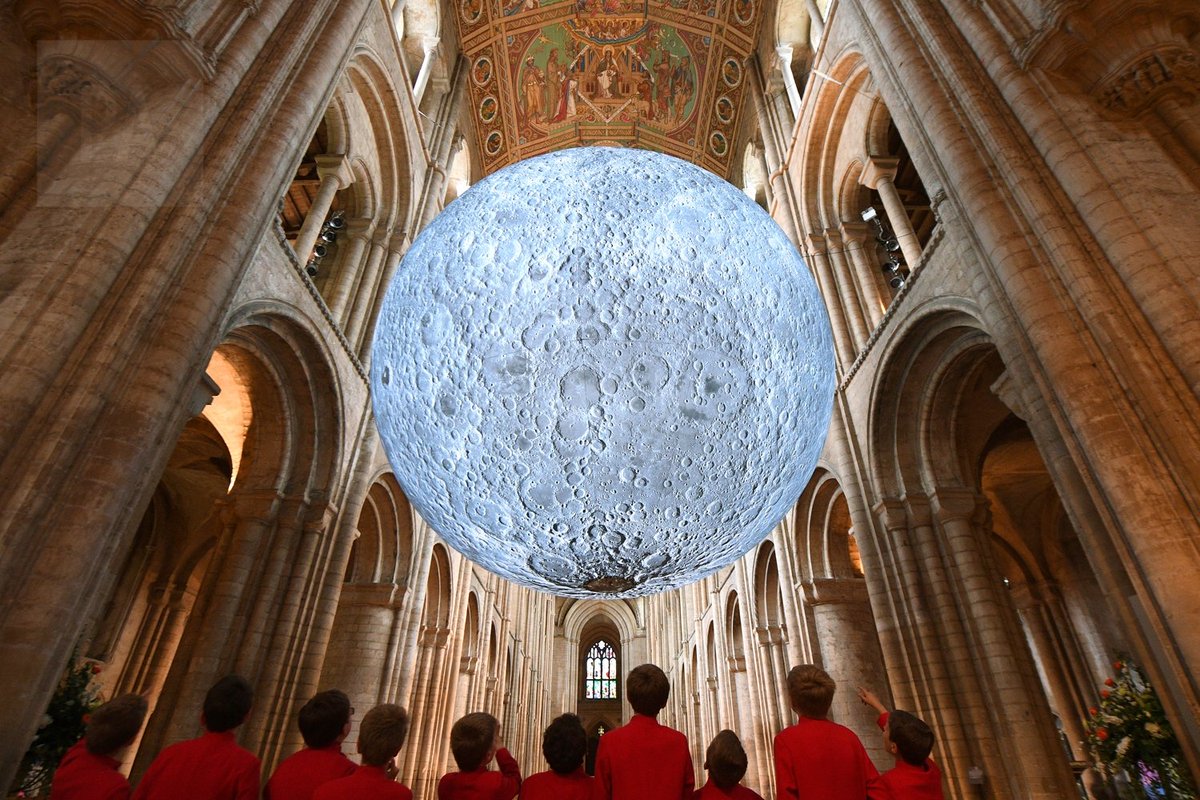
Museum of the Moon at Ely Cathedral: Today’s the last day to see Luke Jerram’s Museum of the Moon installation at Ely Cathedral in Cambridgeshire, a twenty-three-foot replica of the moon that utilizes high-resolution NASA satellite imagery and a sound composition by Dan Jones. The internally lit spherical sculpture hovers under the cathedral’s painted nave ceiling and is the main attraction of the cathedral’s science festival, “The Sky’s the Limit,” celebrating the fiftieth anniversary of the first moon landing (July 16, 1969). Jerram has produced several moons, which are touring the world, hoisted up in churches and other spaces, indoor and outdoor. For some really stunning photos as well as a tour schedule, check out https://my-moon.org/.

Museum of the Moon by Luke Jerram
Installation view of Luke Jerram’s Museum of the Moon at Ely Cathedral, May 2019. Photo: Joe Giddens/Press Association.

Jerram has also created replicas of Earth, scaled down by a factor of 1.8 million and titled Gaia. They are currently being displayed inside Salisbury and Liverpool cathedrals and will thereafter continue their world tours. (The bronze font by William Pye at Salisbury, designed to reflect and extend the surrounding architecture, makes for some truly amazing photographs of Gaia! Not to mention the significant meaning generated by the interaction of the two.)

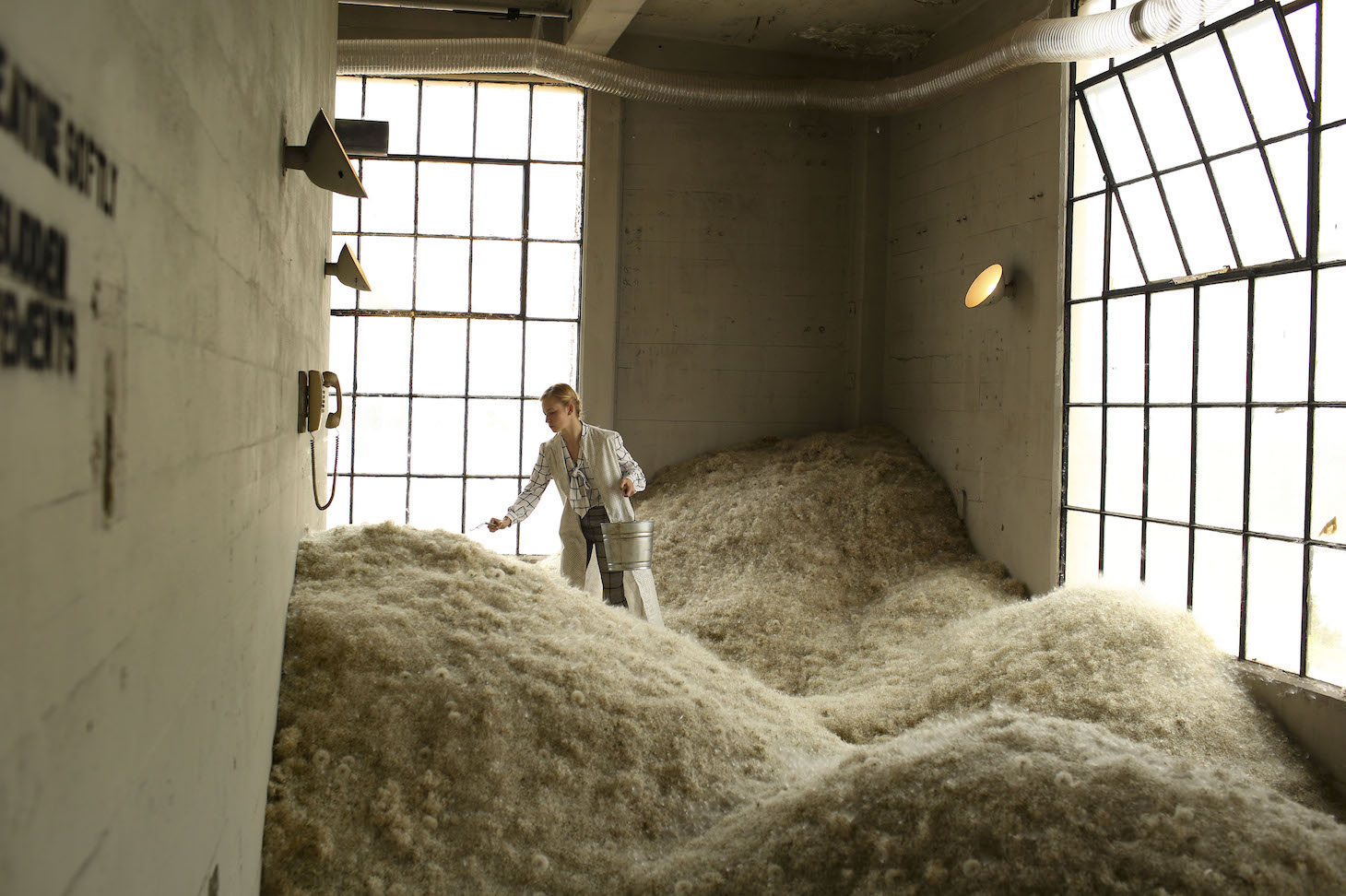
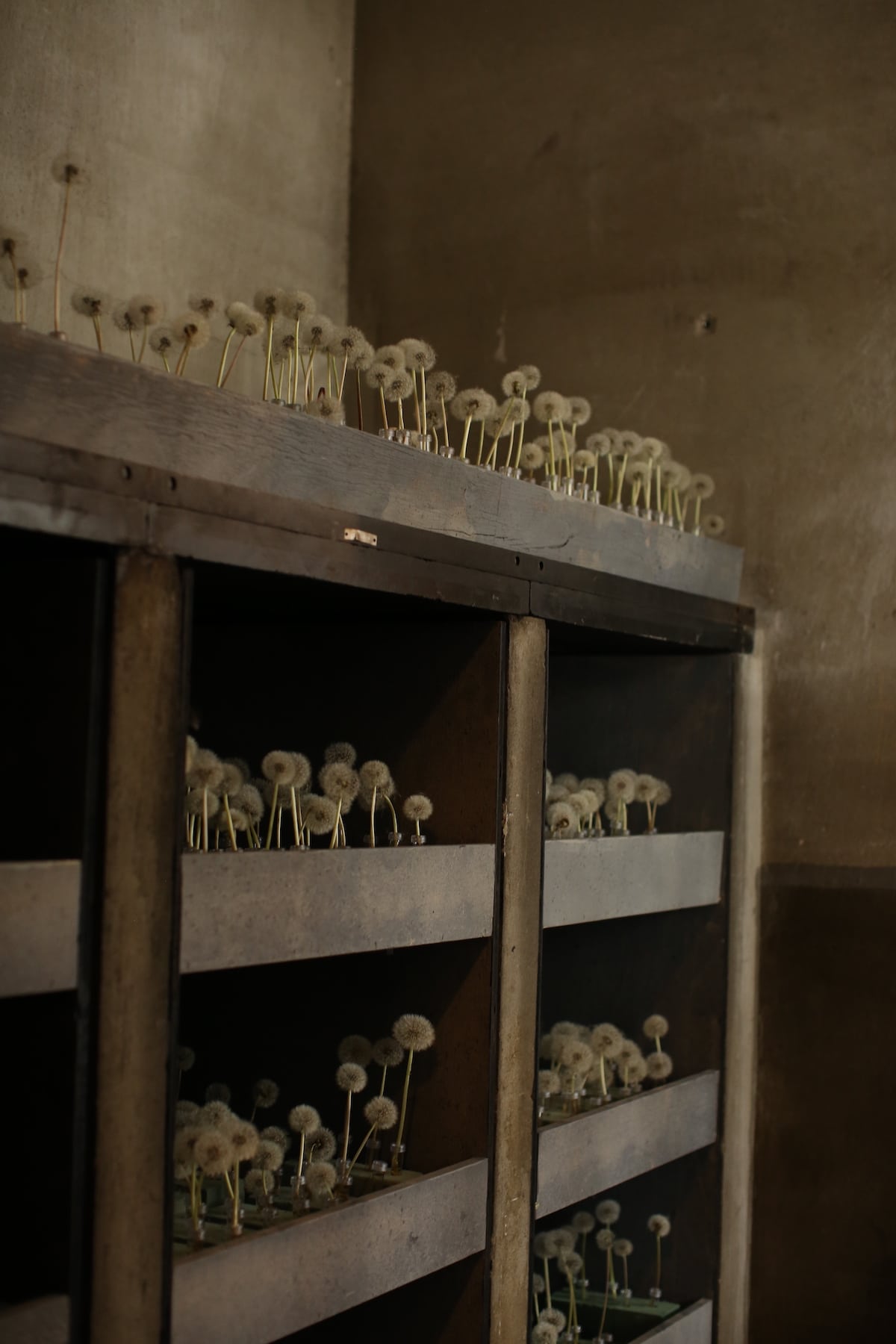
Dandelions by The Art Department: From May 11 to 12, a decommissioned building at the Laguna Bell electrical substation in Commerce, California, was transformed into a “wish-processing facility,” where visitors submitted their wishes for questioning and analysis before taking a dandelion and blowing its seeds down a chute. Part installation, part performance, Dandelions was put together by the anonymous collective The Art Department. When asked to define wish, the collective replied, “For some, a wish is a prayer fulfilled by a higher power. For some, a wish is an aspiration imbued with rational optimism. For some, wishes represent unfulfilled longing.”

Art often gives us occasion to confront who we are and what we desire, and with this piece, that was done in a playful way, with a mock bureaucracy that included the Department of Small Things That Float and various logistical assessments. View more photos and read an interview with the creators at My Modern Met, and see also the Hyperallergic review.

Dandelions
Photo: Michèle M. Waite, courtesy of The Art Department

Dandelions installation
Photo: Michèle M. Waite, courtesy of The Art Department

+++

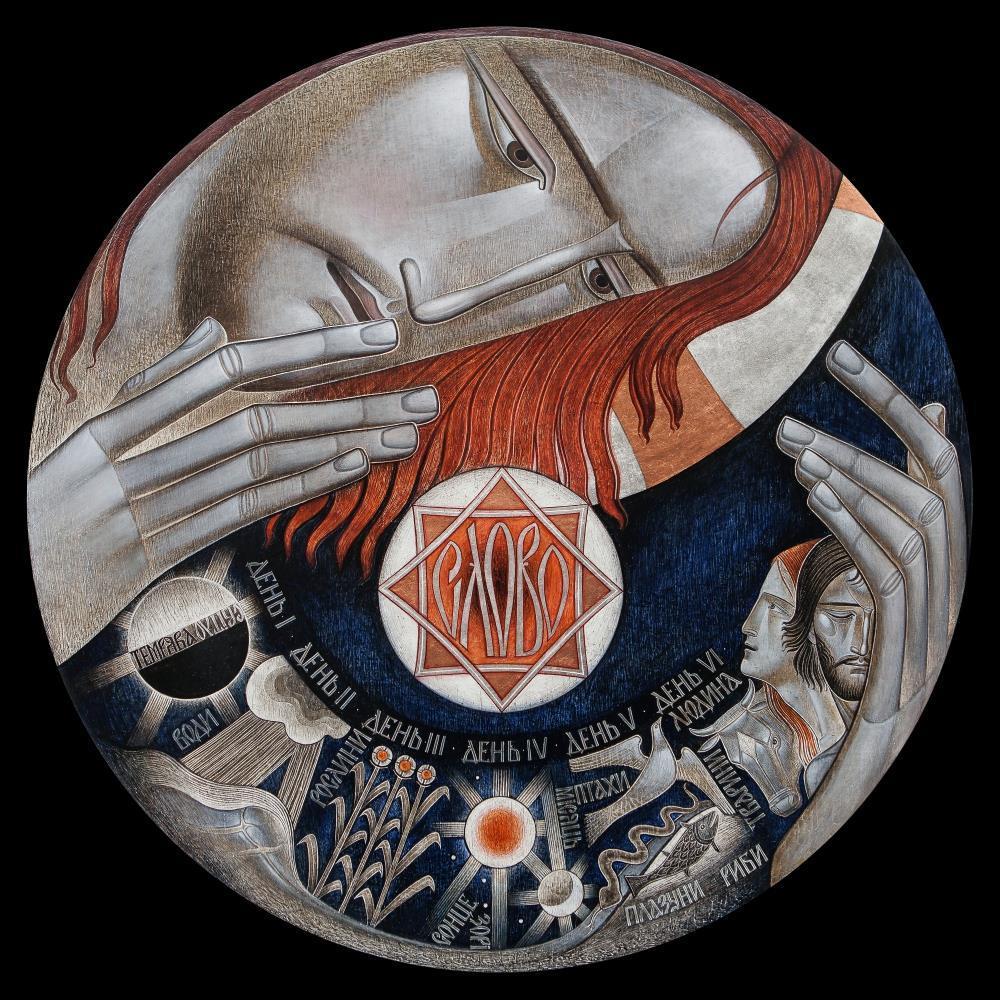
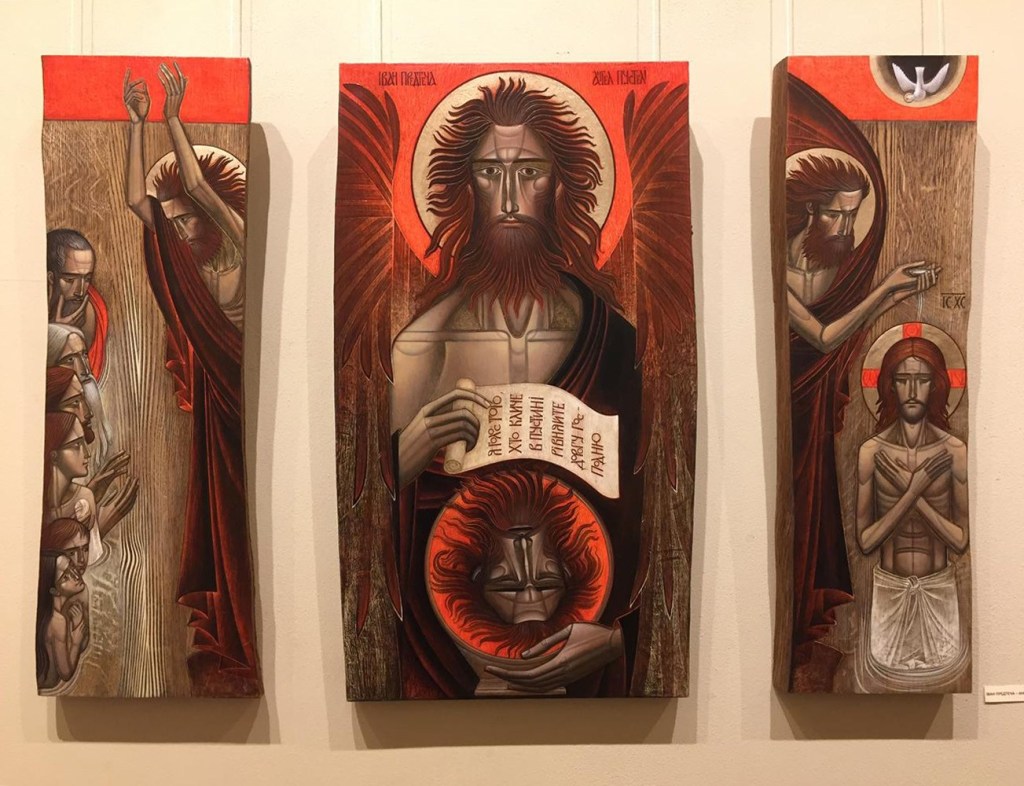
EXHIBITION: “Renewal: Icon Paintings by Lyuba Yatskiv”: Through June 30, the Iconart Contemporary Sacred Art Gallery in Lviv, Ukraine, is hosting a solo show of new work by Lyuba Yatskiv, one of the country’s several experimental iconographers. Among the subjects on display are the Creation of the World (he’s got the whole world in his hands!), Noah’s Ark, David the Psalmist, the Annunciation, the Flight to Egypt, John the Baptist, and the Holy Women at the Tomb.

Creation of the World by Lyuba Yatskiv
Lyuba Yatskiv (Ukrainian, 1977–), Creation of the World, 2019. Acrylic and gold on gessoed board.

John the Baptist triptych by Lyuba Yatskiv
Lyuba Yatskiv (Ukrainian, 1977–), St. John the Forerunner, Angel of the Desert, 2019. Acrylic and gold on gessoed boards.

I’ve featured Yatskiv’s work several times before on this website: in an Artful Devotion, a compilation of baptism icons, a roundup, and here by association.