Roundup: New book for All Saints’ Day, Bruce Onobrakpeya exhibition in DC, and more

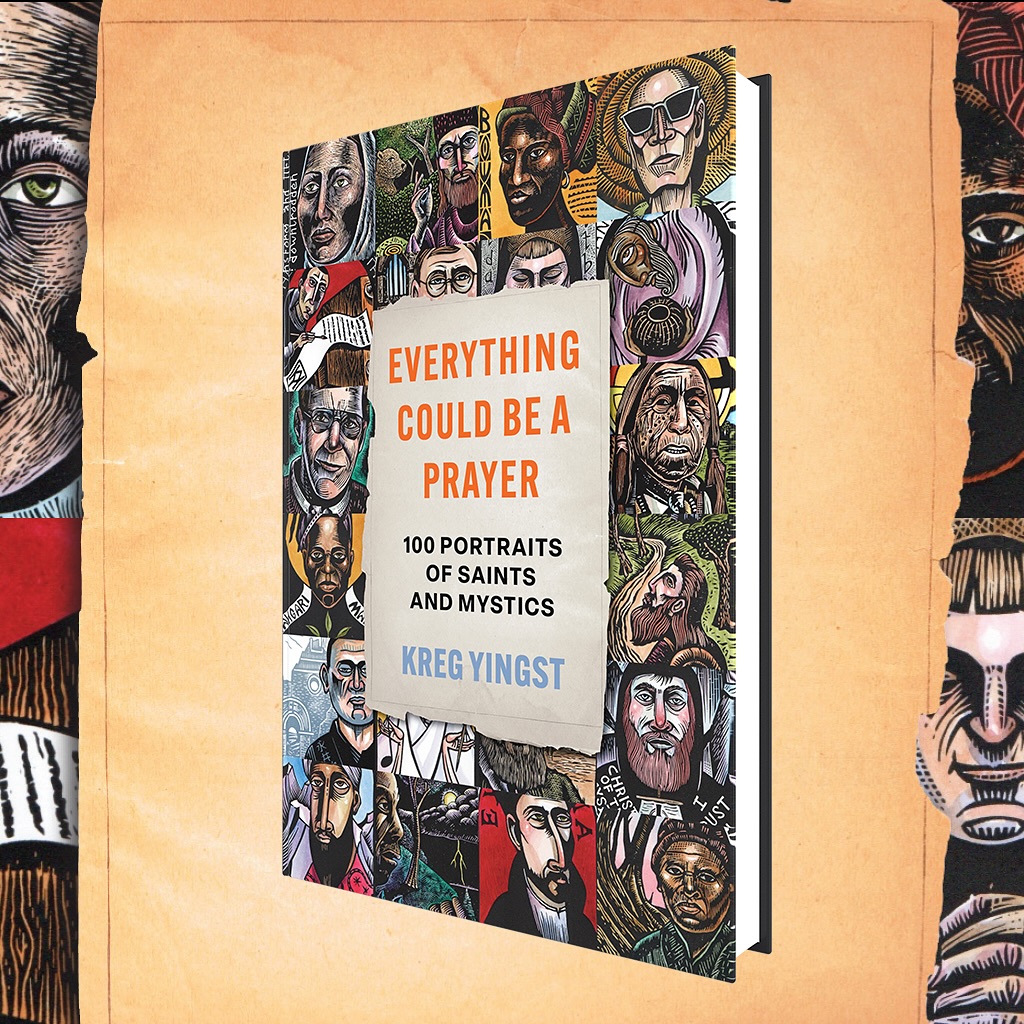
NEW BOOK: Everything Could Be a Prayer: One Hundred Portraits of Saints and Mystics by Kreg Yingst: Released on October 15, this book features one hundred color block-print portraits by Kreg Yingst of folks in the family of God across time and place, along with one-page biographies. Get to know a wide range of Christian civil rights activists, scientists, environmentalists, social service workers, hymn-writers, artists, poets, evangelists, and monastics and the gospel impact they’ve made. The lineup is a mix of familiar and less familiar names, canonized saints and noncanonized. Examples include Brigid of Kildaire, Ignatius of Loyola, Satoko Kitahara, Dietrich Bonhoeffer, Mamie Till, Pandita Ramabai Dongre-Medhavi, and Black Elk. Click here to look inside.
Kreg Yingst book

The title of the book is taken from a quote by Martin de Porres (1579–1639), a Dominican friar from Peru and the first Black saint of the Americas: “Everything, even sweeping, scraping vegetables, weeding a garden, and waiting on the sick, could be a prayer if it were offered to God.”

Related events:

  • October 10–November 16, 2024: Art exhibition featuring the block prints from the book at The Gallery of Art, 36 W. Beach Dr., Panama City, Florida
  • October 26, 2024, 1:00–3:00 p.m.: Book signing at Barnes & Noble, 1200 Airport Blvd., Pensacola, Florida

Through November 1, Yingst is offering 25% off all original woodcuts and linocuts that were used as illustrations for the book; view the discounted pieces in the “Mystics, Saints & Poets” section of his Etsy shop. These are not inkjet-printed photographs of original artworks (which is what some artists misleadingly call “prints”) but are themselves original limited-edition relief prints hand-pulled on an antique proof press from carved blocks; they are made with black oil-based ink and watercolor. If you want original art in your home or to gift a friend or family member for Christmas, Yingst’s work is a great and affordable option!

+++

SONGS:

November 1 is All Saints’ Day, a feast for commemorating the lives and witness of our siblings in the faith who have gone before us. Here are two songs for the occasion.

>> “I Sing a Song of the Saints of God,” performed by Wendell Kimbrough: This charming little children’s hymn was written by Lesbia Scott and was first published in her native England in Everyday Hymns for Little Children (1929). In the United States the song first appeared in the Episcopal Hymnal 1940 with a tune that John Henry Hopkins, a member of the hymnal committee, composed for it, capturing the childlike cadences of the text.

>> “When the Saints” by Sara Groves: This song from Groves’s album Tell Me What You Know (2007) draws encouragement from the faithfulness of God-followers throughout history, from Moses, Paul, and Silas to Harriet Tubman and Mother Teresa to the martyr Nate Saint and his sister Rachel Saint to rescuers of sex-trafficking victims. It is a call to hearers today to pick up their cross and follow Christ into places of hurt and injustice, pursuing liberation of body and soul for all. The refrain quotes the traditional Black gospel song “When the Saints Go Marching In.”

+++

ART EXHIBITION: Bruce Onobrakpeya: The Mask and the Cross, National Museum of African Art, Washington, DC, June 21, 2024–January 21, 2025: A father of African modernism, Bruce Onobrakpeya (b. 1932) [previously] is one of Nigeria’s most celebrated artists, and I was thrilled this month to visit his first solo show in the US, which, as it turns out, is centered on his Christian-themed linocut prints! (The artist is Anglican.) Onobrakpeya’s career spans over six decades, and this Smithsonian exhibition is not meant to be representative of the breadth of his oeuvre, which also includes painting and sculpture and various subject matters; rather, it presents two foundational bodies of work from the late sixties, both commissioned by the Catholic Church, that helped launch the artist’s long and esteemed career.

The exhibition displays rare artist’s proofs of the biblical illustrations Onobrakpeya made for Ki Ijoba Re De (May Your Kingdom Come) (1968), a Yoruba-language textbook for students in their fifth and sixth years of Catholic primary school (it was part of the Nigerian National Catechism), as well as a complete narrative series of prints titled Fourteen Stations of the Cross, produced in 1969. I blogged about the artist’s Stations cycle back in 2014, when I saw a different edition at the SMA African Art Museum in Tenafly, New Jersey; you can view better photos on the High’s website. For more on the work of Fr. Kevin Carroll, the Catholic missionary who commissioned Onobrakpeya to paint a church mural of the Stations that became the basis of these linocuts and who helped facilitate the May Your Kingdom Come publication, see here.

Curated by Lauren Tate Baeza, Bruce Onobrakpeya: The Mask and the Cross first opened last year at the High Museum of Art in Atlanta. This is Baeza’s first exhibition as curator of African art at the High, and I’m so pleased that when she dug through the High’s extensive archives, it was a set of Christian prints by a leading Nigerian artist that most compelled her, that she could imagine building a unique exhibition around and that she felt must be pulled out of storage for more people to see. Hear Baeza discuss the exhibition from 23:28 to 35:58 of the video “African Modernisms: A Legacy of Connection.”
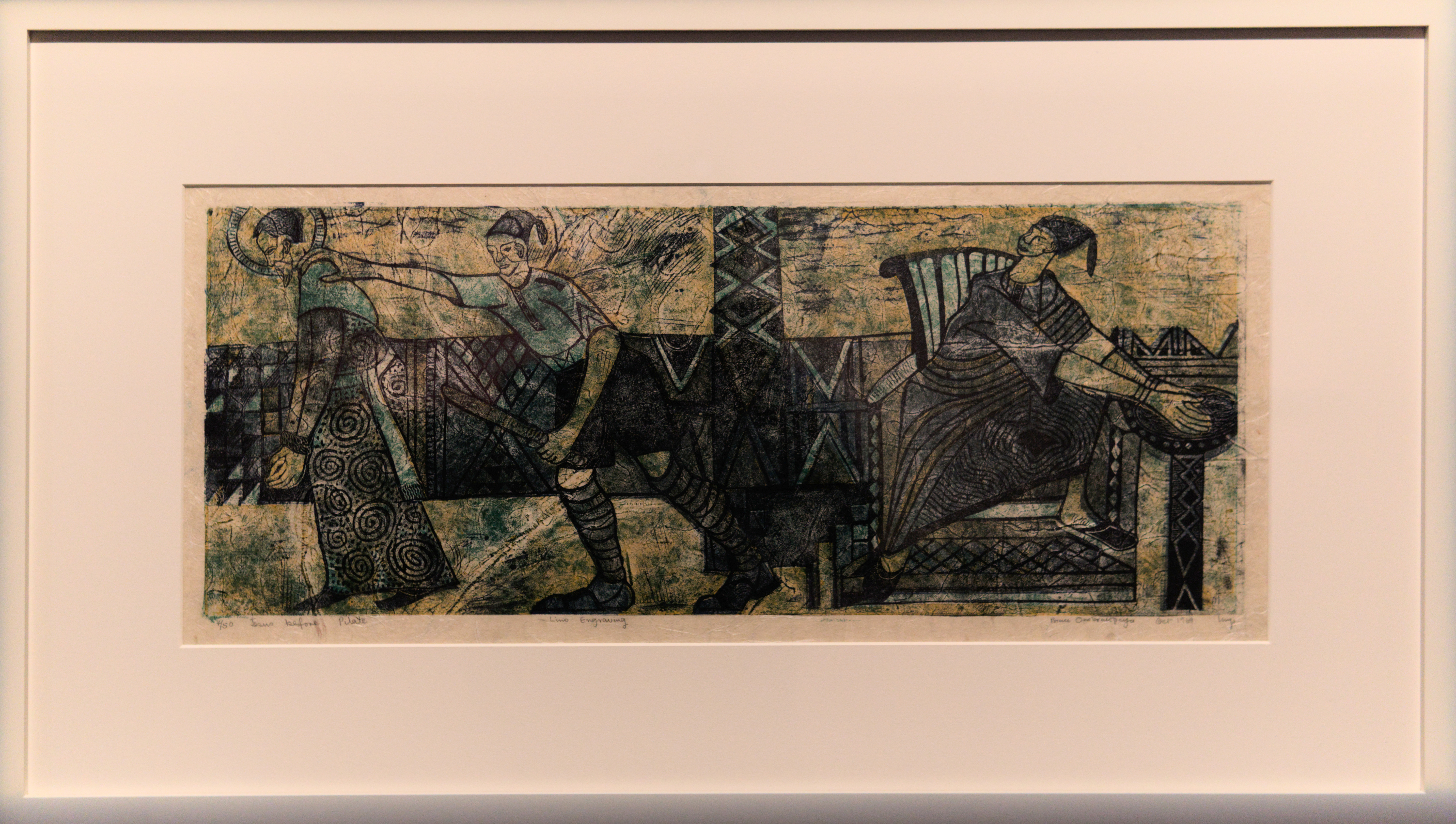
Onobrakpeya, Bruce_Station 1
Bruce Onobrakpeya (Nigerian, 1932–), Station I: Pilate condemns Jesus to death, 1969. Linoleum block print on rice paper, 24 × 34 in. (61 × 86.4 cm). High Museum of Art, Atlanta, Georgia. Photo: Victoria Emily Jones.

For his Stations of the Cross, Onobrakpeya “incorporat[ed] the rich patterns of Yoruba gelede and epa masks and stylized geometric patterns found in northern Nigerian architecture. Then he added generous adire motifs and his signature elongated figures and distortions of scale,” reads one of the gallery wall texts. He also embedded a critique of British colonial rule, portraying the Roman soldiers of Christ’s passion as British officers. (Nigeria had just attained independence from Great Britain earlier that decade, in 1960.) Pilate, though, is shown as a local Nigerian magistrate doing the bidding of the British government, highlighting a deeply felt tension in Nigeria’s then-recent political history.

I really appreciate the video components of the exhibition. One screen plays a compilation of clips from interviews Baeza conducted with the artist, and another displays a two-dimensional animation commissioned from Sadiki Souza specially for this exhibition, which brings to life Onobrakpeya’s fourteen Stations. Neither is available online, at least not that I can find.

+++

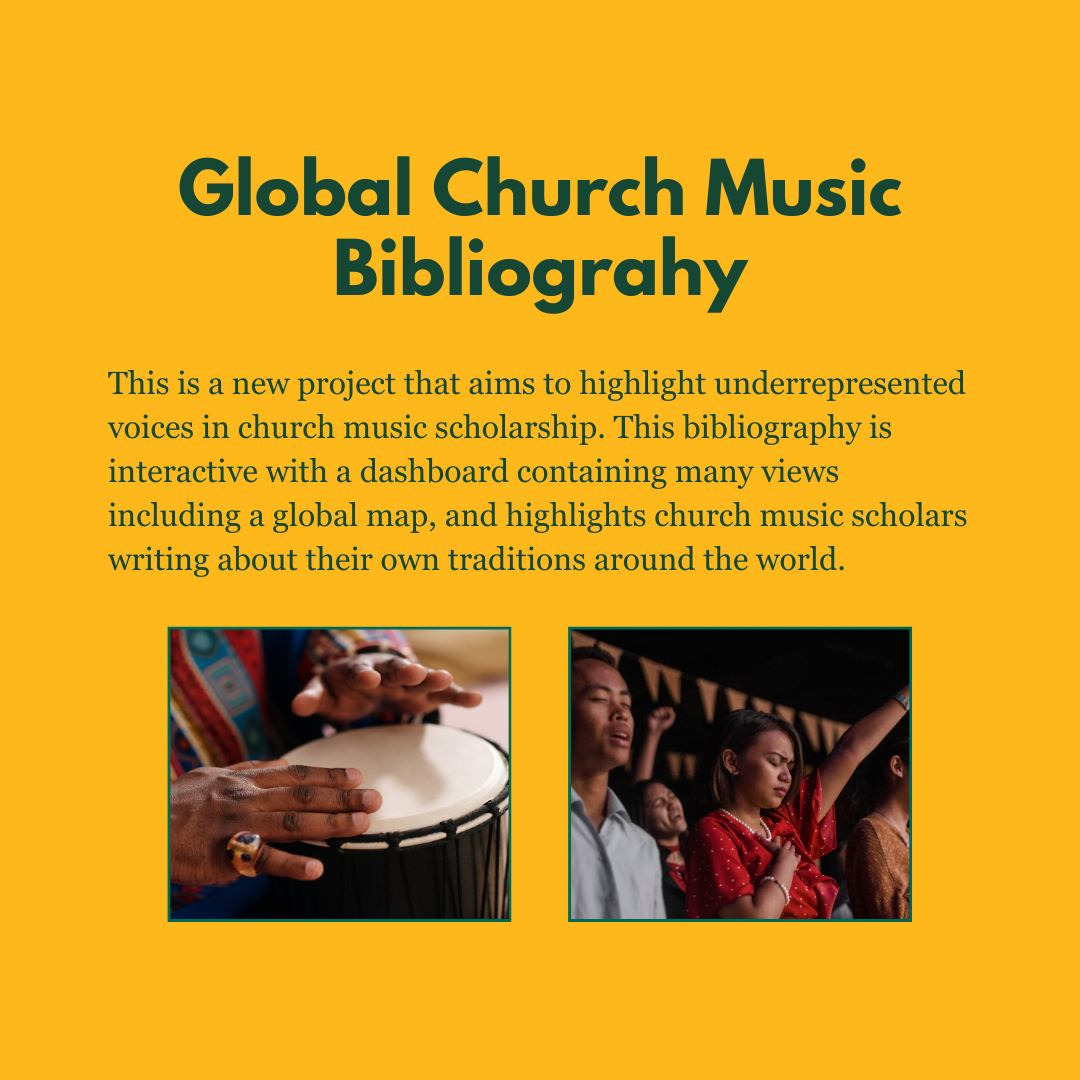
ZOOM EVENT: “Celebration of New Global Church Music Resources,” November 14, 9:00 a.m. CDT (12:00 p.m. ET): From Baylor University’s Dunn Center for Christian Music Studies: “We are excited to announce the launch of two website projects on November 14th! In collaboration with the Nigerian Baptist Theological Seminary, the third edition of the Nigerian Christian Songbook will be updated with new songs and content. In addition, a new project, the Global Church Music Bibliography, highlights underrepresented voices in church music scholarship. This is an interactive dashboard and map that features church music scholars writing about their own traditions outside of North America.” At the Zoom event on launch day, you will hear from various project participants. [HT: Global Christian Worship]
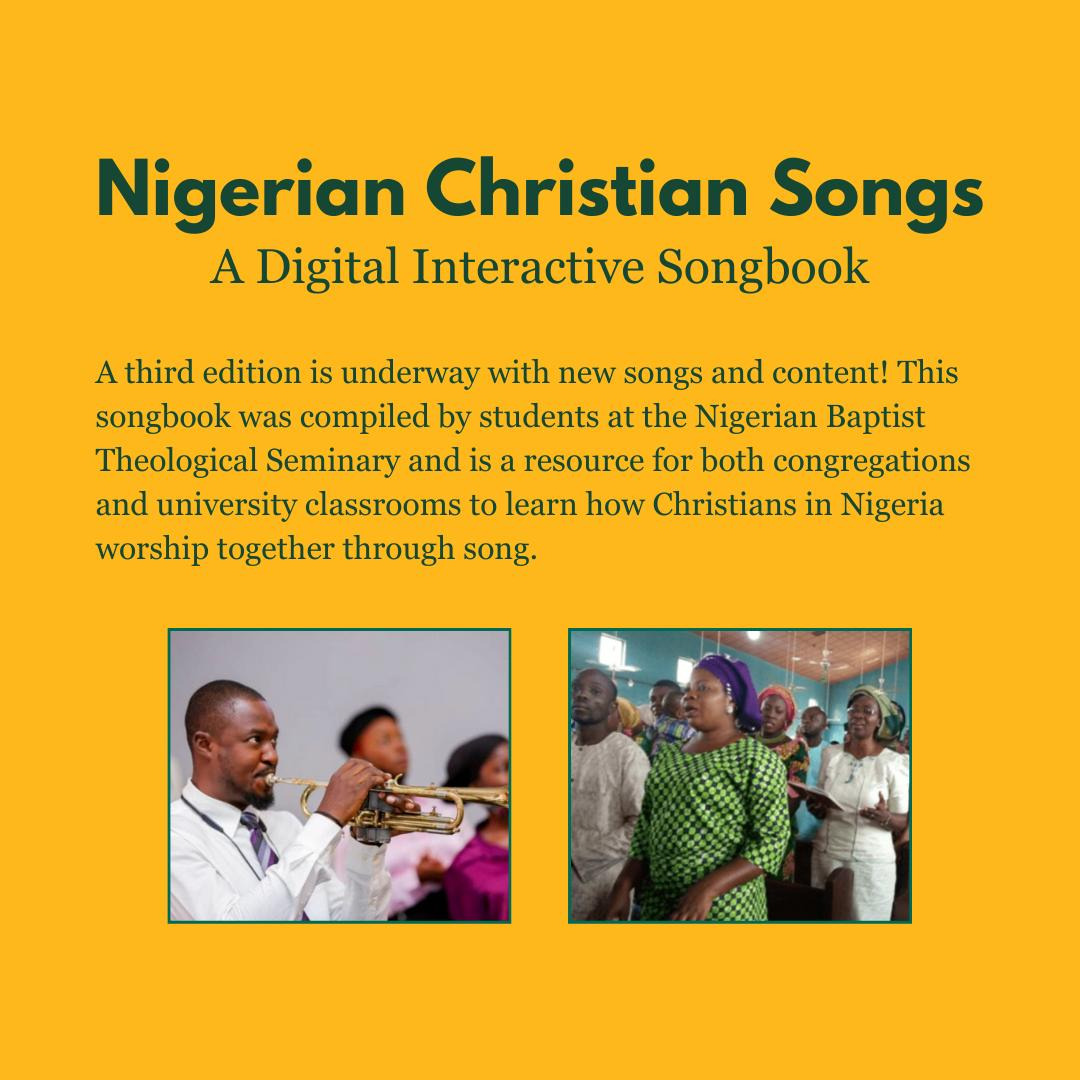
Nigerian Christian Songs
Global Church Music Bibliography

Roundup: New essay collection, Notes of Rest, Saint Francis, and more

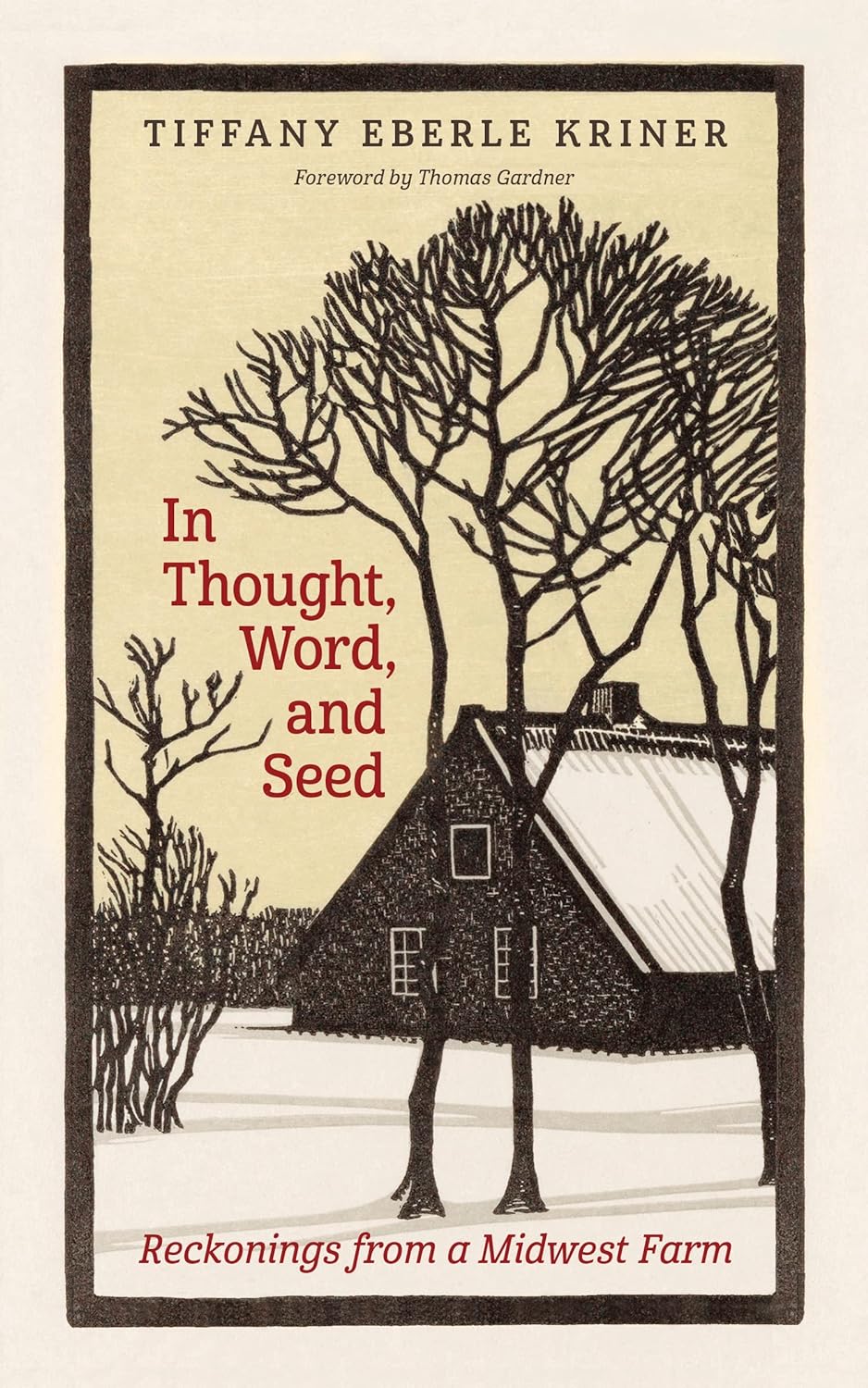
NEW BOOK: In Thought, Word, and Seed: Reckonings from a Midwest Farm by Tiffany Eberle Kriner: As a freelance copyeditor, I’ve worked on many projects for Eerdmans, and this has been one of my favorites: an essay collection by Tiffany Kriner, a Wheaton English professor and farmer from Illinois. It’s a unique blend of literary criticism, nature writing, and memoir. Virgil, George Eliot, James Baldwin, and Walt Whitman are among the authors she engages, respectfully weaving their stories into and around her own experiences of cultivating sixty acres of land and raising livestock with her husband, Josh. Today is the book’s official release date, and I can’t recommend it enough!

+++

(FIVE-WEEK) ONLINE COURSE: “Notes of Rest: Receiving Rest from Scripture and Black Music in Our Restless World,” taught by Julian Davis Reid: On Monday evenings from October 9 to November 6, pianist, speaker, and writer Julian Davis Reid, MDiv, of Chicago will be leading five, seventy-five-minute virtual discussions and meditations on the theme of rest, explored through the lenses of scripture and Black music. “Salvation,” “Sabbath,” “Sleep,” “Stillness,” and “Sanctuary” are the organizing principles. “The purpose of the class is to help the Body of Christ hear God’s invitation to rest,” Reid told me. “The means of getting there is through a mixture of artistic reflection and practical theology grounded in biblical analysis, reflection questions, and musical performance.” No prior musical knowledge is required.

The spiritual “Give Me Jesus” is an example of one of the songs Reid will be playing and guiding participants through (this recording is from his 2021 album Rest Assured, with album art by Shin Maeng):

This course is presented by the Candler Foundry, an initiative of Emory University’s Candler School of Theology that aims to make theological education accessible to everyone. It’s only $29! Reid has been leading Notes of Rest sessions since 2021, and he is currently accepting bookings from churches, universities, and parachurch ministries; you can contact him through his website.

+++

SONGS:

>> “Garden Will Bloom” by the Good Shepherd Collective, feat. Diana Gameros: Released this July as a single, “Garden Will Bloom” was written by Diana Gameros, Jon Guerra, and Kate Gungor at Laity Lodge, an ecumenical retreat center in Texas, and produced by David Gungor. It’s a song that speaks hope to one’s own soul, encouraging persistence through seasons of no yield. The music video was filmed and directed by Jeremy Stanley.

>> “Sing, Sing, Sing (Psalm 96)” by Wendell Kimbrough: This is my favorite track from Wendell Kimbrough’s latest album, You Belong.

+++

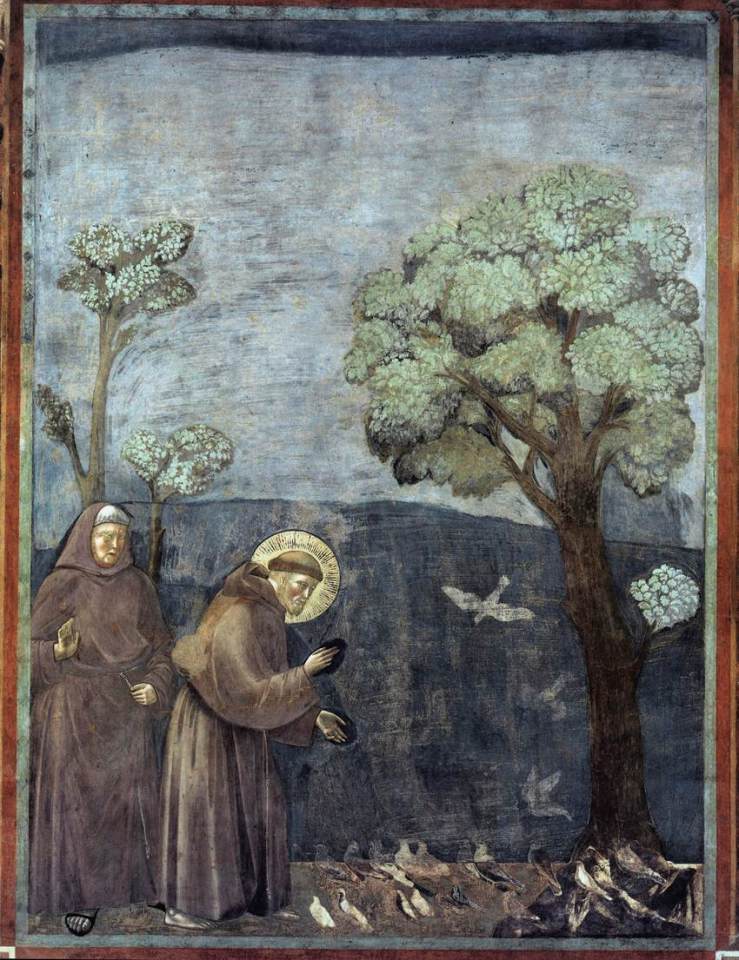
POEM: “Saint Francis and the Birds” by Seamus Heaney: Giovanni di Pietro di Bernardone (ca. 1181–1226), better known as Francis of Assisi, was an Italian mystic and friar who founded the religious order named after him, the Franciscans. Because of his love for all God’s creatures, he is considered the patron saint of animals, and his feast day is October 4. One story about him says he preached to the birds, as he believed the gospel is for them too, and that they, too, have a duty to praise God. This poem by the Nobel Prize–winning Seamus Heaney evokes Saint Francis’s sermon to his feathered friends.

St. Francis Preaching to the Birds
“Sermon to the Birds,” from the Legends of Saint Francis cycle, attributed to Giotto, 1297–1300. Fresco, 270 × 200 cm. Upper Church, Basilica of St. Francis of Assisi, Assisi, Italy.

From the blog archives: For another poem about this legend, see “Saint Francis Endeth His Sermon” by Louise Imogen Guiney. For a brilliant literary essay by Kimberly Johnson on Francis’s “Canticle of the Creatures” (which evolved into the hymn “All Creatures of Our God and King”), see here.

+++

INTERVIEW: “The Artist’s Gift of Reckless Courage” with Betty Spackman: Comfort, confront, teach, heal—those are just a few of the actions the arts can perform, says Canadian installation artist Betty Spackman in this insightful interview for Radix Magazine (available in audio format wherever you get your podcasts, and in print). Spackman discusses misconceptions about artists and the arts, the expansive definition of “creativity,” the gifts artists offer the church, and the charge of elitism. She also gives advice to pastors and to artists.

Here are just two snippets:

  • “The artist can reveal the heart of God in unique ways, and that gives us a responsibility. We can be vessels of wonder and light, through sound and image and movement and story. . . . By their very nature, [artists] are more open to thinking outside the box, to going past the status quo, to dreaming and to imagining. . . . Scripture tells us a child will lead us and it is childlike faith that will lead us forward. Perhaps what we can learn from artists is to be more childlike.”
  • “When someone paints their pain, or sings it, or dances it, our response should not be to ignore or condemn it because it’s not pretty or is outside of our worldview. We should find out what it is, and then respond in a meaningful way to the person who made it. The arts are really a place of opportunity to both express and to listen to the grief of the world, and Christians need to be there to do both.”

Online highlights from the 2023 Calvin Symposium on Worship

On February 8–10, 2023, I had the pleasure of attending in person my first Calvin Symposium on Worship, an annual ecumenical gathering of Christian worship leaders from throughout North America (and some from overseas) organized by the Calvin Institute of Christian Worship at Calvin University and the Center for Excellence in Preaching at Calvin Theological Seminary in Grand Rapids, Michigan. The half-week is full of diverse worship services, lectures, breakout sessions, and opportunities to meet and mingle with folks who serve the church as pastors, liturgists, musicians, publishers, scholars, etc. It was an invigorating time!

The CICW is generous in providing recordings of much of its symposium content for free on their YouTube channel several months after the event, and they’ve just released a big batch. Below are some of my highlights that are shareable.  

Though music is not the exclusive focus of the symposium, it is a major component, and my ministry background is in that area, so I want to share with you some of the new songs I learned.

The worship service on February 9, titled “Rooted in Christ,” was excellent and worth watching in full (the sermon, on Colossians 2:6–15, was preached by Rev. Dr. Marshall E. Hatch, pastor of New Mount Pilgrim Missionary Baptist Church in Chicago), but here are three standout songs. The first two are led by the Calvin University Gospel Choir, directed by Nate Glasper Jr., and feature guest soloist Eric Lige.

“On Christ the Solid Rock,” adapt. and arr. Gerald Perry, 2022:

This song is a new gospel adaptation and arrangement by Gerald Perry of the classic Edward Mote–William Bradbury hymn “The Solid Rock.” It appears on the 2022 album Legacy by the James Family Singers (which is on Spotify), a West Michigan gospel group founded by Oscar and Erma James in 1981 and to which Perry belongs, along with more than two dozen members of his extended family.

“God Is Good” by Morris Chapman, 1992:

A call-and-response song written by Lige’s late mentor, Morris Chapman (1938–2020), a Grammy- and Dove Award–nominated composer and recording artist. The song appears on the 2010 compilation album Incredible Gospel, vol. 2.

“If God” by Casey Hobbs, John Webb Jr., and Natalie Sims, 2019:

This song of lament was sung by Samantha Caasi Tica, then a senior in Calvin’s speech-language pathology department, and Calvin alum Emma Gordon as the “Prayer of Intercession” portion of the service. The congregation (is that what you’d call the group of worshippers at a symposium?) was asked to come in on the chorus and the “Nothing but the Blood of Jesus” bridge. For the official live video of the song as performed by its writer, Casey J, see here.

And now from other worship services at the symposium:

“Los que sembraron con lágrimas” (Those Who with Tears Went Out Sowing) (Psalm 126) by Carlos Colón, 2019:

The Bifrost Arts setting of Psalm 126 by Isaac Wardell is one of my favorite congregational songs—it leans into the “weeping” aspect of the psalm. But this new setting by Carlos Colón leans into the psalm’s “joy” aspect, which gives it a different tone that works equally well, I think. It was led by Colón at the piano, with the help of Calvin University students and guest Wendell Kimbrough. (Watch full worship service.) It is #333 in the bilingual hymnal Santo, Santo, Santo: Cantos para el pueblo de Dios (Holy, Holy, Holy: Songs for the People of God).

“His Love Is My Resting Place (Psalm 23)” by Wendell Kimbrough, 2020:

There’s no standalone video for this song from the symposium, but I cued up the service video to where the song starts at 13:42; you can also listen to the solo recording released by songwriter Wendell Kimbrough in 2020. Director of music and songwriter at Church of the Incarnation in Dallas, Kimbrough is one of today’s foremost composers of biblical psalm settings for contemporary worship. Despite the dozens of settings that already exist of this most famous psalm, which begins “The Lord is my shepherd . . . ,” Kimbrough’s take is not a redundancy but rather a vibrant new and easily singable addition to this catalog of options. I brought it back with me to the local congregation I’m a member of, and the people took to it really well.

“Anta Atheemon” (You Are a Great God) by Ziad Samuel Srouji, 1990:

“Anta Atheemon” is sung by Christians throughout the Middle East and the Arabic-speaking world. It was written by Ziad Samuel Srouji, who was born in Haifa, Israel, and raised in Lebanon but then displaced by civil war to the United States. He is pastor of the Gate International Church in San Mateo, California.

“Soul, Adorn Yourself with Gladness / Vengo a ti, Jesús amado” (cued to 59:00):

What a wonderful song for the celebration of the Eucharist! “Bless the one whose grace unbounded this amazing banquet founded! The high and exalted and holy deigns to dwell with you most lowly. Be thankful! Soul, adorn yourself with gladness and rejoice!” I love the exuberant Puerto Rican melody.

The source of this hymn is the German communion chorale “Schmücke dich, O liebe seele” by Johann Franck (1618–1677). After being translated into Spanish by Albert Lehenbauer (1891–1955) for Lutherans in South America, the chorale traveled up to Puerto Rico, where it was reset to the tune CANTO AL BORINQUEN by Evy Lucío Cordova (b. 1934), now with an added refrain by Esther Eugenia Bertieaux (b. 1944). The English in the bilingual version here, published in Evangelical Lutheran Worship‎ #489, is a composite translation, borrowing from Catherine Winkworth (1827–1878) and others.

+++

The worship services, several a day, are only one component of the Calvin Symposium on Worship. There are also wonderful talks, panel discussions, and workshops—such as “Hardwired to Sing: Entrainment, Interactional Synchrony, and the Spirit-ed Magic of Corporate Song” by Dr. W. David O. Taylor. In this talk Taylor, a liturgical theologian teaching at Fuller Theological Seminary, expands on what I think is the most fascinating chapter of his latest book, A Body of Praise: Understanding the Role of Our Physical Bodies in Worship, which is “The Nature of the Body: Scientific Perspectives on the Body in Worship.”

“First, I wish to suggest that it is the Holy Spirit’s pleasure to work in and through our physical bodies, not just in our heads and hearts, in order to form us wholly into Christ’s body,” Taylor says. “And second, I would like to show how the sciences offer empirical insights into the metaphysical work of the Spirit to form our embodied communal singing.”

Citing Hebbian theory—namely, that “neurons that fire together wire together”—he says that singing together in corporate worship bonds us in ways that nothing else can, strengthening our kinship with one another through our bodies. “People who sing together experience a wiring together of their neural networks. They become tethered to one another in neurological and physiological ways, not just affective or relational ways.” He demonstrates this principle with the help of some audience volunteers.

The last twenty-five minutes of the video are Q&A. Unfortunately, the questioners aren’t miked, and not all the questions are repeated for the recording, so that part is a little hard to follow.

My favorite session that I attended was “The Practice of Lament,” a panel discussion with Drs. Wilson de Angelo Cunha, Cory B. Willson, and Danjuma Gibson, moderated by David Rylaarsdam—all Calvin faculty. “What are the different faces of lament? What is the goal of lament? How can pastoral leaders facilitate lament? What does lament reveal about the nature of God and what it means to be human?” It’s an excellent introduction to this important Christian discipline.

“Lament is a central part of our mission as God’s people, and I will say, we have largely failed,” says Willson. And later: “You cannot be a hopeful people or community if you don’t lament. And we need each other to hold out hope for us when we can’t find the strength to swing our feet from the bed to take another step toward a future.”

Asked to define lament, Gibson, a professor of pastoral care and a practicing psychotherapist, said, “Lamentation, or griefwork, is the process you engage in to come to terms with what has been lost, the rupture, the unattaching to what you have loved—that may be a way of life, that may be a person, that may be an image of how you thought things should have been—when there is a tragedy.”

Later in the discussion, in response to a question about how lament coheres with the apostle Paul’s call to rejoice always, Gibson clarifies: “Lamentation is not the opposite of joy. Lamentation is a particular manifestation of joy. And how I understand joy in my own work is this: joy is the inner assurance that you cultivate over time that you belong to God no matter what. . . . Lamentation is a declaration of that joy.”

Again, the questions from the audience are inaudible. But from memory, I can tell you that one was about divine impassibility (Greek apatheia), an attribute ascribed to God in classical theology that means that God does not feel pain or have emotions. This is an ascription that has always puzzled me and that I reject (it makes a virtue out of Stoicism), and indeed many Christian theologians have problems with it as well, because the picture of God that we have in both Testaments is of a God who is passionate, who grieves and gets angry and exults, and who is responsive to his people, empathetic.

Another question mentions the beating to death of Tyre Nichols by police officers in Memphis. Another asks how we know when we’re done lamenting a particular tragedy.

There’s so much that’s helpful and illuminating in this conversation; please give it a listen.

Another great panel discussion at the symposium was “Worship Music from Africa and the African Diaspora,” between Drs. James Abbington, Stephanie Boddie, Brandon A. Boyd, Pauline Muir, and Jean Kidula:

“What treasures and insights from the rich history of Christian worship music on the continent of Africa as well as from African diaspora communities in the United States and England should be more celebrated and cherished? What misunderstandings should be corrected? How can we learn from this rich history without misappropriating it? What signature examples of congregational song should we all learn more about and from? How can we all continue to learn more and explore more deeply connections across continents and Christian traditions?”

At 57:35, Abbington asks each panelist if they could teach the church one congregational song, one that’s important for the church to know, what would it be?

At the symposium, I also really enjoyed the lecture “More Than We Can Ask or Imagine: Music and the Uncontainability of Hope” by Dr. Jeremy Begbie, a theologian and pianist—but it is not and will not be available online. However, it draws on the themes of his new book from Baker Academic, Abundantly More: The Theological Promise of the Arts in a Reductionist World, which just released this week.


There were lots of other sessions offered as well—on creating a sense of belonging with youth in worship, intergenerational worship in global contexts, worshipping God with our public witness, sacred architecture and space design, cultural intelligence, singing the Psalms, wisdom from Indigenous Christians in Australia, how to shape a compelling sermon, lessons for leading congregational singing, refugia faith, and more. Several of these were recorded and are now hosted online in the Calvin Institute of Christian Worship Resource Library, which has content going back more than a decade (see also their YouTube channel @worshiprenewal).

Registration for next year’s Calvin Symposium on Worship has not yet opened, but the dates have been announced: February 7–9, 2024. The theme is Ezekiel. Find out more at https://worship.calvin.edu/symposium/index.html.

Roundup: Spirituality of food docuseries; a psalm and a jazz band walk into a bar; and more

DOCUMENTARY SERIES: Taste and See, dir. Andrew Brumme:Taste and See is a documentary series exploring the spirituality of food with farmers, chefs, bakers, and winemakers engaging with food as a profound gift from God. Their stories serve as a meditation on the beauty, mystery, and wonder to be found in every meal shared at the table.” The Rabbit Room, who is partnering with them for a virtual cinema event (see below), says, “If, in some blessed alternate universe, Robert Farrar Capon had decided to make a documentary with Terrence Malick, guided by the foundational wisdom of Wendell Berry, then they would have made something like the pilot of Taste and See.”

Some of the people you see in the series trailer are Shamu Sadeh, cofounder of Adamah Farm and Fellowship in Connecticut, which integrates organic farming, Jewish learning, sustainable living, and contemplative spiritual practice (Adamah is the focus of the pilot film); The Soul of Wine: Savoring the Goodness of God author Gisela Kreglinger, who grew up on a winery that has been in her family for generations and who leads wine pilgrimages in Burgundy and Franconia (“a spiritual, cultural, and sensory exploration of wine”); Norman Wirzba, a professor at Duke who teaches and publishes at the intersections of theology, philosophy, ecology, and agrarian and environmental studies (see, e.g., his Food and Faith: A Theology of Eating); Kendall Vanderslice, a North Carolina baker, author, and founder of Edible Theology, which offers “curriculum, community, and communications that connect the Communion table to the kitchen table”; and Joel Salatin, who raises livestock on his Polyface Farm in Swoope, Virginia, in the Shenandoah Valley.

You can buy tickets to a virtual screening of the hour-long pilot, which is happening twice daily from June 3 to June 19 and includes exclusive access to a panel discussion with singer-songwriter Andrew Peterson, theologian Norman Wirzba, and director Andrew Brumme. Revenue from ticket sales will fund the production of future films, some of which are already in the works. “The funding raised will determine how far we can go and which stories we can pursue,” Brumme tells me. “We’re hopeful the virtual event will bring together enough of a supportive base of people who want to see this series made.” There’s also an option on the website to donate.

To hear more from the director, especially about the inspiration behind the series, check out the interview Drew Miller conducted with him.

+++

DISCUSSION PANEL: “Art Between the Sacred and the Secular,” June 6, 2022, Akademie der Künste, Berlin: Moderated by the Rev. Professor Ben Quash, this free public event (reserve tickets here) puts in conversation artist Alicja Kwade; Dr. María López-Fanjul y Díez del Corral, senior curator of the Bode Museum and the Gemäldegalerie; and Dr. Neil MacGregor, former director of the British Museum and the National Gallery, London. The questions they’ll address (see below) sound really intriguing!

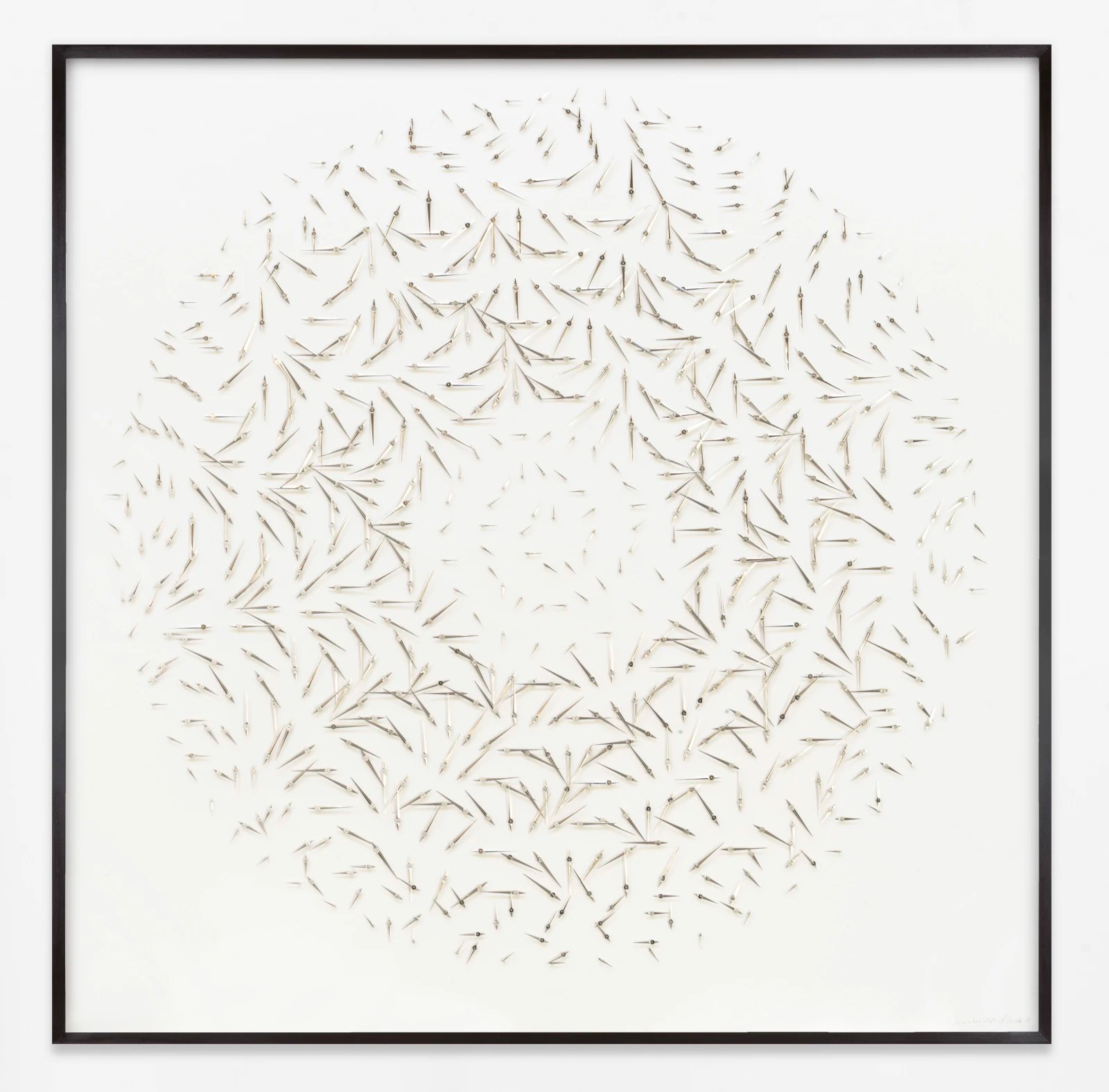
Kwade, Alicja_Causal Emergence
Alicja Kwade (Polish, 1979–), Causal Emergence (December 2020), 2019. Watch hands on cardboard, framed, 175 × 175 cm.

“The abiding power of Christian motifs, ideas and styles in a host of modern and contemporary works that superficially look un- or anti-Christian indicates that visual art and Christian tradition have not become complete strangers. This invites analysis and understanding.

“How have Christian artworks and artistic traditions found new articulations, caused new departures, or provoked new subversions in the last 100 to 150 years? What forms of engagement between theology and modern and contemporary art do such developments in the relationship between art and Christianity invite and reward?

“How do viewers (Christian and non-Christian) interact with historical Christian art today, and how do modern sensibilities affect our viewing of earlier Christian artworks and artistic traditions?

“Is contemporary art an alternative to religion or can it sometimes be an ally? How do contemporary art and religion each respond to human experiences of the absurd or the tragic? What do contemporary art and the spaces in which we encounter it, tell us about the histories of both Western Christianity and Western secularisation?”

+++

FUNDRAISER: New Ordinary Time Album: The indie folk trio Ordinary Time is one of my favorite musical groups—I heard them in concert at a church here in Baltimore a few years ago!—so I’m really excited to see that they’re working on their sixth full-length album, their first since 2016. It will be produced by the esteemed Isaac Wardell, founder of Bifrost Arts and the Porter’s Gate. Per usual, it will comprise a mix of original and classic sacred songs, including the new “I Will Trust,” demoed in the second video below. Help fund their production costs through this Indiegogo campaign, which ends June 15. A donation of just $25 will get you an early download of the album.

+++

SONG: “Oh Give Thanks (Psalm 107)” by Wendell Kimbrough: Wendell Kimbrough is among today’s foremost singer-songwriters engaging with the Psalms. His adaptation of Psalm 107 [previously] is one of his most popular songs, ever since the original studio recording released in 2016. Now he’s recorded a live version with a New Orleans jazz band! It is available on most streaming and purchase platforms.

The music video was shot in February at a bar in Daphne, Alabama, with some eighty of Kimbrough’s friends and supporters, and it premiered May 13. It was his way of saying farewell to his Church of the Apostles community in Fairhope, Alabama, where he served as worship leader and artist-in-residence for eight years. He left this spring to take a new job as uptown artist-in-residence at Church of the Incarnation in Dallas.

“From the time I wrote ‘Oh Give Thanks,’ I always pictured it as a bar tune, specifically set in New Orleans,” Kimbrough says. “The image Psalm 107 conjures for me is a group of friends sitting together swapping stories of God’s deliverance and raising their glasses to celebrate his goodness.” He has noted that some people are uneasy about singing the line “We cried like drunken sailors” in church, but he points out that it’s there in the Old Testament psalm! (Recounting how God rescued a group of men from a storm at sea, the psalmist says that as the waves rose, “they reeled and staggered like drunkards / and were at their wits’ end. Then they cried to the Lord in their trouble, / and he brought them out from their distress,” vv. 27–28).

To learn how to play the song on guitar, see Kimbrough’s video tutorial. You may also want to check out the songs of thanksgiving I compiled on Spotify.

+++

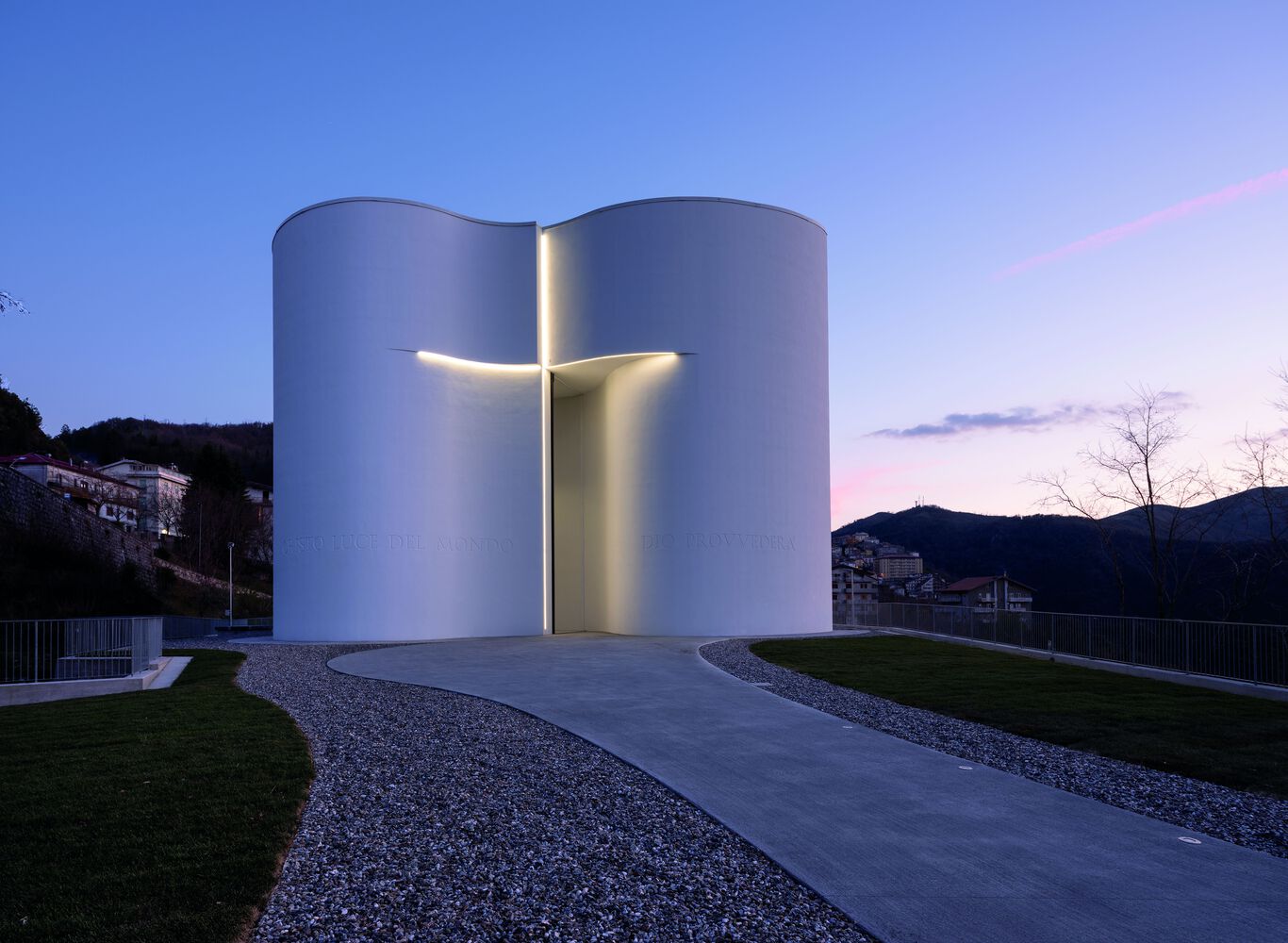
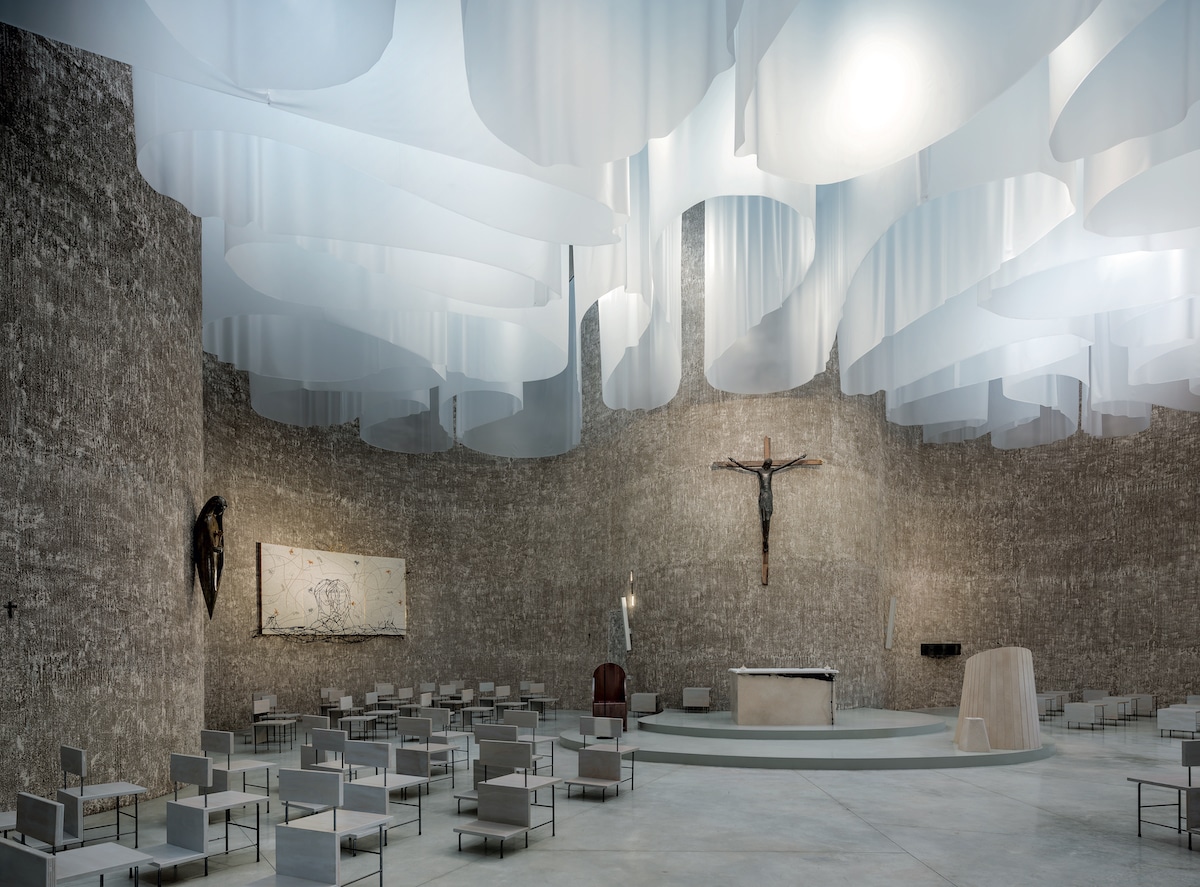
CHURCH ARCHITECTURE: Santa Maria Goretti Church, Mormanno, Italy: In 2013 architect Mario Cucinella won a competition held by Italy’s assembly of Catholic bishops to create the new parish church of Santa Maria Goretti in the hilltop town of Mormanno in Calabria. Because a third of the funds had to be raised locally, the project wasn’t completed until last year. Cucinella says that gave him time to win over its most important constituency: the elderly women who go to Mass every day, and who at first “were suspicious of its modernism.” [HT: My Modern Met]

Cucinella designed an elegantly minimalist concrete building with sinuous surfaces that form the shape of a four-leaf clover, a reinterpretation, Cucinella says, of the shape of Baroque churches. The enclosure has only a few openings. “On its north side, two walls part to create an entrance—while also contributing edges to a cross cut into the curves and lit by LEDs at night. On its south side, a small window is positioned to focus afternoon sunlight on a crucifix on July 6,” Maria Goretti’s birthday.

Santa Maria Goretti Church
Santa Maria Goretti Church, Mormanno, Italy, designed by Mario Cucinella Architects, completed 2021. Photo: Duccio Malagamba.

Photo: Duccio Malagamba

Maraniello, Giuseppe_Baptismal font
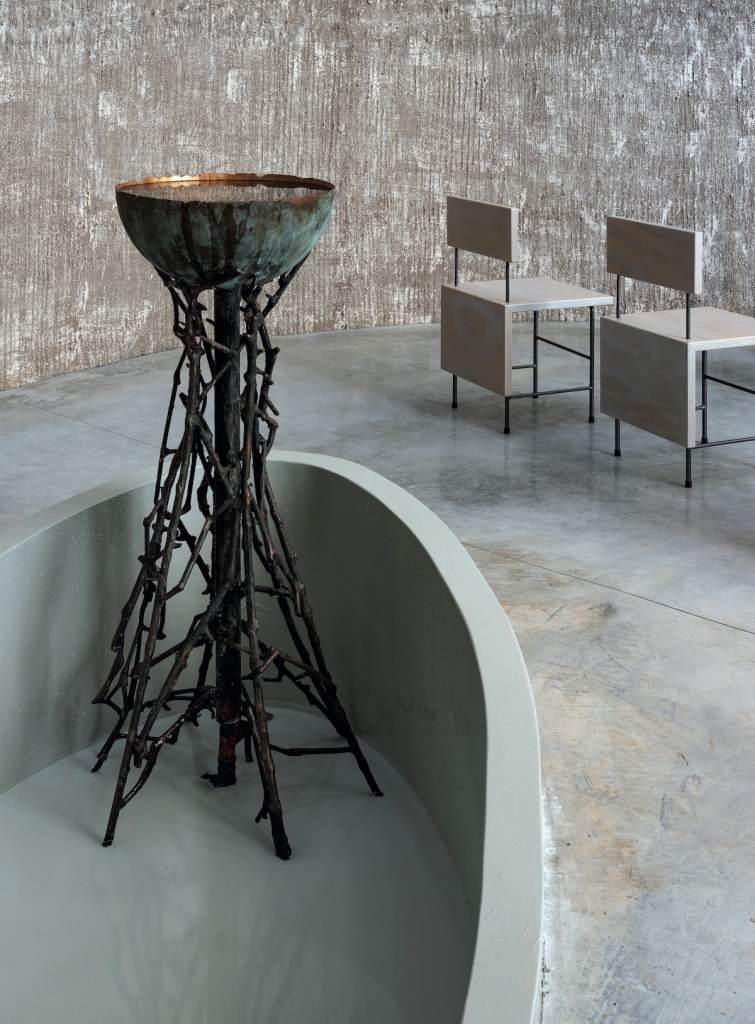
Baptismal font by Giuseppe Maraniello. Photo: Duccio Malagamba.

Inside, the walls are hand-finished in plaster mixed with hemp fibers and lime, which give them a mottled, earth-toned look. The most dominant feature of the interior is the twelve-foot-deep scrim that falls from the ceiling in swirls, filtering in sunlight. Artist Giuseppe Maraniello (b. 1945) was commissioned to create the lectern, tabernacle, baptismal font, and figure of the Virgin Mary, while the simple steel and wood seating is by Mario Cucinella Design. Click on any of the three photos above to view more.

The church’s namesake, one of the youngest saints to be canonized, was stabbed to death in 1902 at age eleven while resisting a rape. She is the patron saint of purity, young women, and victims of sexual assault.

Give Thanks (Artful Devotion)

Van Mourick, Kirsten_Eucharist
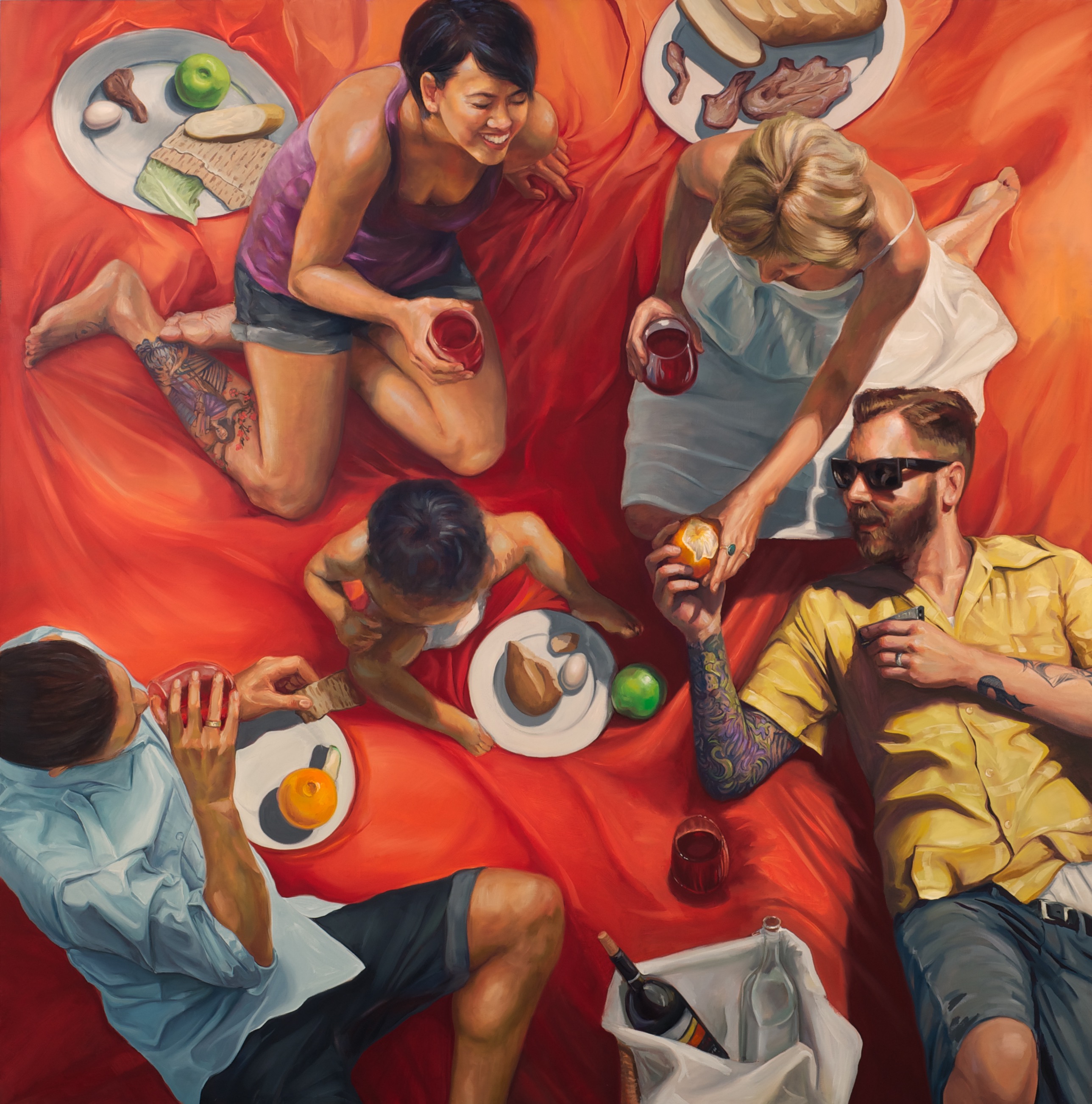
Kirsten Van Mourick, Eucharist, 2014. Oil on canvas, 72 × 72 in.

Oh give thanks to the Lord, for he is good,
for his steadfast love endures forever!
Let the redeemed of the Lord say so,
whom he has redeemed from trouble . . .
For he satisfies the longing soul,
and the hungry soul he fills with good things.

Some sat in darkness and in the shadow of death,
prisoners in affliction and in irons,
. . .
they fell down, with none to help.
Then they cried to the Lord in their trouble,
and he delivered them from their distress.
He brought them out of darkness and the shadow of death,
and burst their bonds apart.
Let them thank the Lord for his steadfast love,
for his wondrous works to the children of man!
. . .
And let them offer sacrifices of thanksgiving,
and tell of his deeds in songs of joy!

—Excerpts from Psalm 107

+++

SONG: “Oh Give Thanks (Psalm 107)” by Wendell Kimbrough, on Psalms We Sing Together (2016) | CCLI #7064726

For a video tutorial by the songwriter on how to play “Oh Give Thanks” on the guitar, click here.


This post belongs to the weekly series Artful Devotion. If you can’t view the music player in your email or RSS reader, try opening the post in your browser.

To view all the Revised Common Lectionary scripture readings for Proper 13, cycle C, click here.