
DANCE: “I Wanna Be Ready”: The African American spiritual “I Wanna Be Ready” forms the soundtrack to this iconic solo from Alvin Ailey’s contemporary ballet Revelations. The dancer in this first video is Amos Machanic:
In 2018, in honor of the Alvin Ailey American Dance Theater’s sixtieth anniversary, Matthew Rushing, who is currently the company’s interim artistic director, traveled to Ailey’s birthplace of Rogers, Texas, to dance “I Wanna Be Ready” at Mount Olive Baptist Church, one of the few landmarks of Ailey’s childhood that’s still standing in Rogers. He was accompanied live by five local singers. The performance was filmed, edited, and released on YouTube.
I’m so excited that in January, for the first time, I’m going to see AILEY live in New York! The company will be performing three pieces, including the brand-new Sacred Songs, choreographed by Rushing.
+++
SONGS:
>> “Time Is Running Out” by Adoration ’N Prayze: Adoration ’N Prayze was a female gospel quartet from Detroit that was active in the early nineties, consisting of Damita Bass, Marguerita Bass, Pamela Taylor, and Shontae Graham (later replaced by Audra “Dodi” Alexander). This original song is the title track of their first and only album, released in 1991. The live recording is from a concert they gave at Clowes Memorial Hall in Indianapolis in 1992.
>> “Oil in My Vessel,” traditional gospel song performed by Rani Arbo & daisy mayhem: Rani Arbo & daisy mayhem are a New England–based folk quartet made up of Rani Arbo (fiddle, guitar), Andrew Kinsey (bass, banjo, ukulele), Anand Nayak (electric and acoustic guitars), and Scott Kessel (percussion). This song they perform is based on a recording by Joe Thompson (1918–2012), who was raised in a Holiness Church in Alamance County, North Carolina. Thompson said the song was in his church hymnal, and that he learned it from his mom when he was about five years old (in the 1920s). Its refrain is a statement of intent to “be ready when the Bridegroom comes,” and its stanzas are taken from the seventeenth-century hymn “Must Jesus Bear the Cross Alone?” by Thomas Shepherd and, from the eighteenth century, “Amazing Grace” by John Newton.
+++
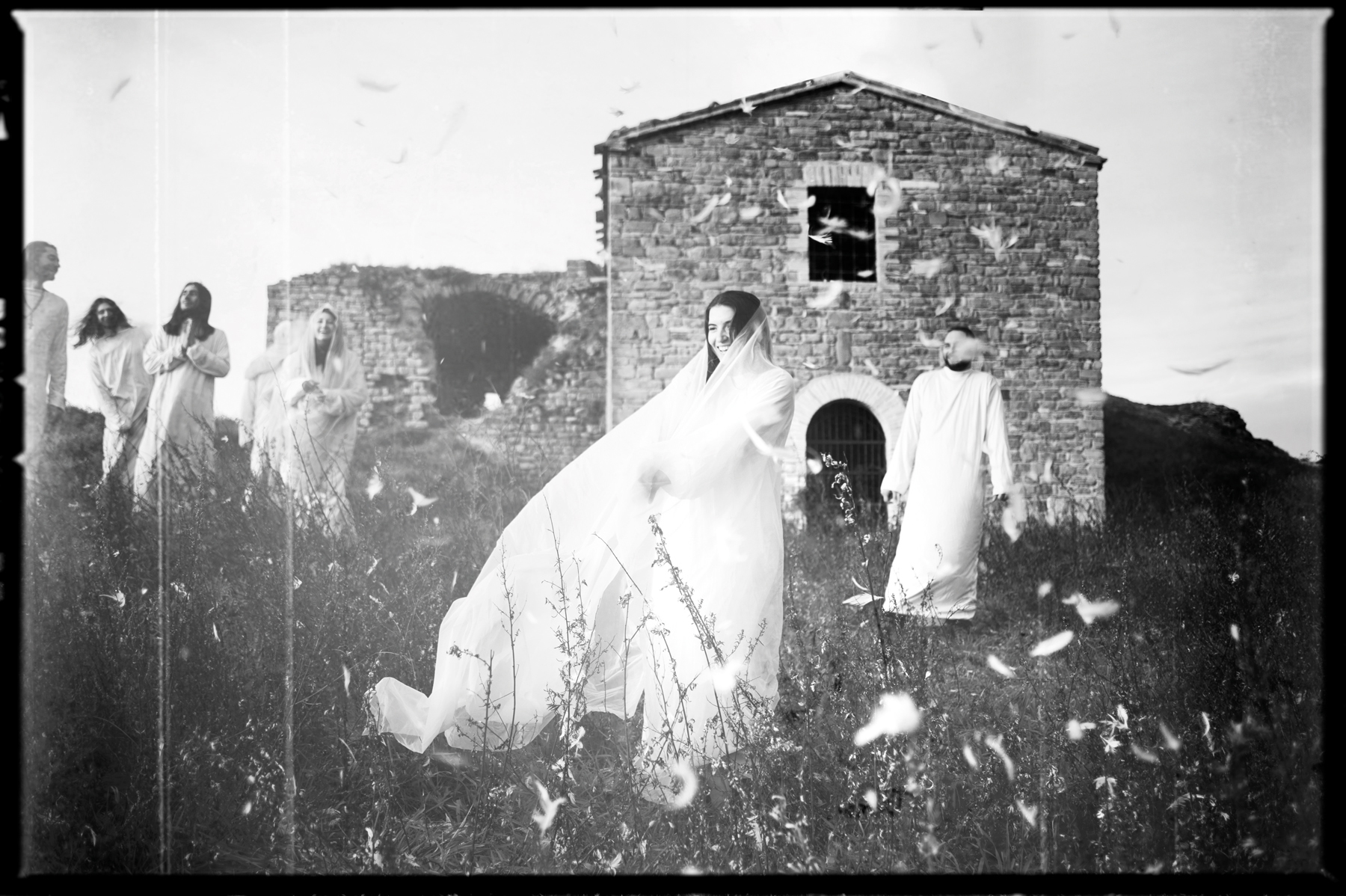
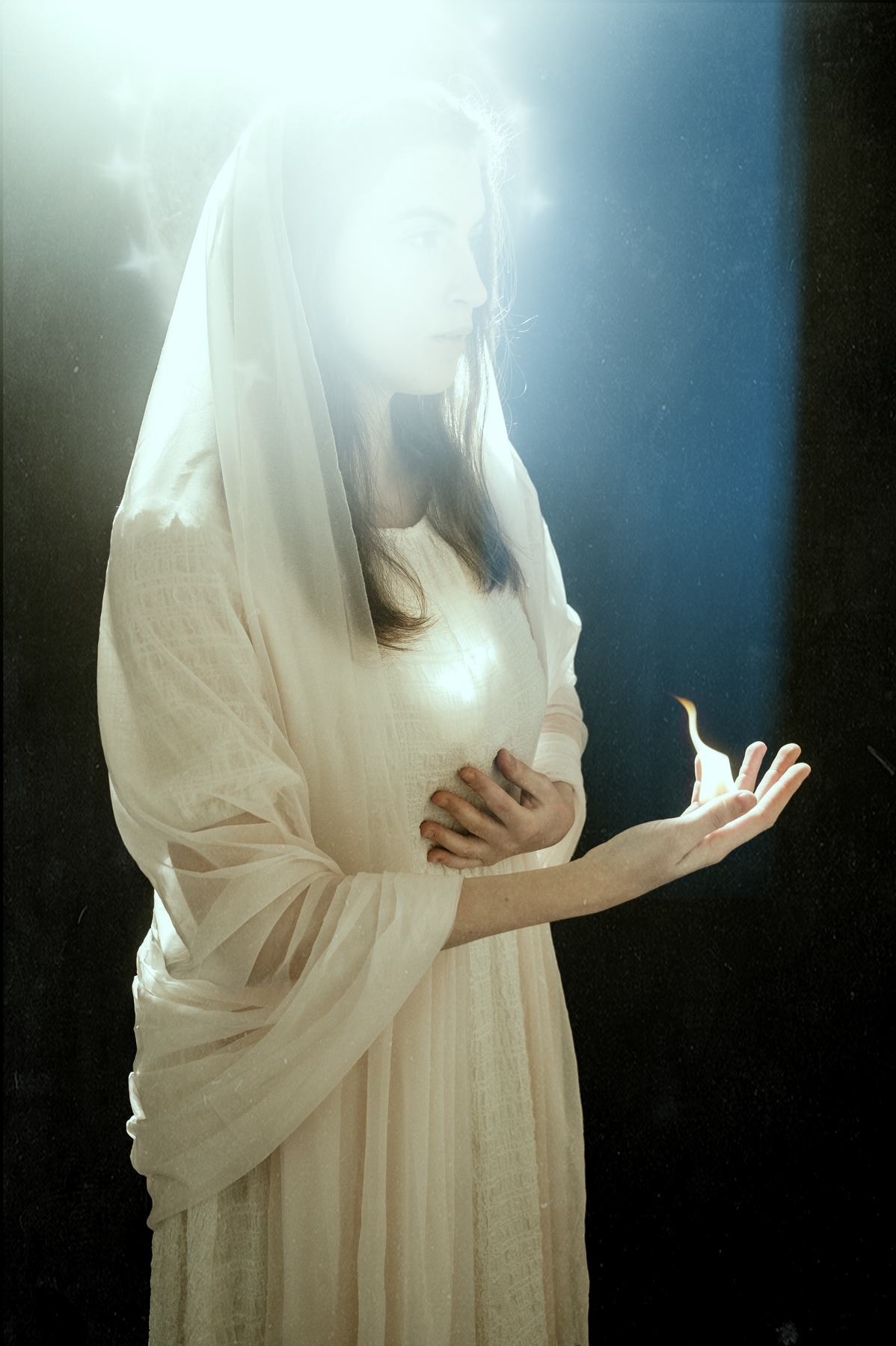
PHOTOGRAPH SERIES: Elogio all’Innocenza (In Praise of Innocence) by Gloria Mancini: Gloria Mancini is an Italian artist working mainly in photography. One of her recent series, divided into three parts, is based on Revelation 3:1–6 (Gli Innocenti, or The Innocents), 12:1 (La Donna Vestita di Sole, or The Woman Clothed with the Sun), and 5:1–7 (L’Agnello, or The Lamb). “Becoming small to become great has been the aim of my exploration of the Book of Revelation,” she writes in her artist’s statement. “Inspired by the visionary and magnetic power of the Kyrios (the Christ, the Lamb), I chose to focus my reflection on innocence as a fundamental and revolutionary value of being, reaffirming its virtue.” She says she is compelled by how in Revelation, it is a meek and vulnerable lamb who defeats evil.
Jesus’s message to the church in Sardis, a wealthy city in west-central Asia Minor, is so seldom (or not at all?) visualized in art history—I’m grateful to Mancini for drawing attention to this passage through her thoughtful work! Jesus tells the church to “wake up,” to “remember . . . what you received and heard; obey it and repent,” following the example of the few there “who have not soiled their clothes.” Those people, he says, “will walk with me, dressed in white, for they are worthy.” He admonishes the Sardis Christians to be watchful and to strengthen and perfect their good works so that they might conquer evil and their names be preserved in the book of life.
Mancini pictures the faithful remnant at Sardis praying, keeping watch, persevering in purity, and gamboling about in the life of the Spirit.

The Woman Clothed with the Sun from Revelation 12, on the other hand, is widely represented in art, and since the twelfth century has been associated with the Virgin Mary, because the woman gives birth to a son who is pursued by the Dragon. In church tradition Mary is also likened to the burning bush in Exodus, because she bore the fire of divinity—God in Christ—within her but was not consumed. Mancini plays on both associations, showing Mary cautiously holding a flame, bringing it closer to her breast: she accepts the Incarnation and is set alight.
+++
ART SPOTLIGHT: “Yellow Silence: Miniature from the Silos Apocalypse (ca. 1100),” Public Domain Review: One of the most dramatic pauses in scripture comes about a third of the way through the book of Revelation. John has just described the nations’ loud and jubilant praises around the throne of God, and then he opens the next chapter, “When the Lamb broke the seventh seal, there was silence in heaven for about half an hour” (Rev. 8:1). This is the calm before the next storm of judgment breaks with the blowing of the seven trumpets, through which God purges the earth of evil.
While artists have historically relished the chance to visualize the rain of blood, fire, locusts, and such initiated by the trumpet blasts, the anonymous artist of a twelfth-century copy of an Apocalypse commentary from Spain saw fit to also visualize the sonic absence that preceded these spectacular occurrences. He did so with a rectangular swath of yellow.
.jpg)
This swath calls readers to somber, speechless awe and reflection. God’s earlier word spoken to and through the prophet Zephaniah is appropriate here: “Be silent before the Sovereign LORD, for the day of the LORD is near” (Zeph. 1:7).
Click here to browse more images from the Silos Apocalypse.

 Art & Theology