Roundup: Cello in a canyon, John Cage and silence, and more

SPOTIFY PLAYLIST: March 2025 (Art & Theology):

(See also my Lent Playlist.)

+++

ANIMATED VIDEO: “Why Jesus Warns Us About Giving, Praying, and Fasting Publicly” by BibleProject: Giving, praying, and fasting are the three major practices of Lent, which begins March 5 this year. Jesus encouraged his followers to engage in all three, but in his Sermon on the Mount he also cautioned them not to do so with the motive of being seen by others. That’s why Matthew 6 is one of the lectionary readings for Ash Wednesday, the first day of Lent. Written by Tim Mackie and Jon Collins and directed by Rose Mayer, with art direction by Joshua Espasandin and PMurphy, the following BibleProject video exposits this teaching.

BibleProject is a nonprofit in Portland, Oregon, that offers free videos, podcasts, articles, and classes to help people experience the Bible in a way that is approachable and transformative.

+++

SONGS from Advent Birmingham [previously]:

The following two songs are from the music ministry of the Cathedral Church of the Advent in downtown Birmingham, Alabama. The ministry flourished under the leadership of Rev. Dr. Zac Hicks, who served as the church’s canon for worship and liturgy from 2016 to 2021. (He is now pastor of Church of the Cross, also in Birmingham.)

The music videos used to be available on YouTube, but it appears that the church has undergone some restructuring, and they have been removed. For now, though, they are still available through Facebook, and the audio releases are available through streaming services.

>> “Lord, Who Throughout These Forty Days”: This 1873 hymn by Claudia Frances Hernaman recounts the forty days Jesus spent in fasting and prayer in the Judean wilderness at the outset of his ministry and beseeches God to give us strength, like Jesus, to fight temptation, to die to self, and to live by his word and with a keen sense of his abiding presence. It’s set to an American folk tune from the Sacred Harp tradition, known as LAND OF REST, which has roots in the ballads of northern England and Scotland. The hymn is sung by Madison Craig (née Hablas), with Emma Lawton (née Dry) and Annie Lee on background vocals, Joey Seales on pump organ, Charley Rowe on cajon, and Zac Hicks on acoustic guitar.

>> “Spring Up, O Well”: This is an original song by Zac Hicks, sung by Jordan Brown. It draws especially on the narrative in John 4, where Jesus tells a Samaritan woman at a well, “Everyone who drinks of this water will be thirsty again, but those who drink of the water that I will give them will never be thirsty. The water that I will give will become in them a spring of water gushing up to eternal life” (vv. 13–14). The exclamation “Spring up, O well!” in the song’s refrain comes from Numbers 21:17, where the Israelites praise God for providing them water in the desert, and that musical phrase is adapted from the old children’s church song “I’ve Got a River of Life.”

+++

SHORT FILM: “Silences,” dir. Nathan Clarke: Shot in 2016 at Box Canyon near Laity Lodge in the Texas Hill Country, this contemplative short film features cellist Steuart Pincombe playing a short improvisation that interacts with the natural space. The impromptu music making was for him an exercise in prayer.

Three years earlier, also while on retreat at Laity Lodge, Pincombe’s wife shot him doing the same inside the newly constructed Threshold, an interactive, site-specific, permanent outdoor installation by Roger Feldman consisting of three curved walls:

The Threshold improvisation, Pincombe writes, “stemmed from a particular note (and its harmonic overtones) that naturally resonated in the space—the cello’s lowest strings were tuned to match this strongest resonation. Playing with the confusion of resonances (or pitches) was an important part of this short musical and spatial exploration—pitches are bent or adjusted in a way that create audible pulses in the sound and play on the conflicts of resonation within the space.”

+++

ESSAY: “Silence in an Age of Mass Media: John Cage and the Art of Living” by Dr. Jonathan A. Anderson, ARTS (Spring 2017): Many twentieth- and twenty-first-century artists have explored the necessities and possibilities for aesthetic stillness and silence, Anderson writes. In this essay he considers the composer John Cage (1912–1992), best known—and most excoriated—for his modernist piano composition 4′33″ (1952), in which the pianist sits at the bench for four minutes and thirty-three seconds, playing no notes. The point was to attune the audience to the ambient sounds of the concert hall (coughing, rustling, creaking, mechanical humming, outside traffic, etc.), testing the distinction between “music” and “noise.” Cage found the fundamental difference between the two to be not in the qualities of sound but in the attentiveness of the listener.

I was pleasantly surprised to learn from Anderson’s article that even after Cage left Christianity (in which he was raised) and turned to Zen Buddhism, he continued to link his love for the givenness of environmental sounds to Jesus’s admonition to “consider the lilies” (Luke 12:27). “Cage sought to quiet his own aesthetic ‘worry’ for musical meaning,” Anderson writes, “and to instead receive the given sounds of the world as richly meaningful in themselves.”

+++

VIDEO: Lenten Jazz Vespers, Duke University Chapel, March 23, 2023: This Jazz Vespers service combines the liturgical traditions of Vespers with the musical improvisation of jazz. Exploring the theme of hope, the service is presided over by Rev. Racquel C. N. Gill, minister for intercultural engagement at Duke University Chapel. Musical leadership is provided by the John Brown Little Big Band.

Here are the time stamps:

  • 0:01: Song: “I Came to Tell You” by Trinity Inspirational Choir
  • 5:40: Welcome and Prayer
  • 8:33: Song: “Miracle (It’s Time for Your Miracle)” by Marvin Sapp
  • 14:38: Poetry reading: “Dark Testament (8)” by Pauli Murray
  • 16:11: Song: “Be Ye Steadfast” by Arthur T. Jones
  • 21:25: Scripture reading: Romans 5:1–11
  • 24:02: Song: “Through It All” by Andraé Crouch
  • 28:10: Sermon by Rev. Bruce Puckett, assistant dean of Duke University Chapel
  • 35:56: Response
  • 52:18: Prayer and Benediction
  • 54:36: Song: “Down on My Knees” by John P. Kee
Roundup: (Virtual) Arts conference, Psalm 129 jazz-hip-hop-folk fusion, and more

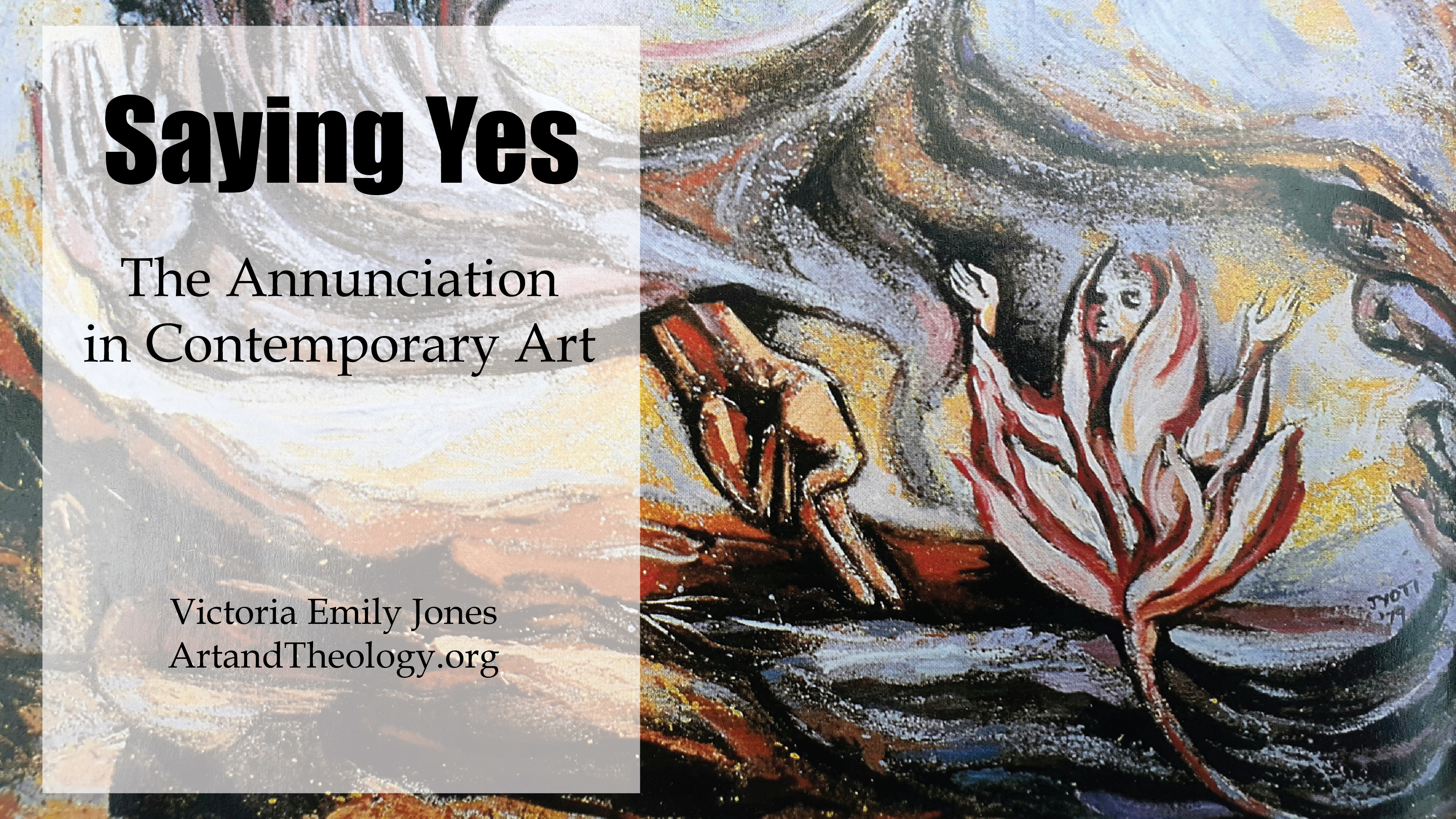
This year’s The Breath and the Clay creative arts gathering, on the theme of “Reenchantment,” is taking place March 17–21, with both in-person (in Winston-Salem, North Carolina) and virtual options. Registration for virtual attendees is pay-what-you-wish. Presenters include theologian Jeremy Begbie, poet Pádraig Ó Tuama, singer-songwriter Joy Ike, contemplative author Christine Valters Paintner, dancer Camille D.C. Sutton, and many more . . . including me! On the evening of March 18 I’ll be giving a twenty-minute talk titled “Saying Yes: The Annunciation in Contemporary Art,” which will be archived online afterward. (The global church celebrates the feast of the Annunciation the following week, on March 25.) (Update: Watch here.) Here’s the description:

The story of Jesus’s miraculous conception in the womb of Mary, a first-century Galilean peasant girl, told in Luke 1 has activated the imaginations of artists since the early Christian era. When an angelic messenger came and told Mary she had been chosen to bear God’s Son, she cycled through a range of emotions before ultimately accepting the call, stepping onto a path that, though scary, would be life-giving not only for her but also for her religious and ethnic community and for the whole world.

God invites us to participate in his work in the world and gives us the grace to do it. When his voice breaks through our safe, predictable routines, calling us to something big, do we respond with brave obedience? In this talk Victoria Emily Jones will share a handful of contemporary artworks that visualize that pivotal moment in salvation history when Mary said yes and set in motion the incarnation. These works show us the wild beauty of God’s plans and can help us tune our ears to the annunciations in our own lives.

(The title slide image is a detail of an Annunciation painting by Jyoti Sahi.)

I’m always impressed by the variety of artists, arts professionals, and art lovers that director Stephen Roach manages to bring together for The Breath and the Clay. Click here to learn more and to register.

+++

ONLINE LENT SERIES:

>> VCS Lent 2021: The Visual Commentary on Scripture is highlighting a different exhibition from its archives for each week of Lent, with new content including a video introduction to the week by Ben Quash and an audio reading of each of the three constituent commentaries.

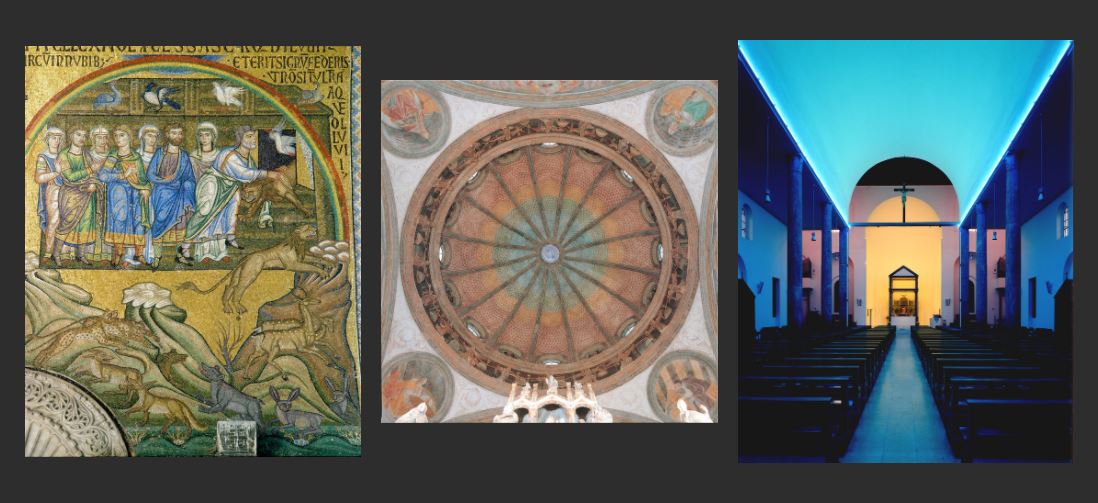
The first week was on the theme of Covenant and covers Genesis 8:20–9:17. Stefania Gerevini curated three artworks from Italy that convey some aspect of the rainbow as divine promise: a thirteenth-century mosaic from the Basilica di San Marco in Venice, a colorful dome fresco (fifteenth century) from the Cappella Portinari in Milan, and a contemporary light installation by Dan Flavin at Santa Maria Annunciata in Chiesa Rossa, also in Milan.

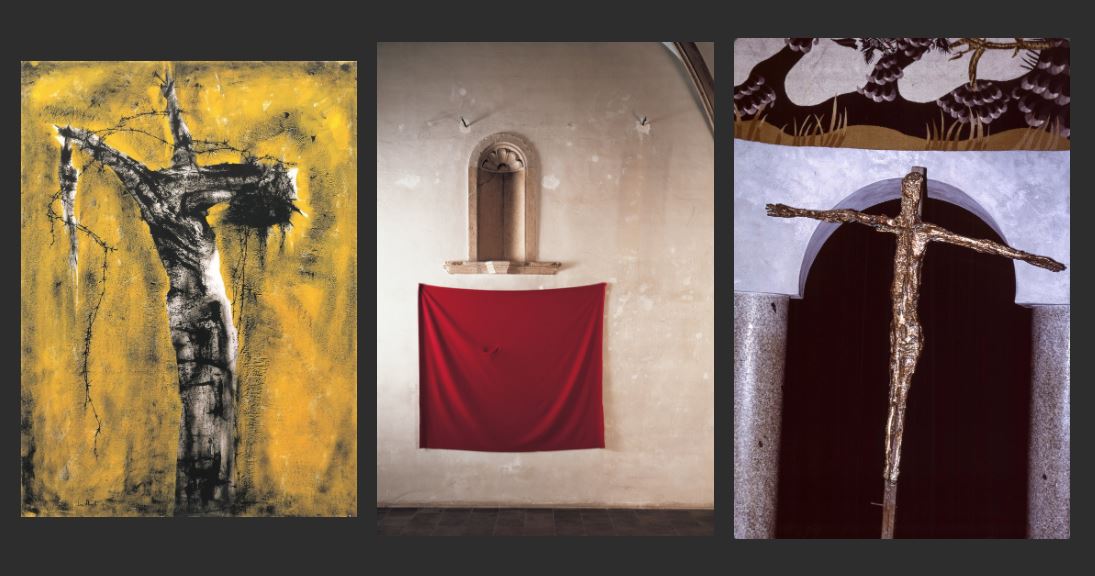
Week 2, on Prophecy, explores the Suffering Servant of Isaiah 53. Jonathan Koestlé-Cate comments on three modern artworks: Crucified Tree Form by Theyre Lee-Elliott, a crucifix by Germaine Richier (which sparked outrage when it was unveiled at Notre-Dame de Toute Grâce, Assy, in 1950), and an installation by postminimalist artist Anish Kapoor at the church of Saint Peter, Cologne.

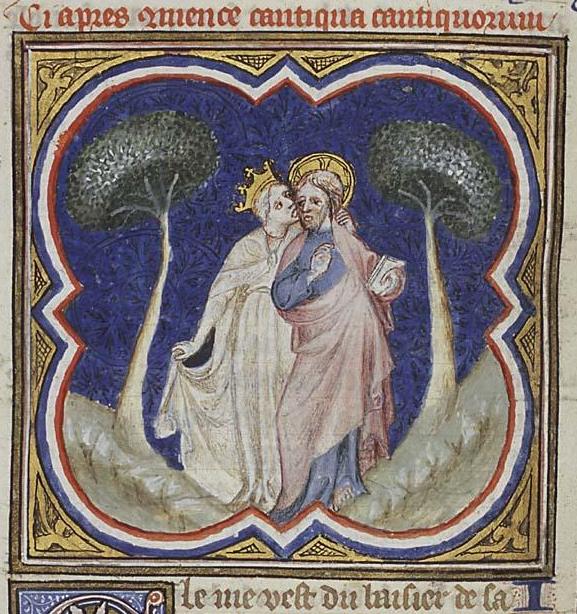
>> “The Many Faces of Jesus”: I’ve been enjoying this Lenten series (on blog and podcast) by medievalist Dr. Grace Hamman, who makes medieval lit super accessible. “For Lent, Old Books With Grace will share and explore some medieval representations of Jesus in art and literature—the versions of Jesus that dominate the medieval church’s imagination. These medieval portrayals of Jesus may strike us as odd, threatening, charming, creative, stupid, or inspiring. In attending to these versions of Jesus, I hope for a few end goals: the first is that we may expand our Christian imagination. Perhaps a side of Jesus that has never occurred to you, or been sideswept by our contemporary culture, will suddenly illuminate an aspect of the Jesus of scripture. The second is that we may better identify the ways that we ourselves have culturally contained and portrayed Jesus, in positive and negative ways. Often the strangeness of the past helps us recognize the weird or damaging things we believe in order to make Jesus more palatable, understandable, or like us.”

Christ and his bride
Jean Bondol, “The bride (Ecclesia) and bridegroom (Christ),” from a Bible Historiale made in Paris, 1371–72. The Hague, MMW, 10 B 23, fol. 330v.

So far she has covered Jesus as judge, lover, and knight.

+++

RETUNED HYMNS:

>> “Up from My Youth (Psalm 129)” by Advent Birmingham, feat. CashBack and Terence June Gray: This is such a strange and compelling fusion! “An 1806 hymn by Isaac Watts meets hip-hop meets Johnny Cash meets folk meets New Orleans jazz meets industrial steel factory.”

Led by Zac Hicks, Advent Birmingham [previously] is a group of worship musicians from the Cathedral Church of the Advent in downtown Birmingham, Alabama. Hicks wrote this new tune for Isaac Watts’s metrical paraphrase of Psalm 129 and integrated a rap by guest artist Terence June Gray from Memphis. Singing lead (and playing drums) is Leif Bondarenko, the front man of the Johnny Cash tribute band CashBack. The video was filmed at Birmingham’s historic Sloss Furnaces. Available on iTunes, Amazon, and Spotify.

You can read the lyrics here, which include a slight revision of Watts’s verse 6.

>> “Thy Mercy, My God”: Words by John Stocker, 1776; music by Sandra McCracken, 2005; performed by Ellen Petersen Haygood (of The Petersens bluegrass band), 2018.

+++

POETRY READING: “Phase One” by Dilruba Ahmed, read, with commentary, by Pádraig Ó Tuama, Poetry Unbound: What do you find hard to forgive in yourself? What might help? In this poem, the poet makes a list of all the things she holds against herself: opening fridge doors, fantasies, wilted seedlings, unkempt plants, lost bags, feeling awkward, treating someone poorly. Dilruba Ahmed repeats the line ‘I forgive you’ over and over, like a litany, in a hope to deepen what it means to be in the world, and be a person of love.”

Roundup: Christianity in Africa, Zwingli’s plague hymn, biblical art database, and more

VISUAL MEDITATION: “At the Whipping Post” by Victoria Emily Jones: Last year the Museu de Arte de São Paulo (MASP) ran a major retrospective on Djanira da Motta e Silva, “a central artist in Brazilian mid-century modernism” (Rodrigo Moura). ArtWay’s editor asked me to choose a painting of hers to write about—I chose the one she submitted to the 1955 “Christ of Color” contest, showing Jesus as an enslaved African being scourged in the historic center of Salvador de Bahia, the first colonial capital of Brazil.

Djanira_Largo do Pelourinho, Salvador
Djanira da Motta e Silva (Brazilian, 1914–1979), Largo do Pelourinho, Salvador, or Cristo na coluna (Christ at the Column), 1955. Oil on canvas, 81 × 115 cm. Private collection, Rio de Janeiro, Brazil. Photo: Jaime Acioli.

+++

LECTURE: “Is Christianity a White Man’s Religion?” by Dr. Vince L. Bantu: I first encountered Vince Bantu in a Conversing (Fuller Studio) podcast episode on African American identity and the church. (He joined the Fuller faculty last year as assistant professor of church history and Black church studies.) In this video from January 2018, he returns to his alma mater, Wheaton College, to discuss the history of Christianity in Africa—which some people are surprised to learn predates colonialism. “To study ancient African history is to study Christianity. They go together,” he says. “If you want to study Ethiopian literature, . . . you’re going to be reading a whole bunch of Christian literature. Same thing in Nubian. Same thing in Coptic.” While the Anglo-Saxons were still worshipping Odin and Thor, Bantu says, Black Africans were building churches, establishing seminaries, and writing Christian theological treatises!

The talk starts at 11:34 and really kicks into gear at around 24:00. Q&A starts at 52:40 and includes discussion of a three-point spectrum of approaches to culture, mission as “cultural sanctification,” and internalized theological racism. Take note of Bantu’s response, at 1:09:35, to the question “What do we do with this information?”

“Christianity is and always has been a global religion,” Bantu reminds us. Unfortunately, people tend to associate it most with western Europe. That’s because Rome, the dominant culture for some time, essentially said, “Christianity belongs to us,” instituting a theological hegemony. The West proclaimed itself the guardian of the Christian faith, declaring heretical churches in other regions that didn’t express theology the same way they did, with no regard for differences in language and philosophical frameworks.

I appreciate how Bantu teaches Christian history in part through art and architecture, which are material witnesses to the faith and sometimes even modes of theology. He shows photos of churches and monasteries and their interior decoration. Most fascinating to me is a tenth-century wall painting he photographed at the Great Monastery of Saint Anthony in Old Dongola (present-day Sudan), a Nativity scene that shows Africans wearing animal crest masks and worshipping Christ with traditional instruments. (You can view some photos here. See also The Wall Paintings from the Monastery on Kom H in Dongola by Malgorzata Martens-Czarnecka, or the freely accessible essay by the same author, “The Christian Nubia and the Arabs.”)

Bantu is the author of A Multitude of Peoples: Engaging Ancient Christianity’s Global Identity from IVP Academic and the editor of Gospel Haymanot: A Constructive Theology and Critical Reflection on African and Diasporic Christianity, both released this year.

+++

SONGS:

“Azim ast name To Isa”: Nora Kirkland from Iran performs this Christian praise song in Farsi, English, and Greek. [HT: Global Christian Worship]

Great is your name, Lord Jesus Christ
Praise to your name, Lord Jesus Christ
Power to your name, Lord Jesus Christ
Praise to your name, exalted Jesus Christ

Hallelujah, hallelujah
Praise to your name, exalted Jesus

“I Am Thine (Plague Hymn)”: Made especially timely by the current COVID-19 pandemic, this hymn text was written in 1519 by Swiss Reformer Ulrich Zwingli while convalescing from the bubonic plague, having caught it ministering to others. This year Zac Hicks wrote a new melody for it, and it’s sung here by Leif Bondarenko. Released by Advent Birmingham.

+++

BIBLICAL ART DATABASE: Visual Midrash: “Visual Midrash is an online bilingual (Hebrew and English) collection of Bible art and commentary, sponsored by the TALI Education Fund in Israel. At present, the site contains more than 1100 art images relating to 33 different subjects from all three divisions of the Hebrew Bible – including such figures as Abraham, Jacob, Moses, David, the women of the Book of Judges, the scrolls of Ruth and Esther and much more. Among the images are objects from the Ancient Near East; frescoes from the ancient synagogue of Dura Europos; medieval illuminated manuscripts; paintings, sculptures, lithographs, and nearly 100 other art media from Michelangelo to Rembrandt to Chagall to contemporary artists.” I’ve had fun browsing! Below is just a small sampling of images from the site.

Blake, William_Behemoth and Leviathan
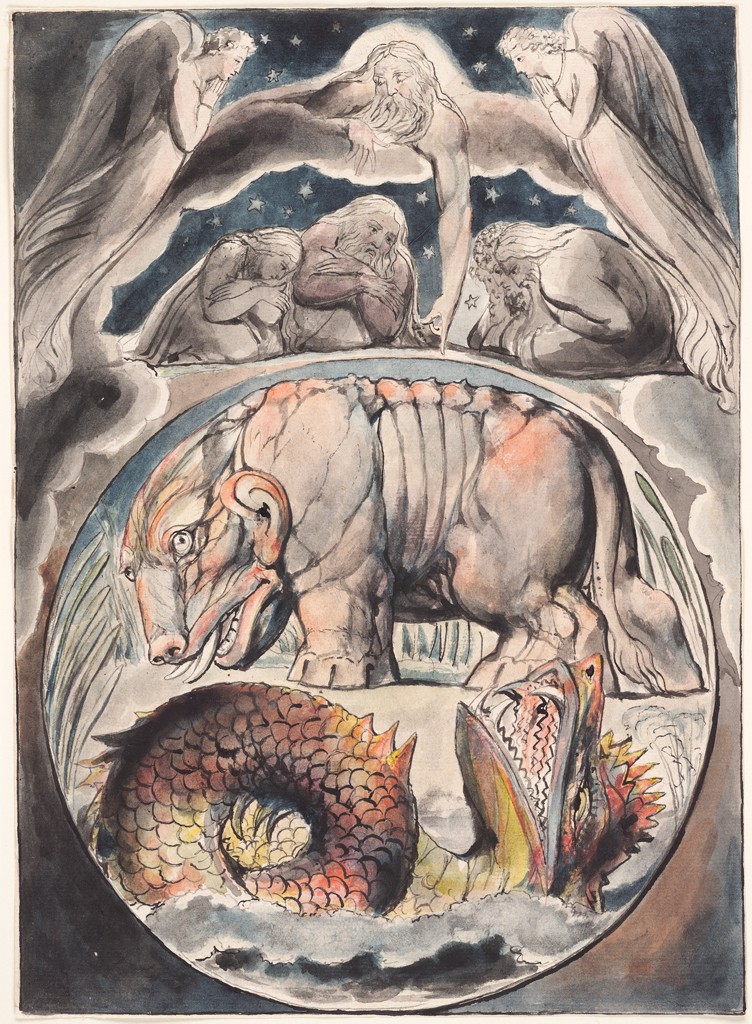
William Blake (British, 1757–1827), Behold Now Behemoth, Which I Made With Thee (The Book of Job) (Linnell set), 1821. Watercolor, black ink, and graphite on off-white antique laid paper, 27.5 × 20 cm. Harvard Art Museums/Fogg Museum, Cambridge, Massachusetts. [HT]

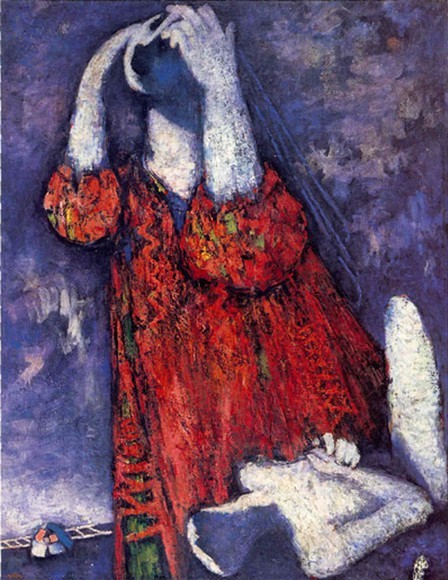
Mordecai Ardon (Israeli, 1896–1992), Sarah, 1947. Oil on canvas, 138 × 108 cm. Jewish National and University Library, Jerusalem.

The Finding of Moses (Dura-Europos Synagogue)
“The Finding of Moses,” wall painting made in 244 CE, from Dura-Europos Synagogue in Syria. Preserved at the National Museum of Syria, Damascus. [HT]

Crossing the Red Sea (Alba Bible)
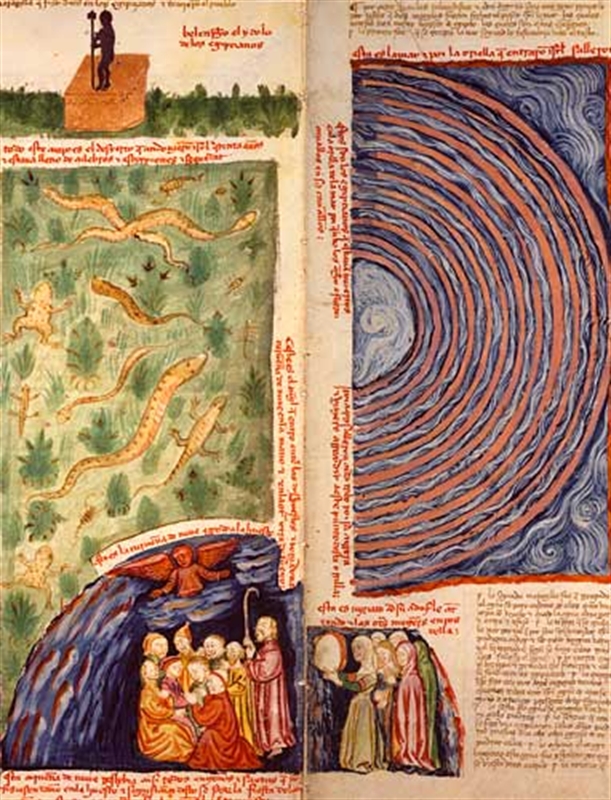
“Crossing of the Red Sea,” Spain, 1430. Illumination from the Alba Bible (fol. 68v–69r), Liria Palace, Madrid.

Jonah (Islamic)
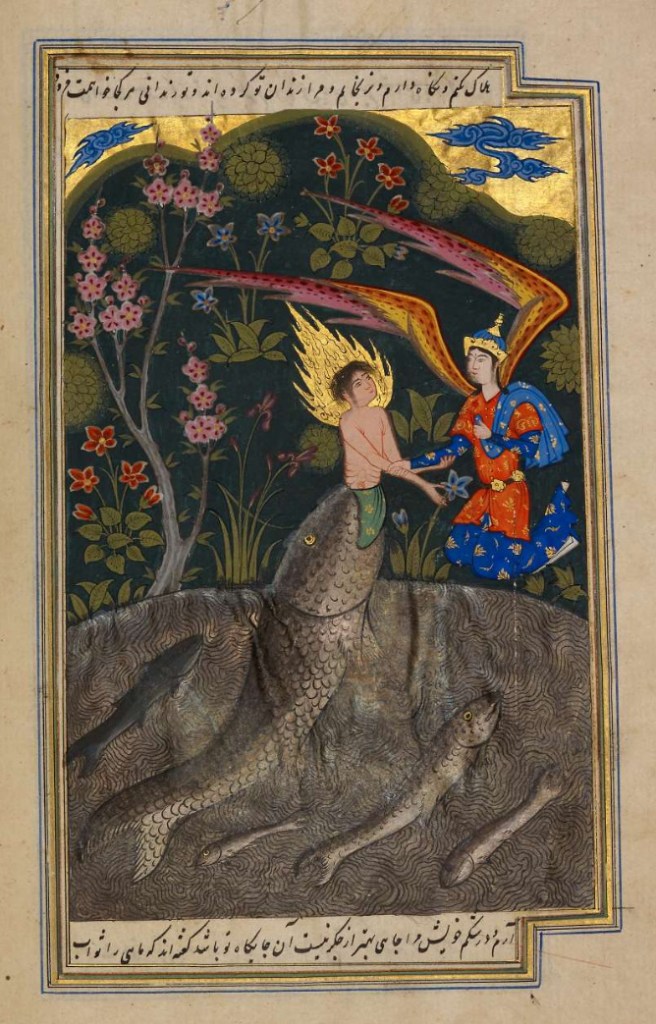
“Jonah,” Iran, 1577. Illumination from the Qisas al Anbiya (Diez A Fol. 3, fol. 142v), Staatsbibliothek, Berlin. [HT]