
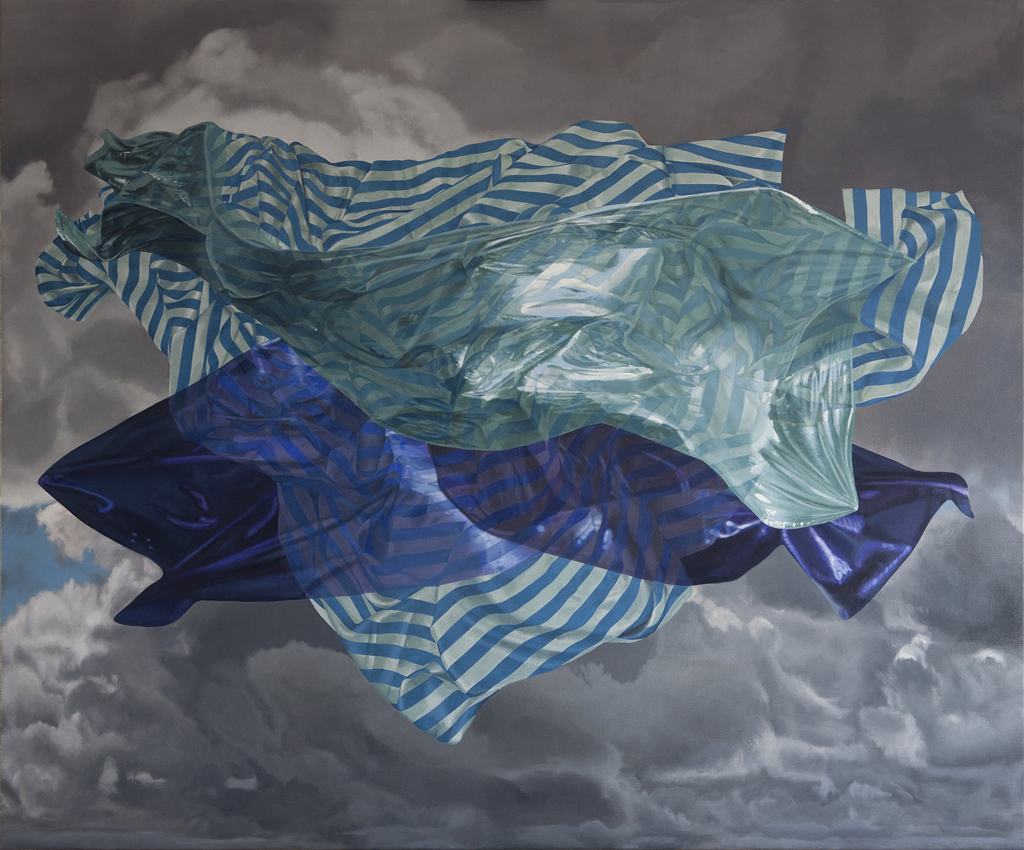
Everything is plundered, betrayed, sold,
Death’s great black wing scrapes the air,
Misery gnaws to the bone.
Why then do we not despair?

By day, from the surrounding woods,
cherries blow summer into town;
at night the deep transparent skies
glitter with new galaxies.

And the miraculous comes so close
to the ruined, dirty houses—
something not known to anyone at all,
but wild in our breast for centuries.
This poem was originally published in Russian (title: “Все разграблено”) in Anno Domini MCMMXI by Anna Akhmatova (Petrograd: Petropolis, 1922). The above translation by Stanley Kunitz, with Max Hayward, appears in Poems of Akhmatova (Boston: Mariner Books, 1997).
Akhmatova wrote “Everything Is Plundered” in June 1921, during a time of great social and political upheaval caused by the Russian Revolution (1917), which established Communism in the country, and the resultant Russian Civil War (1917–1922). Just two months later, her first husband, the father of her nine-year-old son, would be arrested and executed as a counterrevolutionary. Despite the death and destruction she was witnessing, she did not want to abandon hope. She grasps for a miracle, which is elusive but, she senses, near—will it land?
Like the poet, I too marvel at how such ugliness and beauty can coexist in the world. For Akhmatova, it’s in large part gifts from nature, such as the scent of cherry blossoms or the sparkle of a starry night sky, that prevent her from despairing, that rekindle in her that faith-flame. When humans make a terrible and violent mess of things, there’s still the persistence of seasons and the steadiness of sky. I consider such things graces from God, reminders of God’s deep-down, benevolent, outreaching presence.
Anna Akhmatova, the pen name of Anna Andreevna Gorenko (1889–1966), is one of the most significant Russian poets of the twentieth century. She was active as a writer during both the prerevolutionary and Soviet eras, though in the latter, her work was condemned and censored by Stalinist authorities, who viewed it as too pessimistic and rooted in bourgeois culture. Though many of her friends emigrated out of the country to escape oppression, she chose not to, believing that her poetry would die if she left her homeland; she wanted to stay and bear witness to the events around her, and to hold out hope for a better tomorrow. One of Akhmatova’s most famous poem cycles, Requiem, she wrote while her only child, Lev Gumilev, was detained in Kresty prison in 1938 along with hundreds of other victims of the Great Terror; he would spend the next two decades in forced-labor camps. It wasn’t until the late 1980s, after her death, that Akhmatova achieved full recognition for her literary accomplishments in her native Russia, when all her previously unpublishable works finally became accessible to the public.
 Art & Theology
Beautiful poem
LikeLike
[…] kenbaker in Uncategorized https://artandtheology.org/2024/07/29/everything-is-plundered-by-anna-akhmatova/ […]
LikeLike