
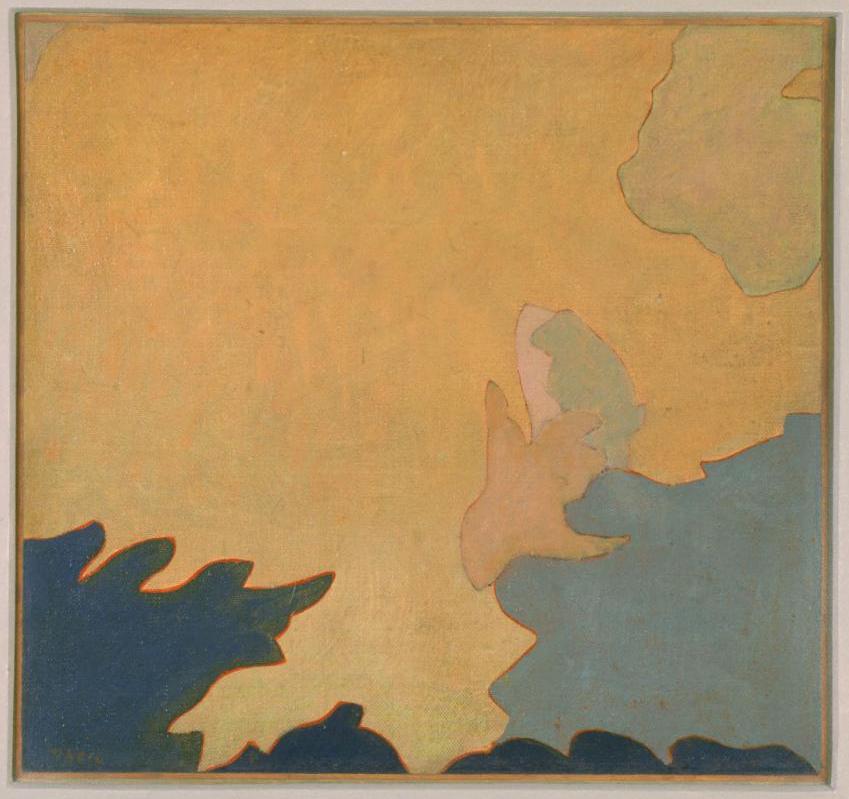
Darkness
as black as your eyelid,
poketricks of stars,
the yellow mouth,
the smell of a stranger,
dawn coming up,
dark blue,
no stars,
the smell of a lover,
warmer now
as authentic as soap,
wave after wave
of lightness
and the birds in their chains
going mad with throat noises,
the birds in their tracks
yelling into their cheeks like clowns,
lighter, lighter,
the stars gone,
the trees appearing in their green hoods,
the house appearing across the way,
the road and its sad macadam,
the rock walls losing their cotton,
lighter, lighter,
letting the dog out and seeing
fog lift by her legs,
a gauze dance,
lighter, lighter,
yellow, blue at the tops of trees,
more God, more God everywhere,
lighter, lighter,
more world everywhere,
sheets bent back for people,
the strange heads of love
and breakfast,
that sacrament,
lighter, yellower,
like the yolk of eggs,
the flies gathering at the windowpane,
the dog inside whining for food
and the day commencing,
not to die, not to die,
as in the last day breaking,
a final day digesting itself,
lighter, lighter,
the endless colors,
the same old trees stepping toward me,
the rock unpacking its crevices,
breakfast like a dream,
and the whole day to live through,
steadfast, deep, interior.
After the death,
after the black of black,
this lightness—
not to die, not to die—
that God begot.
“The Fury of Sunrises” is the last of fifteen poems from Anne Sexton’s “The Furies” cycle, published in The Death Notebooks (Houghton Mifflin, 1974). Copyright is held by the Estate of Anne Sexton, represented by Sterling Lord Literistic.
Anne Sexton (1928–1974) was a Pulitzer Prize–winning confessional poet from New England who wrote in starkly personal terms about her psychiatric struggles (she suffered from bipolar disorder and died by suicide), sexuality, and other taboo subjects. Much of her poetry expresses a yearning for the ecstatic and sublime and explores religious questions, referencing God and faith—even though she characterized herself, in a 1968 BBC interview, as an atheist, albeit one who was “rather attracted to Catholicism.”
 Art & Theology
Impressive, thanks a lot for Anne Sexton. Succes with the blog. Best, J.
[ http://www.johantahon.be/ | http://www.johantahon.be ]
LikeLike