
LOOK: Virgin and Child, medieval French ivory
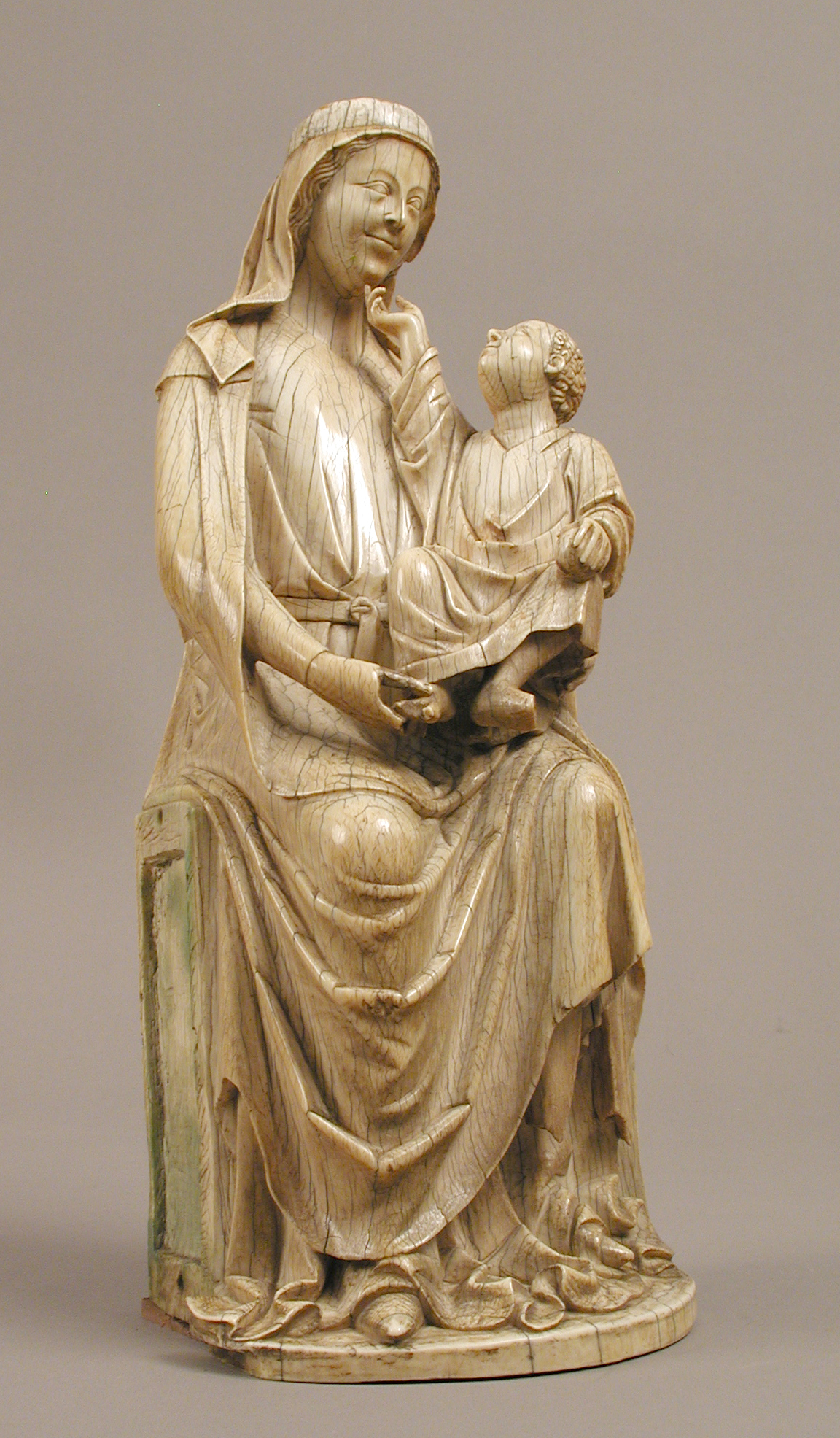
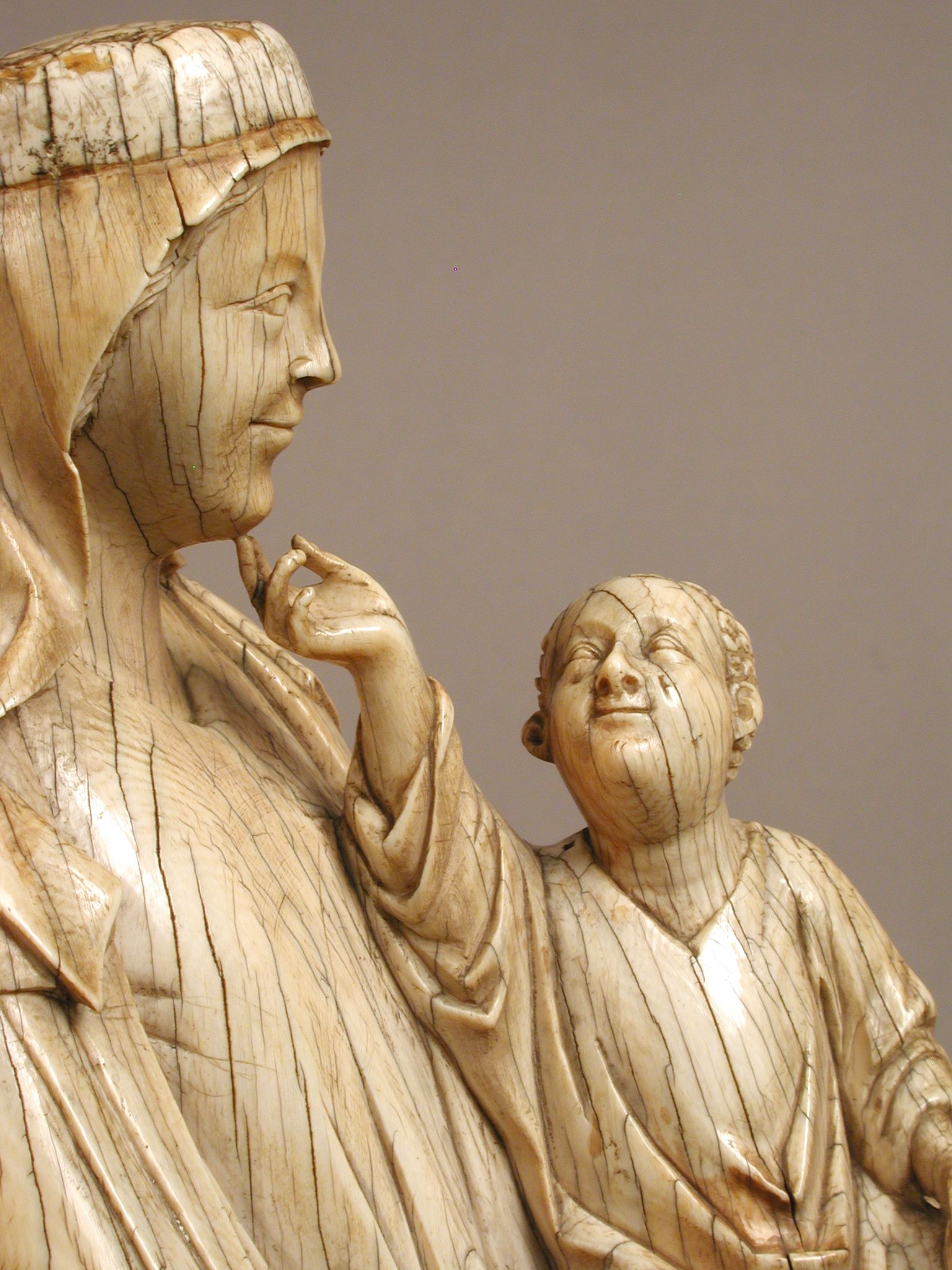
I love the affection between mother and child in this thirteenth-century ivory statuette from northern France. A variation of the Virgin Eleousa (Virgin of Tenderness) icon type, it shows Jesus seated in Mary’s lap, sweetly touching her chin, while she reciprocates with a squeeze of his foot.
LISTEN: “Quid petis, o fili?” (What Do You Seek, O Son?) | Words: Anonymous | Music by Richard Pygott, ca. 1510 | Performed by The Sixteen, dir. Harry Christophers, on Christus Natus Est: An Early English Christmas, 1996
ORIGINAL MIDDLE ENGLISH:
Quid petis, o fily?
Mater dulcissima ba ba.
O pater, O fili?
Michi plausus oscula da da!The moder full manerly and mekly as a mayd,
Lokyng on her lytill son, so laughyng in lap layd,
So pretyly, so pertly, so passingly well apayd,
Full softly and full soberly unto her swet son she saide:Quid petis, o fily? . . .
I mene this by Mary, our Maker’s moder of myght,
Full lovely lookyng on our Lord, the lanterne of lyght,
Thus saying to our Saviour; this saw I in my syght;
This reson that I rede you now, I rede it full ryght:Quid petis, o fily? . . .
Musyng on her manners, so ny mard was my mayne,
Save it plesyd me so passyngly that past was my payn;
Yet softly to her swete sonne methought I hard her sayn:
Now, gracious God and goode swete babe, yet ons this game agayne.Quid petis, o fily? . . .
Source: London, British Library, Add. MS 31922, fols. 112v–116r; transcribed in John Stevens, Music and Poetry in the Early Tudor Court (Cambridge University Press, 1979), p. 421, cat. H105
MODERNIZED SPELLINGS:
Quid petis, O fili?
Mater dulcissima, ba ba.
O pater, O fili?
Mihi plausus oscula, da da.[Translation: “What do you seek, O son?”
“Sweetest mother, kiss, kiss.”
“O father, O son?”
“Clapping hands, give me kisses!” – or – “Applaud me with kisses!” – or – “Kisses on me, give, give!”]The mother, full mannerly and meekly as a maid,
Looking on her little son, so laughing in lap laid,
So prettily, so pertly, so passingly well apayed, [pertly = beautifully; apayed = contented]
Full softly and full soberly, unto her sweet son she said:Quid petis, O fili? . . .
I mean this by Mary, our Maker’s mother of might, [I mean this by = I refer to]
Full lovely looking on our Lord, the lantern of light.
Thus saying to our Savior, this saw I in my sight;
This reason that I read you now, I read it full right: [reason = statement]Quid petis, O fili? . . .
Musing on her manners, so nigh marred was my main, [sapped was my strength]
Save it pleased me so passingly that passed was my pain;
Yet softly to her sweet son, methought I heard her sayn:
“Now, gracious God and good sweet babe, yet once this game again”:Quid petis, O fili? . . .
This carol for four voices is from the so-called Henry VIII Manuscript, an anthology of polyphonic songs and instrumental music from the Tudor court. Of the 108 compositions in the collection, “Quid petis, O fili” is one of the few religious ones. The author of the text is unknown, but the composer is Richard Pygott (ca. 1485–1552).
The four-line Latin burden* is a dialogue between Mary and the Christ child. Presumably he’s wiggling or making noise, because she asks him what he wants. “Kisses!” he replies. She calls him, oddly, both son and “father,” which reflects her unusual relationship with the God-boy she bore into the world: He’s both her child and her God.
There are three stanzas in the carol—all in English—voiced by a first-person narrator who has witnessed the playful mother-son exchange. It so endeared him that he wants to share it with others.
* Scholars of medieval carols differentiate between a refrain and what’s called a burden. “The refrain . . . is a repeated element which forms part of a stanza, in the carols usually the last line. The burden, on the other hand, is a repeated element which does not form any part of a stanza, but stands wholly outside the individual stanza-pattern.” Richard Leighton Greene, ed., The Early English Carols, 2nd ed., revised and enlarged (Clarendon Press, 1977; 1st ed. 1935), clx.
 Art & Theology
That might be the only portrayal of Mary I have ever seen where she looks happy… Thanks for sharing it! (Merry Christmas)
LikeLike
Good point – to my recollection she is normally portrayed either as pensive or sad – much prefer the smile!
LikeLike
Hi, Victoria,
Thank you for the marvelous and inspiring work you do!
I’m wondering if you can help me with a question. Are the images on your site available for use as images for reflection on church worship guides or other printed pieces used in a church or retreat context? I am used to contacting artists to request licensing and permissions. Should I continue to follow that pattern? Proper attribution and licensing is an important value for us.
Thank you!
Grace and peace, Bob Guffey
LikeLiked by 1 person
Hi Bob,
You should still follow your church’s permissions protocol. For each artwork I provide the artist’s name and, if applicable, the institutional collection it’s from, as well as link to its online source, which should help you get started. The Met is great at providing high-resolution downloads of its public domain works, including sculptures, like this one, for free use. Any photographs of mine (indicated with the photo credit “Victoria Emily Jones”) that are of public-domain artworks you are free to use without permission; if possible, I’d appreciate a photo credit or a link to this website.
All the best,
Victoria
LikeLike