
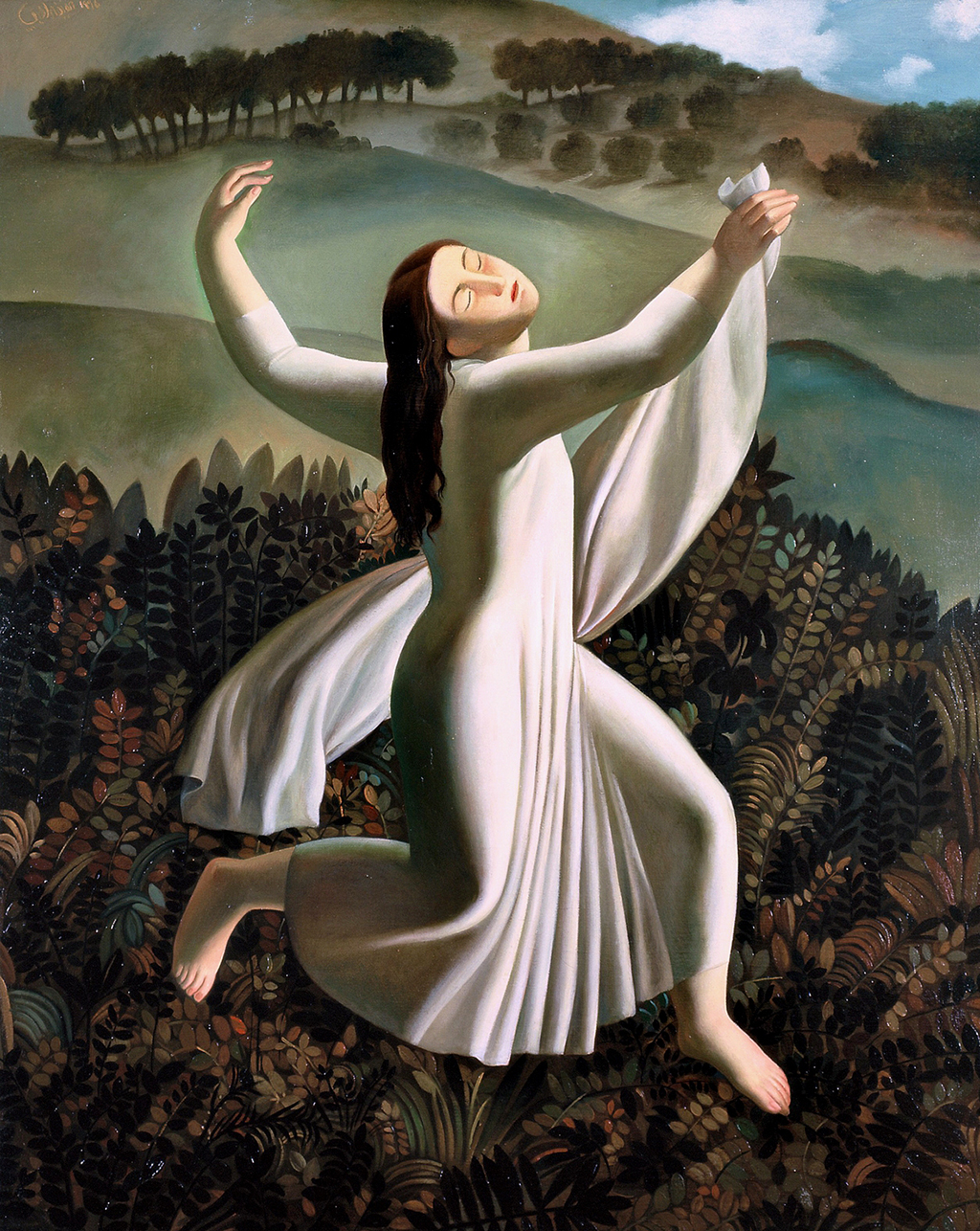
“You are drunk, but not with wine.”
—Isaiah 51:21
O God of too much giving, whence is this
inebriation that possesses me,
that the staid road now wanders all amiss
and that the wind walks much too giddily,
clutching a bush for balance, or a tree?
How then can dignity and pride endure
with such inordinate mirth upon the land,
when steps and speech are somewhat insecure
and the light heart is wholly out of hand?
If there be indecorum in my songs,
fasten the blame where rightly it belongs:
on Him who offered me too many cups
of His most potent goodness—not on me,
a peasant who, because a king was host,
drank out of courtesy.
This poem was originally published in the Catholic World 173 (April 1951), and then in The House at Rest (privately printed, 1984), and is compiled in The Selected Poetry of Jessica Powers, ed. Regina Siegfried and Robert Morneau (ICS Publications, 1989).
Jessica Powers (1905–1988) was an American poet and cloistered nun from Wisconsin. She took vows at the Carmel of the Mother of God in Milwaukee (later relocated to Pewaukee) in 1942, taking the monastic name Sister Miriam of the Holy Spirit, OCD. She had an active writing career for over sixty years, publishing under her birth name. She was influenced by the works of other Carmelite writers, such as Teresa of Ávila, John of the Cross, and Thérèse of Lisieux.
(Related posts: “Hurrahing in Harvest” by Gerard Manley Hopkins; “Tripping over Joy” by Daniel Ladinsky)


Lovely poem. Thank you!
LikeLike
Hurrah!! Love this post.
Marianne Lettieri, M.F.A.
http://www.MarianneLettieri.com
LikeLike
On ‘But Not With Wine’: I know the sensations she is referring to, the inebritation, the giddiness, “clutching a bush”. But why would I place the responsibility (or the blame?) for it on “Him who offered me too many cups”? May I not take an independent attitude towards Him and know myself when I have taken in what I need? Can there be “too many cups”?
Just a question, not a critcism of the poet or the poem, which is quite striking!
LikeLike
The poem describes what it’s like to imbibe God’s extravagant goodness, to be under its influence. (Spiritual intoxication is a theme that appears across religious traditions.) It’s not talking about literal wine or suggesting that God coerces us into drinking alcohol. The wine is a metaphor for the abundance God offers. God’s goodness is not scarce but overflows beyond our capacity to fully contain it. The speaker’s sauciness comes out in the closing sestet, in words like “blame” and “too many cups,” where again, the poem is drawing on the metaphor of drunkenness. With wine, moderation and self-control are virtues, but when it comes to the “wine” of God’s goodness, we are called to drink liberally, and to completely surrender to its effects.
LikeLike