“Song of the Agitators”: 1852 poem set to music

Reclaiming the Monument
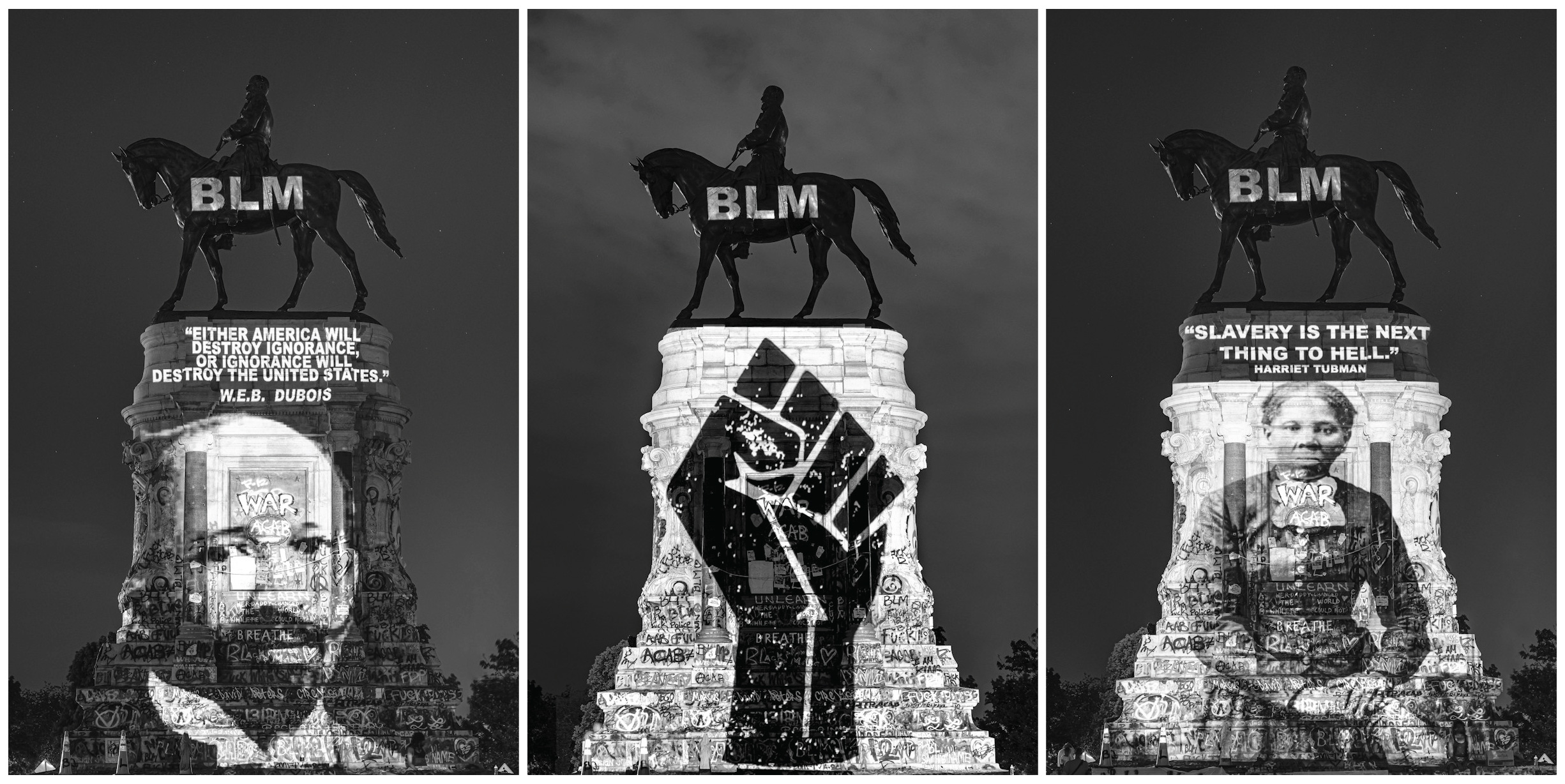
In summer 2020, artists Dustin Klein and Alex Criqui projected images of Black lament and empowerment onto the Robert E. Lee Monument at Marcus-David Peters Circle in Richmond, Virginia, part of their Reclaiming the Monument project. Read more at bottom of post.

Song of the Agitators

“Cease to agitate!” we will,
When the slave whip’s sound is still;
When no more on guiltless limb
Fetters print their circlet grim;
When no hound athirst for blood
Scours the thorny Georgian wood;
When no mother’s pleading prayer,
On the sultry Southern air,
Quivereth out in accents wild,
“Master, give me back my child!”
   In the day when men shall be
   Brethren, equal-born, and free—
   Day for which we work and wait—
   We will “cease to agitate”!

When our statute books proclaim
To the world no more our shame,
And a freeman’s rights shall hold
Dearer than the Judas gold;
When the Polar Star shall give
Light to the last fugitive;
When our border lakes shall rise
On the last lone bondman’s eyes,
And their waves for him no more
Haste to clasp the Northern shore;
   In the day when men shall be
   Brethren, equal-born, and free—
   Day for which we work and wait—
   We will “cease to agitate”!

Written by an anonymous abolitionist during the days of race-based chattel slavery in the United States, this poem was originally published in the Ohio Star (Ravenna, OH) in 1852 and was reprinted shortly after in the Anti-Slavery Bugle (Oct. 9, 1852) (Lisbon, OH), the Liberator (Nov. 19, 1852) (Boston), and the Voice of the Fugitive (Dec. 16, 1852) (Windsor, Ontario).

The poem addresses those who, with the status quo working in their favor, would tell the enslaved to stop complaining about the injustices being perpetuated against them, stop ruffling feathers and demanding change, and instead just sit back and be content with the way things are.

The speaker of the poem responds with a defiant no; they and their fellow activists will stop agitating only when their cause is won. When the enslaver’s whip ceases to crack the air, and shackles no longer imprint themselves on ankles and wrists. When bloodhounds are no longer unleashed on freedom seekers, and children are no longer forcibly separated from their parents. When the country’s founding documents are scrubbed of their racism, and its legislation protects the rights of all Americans in equal measure. When the North Star and the Great Lakes are no longer needed to guide people, and offer passage, out of bondage, because everyone is already home and free.

Those who work for justice today still often encounter the demand “Cease to agitate!” “Stop stirring up trouble.” “Don’t be such a downer.” “Why are you so angry?” “Why can’t you just be grateful for the progress we’ve made?” “When will you ever be satisfied?”

Struck by its contemporary relevance, Detroit-born, Vancouver-based musical artist Khari Wendell McClelland adapted the above poem and set it to music. “I sing this song for all those who are living under tyranny, escaping tyranny, and searching for peace,” he wrote in a 2015 Facebook post sharing a demo video.

McClelland’s “Song of the Agitator” appears on his 2018 album, Freedom Singer. The album is dedicated to his great-great-great-grandmother Kizzy, who fled US slavery through the Underground Railroad to Windsor, Ontario, settling in Detroit after slavery was abolished.

Here’s a video of McClelland performing the song with Noah Walker for the Tiny Lights InSight Series in 2020:

While the first stanza he sings almost verbatim from the nineteenth-century source material, the second stanza he reworks to highlight present-day grievances:  

Now here we are today
Still pushing for equal pay
And these treaty rights don’t hold
They’re shiny like the Judas gold
The stain of blood remains
A mother’s only son slain
Our kids are crying out for more
Continually being ignored

And here’s how he’s adapted the refrain:

On that day we will be
Family, equal-born, and free
Dawn will come, night will cease
We’ll rejoice, mind at ease
For that day we’ll work and wait
That’s when we’ll cease to agitate

In a Geopoetics podcast interview that aired February 25, 2023, McClelland said, “For some of us, it’s been hundreds of years of incredible terror. And, you know, it’s a great luxury to feel in this moment like something’s wrong.” He continues, “It’s good to be agitated—to want to make things be different. When we start to become a little too comfortable with things being out of sort, being unjust, that’s where . . . it’s a problem. . . . Agitation is actually . . . good fuel.”

About the images above:

The Robert E. Lee Monument in Richmond, Virginia, was erected in 1890 during the Jim Crow era to glorify the Confederate general (who fought against the Union to preserve slavery). A bronze equestrian statue atop a giant plinth in the center of one of the historic city’s traffic circles, it had been controversial from the beginning, with many of Richmond’s Black residents regarding it as an oppressive and traumatic presence.  

After the murder of George Floyd, the monument became an epicenter of Black Lives Matter protests as well as a site of vandalism, and Virginia governor Ralph Northam announced on June 4, 2020, that it would be removed. While the legality of that intent was being litigated, light projection artist and Richmonder Dustin Klein, later joined by collaborator Alex Criqui, cast nightly image projections onto the statue—first of Black victims of police violence, and then of Black activists, writers, theologians, artists, and politicians and associated quotes. In October 2020, the graffiti-covered, image-lit Robert E. Lee Monument was declared the most influential American protest artwork since World War II by the New York Times.

On September 2, 2021, the Virginia Supreme Court upheld Northam’s decision, and the statue was removed shortly after.

To view more photos and learn more about Klein and Criqui’s Reclaiming the Monument project, see www.reclaimingthemonument.com.

Bidding Christmas Goodbye: Two Carols (One Sung, One Recited) for Candlemas Eve

Whereas in our present age it’s common for families to take down their Christmas decorations on Twelfth Night (January 5) or Epiphany (January 6)—and many American Christians do so even sooner—in medieval Europe they typically stayed up through Candlemas on February 2, or were removed the evening before. Yes, Christmas was celebrated for forty days in the Middle Ages! Why that span? Because forty days after his birth, the infant Christ was presented in the temple according to Jewish custom and inspired the famous song of Simeon about finally getting to see God’s salvation and glory. The feast of Candlemas commemorates this event each year, which many medieval worshipping communities regarded as the bookend of the Christmas season.

In her book Winters in the World: A Journey through the Anglo-Saxon Year, Eleanor Parker notes that Candlemas is the last feast of winter and the first feast of spring—a transitional festival that looks back to Christmas and forward to Easter (86). The date coincides with a significant point in the solar year: midway between the winter solstice and the spring equinox. Read more in an UnHerd article by Parker, “Light a candle; spring is coming.”

So as we celebrate Candlemas this Friday, we bid farewell to Christmas and prepare to welcome Lent. The Chorus of Westerly models a respectful send-off in a video they released in January 2021, combining a choral performance of the “Candlemas Eve Carol” with a recitation by James Lawson of “Now Have Good Day”—both texts from early modern England.

The text of the first carol, originally published with the title “Ceremonies for Candlemasse Eve,” is by the poet-priest Robert Herrick (1591–1674), and the tune is traditional, collected from an old church gallery book; the two appear together in The English Carol Book (Second Series) (1923), edited by Martin Shaw and Percy Dearmer. The Chorus of Westerly sings the first two stanzas and refrain:

Down with the rosemary and bays,
Down with the mistletoe;
Instead of holly, now upraise
The greener box (for show).

The holly hitherto did sway;
Let box now domineer
Until the dancing Easter day,
Or Easter’s eve appear.

Thus times do shift; each thing his turn does hold;
New things succeed, as former things grow old.

(Update, 12/31/25: I just learned that Kate Rusby sings this text, to an original tune, on her 2008 album Sweet Bells.)

Herrick describes the English family tradition of taking down the Christmas greens—rosemary, bay, mistletoe, holly—on Candlemas Eve, replacing them with boxwood, which would stay up for the duration of Lent.

Burning the Christmas Greens
“Burning the Christmas Greens,” uncredited illustration from the January 29, 1876, edition of Harper’s Weekly

The remaining three stanzas move through the rest of the church year, associating yew with Easter, birch with Pentecost, and rushes and oak with Ordinary Time. The changing of seasonal decorations becomes for Herrick an emblem of the transience of life.

As the choir hums wistfully on, Father Christmas appears, giving this speech (the bracketed annotations are by Eleanor Parker):

Now have good day, now have good day!
I am Christmas, but now I go my way.

Here have I dwelt with more and less [i.e., everyone]
From Hallowtide till Candlemas,
And now I must from you hence pass;
Now have good day!

I take my leave of king and knight,
Earl and baron, and lady bright;
To wilderness I must me dight; [I must prepare myself to go into the wilderness]
Now have good day!

And of the good lord of this hall
I take my leave, and of guests all;
Methinks I hear that Lent doth call;
Now have good day!

. . . . . . . . . . . . . . . . . . .

Another year I trust I shall
Make merry in this hall,
If rest and peace in our fair land may fall;
Now have good day!

. . . . . . . . . . . . . . . . . . .

Now fare ye well, all in fere; [together]
Now fare ye well for all this year;
Yet for my sake make ye good cheer;
Now have good day!

This sixteenth-century carol is compiled in the commonplace book of the London merchant Richard Hill (Oxford, Balliol College MS 354).

Roundup: “Soul Food Love,” call for Sufjan Stevens papers, and more

LECTURES:

Calvin University’s January Series is an annual fifteen-day series of lectures and conversations that “aims to cultivate deep thought and conversations about important issues of the day, to inspire cultural renewal and make us better global citizens in God’s world.” It brings in various scholars on various topics, but the two lectures I want to call out in particular are both about food!

Also note: upcoming events in the series include “Neurodivergent Storytelling” with Daniel Bowman Jr., a novelist and professor with autism; a live recording of the Poetry for All podcast featuring guest poet Marilyn Nelson; and “Tuning Our Minds, Ears, and Hearts to Sing God’s Grace: Reflections of a Conductor” with Pearl Shangkuan.

>> “Soul Food and the Collective Cultural Memory” by Caroline Randall Williams (available through Feb. 15): Caroline Randall Williams is a multigenre writer (of poems, YA fiction, essays, recipes), educator, activist, and home cook in Nashville whom Southern Living recognized as one of “50 People Changing the South” for her work around food justice. She’s the coauthor (with her mother, Alice Randall) of Soul Food Love: Healthy Recipes Inspired by One Hundred Years of Cooking in a Black Family and host of the TV show Hungry for Answers. I enjoyed this wonderful introduction to her work—though frustratingly, the sound cuts in and out several times. The introduction starts at 14:05, and the Q&A starts at 1:04:40. She opens with a reading of the delicious poem “When the Burning Begins” by Patricia Smith.

>> “Table Conversations: Building Community as We Eat” by Kendall Vanderslice: Kendall Vanderslice is a baker, writer, and the founder of the Edible Theology Project, an educational nonprofit connecting the Communion table to the kitchen table. She earned her master’s of theological studies from Duke Divinity School and master’s in gastronomy from Boston University. . . . Through her work in food studies and theology, Vanderslice explores the ways God uses the table to restore communities and creation. In her most recent book, By Bread Alone: A Baker’s Reflection on Hunger, Longing, and the Goodness of God, she discusses her faith journey, shares recipes, and dives into the role of bread in church history.” Introduction starts at 11:45; Q&A, at 50:33.

+++

CALLS FOR PAPERS:

>> For inclusion in the forthcoming book My Impossible Soul: The Metamodern Music of Sufjan Stevens: Dr. Tom Drayton and Greg Dember are compiling essays for a new book on Sujan Stevens, and they’re seeking contributing writers from across academic disciplines. “My Impossible Soul will be the first academic volume dedicated to the work of multi-instrumentalist singer-songwriter Sufjan Stevens. A staple of the indie/alternative music scene since 2000, Stevens’ work transcends genres – ranging from minimalist folk to maximalist electronica. His prolific discography blends “stories of his own life with ancient mythology and religious references” (McKinney 2015), interweaving themes of grief (Minton 2023), nostalgia, queer relationships (Postelli 2016; Glow 2021), Christianity, disease, problematic families, and the apocalypse with intricately produced compositions. . . . This volume aims to provide the first international and interdisciplinary analysis of the music, lyrics, performance process and cultural impact of Sufjan Stevens, through the framework of metamodernism . . .” Proposal deadline: March 1, 2024.

>> On Religion and Film: The International Conference on Religion and Film is held every two years, gathering leading scholars in the fields of religious studies and film; 2022’s was in Amsterdam, and this year’s (June 27–28, 2024) is in Hollywood! The Brehm Center at Fuller Seminary is soliciting papers for the conference. “We invite papers exploring Hollywood films from their origins in the 1890s through the silent film era as well as the Classic Hollywood studio film era from the 1930s through the end of the Hays Code (1968). How did religion influence the creative process, production, reception, and distribution of these films? How might the intersection of religion and film in this historic era inform our conversations about religion and film today? We are especially interested in contemporary films that deal with the future and the role of religion in the future. In addition, we seek papers exploring how advances in film technologies and our collective experience of film (in-theater technologies, VR, Streaming) will influence the future of filmmaking. Additionally, how might AI change storytelling and human creativity? How will those who work in Religion and Film Studies adapt/respond to these changes?” Abstracts are due by February 10, 2024.

+++

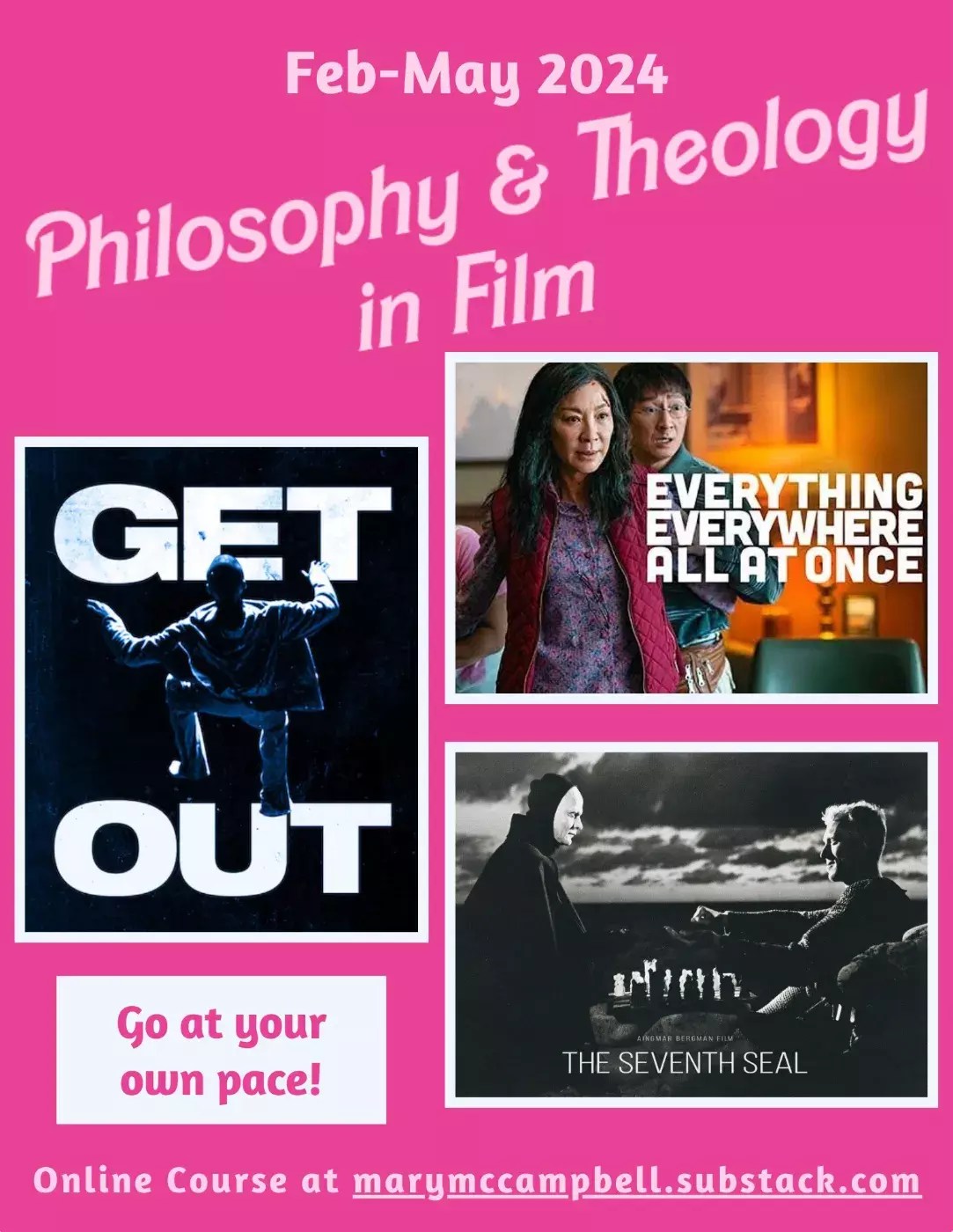
ONLINE COURSE: “Philosophy and Theology in Film” with Dr. Mary McCampbell, February–May 2024: Mary McCampbell [previously] is a writer and educator on film, literature, and popular culture whose Substack, The Empathetic Imagination, is one of my favorites! In December she and nine other professors lost their jobs at Lee University because the university’s humanities major has been suspended due to financial difficulties—and this despite her being tenured and having taught there for fourteen years.

So, she won’t be in a traditional classroom this spring, but the course she had prepared to teach undergraduates she is adapting for online and opening up to the public! It costs just $20 (a four-month paid subscription to The Empathetic Imagination), which is a real steal. Beginning near the end of February and running through May, the course will include:

  • An introductory video for each of ten films, including a lesson on the main philosophical influences and parallels (including intro lectures on Marx, Nietzsche, Freud, Sartre, Descartes, and more)
  • A live Zoom discussion of each film
  • A written Substack post of McCampbell’s analysis of each film, hopefully followed by a lively discussion in the comments section

I’ll be participating!

+++

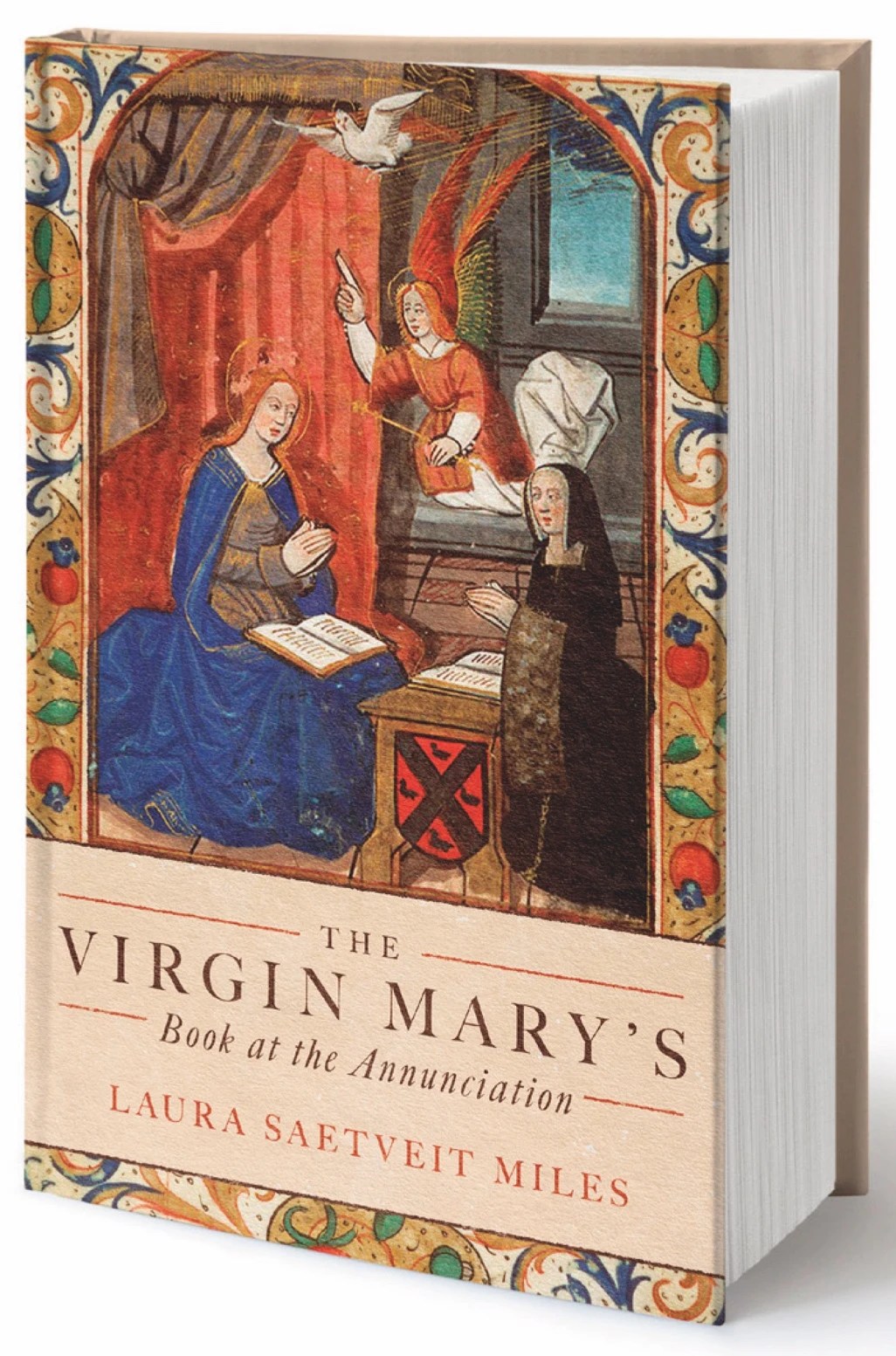
UPCOMING (ONLINE) LECTURE: “Reading alongside the Virgin Mary in Late Medieval Books of Hours Annunciation Scenes” by Laura Saetveit Miles, February 1, 2024: Professor Laura Saetveit Miles’s book The Virgin Mary’s Book at the Annunciation (Boydell & Brewer, 2020) has been one of my favorite reads of the last several years—so I was delighted to see she’ll be giving a free online talk on the topic next week! Organized by the Centre for Marian Studies at St Mary’s University in Twickenham, Miles’s lecture “will focus on two rare and fascinating versions of the standard Annunciation scene, as they are developed in both devotional literature and illuminations in Books of Hours. One type of representation captures the moment before Gabriel arrives; the other type depicts the reader herself as part of the scene. Some versions even combine these two. Where do these variations come from, and what do they mean? This neglected story of imitatio Mariae sheds new light on what Mary’s role in the Incarnation meant for medieval Christians across Europe.” (Update, 2/2: Here’s the recording.)

Favorite Films of 2023, Part 2

Read part 1 here.

11. Oppenheimer, dir. Christopher Nolan. Based on the biography American Prometheus by Karl Bird and Martin J. Sherwin, Oppenheimer chronicles the role of nuclear physicist J. Robert Oppenheimer (Cillian Murphy) in developing the world’s first atomic bomb. Recruited by the US Army in 1942, Oppenheimer heads up the new Manhattan Project lab in Los Alamos, New Mexico, assembling a team of leading scientists. While some decline the invitation or, over the next few years, drop off the project for ethical reasons, Oppenheimer persists with the self-justification that if the US didn’t make the bomb, Germany would. The film grapples with moral responsibility and guilt when it comes to applying advanced scientific knowledge toward destructive ends.

12. The Holdovers, dir. Alexander Payne. It’s December 1970, and Angus Tully (Dominic Sessa) is looking forward to getting away from his New England boarding school for Christmas break, especially from his ornery classical studies teacher Paul Hunham (Paul Giamatti). But when his mom calls to say she and her new husband need some alone time, Angus is left under the begrudging care of Mr. Hunham for the holidays. Mary Lamb (Da’Vine Joy Randolph), the school cook whose son died earlier that year in Vietnam, also stays on campus to make meals. We learn about these three unlikely companions as they learn about one another and confront their griefs, anger, and disappointment. The Holdovers is a warm and charming film that’s destined to become a new Christmas classic.

Streaming on Peacock.

13. Godland, dir. Hlynur Pálmason. In this slow-burning mood piece set in the late nineteenth century, a young Lutheran priest named Lucas (Elliott Crosset Hove) is dispatched from his home country of Denmark to a remote part of Iceland to establish a church. Led by the gruff but spiritually curious local guide Ragnar (Ingvar Sigurðsson), Lucas treks through the country’s rugged wilderness. But the deeper he travels, the more his sense of purpose and morality falters. The film explores the physical and mental challenges of international mission work, opposing approaches to nature (as something to be dominated versus something to work with in humility), and the interlocking histories of two nations, one under the political control of the other.

A title card at the beginning of the film says Godland was inspired by seven wet-plate photographs found in a wooden box, the sole documentation of a Danish priest’s odyssey to the southeast coast. What an intriguing concept!, I thought: to invent a narrative out of this anonymous set of historical photos (a girl playfully posing on a horse, a nascent church congregation seated outside its new building, etc.), which are re-created throughout the film. It turns out there were no photos; the writer-director made that up. But the strength of the concept still stands. In addition to serving a religious vocation, Lucas is a photographer, and his journey is made all the more rigorous by his having to lug his heavy camera equipment over the terrain. He photographs what he values—and refuses to photograph what he doesn’t, which leads to a climactic altercation. The frames of the film have a 4:3 aspect ratio and rounded corners to further evoke vintage photography.  

I found it hard to get a handle on Lucas’s character, as he seems so ill suited to pastoral ministry. He’s generally closed off, uncharitable (even spiteful), and easily annoyed, and he has a sense of superiority over Icelanders, refusing to learn their language and to recognize the glory of their land and culture. I think he starts off more optimistic and open, but when he suffers a loss and his feelings of isolation and frustration increase, he becomes a reluctant prophet, like Jonah. I read the muddy scene near the end as him finally acknowledging his guilt (Ragnar’s barking dog piercing his conscience), but others have interpreted it differently. If you watch it, I’m curious to know what you think.

Streaming on Kanopy.

14. The Eight Mountains, dir. Felix van Groeningen and Charlotte Vandermeersch: Adapted from the best-selling 2016 novel by Paolo Cognetti, The Eight Mountains is a tale of friendship and making peace with the past. Eleven-year-old Pietro meets Bruno one summer while vacationing in the Italian Alps with his family. Pietro’s dad, Giovanni (Filippo Timi), becomes a father figure for Bruno, whose own father neglects him. As a teen Pietro becomes estranged from his family while Bruno maintains a relationship with them. Pietro doesn’t return to Bruno’s village until some twenty years later, when he learns that his father has died. Pietro and Bruno (played by Luca Marinelli and Alessandro Borghi as adults) reconnect over restoring a dilapidated cabin that the father had always dreamed of living in. Over the next decade, the two support each other in their griefs and letting go: Pietro over the years he lost not knowing his father, and Bruno over the loss of the dairy farm that has been in his family for generations but that is no longer viable, and with it the loss of a simple, rural way of life in the mountains he loves.

It’s rare to see a film about male friendship that doesn’t involve war, crime, or drunken shenanigans or turn into a romance. The Eight Mountains shows us two men who are a caring presence in each other’s lives, whose getting together simply involves conversation, comfortable silences, and scenic hikes. It’s a quiet film with gorgeous cinematography.

15. Return to Seoul, dir. Davy Chou. Frédérique “Freddie” Benoît (Park Ji-Min), a twenty-five-year-old French woman who was adopted as a baby from South Korea, returns for the first time to her birth country and hesitantly decides to track down her biological parents. The film follows her over the course of eight years as she tries to find who she is and where she belongs.

Streaming on Amazon Prime.

16. A Thousand and One, dir. A. V. Rockwell. After getting released from prison, the devoted and determined Inez (Teyana Taylor) kidnaps her son, Terry (played at different ages by Aaron Kingsley Adetola, Aven Courtney, and Josiah Cross), from the foster care system and sets out to build a life for him in a Harlem that is rapidly changing through gentrification. Spanning 1994 to 2005, the film is about love that we choose and that chooses us. Taylor is phenomenal in the lead role.

Streaming on Amazon Prime.

17. R.M.N., dir. Cristian Mungiu. When three Sri Lankan migrant workers are hired by a bread factory in a Transylvanian town, paranoia and violence erupt. The locals boycott the bread and demand the “outsiders” leave—and this despite the town’s already multiethnic population, consisting of Romanians, Hungarians, Germans, and Roma. Writer-director Cristian Mungiu based the film on an actual incident of xenophobia in Ditrău, Romania, in January 2020, in which ethnic resentments led to a petition that pushed the Sri Lankans out. The Christmastime setting underscores the irony of the town’s hostile response to its new residents, as the Christmas story involves strangers seeking lodging and welcome to bring the Christ child into the world.

Streaming on AMC+.

18. American Fiction, dir. Cord Jefferson. Thelonious “Monk” Ellison (Jeffrey Wright) is shopping his novel to different publishers, but they’re not interested; they say it’s “not Black enough.” Frustrated by the industry’s platforming and profiting from stereotypes of Blackness, he decides to write a new novel so outrageous in its use of tired and offensive Black tropes that the gatekeepers will be forced to confront their ridiculousness. Turns out, My Pafology becomes a smash success. This film addresses through comedy our culture’s narrow expectations of what Black art and entertainment should be—what stories Black people should tell and in what kind of voice, or what issues Black writers and filmmakers should address in their work.

19. One Fine Morning, dir. Mia Hansen-Løve. Sandra (Léa Seydoux) is a young widowed woman caring for her eight-year-old daughter (Camille Leban Martins), her aging father (Pascal Greggory), and herself, while holding down a job as a translator in Paris. Too often in film, moms are flat characters, but I love how multidimensional Sandra is—how we see her balancing motherhood, daughterhood, and her professional and romantic lives. Neither perfect nor unforgivably flawed, she is just a normal mom dealing with normal stuff, and wow, is Seydoux endearing in the role. The scene in which she’s having to size down her dad’s personal library after moving him into a long-term care facility where his neurodegenerative disease can be monitored made me cry.

Streaming on Amazon Prime.

20. Flora and Son, dir. John Carney. From the director who brought us Once and Sing Street comes another well-made feel-good movie about the power of music. Flora (Eve Hewson), a single mom, is constantly at war with her delinquent fourteen-year-old, Max (Orén Kinlan). (I’m genuinely shocked by how they talk to each other!) To keep him out of trouble, she tries to find him a hobby, and when he rejects the guitar she salvaged from a dumpster, she decides to take up the instrument herself. When she learns that Max is into making electronica and rap, she helps him turn one of his songs into a music video, and he helps her write a song for the online class she’s taking. It’s a sweet movie about a mother and son finding a way to connect with each other through music.

Streaming on Apple TV+.

HONORABLE MENTIONS: American Symphony (Netflix); Barbie (HBO); Rye Lane (Hulu); Spider-Man: Across the Spider-Verse (Netflix); Close (Showtime); Earth Mama (Kanopy)

Favorite Films of 2023, Part 1

Past Lives

I’ve seen over seventy films from 2023 (and there are still more I want to see!), and these are my top ten. My top eleven through twenty will be released this weekend in a separate post. Many are international, and what year to classify them as can be hazy; I go by the date on which the film was released in the US, which is when I have access to it.

If the film is streaming for free with a subscription service, I’ve noted that at the bottom of the entry. Otherwise, most are available for digital rental (Google Play is my preferred vendor), and a few are still in theaters. You might also see if your local library has any on DVD, as that’s how I watched several of these.

Please be aware that the following films have either PG-13 or R ratings, for various reasons. I don’t have a personal policy of “no x” or “no y” in the movies I watch, but if you do, please consult the MPAA rating descriptors or a more detailed content advisory before deciding whether to view the film.

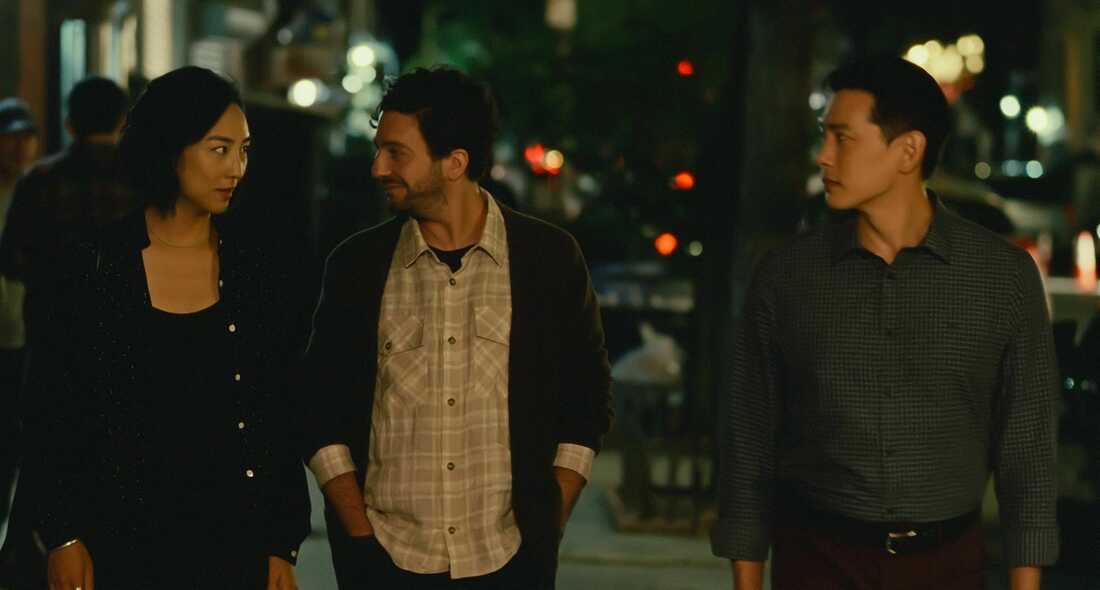
1. Past Lives, dir. Celine Song. Kind, gentle, and empathetic, this semiautobiographical indie drama by debut director Celine Song follows Na Young, or Nora (Greta Lee), over the course of twenty-four years, from her young adolescence in South Korea to her emigration to Canada and then the US. Act 1 introduces us to Nora’s childhood sweetheart, Hae Sung (Teo Yoo), whom she reconnects with virtually twelve years later in act 2, shortly before meeting and befriending a white American man named Arthur (John Magaro) at a writers’ retreat. After another twelve years of not interacting, Nora and Hae Sung find each other again in act 3 at age thirty-six, when the single Hae Sung visits Nora, who’s now married to Arthur, in New York.

What I love about this film is how it subverts all the tropes associated with the romantic triangle. The characters aren’t possessive, conniving, or competitive. There are no heroes or villains here. The film is about bonds of love and culture, and especially about what trust, support, constancy, maturity, and love look like in a marriage. In an interview on the DVD special features, Song says Past Lives is at its core a love story between Nora and Arthur. It’s also a story of navigating a bicultural identity—living between two worlds, mourning the piece of oneself that’s lost with the adoption of a new home country, and integrating elements of one’s “past life” into one’s new life, continuing to be shaped by both.

The opening scene and closing scene are perfect. Song’s skill as a storyteller, honed over her years as a successful playwright, really shines through in her screenplay.

2. The Zone of Interest, dir. Jonathan Glazer. This chilling Holocaust drama centers on a Nazi family living their dream life in the literal backyard of the Auschwitz concentration and death camp. Rudolf Höss (Christian Friedel)—who is an actual historical figure—is the commandant of the camp; having risen through the ranks, he seeks to provide his wife, Hedwig (Sandra Hüller), and their five children a comfortable and idyllic life. It’s a risky choice to tell this story from a German perspective, but Glazer and the two lead actors more than succeed. We never actually set foot inside the camp; most of the scenes happen within the confines of the villa or at the nearby river where the family goes on outings. Nor do we directly see any of the horrors; we see merely hints, like smoke rising from a crematorium chimney in the background. But even more, we hear these intimations: a train pulling into the station, a tussle, a chase, a barking dog, a gunshot, screaming. All of this happens just over the wall, while Hedwig tends to her flower garden or her son plays with toys in his bedroom. (Props to the sound designer, Johnnie Burn.)

What is so disturbing about the film is the banality of evil that it reveals. Rudolf isn’t the type of villain who sneers or snarls or has violent outbursts. He brings his kids kayaking and reads them bedtime stories; he sips coffee with his wife. He could be us. “I wanted to show that these were crimes committed by Mr. and Mrs. Smith at No. 26,” Glazer said. Sanitization is one of the themes explored—lots of scrubbing.

3. Four Daughters, dir. Kaouther Ben Hania. Blending documentary and fiction, this film tells the true story of a Tunisian Muslim mother—Olfa Hamrouni—and her four daughters, the elder two of whom became radicalized by ISIS as teenagers and ran away to Libya to engage in jihad. In 2016 Kaouther Ben Hania saw media segments of Olfa calling out local authorities for their indifference and inaction and knew she wanted to make a film about the disappearance, to understand how a tragedy like this can happen in a family. She originally wanted to do a straight documentary but soon realized it would be more powerful, and more feasible, to have Olfa and her younger daughters, Eya and Tayssir Chikhaoui (born in 2003 and 2005), reenact their memories onscreen. Because daughters Ghofrane and Rahma Chikhaoui are still absent, actors Ichrak Matar and Nour Karoui were hired to portray them, and actor Hind Sabri stepped into the mother role for the scenes that took too high an emotional toll on Olfa.

This method of storytelling better reveals the story’s complex layers, as the three women are both inside and outside the scenes. They’re telling the past, but they’re also questioning it. They’re reflecting on their motivations as they discuss their memories with each other and Ben Hania—many of them traumatic, but others warm or simply ordinary, as when they talk about their first periods! Olfa, the mother, is a particularly complex character, as she is fiercely protective of her daughters but also perpetuates on them some of the patriarchal oppression that she herself suffered. The film is about motherhood, sisterhood, zealotry, rebellion, and violence, and it has left a searing impression on me.

4. Anatomy of a Fall, dir. Justine Triet. In this courtroom drama set in the French Alps, Sandra (Sandra Hüller) is suspected of her husband Samuel’s (Samuel Theis) murder. As the police investigate and the prosecution launches its interrogations, they uncover details about Sandra and Samuel’s conflicted relationship, and the couple’s visually impaired eleven-year-old son, Daniel (Milo Machado Graner), is forced to testify. Hüller’s performance is riveting—she gets my vote for Best Actress of the Year.

5. Saint Omer, dir. Alice Diop. Another French courtroom drama, this one based on the real-life story of Fabienne Kabou. Laurence Coly (Guslagie Malanda), a Senegalese immigrant to France, is on trial in Saint-Omer for the murder of her fifteen-month-old daughter, Lili, an action she blames on sorcery. Intrigued by the case as potential source material for the novel she’s working on, Rama (Kayije Kagame), pregnant, travels from Paris to attend the trial. But when Laurence’s motives prove inscrutable and mental illness is put on the table, Rama begins to worry about her own ability to mother. The testimony dredges up emotions for Rama surrounding her troubled relationship with her mother—also a Senegalese immigrant, who appears, from the flashback sequences, to suffer from depression—and sharpens her sense of cultural alienation. Rama is an analogue for the filmmaker, Alice Diop, who, as a documentarian and expectant mother at the time, attended the Kabou trial, and it forced her to face her own difficult truths.

Streaming on Hulu.

6. Dream Scenario, dir. Kristoffer Borgli. Paul Matthews (Nicolas Cage) is an evolutionary biologist teaching at a small-town college and living a quiet life with his wife and two daughters, when out of nowhere, he starts appearing in the dreams of strangers around the world and becomes instantly famous. An absurd comedy with elements of horror, Dream Scenario satirizes the fickle nature of celebrity in today’s internet age, in which even the most unremarkable people can become an overnight sensation, and the adoration of fans can turn to hatred at the drop of a hat. I was laughing out loud a lot at this one—and cringing too!

7. Fremont, dir. Babak Jalali. Donya (Anaita Wali Zada) is a young Afghan immigrant working at a fortune cookie factory in the Bay Area of California. Formerly a translator for the US Army in Afghanistan, she is ostracized by many of her fellow Afghans as a traitor, and she struggles with loneliness. But the film has an uplifting tone; it’s about survival, hope, and connection. The first full-length feature by the Iranian British filmmaker Babak Jalali, it is in English, Dari, and Cantonese.

Streaming on MUBI.

8. Monster, dir. Kore-eda Hirokazu. When her eleven-year-old son, Minato (Soya Kurokawa), starts behaving strangely and she hears that a teacher hit him, Saori (Sakura Ando) demands answers from the school. The story is told in three parts, each from a different narrative perspective: first the mom’s, then the teacher’s, then the boy’s. The truth gradually emerges with each shift, and a stormy finale brings things to a close.

9. Plan 75, dir. Chie Hayakawa. In a near future, the Japanese government launches a voluntary but coercive program encouraging the nation’s elderly citizens to terminate their lives in order to nobly reduce the burden on society. Having been forced to retire from her job as a hotel maid after one of her coworker peers slips in a hotel shower, Michi (Chieko Baishô) is considering signing up. The film focuses on her but also develops side stories for two Plan 75 employees: a Filipino migrant whose daughter back home needs an operation, and a man whose estranged uncle becomes a client.

10. Killers of the Flower Moon, dir. Martin Scorsese. Based on the best-selling nonfiction book by David Grann about the serial murder of members of Osage Nation in the 1920s, Scorsese’s Killers of the Flower Moon depicts the criminal ugliness of white greed and laments a grave historical injustice. When the Osage discover oil on the reservation they’ve been displaced to in Oklahoma, they become very wealthy, and white men from the outside move in to try to steal that wealth. The white crime boss and master of deception William Hale (Robert De Niro)—the movie uses all the real names—has ingratiated himself with the Osage over decades and has secretly been carrying out a plan to gain control of Osage headrights by killing off inheritors.

The movie focuses on Hale’s nephew Ernest Burkhart (Leonardo DiCaprio), a simpleton whom Hale compels to marry the young Osage woman Mollie Kyle (Lily Gladstone) and further manipulates to manipulate others. The movie suggests that the love been Ernest and Mollie is genuine but complicated, and I didn’t quite grasp what bound them together (was it just physical attraction?) or how much either of them knew about what was going on (was Ernest really that naive? did Mollie never suspect him or his uncle of foul play earlier on?). But I was engrossed for the full three-and-a-half-hour runtime, all the way to the gutsy final scene of the radio play and the beautiful, defiant coda.

Streaming on Apple TV+.

Read part 2.

Roundup: Upcoming conferences, “Rupture as Invitation,” and more

UPCOMING CONFERENCES:

>> Calvin Symposium on Worship, February 7–9, 2024, Calvin University, Grand Rapids, MI: I’ve promoted this event in years past—see, e.g., here and here—and am excited to be attending again this year! I’ll be coleading a breakout session with Joel Littlepage and Ashley Williams about our work at the Daily Prayer Project, curating textual, visual, and musical resources from across time and place to encourage a life of prayer that reflects the church’s beautiful diversity. There are plenty of other sessions being offered as well; a few that stand out to me are “Blues: The Art of Lament” with Ruth Naomi Floyd (she’s also leading a Jazz Vespers service), “Music, Architecture, and the Arts: Early Christian Worship Practices” with Vince Bantu [previously], and “The First Nations Version New Testament and Its Impact on Worship” with Terry Wildman. This is in addition to what is probably my favorite part: the multiple worship services, led by liturgists, preachers, and musicians from different denominations and cultural backgrounds. I love my local church community, but I also love worshipping with folks from outside it—a reminder that the church is far broader than what I’m used to on a weekly basis.

>> “Poetry and Theology: 1800–Present,” February 22–24, 2024, Duke University, Durham, NC: Supported in part by Duke Initiatives in Theology and the Arts, next month Duke is hosting a poetry symposium that’s free and open to the public! The speakers are Lisa Russ Spaar, Judith Wolfe, Toby Martinez de las Rivas, Thomas Pfau, Kevin Hart, Anne M. Carpenter, Ian Cooper, Anthony Domestico, Luke Fischer, Dante Micheaux, Łukasz Tischner, and Bernadette Waterman Ward. Papers are on the poetry of Hopkins, Eliot, Rilke, Miłosz, and more.

>> “Return to Narnia: Creativity, Collaboration, and Community” (Square Halo Books), March 8–9, 2024, Lancaster, PA: Organized by book publisher, author, illustrator, printmaker, and gallerist Ned Bustard, this year’s Square Halo conference will feature author Matthew Dickerson as its keynote speaker and Sarah Sparks as its musical guest, along with various breakout session leaders, such as Brian Brown of the Anselm Society and Stephen Roach of the Makers & Mystics podcast. Tickets are $210 if purchased in advance or $220 at the door.

>> The Breath and the Clay, March 22–24, 2024, Awake Church, Winston-Salem, NC: Organized by Stephen Roach and friends, this annual creative arts gathering aims to foster community and connection around the pursuit of truth, beauty, and goodness, providing opportunities for immersive encounters and kindling for the imagination. There will be main-room sessions, workshops, a juried art exhibition (entry deadline: February 16), a poetry slam and songwriters’ round, a panel discussion on reconciling artists and the church, concerts, a dance performance, a short film screening, and more. Musical artists include Victory Boyd, John Mark McMillan, Young Oceans, and Lowland Hum, and among the keynote speakers are Rachel Marie Kang, Mary McCampbell, Junius Johnson, Vesper Stamper, and Justin McRoberts. I appreciate the bringing together of various artistic disciplines and the emphasis on practice. For tickets, there are both virtual ($99) and in-person ($299) options.

+++

NEW SONG: “MLK Blessing” by the Porter’s Gate: Written by Paul Zach and IAMSON (Orlando Palmer) and just released for Martin Luther King Jr. Day, this song is based on a benediction that MLK prayed, a variant of the ancient Jewish benediction known as the Birkat Kohahim or Aaronic blessing (Num. 6:24–26). It’s sung by Liz Vice and Paul Zach.

+++

PAST LECTURE: “Rupture as Invitation: Generosity and Contemporary Art” by Elissa Yukiko Weichbrodt: I’ve mentioned Elissa several times on the blog—I find her work so illuminating—and was grateful to have her in town last fall to deliver a lecture for the Eliot Society. “Contemporary art can often be unexpected or downright unsettling in its form and subject matter. But what if we reframed our discomfort as an invitation to enter rather than an unbridgeable divide? In this lecture from November 11, 2023, Dr. Elissa Yukiko Weichbrodt demonstrates how approaching contemporary art with humility, love, and courage can be a powerful means of growing in love for our neighbors.”

+++

UPCOMING EVENT: “Why Should Christians Care About Abstract Art?” with Elissa Yukiko Weichbrodt and Jonathan Anderson, February 22, 2024, Gordon-Conwell Theological Seminary–Charlotte, NC: Hosted by the Leighton Ford Initiative for Art, Theology, and Gospel Witness, this evening will consist of an opening of the exhibition Alfred Manessier: Composer in Colors (on display through April 30) and dessert reception, lectures by Elissa Yukiko Weichbrodt and Jonathan Anderson, and a Q&A. “For some people of faith, abstract art is difficult to engage because the meaning remains unclear, and the form can appear chaotic or uncompelling. For others, abstract art is an invitation to engage the whole person, contemplate spiritual realities, and encounter God in transformative ways. If abstract art can facilitate the latter, then Christians have a unique opportunity to learn and care about abstract art for theological, practical, missional, and relational reasons. This event is a unique opportunity to experience abstract art, learn about abstract art, and have formative interaction with one another on this topic.” The cost is just $10, and there is an online option.

Manessier, Alfred_Mount Calvary
Alfred Manessier (French, 1911–1993), La montée au Calvaire (Mount Calvary), from the Suite de Pâques (Easter Series), 1978. Chromolithograph on Arches paper, 22 × 29 9/10 in. (56 × 76 cm). Edition of 99.

+++

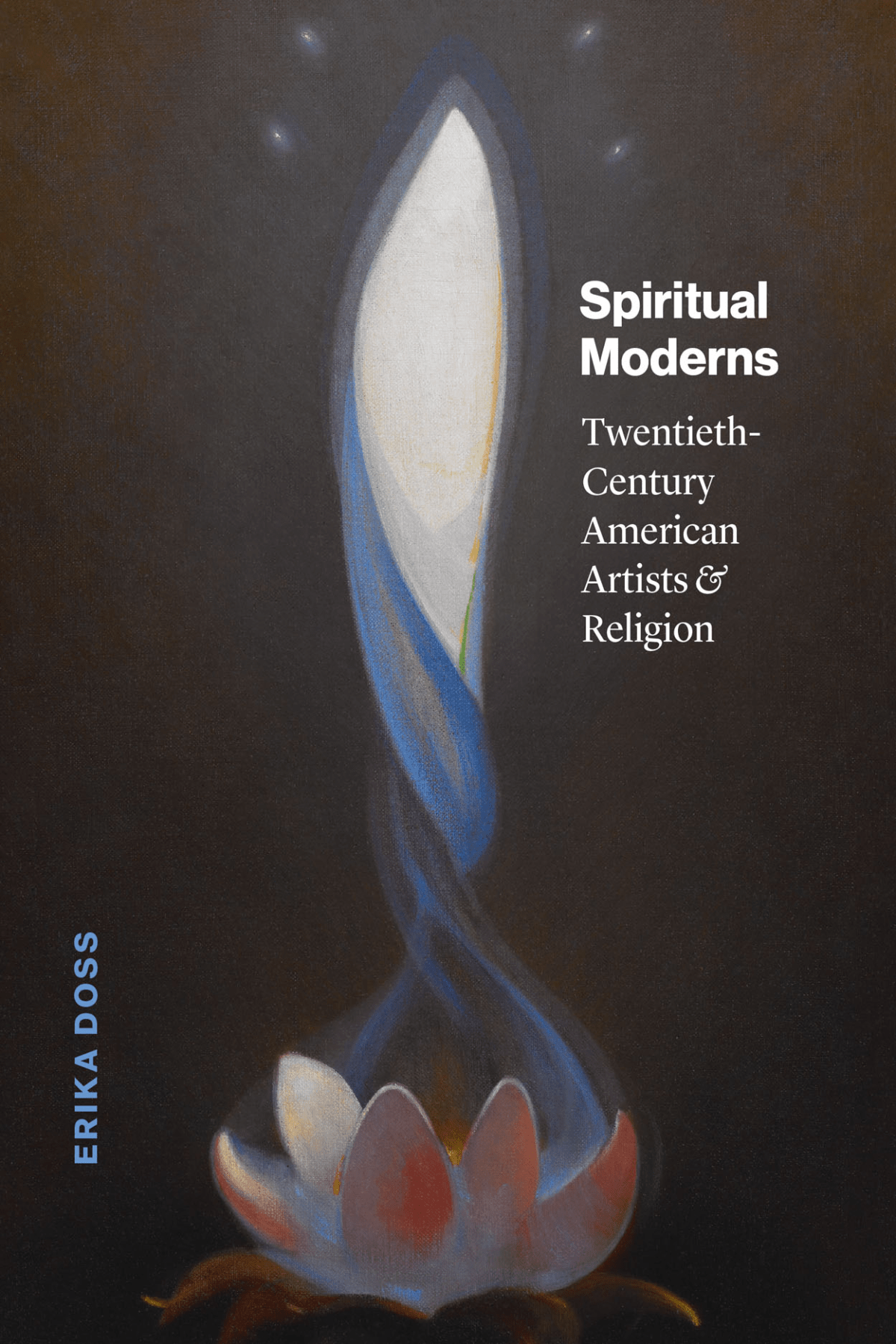
BOOK REVIEW: “Religion’s Understated Influence on Modern Art” by Daniel Larkin, on Spiritual Moderns: Twentieth-Century American Artists and Religion by Erika Doss: Challenging the presumed secularity of modern art, the new book Spiritual Moderns centers on four iconic American artists who were both modern and religious: Andy Warhol, Mark Tobey, Agnes Pelton, and Joseph Cornell.

+ ROUNDTABLE DISCUSSION: Also responding to this publication: the Association of Scholars of Christianity in the History of Art (ASCHA) will be presenting a session at the College Art Association Annual Conference in Chicago on February 16 at 2:30 p.m. that will put four prominent scholars—Stephen S. Bush, Matthew J. Milliner, Robert Weinberg, and Gilbert Vicario—in dialogue with Doss to “explore the assumptions, motivations, and insights of [her] analysis, and consider a more open, inclusive, and diverse reading of American Modernism.”

“The Rev. Robert Walker Skating on Duddingston Loch” by Kathleen A. Wakefield (poem)

Raeburn, Henry_The Skating Minister
Sir Henry Raeburn (Scottish, 1756–1823), Reverend Robert Walker Skating on Duddingston Loch, aka The Skating Minister, ca. 1795. Oil on canvas, 76.2 × 63.5 cm. National Galleries of Scotland, Edinburgh. Robert Walker (1755–1808) was senior minister at the Canongate Kirk, a prominent abolitionist, and a member of the Edinburgh Skating Society.

        Portrait in oil, Sir Henry Raeburn, c. 1795

I’d like to think it’s late Saturday afternoon, sky on fire,
sermon finished, and he’s happy to be skating
alone, the village children gathered in for early supper and bed.
Then again, this might be a method of composing
just shy of dancing’s pleasure.

Dressed in black skates with red laces,
black leggings and coat, wide-brimmed black top hat
tipped back from flushed cheeks and pointed nose,
he cuts a fine figure against the green ice,
one leg swept up behind him, arms folded across his chest.

Drawn, it seems, by his steady gaze, does he lean
toward thoughts of the heaven he hopes for,
or the house ahead and his supper?
He’ll stay out there as long as he can.

This poem is from Grip, Give and Sway by Kathleen A. Wakefield (Los Angeles: Silver Birch, 2016).

Kathleen A. Wakefield (born 1954) is the author of two books of poetry: the prize-winning Notations on the Visible World (Anhinga, 2000) and Grip, Give and Sway (Silver Birch, 2016). She was a recipient of the University of Rochester Lillian Fairchild Award and has received grants from the New York State Foundation for the Arts, the Constance Saltonstall Foundation, and Mount Holyoke College. She taught creative writing at the Eastman School of Music and the University of Rochester and has worked as a poet-in-the-schools. She is also a singer, mainly of sacred and classical music.

Epiphany: Die Könige

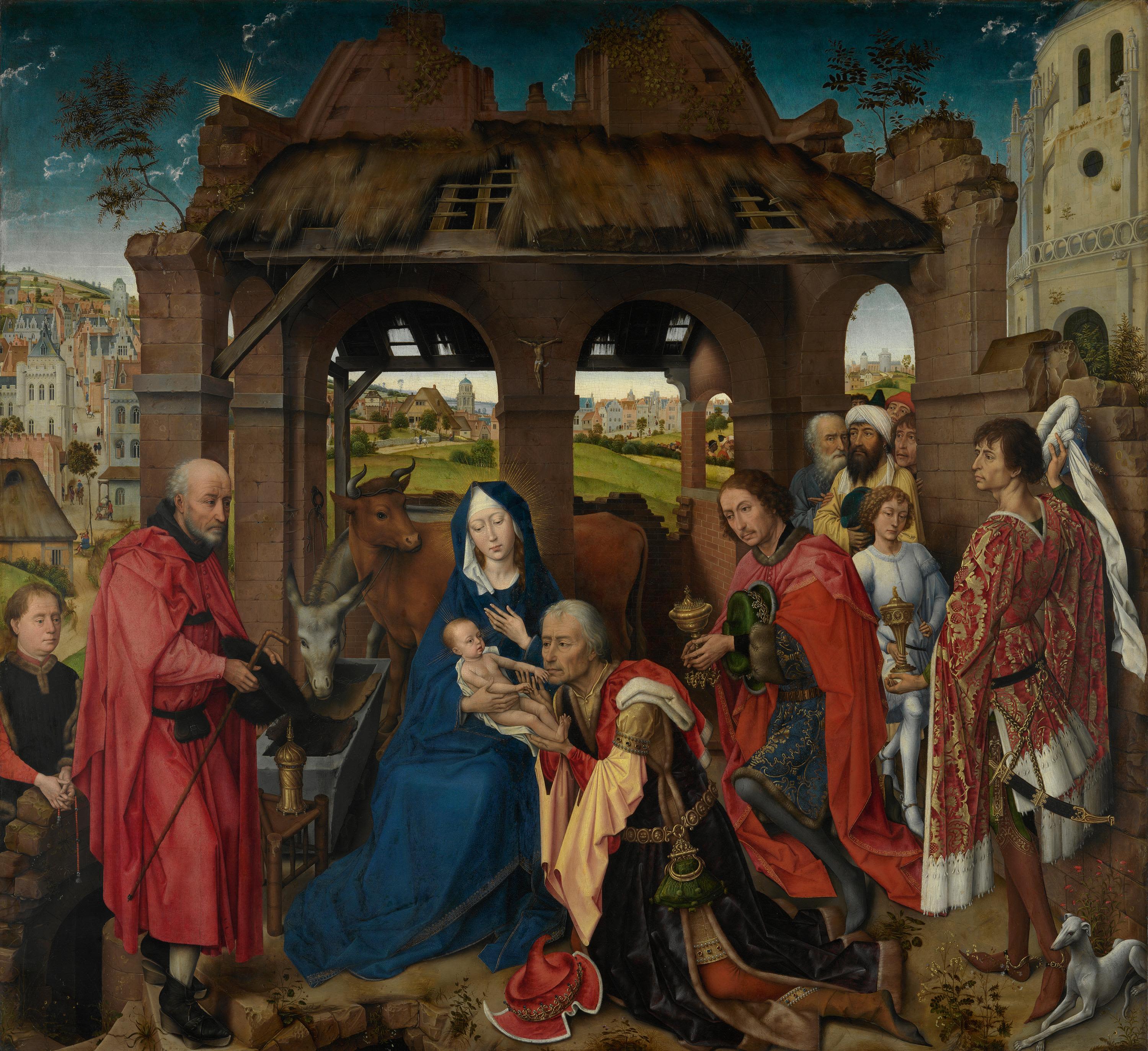
LOOK: Adoration of the Magi by Rogier van der Weyden

van der Weyden, Rogier_Adoration of the Magi
Rogier van der Weyden (Netherlandish, 1399–1464), Adoration of the Magi, ca. 1455. Painting on oak wood, 139.5 × 152.9 cm. Alte Pinakothek, Munich, Germany.

This remarkable painting by the early Northern Renaissance master Rogier van der Weyden shows three kings arriving from afar to worship the Christ child. All the splendor of foreign courts comes to the dilapidated stable of Jesus’s birth, which is relocated to the Low Countries of the fifteenth century. (Notice the contemporary cityscape in the background.)

The most senior king greets the child first, humbly removing his hat and crown and kneeling on the ground, his fur-lined velvet robe rubbing the dirt. He supports the child’s feet with one hand and with the other gently lifts the child’s hand to kiss. Two fellow sovereigns stand behind him, followed by their entourage and various locals.

Standing on the left, in red, is Joseph, hat and staff in hand. He looks reflectively on the visitors, taking it all in. Leaning against the stone wall behind Joseph, a rosary between his fingers, is the painting’s donor. While it’s true that sometimes the practice of painting donors into biblical scenes was done for flattery or, if a condition of the commission, out of arrogance, more often the motivation or purpose was to imaginatively place yourself into the sacred scene as a witness, making yourself present to an event that was in time and yet that also transcends time, in that its impact is ongoing. Seeing oneself as a participant in Christ’s story, a devotee alongside those who walked with him in the flesh, can aid in spiritual contemplation.

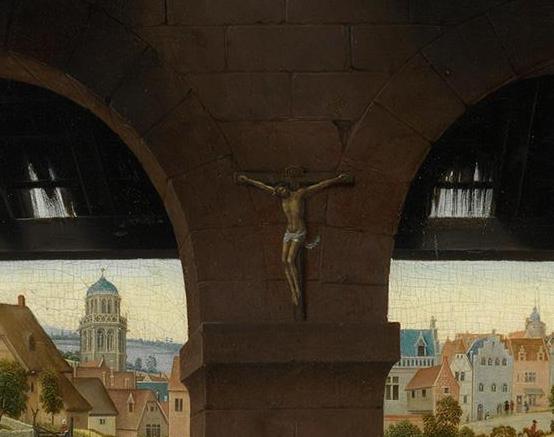
Another anachronism—or rather, a collapsing of chronos and kairos—is the crucifix hung on the central pillar of the stable! This of course alludes to the cruel death Christ would face some thirty years later.

van der Weyden, Rogier_Adoration of the Magi (crucifix detail)

This painting is the centerpiece of a triptych originally made for St. Mary’s Chapel in the church of St. Columba in Cologne. The wings depict the Annunciation and the Presentation of Christ in the Temple.

van der Weyden, Rogier_Columba Altarpiece
Rogier van der Weyden (Netherlandish, 1399–1464), Saint Columba Altarpiece, ca. 1455. Painting on oak wood, 139.5 × 152.9 cm (central), 139.5 × 72.9 cm (each wing). Alte Pinakothek, Munich, Germany.

LISTEN: “Die Könige” (The Kings) from Weihnachtslieder (Christmas Songs), Op. 8, by Peter Cornelius, 1870 | Arranged for a cappella choir by Ivor Atkins, 1957 | Performed by VOCES8, the VOCES8 Scholars, the VOCES8 Foundation Choir, and Apollo5, dir. Barnaby Smith, feat. Jonathan Pacey, 2023

Drei Könige wandern aus Morgenland;
Ein Sternlein führt sie zum Jordanstrand.
In Juda fragen und forschen die drei,
Wo der neugeborene König sei?
Sie wollen Weihrauch, Myrrhen und Gold
Dem Kinde spenden zum Opfersold.

Und hell erglänzet des Sternes Schein:
Zum Stalle gehen die Kön’ge ein;
Das Knäblein schaun sie wonniglich,
Anbetend neigen die Könige sich;
Sie bringen Weihrauch, Myrrhen und Gold
Zum Opfer dar dem Knäblein hold.

O Menschenkind! halte treulich Schritt!
Die Kön’ge wandern, o wandre mit!
Der Stern der Liebe, der Gnade Stern
Erhelle dein Ziel, so du suchst den Herrn,
Und fehlen Weihrauch, Myrrhen und Gold,
Schenke dein Herz dem Knäblein hold!

English translation:

Three kings journey from the East;
A little star leads them to Jordan’s banks.
In Judaea the three of them seek and inquire
Where the newborn king might be.
They wish to make offerings to the child:
Gold, frankincense, and myrrh.

And brightly shines the light of the star.
The three kings enter the stable;
They gaze in rapture at the child,
Bowing low in adoration.
Gold, frankincense, and myrrh
They bring to the child as offering.

O child of man! Follow them faithfully.
The kings are journeying; oh, journey too!
Let the star of love, the star of grace,
Light your way as you seek the Lord,
And if you lack gold, frankincense, and myrrh,
Give your heart to that sweet child.

The German composer and poet Peter Cornelius (1824–1874) was a friend of Franz Liszt’s and Richard Wagner’s. “Die Könige” (The Kings) is the third, and most popular, song in a Christmas cycle he wrote for voice and piano, the others being “Christbaum” (Christmas Tree), “Die Hirten” (The Shepherds), “Simeon,” “Christus der Kinderfreund” (Christ the Friend of Children), and “Christkind” (Christ Child). Cornelius began writing his Weihnachtslieder cycle—both text and music—in 1856, and it underwent several rounds of revision, incorporating input from others, before being published in 1870.

From VOCES8’s Live From London Christmas 2022 broadcast, the performance of “Die Könige” above features as the baritone soloist Jonathan Pacey, who sang bass for VOCES8 from 2015 to 2022. He chose this song as the encore in his final concert. Pacey’s voice is absolutely gorgeous!


This post concludes our journey through the cycle of light, Advent-Christmas-Epiphany. Thanks for walking the road with me! I encourage you to keep journeying, keep following the light, throughout the rest of the church year. May love and grace, as “Die Könige” says, light your way as you seek the Lord.

If you’d like to leave a donation to help offset the costs of running Art & Theology, which I’d really appreciate, you may do so through PayPal or this secure Stripe form. You can expect many more new posts in 2024! Just not at a daily frequency.

Christmas, Day 12: Following the Signs

LOOK: Three Travelers by Elena Markova

Elena Markova (Russian, 1967–), Three Travelers, 2015. Acrylic on canvas, 10 × 10 in.

I’m not sure whether Elena Markova [previously] meant for the “three travelers” of this visionary painting to represent the wise men of Matthew’s Gospel, but that’s who they remind me of. They appear to be divining, reading signs. They are on a journey of truth discovery.

Here, three robed figures of indeterminate gender are encased in mystic light as they peer upward at one of the bodiless angels that wing around them. They stand beside a cistern that shows, reflected in the water, a lone lamb under a crescent moon. Floating nearby in a sea of embers are a nest of eggs, suggesting new birth, and a ladder, reminiscent of the one the Jewish patriarch Jacob encountered, connecting the heavenly and earthly realms (Gen. 28:10–22).

LISTEN: “Inkanyezi Nezazi” (The Star and the Wise Men) by Joseph Shabalala of Ladysmith Black Mambazo, on Inkanyezi Nezazi (1992)

Kuye kwamemeza abaprofethi emandulo
Kumemeza abantu abadala kangaka
Webantwana, kanisalaleni ngani
Umbiko wokuzalwa kenkosi uJesu?

Nantso ke inkanyezi
Enhle kunazo zonke
Eyalandelwa izazi
Zivela empumalanga

Baba, Baba wami
Baba, bhinc’ibeshu lakho
Simemeza ngazwi linye
Sithi izelwe
INkosi yamakhosi

Mama, Mama wami
Mama, bhinc’isidwaba sakho
Vunula uphelele
Sisho ngaphimbo linye
Sithi izelwe
INkosi yamakhosi

Uqinsile umprofethi
Yinhle kunazo zonke
Masiyilandeleni
Khona sizophumelela
(Repeat)

Saqala sabezwa besho
Saze sabona nathi embhalweni
Sabe sesiyakholwa
Yiloko esikufundayo lithini iBhayibheli?
(Repeat)

Amen, hallelujah, amen

English translation:

There was a proclamation by the prophets of old
A proclamation by such senior elders
Children, why are you not listening
To the report of the birth of the Lord Jesus?

There was a star
Most glorious of all
Followed by the wise men
Coming from the east

Father, my father
Gird up your loins
Let’s proclaim with one voice
That the King of kings
Has been born

Mother, my mother
Gird up your loins
Put on your best clothes
Let’s proclaim with one voice
That the King of kings
Has been born

The prophet was right
It [the star] is the most glorious of all
Let’s follow it
That we may prosper
(Repeat)

We first heard them tell us
Then we saw it ourselves in the scriptures
Then we believed what we read
What does the Bible say?
(Repeat)

Amen, hallelujah, amen

* This English translation by Lwazi Mbambi was commissioned by Art & Theology.

Ladysmith Black Mambazo [previously] is a South African male choral group that sings in Zulu in the local vocal styles of isicathamiya and mbube. The group was founded in 1960 by Joseph Shabalala, who led it until his death in 2020.

“Inkanyezi Nezazi,” the title track of one of their 1992 albums, recalls the ancient biblical prophecies of a rising light that would herald a new age (e.g., Num. 24:17; Isa. 9:2; 60:1–3). The speaker enjoins father and mother and all the village to listen to the good news of Jesus’s birth and, like the magi, to follow where the light of revelation leads.


This post is part of a daily Christmas series that goes through January 6. View all the posts here, and the accompanying Spotify playlist here. There’s also a distinct playlist for Epiphany.

Christmas, Day 11: Love Is King

LOOK: Supper at Emmaus medallion from the Tabernacle of Cherves

The Supper at Emmaus
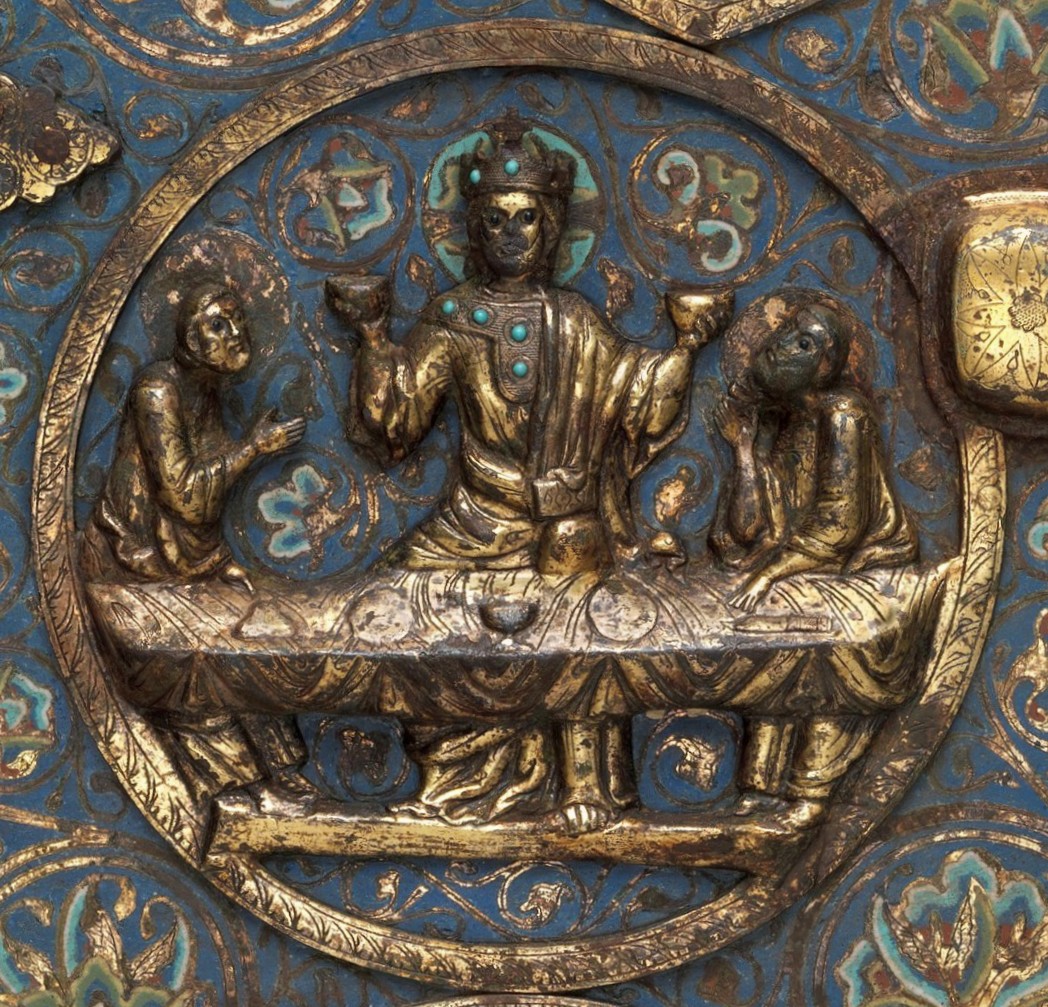
Detail of The Supper at Emmaus from the Tabernacle of Cherves, Charente, France, ca. 1220–30. Champlevé enamel and copper, overall 33 × 37 3/4 × 10 3/4 in. (83.8 × 95.9 × 27.3 cm). Metropolitan Museum of Art, New York.

To learn about the elaborately decorated champlevé enamel tabernacle that this scene comes from, see https://artandtheology.org/2020/05/14/the-tabernacle-of-cherves-limoges-enamel-13th-century/.

LISTEN: “El Niño (Love Is King)” by Willie Nelson, on Hill Country Christmas (1997)

He is born
There’s a reason now to carry on
Toot your horns
Write another song
Love is here
Seated at your table now
Not livin’ in a stable now
Love is king

So let us sing
Let us sing
Love is king
Love is king
(Repeat)

He is born
There’s a reason now to carry on
Toot your horns
Write another song
Love is here
Seated at your table now
Not livin’ in a stable now
Love is king

Angels sing
About the king
Let it ring
Love is king

So let us sing
Let us sing
Love is king
Love is king


This post is part of a daily Christmas series that goes through January 6. View all the posts here, and the accompanying Spotify playlist here.