
Roundup: Bad-news blessing, the transfiguration of Marilyn Monroe, Christian speculative fiction anthology, European sacred art tour

BLESSING: “Blessing for Getting the News” by Jan L. Richardson: August brought two devastating pieces of news to me; I wasn’t in the line of direct impact, but I hurt for the two families who were. A blessing by artist-author Jan L. Richardson came at just the right time. Here’s an excerpt:

. . . when
the news comes,
may it be attended
by every grace,
including the ones
you will not be able
to see now.

When the news comes,
may there be hands
to enfold and bless,
even when
you cannot receive
their blessing now.

When the news comes,
may the humming
in your head
give way to song,
even if it will be
long and long
before you can
hear it,

before you can
comprehend the love
that latched onto you
in the rending—
the love that bound itself to you
even as it began its leaving
and has never
let you go.

Read more, and view original accompanying artwork, at http://paintedprayerbook.com.

ESSAY: “Transfiguring Gold: Andy Warhol’s Gold Marilyn Monroe” by James Romaine: In his latest visual meditation for ArtWay, art historian James Romaine writes on external versus essential beauty, and the Orthodox aesthetic, in one of Warhol’s most famous paintings. “A revelation of uncreated and transfiguring light” in the icon tradition, the use of gold, Romaine posits, was a theological choice on Warhol’s part, one influenced by his Byzantine Catholic faith. Warhol drew on celebrity imagery to encourage a transformation in viewers from material sight to metaphysical vision. This essay is adapted from a more extensive one titled “The Transfiguration of the Soup Can,” published in Beauty and the Beautiful in Eastern Christian Culture and linked to here with the author’s permission.

Gold Marilyn Monroe by Andy Warhol
Andy Warhol (American, 1928–1987), Gold Marilyn Monroe, 1962. Silkscreen ink on synthetic polymer paint on canvas, 211.4 × 144.7 cm. Museum of Modern Art, New York.

BOOK: Mysterion: Rediscovering the Mysteries of the Christian Faith, edited by Donald Crankshaw and Kristin Janz: Last week the husband and wife team of Donald Crankshaw and Kristin Janz published an anthology of science fiction, fantasy, and horror stories that engage with Christianity. It features twenty of the 450-plus submissions they received, all but four of which are published here for the first time. Describing their criteria for selection, Crankshaw writes in the introduction, “We wanted stories that were as untidy and as theologically imprecise as the Bible itself.” The result is a collection of diverse voices and approaches, exploring such topics as sin, forgiveness, the afterlife, the soul, mission, miracles, and supernatural agents. To read excerpts from the book, visit www.mysterionanthology.com.
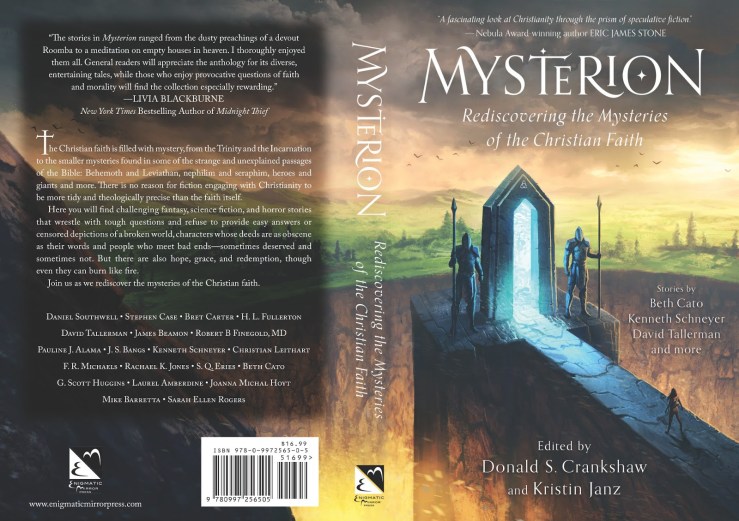
Mysterion cover

TOUR: “Reformanda 2017: Sacred Arts Today, Catholic and Protestant”: The Mount Tabor Ecumenical Centre for Art and Spirituality, founded by the Community of Jesus in Massachusetts, has organized a four-leg European tour for next May 10–30 that will explore the face of sacred art from the last five hundred years since the Reformation. With stops in France, Germany, Switzerland, and Italy, the itinerary includes visits to churches and contemporary art exhibitions, symposium lectures and discussions led by Msgr. Timothy Verdon, and Gloriae Dei Cantores choral concerts. Registration is now open.

Reformanda Tour Map

Roundup: Mavis Staples documentary, baptizing the imagination, how medieval manuscripts were made, Nubian Christian art, and Twain’s war prayer

Mavis!: The HBO documentary Mavis! profiles gospel and soul music legend Mavis Staples, from her rise to stardom as part of the Staples Singers, whose Uncloudy Day was the first gospel album to sell one million copies, and her involvement in the civil rights movement, to her still active career as a solo artist. “I’ll stop singin’ when I have nothin’ left to say,” she says. “And that ain’t gonna happen!” Watch the trailer below.

Luci Shaw on art and Christian spirituality: In this 1998 article from Direction journal, the oh-so-quotable poet Luci Shaw writes about imagination, mystery, receptivity, sacramentality, the similarities between art and faith, and her muse, the Holy Spirit. Concludes with her poem “Ghostly,” which explores the Spirit’s different manifestations.

Making medieval manuscripts: Through narrated demonstrations, this video by the Getty Museum shows how paper, pens, ink, paint, book covers, and bindings were made during the Middle Ages—laborious processes! It also shows how the illuminators (visual artists) worked with the scribes (calligrapher-copyists), jobs typically filled by two separate people.

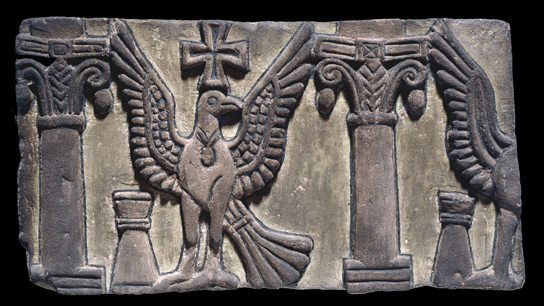
Christianity on the Middle Nile: The two largest Christian kingdoms in the medieval world were actually in modern-day Sudan, writes curator Julie Anderson in a British Museum blog post from 2014: the Makuria and the Alwa kingdoms. Many wall paintings and other objects have been excavated from Faras Cathedral and its adjoining tombs, such as the pottery lamp (with the inscription “Great is the name of God”) and sandstone frieze fragment in the British Museum’s collection. (The paintings are divided between the Sudan National Museum and the National Museum of Warsaw, as it was a Polish team that rescued them from flooding by Lake Nasser.)

Faras Cathedral frieze fragment
Seventh-century sandstone frieze fragment from the former Faras Cathedral in Nubia. Collection of the British Museum.
Fiery Furnace fresco from Faras Cathedral
Fresco from the former Faras Cathedral in Nubia depicting the three youths in the fiery furnace. Collection of the National Museum of Sudan.

“The War Prayer” by Mark Twain: In his day Twain was radically opposed to American military intervention in Cuba and the Philippines and frustrated by the so-called patriotism that made his fellow countrymen so uncritically supportive of it. The stranger’s speech in Twain’s short story “The War Prayer,” set during a church service, exposes the ridiculousness of some of the prayers that go up during wartime even today.

Roundup: Fiction for Lent, art as commodity, major Bosch retrospective, Easter art retreat

Sarah Arthur is the editor of the just-published Between Midnight and Dawn: A Literary Guide to Prayer for Lent, Holy Week, and Eastertide. She has written an article for Christianity Today, “The Best Books to Read for Lent (That You Won’t Find in a Christian Bookstore).”

+++

Writing for the New Yorker, Ken Kalfus reviews the new novel Laurus by Russian medievalist Eugene Vodolazkin: “Medieval Russia was a land trembling with religious fervor. Mystics, pilgrims, prophets, and holy fools wandered the countryside. . . . [Laurus] recreates this fervent landscape and suggests why the era, its holy men, and the forests and fields of Muscovy retain such a grip on the Russian imagination.”

+++

In “Art as a Commodity: Does Time Equal Value in Art?” artist Scott Laumann discusses one of the most annoying questions he is asked at gallery shows: “How long did that take you?”

+++

Garden of Earthly Delights
Hieronymus Bosch (Dutch, ca. 1450–1516), The Garden of Earthly Delights. Oil on oak panels, 220 × 389 cm. Museo del Prado, Madrid.

This year marks the five hundredth anniversary of the death of Dutch artist Hieronymus Bosch, known for his grotesque depictions of human depravity. To commemorate his life and work, the Noordbrabants Museum in ’s-Hertogenbosch, the city of Bosch’s birth, has brought together his panels and drawings from all over the world in what is the largest Bosch exhibition of all time. Bosch invented an entirely new religious iconography: landscapes filled with bizarre, nightmarish creatures doing freakish things to or with humans—meant not as a prediction of what will one day happen to the damned but as a lament for what is already happening. Jonathan Jones, reviewer for The Guardian, gives the retrospective five stars.

+++

Lumen Christi: In the Light of the Risen Christ—Easter Encounters with Art”: The monastic ecumenical Community of Jesus on Cape Cod will be hosting a five-day art retreat from April 5 to 9, led by art historian Timothy Verdon and artist Gabriele Wilpers. Focused on the theme of resurrection, the retreat will feature lectures and discussion, group workshops, studio mentoring, and daily worship services. For more information, follow the link above.