This is the final post in my series on religious art highlights from Würzburg, Germany, which I visited on August 28. (See parts 1, 2, and 3.) It took me about fifty-two hours to organize, select, research, write, edit, and format all the content. If you enjoyed the series, would you please consider making a small donation toward this work so that I can avoid setting up paywalls? Thank you! Oh, and since some of you have asked: I offer all my high-resolution photos free of charge for noncommercial use; I just don’t allow reblogging (that is, reproducing these posts in full on a different website).
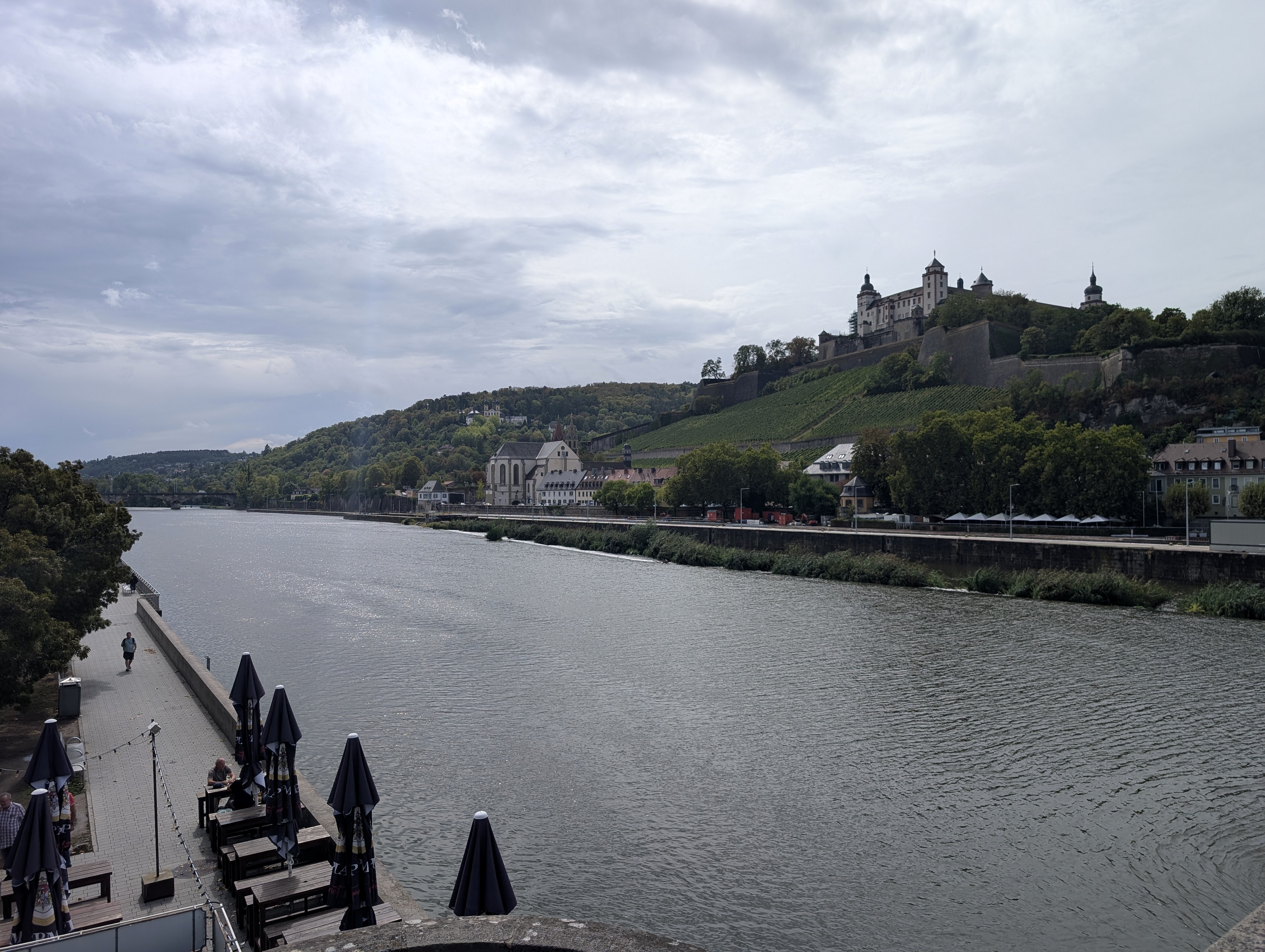
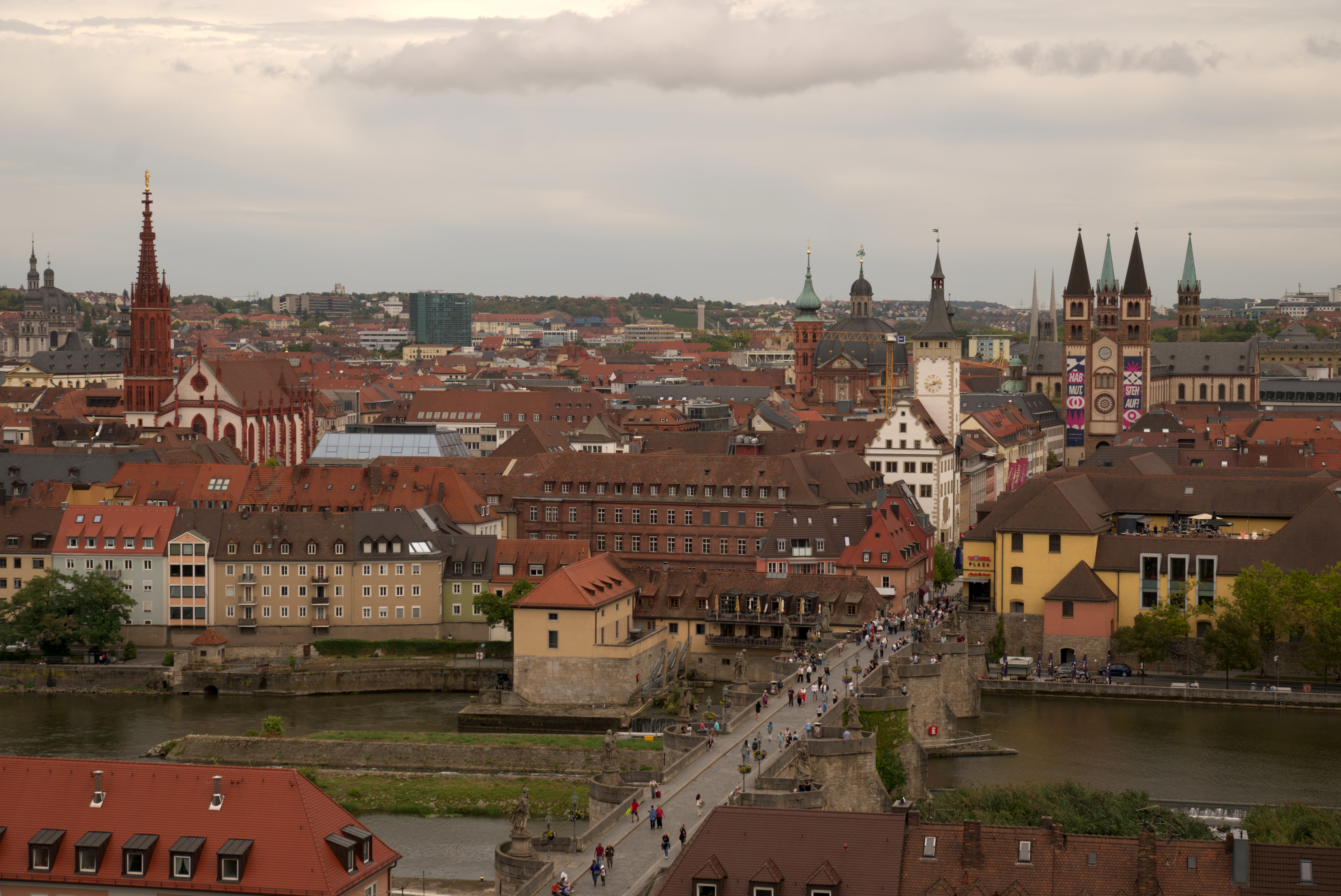
It was afternoon, and Eric and I had a few more hours left in Würzburg. Thankfully, the rain let up, so after a quick lunch of bratwurst, we trekked over the Old Main Bridge up to Marienberg Fortress. It was about a twenty-minute walk up the stepped Tellsteige to the entrance—quite strenuous for this out-of-shape traveler, and in retrospect, I should have taken the bus, which runs to the top via a different route, but at least I was rewarded with some lovely panoramic views of the city along the way.
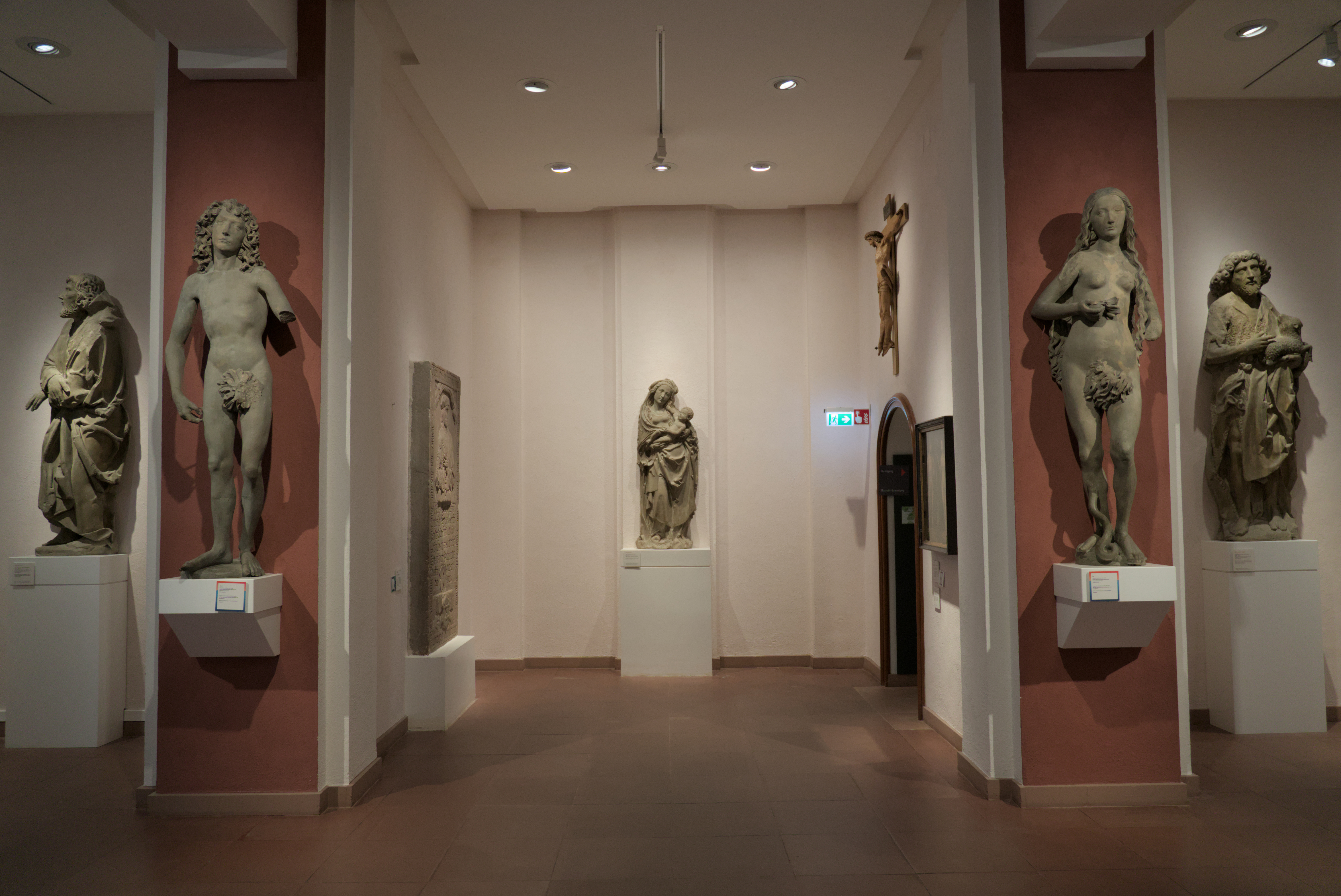
Serving as residence of the local prince-bishops from the thirteenth to eighteenth centuries, Marienberg Fortress now houses a collection of Franconian art from the Middle Ages to the Baroque era in its Museum für Franken (labeled “Lower Franconian Museum” in Google Maps and formerly called the Mainfränkisches Museum). Admission is five euros.
The sculptures of the German late Gothic artist Tilman Riemenschneider (ca. 1460–1531), who lived in Würzburg, are the main attraction of the museum, which owns eighty of them—the largest number of any institution. Riemenschneider was an absolute master of his craft, working in both wood and stone. Made to adorn buildings, his stone sculptures were conceived for particular architectural contexts, whereas most of his wood carvings were made for winged altarpieces. His smaller sculptures, by contrast, were intended for private ownership and worship.
In addition to being an artist, Riemenschneider was involved in local politics, serving on the Würzburg town council. During the German Peasants’ War in 1525, he refused to obey an order by Prince-Bishop Konrad von Thüngen to fight the revolting peasants, as he sympathized with their cause. As a result, most of his property was confiscated and he was incarcerated and tortured in Marienberg Fortress for two months. He received very little work for the remaining six years of his life.
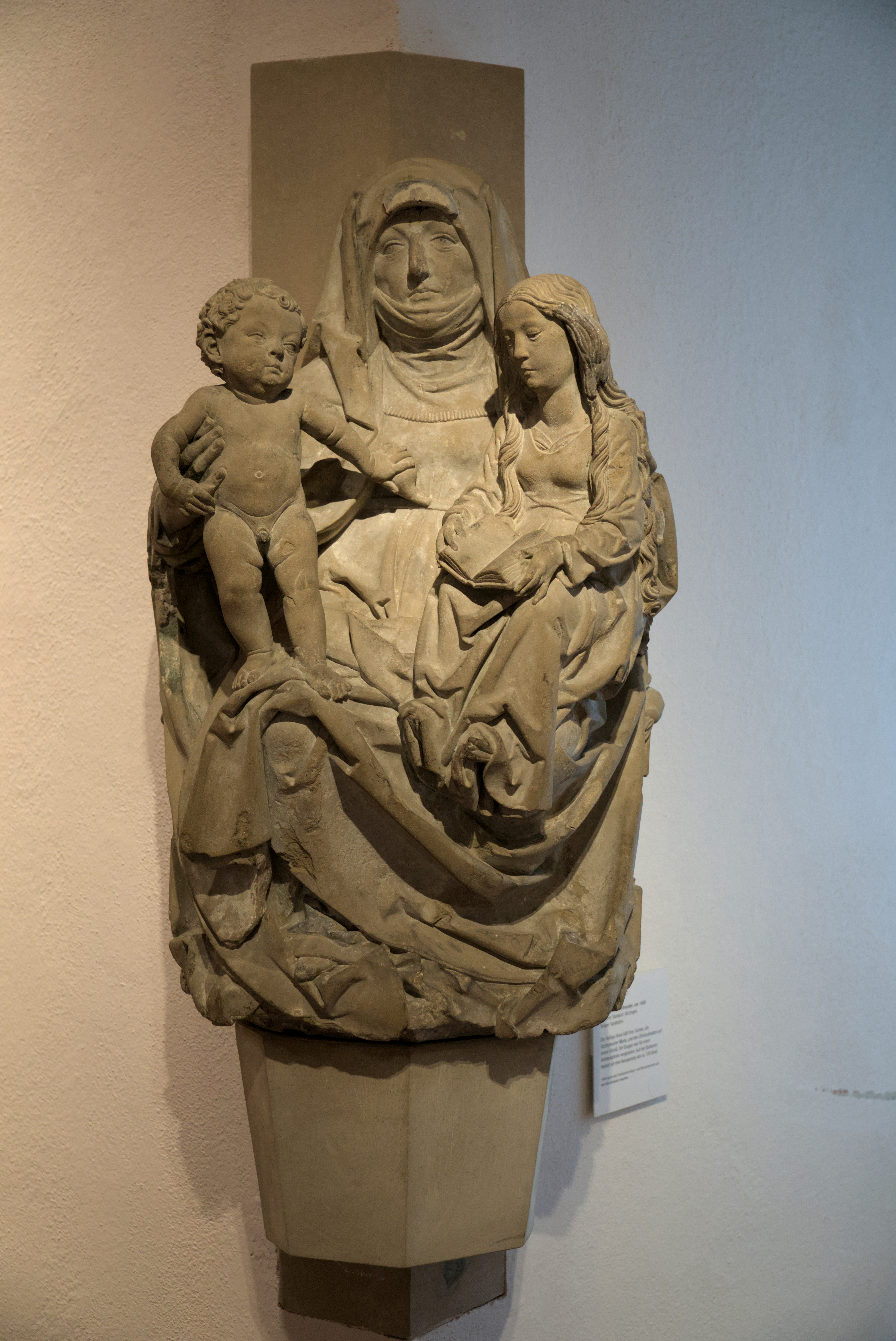
The first work of his that I encountered at the Museum für Franken was an Anna Selbdritt, Middle High German for “Anne herself making a third”—an iconographic type that arose in Germany in the early thirteenth century and gained massive popularity throughout the Rhine-Meuse region in the next few centuries. Emphasizing the human lineage of Jesus, it shows three generations seated together: the matronly St. Anne (the name tradition ascribes to Mary’s mother), with her head and neck typically covered; a diminutive Mary, her hair uncovered to signify her virginal status, and often holding a book, signifying her learning and devoutness; and, toddling on his grandmother’s knee, the infant Christ.
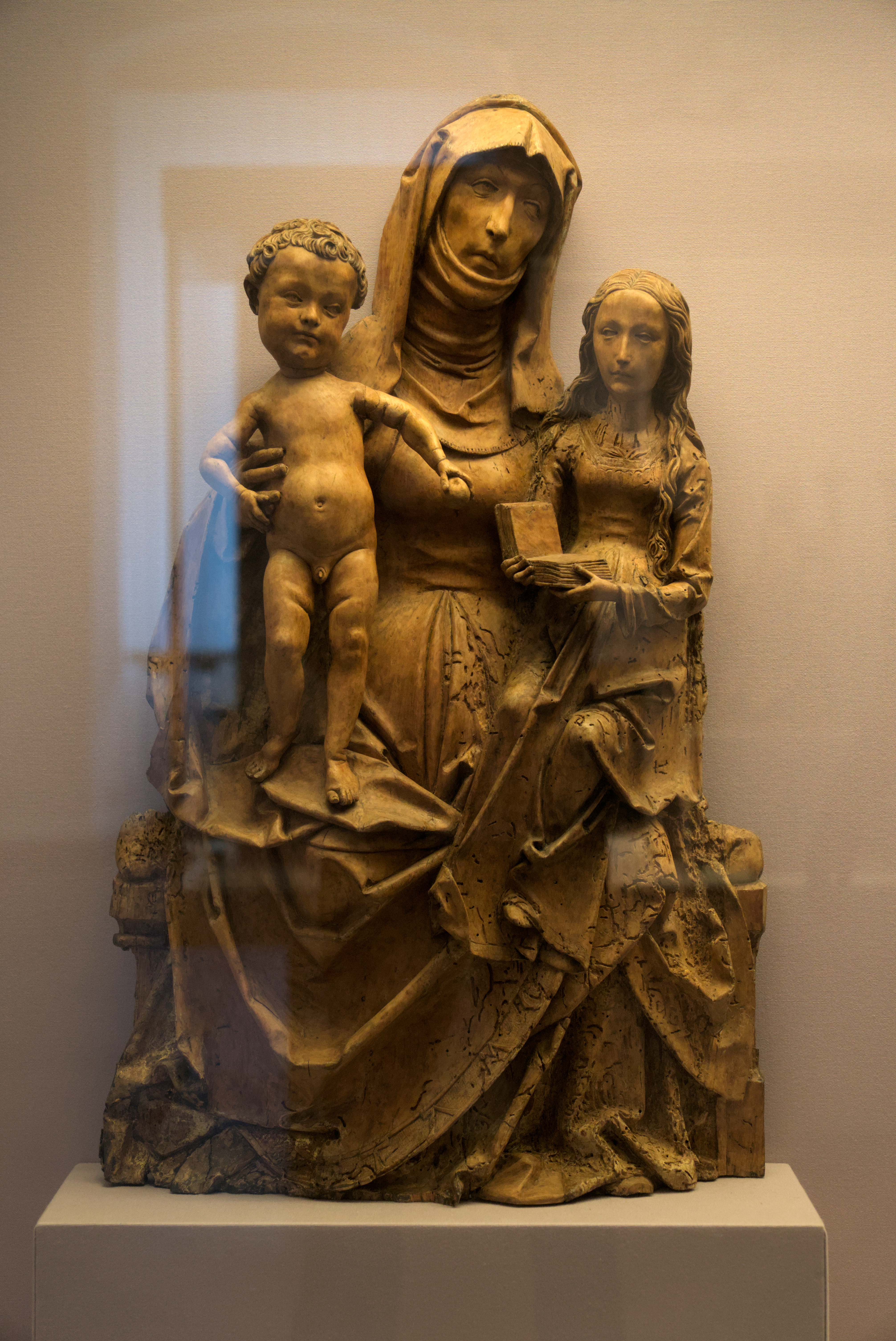
Here’s another:
A related subject, the Holy Kinship, showing even more of Jesus’s relatives gathered round, is also featured in the museum’s collection, such as in this fragment sculpted by an anonymous artist influenced by Riemenschneider, which shows Mary and Joseph on the left, and Anne and Joachim (Mary’s parents) on the right. The Christ child whom the young Mary used to hold on her lap is missing, as is the book that Anne once held:
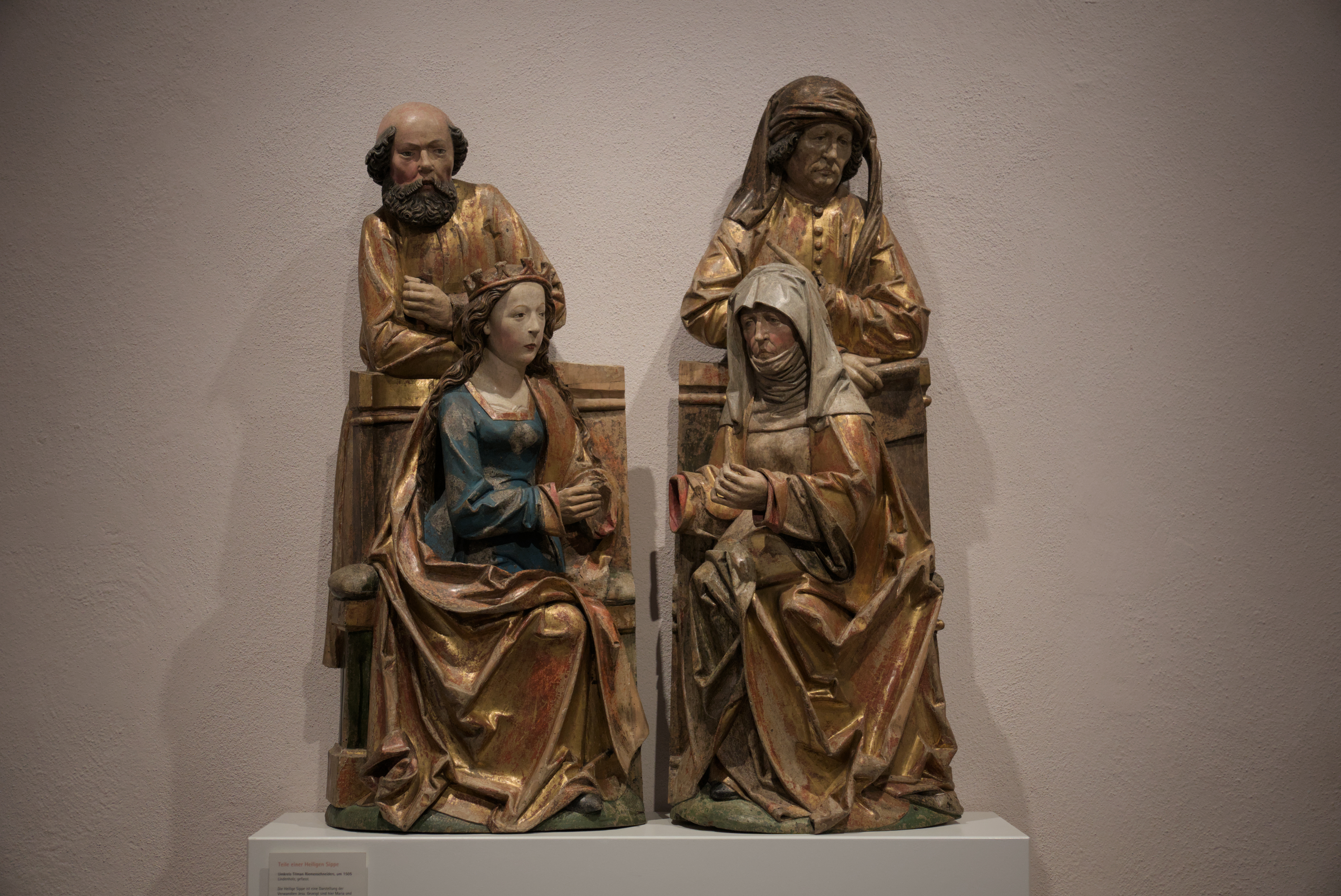
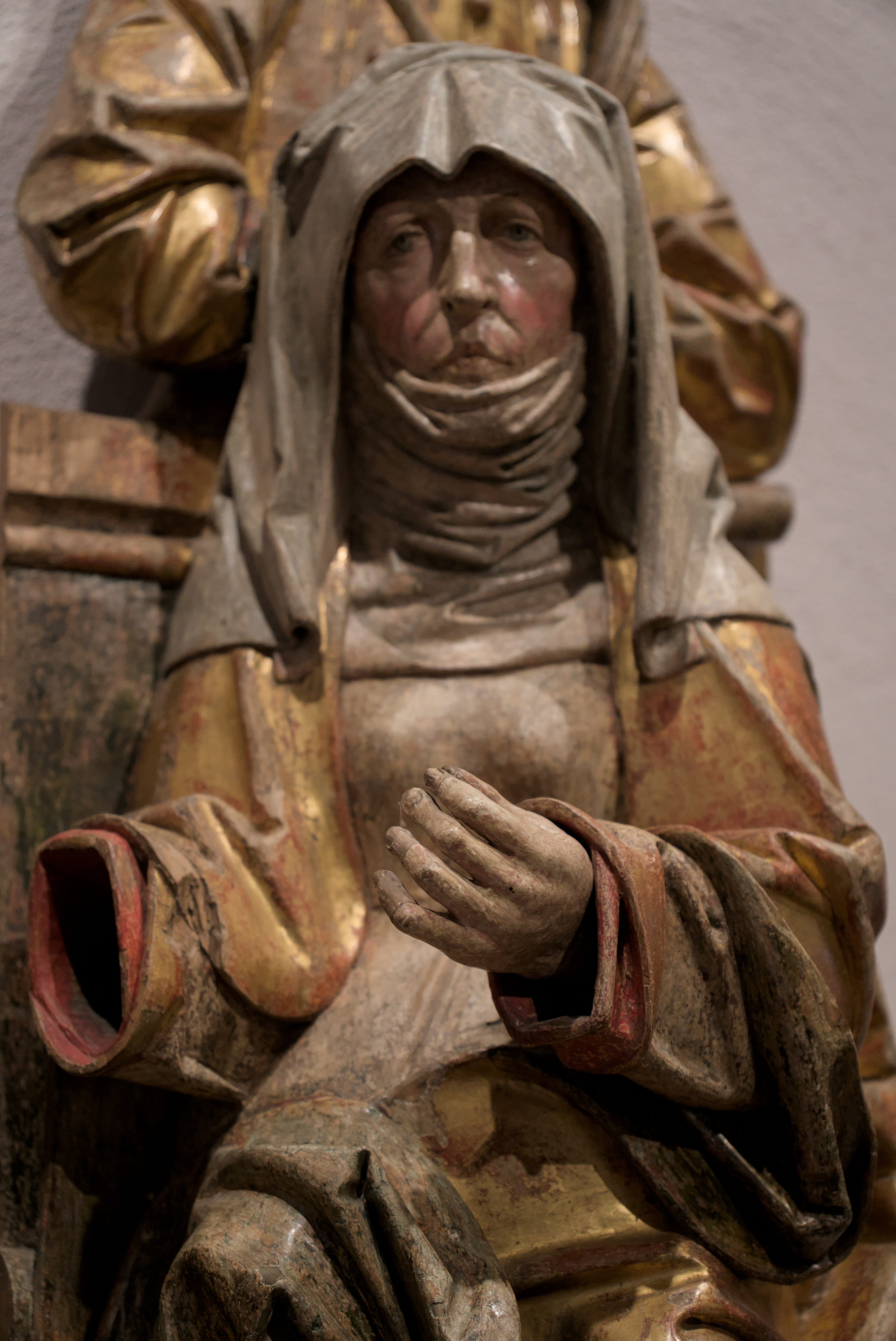
Jesus’s grandparents are never mentioned in scripture, so I admit, I had never even thought about them until I started seeing them depicted in Holy Kinship groups, and Anne in other contexts. It makes me wonder about how Mary’s mother raised her, and how that shaped the woman she became and how she then mothered Jesus. What lessons of faith did Mary learn from Anne? How did Anne react to the news of Mary being pregnant with the Messiah? What about Joachim? In what ways did Grandma and Grandpa spoil little Jesus? Of course Jesus was part of a larger family unit—extended family was very important in the ancient Near East—but without artists to turn my imagination toward that detail, I had neglected to consider it!
Beside the Anna Selbdritt sculpture is another by Riemenschneider, showing St. Stephen, who can be identified by the stack of stones on his knee. (In art, martyrs are often portrayed holding the instruments of their death.)
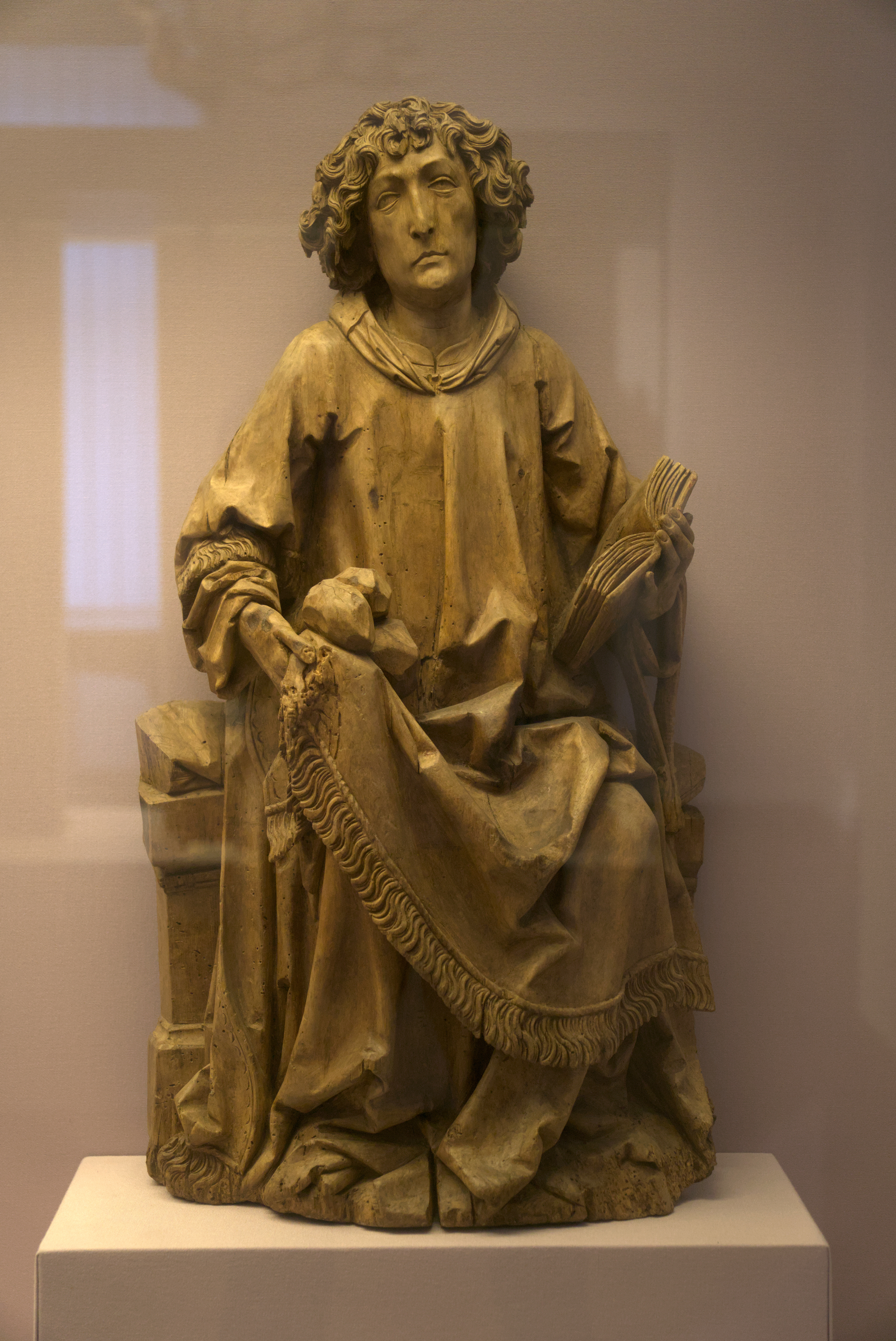
Here’s a handful of other works by Riemenschneider or his circle, from the permanent collection of the Museum für Franken or on long-term loan to them.
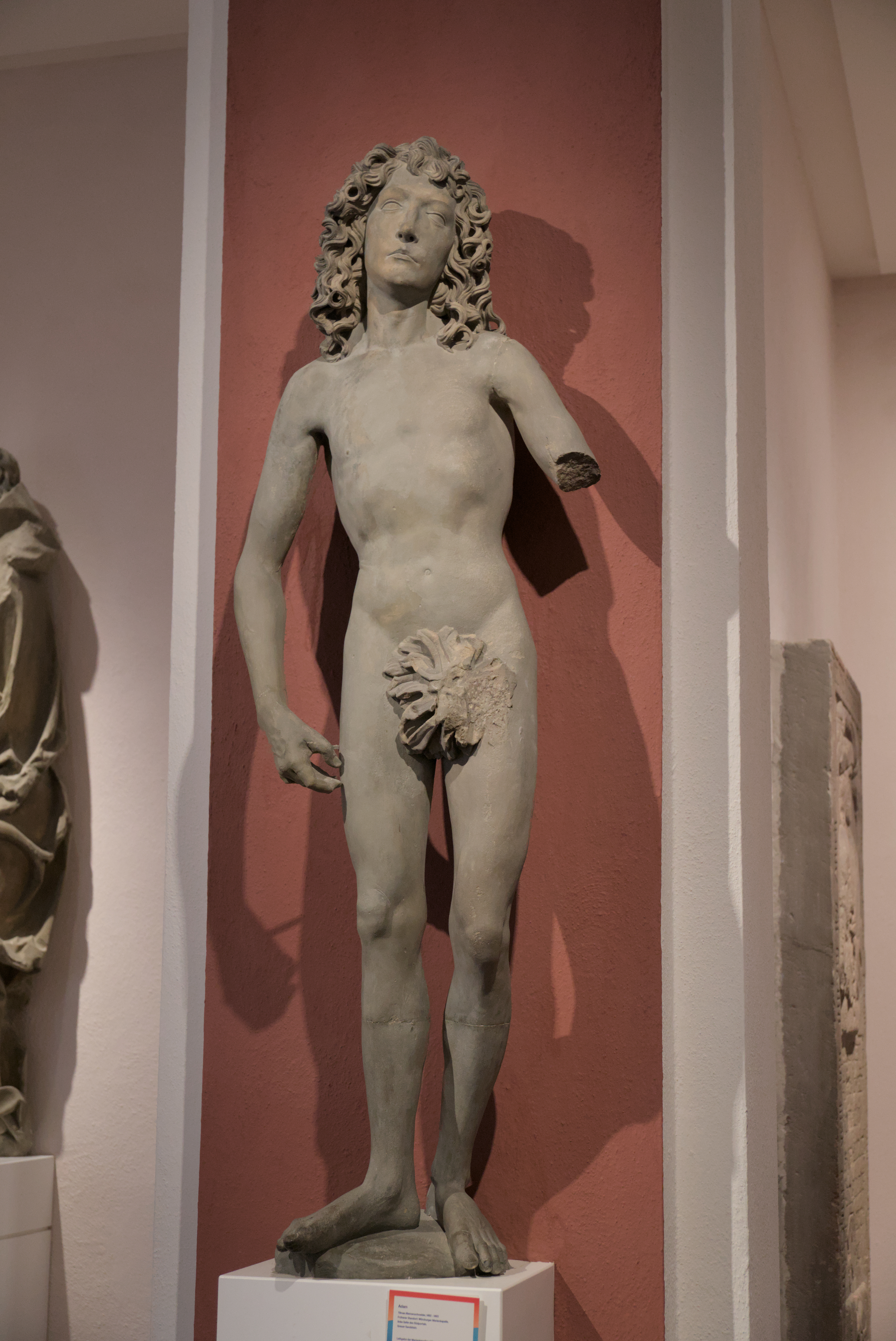
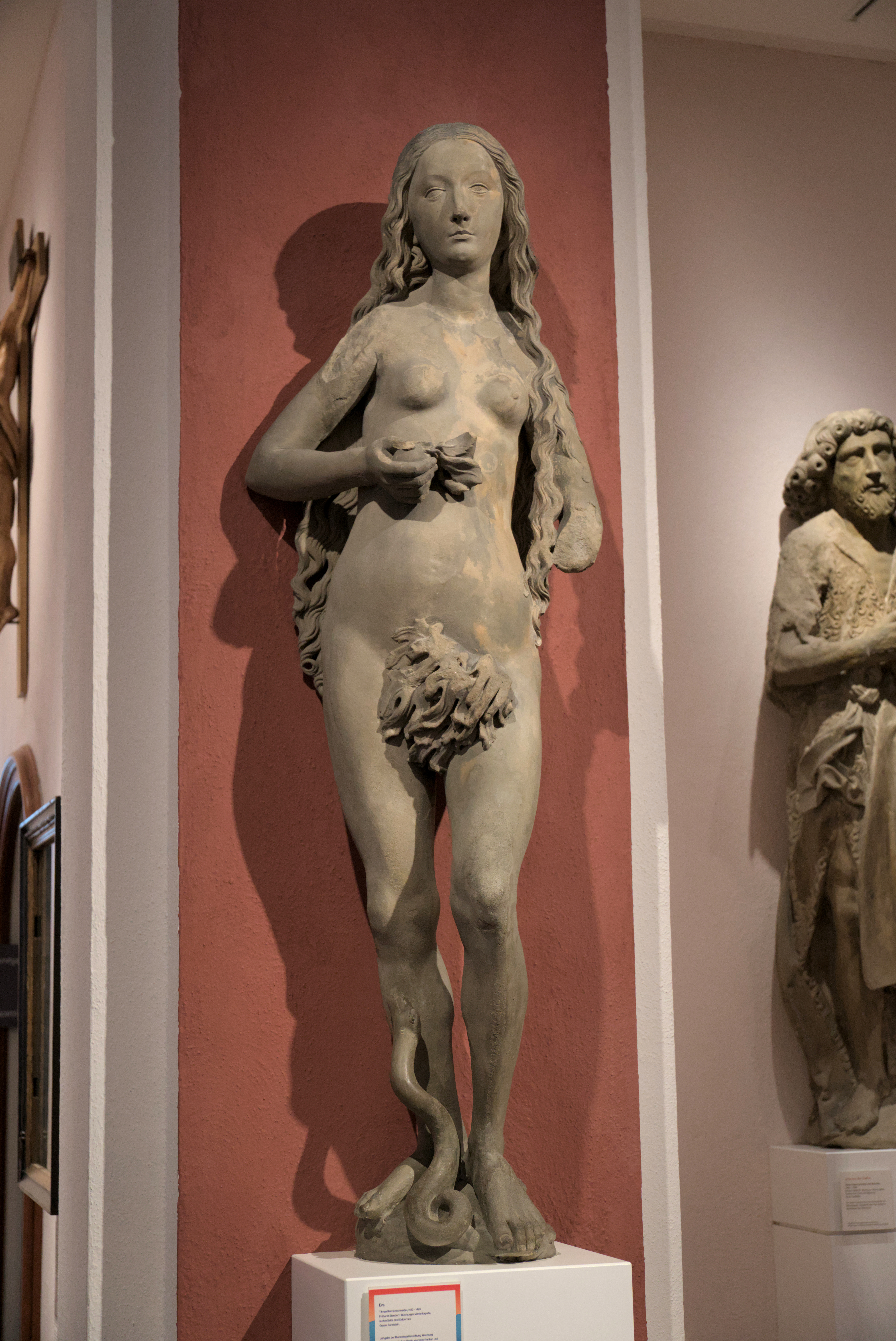
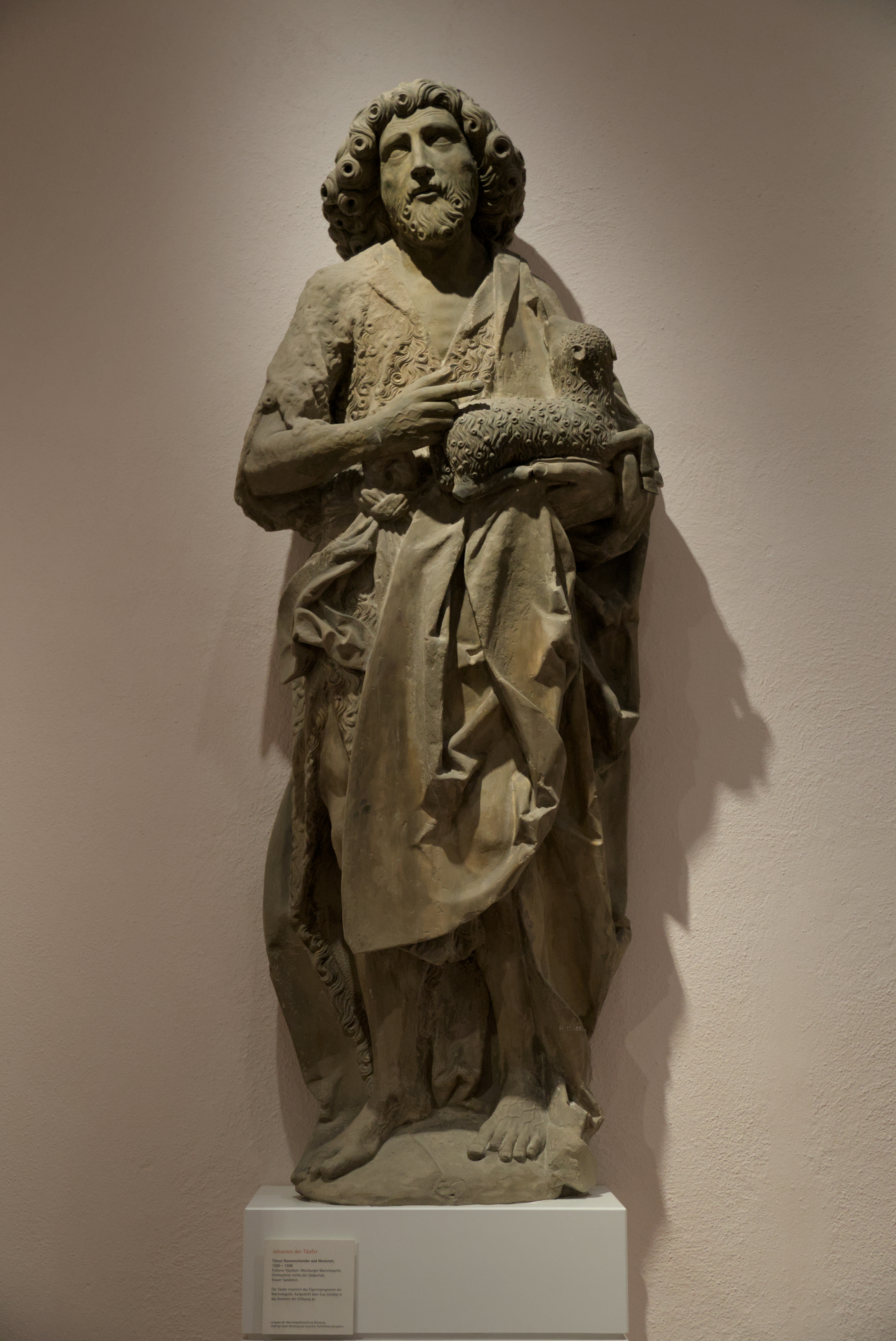
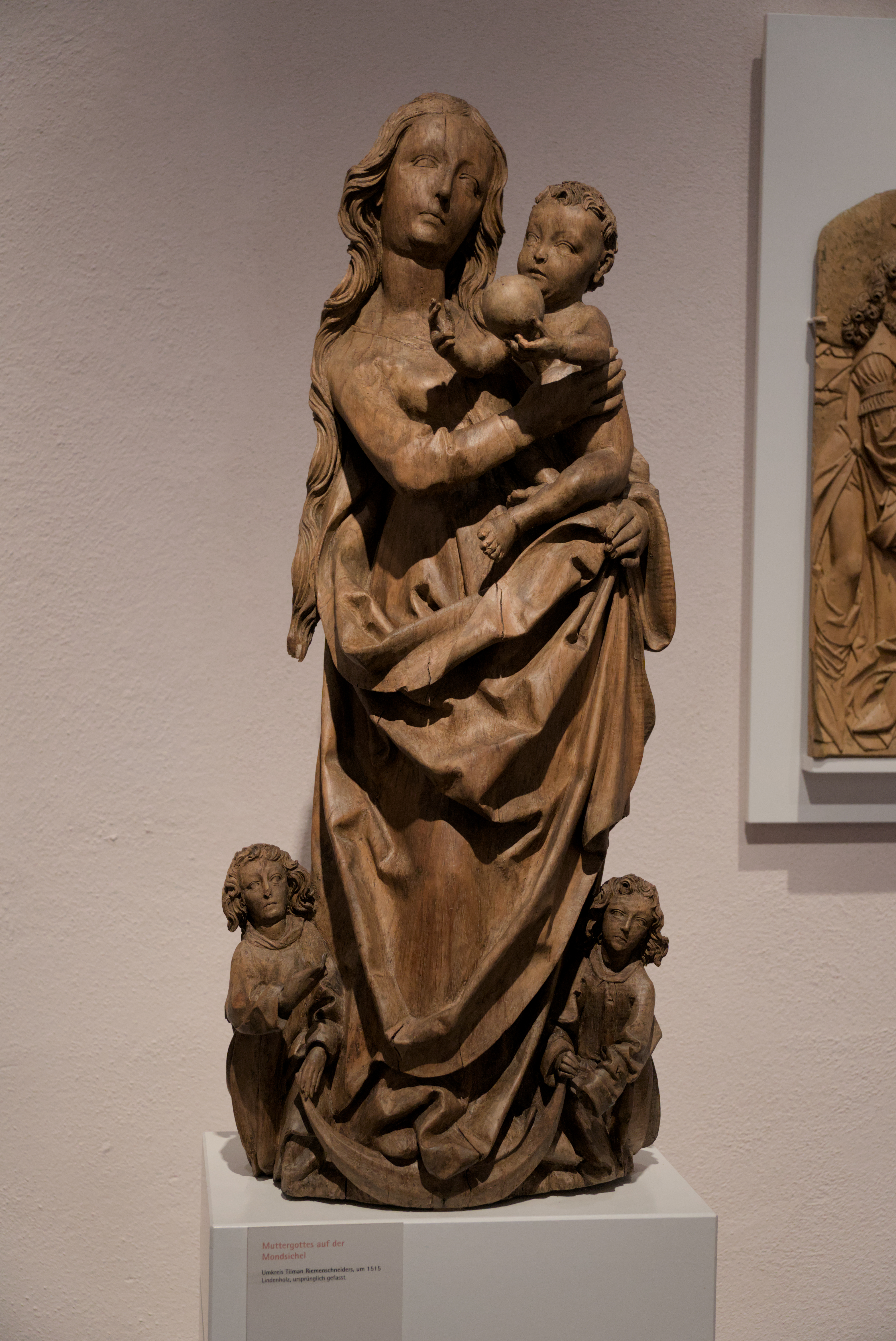
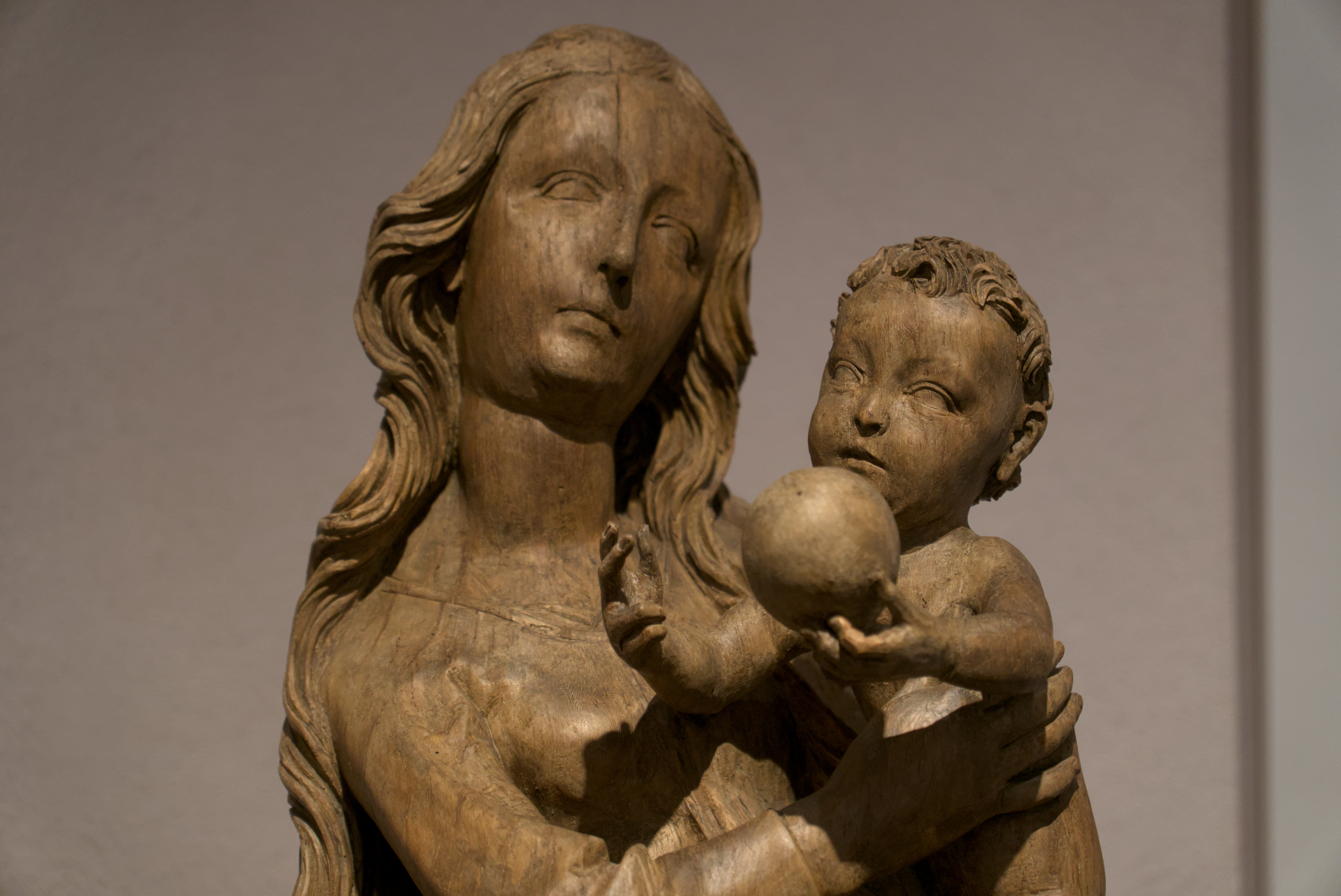
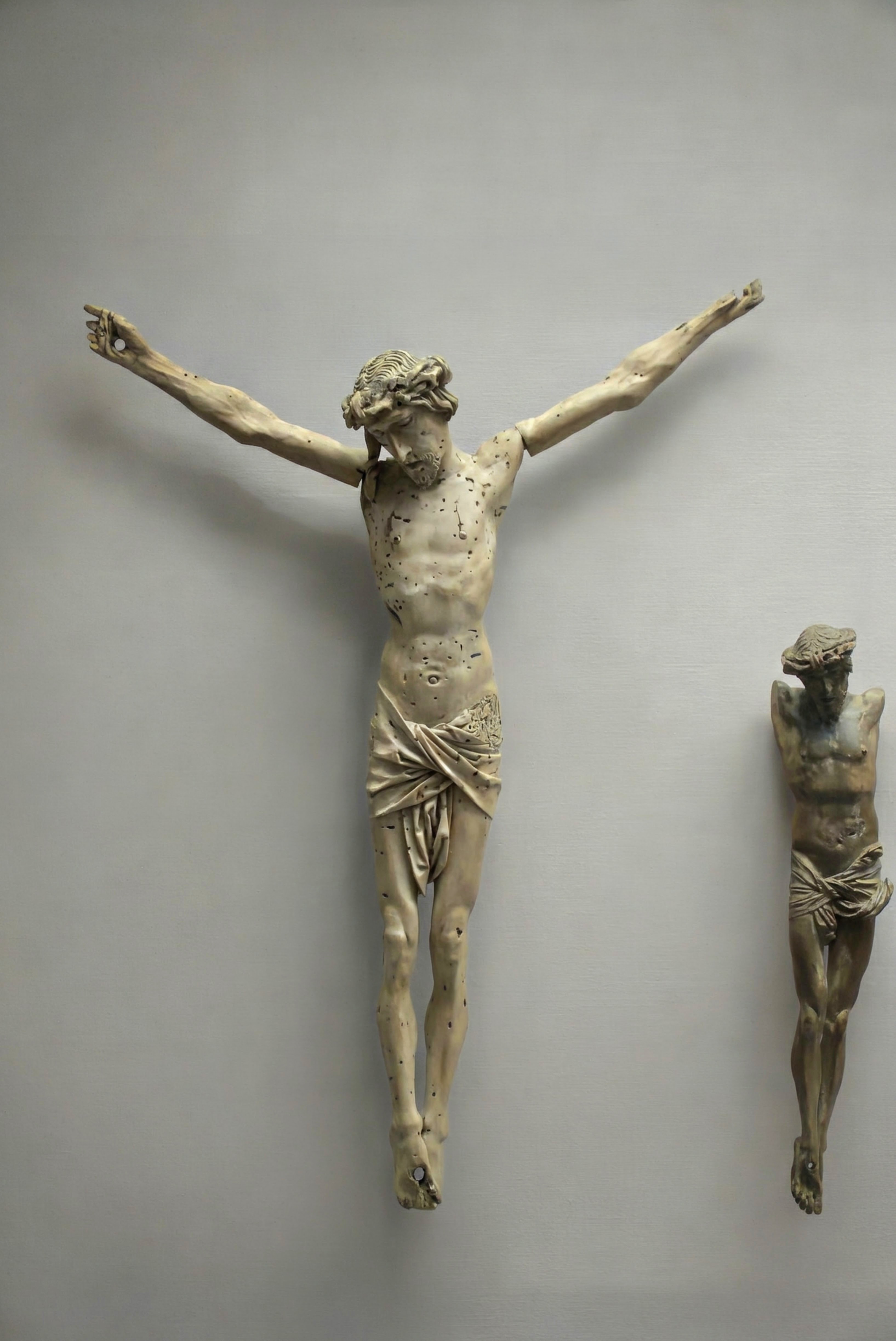
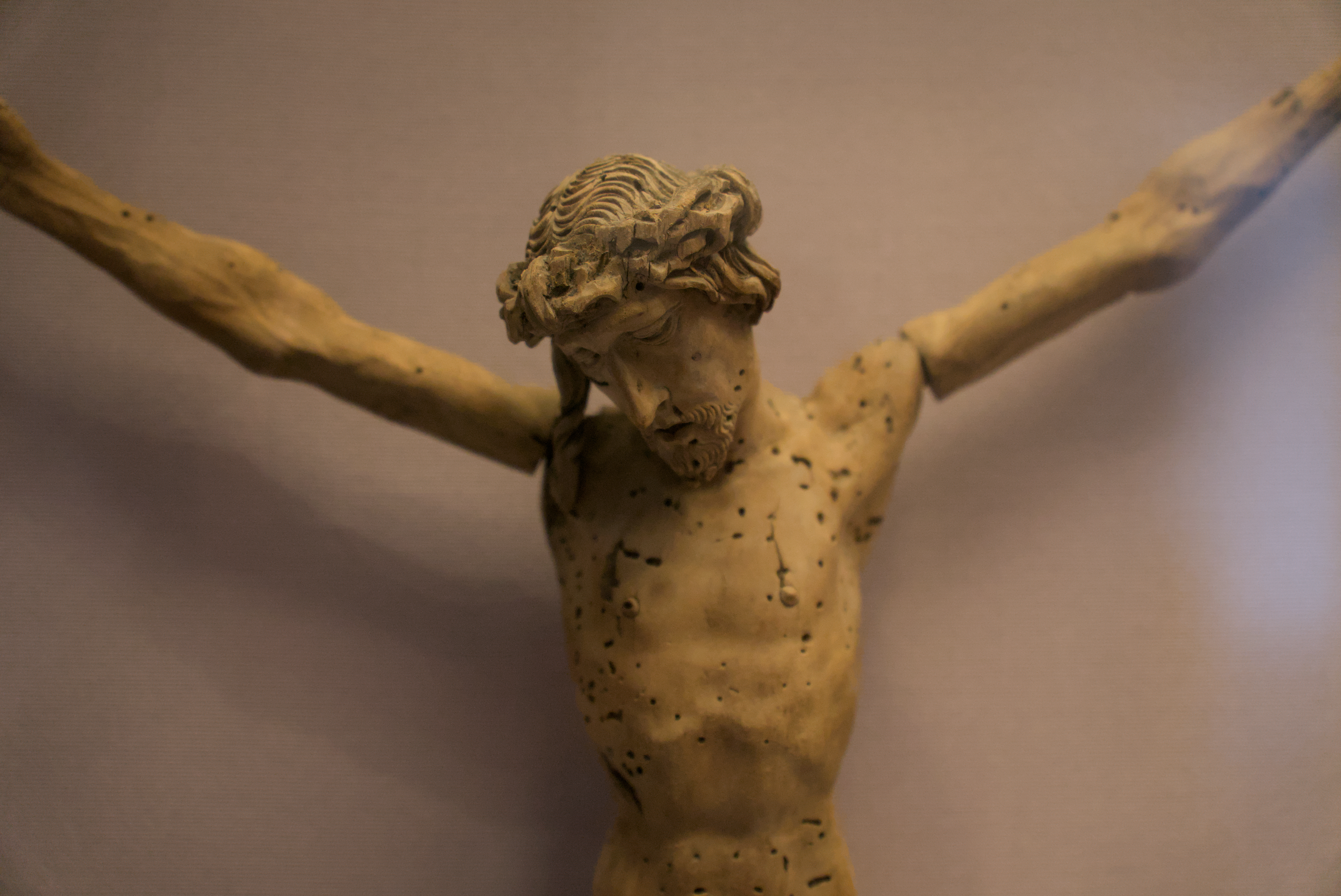
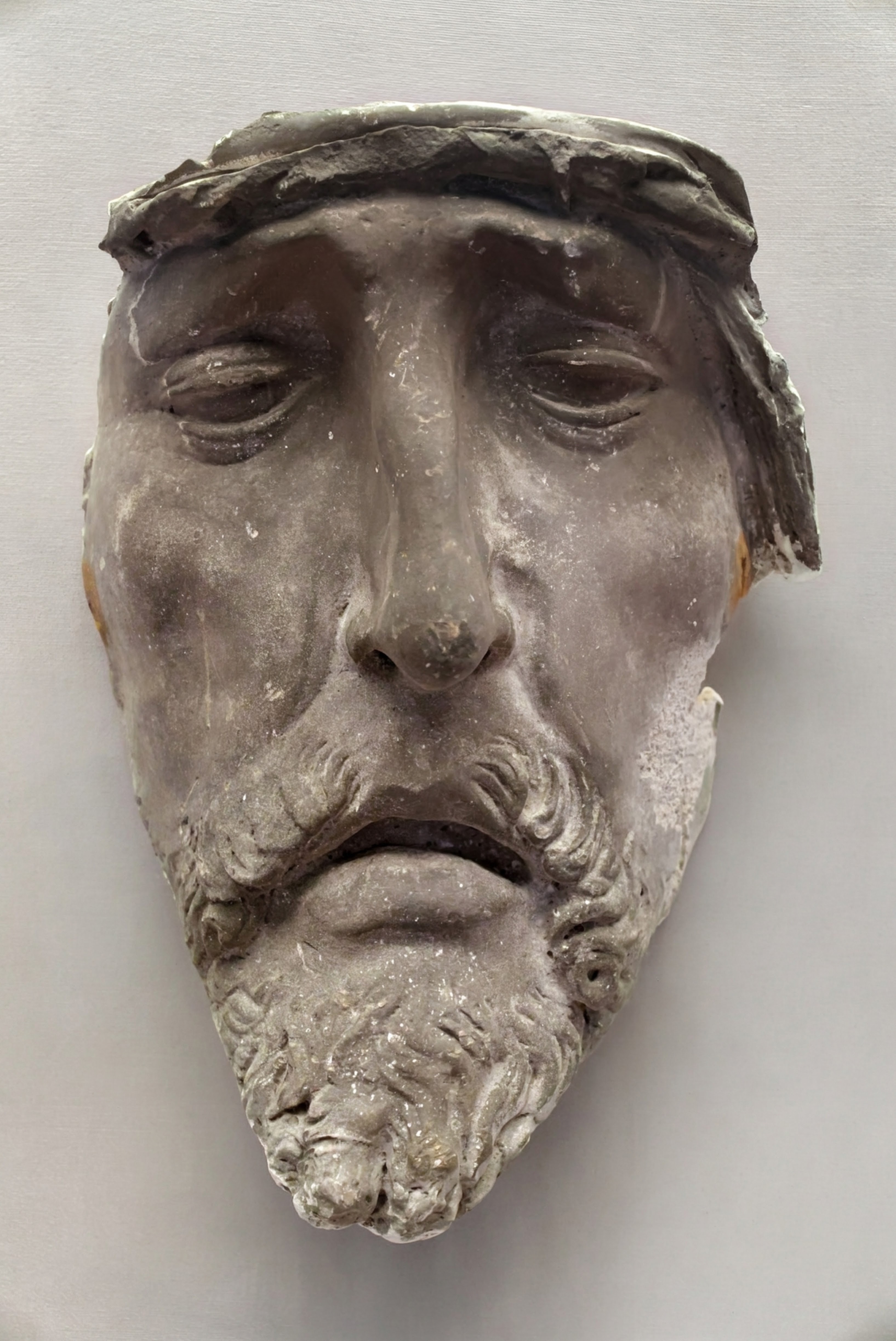
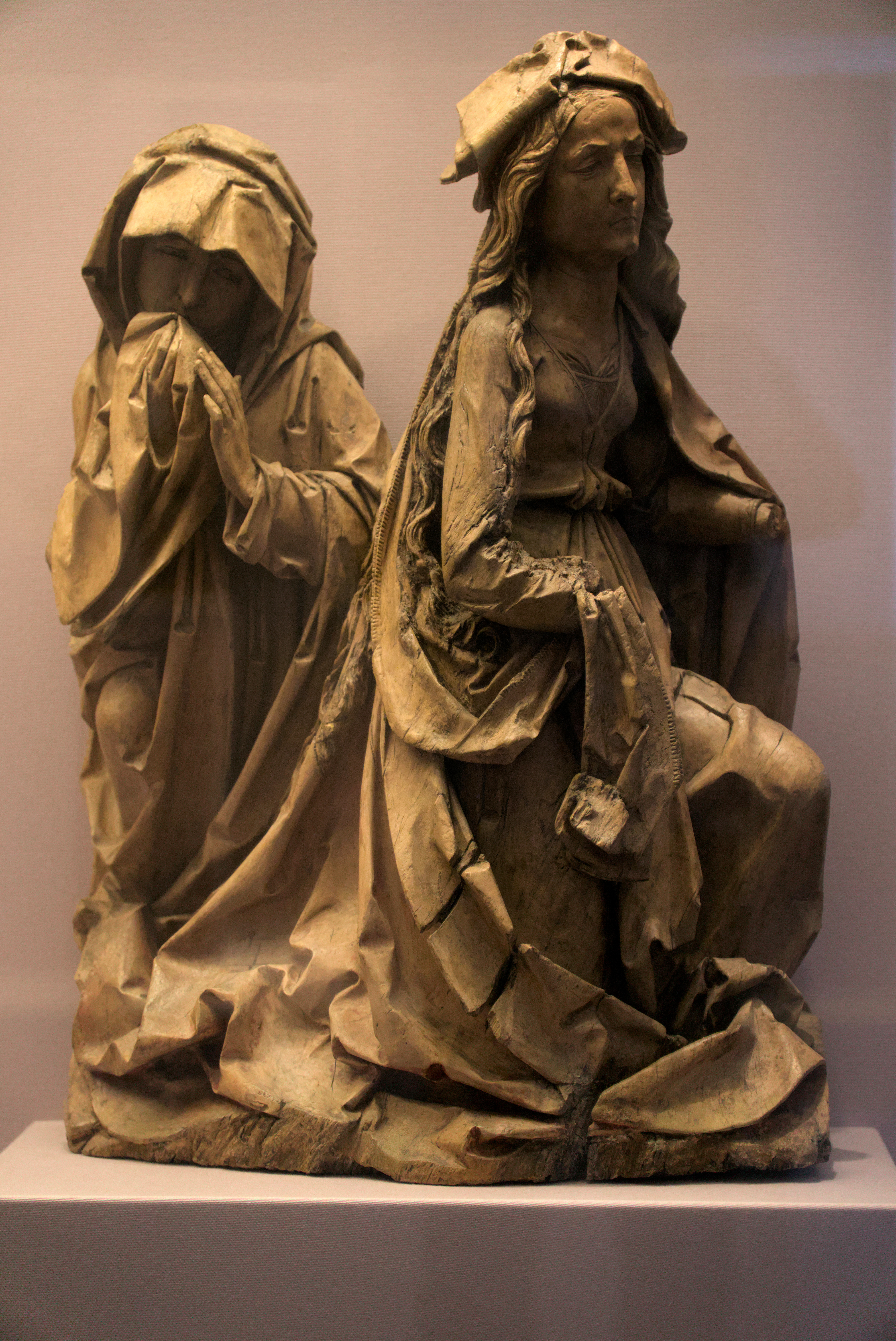
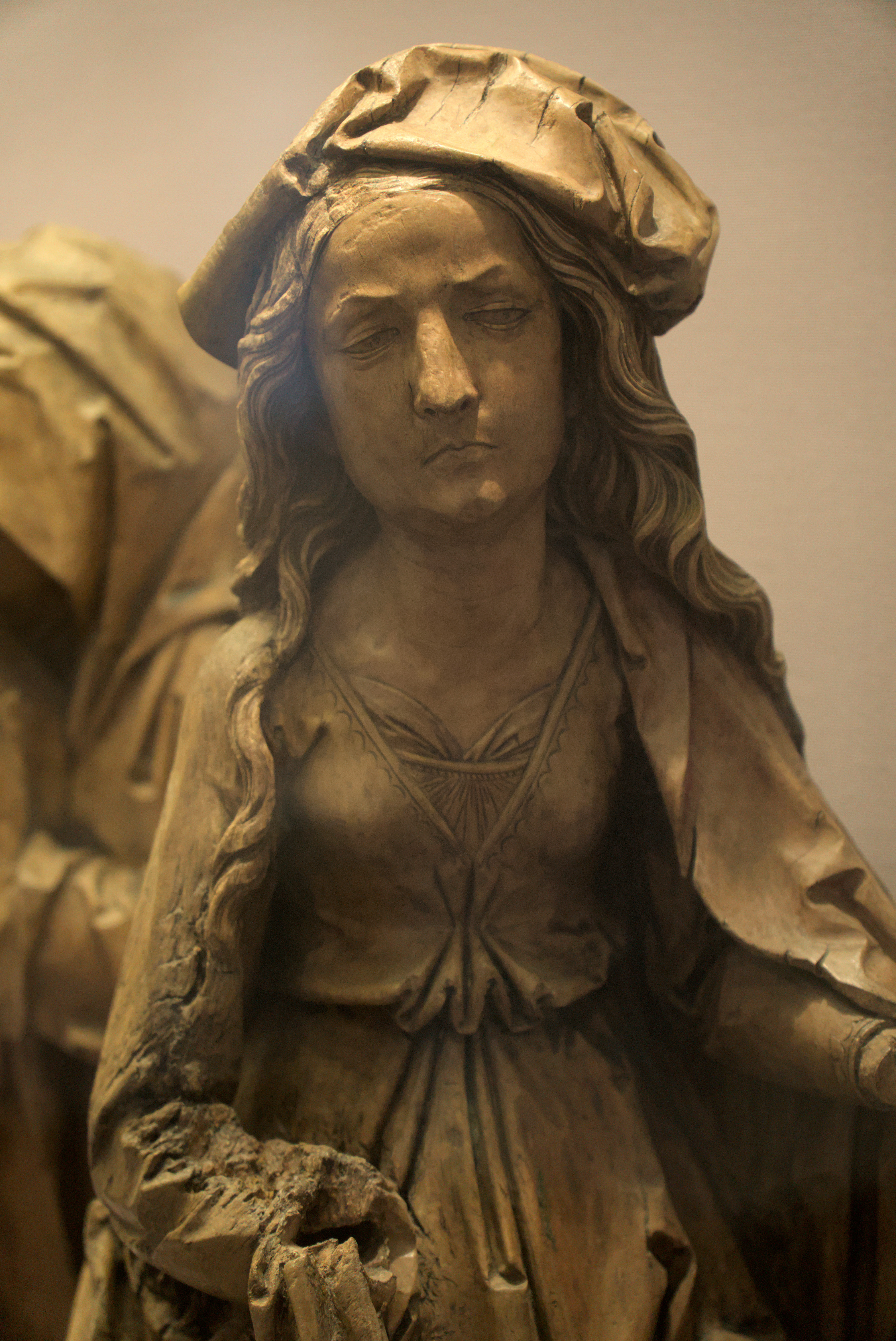
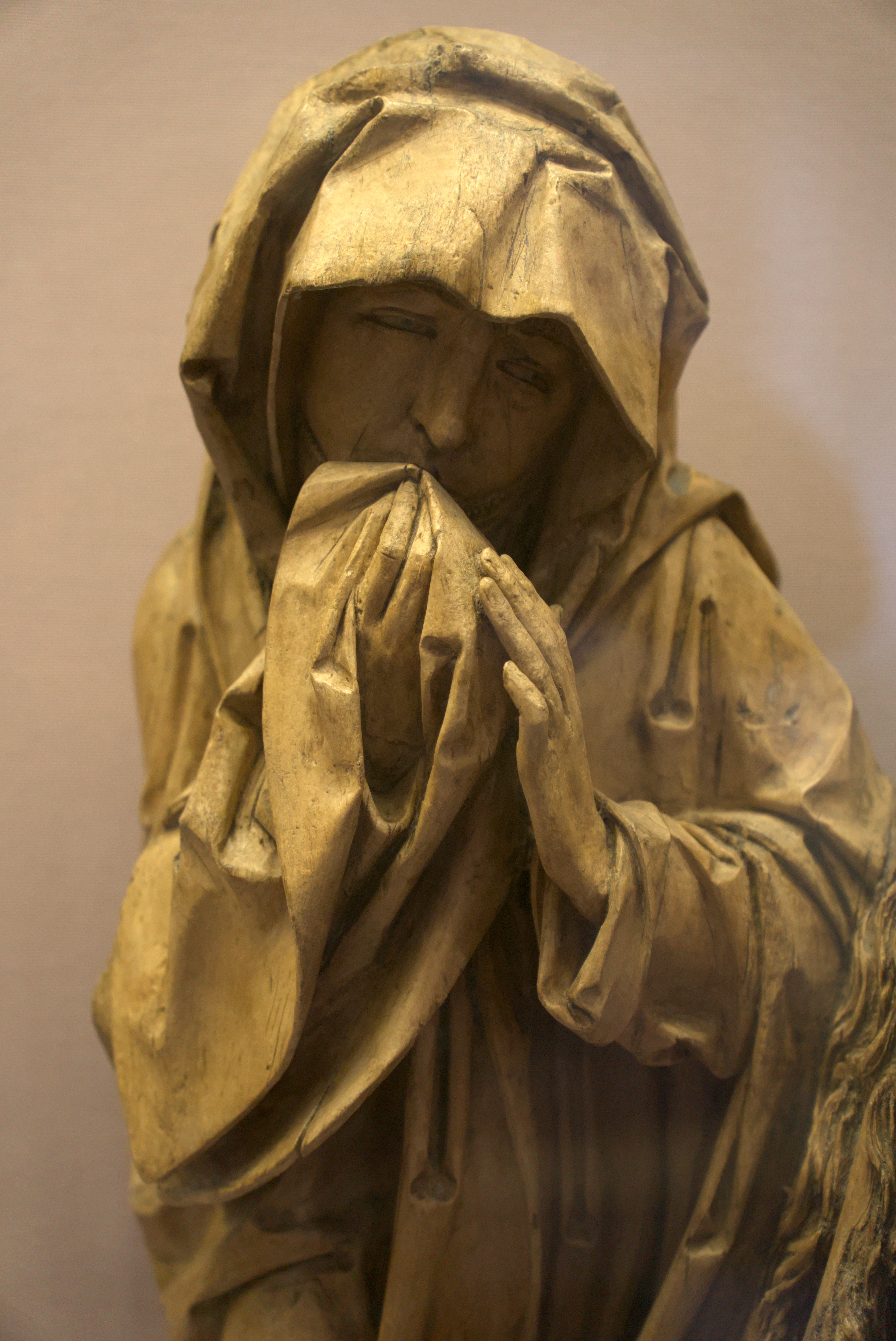
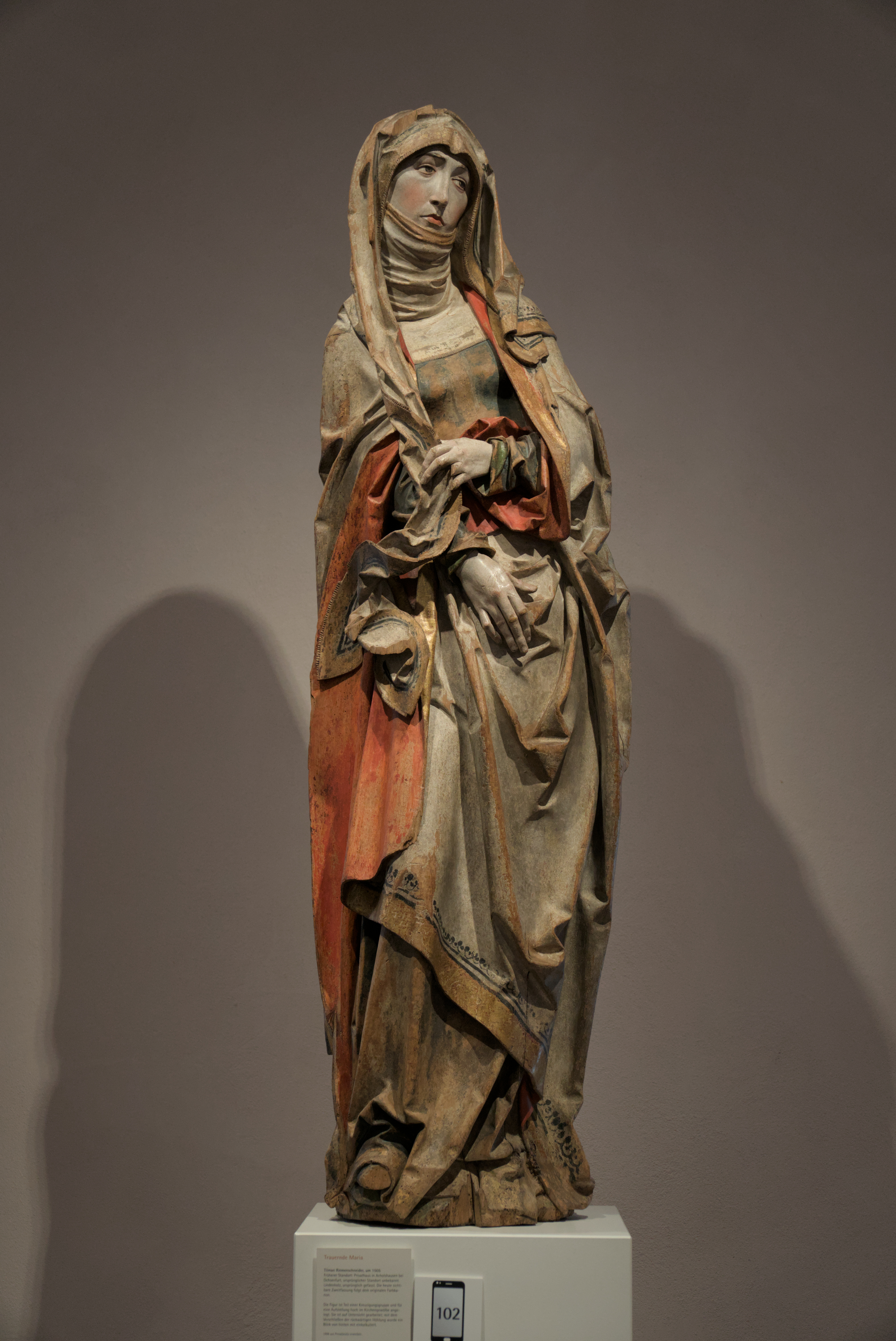
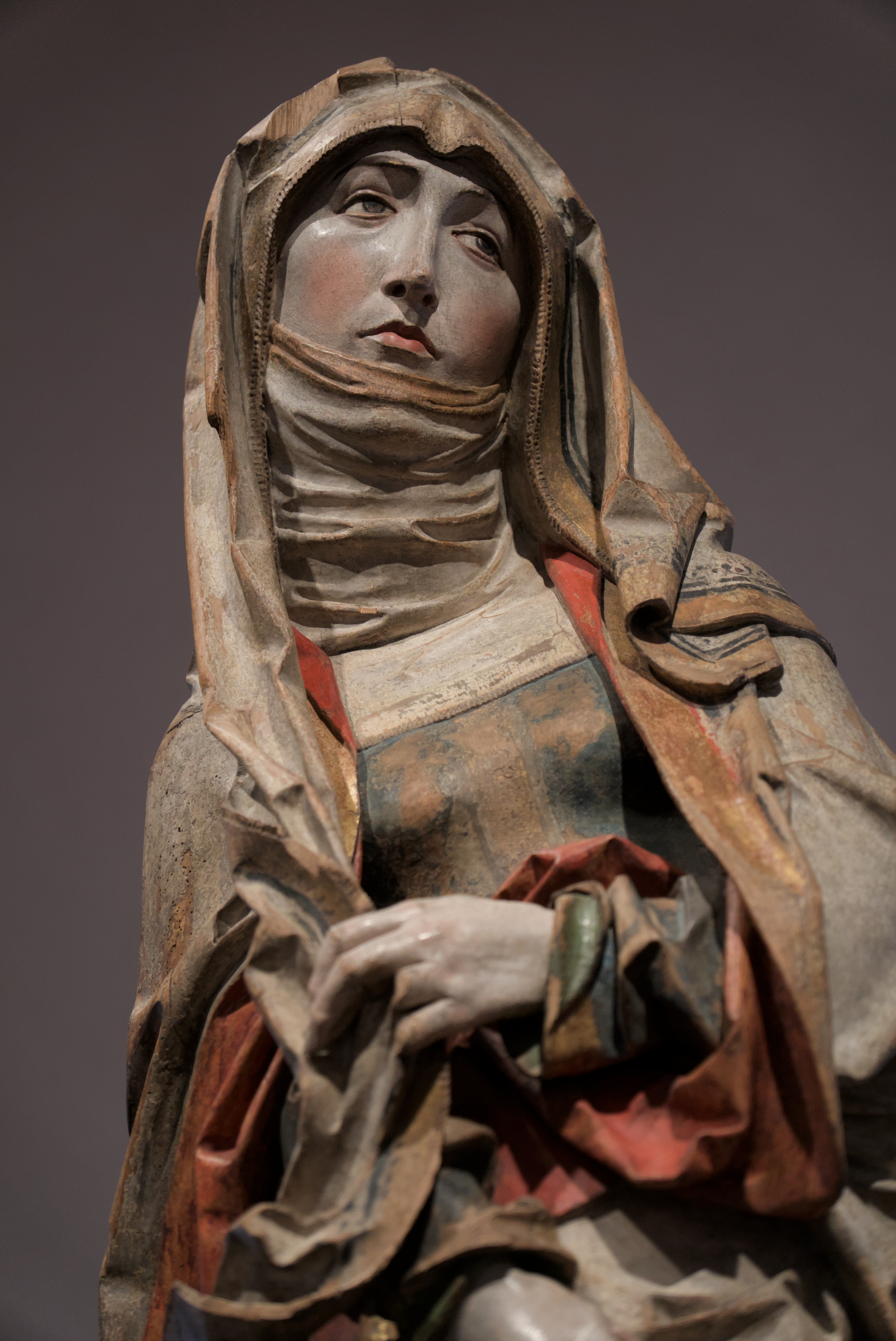
And the remaining works below are by miscellaneous other artists from Franconia.
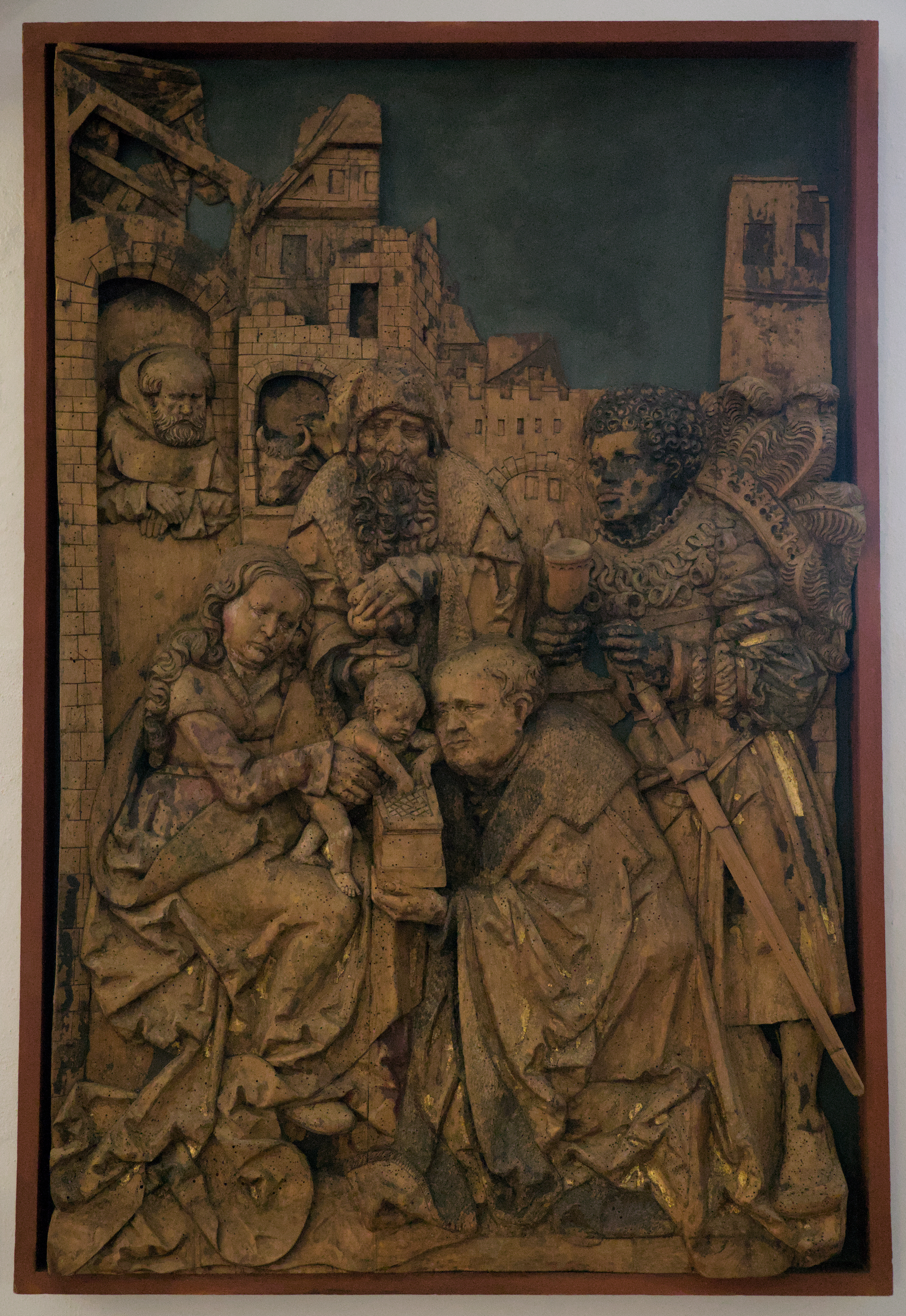
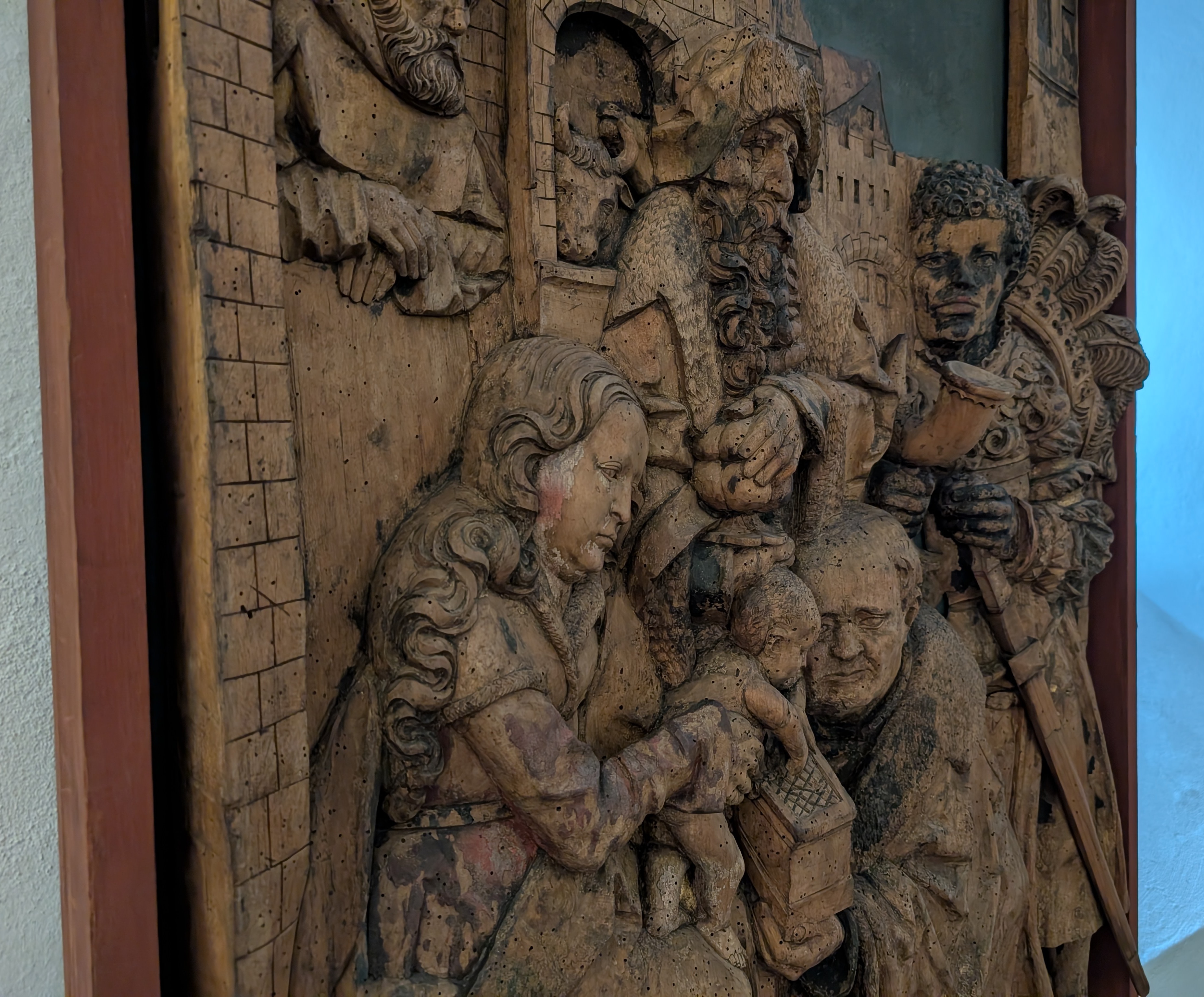
One high-relief wood carving shows the Adoration of the Magi. Look at Balthasar’s feathery headdress!
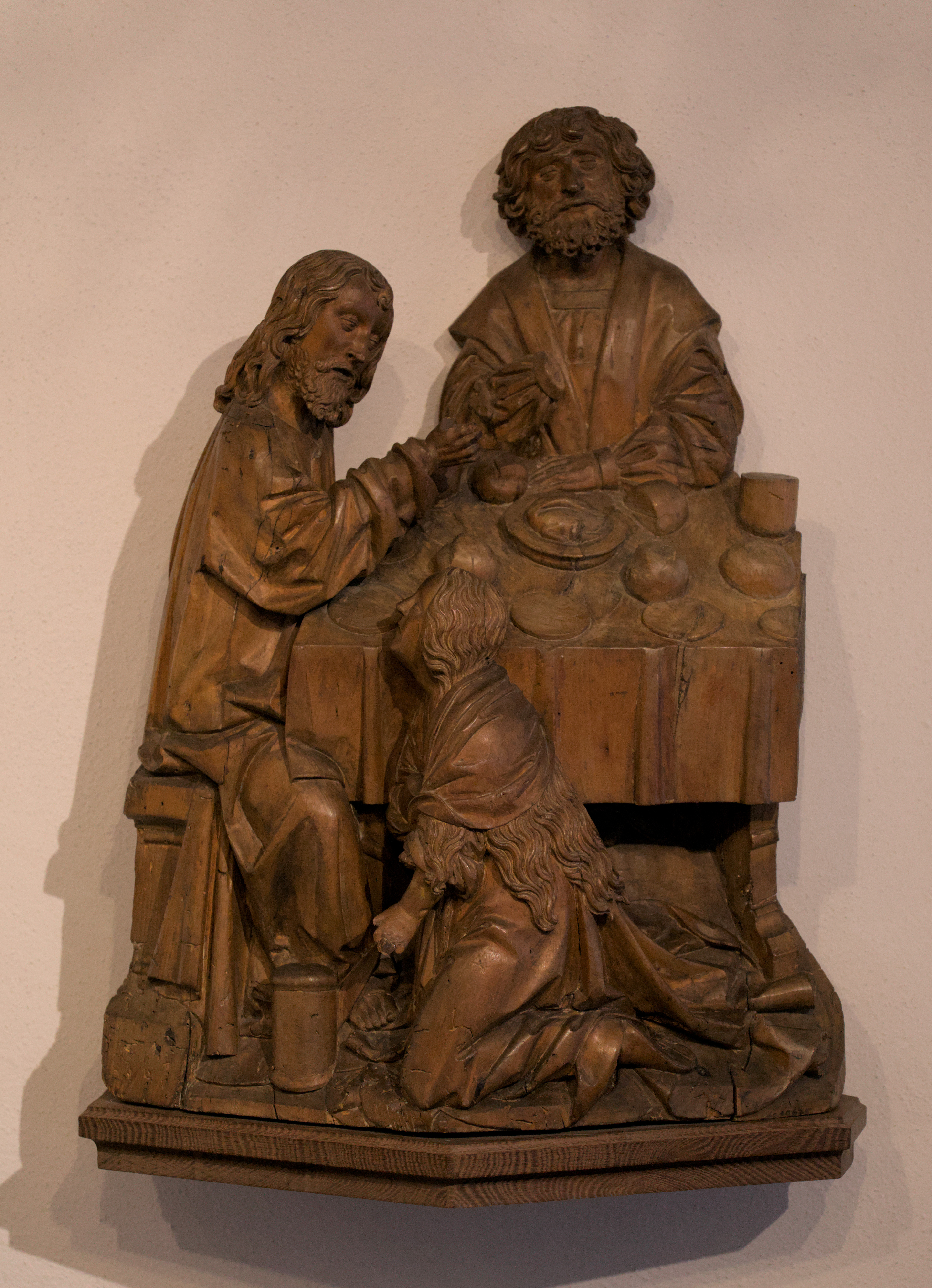
Another wood sculpture portrays the story from Luke 7:36–50, about the unnamed “sinful woman” anointing the feet of Jesus at the house of Simon the Pharisee, who was hosting a meal. Jesus commends the woman’s act of gratitude, costly love, and hospitality, much to Simon’s consternation. Throughout much of church history, this woman was identified as Mary Magdalene—a view almost all present-day biblical scholars reject. But I use the title the museum provides.
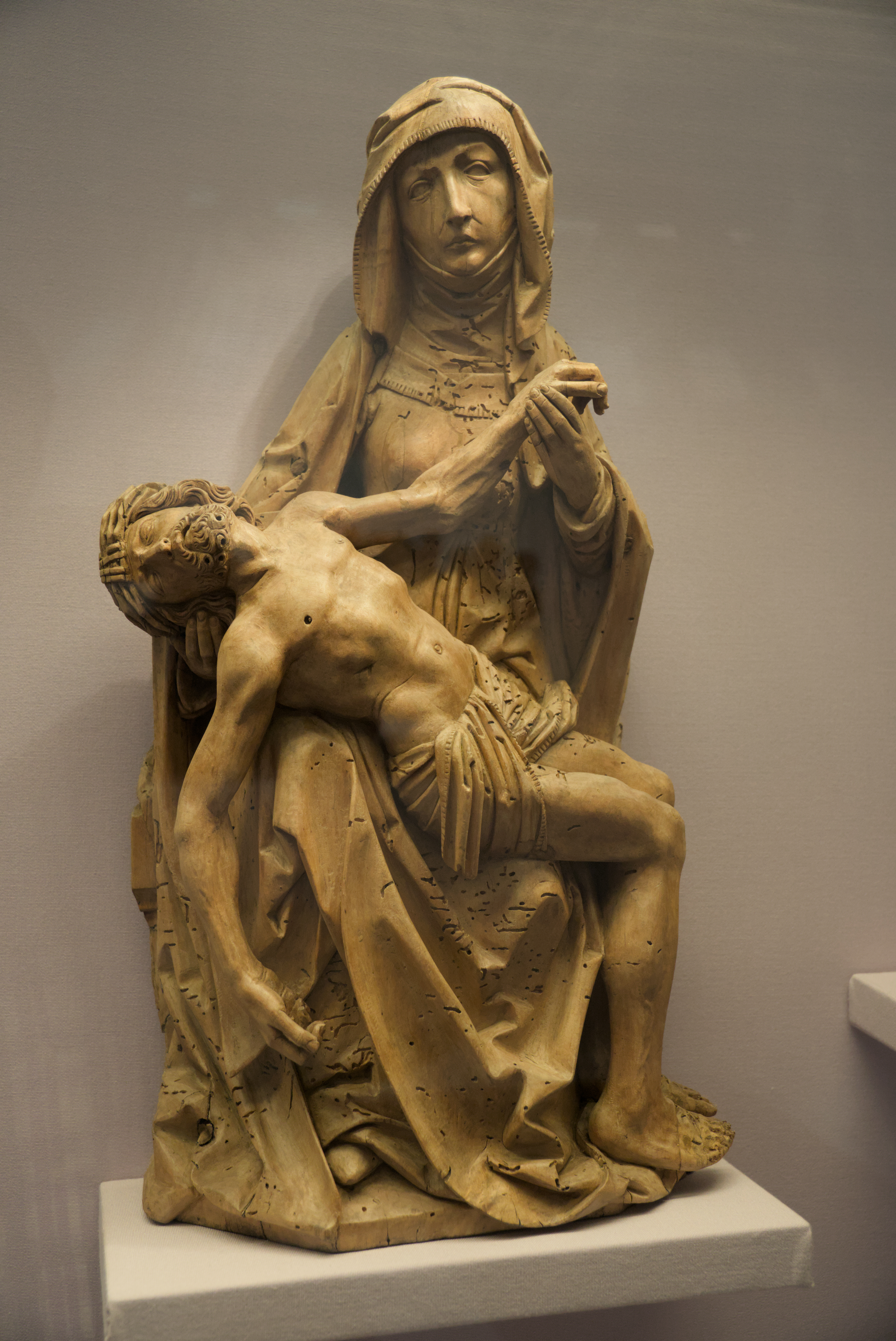
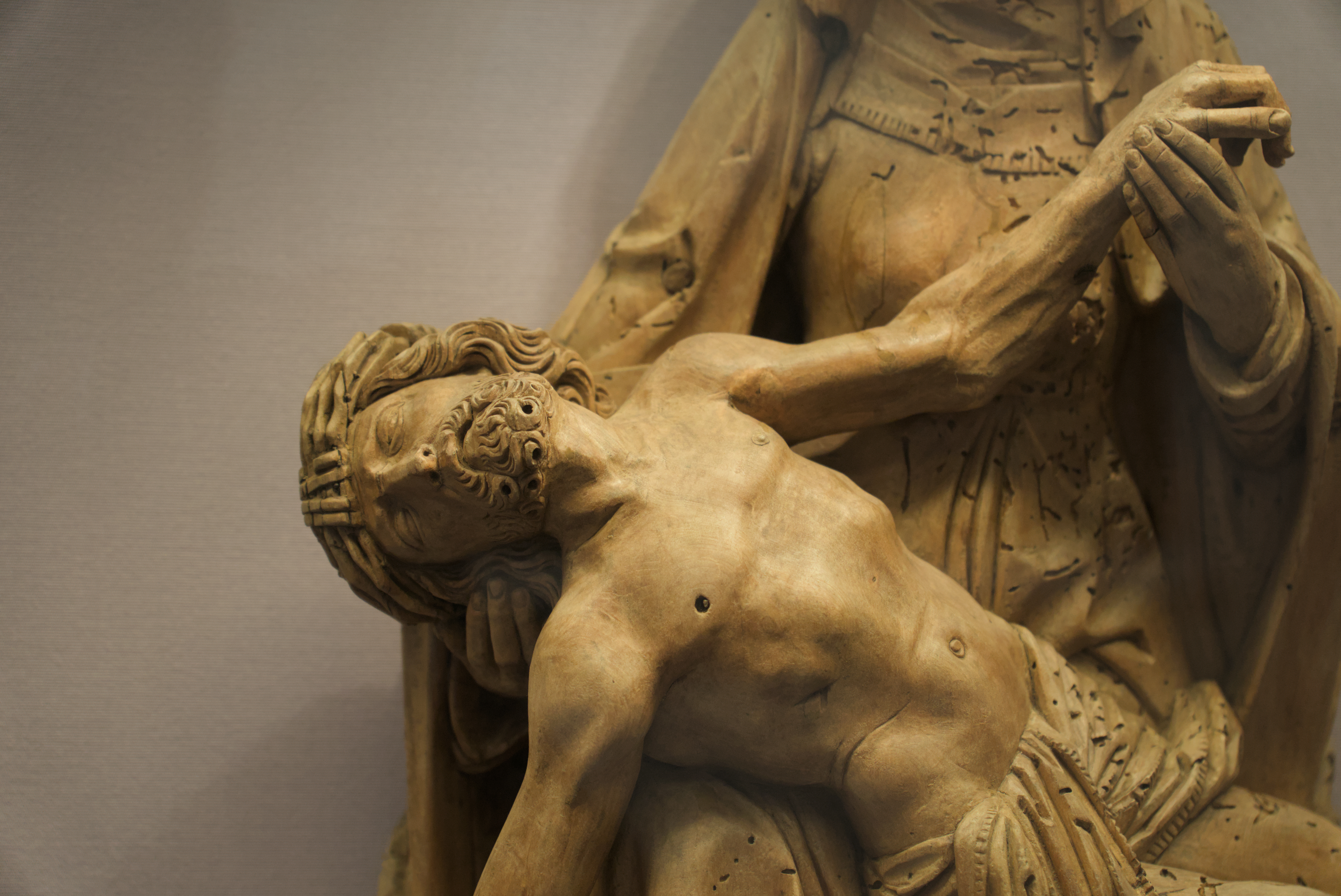
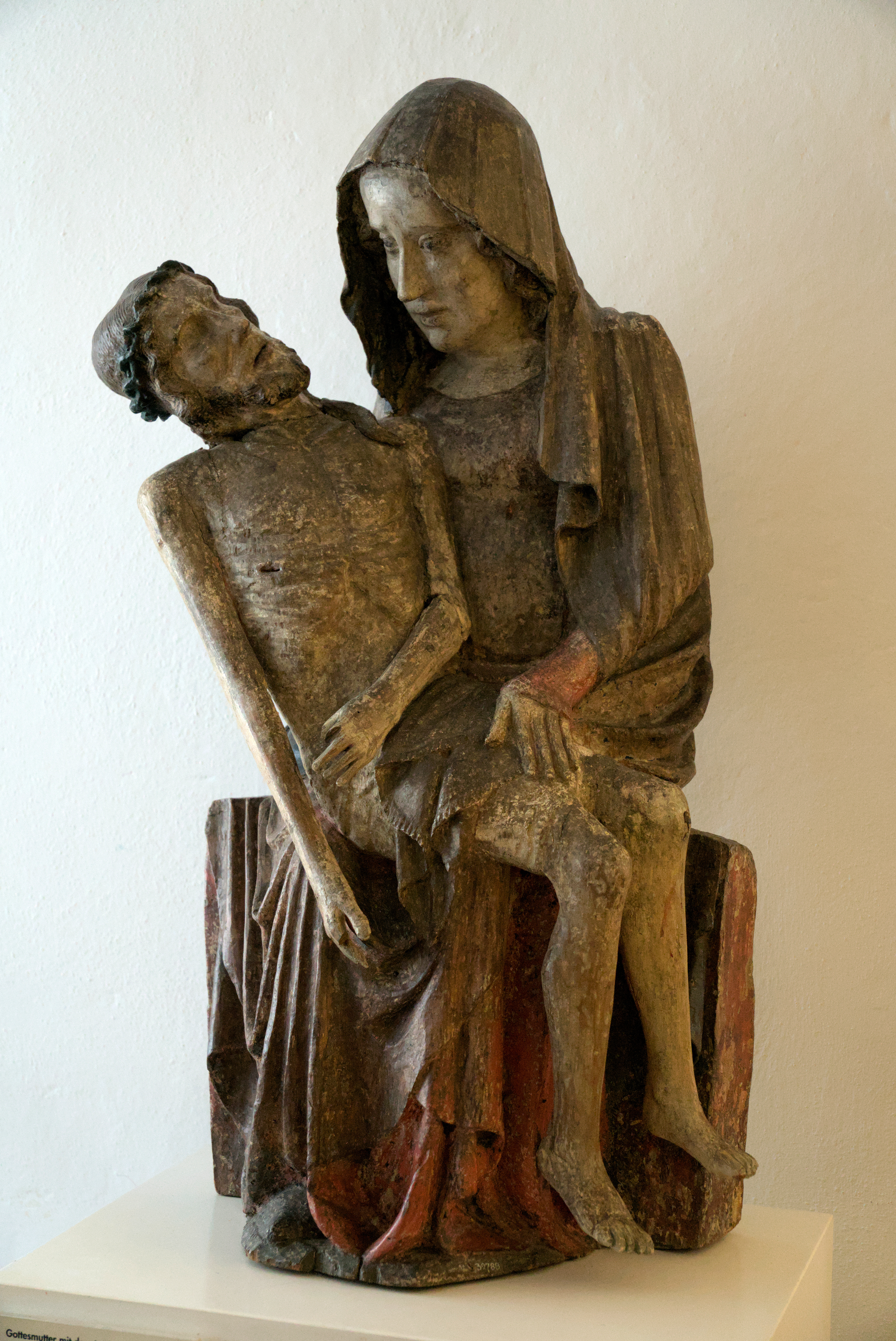
One of the most moving sculptures I saw shows Mary cradling her dead son in her lap, a devotional image type known in German as the Vesperbild (literally “evening picture”). This image type originated in Germany in the early 1300s, spreading throughout Europe, including, around 1400, Italy, where it took on the name Pietà, Italian for “pity” or “compassion.”
Another image type that originated in Germany is the Gnadenstuhl, variously translated as “Mercy Seat” or “Throne of Grace.” It depicts God the Father holding his crucified Son, with the Holy Spirit as dove in the middle—all three persons of the Trinity.
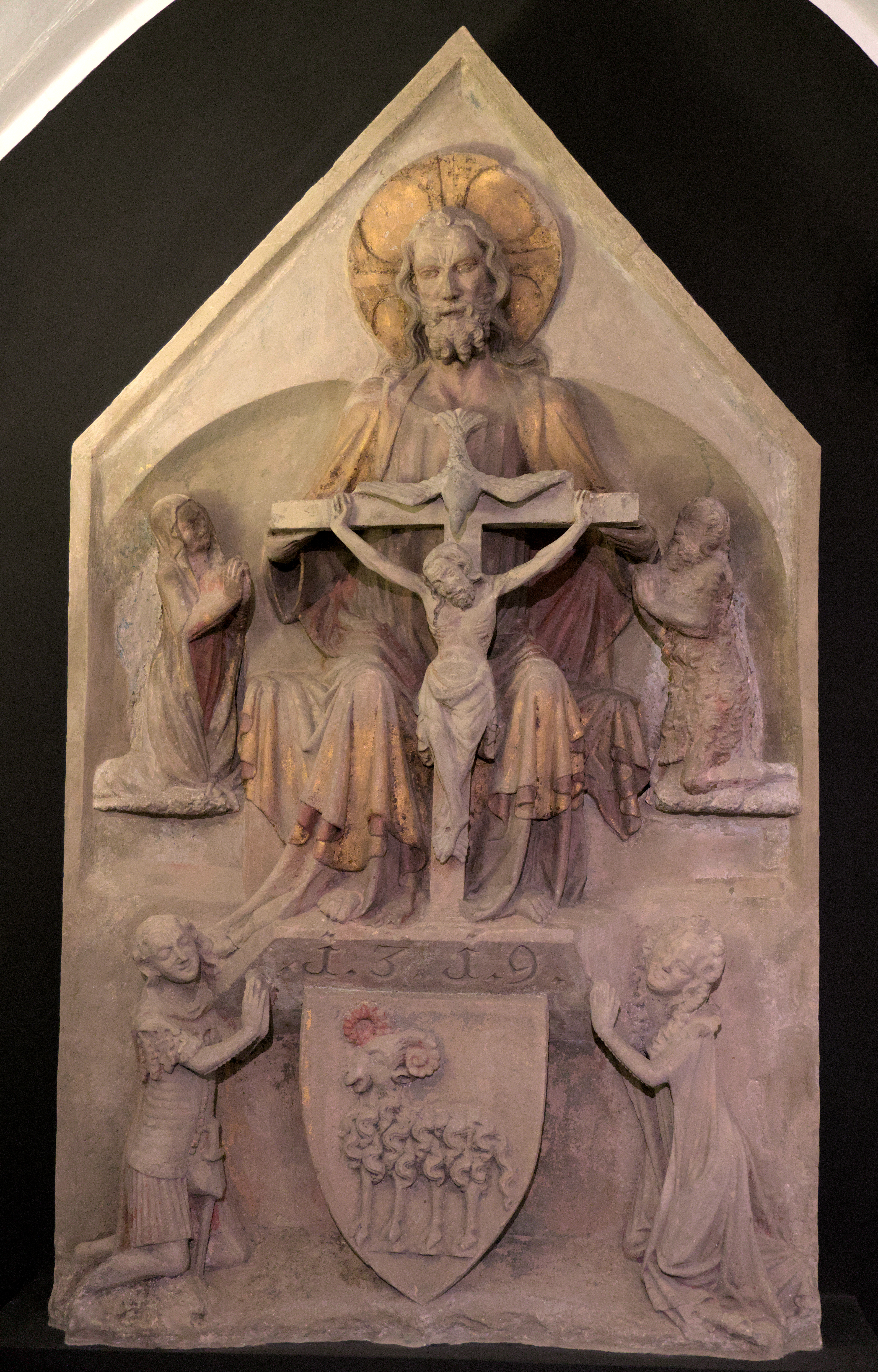
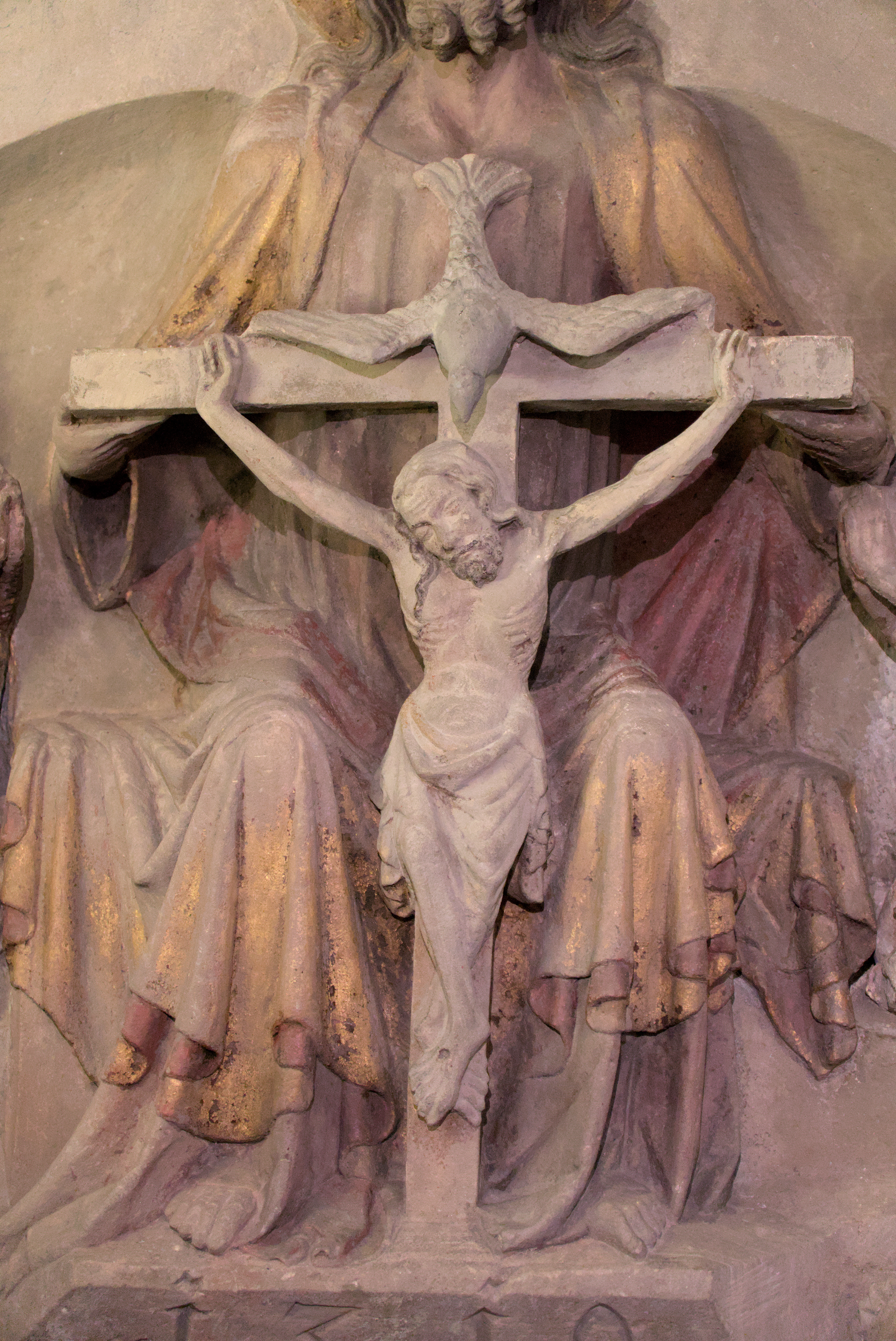
I plan to write a fully developed article on the Gnadenstuhl sometime in the future, as I’m fascinated by its theological implications, which, as I interpret it (and this is clearer in some versions than in others), run counter to a theology of Jesus’s God-forsakenness on the cross. What if, instead of conceptualizing the Crucifixion as an event in which the Father turned his face away from Christ, we saw the Father as with Christ, supporting and sustaining him, and suffering too? What if we saw the Crucifixion not as a temporary break in God’s triunity, the Father severing fellowship with the Son, the punisher versus the punished, but rather Christ on the cross as the object of the Father’s loving gaze, as he always had been? I have much more thinking and reading and consultation to do on this, as I want to be careful with my words. So for now I’ll share just this one example, and defer further theological discussion until another time.
This stone relief was originally located in the Bürgerspital zum Heiligen Geist (Citizens’ Hospital of the Holy Spirit) in Würzburg, founded in the early fourteenth century by Johann von Steren to provide shelter for the poor and treatment for the sick. Johann also endowed the hospital with vineyards that are maintained to this day, as is a public foundation, which operates senior citizens’ homes and a geriatric rehabilitation clinic. The founder is shown at the bottom left opposite his wife, Megardlis von Steren, their family coat of arms between them. On the middle level, flanking the cross, are Mary and the camel-hair-clad John the Baptist, interceding.
Here’s a (German-language) video the museum made about this Gnadenstuhl:
If you’ve been following my blog since Lent, you’ll recognize this next guy. It’s a Palmesel, literally “Palm Donkey,” mounted by a Christ figure, representing Christ’s entry into Jerusalem the week of his death. It’s not known which German town it comes from, but it would have been wheeled through that town’s streets on Palm Sundays.
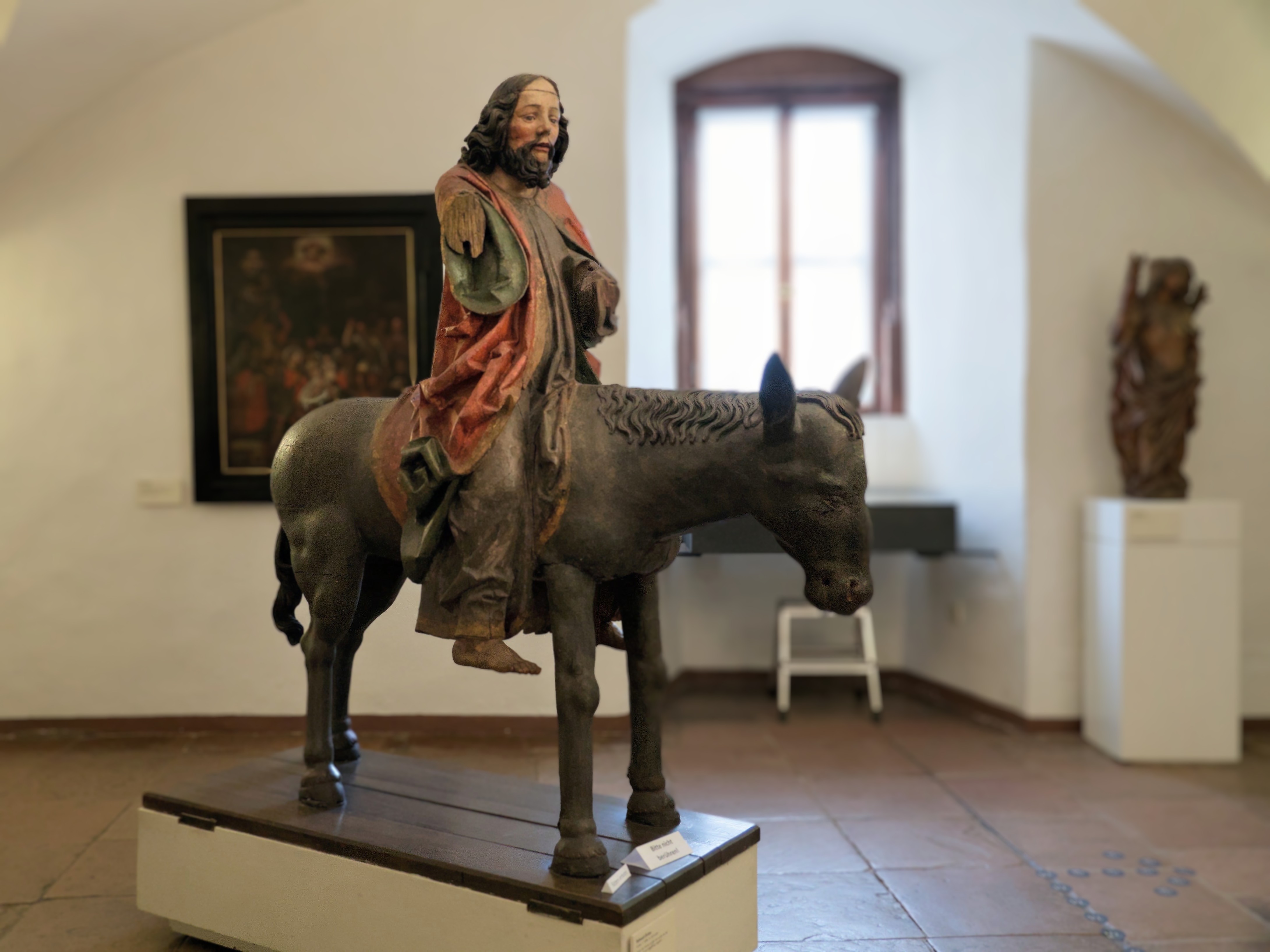
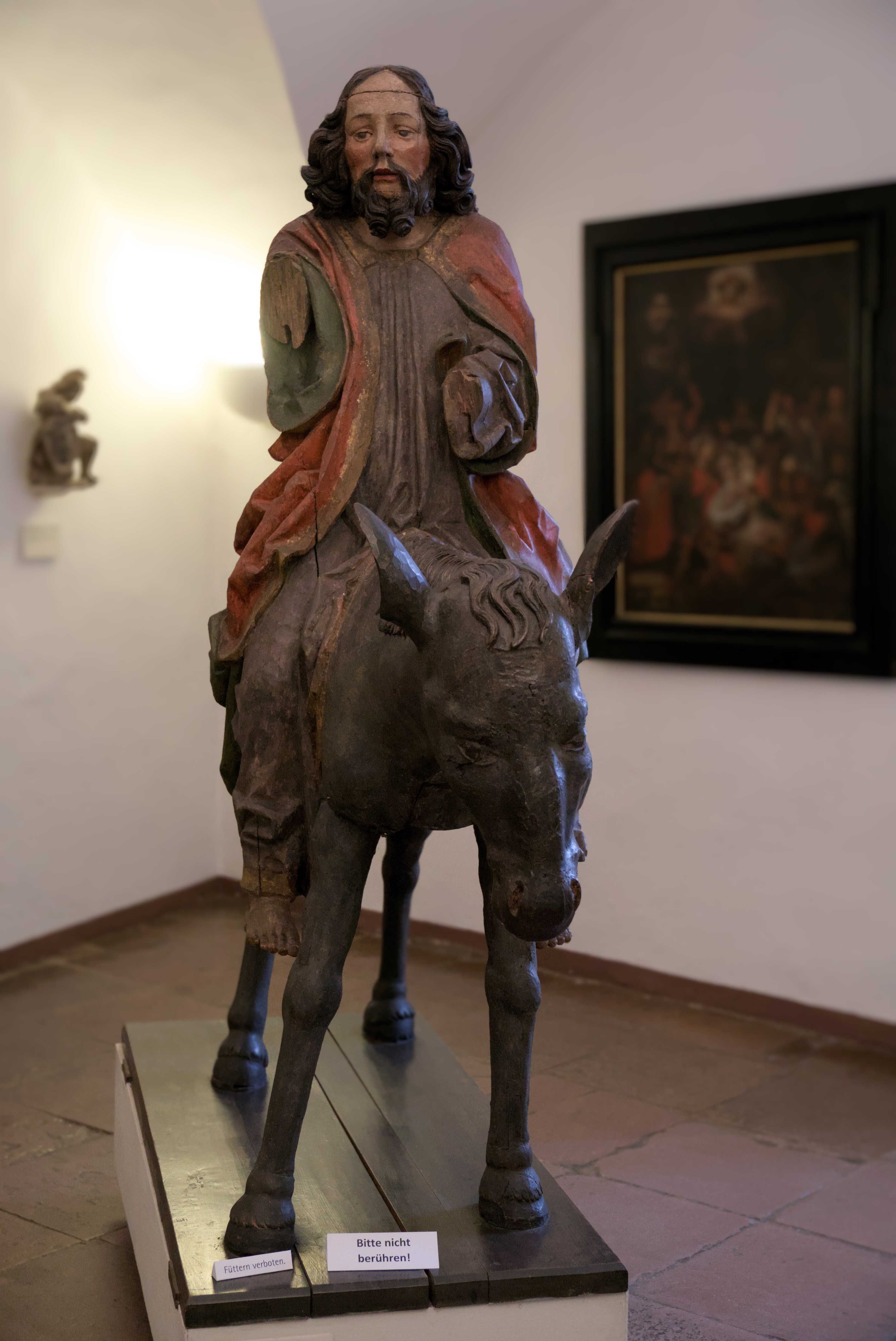
(See “The Palmesel (‘Palm Donkey’): A Holy Week Tradition from Medieval Germany.”)
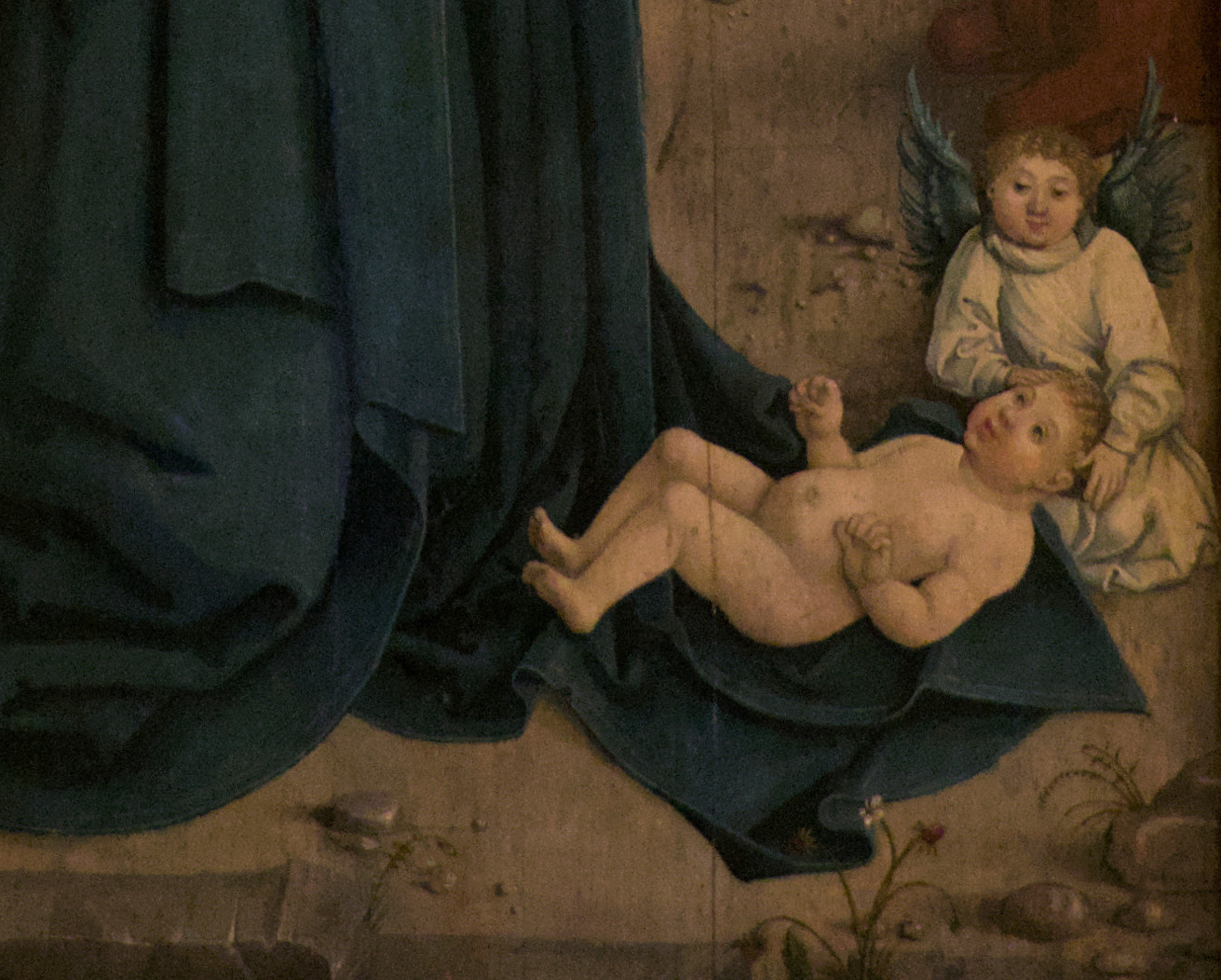
The Museum für Franken majors in sculpture, minors in painting. One pair of paintings I really like is from an early sixteenth-century altarpiece depicting the Nativity and the Adoration of the Magi. On the left, I love how the little angel supports the head of Christ so that it’s not lying on the hard ground; he kneels, gently lifts, places on his lap.
And lastly, another pair of altarpiece wings—depicting St. Margaret and St. Apollonia. The rest of the altarpiece was destroyed in 1945.
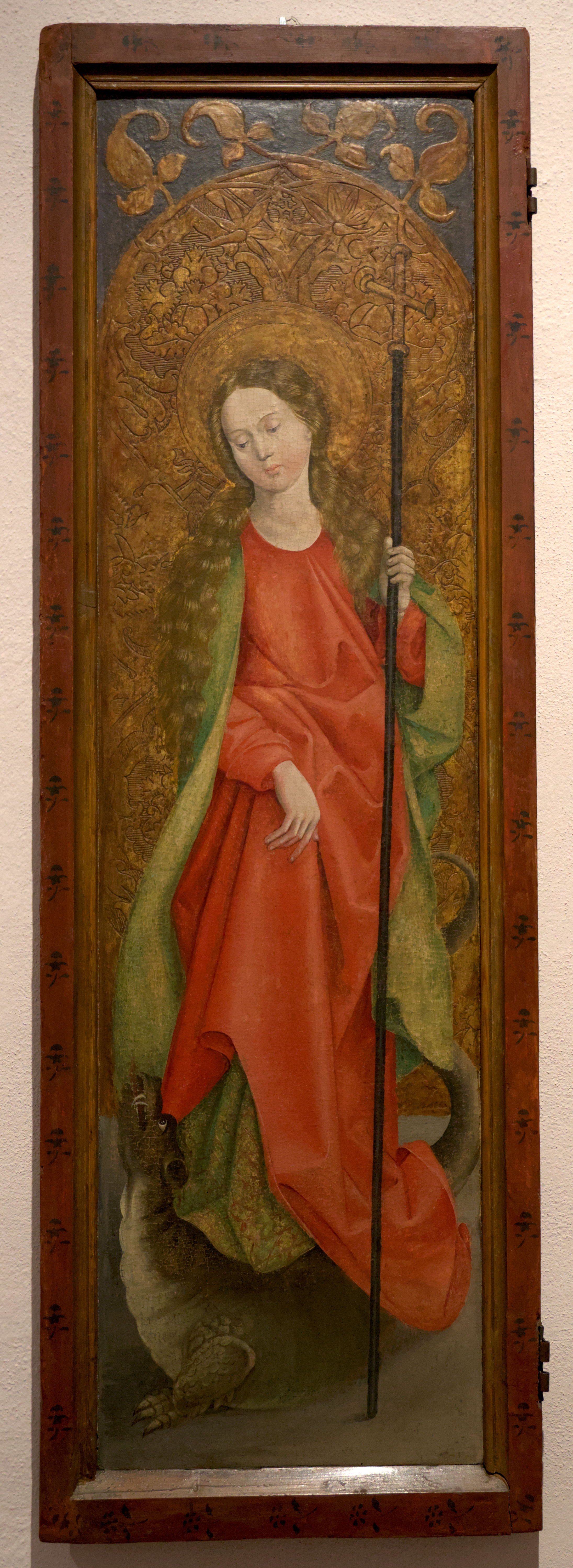
Margaret was an early fourth-century Christian martyr from Antioch of Pisidia. Her hagiography is pretty wild. The most famous legend associated with her is that, when she was in prison for refusing to renounce Christianity, she prayed that God would show her the enemy who was fighting her. Satan then appeared in the form of a dragon and swallowed her whole. But when she made the sign of the cross inside him, his belly burst open, and she escaped unscathed. She is traditionally shown holding a cross staff and standing atop or ripping through a dragon, imaging the triumph of good over evil.
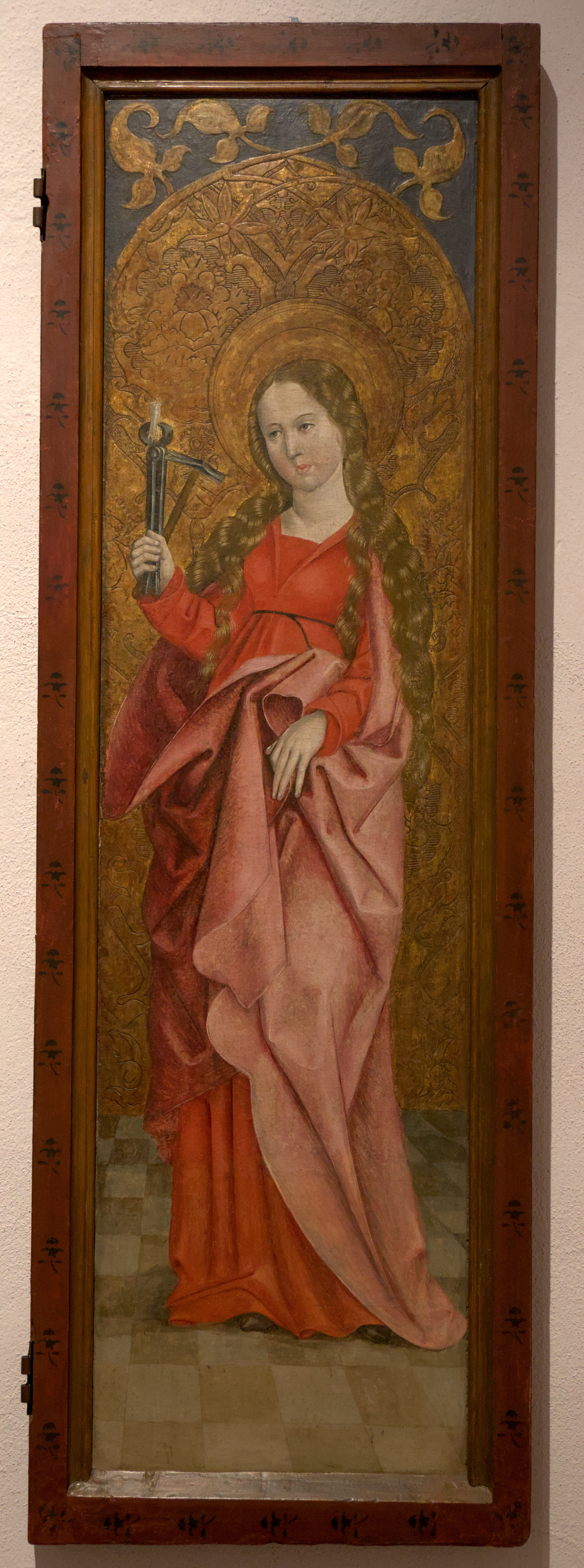
Apollonia was a second-century Christian martyr from Alexandria whose torture included having all her teeth pulled out or shattered. That’s why she’s traditionally shown holding a set of pliers with a tooth in their grip. Here she also holds a claw hammer!
These two paintings are by Brother Martinus Schwarz, the guardian (superior) of the Franciscan monastery in Rothenburg ob der Tauber. On several occasions, he was enlisted by Riemenschneider to paint his sculptures.
I hope you enjoyed this little four-part travelogue. I received an earlier request to share more from my art-related travels (on average, I take an international trip every other year, and it always includes art!), including itineraries, and/or recommendations for religious art destinations. Any itinerary would need to take into account how long you have, who you’re traveling with, what your (and your traveling companions’) other interests are, and your budget. I have more stamina than most when it comes to structuring a day out in the city; others prefer a more leisurely pace, or have to adapt to the needs of young kids. In nine days, I toured Frankfurt, Würzburg, Rothenburg, Nuremburg, Munich, and (just over the border in Austria) Salzburg. The trip would have looked different if I were traveling with friends or parents or children.
If you’re interested in traveling to southern Germany and focusing on religious art, hit me up by email, and I’d be happy to share a list of the museums and churches I visited, and what I thought was worth it versus not.
If you’ve been to that region, or live there, feel free to share some of your favorite places or artworks in the Comment field below.

