All photos in this post are my own.
Late this August, my husband and I flew to Frankfurt, Germany, and from there traveled south, spending nine days in the state of Bavaria. I built our itinerary mainly around religious art I’d been wanting to see, an interest my husband indulges and even appreciates (just not to the same degree I do!).
Bavaria is most associated with the Baroque and Rococo art and architectural styles, which are not styles I gravitate to. I was on the lookout for medieval treasures mostly, but with an openness to surprises.
I planned for us to stop in the city of Würzburg en route from Frankfurt to Rothenburg ob der Tauber because I wanted to see a unique fifteenth-century tympanum relief in the north portal of the Roman Catholic Marienkapelle (pronounced ma-REE-en-kah-PEL-lay), or St. Mary’s Chapel, depicting one of my favorite Gospel stories. More on that below.
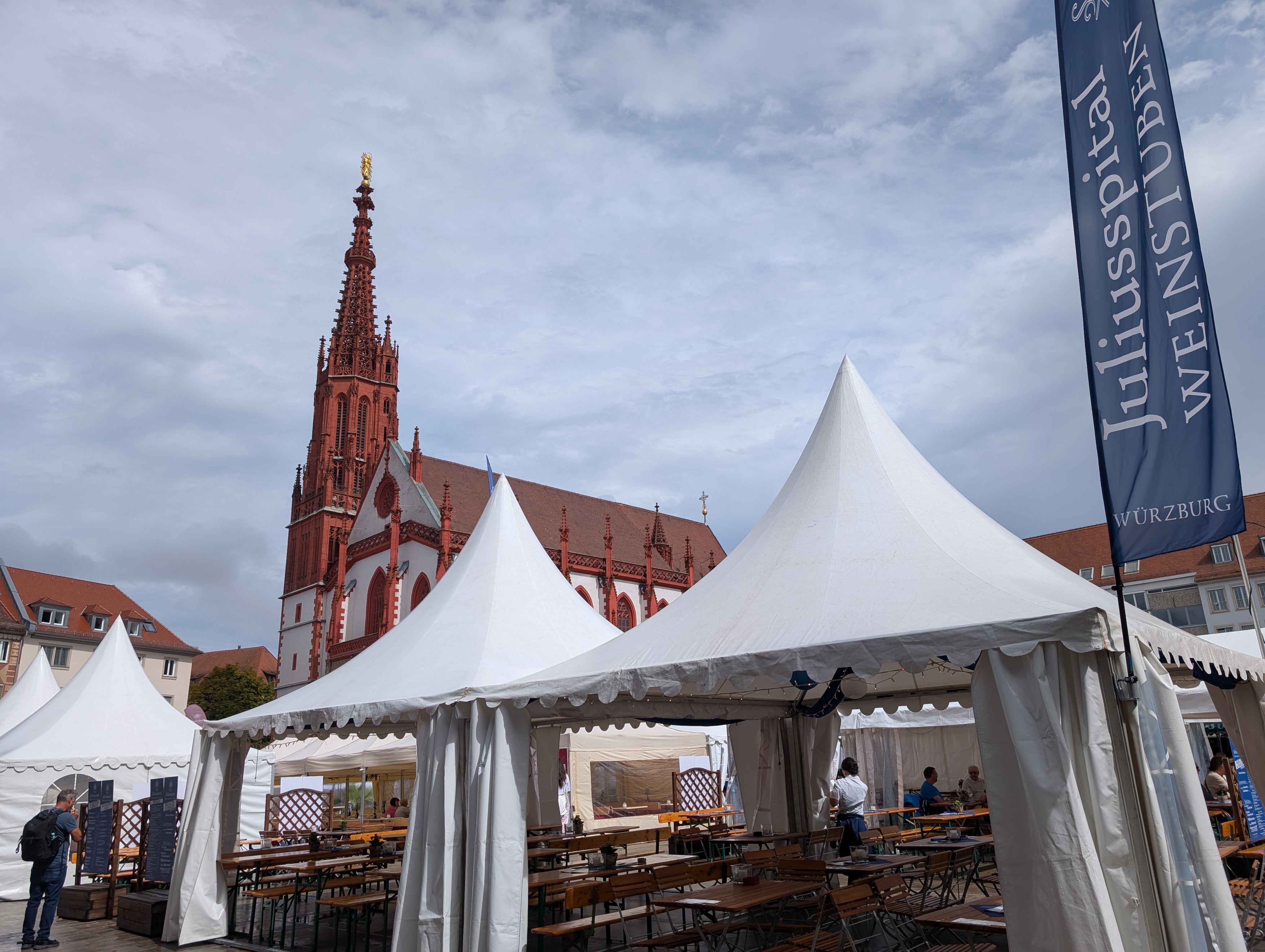
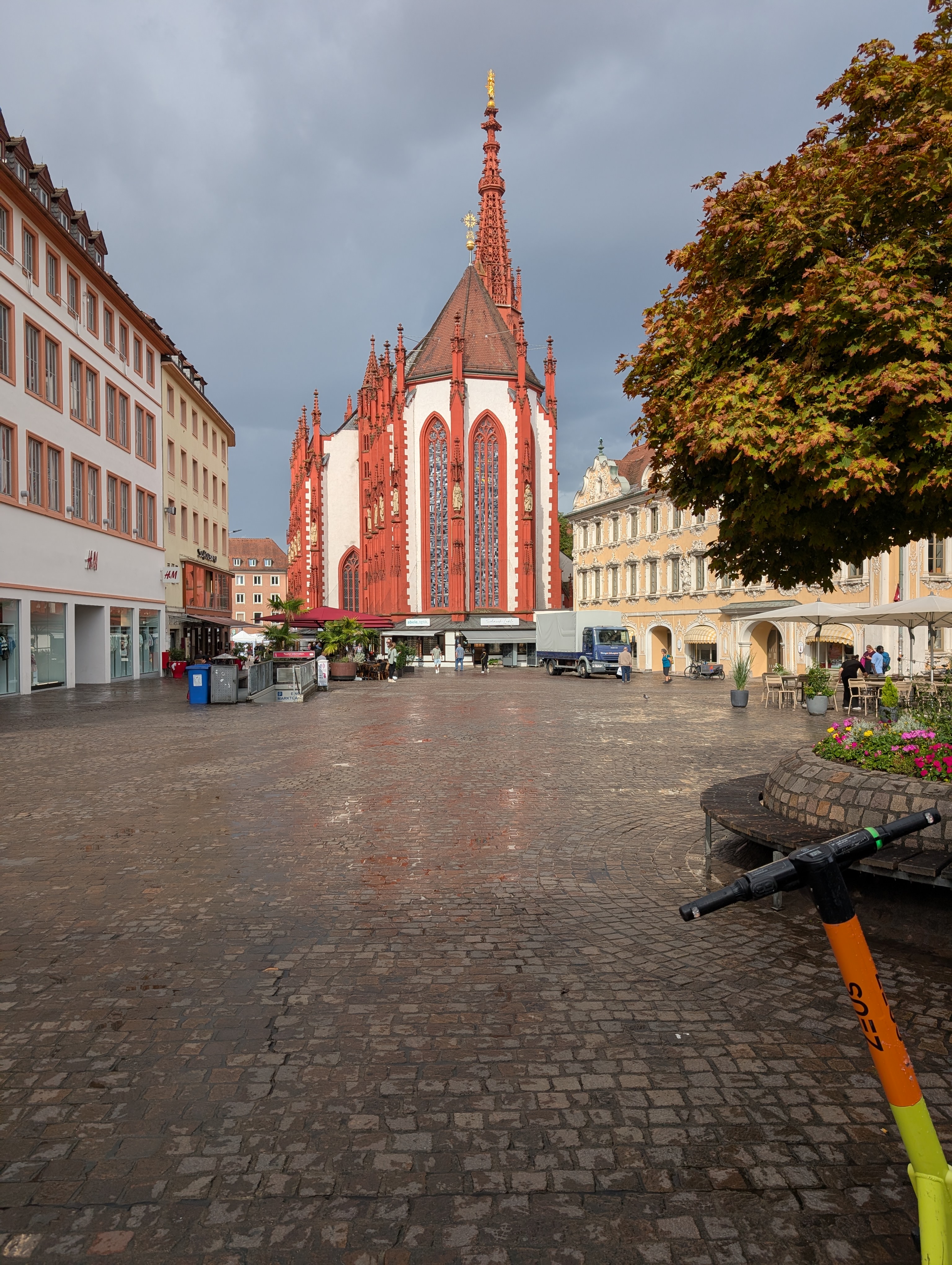
Situated in the town’s Marktplatz (market square), the Marienkapelle is a Late Gothic place of worship built in the late fourteenth and fifteenth centuries. It was heavily damaged by an Allied bombing raid on March 16, 1945—the same raid that, in less than twenty minutes, destroyed 90 percent of the historic city and killed an estimated five thousand people—and was rebuilt and restored in 1948–61.
Various little “swallow shops,” selling gifts and pastries, are built into the exterior base and buttresses.
Because of the building’s size and central location, the Marienkapelle is often mistaken for Würzburg’s cathedral, but it is not: A cathedral is the official seat of a diocesan bishop, and that’s St. Kilian’s, a five-minute walk away. In fact, the Marienkapelle is not even technically a church, according to canon law, because it does not have its own independent parish. It’s legally classified as a “chapel.” However, it is a church in the loose sense of the word, as it hosts regular worship services, administered by the united parishes of St. Kilian’s and Neumünster, which we’ll visit in separate posts.
Thankfully, although the Royal Air Force incendiaries destroyed the timber-framed interior of the Marienkapelle, the heavy masonry portals and recessed entryways largely protected the medieval relief carvings on the exterior.
The tympanum of the main, west portal, through which you enter the chapel, portrays the Last Judgment. Jesus Christ is seated on a rainbow throne, being crowned by an angel. Drawing on Revelation 1:16 and 19:15, two swords protrude from his mouth, the one on his right a (likely mistaken) departure from traditional iconography, which has a lily instead, symbolizing mercy, which acts alongside his justice.
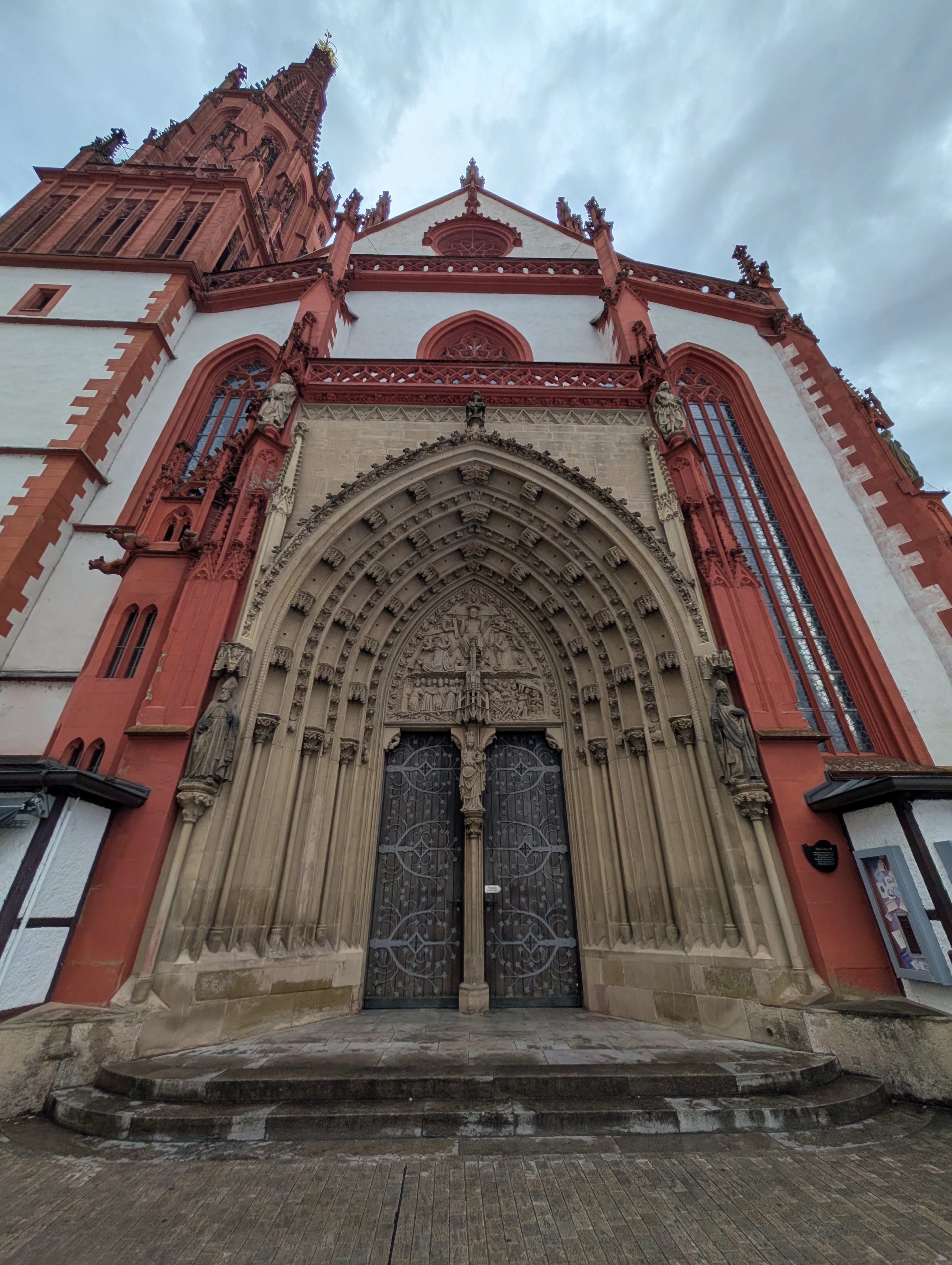
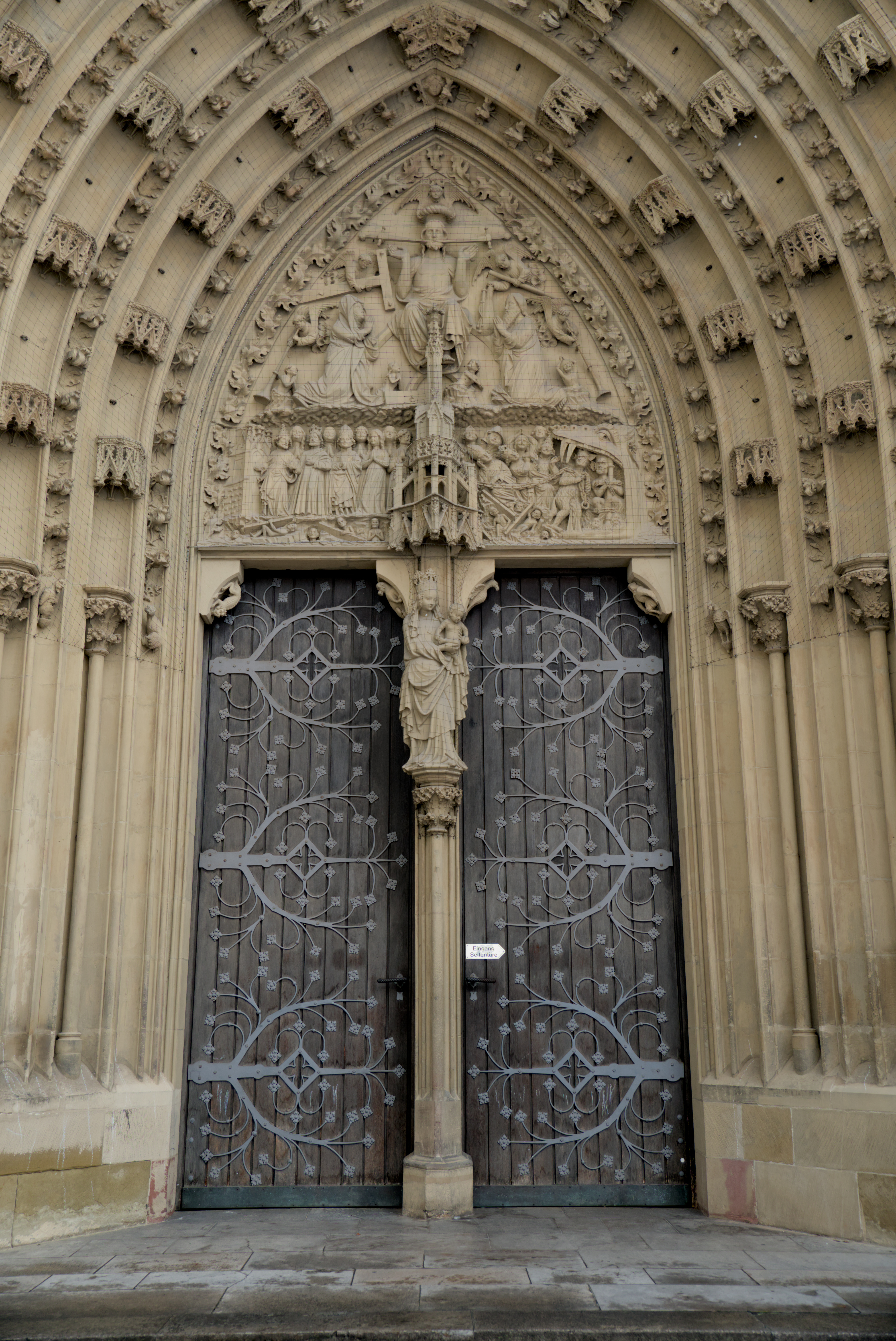
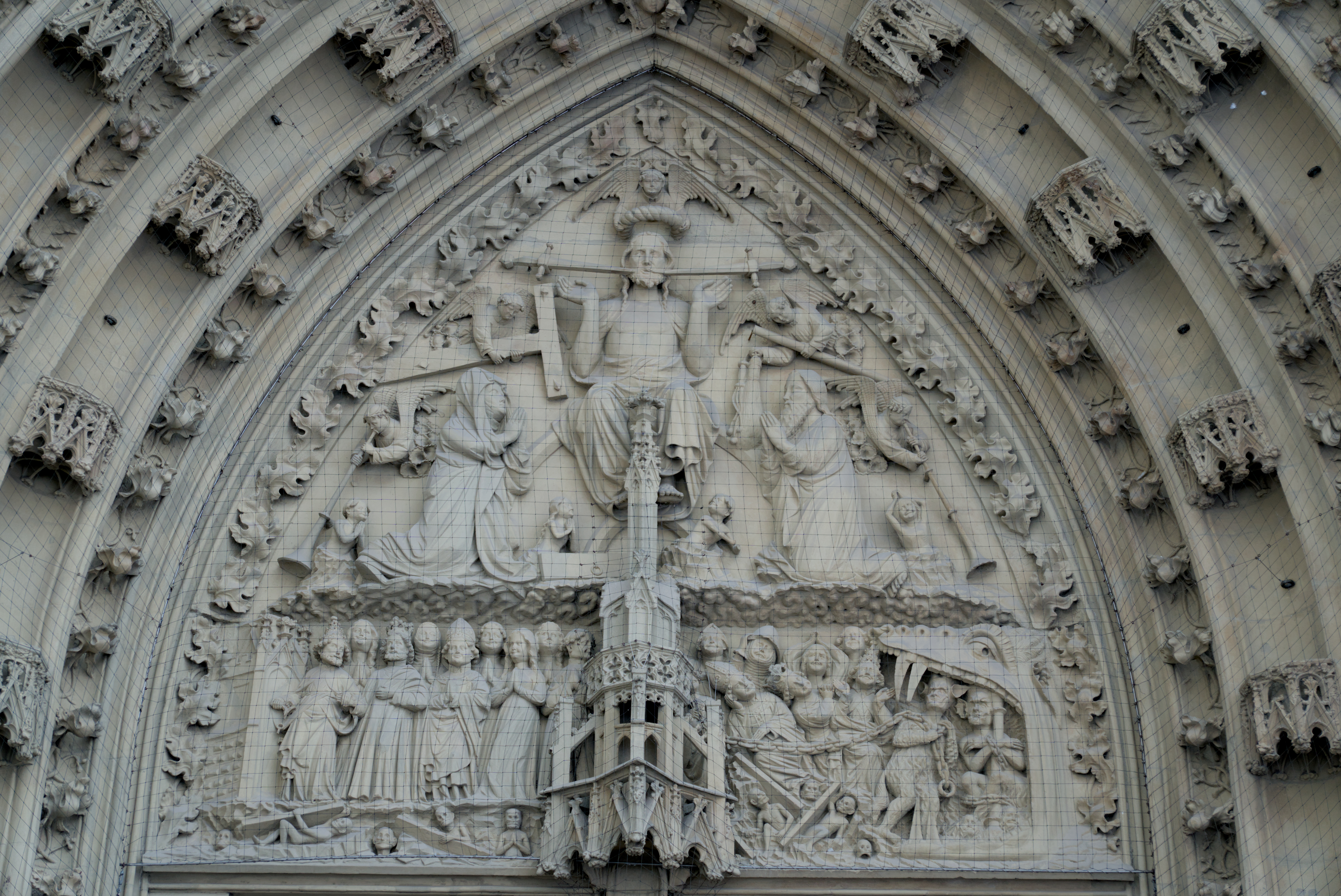
He is flanked by angels carrying instruments of his passion—a cross, a column and whip—and two others blowing trumpets, which wakes the dead from their graves. Mother Mary and John the Baptist intercede for those rising to judgment.
On Christ’s right (our left) are the blessed, and on his left (our right) are the damned, being dragged by a hairy devil into a gaping hellmouth. Among the latter group are kings, knights, and bishops, showing that wealth and institutional status earn you no favors with God, and that outward acts of piety or noble deeds count for nothing if they proceed out of an impure heart.
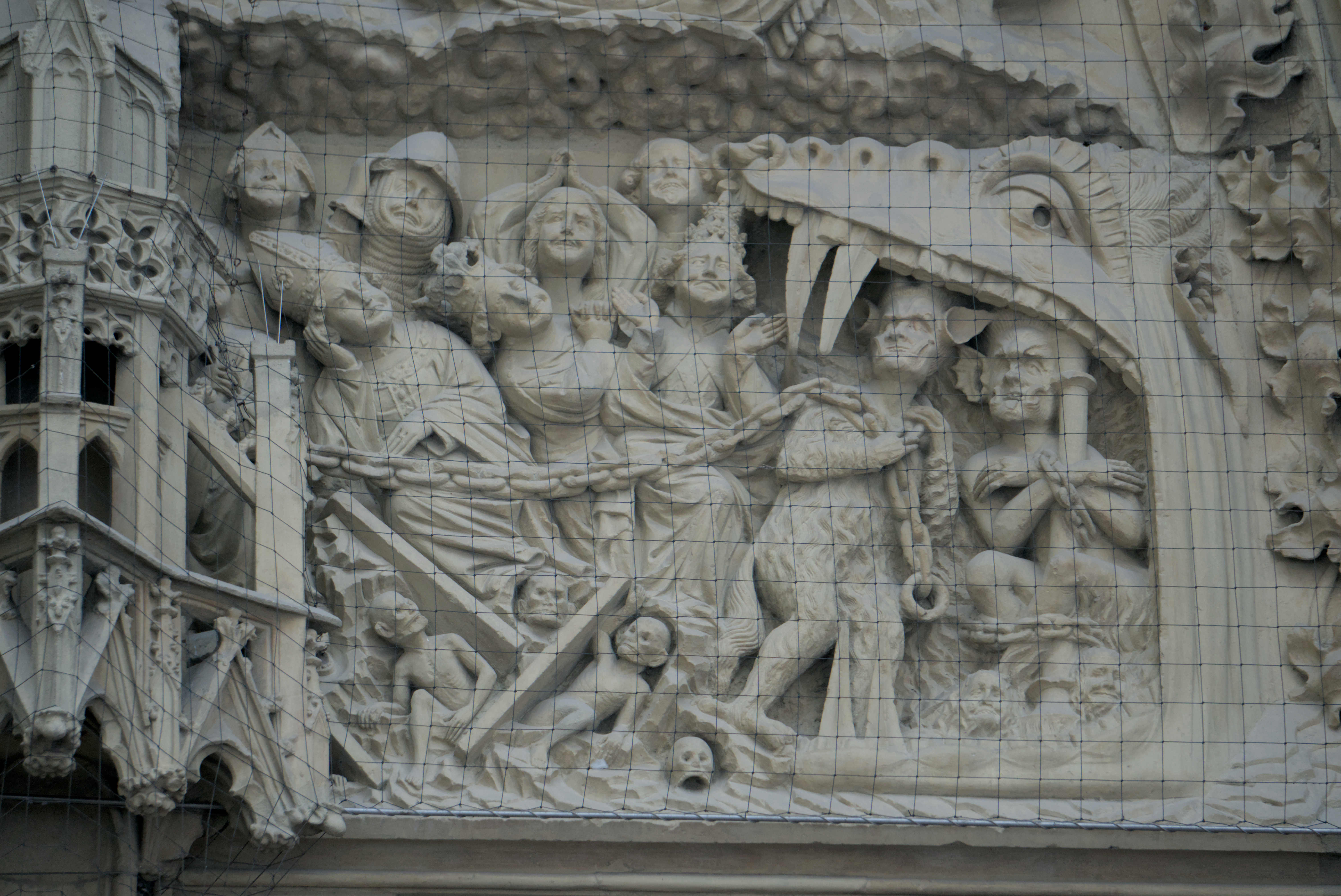
I love the detail at the bottom of people’s skeletons taking on flesh as they push aside the lids of their coffins! This is the general resurrection, the promised reuniting of body and soul prefigured in Ezekiel 37.
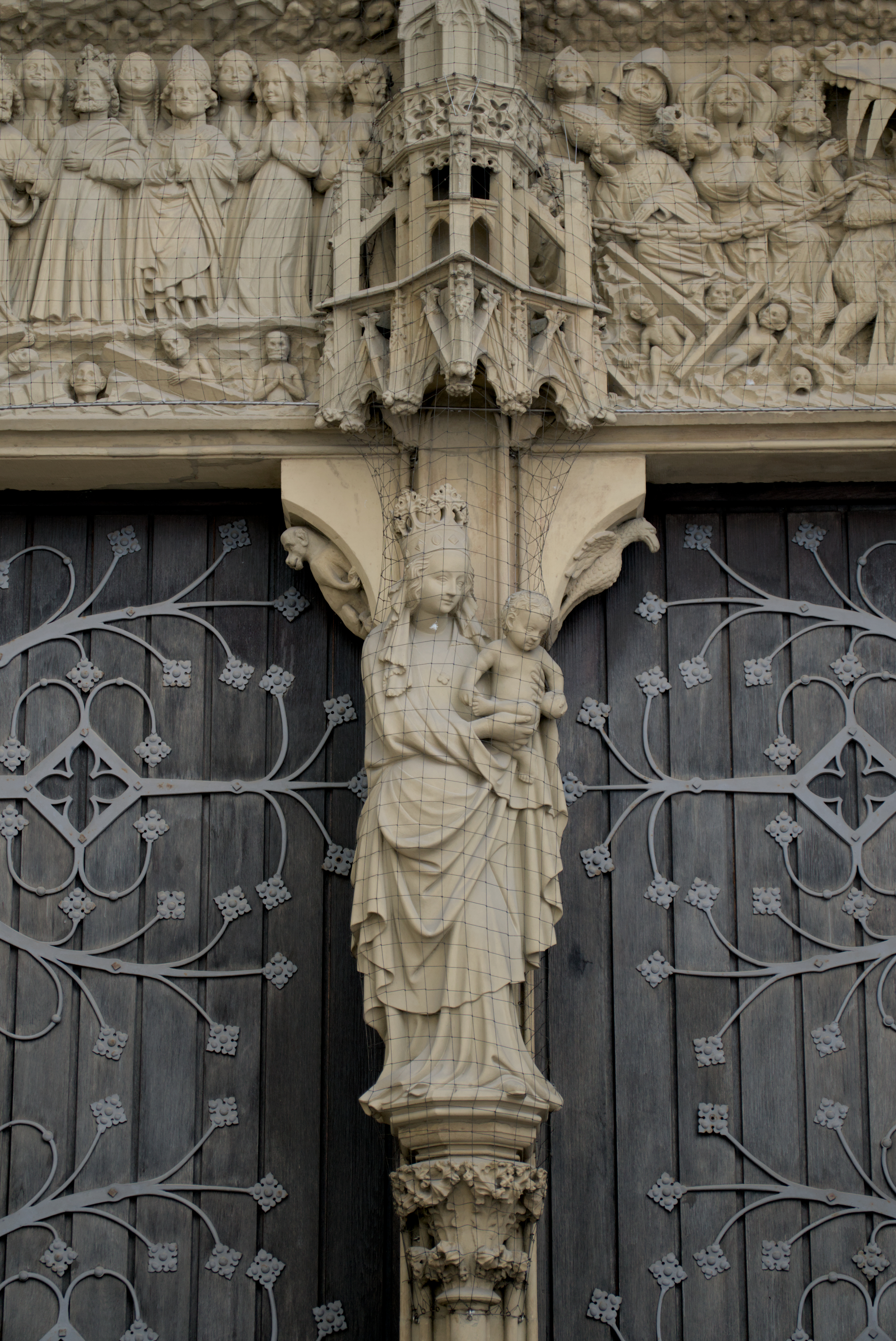
On the trumeau (central pillar) of the west portal stands a copy of a stone Madonna and Child from around 1441; the original is located inside the chapel. The Christ child holds an apple.
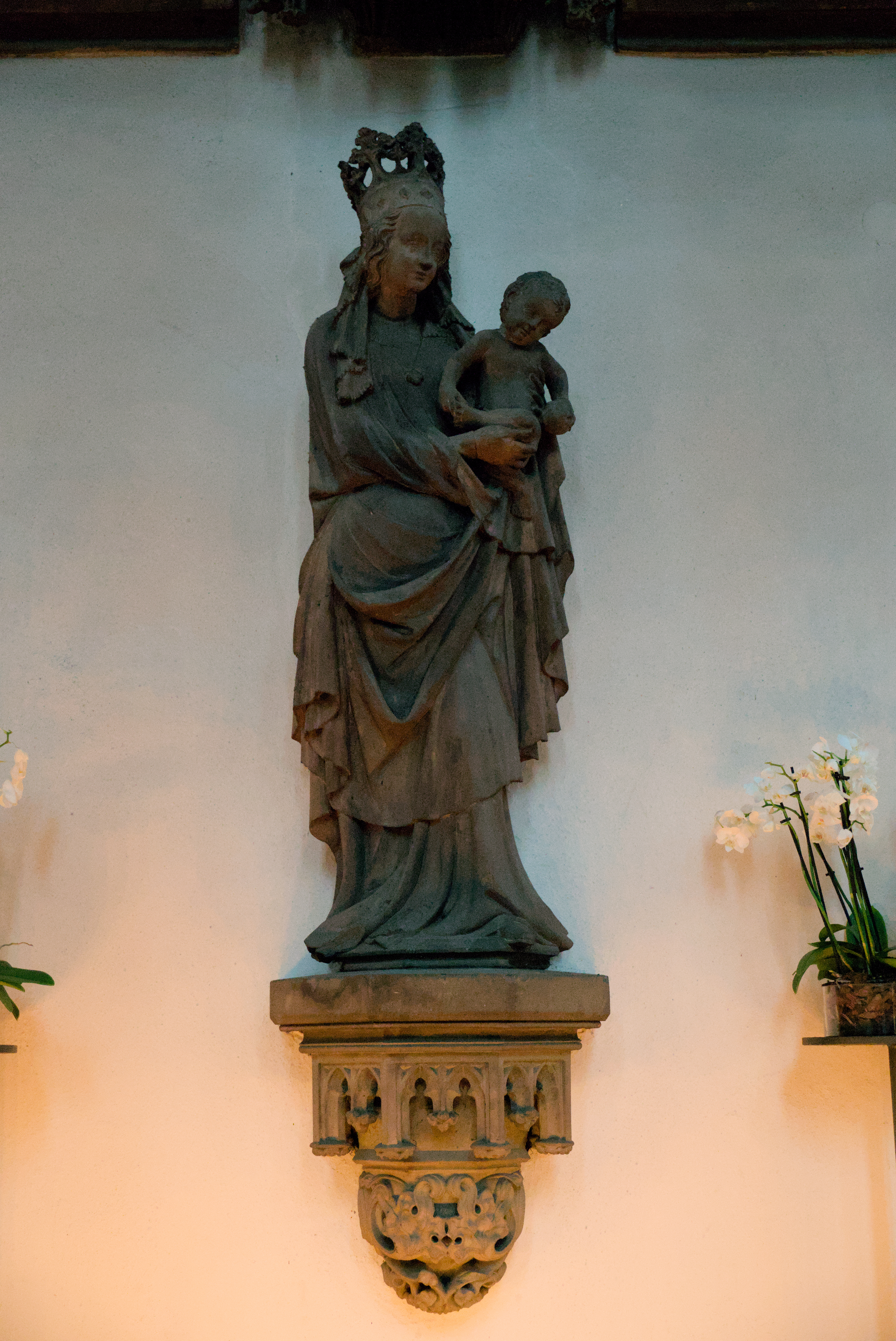
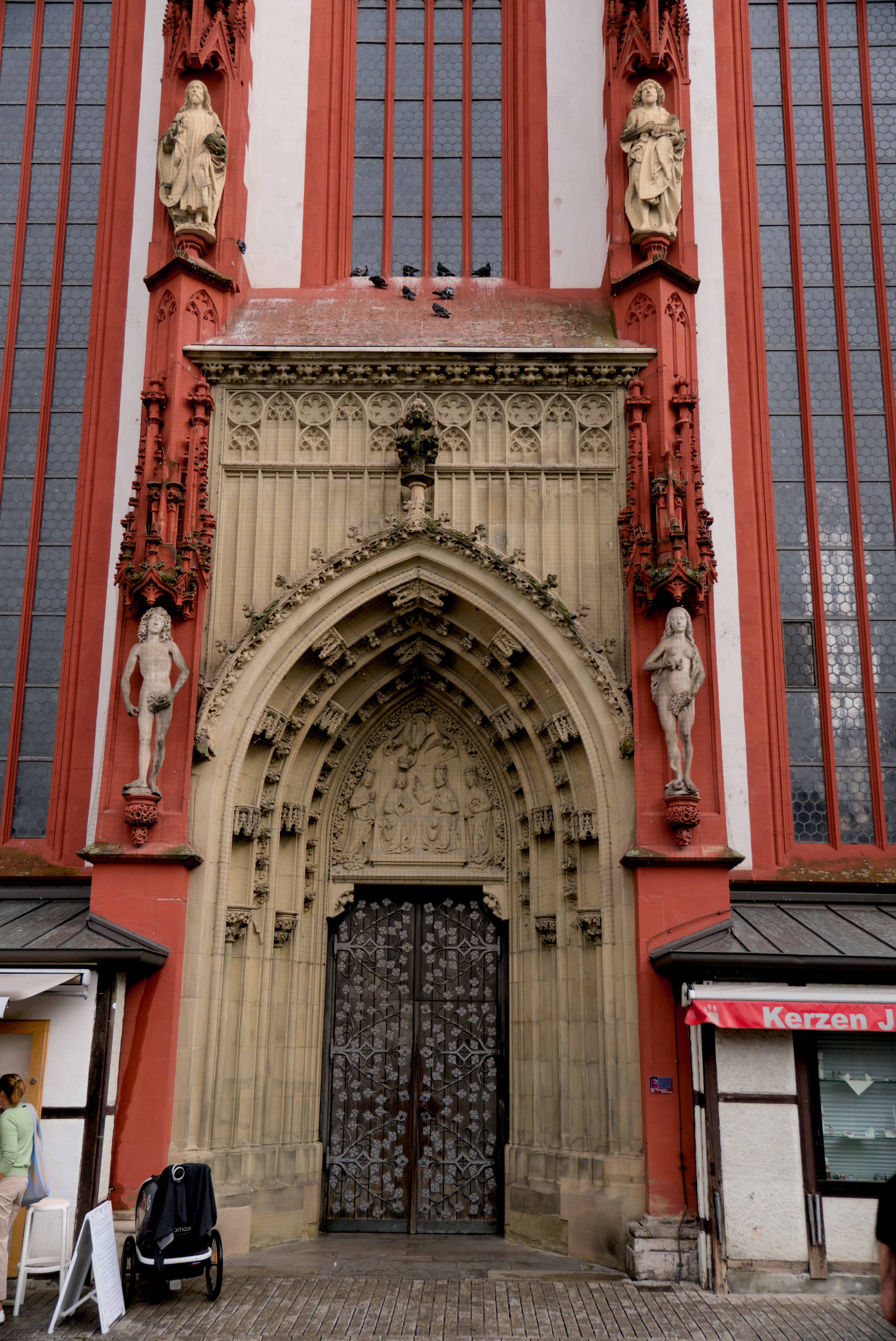
Another entrance to the church is on the south side.
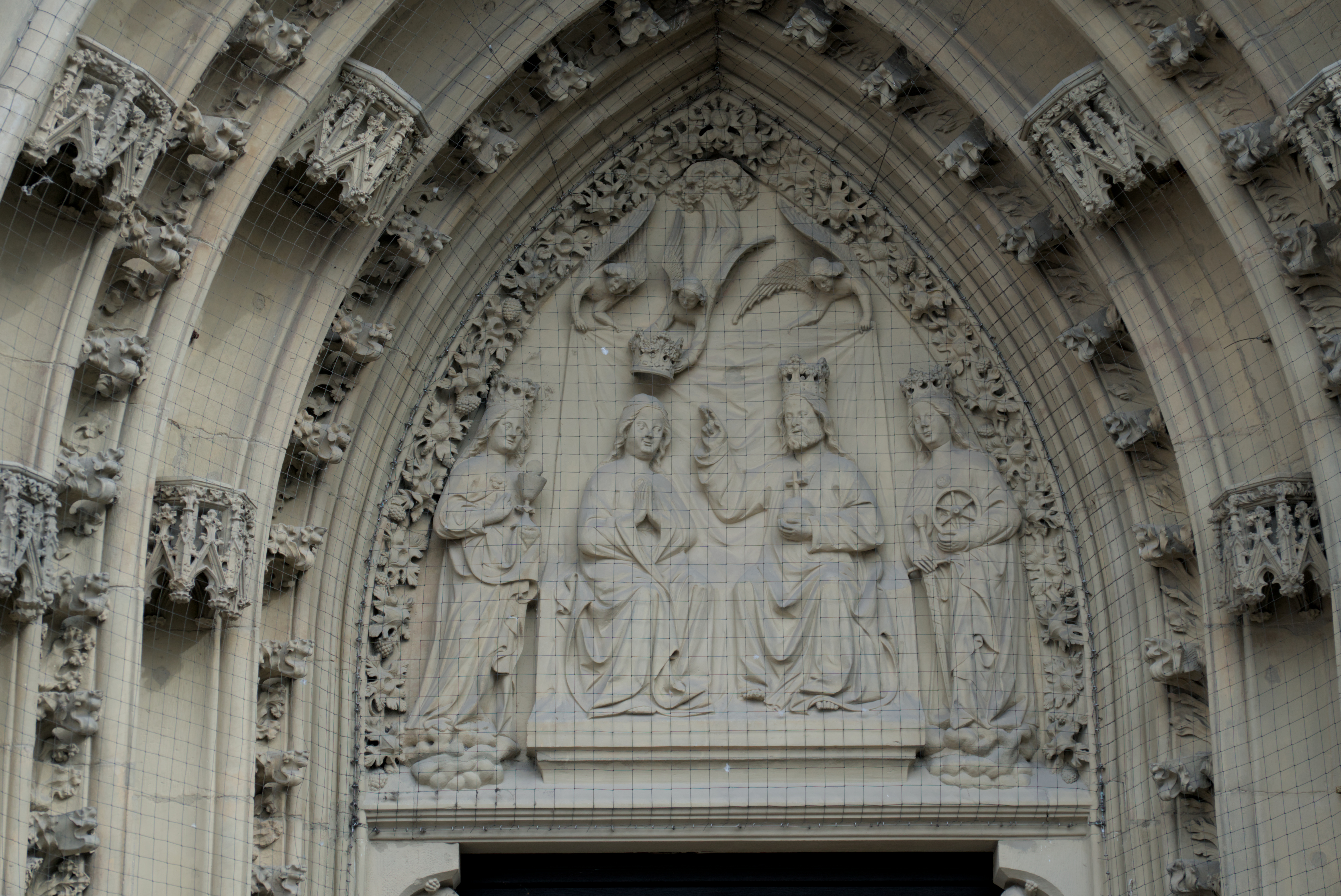
The south tympanum portrays the Coronation of Mary, an extrabiblical subject that grew out of the belief that if Jesus is the King of kings, Mary is the queen mother. To either side of them are St. Barbara, holding a chalice, and St. Catherine of Alexandria, holding the breaking wheel on which she was sentenced to be executed.
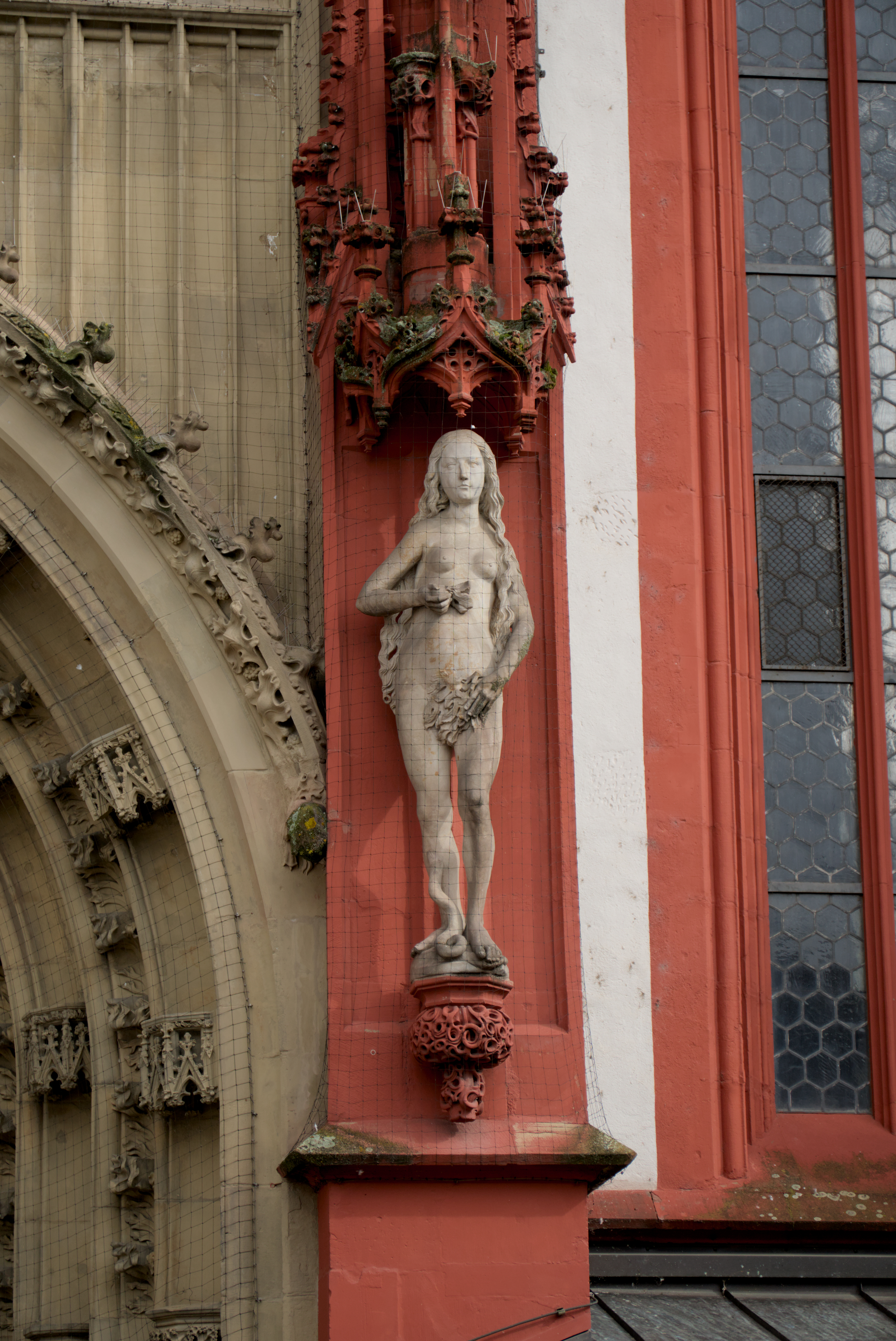
The most striking feature of the south portal is the Adam and Eve sculpture pair by the preeminent German sculptor Tilman Riemenschneider (ca. 1460–1531). Exquisite! Carved in gray sandstone, they are actually copies (all the freestanding sculptures on the exterior are); the originals, from 1493, are in the Museum für Franken, also in Würzburg—which I’ll share about in part 4. Adam and Eve stand on plinths decorated with foliage, sheltered under tabernacles (tower-like crowning structures).
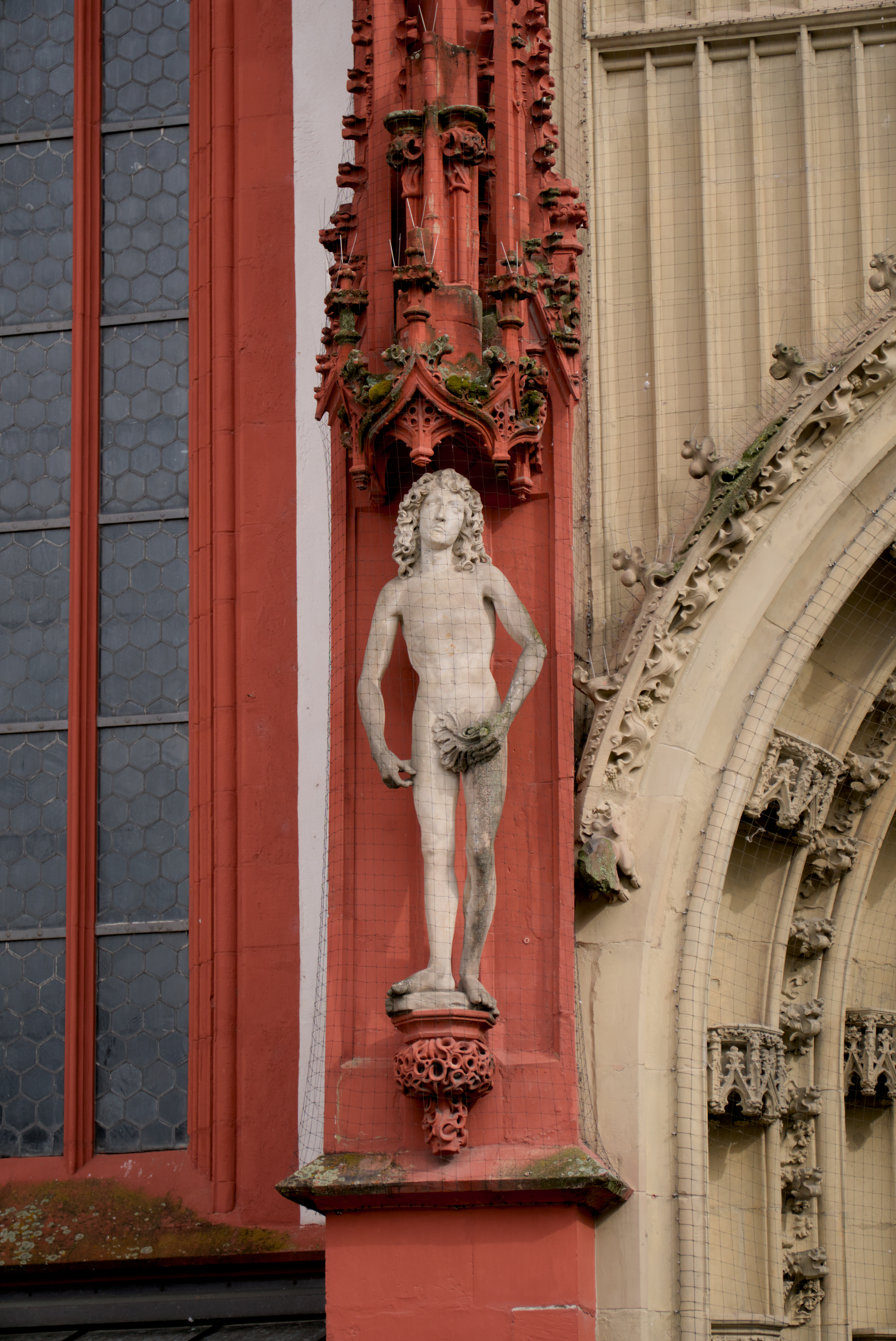
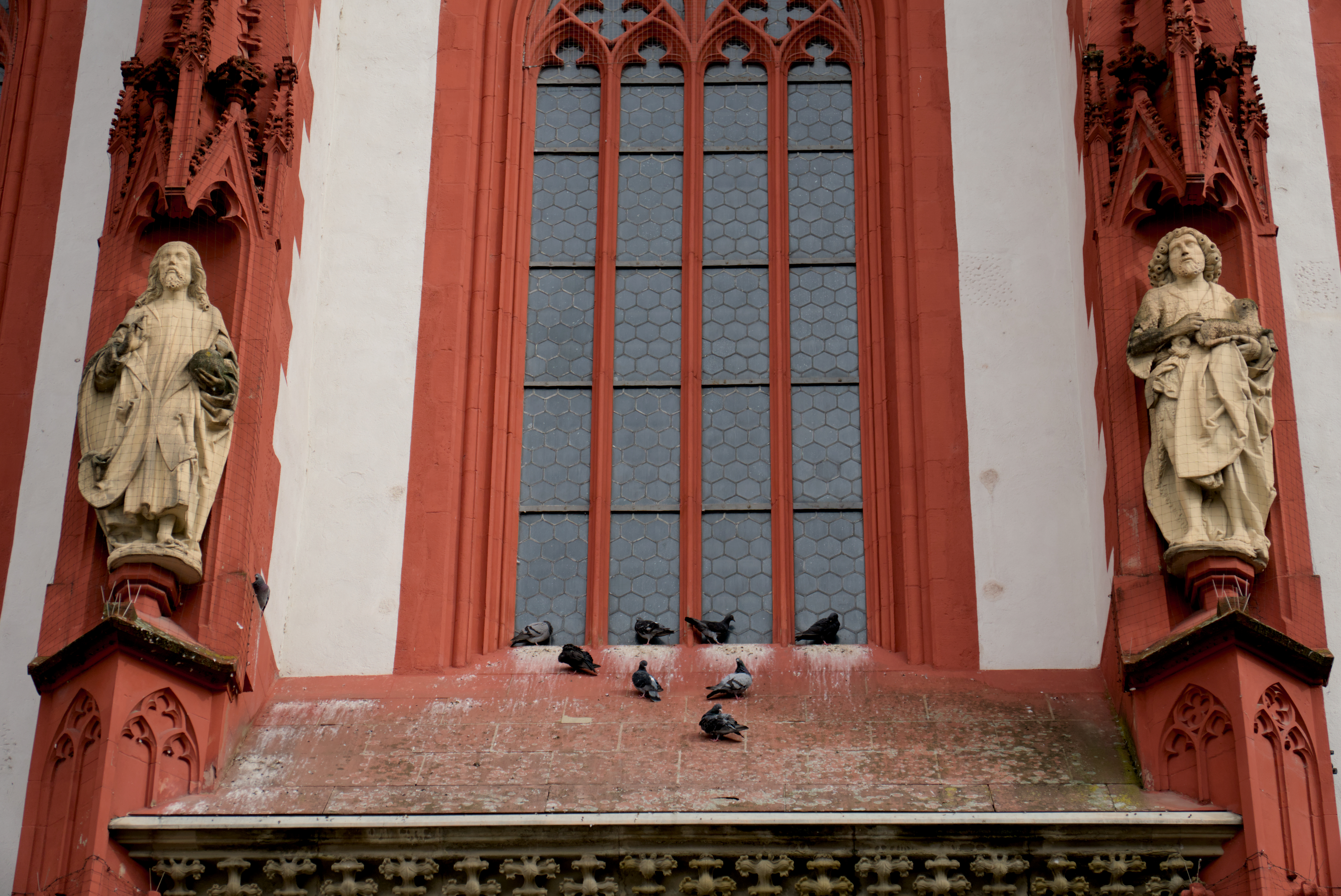
In addition to these, Riemenschneider and his workshop supplied sculptures of the twelve apostles for the buttresses, and of Christ and John the Baptist, who are situated above Adam and Eve. Christ, as Salvator Mundi, holds a globe, and John the Baptist holds a lamb, a symbol of the self-sacrificial Christ, who takes away the sin of the world.
But now, what I consider the most thrilling artwork at the Marienkapelle, immensely amusing, is the Annunciation tympanum in the north portal, carved around 1430.
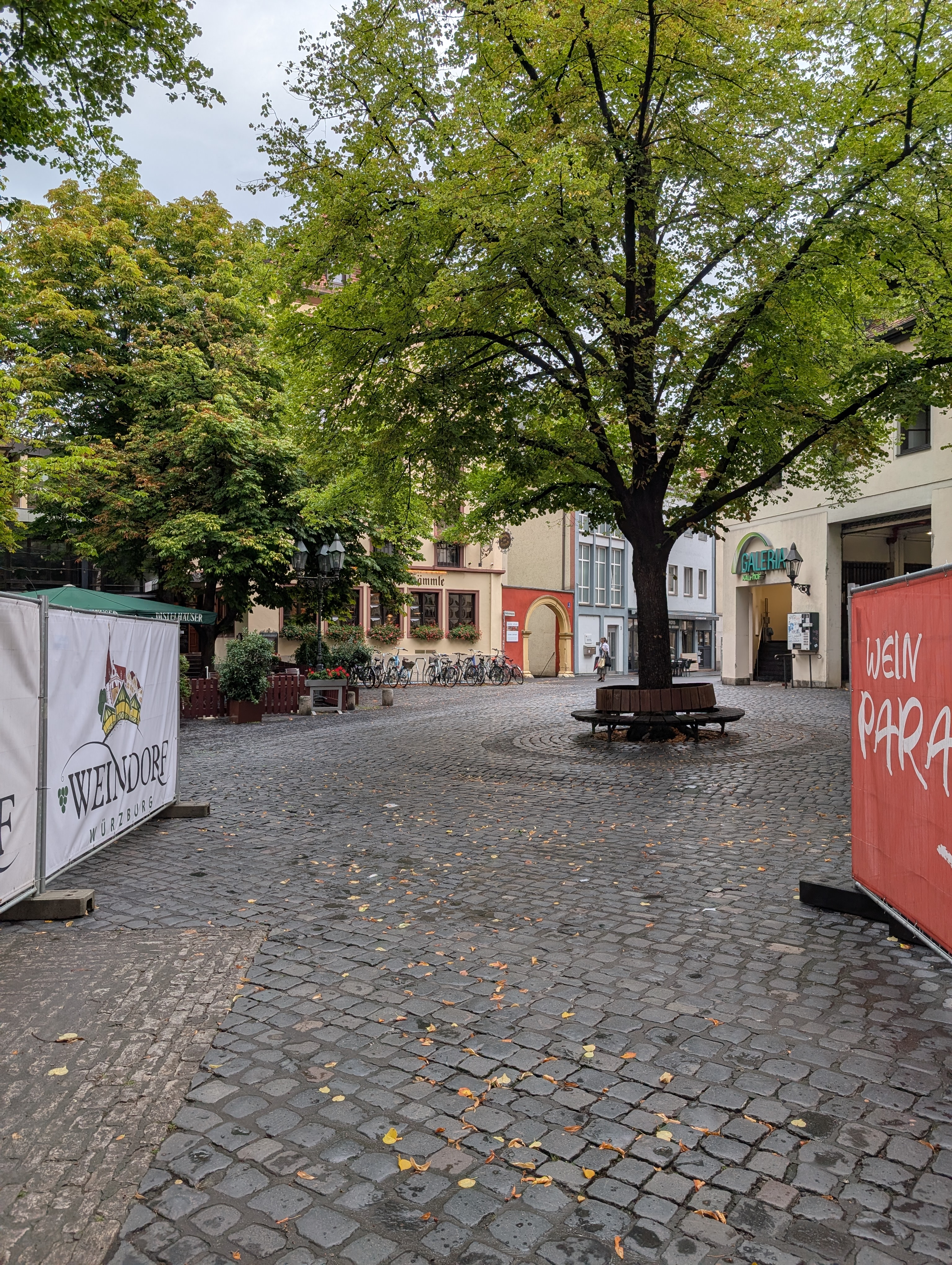
It’s in the least prominent of all three portals, tucked away off the main square, next to, when I was there, a fence banner advertising a local wine festival. No one was stopping to look at it.
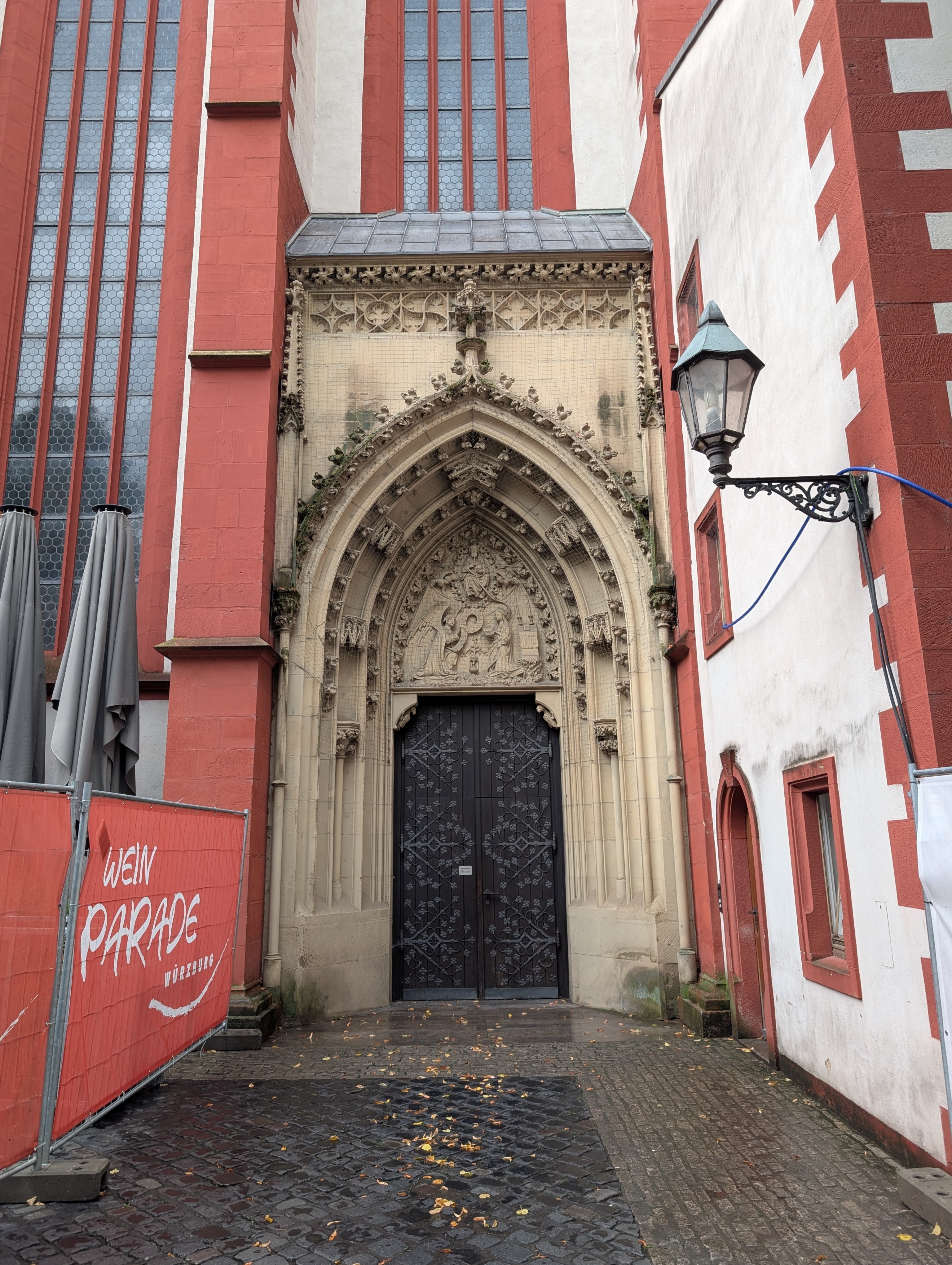
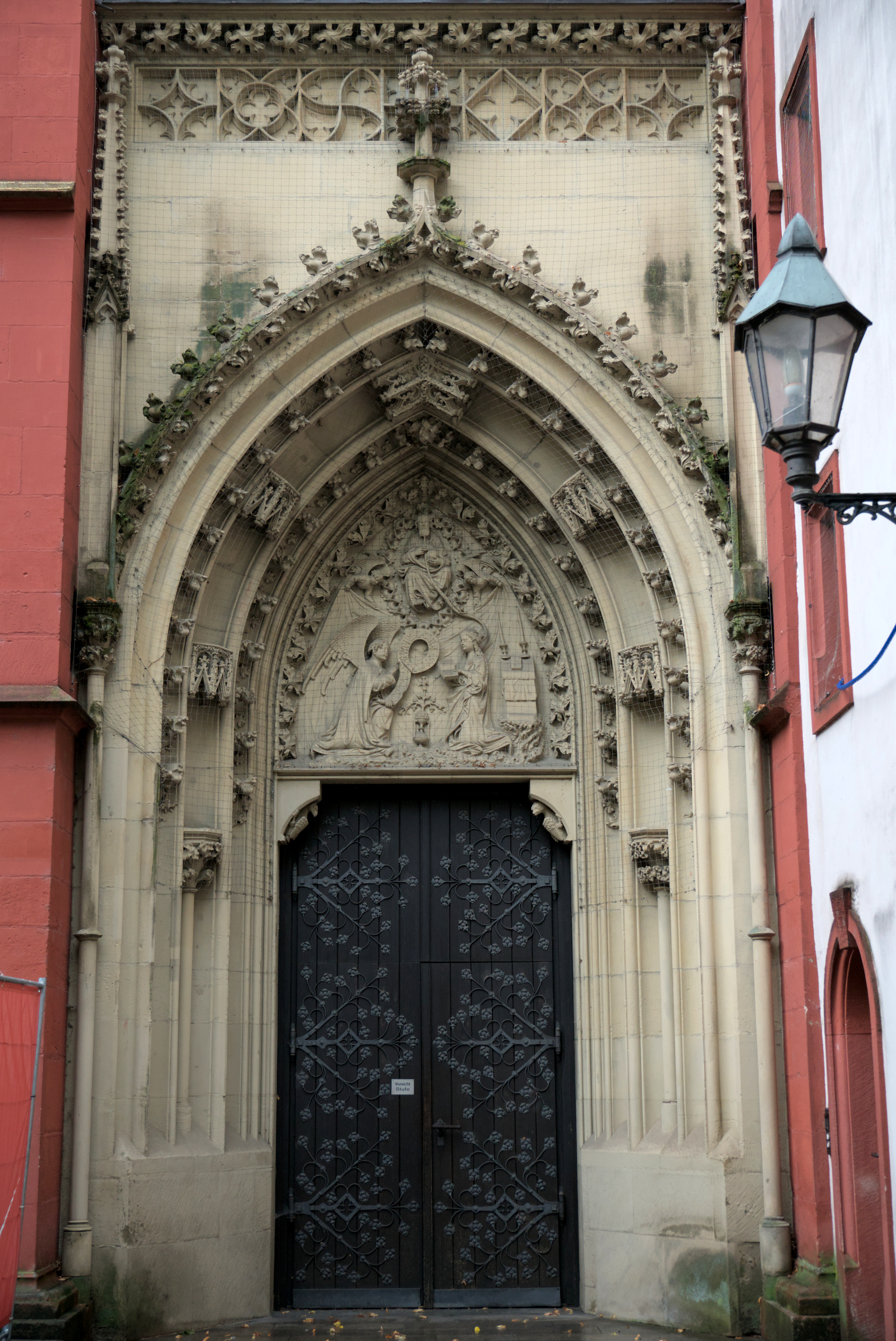
But I knew to search it out—this peculiar carving that visualizes the theological idea, introduced in the fourth century and solidified in the fifth, that Mary conceived Jesus through her sense of hearing. Known as the conceptio per aurem, this teaching stems from a typological connection between Eve and Mary: Whereas Eve listened to the serpent’s lies and conceived death, Mary listened to the angel’s truth and conceived life. The teaching presents Mary as a model of attentive listening to God’s word, which produces fruit; for receiving it into ourselves, bearing it about. It also serves to desexualize the encounter between Mary and Gabriel, focusing attention away from Mary’s genital region and onto her head.
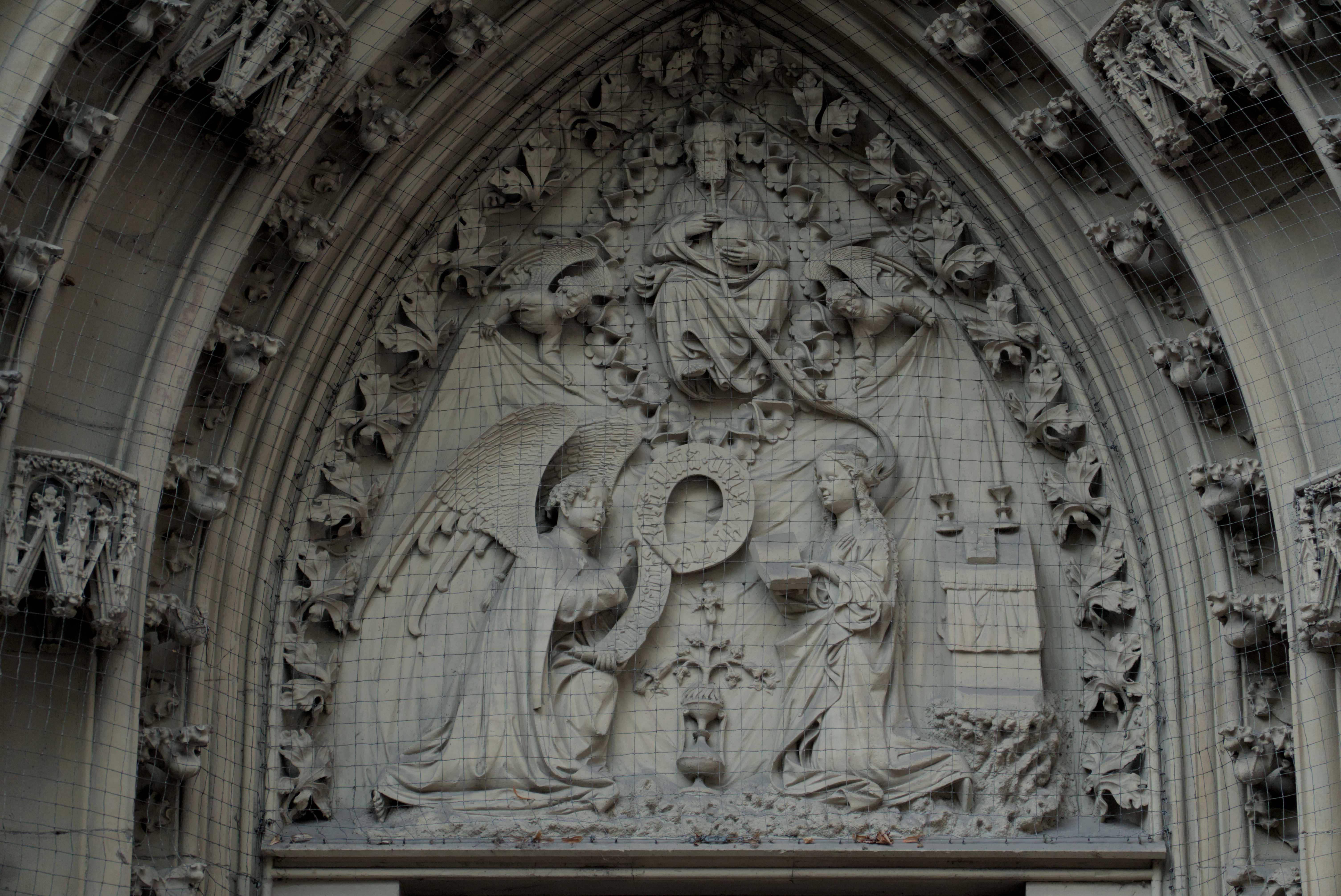
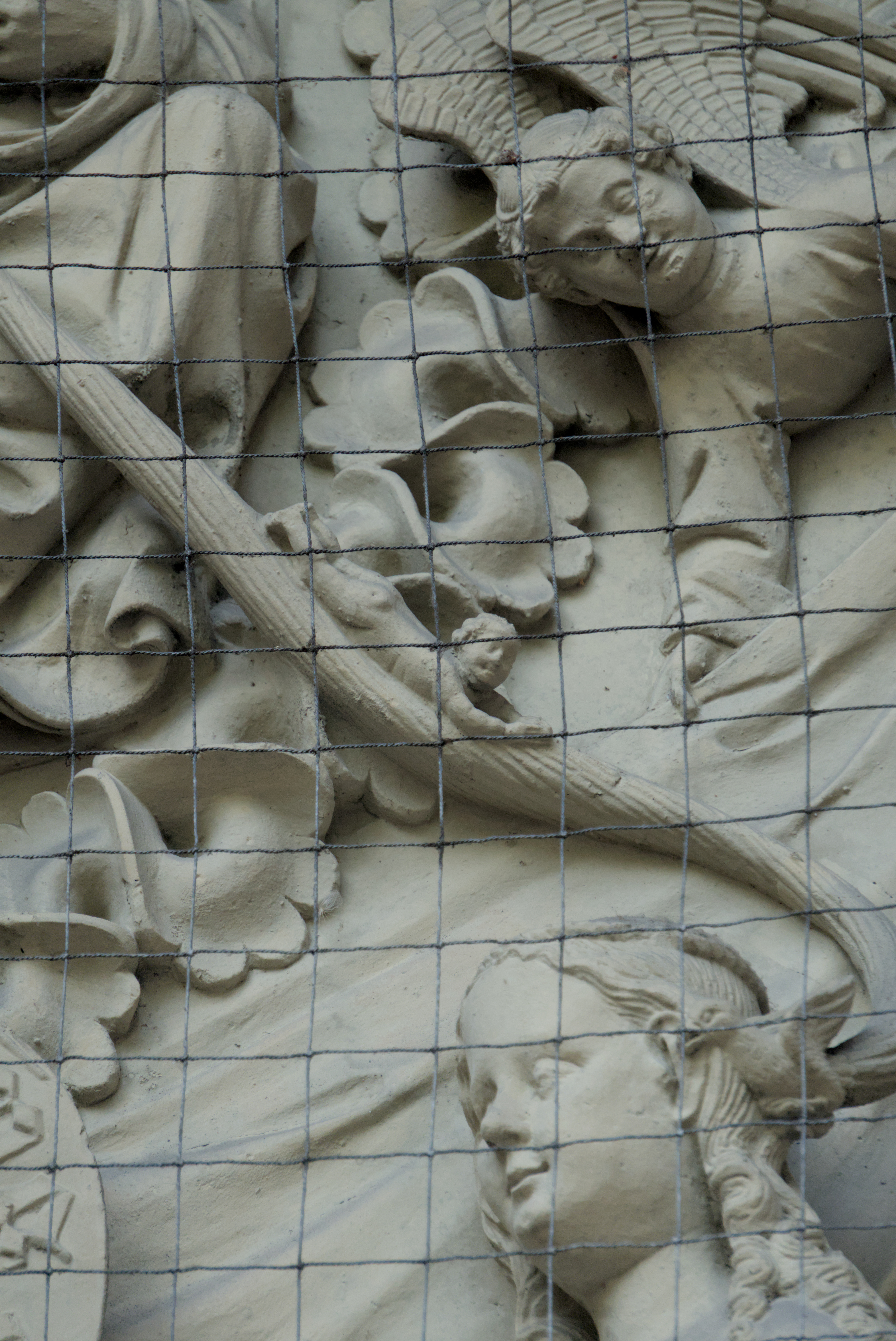
Look at how this artist visualizes the conception by ear! God the Father sits at the top center inside a flowery mandorla, blowing into a serpentine tube that’s attached to Mary’s ear. As he does, a gleefully naked infant Christ glides down the tube on his belly like it’s a waterslide—only it’s not water that’s propelling him; it’s the Father’s breath.
Journeying down this transdimensional slide, he twists and turns and plunges right into his chosen mother’s open auditory canal, where the Holy Spirit as dove enunciates a sacred whisper: “You will conceive in your womb and bear a son, and you will name him Jesus . . .” All three persons of the Trinity are present at this moment—their number echoed by the three-branched lily in the vase on the floor.
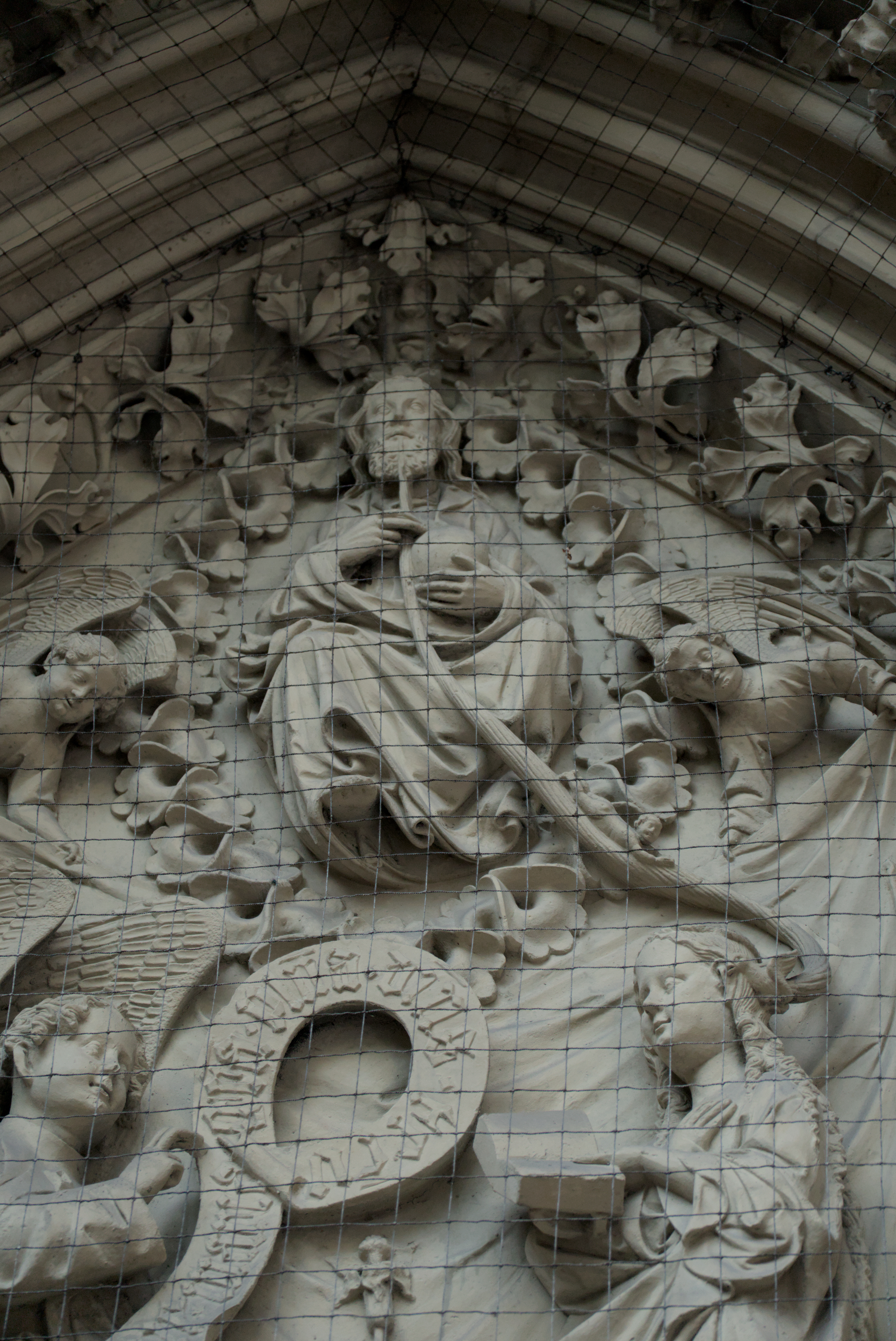
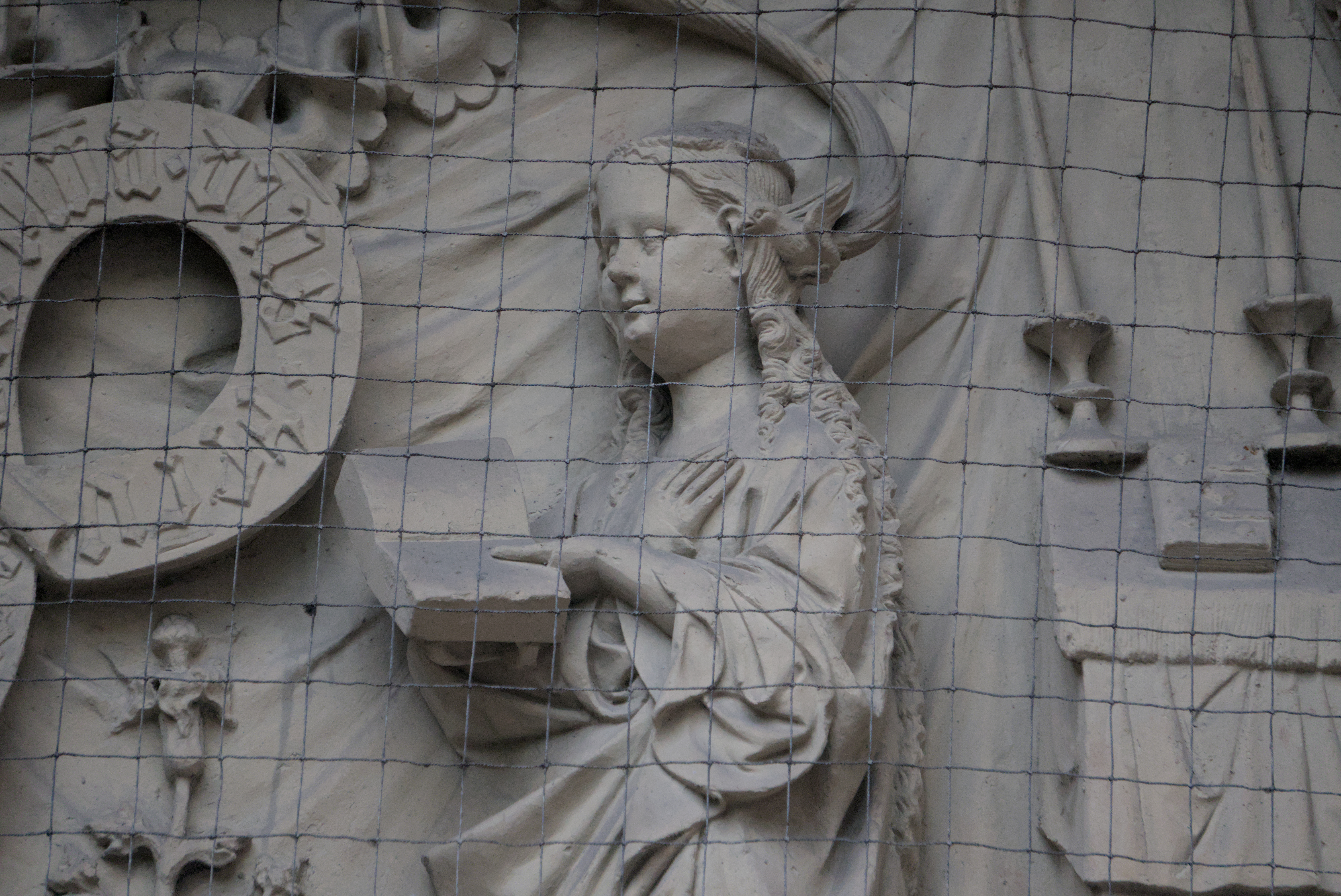
Behind Mary, two angels hold up a cloth of state, befitting royalty.
The conceptio per aurem was developed in both the East and the West by Christian writers and preachers such as Ephrem of Syria, Augustine of Hippo, Theodotus of Ancyra, Proclus of Constantinople, Cyrus of Panopolis, Zeno of Verona, Athanasius of Alexandria, and Bernard of Clairvaux. To learn more, I recommend the excellent book Divine Conception: The Art of the Annunciation by Sarah Drummond (Unicorn, 2019) and Proclus of Constantinople and the Cult of the Virgin in Late Antiquity: Homilies 1–5 by Nicholas Constas (Brill, 2003), each of which devotes an entire chapter to the motif.
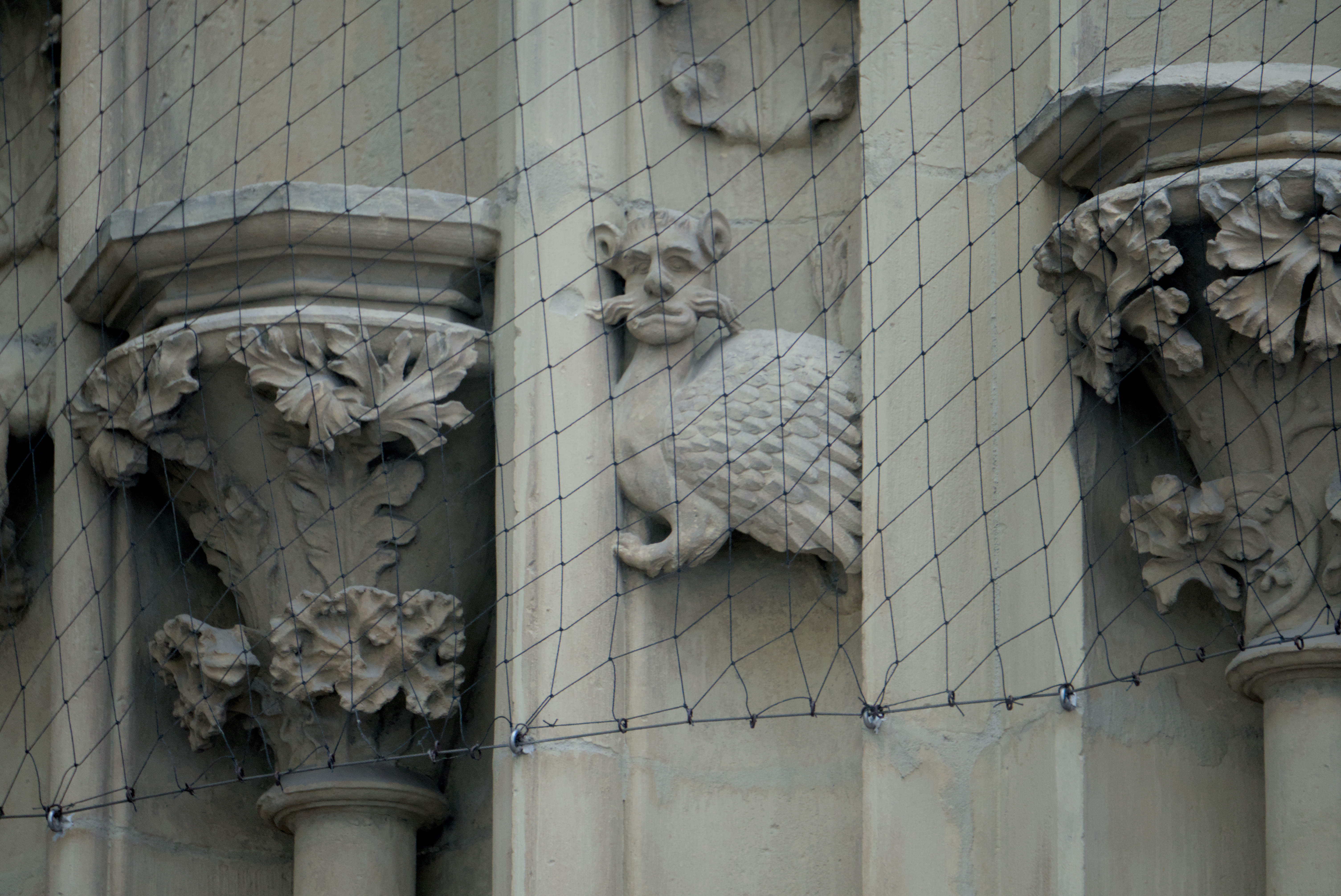
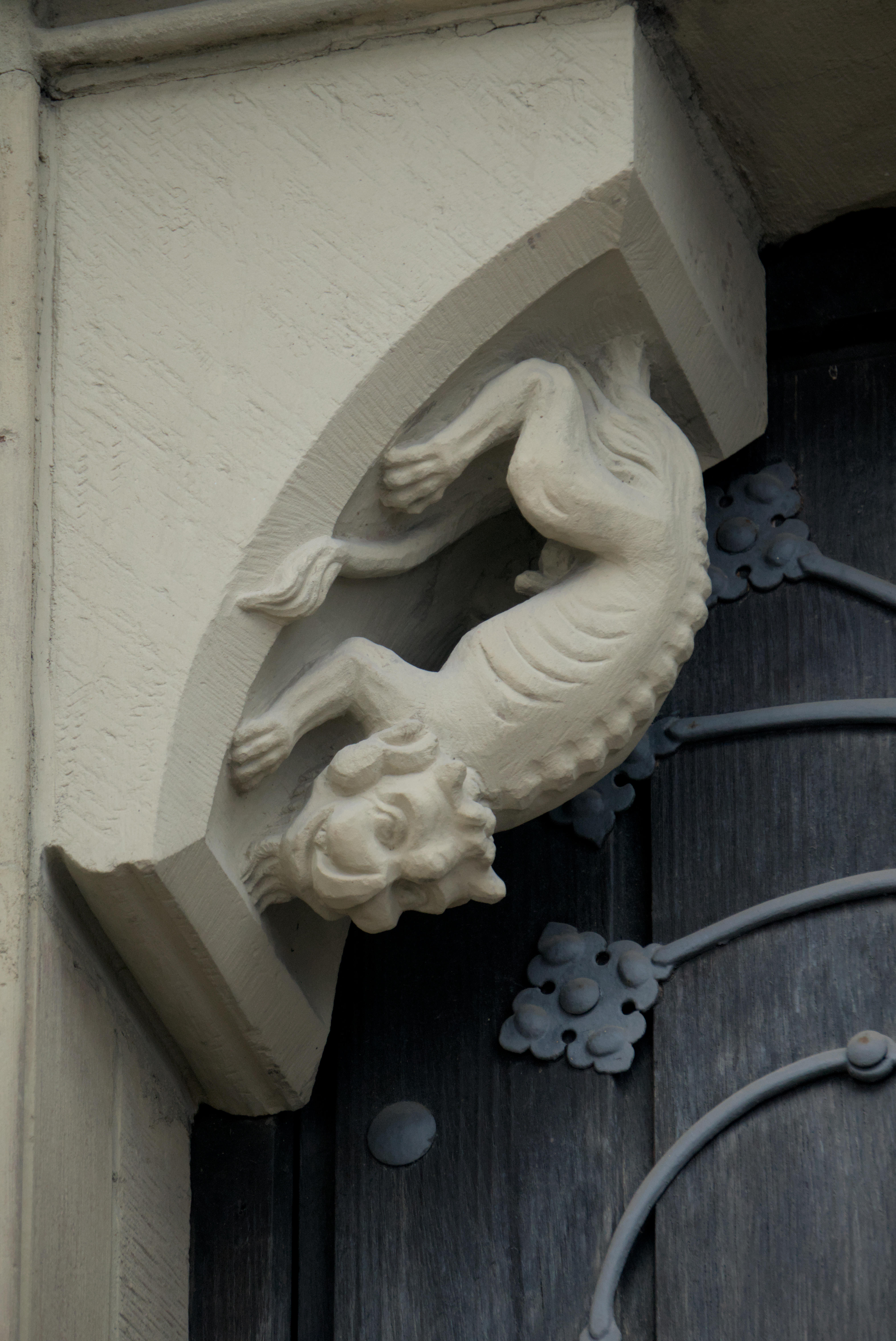
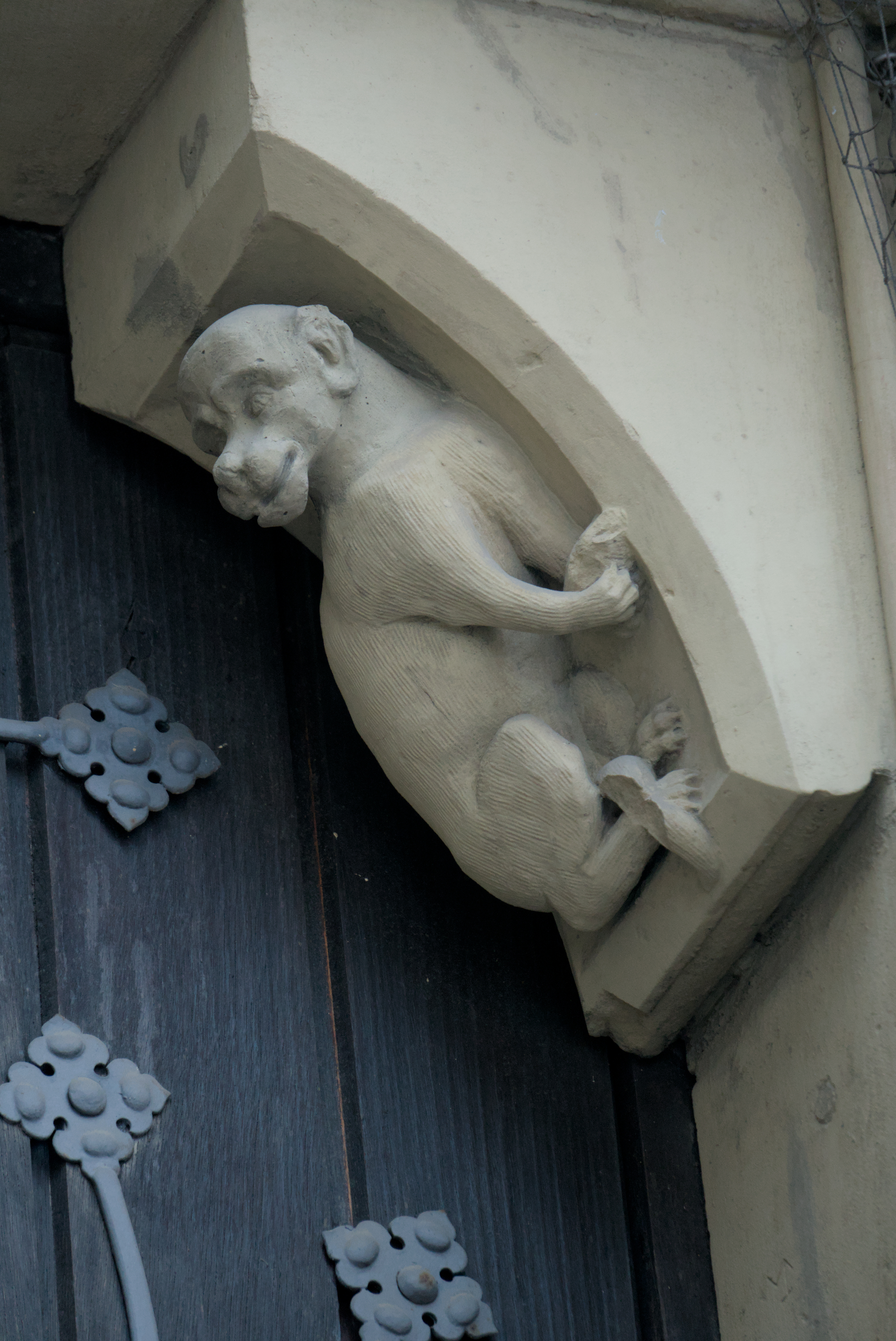
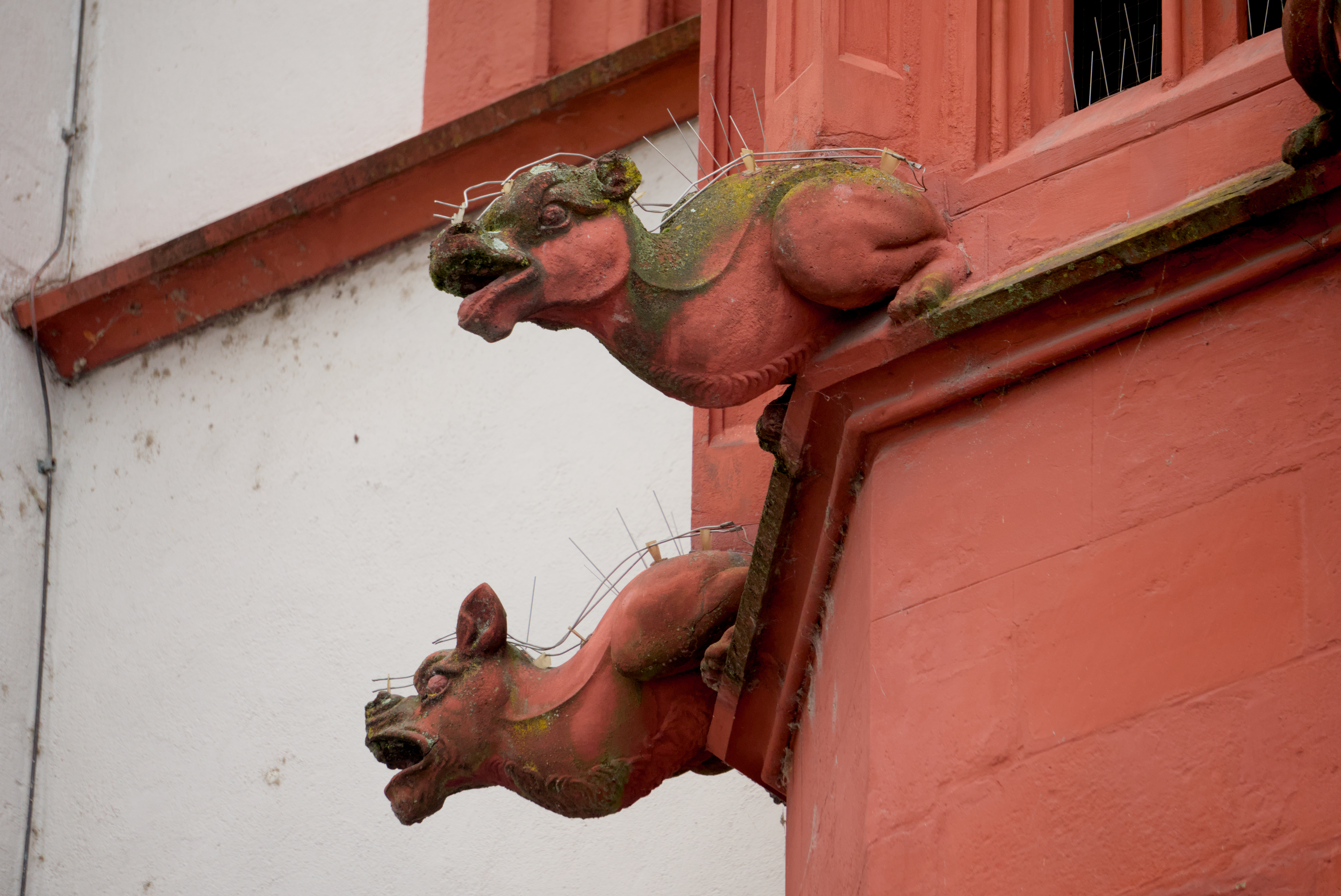
Also on the exterior of the Marienkapelle are a handful of fantastical creatures in the jambs and archivolts and under corbels, and red sandstone grotesques on the eaves.
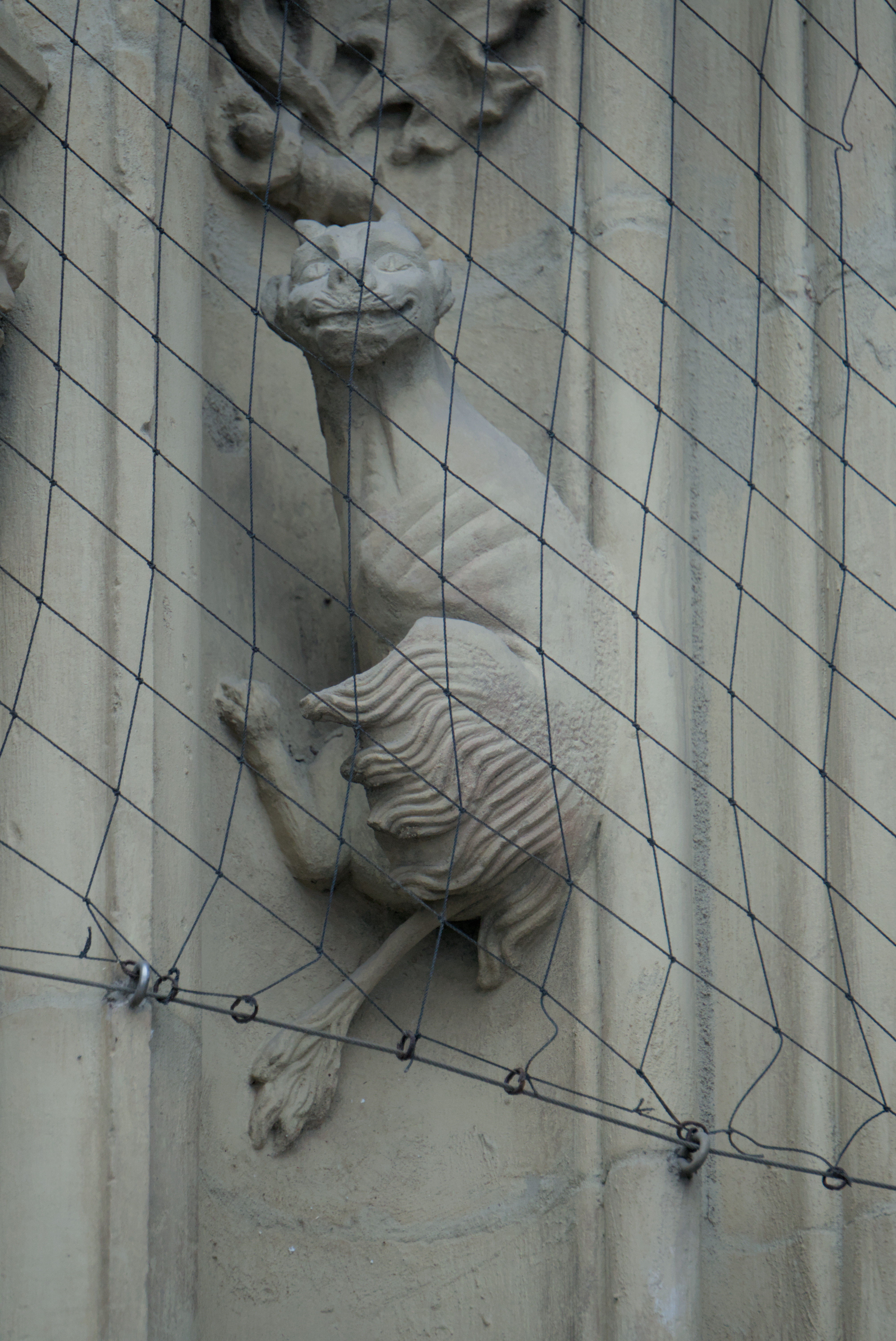
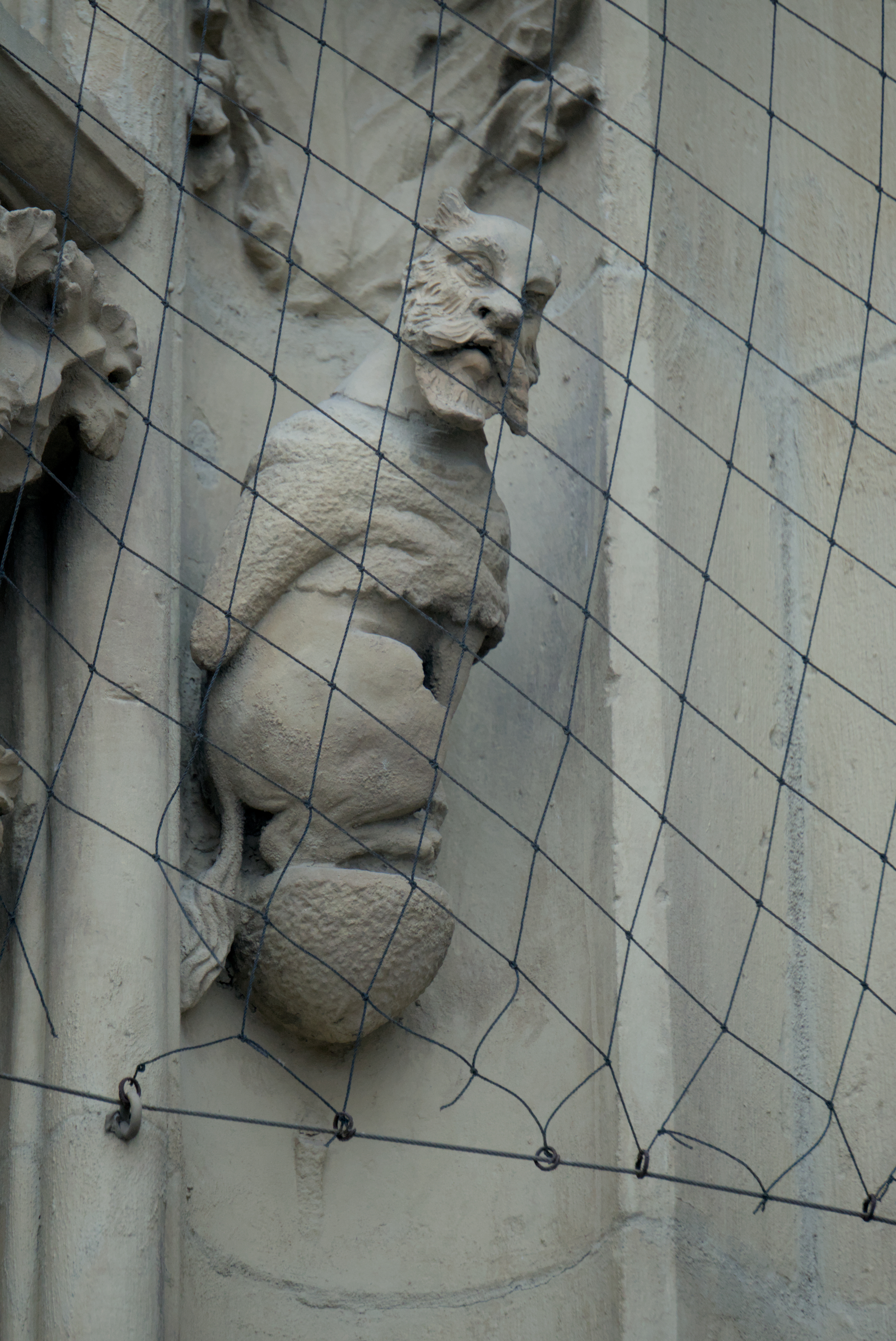
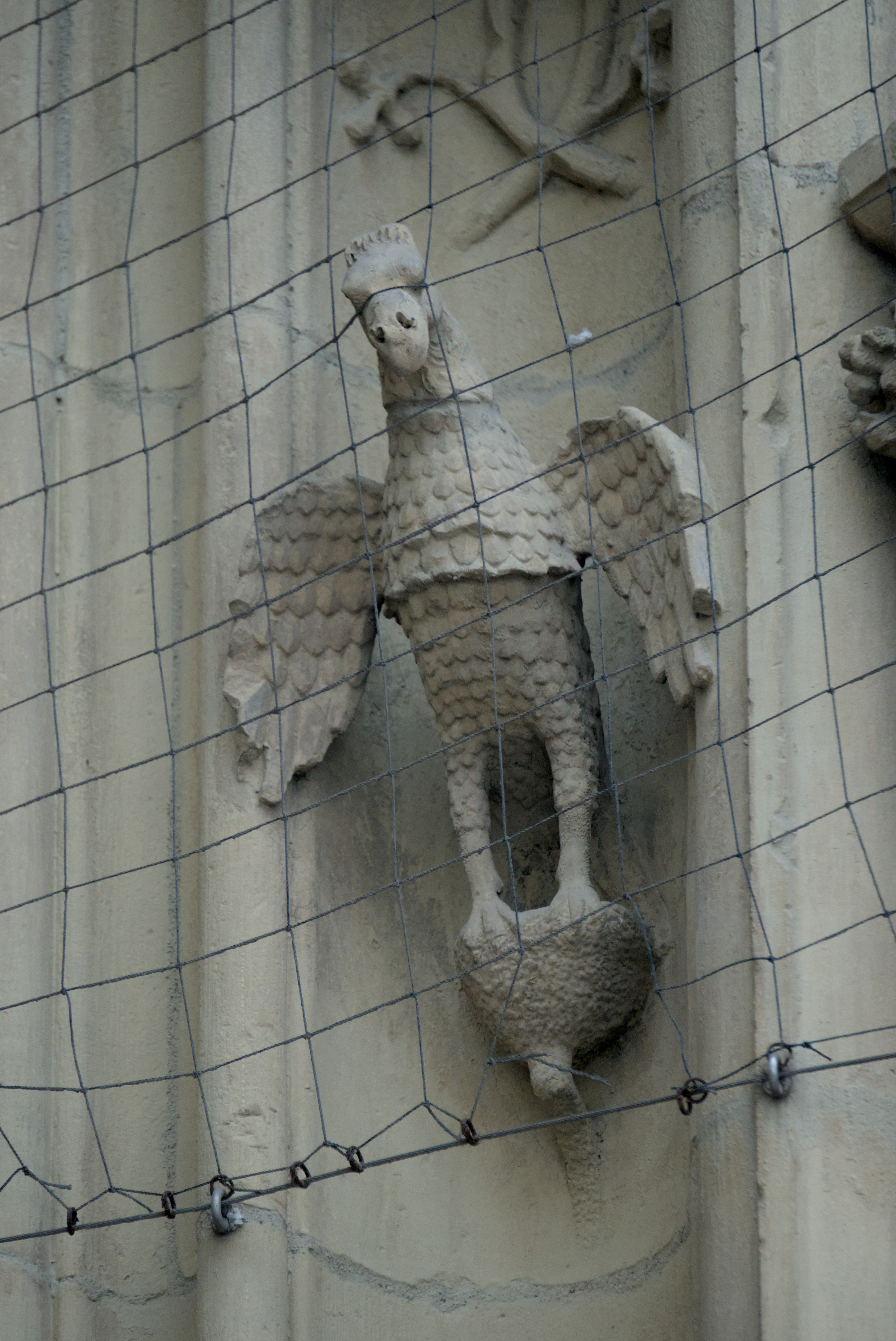
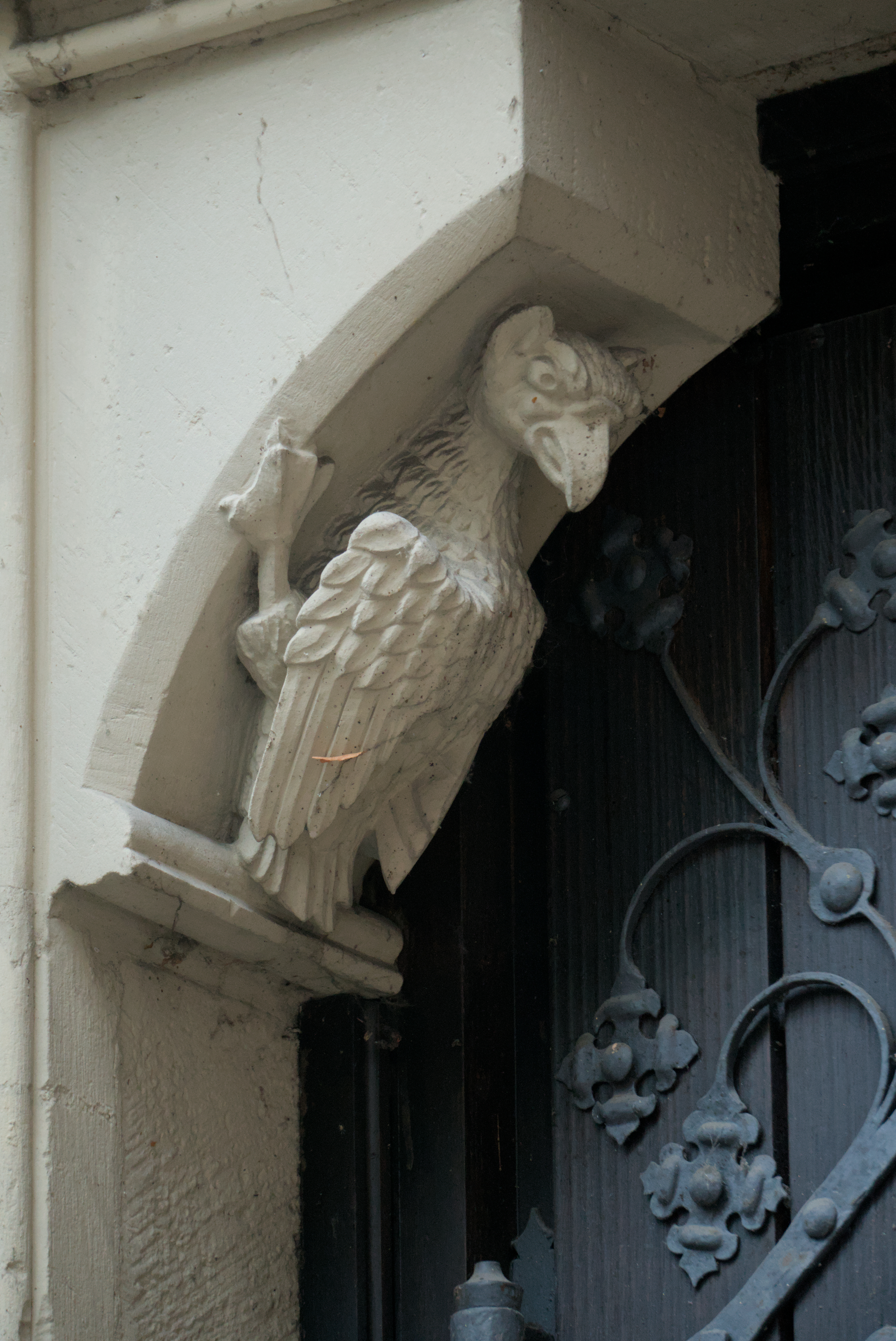
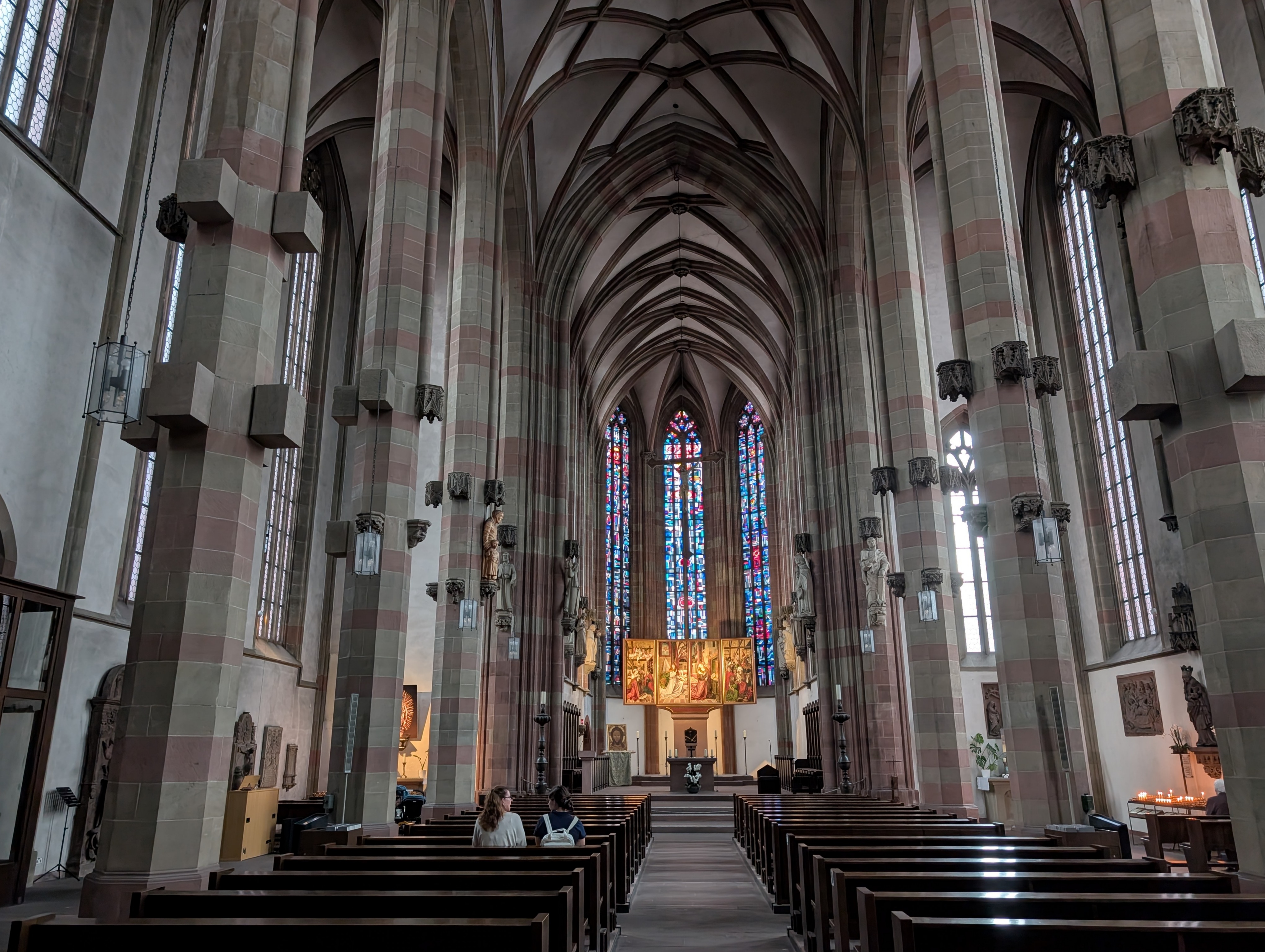
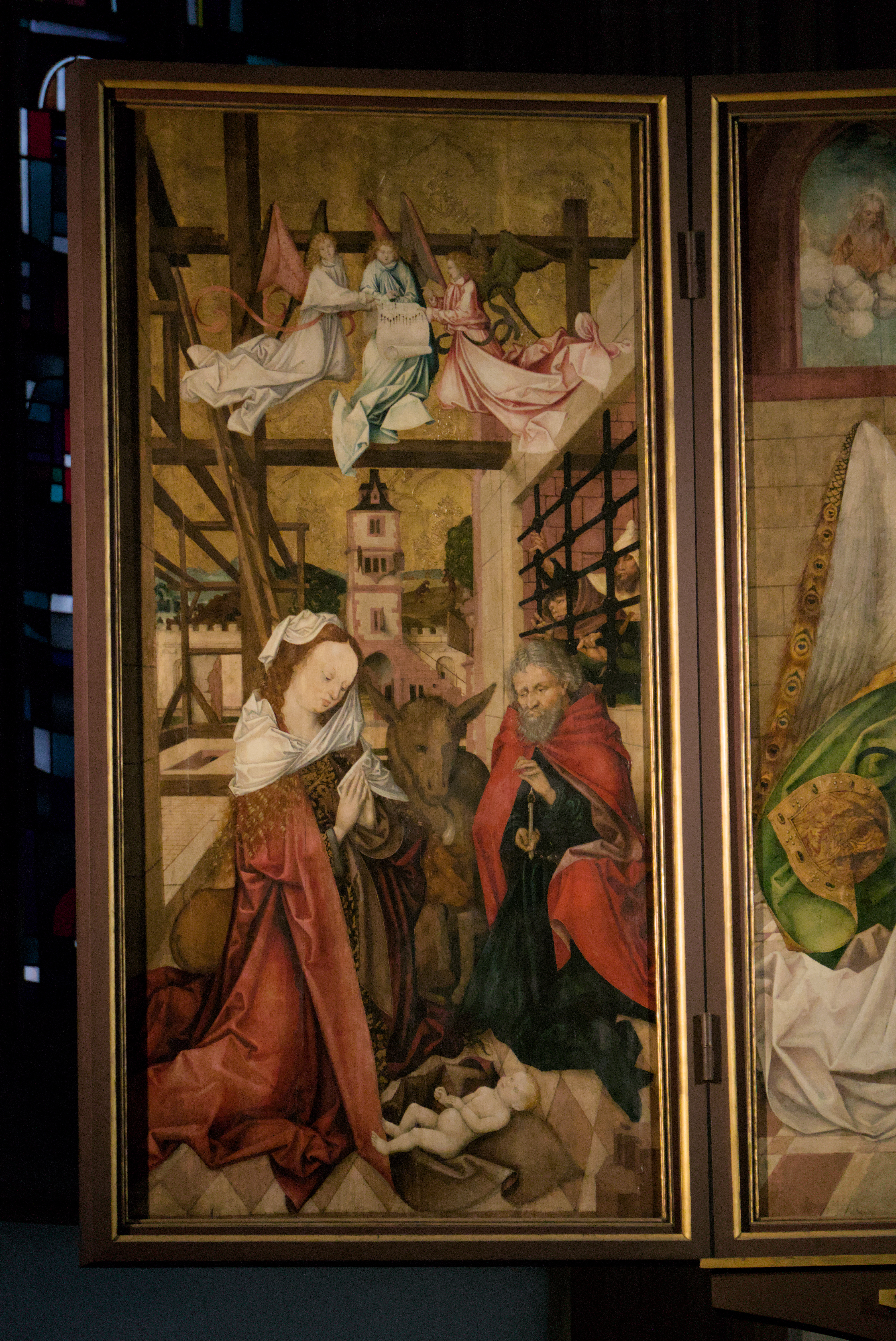
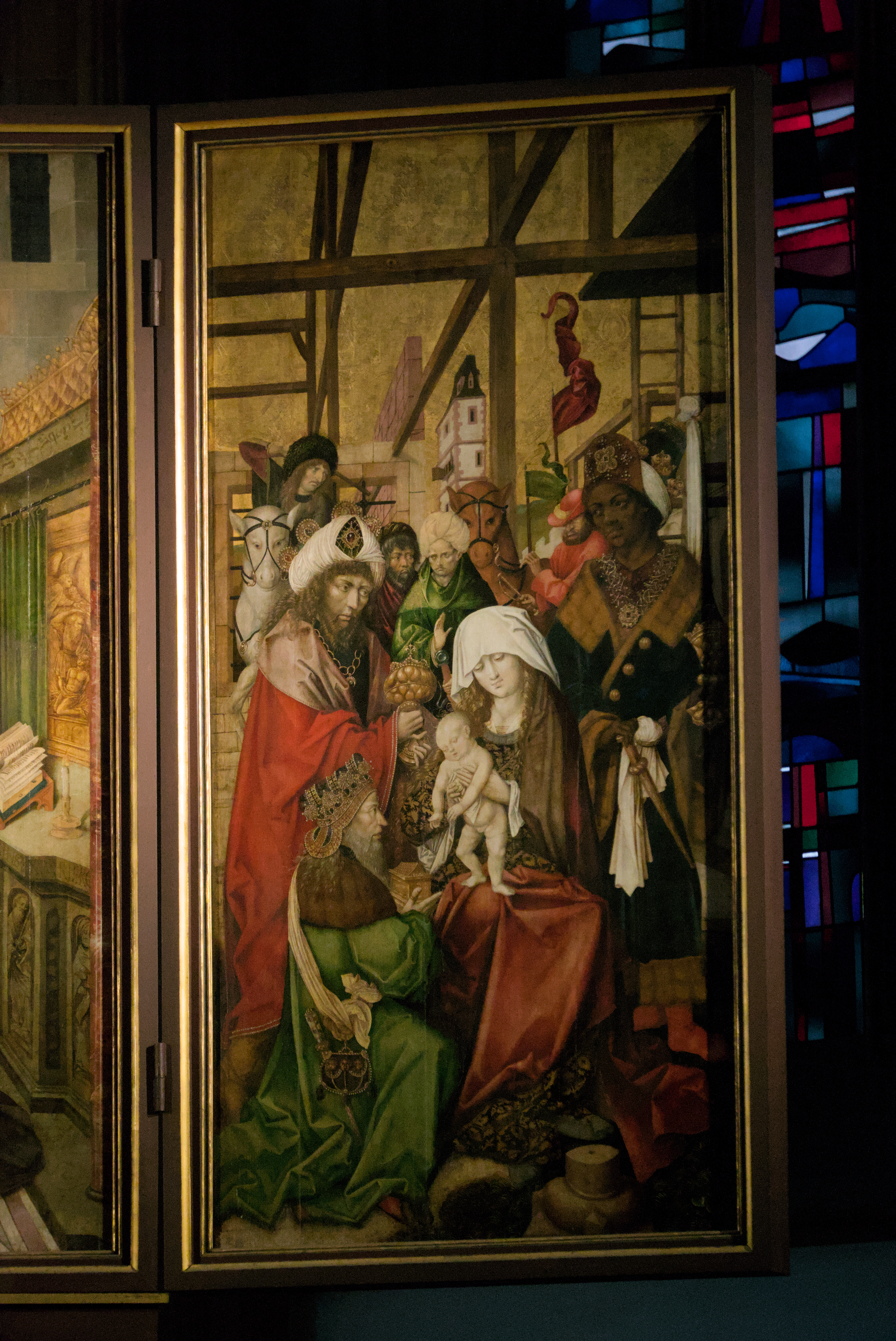
Moving inside, the locally quarried pink and white sandstone columns that support the rib vault down the length of the nave are lovely. So are the post–World War II stained glass windows in the choir. But the main visual attraction is the high altarpiece, painted by an unidentified Franconian artist in 1514.
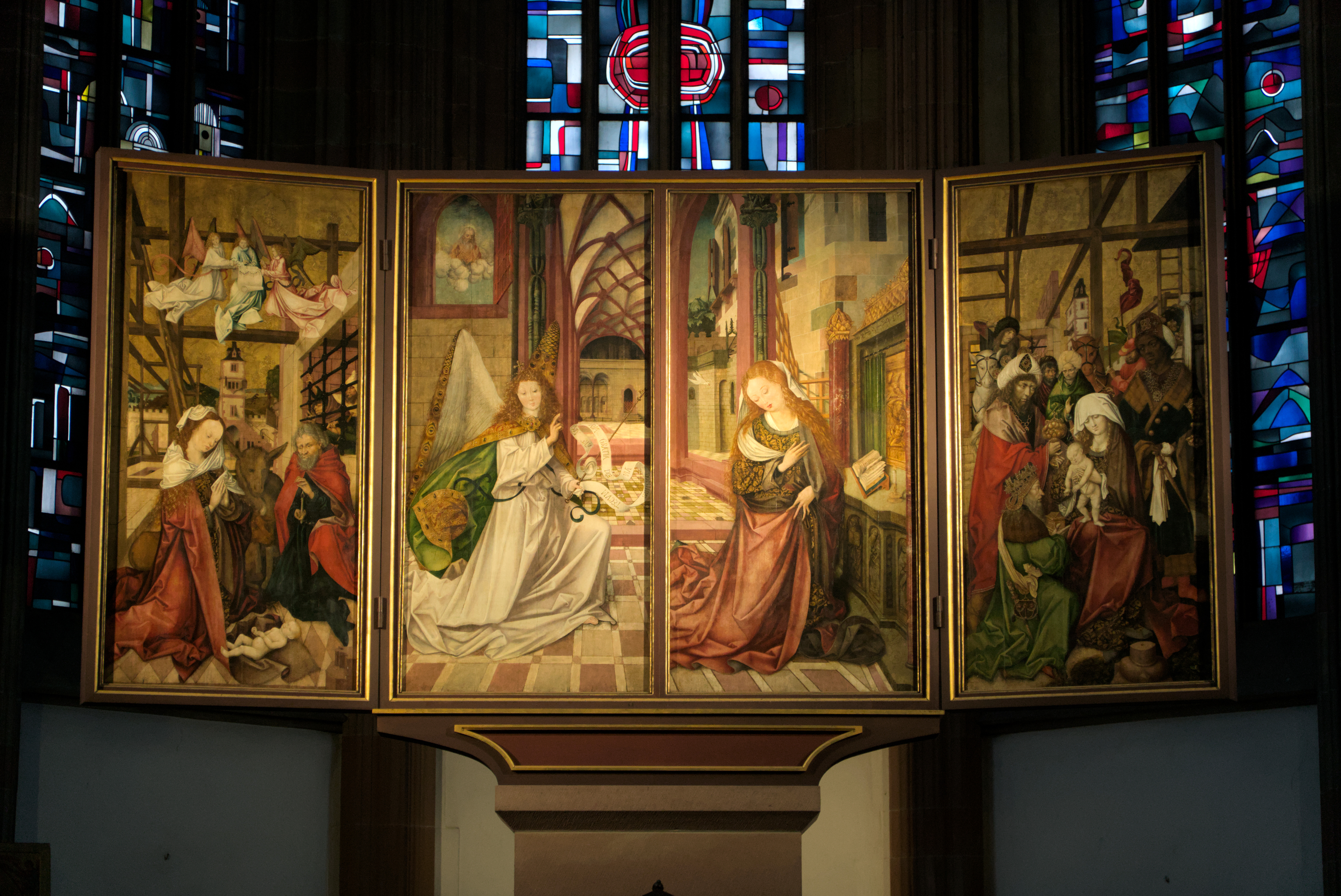
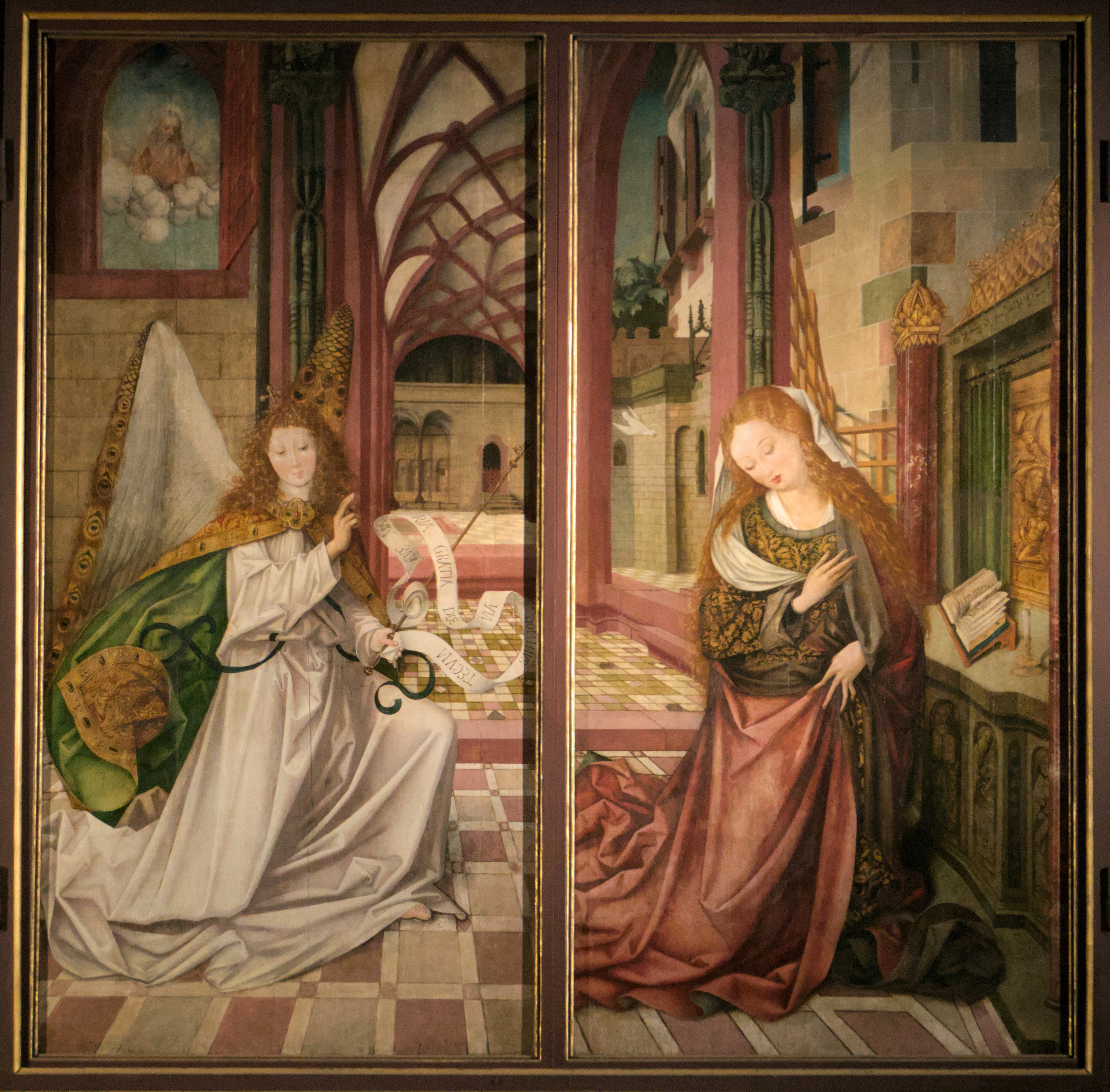
The central scene, consisting of two panels, shows the Annunciation, set inside a well-appointed domestic interior. Mary is interrupted from her prayers by a ruddy-faced messenger, whose banner bears his greeting: “Hail, Mary, full of grace, the Lord is with thee.”
The left wing depicts the Nativity inside a half-built or dilapidated structure that’s exposed to the elements. Mary has laid the infant Christ on the ground, cushioning him as much as possible with her extended cloak. Shepherds peep through the metal bars of the window, craning their necks to see. An ox and ass have front-row seats. Joseph holds a candle, and a trio of angels sing from a song sheet.
The right wing depicts the Adoration of the Magi. The three foreign men of means present gifts to the Christ child while their entourages stand by patiently in the background. As is traditional, one of them is portrayed as Black.
Stay tuned for my next Würzburg post, where I’ll share photos from Neumünster, a church that was on my radar because of the unusual crucifix housed in one of its side chapels.


Hello! What a fascinating post! I am blown away by the sculptural depiction of Jesus’s conception through hearing. I want to share it with my Bible study next time we meet 🙂 Can’t wait to follow along on this series! God bless, Ashley
LikeLike