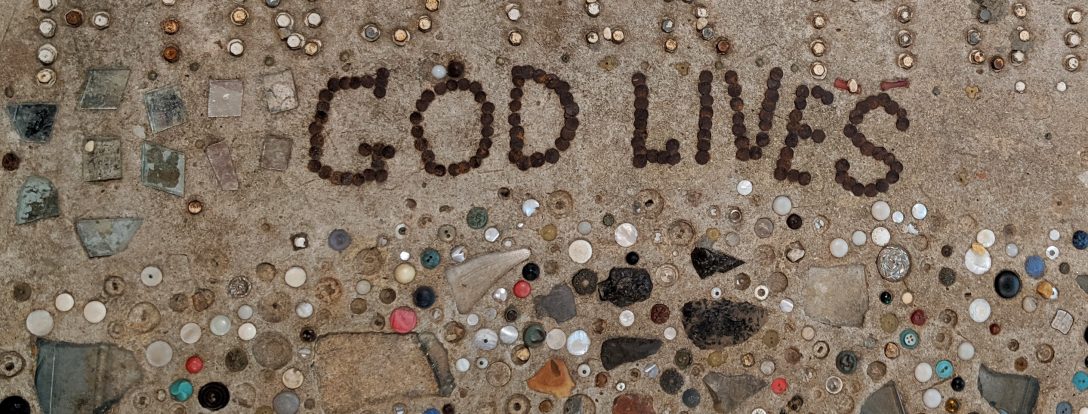
“Poets know,” Elizabeth Michael Boyle, OP, writes in Preaching the Poetry of the Gospels, “that the purpose of their language is neither to transmit information nor to simplify complexity, but rather to provoke an experience, to elicit an affective response, to create the intellectual and emotional environment for an encounter with the Word-as-Presence.”
Below are twenty-five poems for Advent and Christmastide that I hope will do that for you.
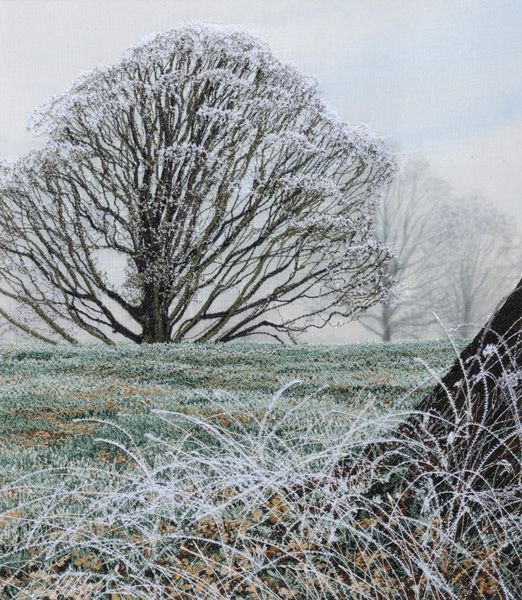
1. “Advent, First Frost” by Anya Krugovoy Silver: A feathered prophecy, frozen tears, furred ink—these are some of the textural images Anya Silver uses to describe the first frost of late autumn, coinciding with days of dwindling light and, most years in many regions, early Advent. While outside, tiny ice crystals cling to leaves and grass, inside, a children’s Advent calendar is propped open, the sun shining into its niches, illuminating surprises. Advent is a season pregnant with meaning, meaning perhaps best apprehended through the discipline of silence. If we’re attentive, we’ll hear the stirring of the Christ child being knit in Mary’s womb, about to be born; and we’ll grow more sensitized to the movements of Christ-in-us.
Source: I Watched You Disappear (LSU Press, 2014)
2. “you must walk this lonesome” by Evie Shockley: I learned about this unconventional prose poem by the contemporary African American poet Evie Shockley from The Oxford Handbook of Christmas; in her contributing essay “Poetry,” Emma Mason comments on how Shockley “shapes colliding thoughts about and memories of Christmas into a different kind of euphony . . . interspersing abbreviated references to spirituals and hymns” with narration of a solitary nighttime stroll through a Southern wood, where “fireflies glittering dangl[e] from evergreens like Christmas oracles.” The mood is one of enchantment, enhanced by wordplay (e.g., “full,” “wool,” “yule”).
Source: a half-red sea (Carolina Wren, 2006)
3. “Advent” by Charles R. Murphy: Swift, mighty, fair, strong, lovely, delicate, mild, terrible . . . he comes, in paradox. This is the first poem in a cycle of seven collectively titled “Growth.” Be sure to flip to the second page after reading the first: The poem continues for three more lines, and those last two are a banger!
Source: Poetry, August 1921. Public domain.
4. “Our Land” by Langston Hughes: Written in 1923, this poem by the most important literary figure of the Harlem Renaissance laments the distance between what is and what should be. Although America and its systemic oppression of Black people are not explicitly mentioned, a look at the poet’s larger oeuvre makes it clear that “Our Land” is a critique of the notion of America as a land of freedom and plenty. Life ought to be warm, colorful, fragrant, brimming, the poetic speaker asserts—but instead it is cold and gray, and the majority possess a scarcity mindset, hoarding privileges and resources. Here, joy feels disjunctive with lived experience, to which sorrow or despair would be a more logical response. Whether taken in the sociopolitical context in which it arose or transposed to another, this poem is about feeling ill at ease in this broken world and longing for wholeness.
Source: The Weary Blues (Knopf, 1926). Public domain.
5. “A Christmas Carol for 1862, the Year of the Trouble in Lancashire” by George MacDonald: In 1862, the region of Lancashire in northern England, whose economy was built around the textile industry, was in a depression. A Union naval blockade of Confederate ports in the United States had cut off the supply of raw cotton to Europe, necessitating the layoff of tens of thousands of Lancashire mill workers, who were thus thrown into poverty. Living in London at the time, the writer George MacDonald addressed the Lancashire Cotton Famine in his Christmas poem of that year, beseeching Christ to alleviate the suffering, both in England and in the civil war–torn US: “Come Babe, from heaven,” he cries, “or we are lost.” He acknowledges that although the Union cause is just—to abolish slavery—“the strife is long.” He then broadens his intercession beyond just the people of those two nations—the unemployed and hungry, the enslaved, the embattled—to anyone who “sit[s] and sigh[s]” and knows “in their hearts all is not right.”
Source: The Disciple, and Other Poems (London, 1867). Public domain.
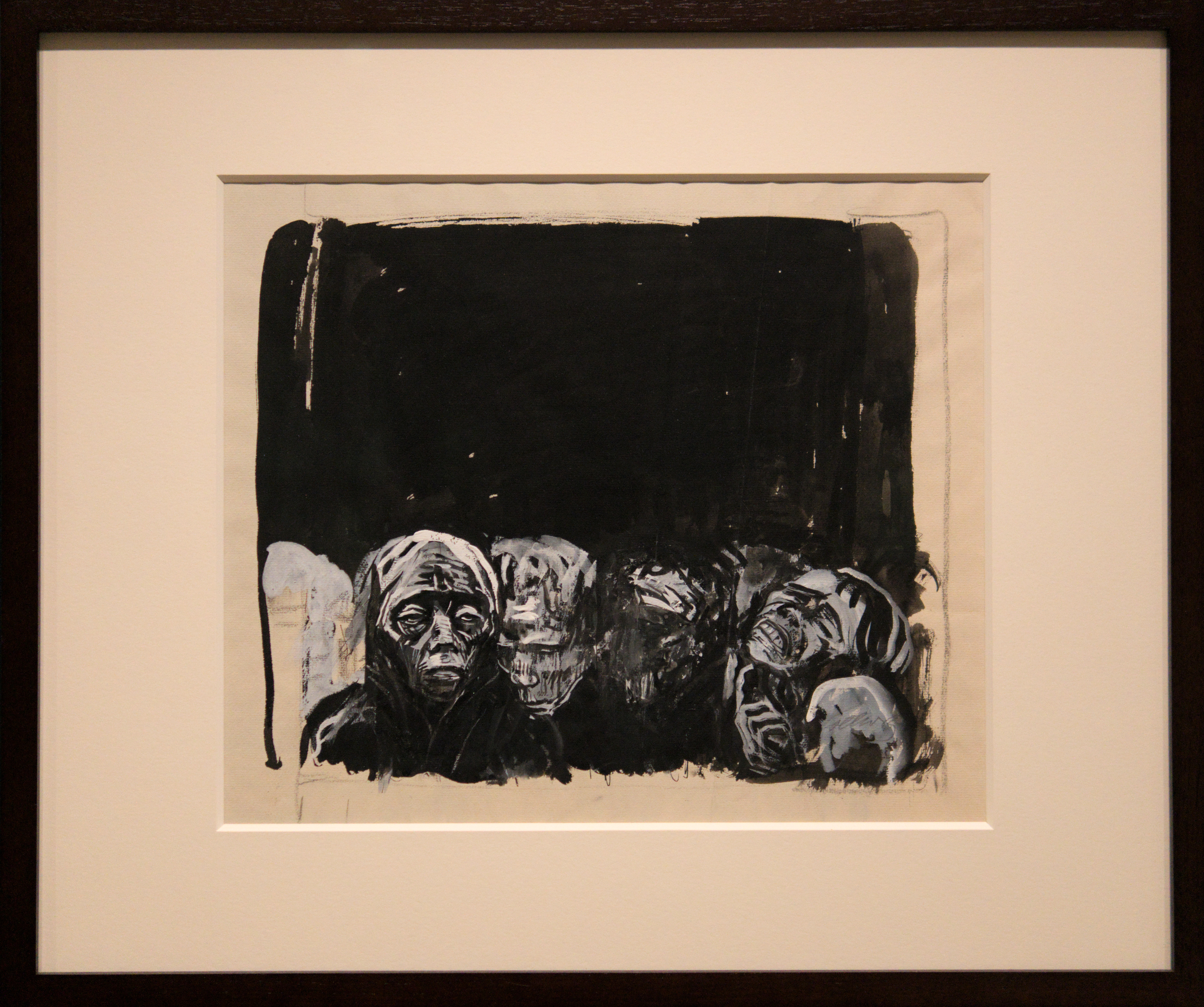
6. “Blue Christmas” by Barbara Crooker: Blue Christmas services, typically held on the winter solstice, are a relatively new phenomenon in churches that have materialized to provide an avenue of mourning and lament for those for whom “the holidays weigh like a heavy sack.” Here Barbara Crooker reckons with the eleven deaths of loved ones she has faced in a year, sorrowing for those absences that seem to blare especially loudly during the year-end season of good cheer.
Source: Perspectives: A Journal of Reformed Thought, November 2012 | https://www.barbaracrooker.com/
7. “The Last Day” by Kevin Hart: This poem by the Australian poet-theologian Kevin Hart describes the culmination of human history, when Christ will return, the dead will be raised, and the whole cosmos will be restored. On that day, Hart writes, “the long night / Will be seen for what it is, / A black flag trembling in the sunlight.” We will become most truly ourselves, alive in naked reality; we will know and be known, receiving a new name—a reference to the white stone of Revelation 2:17 that signifies transformation and intimacy.
Source: Flame Tree (Bloodaxe Books, 2003)
8. “Exile for the Sake of Redemption” by Yehoshua November: Yehoshua November, an Orthodox Jewish poet from New Jersey, muses on how redemption comes—first lingering, then with an enthusiastic suddenness. Likening God to a classroom teacher temporarily lost in thought and then seized by epiphany, November speaks of redemption in terms of discovery, illumination, and return.
Source: The Concealment of Endless Light (Orison Books, 2024) | https://www.yehoshuanovember.com/
9. “Elizabeth Writes to Mary” by KPB Stevens: Rev. Karl Stevens is an Episcopal priest, artist, and poet from Ohio. This poem of his is in the form of a letter from Elizabeth to her younger cousin Mary—two women living under the boot of the Roman Empire, ready for revolution. I love the final rhyming couplet, which references Luke 1:41.
Source: The Christian Century, March 25, 2026 | https://kpbstevens.com/
10. “On the Mystery of the Incarnation” by Denise Levertov: God came to earth not as a flower or, say, a dolphin, but as a human being, choosing to put on the flesh of our species, despite all the ugly ways we’ve acted throughout history.
Source: A Door in the Hive (New Directions, 1989); compiled in The Stream and the Sapphire: Selected Poems on Religious Themes (New Directions, 1997)
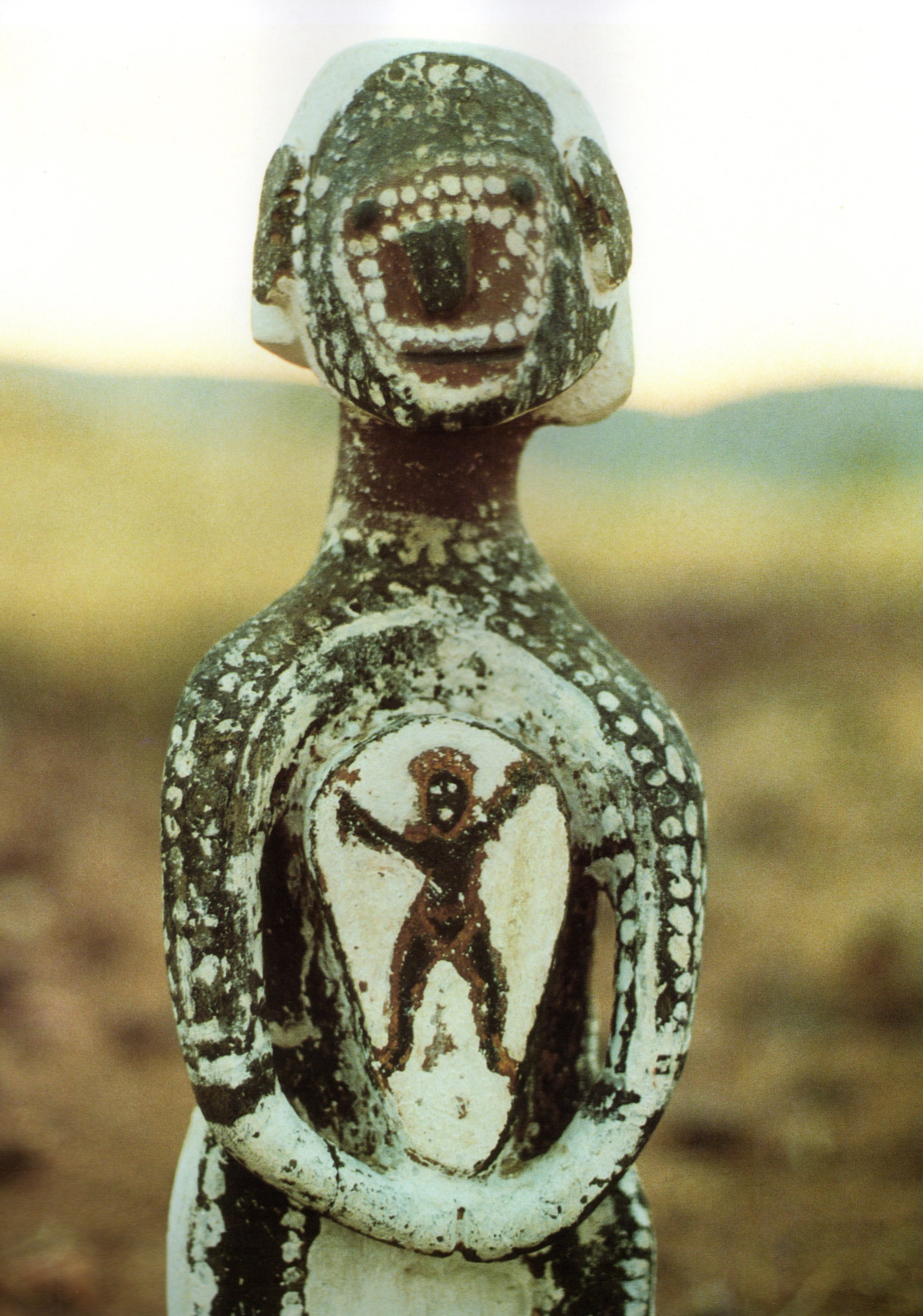
11. “Advent V” by Claudia Lehman: “What had it been / to lay your hand against yourself, and find / the first small flutter of the world’s rebirth?” In this Annunciation poem, Claudia Lehman ponders amazedly how, “defying anguish,” Mary answered yes to God’s offer.
Source: The Curator, December 5, 2019
12. “Wonder” by Julie L. Moore: A series of playful wonderings about the logistics of divine incarnation.
Source: Particular Scandals (Cascade Books, 2013) | https://julielmoore.com/
13. “Birth” by Tania Runyan: Written from the perspective of Jesus to his mom, this poem opens by contradicting a famous carol line. With her characteristic humor, Tania Runyan reflects on the decidedly unquaint, unquiet, undelicate nature of childbirth, which involves ripping, wailing, and expelled tissue. “So many say // they want incarnation / but don’t really mean it.” The fleshy details of God’s arrival, Runyan suggests, are all part and parcel of the glory of God-made-human.
Source: The Rabbit Room, December 16, 2024 | https://taniarunyan.com/
14. “Star Silver” by Carl Sandburg: The silver of a star, the green of pines—every Christmas, these two colors cross and remind us of an ancient story that never wears out.
Source: The Sandburg Range (Harcourt Brace, 1957)
15. “Christmas Tree” by James Merrill: Planted, cultivated, then harvested some ten years later to be set up in pride of place in some domicile and enjoy a fleeting few weeks of glory, bedecked in lights, ornaments, and tinsel, before being heaved out onto the street to finish dying—such is the life of a Christmas tree. The tree who voices this charming shape poem is proud to sacrifice himself to bring loved ones together under a sign of the evergreen life they have in Christ. James Merrill began writing “Christmas Tree” in December 1994 and completed it from a hospital bed in February 1995, shortly before his death. It was published posthumously.
Source: A Scattering of Salts (Knopf, 1995)
16. “Nativity” by Kenneth Steven: In many ways, Jesus’s birth was ordinary. There were signs for those granted the grace to receive them, but what passersby would have seen, if they passed the place where Jesus lay, was a baby just like you or me.
Source: The Christian Century, December 1, 2021 | https://kennethsteven.co.uk/
17. “The Birth of Christ” by Rainer Maria Rilke: Originally published in German in 1913, this poem comes from Rainer Maria Rilke’s collection Das Marien-Leben (The Book of Mary). The “you” in the first line refers to the Mother of God; it’s saying that if she had not been humble, she would not have received such blessing—the luminous Christ, who outshines even the gifts of the magi.
Source: The Book of Mary, in Rainer Maria Rilke, Selected Works, Volume II: Poetry, trans. J. B. Leishman (New Directions, 1967)
18. “A Christmas Symphony (V)” by Helen Hunt Jackson: The fifth and final section of Helen Hunt Jackson’s 1874 poem “A Christmas Symphony” apostrophizes the stars, noting their rhythmic sparkle, and delights in the harmonic conjoining of the music of heaven and earth on Christmas Day. (Start reading at “Oh, Christmas Stars!” The overall poem is mediocre, but section V is a standout.)
Source: A Library of Religious Poetry, ed. Philip Schaff and Arthur Gilman (New York, 1881). Public domain.
19. “Angels’ Song” by U. A. Fanthorpe: In this simple, eight-line poem by Ursula Fanthorpe, the angels of heaven, so used to singing the praises of the almighty, transcendent God, are compelled by Christ’s birth to add a new verse to their song—about God revealed in littleness and dependency.
Source: Christmas Poems (Enitharmon, 2002)
20. “Christmas Child” by Paul J. Willis: “Born in blood and born to bleed,” Christ was. Paul J. Willis reflects on Christ’s first and last drinks: sweet milk from his mother’s breast, and, a far cry from that, sour vinegar from the sponge of a Roman soldier.
Source: Say This Prayer into the Past (Cascade Books, 2013) | https://pauljwillis.com/
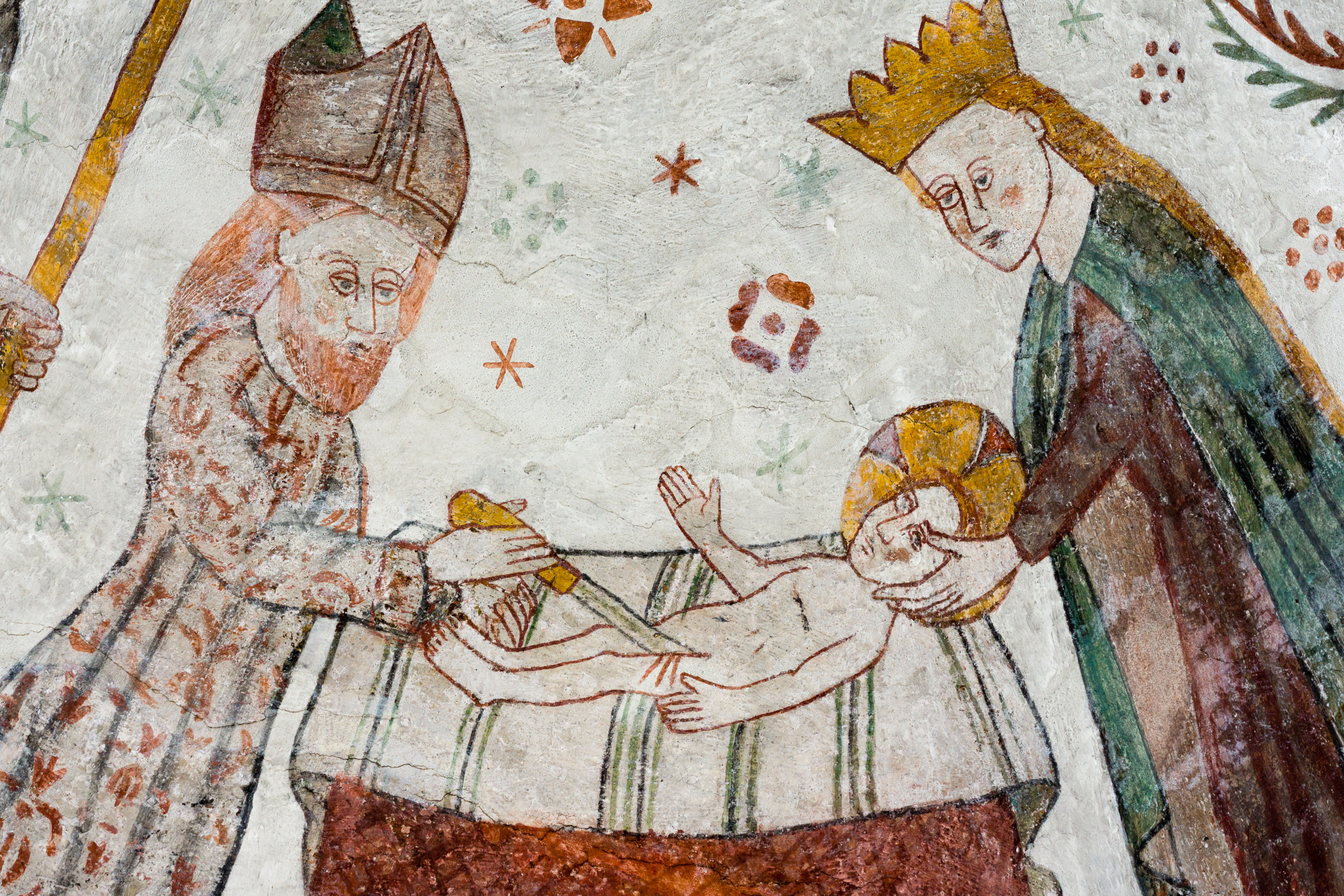
21. “On the Circumcision” by William Cartwright: Ever since the patristic era, Christians have understood Jesus’s circumcision—his first shedding of blood—as a prefiguration of his future shedding of blood on the cross. “’Tis but the passion’s essay: this young loss / Only preludes unto his riper cross,” writes the English Renaissance poet and dramatist William Cartwright in “On the Circumcision,” intended for musical performance at the Stuart court. “Lev.” stands for “Levite.”
Source: Comedies, Tragi-Comedies, with Other Poems (London, 1651). Public domain.
22. “The Still Pilgrim Hosts Christ” by Angela Alaimo O’Donnell: Jesus was a guest in our earth-home, you might say, but he brought the party. All kinds of goodness. This poem is from Angela Alaimo O’Donnell’s excellent collection Still Pilgrim, its title referring to how we must be present to each moment as we travel through time, paradoxically both still and moving.
Source: Still Pilgrim (Paraclete, 2017) | https://angelaalaimoodonnell.com/
23. “Moonless darkness stands between” by Gerard Manley Hopkins: In 1865, Gerard Manley Hopkins wrote his only Christmas poem we know of, praying that the Star of Bethlehem would lead him to a deeper, truer knowledge of Christ.
Source: The Journals and Papers of Gerard Manley Hopkins, ed. Humphry House (Oxford University Press, 1959). Public domain.
24. “A Letter from Arles” by Andrew Roycroft: “Now if I recover, I must start afresh,” Vincent van Gogh wrote to his brother, Theo, on January 9, 1889, two weeks after suffering a psychotic break. Andrew Roycroft uses this quote as the opening line of a villanelle written in Van Gogh’s voice during his recuperation in southern France, at which time he would paint The Starry Night. Though it was a particularly dark and painful Christmas season, Van Gogh reaches for the grace of a new year and speaks a self-blessing—that he might effectively translate the feelings and aspirations expressed in his letters into paint on canvas (“words become flesh”).
Source: The Rabbit Room, January 2, 2024
25. “The Flight into Egypt” by Thomas Merton: The Holy Family’s escape from Israel to Egypt to avoid massacre is the final episode in the infancy of Christ narrative. In his poem on the subject, written in November 1941 and published three years later, the Trappist monk and spiritual writer Thomas Merton implicitly connects Herod’s reign of terror to the then-recent spread of totalitarianism in Europe that led to World War II. “Squadroned iron resounds upon the streets,” but, Merton imagines, a wild lion serves as guardian of the refugee Christ, keeping his path safe as he travels toward asylum.
Source: Thirty Poems (New Directions, 1944); compiled in The Collected Poems of Thomas Merton (New Directions, 1980)
If you enjoyed this article, you might enjoy the similar curations of previous years, each iteration containing all-new poem selections: [vol. 1] [vol. 2] [vol. 3] [vol. 4]


Thank you for another extraordinarily rich collection and resource. Just one thing: I love Rowan Williams poem, ‘Advent Calendar’ but I don’t think you have incorporated it into any of your 5 collections to date? Is there a reason for this?
LikeLike