The Reproaches: A divine lament for Good Friday

O my people, what have I done to you?
In what have I wearied you? Answer me!

—Micah 6:3

The Reproaches (Latin: Improperia), also known by the first phrase of their refrain, “Popule meus” (O My People), are a series of antiphons and responses used in Good Friday liturgies across all three branches of Christianity. The text contrasts Old Testament stories of God’s goodness with humanity’s enactment of evil against God’s Son. Whereas God graciously delivered his people from death time and again throughout history, they delivered his Son to death—death on a cross. Thus God reproaches us, his beloved ones, for our fatal rejection of Christ, his greatest gift, lamenting that we have spurned his love.

The lyrics are reproduced below (the side-by-side formatting with English translation on the right is best viewed on a computer screen), followed by four musical settings, chosen from among dozens. In the present Roman Rite, the roman-style text is sung by a cantor and the italicized text by a choir, and the lines of the Trisagion (“Thrice Holy”), the ancient hymn that follows the first improperium, are sung by two halves of a choir in alternation—the first singing in Greek, the second in Latin. Composers working outside that context, however, may assign the sections differently.

(Related post: “Blood and Tears”)
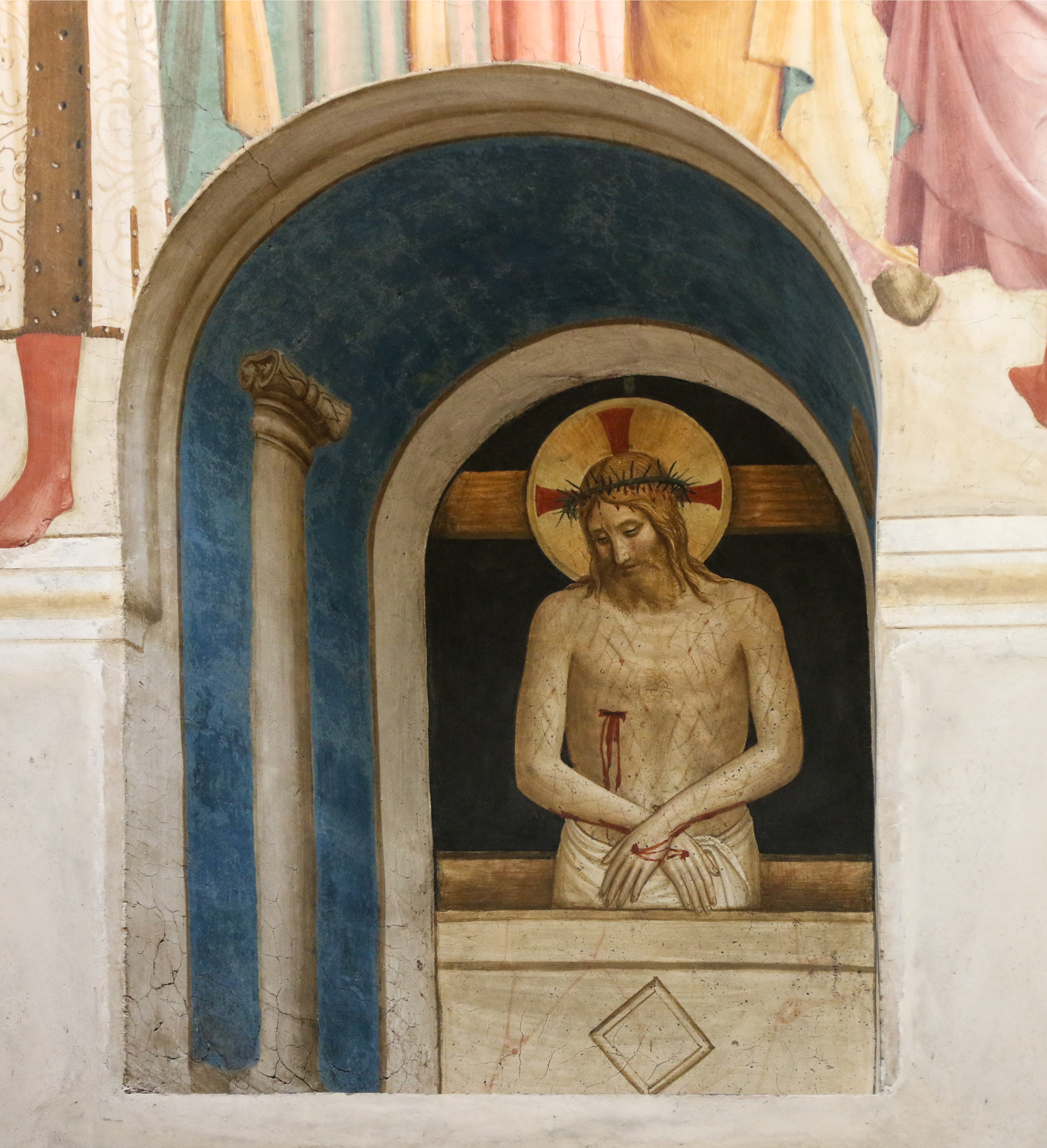
Fra Angelico_Man of Sorrows
Fra Angelico (Italian, ca. 1395–1455), Man of Sorrows, ca. 1440. Fresco, Cell 39, Convent of San Marco, Florence. Photo: Fr. Lawrence Lew, OP.

Popule meus, quid feci tibi?
Aut in quo contristavi te?
Responde mihi.

Quia eduxi te de terra Aegypti:
parasti Crucem Salvatori tuo.

   Hagios o Theos.
      Sanctus Deus.
   Hagios Ischyros.
      Sanctus fortis.
   Hagios Athanatos, eleison himas.
      Sanctus immortalis, miserere nobis.

Quia eduxi te per desertum quadraginta annis:
et manna cibavi te, et introduxi te in terram satis bonam:
parasti Crucem Salvatori tuo.
Hagios . . .

Quid ultra debui facere tibi, et non feci?
Ego quidem plantavi te vineam meam speciosissimam:
et tu facta es mihi nimis amara:
aceto namque sitim meam potasti:
et lancea perforasti latus Salvatori tuo.
Hagios . . .

Ego propter te flagellavi Aegyptum cum primogenitis suis:
et tu me flagellatum tradidisti.
Popule meus . . .

Ego te eduxi de Aegypto, demerso Pharone in mare Rubrum:
et tu me tradidisti principibus sacerdotum.
Popule meus . . .

Ego ante te aperui mare:
et tu aperuisti lancea latus meum.
Popule meus . . .

Ego ante te praeivi in columna nubis:
et tu me duxisti ad praetorium Pilati.
Popule meus . . .

Ego te pavi manna in desertum:
et tu me cedisti alapis et flagellis.
Popule meus . . .

Ego te potavi aqua salutis de petra:
et tu me potasti felle et aceto.
Popule meus . . .

Ego propter te Chananeorum reges percussi:
et tu percussisti arundine caput meum.
Popule meus . . .

Ego dedi tibi sceptrum regale:
et tu dedisti capiti meo spineam coronam.
Popule meus . . .

Ego te exaltavi magna virtute:
et tu me suspendisti in patibulo crucis.
Popule meus . . .
O my people, what have I done to thee?
Or how have I offended thee?
Answer me.

Because I led thee out of the land of Egypt:
thou hast prepared a cross for thy Savior.

O holy God!
O holy God!
O holy strong One!
O holy strong One!
O holy and immortal, have mercy upon us.

Because I led thee through the desert for forty years:
and fed thee with manna, and brought thee into a land exceeding good:
thou hast prepared a cross for thy Savior.
O holy God! . . .

What more ought I to have done for thee, that I have not done?
I planted thee, indeed, my most beautiful vineyard:
and thou hast become exceeding bitter to me:
for in my thirst thou gavest me vinegar to drink:
and with a spear thou hast pierced the side of thy Savior.
O holy God! . . .

For thy sake I scourged the firstborn of Egypt:
Thou hast given me up to be scourged.
O my people . . .

I led thee out of Egypt, having drowned Pharaoh in the Red Sea:
and thou hast delivered me to the chief priests.
O my people . . .

I opened the sea before thee:
and thou hast opened my side with a spear.
O my people . . .

I went before thee in a pillar of cloud:
and thou hast led me to the judgment hall of Pilate.
O my people . . .

I fed thee with manna in the desert:
and thou hast assaulted me with blows and scourges.
O my people . . .

I gave thee the water of salvation from the rock:
and thou hast given me gall and vinegar to drink.
O my people . . .

For thy sake I struck the kings of the Canaanites:
and thou hast struck my head with a reed.
O my people . . .

I gave thee a royal scepter:
and thou hast given a crown of thorns for my head.
O my people . . .

I exalted thee with great strength:
and thou hast hanged me on the gibbet of the cross.
O my people . . .

1. “Popule meus” by Tomás Luis de Victoria (1585)

First up, a traditional setting of the Latin by the Spanish Renaissance composer Tomás Luis de Victoria (ca. 1548–1611) [previously], performed by Ensemble Invocatio under the direction of Daniel Knaggs in 2022 at Seminary Church in Warsaw, Poland. The soloist is Łukasz Dziuba. This four-part motet is the most widely performed setting of the Reproaches.

2. “The Reproaches” by John Sanders (1984)

This setting in English by the British composer John Sanders (1933–2003) has become standard repertoire for many English cathedral and church choirs. Sanders first wrote it in 1984 for a Good Friday service at Gloucester Cathedral, where he served as organist, but it wasn’t published until 1993. It’s performed here by the Ely Cathedral Choir, conducted by Sarah MacDonald, from 2018. Whereas Victoria scored his setting for four voices (SATB), Sanders scored his for eight (SSAATTBB), creating more complex harmonies, including dissonance.

3. “Popule meus” by Filipe Faria and Sérgio Peixoto (2015)

In 1999 Portuguese composers Filipe Faria (b. 1976) and Sérgio Peixoto (b. 1974) founded Sete Lágrimas ECMC (Early and Contemporary Music Consort) to create dialogues between medieval, Renaissance, and early Baroque music on the one hand and contemporary music on the other. Their “Popule meus,” which includes just the opening refrain, is from their Missa Mínima, a minimalistic setting for two voices and recorder of the five parts of the Catholic Mass, along with other important liturgical texts. They began composing it in 1999, put it on the back burner for a while, and returned to it later, completing it in 2015. In this 2016 recording, the singers are Faria and Peixoto. The melodic embellishment on the syllable -sta in contristavi (literally “saddened” but more often translated in this song as “offended” or “distressed”) creates a tense quivering effect, a climax before the languid return to the title phrase and a petering off with “Responde mihi.”

4. “The Reproaches” by Paul Zach (2021)

American singer-songwriter Paul Zach wrote this condensed version of the Reproaches with frequent collaborator Kate Bluett [previously], which puts the words in the voice of the people, who assume and repent of their responsibility for Jesus’s death—for no matter our temporal or geographical proximity to the event, it was our sin that led him to and held him on the cross. Transferring the speaker from God to the Christian for the whole duration helps make the song more suitable for congregational singing, as it can then function as a corporate confession.

You delivered us from Pharaoh;
We delivered you to death.
You gave manna in the desert;
We gave a crown of thorns for your head.

You brought us out of slavery
Into the promised land;
We brought you up to Calvary
And pierced your feet and hands.

Holy God, Holy Mighty One,
Holy Immortal One,
Have mercy, mercy,
Have mercy on us.

You opened up the Red Sea;
We opened up your side.
“Come down, come down,” we mocked you;
“My God, my God,” you cried.

Holy God, Holy Mighty One,
Holy Immortal One,
Have mercy, mercy,
Have mercy on us.

Zach told me he’s not fully satisfied with the song and is working on a rewrite that he may release in 2024. Nonetheless, I really like what he and Bluett have created here! And I appreciate how it brings the Reproaches into an indie-folk idiom, making that long-standing sung portion of the global church’s Good Friday liturgy accessible to those who find it difficult to connect with choral music or chant.

Addendum, 3/21/23: Rev. Bill Combs from Greensboro, Georgia, has just reminded me of a contemporary adaptation of the text of the Reproaches by Janet Morley, a liturgist from the UK. It’s from her wonderful collection All Desires Known, a resource for public worship and private devotion, and can be read here. Combs’s church, Episcopal Church of the Redeemer, chants this text as part of their annual Good Friday service using Tone II.1.
Roundup: New Lent album, Porter’s Gate Kickstarter, “Bare and Bones,” and more

NEW ALBUM: Lent Hymns by Paul Zach: Released this month, Lent Hymns by Paul Zach comprises twelve songs, a mix of originals and classics, with contributions by IAMSON, Jessica Fox, Sara Groves, Jon Guerra, and Kate Bluett. The LP is available wherever music is streamed or sold. Here’s an Instagram video that excerpts “Draw Me In”:

+++

KICKSTARTER: New Porter’s Gate album: This summer The Porter’s Gate, an interdenominational Christian music collective, is gathering songwriters to write and record musical settings of passages from The Message, a translation of the Bible by the late Eugene Peterson [previously] that uses contemporary idioms and phrases. The project is in partnership with the Eugene Peterson Center for Christian Imagination at Western Theological Seminary in Holland, Michigan. I’m so looking forward to this!

+++

SONGS:

>> “Вечірня молитва” (Vechirnya molytva) (Evening Prayer): A choral setting of a text from the Divine Service of the Eastern Orthodox Church, by contemporary Ukrainian composer Iryna Aleksiychuk. Performed in 2012 by the Female Choir of Kiev Glier Institute of Music, conducted by G. Gorbatenko. [HT: Global Christian Worship]

English translation:

Heavenly King, Comforter, Spirit of Truth,
Who art everywhere present and fillest all things,
Treasury of good things, and Giver of life:
Come and abide in us, and cleanse us from every sin,
And save our souls, O Good One!
Holy God, holy Mighty, holy Immortal,
Have mercy on us.

>> “Bare and Bones” by Candace Coker: Trinidad-born, Vancouver-based singer-songwriter Candace Coker sings the title track from her new album, Bare and Bones, with her boyfriend, Josiah Charleau. The video is shot at Bamboo Cathedral, a thousand-foot stretch of roadway in Tucker Valley in Chaguaramas, Trinidad and Tobago, where bamboo stalks bend toward each other across the road, creating a canopy.

>> “HigherHoly” by IAMSON: IAMSON is the artist name of singer-songwriter and music producer Orlando Palmer, based in Richmond, Virginia. He released this song as a single in 2020. The rap is performed by guest artist Marv (Marvin Hudgins II) of Chattanooga, Tennessee, and the animation in the video is by Kenya Foster.

>> “I Could Sing of Your Love Forever” (cover) by Mary Yang and Ger Vang: Mary Yang and Ger Vang are Hmong Christian musicians living in Milwaukee, Wisconsin. (The Hmong are an Indigenous people group from East and Southeast Asia.) Here they perform their bossa nova arrangement of this modern worship classic by Martin Smith of the English band Delirious?. Yang and Vang are part of the Fishermen’s Project, a band that releases mainly classic hymns translated into the Hmong language. [HT: Global Christian Worship]

Roundup: Les Mis, blood collages, Esau McCaulley on Lent, and more

I’ve received a few requests from followers to resume my monthly thirty-song playlists. I had previously thought I’d stick to publishing these during Ordinary Time, since I have longer, thematic playlists for the seasons of Advent, Christmas, Lent (our current place in the calendar), and Easter—which you can find on my Spotify profile. But I’m happy to oblige! Here’s a new playlist for March:

+++

ESSAY: “Victor Hugo’s Masterpiece of Impossibility” by Caitrin Keiper, Plough: A wonderful essay on how competing vows in the novel and musical Les Misérables reveal the paradox of grace. I’ve been captivated by this story of mercy, forgiveness, and transformation set in revolutionary France ever since I saw the 1998 film adaptation starring Liam Neeson in middle school. The faith-inspired actions of Bishop Myriel at the beginning set the life of the protagonist Jean Valjean, an escaped convict, on a trajectory that is beautiful to watch unfold, and the downfall of the law-obsessed Inspector Javert, who cannot bring himself to accept the grace offered him, is most tragic.

+++

PODCAST EPISODES:

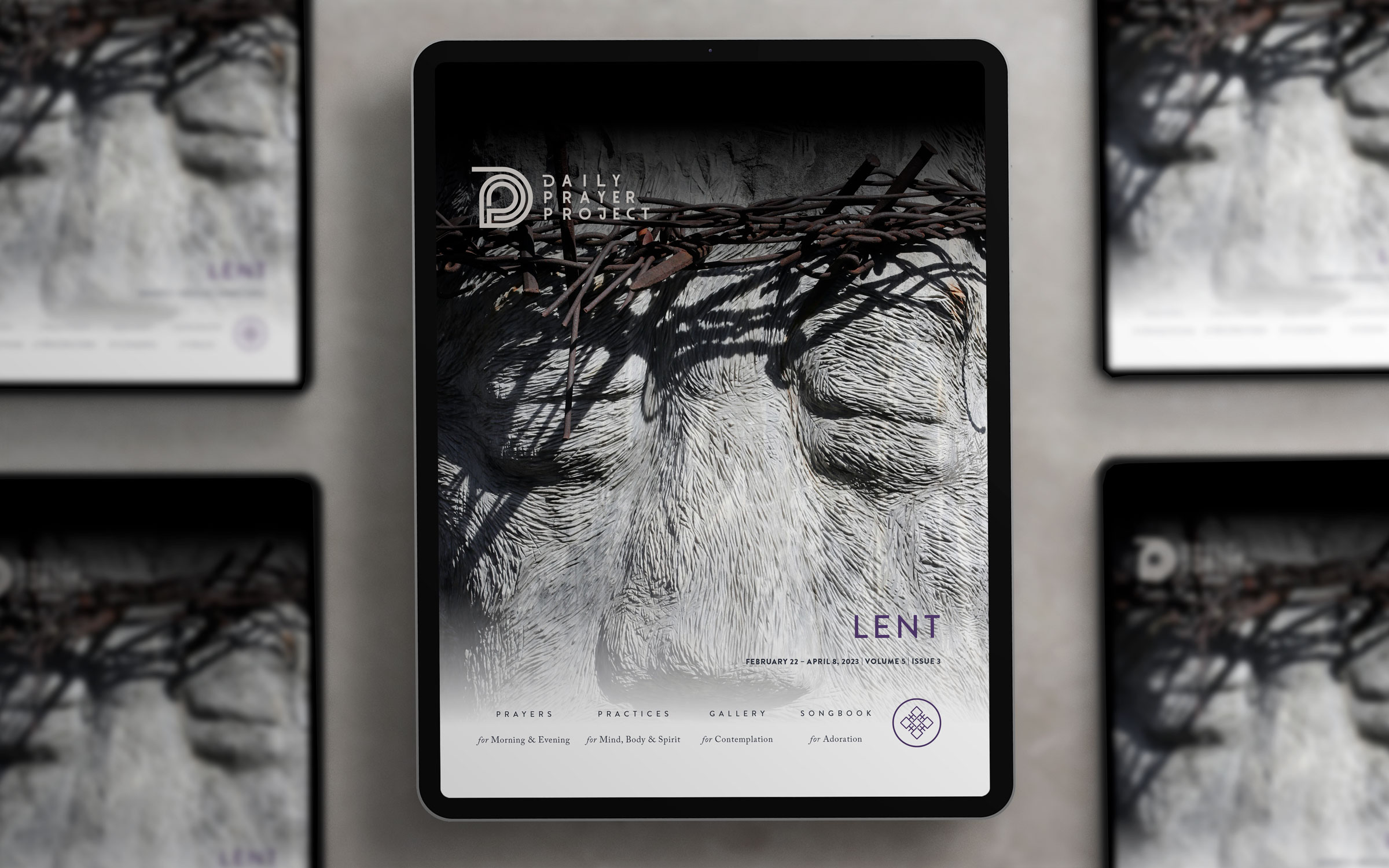
>> Season 2, episode 2, of Gather Round, on the DPP’s Lent 2023 Living Prayer Periodical: On the in-house podcast of Grace Mosaic in Washington, DC, three of my four Daily Prayer Project colleagues and I walk listeners through the latest edition of our prayer periodical, which covers the six weeks of Lent. The conversation starts at 3:46. Rev. Joel Littlepage, curator of the liturgies and songs, highlights a litany to the Servant-Christ from Andhra Theological College in Hyderabad, India, and a song by Pastor Antonio Rivera González of Mexico (see below). Ashley Williams, who commissions or secures reproduction rights for the practice-based essays and curates the photographs throughout, shares some teasers for “Calling Out to God in Lament” by Nina Barnes and “Intractable Sin, Preemptory Prayer” by Alicia Akins.

Daily Prayer Project, Lent 2023
The Daily Prayer Project’s Lent 2023 booklet, featuring scripture, prayers, practical essays, art, and music from diverse contributors, is available in print and digital formats.

As curator of the art on the cover and in the Gallery section, I discuss the marble sculpture Condemned to Death by Chang Dong Ho (장동호) (see more by the artist), the mixed-media piece Gathering Fragments 1 by C. F. John, the photograph Untitled #10, Flushing, NY from the Stranger Fruit series by Jon Henry, and the painted woodcarving Qwi:qwelstom (Halkomelem, a Coast Salish language, for “Balance and Harmony”) by Don Froese.

At 32:44–35:06, our theological editor, Rev. Russ Whitfield, discusses a theological method that has informed our work at the DPP called triperspectivalism (or multiperspectivalism), which says that we can enrich our perspective, limited on its own, by looking at things from different angles, especially those revealed to us by other people and cultures. For a snippet of the Herman Bavinck quote, see here. What Russ says is SO GOOD! I believe our prayerbooks stand out from other similar projects in that they are deliberately cross-cultural—not because it’s trendy, but because there is so much beauty and wisdom we are missing by not availing ourselves of the many resources of the global church. Our content is also cross-historical.

There are subscription options for individuals (you receive a print edition and a digital download link) and groups (digital access, with bulk-printing options). You can also buy a single copy, but it’s cheaper to purchase a monthly subscription and then cancel after you receive your edition if you don’t wish to continue. We publish six editions a year, each following the same format but filled with new content for the given season.

>> “Lent: Season of Repentance, Renewal . . . and Rebellion” with Esau McCaulley, For the Life of the World: Here Rev. Dr. Esau McCaulley—associate professor of New Testament at Wheaton College, contributing opinion writer for the New York Times, and award-winning author of Reading While Black—talks about the Christian practice of Lent as a collective wisdom passed down through generations of Jesus followers, as well as a spiritual rebellion against mainstream American culture, which has its own established rhythms that shape how we spend our money, when we feast, and what we celebrate.

McCaulley spent the first twenty-one years of his life in the Black Baptist church and the past twenty in a high-liturgical tradition, both of which have been formative for him. One thing he appreciates about liturgy (both the yearly calendar and the elements within a worship service), he says, is how it helps him more fully inhabit the story of Christ. He construes Lent as a season of repentance and grace; he points out the justice practices of Lent; he walks through a Christian understanding of death, and the beautiful practice of stripping the altars on Maundy Thursday; and he’s emphatic about how Lent is a guided season of pursuing the grace to find, or perhaps return to, yourself as God has called you to be. These ideas are expanded upon in his new book, Lent: The Season of Repentance and Renewal, from IVP’s Fullness of Time series.

+++

SONGS:

>> “Divino compañero del camino” (O Lord, Divine Companion): Written in 1964 by Antonio Rivera of Mexico, this popular Spanish-language song is performed here by Karina Moreno and Joseph Espinoza. It’s based on Luke 24:28–32, from the postresurrection story of the walk to and supper at Emmaus, but its pilgrimage aspect—the idea of Jesus as a companion on our life journey—makes it appropriate for Lent. [HT: The Daily Prayer Project]

>> “Yeshu Ji Mere Paap Kshama Kar Do” (Lord Jesus, Forgive My Sins): A Hindi song of confession with words by the late Shri Jalal Masih and music by his granddaughter, Mercy Sharon Masih. Mercy sings it here with her father, Hanook Masih. For an English translation, click the “CC” button. [HT: Global Christian Worship]

+++

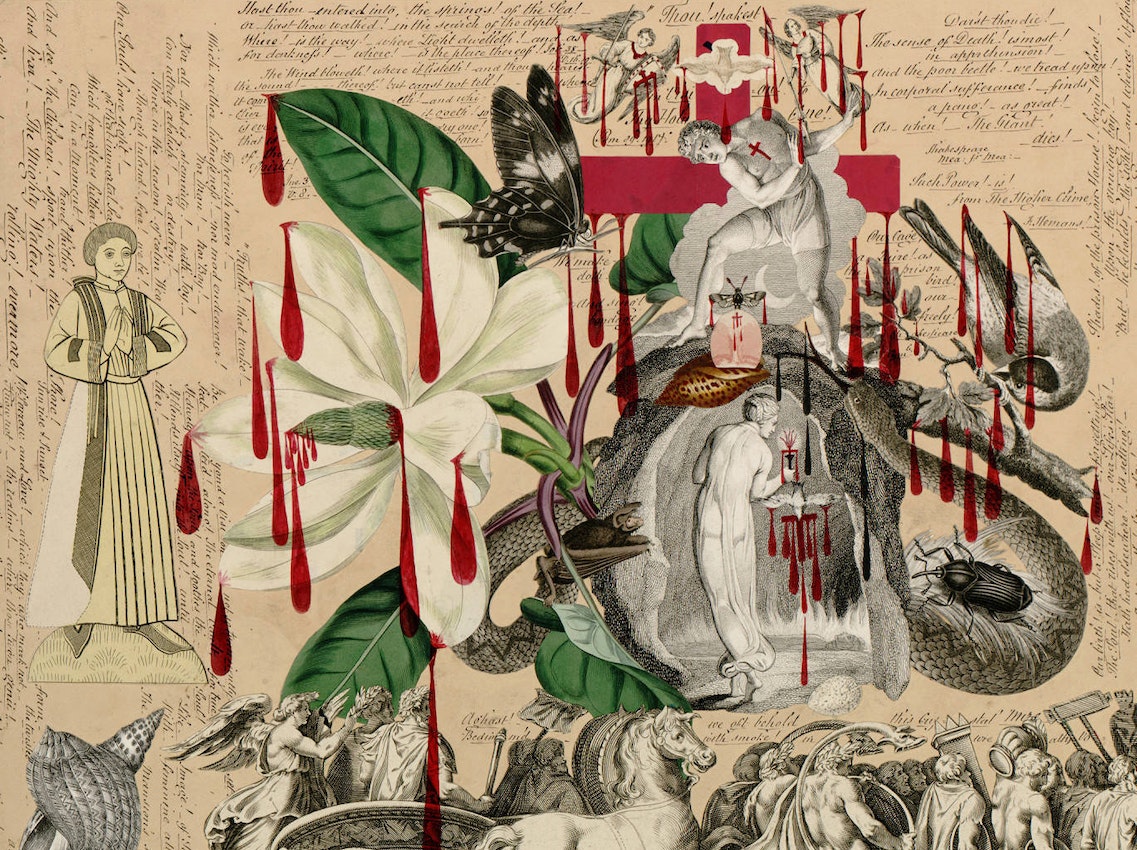
ARTICLE: “The Blood Collages of John Bingley Garland (ca. 1850–60),” Public Domain Review: Peruse the so-called Victorian Blood Book, an eccentricity made by the British politician and fishmonger John Bingley Garland as a wedding gift for his daughter Amy in 1854. It consists of forty-one collages whose sources are engravings by William Blake and various other religious artists, botanical and zoological illustrations, photographs of medieval tombs, and other images from nineteenth-century books, but with one distinguishing decorative addition by Garland’s hand: drops of blood in red India ink, presumably signifying the blood of Christ. The pages also bear extensive handwritten religious commentary.

Garland, John Bingley_Blood Book
Detail from a page of John Bingley Garland’s “Blood Book” (ca. 1850–60), featuring a cut-out from a reproduction of William Blake’s engraving The Soul exploring the recesses of the Grave.

The Blood Book transferred from the collection of novelist Evelyn Waugh to the Harry Ransom Center at the University of Texas at Austin upon Waugh’s death, and they identify it as “the single most curious object in the entire library.” Though modern eyes may see the collages as surreal or even grotesque, Garland’s descendants regarded them as nothing other than “a precious reminder of the love of family and Our Lord,” as they have written. The Harry Ransom Center has digitized the full book.

Roundup: “The Loving Look,” Keiskamma retrospective, and more

ONLINE EVENT: “Theodicy of Beauty” by Sarah Clarkson, March 6, 2:30 p.m. ET: “The question of suffering is one of the central, aching questions of faith. Too often, we meet suffering with an argument for God’s goodness, rather than an invitation to find and discover his goodness anew. Join me for an exploration of what it means to encounter and trust the beauty of God in our times of darkness, suffering, and pain. Drawing on my own story of mental illness and depression, I’ll explore what it means to engage with God’s goodness in a radically healing way, one that restores our capacity to imagine, hope, and create. We’ll use literature, art, and poetry to discern the ways that God arrives in our darkness to heal us, and also to restore us as agents of his loveliness in the midst of a broken world.”

This Crowdcast talk by Sarah Clarkson is based on her book This Beautiful Truth: How God’s Goodness Breaks into Our Darkness. Registration is $7 and includes a complimentary downloadable copy of “Encountering Beauty,” an arts-based reader’s guide to Clarkson’s book. I have appreciated her From the Vicarage: Books, Beauty, Theology newsletter and her wise, gentle reflections on spirituality, literature, and motherhood on Instagram @sarahwanders, so I’m looking forward to hearing from her on this topic!

+++

LECTURES (available on podcast platforms):

>> “The Loving Look” by Dr. Elissa Yukiko Weichbrodt: In this keynote address for the 2018 Beautiful Orthodoxy conference, art historian Elissa Yukiko Weichbrodt [previously], author of Redeeming Vision: A Christian Guide to Looking at and Learning from Art, discusses how contemporary art—which can sometimes be confounding or otherwise challenging—can drive us to confession, empathy, and love. Sharing her encounters with three contemporary artworks, she talks about art as a place where we can experience sanctification and common grace; how the Incarnation further vested our material world with significance; art as an invitation to embodied knowledge; art as part of how we order and understand our physical world; artworks as mirrors and shapers of culture; and how viewers, not just artists, are called to faithfulness.

Yamamoto, Lynne_Wrung
Lynne Yamamoto (American, 1961–), Wrung, 1992. Wringer, synthetic hair, nails, string, 42 × 13 × 5 in.

She cites Esther Lightcap Meek’s Loving to Know: Covenant Epistemology, in which Meek says that all acts of coming to know are integrative; they become part of us. Knowledge is an act of covenantal care, Meek says. We don’t know in order to love; we love in order to know. Weichbrodt says, “For me, contemporary art—particularly art made by artists grappling with histories and experiences that have remained largely unseen, unknown, and unloved by the dominant culture—has served as a catalyst for faithful knowing.”

Besides Wrung, the two other works she spotlights are Outline by Lorna Simpson and From Here I Saw What Happened and I Cried by Carrie Mae Weems.

>> “The Arts as a Means to Love” by Dr. Mary McCampbell: In this lecture given for English L’Abri, Mary McCampbell [previously], an associate professor of humanities at Lee University, discusses some of the ideas from her book Imagining Our Neighbors as Ourselves: How Art Shapes Empathy. I appreciate how her writing and teaching embraces the arts of film and television alongside literature, such that not only are works like The Power and the Glory by Graham Greene, “A Good Man Is Hard to Find” by Flannery O’Connor, and Beloved by Toni Morrison explored, but so are, for example, the comedy-drama Lars and the Real Girl and the drama series Better Call Saul. Discrediting the recent odd assertion from a prominent evangelical corner that empathy is a sin, McCampbell affirms that empathy is, on the contrary, an essential Christian virtue, and one that the narrative arts are adept at forming in us, exposing us to people and stories outside our realms of experience and helping us recognize the image of God in unlikely places.

+++

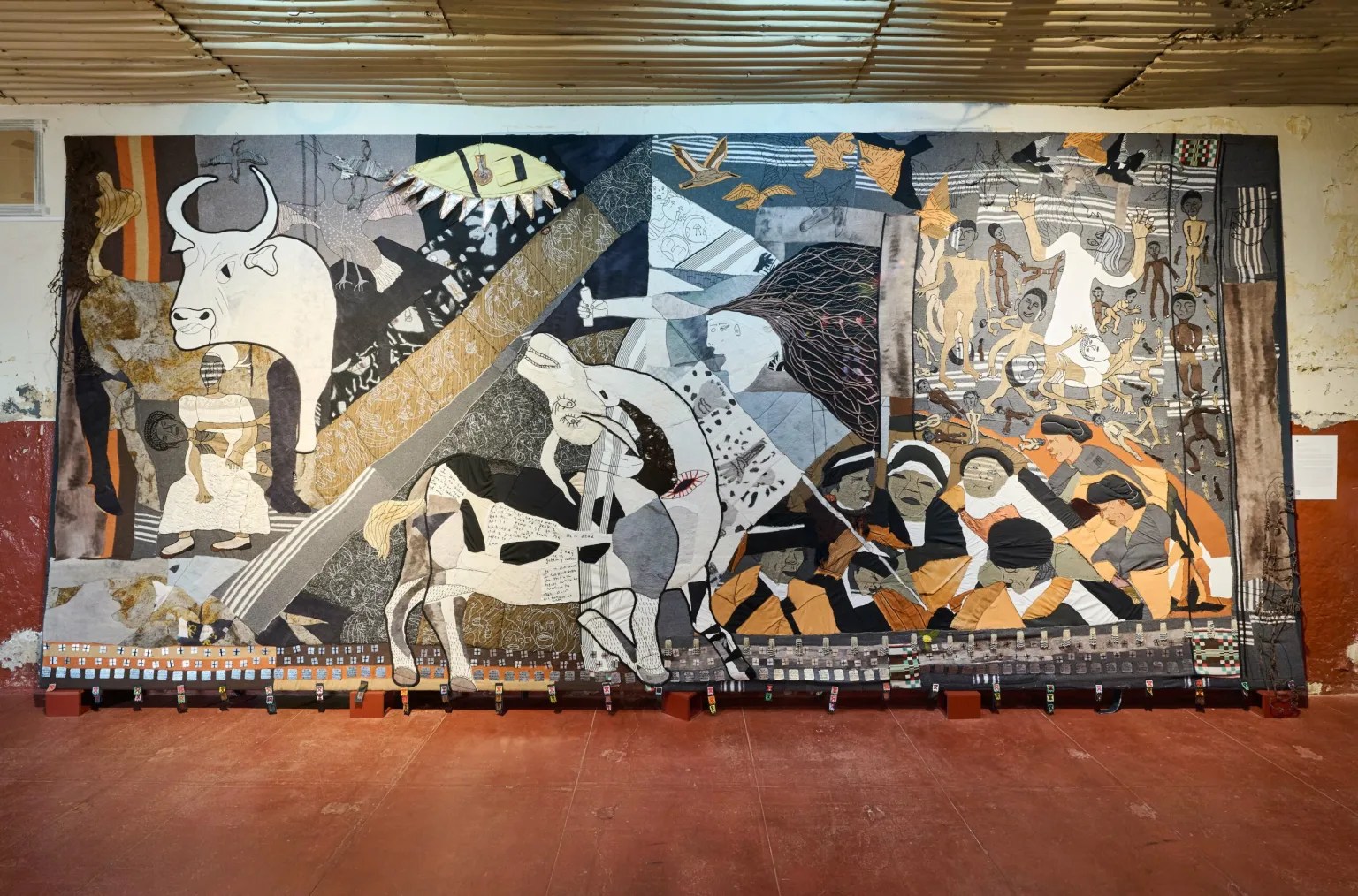
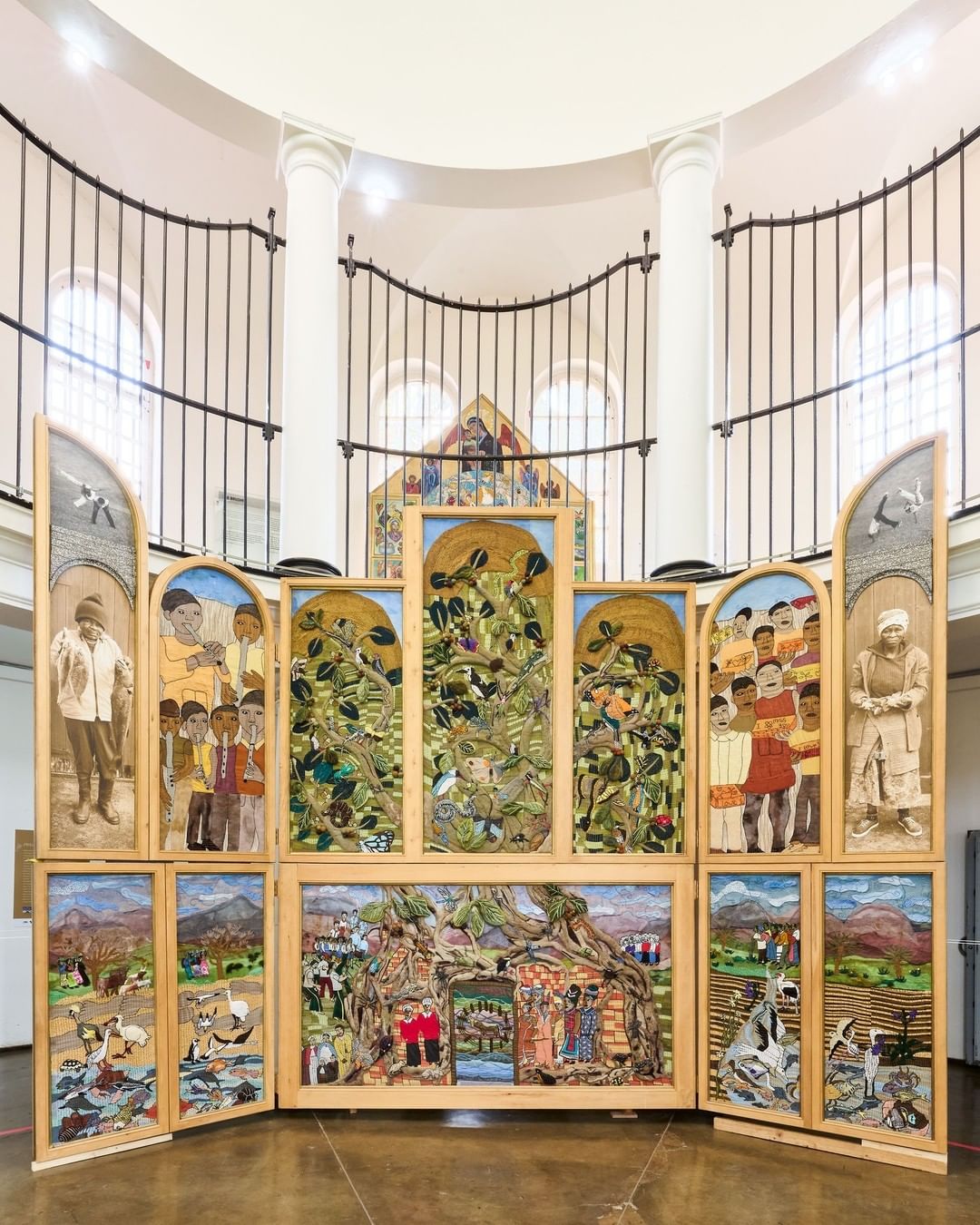
EXHIBITION REVIEW: “Mourning and Perseverance Stitched into South African Tapestries” by Alexandra M. Thomas: Through March 24 at Constitution Hill in Johannesburg, you can see Umaf’evuka, nje ngenyanga, dying and rising, as the moon does, a major retrospective of the work of the Keiskamma Art Project. Founded in 2000, the project archives the collective memory and oral histories of the rural Eastern Cape of South Africa through textile artworks, mainly by Xhosa women. Monumental and small-scale works tell stories of trauma, grief, hope, faith, resilience, and celebration. One of my favorite art research projects has been the one I did on the Isenheim-inspired Keiskamma Altarpiece in 2015, which resulted in the article “Sewing seeds of hope in South Africa”; this altarpiece is one of the many works on display. Let me call out just two others. The photos are from the current exhibition.

Keiskamma Guernica
Keiskamma Guernica, 2010. Mixed media, including appliqué, felt, embroidery, rusted wire, metal tags, beaded AIDS ribbons, used blankets, and old clothes, 3.5 × 7.8 m. Collection of Javett Art Centre at the University of Pretoria, Tshwane, South Africa. Photo: Anthea Pokroy / Keiskamma Trust.

Creation Altarpiece (Keiskamma)
Creation Altarpiece, 2007. Mixed media, including felt, embroidery, photographs, beadwork, wirework, and appliqué, 3.8 × 5.2 m (open). Collection of Unisa Art Gallery, Tshwane, South Africa.

Keiskamma Guernica, after Picasso’s famous antiwar painting, laments the limited access to HIV treatment in rural South Africa in the 2000s and the negligence of government hospitals, which resulted in many HIV/AIDS deaths. The piece repurposes the blankets and clothes of the deceased and serves as an expression of outrage as well as a form of commemoration. Creation Altarpiece, modeled loosely after the Ghent Altarpiece, exults in the region’s abundant wildlife and natural resources and in life-giving initiatives like Hamburg’s music education program, its capoeira group (a dance-like martial art), and the memory boxes made by orphaned children to remember their parents. The three top central panels depict a fig tree eating up an old hotel built by colonialists (a real-life scene observed in the nearby village of Bell!), and the bottom three show villagers of all kinds gathering around Christ, represented as a bull (whereas lambs were commonly sacrificed in ancient Israelite religion, traditional Xhosa religion calls for bull sacrifices).

View the beautiful exhibition catalog here.

+++

SONG: “Kyrie” by Ngwa Roland: Ngwa Roland is a composer and the director of De Angelis Capella [previously], a Catholic choir from Yaoundé, Cameroon. Here is his choral setting of the Kyrie eleison (Greek for “Lord, have mercy”), an important Christian prayer used in liturgies around the world.

+++

ARTICLES:

>> “To One Kneeling Down No Word Came” by Jonathan Chan, Yale Logos: Jonathan Chan is a Singapore-based poet and essayist who graduated with a master’s degree in East Asian Studies from Yale in 2022. In this personal essay he reflects on the poetry of R. S. Thomas, a twentieth-century Anglican priest from Wales, particularly as it relates to the toil of prayer—prayer as a discipline requiring persistence and solitude. Thomas’s poems often express a sense of alienation from God, which is not what we might expect from a pastor, but, as Chan remarks, “God’s absence cultivates a desire for God’s presence.”

>> “Stabat Mater: How a 13th Century Lament Resonates Today” by Josh Rodriguez, Forefront: Back in July 2020, composer Josh Rodriguez [previously here and here] published this article on four modern settings of one of the most celebrated Latin hymns of all time, the twenty-stanza Stabat Mater Dolorosa (lit. “The sorrowful mother was standing”), about Mary mourning the death of her son Jesus. Written in the Middle Ages, it continues to inspire composers today, and it remains “a powerful vehicle for ‘grieving with those who grieve,’” Rodriguez writes. He spotlights the settings by James Macmillan, Julia Perry, Hawar Tawfiq, and Paul Mealor, analyzing some of the musical elements of each and quoting the composers in regards to the piece’s meaning to them.

Roundup: Literary Lent, Psalm 90 virtual art exhibition, and more

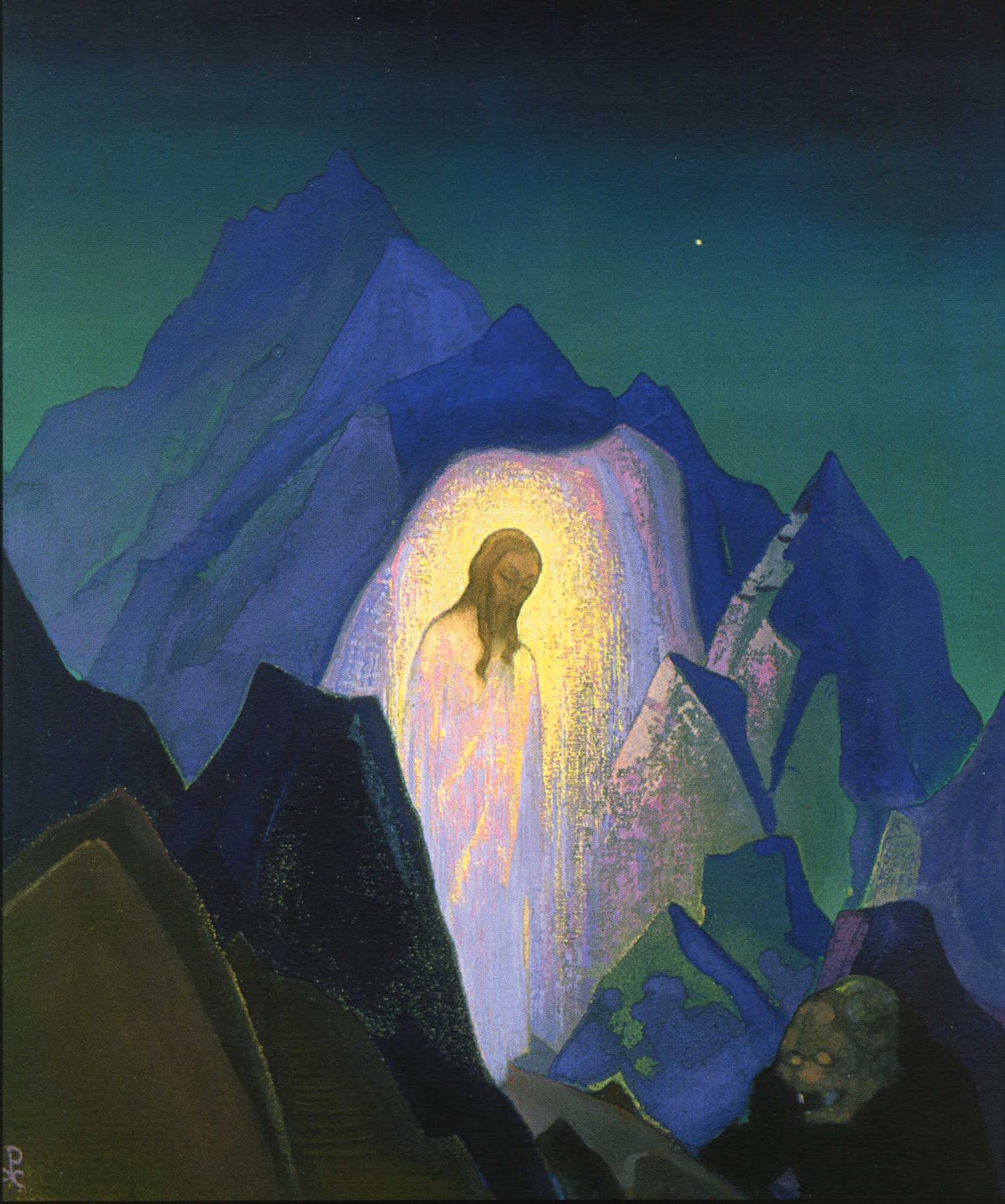
Roerich, Nicholas_Christ in the Desert
Nicholas Roerich (Russian, 1874–1947), Christ in the Desert, 1933. Tempera on canvas, 60 × 50.9 cm. Nicholas Roerich Museum, Moscow.

QUOTE:

The tradition of Lent means many different things to many different people. I honour the traditions and wisdom of the ages—and I’m interested in discerning what these practices mean [today].

At [my church], Lent is about learning from Jesus, particularly Jesus’ path through the real-life wilderness experiences we all face. We are interested in emulating and discovering a Jesus-shaped life in the hard things, the growing things, and the uncomfortable things. We believe not in an idealized plane of existence no one can quite attain; instead we believe in knowing and living out a Jesus way in the grey areas, the dirt and dust of our earthly lives here and now. . . .

Together and for you, this is our prayer (by Ann Siddall): “May this Lenten journey, with its stories about the hard places of Jesus’ experience, give strength and courage to all whose journey is far from easy. And may it inspire us to risk Christ’s Way of love as we share the journey with other travelers. We make this prayer in his name. Amen.”

—Rielly McLaren, pastor, Windsor Mennonite Fellowship, Windsor, Ontario [source]

+++

ARTICLES:

>> “Ash Wednesday and the Practice of Truth-Telling” by Christine Valters Paintner: In this introduction to the season of Lent, spiritual writer and retreat leader Christine Valters Paintner discusses lament as a Lenten practice—lament as truth-telling, resistance, solidarity, and the release of God’s power. We need to touch those places of grief that we carry, and open ourselves in compassion to the grief of others. Paintner also unpacks the word “repentance,” visiting its Hebrew and Greek root words to further illuminate its meaning.

>> “Forty for 40: A Literary Reader for Lent” by Nick Ripatrazone: Nick Ripatrazone, the culture editor for Image journal and columnist at The Millions, offers suggestions and blurbs for forty stories, poems, essays, and books appropriate for Lent. Some pieces are inspired by feast days and Gospel readings, while others capture the discernment of the season. From Flaubert’s The Temptation of Saint Anthony and Hemingway’s one-act play Today Is Friday to Love & Salt: A Spiritual Friendship Shared in Letters and Karr’s “Disgraceland,” the selections are varied and intriguing. The dates are off because this was published in 2017, but the list is still valid, and many of the poems can be read online.

+++

LIVING ROOM EVENT: “Poetry of Lent”: On March 4, under the aegis of the local arts nonprofit the Eliot Society, I’m moderating an evening of crowdsourced Lenten poetry at a friend’s home in Crownsville, Maryland. If you’re in the Baltimore-Washington metro area, I’d love to see you there! The themes of this season are so expansive, and I’m looking forward to hearing what people share. Of course, I will have many poems in my back pocket as well. Some words I’ve been thinking of in preparation: pilgrimage; hunger; emptying; grace; greening; solitude; beloved; blood.

+++

SONGS:

>> “Circles” by Tow’rs: Tow’rs, an indie-folk band out of Flagstaff, Arizona, is made up of Gretta and Kyle Miller, drummer Dan Bagle, guitarist Kyle Keller, and cellist Emma Riebe. This song of theirs is about how God lovingly pursues us and clothes our shame.

>> “Parce Domini” by Jacob Obrecht: The Gesualdo Six perform a motet by the Flemish composer Jacob Obrecht (1457/58–1505), which sets a traditional Latin liturgical text based on Joel 2:17, 13.

Parce Domine, parce populo tuo quia pius es et misericors. Exaudi nos in aeternum, Domine.

Spare, O Lord, spare thy people, for Thou art gracious and merciful. Hear us for ever, O Lord.

+++

VISUAL COMMENTARY: “Handling Our Fragility, Seeking a Wise Heart” by Rachel Muers: As part of the Visual Commentary on Scripture project, theologian Rachel Muers has selected and comments on three artworks that resonate with Psalm 90 [previously], a song that combines communal lament with a meditation on wisdom. The psalm ends with the cry “Prosper for us the work of our hands—O prosper the work of our hands!”—which guided Muer in her curation. She gives us nine-thousand-year-old handprints on an Argentinian cave wall, a hospital drawing by Barbara Hepworth, and a cat’s-cradle sculpture by Mitzi Cunliffe. This mini-exhibition is a great way to enter into and engage with this typically Lenten psalm.

Cave of Hands
Cueva de las Manos (Cave of Hands), began ca. 7,000 BCE. Mural, UNESCO World Heritage Site, Santa Cruz, Argentina.

On a related note: For this Lent, the VCS is dipping into its archives to bring you “Lent Stations: Repentance and Forgiveness,” fourteen artworks with commentary (two per week) that relate to the stated theme. Follow the link to sign up.

Into Air, a meditation on impermanence

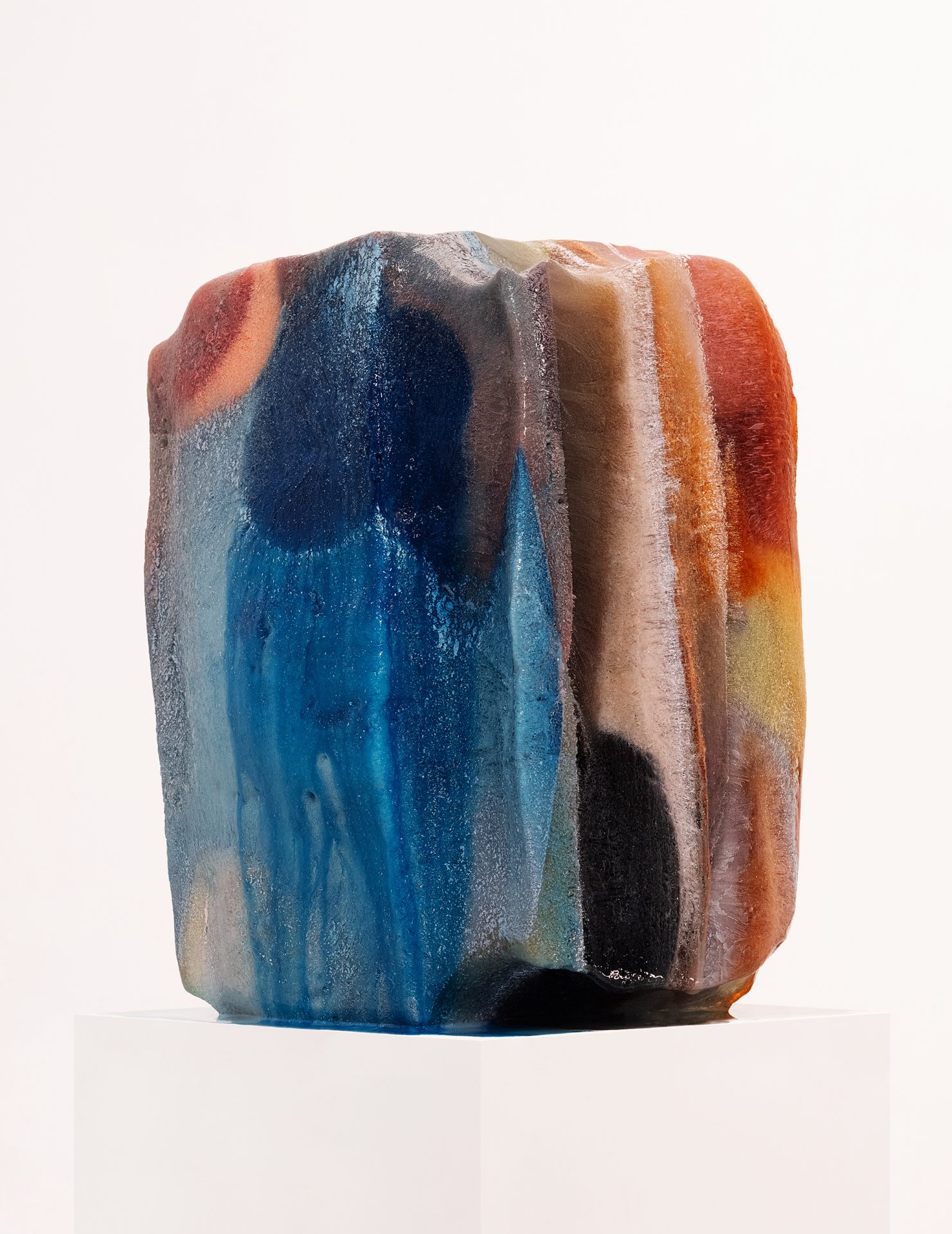
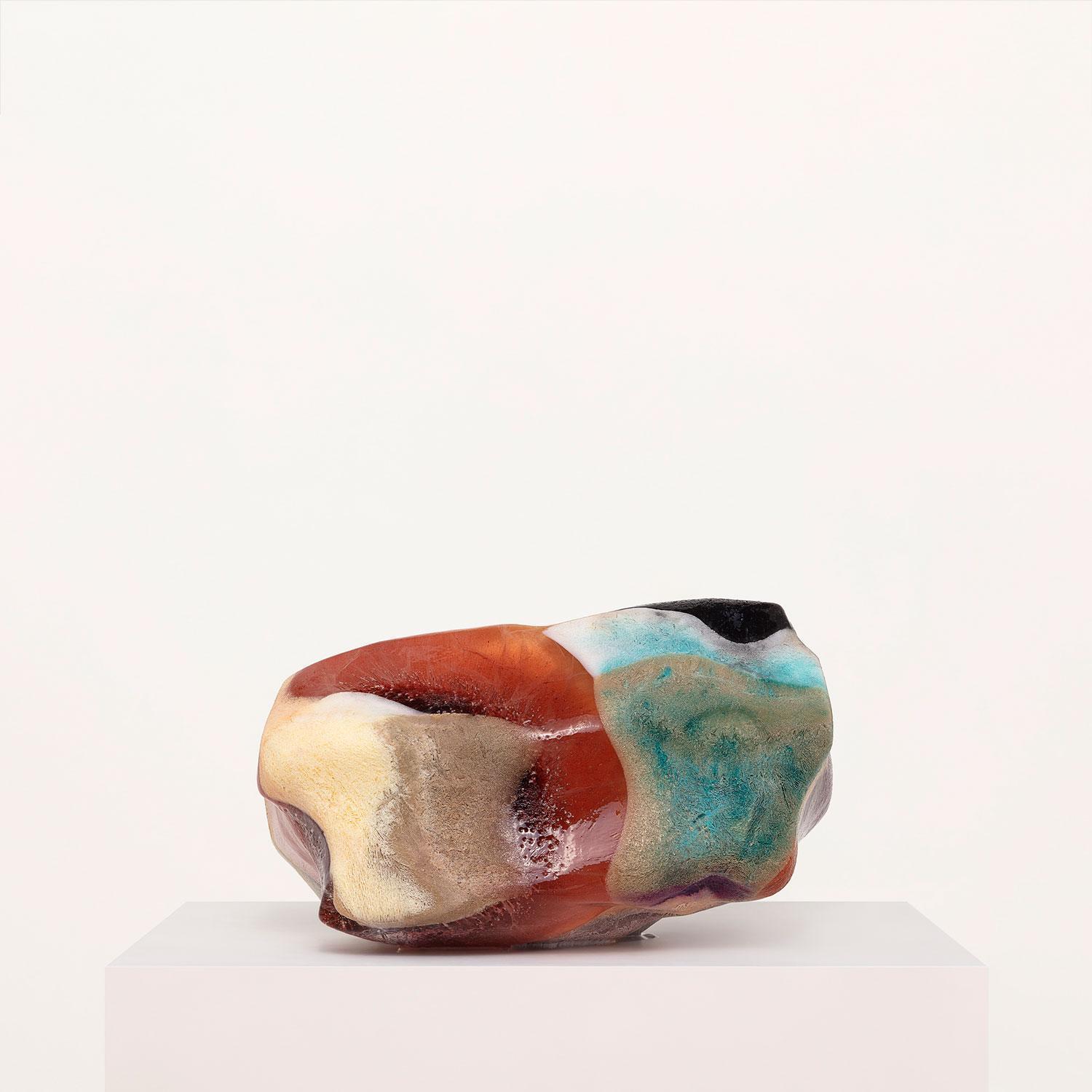
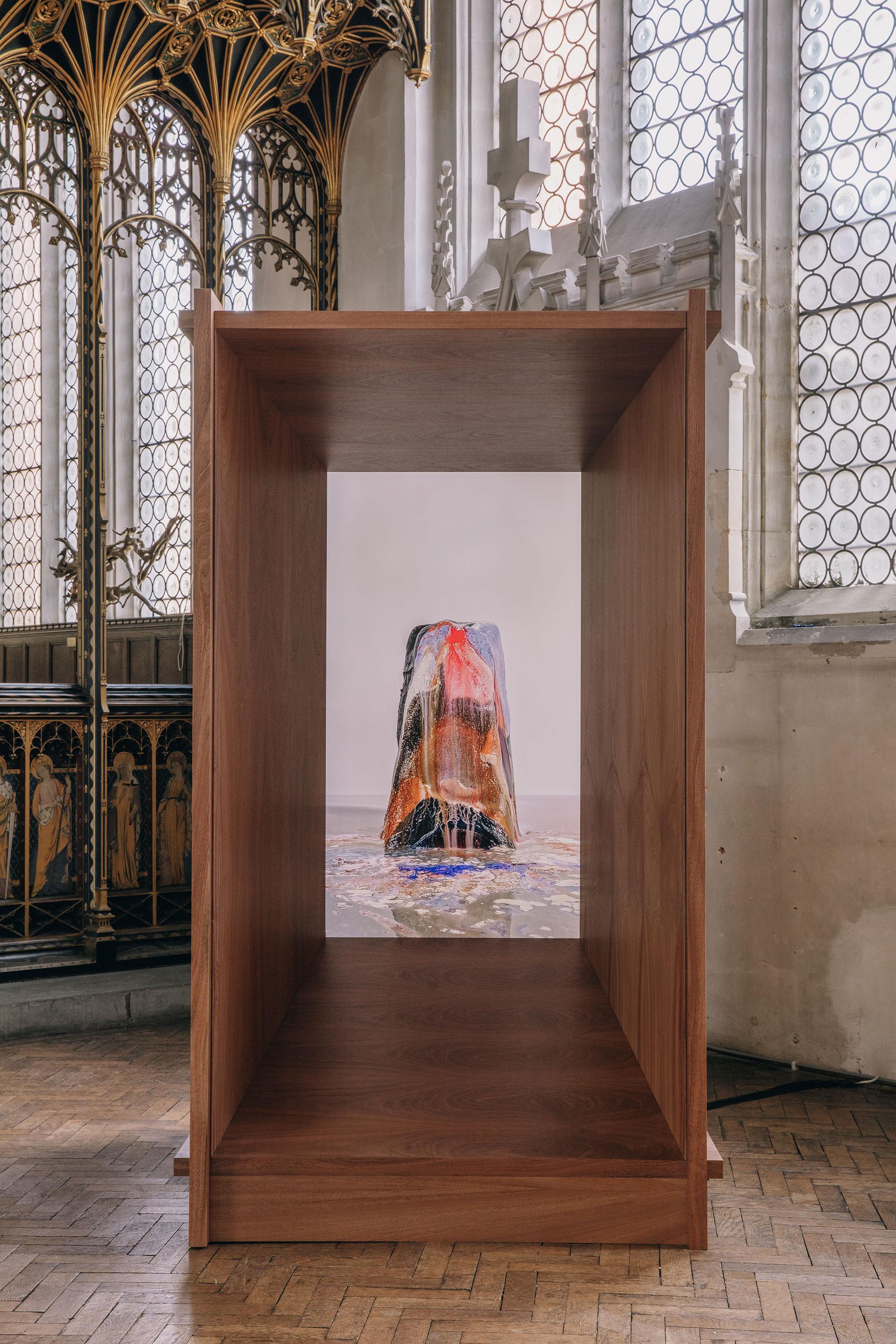
Dawn Ng is a Singaporean multidisciplinary artist whose practice deals with time, memory, and the ephemeral. For her recent body of work Into Air, Ng has crafted nearly 150 large sculptural blocks of frozen pigment and documented their dissolution in the form of photographs, film, and residue paintings. A poetic visual meditation on time and its passing, Into Air captures the metamorphosis of colored ice from solid to liquid to air, physicalizing transience. Presented by Sullivan+Strumpf, it premiered at a derelict ship factory in Singapore in January 2021 and from there traveled to Seoul, London, and Sydney. See the six-minute documentary below for more on the process and meaning behind the work.

Dawn Ng in her studio
Dawn Ng in her studio in Singapore, surrounded by studies and artworks from Into Air. Photo: Sean Lee. All photos courtesy of the artist.

Ng started working on Into Air in 2018, and it’s ongoing. The project encompasses three distinct series:

  1. Clocks
  2. Time Lost Falling in Love
  3. Ash

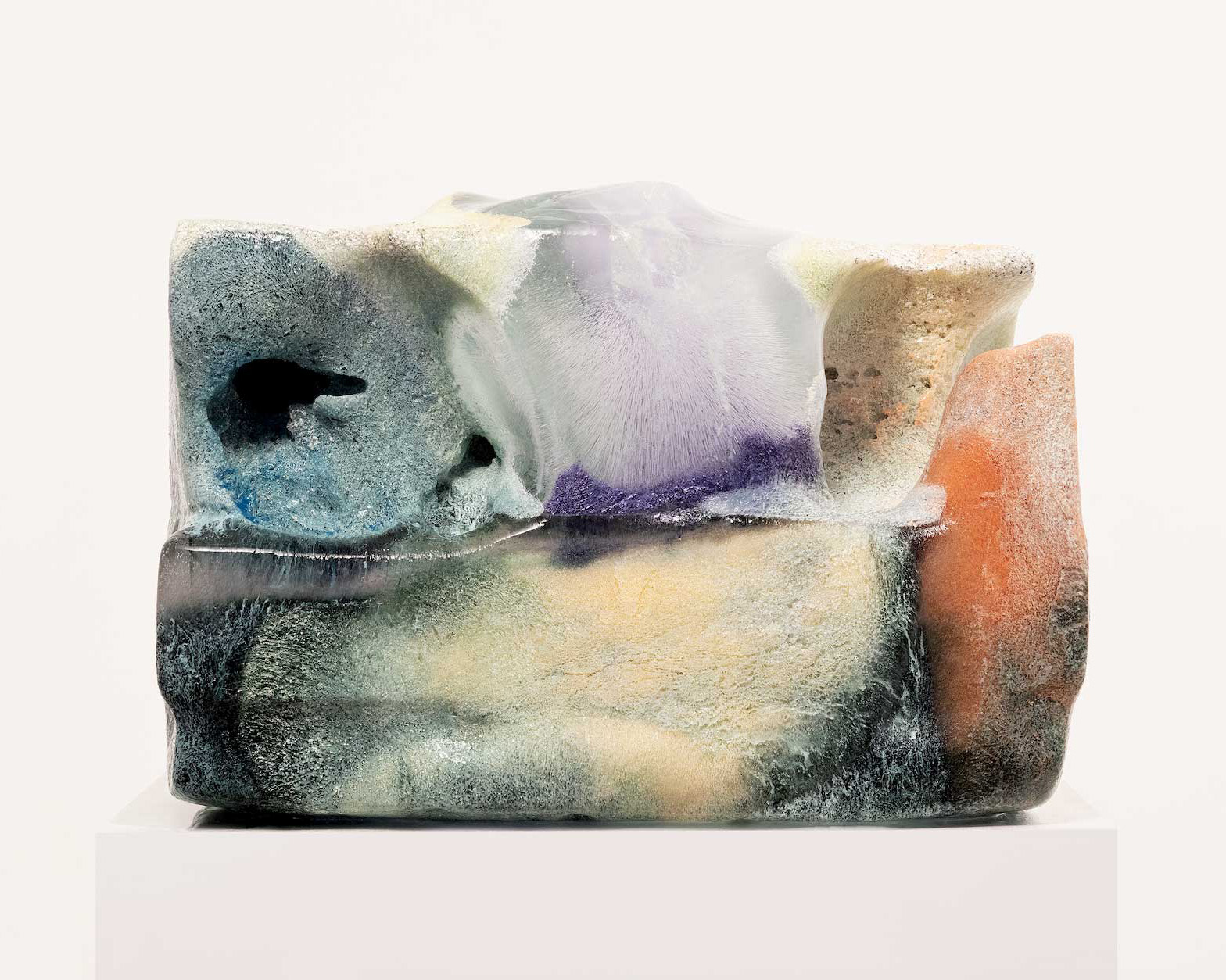
Clocks is the name Ng gives to the photo portraits of her colored glacier blocks at various stages of disintegration. Weighing about 132 pounds each, the blocks were constructed from acrylic paints, dyes, and inks that she froze together in her studio. After removing each block from the freezer, she and her team photographed it from ten different angles every four hours until it entirely eroded. “Like kaleidoscopic lodestones, the portraits visualize the shape, colour and texture that time inhabits in an ephemeral form,” Ng writes.

Ng, Dawn_If I could find (CLOCKS)
Dawn Ng (Singaporean, 1982–), If I could find a souvenir just to prove the world was here, from CLOCKS, 2021. Archival pigment print, 115 × 149 cm.

Ng, Dawn_Some will fall in love (CLOCKS)
Dawn Ng (Singaporean, 1982–), Some will fall in love with life and drink it from a fountain that is pouring like an avalanche coming down the mountain, from CLOCKS, 2021. Archival pigment print, 153 × 118 cm.

Ng, Dawn_Don't they know (CLOCKS)
Dawn Ng (Singaporean, 1982–), Don’t they know it’s the end of the world, from CLOCKS, 2022. Archival pigment print, 95 × 95 cm.

Time Lost Falling in Love is the collective title of the time-lapse videos Ng filmed of the thawing blocks. The collapse of each block into a puddle of liquid took fifteen to twenty hours, a process compressed into twenty to thirty minutes for each film. Ng says she wants to portray the fluidity of time—time as a “riot of colors” that swell and ebb, that form rivers and pools. By speeding up the frame rate of the film, Ng manipulates time, fast-tracking the dissolution of the blocks while simultaneously providing a calming evocation of a waterfall in slow motion. Time melting on. Here’s Avalanche II:

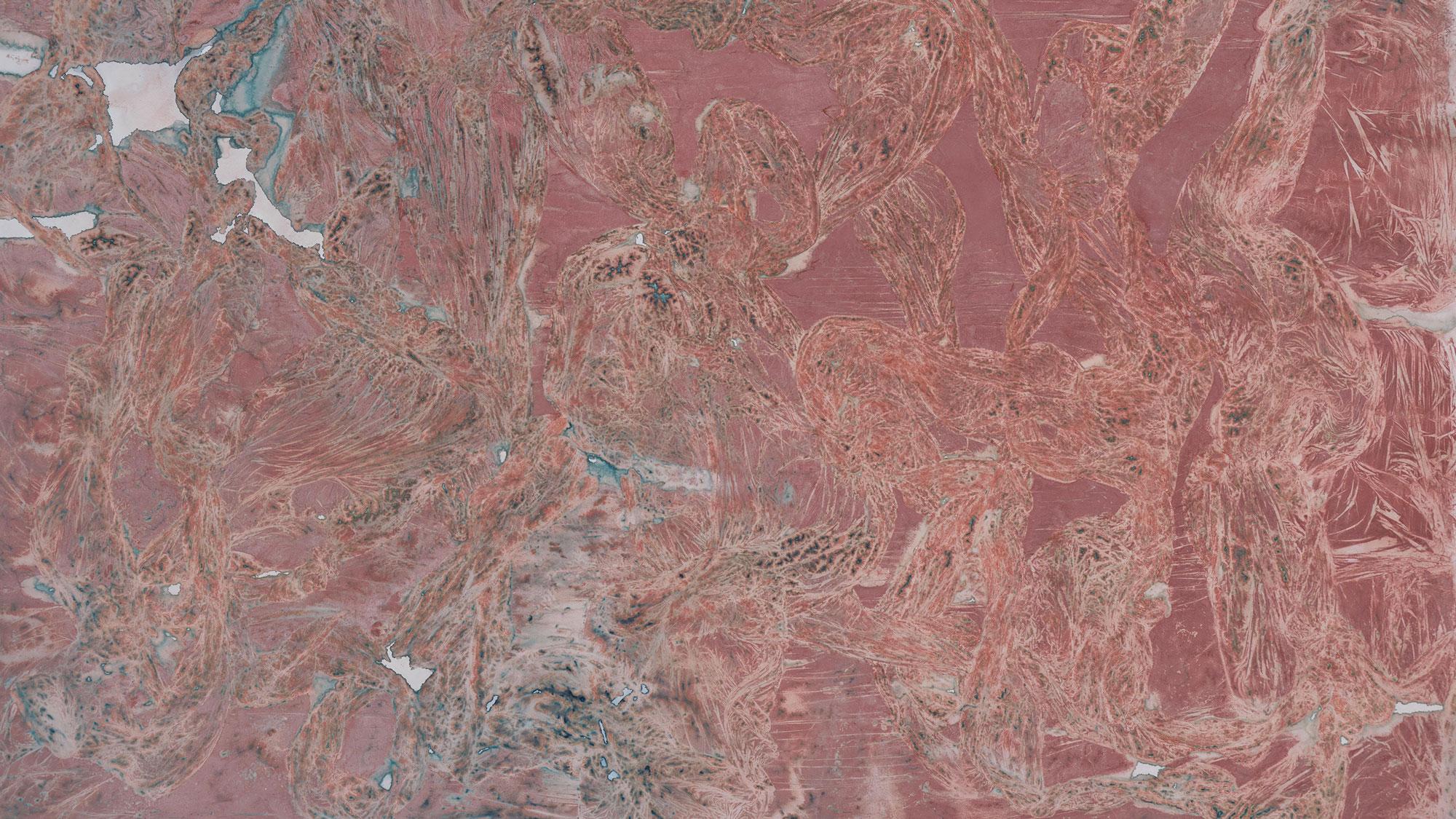
The third and final component of the Into Air project is Ash, a series of paintings created by blanketing the liquid remains of each melted pigment block with a large sheet of canvas-like paper. Ng leaves the paper there for weeks until all the liquid evaporates through it, creating marbled textures and thick buildups that she then peels away. Ng describes Ash as her attempt to “sieve time.”

Many of the photographs and residue paintings take their titles from song lyrics—by the Beatles, Genesis, the White Stripes, Death Cab for Cutie, Sufjan Stevens, and others.

Ng, Dawn_The Earth Laughs in Flowers I
Dawn Ng (Singaporean, 1982–), The Earth Laughs in Flowers I, 2020. Residue painting (acrylic, dye, ink) on paper, 165 × 142 cm.

Ng, Dawn_Ever see, ever be (detail)
Dawn Ng (Singaporean, 1982–), Ever see, ever be, ever know my heart (detail), from ASH, 2022. Residue painting (acrylic, dye, ink) on paper, 199.5 × 150.3 cm.

As much as Into Air is about time, it is also about death. In an interview with Nicholas Stephens for CoBo Social, Ng said,

There is an inescapable relationship between beauty and death. Death gives meaning to all of time. I don’t necessarily see death as something tragic, sad or final. It is that structure that gives true worth and true value to what comes before it. In Asia, especially as a Chinese Asian, we don’t like to talk about death. We feel it is bad luck. But in the paintings, I see death as something beautiful. Even in that last transition to nothingness, the pigments explode. They have a way of clinging on, they try to form tributaries, they flood a space. There is something very beautiful about that last gasp. It is not meek. It can be as strong as fireworks.

I would actually not use the word “nothingness” to describe the blocks’ final state. There’s definitely a “somethingness” still there after the melt! Behold the Ash paintings, which have a glory of their own. Although death is an end of sorts, it’s also a passing from this to that. Ng acknowledges as much. She even describes how “the melted pigments receive a form of resurrection through their incarnation as painterly formulae” in the Ash series. Resurrection!

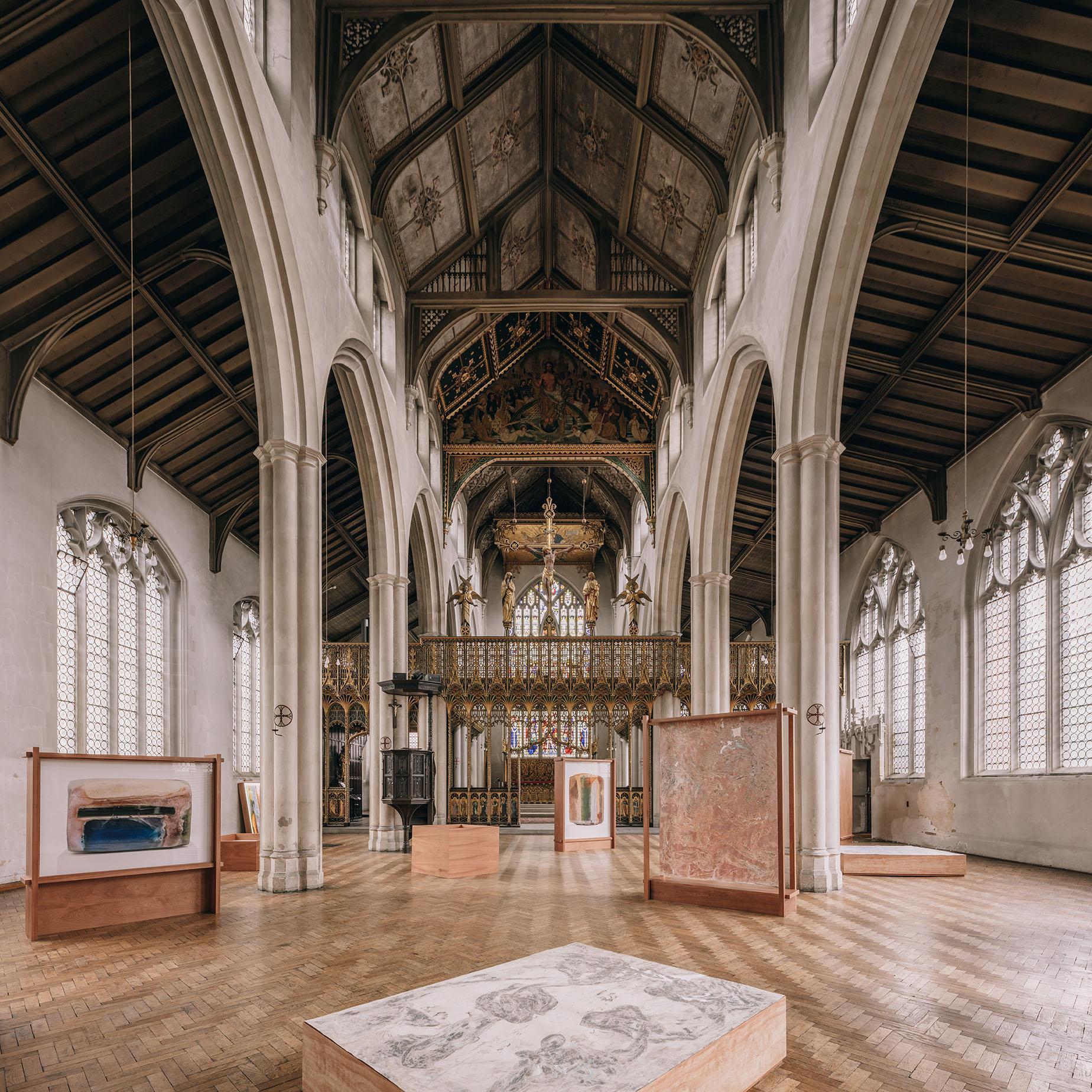
From July 7 to 23, 2022, Into Air was exhibited, under the curation of Jenn Ellis, at St Cyprian’s, Clarence Gate, a historic church in London’s Marylebone district. The midcentury pews, pulpit, and altar inside the Gothic revival interior inspired Ng to design, in collaboration with EBBA architects, new wooden box structures to house the works, some of which stand vertically, and others which lay parallel to the floor.

Ng, Dawn_Into Air installation
Exhibition view of Into Air by Dawn Ng, St Cyprian’s Church, London, July 7–23, 2022. Photo: James Retief.

Ng, Dawn_Waterfall VII (installation view)
Installation shot of Waterfall VII, 2022. Single-channel 4K video, 25 mins, 24 sec. Photo: James Retief. [watch video]

By displaying these works inside a sacred space, their spiritual implications become even more pronounced.

Impermanence is a theme that shows up in the sacred texts of all major religions, not least in the Bible, where we humans are reminded again and again of our mortality. Our days are like grass, which sprouts up and then withers (Isa. 40:6–7; Ps. 103:15–16; 1 Pet. 1:24). Our lives, but a sigh (Ps. 90:9–10), a shadow (Ps. 102:11), a mist (James 4:14), a breath (Ps. 39:5; Job 7:7; 7:16). We are made of dust and return to dust (Eccles. 3:20).

And not only are we finite; so is the present order of things. Even heaven and earth will pass away, Jesus says (Matt. 24:35; Mark 13:31; Luke 21:33; cf. Heb. 1:10–12). But, crucially, God and God’s word stand forever (Isa. 40:8; Matt. 7:24–27). True stability and unchangingness can be found only in God, Christians believe. God is a Rock that does not crumble, a strong foundation on which to stand, in life and in death.

The brevity of life may sound like a fearsome reality, but actually, it can serve to make our moments here on earth more precious and purposeful. Because our lives are but a short span, we must make the most of them while we can. Christians believe that everyone will one day have to give an account of what we did with the time God gifted to us. Did we share it freely with others, or keep it all for ourselves? Did we use it to cultivate virtue or to pursue vice?

The exhibition at St Cyprian’s also involved the premiere of a site-specific choral work by the London-based Welsh composer Alex Mills. A direct response to Ng’s art, his composition is also called Into Air and lasts about twenty-five minutes, the length of Ng’s Waterfall VII.

“In the piece,” Mills writes,

five singers undergo a musical meditation where each moves through the music to the rhythm of their own breaths, one bar of music for every exhale. Musical structures slowly build and disintegrate, evolve and transform, melt and evaporate. Textures, harmonies and colours – some delicate, others more pronounced – appear, disappear and re-emerge. Combing different singers’ breathing patterns gives the piece an indeterminate quality: the piece will never be the same twice and may even be radically different from one performance to the next. As such, the piece is not a fixed musical object that can be ‘performed’. Instead, it is a transient, ephemeral and elusive moment in time to be experienced.

The debut performance featured singers Jess Dandy, Rebecca Hardwick, Feargal Mostyn-Williams, James Robinson, and Ben Rowarth. It was recorded and turned into a gorgeous film by Bobby Williams, embedded above.*

The first singer stands at a kneeler. The second, at a pulpit. They establish the solemn mood. Two male singers sing from the organ loft, and another stands behind the rood screen with his arms crossed over his chest, as if in prayer. Haunting and mesmerizing, the five voices reflect off the stone architecture and meld together, sometimes harmoniously, sometimes in dissonance.

To everything there is a season. Starting at around 10:35, Mills incorporates keywords from Ecclesiastes 3:1–8, a biblical passage made especially famous by the Byrds: “gather,” “scatter,” “heal,” “kill,” “dance,” “mourn.” The author of Ecclesiastes is describing the tide of events that make up a life.

Periodically throughout the performance, a metal singing bowl resounds—a tool commonly used to deepen meditation. It is struck alternately by Ng and Mills, who are seated cross-legged at the front side of the church.  

Dawn Ng and Alex Mills at the premiere of Mills’s Into Air, St Cyprian’s Church, London, July 8, 2022. Photo: Damian Griffiths and Sarah Isabelle Tan.

Mills’s Into Air received a second performance just last week on February 8 at the launch of Music & Being, an initiative he founded with Jess Dandy. Music & Being is an open laboratory space in London exploring the intersection of art, music, psychology, spirituality, ecology, and movement.

As we near Ash Wednesday, the start of Lent, Ng’s and Mills’s works remind us of how time slips and slides and ultimately ceases, at least time as we know it. What will we do with our fleeting lives? As they dissipate, what will remain? When our breath stops, will a resonance linger?

* Additional video credits: Special thanks to Apsara Studio, Rose Lejeune, Performance Exchange, Ursula Sullivan, and Sullivan+Strumpf.

Roundup: “El Shaddai” (new song), everyday Black life in pictures, and more

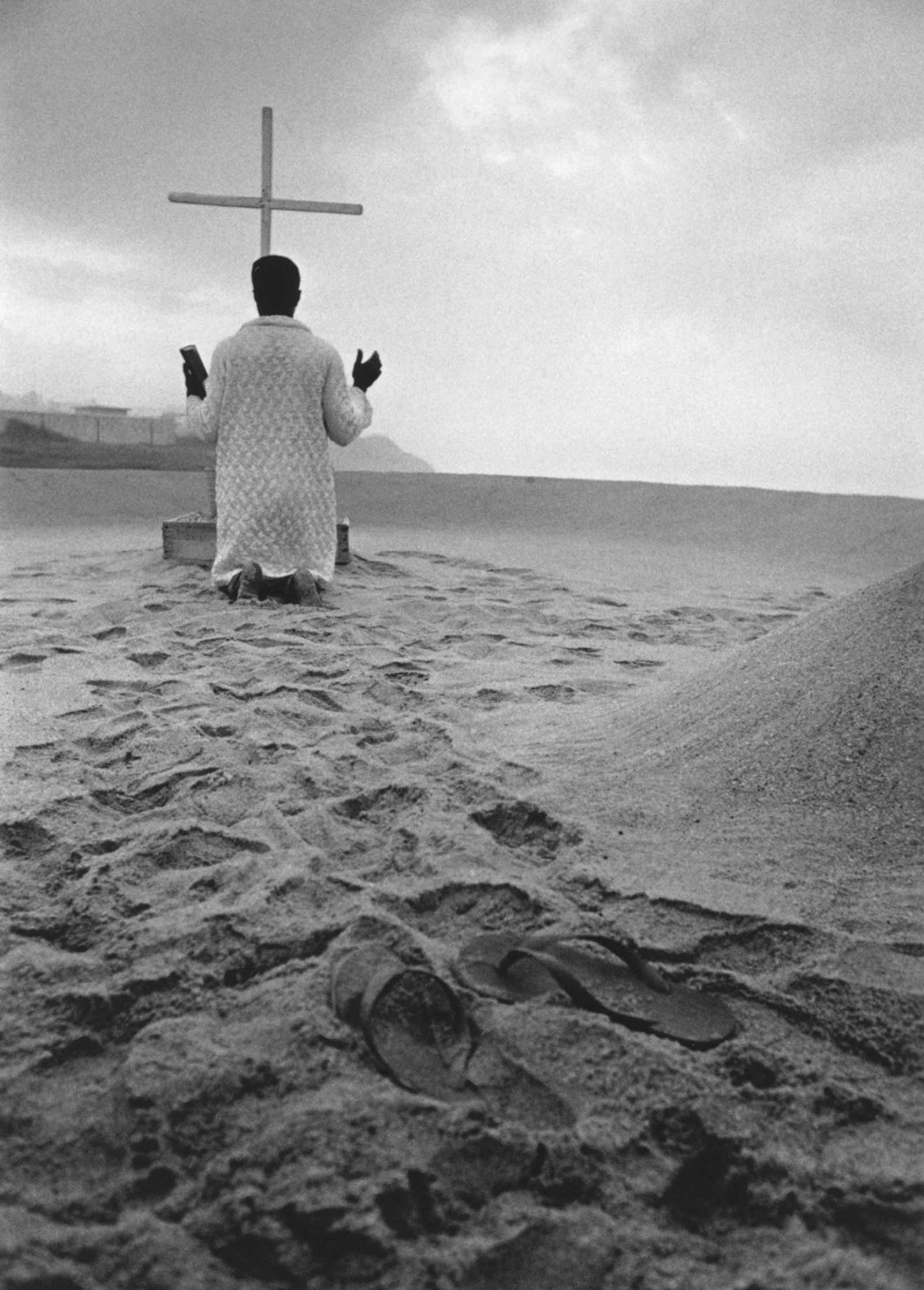
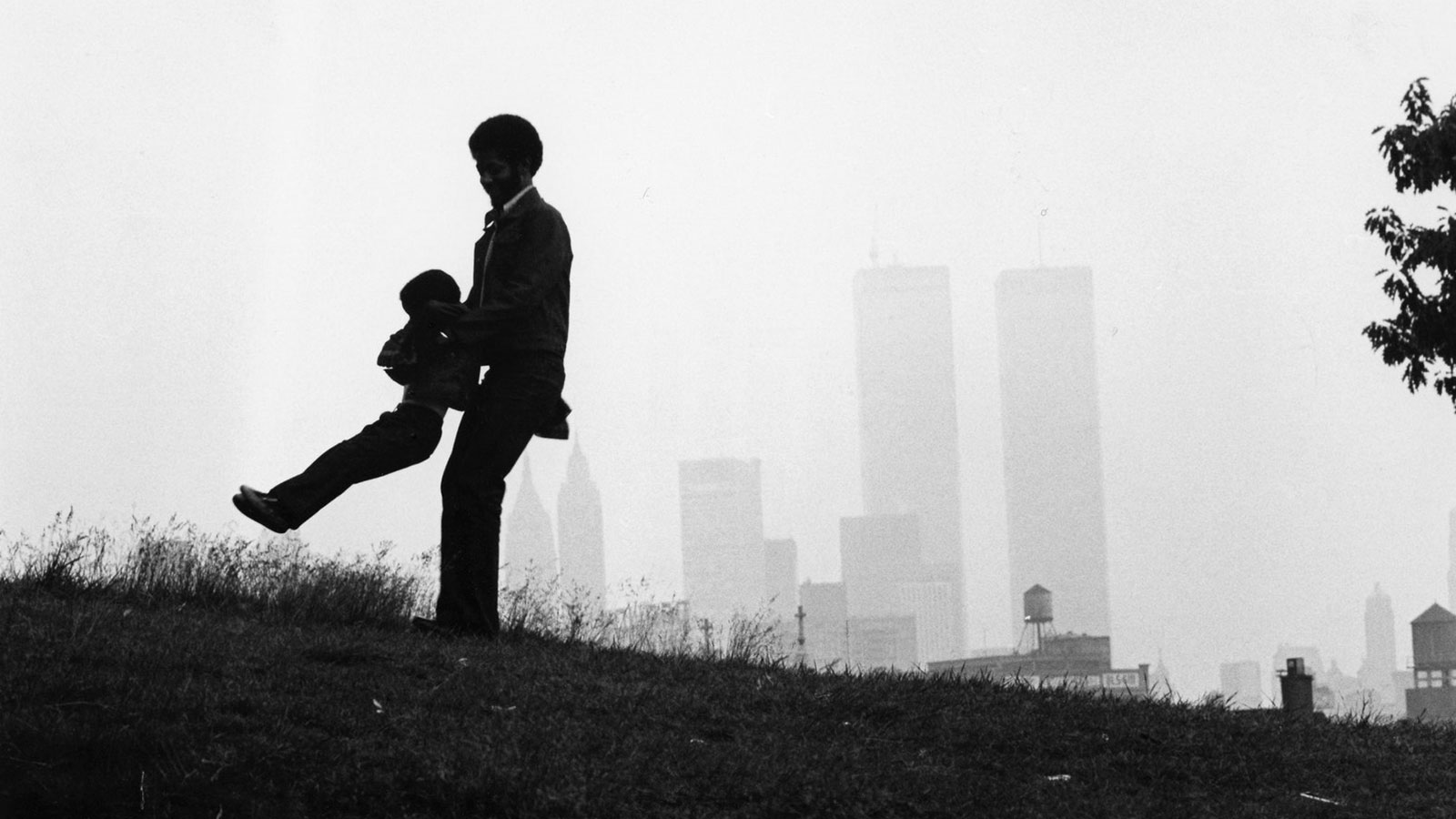
PHOTO COMPILATION: “Chester Higgins’s Life in Pictures”: Chester Higgins Jr. (b. 1946) is an American photographer whose work focuses on everyday Black life; “it is inside simple moments where I look for windows into larger meaning,” he says. He was a staff photographer for the New York Times for more than four decades, and his work is in the permanent collection of the Museum of Modern Art. This heavily illustrated New Yorker article is a good introduction to his oeuvre, in which religious belief and practice feature prominently. I found out about him through the photography compilation book Standing in the Need of Prayer: A Celebration of Black Prayer.

Higgins, Chester_Sunrise Prayer
Chester Higgins (American, 1946–), Sunrise Prayer on Osu Beach, Accra, Ghana, 1973

Higgins, Chester_Father Swinging Son, Brooklyn
Chester Higgins (American, 1946–), Father Swinging Son, Brooklyn, 1972

+++

SONGS:

>> “El Shaddai” by Victory: On January 27 singer-songwriter Victory Boyd, who goes professionally by the mononym Victory, released her latest single, “El Shaddai.” El Shaddai is an ancient Hebrew name for God whose original meaning is unclear but which is often translated into English as “God Almighty”—although “God of the Mountains,” “the Full-Breasted God” (referring to God’s nourishment of God’s children), or “the All-Sufficient One” have also been posited. Its first appearance in the Bible is in Genesis 17:1, where God tells Abram, “’I am El Shaddai; walk before me, and be blameless.”

Read the lyrics in the YouTube video description.

>> “Come Unto Me” by Take 6: A friend recently introduced me to the American a cappella gospel sextet Take 6. Formed in 1980 on the campus of Oakwood College in Huntsville, Alabama, and still active, they incorporate sophisticated jazz harmonies into the tradition of Black gospel “quartet” singing. They are featured on Spike Lee’s Do the Right Thing soundtrack and have won ten Grammys.

This 1990 performance in Munich features the group’s six original vocalists: Mark Kibble, Claude V. McKnight III, Cedric Dent, David Thomas, Mervyn Warren, and Alvin Chea.

>> “He’s Got the Whole World in His Hands” by Peter Collins: I love what Peter Collins does with this African American spiritual! This video was his submission to Tyler Perry’s #HesGotTheWholeWorldChallenge from 2020 (which I featured here). It didn’t make the final cut, but I’m so glad it’s out there.

+++

LITERARY EXCERPT from The Color Purple by Alice Walker: This short passage from Alice Walker’s 1982 Pulitzer Prize–winning novel is taken from a conversation between the protagonist, Celie, and her friend Shug, about pleasure, gratitude, and grace. Shug refers to God as “it” (“God ain’t a he or a she”), and her statement about the necessity of enjoying God’s good creation and being open to surprise provides the source of the title.

I’m embarrassed to say that although I saw and really liked the 1985 Steven Spielberg film adaptation of The Color Purple, I’ve never read the book! I plan to rectify that before December, when another film adaptation—of the 2005 stage musical based on Walker’s novel—is coming out, directed by Blitz Bazawule. It stars Fantasia, H.E.R., Colman Domingo (Euphoria), Taraji P. Henson (Hidden Figures), Danielle Brooks (Orange Is the New Black), Jon Batiste, and more.

+++

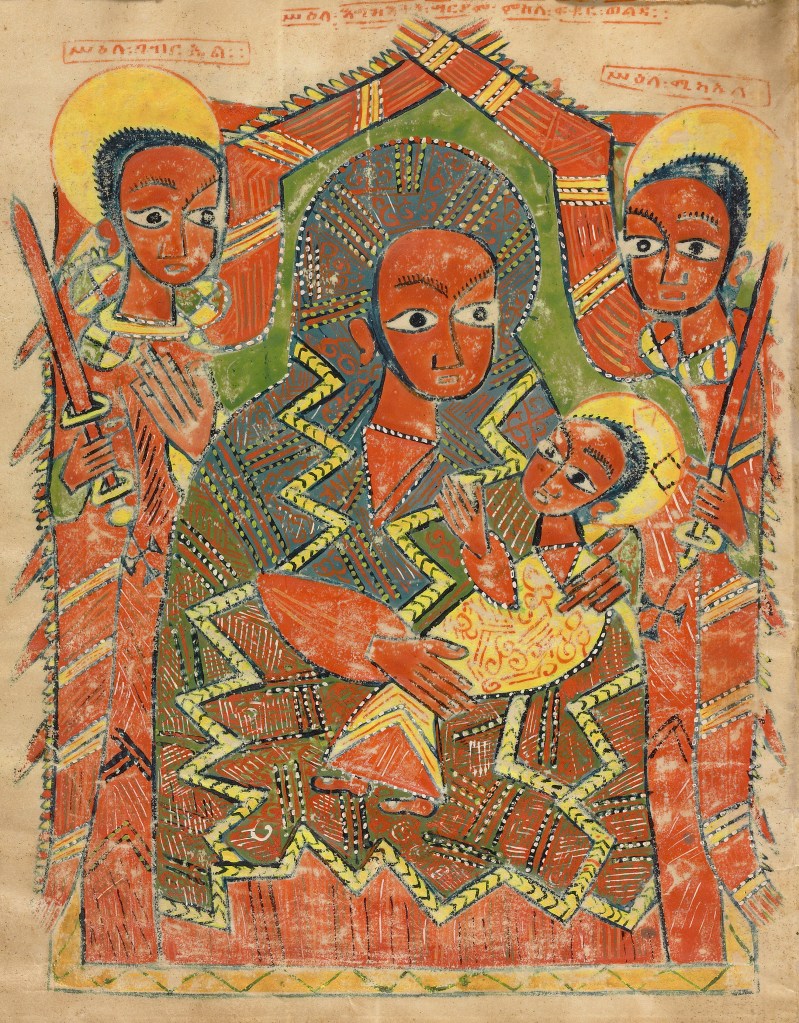
VIDEO: “Ethiopian Gospel Book”: In this six-minute instructional video, Dr. Beth Harris, executive director of Smarthistory, and Kelin Michael, a graduate curatorial intern of manuscripts at the Getty Museum, explore an early sixteenth-century Gospel book from Ethiopia. They discuss the book’s historical context and the formal qualities of its paintings, including the flatness of the figures and the colorful interlacing. They focus on a full-page illumination at the front of the Virgin and Child enthroned between two archangels, but they also touch on the book’s canon tables and its portrait of Saint John the Evangelist.

Virgin and Child (Ethiopian MS, Getty)
The Virgin and Child with the Archangels Michael and Gabriel, Ethiopia, ca. 1504–5. Tempera on parchment, 13 9/16 × 10 7/16 in. (34.5 × 26.5 cm). J. Paul Getty Museum, Los Angeles, Ms. 102, fol. 19v.

“River” by Eugene McDaniels (song)

There’s a river somewhere
That flows through the lives of everyone
I know it flows through the valleys
And the mountains and the meadows of time
Yes, it do

There’s a star in the sky
That shines in the lives of everyone
You know it shines in the valleys
And the mountains and the meadows of time
Yes, it do

There’s a voice from the past
That speaks through the lives of everyone
You know it speaks through the valleys
And the mountains and the meadows of time
Yes, it do

There’s a smile in your eyes
That brightens the lives of everyone
It brightens the valleys
And the mountains and the meadows of time
Yes, it do

There is a short song of love
That sings through the lives of everyone
You know it sings through the valleys
And the mountains and the meadows of time
Yes, it do

There’s a river somewhere
That flows through the lives of everyone
I know it flows through the valleys
And the mountains and the meadows of time
Yes, it do

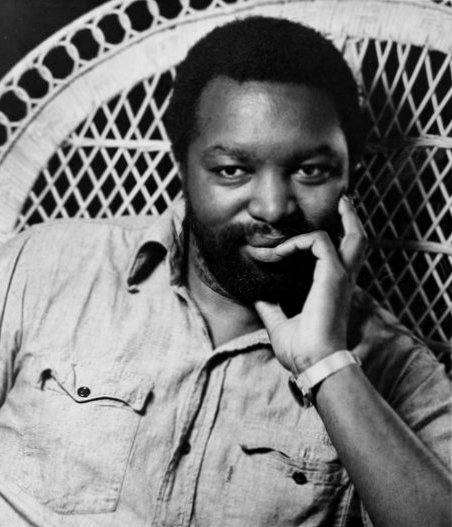
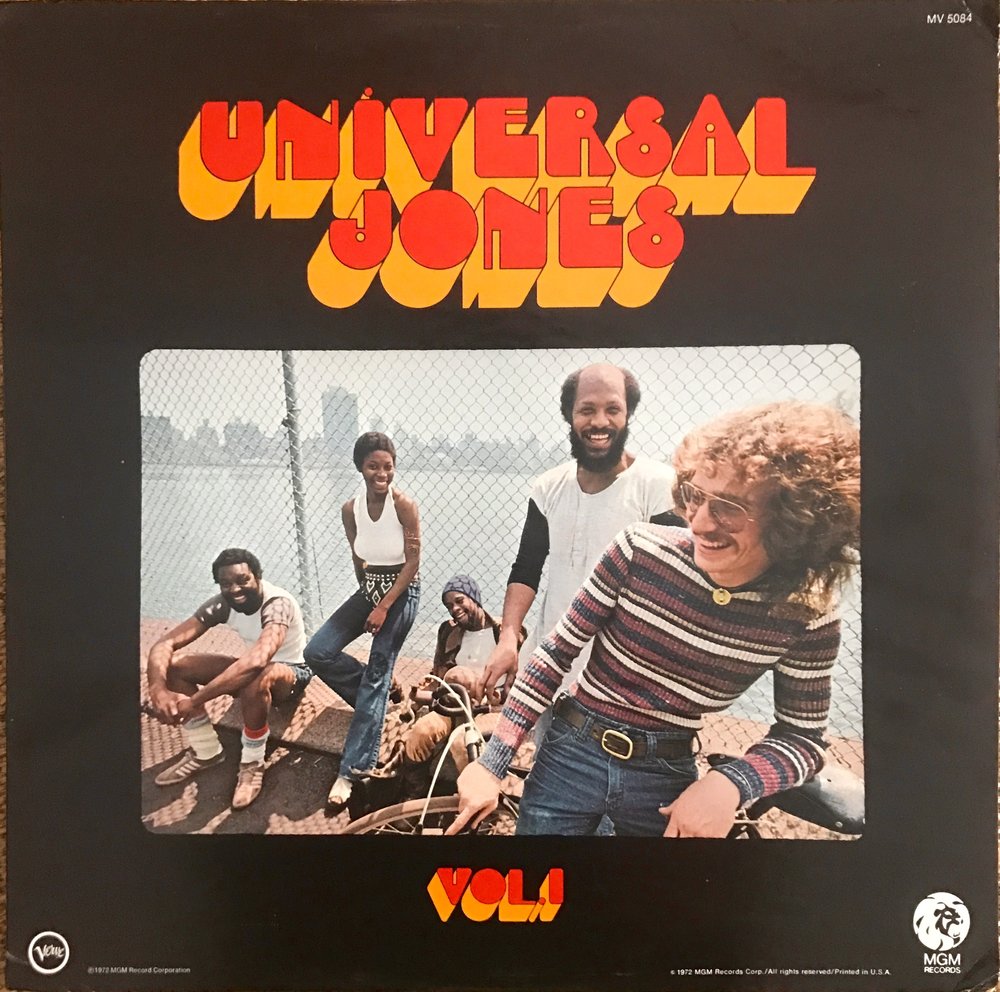
The folk-funk song “River” is by the American singer-songwriter and music producer Eugene McDaniels (1935–2011). He first recorded it with his band Universal Jones on a self-titled album (the group’s only output) in 1972, and he recorded it again, with a synth, on his solo album Natural Juices in 1975.

McDaniels grew up in Omaha, Nebraska, singing gospel music in church. He gained fame in the early 1960s as a clean-cut soul singer—he went by “Gene” at the time—and then surprised everyone in 1970 and 1971 with Outlaw and Headless Heroes of the Apocalypse, containing antiwar, antiestablishment songs performed in a much more experimental style. Universal Jones (1972) is innocuous by comparison, though it still embraces the counterculture. The genres of folk, rock, jazz, gospel, soul, funk, and even proto-rap—often creatively mixed—are all represented in McDaniels’s oeuvre.

Universal Jones cover
From left to right: Eugene McDaniels, Sister Charlotte, Leon Pendarvis, Maurice McKinley, Bob Woos

In the Bible, water connotes blessing, refreshment, life, hope, and abundance. “Flowing streams,” writes Rev. J. Stafford Wright, “are parables of the flowing life of God.” Wright was referring in particular to one of Ezekiel’s visions, where an unnamed guide leads the prophet through a river that issues forth from the temple in Jerusalem (Ezek. 47:1–12). The guide says,

This water flows toward the eastern region and goes down into the Arabah, and when it enters the sea, the sea of stagnant waters, the water will become fresh. Wherever the river goes, every living creature that swarms will live, and there will be very many fish once these waters reach there. It will become fresh, and everything will live where the river goes.

He then goes on to describe the verdant trees on either side of the riverbank:

Their leaves will not wither nor their fruit fail, but they will bear fresh fruit every month, because the water for them flows from the sanctuary. Their fruit will be for food and their leaves for healing.

Sounds a lot like John’s eschatological vision in Revelation 22, where a river flows down from God’s throne, watering the tree of life, which is for the healing of nations. There are also similar passages in the Minor Prophets: “A fountain shall flow from the house of the LORD” (Joel 3:18); “And in that day it shall be that living waters shall flow from Jerusalem” (Zech. 14:8). God is understood as the source of these waters, which signify an invisible spiritual reality.

(Related posts: https://artandtheology.org/2022/04/02/lent-28/; https://artandtheology.org/2022/12/11/advent-day-15-great-joy-river/)

When Jesus comes onto the scene, he talks about “rivers of living water” flowing out of the hearts of believers (John 7:38–39), “spring[s] of water welling up to eternal life” (John 4:13–14). God dwells in humanity, and thus the life God gives springs up from within us and vitalizes the wider world.

I don’t know whether McDaniels had any of these biblical texts in mind when he wrote “River.” But a river, a star, a voice, a song of love—these signal to me the Divine moving, shining, speaking, singing into the lives of humanity. Through the ups and downs of history, the ancient will has worked and is continuing to work, revealing itself to those who look, listen, and follow. Ecclesiastes 3:11 says that God has “set eternity in the human heart.” We possess a moral consciousness and spiritual yearning.

To me, “River” is about recognizing the blessing poured out on the world from the heart of God, about tuning in to the unseen truths embedded in the fabric of the universe. It speaks of God’s all-brightening smile (God’s pleasure in his creation), his whispers of our belovedness, and the river-flow of his goodness.

The song has been covered a handful of times over the years and across the globe, including by:

Further, in 1975 the California bluesman J. C. Burris adapted it both lyrically and musically and recorded it under the title “River of Life” on his album Blues Professor:

Bernice Johnson Reagon, a song leader and civil rights activist, uses Burris’s lyrics in her cover on River of Life: Harmony One (1986), overdubbing her voice singing multiple parts in an a cappella tour de force:

There’s a river somewhere
That flows through the life
Of everyone
And it flows through the mountains
And down through the meadow
Under the sun

There’s a star in the sky
That brightens up the life
Of everyone
They can see the life of happiness
Along with the future
Of the lonely one

Yes, it is

There’s a voice from the valley
That speaks to the mind
Of everyone
And it talks about the future
Along with the joy
Of the sorrowed one

Put a smile on your face
And brighten up the day
For everyone
And live your life of happiness
Along with the sick and lonely
And sorrowed one

Yes, it is

There’s a river somewhere
That flows through the life
Of everyone
And it flows from the mountain
Down through the meadow
Under the sun

There’s a sky full of diamonds
That brightens up the life
Of everyone
Then they can see the life of happiness
Along with the future
Of the lonely one

Yes, it is

The main revision by Burris comes at the end of each verse, where he mentions the lonely, the sick, and the sorrowful. They have a special place of belonging in God’s heart and plans. Jesus’s ministry was to such as these. Blessed are the poor and those who mourn, he said, for theirs is the kingdom of heaven.

Burris encourages us to come alongside those who are hurting with love and inclusion, and to look with them into God’s promised future, where the oppressed are liberated, the sick are healed, the silenced go out singing, and mourning is turned to dancing. Contra the cynicism of “the Preacher” who penned Ecclesiastes, there is something new under the sun! For those with eyes to see it, God is in the process of making all things new (Rev. 21:5).

Upcoming conferences

I’ll be attending the first two, intermittently working the Daily Prayer Project table at Calvin. If you’re there, be sure to say hello!

Calvin Symposium on Worship
Date: February 8–10, 2023
Location: Calvin University, Grand Rapids, Michigan
Cost: $180 (or $25 for students and faculty of any school)
Organizers: Calvin Institute of Christian Worship and the Center for Excellence in Preaching
Presenters: James Abbington, Latifah Alattas, Jeremy Begbie, Carlos Colón, Justin Giboney, Wendell Kimbrough, Te-Li Lau, Karin Maag, Debra Rienstra, W. David O. Taylor, and many more
Description: “The Calvin Symposium on Worship is an annual conference (since 1988) that brings together people from many different denominations and traditions, from a variety of roles in worship and leadership, including pastors, worship planners and leaders, musicians, scholars, students, worship bands and teams, organists, visual artists, preachers, chaplains, missionaries, liturgists, council and session leaders, and more; and encourages leaders in churches and worshiping communities of all sizes and settings.” This year’s theme is Paul’s letter to the Colossians.

Ordinary Saints Conference

Ordinary Saints—Creativity, Community, and Collaboration
Date: February 17–18, 2023
Location: The Trust Performing Arts Center, Lancaster, Pennsylvania
Cost: $210
Organizer: Square Halo Books
Presenters: Malcolm Guite and Elissa Yukiko Weichbrodt (keynotes)
Description: Celebrating Square Halo’s twenty-fifth year publishing “extraordinary books for ordinary saints,” as its tagline reads. Coincides with the release of Ordinary Saints: Living Everyday Life to the Glory of God, an anthology of essays by forty-plus writers on such topics as knitting, home repair, juggling, traffic, pipes, chronic pain, pretzels, and naps. Art historian Elissa Yukiko Weichbrodt, author of the forthcoming Redeeming Vision: A Christian Guide to Looking at and Learning from Art, will be speaking on “Corporeality and Modern Art in Dialogue” and will participate in a panel discussion with Ed Knippers and Ned Bustard, and poet Malcolm Guite will be giving several talks. There will also be breakout sessions led by a range of guests, a pop-up printmaking studio, songwriting roundtables, a performance by Reverie Actor’s Company, and a concert by The Arcadian Wild.

Society for Christian Scholarship in Music (SCSM) Annual Meeting
Date: March 2–4, 2023
Location: Duke Divinity School, Durham, North Carolina
Cost: $100–$150
Organizer: Society for Christian Scholarship in Music
Presenters: Luke Powery (keynote) and others
Description: The Rev. Dr. Luke A. Powery, dean of Duke Chapel and associate professor of homiletics at Duke Divinity School whose publications include devotionals based on the African American spirituals, will offer the keynote address. The conference will also include twenty-three research paper presentations, panel sessions, a lecture recital, a choral concert, and more. Full details will be published soon on the SCSM website.

Art, the Sacred, and the Common Good: Renewing Culture through Beauty, Education, and Worship
Date: April 21–22, 2023
Location: Princeton Theological Seminary, Princeton, New Jersey
Cost: Free
Organizer: Scala Foundation
Presenters: Aidan Hart, Jonathan Pageau, Anna Bond, Peter Carter, David Clayton, Margarita Mooney Clayton, Paul Coyer, Robert Jackson, and RJ Snell
Description: “The modern myth that beauty emerges from the subconscious of a self-seeking creative genius goes against the traditional understanding that beauty emerges from a living tradition under the inspiration of God. For example, C.S. Lewis and J.R.R. Tolkien met regularly in Oxford’s pubs to discuss their writing and their faith. In the early 20th century, Russian exiles in Paris formed a community focused on the re-establishment of the great tradition of iconography so central to Christian worship. Composers like Handel and Mozart created beautiful music accessible to all people that directed listeners to the transcendent.
        “Conversations and community among creators and thinkers have always been essential to shaping culture. These eminently human moments—and the friendships they inspire—must be cultivated if we are to illuminate America’s darkening culture and society.
        “American culture is in rapid collapse in large part because of an abandonment of beauty in education and worship. The Scala Foundation’s 2023 conference on art, the sacred, and the common good grows out of its deep work around Princeton to bring together artists, students, teachers, and scholars. In a world increasingly hostile to the idea that beauty is anything more than self-aggrandizement or yet one more tool of oppression, this event offers the warmth of community to anyone who is passionate to restore the connections between beauty and truth and between reason and creativity.”

Hutchmoot UK (*open to UK residents only)
Date: May 18–21, 2023
Location: Hayes Conference Center, Swanwick, Derbyshire
Cost: £365 (all-inclusive)
Organizer: The Rabbit Room
Description: A weekend of live music, delicious food, conversation, and a series of discussions centered on art, faith, and the telling of great stories across a range of mediums.

Epiphany: Glory

And when Christ, who is your life, is revealed to the whole world, you will share in all his glory.

—Colossians 3:4

Epiphany, meaning “revelation,” is the capstone of the Christmas season. In this final post of this year’s Christmas series, I leave you with a striking, light-flecked painting from Japan and a slow-tempo Black gospel song from the US. What marvel, that God’s glory fills such places as ours, and that he invites us not only to behold his glory but also to participate in it.

May God’s light continue to guide and enfold you throughout the year, and may you never stop seeking his face.

To view a compilation of this season’s numbered Christmas posts, click here; for Advent, here.

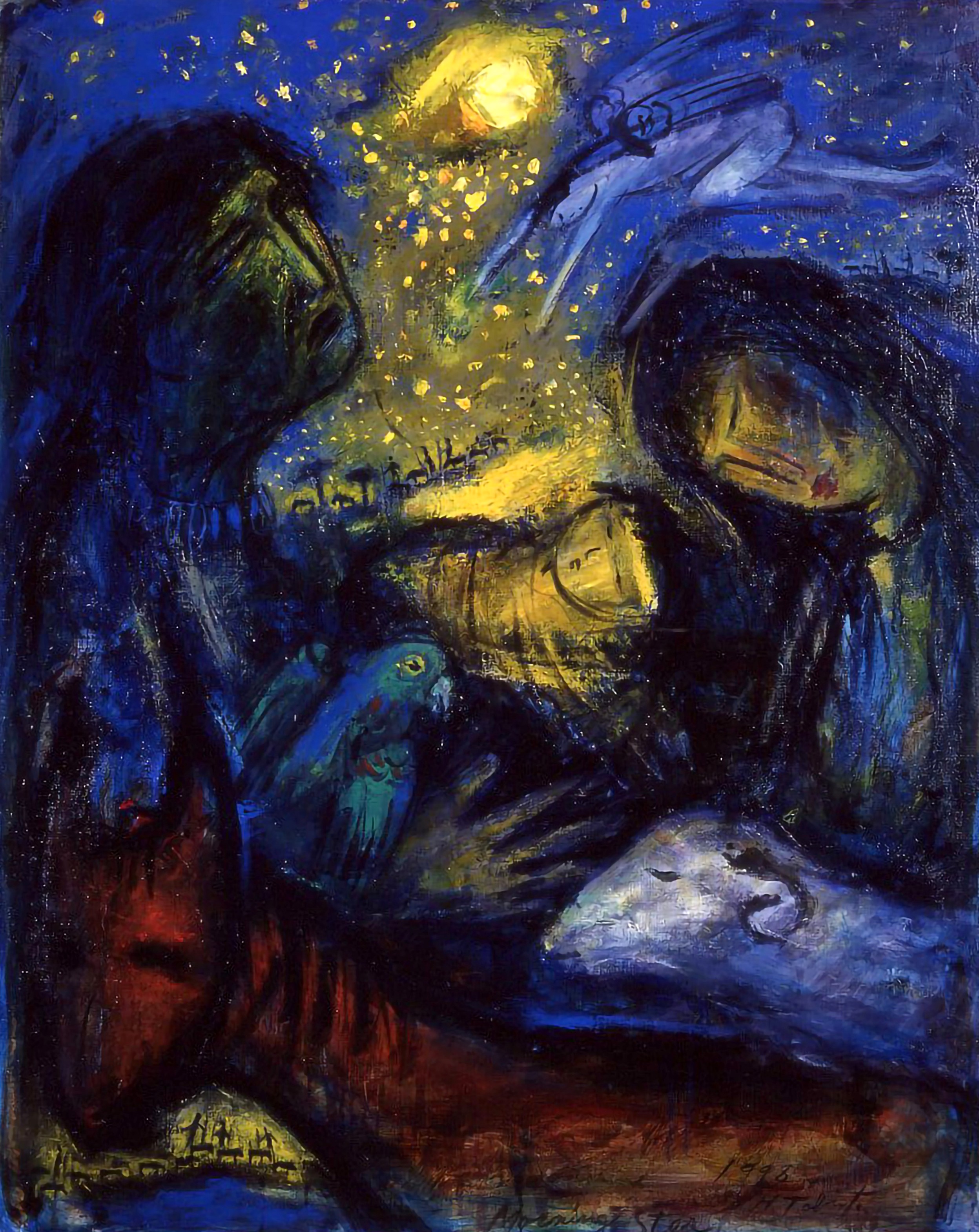
LOOK: Morning Star by Hiroshi Tabata

Tabata, Hiroshi_Morning Star
Hiroshi Tabata (田畑弘) (Japanese, 1929–2014), Morning Star, 1998. Oil on canvas, 90.9 × 72.7 cm. Private collection. Photo courtesy of the Estate of Hiroshi Tabata.

Born in Takaoka City, Hiroshi Tabata (1929–2014) studied art at the University of Toyama, later moving to France for two years for further art education. He exhibited his work throughout Japan and at Parisian salons. From 1966 to 1972 he lived intermittently in Brazil among the Xingu people, which led to his conversion to Christianity. From then on until his death, he painted biblical subjects. “The Bible is the ultimate theme for me,” he said; its world is “infinitely deeper” than we can comprehend.

In Tabata’s expressionistic Morning Star, starlight falls in a luminescent sheen over the face of the Christ child, whom Mary looks upon in tender adoration as Joseph wonders at the angelic activity above. The tight cropping around the Holy Family heightens the sense of intimacy. A sheep, donkey, and Amazon parrot (the latter a callback to his time in Brazil) crowd into the foreground, while on distant hills shepherds behold the glorious light display, hear the announcement that will propel them to their newborn Messiah. The wise men, too, are on their way. Epiphany is at hand. Heaven’s raining down (Isa. 45:8).

This visual reflection (by me) originally appeared in the Christmas/Epiphany 2022–23 edition of the Daily Prayer Project. Tabata’s art appears on the cover, by kind permission of his son-in-law. To view more biblical art by Tabata, see the beautifully produced, full-color book 田畑弘作品集 一つの星 (Hiroshi Tabata Works: Morning Star); the text is all Japanese.

LISTEN: “A Star Stood Still (Song of the Nativity)” | Words and music by Barbara Ruth Broderick and Johnny Broderick, 1956 | Performed by Mahalia Jackson with the Falls-Jones Ensemble, conducted by Johnny Williams, on Silent Night: Songs for Christmas, 1962

And we shall share
In the glorious light

In Bethlehem
The wind had ceased
The Lamb lay sleeping
On the hill

When all the earth
Was stilled with peace
Then lo, a star stood still

A star stood still
On yonder hill
Praise God that star still
Shining still

And we shall share
In the glory of love
Because a star stood still
That night a star stood still

A star stood still
On yonder hill
Praise God that star still
Shining still

And we shall share
In the glory of love
Because a star stood still
That night a star stood still

Note to readers: Art & Theology is noncommercial, but I do accept donations (monetary, or in-kind books!) to help keep it running. Learn more here.