Roundup: Virtual Advent concerts, dreams deferred, pop-up floral memorials, and more

The Christmas–Epiphany 2020/21 edition of the Daily Prayer Project [previously], a publication I work for part-time, released this week! The cover image is from the sanctuary mural at Holy Angels Catholic Church in Chicago, by Cameroonian artist-priest Engelbert Mveng. (See the full mural here.) Also in this edition are images of Grace Carol Bomer’s From Strength to Strength, showing Light stepping into darkness, and the Piper-Reyntiens stained glass window in Coventry Cathedral, with its yellow sunburst amid an abstract pattern of reds, blues, and greens. We include visual art as a supplement to the prayers, scripture readings, and songs with the understanding that it, too, can promote spiritual development and a deeper communion with God.
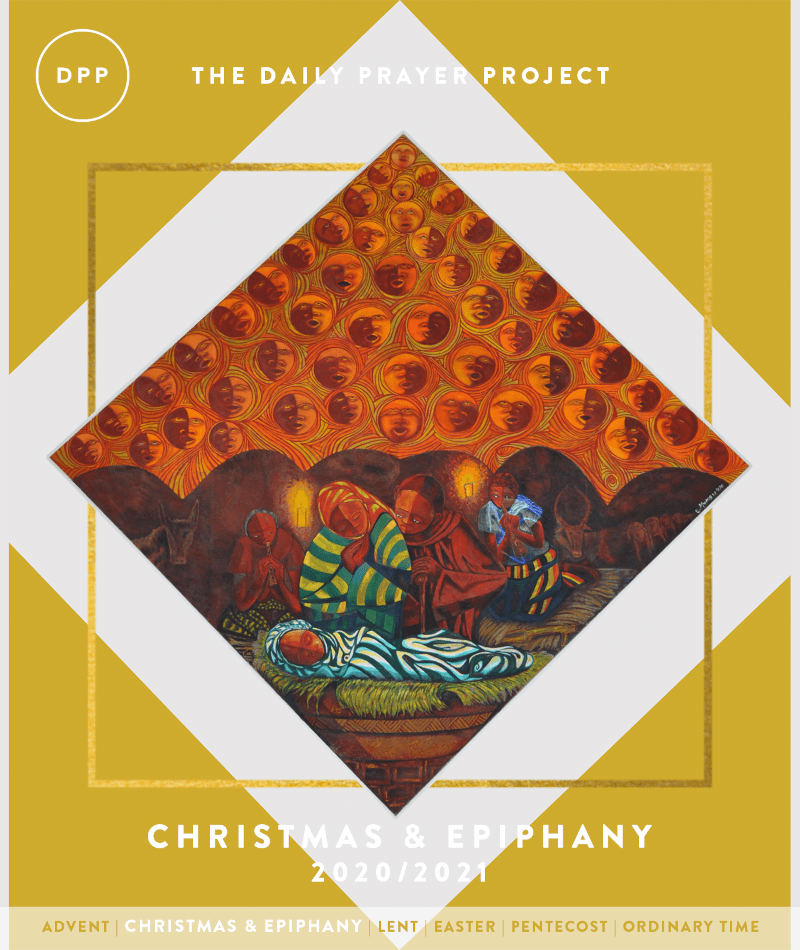
You can purchase a digital copy (PDF) of the Christmas–Epiphany edition (December 24–February 16) through the website, and if in the future you’d like to receive hard copies, starting with Lent 2021, you can become a monthly subscriber. Part of the money goes to supporting artists.

+++

Whenever I see a Helena Sorensen [previously] byline, I perk up, because I always find myself connecting so much with her writing. She’s a regular contributor to the Rabbit Room blog. Her two most recent posts are “Things Fall Apart” and “Advent, Week One: Hope.” They’re both great.

+++

Unburden: A Virtual Interactive Exhibit, December 4, 2020–January 8, 2021: The Gallery at W83 is part of a 45,000-square-foot cultural center built by Redeemer Presbyterian Church in Manhattan’s Upper West Side as a service to the city’s artists and larger community. W83 Events and Programming Director Eva Ting has curated a virtual exhibition of photographs and stories from Kristina Libby’s Floral Heart Project, a series of living memorials to those lost to or suffering from COVID-19. Libby initiated the project in New York City in May, partnering with 1800Flowers.com to place floral heart garlands all around the city to create space for ceremony and to invite the community to process and mourn. The project has since grown nationwide.
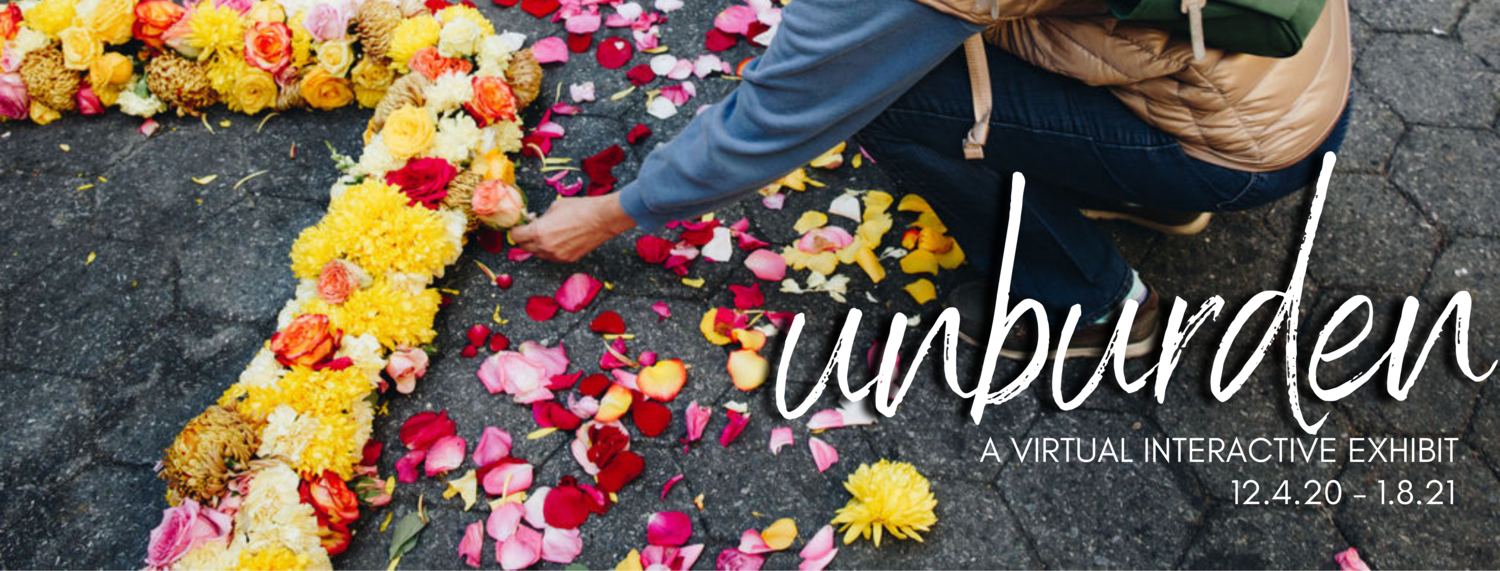
“Many of us are carrying burdens of loss, anxiety, and uncertainty as we move towards the end of 2020,” Ting writes. “We have all been impacted in some way by the events of this year, and we bear fatigue weighed heavier by the inability to gather as a community to collectively grieve. In this interactive virtual exhibit Unburden, the Gallery at W83 invites you to participate in an unburdening of the load we carry.”

The exhibition webpage invites you to release personal burdens by writing down any grief, fears, loss, or anxiety you wish to let go of (can be submitted anonymously if desired). These words will be incorporated into a new floral heart laying on December 20 at Fort Tryon Park, an event that will be livestreamed. You can also ask for prayer, and members of the W83 team will pray for your requests. “Through these individual and collective acts of unburdening, may we imagine what it would look like to truly let go of these burdens.”

Floral Heart Project (Brooklyn Bridge)
Photo by Erica Reade

+++

I enjoyed attending the virtual “Songs of Hope: A TGC Advent Concert,” featuring music and spoken-word performances from a variety of artists (see YouTube description), interspersed with Advent readings. It was a truly meaningful worship experience.

I’m sure there are many more virtual Advent/Christmas concerts and other online events coming up. What ones are you most looking forward to?

One that I’ll probably be tuning in to is “We Three Queens Holiday Show” by Pegasis, a sister trio, on December 17, 8:30 p.m. EST (7:30 p.m. CST). It will be live on Facebook and and Instagram. (Update, 12/17/20: View the performance here. My favorite two songs are probably “Poncho Andino” at 19:04 and “Mary Had a Baby” at 45:24—such a unique arrangement!)

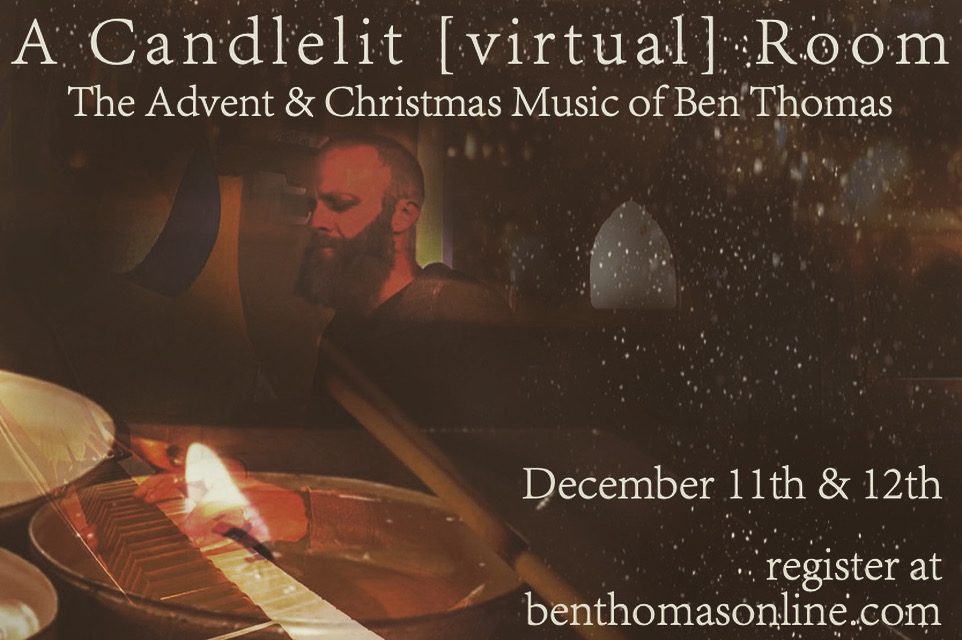
There’s also “A Candlelit (Virtual) Room: The Advent Christmas Music of Ben Thomas” on December 11 and 12 (10 p.m. EST and 8 p.m. EST, respectively), two private Zoom concerts open to the first twenty-five registrants each. He’ll be performing original songs from his albums The Bewildering Light, The Wilderness Voice, and Peace Here, all of which I recommend. My favorite tracks: “Justice Will Sprout from the Ground,” “Zechariah and the Least Expected Places,” and “Shepherds and Angels.” (The latter two were recorded under the name So Elated.)
+++

POEM: “Harlem” by Langston Hughes: This is a brilliant poem—its sensory images, its rhythm, its rhyme, its multivalence (especially the last line). I loved it so much when I first read it in ninth grade that I memorized it unbidden. When writer and podcaster Joy Clarkson posted a reflection on the poem for her Patreon community in October, resulting in a lively conversation thread in the comments section, it reignited my enthusiasm for and got me thinking more deeply about “Harlem.” She opened by quoting Proverbs 13:12: “Hope deferred makes the heart sick, / But desire fulfilled is a tree of life.”

“What happens to a dream deferred? // Does it dry up / like a raisin in the sun?” Written in 1951 as part of a sequence of poems exploring black life in Harlem, “Harlem” is inextricably tied to the civic discourse of the contemporary American moment, writes Scott Challener in Poetry Foundation’s guide to the poem. The “dream” he refers to is the American Dream, unattainable for so many due to racial inequalities and oppression. (Also assigned in ninth-grade English curricula in the US is Lorraine Hansberry’s A Raisin in the Sun, which takes its title from and addresses the questions of “Harlem.”)

While not wishing to strip the poem of its specific context, I have been thinking about all the dreams that have been deferred this year—put on hold, or even irretrievably lost, because of COVID-19. Hughes posits a string of descriptive similes for a deferred dream: a dried-up raisin, a festering sore, rotting meat, a crusted-over sweet, a sagging load. One commenter on Joy’s Patreon observed how a raisin can’t turn back into a grape, rotten meat can’t be made fresh again, and an overcooked dessert can’t be cooked back down, but a sore can heal and a load can be lifted.

The final suggestion—“or does it explode?”—can be read in myriad ways. In one respect it could refer to the explosion of cultural output, of creativity, that results from deferred dreams—i.e., the Harlem Renaissance. I’ve definitely seen this happen this year, as people, in the face of crushing personal and professional disappointments, have found unique ways to come together and produce and share works of beauty within the restrictiveness of health and safety protocols. One example—speaking of Harlem—is the Dance Theatre of Harlem, a groundbreaking neoclassical ballet company founded at the height of the civil rights movement in 1969 and still active today. Bans on gatherings of certain numbers have meant that dancers and other performers have had to find alternative ways of reaching their audiences, so DTH artists Derek Brockington and Alexandra Hutchinson created “Dancing Through Harlem,” taking choreography from Robert Garland’s “New Bach” out into the streets and capturing it on video for people to enjoy from home. To help support the DTH during this time, you can donate easily through the fundraising sidebar on the video’s YouTube page or through the company’s website.

+++

SONG: “400 Years” by Sarah Sparks: This original song, sung with Kate Lab, appears on Sarah Sparks’s new album, Advent, Pt. One. It’s about how the centuries-long silence of God between the ministry of Malachi (ca. 420 BCE) and the appearance of John the Baptist in the early first century CE was broken with the birth of Jesus—the Word made flesh. Its refrain, “For the first time, not a silent night,” cleverly turns on its head the sweet, familiar carol “Silent Night.” Through the incarnation, God spoke to all who would listen.

Advent, Day 7: Behold!

A voice cries:
“In the wilderness prepare the way of the LORD;
    make straight in the desert a highway for our God.
Every valley shall be lifted up,
    and every mountain and hill be made low;
the uneven ground shall become level,
    and the rough places a plain.
And the glory of the LORD shall be revealed,
    and all flesh shall see it together,
    for the mouth of the LORD has spoken.”

—Isaiah 40:3–5

LOOK: Caiphas Nxumalo (South African, 1940–2002), John the Baptist, 1970. Linocut. Source: Christliche Kunst in Afrika, p. 278.

Nxumalo, Caiphas_John the Baptist

Caiphas Nxumalo was a printmaker and wood sculptor who studied at the Rorke’s Drift Art School from around 1968 to 1971 (sources vary on the precise years). He was associated with the African-initiated amaNazaretha Church in South Africa.

In this linoleum cut Nxumalo shows John the Baptist, the forerunner of Jesus, preaching repentance (bottom; Matt. 3:1–3), baptizing (Matt. 3:5–6), and eating wild honey (Matt. 3:4). The eye of God, which sees secret sins, burns bright and glorious. I’m not sure whether the people at the bottom are running away from John’s message of wrath or “turning around” from their wickedness to follow the true way. In Matthew’s account there are people from both categories of response.

The triangular frame rising from the base line was a common compositional device Nxumalo used to tell multiple components of a story, and in this context it’s especially appropriate, as it seems to me to allude to the valleys being lifted and the mountains being brought down low—a leveling of the landscape so that God’s glory can be plainly seen from any vantage point. (On another level, this Isaianic prophecy probably also refers to the proud being overthrown and the humble being exalted, as Mary sings about in her Magnificat.)

Advent is about the coming consummation of the kingdom of God in the day of the Lord. In Advent: The Once and Future Coming of Jesus Christ, Fleming Rutledge, who calls on the church to restore Advent’s focus on apocalyptic theology, describes John the Baptist as the central figure of Advent. She half-jokes that behind one of those cute little Advent calendar windows should be a coarse, fiery John shouting, “You brood of vipers!” (Matt. 3:7). “Irreducibly strange, gaunt and unruly, lonely and refractory, utterly out of sync with his age or our age or any age,” John the Baptist “arrives announcing the opening event of the end-time” (277, 13). As prophesied by Malachi at the end of the Old Testament and confirmed by Jesus in Matthew 11, “John the Baptist is the new Elijah, standing at the edge of the universe, at the dawn of a new world, the turn of the ages. That is his location as the sentinel, the premier personage of this incomparable Advent season—the season of the coming of the once and future Messiah” (277).

Like John, the church, Rutledge says, is also located on the frontier of the new age, between Jesus’s first and second advents, and we, too, are called to herald the Messiah, announcing, “Repent! For the kingdom of God is at hand.”

[Related posts: “Prepare the Way (Artful Devotion)”; “Turn and Live (Artful Devotion)”; “John the Baptist at the National Gallery, London”]

In those days John the Baptist came preaching in the wilderness of Judea, “Repent, for the kingdom of heaven is at hand.” For this is he who was spoken of by the prophet Isaiah when he said,

“The voice of one crying in the wilderness:
‘Prepare the way of the Lord;
    make his paths straight.’”

Now John wore a garment of camel’s hair and a leather belt around his waist, and his food was locusts and wild honey. Then Jerusalem and all Judea and all the region about the Jordan were going out to him, and they were baptized by him in the river Jordan, confessing their sins.

But when he saw many of the Pharisees and Sadducees coming to his baptism, he said to them, “You brood of vipers! Who warned you to flee from the wrath to come? Bear fruit in keeping with repentance. And do not presume to say to yourselves, ‘We have Abraham as our father,’ for I tell you, God is able from these stones to raise up children for Abraham. Even now the axe is laid to the root of the trees. Every tree therefore that does not bear good fruit is cut down and thrown into the fire.

“I baptize you with water for repentance, but he who is coming after me is mightier than I, whose sandals I am not worthy to carry. He will baptize you with the Holy Spirit and fire. His winnowing fork is in his hand, and he will clear his threshing floor and gather his wheat into the barn, but the chaff he will burn with unquenchable fire.”

—Matthew 3:1–12

LISTEN: “His Kingdom Now Is Come (Behold! Behold!)” by Paul Zach, Isaac Wardell, Leslie Jordan, Lorenzo Baylor, and Brian Nhira, on Justice Songs by the Porter’s Gate (2020) | CCLI #7158500

In my review of Justice Songs (and its companion album, Lament Songs), I wrote,

Justice Songs opens with a rousing call-and-response song, “His Kingdom Now Is Come (Behold! Behold!),” that combines material from the mystical prologue of John’s Gospel with an Isaianic prophecy commonly read during Advent [Isaiah 40:3–5]. . . . Verse 4, syncopated with hand claps, lists divine epithets like “God of justice” (Isa. 30:18). “Father of the fatherless” (Ps. 68:5), “Prince of Peace” (Isa. 9:6). “He’s troubling the water, and we’re marching through”—an oblique reference to the African American spiritual “Wade in the Water,” about the liberation of the Israelites through the miraculously parted Red Sea, the paradigmatic “day of the Lord.”

The refrain, “Behold!,” is a word used hundreds of times throughout scripture, and it means “to fix the eyes upon; to see with attention; to observe with care.” Jesus says in Luke 7:21, “Behold, the kingdom of God is in the midst of you.” May we behold with humility and excitement the age to come and respond with fruits of repentance.

Here’s a socially distanced performance of “His Kingdom Now Is Come” by the musicians of Whitworth Campus Worship for the Center for Congregational Song’s Election Day 2020 broadcast.

(Update, 12/9/20: Watch the Porter’s Gate perform this song in the studio on this Instagram video.)

This post marks the end of the first week of Advent. For many more Advent songs, see “Advent: An Art & Theology Playlist” on Spotify.

Roundup: Advent art meditations, new songs, and more

VISUAL MEDITATIONS:

“An Advent Visio Divina” by John Skillen, CIVA blog: John Skillen, author of Putting Art (Back) in Its Place, discusses four works of Advent-themed art from Italy, where he lives for part of each year leading retreats and seminars through the Studio for Art, Faith & History. He starts in Florence with The Adoration of the Shepherds altarpiece by Renaissance artist Domenico Ghirlandaio, which invites worshippers to follow the shepherds’ (and patrons’) example of adoring the Christ child. Then he moves to Orvieto, spotlighting Karin Coonrod’s directing a medieval mystery play in the city’s streets and churches. (For more on this, read Skillen’s excellent essay in Image no. 96, “Fierce Mercy: The Theater Art of Karin Coonrod.”) Advent is also about the second coming, so Luca Signorelli’s apocalyptic frescoes in the Chapel of San Brizio in Orvieto Cathedral are appropriate. Continuous, in some ways, with these late fifteenth-century paintings are the bronze reliefs on the central doors by Emilio Greco from 1962; they depict the seven works of mercy, the criteria, according to Matthew 25, by which humanity will be judged.

Mary carries the Light of the World
Actor Patrice Johnson portrays Mary, who carries the light of the world, in this contemporary adaptation of The Second Shepherds’ Play directed by Karin Coonrod. Photo: Massimo Achille.

Signorelli, Luca_Antichrist
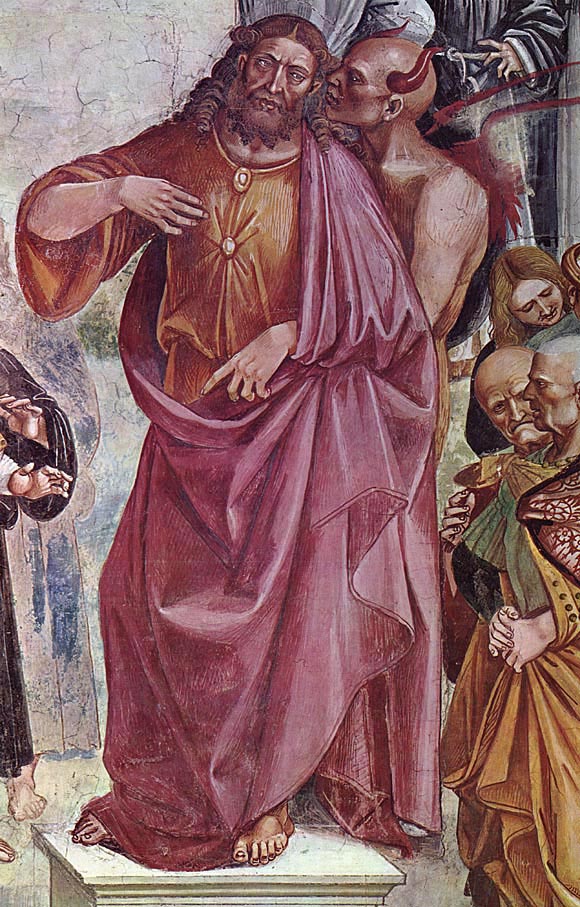
Luca Signorelli (Italian, ca. 1441/45–1523), Sermon and Deeds of the Antichrist (detail), 1499–1502. Fresco, Chapel of San Brizio, Orvieto Cathedral, Italy. The Antichrist is shown as a puppet of the Evil One.

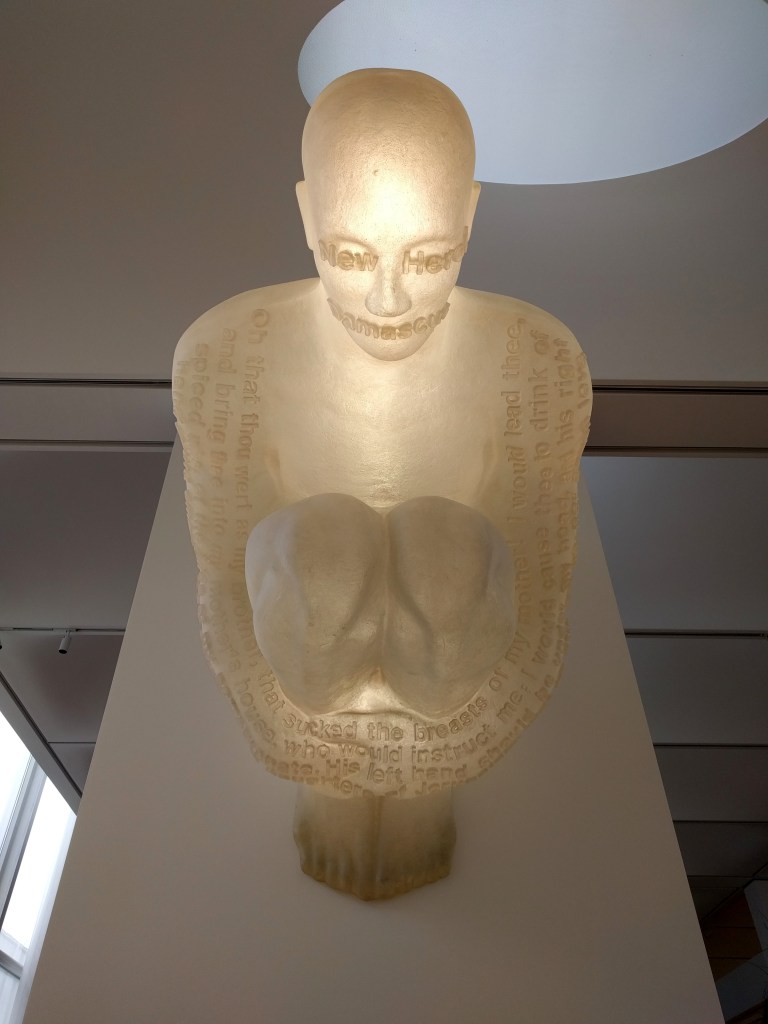
“Passion for the Light” by Alexandra Jean Davison, ArtWay: For last Sunday, the first day of Advent, Culture Care RDU Director Alexandra Jean Davison wrote this wonderful meditation on a set of contemporary sculptures by Jaume Plensa at the North Carolina Museum of Art, connecting them to the season we’re in. She begins, “We see three identical nudes filled with light, the face and arms covered with names and Scripture. Each figure sits at rest horizontally on one of the three walls which form a triangle. The closed eyes and mouth are covered with embossed text of the names of the eight gates of the ancient city walls of Jerusalem: New, Herod, Damascus, Golden (two doors: Gate of Repentance and Gate of Mercy), Lions, Jaffa, Zion, and Dung. Tattoo-like passages from the Song of Songs emerge from the heart upon the arms.” Read more at ArtWay.eu.

Plensa, Jaume_Doors of Jerusalem I
Jaume Plensa (Spanish, 1955–), Doors of Jerusalem I, 2006. Resin, stainless steel, and light, 47 1/4 × 62 3/16 × 80 11/16 in. (120 × 158 × 205 cm). North Carolina Museum of Art, Raleigh. Photo: Victoria Emily Jones.

+++

VIDEO: “Matthew 1:18-23” by SALT Project: The Emmy Award–winning production company SALT Project released a short video this week setting a reading from Matthew’s Gospel (“This is how the birth of Jesus came about . . .”) against evocative time lapses of blooming flowers. They’re generously offering it for free download and use in worship services, online or in-person. It could be used as an opener, as one of the morning’s scripture readings, or in a number of other ways.

+++

SONGS (the latter two released this week!):

“Christ Child’s Coming”: This simple Advent song is based on the African American spiritual “The Train Is a-Coming” (where “train” is a multivalent metaphor having to do with salvation). While a musician at Christ Church East Bay in Berkeley, California, Keith Watts adapted the lyrics to relate more explicitly to Advent: “Christ child’s coming, oh yeah!,” “Light is coming, oh yeah!,” and “Our king’s coming, oh yeah!” The song is sung here by Trinity Majorins, accompanied by her mom, Sarah [previously], on the piano and her dad, Philip [previously], on guitar.

“Weight/Wait” by Mike McMonagle: “Hope . . . flicker[s] underneath the weight of the wait.” Introducing this new demo, Mike McMonagle, a roots rock musician from Lancaster, Pennsylvania, wrote on Facebook about how the pandemic has created an extended season of waiting in the darkness this year, which has helped him to feel both pain and longing more keenly: “For the past couple of months, I’ve found myself processing all the ups & downs of the current life experience in step with what I’d label the deepest dive into the Advent season that I’ve ever done. All my life, Advent was just a church-y word for rat race otherwise known as The Holidays. There were happy hours, shopping trips, family outings – things that made it hard to focus on the Advent season for more than an hour each Sunday. This year has been different.”

“In Distress” by the Pharaoh Sisters: Written by Austin Pfeiffer and Jared Meyer and based on Psalms 120 and 121, this song blends Latin and Appalachian folk music influences and has lyrics in both English and Spanish. “The song’s creation began in the spiritual angst after the 2016 [US presidential] election,” Pfeiffer writes. “Calling on believers to put their hope in Christ as King, the song has broad themes of Kingdom orientation, raises questions about social divisions, but also leans into Advent ideas, specifically Isaiah 9.” It premiered at the 2017 Presbyterian Church in America (PCA) General Assembly but didn’t end up fitting on the Pharaoh Sisters’ 2020 debut album, Civil Dawn. “Now as our nation plunges deeper into distress and unrest, be it political and/or social, the band is eager to release the song for Advent 2020.”

+++

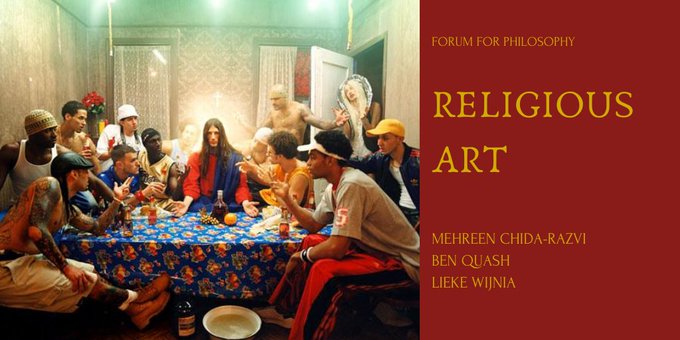
ONLINE PANEL: “Religious Art,” December 9, 6:00–7:15 p.m. London time (1:00–2:15 p.m. ET): “The relationship between religion and art is ancient and complex, varying across religious traditions and cultures. In this event, Mehreen Chida-Razvi, Ben Quash, and Lieke Wijnia consider how these traditions of religious art differ and what role art plays in religion today. How should we display religious art? Might art be a way of opening interfaith dialogue? And has art itself become a kind of religion?” This free Zoom event is organized by the Forum for Philosophy and the Department of Philosophy, Logic and Scientific Method at the London School of Economics. I’ll be attending! (Note: The promotional image below is David LaChapelle’s Last Supper.) Update, 12/10/20: The panel discussion has been archived and can be viewed here.

Religious Art Zoom panel

Advent, Day 6: Coming

LOOK: Elena Markova (Russian, 1967–), Christmas Dreams, ca. 2010. Acrylic on canvas, 27 9/16 × 35 3/8 in.

Markova, Elena_Christmas Dreams

Born in Kargopol, Russia, and now living in Oregon in the western US, artist Elena Markova is inspired by the spiritual traditions of her homeland and its vibrant folk art. Her lyrical paintings reflect her love of folk tales, myths, religious narrative, and the magic of the natural world.

LISTEN: “Advent Moon” | Words by Angier Brock and music by Cecilia McDowall, 2013 | Performed by the Choir of King’s College London and organist Michael Butterfield, on Advent Carols from King’s College London, 2019

I prefer the King’s College performance above, but you’ll need a Spotify account to listen. For an Oxford Choir performance from 2014, see SoundCloud:

Let the coming of the One
who arranges Orion and the Pleiades
begin in darkness.
Let the night be cold, with drifts of snow.
Let there be one lily blooming,
and whispered messages, and kneeling.

The fierce earth spins in expectation
beneath the long night’s moon, Advent moon.
Like the restless fox crossing frosted meadows,
the silvered owl in focused, silent flight,
each of us is hungry.
In rooms of untold longing,
we sing our seasoned carols,
watch, and wait.

Let the coming of the One
who kindles fires of hope,
whose faithfulness runs far beyond our sight,
be like the coming of a child.
Let there be milk, forgiveness, quiet arms.
Come quickly, Love, our dearest deep
and sweetest dawning.
Come, fill us with your light.

This choral anthem was a collaboration between lyricist and composer, commissioned by Bruton Parish Episcopal Church in Williamsburg, Virginia, where Angier Brock lives. (Cecilia McDowall lives in London.) It premiered at the church on December 1, 2013, sung by the Choirs of Bruton Parish. I’m blown away by the beauty of Brock’s text. The Creator of the constellations, descended from heaven to dwell with us—light in our darkness, food for our hunger, warmth in the cold. Reminds me a bit of Rowan Williams’s poem “Advent Calendar.” I will definitely be returning to this one each Advent!


For each day of the first week of Advent I am publishing one art-and-song pairing as an invitation for seasonal reflection.

Advent, Day 5: Peace

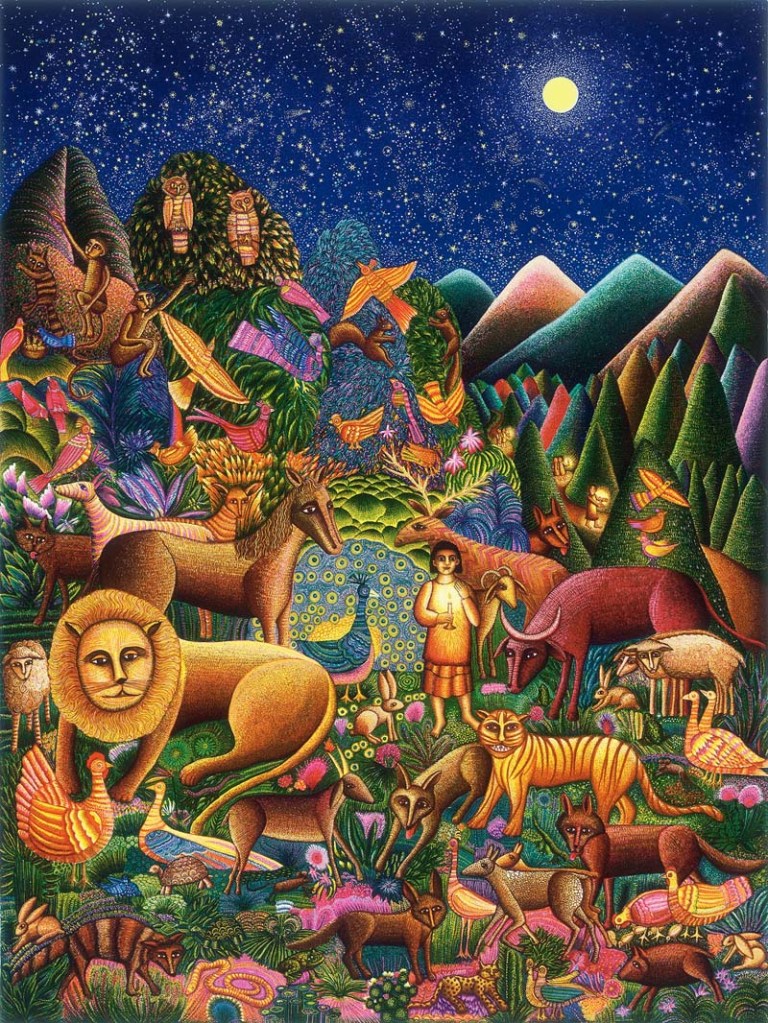
LOOK: John August Swanson (American, 1938–), Peaceable Kingdom, 1994. Serigraph, edition of 250, 30 × 22 1/2 in.

Swanson, John August_Peaceable Kingdom

John August Swanson, a Los Angeles–based artist of Mexican and Swedish heritage, says his style is “influenced by the imagery of Islamic and medieval miniatures, Russian iconography, the color of Latin American folk art, and the tradition of Mexican muralists.” In this forty-seven-color serigraph (limited-edition screen print), monkeys, frogs and lizards, mice and rabbits, owls and peacocks, a pig and a turtle accompany the wolves, lambs, leopard, goat, lion, ox, and snake of Isaiah 11, a vision of creation restored and at peace.

LISTEN: “O Day of Peace” | Words by Carl P. Daw Jr., 1982 | Music by Josh Garrels, on The Light Came Down, 2016

O day of peace that dimly shines
Through all our hopes and prayers and dreams
Guide us to justice, truth, and love
Delivered from our selfish schemes

May swords of hate fall from our hands
Our hearts from envy find release
Till by God’s grace our warring world
Shall see Christ’s promised reign of peace

Then shall the wolf dwell with the lamb
Nor shall the fierce devour the small
As beast and cattle calmly graze
A little Child shall lead them home

Then the meek shall learn to love
All creatures find their true accord
The hope of peace shall be fulfilled
For all the earth shall know the Lord

(Related post: “The Peaceable Kingdoms of Edward Hicks”)


For each day of the first week of Advent I am publishing one art-and-song pairing as an invitation for seasonal reflection.

Advent, Day 4: Waiting

LOOK: Grant Wright Christian (American, 1911–1989), Waiting for the Mail (mural study, Post Office in Nappanee, Indiana), 1937. Oil on canvas, 7 7/8 × 20 7/8 in. (20 × 53 cm). Smithsonian American Art Museum, Washington, DC.

Waiting for the Mail by Grant Wright Christian

LISTEN: “Every Valley (It’s Hard to Wait)” by Flo Paris Oakes, on Waiting Songs by Rain for Roots (2015)

When you write a letter to a friend
And you don’t when
You’ll hear back again
Well, it’s hard to wait
It’s hard to wait
So hard to wait

When the one you love
Leaves on a plane
And you know that she’ll
Come back someday
It’s hard to wait
It’s hard to wait
So hard to wait

There is gonna be a day
Every low valley He will raise
There is gonna be a day
Hills and mountains gonna be made plain
There is gonna be a day
Winding roads gonna be made straight
Comfort, comfort, comfort, comfort
It’s hard to wait
So hard to wait

When you plant a seed
In the garden bed
But you don’t see green
Growing up just yet
Oh, it’s hard to wait
It’s hard to wait
Comfort, comfort, comfort, comfort
It’s hard to wait
So hard to wait
There’s gonna be a day
But it’s hard to wait

Rain for Roots is a collective of musicians and songwriters who create scripture songs for kids and their grown-ups. Its core members are Sandra McCracken, Flo Paris Oakes, Katy Hutson Bowser, and Alice Smith. This December Rain for Roots is booking virtual, thirty-minute Advent singalongs with two or more of these ladies, to be hosted by churches, schools, and other groups. For more information, visit https://rainforroots.com/advent-singalong.


For each day of the first week of Advent I am publishing one art-and-song pairing as an invitation for seasonal reflection.

Advent, Day 3: Womb

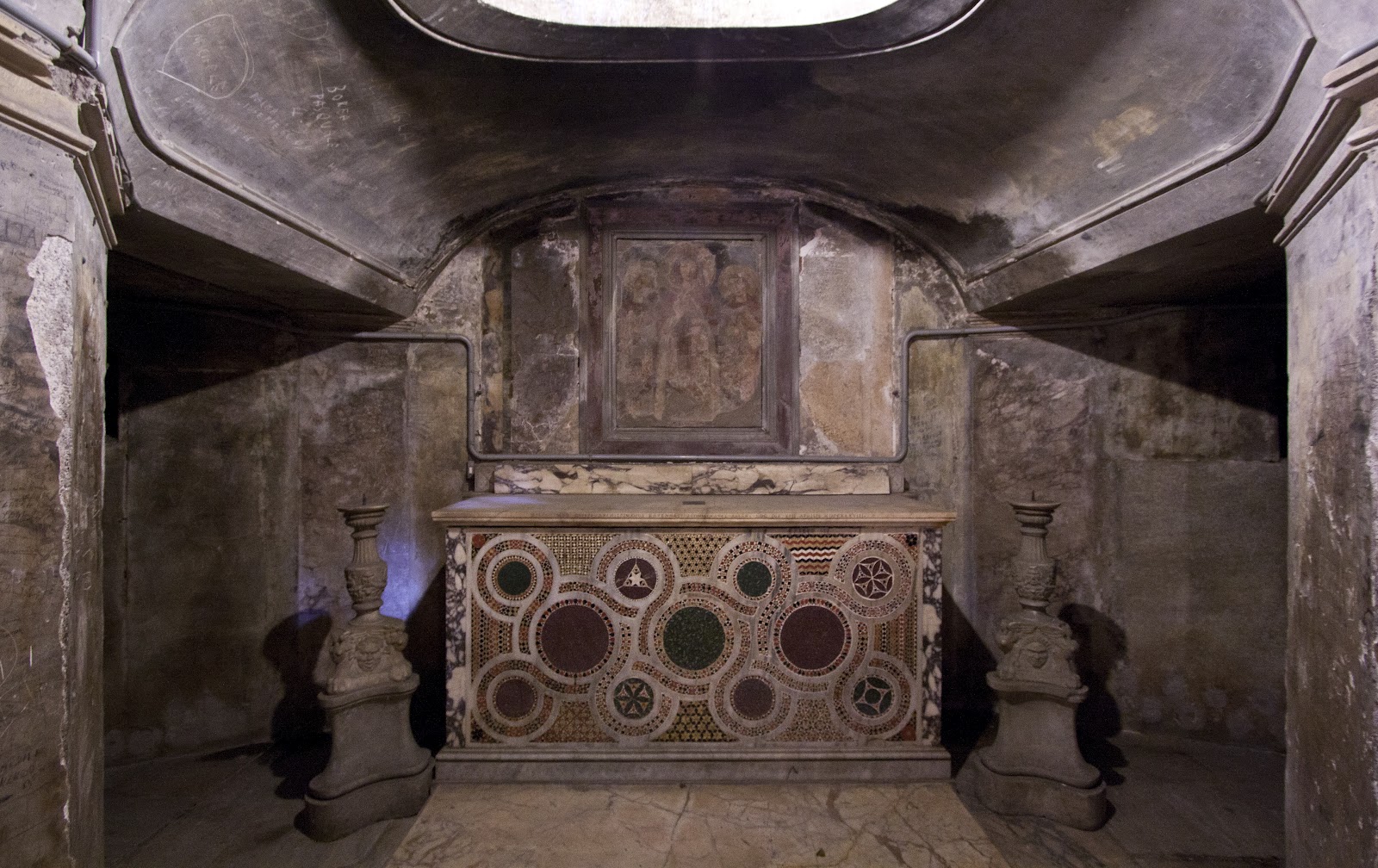
LOOK: Pregnant Madonna, 9th century, fresco, crypt of Santa Prassede, Rome

The Madonna del Parto (Our Lady of Parturition) is an iconic depiction of the Virgin Mary as pregnant, usually pointing to or cradling her belly, where God is being made flesh. The ninth-century fresco in the crypt of Santa Prassede in Rome is the earliest known depiction of a visibly pregnant Mary. I believe she is flanked by saints Praxedes (Italian Prassede) and Pudentiana (Italian Pudenziana), sisters and martyrs, since the painting is from a chamber that contains their relics. In the most famous Madonna del Parto image, however—by Piero della Francesca, ca. 1457—Mary is attended by two angels.

LISTEN: “In the Virgin’s Womb” by Kaitlyn Ferry | Performed by Sister Sinjin (Kaitlyn Ferry, Elizabeth Duffy, and Elise Erikson Barrett), on Incarnation (2016, re-released 2019)

In the Virgin’s womb He lay;
God made flesh, the mortal babe.
In her body she has held
That which heav’n cannot contain.

In the Virgin’s womb He lay;
Born to die, His flesh a grave.
In her arms she has held
He whom death could not hold down.


For each day of the first week of Advent I am publishing one art-and-song pairing as an invitation for seasonal reflection.

Advent, Day 2: Fire

LOOK: Jyoti Sahi (Indian, 1944–), Jesus Offering the Light (Arathi), 2004. Oil on canvas. Private collection, California, USA. For commentary by the artist, visit his blog.

Sahi, Jyoti_Jesus Offering the Light

LISTEN: “Within Our Darkest Night” by Jacques Berthier (Taizé community), 1991 [sheet music]

Within our darkest night
You kindle the fire that never dies away
That never dies away

Update, 1/12/21: I just came across the following quote in an Advent devotional (which arrived on order from my library after Advent!), and I instantly thought of this blog post.

Light comes pretty inexpensively and maybe even too conveniently to us. With batteries in flashlights and the cool-to-the-touch fluorescent glow of chemical lights, Christ might well say to us anew: “You are the fire of the world.” Fire is heat and combustion—fuel actively being consumed and transformed into energy. “Fire!” is a cry for attention, and a warning for anyone who is unprepared. That must be what Our Lord had in mind when he said, “You are the light of the world.” We have grown accustomed to Advent being a season of light, but let’s agree to make this Advent a season of fire. Be consumed by the energy that dwells and is growing within. Let it burn in you. Let God use fire to purify the cosmos through you and make ready the Way of the Lord.

—Thomas Hoffman, A Child in Winter: Advent, Christmas, and Epiphany with Caryll Houselander, p. 61


For each day of the first week of Advent I am publishing one art-and-song pairing as an invitation for seasonal reflection.

Advent, Day 1: Wonder

For each day of the first week of Advent I will publish one art-and-song pairing as an invitation for seasonal reflection.

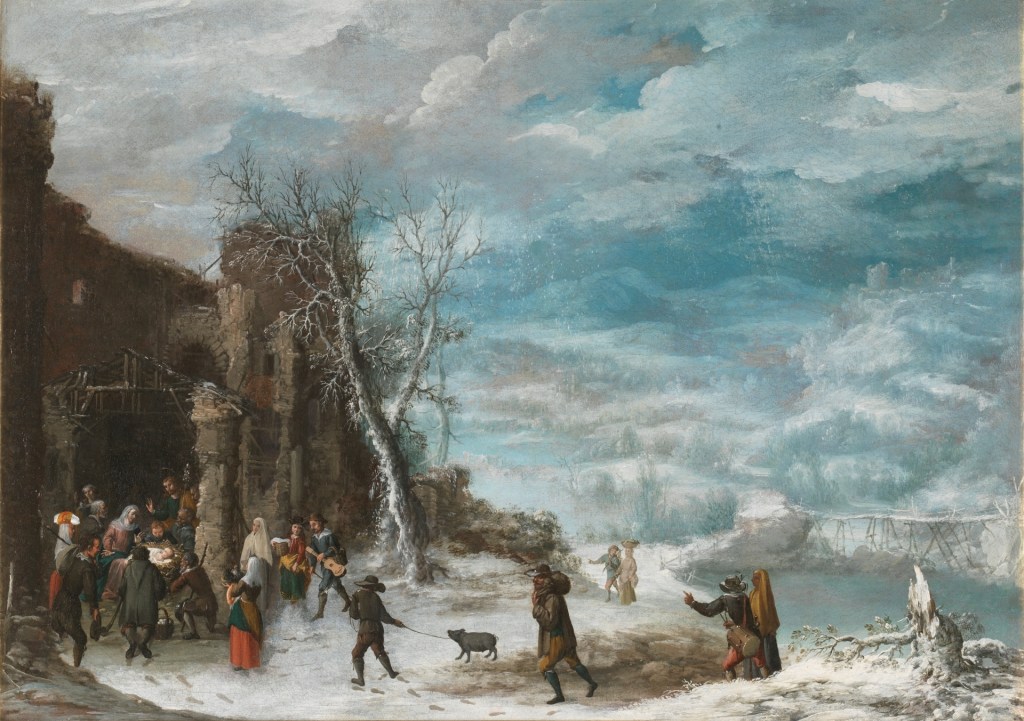
LOOK: Francisco Collantes (Spanish, 1599–1656), Winter Landscape with the Adoration of the Shepherds, 1630–50. Oil on canvas, 72.2 × 105.7 cm. Museo del Prado, Madrid. (Click on image to zoom in.)

Collantes, Francisco_Winter Landscape with the Adoration of the Shepherds

LISTEN: “Wonder (Advent)” | Words by Pedro de la Cruz | Music by Colleen Nixon | Performed by Marian Grace (Colleen Nixon and Jimmy Mitchell), on In the Bleak Midwinter, 2013

O blessed Mary and dearest Joseph
Allow me to journey with you
To Bethlehem
I am a lowly pilgrim making my way
To the center of history
The birth of Christ the Lord
With unspeakable awe and expectant wonder
I long to behold
I long to behold
I long to behold
The promised Messiah
Time will stand still forever
Divided by the entry
Of the Creator into his creation

Roundup: Advent calendar of songs, free Alvin Ailey season, Bill Murray plays Job, and more

For those readers who are new, welcome! I want to alert you to (and remind others of) the Art & Theology Advent Music Playlist. I released it last year on Spotify and have made some additions since then, including all six songs from Lo Sy Lo’s excellent album St Fleming of Advent, selections from recent releases by the Porter’s Gate’s, Andrew Bird, and Caroline Cobb, some Nina Simone and Jackson 5, a musical setting of an Emily Dickinson poem by Julie Lee and a Count of Monte Cristo quote by the Duke of Norfolk, the shape-note hymn “Bozrah,” and more. I’ve structured the list as a journey from the early promise of a Savior in God’s covenant with Abraham (Gen. 22:18), through Isaiah’s prophecies about a great light dawning and a shoot springing up out of a stump and valleys being lifted and swords being beaten into plowshares, to the angel’s announcement to Mary and her subsequent Magnificat and pregnant waiting, which I transition into the church’s waiting for Christ’s second coming, with warnings to keep our lamps trimmed and burning, to stay awake, to watch and pray. Sprinkled throughout are groanings from God’s people as well as expressions of joyful expectancy.

A Christmas playlist will be forthcoming in just two weeks.

+++

Bard and Ceilidh Advent Calendar: This Advent, multi-instrumentalist and melodist Mary Vanhoozer (aka Bard and Ceilidh) is offering a digital “Advent calendar” with twenty-four traditional, Celtic-infused Christmas carols played on various folk instruments. For $20, you will receive a code that unlocks a new song daily for download. Here are two of Vanhoozer’s previous releases, to give you a sense of the style she plays in. The first is her own arrangement of “I Saw Three Ships” with “Branle des Chevaux” (The Horse’s Brawl). The second, “When Icicles Hang by the Wall,” is an original setting of the winter hymn from Shakespeare’s Love’s Labours Lost, which celebrates the season of biting cold and red, runny noses and sloshy roads and singing owls and simmering crabapples and interior warmth.

+++

“Veni Emmanuel: A brief meditation on the meaning of Advent” by John B. Graeber: This short piece published last year in Curator is a great introduction to the liturgical season we’re entering into on November 29. It begins, “Advent is the hope of redemption, sung in minor key. It is the promise of resurrection, and the sorrow of that hope not yet fulfilled. In this the midnight of the liturgical year, these few weeks before we celebrate the birth of Christ, we confront a world not yet reborn and embody what Saint Paul calls the ‘hope against hope,’ a hope that endures when the world says it should not. A hope that looks back to the birth of our savior, and forward to His coming again, when all will be made new.”

+++

VIRTUAL DANCE PERFORMANCES: On December 2, Alvin Ailey American Dance Theater is launching its first-ever virtual winter season—and, in the spirit of making dance accessible to all, it’s free! The season will feature the world premiere of the dance films A Jam Session for Troubling Times (choreographed by Jamar Roberts) and Testament (Matthew Rushing, Clifton Brown, and Yusha-Marie Sorzano), plus sixtieth anniversary tributes to Alvin Ailey’s Revelations, a classic that “explores the places of deepest grief and holiest joy in the soul . . . using African American spirituals, song-sermons, gospel songs, and holy blues.” The season will run through December 31. Learn more here.

+++

DRAMATIC READING AND DISCUSSION: The Book of Job: On Sunday, December 6, 4–6 p.m. ET, Theater of War Productions will be hosting a free online event where actors, including Bill Murray, will be performing Stephen Mitchell’s translation of the book of Job, adapted and directed by Bryan Doerries. “The Book of Job is an ancient Hebrew poem that timelessly explores how humans behave when faced with disaster, pestilence and injustice,” Doerries writes, and this dramatic reading aims to serve “as a catalyst for powerful, guided conversations about the impact of the COVID-19 pandemic upon individuals, families, and communities.” After the reading, four community panelists will kick off the discussion with their gut responses to what resonated with them, and then discussion will open up to the audience. RSVP here.

“Theater of War Productions works with leading film, theater, and television actors to present dramatic readings of seminal plays—from classical Greek tragedies to modern and contemporary works—followed by town hall-style discussions designed to confront social issues by drawing out raw and personal reactions to themes highlighted in the plays. The guided discussions underscore how the plays resonate with contemporary audiences and invite audience members to share their perspectives and experiences, and, helping to break down stigmas, foster empathy, compassion, and a deeper understanding of complex issues.” Their many past projects include A Streetcar Named Desire (followed by a discussion on domestic violence), scenes from King Lear (the challenges of aging and dementia), and Sophocles’s Ajax (the invisible wounds of war).

Beginning in May, the company started presenting their projects online. Because they want to cultivate “a dynamic space to participate in an ephemeral experience, in which risks can be taken, interpretations shared, and truths told,” the projects are not available afterward for on-demand views. To get an idea of the format they follow and some of the work they’ve done, see the Theater of War trailer below.

+++

INTERVIEW: “Grief Is Hard to Look At: An Interview with Wayne Brezinka” by Brooke West, The Rabbit Room: Wayne Brezinka, a Nashville-based mixed media artist specializing in multidimensional portraits, recently launched a Kickstarter to crowdfund 2020 Disrupted: A Re-Assembled Life. (I just missed the deadline, but it turns out the project was successfully funded!)

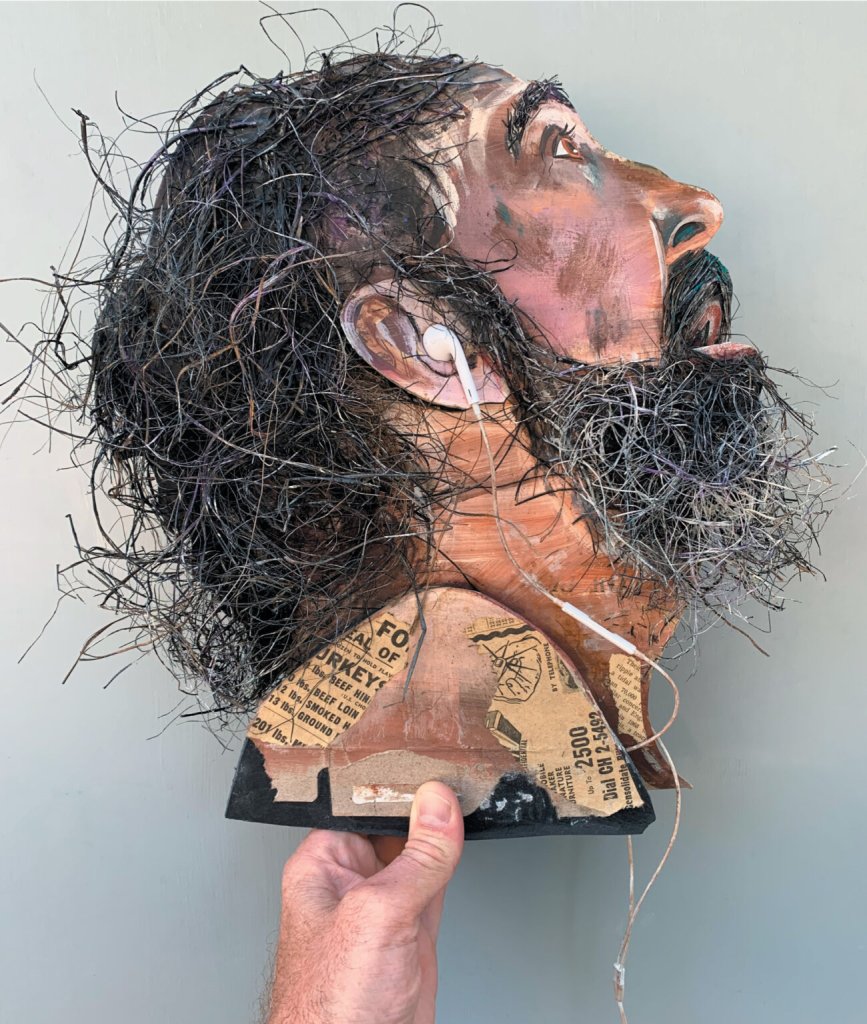
As we sit in the year 2020 and struggle to remember what normal even feels like, I’ve been wondering about people’s emotions and how I might capture the painful realities of human existence we all seem to be feeling this year. In this new work, I will explore the pain and anxiety of massive disruption and how we are changed by it. I’ve been thinking about the biblical character Job from the land of Uz. What might he look like, plucked out of the ancient text, and plopped into modern-day? This is my attempt to bring a re-imagined 21st century Job to life in a way that encapsulates not only his experience, but also our own. I’ll be using a combination of found and repurposed objects, multi-media visuals, and incorporating input from the public on multiple panels that measure 8 feet by 5 feet—my biggest project to date.

Brezinka, Wayne_Job
Early working prototype for 2020 Disrupted: A Re-Assembled Life by Wayne Brezinka

Next year Brezinka will be taking the completed art on tour across the country in a glass box truck. “The plan is to park at notable cathedrals or churches and community centers in each city. I want to give those who funded this project and the general public an opportunity to pause, interact with the art, and reflect on the last year—the disruptions, the beauty, and the changes it all brings.” He says the art is an invitation for people to feel their sorrow and their grief. Read the interview to find out more about his process and his hopes for the project.

+++

NEW SONG RELEASE: “O Love That Casts Out Fear”: This is my favorite track from the new sacred chamber pop EP by Bobby Krier, Jon Green, and friends, Cast Out All Our Fears. The hymn text was written by Horatius Bonar in 1861, and the music is by Bobby Krier and Justin Ruddy [previously], who collaborated often as musicians at Citylife Presbyterian Church in Boston. (Their retuned version premiered on the 2013 album Castle Island Hymns; they have since moved on from Citylife.) This rendition is sung by Molly Parden.