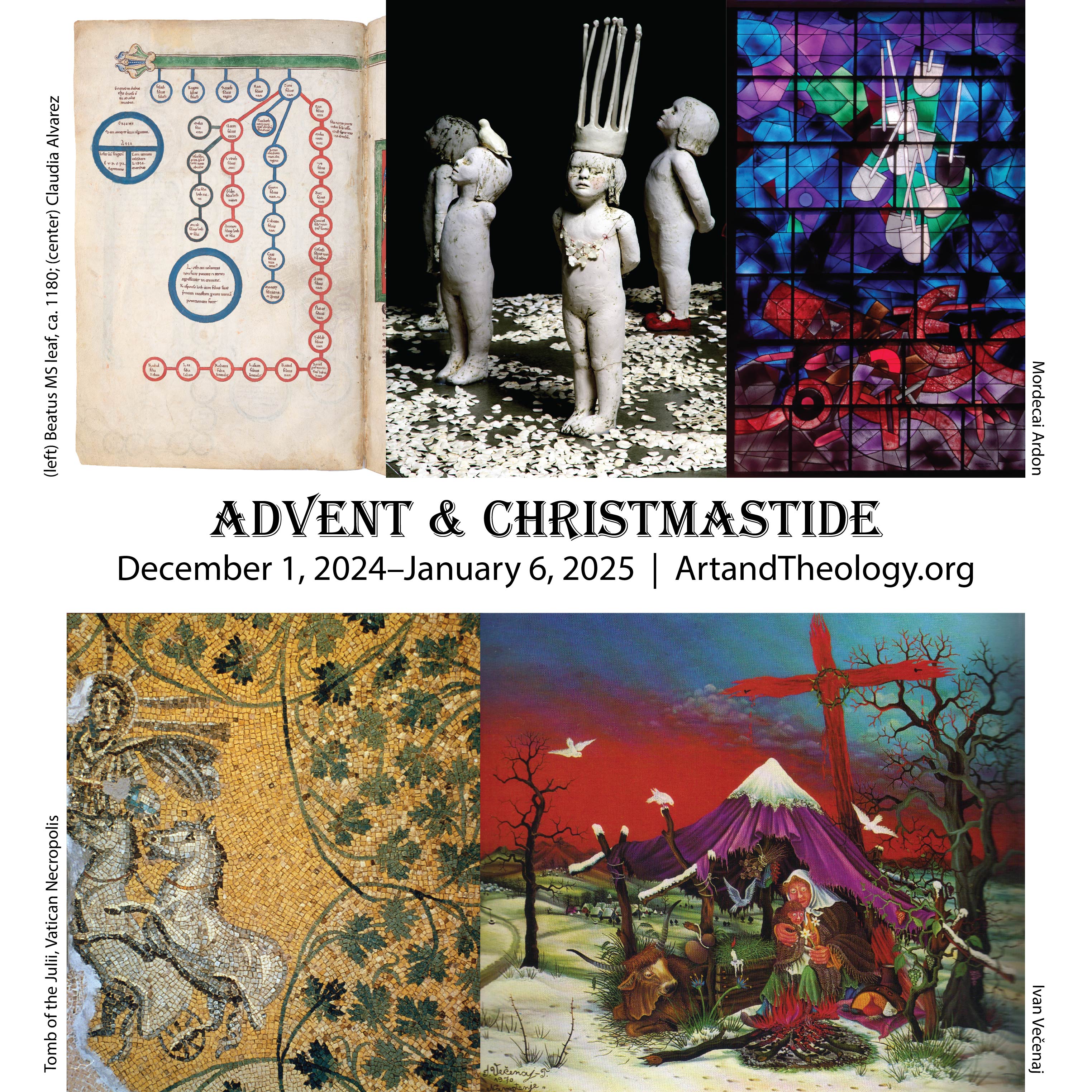
Advent begins a week from Sunday, on December 1—a roughly four-week season leading up to Christmas, during which we prepare our hearts to receive the coming Christ. Here are a few resources.
Daily posts at Art & Theology: First I want to let you know that, as I’ve done for the past three years, I will be posting daily here on the Art & Theology blog for the duration of Advent and Christmastide, each day selecting a visual artwork and a piece of music that I feel dialogue fruitfully with each other about a seasonal theme. Many Christians like to read through a devotional book during Advent, and while I do appreciate good devotional writing, I sometimes grow bored of reading prose reflections on the Christmas story. For me, I’ve found that engaging the arts frequently opens up wonder and new angles of inquiry and deepens my longing and gratitude for Christ. Songs, art, and other creative expressions help me slow down and put me in a contemplative frame of mind, and that’s why I use them as companions throughout the liturgical year.
Though the United States (my country) is heavily represented in the selections, I’ve tried to be intentional about featuring works from a variety of geographic locales. So you’ll see contributions from Mexico, Peru, The Gambia, Kenya, Germany, Turkey, Croatia, Japan, India, the Philippines, and more—a reflection of the global nature of Christianity.
Sometimes I will provide some written context or explication for the song or artwork or relevant biographical details for its maker, but other times I will let the works stand entirely on their own.
I’m really excited to unroll this year’s series! Advent starts December 1, but tune in a day early on November 30 for a “prelude” post to kick things off. The final post in the series will be on Epiphany on January 6. You can view the archives from previous years here:
In addition to the daily posts in the music-art format, I have a few poems lined up and will continue doing periodic link roundups to direct you to other great Advent and Christmas content around the web.
+++
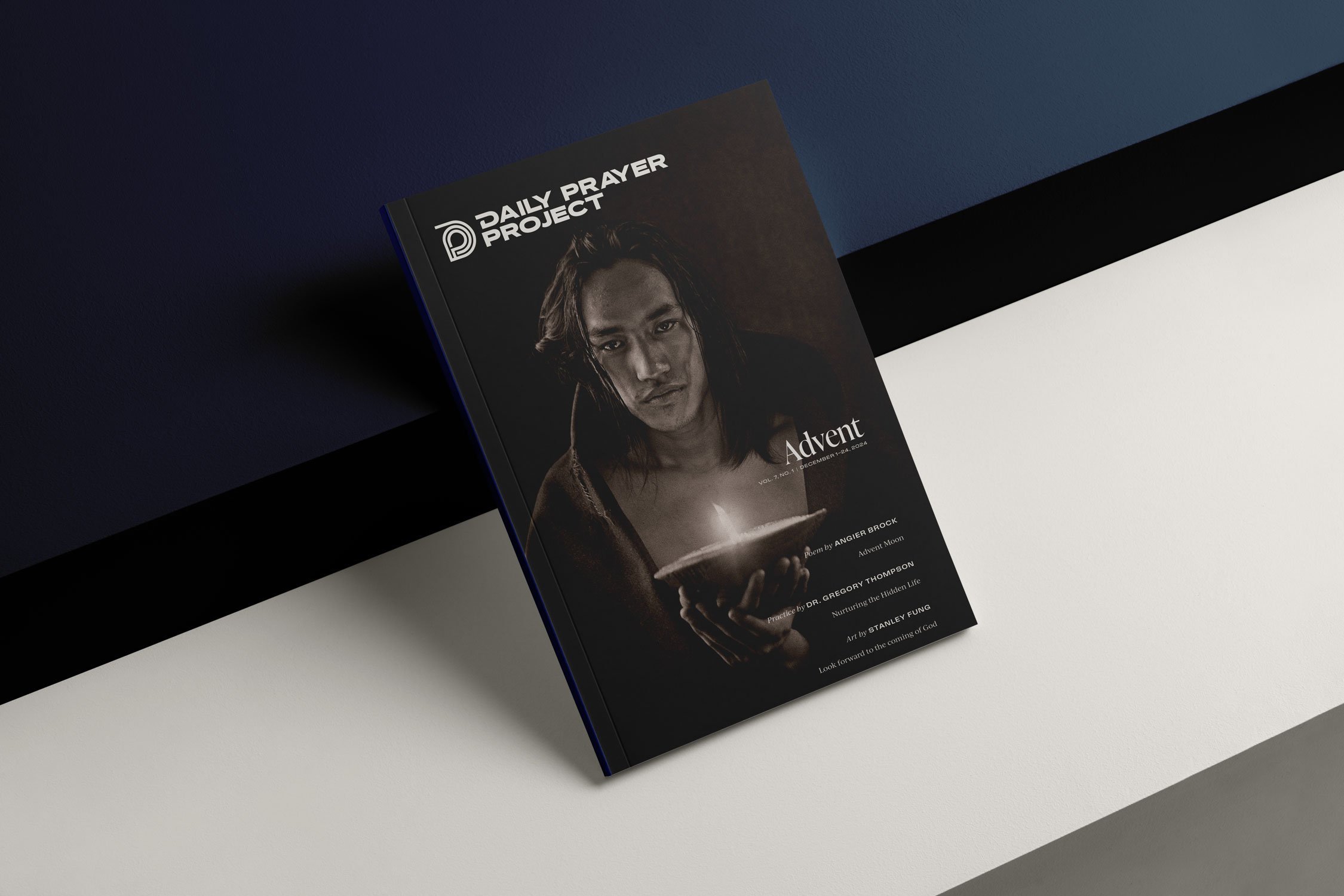
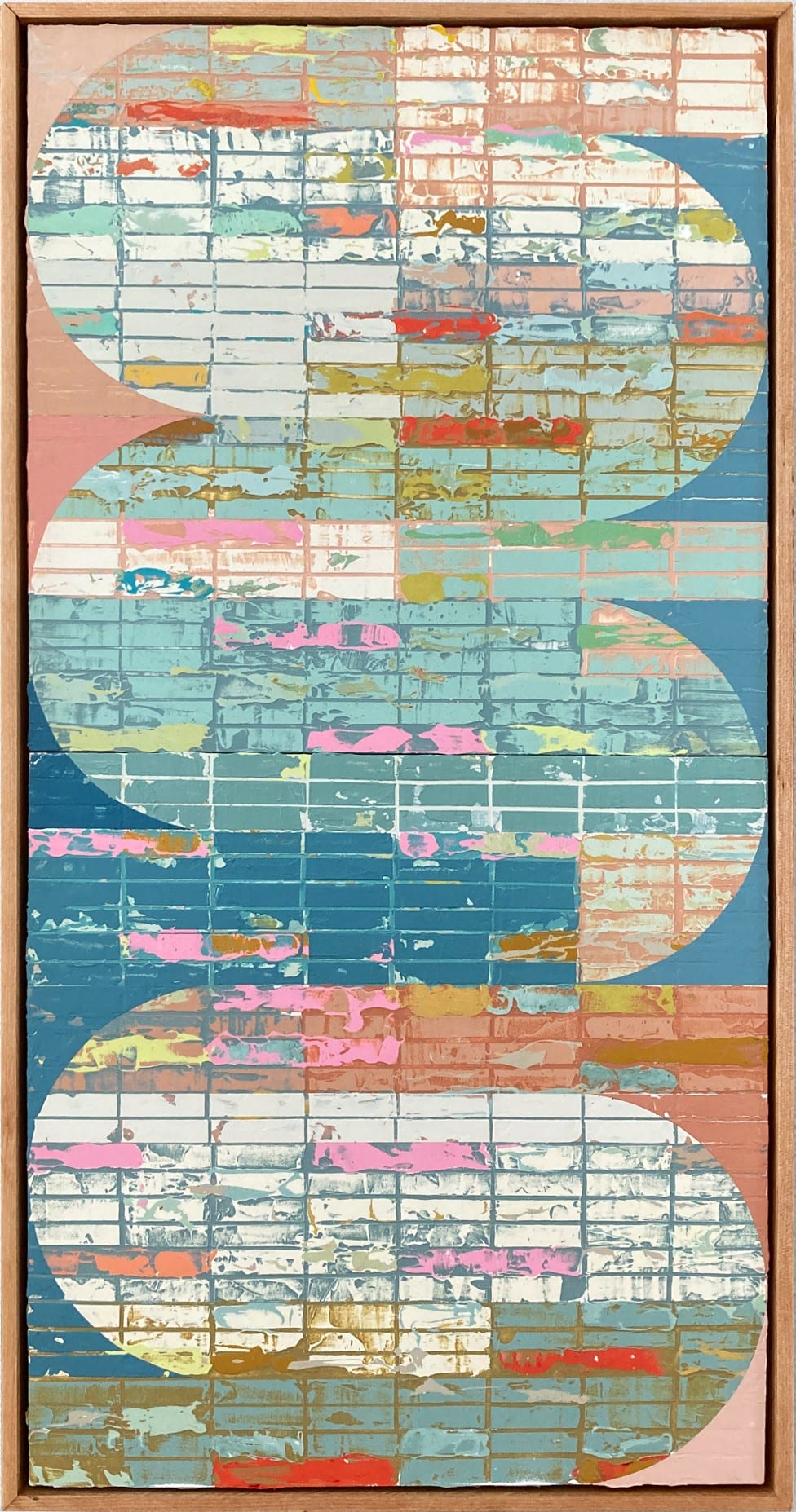
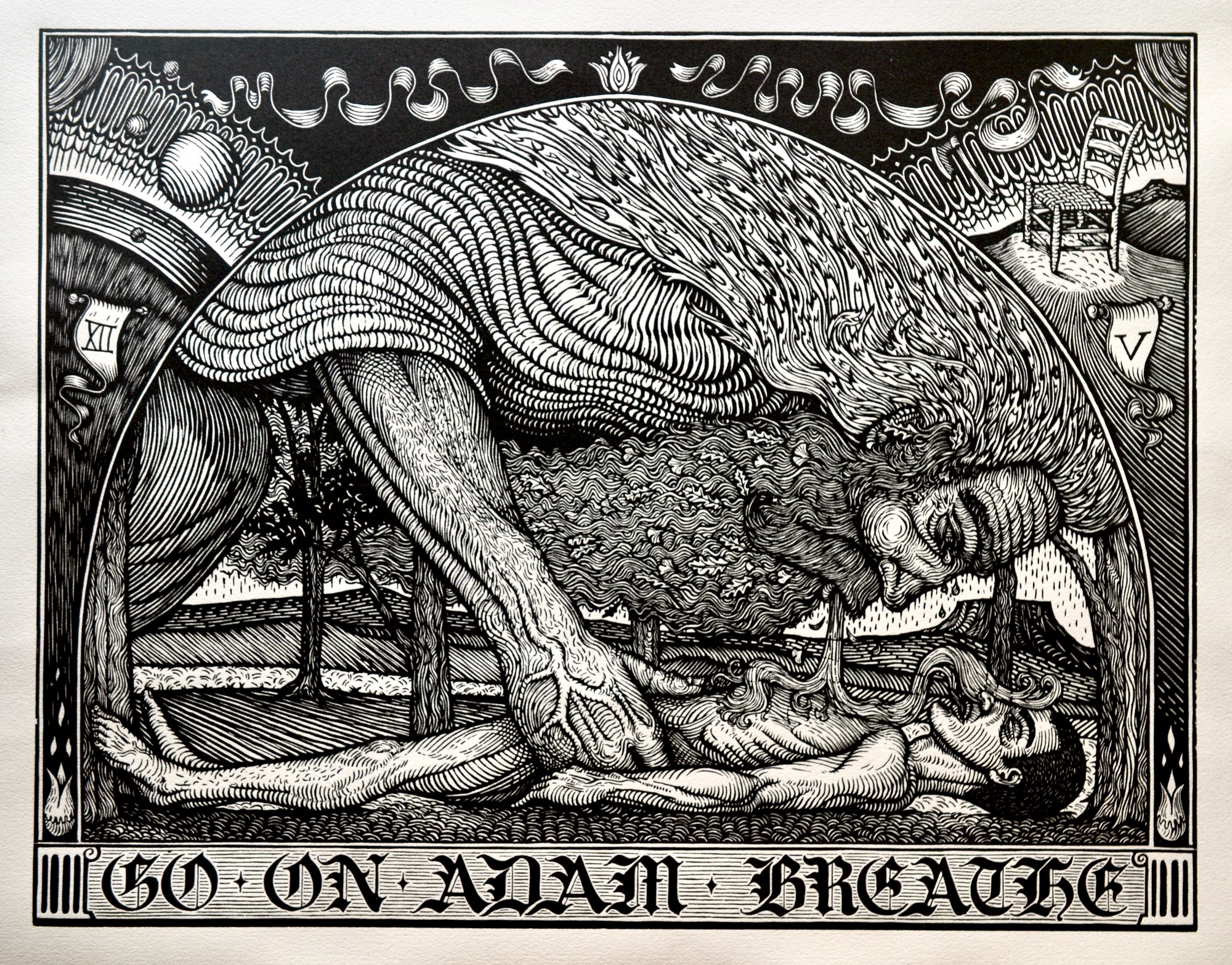
THE DAILY PRAYER PROJECT: Advent 2024: The Daily Prayer Project, a liturgical publishing nonprofit I work for as curator and copyeditor, is entering its seventh year, and our latest Advent edition is out! The cover art is Look forward to the coming of God by Stanley Fung, a pastor and photographer from Taipei; it’s one of three artworks that receive dedicated attention inside.
In addition to art, the magazine includes a poem, four song sheets, two mini-essays (one on the spiritual practice of encouragement, the other on nurturing the hidden life of Christ within us), and fourteen distinct liturgies, one for each morning and evening of the week (plus a different scripture reading for every day of the season). Here is one of the featured prayers in this edition, from the Christian Council of Nigeria:
Grant us, O God, a vision of our land that is as beautiful as it could be: a land of justice where none shall prey on others; a land of plenty where poverty shall cease to fester; a land of kinship where success shall be founded on service; a land of peace where order shall rest not on force but on the love of everyone for their community. Give us grace to put this vision into practice through Jesus Christ our Lord.
Our Christmas edition will also be ready for purchase soon. It covers December 25, 2024, through March 4, 2025.
+++
VIDEO INTERVIEW: “Advent: The Season of Hope” with Tish Harrison Warren, Trinity Forum, December 1, 2023: In Celebration of Discipline, Richard J. Foster writes, “In contemporary society our Adversary (the devil) majors in three things: noise, hurry, and crowds. If he can keep us engaged in ‘muchness’ and ‘manyness,’ he will rest satisfied.” The pull toward those things is particularly strong in December. But Advent calls us, counterculturally, to quietness, slowness, and moments of solitude.
Here Tish Harrison Warren, an Anglican priest and the author of Advent: The Season of Hope from IVP’s Fullness of Time series, discusses the character and history of Advent, the three traditional practices associated with it, and how to wait well. She also encourages us to ask ourselves: Where do we need Christ to come in the next year? Where do we need healing? Where do we need to find hope in the next season of our life?
The Q&A starts at 38:00 and includes questions such as: How might the theme of judgment shape our observance of Advent? How do we practice Advent during a time of jollity and indulgence and parties without being perceived as a Scrooge?
+++
SONG: “Come to Us, Emmanuel” by Ordinary Time: Made up of Peter La Grand, Jill McFadden, and Ben Keyes, Ordinary Time is a trio whose music blends elements of folk, Americana, and traditional hymnody. This original song is from their 2007 album In the Town of David, and the music video is shot around Vancouver, where the three band members met when they were students at Regent College.
** This is one of seven songs by Ordinary Time featured on Art & Theology’s Advent Playlist. Join 2,859 others in following the playlist on Spotify, which offers over twenty-one hours of music for the season.
Check out, too, Ordinary Time’s newest album, released Friday, titled You Are My Hiding Place. Favorite track: “All Shall Be Amen Alleluia.”
+++
ARTICLE: “My Favorite Advent Wreath Supplies” by Ashley Tumlin Wallace:The Liturgical Home is one of my favorite blogs to follow. It’s run by Ashley Tumlin Wallace, a pastor’s wife and mom of four from Florida who collects recipes and traditions from around the world and compiles them into liturgical living guidebooks to help families celebrate the seasons of the church in their homes. In this blog post she shares how to make your own Advent wreath, collecting greenery from outside and purchasing a few basic items.
Here’s her Instagram video showing you how to put it all together:
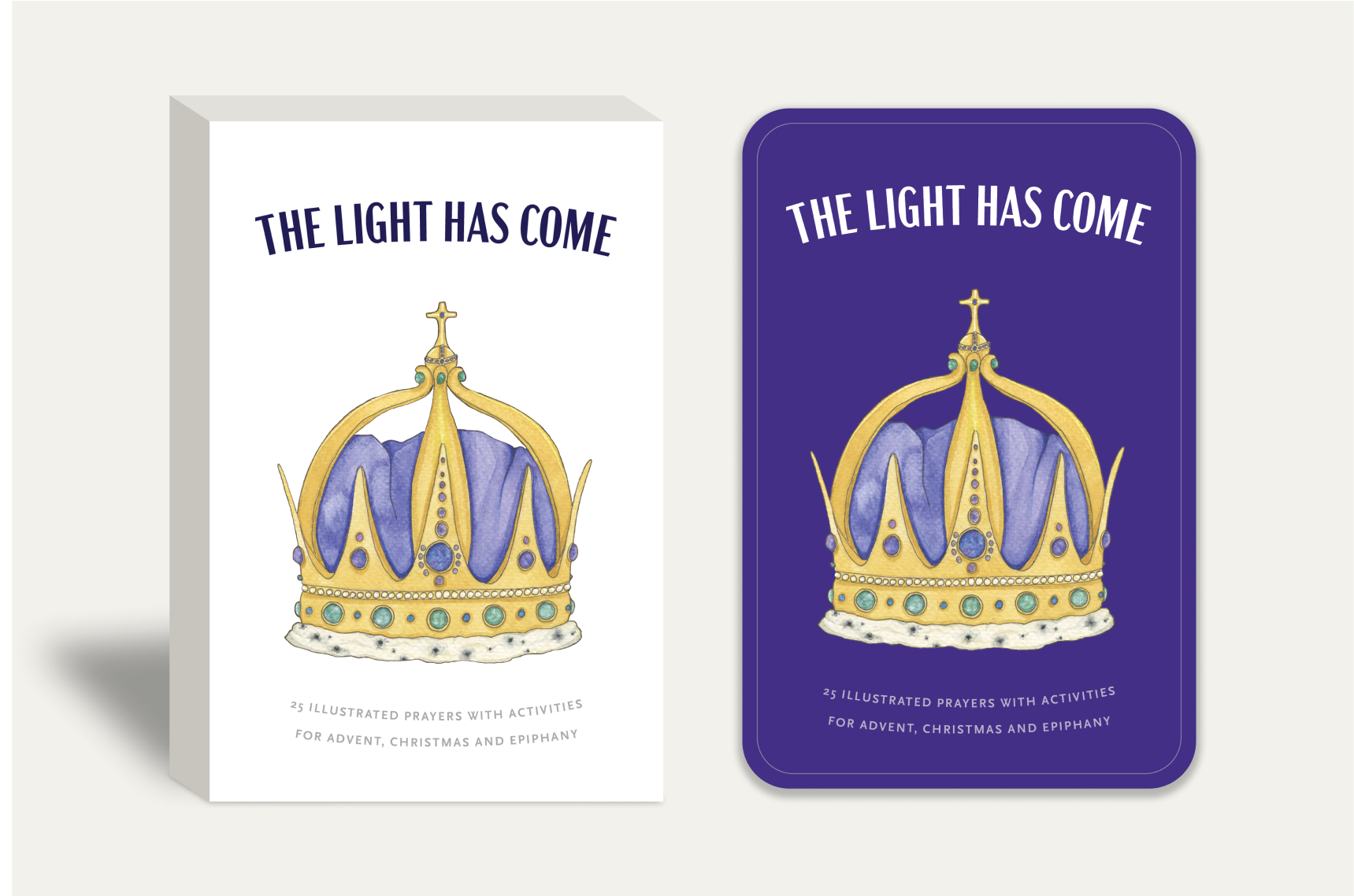
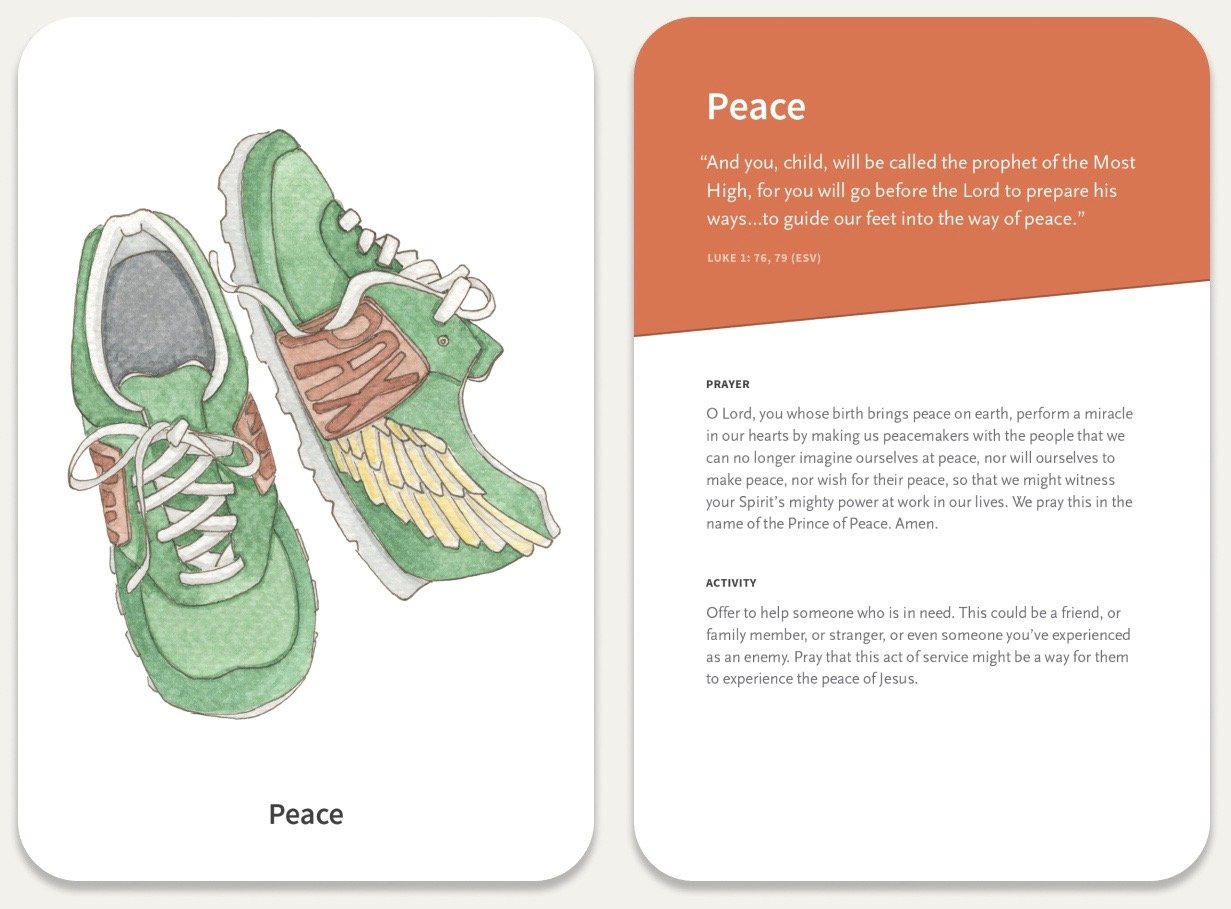
CARD PACK: The Light Has Come: 25 Illustrated Prayers with Activities for Advent, Christmas, and Epiphany by W. David O. Taylor and Phaedra Jean Taylor: Each of the twenty-five, 4 × 6 prayer cards in this pack includes a watercolor illustration by Phaedra Taylor, and on the other side a Bible verse, a collect prayer by David Taylor, and a suggested activity (e.g., stargazing, baking or buying a treat for a friend) or prayer prompt. Included are familiar themes, such as Hope, Joy, Shepherds, and Light, but also less familiar ones, like Feasting, Sorrow, Fear, and the Fantastical. There are also cards for Saint Nicholas Day, New Year’s Eve, New Year’s Day, and Epiphany. They are all held together in a cardstock sleeve.
The cards would work well in personal or family devotions, in a small group, or with church staff. “Our hope is that this box of cards will invite you to stop, look and listen afresh to the nativity narratives and to discover a story that truly heals and restores this very broken and beloved world of ours,” David writes in a blog post introducing the product.
You can order reproductions of the watercolors from this collection and others at Phaedra’s online shop.
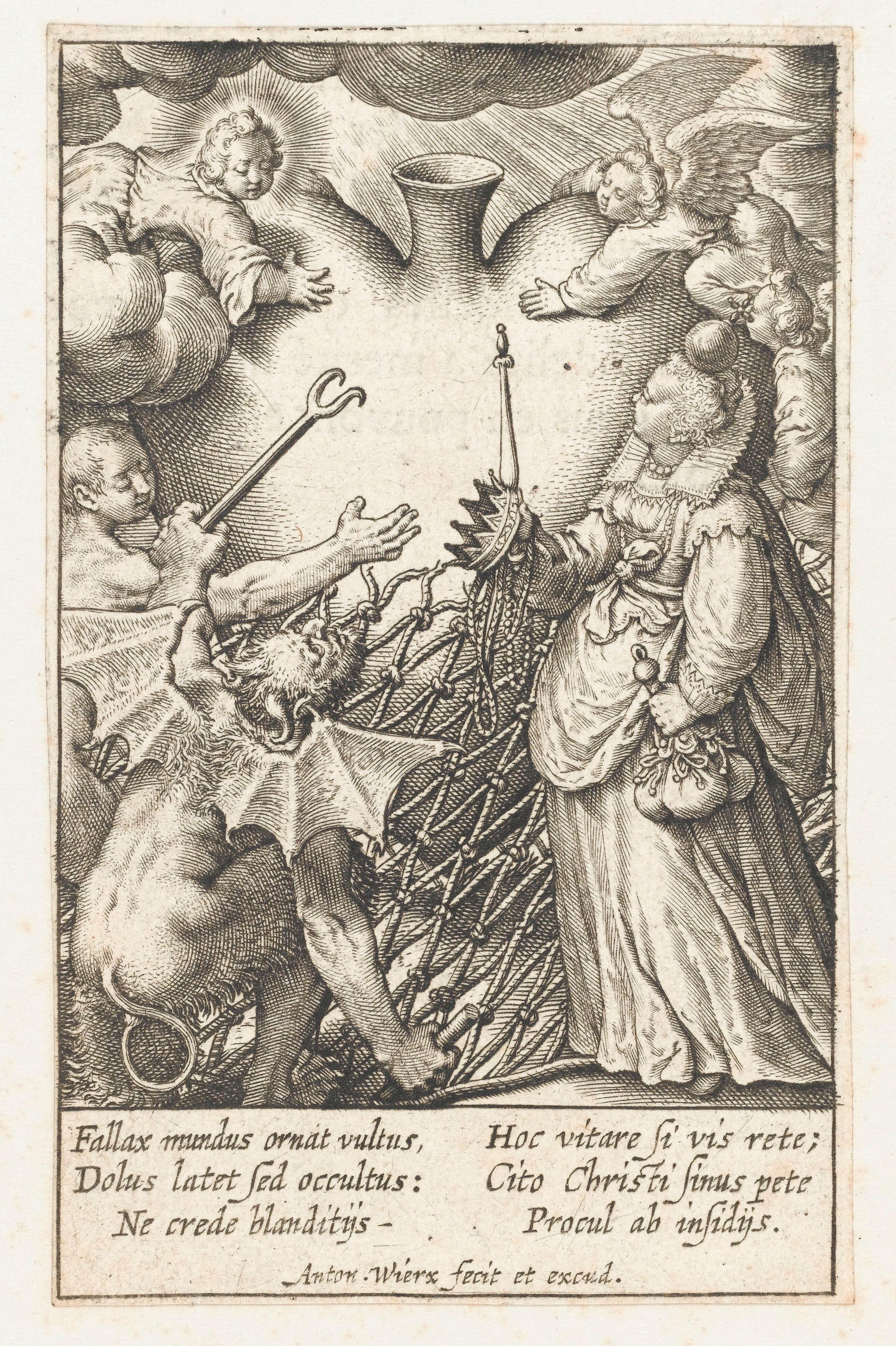
In Antwerp sometime around 1600, the Flemish printmaker Anton Wierix II (whose name is alternatively rendered as Antonie, Anthony, Antoine, or Antonius) engraved a series of seventeen* cardiomorphic emblems called the Cor Jesu amanti sacrum (The Heart Consecrated to the Loving Jesus), which portray the human heart as the dwelling-place, schoolroom, and throne of Christ. Commissioned by the Jesuit order, the series shows the Christ child cutting through the net that has ensnared the heart, knocking at the heart’s door, shining a light inside, sweeping out the monsters and vices, purging it with his blood, establishing his reign therein, teaching it, adorning it, making music in it, defending it from hostile invasion, piercing it with the arrows of love, and setting it aflame with desire.
These prints circulated as loose sheets and inside books, and various artists copied Wierix’s designs throughout the seventeenth century. The most famous book that uses the Cor Jesus images is Le coeur dévot, throsne royal de Iesus, Pacifique Salomon (The Devout Heart, Royal Throne of Jesus, Pacific Salomon) by Etienne Luzvic, SJ, originally written for a religious community, perhaps one devoted to the Sacred Heart. The book’s initial publication—in Paris in 1626—was without illustrations, but an enlarged edition was reissued in Douai and Antwerp the following year, containing twenty Cor Jesu engravings adapted by Martin Baes from Wierix’s originals, as well as additional meditations called “Incentives” by Fr. Etienne Binet, SJ.
Also in 1627, Le coeur dévot was translated into Latin, which became the basis for a number of vernacular translations throughout Europe, including an English version translated by Henry Hawkins in 1634, titled The Devout Hart, or Royal Throne of the Pacifical Salomon. This English edition includes a hymn by Hawkins for each emblem.
The odd-sounding subtitle of the book is a reference to King Solomon of the Old Testament, whom Luzvic apparently read a type of Christ in his majesty. “Pacifical” is an archaic word meaning conciliatory, peaceable.
Below I reproduce Wierix’s seventeen emblems, a loose-leaf edition held by the Wellcome Collection in London; you can click on the image to be taken to its object page.
Each engraving contains at the bottom a rhyming Latin verse in two stanzas of three lines each, interpreting the picture. The English translations provided below are sourced from the Wellcome Collection website, unless otherwise noted.
The engravings are not numbered, and their order was not fixed; they show up in variable sequences in different books. I’ve ordered them as they appear in Hawkins’s The Devout Hart. Scholars and editors have given them different descriptive titles over the years. I use Hawkins’s titles, only I’ve modernized the spellings. I’ve also provided a few quotes from Hawkins’s translation of Luzvic’s meditational texts that accompany the images in The Devout Hart, with page numbers provided in parentheses.
1. The world, the flesh, and the devil assail the heart, but Jesus saves it for himself
Anton Wierix II (Flemish, ca. 1555–1604), The world, the flesh, and the devil assail the heart, but Jesus saves it for himself, ca. 1600. Engraving, with etching, image 7.7 × 5.6 cm.
Fallax mundus ornat vultus, dolus latet sed occultus: ne crede blanditiis.
Hoc vitare si vis rete; cito Christi sinus pete procul ab insidiis.
(The deceptive world makes up its face, yet trickery lurks concealed. Do not trust in blandishments if you want to avoid this net! Quickly seek the breast of Christ, far from ambushes.)
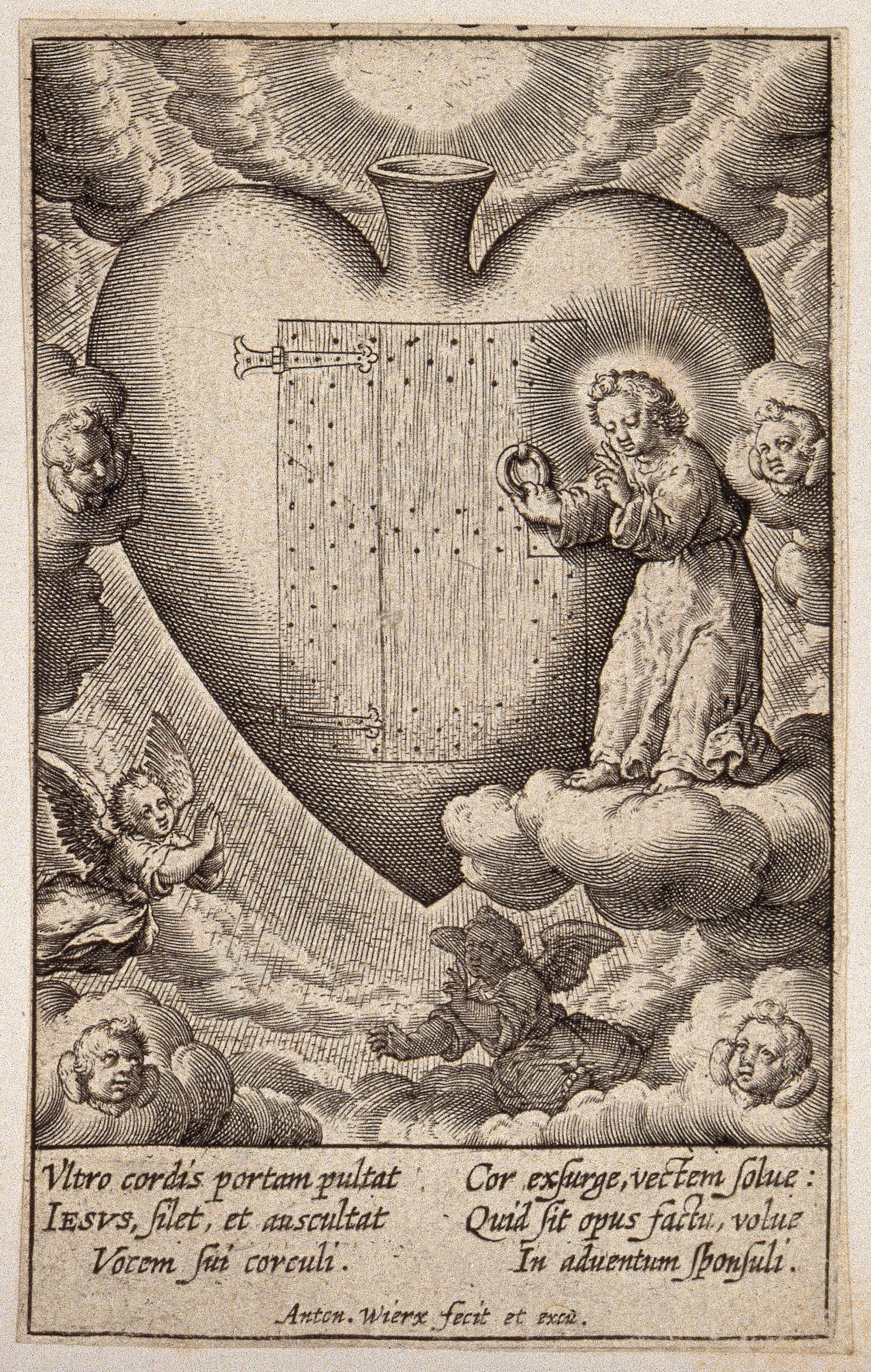
2. The most amorous Jesus knocks at the door of the heart
Anton Wierix II (Flemish, ca. 1555–1604), The most amorous Jesus knocks at the door of the heart, ca. 1600. Engraving, image 7.8 × 5.5 cm.
Ultro cordis portam pultat Iesus, silet et auscultate vocem sui corculi.
Cor exsurge, vectem solve: Quid sit opus factu, volve in adventum sponsuli.
(Outside the door of the heart Jesus knocks, is silent, and listens for the voice of his little heart. Heart, rise up! throw back the bolt! think what needs to be done at the arrival of the little betrothed one!)
This image is rooted in Revelation 3:20: “Behold, I stand at the door, and knock: if any man hear my voice, and open the door, I will come in to him . . .” (KJV).
If you cannot hear the knocking, Etienne Luzvic encourages you to consider,
Is it the noise perhaps of the guests thou hast admitted in already, which so tacked up, and stupefies thine ears, as thou canst not hear thy beloved’s voice? Oh guests, or haunting ghosts, I may call you, rather! Oh sinister affections! Oh inordinate appetites! What a tumult have you made here? (49)
He further exhorts:
Hasten, therefore, O fairest of all beauties; what? Sleepest thou yet? Shake off this sluggishness. Is there a mutiny at home, then quiet the tumults, command silence, bid the door be set open. And if thy spouse now wearied with thy demurs should chance to divert from thee, and go his ways, follow him at the heels with cries, and prayers, and tiring him outright, urge him hard, that he would deign to return again to his sanctuary. (50)
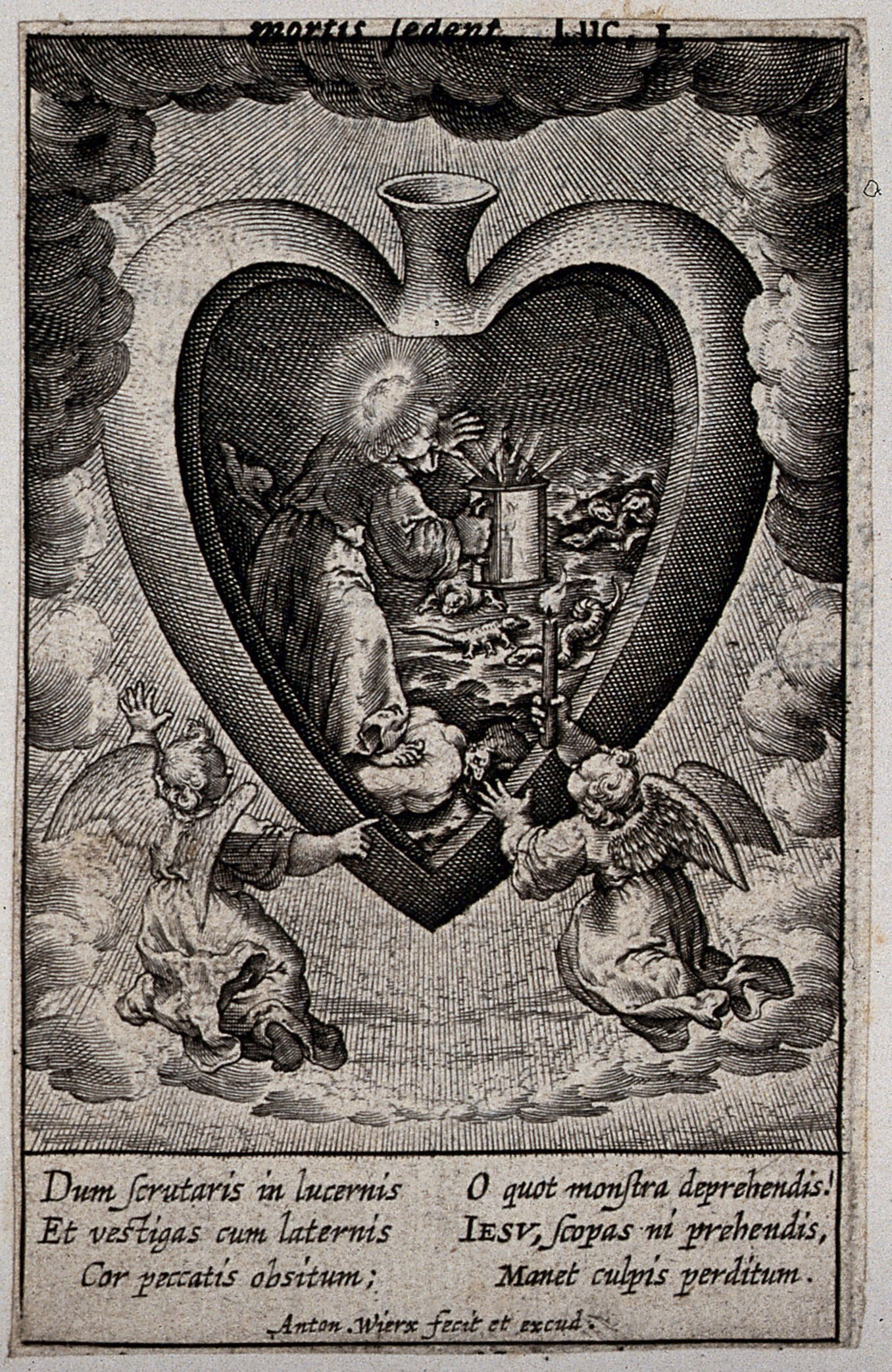
3. Jesus searcheth out the monsters lurking in the dark corners of the heart
Anton Wierix II (Flemish, ca. 1555–1604), Jesus searcheth out the monsters lurking in the dark corners of the heart, ca. 1600. Engraving, image 7.8 × 5.7 cm.
Dum scrutaris in lucernis et vestigas cum laternis cor peccatis obsitum;
o quot monstra deprehendis! Iesus, scopas ni prehendis, manet culpis perditum.
(While you search among the lights and track the heart besieged by sins, oh how many monsters do you find! Jesus, if you do not find a broom, [the heart] remains lost in wrongs.)
From Luzvic:
So long as Jesus is absent from my heart. Ah me! what monsters? what sordidies? what Gorgons? what wicked fiends? what hells are centered there?
When Jesus enters into the heart, and therein pours his light, good God? what foul, what horrible prodigies of vices the mind discovers there which the eyes had never yet detected? I say while Jesus puts forth his rays, what bestial manners? what perfidiousness? what blots of an ungrateful mind? what heinous crimes are represented in this detestable heart?
At these portents the very angels tremble. Yet go thou on, my most sweet Jesus: illuminate the darksome corners of the soul; cleanse this foul, infamous stable. Amid this Cimmerian darkness, with glimpse of thy light bewray [reveal] me to myself that . . . at length [I] may fly to thee, love nothing else but thee. Oh the only Darling of my soul! O only love of my heart, my little Jesus! (60–61)
Oh how I tremble at it, to see how many snakes there are! What spiders, what scorpions, and other such like plagues . . . (65)
Consider, then, how powerfully Jesus, as soon as admitted to enter into the heart, expels and banisheth all sins from the secretes nooks thereof. (68)
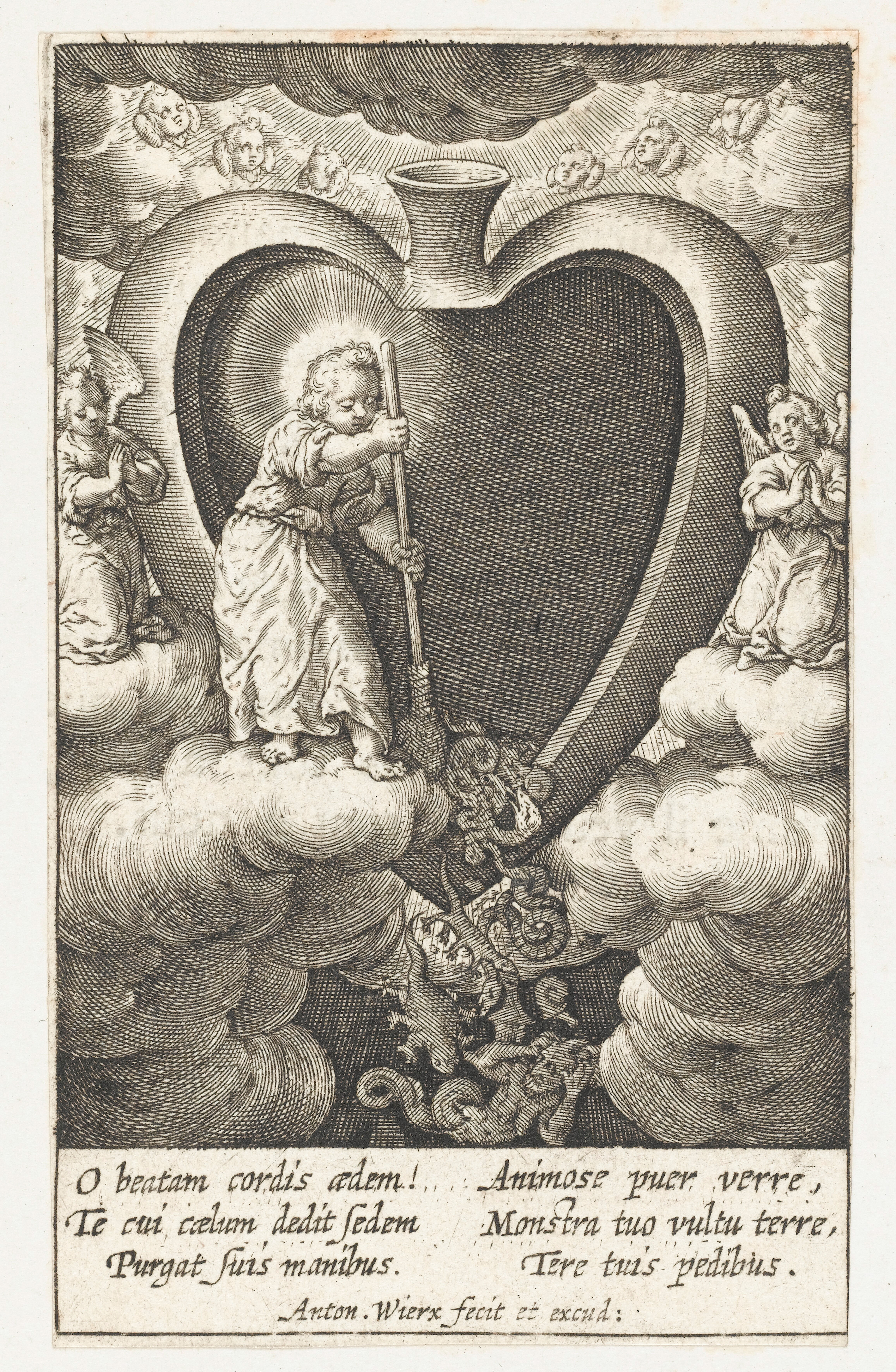
4. Jesus sweeps the dust of sins from the heart
Anton Wierix II (Flemish, ca. 1555–1604), Jesus sweeps the dust of sins from the heart, ca. 1600. Engraving, 7.8 × 5.6 cm.
O beatam cordis aedem! Te cui caelum dedit sedem purgat suis manibus.
Animose puer verre, monstra tuo vultu terre, tere tuis pedibus.
(O blessed temple of the heart! Let him to whom heaven has given his abode clean you with his own hands. Spirited boy, sweep away! Frighten the monsters with your look! Crush them under your feet!)
Once Jesus locates the toads, snakes, and other slimy creatures (symbols of sin) hiding in the heart’s cave, he sweeps them out. Luzvic welcomes this purging:
Go on, my little Jesus, and oh! expel, tread, crush under thy holy feet this poisonous virulence of serpents, which with their venom intoxicate and kill my soul. Destroy them quite, and so frame me a heart wholly according to thy heart. (73–74)
He asks Jesus that, once he banishes the monsters, he keep them out for good:
Thou, most Blessed Darling of my heart, fortify and prevent all the ways and passages of the enemy, and place strong guards at the entrance and gates thereof, lest happily they steal or rush in anywhere . . . (77)
But he also owns his own responsibility in keeping them out:
Oh what dullness of mind is this, what stupidity of heart, that we should so long suffer these monsters to rest and abide with us, as if they were some friends and familiars of ours! Oh truly admirable goodness of God! who hath attended and expected us so long to return to the duty and office of good men; and now at last most powerfully hath brought us into liberty, wherefore we will steadfastly purpose, and determine hereafter, to die rather than once to afford any place in our heart to sins. (82)
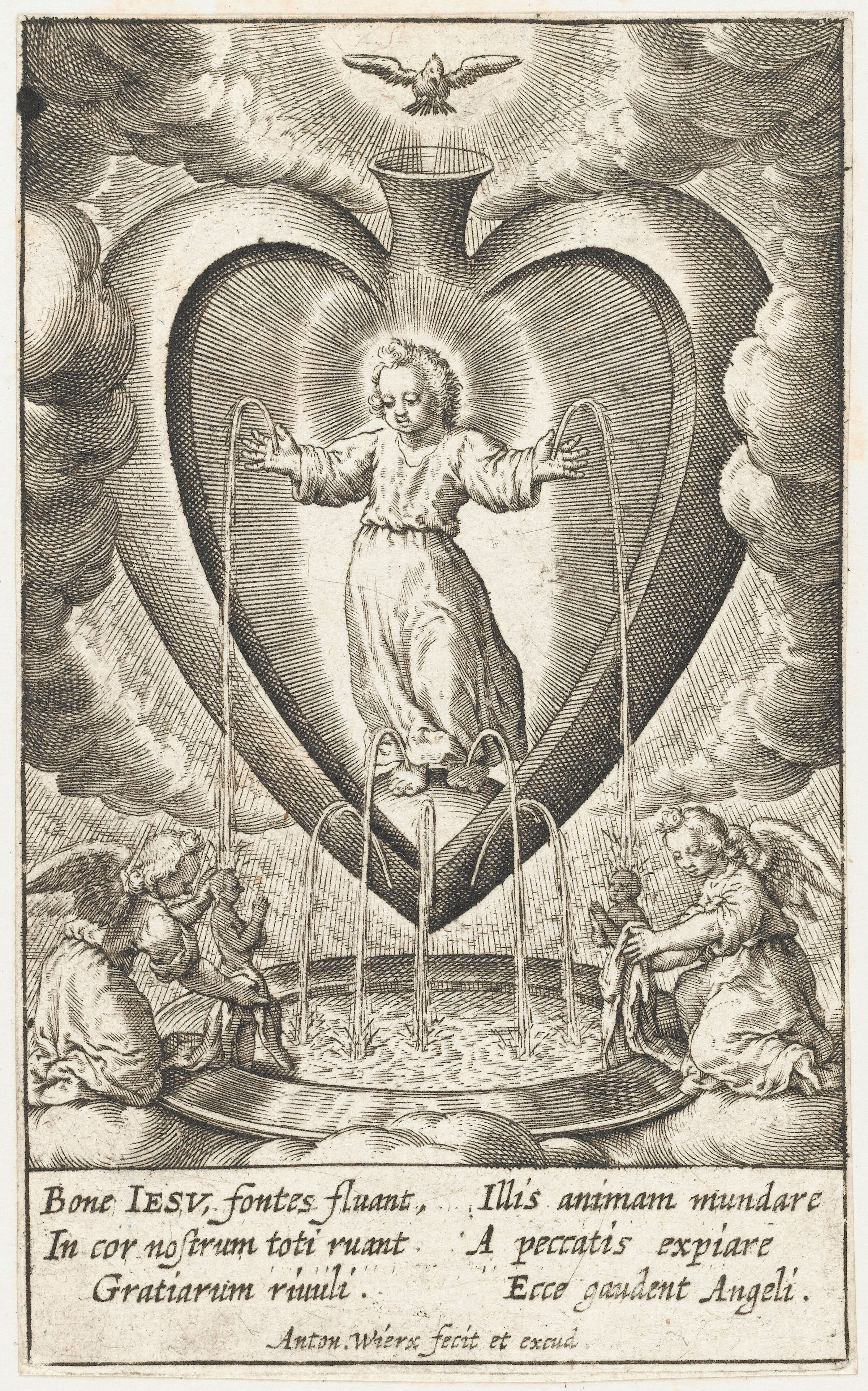
5. Jesus the Living Fountain in the heart
Anton Wierix II (Flemish, ca. 1555–1604), Jesus the Living Fountain in the heart, ca. 1600. Engraving, with etching, image 7.9 × 5.6 cm.
Bone Iesu fontes fluant, in cor nostrum toti ruant, gratiarum rivuli.
Illis animam mundare, a peccatis expiare, Ecce gaudent angeli.
(Good Jesus, into the heart let fountains flow, let all the streams of graces [flow]. With them to clean the soul and expiate [it] from sin, behold angels rejoice.)
In this image, blood flows out of the nail wounds in Christ’s hands and feet—a cleansing, refreshing fount.
Luzvic rhapsodizes,
If Jesus be absent, I am arid, dry, and without juice, so as neither I feel God, nor anything of God. Oh cruel aridity! O fatal drought!
If Jesus be present, he sheds divine dews of graces; he opens springs of incredible sweetness; the heart floats only and swims and sinks in these torrents of celestial delights. Oh grateful dews! O blessed springs! O ineffable delights!
Angelical hands laid hither those waters of life; sprinkle therewith my heart and soul, cleanse, and water them with endless springs of paradise. (85)
He asks God’s angels to “plunge this my dry and thirsty heart, drown it in the ocean of love” (91).
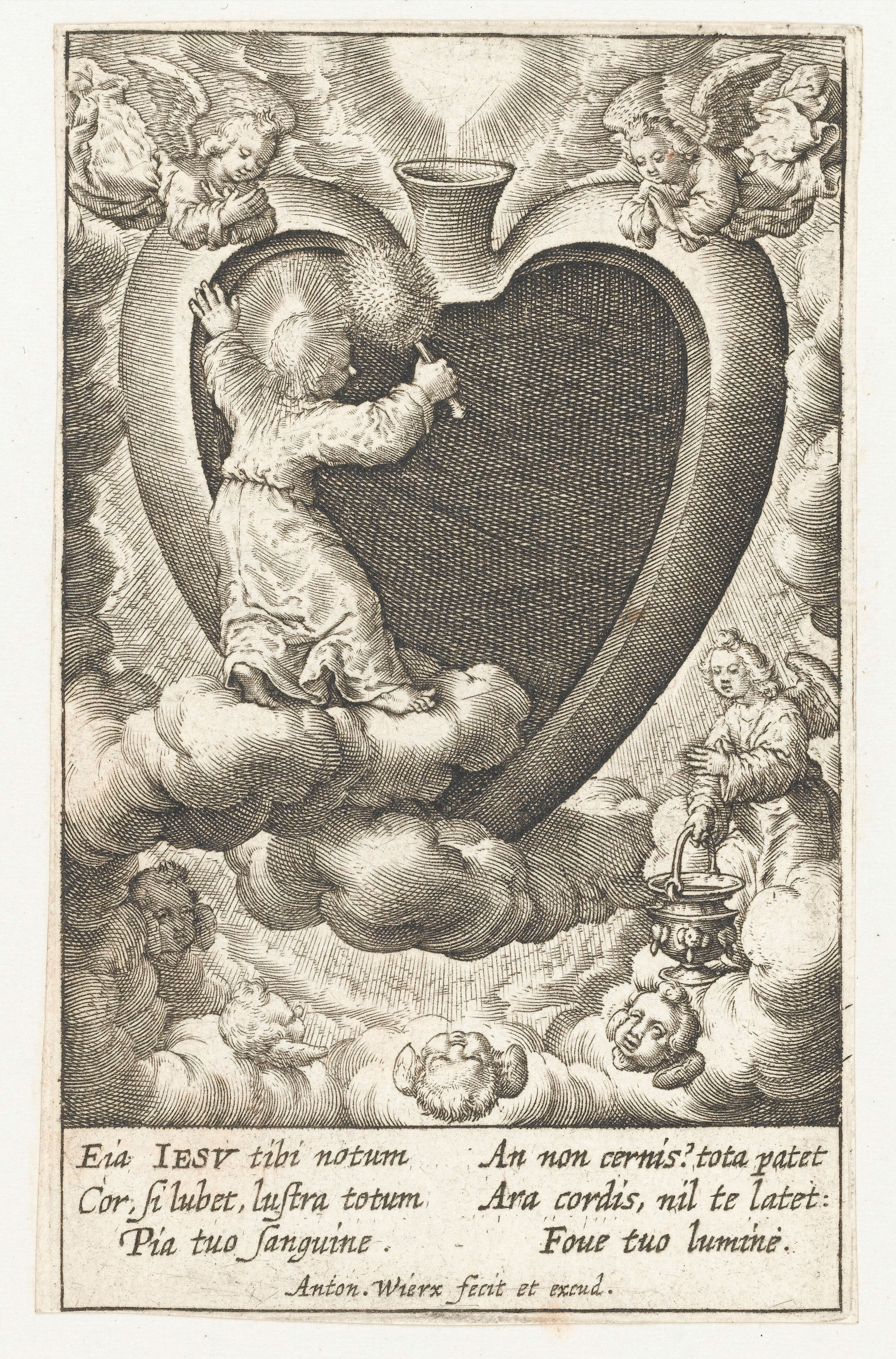
6. Jesus purgeth the heart with expiatory blood
Anton Wierix II (Flemish, ca. 1555–1604), Jesus purgeth the heart with expiatory blood, ca. 1600. Engraving, with etching, image 7.8 × 5.6 cm.
Eia Iesu tibi notum cor, si lubet, lustra totum, pia tuo sanguine.
An non cernis? tota patet ara cordis, nil te latet: Fove tuo lumine.
(Ahh, Jesus, the heart which you know, clean it all, if you like, purify it with your blood! Or do you not see? The whole altar of the heart lies open, nothing is hidden from you. Sustain it with your light.)
“Purge me with hyssop,” prays David the psalmist (Ps. 51:7). In this image Jesus uses an aspergillum to sprinkle his blood on the believer’s heart, much like Moses did with the blood of oxen (Exod. 24:1–8)—sprinkling it on the altar and on God’s covenant people—and like the Levitical priests did with the blood of bulls and goats before the mercy seat (Lev. 16).
Binet writes of the immediate effect: “Lo, the heart came presently to itself again, as soon as it felt but one little drop of thy divine love to be sprinkled on it” (98). I love that phrase: “the heart came presently to itself again.” Jesus reconciles us not only to God but also to ourselves, taking away our guilt so that we can live in the freedom we were always meant to have. He brings us home to our truest selves.
There’s power in the blood! Luzvic beseeches Jesus for just a few drops:
Take, therefore, O Jesus, love of my soul, from this infinite bath of thine some few little drops, at least, and sprinkle thy sanctuary therewith, I say—the ample field of my heart, whose sure possession thou hast taken to thyself long since. (99–100)
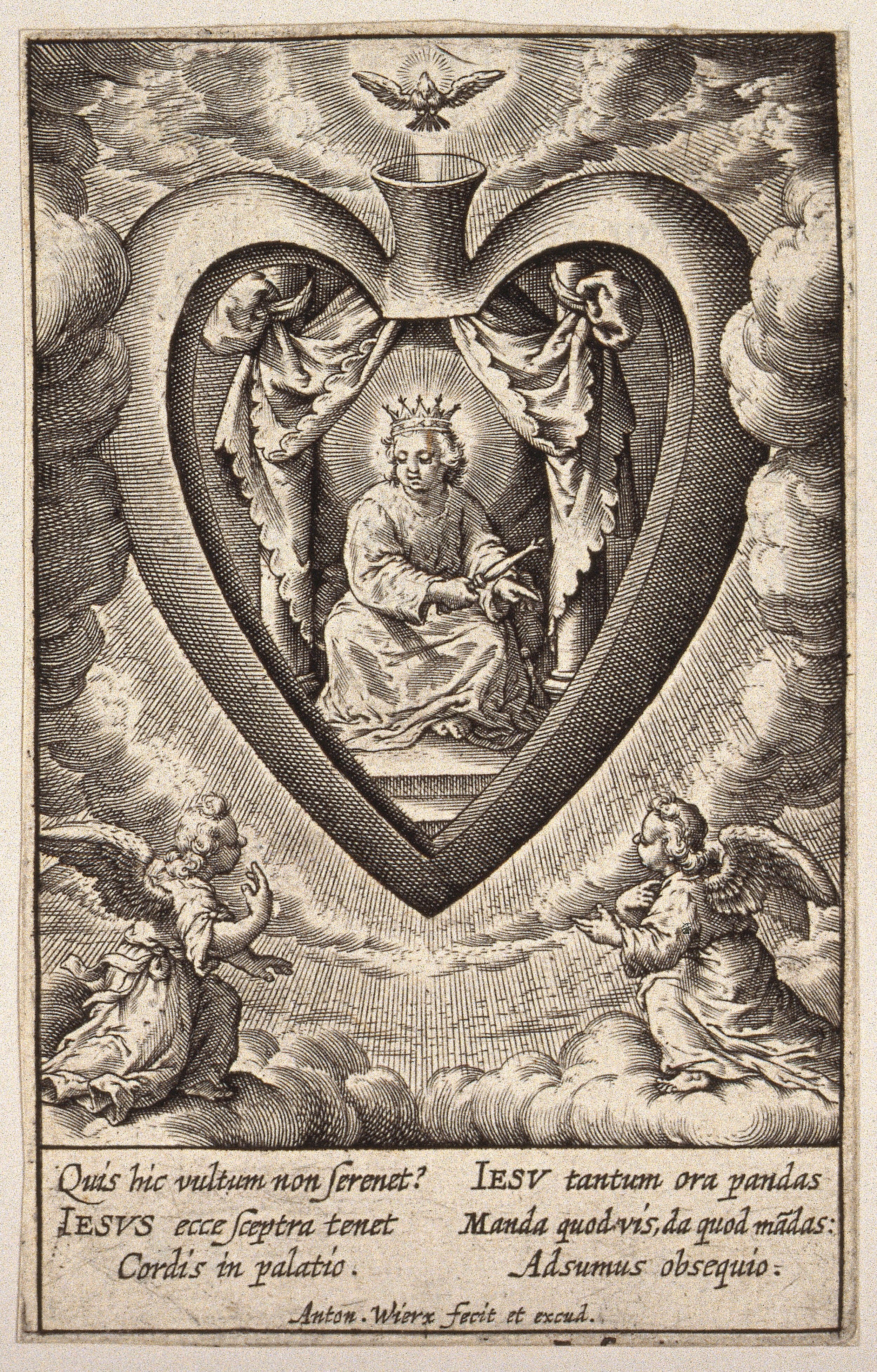
7. Jesus rules and reigns in the loving and devout heart
Anton Wierix II (Flemish, ca. 1555–1604), Jesus rules and reigns in the loving and devout heart, ca. 1600. Engraving, with etching, image 7.8 × 5.7 cm.
Quis hic vultum non serenet? Iesus ecce sceptra tenet cordis in palatio.
Iesu tantum ora pandas, manda quod vis, da quod mandas; adsumus obsequio.
(Who would not here have a serene expression? Behold, Jesus holds the scepter in the palace of the heart. Jesus, just open your mouth, order what you want, give what you order: we are present to obey.)
Here’s a beautiful prayer by Luzvic. Its last line is a quotation from Song of Solomon 6:3, a book that Christians have read, on one level, as an allegory of the love between Christ and the human soul:
The heart . . . is hungry and thirsty, nor lives contented with any owner, unless thou fix the seat of thy kingdom in its precincts. If thou beest present with, it desires no more; if absent, come in all created things at once and woo it never so much, there will yet be place enough for more. If thou gettest from thence, all felicity departs with thee: if thou abides, all beatitude comes suddenly thither. Reign, therefore, and eternally reign in my heart, O love of my heart. Quiet the motion of perturbations, nor ever suffer the unhappy heart to thrust the king out of his seat, then which cannot happen a greater disaster to it. Nor suffer, I say, O darling and delight of my heart, that one heart should be shared into many parts. For thou sufferest no rival. Oh suffer it not ever to be enticed with the allurements of worldly pleasure, which gate being once set open, I see how easily the enemy will rush in. Be thou to it a brazen, yea, a wall of fire, which may so roundly girt the tower, as that no passage may be found unto it. But that only the Holy Ghost may come down from heaven, whereto the heart lies open, and enter therein with a full gale, and occupy the whole heart, that so I may truly profess and glory, My beloved to me and I to him. (116–18)
8. Jesus teacheth the devout heart
Anton Wierix II (Flemish, ca. 1555–1604), Jesus teacheth the devout heart, ca. 1600. Engraving, with etching, image 7.7 × 5.5 cm.
Sunt auscultent qui Platoni, aut facundo Ciceroni, aut mundi stultitiae.
Tu ne verba vitae sperne: Audi patris aeviterne dicta sapientiae.
(Some listen to Plato or to eloquent Cicero, or to the stupidity of the world. [But] you, do not scorn the words of life! Listen to the Father’s sayings of everlasting wisdom!)
In this image Christ is portrayed as the heart’s instructor. He sits with an open book that reads, “Erunt omnes docibiles Dei” (All shall be the pupils of God).
Luzvic imagines one of the directives he gives:
Hear, my child (for so Jesus advises from the pulpit of the heart): Do thou give thyself to me. Let me be thy possession, thy nurse, thy food, for nothing can satiate thine appetite without me. My child, throw away those leeks and garlic of Egypt, turn thy face from the stinking waters of [vain] pleasure, and put thy mouth rather to my side, the wine-cellar of graces, whence at ease thou mayest draw and derive to thyself most sovereign and incomparable joys. (128–29)
9. Jesus paints the images of the last things in the table of the heart
Anton Wierix II (Flemish, ca. 1555–1604), Jesus paints the images of the last things in the table of the heart, ca. 1600. Engraving, with etching, image 7.8 × 5.7 cm.
Sume Iesu penicilla, corque totum conscribilla piis imaginibus:
sic nec Venus prophanabit, nec Voluptas inquinabit vanis phantasmatibus.
(Take, Jesus, your paintbrushes and daub over the whole heart with holy images. Thus neither shall Venus profane it nor shall pleasure pollute it with empty fantasies.)
The four last things, clockwise from bottom left inside the heart, are death, judgment, heaven, and hell. The image asks Jesus to make these future realities vivid in our minds so that we would live blamelessly until then.
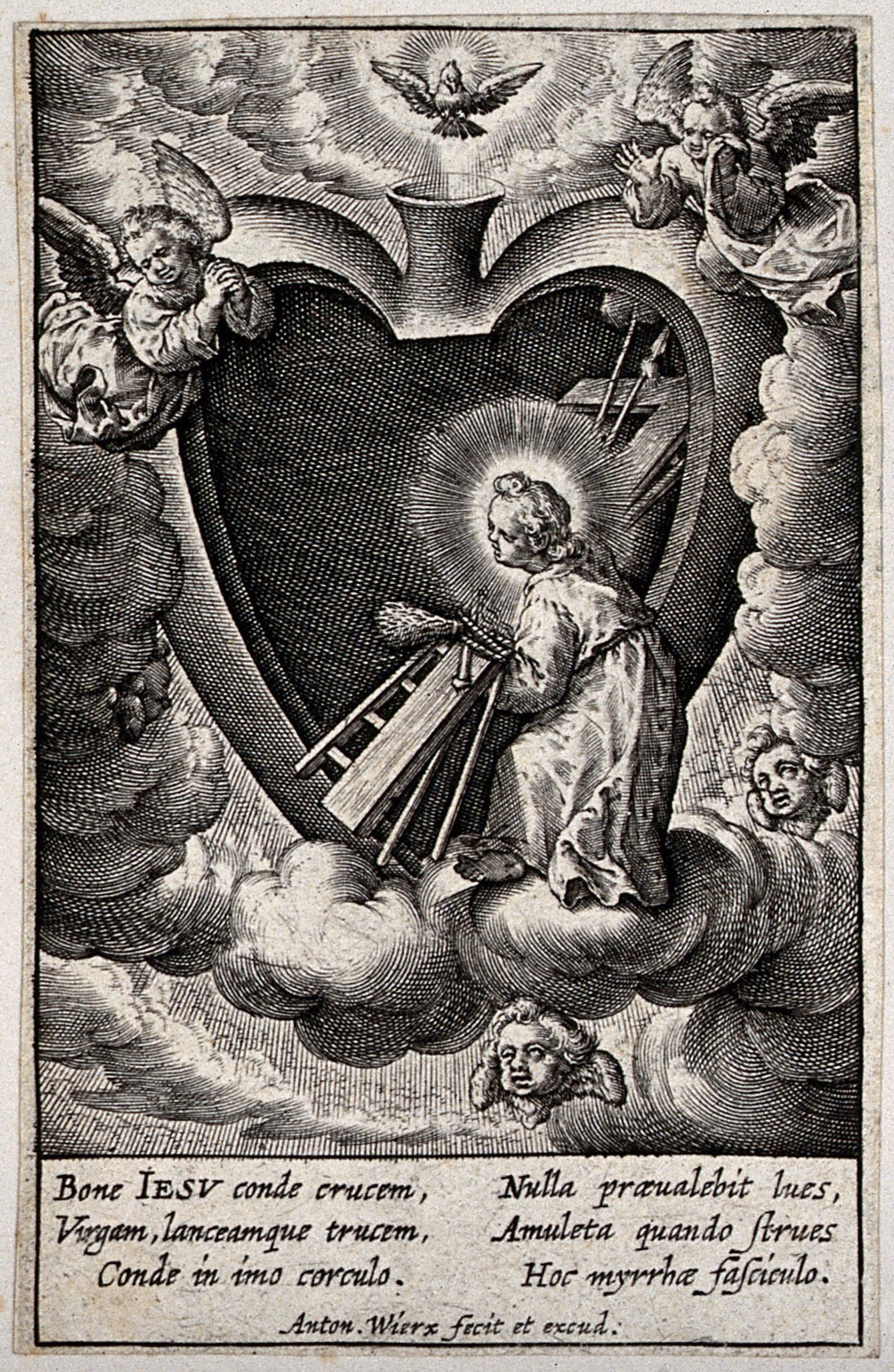
10. Jesus brings the cross into the heart, and easily imprints it in the lover
Anton Wierix II (Flemish, ca. 1555–1604), Jesus brings the cross into the heart, and easily imprints it in the lover, ca. 1600. Engraving, with etching, image 7.8 × 5.6 cm.
Bone Iesu conde crucem, virgam, Ianceamque trucem, conde in imo corculo.
Nulla praevalebit lues, amuleta quando strues hoc myrrhae fasciculo.
(Good Jesus, stow the cross, the lash, and the cruel lance, stow it at the bottom of the little heart. No sin shall prevail when you pile up this preservative on a gathering of myrrh.)
In this image, Christ deposits the instruments of his passion in the heart of the believer, where they serve as a reminder of the cross-shaped ethic we are to adopt—giving ourselves for others—as well as a call to gratitude for Christ’s sacrifice and a source of strength in times of suffering.
Go in, lovely cross; enter, lance, sponge, nails, scourge; bloody thorns, get you into the closet of the heart. Welcome still, but on this condition that Jesus bring you in himself; for myrrh with Jesus is admirable, and mere sweetness.
Thou sayest thou lovest Jesus; then needs must thou his cross, for if otherwise thou boast to love Jesus, thou deceivest thyself and others.
Most sweet child, what have you and I to do with this lumber here? Scarce art thou come into the world, but thou art oppressed with the weight of punishments. Oh plant thy seat in my heart! and then shall I challenge hell itself: for if Jesus and I hold together, what Hercules can stand against us both? (150–51)
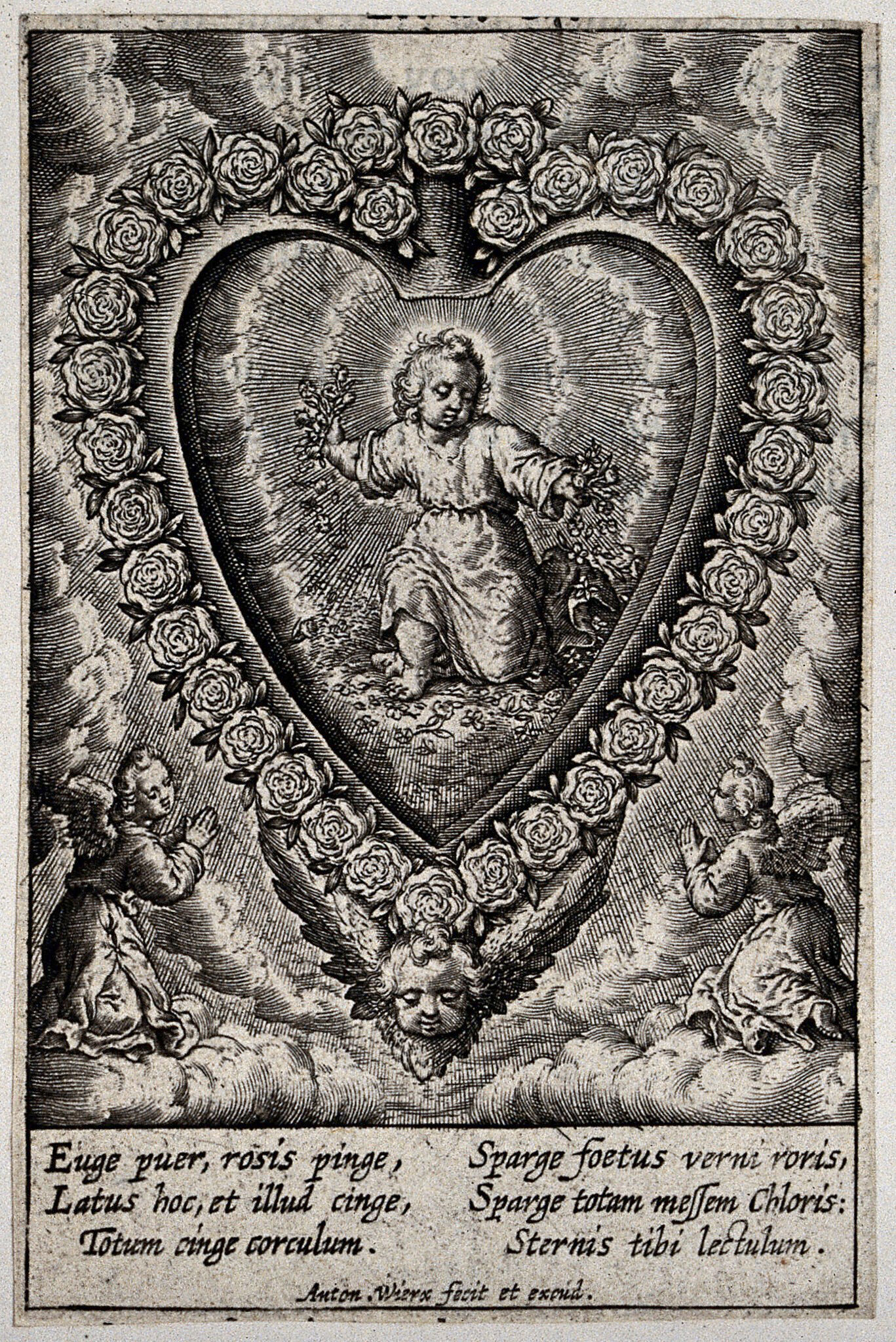
11. The heart consecrated to the love of Jesus is a flourishing garden
Anton Wierix II (Flemish, ca. 1555–1604), The heart consecrated to the love of Jesus is a flourishing garden, ca. 1600. Engraving, with etching, image 7.7 × 5.9 cm.
Euge puer, rosis pinge, latus hoc, et illud cinge, totum cinge corculum.
(Bravo, boy! paint this side and that and surround it with roses, surround the entire little heart! Spread the fruit of the spring dew, spread the entire harvest of the realm of flowers: you are [thus] laying a cot for yourself.)
(Alt translation by Walter S. Mellion: Bravo, lad! Embroider with roses now this side, now that, encompass them. Wreath the little heart, all of it. Strew it with the progeny of the springtime dew, with the whole harvest of Chloris: spread for yourself a [flowery] bed.)
Jesus bedecks the heart with roses in this image—makes it beautiful and fragrant. Again, this image evokes the Song of Solomon, with its scenes of lovers in the garden.
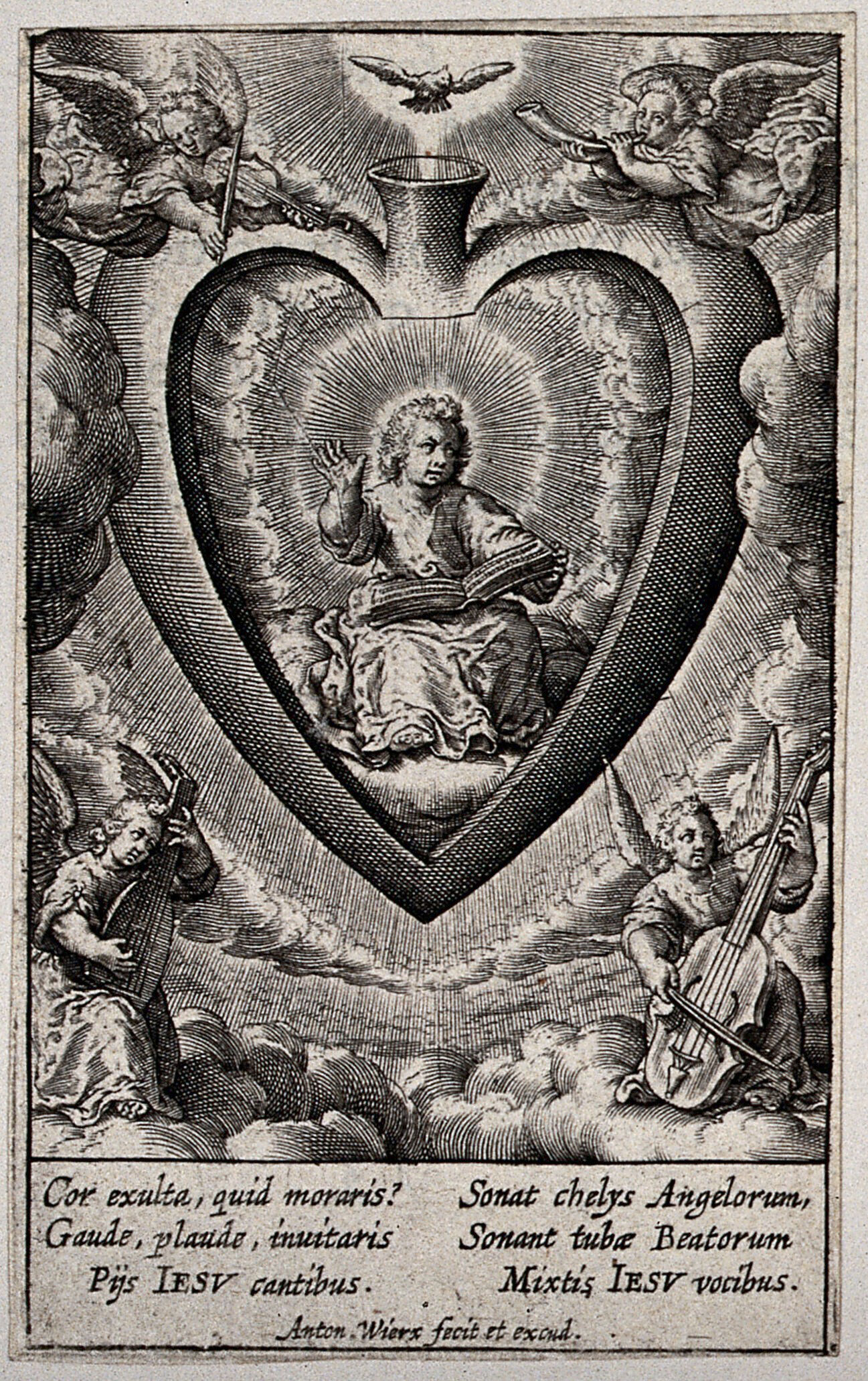
12. Jesus sings in the choir of the heart, to the angels playing on musical instruments
Anton Wierix II (Flemish, ca. 1555–1604), Jesus sings in the choir of the heart, to the angels playing on musical instruments, ca. 1600. Engraving, with etching, image 7.8 × 5.5 cm.
Cor exulta quid moraris? Gaude, plaude, invitaris piis Iesu cantibus.
Sonat chelys angelorum, sonant tubae beatorum mixtis Iesu vocibus.
(Heart, exult! Why do you hesitate? Rejoice! Applaud! Invite Jesus with sacred songs! The [name of] Jesus sounds forth in the lyre of angels, it sounds in the trumpets of the blessed mixed with voices [singing].)
Luzvic fancifully develops the image of Jesus as singer and choir conductor in the sanctum of our hearts, making sweet, melodious music:
I will chant the mercies of the Lord forever. For to this purpose Jesus, the prime Christ, records his ancient loves to the human heart, and now mixing with admirable skill flats with sharps, sharps with flats, the tenor with the bass, and running diversely divisions he touches with a sweet remembrance now with a moderate, now remiss, now slow, and now with a quick voice, the innumerable number of his benefits wherewith heretofore he hath wooed the heart . . . (176)
13. Jesus, the son of David, plays on the harp in the heart, while angels sing
Anton Wierix II (Flemish, ca. 1555–1604), Jesus, the son of David, plays on the harp in the heart, while angels sing, ca. 1600. Engraving, with etching, image 7.5 × 5.7 cm.
Pulsa chordas, sonet chelys, dum nos recreas de caelis Iesu cordis gaudium.
Dulce melos intonabunt, novum nobis excitabunt angeli tripudium.
(Strike the strings! Let the lyre sound forth! While from heaven you renew us, Jesus, joy of the heart. A sweet tune angels shall intone [and they] shall arouse a new dance within us.)
14. Jesus rests in the lover’s heart
Anton Wierix II (Flemish, ca. 1555–1604), Jesus rests in the lover’s heart, ca. 1600. Engraving, with etching, image 7.8 × 5.6 cm.
dum in corde lectum stravit, atque sponsus dormitavit, tuta ridet sponsula.
(In vain the north wind threatens, in vain the thunder runs wild, in vain the sea foams: while in the heart the betrothed has spread his bed and gone to sleep, the bride elect smiles in safety.)
What a moving image—the heart as a place of rest for Jesus. From the four corners the four winds blow, but Jesus is not perturbed, so why should we be? He still has the world in his hands (well, in his lap!).
The image is an allusion to the episode in all three Synoptic Gospels where a storm arises on the Sea of Galilee while Jesus and the disciples are in a boat; the disciples are frantic, and exasperated that Jesus is snoozing, but he tells them not to worry, and then he silences the wind and waves with a command: “Peace, be still!”
The image projects peace and stillness onto our troubled hearts.
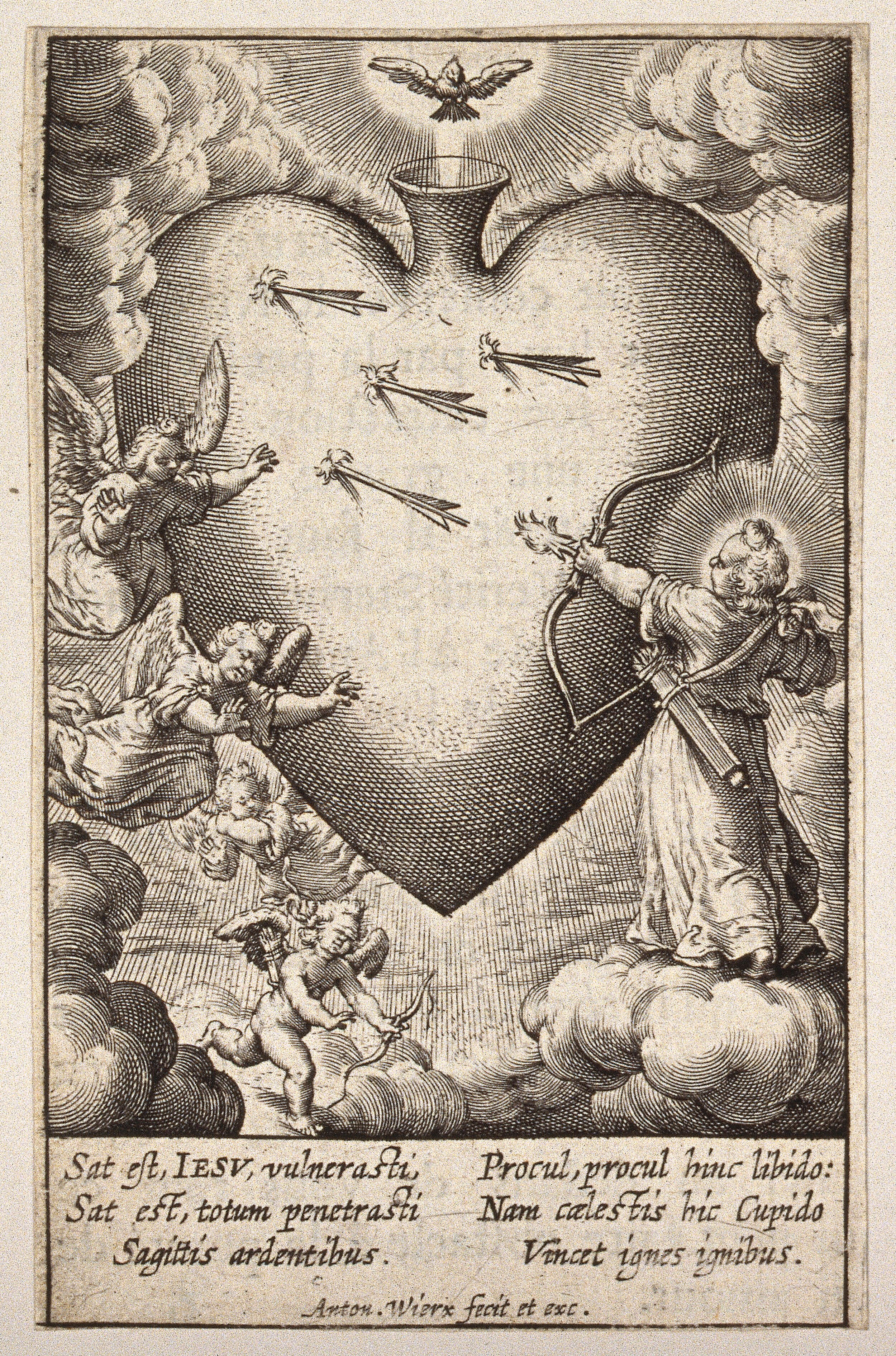
15. Jesus wounds and pierces the heart with the shafts of love
Anton Wierix II (Flemish, ca. 1555–1604), Jesus wounds and pierces the heart with the shafts of love, ca. 1600. Engraving, image 7.8 × 5.7 cm.
Sat est, Iesu, vulnerasti, sat est, totum penetrasti sagittis ardentibus.
Procul, procul hinc libido: nam caelestis hic Cupido vincet ignes ignibus.
(Enough, Jesus, enough! You have shot through the whole heart with flaming arrows. Lust, [be gone] far, far from here! For here is a heavenly Cupid who will conquer fire with fire.)
Luzvic quotes from chapter 2 of Augustine’s Confessions in this section: “Lord, thou hast pierced our hearts with thy charity.”
He elaborates with his own ecstatic words:
My good Archer, shoot, ah, shoot again! shoot through this heart of mine, with a million shafts, this refractory and rebellious heart, to thy divine love: slay and kill all love that is not thine, or is adversary to it. O sweet wounds! O dear to me! O arrows dipped and tipped with honey. . . .
The heart is never in so good a plight as when it is transfixed with a thousand points of sharpest love. (216)
16. The heart enflamed with the love of Jesus shines with light and flames
Anton Wierix II (Flemish, ca. 1555–1604), The heart enflamed with the love of Jesus shines with light and flames, ca. 1600. Engraving, with etching, image 7.8 × 5.7 cm.
En armatas flammis tendit Iesus manus, cor accendit hinc et illinc facibus.
Age, totum comburatur, in favillam redigatur cor amoris ignibus.
(Behold, Jesus holds out his hands armed with flames, and sets alight the heart with torches on this side and that. Come, let it all burn, let the heart be reduced to an ember by the fires of love.)
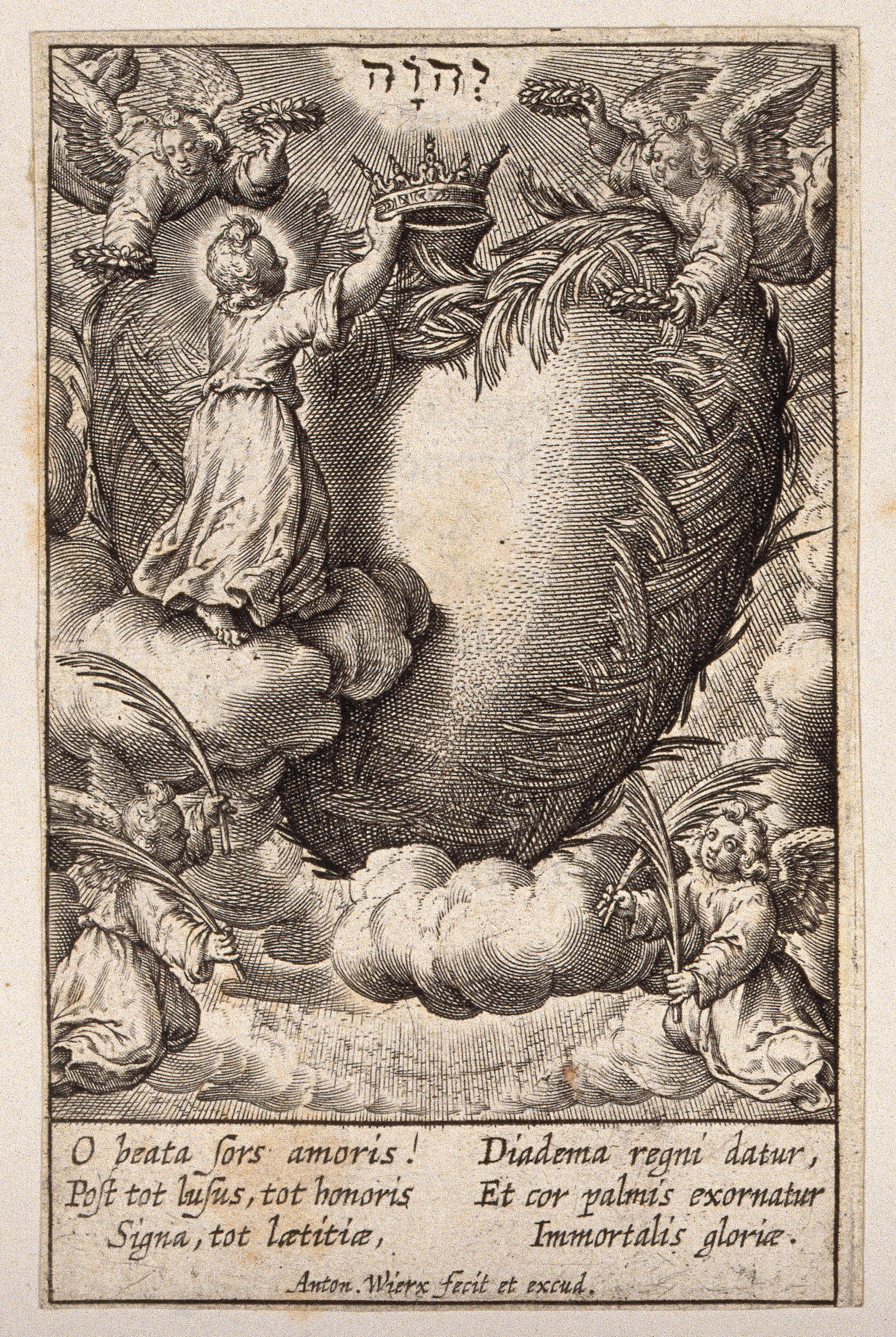
17. Jesus crowns his dear heart with palms and laurels
Anton Wierix II (Flemish, ca. 1555–1604), Jesus crowns his dear heart with palms and laurels, ca. 1600. Engraving, with etching, image 7.8 × 5.5 cm.
O beata sors amoris! Post tot lusus, tot honoris signa, tot laetitiae,
diadema regni datur, et cor palmis exornatur immortalis gloriae.
(O blessed fortune of love! After so many games, so many tokens of honor, so many of joy, the crown of the kingdom is bestowed, and the heart is adorned with the palms of immortal glory.)
* I am excluding the title page engraving from the count, which shows a flaming heart, inscribed with the words Cor Jesu amanti sacrum, held up by a Jesuit and a Franciscan friar; Jesus is not pictured, and there is no corresponding verse. And it appears that the Wellcome Collection does not own (or has not digitized) this print.
FURTHER READING
Daly, Peter M. The Emblem in Early Modern Europe: Contributions to the Theory of the Emblem. Surrey, UK: Ashgate, 2014.
The RFP is open to interested individual artists, artist collaboratives, church leaders, scholars/theologians, arts-affiliated organizations, faith-based nonprofit organizations, or institutions who reside or operate in the United States. Eligible applicants may submit proposals with requests ranging from $50,000 to $250,000 that may be used over one year. Chosen applications will then be requested to submit a full grant proposal for the competitive 2025 Spring Grant Program.
The 2025 grant-seeking theme is “Performing Shalom.” Applicants are invited to reflect the theme in their project or program, but it is not a requirement when applying for a grant. Please click here for more information.
+++
SUBSTACK POST: “On Artists, Kings, and Mending the Multiverse” by Houston Coley: A wise and rousing reflection after the US presidential election. Houston Coley is an Atlanta-based documentary filmmaker, video essayist (YouTube @houston-coley), podcaster, and writer on TV and film, who “cultivat[es] spiritual imagination around art and pop culture,” as one person put it.
+++
POEM: “What to Do After Voting” by James A. Pearson: The poet James Pearson shared this poem from his collection The Wilderness That Bears Your Name (Goat Tail Press, 2024) on Instagram on Election Day last Tuesday. He writes, “What’s driving [all our voting] are two things: Our common needs for love, safety, and belonging. And our often conflicting attempts to meet them. Rumi wrote: ‘Out beyond ideas of wrongdoing and rightdoing, there is a field. I’ll meet you there.’ History is offering us a fork in the road. Let’s turn towards what we can do—vote. Then let’s find each other in that field and do the long, slow work of building a world where everyone has access to the love, safety, and belonging they need.” [HT: Amy Peterson]
He writes further on his website, “This poem doesn’t pretend to be a full prescription for what our country needs. It’s just my way of acknowledging that all electoral choices are imperfect. Because even more important is what happens between elections—the long, slow work of building a culture of love and justice for our politicians to live up to. And the better we do that work, the better our options will be next time elections come around.”
+++
SONG: “Apsáalooke Praise Song,” sung by Sarah Redwolf (née Bullchief):Sarah Redwolf is a member of Crow Nation in Montana and a follower of the Jesus Way whose Apsáalooke name is Baawaalatbaaxpesh (Holy Word). Here she sings a praise song by her grandmother Xáxxeáakinnee (Rides the Painted Horse). The Apsáalooke lyrics are below; I couldn’t find an English translation, and the artist has not yet returned a message I sent ten days ago, but I believe the song was written with Christian intent, as Christianity has been in Sarah’s family for generations. Her father, Duane Bull Chief, is a traveling Pentecostal preacher and the leader, with his wife, Anita, of Bull Chief Ministries, and Sarah has often led worship for church services and other Christian gatherings. What a beautiful voice!
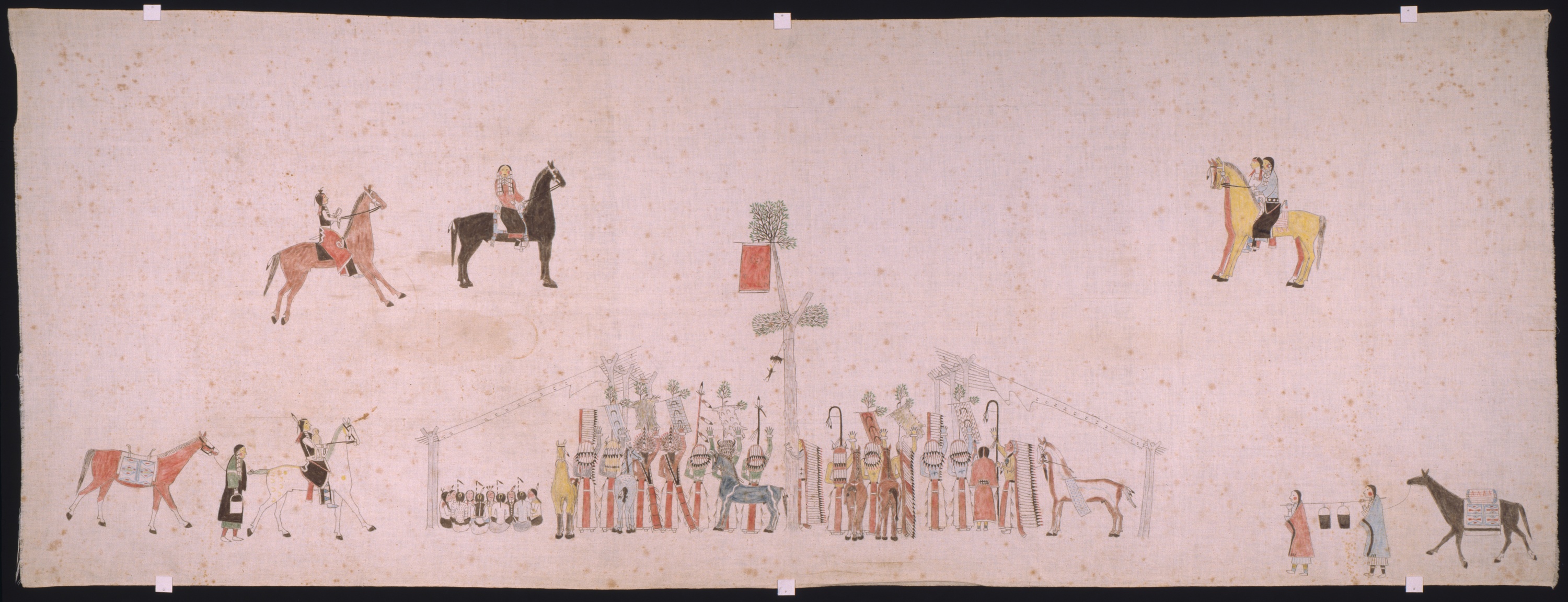
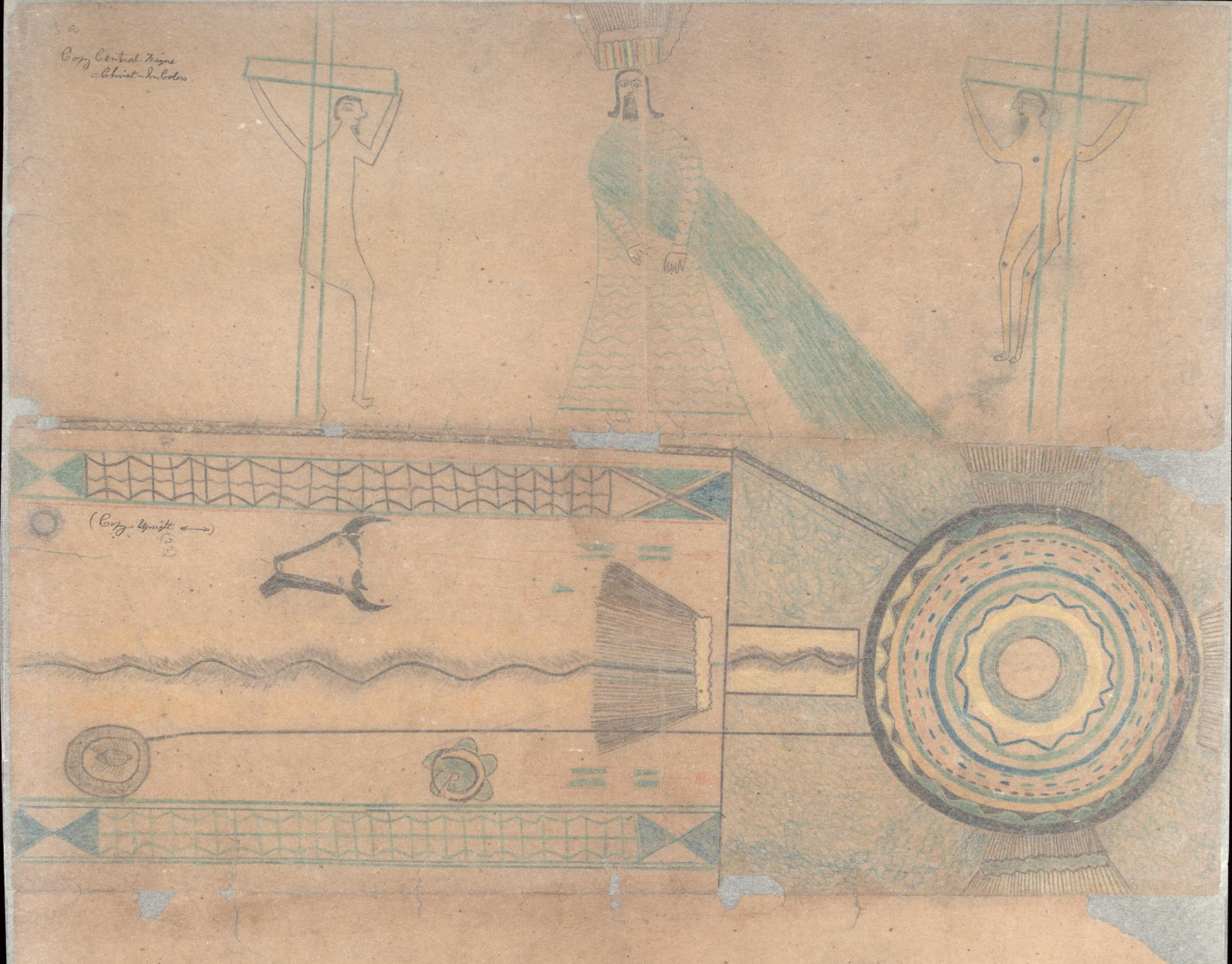
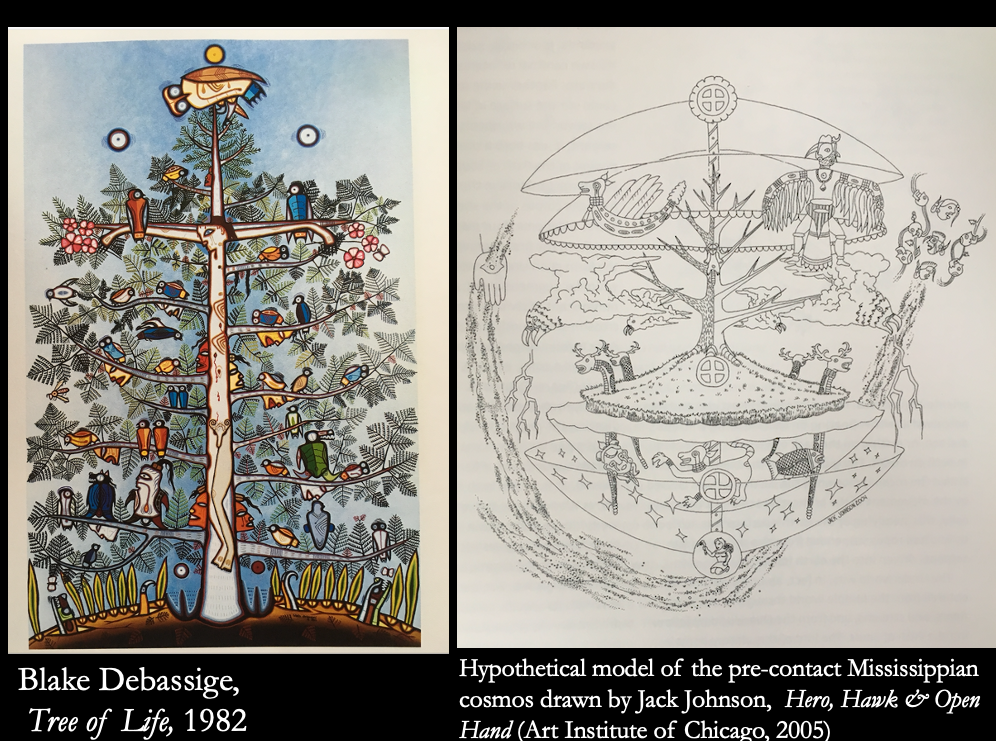
In conversation with Chesterton’s The Everlasting Man, Milliner explores contact points between Christianity and Indigenous North American art, symbol, ritual, and history. The discussion touches on pre-contact petroglyphs carved into Teaching Rocks near Peterborough, Ontario (one of them, a sun figure, quite possibly representing Gitchie Manitou, the Great Spirit—Christ incarnate?), the Sun Dance (which many Native Christians interpret as a prophecy of the Crucifixion), the Ghost Dance (about resurrection and renewal), the Mishipeshu (an underwater panther often representing death, which some Native Americans used to characterize white settlers), the Thunderbird, Black Elk’s vision of a mysterious figure with holes in the palms of his hands, and the cross as an axial tree conjoining the above and below worlds. Just as ancient Hebrew culture contained pointers to Christ, so too, Milliner argues, do the Indigenous cultures of North America. Artists, preachers, and visionaries from among the Ojibwe, Kiowa, Lakota, and other peoples are “our North American Virgils,” he says—Virgil being a Latin poet whose Fourth Eclogue, written around 40 BCE, prophesied the birth of a divine savior who would usher in a golden age.
Sun Dance Scene, Teton Lakota, Central Plains or Northern Plains, Wyoming, ca. 1885. Muslin cloth with watercolor paint, 36 × 91 1/2 in. (91.5 × 232.5 cm). Art Institute of Chicago. See 32:55 of Milliner’s lecture.Vision of a Kiowa man named Fiqi (Eater), received during the revived Ghost Dance, of Christ blessing the ceremony, collected by ethnologist James Mooney, ca. 1890. Pencil and crayon drawing from MS 2538, National Anthropological Archives, Smithsonian Institution, Washington, DC. See 38:49 of Milliner’s lecture and pages 11–12, 130, 142–44 of his book The Everlasting People.See 59:24 of Milliner’s lecture and page 8 of his book The Everlasting People
There’s much more I could say, as there’s certainly more nuance and complexity to this, but instead let me simply refer you to Milliner’s lecture and finely footnoted book. There’s also a great audio interview with Milliner about The Everlasting People from November 2021, conducted by Jason Micheli for the Crackers and Grape Juice podcast.
+++
VIDEO: Chapel service led by Terry Wildman, November 6, 2023, Azusa Pacific University, California: Earlier this year I got to have dinner with Terry Wildman [previously] and his wife, Darlene, who form the Nammy Award–winning musical duo RainSong. It was exciting to hear all about their work with Native InterVarsity and other projects. They live in Maricopa, Arizona, on the traditional lands of the Pima and Tohono O’odham peoples. Wildman, who has both Ojibwe and Yaqui ancestry, was the lead translator, general editor, and project manager of the First Nations Version: An Indigenous Bible Translation of the New Testament. (The nativity narrative from the FNV translation of the Gospel of Luke, you may be interested to know, was adapted into an illustrated book titled Birth of the Chosen One: A First Nations Retelling of the Christmas Story, which just released this fall.)
Last November Wildman led a worship service for Azusa Pacific University students. Here are the key elements:
The opening three minutes are an animated video of the gospel story, narrated by Terry Wildman to a flute accompaniment by Darlene Wildman
8:12: Blessing of the Gabrielino-Tongva people
9:38: The Lord’s Prayer (FNV)
10:57: Sermon: “Worship in Spirit and in Truth” (John 4:1–42)
21:17: Reading of Psalm 8 (FNV)
23:48: Song: “Lift Up Your Heads” by Terry and Darlene Wildman, based on Psalm 24
28:40: Song: “Hoop of Life” by Terry Wildman – Native American powwows often feature hoop dancers, who dance a prayer that Creator will bring harmony and goodwill to all the gathered people. Wildman says, “I look at Jesus and I call him the Great Hooper Dancer. Because he’s the one who ever lives to pray for us, to make intercession for us, and when he dances his prayer, he is bringing harmony and balance to the whole world, to the whole universe. And if we follow him, if we give our hearts to him, he will produce that harmony and balance in us and with each other.”
35:56: Song: “Nia:wen” (Mohawk for “Thank You”) by Jonathan Maracle of Broken Walls
In addition to the new, nonthematic playlist above, I also have a Thanksgiving Playlistthat I published in 2021 and have been adding to sporadically. Here are three new songs, among others, that you can hear on it:
>> “I Just Want to Thank You, Lord” by Lynda Randle: Singer-songwriter Lynda Randle has been performing on the Gaither Homecoming videos and tours since 1993. Here she sings one of her original gospel songs with Gayle Mayes and Angela Primm.
>> “Thanks a Lot” by Raffi:Raffi Cavoukian, who goes by his first name only, is an Armenian Canadian children’s singer-songwriter and book author, best known for his song “Baby Beluga.” “Thanks a Lot” expresses gratitude—presumably to God, though God is not named—for the sun, clouds, wind, birds, stars, “the wondering me,” and so on. This live recording is on the 1984 release A Young Children’s Concert with Raffi. I’m guessing he told the kids in the audience to close their eyes, to help cultivate a prayerful state.
>> “Herraa Hyvää Kiittäkää” (Thank the Good Lord) by Herännäisnuorten kuoro: This hymn was originally written in Swedish by Jesper Swedberg in 1694 and was translated into Finnish six years later. It uses an older (1640) tune—nice and hearty! and in a minor key—by the German composer Heinrich Albert. You can follow along with the Finnish lyrics here.
+++
VIDEO: Jazz Vespers Worship Service, Duke Chapel, November 19, 2019: Duke University in Durham, North Carolina, has hosted a Jazz Vespers worship service nearly every March and November since 2014, a collaboration between Duke Chapel and the Duke Jazz Program. In this recorded service from the fall 2019 semester, Rev. Dr. Luke Powery (the chapel dean) leads the liturgy and Rev. Joshua Lawrence Lazard (the chapel’s minister for student engagement) delivers the sermon, which is from 1 Thessalonians 5:16–18: “Rejoice always, pray without ceasing, give thanks in all circumstances, for this is the will of God in Christ Jesus for you.” The music is led by Duke music professor John Brown, a Grammy-nominated jazz bassist and composer, and his Little Big Band. I can’t find the names of the two vocalists.
List of songs:
“Every Day Is a Day of Thanksgiving” by Shelby Wills
“Glory, Glory (Since I Laid My Burden Down)”
“Because of Who You Are” by Vicki Yohe
“I Feel Like Praising Him” by Shirley Caesar
“Amazing Grace” by John Newton
“Perfect Love Song” by Anita Wilson
“You Can’t Beat God Giving” by Billy Preston
“Thank You, Lord, for All You’ve Done for Me” by Walter Hawkins
LITANY: “Celebrating the Gifts of Immigrants” by Rev. Maren C. Tirabassi: “A prayer for the United States which has come to a time of conflict, when the discussion of immigration seems to be limited to a choice of two – fears of burden or pity for the vulnerable – ignoring the third truth – deep gratefulness.”
+++
VIRTUAL WORKSHOP: “Evocations: Advent Responsive Writing” with Marilyn McEntyre, Nov 26, Dec 3, Dec 10, Dec 17, 2024: Each Tuesday over the course of a month, from 7:00 to 8:30 p.m. ET, Marilyn McEntyre will be leading an online gathering of writers in reflecting on and working with words and images gleaned from centuries of song, poetry, and paintings that celebrate Advent, the season of waiting. Participants will engage in lectio divina and visio divina as a foundation for writing personal reflections, memoir, and poetry. Hosted by Image journal. Registration cost: $195.
+++
ART EXHIBITIONS:
I don’t know that I’ll be able to make it up to New York City before these two exhibitions close in January, but I will try! They both look excellent.
>> Siena: The Rise of Painting, 1300–1350, Metropolitan Museum of Art, October 13, 2024–January 26, 2025: “Siena: The Rise of Painting, 1300–1350 examines an exceptional moment at the dawn of the Italian Renaissance and the pivotal role of Sienese artists—including Duccio, Pietro and Ambrogio Lorenzetti, and Simone Martini—in defining Western painting. In the decades leading up to the catastrophic onset of the plague around 1350, Siena was the site of phenomenal artistic innovation and activity. While Florence is often positioned as the center of the Renaissance, this presentation offers a fresh perspective on the importance of Siena, from Duccio’s profound influence on a new generation of painters to the development of narrative altarpieces and the dissemination of artistic styles beyond Italy.”
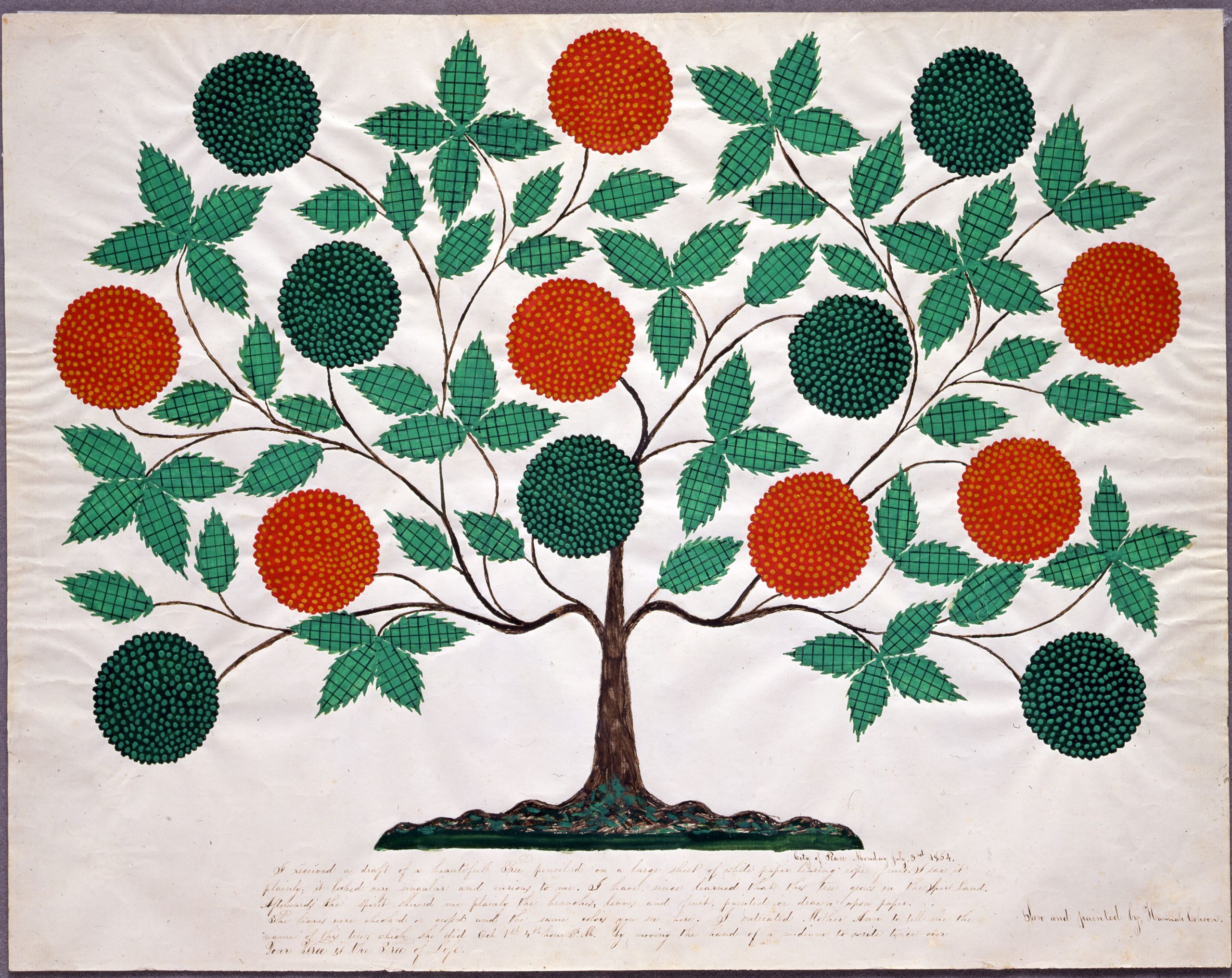
>> Anything but Simple: Gift Drawings and the Shaker Aesthetic, American Folk Art Museum, September 13, 2024–January 26, 2025: “The Shakers, often celebrated for their minimalist approach to design, will be showcased in a new light with the exhibition Anything but Simple: Gift Drawings and the Shaker Aesthetic. Made by women in the mid-19th century and believed to represent divine messages, the ‘gift’ drawings on display represent a departure from the simplicity typically associated with Shaker material culture.
“Opening during the 250th year of Shakerism in the United States, the exhibition features drawings widely considered to be among the finest surviving examples of this rare type. These symbols of love and nature were often given as ‘tokens’ to other Shakers during meetings. Brightly colored and replete with intricate ornamentation, they represent a stunning world of celestial imagery. Compared to examples of Shaker clothing and furniture that will also be included in the exhibition, the vibrancy of the drawings will mark a distinct contrast with the clean lines typically associated with Shaker design.”
Hannah Cohoon (American, 1788–1864), The Tree of Life, 1854. Ink and watercolor on paper, 18 1/8 × 23 5/16 in. Collection of the Hancock Shaker Village, Pittsfield, Massachusetts.
>> “Jack’s Bookshelf: Julian of Norwich” with Dr. Grace Hamman, Pints with Jack: The “Jack’s Bookshelf” podcast series explores the authors and books that influenced the life and writings of C. S. Lewis. Hosted by David Bates, this episode covers Julian of Norwich (ca. 1343–after 1416), an English anchorite and mystic who authored what editors call Revelations of Divine Love or The Showings, the first English-language book by a woman. The most famous quote from this work is “Sin is behoovely, but all shall be well, and all shall be well, and all manner of thing shall be well.” Medieval scholar Grace Hamman [previously] unpacks the quote and discusses other key passages and themes from Julian, as well as what little we know of her biography. An excellent introduction!
>> “Ben Myers—The Divine Comedy,”Life with God: One of the many gifts my parents have given me over the years was a four-month study-abroad stay in Florence during my junior year of college, where one of my courses was devoted to reading and studying—in its original Italian and in the author Dante Alighieri’s hometown!—the masterful trilogy of narrative poems known as La Divina Commedia, or The Divine Comedy in English. Moving through hell, purgatory, and heaven, it is an allegory of the soul’s journey toward God. I enjoyed hearing Dr. Benjamin Myers [previously], director of the Great Books Honors Program at Oklahoma Baptist University, discuss this deeply influential work from the early fourteenth century, and sharing one of his own poems, “Listening to Reggae at the Nashville Airport.”
+++
VIRTUAL TOURS OF CATHEDRALS:
Cathedrals are, among other things, repositories of sacred art. I’m so appreciative of digitization initiatives that seek to make some of those treasures available to global publics online. Here are two admirable examples.
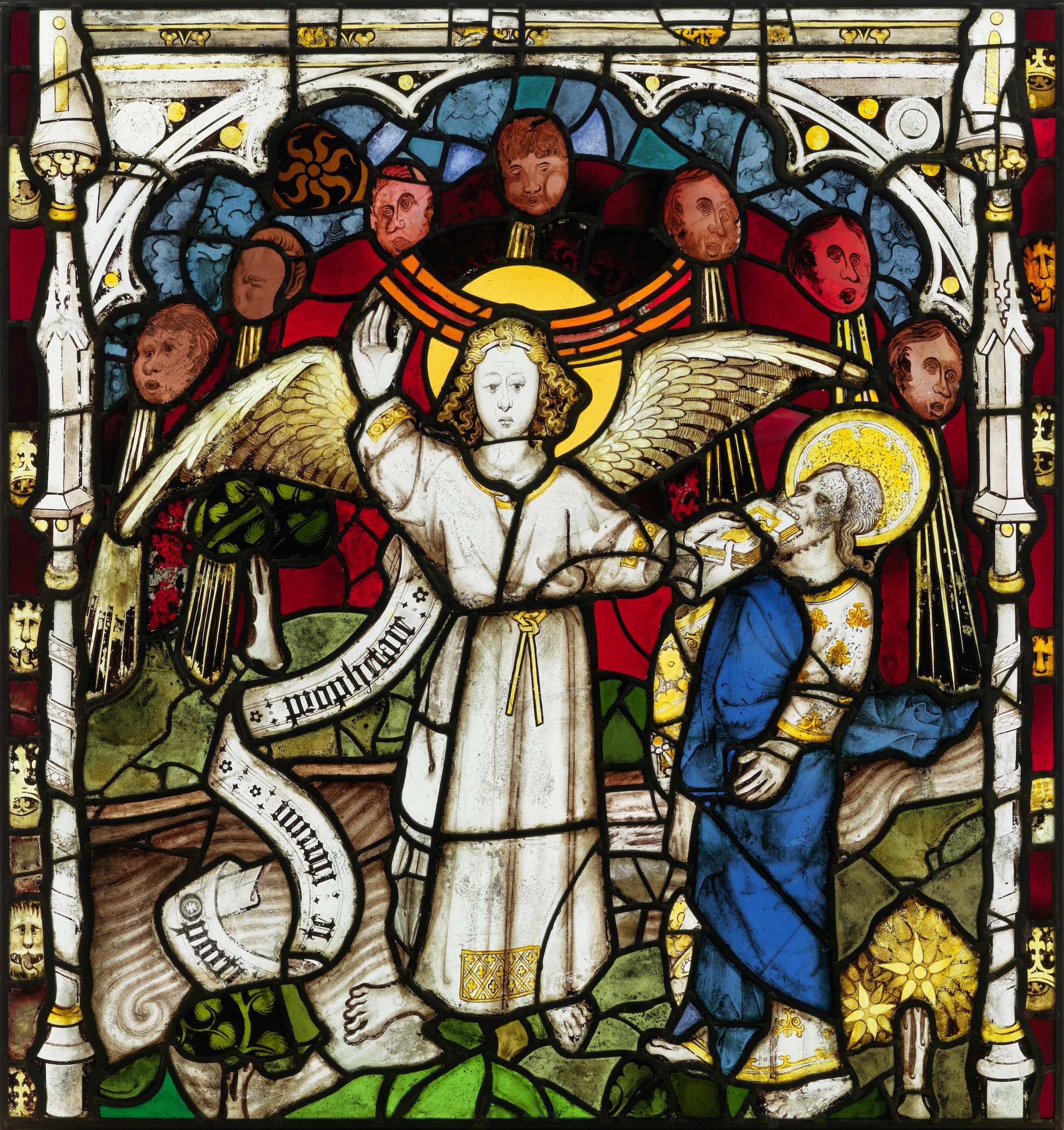
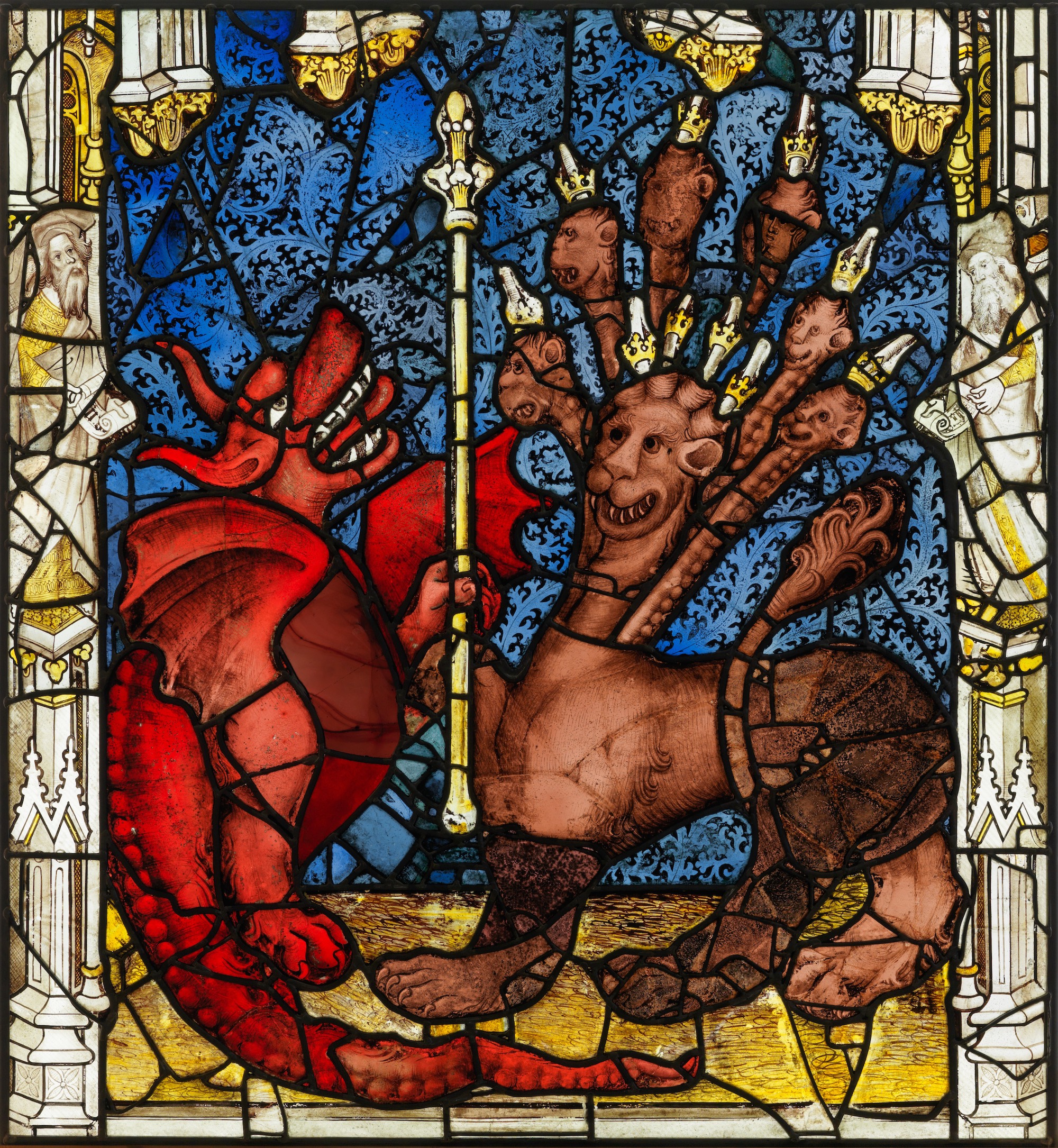
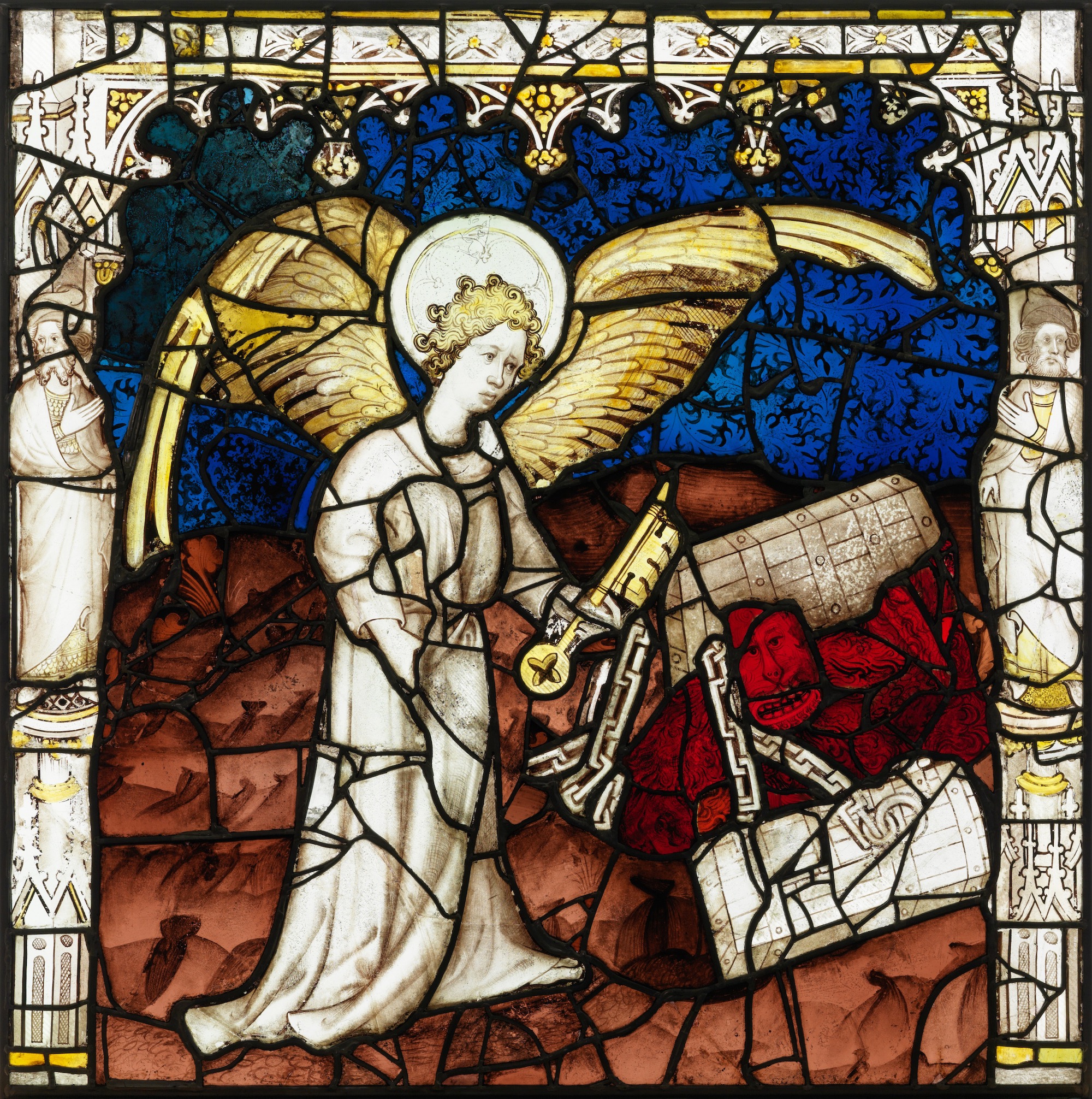
>> The York Minster Stained Glass Navigator:York Minster in northeastern England has the largest collection of medieval stained glass in the UK, with the earliest pieces dating from the late twelfth century. On behalf of the Chapter of York, the York Glaziers Trust is undertaking to photograph it all. These photos are available for viewing online through the cathedral’s “Stained Glass Navigator,” which enables you to hover over panels to identify the scenes, zoom in for higher resolution, and see where each panel in situated in the context of the window’s larger narrative.
I especially recommend exploring the extraordinary Great East Window, which depicts the beginning and the end of all things. The top section opens with the seven days of creation, followed by other select scenes from the Old Testament, but the bulk of the window—and my favorite sequence—consists of scenes from the book of Revelation. The bottom row depicts historical and legendary figures associated with the history of York Minster.
John Thornton of Coventry (British, fl. 1405–1433), St. John Takes the Book from the Angel (Rev. 10:8–11), 1405–8. Stained glass panel from the Great East Window, York Minster, York, England. Photo courtesy of the York Glaziers Trust.John Thornton of Coventry (British, fl. 1405–1433), The Dragon Gives Power to the Beast (Rev. 13:1–3), 1405–8. Stained glass panel from the Great East Window, York Minster, York, England. Photo courtesy of the York Glaziers Trust.John Thornton of Coventry (British, fl. 1405–1433), Satan Chained in the Bottomless Pit (Rev. 20:1–3), 1405–8. Stained glass panel from the Great East Window, York Minster, York, England. Photo courtesy of the York Glaziers Trust.
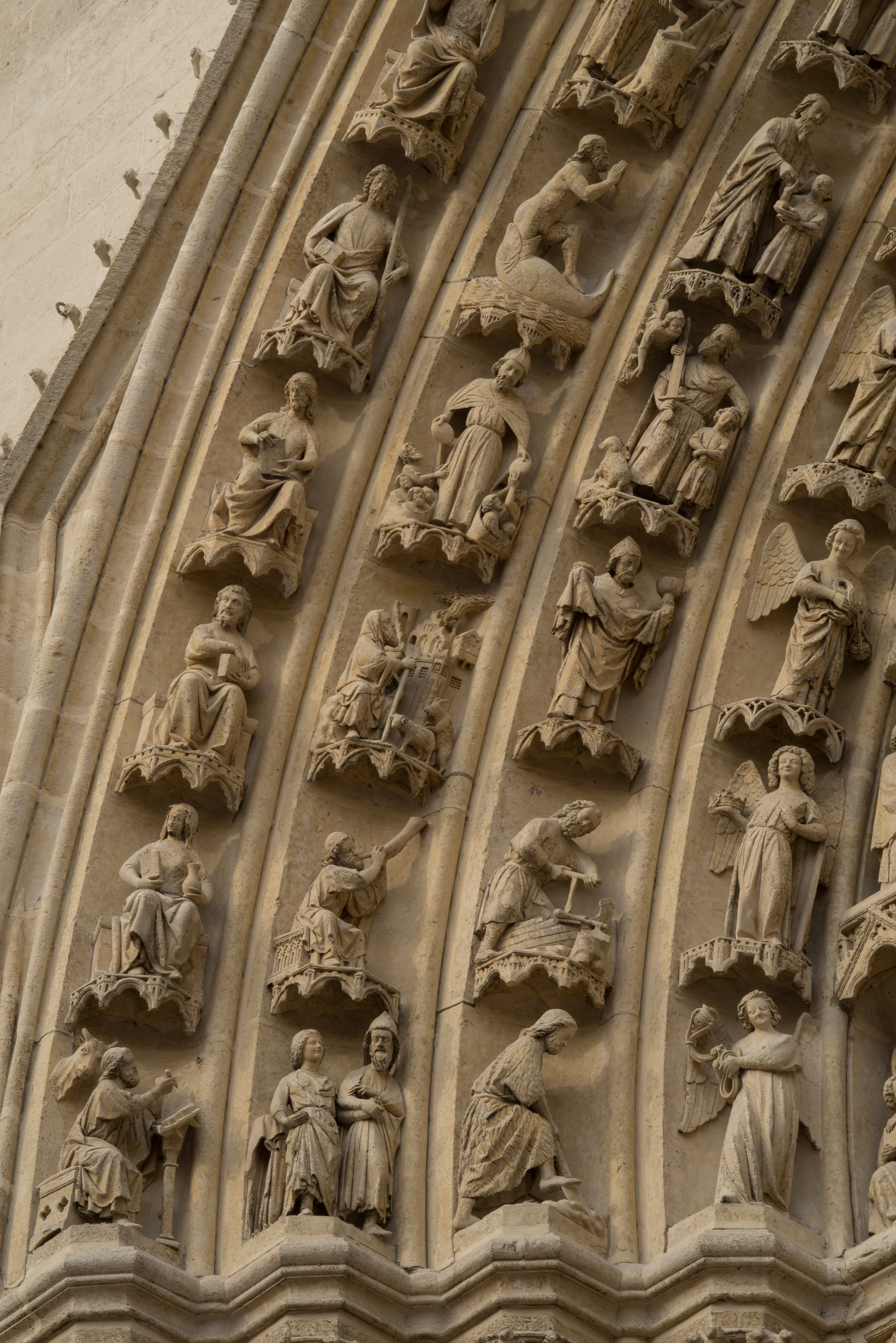
>> Life of a Cathedral: Notre-Dame of Amiens: Located in the heart of Picardy in northern France, Amiens Cathedral is one of the largest Gothic churches of the thirteenth century, renowned for the beauty of its three-tier interior elevation, its prodigious sculpted decoration, and its stained glass. This website put together by Columbia University’s Media Center for Art History offers a detailed virtual tour of the cathedral, drawing attention to its architectural features and artworks, from the many stone relief sculptures over its four portals (my favorite) to the octagonal labyrinth that adorns the marble floor in the nave to the early sixteenth-century misericords in the choir stall.
Detail of voussoirs from the south transept portal of St. Honoré at Amiens Cathedral, ca. 1240, featuring Adam working the ground, Noah building the ark, Jonah being disgorged from the fish, Hosea marrying Gomer, and other biblical figures and vignettes
+++
SONG: “Adon Olam,” performed by the Maqamat Masters, feat. Nissim Lugas: The well-loved text of this traditional Hebrew prayer in five stanzas probably originated in medieval Spain, having been first found in a thirteenth-century siddur (Jewish prayer book) from Andalusia. Drawn from the language of the Psalms, it praises God for both his transcendence and his immanence. He is incomparably great, the ruler over all, and yet he’s also a personal God, a refuge for those who call on him. The prayer’s title and opening phrase translates to “Master of the Universe” or “Eternal Lord.”
Various tunes have been used for the singing of this prayer over the centuries. The Maqamat Masters perform it here with a melody based on the traditional Armenian folk tune NUBAR NUBAR, arranged by Elad Levi and Ariel Berli. They also add to the prayer a few lines from the ghazals of the Persian Sufi poet Saadi (1210–ca. 1292), about the burning fire of God’s love; Lugas sings this Farsi passage from 3:06 to 4:08.
“Maqamat Masters is a unique group of musicians that coalesced around their work together teaching at the Maqamat School of Eastern Music in Safed, Israel,” 12 Tribes Music writes. “Each of the musicians is a master in a different traditional musical genre from the Middle East, and they bring their personal voices and decades of explorations together, to create a magical, new and innovative sound.”
+++
VIRTUAL EXHIBITION: The Faras Gallery: Treasures from the Flooded Desert: In 1960, Faras, a small town in Sudan near the Egyptian border, was one of the archaeological sites designated for flooding by the waters of the Nile to create Lake Nasser. Responding to an international call by UNESCO to preserve the area’s cultural heritage before it would be buried beneath the new reservoir, a Polish team led by Professor Kazimierz Michałowski proceeded with salvage excavations in 1961–64. Their efforts uncovered the wonderfully preserved ruins of a medieval cathedral, active from the eighth to fourteenth centuries (it was built on the remains of an early seventh-century church) and containing over 150 religious paintings, a trove of Nubian Christian art. By agreement with Sudan, half of the findings went to Poland’s National Museum in Warsaw, while the other half are kept in Sudan’s National Museum in Khartoum.
Wall Painting with Bishop Marianos under the protection of Christ and the Mother of God, early 11th century, excavated from Faras Cathedral in modern-day Sudan. Secco tempera on plaster, 247 × 155.5 cm. National Museum, Warsaw.
Curated by Paweł Dąbrowski and Magdalena Majchrzak and hosted by Google Arts & Culture, this virtual exhibition spotlights the wall paintings and artifacts from Faras that are housed in Warsaw. It discusses the importance of the discovery of the cathedral and the technical challenges of detaching the paintings (tempera on dry mud plaster) from the walls. It also includes digital reconstructions of the cathedral’s interior and exterior in 3D stereoscopy, as well as video elements. Here is one of the four videos from the exhibition:
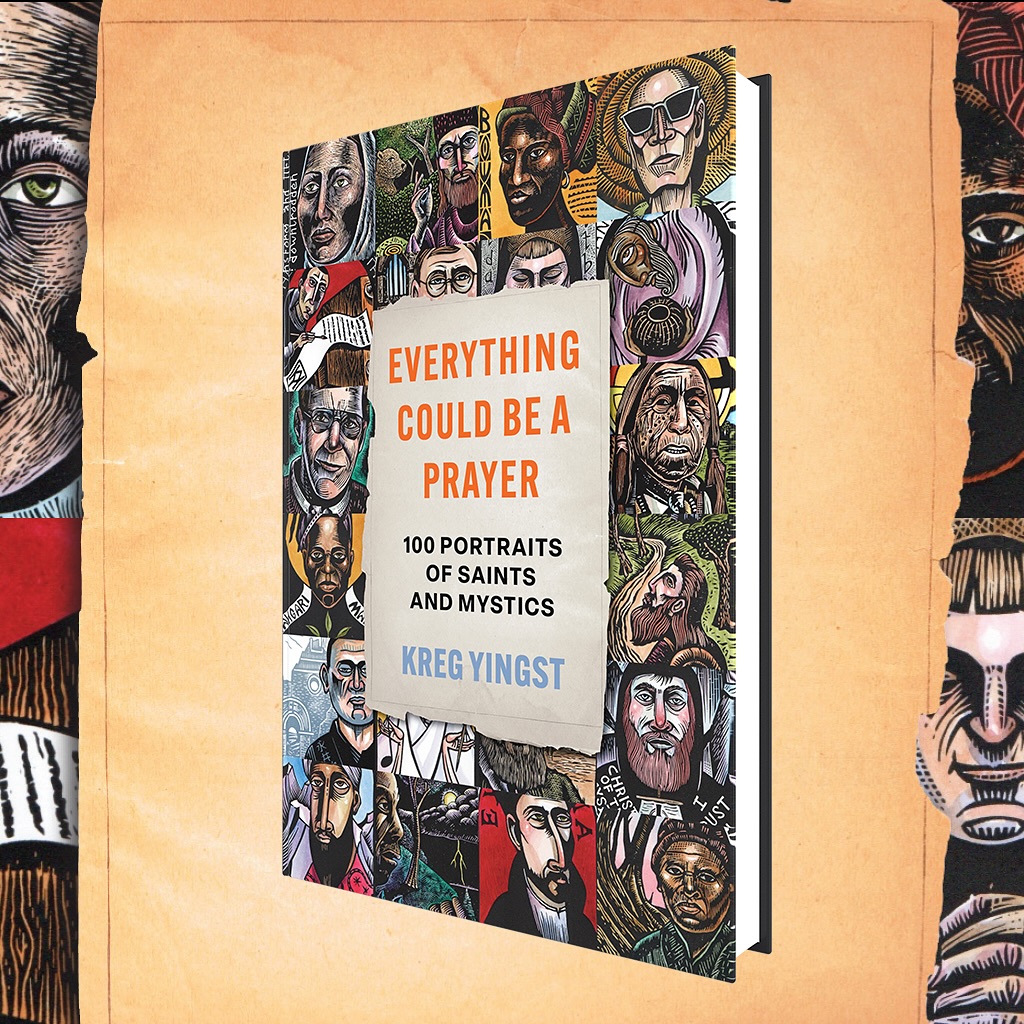
NEW BOOK: Everything Could Be a Prayer: One Hundred Portraits of Saints and Mystics by Kreg Yingst: Released on October 15, this book features one hundred color block-print portraits by Kreg Yingst of folks in the family of God across time and place, along with one-page biographies. Get to know a wide range of Christian civil rights activists, scientists, environmentalists, social service workers, hymn-writers, artists, poets, evangelists, and monastics and the gospel impact they’ve made. The lineup is a mix of familiar and less familiar names, canonized saints and noncanonized. Examples include Brigid of Kildaire, Ignatius of Loyola, Satoko Kitahara, Dietrich Bonhoeffer, Mamie Till, Pandita Ramabai Dongre-Medhavi, and Black Elk. Click here to look inside.
The title of the book is taken from a quote by Martin de Porres (1579–1639), a Dominican friar from Peru and the first Black saint of the Americas: “Everything, even sweeping, scraping vegetables, weeding a garden, and waiting on the sick, could be a prayer if it were offered to God.”
Related events:
October 10–November 16, 2024: Art exhibition featuring the block prints from the book at The Gallery of Art, 36 W. Beach Dr., Panama City, Florida
October 26, 2024, 1:00–3:00 p.m.: Book signing at Barnes & Noble, 1200 Airport Blvd., Pensacola, Florida
Through November 1, Yingst is offering 25% off all original woodcuts and linocuts that were used as illustrations for the book; view the discounted pieces in the “Mystics, Saints & Poets” section of his Etsy shop. These are not inkjet-printed photographs of original artworks (which is what some artists misleadingly call “prints”) but are themselves original limited-edition relief prints hand-pulled on an antique proof press from carved blocks; they are made with black oil-based ink and watercolor. If you want original art in your home or to gift a friend or family member for Christmas, Yingst’s work is a great and affordable option!
+++
SONGS:
November 1 is All Saints’ Day, a feast for commemorating the lives and witness of our siblings in the faith who have gone before us. Here are two songs for the occasion.
>> “I Sing a Song of the Saints of God,” performed by Wendell Kimbrough: This charming little children’s hymn was written by Lesbia Scott and was first published in her native England in Everyday Hymns for Little Children (1929). In the United States the song first appeared in the Episcopal Hymnal 1940 with a tune that John Henry Hopkins, a member of the hymnal committee, composed for it, capturing the childlike cadences of the text.
>> “When the Saints” by Sara Groves: This song from Groves’s album Tell Me What You Know (2007) draws encouragement from the faithfulness of God-followers throughout history, from Moses, Paul, and Silas to Harriet Tubman and Mother Teresa to the martyr Nate Saint and his sister Rachel Saint to rescuers of sex-trafficking victims. It is a call to hearers today to pick up their cross and follow Christ into places of hurt and injustice, pursuing liberation of body and soul for all. The refrain quotes the traditional Black gospel song “When the Saints Go Marching In.”
+++
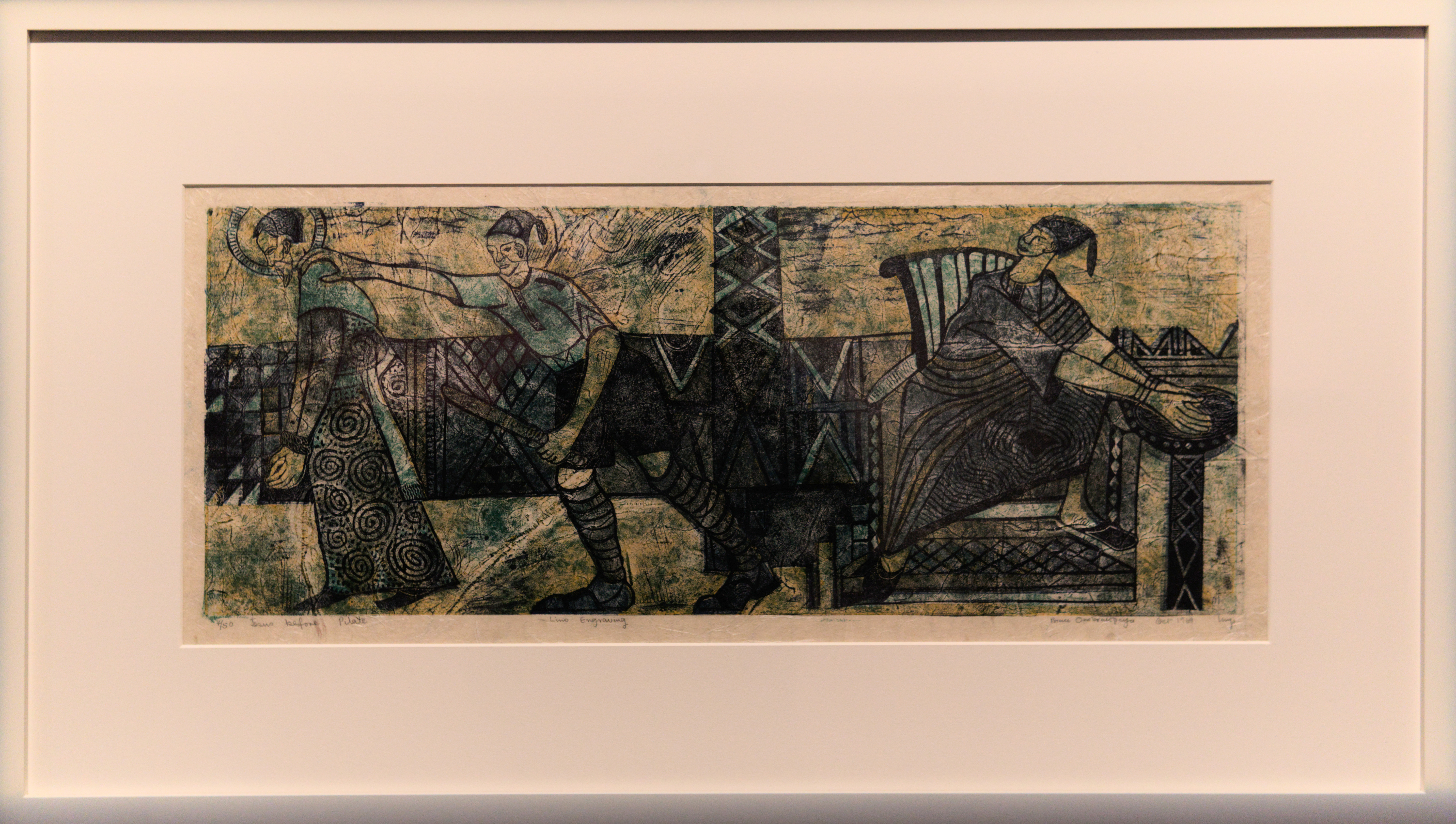
ART EXHIBITION: Bruce Onobrakpeya: The Mask and the Cross, National Museum of African Art, Washington, DC, June 21, 2024–January 21, 2025: A father of African modernism, Bruce Onobrakpeya (b. 1932) [previously] is one of Nigeria’s most celebrated artists, and I was thrilled this month to visit his first solo show in the US, which, as it turns out, is centered on his Christian-themed linocut prints! (The artist is Anglican.) Onobrakpeya’s career spans over six decades, and this Smithsonian exhibition is not meant to be representative of the breadth of his oeuvre, which also includes painting and sculpture and various subject matters; rather, it presents two foundational bodies of work from the late sixties, both commissioned by the Catholic Church, that helped launch the artist’s long and esteemed career.
The exhibition displays rare artist’s proofs of the biblical illustrations Onobrakpeya made for Ki Ijoba Re De (May Your Kingdom Come) (1968), a Yoruba-language textbook for students in their fifth and sixth years of Catholic primary school (it was part of the Nigerian National Catechism), as well as a complete narrative series of prints titled Fourteen Stations of the Cross, produced in 1969. I blogged about the artist’s Stations cycle back in 2014, when I saw a different edition at the SMA African Art Museum in Tenafly, New Jersey; you can view better photos on the High’s website. For more on the work of Fr. Kevin Carroll, the Catholic missionary who commissioned Onobrakpeya to paint a church mural of the Stations that became the basis of these linocuts and who helped facilitate the May Your Kingdom Come publication, see here.
Curated by Lauren Tate Baeza, Bruce Onobrakpeya: The Mask and the Cross first opened last year at the High Museum of Art in Atlanta. This is Baeza’s first exhibition as curator of African art at the High, and I’m so pleased that when she dug through the High’s extensive archives, it was a set of Christian prints by a leading Nigerian artist that most compelled her, that she could imagine building a unique exhibition around and that she felt must be pulled out of storage for more people to see. Hear Baeza discuss the exhibition from 23:28 to 35:58 of the video “African Modernisms: A Legacy of Connection.”
Bruce Onobrakpeya (Nigerian, 1932–), Station I: Pilate condemns Jesus to death, 1969. Linoleum block print on rice paper, 24 × 34 in. (61 × 86.4 cm). High Museum of Art, Atlanta, Georgia. Photo: Victoria Emily Jones.
For his Stations of the Cross, Onobrakpeya “incorporat[ed] the rich patterns of Yoruba gelede and epa masks and stylized geometric patterns found in northern Nigerian architecture. Then he added generous adire motifs and his signature elongated figures and distortions of scale,” reads one of the gallery wall texts. He also embedded a critique of British colonial rule, portraying the Roman soldiers of Christ’s passion as British officers. (Nigeria had just attained independence from Great Britain earlier that decade, in 1960.) Pilate, though, is shown as a local Nigerian magistrate doing the bidding of the British government, highlighting a deeply felt tension in Nigeria’s then-recent political history.
I really appreciate the video components of the exhibition. One screen plays a compilation of clips from interviews Baeza conducted with the artist, and another displays a two-dimensional animation commissioned from Sadiki Souza specially for this exhibition, which brings to life Onobrakpeya’s fourteen Stations. Neither is available online, at least not that I can find.
+++
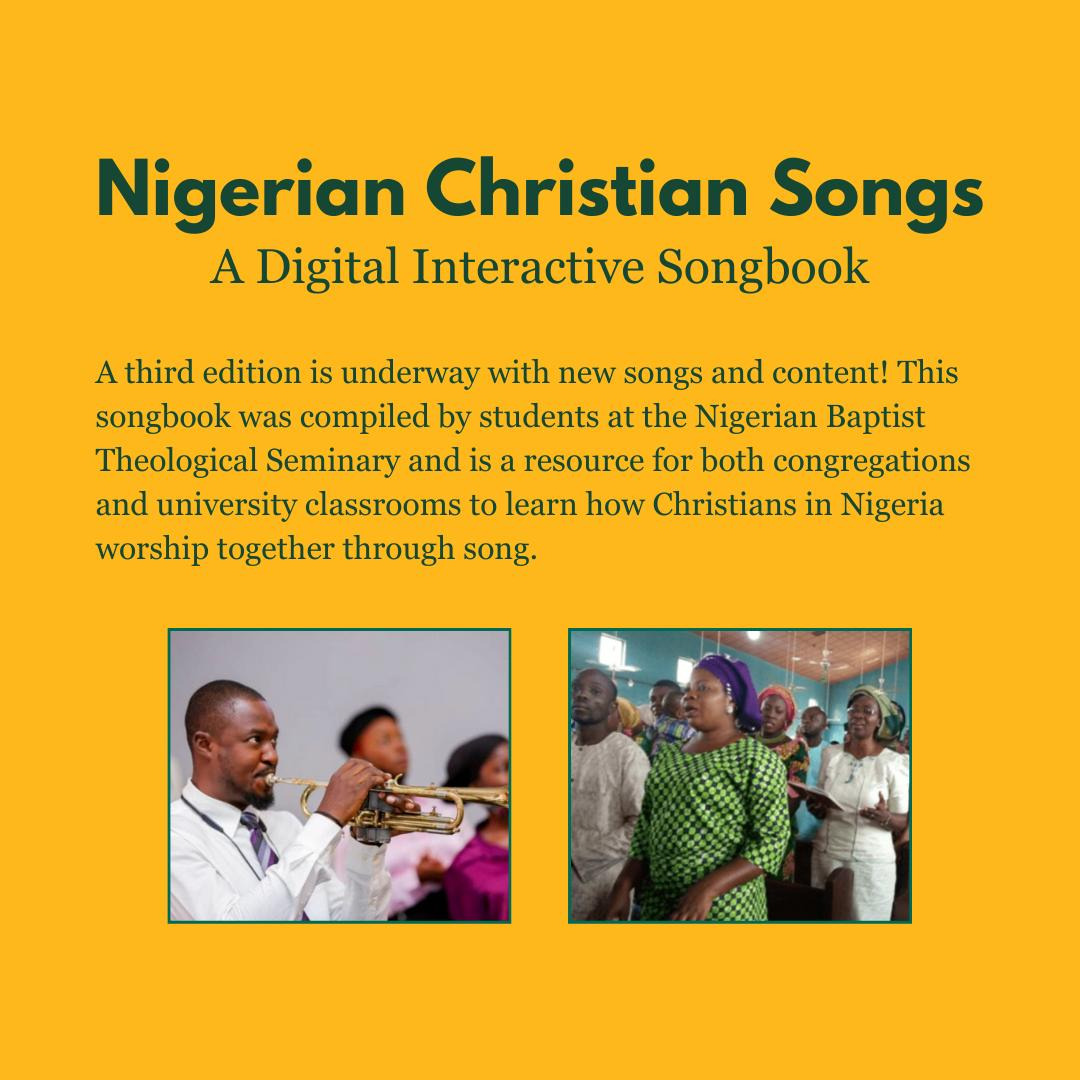
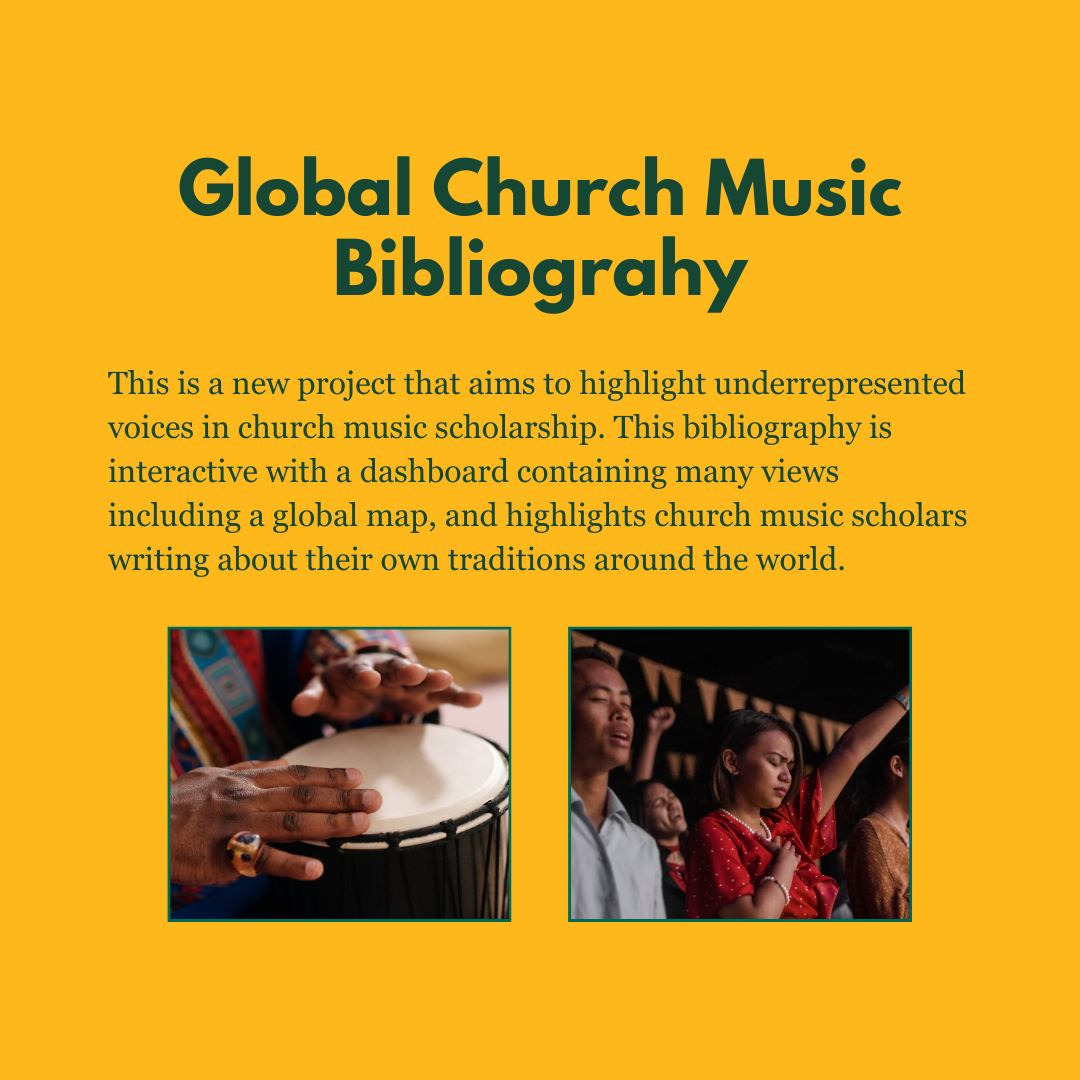
ZOOM EVENT: “Celebration of New Global Church Music Resources,” November 14, 9:00 a.m. CDT (12:00 p.m. ET): From Baylor University’s Dunn Center for Christian Music Studies: “We are excited to announce the launch of two website projects on November 14th! In collaboration with the Nigerian Baptist Theological Seminary, the third edition of the Nigerian Christian Songbook will be updated with new songs and content. In addition, a new project, the Global Church Music Bibliography, highlights underrepresented voices in church music scholarship. This is an interactive dashboard and map that features church music scholars writing about their own traditions outside of North America.” At the Zoom event on launch day, you will hear from various project participants. [HT: Global Christian Worship]
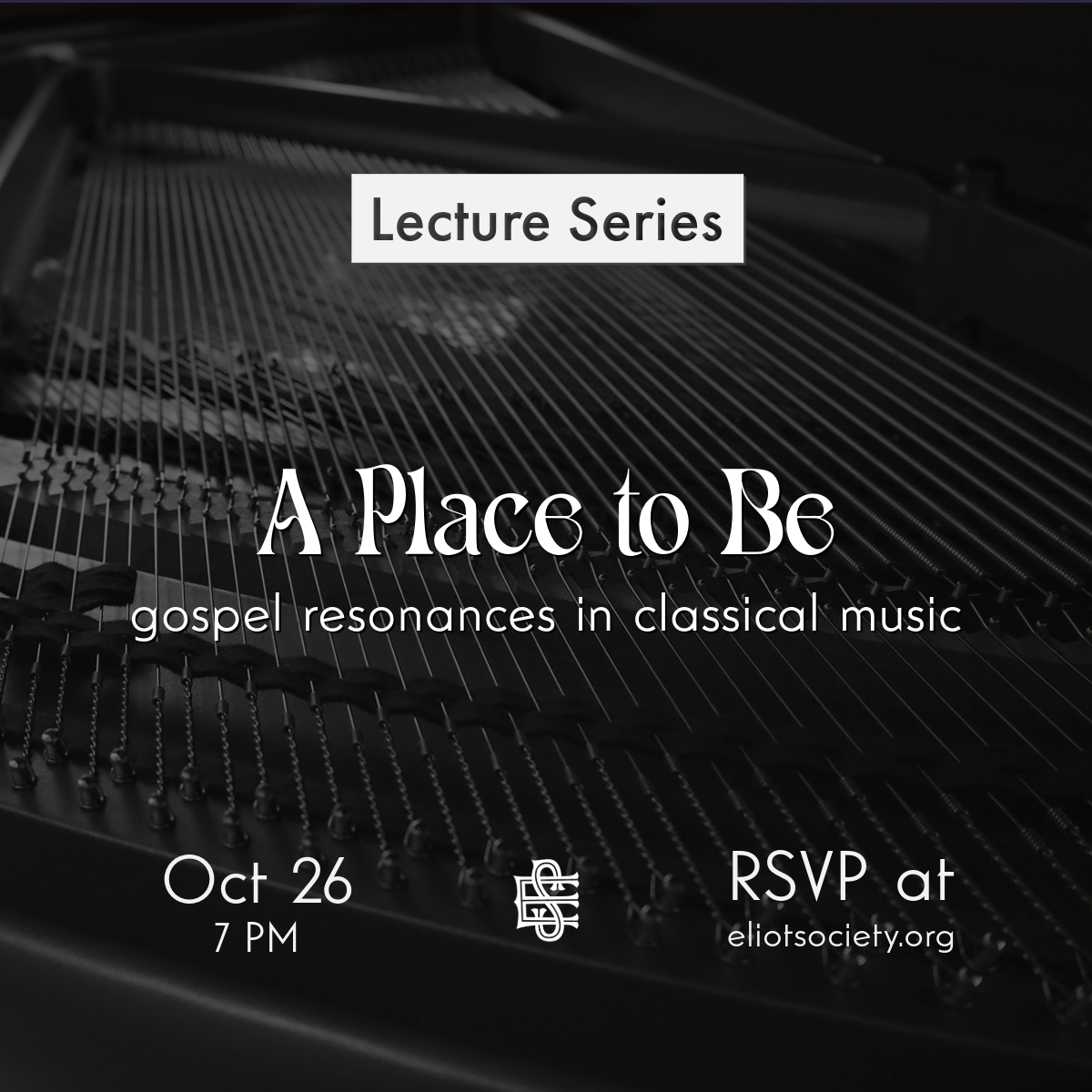
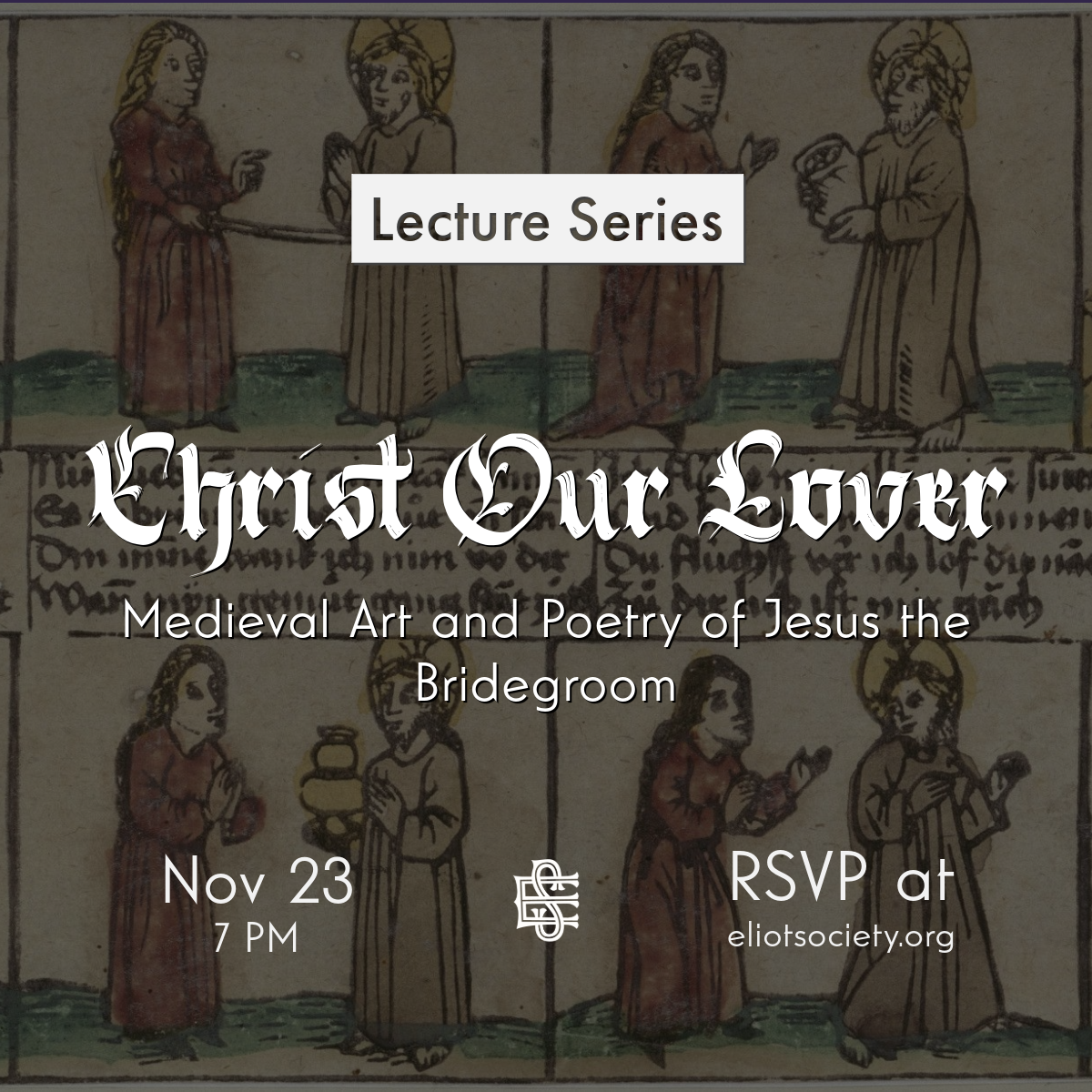
I’m one of the artistic directors of the Eliot Society, a faith-based arts nonprofit in Annapolis. I’m really looking forward to our next two events this fall! If you’re in the area, I’d love for you to come out to these talks by a musician and a medievalist. They’re both free and include a time of Q&A and a small dessert reception afterward.
>> “A Place to Be: Gospel Resonances in Classical Music” by Roger Lowther, October 26, 2024, Redeemer Anglican Church, Annapolis, MD: “At its most basic, music is a collection of sounds. How those sounds are organized varies by country and culture and reflects their values, history, and heart-longings. Join Tokyo-based American musician Roger W. Lowther on a journey through the landscapes of Western and Japanese classical music and explore their unique and fascinating differences. Roger will lead from the piano as he demonstrates the musical languages of each tradition and show how they contain hidden pointers to gospel hope in a world full of suffering and pain.”
I’ve heard Roger speak before, and he’s very Jeremy Begbie-esque in that he does theology through instrumental music. As a bicultural person, a New Englander having lived in Japan for almost twenty years (ministering to and through artists of all disciplines), he brings a unique perspective. In addition to discussing the defining features of the Western versus Japanese classical traditions, he’ll be performing a few piano pieces from each.
>> “Christ Our Lover: Medieval Art and Poetry of Jesus the Bridegroom” by Dr. Grace Hamman, November 23, 2024, St. Paul’s Anglican Church, Crownsville, MD: “If there was a ‘bestseller’ book of the Bible in the European Middle Ages, it would be the Song of Songs. When read allegorically, in the manner of medieval theologians like St. Bernard of Clairvaux, the book tells the story of the romance between Christ and the soul that culminates in Christ’s love shown on the cross. This is a story of mutual pursuit, the pain of desire and sacrifice, sensual delight, and true union. The idea of Jesus as a longing lover of each individual soul appeared everywhere by the later medieval period, in art, poetry, sermons, and the devotional writings of men and women alike.
“These themes and images can strike us as strange, even uncomfortable. An illustrated poem for nuns depicted the Song of Songs like a cartoon strip. Prayer books of wealthy nobles portrayed Christ’s wounds intimately. Poets wrote Christ in the role of a chivalric, wounded knight weeping and waiting for his lady. And yet, examining this ancient imagery of Jesus our Lover together can challenge us to greater vulnerability with our Savior, to refreshed understandings of God’s hospitality, and, in the words of Pope Gregory the Great, can set our hearts ‘on fire with a holy love.’”
Grace is a fabulous teacher of medieval poetry and devotional writing, one whom I’ve mentioned many times on the blog before. Her Jesus through Medieval Eyes was my favorite book of 2023; read my review here. She has encouraged me to move in toward the strange and imaginative in medieval theology and biblical interpretation, because there’s often beauty and wisdom to be found there if we give it a chance. She has a keen awareness of the body of Christ across time and an appreciation for the gifts they’ve bequeathed the church of today, be they words, art, or whatever else.
+++
VIDEO: “Poet and Pastor: Christian Wiman and Eugene Peterson”: In this four-minute video from Laity Lodge, poet and essayist Christian Wiman and pastor and spiritual writer Eugene Peterson (best known for his Bible translation The Message) talk about prayer and spirituality. They each share a poem they’ve written: Wiman’s “Every Riven Thing” and Peterson’s “Prayer Time.” “People who pray need to learn poetry,” Peterson says. “It’s a way of noticing, attending.”
ARTICLE + PLAYLIST: “Latin American Fiesta!” by Mark Meynell: I always appreciate the selections and knowledge Mark Meynell [previously] brings to his 5&1 blog series for the Rabbit Room, each post exploring five short pieces and one long piece of classical music. This Latin American installment features Kyries from Peru and Argentina, a candombe air, a four-part Christmas anthem in Spanish creole from Mexico (I found an English translation!), an Argentine tango, and a dance chôro (Portuguese for “weeping” or “cry”) from Brazil. What diverse riches!
“Classical music, as conventionally understood, is not often associated with Latin America,” Meynell writes, “though, as we will see, this is a situation that needs rectifying. Some extraordinary soundworlds were being created long before the Conquistadores arrived from European shores, and together with the cultural impact of the transatlantic slave trade from Africa, the musical mix that resulted is unique. To put it at its most simplistic, we could say that the two key musical influences were the Catholic Church and the complex rhythms of percussion and dance; and often, it’s hard to tell where one ends and the other begins.”
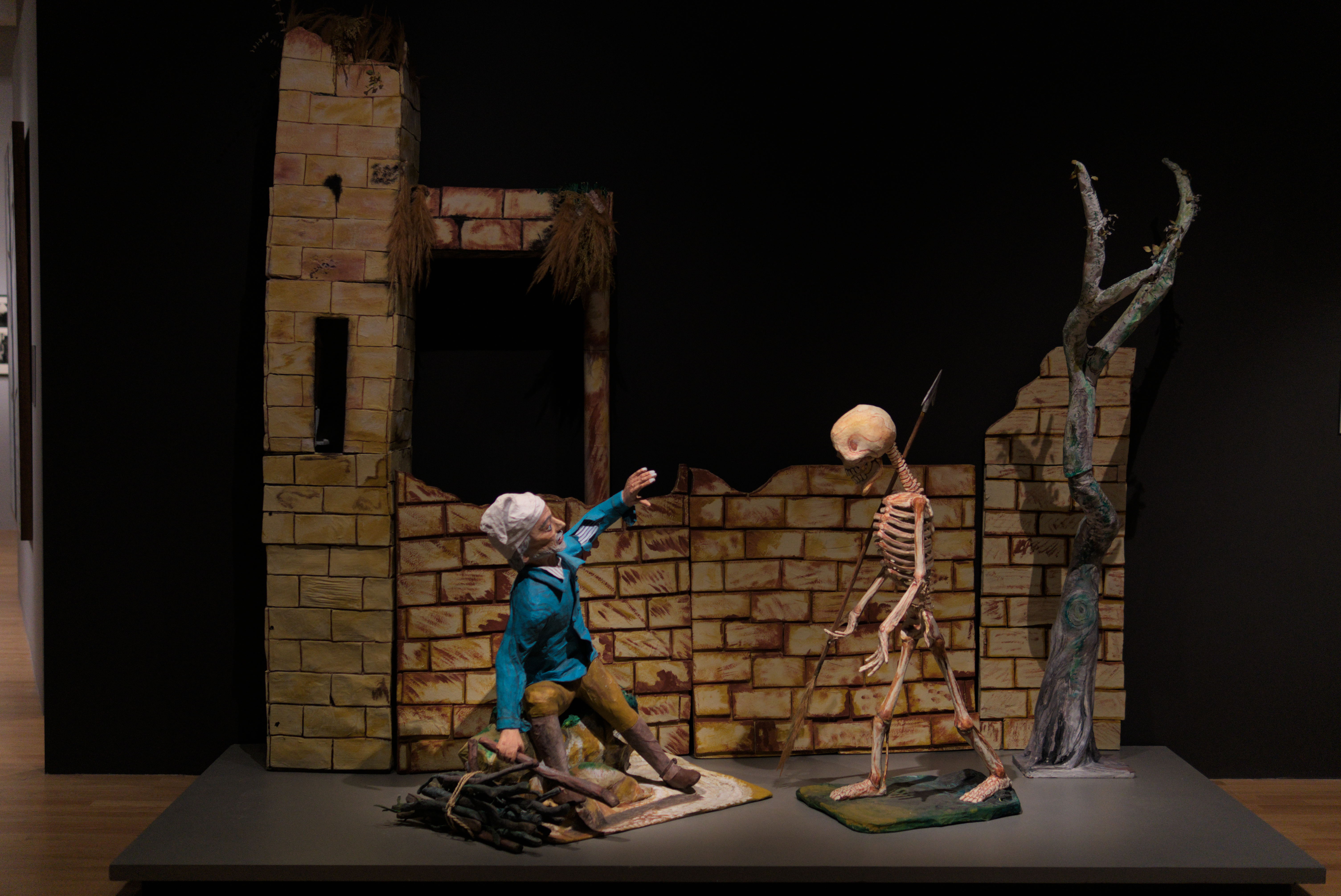
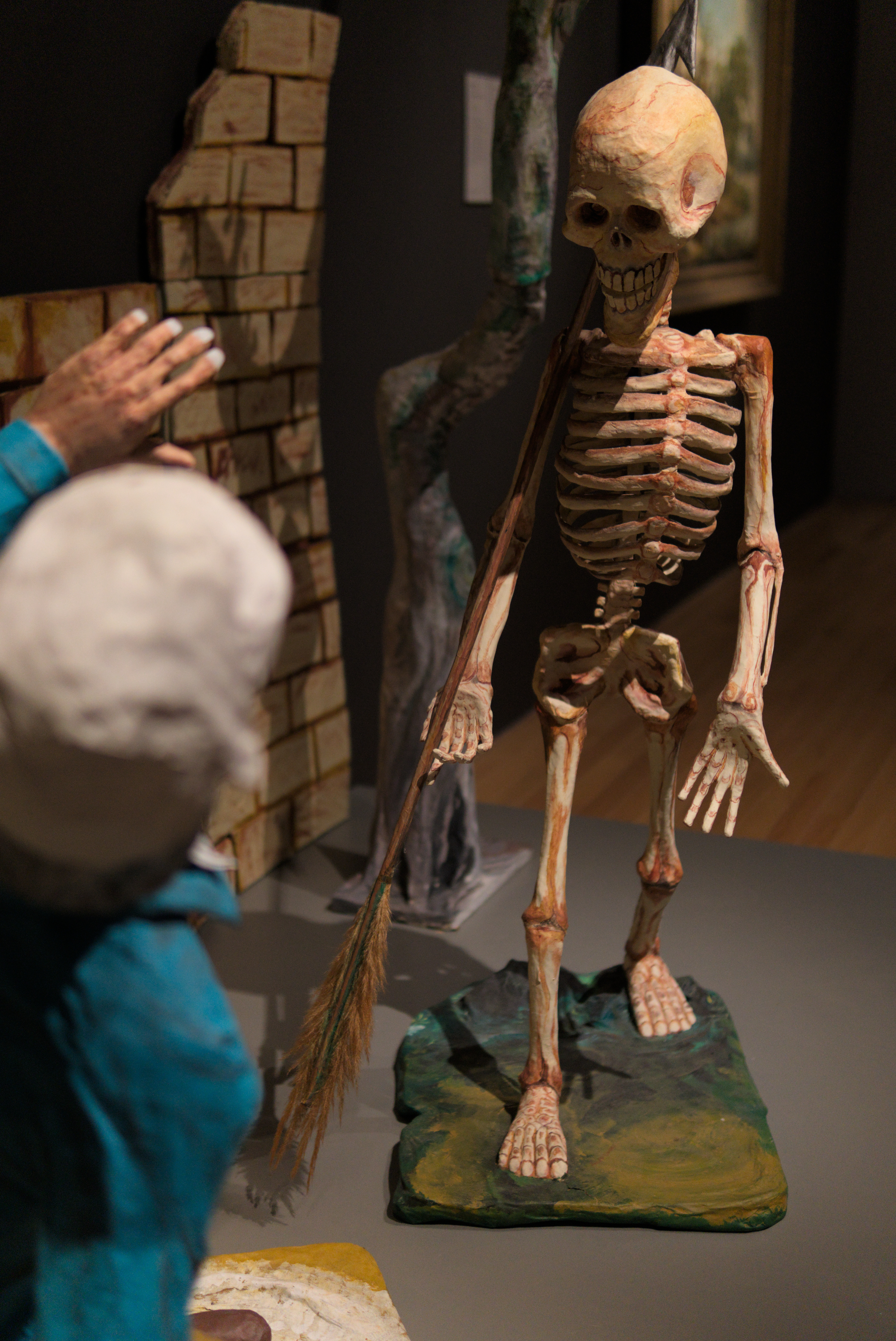
ARTWORK: The Old Man and Death by Pedro Linares: Last month I visited the Wadsworth Atheneum Museum of Art in Hartford, Connecticut, for the first time and was delighted to stumble upon an exhibition that had just been put up, Entre Mundos: Art of Abiayala. On view through December 15, it highlights collection works made by artists with personal or ancestral ties to Mexico, the Caribbean, and Central and South America. The title translates to “Between Worlds,” and “Abiayala,” I learned, is a Guna (Kuna) word that means “land in its full maturity” or “land of vital blood”; it’s used by the Guna and some other Indigenous peoples to refer to the Americas.
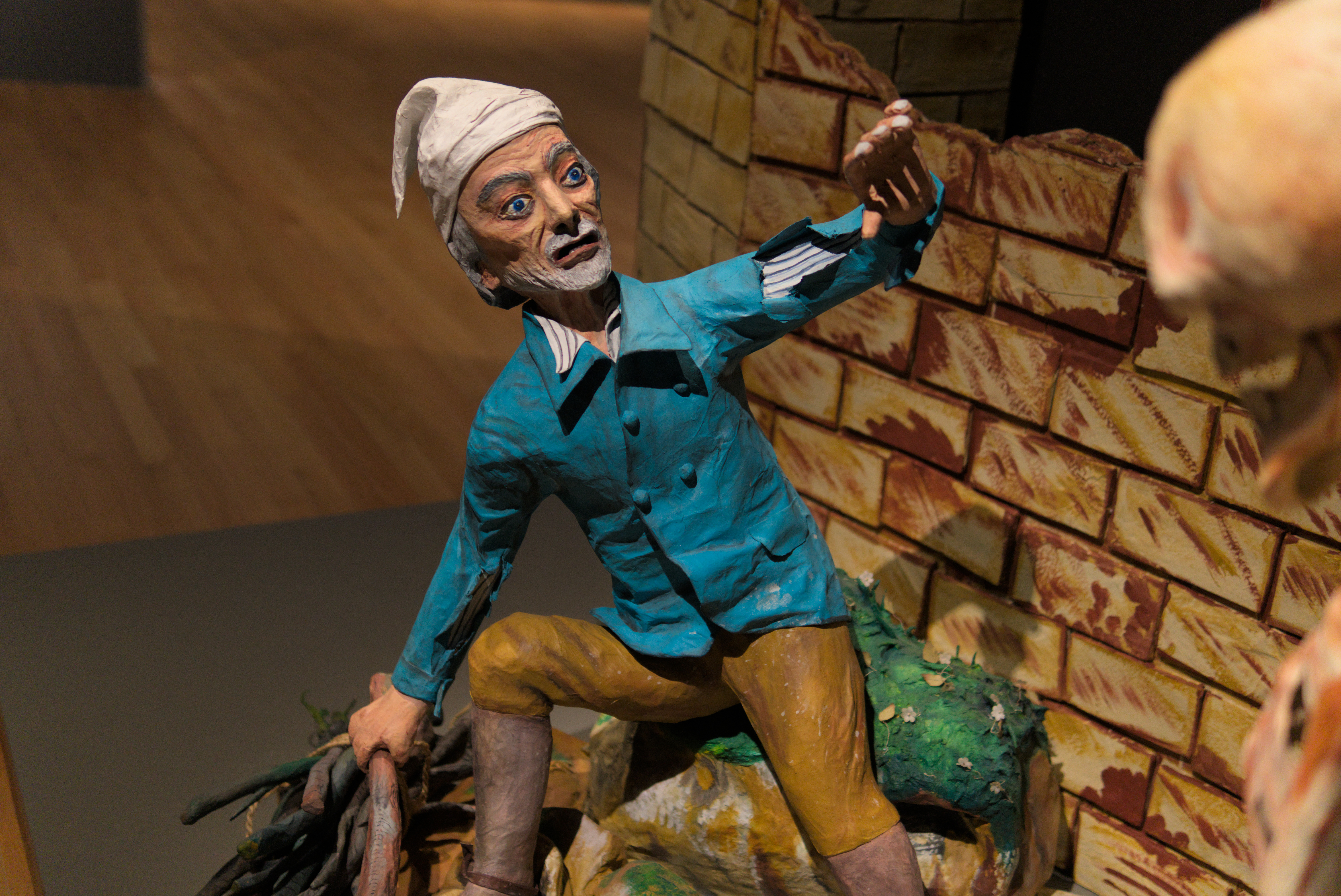
Pedro Linares (Mexican, 1906–1992), El viejo y la muerte (The Old Man and Death), 1986. Papier-mâché and mixed media. Wadsworth Atheneum Museum of Art, Hartford, Connecticut. Photo: Victoria Emily Jones.
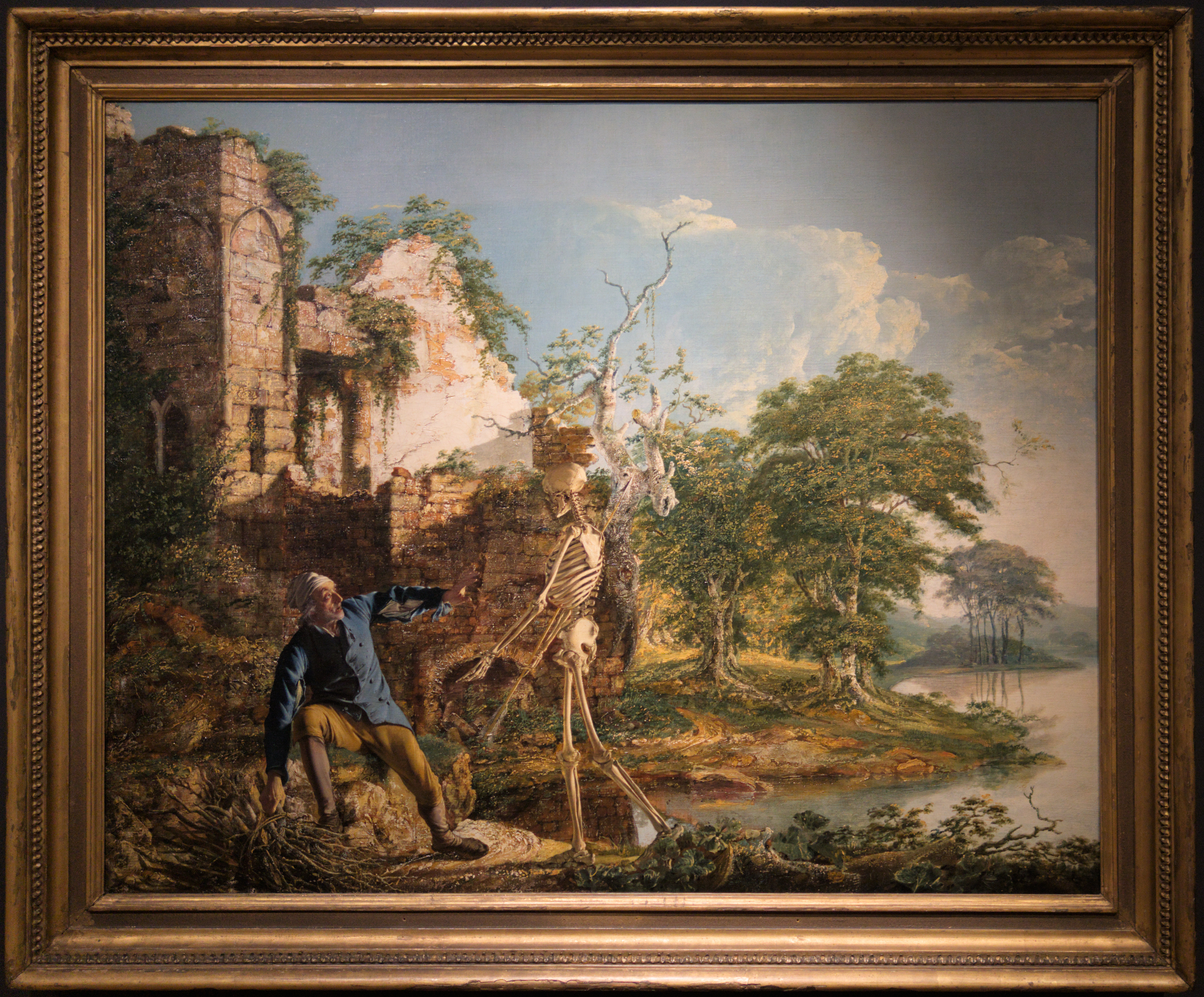
For me the standout piece from the exhibition is The Old Man and Death by Pedro Linares, a dramatic tableau in the medium of cartonería (papier-mâché sculpture), a traditional handcraft of Mexico. Commissioned by the Wadsworth in 1986 for the artist’s MATRIX exhibition, it reinterprets Joseph Wright of Derby’s 1773 painting of the same name, one of the most popular works in the museum’s collection.
Joseph Wright of Derby (English, 1734–1797), The Old Man and Death, 1773. Oil on canvas, 40 × 50 1/16 in. (101 × 127 cm). Wadsworth Atheneum Museum of Art, Hartford, Connecticut. Photo: Victoria Emily Jones.
masterfully combines Wright’s ability to depict a literary narrative with his skill in rendering a natural setting with accuracy and keenly observed detail. The subject of this painting is based on one of Aesop’s Fables or possibly a later retelling by Jean de la Fontaine. . . . According to the tale, an old man, weary of the cares of life, lays down his bundle of sticks and seats himself in exhaustion on a bank and calls on Death to release him from his toil. Appearing in response to this invocation, Death arrives. Personified here as a skeleton, Death carries an arrow, the instrument of death. Illustrating the moral of the tale that it is “better to suffer than to die,” the startled old man recoils in horror and instinctively waves him off, reaching for the bundle as he clings to life.
The Linares piece and its inspiration are placed side-by-side in the gallery, which also displays an alebrije by the same artist, papel picado, painted skulls, an ofrenda, and Diego Rivera’s Young Girl with a Mask.
Have you been delighted or inspired by the Art & Theology blog this year or its Instagram offshoot, @art_and_theology? If so, please consider donating to the work through a secure online form or PayPal, or by buying me a book from my Amazon wish list (my address is privately stored). Thank you to my five regular monthly supporters, and others who have blessed me with one-off donations of funds and books. These gifts not only provide important material assistance but also serve as an emotional boost, a validation that my work has value and is worth continuing.
My blog-related expenses this year have included a replacement of my old laptop, a conference registration and travel fees, a trip to New York, museum admissions, books, licensing fees for two images (I occasionally pay for images when good photos are not available online), and the yearly WordPress Premium fee to keep this site ad-free and mapped to a custom domain. Donations will go toward covering these, and if there is any left over, toward a new camera lens that will enable me to take wider shots, great for cathedrals and for larger artworks in tight quarters.
SPOTIFY PLAYLIST: October 2024 (Art & Theology): Every month I create a digital mixtape of Christian and Christian-adjacent music that deserves attention, consisting of old and brand-new recordings alike. Two hours of beautiful, soulful expressions of praise, prayer, and lament for your ears and heart.
+++
VIDEO: Animal Service at Ely Cathedral: On September 22, Ely Cathedral in England held its annual animal service, attended by some 450 animal lovers and their pets and service animals, mainly dogs. “Our annual Animal Service is an opportunity to give thanks for the animal companions with whom we share our lives and our planet, to bring them into our Cathedral, to ponder how best to care for animals and to ask God to bless them.” Marley the donkey, from the Donkey Sanctuary, led a procession up the nave. The liturgy was led by Canon James Garrard, and, in addition to several congregational hymns, including “All Creatures of Our God and King,” the cathedral’s children’s choir, the Ely Imps, sang “The Barnyard Song” by Rhonda Gowler Greene and “Look at the World” by John Rutter.
In addition to a special prayer of confession, act of commitment, and benediction, the service included this litany from the Book of Common Prayer:
God said, “Let the waters bring forth living creatures, and let birds fly across the sky.”
We thank you for the teeming life of the seas, And the flight of the birds. Help us to protect the environment So that all life may flourish. God of life: Hear our prayer.
God said, “Let the earth bring forth living creatures of every kind.”
We rejoice in the variety of animal life. Grant us grace to treat all animals with respect and care; To protect endangered species, To preserve the variety of habitats, And to honor the delicate balance of nature. God of life: Hear our prayer.
Heavenly Father, you have filled the world with beauty. Open our eyes to behold your gracious hand in all your works, That, rejoicing in your whole creation, We may learn to serve you with gladness, For the sake of him through whom all things were made, Jesus Christ our Lord. God of life: Hear our prayer.
Two volunteer representatives from the charity Medical Detection Dogs were invited to share about the work of dogs who are trained to detect the odor of human disease.
Several churches worldwide hold animal services around this time of the year, the Feast of St. Francis (known for his love and care of animals) being on October 4. These are usually in addition to the regular Sunday morning worship service and are not eucharistic. UMC’s Discipleship Ministries provides a sample liturgy for “A Service for the Blessing of Animals.” Many such services are held outdoors, such as the one organized annually by Washington National Cathedral, which is taking place this Sunday, October 6, at 2 p.m.
>>“There’s a Special Providence”by Seth Wieck, Texas Poetry Assignment:Seth Wieck [previously] is a writer from Amarillo, Texas. Published the week of the last US presidential inauguration, this poem muses on the impermanence of earthly empires, contrasting such with the steady, indifferent labor of birds, which continues on through administration changes and the passing of generations. The title and opening line are a clever rhyming twist on a line from the final act of Shakespeare’s Hamlet, “There’s a special providence in the fall of a sparrow.” For the poetic speaker, there’s a sense of comfort in God’s sovereignty and an orientation toward Christ’s lordship that puts election poll results, though not negligible, in proper perspective.
In a Substack post from February 2021, Wieck wrote, “I am no politician’s acolyte; they’re public servants, not saviors. I catch some heat in private conversation when I say that I couldn’t care less about national politics. That’s not a true statement, but the tense conversations in which I claim my ambivalence usually leave me no room for nuance. Those conversations demand my total wide-eyed attention to the firehouse of information being created by national elections. But as Mary Oliver said, ‘The beginning of devotion is attention.’ Forgive me if I am unwilling to develop devotion for those people whose only interest in my community is the exploitation of our devotion and resources.”
>> “Jesus Heals a Paralytic” by Ryan Keating, Reformed Journal: Ryan Keating is a pastor on the Mediterranean island of Cyprus (he preaches in Turkish and English), an academic writer and poet, and the owner of Exile Coffee and Wine. This poem retells the miracle from Mark 2:1–12 in the voice of the paralyzed man whom Jesus heals. Whereas many artists depict the episode with ropes used as a lowering mechanism, Keating says it’s much more likely, given the typically low ceilings of Middle Eastern homes, that the man would have been received by “a net of hands” raised up by the people in the room.
The poem repeats the word “temple” three times, remarking how the man was “suspended / in a temple by a temple / and landed on holy ground / as a temple . . .” The temple is the place where the crowd is gathered because Jesus is in it, and the four faith-filled friends who bring the paralyzed man there themselves constitute a temple, and the man too becomes a temple, a dwelling-place of God, after being made whole by Jesus. Drawing on Old Testament imagery of the garden of Eden and the exodus, the final stanza is one of restoration. The sea of people parts as the man steps outside into a garden, his friends buoyed by amazement.
+++
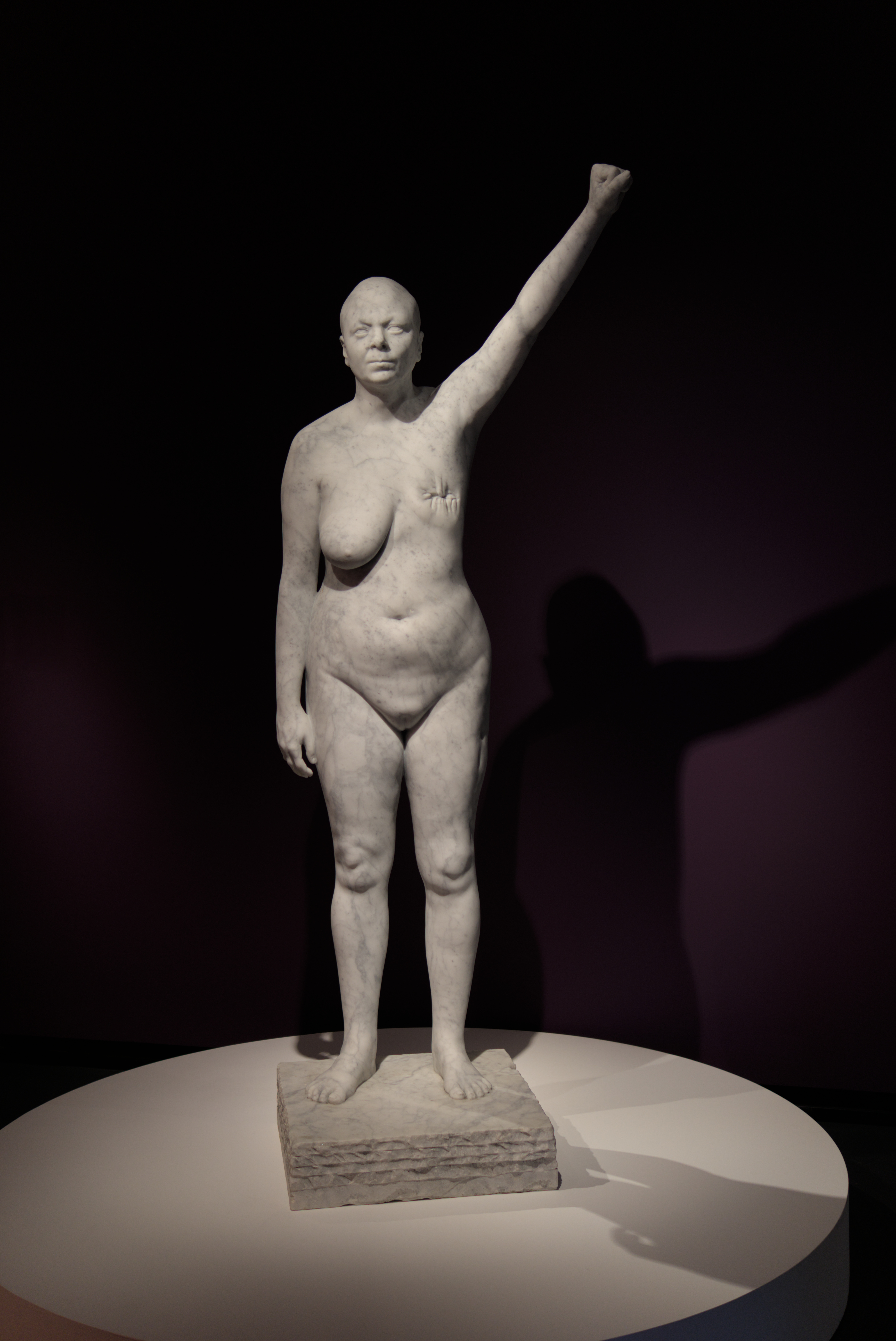
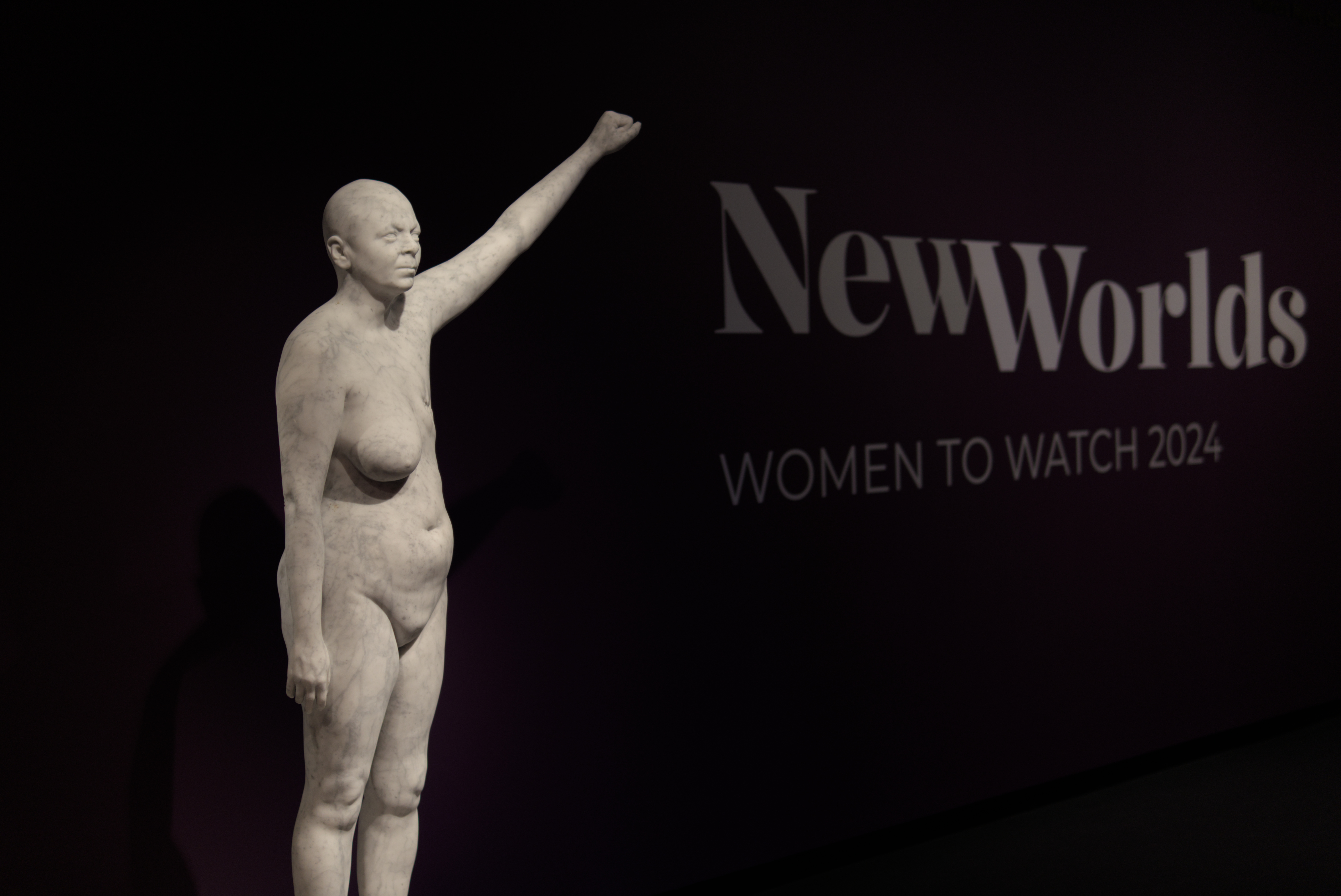
ARTWORK: Intra-Venus by Marina Vargas: October is Breast Cancer Awareness Month, so I wanted to share an artwork I encountered on the subject this summer at the New Worlds: Women to Watch 2024 exhibition at the National Museum of Women in the Arts. Intra-Venus is a nude self-portrait in marble by Spanish artist and breast cancer survivor Marina Vargas, frankly depicting her body after a mastectomy, chemotherapy, and radiation. Owning her scars and her baldness, she uses the language of classical sculpture to monumentalize a common female experience. (The chance of a woman in the US getting breast cancer in her lifetime is 1 in 8, and more than 100,000 US women undergo some form of mastectomy each year; global statistics are harder to come by.) Vargas lost the use of her left arm for a time during treatment, but here she shows herself with her left arm raised in triumph. The sculpture highlights the heroism of women who endure breast cancer and the dignity of their changed form.
Marina Vargas (Spanish, 1980–), Intra-Venus, 2019–21. Carrara marble, 77 1/2 × 26 3/4 × 26 in. Photo: Victoria Emily Jones.
Christianity has had a long and deep presence in Egypt. The art historical record is one means of exploring that.
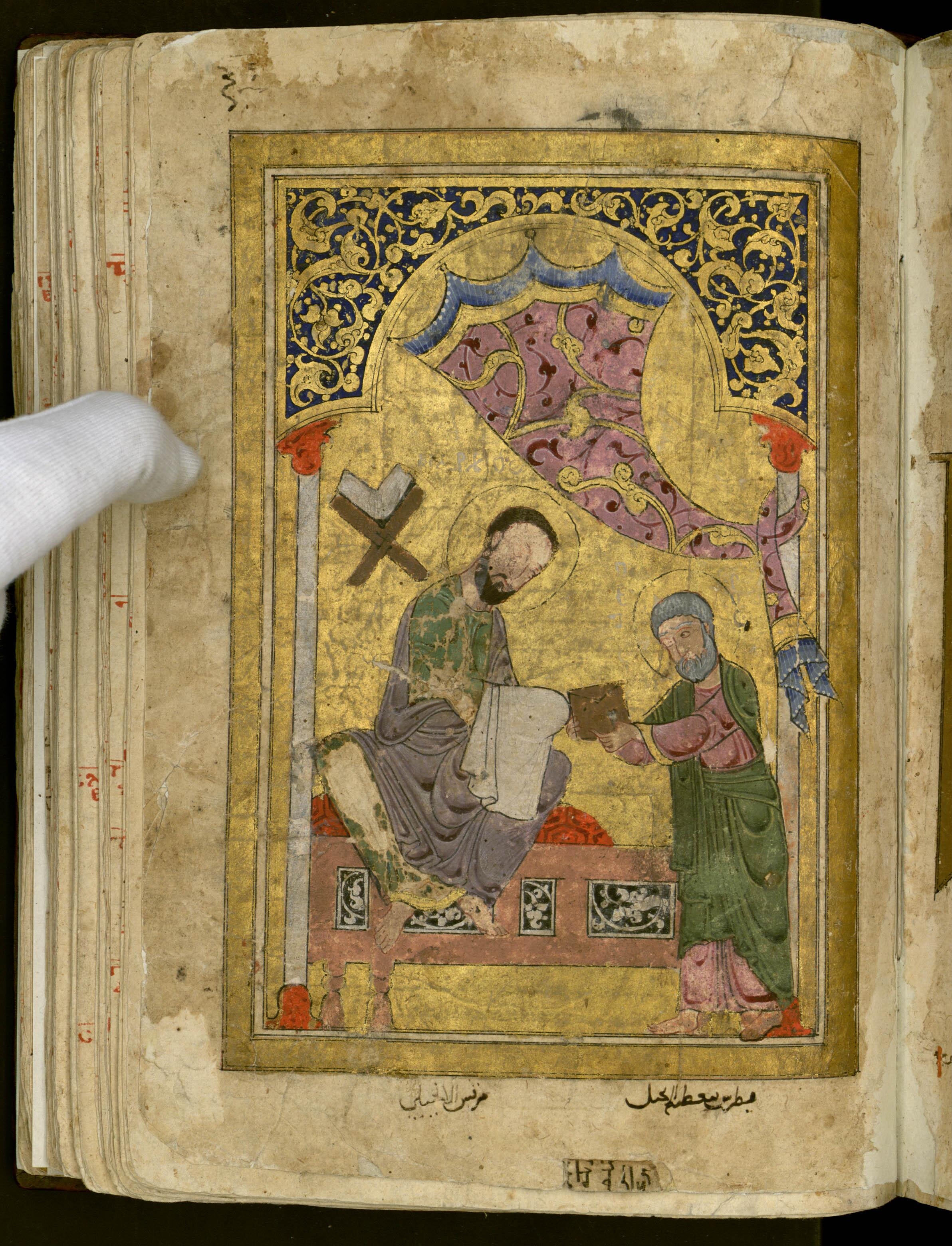
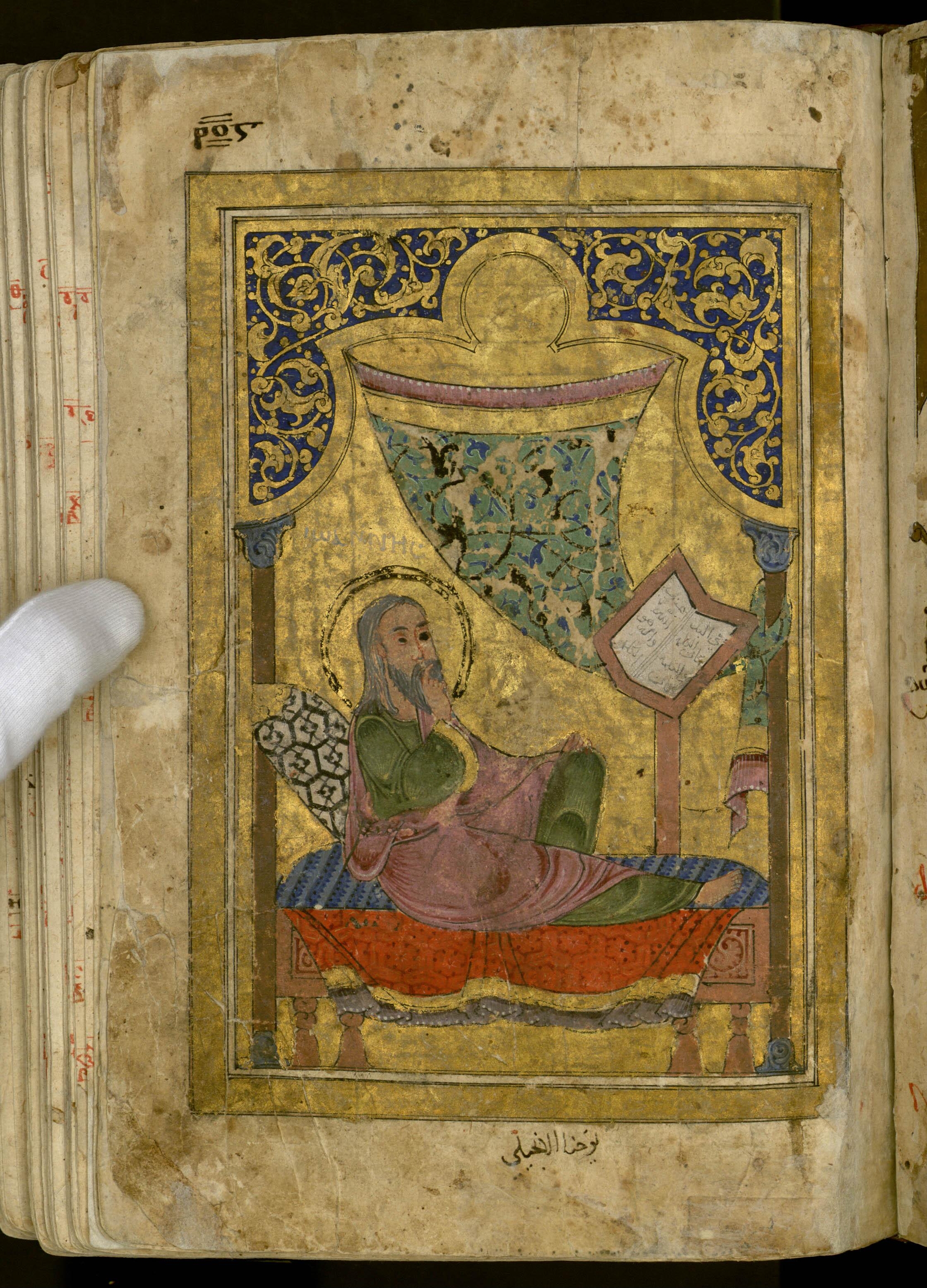
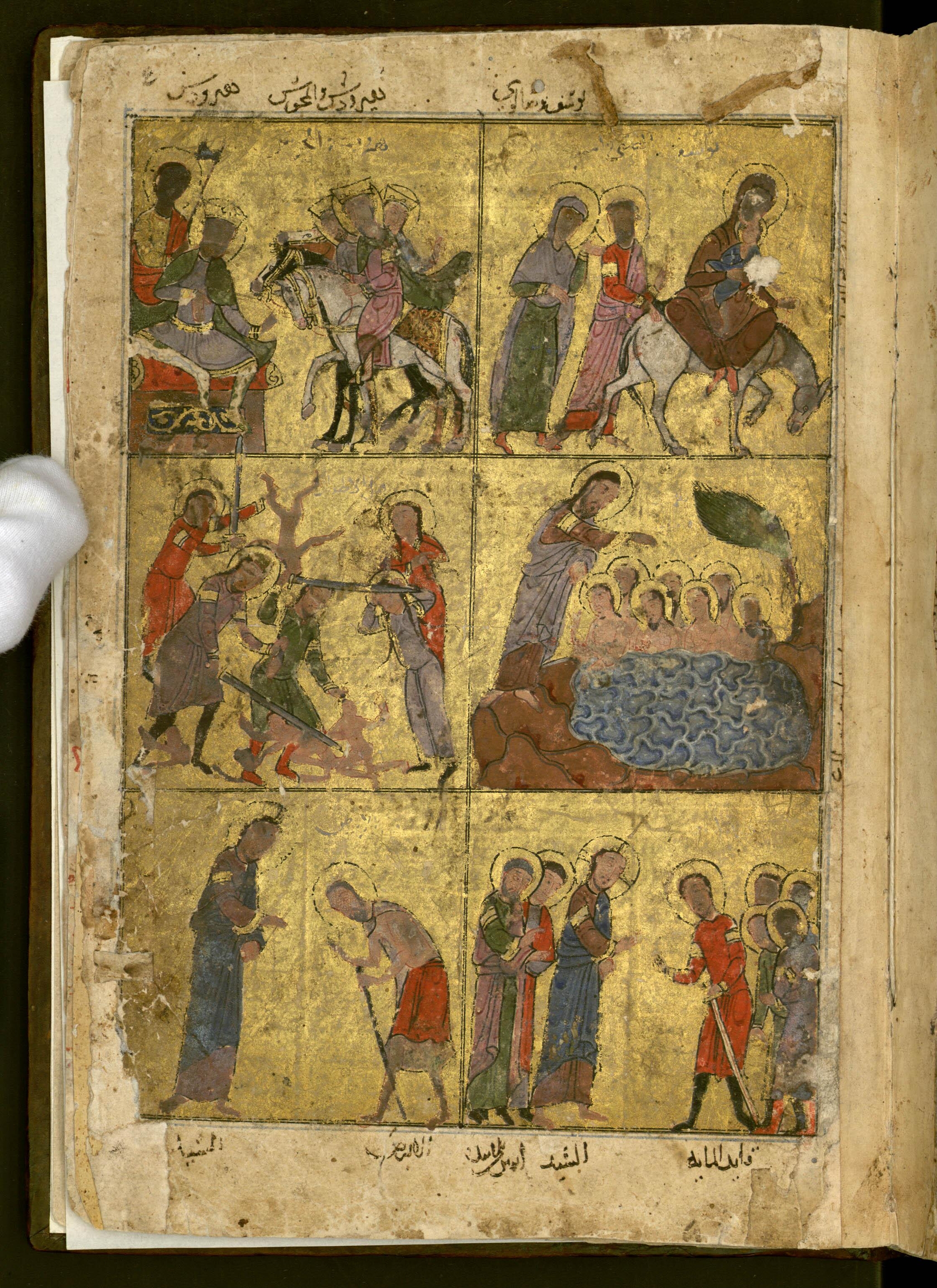
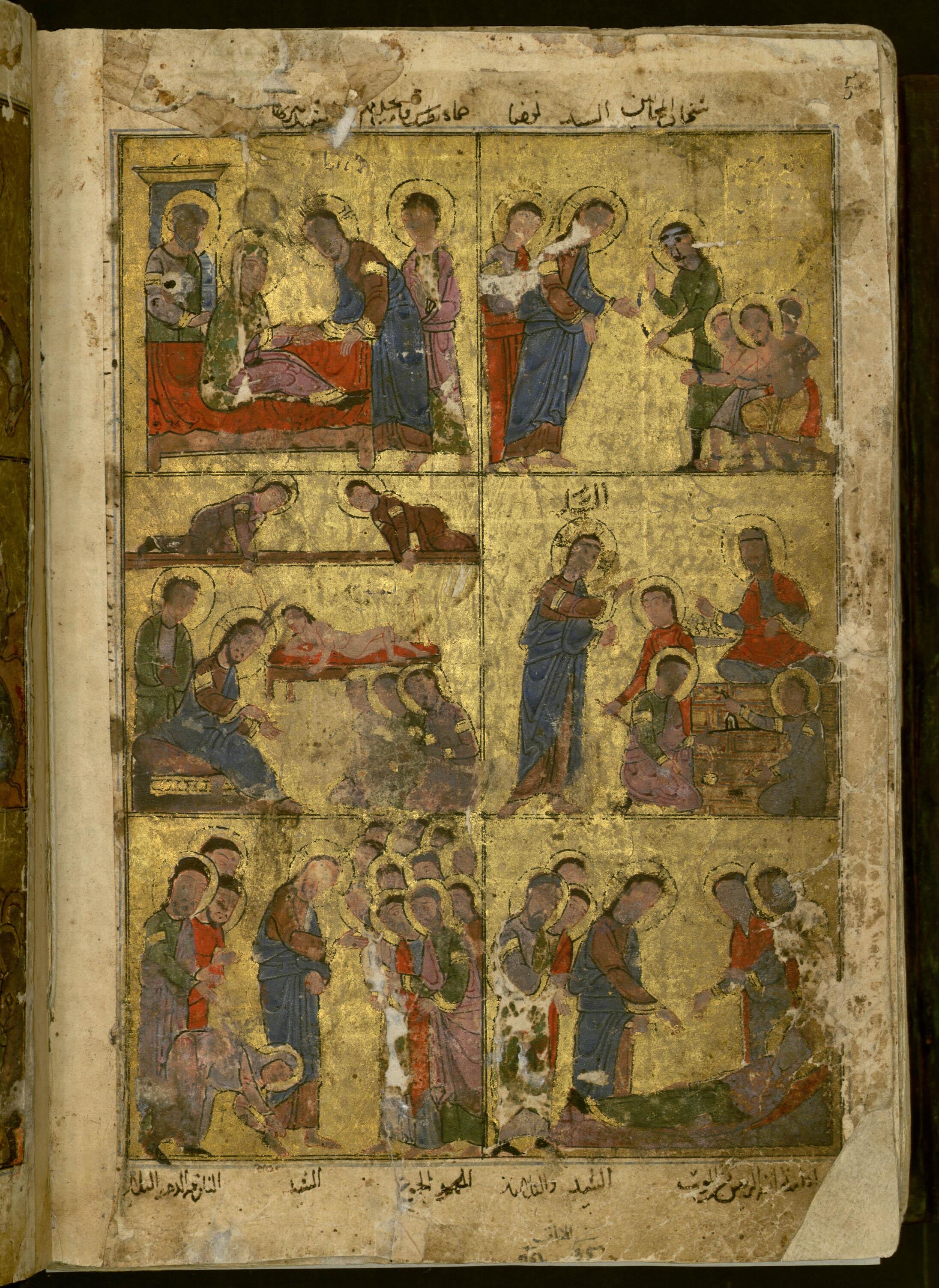
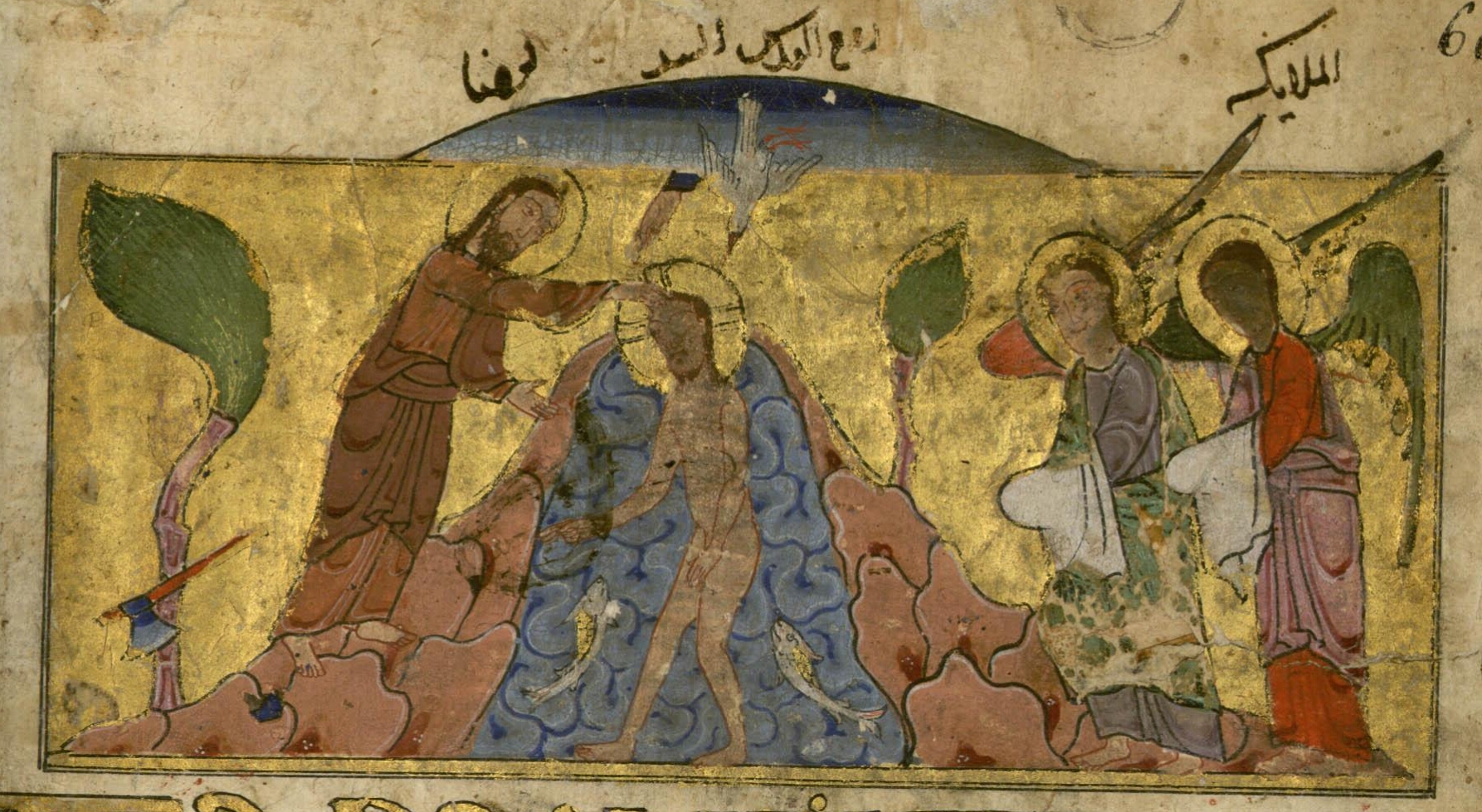
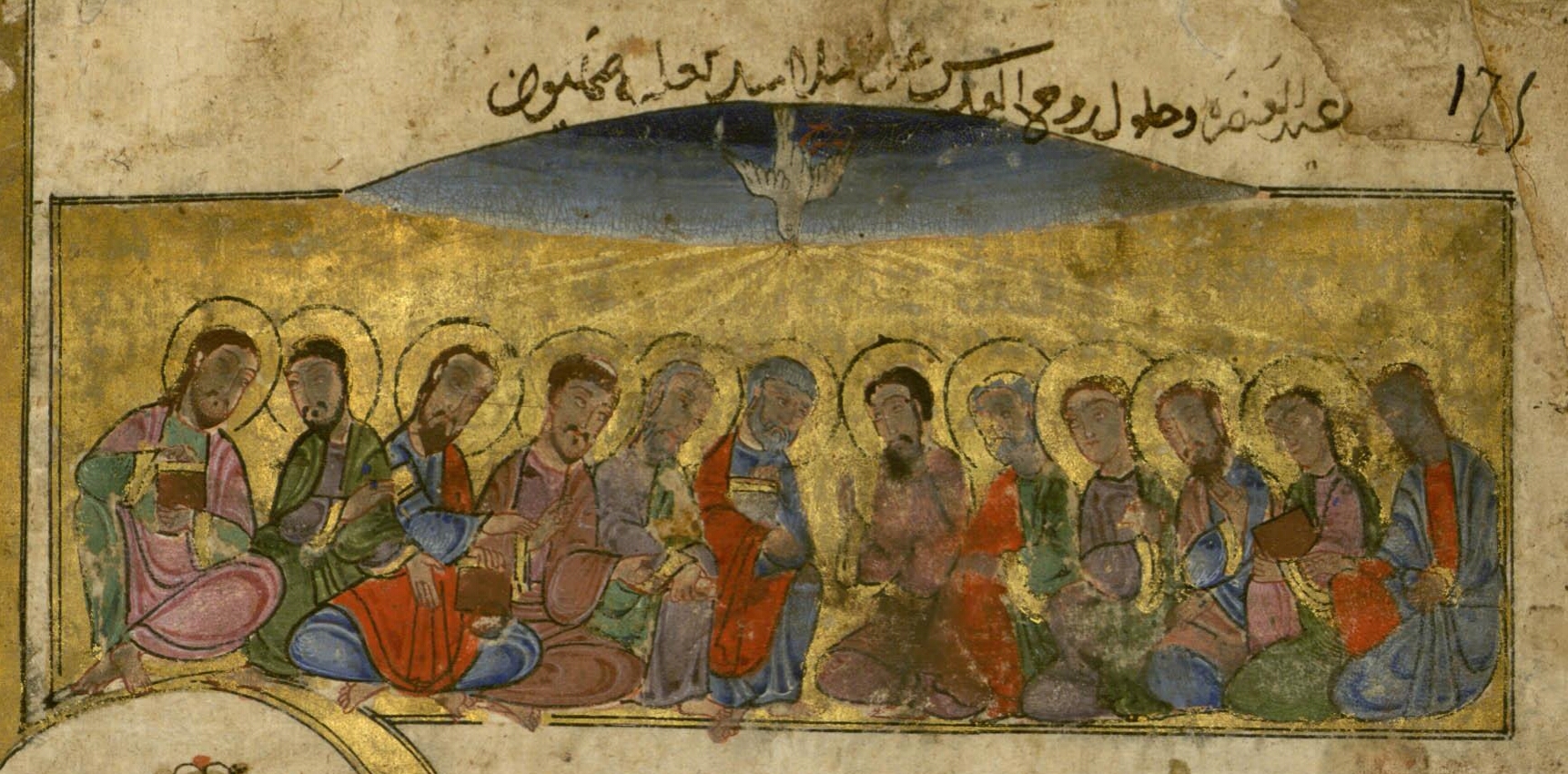
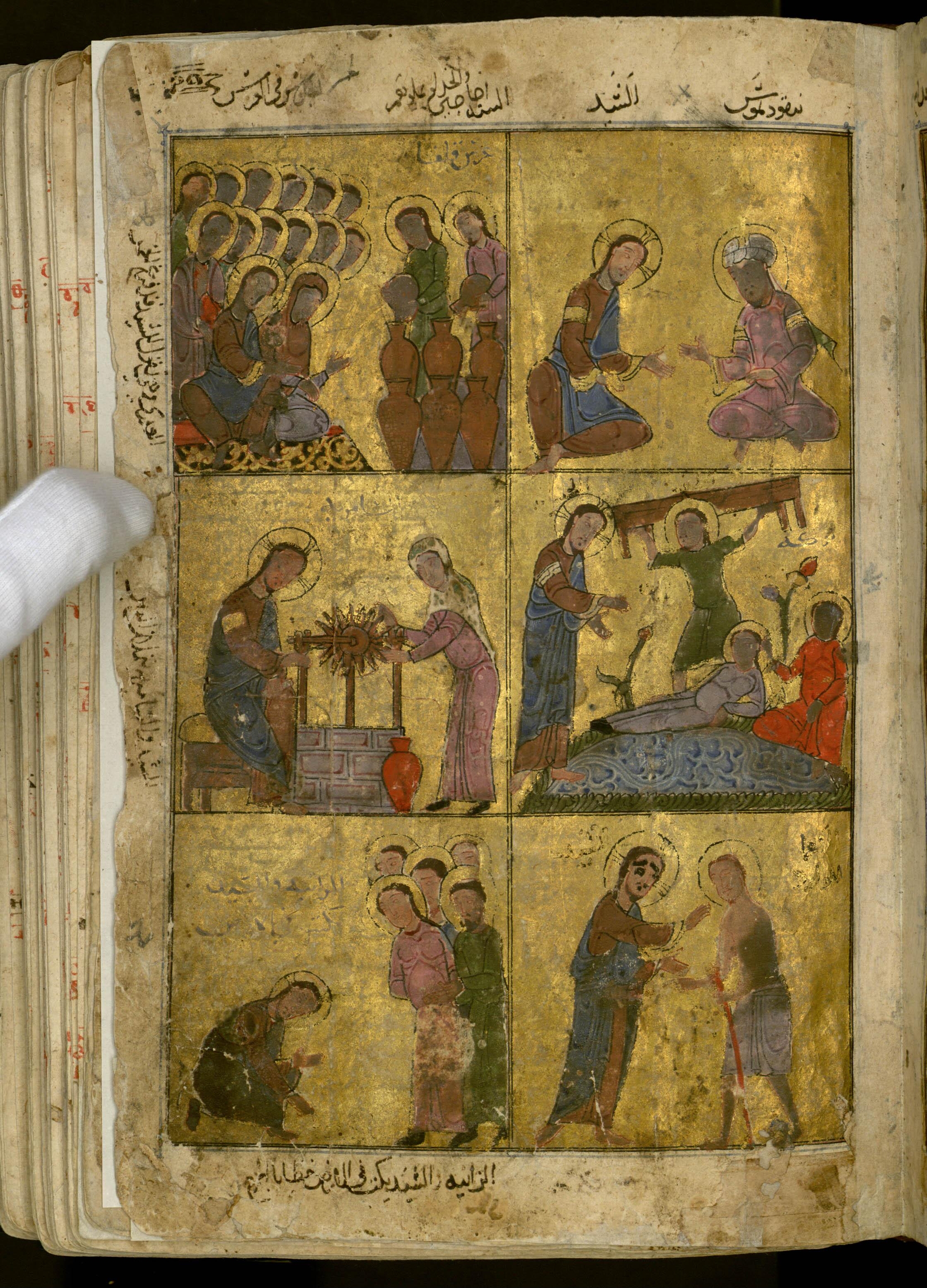
From mid-thirteenth-century Egypt there survives an illuminated New Testament written in Bohairic Coptic with glosses in Arabic. It was copied in Cairo in 1249–50 by Gabriel III (born al-Rashīd Farajallāh), who would serve as patriarch of Alexandria from 1268 to 1271, for the private use of a prosperous lay patron of the Coptic Church. The images are most likely the work of a single artist and his assistant.
This Coptic-Arabic New Testament is divided between two locations: the Four Holy Gospels in Paris (Institut Catholique, Ms. Copte-Arabe 1), and Acts of the Apostles and the Epistles in Cairo (Coptic Museum, Bibl. 94). In this post I will showcase the art from the Gospels portion.
Drawing on Byzantine and Islamic artistic influences, Copte-Arabe 1 “represents the culmination of painting in Egypt and the allied territory of Syria for the Ayyubid period [1171–1260] as a whole,” writes art historian Lucy-Anne Hunt. [1] The manuscript contains fourteen full-page miniatures and four Gospel headpieces. A later hand clumsily retouched in black ink some facial details that had become abraded over the years—so no, those marks most noticeable on folios 56v and 178v are not intended as mockery.
Of the fourteen full-page miniatures, four are portraits of the Evangelists (i.e., Gospel-writers): Matthew, Mark, Luke, and John. These are the most refined and celebrated paintings in the manuscript.
fol. 1v: Portrait of Matthew the Evangelistfol. 65v: Mark the Evangelist Receiving the Gospel from Peterfol. 105v: Portrait of Luke the Evangelistfol. 174v: Portrait of John the Evangelist
Each Evangelist is shown under a cusped arch—Matthew copying his Gospel in Arabic, Luke seated in front of a pulled-back curtain with a lotus design pattern, and John uniquely reclining, a pose adapted from secular models.
But the most interesting of the four Evangelist portraits is Mark’s, because there’s another figure with him. The owning institution labels the page “Marc l’évangéliste; Pierre lui donnant l’Evangile” (Mark the Evangelist; Peter giving him the Gospel). I had to look into this!
Traditionally, a man named John Mark is credited as the author of the Gospel that begins, “The beginning of the good news of Jesus Christ.” (It came to be called the Gospel of Mark by the end of the second century.) John Mark was a disciple of Peter, whom he is believed to have used as his primary source in composing his Gospel. The two were close companions, and Peter even refers to him as a son (1 Pet. 5:13). John Mark’s mother, Mary, hosted a house church that Peter was connected with (Acts 12:12). John Mark was also a cousin of Barnabas of Cyprus (Col. 4:10) and accompanied Paul in some of his apostolic travels (Acts 12:25; 13:1–5; 15:36–39).
Papias of Hierapolis, Irenaeus, Justin Martyr, Clement of Alexandria, Eusebius, Tertullian, and Origen—church fathers of the first two centuries of Christianity—all mention in their writings that Mark wrote his Gospels based on Peter’s eyewitness testimony and teachings. [2]
So folio 65v of Copte-Arabe 1 shows Peter passing on his intimate knowledge of Christ to Mark. As a sign of respect, Mark’s hands are covered with a cloth, ready to receive Peter’s notes.
Examining artistic precedents of this pair of men, Hunt writes:
Middle Byzantine iconographic sources can . . . be suggested for the Copte-Arabe 1 portrait of Mark with Peter (fol. 65v), which relates to the broad category of Evangelist portraiture with a second, usually inspiring figure. Mark appears seated, with Peter, who stands before him bearing the Gospel. More frequent are portraits of Peter dictating to Mark, the earliest known being that in the mutilated Greek New Testament in Baltimore (Walters Art Gallery W. 524) in which both are seated. Greek manuscripts with such portraits would have been accessible through the Syrian and Armenian communities. Two such twelfth century Gospels today in Jerusalem are the Greek Taphou 56 and the Armenian Theodore Gospels (Armenian Patr. 1796), showing the standing Peter dictating to the seated Mark. It has often been pointed out that secondary figures, either inspiring or presenting, are particularly common in Coptic and other oriental Christian art. [3]
Now let’s take a look at the narrative images. I went through them all and attempted to identify each scene as best I could (I can’t read the Arabic inscriptions), which I label in the caption along with the scripture passage it illustrates. These descriptive titles are preceded by the folio number. Note that in manuscript studies, “fol.” or “f.” stands for “folio” (page), “v” stands for “verso” (a left-hand page), and “r” stands for “recto” (a right-hand page).
The first narrative scene in the manuscript, a header to the Gospel of Matthew, is a Nativity, with Mary reclining in the hollow of a cave and the Christ child lying swaddled beside her, adored by an ox and ass. An angel with folded hands peers reverently over a rocky outcrop, while shepherds approach from the left and magi from the right. Joseph is seated near his wife, eyeing the coming visitors.
fol. 2r: The Nativity (Matt. 1:25; 2:9–11; cf. Luke 2:1–7)
Later there follow six pages illuminating various stories from the Gospel of Matthew—the largest image sequence in the manuscript. As in the Gospels of Luke and John (there are none for Mark), these scenes are arranged on a grid system of six small squares to a page.
fol. 4v: The Magi before Herod (Matt. 2:7–8); The Flight to Egypt (Matt. 2:13–15); The Massacre of the Innocents (Matt. 2:16–18); John the Baptist Baptizes Converts (Matt. 3:1–12); Jesus Heals a Man with Leprosy (Matt. 8:1–4); A Centurion of Capernaum Seeks Healing for His Servant (Matt. 8:5–13)fol. 5r: The Healing of Peter’s Mother-in-Law (Matt. 8:14–15); Jesus Restores Two Demon-Possessed Men (Matt. 8:28–24); The Healing of the Paralytic (Matt. 9:1–8); The Calling of Matthew (Matt. 9:9–13); The Healing of the Woman with the Issue of Blood (Matt. 9:20–22); The Raising of Jairus’s Daughter (Matt. 9:18–19, 23–26)fol. 18v: Messengers from John the Baptist (Matt. 11:2–5); The Beheading of John the Baptist (Matt. 14:1–12); The Feeding of the Multitudes (Matt. 14:13–21); The Transfiguration (Matt. 17:1–13); Jesus Heals a Demon-Possessed Boy (Matt. 17:14–20); The Mother of James and John Requests a Favor (Matt. 20:20–28)fol. 19r: Jesus’s Disciples Fetch a Donkey (Matt. 21:1–6); Christ’s Entry into Jerusalem (Matt. 21:7–11); The Parable of the Wise and Foolish Virgins (Matt. 25:1–13); The Anointing at Bethany (Matt. 26:6–13); Jesus Washes His Disciples’ Feet (John 13:1–17); The Last Supper (Matt. 26:20–29)
From having seen other similar compositions, I know that the man holding the scroll and gesturing toward the donkey on folio 19r/1 is the prophet Zechariah, and that his scroll contains a portion of Zechariah 9:9: “Rejoice greatly, O daughter Zion! Shout aloud, O daughter Jerusalem! See, your king comes to you; triumphant and victorious is he, humble and riding on a donkey, on a colt, the foal of a donkey.”
fol. 56v: The Agony in the Garden (Matt. 26:36–46); The Kiss of Judas (Matt. 26:47–49); The Arrest of Christ (Matt. 26:50–56); Christ before Caiaphas (Matt. 26:57–66); The Denial and Repentance of Peter (Matt. 26:69–75); Christ before Pilate (Matt. 27:11–23)fol. 57r: Judas Returns the Blood Money and Hangs Himself (Matt. 27:1–10); Pilate Washes His Hands (Matt. 27:24–26); Christ Carries His Cross (Matt. 27:31); The Crucifixion (Matt. 27:33–56); The Deposition (Matt. 27:57–59); The Entombment (Matt. 27:59–61)
Strikingly, all the figures in this manuscript are given halos around their heads, not just holy figures—for example, King Herod, antagonistic Pharisees, Judas, the Roman soldiers who arrest and taunt Jesus, and the foolish virgins. I’m not sure the reason for this; it’s possible it marks the imago Dei in each and every human, even those who oppose Christ. I welcome the input of scholars better versed in Coptic art than I.
The headpiece to the Gospel of Mark portrays the Baptism of Christ. Fully nude, he is submerged in the Jordan River. John the Baptist stands on the bank and touches Christ’s head, while the hand of God the Father emerges from the heavens, pronouncing blessing over the Son, and the Holy Spirit as dove hovers above. Again, the manus velatae (veiled hands) motif appears, this time with the angels, signaling their reverence. On the left an ax cuts into the base of a tree, a reference to John the Baptist’s stark warning to the Sadducees and Pharisees who observe the baptisms: “Even now the ax is lying at the root of the trees; therefore every tree that does not bear good fruit will be cut down and thrown into the fire” (Matt. 3:10).
fol. 66r: The Baptism of Christ (Mark 1:9–11)
The next illumination is folio 106r, which opens the Gospel of Luke. It shows three scenes from Luke 1: the angel Gabriel announcing to the priest Zechariah that his wife, Elizabeth, will bear a son named John; Gabriel announcing to the virgin Mary that she will bear a son named Jesus; and Mary and Elizabeth rejoicing together in the unexpected news of their pregnancies and the divine deliverance they signal.
fol. 106r: The Annunciation to Zechariah (Luke 1:5–23); The Annunciation to Mary (Luke 1:26–38); The Visitation (Luke 1:39–56)
In the first full-page miniature from Luke (below), the third scene confuses me a bit. I’m fairly sure it’s supposed to be the twelve-year-old Jesus sitting among the doctors of the law in the temple at Jerusalem, as narrated in Luke 2:41–51; this episode is typically included in image cycles on the Life of Christ. But here he’s shown as a full-grown adult. The arch above the group is similar to the one shown in the previous frame where the infant Christ is presented in the temple forty days after his birth, suggesting that this is the temple, not a synagogue.
fol. 109v: The Birth of John the Baptist (Luke 1:57–58); The Presentation in the Temple (Luke 2:22–38); Christ Disputing with the Doctors in the Temple (Luke 2:46–47); Jesus Teaching in the Synagogue at Nazareth (Luke 4:16–20); The Religious Leaders Attempt to Push Jesus Off a Cliff (Luke 4:28–30); Jesus Raises the Son of the Widow of Nain (Luke 7:11–17)
Regardless, the next episode, portrayed on folio 109v/4, is one of my favorites in Luke’s Gospel: Jesus interpreting the Isaiah scroll at his hometown synagogue, announcing himself as the long-awaited Messiah and thereby launching his ministry.
When he came to Nazareth, where he had been brought up, he went to the synagogue on the Sabbath day, as was his custom. He stood up to read, and the scroll of the prophet Isaiah was given to him. He unrolled the scroll and found the place where it was written:
The Spirit of the Lord is upon me, because he has anointed me to bring good news to the poor. He has sent me to proclaim release to the captives and recovery of sight to the blind, to set free those who are oppressed, to proclaim the year of the Lord’s favor.
And he rolled up the scroll, gave it back to the attendant, and sat down. The eyes of all in the synagogue were fixed on him. Then he began to say to them, “Today this scripture has been fulfilled in your hearing.” (Luke 4:16–20; cf. Isa. 61)
When asked to expound, Jesus emphasizes how God’s plan of salvation is for all people, recounting two stories from the Hebrew scriptures in which God showed favor to Gentiles—namely, the widow of Zarephath and the Syrian general Naaman. Well, this really raises the ire of his Jewish audience, who believed the Messiah should act exclusively on their behalf. The artist of Copte-Arabe 1 shows on folio 109v/5 the culmination of this contentious encounter between the up-and-coming Jewish teacher making his way through Galilee and the old guard: an attempted murder!
When they heard this, all in the synagogue were filled with rage. They got up, drove him out of the town, and led him to the brow of the hill on which their town was built, so that they might hurl him off the cliff. But he passed through the midst of them and went on his way. (Luke 4:28–30)
On the following page, in the fifth frame, the Rich Man and Lazarus is one of Jesus’s three parables depicted in the manuscript. (The other two are of the Ten Virgins and the Good Samaritan.) The artist depicts not the impoverished, sore-laden Lazarus begging outside the wealthy Dives’s door in this life, but the afterlife. Lazarus, now whole, sits comfortably in Abraham’s bosom, while Dives, who lacked mercy on earth, is denied it in hell; he languishes in flames.
fol. 110r: Jesus Is Anointed by a Sinful Woman (Luke 7:36–50); The Parable of the Good Samaritan (Luke 10:25–37); The Healing of the Woman with a Bent Back (Luke 13:10–17); The Healing of the Man with Edema(?) (Luke 14:1–6); The Rich Man and Lazarus (Luke 16:19–31); The Healing of the Ten Lepers (Luke 17:11–19)
I’m not sure what the center right scene depicts, but given its placement in the sequence, its setting in a lavish interior, and Jesus’s clear presence at the left (as indicated by the cross in his halo; which I’d say precludes the figures being characters in a parable), my best guess is it represents the healing of the man with edema (dropsy), which takes place in the house of a prominent Pharisee.
Further into the manuscript, our anonymous artist commences the fourth and final Gospel, John, with a depiction of the descent of the Holy Spirit on the apostles at Pentecost—an event described not in John’s Gospel but in the book of Acts.
fol. 175r: The Descent of the Holy Spirit (Acts 2:1–13)fol. 178v: The Wedding at Cana (John 2:1–12); Jesus Teaches Nicodemus (John 3:1–21); The Woman at the Well (John 4:1–26); The Healing at the Pool of Bethesda (John 5:1–15); The Woman Caught in Adultery (John 8:1–11); The Healing of the Man Born Blind (John 9:1–12)fol. 179r: The Raising of Lazarus (John 11:1–44); The Holy Women at the Tomb (Mark 16:1–8); The Road to Emmaus (Luke 24:13–27; cf. Mark 16:12); The Incredulity of Thomas (John 20:24–29); The Miraculous Catch of Fish (John 21:1–14); The Ascension (Luke 24:50–53)
Folio 179r also contains scenes whose scriptural referents are from other Gospels: four women arriving at Christ’s empty tomb on Easter morning (John mentions only Mary Magdalene, Matthew mentions two women, Mark mentions three, and Luke speaks generally of “the women”); the risen Christ meeting two pilgrims on the road to Emmaus; and Christ’s ascent into heaven. I suppose it’s because this final full-page miniature is Resurrection-themed, so the artist harmonizes the four Gospels, pulling relevant highlights from each.
NEW ALBUM: By Babylon’s River by the Pharaoh Sisters: A folk band from the foothills of North Carolina, the Pharaoh Sisters [previously] are Austin Pfeiffer, Jared Meyer, Kevin Beck, and John Daniel Ray. On September 13 they released their second album, By Babylon’s River, unveiling a new genre they call “saloon Christian.” The title track is a western waltz adaptation of Psalm 137. Also included on the album are a version of Psalm 81 (“Sing, Oh Sing”); bluegrass arrangements of the gospel standards “Leave It There” and “Hold to God’s Unchanging Hand”; retunes of the hymns “All Things Bright and Beautiful” by Cecil Frances Alexander and “’Tis Finished” by Charles Wesley; a cheeky take on the story of Samson, and more.
I was introduced to Hurt over a decade ago through his recording of the African American spiritual “I Shall Not Be Moved,” based on Psalm 1. The songs he sang were a mix of sacred and secular.
+++
ARTISTS’ PROFILE: “Sunny Taylor / Jack Baumgartner,”Artful, season 3, episode 6: The BYUtv docuseries Artful, which is available to watch freely online, profiles a variety of artists of faith—many of them Latter-day Saints, but some (non-LDS) Christian or Jewish.
The first half of episode 6, season 3, highlights the work of Sunny Taylor, who lives in Wilton, Maine, and engages with painting’s geometric tradition. She values process over product and wants viewers to observe the surface and textures of her paintings, built up through meticulous layering techniques that involve scraping and grinding. She sees beauty in imperfection, and sorrow and joy as bound up together. Follow her on Instagram @sunnytaylorart.
Sunny Taylor (American, 1979–) Connections, 2024. Acrylic on panel, 24 × 12 in. [for sale] [artist’s statement]
Beginning at the 13:38 time stamp, the second half is on multidisciplinary artist Jack Baumgartner of Kansas. Baumgartner, who has a Presbyterian background, is a printmaker, painter, farmer, woodworker, puppeteer, and musician. He raises sheep, goats, and chickens, builds furniture, plays the banjo, and cohosts the podcast The Color of Dust with two poet friends, “exploring the seen and unseen in the soil of art and agriculture.” He is also a husband and a father of five. I first learned about Baumgartner through an Image journal profile; and Plough published an article about him in 2018. I really enjoyed this twelve-minute video segment that shows him at work and at play in and around his home—especially his puppet theater performance of The Two Deaths of John Beartrist Laceroot! Follow him on Instagram @baumwerkj.
Jack Baumgartner (American, 1976–), Go On, Adam, Breathe, 2023. Linocut, 14 × 18 in. [for sale]
+++
PODCAST EPISODE: “Grief and Poetry, with guest Kim Langley,”Faith and Imagination, October 4, 2021: Kim Langley is a certified spiritual director and retreat leader from Ohio; she is also the founder of WordSPA (acronym for “Spirituality Poetry Appreciation”) and author of Send My Roots Rain: A Companion on the Grief Journey (Paraclete, 2019), a compilation of sixty poems interwoven with narrative and commentary, in preparation for which she interviewed some three dozen chaplains, pastors, grief counselors, hospice workers, funeral directors, and bereaved people. She wrote the book after the death of her parents. “I found such comfort in the poems,” she writes, “written by a host of people just like us, picking up their pain, juggling it awkwardly in their arms at first—or maybe for a long time—then gradually finding the resilience to carry it, to know when and how to put it down, when to pick it up, and how to develop strong muscles for the long haul. They helped me carry my pain, and I think they will help you to survive, and maybe even thrive a little.” In this podcast episode, she and the host read and discuss four poems from the book: “Let Evening Come” and “Otherwise” by Jane Kenyon, “Those Winter Sundays” by Robert Hayden, and “Stillbirth” by Laure-Anne Bosselaar.
Launched in 2020, Faith and Imagination [previously] is the podcast of the BYU Humanities Center, hosted by founding director Matthew Wickman. It features interviews with a range of writers, scholars, clergy, and others. View the full archive at https://humanitiescenter.byu.edu/podcast/. And in addition to the Langley episode, let me turn your attention to an excellent recent release with an author I’ve mentioned before: “On Deepening Our Religious Experience: An Invitation to Poetry for the Church, with Abram Van Engen.” You may have heard Van Engen discuss his new book elsewhere, but this interview brings some great insights to the fore.
+++
CREATIVE COLLABORATION: Ordinary Saints, a project by artist Bruce Herman, poet Malcolm Guite, and composer J.A.C. Redford: When Bruce Herman’s parents died unexpectedly in 2009, three months apart, painting their portraits was a key way in which he moved through his grief. Poet Malcolm Guite saw Herman’s portrait of his father exhibited at a Christians in the Visual Arts conference in 2011 and, struck by its sheer sense of presence, wrote a sonnet about it. This act of ekphrasis then developed into a three-way collaboration when their mutual friend J.A.C. Redford, a composer, responded by setting Guite’s poem to music.
Bruce Herman (American, 1953–), Portrait of the Artist’s Father: William C. Herman, 2010. Oil and alkyd on wood, 30 5/8 × 51 in. Collection of the artist.
The basis of Ordinary Saints is a series of portraits Herman painted of family and friends throughout the 2010s, which spawned a series of poems by Guite, which in turn spawned a suite of instrumental music and a song cycle by Redford. The first public presentation of the multidisciplinary project was at a Laity Lodge retreat in the Texas Hill Country on October 26–28, 2018, and it has since traveled to Nashville and Oxford.
The project attempts “to render . . . a glimpse of the glory of our mortal faces when turned toward God . . . faces that point toward the one Face we all must seek,” Herman says. Or, as Guite puts it: “to explore what it means to be truly face to face with one another, how we might discern the image of God in our fellow human beings, and how that discernment might ready us for the time when, as we are promised, we will no longer see ‘through a glass darkly’ but really see God and one another face to face in the all-revealing, and all-healing light of Heaven.”
Here is the title poem, followed by Redford’s title composition for voice, piano, cello, and clarinet:
Ordinary Saints
by Malcolm Guite
The ordinary saints, the ones we know, Our too-familiar family and friends, When shall we see them? Who can truly show Whilst still rough-hewn, the God who shapes our ends? Who will unveil the presence, glimpse the gold That is and always was our common ground, Stretch out a finger, feel, along the fold To find the flaw, to touch and search that wound From which the light we never noticed fell Into our lives? Remember how we turned To look at them, and they looked back? That full- Eyed love unselved us, and we turned around, Unready for the wrench and reach of grace. But one day we will see them face to face.
>> “Ordinary Sugar” by Amanda Gunn: Pádraig Ó Tuama reads and comments on this food poem in the July 10, 2023, episode of Poetry Unbound. “How can russet potatoes be made to taste of sugar and caramel? By dedication, love, and craft. Amanda Gunn places her poetry in conversation with the farming and culinary skills of her forebears: women who cultivated land, survival, strength, and family bonds.”
>> “Given”by Anna A. Friedrich: This poem by Anna A. Friedrich is a beautiful tribute to her grandmother, Juanita Powell Alphin, who died this June. Friedrich imagines all the gifts her memama ever gave—jump ropes, stuffed animals, homemade fudge, thrift-store doodads, five-dollar bills, a kitten, a plane ticket, etc.—tumbling out onto the golden streets of heaven, a testimony to her generous, loving spirit.