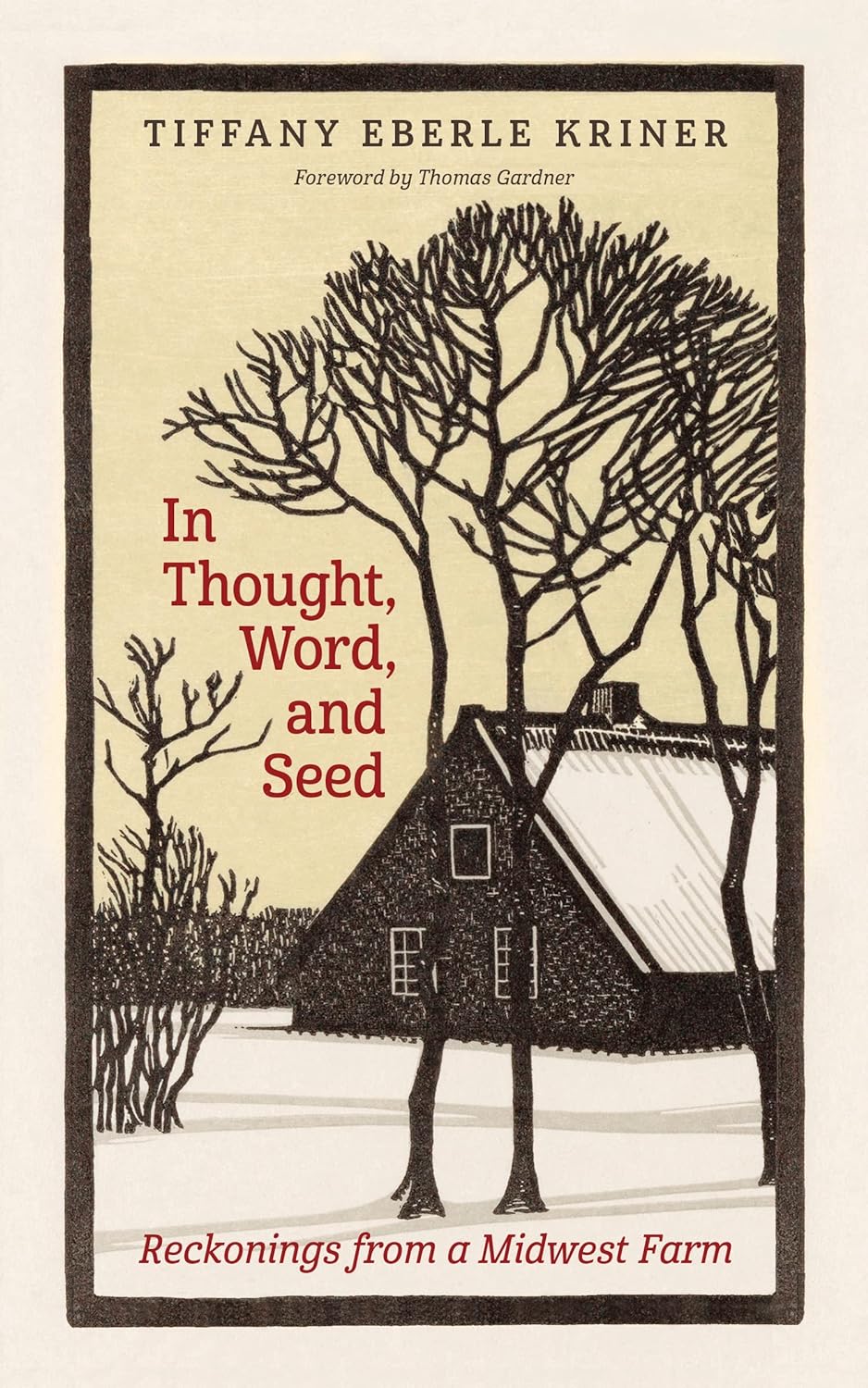
NEW BOOK: In Thought, Word, and Seed: Reckonings from a Midwest Farmby Tiffany Eberle Kriner: As a freelance copyeditor, I’ve worked on many projects for Eerdmans, and this has been one of my favorites: an essay collection by Tiffany Kriner, a Wheaton English professor and farmer from Illinois. It’s a unique blend of literary criticism, nature writing, and memoir. Virgil, George Eliot, James Baldwin, and Walt Whitman are among the authors she engages, respectfully weaving their stories into and around her own experiences of cultivating sixty acres of land and raising livestock with her husband, Josh. Today is the book’s official release date, and I can’t recommend it enough!
+++
(FIVE-WEEK) ONLINE COURSE: “Notes of Rest: Receiving Rest from Scripture and Black Music in Our Restless World,” taught by Julian Davis Reid: On Monday evenings from October 9 to November 6, pianist, speaker, and writer Julian Davis Reid, MDiv, of Chicago will be leading five, seventy-five-minute virtual discussions and meditations on the theme of rest, explored through the lenses of scripture and Black music. “Salvation,” “Sabbath,” “Sleep,” “Stillness,” and “Sanctuary” are the organizing principles. “The purpose of the class is to help the Body of Christ hear God’s invitation to rest,” Reid told me. “The means of getting there is through a mixture of artistic reflection and practical theology grounded in biblical analysis, reflection questions, and musical performance.” No prior musical knowledge is required.
The spiritual “Give Me Jesus” is an example of one of the songs Reid will be playing and guiding participants through (this recording is from his 2021 album Rest Assured, with album art by Shin Maeng):
This course is presented by the Candler Foundry, an initiative of Emory University’s Candler School of Theology that aims to make theological education accessible to everyone. It’s only $29! Reid has been leading Notes of Rest sessions since 2021, and he is currently accepting bookings from churches, universities, and parachurch ministries; you can contact him through his website.
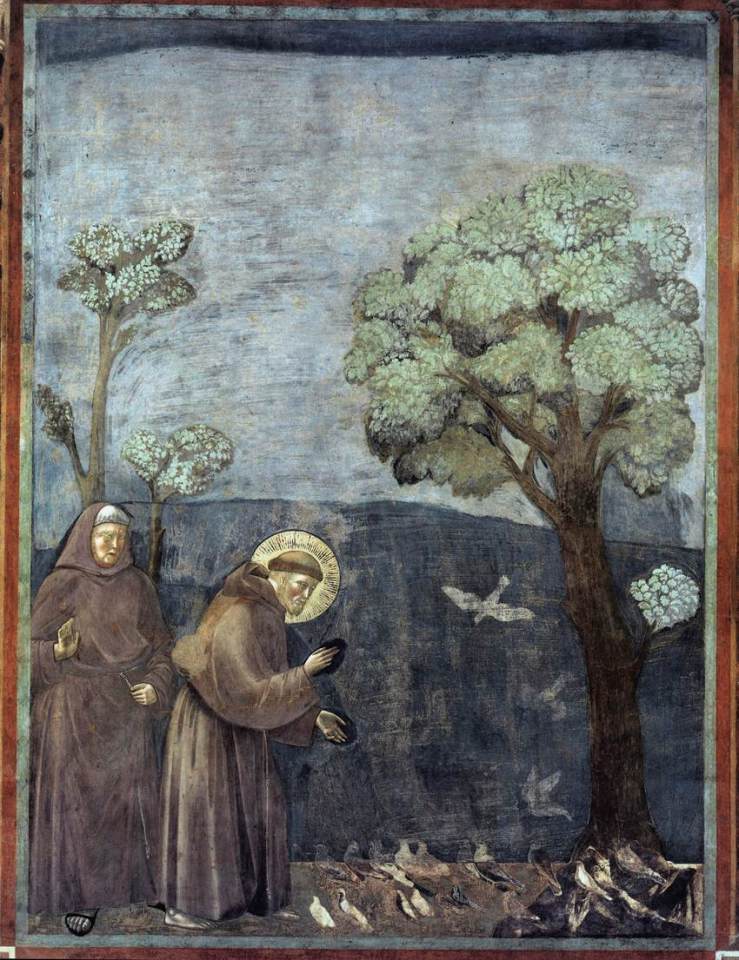
POEM: “Saint Francis and the Birds” by Seamus Heaney: Giovanni di Pietro di Bernardone (ca. 1181–1226), better known as Francis of Assisi, was an Italian mystic and friar who founded the religious order named after him, the Franciscans. Because of his love for all God’s creatures, he is considered the patron saint of animals, and his feast day is October 4. One story about him says he preached to the birds, as he believed the gospel is for them too, and that they, too, have a duty to praise God. This poem by the Nobel Prize–winning Seamus Heaney evokes Saint Francis’s sermon to his feathered friends.
“Sermon to the Birds,” from the Legends of Saint Francis cycle, attributed to Giotto, 1297–1300. Fresco, 270 × 200 cm. Upper Church, Basilica of St. Francis of Assisi, Assisi, Italy.
From the blog archives: For another poem about this legend, see “Saint Francis Endeth His Sermon” by Louise Imogen Guiney. For a brilliant literary essay by Kimberly Johnson on Francis’s “Canticle of the Creatures” (which evolved into the hymn “All Creatures of Our God and King”), see here.
+++
INTERVIEW: “The Artist’s Gift of Reckless Courage” with Betty Spackman: Comfort, confront, teach, heal—those are just a few of the actions the arts can perform, says Canadian installation artist Betty Spackman in this insightful interview for Radix Magazine (available in audio format wherever you get your podcasts, and in print). Spackman discusses misconceptions about artists and the arts, the expansive definition of “creativity,” the gifts artists offer the church, and the charge of elitism. She also gives advice to pastors and to artists.
Here are just two snippets:
“The artist can reveal the heart of God in unique ways, and that gives us a responsibility. We can be vessels of wonder and light, through sound and image and movement and story. . . . By their very nature, [artists] are more open to thinking outside the box, to going past the status quo, to dreaming and to imagining. . . . Scripture tells us a child will lead us and it is childlike faith that will lead us forward. Perhaps what we can learn from artists is to be more childlike.”
“When someone paints their pain, or sings it, or dances it, our response should not be to ignore or condemn it because it’s not pretty or is outside of our worldview. We should find out what it is, and then respond in a meaningful way to the person who made it. The arts are really a place of opportunity to both express and to listen to the grief of the world, and Christians need to be there to do both.”
Each item in a roundup represents hours of combing through and evaluating other possibilities to feature, to find that one I deem will be of most value to readers of Art & Theology. None of these spots are ever bought or coerced, but rather represent sincere recommendations on my part. If you appreciate the resources I curate, would you consider making a donation to make this continued work possible? Or buying me a book from my Amazon wish list (to support my research)? Regardless, I really appreciate you being here!
+++
SONGS:
>> Ambai Praise Medley: This summer Palmer Keen, an American ethnomusicologist based in Yogyakarta who runs the online repository Aural Archipelago, visited the Christian village of Kawipi in the Ambai Islands of Papua, Indonesia, to learn more about songgeri, a worship music tradition indigenous to that area. When he arrived, the villagers formed a welcome party to greet him at the church steps with much music making! That is what this clip is from:
Palmer writes,
Songgeri is a gospel string band tradition from the Ambai archipelago of Papua. The Ambai people, fervent Pentecostals since mass conversion in the mid-20th century, have taken the string band format popular across Melanesia . . . and embraced it as a vehicle for a unique gospel sound unlike anything else in Indonesia.
The name songgeri itself means “joy” in the Ambai language, and every bit of the music is designed to channel a particularly Pentecostal religious ecstasy: handmade lutes (four-string “ukulele” and five string “gitar”) stick to just three easy chords, while giant double bass-like stembas are turned towards the players and plucked with both hands and hand-carved wooden picks to get a thunderous sound. Musicians play a non-stop medley of “praise and worship” verses sung in Ambai and Indonesian—in one piece, “Nemunu Doana Kamia Wowong,” for example, they sing: “His house is built on coral / The gates of heaven are open / He awaits us!”
For more on the history, form, and instruments of songgeri, including additional videos, see Palmer’s recent blog post. (Shout-out to Sam Connour for alerting me to this fantastic music!)
>> “Campfire Coritos,” performed by Israel and New Breed: This corito [previously] medley features the songs “Con mis manos y mi vida” (With My Hands and My Life), “Alabaré” (Oh, Come and Sing), “Te alabarán oh Jehová” (They Will Praise You, O Jehovah), “Quién como tú” (Who Is Like You?), “Hay poder” (There Is Power), and “Ven, ven, ven, Espíritu Divino” (Come, Come, Come, Holy Spirit). The first female soloist is Israel Houghton’s wife, Adrienne Bailon-Houghton, and the second female soloist (with dark hair) is Adrienne’s sister, Claudette Bailon.
And here’s another corito medley sung by the same group:
+++
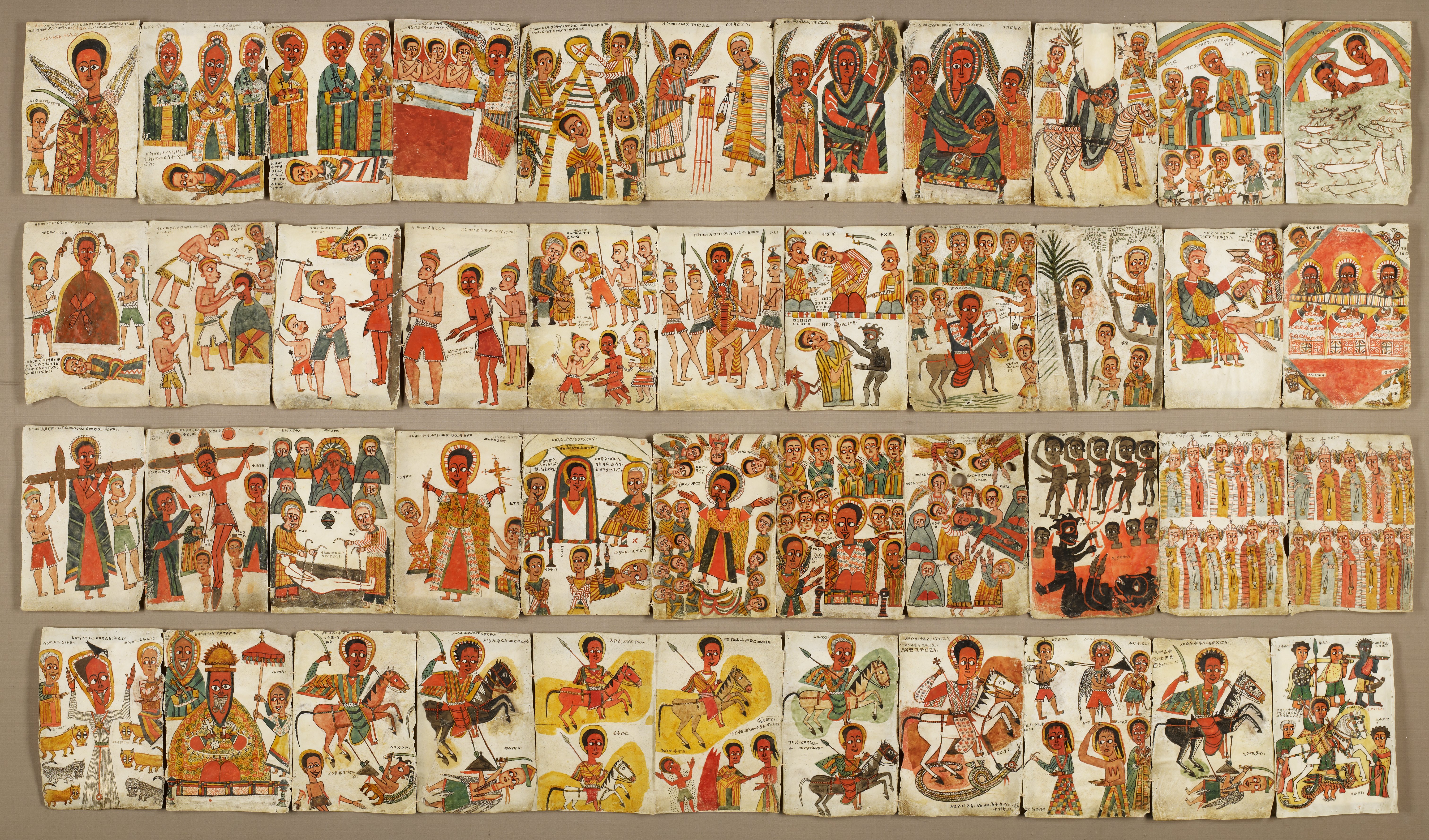
ART: 44 Plates from a Christian illuminated album, Ethiopia: When I was at the Minneapolis Institute of Art a few years ago, I saw on display three paintings on vellum from seventeenth-century Ethiopia, in the First Gondarene style, featuring Ethiopian saints and Bible stories. They are from a set of forty-four pages that were at one time sewn together and used as a prayerbook. The inscriptions are in Ge‘ez, an ancient language that originated in northern Ethiopia and is now only used in religious ceremonies.
Ethiopian saints and scenes from the Hebrew scriptures and the Christian Bible, from a disbound album, Ethiopia, late 17th century. Collection of the Minneapolis Institute of Art, Minneapolis, Minnesota.
Learn more about this illuminated album through ArtStories, an interactive multimedia feature on MIA’s website that allows for in-depth exploration of select objects from the museum’s collection. On the “More” tab is a video on “Connecting with World Religions,” a photo of each individual page with accompanying descriptions, and a behind-the-scenes video with Ethiopian manuscript cataloger Getatchew Haile.
PODCAST EPISODES: The first season of the podcast Visually Sacred: Conversations on the Power of Images, hosted by Arthur Aghajanian, wrapped this summer, altogether featuring conversations with thirteen luminaries in the field of religion and the arts. These were two of my favorite episodes:
>> “William Dyrness: Protestant Aesthetics, Modernism, and Theopoetics”: Theologian William Dyrness from Fuller Theological Seminary discusses the importance of art to spirituality, and the history and theology of images in Protestantism versus Catholicism. He also shares how Christianity influenced many canonical modern artists, and introduces theopoetics, a Christian movement that seeks to broaden our understanding of orthodoxy by bridging art forms and connecting art to daily life.
>> “Natalie Carnes: Iconoclasm, Beauty, and Aesthetics”: Theologian Natalie Carnes [previously], a professor at Baylor University, discusses iconoclasm, particularly the controversy around public monuments; the ambivalence of images as mediators of the Divine (giving us access and blocking access); suffering and beauty; feminist theology; and Christian asceticism as a form of abundance.
SPOTIFY PLAYLIST: September 2023 (Art & Theology): Another monthly gathering of good, true, and beautiful music of a spiritual bent from a variety of sources, ranging from a Victorian lullaby to a hymn revamp by Ike and Tina Turner to a traditional Yom Kippur melodic motif reimagined to a bluesy saxophone prayer to an old-time song about Noah from the southern US to a Christian praise song sung by a Miskito church community in their native tongue. Two selections from the playlist are below.
>> “Abodah” by Ernest Bloch, performed by Sheku Kanneh-Mason: Ernest Bloch was a Swiss-born American composer who drew heavily on his Jewish heritage in his work. Abodah (עֲבוֹדָה) (more commonly transliterated avodah) is Hebrew for “service,” “work,” or “worship,” a word often used in relation to the ritual service that used to be performed by the Jewish high priest in Jerusalem each year on Yom Kippur (the Day of Atonement), before the temple was destroyed; described in Leviticus 16, it involved confession of sin and animal sacrifices.
“May the offering of our lips be accepted as a replacement for the sacrifice of bulls,” the rabbis now say—and thus present-day Yom Kippur liturgies feature poetic recitations from Leviticus 16 and related Mishnah texts, “an expression of the Jewish people’s yearning both for spiritual liberation and redemption,” writes Neil W. Levin. More conservative congregations will vocalize prayers for a rebuilding of the temple and the restoration of sacrificial worship. But for an example of a seder avodah from the Reform tradition, see here. Yom Kippur is celebrated on September 24–25 this year.
Bloch’s Abodah composition is based on a tune, part of a canon of tunes known as the missinai (lit. “from Sinai”), that originated in the Ashkenazi communities of medieval Germany and that is still used today in Ashkenazi synagogues on Yom Kippur. Bloch composed the piece for piano and violin, but it’s arranged here for solo cello and performed by the internationally acclaimed Sheku Kanneh-Mason [previously].
For Christians, the atonement rituals from Leviticus find their fulfillment in the once-for-all self-sacrifice of Jesus, and though this solemn tune has its roots in the Jewish faith tradition, its meditation on human sin and divine forgiveness can cross religious boundaries.
>> “I’ll Fly Away” (Yo volaré) from We the Animals: This spare, a cappella performance of a 1929 southern gospel song by Albert E. Brumley plays during the opening credits of the film We the Animals (2018), sung by Josiah Gabriel, one of the three main child actors. I’m interested in how and why religious songs are employed in nonreligious films, and this one was really effective in establishing not only the tone of the movie but also its theme of freedom.
Based on a semiautobiographical novel of the same name by Justin Torres, We the Animals follows three Puerto Rican brothers ages seven and up navigating a volatile family life in rural upstate New York. There’s violence and tenderness, depression and joy, and I appreciate its exploration of complicated masculinity, and how nuanced the character of the father is. (Torres has said that the process of writing the book was partly about finding empathy for his father who was abusive, and that the story is really about love and grace in a family.) In the film, flying is used as a visual metaphor for the youngest son’s, the narrator’s, rising above captivity (mainly psychological) and coming to a place of existential flourishing. The film is excellent, as is the book, though beware the R rating. Streaming on Netflix and Hulu.
+++
UPCOMING CONCERT: “Beyond Measure: An Evening of Music in Celebration of Abundantly More,” dir. Jeremy Begbie, September 8, 2023, Duke Divinity School, Durham, NC: To celebrate the release of Dr. Jeremy Begbie’s book Abundantly More: The Theological Promise of the Arts in a Reductionist World, Duke Initiatives in Theology and the Arts is presenting a special concert with the New Caritas Orchestra, conducted by Begbie. It will take place next Friday at 7:30 p.m. at Goodson Chapel on the campus of Duke Divinity School, and no tickets or registration are required. The program will explore the power of music—along with words and images—to expand our theological imagination, and it will be followed by a reception and book signing.
I suspect it will be similar in format to Begbie’s “Home, Away, and Home Again: The Rhythm of the Gospel in Music” event, which I attended in 2017 and was wonderful. (View the video recording below.) In his lecture-concerts, Begbie interweaves composer biography, musical analysis, theological commentary, storytelling, and performance to help audiences truly hear and appreciate the music. In “Home, Away, and Home Again,” he discusses the technical term “tonic” (the note upon which all other notes of a piece of music are hierarchically referenced, the one that gives the piece its sense of stability), demonstrating with various examples how 90 percent of Western music starts at home, goes places, then arrives back home but changed. Along the way he discusses themes of war, despotism, (up)rootedness, loss, hope, the resurrection, and new creation. Featured composers include Béla Bartók, Antonín Dvořák, Aaron Copland, Ennio Morricone, Leonard Cohen, and Benny Goodman.
+++
UPCOMING CONFERENCE: “Poets of Presence: Faith, Form, and Forging Community,” October 27–28, 2023, Loyola University, Chicago: Sponsored by Presence: A Journal of Catholic Poetry and The Francis and Ann Curran Center for American Catholic Studies at Fordham University, this poetry conference will feature the keynotes “The Art of Faith and the Faith of Art” by Christian Wiman and “The Forge and the Fire: God in the Blacksmith Shop” by Angela Alaimo O’Donnell. There will be workshops on writing formal poetry, translating poetry, and an editor’s secrets for successful submissions, among others, and poetry readings. I was excited to see Paul J. Pastor [previously] on the list of presenters! Cost: $60.
+++
DOCUMENTARY: Many Beautiful Things: The Life and Vision of Lilias Trotter, dir. Laura Waters Hinson (2015): Available for free on YouTube, this seventy-minute documentary shines a light on Lilias Trotter (1853–1928), an English painter and protégé of the leading Victorian tastemaker John Ruskin who, instead of pursuing an art career as Ruskin had urged her to do, became a Christian missionary in Algiers for forty years—as a single woman, self-funded (all the missions agencies rejected her because she had a heart condition that made her physically vulnerable). Her ministry centered on the women in the kasbah—teaching them to read, helping them attain economic independence. She also befriended a Sufi brotherhood whose members were eager to hear her talk about God. In Many Beautiful Things, Michelle Dockery of Downton Abbey voices words from Trotter’s books, journals, and correspondence, and art director Austin Daniel Blasingame has deliciously animated her art! (See behind the scenes of that process.) Sleeping at Last supplied the original soundtrack.
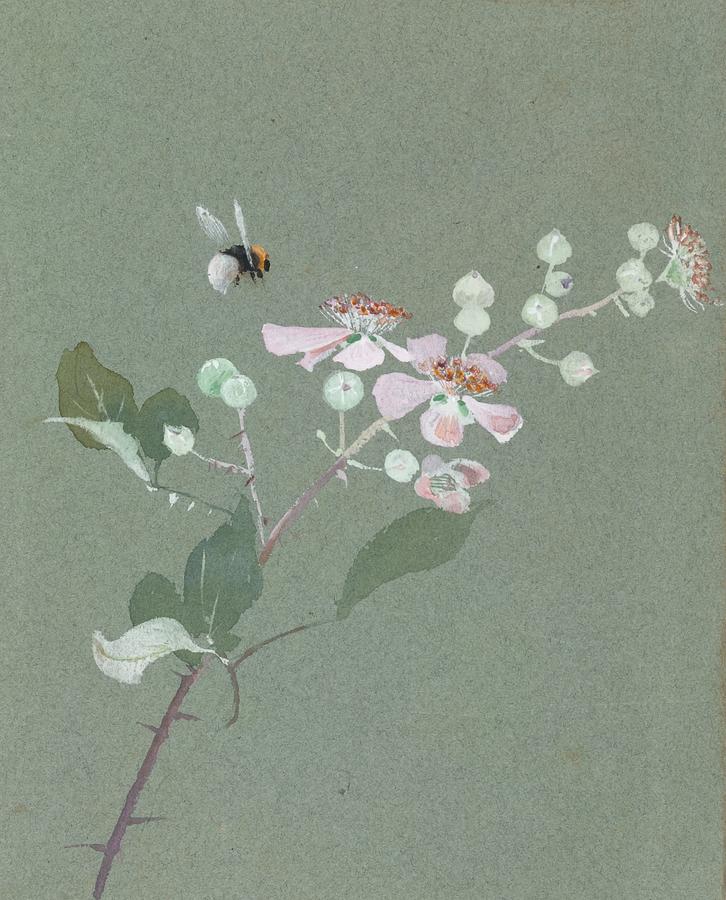
While in North Africa, Trotter continued making sketches and watercolors, documenting the everyday life that surrounded her—people, bees, flowers, sunsets. These are minor works/studies, not intended for the art market, but they were for Trotter a major way of delighting in God’s creation. I don’t like how the marketing of the film leans heavily into the narrative of “Oh, look at Lilias, so selfless and heroic, sacrificing artistic fame for service, she really could have been tops if she hadn’t given it up,” as it wrongly suggests that evangelistic or nonprofit work is more God-honoring than art making, or that recognition in one’s field is not something a Christian should desire. The film itself mostly avoids that way of looking at it, focusing instead on Trotter’s faithfulness in responding to a call that was particular to her and then finding ways to integrate art, as an avocation, into her new life in Algiers. “Her art . . . wasn’t lost in Algeria. If anything, it was fed,” says biographer Miriam Rockness. As viewers, we’re asked to reexamine our conception of success.
Watercolor by Lilias Trotter, July 9, 1907
I had never heard of Lilias Trotter before watching this documentary (thanks for the recommendation, Sarah!), but now I’m glad to know about her. Learn more at https://liliastrotter.com/, and follow the Lilias Trotter Legacy on Instagram, Facebook, and/or Twitter. Also, the current issue of Christian History magazine (no. 148) is devoted entirely to Trotter; you can download a free copy (or purchase a physical one) here.
SERMONS by Rev. Nadia Bolz-Weber: Nadia Bolz-Weber [previously] is an ordained Lutheran pastor who founded the House for All Sinners and Saints in Denver and now guest-preaches around the city. Here are two of her sermons from the past year or so that I’ve come across and appreciate, just twelve minutes each.
>> “Sinking,” Montview Boulevard Presbyterian Church, Denver, August 13, 2023: Preaching on Matthew 14:22–33, Bolz-Weber critiques the idea that our ability to do great things relies on the quality of our faith instead of on the power of God: “I’ve often heard this walking-on-water story from Matthew preached as like The Little Disciple Who Almost Could. Like Peter could have kept walking on water if he just thought ‘I think I can, I think I can’ enough. The message being that with enough faith, you too can walk on water all the way to Jesus. Which, on the surface, sounds inspiring. But taken to its logical conclusion, it also means that if you are not God-like in your ability to overcome all your fears and failings as a human, if you are not God-like in your ability to defy the forces of nature, then the problem isn’t the limits of human potential, the problem is the limits of your faith, and you should probably muster up some more . . .” [Read the transcript]
>> “The Lord Is My Shepherd, (but) I Shall Not Want (a Shepherd, Thank You Very Much),” Saint John’s Cathedral, Denver, May 8, 2022: No matter how much we fancy ourselves “anti-shepherdarian,” wanting to make our own choices and go our own way, we are all shepherded by someone or something, says Bolz-Weber in this sermon on Psalm 23. Perhaps it’s by the “wellness” industry, or by the angriest voices on Twitter. And the thing is, “not one single shepherd-shaped wolf that I have followed has ever actually fulfilled my wants and desires,” she confesses; “they have only ever increased them. They have only ever led me to waters with a high salt content, only ever led me to waters that create thirst and never ever quench it. They leave me feeling insecure and insufficient.” She contrasts the shepherds of this world to the one true Good Shepherd. The preaching starts at 23:20. [Read the transcript]
+++
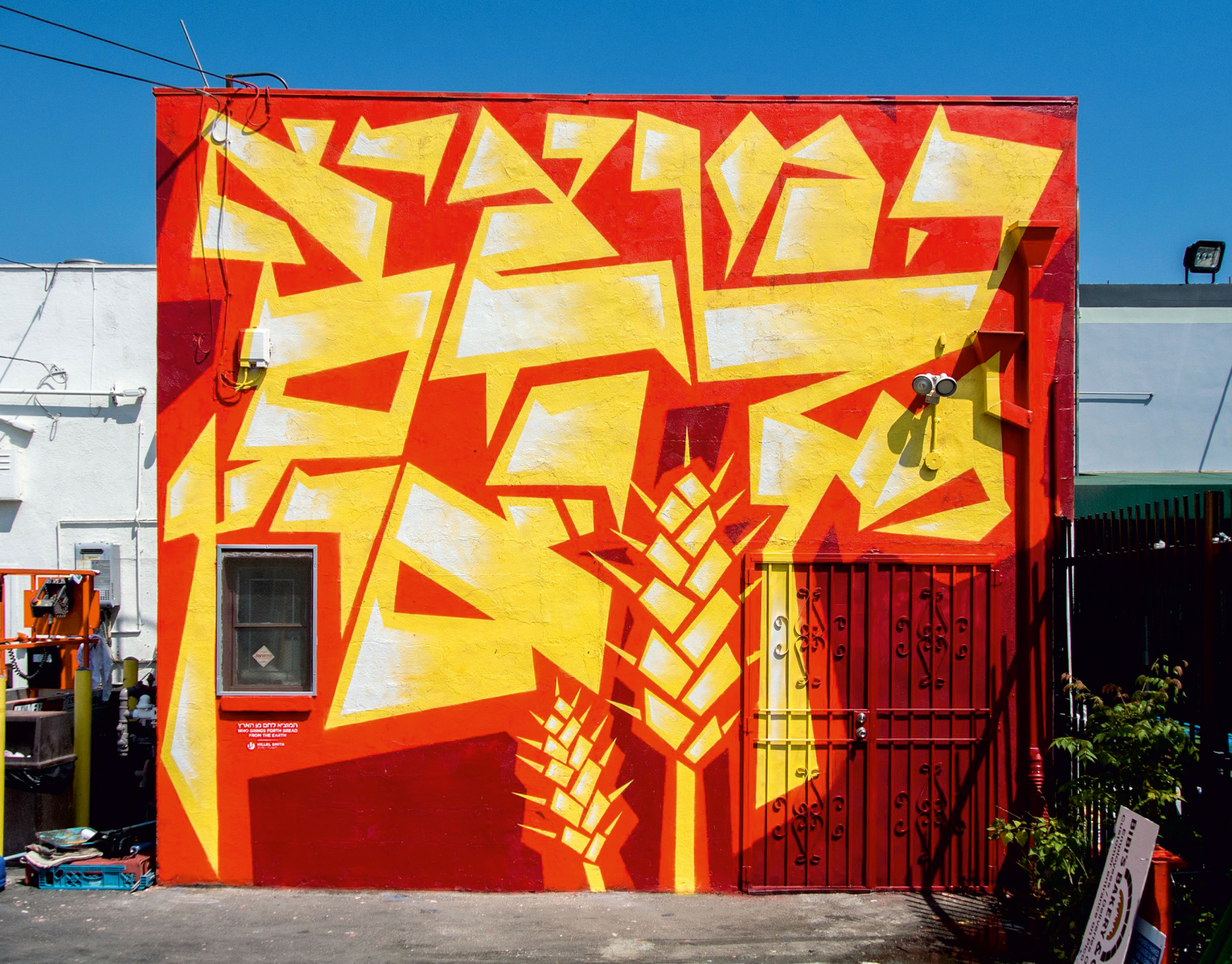
BOOK REVIEW: The Beauty of the Hebrew Letter: From Sacred Scrolls to Graffiti by Izzy Pludwinski, reviewed by Sarah Rose Sharp: In this new book from Brandeis University Press, certified Jewish scribe and calligrapher Izzy Pludwinski looks at the evolution of Hebrew calligraphy from sacred scrolls through modern art and graffiti. “Font enthusiasts, lovers of Judaica, and those passionate about the minutiae and range of the written form” will find much to appreciate here, writes Sarah Rose Sharp, whose review includes a handful of images from the book. For example, below is a mural painted by Hillel Smith on the alley-side exterior of a kosher bakery in the Pico-Robertson neighborhood of Los Angeles, which reads in bright yellow letters, “בָּרוּך אַתָּה אַדָנָי אֱלהֵינוּ מֶלֶך הָעוֹלָם הָמוֹציא לֶחם מן הַארץ” (Hamotzi lechem min ha-aretz) (Who brings forth bread from the earth), part of the traditional Hebrew blessing over bread before a meal: “Blessed are You, Lord our God, King of the Universe, Who brings forth bread from the earth.” [purchase on Amazon]
Hillel Smith (American, 1984–), Hamotzi Mural, Bibi’s Bakery and Café, Los Angeles, 2016. Photo courtesy of the artist.
+++
SONGS:
>> “Be Alright” by God’s Children: Having amassed over four million collective views, this video was posted August 1 by Shirika “ReRe” Flowers across multiple social media platforms, showing four of her six kids singing a gospel song she wrote for them, “Be Alright,” at her home in Memphis. It’s led by Demeriauna “Sugar Mama” Harper, with the other three parts sung by Thedrick “Preacher” Webb (in orange Crocs), Dedric “Chunky” Trice (seated at left), and Cornbread.
The family performs and records together under the name God’s Children, and this song can be heard on their 2018 album It’s So Amazing.
>> “Aakhaima Rakhchhu Mero Yeshu” (आँखैमा राख्छु मेरो येशू) (Keep My Eyes on Jesus): In this 2016 video, a group of teens from New Life Church in Nepal sing a popular Nepali Christian worship song. I haven’t been able to find who the songwriter is, but from a search on YouTube, I can see that it’s a very popular song to dance to in Nepal! There are dozens of videos, mainly of children or youth, dancing to it with hand motions and a bounce, often in church.
From what I can tell through Google Translate, the lyrics translate roughly to “I keep my eyes on Jesus. I keep him in my heart. He shadows me with his love.”
+++
POEMS:
>> “Mattina” (Morning) by Giuseppe Ungaretti: This week reading the book Poetry and Revelation: For a Phenomenology of Religious Poetryby Kevin Hart, I came across this beautiful four-word poem in Italian from 1917 that stopped me in my tracks: “M’illumino / d’immenso.” (Those euphonic m’s!) Hart didn’t translate it, and though I could recognize the two keywords (they’re English cognates), I wasn’t sure of the words connecting them or the verb tense. In googling the poem, I was sent to the blog Parallel Texts: Words Reflected, run by Canadian literary translator Matilda Colarossi, who lives in Florence. It’s fascinating to hear her describe the complicated process of translating these two spare lines. Click on the link to read her translation and to learn what considerations informed her.
Part of the poem’s brilliance is its openness to various readings. For me, it’s about being known warmly and intimately by an immensity I call God.
>> “What He Did in Solitary”by Amit Majmudar: A second book I read this week was the poetry collection What He Did in Solitary by Amit Majmudar, Ohio’s first poet laureate. The titular poem, the first in a suite of three that conclude the book, made me cry. You can read all three on the website of Shenandoah journal, where they were originally published in 2019.
Other favorites: “Altarpiece,” “Ode to a Jellyfish,” “Elegy with van Gogh’s Ear.”
Let’s say you’re visiting London. You buy a ticket to the Tate Modern, because hey, the tourist guides call it a must-see. You enter the enormous Turbine Hall and witness, across the five-hundred-foot downward concrete ramp that is the floor, a giant crack. No, it’s not a foundation problem. It’s a contemporary art installation by Doris Salcedo.* What in the world does this artwork have to offer? How do you engage meaningfully with it?
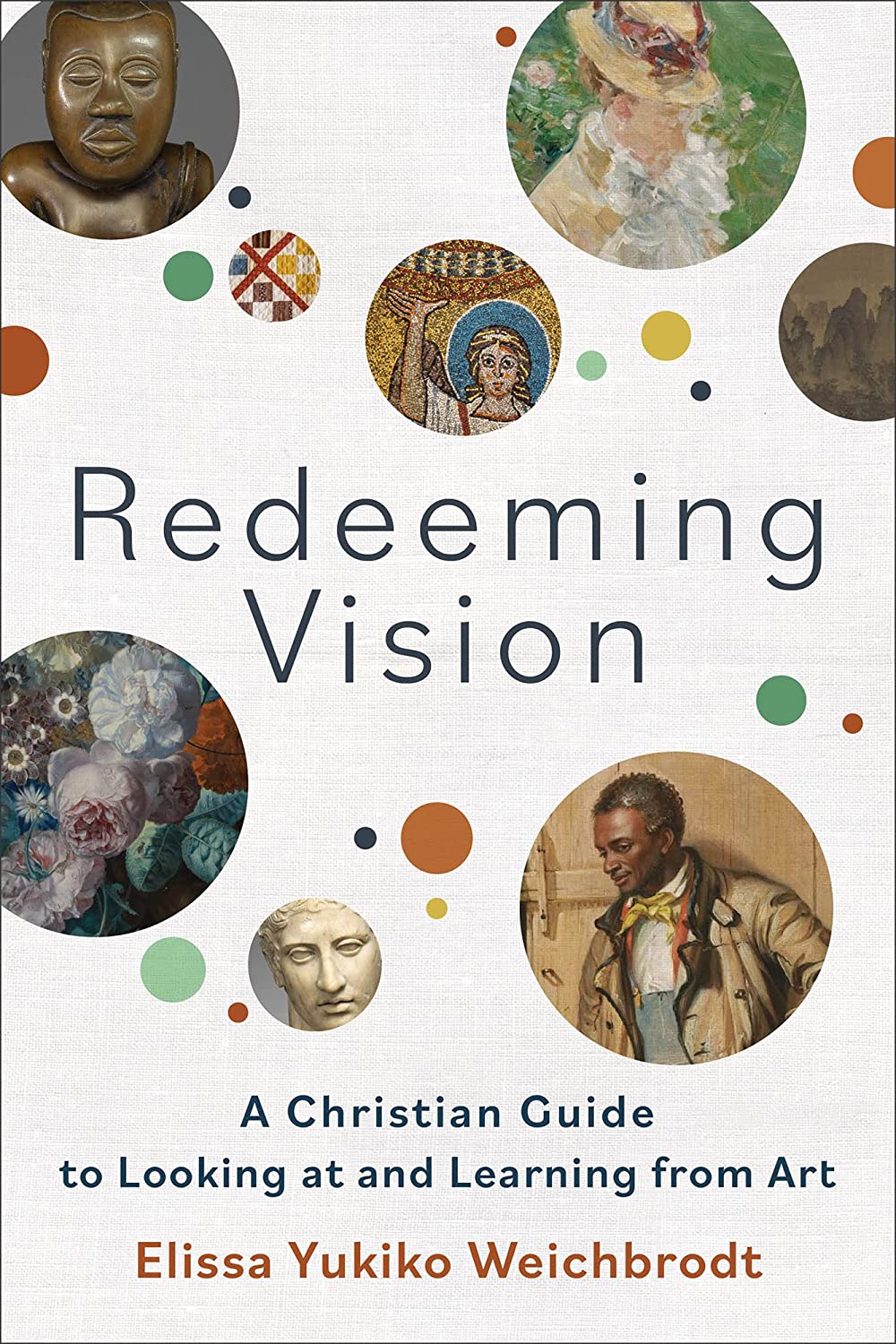
Dr. Elissa Yukiko Weichbrodt’s book Redeeming Vision: A Christian Guide to Looking at and Learning from Art (Baker Academic, 2023) equips Christians to look closely and well—with a posture of humility and generosity—at works from across the spectrum of art history, including ones like Salcedo’s Shibboleth that may initially evoke only puzzlement or an eye roll, and others that may at first glance seem run-of-the-mill and uninteresting (a marble head, a vase of flowers, an old family photograph). When we close ourselves off to art that doesn’t immediately touch us, we reject potential opportunities for transformation, transformation of how we see and how we love. Regardless of the personal faith commitments of its makers, Weichbrodt says, art can grow our love for both God and neighbor.
In order to love, we must first look. Weichbrodt gives examples of God’s looking in scripture to establish a “model of redemptive looking,” which “is utterly different from the objectifying gaze that is so common in our contemporary culture. Too often we look to consume, to surveil, to control, and to condemn. But as the beloved of God, we are called to mimic his gaze” (19). What if instead of letting personal judgments, stylistic, moral, or otherwise, dominate our approach to art, we were to adopt a primary posture of love?
When it comes to viewing art and visual culture, our faith doesn’t offer us a fence. It provides a path.
Elissa Yukiko Weichbrodt, Redeeming Vision, p. 10
Weichbrodt wants to move us beyond a facile thumbs-up or thumbs-down approach to looking at art, encouraging us to press in to unfamiliar (and too-familiar!) or even off-putting works with curiosity and openness, asking questions of them and allowing them to interrogate us as well. What stories, and whose stories, do the images tell and not tell?
She introduces the notion of “the archive,” the mental collection of images we have seen, which we subconsciously file into categories and access to help us interpret new images. Some examples of categories are “Mother,” “Poor,” “Black,” “Beautiful,” “Villain.” The problem is, our archives are inherently limited. For example,
Why do we have so many mental images of mothers in Africa living in poverty and so few mental images of successful, smiling African women who are business owners and community leaders? Why do we have so many images in our archive of good white mothers and so few of loving, strong, generous Latina mothers? A richly textured, robust, and varied archive is necessary if we are going to learn to see others—of all races, ethnicities, genders, and social classes—as God sees them. (62)
Expand your archive, Weichbrodt urges.
She demonstrates how archives work through a brilliant engagement with Dorothea Lange’s Migrant Mother (1936), an iconic photograph that I remember studying in a high school American history class but which Weichbrodt really opened up for me.
Weichbrodt is an associate professor of art and art history at Covenant College in Lookout Mountain, Georgia. Besides an intro-level Western art survey course, she also teaches courses such as “Race in American Art and Visual Culture,” “Women, Art, and Culture,” “Art and the Church,” “Grace in American Art,” “History and Theory of Photography,” “Global Modernisms,” and “Contemporary Art and Theory.” The facility with which she’s able to guide nonspecialists deeper into her subject is amply evidenced in this book, which is low-shelf academic, geared toward educated readers who may or may not have an art background.
In chapter 9 of Redeeming Vision, on the mundane, Weichbrodt discusses how Suzanne Valadon’s Blue Room (1923) complicates a familiar art historical trope.
The most illuminating analyses in Redeeming Vision have to do with race, gender, and/or class; those are the topics where Weichbrodt’s primary research interests lie, and it’s where she really shines. She complexifies images that we might be inclined to take at face value, not think much about.
A highlight of the book is how Weichbrodt joins together fine art and contemporary visual culture more broadly, drawing Instagram selfies, memes, advertisements, news photos, propaganda posters, and such into conversation with paintings, sculptures, and other artworks that you’re likely to find in a museum. The tools she provides for performing visual analysis—chapter 1 unpacks that toolbox, giving us language (and a handy chart!) for describing an image’s visual qualities—can be applied just as well to a friend’s iPhone photo as to a multimillion-dollar oil painting that’s been the subject of multiple monographs.
As would any art historian, Weichbrodt emphasizes the importance of understanding artworks within their historical contexts; “even if we can’t find all the answers, we should remember to ask questions about the image or object’s original audience and purpose” (62). But where she differs from some academics in the field is that she also acknowledges that our backgrounds—who we are, what we aspire to be, what experiences we carry with us, our cultural conditioning—are not irrelevant to the process of looking at art. She invites us to take stock of associations that come up for us in response to certain images, not to make them an authoritative lens but to prompt queries that bring us closer to truth. We need to recognize the limitations of how we see, but we need not get ourselves entirely out of the way when it comes to art, as if pure objectivity were even possible.
In Weichbrodt’s discussion of specific artworks, I appreciate the balance of attention between the work’s formal qualities, content, historical situatedness, and meaning. She also reminds us to consider a work’s physical context. In chapter 3, for example, she uses Caravaggio’s Deposition to discuss the differences between experiencing an artwork in situ (that is, in the place for which it was created; in this case, a chapel), in a museum, and online—and what questions to ask in each situation.
Chapters 4–10 each conclude with a “For Further Looking” page that lists artworks related to the theme of the chapter and offers guided questions. For example, in chapter 9, “Allowing for Complexity: Art of the Everyday,” the “For Further Looking” section includes the headings “Nineteenth-Century American Genre Painting” (How do these works reinforce certain gender roles or racial hierarchies?), “Genre Works by Black American Artists” (How do these works celebrate the normalcy of Black life and achievement?), and “The History of the Female Nude in Western Art” (How have artists borrowed, developed, and critiqued this trope?). I found these end-of-chapter sidebars to be incredibly helpful, quenching my desire for wider exploration and deeper reflection.
Some of the topics Weichbrodt covers in the book include:
God’s Transcendence. In chapter 5 she contrasts a medieval church mosaic, with its golden resplendence, placed above the head to an abstract expressionist painting by Kandinsky, an explosion of color and movement and indefinable forms—two very different ways, and over a millennium apart, to convey the same idea.
Portraiture. In chapter 7 she addresses the possibilities and pitfalls of the portrait genre. From a Spanish count-duke to a Kuba nyim (king) from Central Africa to the anguished Vincent van Gogh to a mourning Missouri father with his two daughters and nurse, Weichbrodt discusses the physical self, the symbolic self, the public self, the private self, and the relational self. She also comments on how the portraits we see of others on social media shape our self-perception and self-representation.
Landscape. In chapter 8 she considers humanity’s relationship to nature by looking at two mountain views: a Chinese ink on silk from the Northern Song Dynasty, influenced by the principles of Confucianism, and a painting of the American West made during the era of westward expansion.
Weichbrodt encourages us to think critically about the stories we tell through images. Take, for example, this before-and-after photograph of Hastiin To’Haali, a resident of the federally funded Carlisle Indian Industrial School (1879–1918) in Carlisle, Pennsylvania, which gutted me:
John Choate, “Tom Torlino—Navajo. As he entered the school in 1882. As he appeared three years later,” in Souvenir of the Carlisle Indian School (Carlisle, PA: J. N. Choate, 1902)
Founder Richard Henry Pratt hired the commercial photographer John Choate to document the residential school’s so-called success in “kill[ing] the Indian, . . . sav[ing] the man,” as Pratt put it, and these are two of the hundreds of photos he took of the students. What do we do when images lie?
One of my favorite chapters in the book is chapter 10, “Learning to Lament: The Art of History.” Here Weichbrodt discusses an ancient Assyrian stone relief carving of a soldier conducting captives across a river, a widely distributed Revolutionary-era engraving of the Boston Massacre by Paul Revere, and From Here I Saw What Happened and I Criedby Carrie Mae Weems (1995).
“History is not simply a documentation of the past,” Weichbrodt writes. “It is the story we tell about past events. What do we include? What gets left out? Who has our empathy? Who can be vilified?” (215). She continues:
What stories do we weave about who we are and who we are not? Does our telling of history—and the images we use to support it—ignore brokenness in favor of self-congratulation? What are the images and objects that direct us to lament? We lament not to wallow in despair or guilt or recriminations but because we have the freedom to weep as children of God. Ours can be a productive grief. (232–33)
Hospitable, expansive, and full of insight, Redeeming Vision helps Christians identify the ways in which images form us and teaches us how to skillfully analyze them. Art viewing, Weichbrodt writes, is not necessarily a passive activity; it requires something of us and can be generative. “Our gaze,” she says, “can open up something new” (11), leading to doxology, confession, empathy, understanding, lament, shared delight, or love.
ART EXHIBITION: When the Apple Ripens: Peter Howson at 65, May 27–October 1, 2023, City Art Centre, Edinburgh: City Art Centre in Edinburgh is hosting a major retrospective of one of the UK’s leading figurative painters, Peter Howson, who first emerged during the mid-1980s as one of the New Glasgow Boys and whom the art critic Donald Kuspit dubbed the “Scottish Bosch.” Curated by David Patterson, the exhibition brings together some one hundred works spanning the artist’s career, many never seen before in Scotland, with subjects ranging from working-class Glasgow men to the Bosnian War (into which Howson was sent as official war artist) to biblical stories. His work deals with themes of aggression, struggle, and faith.
Artist and art educator Tessa Asquith-Lamb discusses five key works from the exhibition in this twenty-minute video:
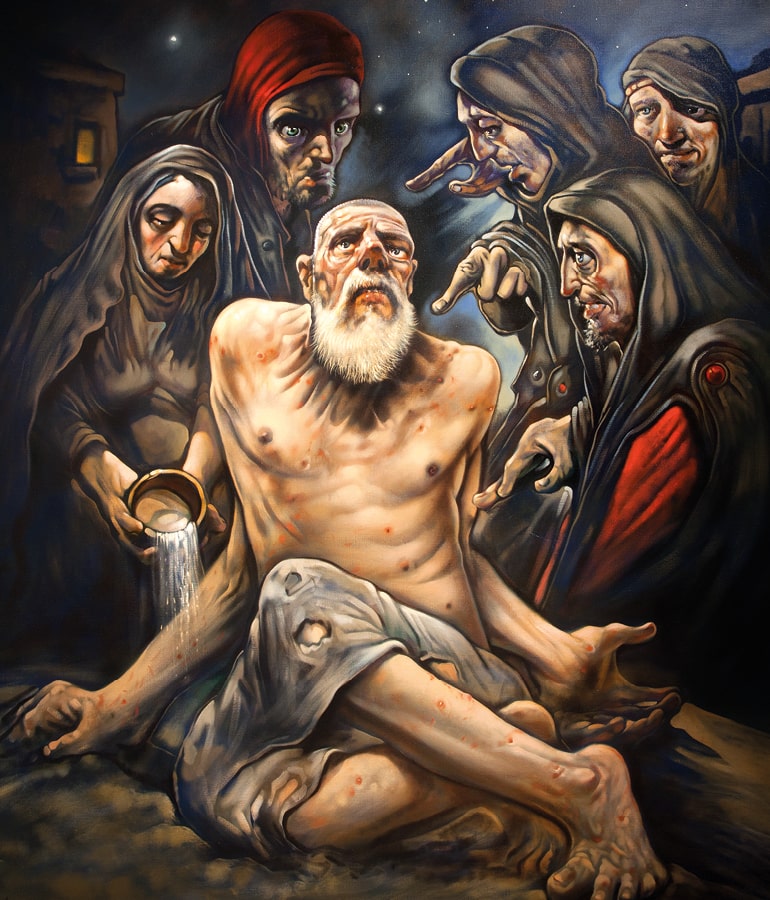
Peter Howson (Scottish, 1958–), Job, 2011. Oil on canvas, 182 × 152 cm. Collection of Alan and Karen Turner.
“I like to bring the Bible into this world we live in today,” says Howson, who is a Christian. (He made headlines when he went public with the story of his religious conversion while undergoing treatment for alcohol and drug abuse in 2001.) Reflecting on the reception of and motivation behind his biblical works, he said in a recent video interview (30:31ff.):
There’s two camps of people. There’s the people that groan whenever they see a religious painting of mine, and they say, “Why can’t he stay away from religion?” It’s that kind of embarrassment about religion. They don’t like my religious art, but I continue to do it. . . . And then there’s the other people that actually are religious, but they don’t like it because it’s too frightening for their gentle, staid, normal religiousness. They don’t want anything nasty happening in their lives or anything that’s going to cause a stir. So to them it’s a big danger as well, the stuff I do, because it’s violent, it’s real. It’s like the consuming fire of God.
The Bible is an incredible book. It’s a book that’s got everything in it, really. It’s got so much tragedy, violence, disaster, despair. It’s also got incredible revelation in it. It’s got incredible acts of love and kindness. . . .
All I know is that . . . the work I do on the Bible and on the teachings of Jesus, or on the events in Jesus’s life—which have in fact fascinated artists for centuries—I don’t know why it shouldn’t continue with me. For me to paint these things, it’s made a big difference to a lot of people’s lives. It helps people. It’s a therapy that takes them through a door into a different universe altogether. It takes them into a new world, a new discovery. They realize they are not a person that’s just flesh and blood, an animal. It means that there’s a spiritual side that they’ve missed out on. And that’s the most important thing they can ever understand or realize. And it’s salvation, really, for them, for people to go through that door. That’s the door I want to lead them through.
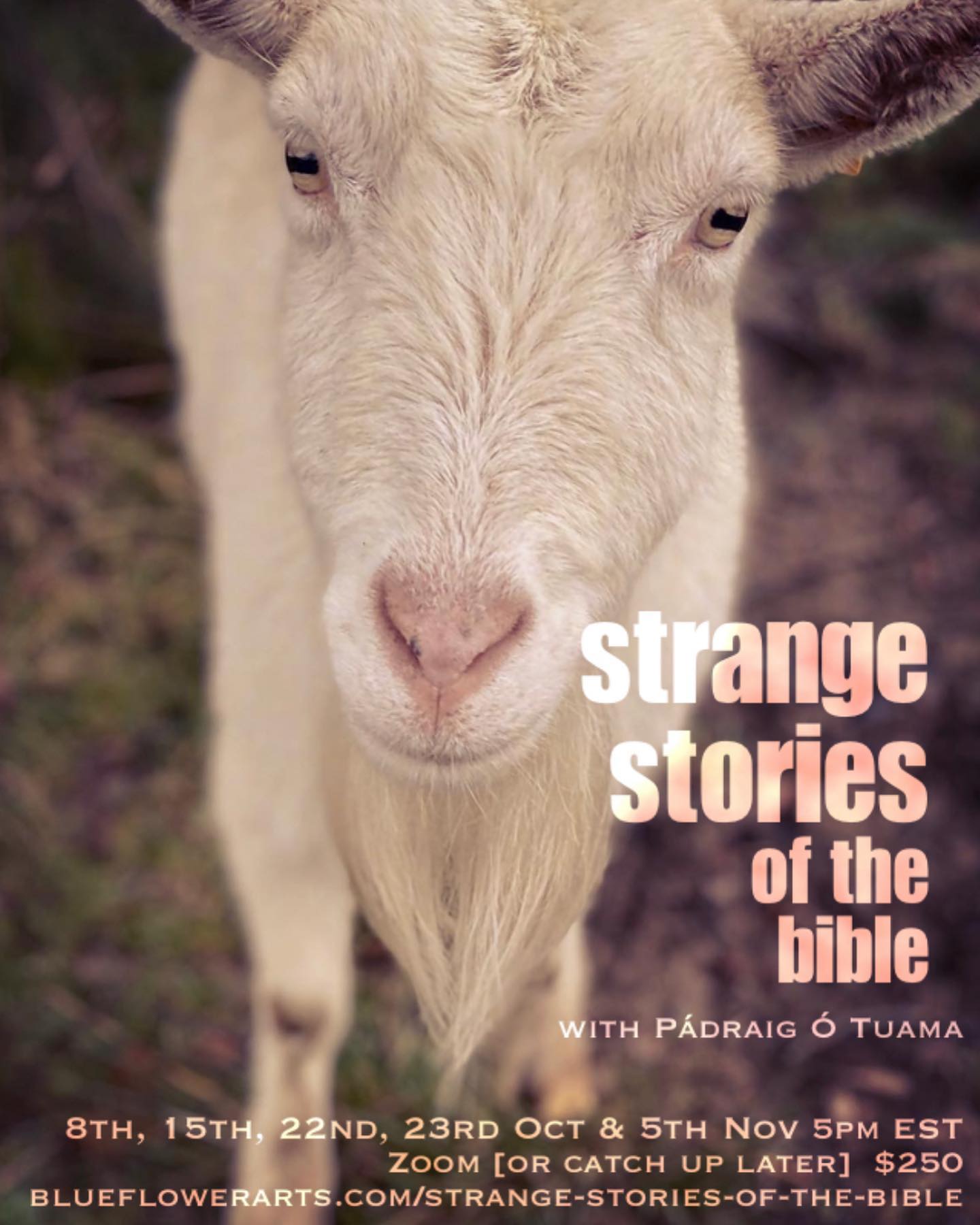
ONLINE COURSE: “Strange Stories of the Bible,” taught by Pádraig Ó Tuama, October 8–November 5, 2023: Over the course of five Zoom-mediated classes, poet-theologian Pádraig Ó Tuama will lead a literary exploration of peculiar stories from the extraordinary library of world stories that is the Bible, focusing on the lives of five figures: Noah, Isaac, Ruth, Mary of Bethlehem, and Judas. Their stories are not so foreign as one might think, as they “depict very familiar aspects of human behaviour: jealousies, rivalries, rages, desires, ambitions, schemes, travels, courage, challenges, archetypes, addictions, misunderstandings and machinations.” Each class will involve a close reading of a scripture text, bringing to bear literary analysis, contemporary poetry, and art, and will leave participants with questions for self-reflection. Cost: $250 USD.
+++
POETRY-WRITING RETREAT: “Ideas Everywhere! Inspirations for Poetry,” led by Marjorie Maddox, September 22–24, 2023 (update: the date has been rescheduled to October 27–29, 2023), Bethany Retreat Center, Frenchville, PA: “The everyday, the eternal, and everything in between—ideas for poems are everywhere! During this retreat, we’ll focus on generating poems from both the mundane and the miraculous, using—as time permits—the arts (paintings, photographs, movies, music), sacred texts and rituals, nature, news, place, sports, and the medical as springboards. By drafting, revising, and discussing poems in a supportive community, we’ll consider how one poetic choice leads to another, each contributing to the work’s overall effect. Arrive ready to engage, experiment, write, laugh. Leave with new ideas and strategies for future poems.” Cost: $275 (includes meals and lodging).
I have a poem by Marjorie Maddox queued up to publish here next month. I really appreciate her work!
+++
CALL FOR POETRY:Presence: A Journal of Catholic Poetry is accepting poetry submissions through October 1, 2023, for its eighth annual issue, to be published in April 2024. “We publish poems on the basis of their artistic excellence, rather than on the basis of the author’s professed creed or because the subject matter is explicitly Catholic. The poems in this journal convey God’s presence in any number of ways—by exploring the intersection of matter and spirit, by depicting the struggle between belief and doubt, by questioning the faith, being surprised by it, taking joy in it, even finding humor in it.” Learn more at https://www.catholicpoetryjournal.com/poems.
Poets who have contributed to past issues include Marilyn Nelson, Julia Alvarez, Dana Gioia, Robert Cording, and Paul Mariani.
+++
PROGRAM: The Brehm Residency: The Brehm Center at Fuller Theological Seminary is looking for artists and Christian ministry leaders in the US to join their remote residency program for spring 2024. The cost to participate is $495. “How do artists experience the world? How do creative hearts respond to the story of God? We believe these questions matter. The mission of the Brehm Residency is to cultivate generative relationships between artists and ministry leaders who are mutually dedicated to the artistic renewal of our communities and their churches.” Registration deadline: October 31, 2023.
The program consists of (1) a curriculum of readings and resources that cover historical, theological, and psychological perspectives on the arts, and (2) ten biweekly, ninety-minute online gatherings from January through May 2024, which include guided discussions, fellowship, and periodic guest speakers. There is also an optional, seven-day in-person add-on.
+++
NEW WEBSITE + EVENTS + FUNDING CALL: The Leighton Ford Initiative in Theology, the Arts, and Gospel Witness at Gordon-Conwell Theological Seminary: Gordon-Conwell is a multidenominational, evangelical seminary based in Hamilton, Massachusetts, with other campuses in Boston; Charlotte, North Carolina; and Jacksonville, Florida. In 2022 under the direction of Dr. Wes Vander Lugt, the seminary launched the Leighton Ford Initiative in Theology, the Arts, and Gospel Witness, which “embraces and engages with God’s gift of artistry through impactful teaching, relevant scholarship, and catalytic events that form students, enrich the church, and propel participation in God’s mission to make all things new.” The initiative offers academic courses; pursues arts and theology research and publications; hosts symposia, gallery exhibitions, concerts, film screenings, conversations with writers and artists, and other events; and plans arts-integrated chapel services. I attended the excellent Georges Rouault symposium they organized last fall—which I publicized here. Here’s what’s upcoming on their calendar:
February 2024: Why Should Christians Care about Abstract Art? (details TBD)
Once enough money is raised for an endowed chair, the initiative will become an official center within the Gordon-Conwell Institute and programming will expand. There are plans to offer a Certificate in Theology, the Arts, and Gospel Witness, host pilgrimages to sites of global arts influence, assist faculty in integrating the arts into their teaching, and host creative residencies.
CALL FOR ART: Light in the Dark, Sojourn Arts: Sojourn Arts, a ministry of Sojourn Midtown church in Louisville, Kentucky, is accepting entries for wall-hung visual artworks on the theme “Light in the Dark” for its juried art show this Advent and Christmas. It is free to enter (see email submission instructions at link), but selected artists will be responsible for shipping costs to the venue. Three cash prizes will be awarded. Deadline: October 8, 2023. Open to continental US artists only.
>> “O My Hope (A Prayer of Saint Isaac the Syrian)” by Symon Hajjar:Symon Hajjar is a singer-songwriter from Tulsa, Oklahoma. I love, love, love his setting of this passage (lightly adapted from an English translation by Sebastian Brock) from the writings of Isaac the Syrian, a seventh-century theologian from Mesopotamia. Because the song would work well for Epiphany, Hajjar released it as the final track on his album Finally Christmas (2015), although it’s not available on Bandcamp as all the other tracks are.
O my Hope, pour into my heart the inebriation that consists in the hope of you. O Jesus Christ, the resurrection and light of all worlds, place upon my soul’s head the crown of the knowledge of you, and open before me suddenly the door of mercies; cause the rays of your grace to shine out in my heart. . . . I give praise to your holy nature, Lord, for you have made my nature a sanctuary for your hiddenness, a tabernacle for your mystery, a place where you can dwell, a holy temple for yourself.
Currently, Hajjar writes and performs kids’ songs under the name Hot Toast Music.
>> “Mahima Mariyeko Thumalaai” (महिमा मारिएको थुमालाई) (Glory to the Lamb Who Was Slain), arranged and performed by Psalms Unplugged: This song is #505 from Nepali Khristiya Bhajan, the definitive Nepali-language hymnal; the words are by Rev. Solon Karthak, and the music is by the late Kiran Kumar Pradhan, the most influential writer of Nepali hymns, who was particularly active in the 1990s. Inspired by Revelation 5:12, its refrain translates to “Glory to the Lamb who was slain / Praise to the Lord of lords / Shouts to the King of kings.” Read the original Nepali lyrics here.
The musicians who form the Nepali worship collective Psalms Unplugged are extraordinary. In this video are Subheksha Rai Koirala (vocals), John Rashin Singh (flute), Ayub Bhandari (keys), Sagar Pakhrin (guitar), and Enosh Thapa Magar (drums). The group’s mission is to see the transformation of lives through the preservation, cultivation, and spread of Nepali Christian music.
+++
LECTURE: “Janet McKenzie’s Women: Mothers, Midwives, and Missionaries” by Sister Barbara E. Reid, OP, September 27, 2015, Catholic Theological Union, Chicago: In this lecture, New Testament scholar Barbara Reid, OP, discusses three painted artworks by Janet McKenzie featuring women of the Bible, all in the collection of Catholic Theological Union: The Succession of Mary Magdalene, a triptych that shows Mary Magdalene deaconing with Susanna and Joanna (Luke 8:1–3), seated with Jesus Christ, her commissioning teacher (John 20:17), and preaching the Resurrection to Peter and John (John 20:2–9, 18); Mary with the Midwives, showing the Mother of God in the early stages of labor; and one of McKenzie’s most reproduced images, Epiphany, which replaces the traditional three wise men with wise women!
Janet McKenzie, The Succession of Mary Magdalene (triptych), 2008. Left to right: Companion; The One Sent; Apostle of the Apostles. Collection of Catholic Theological Union, Chicago.
Professor Reid’s talk starts at 13:55. Before that, there is an introduction by Barbara Marian from Harvard, Illinois, who commissioned the paintings and donated them to CTU (“The giftedness of women and our call to minister in the church must be made visible, no longer hidden or ignored and devalued,” she says), and by CTU President Mark Francis, CSV. Because the feast day of Mary Magdalene is coming up on July 22, it’s a particularly apt time of the liturgical year to share this!
+++
VIDEO: “12 Ways to Be a Christian” by SALT Project: The nonprofit production company SALT Project creates beautiful short films for churches and other clients. In sixty seconds, this one lists (and visualizes) twelve practical ways of living Christianly. The video is fully customizable to include your church’s name, logo, worship times, and website; click here for prices.
SPOTIFY PLAYLIST: July 2023 (Art & Theology): This month’s Spotify mix that I put together for you all includes a Shona worship song from Zimbabwe; “Adonai Is for Me,” a song in Hebrew by Shai Sol; a Black gospel rendition of the children’s classic “Jesus Loves Me”; a new setting of the Lord’s Prayer by Jon Guerra; a composition for clarinet and piano by Jessie Montgomery, written in April 2020 to try to make peace with the sadness brought about by the pandemic-prompted quarantine orders; a country-style setting of Psalm 121 by Julie Lee; and a benediction by Bob Dylan that I heard Leslie Odom Jr. sing in concert recently—its refrain, “May you stay forever young,” is not an anti-aging wish but rather a call to childlike faith, wonder, and curiosity in perpetuity.
The playlist also includes the following two songs.
>> “Come Go with Me”: A lesser-known African American spiritual performed by the Norwegian jazz singer-songwriter Kristin Asbjørnsen, from her excellent album Wayfaring Stranger: A Spiritual Songbook. She describes the spirituals as “existential expressions of life: songs of longing, mourning, struggling, loneliness, hopefulness and joyful travelling.” This particular one is about walking that pilgrim path to heaven, a path on which Satan lays stones to obstruct our progress but which Jesus, our “bosom friend,” clears away.
>> “Love, More Love”: A short Shaker hymn that opens with a common Shaker greeting: “More love!” “Our parents above” refers, I believe, to the elders of the faith who have passed on. The hymn uses horticultural imagery to describe the qualities of communal love—something planted and grown, becoming stronger and fuller and more beautiful as it is nurtured.
Love, more love A spirit of blessing I would be possessing For this is the call of our parents above
We will plant it and sow it And every day grow it And thus we will build up an arbor of love
The Shakers are a Christian sect founded in 1747, but because celibacy is one of their tenets (and thus they cannot rely on procreation for the community’s continuation), there are only two Shakers left: Sister June and Brother Arnold, who live in Dwellinghouse, Maine. But there has long been a historical interest in Shaker religious culture and aesthetics—which is why, for example, the Enfield Shaker Singers was formed, to preserve the hymnody.
+++
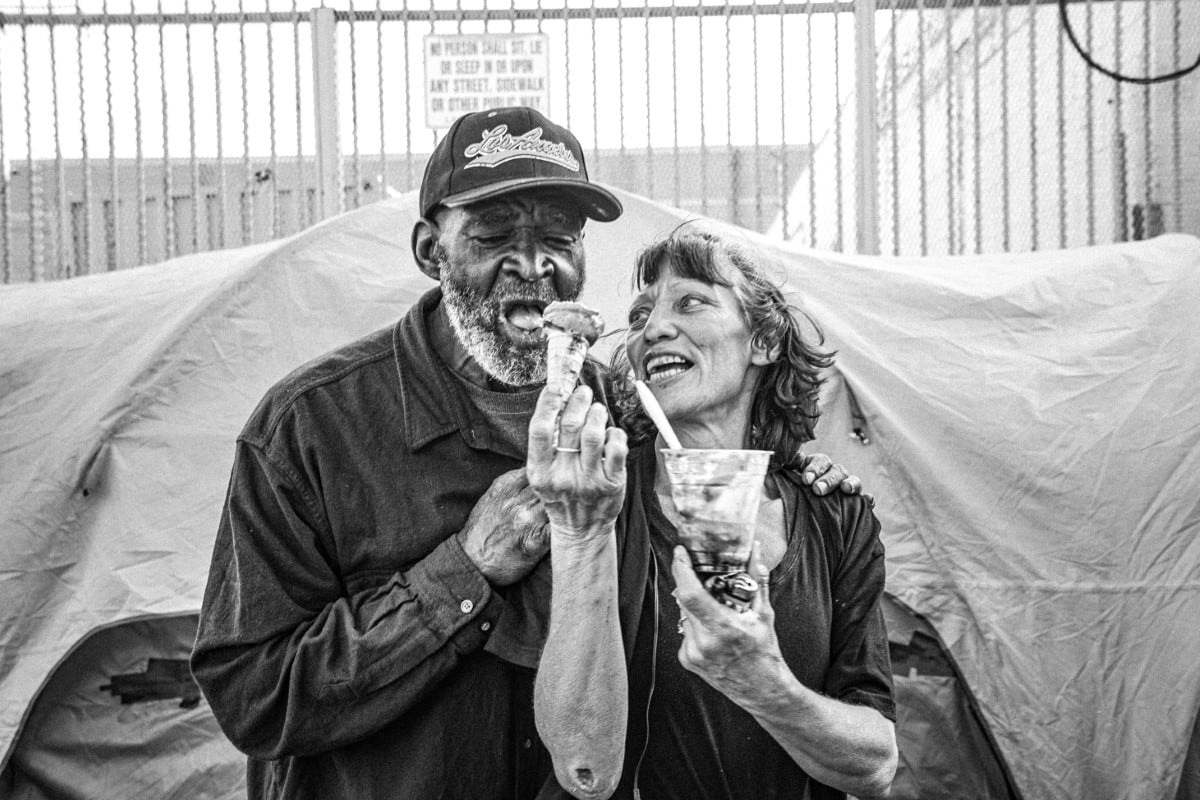
INTERVIEW + PHOTOS: “Photographer Shows the Raw, Unflinching Reality of Life on Skid Row”: For the past decade, anonymous street photographer Suitcase Joe has been spending time on Skid Row in downtown Los Angeles, a neighborhood inhabited by the largest unhoused community in America. He slowly developed trust and built relationships with the people in that community, learning more about their stories, and they granted him unprecedented access to their daily lives, allowing him to capture them on camera. Hear him talk about the experience, and about misconceptions people tend to have about those experiencing homelessness, in this interview, which also includes a sampling of photos. Even though the headline hawks “Raw!” and “Unflinching!,” I was more struck by how the photographs show experiences of joy and friendship.
POEM WITH COMMENTARY: “The Rungs” by Benjamin Gucciardi, commentary by Pádraig Ó Tuama: Each week on the Poetry Unbound podcast, Ó Tuama reads and reflects on a different contemporary poem. In this episode’s featured poem, “a social worker holds a group for teenagers at a school. They only half pay attention to him. Then something happens, and they pay attention to each other.” The poem is from Gucciardi’s latest collection, West Portal.
+++
ARTICLE: “Dool-Hoff: A Dutch Maze with New Jerusalem at its Centre (1705)”: The Public Domain Review is always uncovering unique, amusing prints and other artistic and literary curiosities from centuries past. Here they look at an early eighteenth-century religious maze published in Haarlem, Netherlands, whose pathways are filled with didactic verse, some leading to dead ends but others leading to heaven at the center.
Dool-hoff (maze), signed by the Dutch Catholic printer Claes Braau, 1705. Photo courtesy of the Rijksmuseum, Amsterdam.
+++
SONG: “Home Inside” by Valerie June, performed by the Good Shepherd Collective: This Valerie June cover is sung so gorgeously by Sowmya Somanath with Kate Gungor, Bea Gungor, Jayne Sugg, Liz Vice, and Diana Gameros, and John Arndt accompanies on piano. It premiered in Good Shepherd New York’s March 12 digital service. The song is a prayer for belonging more fully to ourselves, to God, and to this earth; its speaker asks that she might be sensitive to the divine breath in all living things, and be soothed and refreshed by that great stream of water that flows from God’s heart. (Reminds me a bit of Universal Jones’s“River”!)
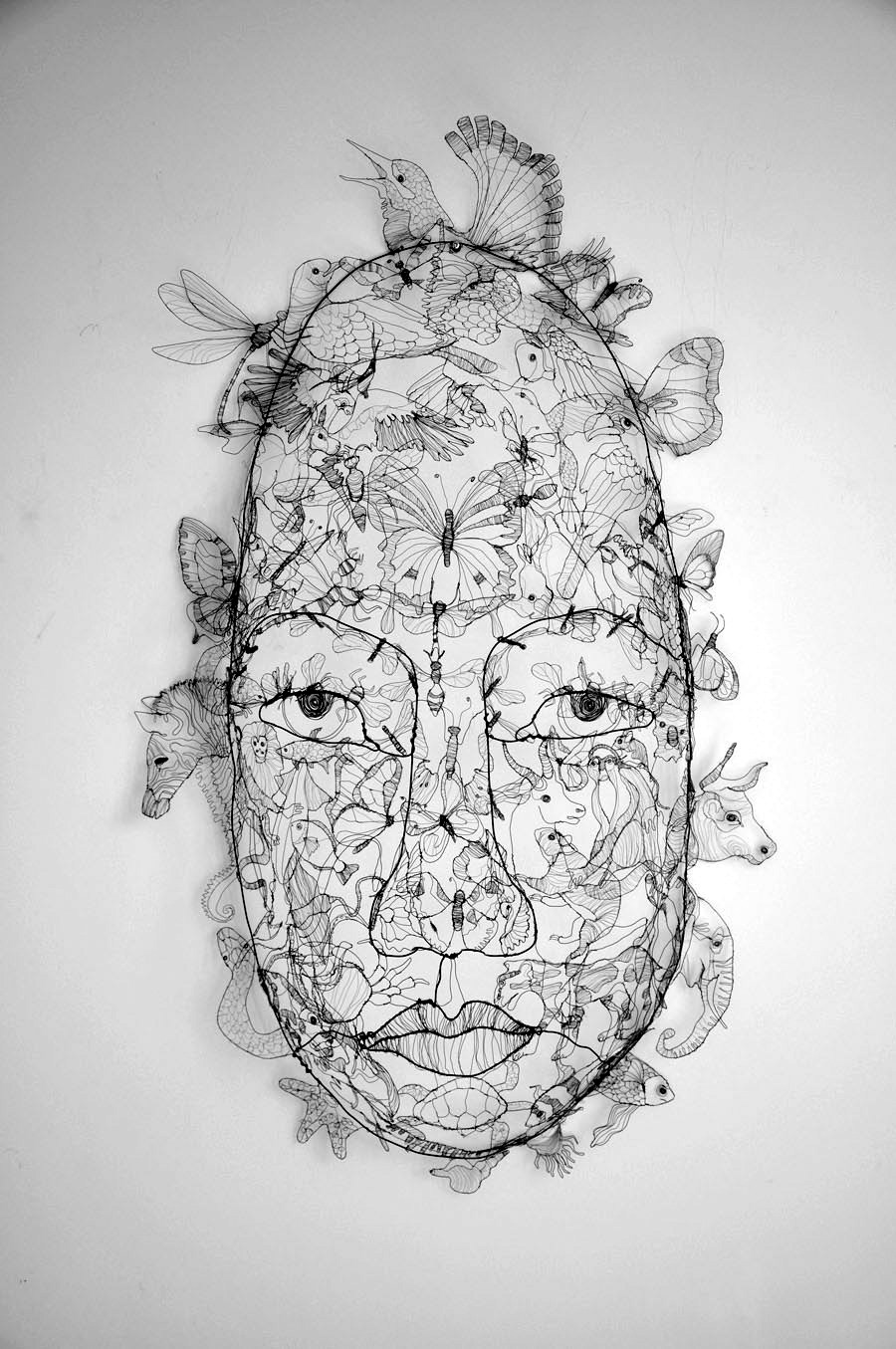
Fiona Morley (British, 1974–), You Are Everything, 2017–18. Stainless steel binding wire, 114 × 67 × 30 cm. Winner of the 2021 Chaiya Art Award on the theme of “God Is . . .”
If it is beauty you want, I [God] am beauty. If you want goodness, I am goodness, for I am supremely good. I am wisdom. I am kind; I am compassionate; I am the just and merciful God. I am generous, not miserly. I give to those who ask of me, open to those who knock in truth, and answer those who call out to me. I am not ungrateful but grateful and mindful to reward those who will toil for me, for the glory and praise of my name. I am joyful, and I keep the soul who clothes herself in my will in supreme joy. I am that supreme providence who never betrays my servants’ hope in me in soul or body.
How can people see me feeding and nurturing the worm within the dry wood, pasturing the brute beasts, nourishing the fish in the sea, all the animals on the earth and the birds in the air, commanding the sun to shine on the plants and the dew to fertilize the soil, and not believe that I nourish them as well, my creatures made in my image and likeness? As a matter of fact, all this is done by my goodness to serve them. No matter where they turn, spiritually and materially they will find nothing but my deep burning charity and the greatest, gentle, true, perfect providence.
—Catherine of Siena, The Dialogue, chap. 141, trans. Suzanne Noffke, in Catherine of Siena: The Dialogue (The Classics of Western Spirituality) (Mahwah, NJ: Paulist Press, 1980), p. 290
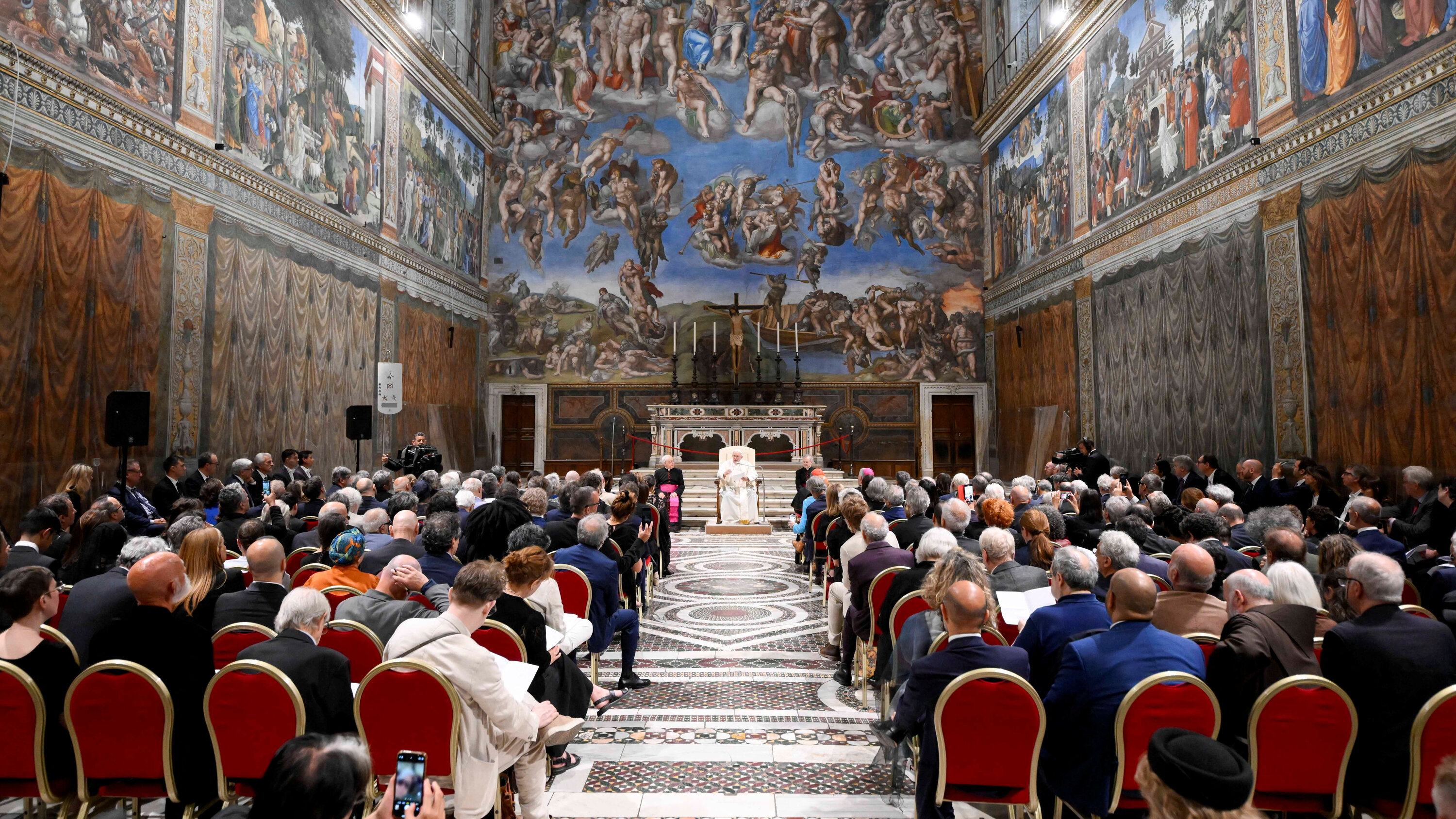
SPEECH: “Address of His Holiness Pope Francis to Artists for the 50th Anniversary of the Inauguration of the Vatican Museums’ Collection of Modern Art”: On June 23, at the invitation of Pope Francis, some two hundred select visual artists, filmmakers, composers, poets, and other creatives gathered at the Sistine Chapel to commemorate the fiftieth anniversary of the Vatican Museums’ Collection of Modern and Contemporary Art, inaugurated in 1973 by Pope John Paul VI. “One of the things that draws art closer to faith is the fact that both tend to be troubling,” Pope Francis said last Friday. “Neither art nor faith can leave things simply as they are: they change, transform, move and convert them.” He applauded how “artists take seriously the richness of human existence, of our lives and the life of the world, including its contradictions and its tragic aspects. . . . Artists remind us that the dimension in which we move, even unconsciously, is always that of the Spirit. Your art . . . propel[s] us forward.” For reporting on this event by the New York Times, see here.
Pope Francis addresses a group of artists, June 23, 2023. Photo: Vatican Media, via Reuters.
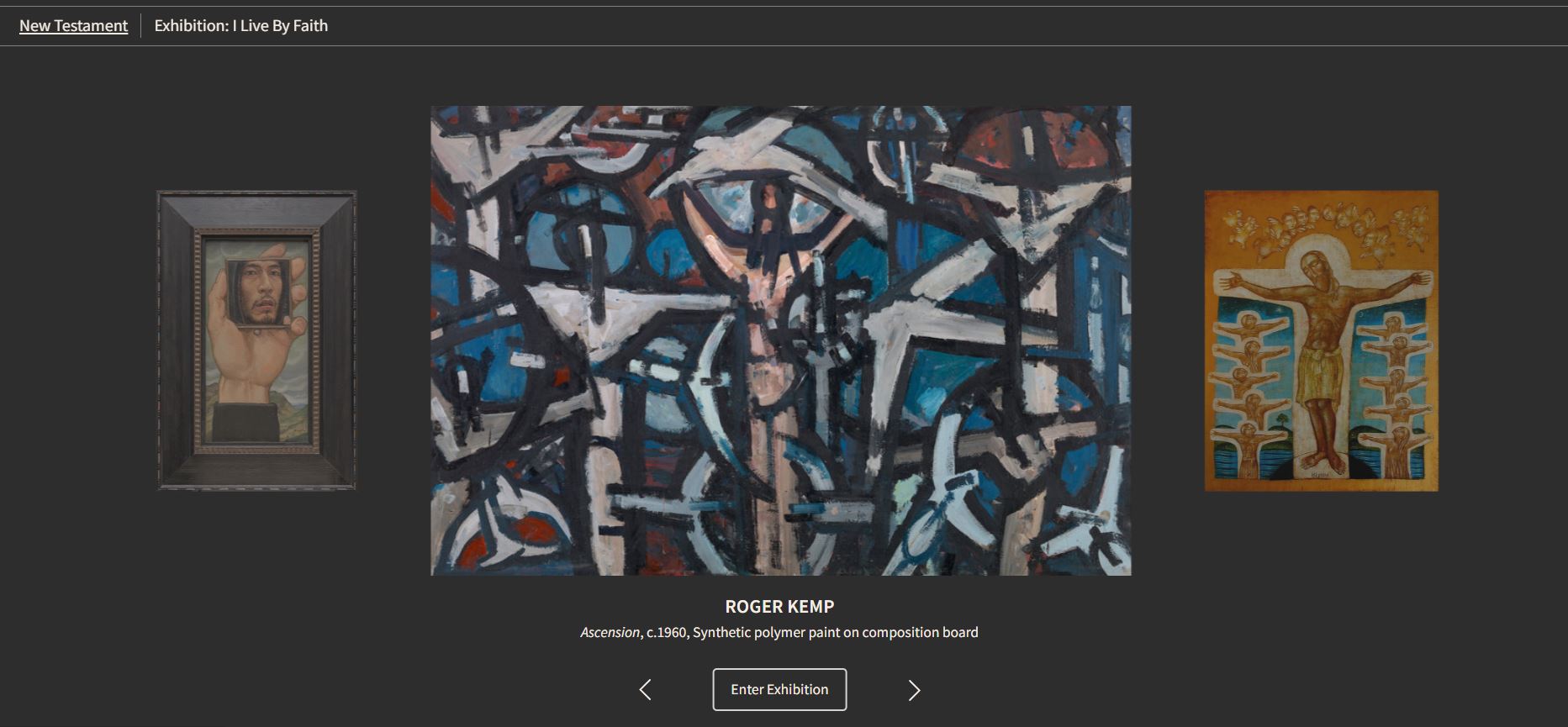
VISUAL COMMENTARY ON SCRIPTURE: “I Live by Faith (Galatians 2:15–21)” by Victoria Emily Jones: My latest set of commentaries for the VCS went live this month! It centers on one of Paul’s famous sayings: “I have been crucified with Christ, and it is no longer I who live, but it is Christ who lives in me.” I was bummed that one of the three commentaries I originally wrote had to be scrapped because the image permission was ultimately denied; I thus had to reconfigure and replace, and I ended up with two artworks in the three-piece exhibition that aren’t as diverse from each other as I had hoped. But still, each artwork brings a unique and compelling lens through which to examine this passage. (Note: If you’re viewing the exhibition on your phone, after you “Enter Exhibition,” you’ll need to expand the “Exhibition Menu” to access the “Show Commentary” button.)
VIDEO: “Abraham: An Interfaith Discussion at the Bode-Museum, Berlin”: Besides publishing written commentaries on works of art in dialogue with Bible passages, the Visual Commentary on Scripture also produces videos. This one brings together an Anglican Christian priest (who directs the VCS), a Jewish rabbi, and a Muslim theologian around a fifth-century ivory pyxis depicting Abraham, a figure held in common by all three faith traditions.
+++
POEM:“Gate A-4”by Naomi Shihab Nye: I’ve always loved this heartwarming poem about an unexpected moment of communion shared with strangers at an airport, made possible through kindness and the letting down of one’s guard. Listen to commentary by Joanne Diaz and Abram Van Engen on the Poetry for All podcast, episode 19; they answer the question “Why is this a poem?” Here’s a video of Nye reading it herself:
+++
NEW ALBUMS:
>> April 21: Worship for Workers by the Porter’s Gate: “In 2022 a group of songwriters, pastors, and professionals gathered in Nashville, Tennessee to write a series of worship songs for workers. Over three days they discussed the spiritual, emotional, and material struggles facing workers around the world today. Soon enough, they began to compose a series of songs specifically designed to help Christians carry their daily work before the Lord.” Here’s one of the thirteen songs on the album, “You Hold It All”:
The Worship for Workers album is part of a larger project, sponsored by the Brehm Center and a number of other institutions, to provide music, prayers, art, liturgies, and training to the church around the topic of work. It grew out of the book Work and Worship: Reconnecting Our Labor and Liturgy by Matthew Kaemingk and Cory Willson.
>> May 5: Glory Hour by Victory: Victory Boyd [previously] is a Grammy-winning soul and gospel artist who got her start singing with her siblings in the group Infinity Song but whose career really kicked into high gear when she worked as a songwriter for Kanye West’s Jesus Is King (2019). Glory Hour is her second full-length album as a solo artist; its title refers to the time of the morning when the sun rises. Most of the tracks are original songs or spoken word, but there are also three classic hymns/gospel songs: “His Eye Is on the Sparrow,” “Great Is Thy Faithfulness,” and “I Know It Was the Blood.” Here’s the music video for “Just like in Heaven,” based on the Lord’s Prayer:
>> May 19: Seven Psalms by Paul Simon: Paul Simon released this original seven-movement composition about doubt and belief as a single thirty-three-minute track, as it is meant to be listened to in one sitting. I’m a Simon fan; one of my early blog posts is a review of his and Garfunkel’s debut album, Wednesday Morning, 3 A.M. But if I’m honest, I was underwhelmed by this much-anticipated release. I’m in the minority there, so I think I’ll need to give it another listen. What do you think of it? Here’s the trailer:
>> June 2: Byrd: Mass for Five Voicesby the Gesualdo Six: One of my favorite vocal ensembles has just come out with an album of songs by William Byrd—his setting of the Mass along with a handful of motets. A Catholic composer in Protestant England in the late Renaissance, Byrd wove together musical “notes as a garland to adorn certain holy and delightful phrases of the Christian rite,” as he wrote in the preface to his second book of Gradualia (1607). Here’s the Gesualdo Six’s performance of his “Afflicti pro peccatis nostris,” a Latin prayer, a desperate plea for sanctification, that translates to “Afflicted by our sins, each day with tears we look forward to our end: the sorrow in our hearts rises to thee, O Lord, that you may deliver us from those evils that originate within us”:






 Art & Theology