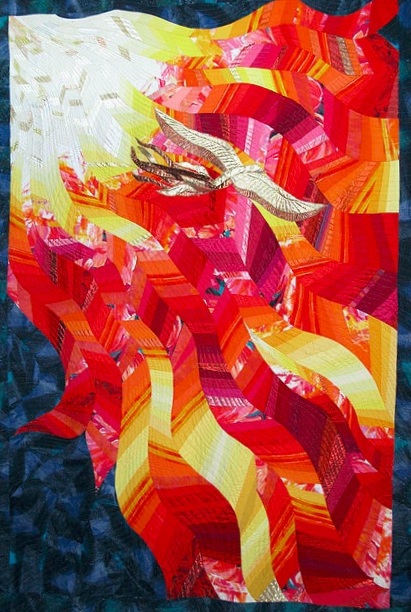
Linda S. Schmidt, Pentecost, 1991. Quilt, 111 × 80 in.
“I came to cast fire on the earth, and would that it were already kindled” (Luke 12:49).
In the churches in which many of us were raised, we were taught to live in fear of this fire of God.
We are not going to repeat that lie. The ancient Christians show us a better way of perceiving this divine fire as we encounter it in the Scriptures and in our experiences.
I want the children listening to me today to know and trust they can welcome and embrace the fire of God, that there is no reason to live in terror about the fire that has come from God, is coming even now, and will come at the end of time.
We welcome the fire of God because we know the character of the God who meets us in the flesh of Jesus Christ.
This God comes among us not to destroy humanity but to burn everything out of us that is not of love, that does not have its origin in the divine life.
Like all healing, deliverance, and reconciliation, there is pain involved in being set free and made well. It is not easy. It is not a cake walk.
But here is the good news: we are free from anxiety and fear as we embrace the cleansing fire of God. “With its fire, love makes better whatever it touches” (Ambrose).
We became cold in our self-imposed exile from God, and like any object, the further it gets away from the fiery source of its life, the colder it becomes.
Remember that God makes his ministers flames of fire, that we shine like the sun in the kingdom of heaven.
Remember that Cleopas, later in Luke, describes that their “hearts burned within them” as Jesus taught them from the Scriptures.
Remember at Pentecost that flames of fire come to rest on the heads of the gathered men and women.
As John promised, Christ baptizes us with fire and the Spirit.
For Cyril of Jerusalem, these words of Jesus about casting fire upon the earth find their fulfillment at Pentecost.
Remember that the flames of the fiery furnace do not consume the Hebrew children, but the angel—Christ himself—stands with them in scorching flames and they emerge from the fire unharmed.
Remember that the burning bush is aflame, is entirely engulfed, but never consumed by the fire of God.
So it is with us: the fire of the love that is the Spirit of God—Ambrose describes this fire of love as having wings—flies through us, consuming whatever is not of Love and trying whatever is good in us in order to purify the good and make it ready for the kingdom.
And we can trust this fire because it comes from the human who is God, who has journeyed through death and hell to bring us back alive with him.
We walk confidently into the fire that is God, knowing that his fire will keep us unto everlasting life.
Kenneth Tanner is the pastor of Church of the Holy Redeemer in Rochester Hills, Michigan, and a contributing writer for Mockingbird, Sojourners, Clarion Journal, and more. He frequently posts theological reflections and sermon excerpts on Facebook, such as the one above [source], which he preached August 18, 2019, the tenth Sunday after Pentecost. I’ve reposted it here with his permission. The liturgical quilt is by fiber artist Linda S. Schmidt.
EXHIBITION: “God is . . . ,” May 14–23,gallery@oxo, London: The winning entry from the second Chaiya Art Awards competition, along with forty-nine shortlisted others, are being exhibited in London’s South Bank starting tomorrow. The exhibition also has a virtual option, which I received an advance preview of, along with the catalog. Read my review at ArtWay.eu. There is a diverse range of responses to the theme of “God is . . . ,” in a range of media!
+++
VIRTUAL CONCERT: “I Should Be Glad”: On May 2 the Choral Society of Durham and the Duke University Chorale put on a virtual concert, performing songs of lament and hope. They sing of “hours that go on broken wings” and “the unchanging ache of things”; of “this long, hard climb, carr[ying] ancestral sorrow”; of violence and murder; of God’s seeming absence; of feeling like a “moanin’ dove.” But they also sing invitations to be glad, to lay down one’s burden, to see beauty, to soar. Click here for a copy of the program, which contains credits, texts, and translations. I really enjoyed the selection of pieces—most were new to me—and the execution (technical and artistic) is excellent. An hour very well spent. Note that in lieu of a ticket charge, a $10 donation is recommended.
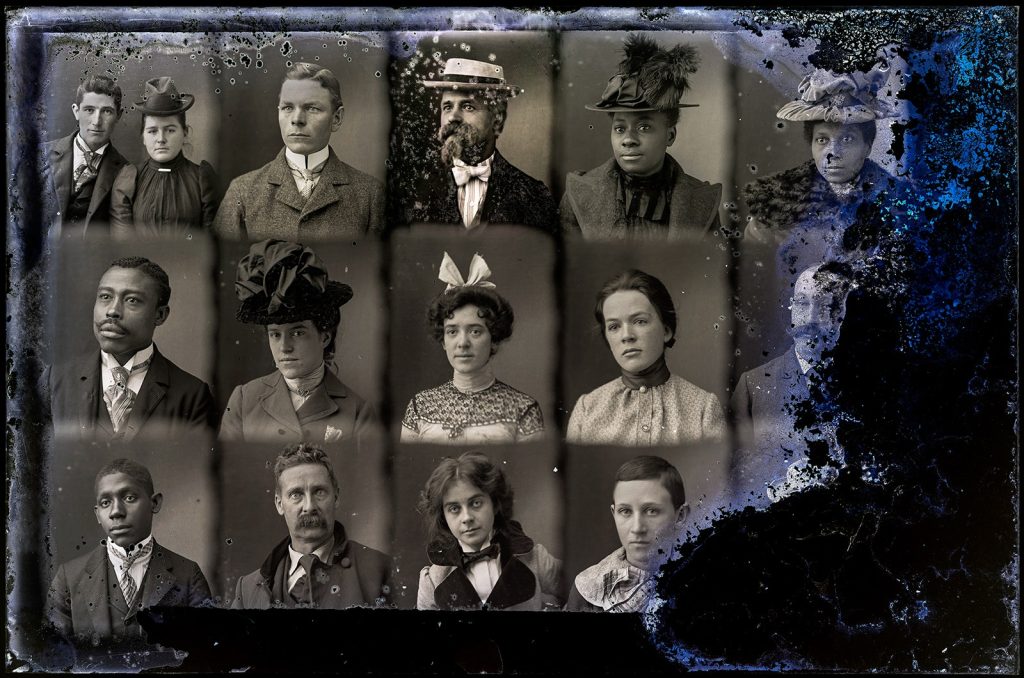
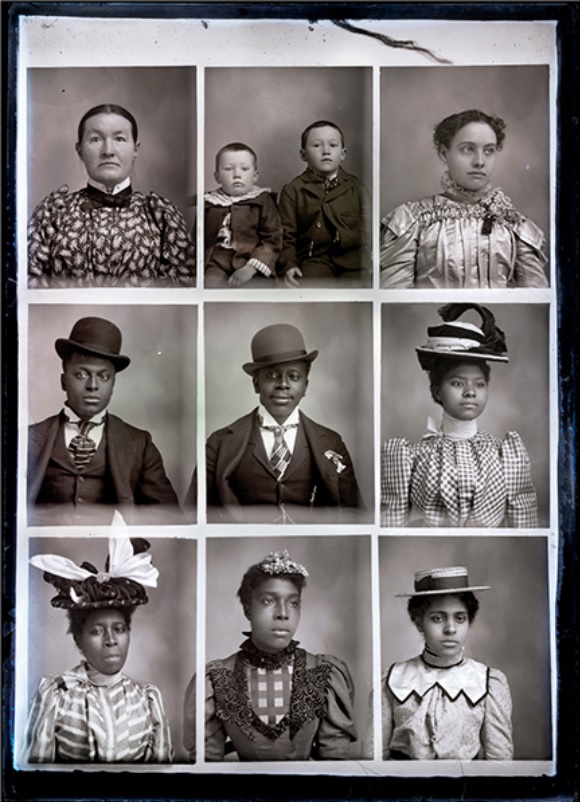
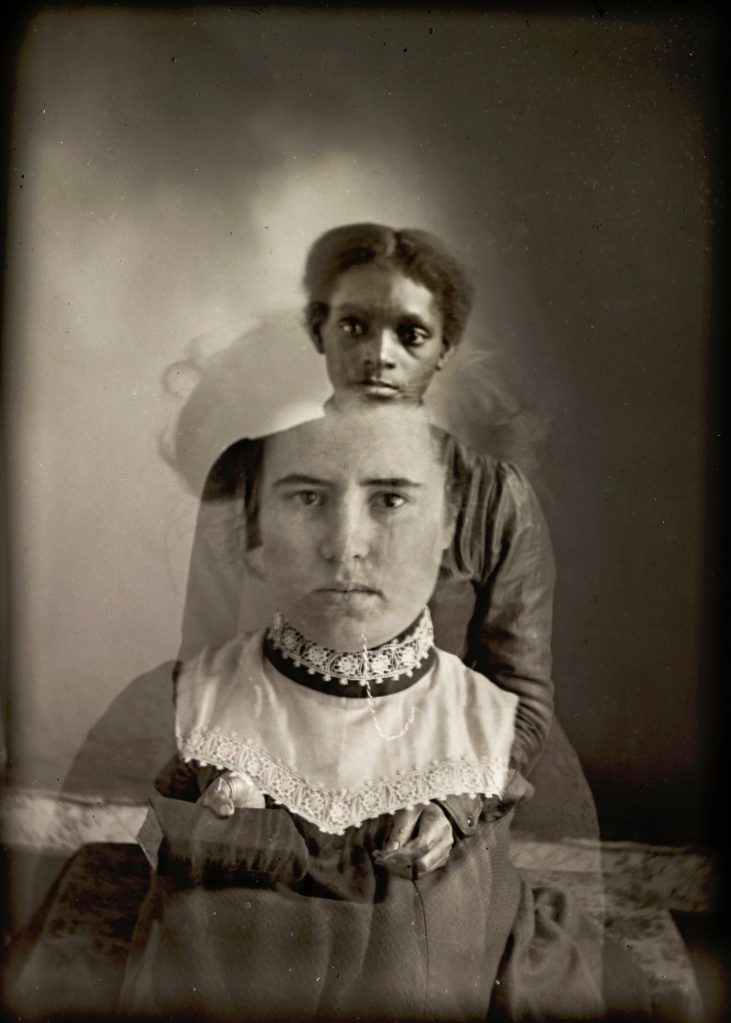
Among the songs are contemporary choral settings of traditional prayers, a civil rights hymn, and the world premiere of the five-movement Where We Find Ourselves by Michael Bussewitz-Quarm (she/her), inspired by the photographs of Hugh Magnum. Magnum, who was white, ran an integrated portrait studio in the Jim Crow South from 1897 until his death in 1922, photographing white and Black clients with equal dignity. The glass plate negatives and contact prints languished in his family’s moldering tobacco barn in Durham, North Carolina, until the 1970s, when they were discovered prior to the property’s slated demolition. They were transferred (many of them damaged) to the Duke University archives, where they again lay mostly dormant until being recently dug out by photographer-writers Margaret Sartor and Alex Harris, who compiled and presented them as an exhibition and accompanying book. Bussewitz-Quarm’s composition is a moving meditation on these timeworn photographs, and the lyrics by Shantel Sellers are pure poetry.
Photographs by Hugh Magnum, courtesy of the David M. Rubenstein Rare Book & Manuscript Library at Duke University, Durham, NCIn some of the negatives the panels have fused, causing the subjects to extend past their frames and thus giving the illusion that they were sitting together.“The portraits are often accidentally double-exposed,” writes Sarah Blackwood for the New Yorker, “and many of the double exposures overlay images of white and black sitters, who suddenly seem to sit alongside or even atop one another. Such ghostly interactions produce from two Mangum portraits an entirely new image altogether, one in which the pride and pleasure of self-presentation is shadowed by the racial realities of the time.”
Set list:
“I Should Be Glad” by Susan LaBarr (composer) and Sara Teasdale (lyricist)
“Sometimes I Feel,” traditional African American spiritual, arr. Alice Parker and Robert Shaw
“Where We Find Ourselves” by Michael Bussewitz-Quarm (composer) and Shantel Sellers (lyricist)
“Hymn to Freedom” by Oscar Peterson (composer) (arr. Paul W. Read) and Harriette Hamilton (lyrics)
+++
POEM COMMENTARY: “The Night” by Henry Vaughan, commentary by Dr. Grace Hamman (blog post | podcast episode): I’ve featured poems by Henry Vaughan several times on this blog but not the one that just might be his most famous: “The Night,” about the Pharisee Nicodemus’s midnight rendezvous with Jesus (see John 3). It contains the beautiful and much-lauded line “There is in God, some say, / A deep but dazzling darkness . . .” Medieval literature scholar Grace Hamman [previously], podcaster and blogger at Old Books with Grace, reads and unpacks the poem, first giving some historical and biographical context. Vaughan was an Anglican Welshman living during the English Civil War when the Puritans were in power, which means he was cut off from the forms of worship through which he was used to encountering Christ. This, Hamman says, influenced his writing of the poem and of the larger collection, Silex Scintillians, it’s a part of.
She has made the commentary available in both written and audio form.
+++
EDITORIALS by JAMES K.A. SMITH:
When I see a James K.A. Smith [previously] byline, I know what follows is going to be good. He’s a fantastic thinker, writer, and speaker—and he’s the editor in chief of my favorite arts journal, Image. Below is a link to the opening editorial he wrote for each of the last two issues. (The whole journal is full of rich content. Subscribe!)
>> “Healing the Imagination: Art Lessons from James Baldwin,”Image no. 107 (Winter 2020): Here Smith engages with James Baldwin’s 1964 essay “The Uses of the Blues,” in which Baldwin discusses how we “project onto the Negro face, because it is so visible, all of our guilts and aggressions and desires”; white America invents stories and images of Black Americans that reflect our disfigured imaginations. “The imagination is a form of habit, a learned, bodily disposition to the world. . . . It’s the imagination—well- or malformed—that determines what I see before I look,” Smith writes.
He connects Baldwin’s essay to Jesus’s parable of the good Samaritan, showing how the priest and the Levite had different habits of perception than the protagonist. “To see the person before me as an enemy or animal”—or, I would add, a burden—“is a failure of imagination; to see a neighbor instead is a feat of the imagination. Our society is grappling with a soul-sickness that is ultimately an infection of our imagination.” We reflexively imagine others as threats, competitors, adversaries.
The arts can play a huge role in reshaping our imaginations, in retraining us to see people rightly. “I dream of a third Great Awakening,” he says, “in which our imaginations would be reborn, a sanctification of sight baptized by stories and images such that even our first glance is holy. The tents for this revival would be galleries and cinemas; we’ll sing from poems and novels; the altar call will invite us to attend plays and contemplate sculpture.” He’s not saying art should replace church or religion but that art is a powerful agent of spiritual and perceptual formation; “the arts pluck the strings of our imagination uniquely.”
In their March 3 episode, “Healing the Imagination, with James K.A. Smith,”The Weight podcast had Smith on to expound on some of the points in the editorial, to unpack this musing: “Could it be that the arts are more likely to move the needle on our collective perception of one another?” He discusses definitions of “culture” and “art,” both creational goods (God has deputized human beings to unfurl the tacit possibilities he has folded into creation!); the influence of Augustine and Kuyper on his thought; the “transcending, opening, decentering” potential of artistic encounters; his experience of becoming an American citizen; and why he believes national healing will come not primarily through politics but through the arts. He mentions a few commendable recent examples of churches’ hospitality toward artists, citing Pope John Paul II’s 1999 Letter to Artists, written “to all who are passionately dedicated to the search for new ‘epiphanies’ of beauty so that through their creative work as artists they may offer these as gifts to the world,” and Redeemer Church of Knoxville, who converted the unused rooms of their building into artist studios for the larger community to use.
“Christian communities, if they actually really care about healing the soul of a nation, could do no better than to invest in the arts,” Smith says. “Not so we can go make Thomas Kinkade paintings or Kirk Cameron movies or whatever, but so that we have artists who are actually speaking to our neighbors in ways that meet them as human.”
>> “How to Visit a Museum: Disciplines of Availability,”Image no. 108 (Spring 2021): “Aesthetic experiences I didn’t go looking for that burrow their way most deeply into my psyche . . . are only possible if I am cultivating a way of life that puts me in front of artworks that don’t conform to my preferences. That might mean signing up for the disciplines of an aesthetic way of life in which I am puzzled or frustrated or decentered by the feeling of ‘not getting it.’ It means approaching paintings and poems without expecting immediate returns. In my experience, the way of surprise lies in listening to a community of friends bear witness to what has captivated them and letting my puzzlement be an impetus to explore new territory. When Shane McCrae gushes about a poet who has felt inaccessible to me, I assume I have something to learn. And so I taste and see. A life hungry for aesthetic surprise does not settle for daily doses of predictably poignant comfort; instead, I need to expose my palate to strange, maybe even unsavory tastes as a way of making myself available for the sublime. While we can’t manufacture the surprise, we can learn to make ourselves available.” Read more at the link.
Reminds me of a creative prompt given last November by Corey Frey of The Well Collaborative in Frederick, Maryland: “Find a challenging poem or work of art or piece of music that doesn’t trigger your appreciative mechanism quite so easily. Sit with it. Let it confuse you. Allow its toe to creep in the crack of the door of your respect (re-spect: look a second time).”
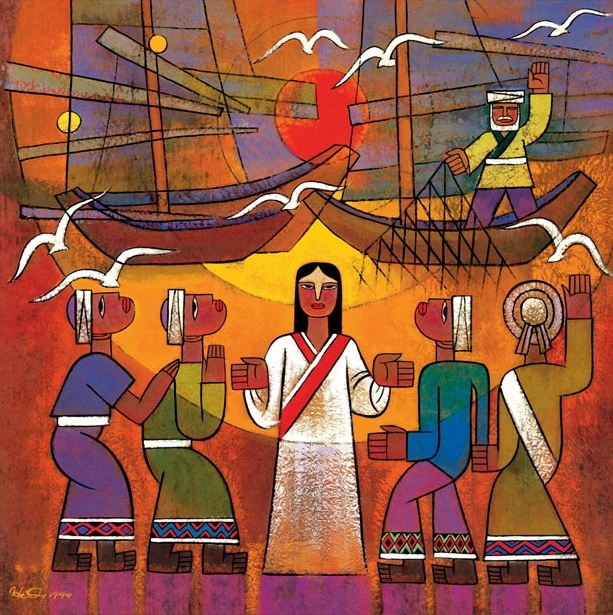
VISIO DIVINA SERIES: “During Asian Pacific American Heritage Month, C4SO [Diocese of Churches for the Sake of Others] celebrates artist He Qi, who reinterprets sacred art within an ancient Chinese art idiom. His work is a blend of Chinese folk art and traditional painting technique with the iconography of the Western Middle Ages and Modern Art. On each Sunday during May, we have licensed one of He’s paintings to illuminate one of the lectionary readings. We will provide prompts for you to do Visio Divina, or ‘sacred seeing,’ an ancient form of Christian prayer in which we allow our hearts and imaginations to enter into a sacred image to see what God might have to show us.” [HT: Global Christian Worship]
He Qi (Chinese, 1950–), Calling the Disciples, 1999. Oil on canvas.
For this past Lent the C4SO brought us the Stations of the Cross by Laura James, a self-taught painter of Antiguan heritage, combined with a liturgy by their scholar in residence, Rev. Dr. W. David O. Taylor. I appreciate their recognition of the value of visual art to the individual and corporate lives of their people.
+++
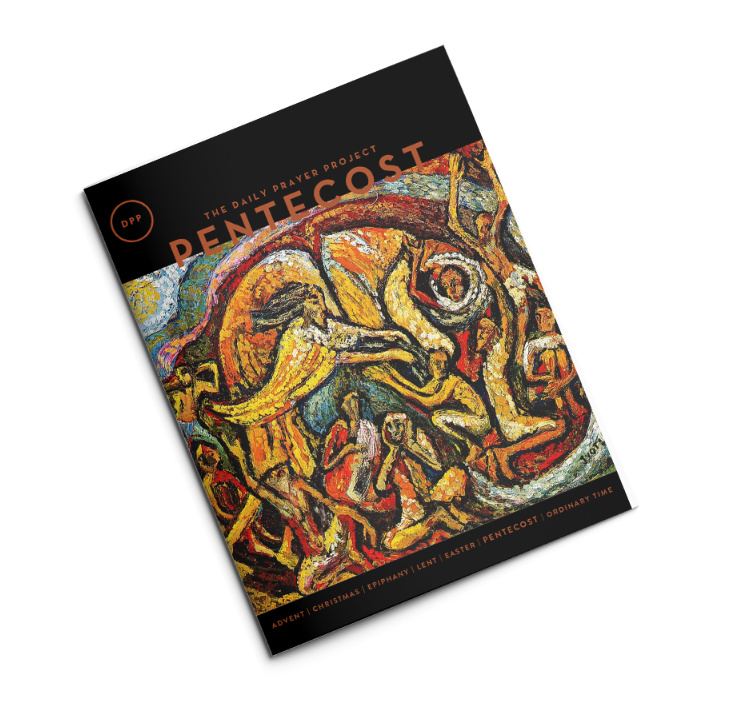
NEW DPP EDITION: Pentecost 2021: Pentecost is May 23, kicking off a new season of the church year—which means a new periodical from The Daily Prayer Project is hot off the presses! This is one of the publications I work for. “We celebrate and join in prayer with a vastly diverse church in this edition of the DPP. The Indian artist Jyoti Sahi’s dynamic painting Receive the Holy Spirit adorns the cover and leads us to a powerful remembrance of and meditation on that great outpouring of Pentecost. The church of the Caribbean gifts us with their song of Pentecost: ‘Fire, fire, fire! Fire fall on me!’ The Christian Council of Nigeria leads us in prayer and asks God to ‘grant us a vision of our land that is as beautiful as it could be . . . [and the] grace to put this vision into practice.’ The Korean songwriter Geon-yong Lee offers up a lament for the fractures of the church and invites us to truly long and work for unity: ‘Come, hope of unity; make us one body. Come, O Lord Jesus; reconcile all nations.’ . . .”
The two other featured artworks in this edition, which will be added to our online gallery May 23, are an abstract ink drawing by Takahiko Hayashi, evocative of the Spirit’s vitality, and a piece by Yuanming Cao that celebrates the steadfastness of the church in China using as its medium the everyday devotional materials of rural Christians in the Suzhou region.
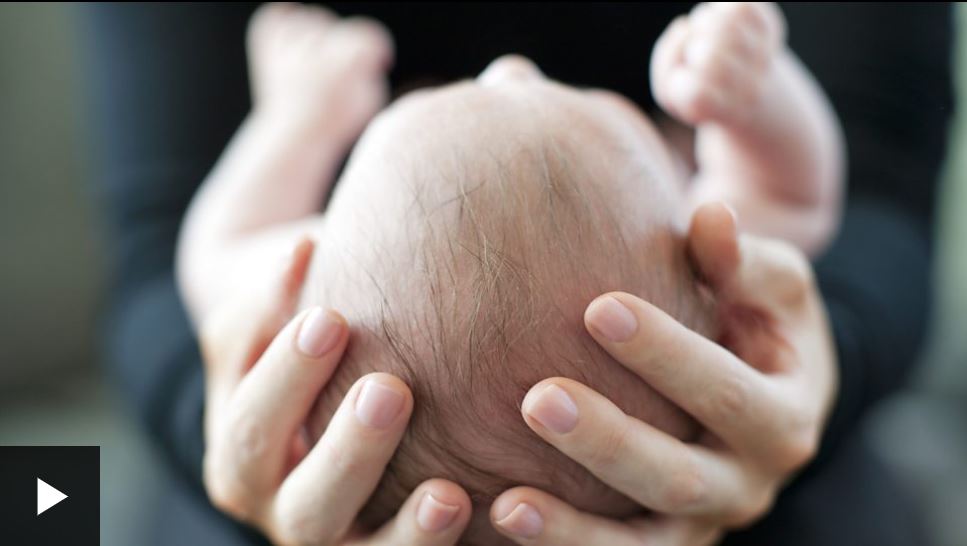
VIDEO: “What happens to humans when we can’t touch?”: “Touch is how we first communicate as babies. And it’s fundamental to human wellbeing. So what happens when we can’t touch?” This recent BBC Radio 4 video by Daniel Nils Roberts discusses the importance of touch to human development, connection, and health. Roberts talks to scientists—and a cuddle therapist!—about why touch makes us feel good, and the skyrocketing of “touch hunger” since the onset of COVID-19. While I have been deprived of physical contact with friends for the past year and I sorely miss it (I hadn’t realized how much hugs, shoulder pats, etc., mean to me), I live with my husband and have been able to receive touch from him; I can’t imagine what it would be like for those who have been completely without touch during this time of restrictiveness. [HT: Joy Clarkson]
+++
NEW BOOK: Enjoying the Bible: Literary Approaches to Loving the Scriptures by Matthew Mullins: Released in January by Baker Academic. “Many Christians view the Bible as an instruction manual. While the Bible does provide instruction, it can also captivate, comfort, delight, shock, and inspire. In short, it elicits emotion—just like poetry. By learning to read and love poetry, says literature professor Matthew Mullins, readers can increase their understanding of the biblical text and learn to love God’s Word more.”
I found out about this book through the interview by Jessica Hooten Wilson in the current issue of Christianity Today, “Reading God’s Word like a Poem, Not an Instruction Manual” [HT: ImageUpdate]. In the interview Mullins says he hopes the book reaches those Christians who tend to privilege information and instruction in their scripture reading above enjoyment—people who go to the Bible only for facts about God or practical guidance, not an encounter. Mullins shows how the Bible wants to shape not only our intellectual understanding but also our desires and emotions, and that many scripture passages are not reducible to a simple message or takeaway. Those who read and enjoy poetry inherently grasp this about the Bible. Here’s a short lecture Mullins gave on the topic in 2018, “You Can’t Understand the Bible If You Don’t Love Poetry”:
+++
ONLINE POETRY RETREAT: Send My Roots Rain, Saturday May 15, 10 a.m.–3 p.m. UK time: Brought to you by the Church Times and Sarum College, this event will feature readings and/or presentations by Pádraig Ó Tuama, Malcolm Guite, Helen Wilcox, Mark Oakley, and others. The cost is £15 (about USD$20). [HT: Arts and the Sacred at King’s (ASK) weekly e-bulletin; email Chloë Reddaway to subscribe]
+++
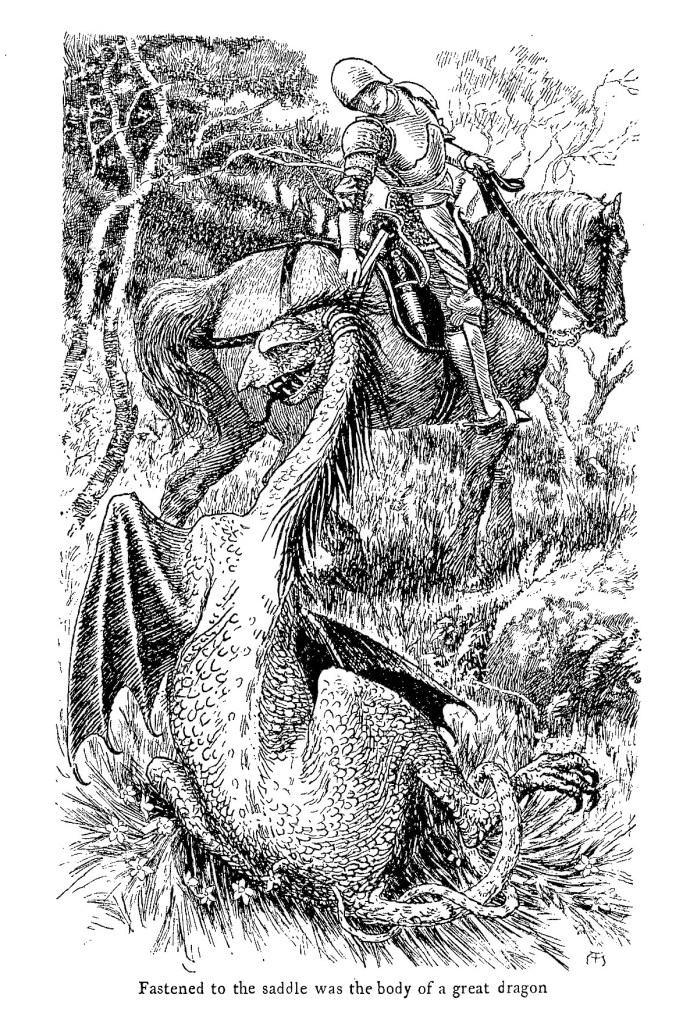
SUMMER READING GROUP: Phantastes by George MacDonald, led by Kirstin Jeffery Johnson: The Rabbit Room is sponsoring an online book club this summer centered on Phantastes by George MacDonald, a fantasy novel whose young hero Anodos wakes up in Fairy Land one day and is forced to reassess his assumptions about himself and others. Fantasy is not a genre I naturally gravitate to, but I keep hearing about this novel from different sources—how perplexing yet alluring it is—so I’m going to give it a try! I’m especially thrilled that the discussions will be led by MacDonald scholar Kirstin Jeffrey Johnson. Oh, and fun fact: this is the book that C. S. Lewis said most shaped his vocational attitude and philosophy of life.
“The ‘live’ version of this book group, including the online forum, opens May 25 [with chapters 1–4] and will include Zoom chats every Tuesday night at 7:00 p.m. CST for five weeks. However, you are welcome to join at any time, even after the live chats have ended. The discussions will be archived, and the forum will be open indefinitely for new registrants to continue reading and discussing the book.” You can purchase a copy of the book through the Rabbit Room Store, or there’s this annotated edition I bought, edited by John Pennington and Roderick McGillis. (It has a beautiful cover, but the annotations seem geared more toward middle-grade readers.)
Illustration by Arthur Hughes, from chapter 23 of the third edition of Phantastes by George MacDonald, published by Arthur C. Fifield in 1905
As a bonus, listen to “Giving as the Angels Give,” a two-part session from Hutchmoot 2019 that explores “some of the ways in which, as an author, teacher, and community-builder, MacDonald intentionally manifested hospitality.” Part 1 is a personal on-ramp to the topic by Jennifer Trafton (“I can’t think of any other writer who makes me feel the intimacy of God’s welcome more than MacDonald does,” she says), and part 2, which focuses more on MacDonald’s biography, is by Kirstin Jeffrey Johnson.
Note to reader: “HT” stands for “hat tip”; it’s an acknowledgment of where or from whom I first found mention of the content I link to—that is, if I did not discover it directly from the source itself. I include these tags, along with strategic hyperlinks on the names of people and institutions, because, other than simply being courteous, I want to aid you in building your own “Christianity and the arts” network. One of the primary questions I get from people is “Who should I follow?” or “Where did you find about . . . ?” Soon I will compile a list, on its own tab, of like-minded content curators/providers that inspire me, but regular readers of the blog will, I’m sure, have already picked up on who a lot of those are. And I’m learning of new ones all the time!
May is Mary’s month, and I
Muse at that and wonder why:
    Her feasts follow reason,
    Dated due to season—

Candlemas, Lady Day;
But the Lady Month, May,
    Why fasten that upon her,
    With a feasting in her honour?

Is it only its being brighter
Than the most are must delight her?
    Is it opportunest
    And flowers finds soonest?

Ask of her, the mighty mother:
Her reply puts this other
    Question: What is Spring?—
    Growth in every thing—

Flesh and fleece, fur and feather,
Grass and greenworld all together;
    Star-eyed strawberry-breasted
    Throstle above her nested

Cluster of bugle* blue eggs thin
Forms and warms the life within;
    And bird and blossom swell
    In sod or sheath or shell.

All things rising, all things sizing
Mary sees, sympathising
    With that world of good,
    Nature’s motherhood.

Their magnifying of each its kind
With delight calls to mind
    How she did in her stored
    Magnify the Lord.

Well but there was more than this:
Spring’s universal bliss
    Much, had much to say
    To offering Mary May.

When drop-of-blood-and-foam-dapple
Bloom lights the orchard-apple
    And thicket and thorp† are merry
    With silver-surfèd cherry

And azuring-over greybell makes
Wood banks and brakes‡ wash wet like lakes
    And magic cuckoocall
    Caps, clears, and clinches all—

This ecstasy all through mothering earth
Tells Mary her mirth till Christ’s birth
    To remember and exultation
    In God who was her salvation.
* Bugle, or bugleherb, is a blue-flowering plant in the mint family. † A group of houses standing together in the country; a hamlet; a village. ‡ Bracken ferns.
+++
In the Roman Catholic Church, May is dedicated to Mary, the mother of Jesus, and daily devotions to her are encouraged throughout the month. In many parishes, statues of Mary are crowned with flower garlands at this time.
Though I myself do not practice Marian devotion, I have an immense appreciation for her example of faith and for the role she played in salvation history, and I feel a kinship to her as a spiritual foremother. I also find myself drawn to poems and visual art that reflect on her pregnancy, on the Life growing inside her.
Written in 1878 by the Jesuit poet-priest Gerard Manley Hopkins, “The May Magnificat” muses on the fittingness of May as a designated period of celebration of Mary. In the yearly cycle of the Christian liturgical calendar, Candlemas, which celebrates the presentation of Jesus in the temple as an infant (and Mary’s postpartum purification), is logically dated to February 2, forty days after Christmas, per Leviticus 12:1–4. Lady Day, the feast of the Annunciation (the day on which Jesus was conceived), is celebrated March 25, nine months before Christmas. But why, Hopkins wonders, has the church set apart May in particular for Christians to honor Mary?
He determines it’s because in May, the natural world—at least in the northern hemisphere, where he, an Englishman, lived—is bursting into full bloom, reflecting Mary’s own fecundity, her body a superabundant source of life. In late spring there is a certain joyousness in the air, a “universal bliss,” an “ecstasy.” Mammals are gestating and/or giving birth, birds are incubating and hatching, groves and gardens are flowering, and earth seems to be swelling to a fullness. There is “[g]rowth in every thing.”
Hopkins delights in the wealth of spring, all its flora and fauna. He marvels how the azure of heaven is reflected on earth in the tangled nest of a song thrush, and how sunlight dapples the apple and cherry trees. Perhaps Mary learned gladness from such gladsome surroundings, he suggests. And not only that, but as mother, she shared an affinity with Nature, also a mother.
The month of May culminates, on the 31st, with the feast of the Visitation, which marks the pregnant Mary’s visit to her pregnant cousin Elizabeth. Upon their meeting Mary sang a praise song known as the Magnificat, Latin for “[My Soul] Magnifies [the Lord]” (see Luke 1:46–56). She makes large God’s name, celebrating his mercy, strength, and provision and the impending birth of her son, Israel’s Savior and the world’s.
+++
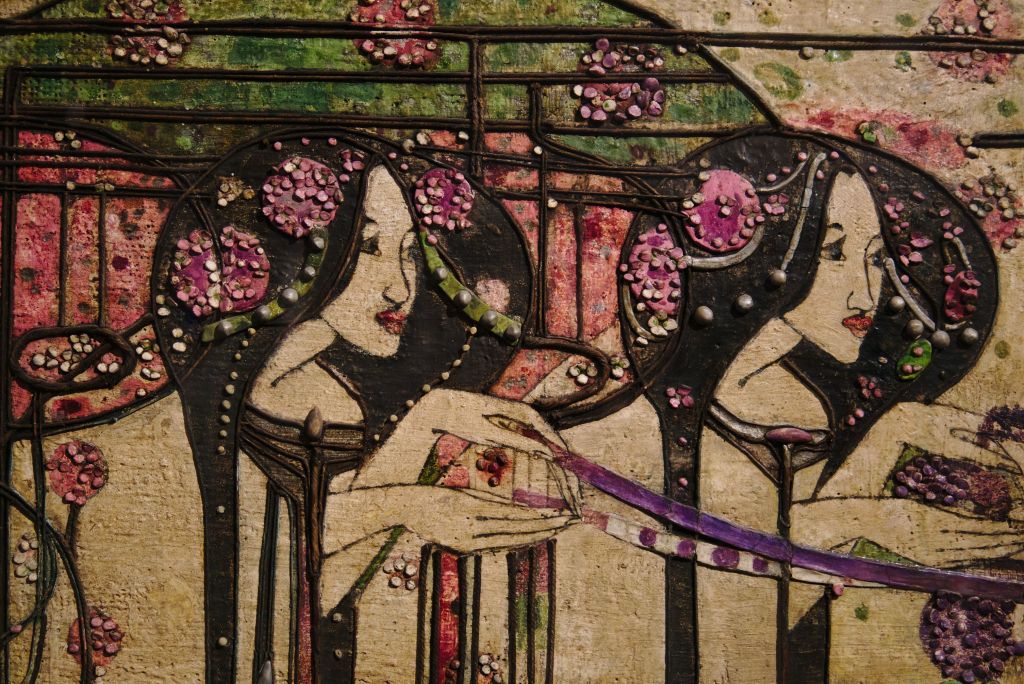
In October 2019 I had the privilege of seeing the internationally touring exhibition Designing the New: Charles Rennie Mackintosh and the Glasgow Style at the Walters Art Museum in Baltimore, whose highlight was a large-scale gesso frieze by Margaret Macdonald Mackintosh, Charles’s artistic collaborator and wife. It was displayed in a narrow hallway behind a plastic screen, so I couldn’t get a shot of the full piece, but here’s a photo provided by the CSG CIC Glasgow Museums Collection:
Margaret Macdonald Mackintosh (Scottish, 1864–1933), The May Queen, 1900. Gesso on burlap over wood frame, scrim, twine, glass beads, thread, tin leaf, papier-mâché, steel pins, 158.8 × 457 cm. Kelvingrove Art Gallery and Museum, Glasgow.
All other photos in this post are my own.
Emerging in the 1890s in the industrial heartland of Scotland, the “Glasgow Style” was the only Art Nouveau movement in Great Britain. “When applied to two-dimensional objects, such as book covers, textiles, posters, and stained glass, the Glasgow Style blended elongated and organic lines, personal symbolic languages, and favored motifs to create otherworldly stylized plant and human forms,” writes Alison Brown, curator of Designing the New. It was developed by a small group of young adult friends known as The Four: Charles Rennie Mackintosh, Margaret Macdonald, Frances Macdonald, and James Herbert McNair. (Charles and Margaret married in 1900, and Margaret’s sister Frances married James in 1899.)
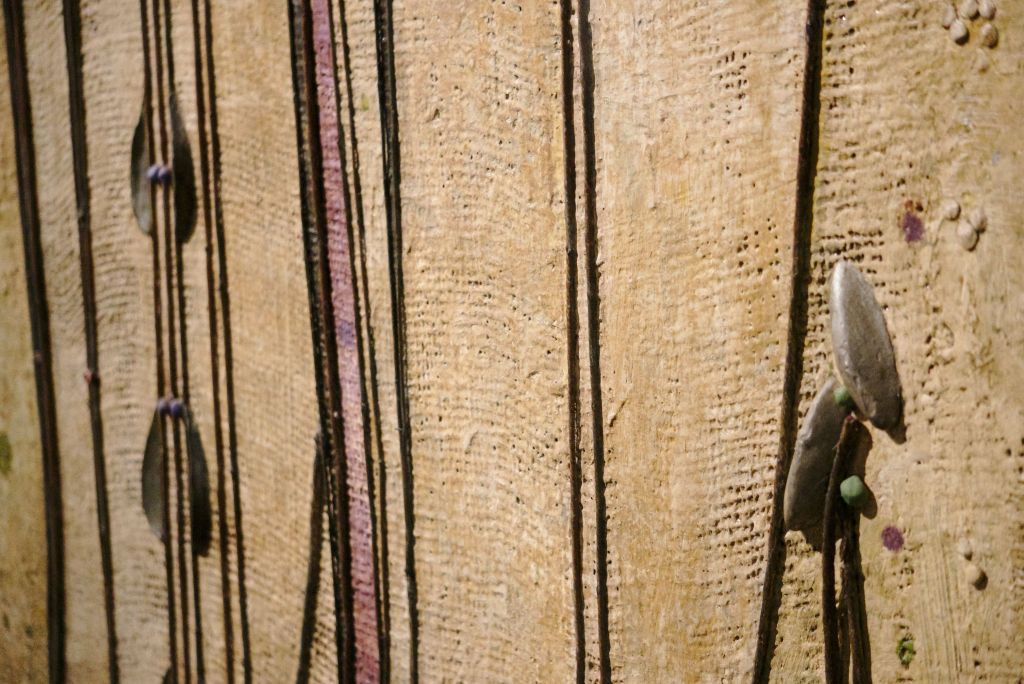
Margaret’s wide-ranging output included watercolors, graphics, metalwork, and textiles, but her specialization was gesso, a plaster-based medium, which she used to make decorative panels for furniture and interiors. The May Queen was commissioned from her at the turn of the century by Miss Catherine Cranston for one of her famous Ingram Street tea rooms in Glasgow, where it hung above a window in the Ladies’ Luncheon Room until 1971. (It is now preserved at the Kelvingrove Art Gallery and Museum.) Gloriously textured, it consists of rough burlap stretched over a wooden frame and covered in gesso, glass beads, metallic leaf, and molded paper. “Some of the modeled plaster shapes bear fingerprints, pinched and pressed into the panel’s surface. The outlines of the figures, trees, and plant forms are ‘drawn’ with brown painted string held fast with long steel pins,” Brown writes.
The crowning of a “May Queen,” a girl chosen to personify May Day and preside over its festivities, is a traditional springtime ritual in western Europe. (If you need a visual, think Florence Pugh’s character in Midsommar . . .) So the title of this artwork is most likely a reference to that. However, I get some serious Marian vibes from the central female figure, which are only reinforced when I view the work in light of the Catholic tradition of the “May crowning” of Mary.
And what a resonant pairing it makes with Hopkins’s “The May Magnificat”! It shows a woman in a strong frontal stance, dressed with flowers, haloed in green, supported by a throne-like backing, and enlarged, perhaps, with child. She’s attended by four maidservants or companions.
This could very well be read as Mary of Nazareth, crowned with beauty, blessed by God to bear his Son into the world.
Piers Plowman is a fourteenth-century allegorical poem in Middle English by William Langland, considered one of the greatest works of medieval literature. Unfolding as a series of dream-visions, it follows the narrator Will’s quest for the true Christian life.
Lines 491–95 of Passus V (as counted in the Norton Critical Edition, which uses the B-text) are among the poem’s most striking:
The sonne for sorwe therof les syghte for a tyme, Aboute midday whan moste lighte is and meletyme of seintes; Feddest with thi fresche blode owre forfadres in derknesse. Populus qui ambulabat in tenebris vidit lucem magnum. The lighte that lepe oute of the, Lucifer [it] blent, And blewe alle thi blissed into the blisse of Paradise.
MODERN ENGLISH TRANSLATION:
The sun for sorrow [at the Crucifixion] lost sight for a time, About midday, when most light is, and mealtime of saints; Thou feddest with Thy fresh blood our forefathers in darkness. Populus qui ambulabat in tenebris vidit lucem magnum. The light that leapt out of Thee, Lucifer it blinded, And blew all Thy blessed into the bliss of Paradise.
All three Synoptic Gospels tell us that from noon to three on Good Friday, “there was darkness over all the land” (Matt. 27:45; Mark 15:33; Luke 23:44–45). Medieval writers and artists sometimes imagined this in personified terms, as the sun veiling its face in mourning over the death of Christ. At what should be the brightest hour of day, the speaker remarks, the sky went black. And while people were eating their midday meal, Christ was preparing for his people a feast of his own flesh and blood.
This latter image is multifaceted, referring in context to the idea that Christ’s blood flowed into hell to rescue the patriarchs and prophets who died before his coming, but also to the legend of the pelican who wounded her breast to feed her children with her blood. The Eucharist is an obvious corollary.
Every line of Piers Plowman has three alliterative stresses, which in V.494–95 in particular create such a beautiful musicality: light, leapt, Lucifer, blinded, blew, blessed, bliss.
In the immense darkness of the Crucifixion, there shone, on a spiritual level, a glory so bright it blinded Lucifer and swept the Old Testament saints into God’s presence. Langland quotes, in Latin, the prophecy from Isaiah 9:2: “The people that walked in darkness have seen a great light.” With the atonement accomplished, our foremothers and fathers could finally inherit the promise they had clung to in faith for so long. The conflation of light and breath as a propulsive force or a vehicle of transport is so unique and vivid—how the saints, expelled from their prison, ride a strong wind or a ray of light into paradise. I see them joyfully tumbling to their new home!
This passage anticipates the triumph of Passus XVIII, which centers on the harrowing of hell. Reiterating the unusual verb choice of “blew,” the poet says it is Christ’s breath that breaks down the hellgate. Here is Christ (“the light”) on Holy Saturday, addressing the fiends of hell:
Again the light bade them unlock, and Lucifer answered, “Who is that? What lord are you?” said Lucifer. The light at once replied, “The King of Glory. The Lord of might and of main and all manner of powers: The Lord of Powers. Dukes of this dim place, at once undo these gates That Christ may come in, the Heaven-King’s son.” And with that breath hell broke along with Belial’s bars; For any warrior or watchman the gates wide opened. Patriarchs and prophets, populus in tenebris, Sang Saint John’s song, Ecce agnus Dei. Lucifer could not look, the light so blinded him. And those that our Lord loved his light caught away.
(XVIII.316–26, modern English translation by E. Talbot Donaldson)
+++
Greta Leśko (Polish, 1979–), Crucifixion with Transfiguration, 2019. Tempera on gessoed wood board.
This multitiered icon by Greta Leśko is not a direct response to the Piers Plowman passages, but boy does it resonate! I love how she has rendered the paradoxical nature of the cross as a site of simultaneous darkness and light by integrating a scene of the Transfiguration beneath.
Earlier in his ministry, Jesus went up to Mount Tabor with his disciples Peter, James, and John, where he revealed to them, in dazzling light, his true glory. Pierced by these rays, they are literally knocked off their feet! As is traditional, Leśko shows the transfigured Christ holding a scroll in his left hand (signifying that he is the Word of God) and making a blessing gesture with the other.
The Transfiguration was a prefiguration of the Resurrection, and indeed in Leśko’s minimalist conception, this tableau could be read secondarily as Christ risen from the grave. The dark orb that encircles him is like the mouth of his tomb, and the three splayed men evoke the Roman guards who were sent reeling as their dead charge emerged from it alive and in full health.
The top half of Leśko’s icon portrays the Crucifixion. Christ spreads wide his arms across the orange beam, which seems to have no end, but rather melds into the all-encompassing border of light. To his right is what appears to be an open window or a doorway—a displacement, perhaps, of his side wound, which we are invited to enter and take shelter in. At the base of the cross, in a darkened recess, sits a skull, representing the death of Adam.
Adam also appears, with Eve, in the roundel at the cross’s upper terminal. This is a scene of the Anastasis (Greek for “Resurrection”), which is the primary icon of Pascha (Easter). It shows Christ descending into Hades, breaking down its doors (which lie in a heap at his feet) and liberating all the Old Testament saints. Known in the West as the harrowing of hell, this event is referenced in the ancient Apostles’ Creed, which states that Jesus “suffered under Pontius Pilate, was crucified, died, and was buried, and he descended into hell . . .” Medievals loved this part of the story, with all its drama and redeemer-heroism. (It’s the climax of Piers Plowman!) In the Orthodox Church it is a central doctrine.
It’s notable that Leśko has chosen to place the underworld action at the top of the composition and the mountaintop action at the bottom. From the depths of the universe to its heights, God’s radiance is ablaze, yes, but is there a significance to their being transposed? The old world order being overturned, perhaps? Maybe it’s simply to give the Transfiguration more prominence, making it an equal counterweight to the Crucifixion—with the Anastasis, small as it is, merely hinted at. In any case, visually and narratively, it means we read the icon from bottom to top.
By sandwiching the cross between two unambiguous manifestations of Christ’s glory, Leśko helps us see the fuller picture of the Crucifixion, where human evil and God’s goodness met and salvation was born. Or, as William Langland puts it: where light leapt out and “blew all [God’s] blessed into the bliss of Paradise.”
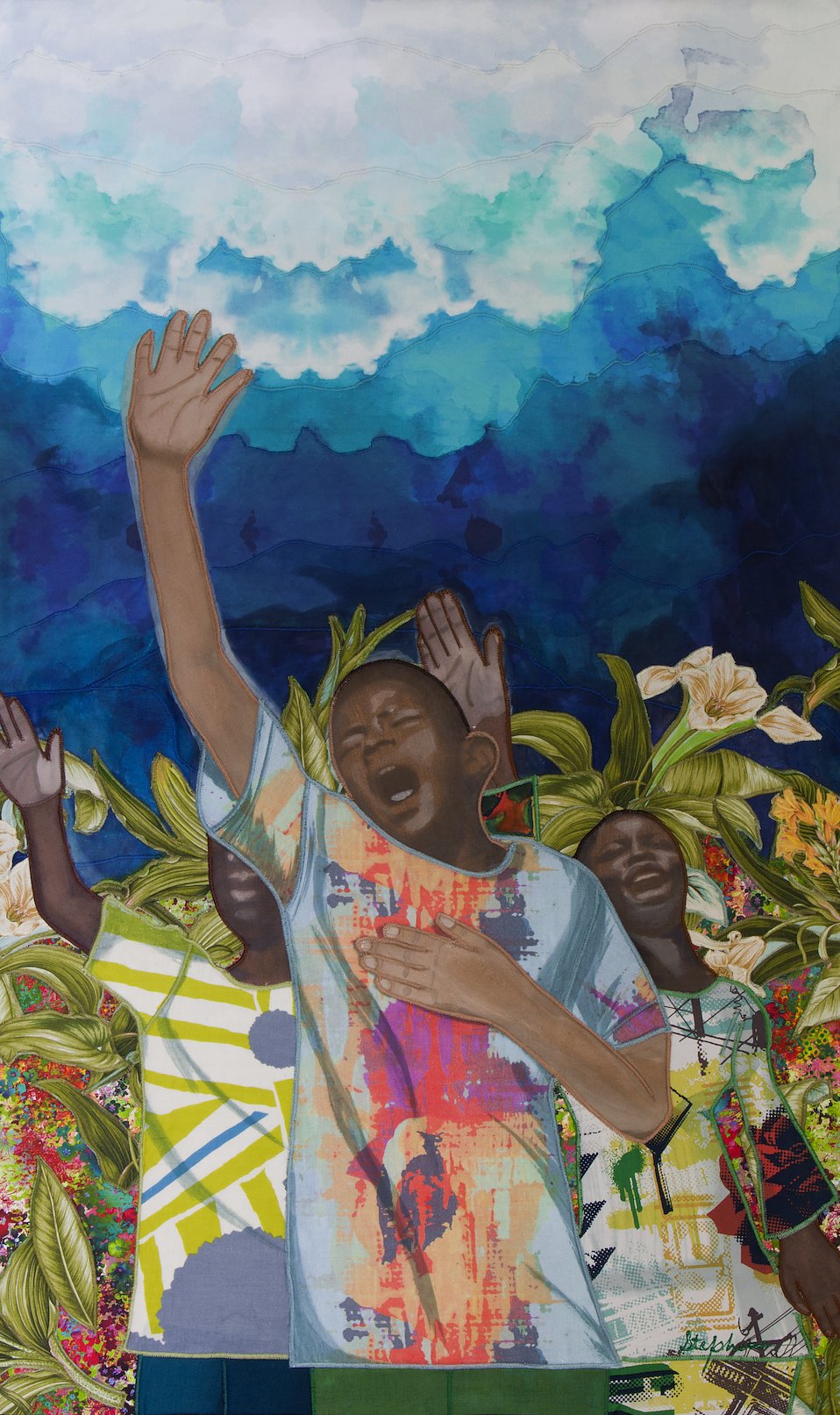
EXHIBITION: Otherwise/Revival, Bridge Projects, Los Angeles, April 9–June 26, 2021: Curated by Jasmine McNeal and Cara Megan Lewis, this group exhibition visualizes the impact of the historic Black church—specifically the Black Pentecostal movement—on contemporary artists. Included are several artists I’ve featured on the blog before—Lava Thomas [here], Kehinde Wiley [here], Clementine Hunter [here], Letitia and Sedrick Huckaby [here]—plus twenty-six others.
Phyllis Stephens (American, 1955–), High and Lifted Up, 2020. Cotton fabric, 57 × 33 in. Private collection. Courtesy of the artist and Richard Beavers Gallery, New York.Kenturah Davis (American, 1984–), Namesake I, 2014. Incense ink on rice paper, applied with rubber stamp letters, 39 × 36 in. Courtesy of the artist and the Petrucci Family Foundation, New Jersey.
I regret that I won’t be able to see the exhibition in person, but there’s a wealth of relevant content available on the gallery’s website, including photos, artist bios and statements, and commentaries. I haven’t fully delved in yet, but some of the artist names are new to me, and I look forward to jumping over to their websites to learn more. There’s also a series of free events that have been scheduled. The premiere of the virtual music performance yes! lord by Ashton T. Crawley and a symposium on the Azusa Street Revival have already passed (both are archived online for on-demand viewing), but here are some upcoming opportunities you can reserve a spot for:
May 1: “Jazz and the Gospel” with Daniel E. Walker, Ashon T. Crawley, Dario Robleto, Norman Teague, Lava Thomas, and Folayemi (Fo) Wilson
ARTICLE: “5 Films About the Beauty of Resurrection” by Brett McCracken: “Resurrection’ tropes are so familiar in certain genres that they can numb us to the jarring beauty and bracing surprise of resurrection. But other films capture the magic and shock of resurrection by situating it within more mundane realities and contexts. Here are five of my favorite examples of this kind—movies that capture resurrection in all of its miraculous, unsettling, hope-giving glory.” One of his selections is Happy as Lazzaro, which I saw last year and enjoyed:
+++
NEW ALBUMS:
>> Hymns I by Lovkn: Steven Lufkin is a singer-songwriter from Phoenix, Arizona, recording under the name Lovkn. His latest EP, a collection of eight acoustic hymn covers, was released April 2. (Also, he’s currently raising funds to record an album of original songs, to be released later this year: kickstarter.com/projects/lovkn/new-album-2021.)
>> Prayers for the Time of Trial by Joel Clarkson: Released April 7, this EP comprises five original SATB choral compositions by Joel Clarkson, which he recorded with his sister Joy Clarkson. My favorite is the first, “Lighten Our Darkness,” a setting of the Book of Common Prayer’s Collect for Aid Against Perils: “Lighten our darkness, we beseech thee, O Lord; and by thy great mercy defend us from all perils and dangers of this night; for the love of thy only Son, our Savior, Jesus Christ. Amen.”
The other four are “Sub Tuum Praesidium” (Beneath Thy Protection), a third-century hymn to the Virgin Mary as Theotokos; “Hail King,” a poem by Joel’s other sister, Sarah Clarkson, that marvels at how rocky cliffs and sea waves and herring gulls sing God’s praises in their own way; “Ubi Caritas,” an ancient hymn centered on the theme of Christian charity; and the simple benediction “May the peace of the Lord be with you now and always.”
ORTHODOX CHANT: Russian Kontakion of the Departed: At Prince Philip’s funeral service at St. George’s Chapel at Windsor Castle on April 17, a choir of four sang, among other pieces, the Russian Kontakion of the Departed, translated into English by William John Birkbeck and arranged by Sir Walter Parratt. “The Russian Kontakion of the Departed is an ancient Kiev chant with its origins in the Russian Orthodox liturgy. This moving chant expresses the sorrow of grief but reminds us of the Christian hope of everlasting life; in the face of sadness, we sing Hallelujahs.” [HT: Global Christian Worship]
Give rest, O Christ, to thy servant with thy saints: where sorrow and pain are no more; neither sighing but life everlasting. Thou only art immortal, the creator and maker of man: and we are mortal formed from the dust of the earth, and unto earth shall we return: for so thou didst ordain, when thou created me saying: Dust thou art und unto dust shalt thou return. All we go down to the dust; and weeping o’er the grave we make our song: Alleluia, alleluia, alleluia.
+++
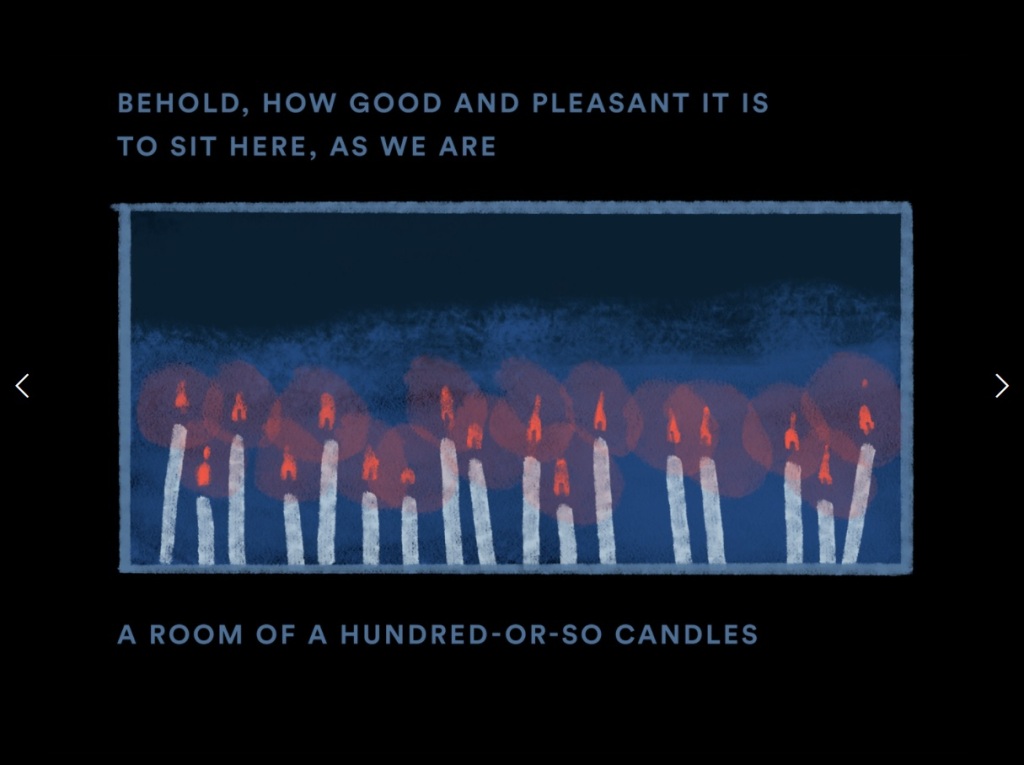
VISUAL LITURGY: “After Ezekiel” by Madeleine Jubilee Saito: Remember those flip books you probably encountered as a kid—the ones with a series of images that gradually change from one page to the next, giving the illusion of animation when viewed in quick succession? Well, this is a digital version of that. In 2019 cartoonist and illustrator Madeleine Jubilee Saito created an image sequence intended to be swiftly clicked through as part of the Easter Vigil at a church in Boston. It was inspired by the story of Ezekiel in the valley of dry bones (Ezek. 37). Very compelling!
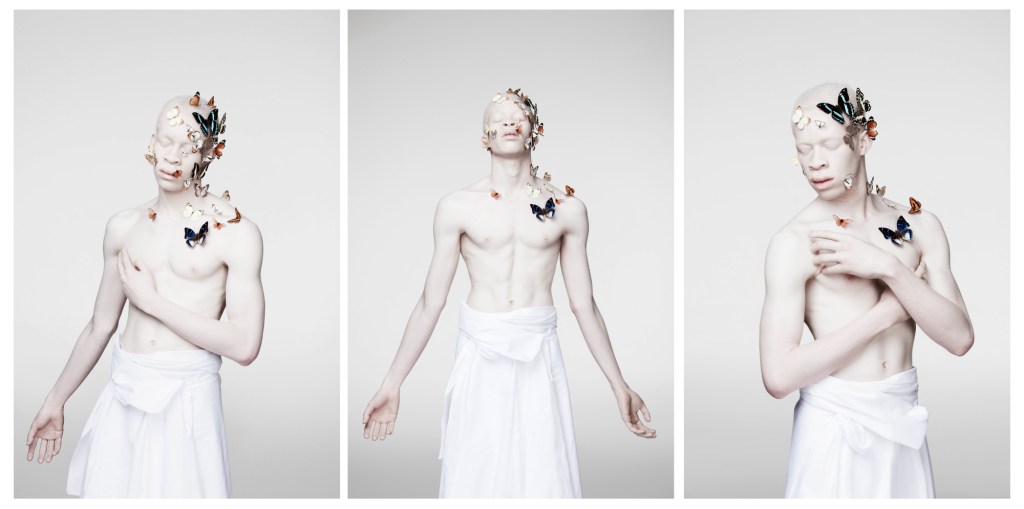
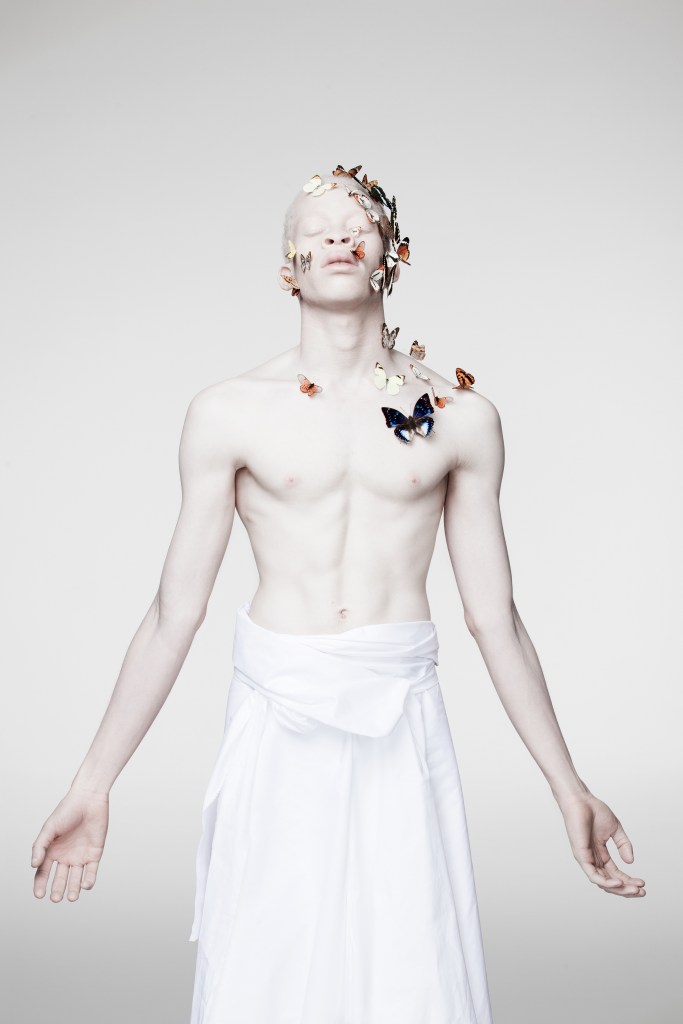
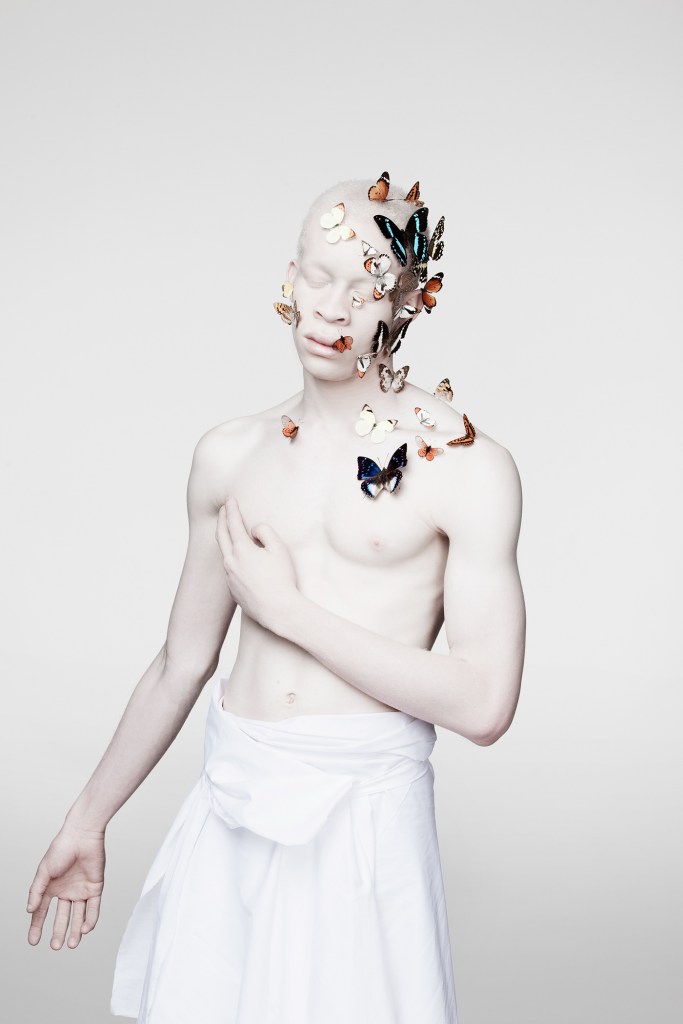
South African photographer Justin Dingwall (born 1983) seeks to depict beauty in difference. For his Albus series—Latin for “white” or “bright”—he worked with South African models and activists Thando Hopa and Sanele Junior Xaba, who have albinism. Albinism is a hereditary condition that affects melanin production, resulting in little to no pigmentation in the skin, hair, and eyes. It is more prevalent in sub-Saharan Africa than in the rest of the world, and people with the condition often face marginalization, discrimination, and even deadly violence.
In many ways Dingwall’s Albus series, which comprises several dozen photographs, is about metamorphosing perceptions about albinism, subverting the idea that it’s a curse; “by using butterflies my aim was to influence the viewer’s vision to be transformed, allowing them to view albinism in a new light—as something unique and beautiful,” he said. But the theme of transformation, of death and rebirth, as portrayed in some of the photos of Xaba, also connects with the narrative of Jesus’s passion, death, and resurrection, the model’s poses evoking traditional Christian imagery. (Not to mention how some of the photos of Hopa, not pictured here, intentionally reference Mother Mary.)
Rhapsody I, II, and III form a passion triptych of sorts, a sequence of three photos that show a male figure, clothed in a loincloth, falling into darkness—and yet, illuminated from above, he looks up toward the light.
Justin Dingwall, Rhapsody I, II, III, 2015
I’m reminded of Jesus speaking to his Father in Gethsemane, and at his crucifixion. Of all the art that shows him stumbling on his way to Calvary (“Jesus falls” makes up three of the fourteen stations of the cross). And especially of his slumped body being lowered from the cross. All the supporting characters, however, are absent, intensifying our focus on this lone Christ figure.
Consider some of the compositional similarities between Dingwall’s three Rhapsody photographs and the following explicitly Christological artworks. (To view the full caption, click on the the image.)
William Blake (British, 1757–1827), The Agony in the Garden, ca. 1799–1800. Tempera on tinned iron, 27 × 38 cm. Tate, London. http://www.tate.org.uk/art/work/N05894
Penny Warden (British, 1956–), Station 9: Jesus Falls for the Third Time, 2005. Oil on canvas, 6 × 3 ft. Blackburn Cathedral, Lancashire, England. http://www.thejourney.me.uk/
Rembrandt Harmensz. van Rijn (Dutch, 1606–1669), Christ on the Cross, 1631. Oil on canvas, glued to panel, 39 3/8 × 28 3/4 in. (100 × 73 cm). Église Saint-Vincent, Le Mas-d’Agenais, Lot-et-Garonne, France. http://www.wikipaintings.org/en/rembrandt/christ-on-the-cross-1631
Greg Semu (New Zealand Samoan, 1971–), Auto Portrait with Crucifix, 1997. A/P selenium-toned fiber-based silver gelatin handprint. http://www.gregsemu.photography/unnerved
Descent from the Cross, South Netherlandish, early 16th century. Oak, polychromy and gilding, 23 3/4 × 11 1/4 × 4 3/4 in. (60.3 × 28.6 × 12.1 cm). Metropolitan Museum of Art, New York. http://www.metmuseum.org/art/collection/search/462888
Suggestive of burial, Embrace by Dingwall shows a man wrapped, cocoon-like, in white linen, lying against a black ground. His face, again, catches the light, and he appears to be at peace. He is resting in this silent, in-between time that precedes the emergence of new life.
Justin Dingwall, Embrace, 2015
More explicitly inspired by Christian visual traditions is Dingwall’s Liberty triptych, which shows our Christ figure risen from death, glowing, and covered in butterflies, symbol of resurrection.
Justin Dingwall, Liberty I, II, III, 2015
In Liberty II, the man extends his arms at a roughly forty-five-degree angle from his trunk, palms upward, in a beatific gesture. His eyes are closed as he bathes in light. Christ is often shown in this pose in art of the resurrection, emerging triumphant from his tomb and proudly revealing his transfigured wounds. Dingwall’s image, though, is quieter, more interior.
Liberty I is reminiscent of Jesus inviting Thomas to see and touch his wounds, and especially of Bramantino’s The Risen Christ (see tiled gallery below). People have long marveled at the incredible luminosity of Christ in the latter painting—how the light seems to come from within (the setting is nighttime, as the moon in the background indicates).
So in many ways these photographs by Dingwall are continuous with Christian art history, but they are also open enough to be read in a multitude of other ways or applied to different contexts. Though the nature of Jesus’s resurrection and what it accomplished are, Christians believe, unique in history, stories of death and rebirth are universal, traversing all cultures and religious traditions.
Organized by Mount Tabor Ecumenical Centre for Art and Spirituality:
>> April 10, 11 a.m.–12:30 p.m. EDT: “The Victory of Life (Easter in Renaissance Art)”: “The most important event of New Testament belief, Christ’s Resurrection, is not described in the Scriptures. That has not prevented artists however from imagining it. As we celebrate Eastertide, we invite you to join Monsignor Timothy Verdon as he reflects on a number of works focused on this theme.”
>> April 15, 11:30 a.m.–1 p.m. EDT: “In the Shadow of Your Wings: Musical Bible Study on the Psalms”:Deus Ex Musica presents this interactive event in which participants watch prerecorded live performances of three brand-new vocal settings of Psalm 57, each set to music by a composer representing a different Christian tradition. After viewing the performances, participants will engage in moderated small-group discussions. No musical expertise is required.
Deus Ex Musica is an ecumenical organization of musicians, educators, pastors, and scholars that promotes the use of sacred music as a resource for learning and spiritual growth.
>> April 26, 3–4 p.m. EDT: “Art and the Liturgical Year: Bringing the Church Calendar to Life”: Organized in partnership with the CEEP Network. “This workshop explores ways of engaging artists with churches/congregations using the church calendar. What might inspire artists in engaging with the patterns that underpin the life of many churches, and how might engaging with artists open up understandings of faith in new ways for congregations? Examples of the kind of projects we will explore include initiatives using the visual arts in dialogue with scripture or exhibitions/installations in particular seasons such as Advent or Lent. Fundamentally, though, this workshop seeks explore a range of ideas and approaches and to hear about the benefits both for artists and congregations.”
Panelists:
Janet Broderick, Beverly Hills, California: Rector, All Saints Beverly Hills
Paul-Gordon Chandler, Casper, Wyoming: Bishop, Diocese of Wyoming; and Founding President of CARAVAN Arts (moderator)
Catriona Laing, Brussels: Chaplain, St. Martha & St. Mary’s Anglican Church Leuven; Associate Chaplain, Holy Trinity Brussels
Ben Quash, London: Professor, Christianity and the Arts & Director, Center for Arts and the Sacred, King’s College London; Director, Visual Commentary on Scripture Project
Aaron Rosen, Washington, DC: Professor, Religion and Visual Culture; Director, Henry Luce III Center for the Arts and Religion, Wesley Theological Seminary; Cofounder, Stations of the Cross Public Art Project
>> June 4, 11, 18, 25, 11:30 a.m.–1 p.m. EDT: “Jesus Is Just Alright: What Pop Songs About Jesus Can Teach Christians Today”: Led by composer, musician, and educator Delvyn Case of Deus Ex Musica. “For over fifty years, pop musicians in all genres have explored the meaning and significance of Jesus in their music. The result is a rich collection of songs that consider important spiritual questions like faith, doubt, and prayer in unique and often provocative ways. Through a combination of listening and discussion, this four-part series invites participants to explore a different spiritual topic each week. Join us to listen to great music that asks tough questions about our faith and our lives as Christians.”
>> April 21, 1–2 p.m. EDT: “Exhibiting Faith in the Museum and Beyond”: World-leading experts Ittai Weinryb, Neil MacGregor, and Jennifer Sliwka will discuss the joys and difficulties of introducing to the general public art that builds on a faith tradition. “They will discuss what has become a major concern for teachers, lecturers and museum curators in many countries. How do you encourage a largely secular audience to step inside a work of art, in such a way that its religious meaning is felt and understood, and the artistic experience can become immersive? . . . Among the topics to be explored are:
The opening up of museums and galleries to enhanced audiences during the pandemic.
How certain objects are altered by their move from a sacred space into a museum, yet how they also ‘live on’ beyond the museum plinth or computer screen.
The need to understand secular inhibitions and the loss of interest in Christianity and to find ways in which works of art can readdress this situation.”
>> April 29, 2–3:30 p.m. EDT: “Coventry Cathedral: Icon and Inspiration”: “Join Alexandra Epps [an Accredited Lecturer for The Arts Society and Guide and Lecturer at Tate Modern, Tate Britain and the Guildhall Art Gallery] for the extraordinary story of the rebuilding of Coventry Cathedral as a symbol of peace and reconciliation and its inspiring commitment to the modern. Experience the artistic journey that is the Cathedral discovering the work of many of the world-class artists associated with its many treasures including Jacob Epstein, Elisabeth Frink, John Piper, Graham Sutherland and more.”
>> May 5, 5–6 p.m. EDT: “The Art of Criticism: The People’s Madonna”: “Filmmaker Lucia Senesi grew up in Arezzo, Italy, within walking distance of several Old Master Madonnas. But it wasn’t until she was older—and viewing films by Andrei Tarkovsky and Valerio Zurlini, who were both captivated by the Madonna del Parto in Monterchi—that she saw these paintings with fresh eyes. Her essay in the spring issue of Image describes the fascinating history of a Madonna commissioned by peasants, executed by a Renaissance master, condemned by popes, and preserved through wars and social upheaval. She’ll talk with culture editor Nick Ripatrazone about film, the populism of sacred art, and the scandal of a woman pregnant with God.”
>> May 26, 5–6 p.m. EDT: “The Art of Imagery: You Are What You Contemplate”: “Artist Scott Erickson wanted to design a series of Stations of the Cross that people in his Portland neighborhood could encounter without the barrier of having to enter a church building—and he wanted to make them accessible to all. The result is a series of downloadable, printable images that have appeared all over the globe. His most recent book is Honest Advent: Awakening to the Wonder of God-with-Us Then, Here, and Now. He’ll speak with Image editor in chief James K.A. Smith about church, art, and ‘spiritual formation through image contemplation.’”
Now after the Sabbath, toward the dawn of the first day of the week, Mary Magdalene and the other Mary went to see the tomb. And behold, there was a great earthquake, for an angel of the Lord descended from heaven and came and rolled back the stone and sat on it. His appearance was like lightning, and his clothing white as snow. And for fear of him the guards trembled and became like dead men. But the angel said to the women, “Do not be afraid, for I know that you seek Jesus who was crucified. He is not here, for he has risen, as he said. Come, see the place where he lay. Then go quickly and tell his disciples that he has risen from the dead, and behold, he is going before you to Galilee; there you will see him. See, I have told you.” So they departed quickly from the tomb with fear and great joy, and ran to tell his disciples.
—Matthew 28:1–8
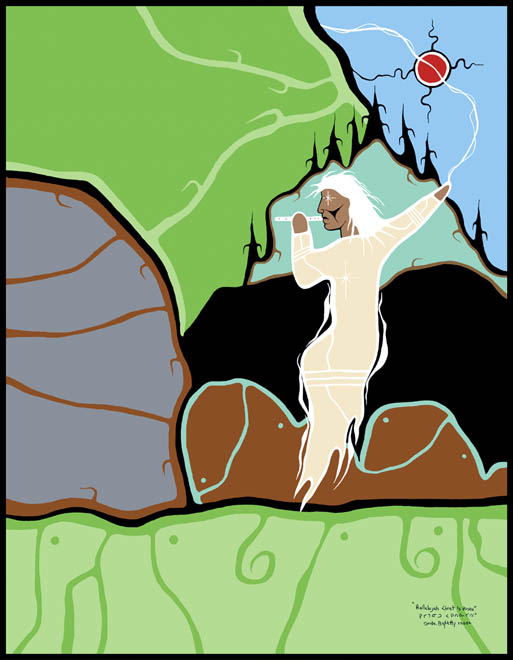
LOOK: Ovide Bighetty (Cree, 1969–2014), Hallelujah, Christ Has Risen, 2002. Acrylic on canvas. From the Kisemanito Pakitinasuwin (The Creator’s Sacrifice) cycle, commissioned by the Indian Metis Christian Fellowship.
Ovide Joseph Bighetty was a Cree (Missinippi-Ethiniwak) self-taught artist originally from Pukatawagan First Nation on the Missinippi River in northwestern Manitoba. He was influenced by the Woodland art style of Norval Morrisseau.
In 2002 the Indian Metis Christian Fellowship (now called the Indigenous Christian Fellowship, or ICF) commissioned Bighetty to create a series of paintings on Christ’s death and resurrection. According to their website, “among North American indigenous peoples, there is the story that, before Europeans arrived on Turtle Island, elders had visions about white people coming from the east with a story from the Creator.” One elder even had a vision of “the Creator’s sacrifice” that corresponds to elements of the biblical passion narratives and Easter story.
Bighetty fulfilled the commission in consultation with Pukatawagan elders, making sure he was properly honoring his people’s heritage.
Hallelujah, Christ Has Risen is the sixteenth painting in a sequence of seventeen. The ICF website offers the following description based on Matthew 28:2–4: “Early on the third day, there was a violent earthquake. A spirit sent by the Creator came down from heaven, rolled the stone away and sat on it. His appearance was like lightning and his clothes white as snow. The warriors were so afraid that they trembled and became like dead men.” It looks to me like the angel is playing a flute with one hand, and with the other he gestures toward the sky, indicating Jesus’s impending ascension.
LISTEN: “Christ the Lord Is Risen Today” | Words by Charles Wesley, 1739 | Music from the Lyra Davidica, 1708 | Arranged and performed by pianist Craig Curry on A Jazz-Inspired Easter, 2012
Christ the Lord is ris’n today, Alleluia! Sons of men and angels say,* Alleluia! Raise your joys and triumphs high, Alleluia! Sing, ye heav’ns, and earth reply, Alleluia!
Love’s redeeming work is done, Alleluia! Fought the fight, the battle won, Alleluia! Death in vain forbids him rise, Alleluia! Christ hath opened paradise, Alleluia!
Lives again our glorious King, Alleluia! Where, O death, is now thy sting? Alleluia! Once he died our souls to save, Alleluia! Where’s thy victory, O grave? Alleluia!
Soar we now where Christ has led, Alleluia! Foll’wing our exalted Head, Alleluia! Made like him, like him we rise, Alleluia! Ours the cross, the grave, the skies, Alleluia!
Hail the Lord of earth and heav’n, Alleluia! Praise to thee by both be giv’n, Alleluia! Thee we greet triumphant now, Alleluia! Hail the Resurrection, thou, Alleluia!
King of glory, soul of bliss, Alleluia! Everlasting life is this, Alleluia! Thee to know, thy pow’r to prove, Alleluia! Thus to sing, and thus to love, Alleluia!
* Alternatively, “Earth and heav’n in chorus say,” as in the United Methodist Hymnal.
This is, for me and many others, the Easter hymn par excellence. (Charles Wesley was a brillianthymn writer.) I never tire of it year after year. It’s glorious.
Happy Easter, friends. Christ is risen!
Be sure to stick around for the next fifty days as I continue to celebrate Easter here at Art & Theology.
All four canonical Gospel accounts of the retrieval of Jesus’s body from the cross and its entombment are very matter-of-fact. There is no mention of grieving. The focus is on the roles of Joseph of Arimathea and Nicodemus, though Matthew and Mark mention two Marys being present (Matt. 27:61; Mark 15:47), and Luke refers generically to “the women who had come with him from Galilee” (Luke 23:55). Mark and Luke also mention the women preparing and, after the Sabbath, returning with burial spices (Mark 16:1; Luke 23:56–24:1).
Leave it to the artists, poets, and composers to inject some emotion into these undeniably wrenching moments! Of carrying the corpse of a loved one, cleaning it, dressing it, and saying goodbye as it’s put into the earth. There is an enormous number of paintings, sculptures, music, and literary texts composed over the centuries to aid Christians in meditating on the dead Christ and vicariously lamenting with those present, especially the Virgin Mary.
After Mary and the others laid Jesus to rest on Friday, their mourning continued, I’m sure, into Saturday. They were utterly bereft.
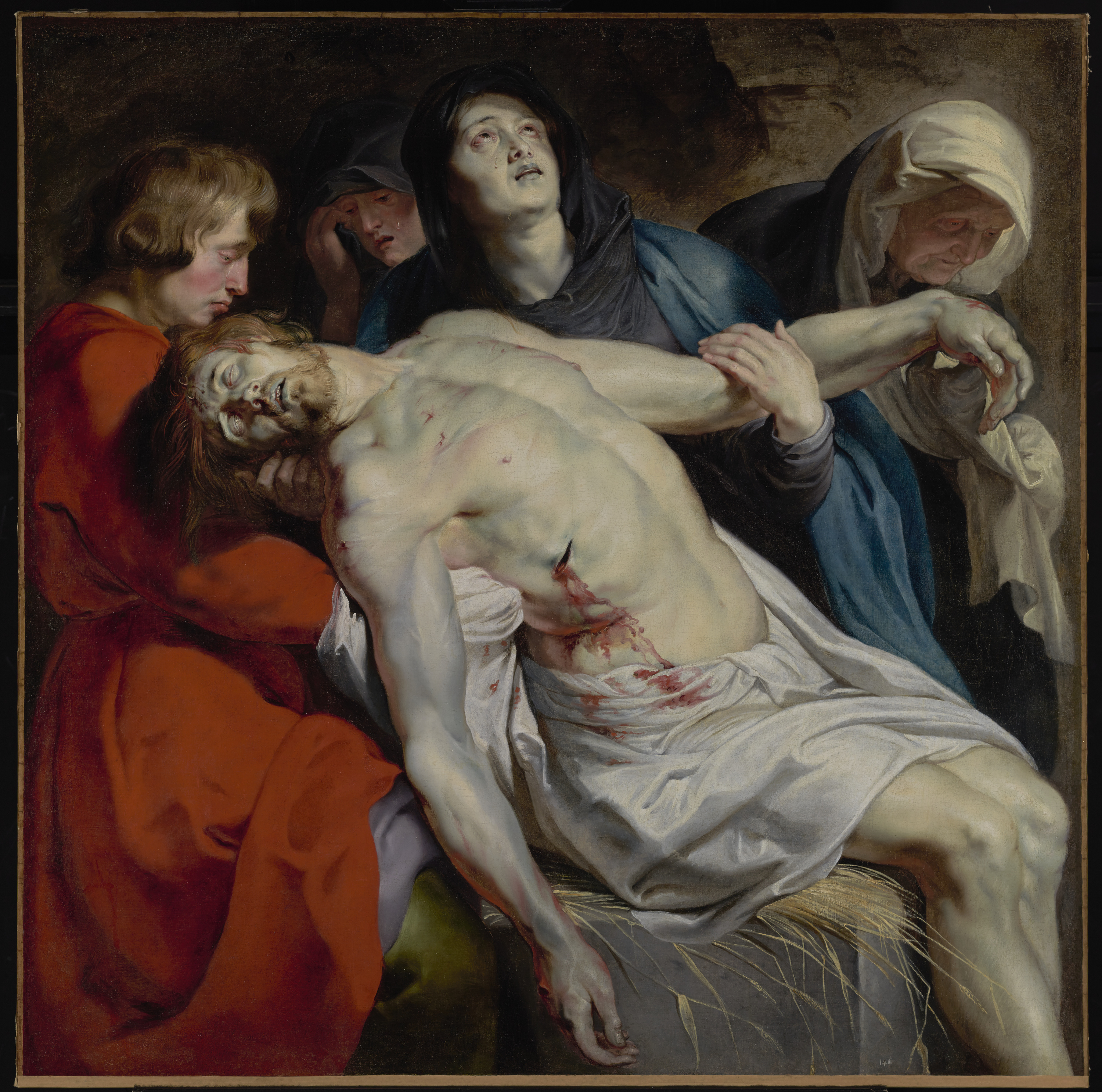
LOOK:Peter Paul Rubens (Flemish, 1577–1640), The Entombment, ca. 1612. Oil on canvas, 51 5/8 × 51 1/4 in. (131.1 × 130.2 cm). J. Paul Getty Museum, Los Angeles.
The Flemish Baroque artist Peter Paul Rubens painted scenes of the lamentation of Christ many times. I saw this one in person at the Getty a few years ago, and it really drew me in. It shows Saint John and the Virgin Mary supporting Jesus’s body as they lay him down onto a stone slab. Mary Magdalene weeps from behind, and another, older Mary, the mother of James the Younger and Joseph (Matt. 27:56; Mark 15:40), gingerly lifts his wounded hand, fixing her sorrow there.
Rubens does not shy away from the ugliness of death, showing Jesus’s eyes rolled back in his head, his lips blue, and blood caked in his hair and dried up around the gaping laceration in his side. His whole body is pale with death, his skin green-tinged, in contrast to John’s ruddy complexion; his mother wears the same deathly pallor. Her eyes are red and puffy, and she looks up to the heavens as if to question why, or to petition God for strength.
The wheat that Jesus lies on alludes to the straw he was bedded in as a newborn and to the bread of the Eucharist on the altar. Christ’s body is given as a holy offering for the sins of the world.
Áine Minogue is an award-winning Irish harpist, singer, arranger, and composer, now living in the Boston area. She plays and sings a mix of traditional tunes and original songs, most with Gaelic lyrics. “Song of Keening” wasn’t written explicitly for Holy Week, but it is a funeral lament that uses non-word utterances to express grief. Minogue writes,
In old Ireland, the practice of keening provided a physical and emotional release for those who grieved. Sometimes, keening was a direct emotional response to loss, practiced by both men and women, though particularly by women who had lost young children—a common occurrence in the past, when child mortality rates were significantly higher.
However, often a professional keener was hired by a family as a way of honoring the dead. These professional mourners were always women, and their keening was more stylized, taking the form of an improvisation based on particular structures and handed-down phrases. Though practiced in diverse cultures from Ireland to Greece, keening was generally frowned upon by church authorities, and treated with disdain by those who embraced the trappings of modernity. The practice now has virtually died out.
This piece is improvised in the old style, using old structures and vocables.
Professional mourners (moirologists) were used in ancient Israel too, at least by those wealthy enough to afford them. There’s no indication that any were present at the death of Jesus. In art history the chief mourners at Jesus’s crucifixion and burial are his mother, Mary; John, to whose care Mary was entrusted; Mary Magdalene; and Jesus’s other female followers.
















 Art & Theology


