Doubting Thomas “Combine” by Robert Rauschenberg

Modern American artist Robert Rauschenberg (1925–2008) is probably best known for his “Combines,” a term he invented to describe a series of works that present found objects on canvas and therefore combine aspects of painting and sculpture. Art critic Jonathan A. Anderson and theologian William A. Dyrness address the religious references that proliferate through his oeuvre, and that of many other late nineteenth- and twentieth-century artists, in their book Modern Art and the Life of a Culture: The Religious Impulses of Modernism* (Downers Grove, IL: InterVarsity Academic, 2016), part of IVP’s Studies in Theology and the Arts series. The following excerpt is taken from pages 308–9.

Untitled by Robert Rauschenberg
Robert Rauschenberg (American, 1925–2008), Untitled, ca. 1955. Oil, paper, fabric, and newspaper on canvas with string, nail, funnel, and wood, 31 1/2 × 25 1/8 × 9 in. (80 × 63.8 × 22.9 cm). San Francisco Museum of Modern Art.

Rauschenberg’s Untitled black painting with a funnel (c. 1955) is presented as a kind of figure: the open circular collar of a t-shirt positions a head relatively high in the field, and the fragment of a sleeve on the right-hand edge indicates a lifted hand. Nearly all of the collaged scraps of cloth and paper on the surface are painted over in flat black paint—one of the few portions that is not is a prayer card just to the right of the center of the painting that displays a reproduction of Carl Bloch’s Doubting Thomas (1881). Flurries of red, yellow, green and white paint have been slashed across the surface immediately below this image (the only place such color appears in the painting), which within the figure suggested by the cloth fragments correspond to the position of the wound in Christ’s side, as depicted in the prayer card. The painting’s surface subtly stands in for the wounded body of the resurrected Jesus, and as such the ball of twine placed in the funnel on the left side of the panel becomes doubly suggestive of incarnation (descending downward into the funnel) and ascension (being pulled upward out of the funnel). But if Rauschenberg is allegorizing the surface of the painting with the resurrected body of Christ, then he is also placing himself (and the viewer) in the position of the incredulous Thomas. It is a painting that powerfully articulates both a longing to touch and see (Lk 24:39; cf. Lk 6:19) and the persistence and seeming ineluctability of doubt in the age of modernity (including doubt that images, much less paintings, can any longer serve as vehicles for the kind of religious touching and seeing that we long for). Like much modern art, this is not a work of unbelief as much as it is of fragilized belief, one that is caught oscillating (or struggling) between doubt and belief.

For a recent interview with Anderson, conducted by Rev. Jonathan Evens, visit Artlyst. See also the conference talk Anderson gave in 2012 on “The (In)visibility of Theology in Contemporary Art Criticism.”


* This is an Amazon affiliate link, meaning that Art & Theology will earn a small commission on any purchase that originates here.

By the Mark (Artful Devotion)

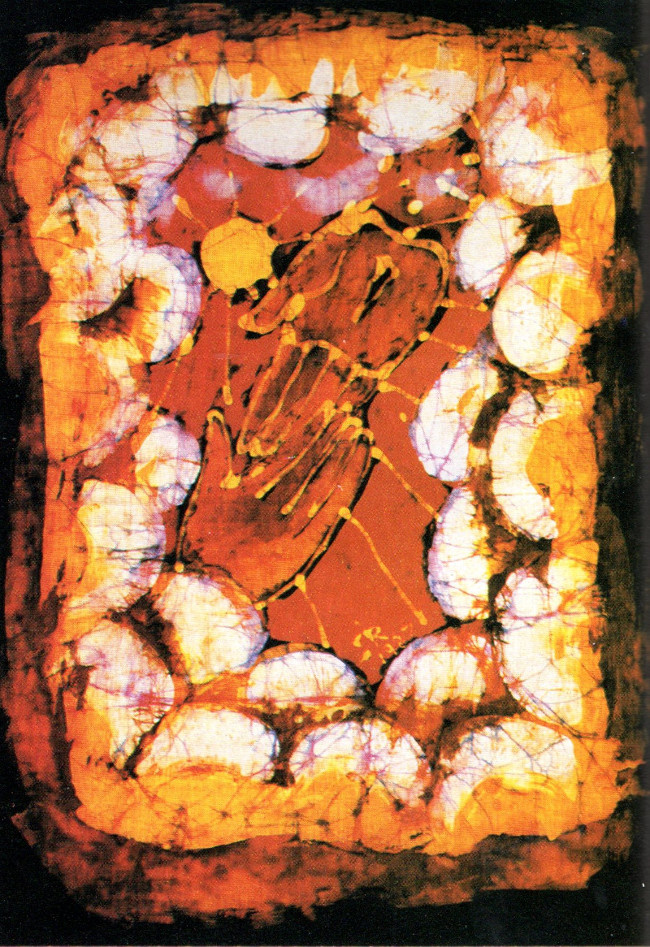
You and I by Solomon Raj
P. Solomon Raj (Indian, 1921–), You and I, before 1993. Batik. Source: Living Flame and Springing Fountain (Indian Society for Promoting Christian Knowledge, 1993)

Then [Jesus] said to Thomas, “Put your finger here, and see my hands; and put out your hand, and place it in my side. Do not disbelieve, but believe.”

Thomas answered him, “My Lord and my God!”

—John 20:27–28

+++

SONG: “By the Mark” by Gillian Welch and David Rawlings, on Revival (1996)

(Related post: “Thomas in the dark”)

+++

“St. Thomas the Apostle” by Malcolm Guite, from Sounding the Seasons: Seventy Sonnets for the Christian Year

“We do not know . . . how can we know the way?”
Courageous master of the awkward question,
You spoke the words the others dared not say
And cut through their evasion and abstraction.
O doubting Thomas, father of my faith,
You put your finger on the nub of things:
We cannot love some disembodied wraith,
But flesh and blood must be our king of kings.
Your teaching is to touch, embrace, anoint,
Feel after him and find him in the flesh.
Because he loved your awkward counter-point,
The Word has heard and granted you your wish.
O place my hands with yours, help me divine
The wounded God whose wounds are healing mine.

[Click here to listen to a short sermon Guite preached on St. Thomas back in 2012, which opens with his reading of this poem.]


This post belongs to the weekly series Artful Devotion. If you can’t view the music player in your email or RSS reader, try opening the post in your browser.

To view all the Revised Common Lectionary scripture readings for the Second Sunday of Easter, cycle B, click here.

Death Is Ended! (Artful Devotion)

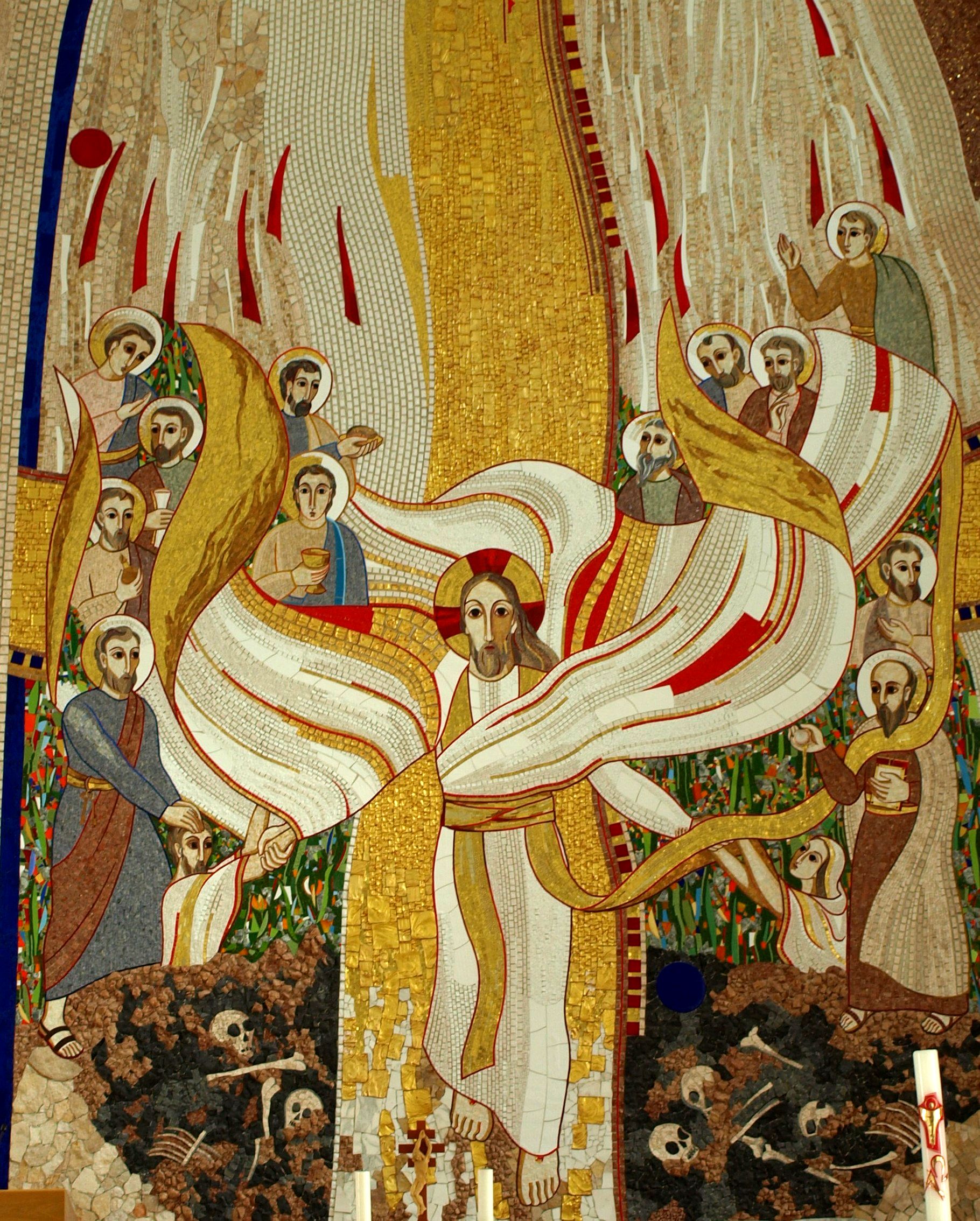
Resurrection by Marko Rupnik
Marko Ivan Rupnik (Slovenian, 1954–), Resurrection of Christ (detail), 2006. Mosaic, St. Stanislaus College Chapel, Ljubljana, Slovenia.

And he will destroy on this mountain the shroud that is cast over all peoples, the sheet that is spread over all nations; he will swallow up death forever. . . . This is the LORD for whom we have waited; let us be glad and rejoice in his salvation.

—Isaiah 25:7, 9b

Kristus je vstal! Zares je vstal! (Slovenian) | Christ is risen! He is risen indeed!

—traditional Easter Acclamation

+++

SONG: “Death Is Ended” by James Ward, on I’ll Be More like Jesus: The Choral Music of James Ward and New City Fellowship (2006)

My church is a part of the New City Network; we have several favorite James Ward songs, and this is one of them. I can’t wait to sing it together as a congregation this morning!

+++

Let no one fear death,
for the death of our Savior has set us free.
He has destroyed it by enduring it.
He destroyed hell when he descended into it.
He put it into an uproar even as it tasted of his flesh. . . .
Hell grasped a corpse, and met God.
It seized earth, and encountered heaven.
It took what it saw, and was overcome by what it did not see.
O Death, where is thy sting?
O Hell, where is thy victory?
Christ is risen and you are cast down! . . .
Christ is risen and life is set free!

—John Chrysostom, 4th century

+++

For a description of the mosaic pictured above, read the final entry in last year’s “Journey to the Cross: Artists Visualize Christ’s Passion.” To see more of Rupnik’s mosaics, visit www.centroaletti.com.


This post belongs to the weekly series Artful Devotion. If you can’t view the music player in your email or RSS reader, try opening the post in your browser.

To view all the Revised Common Lectionary scripture readings for Easter (Resurrection of the Lord) Sunday, cycle B, click here.

The Dead Christ Supported by Angels: A Thematic Survey

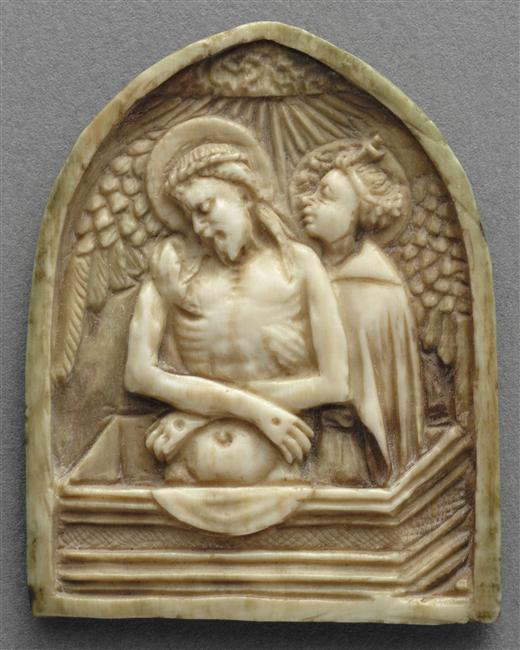
A type of “Man of Sorrows” image, the Dead Christ Supported by Angels is a devotional trope originating in the late Middle Ages. It typically shows a naked, half-length Christ standing up in a sarcophagus, his wounds prominently displayed so as to invite meditation on his suffering. One or more angels tend to him—they may embrace him, mourn his passing, unwrap his burial shroud (to give viewers a better look), display instruments of the passion, keep him propped up in the tomb, or, as we will see below, prepare to welcome him back to life.

(Related post: “Bill Viola’s Emergence as a Picture of the Resurrected Christ and the New Birth of Believers”)

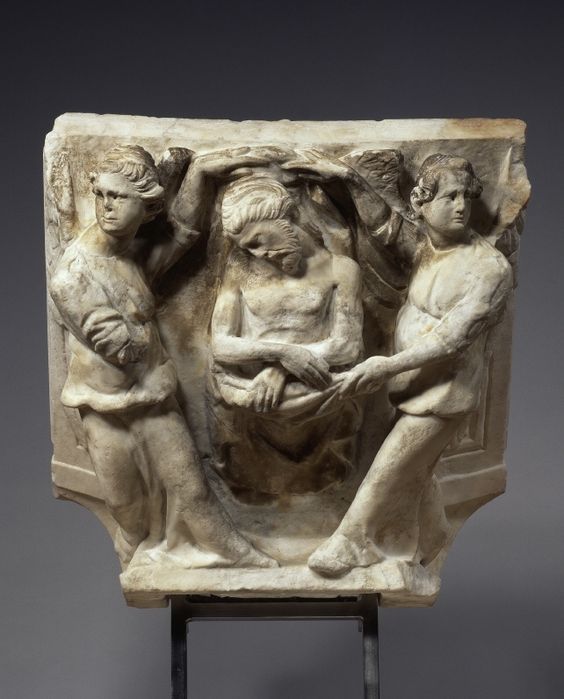
One of the earliest examples of this imagery is the marble relief at the Gemäldegalerie in Berlin. Originally a lectern adornment for the pulpit in Pisa’s cathedral, it shows two angels unveiling Christ’s body, presenting it to us like a eucharistic host. Their raised arms and slanted legs form a mandorla-like frame around him.

Angel Pieta by Giovanni Pisano
Giovanni Pisano (Italian, 1245/48–1314), Angel Pietà, 1300. Marble relief, 44 × 45 × 36 cm. Gemäldegalerie, Staatlichen Museen, Berlin, Germany.

Dead Christ Supported by Angel (ivory)
Pendant: Imago pietatis. Elephant ivory. Musée du Louvre, Paris. Photo: Jean-Gilles Berizzi/RMN-Grand Palais.

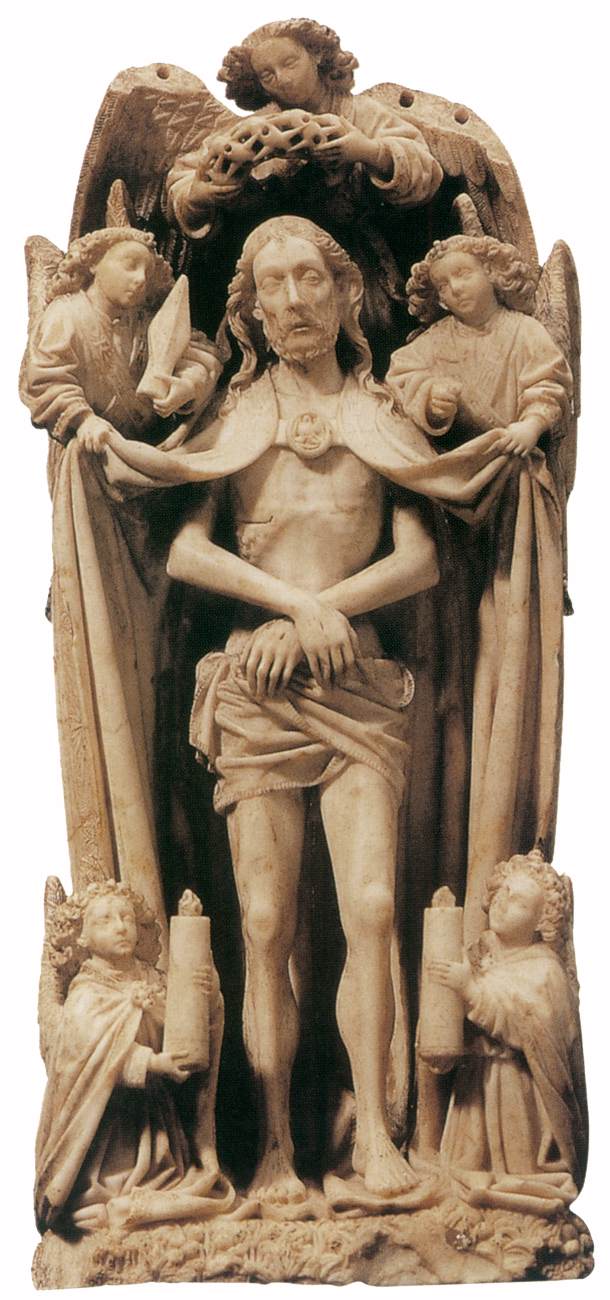
The fifteenth-century alabaster sculpture shown below was formerly partially painted, and the angels formerly wore diadems on their foreheads (one survives). “This is an immensely virtuoso carving for such a small scale,” writes art historian Kim W. Woods—notice the texture of the angels’ wings and hair, the lining of Christ’s ecclesiastical robe, and the plants at Christ’s feet. Notice, too, the intricately carved emblem on Christ’s brooch: a pelican pecking at her breast. Reputed to have fed her young with own blood, the pelican was a common medieval symbol of Christ’s sacrificial love.

Christ as Man of Sorrows (alabaster)
Christ as a Man of Sorrows, mid-15th century. Alabaster, 40 cm high. Museum Mayer van den Bergh, Antwerp, Belgium. Photo: Jean-Luc Elias/KIK-IRPA, Brussels.

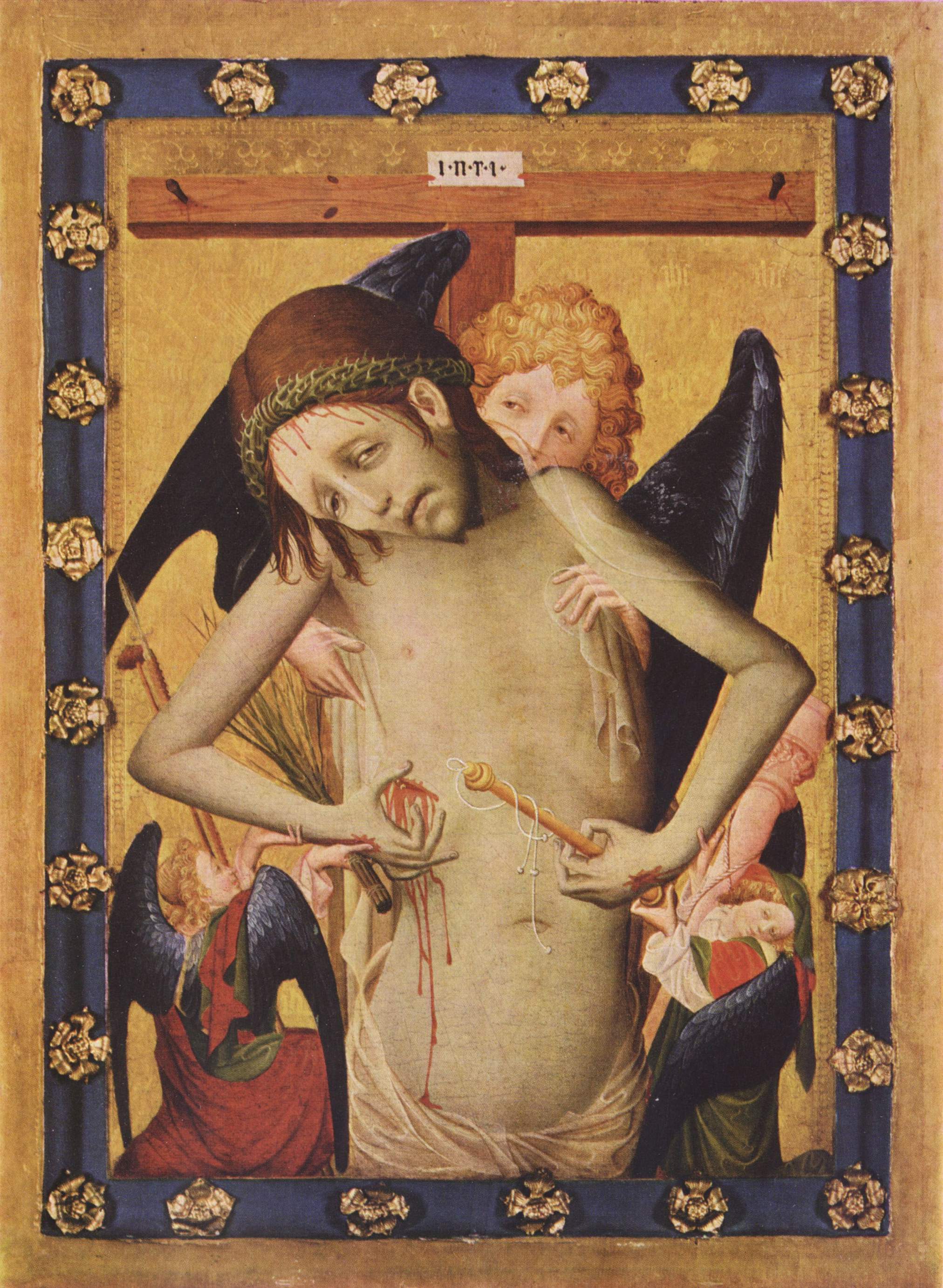
In the Leipzig Man of Sorrows by Master Francke, Christ and three angels stand in a shallow space in front of the cross. It’s unclear whether Christ is on the edge of death or has already crossed over. In his left hand he holds the scourge—or tries to (his hand is either weak and cramped with pain, if alive, or if dead, afflicted rigor mortis). His other hand gestures to his side wound, still wet with blood, as if, like Thomas, he’s about to probe it. Peeking up over Christ’s shoulder is a full-size angel, who tenderly drapes him with a diaphanous veil. At the bottom of the painting two smaller angels kneel on either side, the one holding the birch, the lance, and the sponge-topped reed, the other holding the pillar of flagellation; they both struggle to support the dead weight of Christ’s arms.

Man of Sorrows by Master Francke
Master Francke (German, 1380–1435), Man of Sorrows, ca. 1430. Tempera on oak, 42.5 × 31.3 cm. Museum der Bildenden Künste, Leipzig, Germany.

The angels at Christ’s waist in Master Francke’s Hamburg Man of Sorrows, instead of holding instruments of torture, hold a lily and a sword, symbols of the Last Judgment. (In visualizations of that event, Christ is often shown with a lily coming out of his right ear, signifying an “innocent” verdict for the faithful, and a sword coming out of his left ear, declaring guilty those who did not know him.) Three angels at the top remove the cheap, mock kingly garment the Romans had thrown on him to replace it with his due: a finely embroidered robe befitting a true king.

Man of Sorrows by Master Francke
Master Francke (German, ca. 1380–ca. 1435/40), Man of Sorrows, ca. 1435. Tempera on oakwood, 92 × 67 cm. Hamburger Kunsthalle, Hamburg, Germany.

Continue reading “The Dead Christ Supported by Angels: A Thematic Survey”

Crucifixus (Artful Devotion)

Pisan crucifix (13th c)
Crucifix with scenes of the Passion, Pisa, Italy, ca. 1240. Tempera on wood, 247 × 202 cm. Uffizi Galleries, Florence, Italy. Left: the Trial of Christ before Annas and Caiaphas, the Mocking of Christ, the Flagellation, Christ Carries His Cross; right: the Descent from the Cross, the Entombment, the Holy Women at the Tomb, the Supper at Emmaus.

“. . . they crucified him . . .”—John 19:18

+++

SONG: “Crucifixus” for 8 voices | Words: from the Nicene Creed | Music: Antonio Lotti (1667–1740) | Performed by Tenebrae, 2016

Crucifixus etiam pro nobis; sub Pontio Pilato passus et sepultus est.

(He was crucified also for us; under Pontius Pilate he suffered and was buried.)


This post belongs to the weekly series Artful Devotion. If you can’t view the music player in your email or RSS reader, try opening the post in your browser.

To view all the Revised Common Lectionary scripture readings for Good Friday, cycle B, click here. An Easter devotion will be published Sunday morning.

Hail to the King (Artful Devotion)

Entry into Jerusalem by Julia Stankova
Julia Stankova (Bulgarian, 1954–), The Entry into Jerusalem, before 2002. Tempera, gouache, watercolors, and lacquer technique on wood, 40 × 22 cm.

The next day the large crowd that had come to the feast heard that Jesus was coming to Jerusalem. So they took branches of palm trees and went out to meet him, crying out, “Hosanna! Blessed is he who comes in the name of the Lord, even the King of Israel!” And Jesus found a young donkey and sat on it, just as it is written, “Fear not, daughter of Zion; behold, your king is coming, sitting on a donkey’s colt!”

—John 12:12–15

+++

SONG: “King of Kings and Lord of Lords” | Music: Traditional Hebrew folk tune | Words: Sophie Conty and Naomi Batya (stage name: Nomi Yah), 1974 | Performed by Glenn Tompkins, 2011 | CCLI #23952

This Hebrew folk melody, with its gradually increasing tempo, is in the tradition of the Israeli hora, or round dance. In 1974 two Christian gal pals, Sophie Conty and Naomi Batya, put their own words to it when they were only thirteen. Since then the song has been published in at least sixteen hymnals. I learned about it two Palm Sundays ago when we sang it at my church. Tying it to that particular liturgical occasion was, I think, a really insightful choice on the part of the music leader. The beats are evocative of a clopping donkey, and the quickening pace builds tension, as when Christ approached the swell of praises in Jerusalem that preceded his doom.

It was hard to search for recordings of “King of Kings” because the title is such a common one. I’ve found that it is often performed by children’s choirs (replete with side steps and hand motions!), and the rock band Petra covered it in the late eighties. I chose to feature this solo accordion arrangement because it best captures the flavor of the song. Even without a vocalist, it’s easy to follow along:

King of Kings and Lord of Lords
Glory, hallelujah
King of Kings and Lord of Lords
Glory, hallelujah

Jesus, Prince of Peace
Glory, hallelujah
Jesus, Prince of Peace
Glory, hallelujah


This post belongs to the weekly series Artful Devotion. If you can’t view the music player in your email or RSS reader, try opening the post in your browser.

To view all the Revised Common Lectionary scripture readings for Palm Sunday, cycle B, click here.

Conferences, workshops, calls for submissions, etc.

The Breath and the Clay
Artists (speakers/workshop leaders/Q&A panel members): John Mark McMillan, Stephen Roach, Jason Upton, Cageless Birds, Joel McKerrow, Josh Riebock, Stephen Roach, Mykell Wilson, Ray Hughes, Gemma Bender, Taylor Johnson, Eastlyn and Joshua, Vesper Stamper, Turtledoves, Avril Ward
Date: March 22–25, 2018
Location: Awake Church, Winston-Salem, North Carolina
Cost: $100 (but see pricing details for other options; some events free to public)
Description: “The Breath & the Clay is a creative arts gathering exploring the intersections of faith, art & culture. The weekend event includes times of worship, keynote speakers, performances, and a curated art gallery hosted by CIVA. Hands-on workshops [poetry, choreography, songwriting, painting, photography], a private luncheon and an after-party are available for additional purchase.” If you’re not able to attend, you should at least check out their Makers & Mystics podcast, which is in its third season.
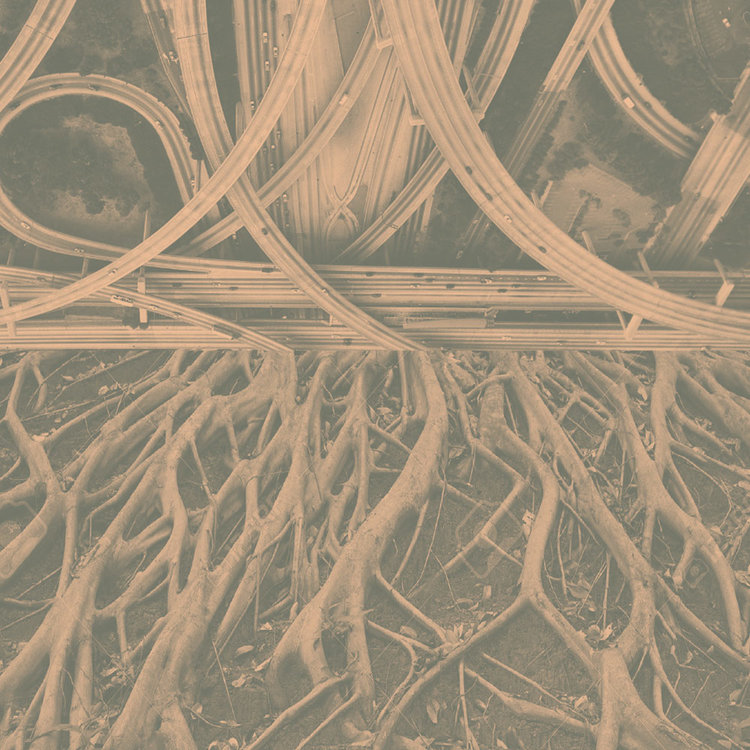
The Breath and the Clay

Urban Doxology Songwriting Internship (PAID)
Application deadline: April 15, 2018
Dates of internship: June 3–July 30, 2018
Location: East End Fellowship, Richmond, Virginia
Description: “The Urban Doxology Songwriting Internship is an intensive eight-week leadership development program offered in partnership by Arrabon and East End Fellowship. Interns participate in a learning experience of the following subjects: (1) biblical theology and exposition (2) worship studies with a focus on multicultural worship (3) race, class and culture (4) songwriting and (5) community engagement. Interns will spend the remainder of their time writing songs, rehearsing music, and planning worship for a congregation in the urban context.”

“Telling Stories: A Conference of Faith and Art”
Speakers: Natalie Diaz, Barbara Brown Taylor, Esra Akin-Kivanç, Arthur Skinner, Alex Harris, Herbert Murphy, Peter Meinke
Date: April 19–22, 2018
Organizers: Eckerd College, Palma Ceia Presbyterian Church, NEXT Church, Image journal
Location: Eckerd College, Saint Petersburg, Florida
Cost: Free
Description: “With the theme of ‘Telling Stories’ as guide, this conference will employ discussions, poetry readings, presentations, visual arts, and theater to examine art’s power to confront current narratives, allow people to tell their own stories, and explore new ways of talking about God, faith, and social responsibility. . . . Designed for anyone interested in the imaginative and prophetic intersection of faith and arts.”

Call for Creation-Care Worship Materials
Submission deadline: April 30, 2018
Sponsor: Christian Reformed Church
Description: The Climate Witness Project and other CRC ministries are partnering to crowdsource creative worship resources that “celebrate and honor God’s creation while addressing creation-care challenges, such as climate change, facing the world.” Songs, prayers, images, videos, sermon notes, litanies, and other elements are all invited for submission and will be collated and published online in fall 2018. By submitting your work, you agree to the terms of a CC BY-NC license.
Creation-care poster (OSJ)

Call for Papers on US Immigration and the Arts
Submission deadline: May 1, 2018 (abstract)
Organization: Society for the Arts in Religious and Theological Studies
Description: SARTS “seeks presentations by scholars, teachers, pastors, or artists that explore creative/artistic engagements with and/or responses to the reality of immigration in the United States. Topics include but are not limited to the perspectives of the various groups of people on the move, crossing and policing borders, religious landscapes of immigration, immigration and the imagination, place making, political advocacy, and activism. All forms of artistic expression are welcome.”

Hymn Society Songwriting Contest
Submission deadline: May 15, 2018
Sponsor: The Hymn Society
Prize: $500
Description: As part of the Hymn Society’s ongoing commitment to the enrichment of congregational song, the executive committee has announced a search for a new short-form song suitable for congregational singing. (Both text and tune must be original.) In addition to receiving prize money, the winning entry will premiere July 15–19, 2018, at the society’s conference in St. Louis, Missouri, and be published in the Autumn 2018 issue of The Hymn.

“Afterlives of Biblical Women in Art, Literature, and Culture” (summer course)
Instructor: Amanda Russell-Jones
Date: July 2–13, 2018
Institution: Regent College, Vancouver
Cost: Starting at Can$700
Description: The arts have profoundly shaped our interpretation of biblical characters, whether we realize it or not. In this graduate-level course, one of the learning objectives is to be able to “discuss the significance of a variety of biblical women, differentiating between the content of the biblical text and the ways later additions and interpretations changed how the woman was viewed.” How has the mirror held up to women like Eve, Bathsheba, Mary Magdalene, the woman at the well, etc., made the biblical texts clearer, and how has it distorted them? You do not have to be a currently enrolled college student to register.

If this topic interests you but you’re not able to take the course, I’d encourage you to check out two books that came out last fall. The first is Vindicating the Vixens: Revisiting Sexualized, Vilified, and Marginalized Women of the Bible, edited by Sandra Glahn, which received a five-star review from Christianity Today. The second is the monograph Reimagining Delilah’s Afterlives as Femme Fatale: The Lost Seduction by Caroline Blyth, whose reflections on the topic can also be found on the Auckland Theology and Religious Studies blog—e.g., here.
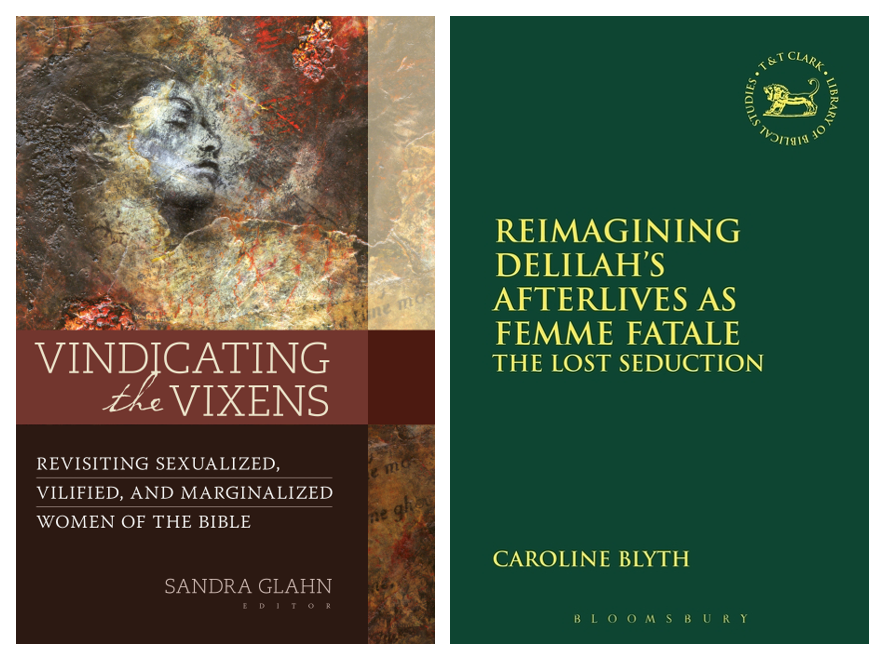
Afterlives of biblical women

Glen Workshop
Faculty: Chigozie Obioma, Scott Cairns, Lauren Winner, Marianne Lettieri, Gina Franco, Lee Isaac Chung, Over the Rhine, Ned Bustard, Malcolm Guite
Date: July 29–August 5, 2018
Location: St. John’s College, Santa Fe, New Mexico
Organizer: Image
Cost: Starting at $1,150 (scholarships available)
Description: “Situated in the foothills of the Sangre de Cristo Mountains, the Glen Workshop is equal parts creative workshop, arts festival, and spiritual retreat. The Glen’s arresting natural environment is contrasted by its casual and inviting crowd of artists, writers, musicians, art appreciators, and spiritual wayfarers of all stripes.” Workshops are offered on spiritual writing, songwriting, fiction writing, poetry writing, poetry reading, mixed-media art, relief printing, and filmmaking. The faculty lineup is phenomenal! And I appreciate the all-inclusive package option.

The Crushed Christ: An Illustrated Analysis of Herbert’s “The Agony” and Bryant’s “Blood of the Vine”

A staple of English literature curricula, George Herbert (1593–1633) is one of the best religious poets of any era. Born in Wales, he studied rhetoric at Cambridge University, becoming fluent in Latin and Greek and beginning an avocation of writing verse. After a short career in oration and then politics, he shifted courses to become a pastor. He was appointed to a small rural parish near Salisbury, where he served for only three years before contracting tuberculosis at age thirty-nine. On his deathbed he gave his friend Nicholas Ferrar a manuscript of all the poems he had written throughout his life, telling him to publish it if he thought it might “turn to the advantage of any dejected poor soul,” and if not, to “burn it; for I and it are less than the least of God’s mercies.” Thankfully, Ferrar chose the former, and The Temple was published posthumously in 1633. It has been in print continuously ever since.

One of the poems from this volume is “The Agony,” a meditation on the suffering that Christ bore out of love for humanity. Below I will walk through it stanza by stanza, and then I will present a new partial musical setting of it that makes intertextual connections with scripture. I will conclude by sharing a once-popular artistic motif, the mystic winepress, that visualizes one of Herbert’s metaphors (a metaphor developed by early theologians, such as Augustine and Gregory the Great).

Christ in the winepress
Christ in the Winepress, Austria, ca. 1400–1410. ÖNB 3676, fol. 14r. Österreichische Nationalbibliothek (Austrian National Library), Vienna.

“The Agony” by George Herbert

Philosophers have measured mountains,
Fathomed the depths of seas, of states and kings;
Walked with a staff to heav’n, and traced fountains:
But there are two vast, spacious things,
The which to measure it doth more behove;
Yet few there are that sound them—Sin and Love.

Who would know Sin, let him repair
Unto Mount Olivet; there shall he see
A Man so wrung with pains, that all His hair,
His skin, His garments bloody be.
Sin is that press and vice, which forceth pain
To hunt his cruel food through ev’ry vein.

Who knows not Love, let him assay
And taste that juice which, on the cross, a pike
Did set again abroach; then let him say
If ever he did taste the like,
Love is that liquor sweet and most divine,
Which my God feels as blood, but I as wine.

In the first stanza of “The Agony,” Herbert comments on man’s dogged pursuit of empirical knowledge. We develop tools for our trades, then use them to “measure,” “fathom,” and “trace”—to explore the heights and depths of our physical environments, the ins and outs of the world’s political systems. There’s nothing wrong with this per se, but we ought not to neglect the “two vast, spacious things” that are most worthy of exploration: sin and love. These truths, unlike others, are apprehended not by amassing and analyzing data but by simply beholding. To know sin, Herbert says, look to Gethsemane: see Christ crushed. To know love, look to the cross: see Christ pierced. See, and taste. The Lord is good.   Continue reading “The Crushed Christ: An Illustrated Analysis of Herbert’s “The Agony” and Bryant’s “Blood of the Vine””

Wash Me Clean (Artful Devotion)

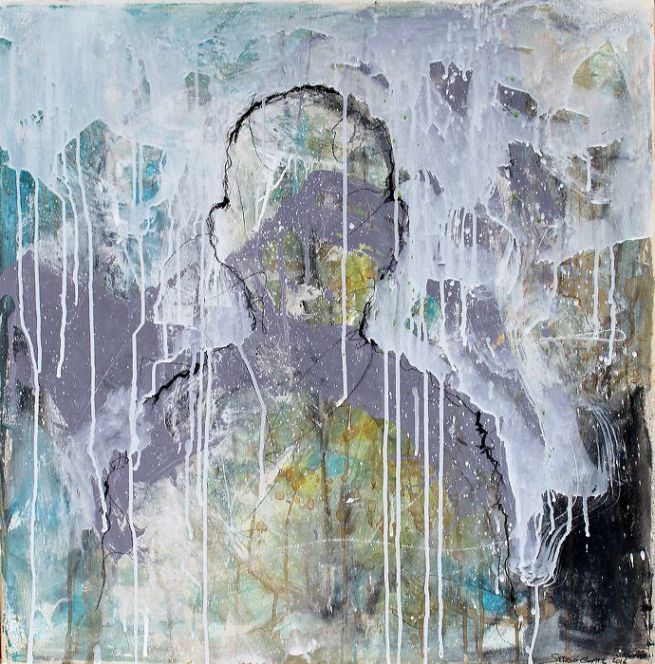
Serenity by Sergio Gomez
Sergio Gomez (Mexican American, 1971–), Serenity, 2016. Acrylic on canvas, 30 × 30 in.

Psalm 51:1–2, 8 (two translations):

KJV: Have mercy upon me, O God, according to thy lovingkindness: according unto the multitude of thy tender mercies blot out my transgressions. Wash me throughly from mine iniquity, and cleanse me from my sin. . . . Make me to hear joy and gladness; that the bones which thou hast broken may rejoice.

The Message:

Generous in love—God, give grace!
Huge in mercy—wipe out my bad record.
Scrub away my guilt,
soak out all my sins in your laundry.

. . .

Tune me in to foot-tapping songs,
set these once-broken bones to dancing.

+++

SONG: “Wash Me Clean” by Page CXVI, on Hymns IV (2011)

Wash me clean
In the warm sun dry me
Cleanse my heart
From all iniquity
Baptize me
In the Holy Spirit sea
Renew my mind
That wickedness may flee

In those days
His Son will save
His Spirit will pour
On all who call on the Lord
In those days
His Son will save
His Spirit will fill
Empty jars of mud and clay

In these days
Barren fields will sprout trees
The deaf and blind will hear and see
The dead will rise, begin to breathe
The earth will groan in pain to see
The sons of God declared to be
His full and glorious family
The beautiful, perfect bride of Thee

New Beginnings 3 by Sergio Gomez
Sergio Gomez (Mexican American, 1971–), New Beginnings 3, 2016. Mixed media on canvas, 40 × 54 in. Available for sale via the ACS Gallery, Chicago (click on image for more info).

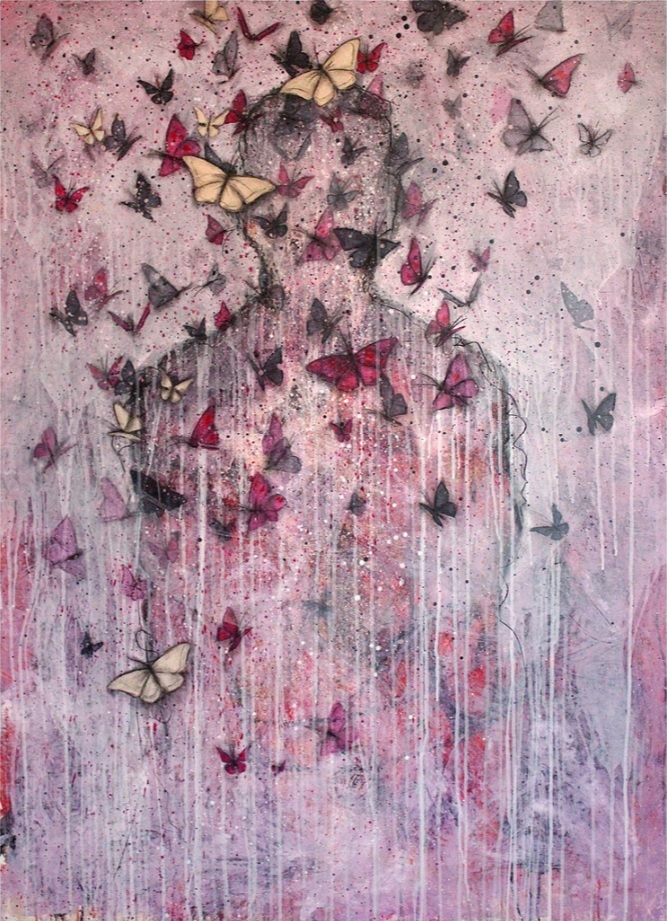
Healing Series by Sergio Gomez
Sergio Gomez (Mexican American, 1971–), Healing Series, 2016. Mixed media on canvas, 82 × 42 in. Available for sale via the ACS Gallery, Chicago (click on image for more info).


This post belongs to the weekly series Artful Devotion. If you can’t view the music player in your email or RSS reader, try opening the post in your browser.

To view all the Revised Common Lectionary scripture readings for the Fifth Sunday of Lent, cycle B, click here.

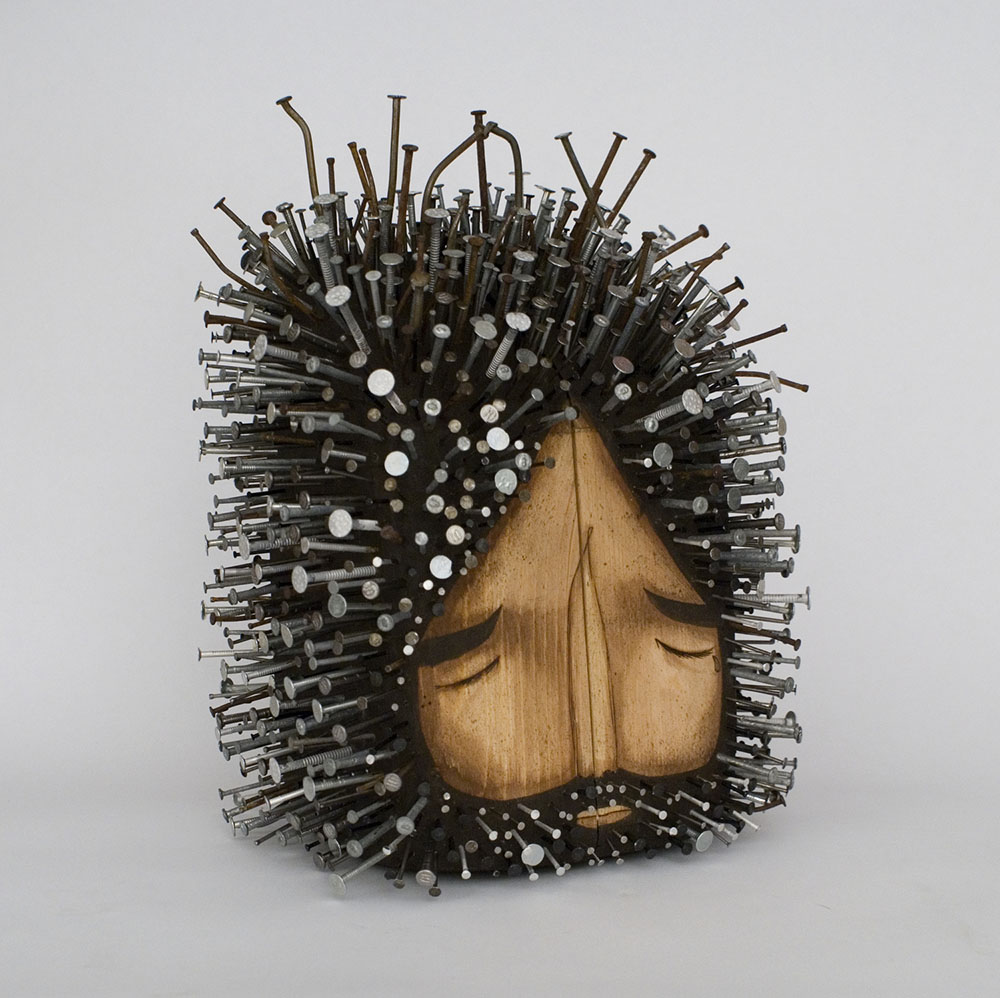
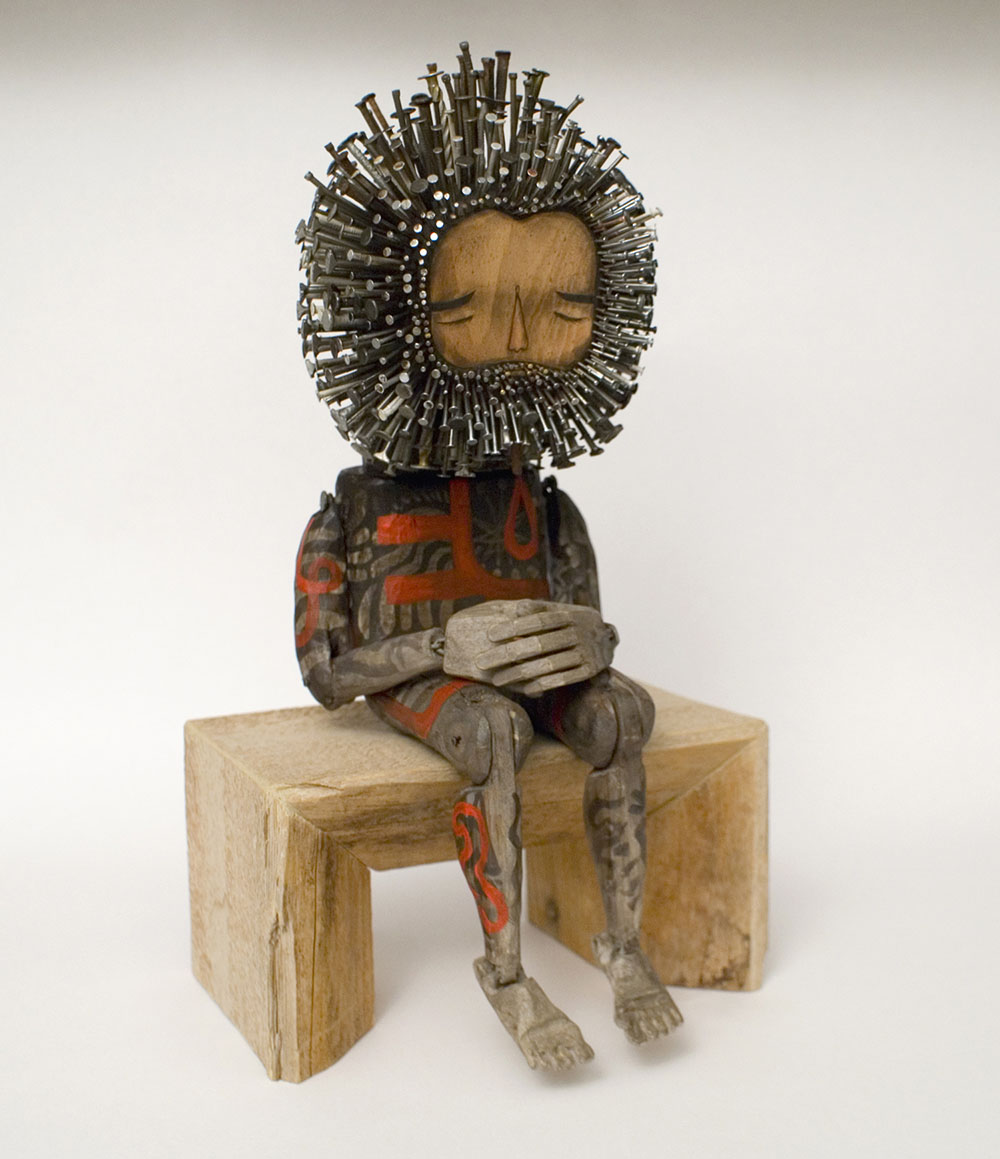
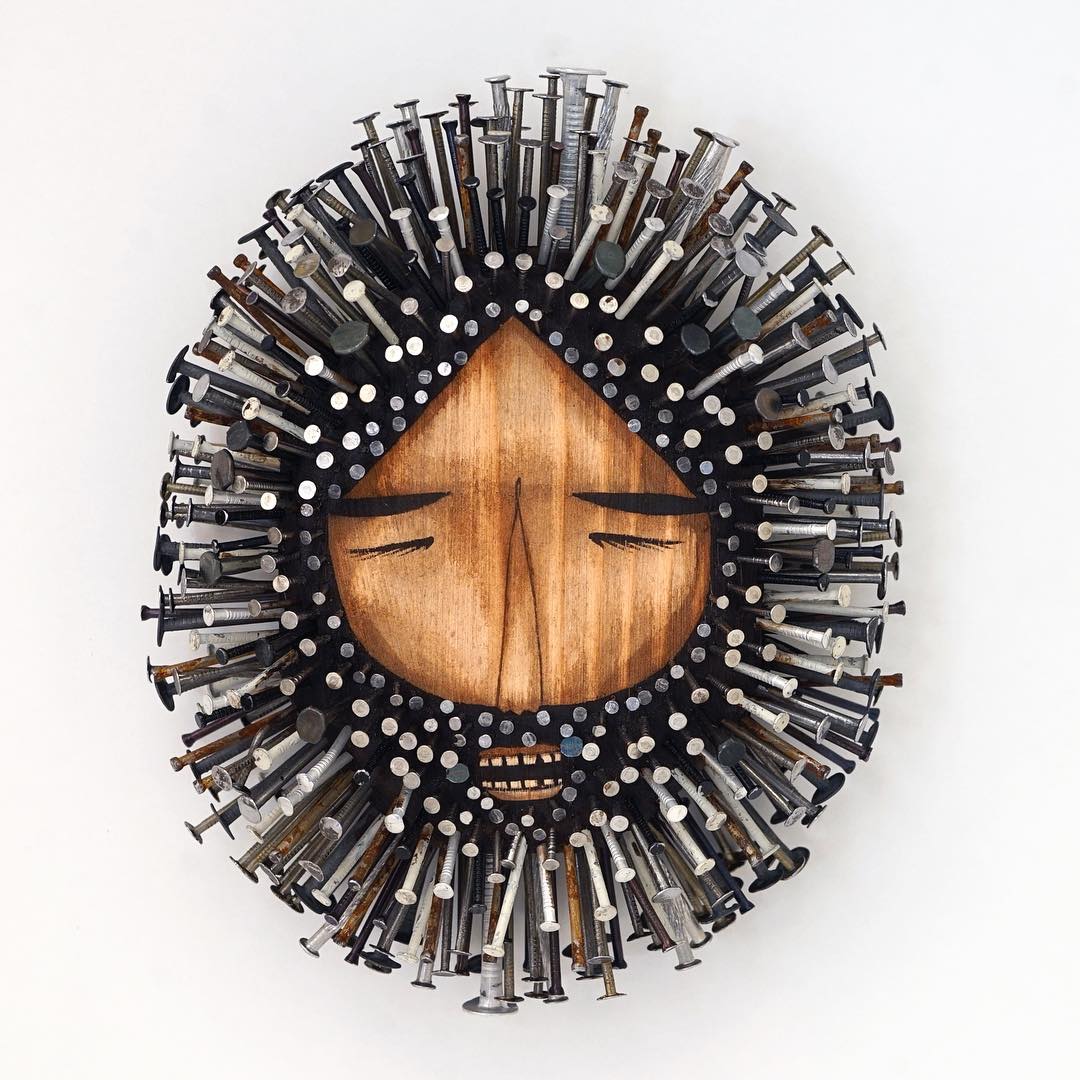
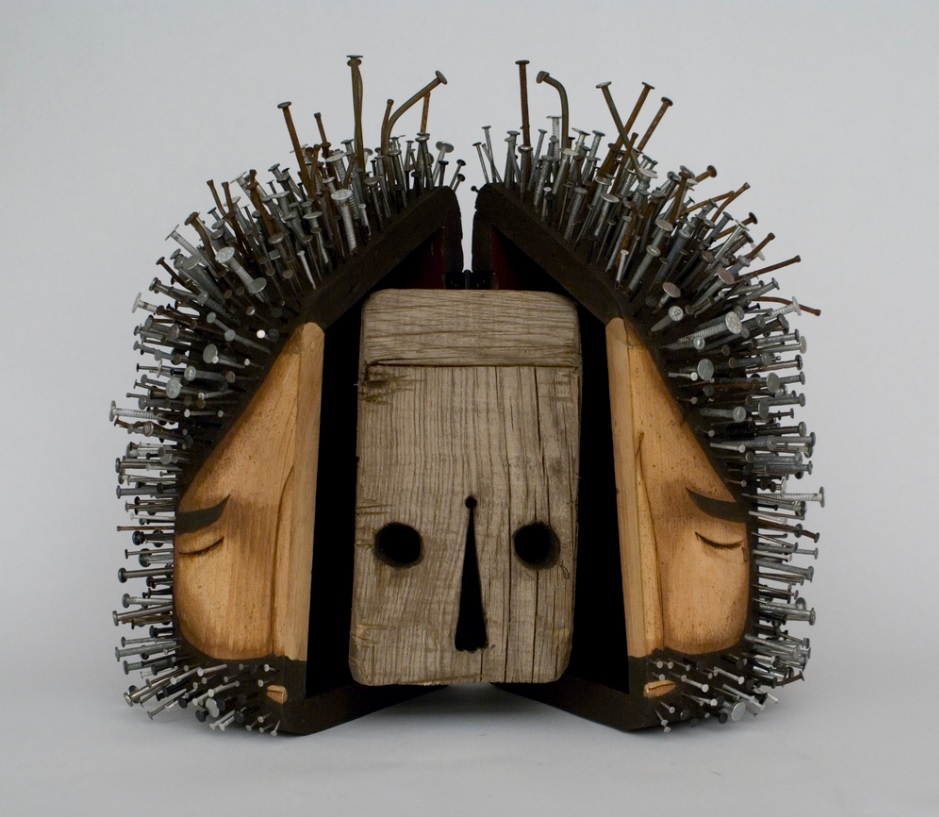
Nailheads by Jaime Molina

Nailhead by Jaime Molina

A significant portion of Denver-based artist Jaime Molina’s output comprises small heads carved in found wood, with hair and beards formed by hammered nails of various sizes. Molina calls these figures “Cuttys.”

When asked about his Cuttys in a Juxtapoz interview, Molina replied, “I always like them to be a bit mysterious. . . . I like the narrative that the viewer creates when they are left to determine why he looks the way he looks. I’ve been told a lot that they look sad . . .”

To me these little bearded men are reminiscent of Christ in his passion—suffering silently, embracing his fate. In this reading the nails not only add dimension and tactility but also, as arma Christi (instruments of Christ’s death), exert a threat, foreshadowing Jesus’s pounded, torn flesh.

The Cuttys resonate visually with several traditional religious subjects from art history: the Agony in the Garden, Ecce Homo, Christ Crowned with Thorns, Christ on the Cold Stone, and Man of Sorrows.

In most of the sculptures the eyes are closed as if the figure is riding out a wave of pain, and in one the mouth is open, emitting a grievous cry. Others in the series form a hinged container out of which a menacing force emerges—a skull, or a fanged beast, representative of death and Satan, respectively; the one is a cup he must drink, while the other seeks to tempt him off his chosen path. One of the Cutty containers bears a cactus, intensifying the impression of being pierced. (Although the plant is depicted without spines, our minds make the automatic association.)

Nailhead by Jaime Molina

Nailhead by Jaime Molina

Nailhead by Jaime Molina

Nailhead by Jaime Molina

Molina, Jaime_Nailhead

Nailhead by Jaime Molina

Nailheads by Jaime Molina

Nailhead by Jaime Molina

Nailhead by Jaime Molina

Nailhead by Jaime Molina

Nailhead by Jaime Molina

Nailhead by Jaime Molina

To view more of Molina’s sculptures as well as some of his murals and other paintings, visit his Instagram page @cuttyup.