There’s a river somewhere That flows through the lives of everyone I know it flows through the valleys And the mountains and the meadows of time Yes, it do
There’s a star in the sky That shines in the lives of everyone You know it shines in the valleys And the mountains and the meadows of time Yes, it do
There’s a voice from the past That speaks through the lives of everyone You know it speaks through the valleys And the mountains and the meadows of time Yes, it do
There’s a smile in your eyes That brightens the lives of everyone It brightens the valleys And the mountains and the meadows of time Yes, it do
There is a short song of love That sings through the lives of everyone You know it sings through the valleys And the mountains and the meadows of time Yes, it do
There’s a river somewhere That flows through the lives of everyone I know it flows through the valleys And the mountains and the meadows of time Yes, it do
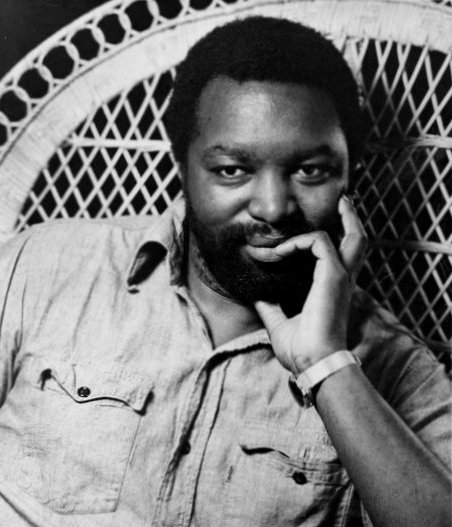
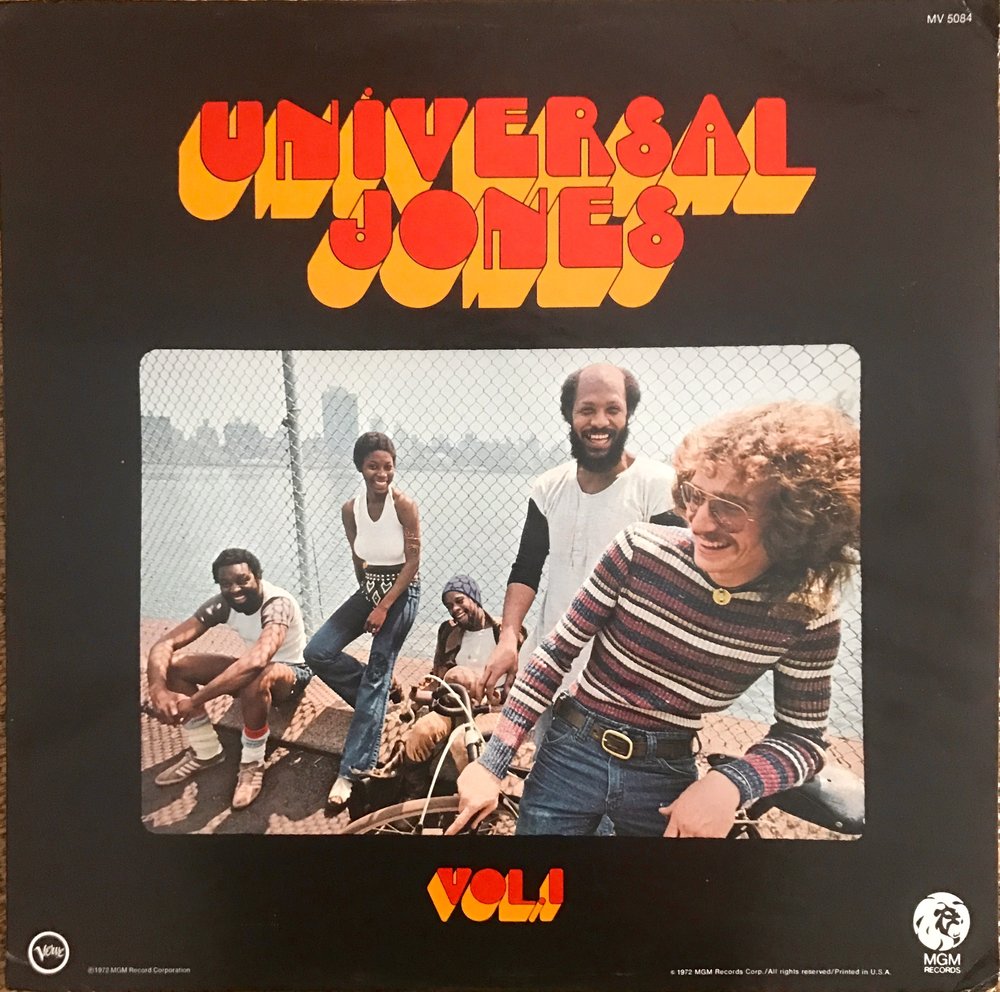
The folk-funk song “River” is by the American singer-songwriter and music producer Eugene McDaniels (1935–2011). He first recorded it with his band Universal Jones on a self-titled album (the group’s only output) in 1972, and he recorded it again, with a synth, on his solo album Natural Juices in 1975.
McDaniels grew up in Omaha, Nebraska, singing gospel music in church. He gained fame in the early 1960s as a clean-cut soul singer—he went by “Gene” at the time—and then surprised everyone in 1970 and 1971 with Outlaw and Headless Heroes of the Apocalypse, containing antiwar, antiestablishment songs performed in a much more experimental style. Universal Jones (1972) is innocuous by comparison, though it still embraces the counterculture. The genres of folk, rock, jazz, gospel, soul, funk, and even proto-rap—often creatively mixed—are all represented in McDaniels’s oeuvre.
From left to right: Eugene McDaniels, Sister Charlotte, Leon Pendarvis, Maurice McKinley, Bob Woos
In the Bible, water connotes blessing, refreshment, life, hope, and abundance. “Flowing streams,” writes the Rev. J. Stafford Wright, “are parables of the flowing life of God.” Wright was referring in particular to one of Ezekiel’s visions, where an unnamed guide leads the prophet through a river that issues forth from the temple in Jerusalem (Ezek. 47:1–12). The guide says,
This water flows toward the eastern region and goes down into the Arabah, and when it enters the sea, the sea of stagnant waters, the water will become fresh. Wherever the river goes, every living creature that swarms will live, and there will be very many fish once these waters reach there. It will become fresh, and everything will live where the river goes.
He then goes on to describe the verdant trees on either side of the riverbank:
Their leaves will not wither nor their fruit fail, but they will bear fresh fruit every month, because the water for them flows from the sanctuary. Their fruit will be for food and their leaves for healing.
Sounds a lot like John’s eschatological vision in Revelation 22, where a river flows down from God’s throne, watering the tree of life, which is for the healing of nations. There are also similar passages in the Minor Prophets: “A fountain shall flow from the house of the LORD” (Joel 3:18); “And in that day it shall be that living waters shall flow from Jerusalem” (Zech. 14:8). God is understood as the source of these waters, which signify an invisible, spiritual reality.
When Jesus comes onto the scene, he talks about “rivers of living water” flowing out of the hearts of believers (John 7:38–39), “spring[s] of water welling up to eternal life” (John 4:13–14). God dwells in humanity, and thus the life God gives springs up from within us and vitalizes the wider world.
I don’t know whether McDaniels had any of these biblical texts in mind when he wrote “River.” But a river, a star, a voice, a song of love—these signal to me the Divine moving, shining, speaking, singing into the lives of humanity. Through the ups and downs of history, the ancient will has worked and is continuing to work, revealing itself to those who look, listen, and follow. Ecclesiastes 3:11 says that God has “set eternity in the human heart.” We possess a moral consciousness and spiritual yearning.
To me, “River” is about recognizing the blessing poured out on the world from the heart of God, about tuning in to the unseen truths embedded in the fabric of the universe. It speaks of God’s all-brightening smile (God’s pleasure in his creation), his whispers of our belovedness, and the river-flow of his goodness.
The song has been covered a handful of times over the years and across the globe, including by:
Further, in 1975 the California bluesman J. C. Burris adapted it both lyrically and musically and recorded it under the title “River of Life” on his album Blues Professor:
Bernice Johnson Reagon, a song leader and civil rights activist, uses Burris’s lyrics in her cover on River of Life: Harmony One (1986), overdubbing her voice singing multiple parts in an a cappella tour de force:
There’s a river somewhere That flows through the life Of everyone And it flows through the mountains And down through the meadow Under the sun
There’s a star in the sky That brightens up the life Of everyone They can see the life of happiness Along with the future Of the lonely one
Yes, it is
There’s a voice from the valley That speaks to the mind Of everyone And it talks about the future Along with the joy Of the sorrowed one
Put a smile on your face And brighten up the day For everyone And live your life of happiness Along with the sick and lonely And sorrowed one
Yes, it is
There’s a river somewhere That flows through the life Of everyone And it flows from the mountain Down through the meadow Under the sun
There’s a sky full of diamonds That brightens up the life Of everyone Then they can see the life of happiness Along with the future Of the lonely one
Yes, it is
The main revision by Burris comes at the end of each verse, where he mentions the lonely, the sick, and the sorrowful. They have a special place of belonging in God’s heart and plans. Jesus’s ministry was to such as these. Blessed are the poor and those who mourn, he said, for theirs is the kingdom of heaven.
Burris encourages us to come alongside those who are hurting with love and inclusion, and to look with them into God’s promised future, where the oppressed are liberated, the sick are healed, the silenced go out singing, and mourning is turned to dancing. Contra the cynicism of “the Preacher” who penned Ecclesiastes, there is something new under the sun! For those with eyes to see it, God is in the process of making all things new (Rev. 21:5).
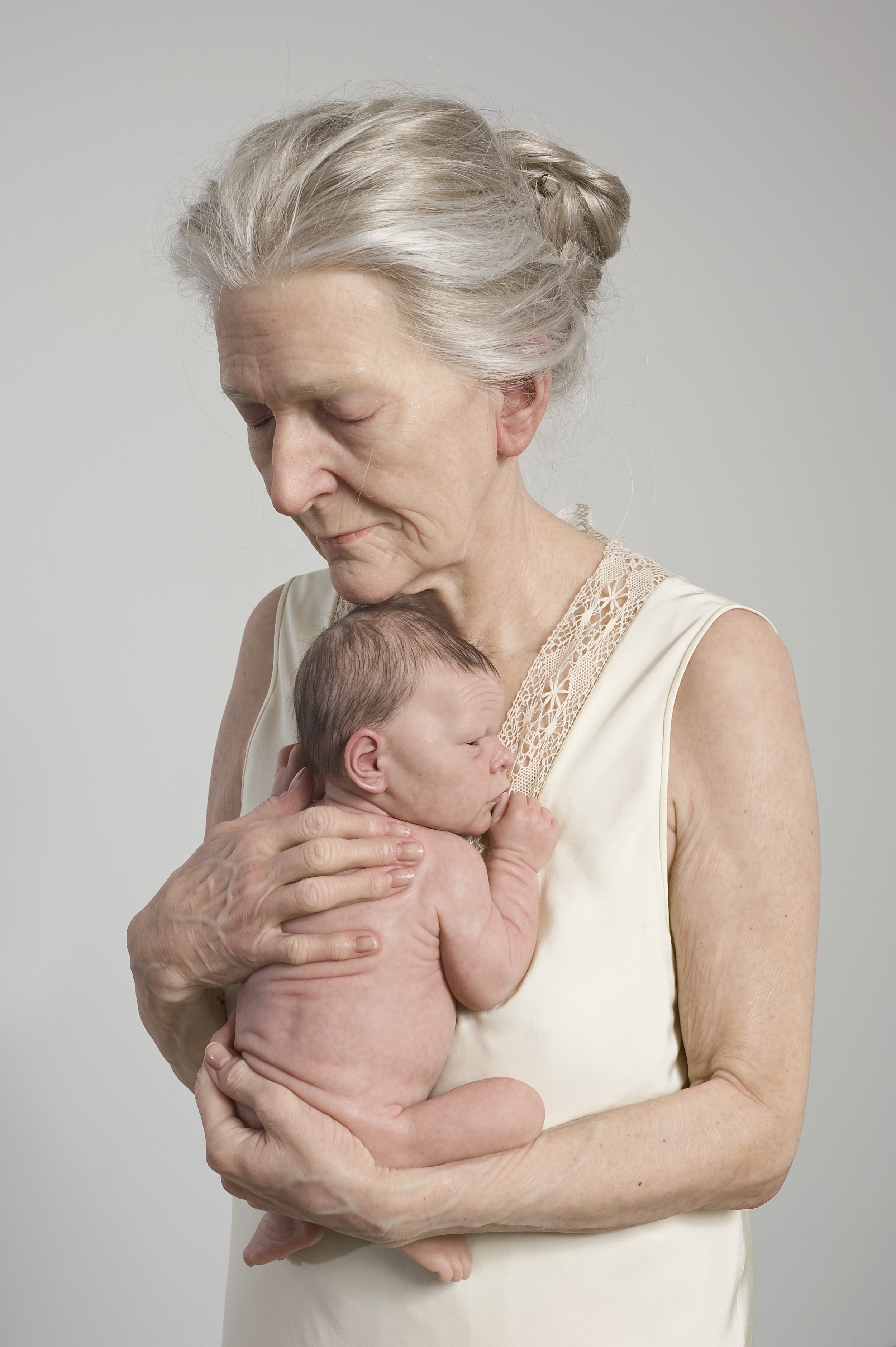
Sam Jinks (Australian, 1973–), Woman and Child, 2010. Silicone, silk, human hair, acrylic, nylon, polyurethane foam, timber, 145 × 40 × 40 cm. Shepparton Art Museum, Shepparton, Victoria, Australia.
Widows of Jerusalem, I too was once
young enough to believe my life mattered.
When I woke, the sun rose for me. I tucked lilies in my hair.
Now I am eighty years a temple dweller.

What a wonder of faith! they proclaim. Truth is,
I cry in the dark. I beg priests for bread

and pick insects from my hem. But today,
an infant came to be blessed. He curled

into the crook of my arm, and when his eyes
wandered to mine, I remembered every hope

stored in my childhood’s heart: gazelles
and henna shrubs, doves perched in the crags.

I touched his face—
that skin we were meant to wear forever.
Inspired by Luke 2:36–38, this poem appears in Tania Runyan’s first full-length poetry collection, Simple Weight (Lexington, KY: FutureCycle, 2010). Used by permission.
Tania Runyan, MA/MFA, lives in Illinois, teaching sixth-grade language arts, speaking at writing workshops, and writing poetry, much of which grapples with scripture. She is the author of five poetry collections—What Will Soon Take Place, Second Sky, A Thousand Vessels, Simple Weight, and Delicious Air—and the popular instructional guides How to Read a Poem and How to Write a Poem. Her most recent book is Making Peace with Paradise: An Autobiography of a California Girl, about her West Coast upbringing.
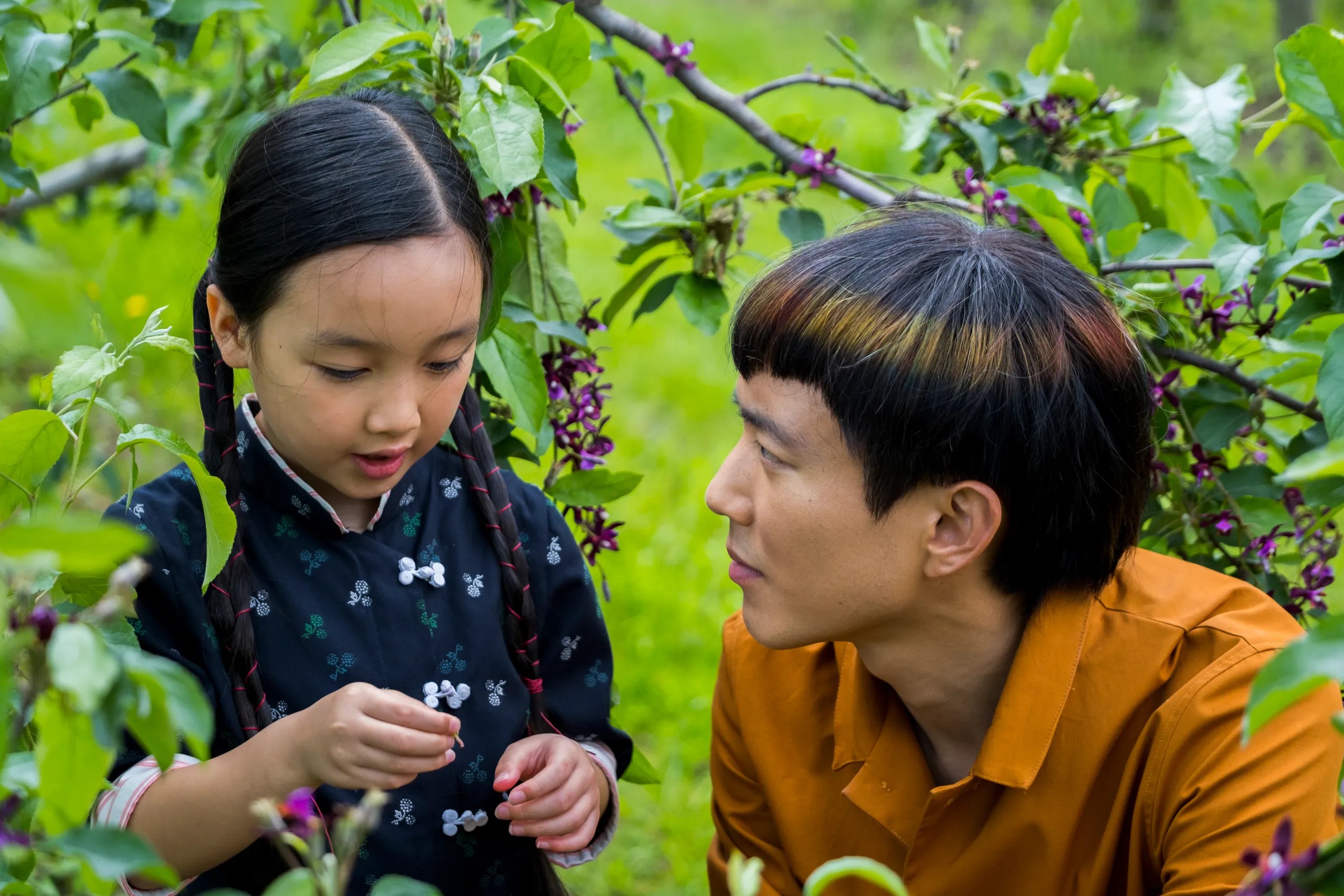
11. After Yang, dir. Kogonada. Set in the near future, After Yang is a patiently minimalist, transcendent film about learning to treasure those moments of mundane beauty that make up our lives. When Jake (Colin Farrell) and Kyra (Jodie Turner-Smith) adopt their daughter Mika (Malea Emma Tjandrawidjaja) from China, they purchase a preowned “technosapien,” a humanoid robot, named Yang (Justin H. Ming) to educate her about her cultural roots and to be an older sibling to her. But one day Yang malfunctions and shuts down, and Mika is devastated.
When Yang is opened up at the repair shop to be diagnosed, Jake discovers Yang’s memory bank, where Yang stored all the memories he thought important. He unlocks it. By viewing the world, especially his family life, as processed by Yang, Jake realizes he has failed to engage meaningfully with the small daily gifts he has been given. He also becomes aware of more of Yang’s history—of his previous families and loves.
Streaming on Showtime.
12. Petite Maman, dir. Céline Sciamma. In this poignant French drama, eight-year-old Nelly (Joséphine Sanz) accompanies her parents (Nina Meurisse and Stéphane Varupenne) on a trip to clear out her mother’s childhood home following her grandmother’s death. As she explores the nearby woods, she meets a neighbor girl her own age (Gabrielle Sanz), and the two strike up a bond. There’s a fantasy element I won’t reveal—it’s better to let the movie unfold it for you—but suffice it to say, I love the imaginative way that writer-director Céline Sciamma tells this mother-daughter tale of grief and loss.
Streaming on Hulu.
13. The Wonder, dir. Sebastián Lelio. Inspired by the nineteenth-century phenomenon of the “fasting girls” and based on Emma Donoghue’s celebrated novel of the same name, this psychological drama is set in a rural Irish Catholic community in 1862. Eleven-year-old Anna O’Donnell (Kíla Lord Cassidy) has allegedly not eaten anything for four months but has been miraculously sustained by “manna from heaven.” As pilgrims begin flocking to witness the miracle and rumors swirl about possible sainthood, a council of local dignitaries initiates an investigation to determine whether Anna’s survival without food is indeed a holy feat, or a hoax perpetrated by Anna and her family.
The council hires Lib Wright (Florence Pugh)—a scientifically minded English nurse—and a nun to independently observe Anna over two weeks in alternating eight-hour shifts and to report back. Lib grows increasingly concerned for Anna’s health and safety, and when Anna reveals to her the reason for her fast, she knows she must act drastically.
Streaming on Netflix.
14. Apollo 10½: A Space Age Adventure, dir. Richard Linklater.Apollo 10½ is writer-director Richard Linklater’s nostalgic homage to growing up in a Houston suburb in the 1960s, the youngest of six. This was during the Space Race, and Linklater uses that context to interweave real childhood memories with his childhood fantasy of being an astronaut. So in a tongue-in-cheek revision of history, he has NASA recruit fourth-grader Stan (Milo Coy) to fly a secret mission to the moon to test out a landing module shortly before Apollo 11 goes up. The film uses an animation technique known as rotoscoping, which layers animation over live performances.
While I can appreciate the blend of dream and reality, I was much more interested in the real-life portions of the movie, which are substantial, than the revisionist space stuff. Playing kickball on the school blacktop, getting disciplined, eating Frito pies at the pool, watching cheesy TV shows with family, listening to the Monkees and the Archies and the 5th Dimension, riding to the beach in the bed of a pickup truck, braving the Black Dragon at AstroWorld, fighting Roman candle wars in the backyard on New Year’s Eve, competing in Little League, stealing plywood from home construction sites with his cheapskate father, listening to Grandma’s conspiracy theories—ordinary memories like these are narrated with such fondness by adult Stan (voiced by Jack Black) and so meticulously rendered, and it’s here where the movie really shines. If you like The Wonder Years, you’ll like this.
Streaming on Netflix.
15. Decision to Leave, dir. Park Chan-wook. A slow-burn crime drama with a heavy dose of romance, this film follows the married police detective Hae-joon (Park Hae-il), who, when investigating the death of a mountain-climber, becomes infatuated with the prime murder suspect, the climber’s widow, Seo-rae (Wei Tang). In an interview, the director said his goal was “to make a love story that does not say the words, ‘I love you.’” The film is all about what’s not said, what’s observed. For much of the movie we question whether Seo-rae is manipulating Hae-joon or is actually falling for him too.
I have to admit, I didn’t like either of the characters; I struggled to understand them or to be invested in their “love” story, which to me seems more like simply lust or intrigue. Seo-rae’s inscrutability is, I think, part of the point; she is a mystery to be solved, as much as the murders happening around her. And attraction is rarely rational, I suppose. (But c’mon, Hae-joon, you’ve got a loving wife back home!) Despite my failure to connect with it on all levels, this is a beautifully shot, craftily edited, engrossing film with a sustained, understated sensuality that is to be commended.
Streaming on MUBI.
16. God’s Creatures, dir. Saela Davis and Anna Rose Holmer. Aileen (Emily Watson) works as a shift manager at a seafood processing plant, alongside most of the other local women, in a remote Irish fishing village. When one of her coworkers, Sarah (Aisling Franciosi), files a rape claim against her son, Brian (Paul Mescal), Aileen fabricates an alibi to protect him. Is she incredulous that he could be capable of sexual assault, or is her denial more sinister? Atmospheric and tense, the film centers on Aileen’s psychological grappling with the limits of maternal love and her duty to what’s right and just.
17. Elvis, dir. Baz Luhrmann. Frenetic and flashy, this music biopic traces the meteoric rise and fall of rock and roll’s biggest legend, Elvis Presley (Austin Butler). The story is narrated by Elvis’s exploitative manager, Colonel Tom Parker (Tom Hanks), and examines their complex, twenty-plus-year relationship. Butler is amazing in the role, embodying Elvis’s energy and sex appeal while also showing his emotional vulnerability.
I appreciate how the movie shows the influence of Black artists on Elvis’s music, even dispelling the myth that he was the founder of rock and roll—a credit that he himself, in multiple interviews, rejected, instead crediting his Black predecessors. Elvis grew up in a Black neighborhood in Tupelo, Mississippi, and when he moved to Memphis as a teenager, he frequented Beale Street, a hub of African American culture. From these environments he absorbed the sounds of Pentecostal gospel and rhythm and blues.
Elvis features stunning performances by historical Black characters. An early scene intercuts bluesman Arthur Crudup (Gary Clark Jr.) performing his original song “That’s All Right” in a juke joint—which would become Elvis’s first single—with “I’ll Fly Away” sung by a Black congregation at a tent revival; preteen Elvis observes one through a hole in the wall and participates, Spirit-caught, in the other. As a young aspiring recording artist, prior to mounting the Louisiana Hayride stage, his first big premiere, he pumps himself up by singing “I’ll Fly Away.”
Later, Elvis hears Big Mama Thornton (Shonka Dukureh) perform the raunchy “Hound Dog” (written for her by a Jewish songwriting duo, Jerry Leiber and Mike Stoller) in a bar on Beale Street, which is then sampled and interpolated in a song by Doja Cat commissioned for the movie. At Club Handy, Elvis hangs out with his friend B.B. King (Kelvin Harrison Jr.) and is blown away by the vitality and genius of the young Little Richard (Alton Mason), who performs his original and then-unknown “Tutti Frutti” for the crowd; the conversation Elvis has about it with King, and what King says and doesn’t say, speaks volumes. As people shuffle out for the night, the pioneering rock singer-guitarist Sister Rosetta Tharpe (Yola) sings “Working on the Building” and “Strange Things Happening Every Day.”
All these and more were part of Elvis’s music education. They came before. His use of Black source material has always been controversial, deemed “cultural appropriation” (i.e., theft) by some. He profited greatly from the creative contributions of Black women and men, many of whom failed to attain proper recognition and compensation for their work. They lacked the platform and the acceptance across racial lines, whereas Elvis’s whiteness opened doors for him. And so he brought rock and roll—developed in Black churches, juke joints, streets, and nightclubs—to the masses. For sure, he added his own stamp, synthesized it with other influences, and was a majorly talented performer in his own right. Elvis celebrates the title character’s inventiveness but also recognizes his indebtedness to Black musicians. It’s not a central concern of the movie, but it is present. More central is, as one might expect of the genre, the toll of fame.
Streaming on HBO Max.
18. Nope, dir. Jordan Peele. In this neo-western sci-fi thriller, OJ (Daniel Kaluuya) and his sister, Em (Keke Palmer), own a family ranch in California, where they train and handle horses for television and film productions. But their business is struggling, and to keep it afloat they sell some horses to Jupe (Steven Yeun), a former child actor who operates a nearby theme park that capitalizes on his surviving an infamous violent attack on the set of a nineties sitcom. (Best opening scene of the year?) Then their ranch becomes a site of abduction—a UFO takes some of their horses. They attempt to capture video evidence with the help of tech salesman Angel Torres (Brandon Perea) and documentarian Antlers Holst (Michael Wincott). The film’s epigraph is a quotation of Nahum 3:6, a pronouncement of divine judgment: “I will cast abominable filth upon you, make you vile, and make you a spectacle.”
Nope is not as concise as Peele’s other two films, Get Out and Us; I couldn’t follow all the threads. But surely a major thread is an indictment of our voracious need for spectacle. Another is the traumas that the film industry can inflict on people. Another, or maybe a subset of the previous, is the erasure of Black cowboys from our stories of the American West. Nope pokes and prods at these issues and raises questions rather than providing answers. For example, there’s a tension here between the magic of spectacle and its insidiousness. Peele participates in what he condemns. As film critic Thomas Flight articulates, “Nope is a spectacular horror film about the danger of spectacle. It’s a big-budget Hollywood film that critiques the Hollywood industry. It’s not a movie that can draw a clear resolution to those dualities. Instead, it’s a film that explores the queasiness that arises when we’re not sure if something’s good or bad but we find ourselves in the midst of it.”
Entertaining; suspenseful; riveting sound design by Johnnie Burn; and an infectious performance by Palmer as the charismatic Emerald, her live-wire personality a perfect foil to the taciturn OJ’s.
19. Cha Cha Real Smooth, dir. Cooper Raiff. Andrew (Cooper Raiff), a Gen Zer, is a recent college grad who lives with his mom, stepdad, and younger brother and works as a party starter at bar mitzvahs. At one he meets Domino (Dakota Johnson) and her daughter, Lola (Vanessa Burghardt), who has autism, and strikes up a friendship. This movie is sweet and maybe slight, and it takes a few missteps, but I enjoyed it a lot.
I find Raiff’s onscreen persona—essentially the same one he adopted in his debut feature, which I also really liked—charming, though I know others find it insufferable! Andrew is vulnerable, quippy, awkward, real. He loves his mom. He cries openly. He lacks direction. He seeks connection. He’s trying to figure life out, and growth comes slowly. He’s someone I recognize and have empathy for.
Streaming on Apple TV+.
20.Causeway, dir. Lila Neugebauer. This quiet drama follows the physical and emotional recovery of Lynsey (Jennifer Lawrence), a US military veteran who returns home to New Orleans after suffering a traumatic brain injury serving in Afghanistan. In the process, she develops a friendship with her auto mechanic, James (Brian Tyree Henry), who bears his own wounds from a tragic event—some visible, some not. The two help each other work through the lingering effects of their traumas and move closer to wholeness. Their gentle, easy vibe with one another is really beautiful to witness.
Since 2020, I have been publishing an annual list of my top twenty films of the year, with trailers and microreviews. (See my lists for 2020 and 2021.) I love the collaborative nature of filmmaking, the coming together of so many talents—writing, acting, directing, shooting, editing, set design, costume design, etc.—to tell a story through moving images. Movies are actually my favorite mode of storytelling. It’s a shame that in some circles they’re denigrated as inferior to novels, less worthy of our time. That’s absolutely not true!
Moviegoing can be transformative. Like other art forms, movies reflect back to us the many aspects of the human (and in the case of my #5, animal!) experience, and can demand something of us.
Here are the first ten of my twenty recommendations for films to see that were released in the United States (though several were made internationally) in 2022, ranked in order of preference. Please be aware that many of these have R ratings and that you can consult content advisories if that concerns you.
1. Everything Everywhere All at Once, dir. Daniel Kwan and Daniel Scheinert. Bighearted and bizarre, this comedy sci-fi action adventure is about a first-generation Chinese American woman, Evelyn (Michelle Yeoh), who’s trying to hold it all together as her laundromat business is failing and her relationships are fraying, especially with her twenty-something daughter, Joy (Stephanie Hsu), whom she just doesn’t “get.” Then one day, out of nowhere, Evelyn is enlisted by a version of her husband, Waymond (Ke Huy Quan), to stop the evil Jobu Tupaki, a version of Joy, from destroying the multiverse. As Evelyn travels to alternate universes, she’s able to access skills and emotions her alt-selves possess and bring them back with her to help her fight.
Absurdity ensues. In one universe, Evelyn has hotdogs for fingers, and so becomes adept at using her feet; in one she’s a rock overlooking a canyon; in another, a teppanyaki chef whose colleague is controlled by a raccoon under his hat; in yet another, she’s a martial arts–trained movie star who never left China. She “verse jumps” from one to the other seeking to save her daughter from the vortex of despair into which she’s trying to suck everyone and everything, and all the while Joy is trying to find a version of her mother whom she can connect with, who can understand the emptiness in her.
The directors said the film is about a family trying to find each other through the chaos. At its core, it’s a family drama—one that explodes across the multiverse. It’s also about choosing kindness and joy (symbolized by a googly eye) and moving toward one another in empathy. It’s much louder and more outrageous than all my other picks, and I could have done without the scatological humor, but I found myself enthralled by the wild, disorienting ride that lands at a really tender place. Michelle Yeoh proves her versatility as an actor, and Jamie Lee Curtis, who plays IRS inspector Deirdre Beaubeirdra, is hilarious.
Streaming on Showtime.
2. The Banshees of Inisherin, dir. Martin McDonagh. Set in 1923 during the Irish Civil War on a fictional island off Ireland’s west coast, this dark comedy begins when Colm (Brendan Gleeson) tells his lifelong bestie, Pádraic (Colin Farrell), that he no longer wants to be friends. Colm is a fiddler and composer who wants to establish a legacy, a musical output that will live on—a goal that Pádraic is impeding by distracting him with daily hours of dull conversation, he says—whereas Pádraic says he merely wants to be known for “being nice.” Baffled by his friend’s abrupt severing of their relationship, Pádraic repeatedly pursues understanding and restoration, escalating the tension toward acts of violence. Male friendship and loneliness, melancholy, and mortality are key themes in this artful buddy-breakup movie that had me laughing out loud as well as tearing up.
Streaming on HBO Max.
3. Guillermo del Toro’s Pinocchio, dir. Guillermo del Toro and Mark Gustafson. Light overcomes the darkness in this stop-motion animated musical adaptation of the classic Italian children’s novel from 1883. It was written and codirected by Guillermo del Toro, a master of magical realism, and has been in development since 2008. When his young son dies, the carpenter Geppetto (David Bradley) carves a boy puppet, Pinocchio (Gregory Mann), to fill the hole left by this profound loss. In an act of compassion, the Wood Sprite (Tilda Swinton) brings Pinocchio to life and commissions Sebastian J. Cricket (Ewan MacGregor), an itinerant writer, to look out for him. Curious and unruly, Pinocchio ends up trapped in a circus by an abusive showman. He and his father spend much of the film trying to reunite, to be family to each other.
These story points will sound familiar to most, but del Toro cleverly adapts them and adds new ones, setting the story in a Tuscan village during the rise of Mussolini in the 1930s, with one of the main villains being a Fascist podestà who’s trying to recruit Pinocchio into the army. It turns out it is the villagers who blindly subscribe to Il Duce’s propaganda who are the puppets, whereas Pinocchio, with his irrepressibility, is decidedly unpuppetlike. Thus the film explores contexts in which disobedience can be a virtue. Del Toro also places more emphasis on Geppetto’s growth than Pinocchio’s, making the story about Geppetto becoming a real father—learning to accept Pinocchio with all his quirks and difference, not making his love contingent on Pinocchio fulfilling his image of the perfect son—rather than Pinocchio becoming a real boy.
The artistry of this film is dazzling! I was blown away by the production design by Guy Davis and Curt Enderle (they designed the locations and characters and established the whole visual style), especially the evocation of interwar Italian life and culture, with the centrality of the church. I’m also dazzled by the puppets—shout-out to Georgina Haynes, the director of character fabrication—because remember, with stop-motion animation, all the characters are handmade, physical creations existing in three-dimensional space, not computer-made or drawn on a page; all but the “wooden” Pinocchio (made from 3D-printed hard plastic) consist of a manipulable silicone skin sitting over a mechanized system.
Streaming on Netflix.
4. Aftersun, dir. Charlotte Wells. Eleven-year-old Sophie (Frankie Corio) is on vacation with her single dad, Calum (Paul Mescal), in Turkey. He doesn’t have a lot of money, but he’s trying to create a memorable holiday for her. And despite its mundanity, it is memorable—the frame story is adult Sophie replaying its moments on tape and in her mind. Aftersun is a very personal project for first-time writer-director Charlotte Wells, who draws on her own history and relationship with her father; she says she wants people to be able to feel the warmth of these memories, even though they’re tinged with sadness. Though it’s never spelled out, it appears that Calum suffers from depression, and we gradually see more and more of his pain. The lack of exposition enables us to make our own inferences about it and about the ending. The “Under Pressure” dance sequence, which intercuts a frantic, stroboscopic nightclub scene where adult Sophie searches the floor for Calum with one of young Sophie and Calum dancing lovingly outside the hotel, safe in each other’s arms, is a contender for scene of the year—a metaphoric conveyance of mental health decline, of holding on and letting go.
5. EO, dir. Jerzy Skolimowski. Who would have thought a donkey’s inner life could be so captivating to watch onscreen? His memories, his imagination, his hopes, his fears, the affection he feels and longs for, his joys and sorrows. EO follows the life journey of the titular donkey as he passes from owner to owner, some of them kind, others cruel. He starts out at a circus in Poland, where he’s tenderly cared for by the young performer Magda (Sandra Drzymalska). But he’s seized by animal rights activists and ends up at a horse sanctuary, and from there he moves to a petting farm for children with disabilities. He escapes, looking for Magda, and spends a harrowing night alone in the forest. Chancing upon a soccer game the next day, he becomes a mascot for a time, a figure of great adulation but also vitriol by the opposing team. His next job is as a beast of burden at a fur farm, where he’s made to carry fox pelts, and then he’s acquired by an Italian priest.
There’s very little dialogue in the film, and there are no voiceovers to convey EO’s thoughts or emotions, which we infer by context. The cinematography, from close-up shots of EO’s dark, expressive eyes to wide shots of varied landscapes, is gorgeous—visual poetry. EO is an indictment of human violence and a call to empathy for animals. Dare I say I liked it better than the Bresson classic (Au hasard Balthazar) that inspired it? Unlike its predecessor, it stays entirely focused on the donkey’s perspective, with humans relegated to the periphery.
6. Hit the Road, dir. Panah Panahi. A road-trip dramedy from Iran, this debut feature by Panah Panahi follows a family of four as they drive across the Iranian countryside under the pretext of a wedding. Dad (Mohammad Hassan Madjooni), who wears a leg cast, sits in the back with the young ball-of-fire son (Rayan Sarlak) and sick dog, while Mom (Pantea Panahiha) and the quiet older son (Amin Simiar) take turns at the wheel, sometimes evincing their worry. There’s something clandestine about this journey, and over the course of the film we learn more but not much. But even with the imminent separation hanging like a cloud, there’s a lightness and a sweetness that’s so endearing as we watch the characters bicker and goof around and connect with one another. Films that can hold together the weighty and the comical, like this one, tend to be the ones I enjoy most.
Streaming on Showtime.
7. TÁR, dir. Todd Field. Set in the classical music world, this drama explores the corrupting nature of power through the (fictional) character of Lydia Tár (Cate Blanchett), an award-winning conductor, composer, educator, and author. It’s an intense and brilliant performance of a complex character who is amazing at her craft but who also uses her status to manipulate others, including the young female cellist who has just joined her orchestra, the prestigious Berlin Philharmonic. The tension rachets up as they prepare to perform Mahler’s Fifth Symphony and rumors about Lydia’s connection to the death of one of her former protégés threaten to undo her.
8. Broker, dir. Kore-eda Hirokazu. Found families is a key theme in the oeuvre of the Japanese director Kore-eda Hirokazu, whose Shoplifters (2019) is one of my all-time favorite films. His latest, Broker, is set in South Korea. Seeking to place her newborn son, Woo-sung, in the care of a family better equipped to raise him, the young single mom So-young (Ji-eun Lee) leaves him outside a church, where he is intercepted by Sang-hyeon (Song Kang-ho) and Dong-soo (Dong-won Gang), who attempt to sell him on the adoption black market. The next day she returns with doubts and demands to be included in the process of finding a home for Woo-sung. So she follows the two brokers in responding to the calls of prospective buyers, and along the way they pick up a stowaway from an orphanage, the ebullient Hae-jin (Seung-soo Im), the character that really brought it all together for me.
As they drive from city to city, the five travelers bond with one another, each of them carrying their own forms of rejection trauma and seeking love and belonging. The last night they spend together . . . wow! Kore-eda is a deft handler of sentiment, never maudlin but rather inserting understated emotional moments in all the right places (another example: the flower on the wet car window scene). He tackles heavy subject matter and complex social issues with heart, always keeping his characters at the center and allowing for reprieves of warmth and brightness. He avoids simplistic endings but also unnecessarily bleak ones, taking a vantage point of hope.
9. The Fabelmans, dir. Steven Spielberg. This coming-of-age drama is a fictionalized telling of Steven Spielberg’s upbringing in a midcentury Jewish American household and, since seeing his first movie in a theater at age six, his developing passion for cinema. Spielberg’s stand-in is Sammy Fabelman (Gabriel LaBelle). In many ways The Fabelmans is Spielberg’s love letter to his artistic and free-spirited mother, named Mitzi in the movie and played by Michelle Williams, who from the get-go fully supports Sammy’s dream to become a filmmaker, unlike his much more practical father, Burt (Paul Dano), a computer engineer, who doesn’t initially see filmmaking as a worthy pursuit.
I wondered if The Fabelmans was going to be a self-indulgent homage to Spielberg’s successful career, full of Easter eggs to his other films, but it wasn’t that at all. The story stands on its own apart from its basis in the particularities of Spielberg’s life. It’s about vocation and family and the power of films to help us see the truth. That it’s also a semiautobiographical portrait of a director whose films I grew up on (E.T., Jaws, Jurassic Park) and continue to admire is an added bonus!
10. Nanny, dir. Nikyatu Jusu. Marked by menace and mystery, this psychological horror-drama centers on Aisha (Anna Diop), a Senegalese immigrant to New York City hired by an affluent couple to care for their daughter. Aisha is haunted by the absence of her six-year-old son, whom she left under the care of a cousin in Senegal so that she could earn money to bring him to the US. But that goal becomes difficult when her employers start withholding her wages. As she navigates the oppressive situation she finds herself in, she is visited by figures from West African folklore: Mami Wata (a mermaid-like water spirit) and Anansi (a trickster spider). They seem like malevolent forces, but her boyfriend’s grandmother encourages her to reframe her thinking and to ask what the spirits want not from her but for her. Could they be haunting her to help guide her toward a new and better life?
The film deals with class, race, exploitation, resistance, survival, motherhood, and guilt—all parts of Aisha’s immigrant experience. Despite the too-quick resolution that follows, the scene at the end of Aisha being reborn out of chaos is visually and emotionally compelling. I appreciate how writer-director Nikyatu Jusu, born in the US to Sierra Leonean parents, uses supernatural horror tropes in unique and subversive ways.
This roundup is a bit longer than usual, but I’ve found that these six items I’ve gathered over the last month complement each other well, so I’m sharing them all at once. The Art in America and Hyperallergic articles raise interesting points about sacred art—what it is, how it functions, what its relevance is to contemporary life—and this is a topic I discuss in a podcast episode that was released earlier this month. Tammy Nguyen and Wes Campbell are two artists whose work I am glad to have just learned about and plan to explore more of. And there’s always something going on in London’s art scene to remark on as relates to theology or Christian history—this time a National Gallery–sponsored virtual exhibition on the fruits of the spirit, and the latest winning entry for the Fourth Plinth competition, which honors a Baptist pastor and freedom fighter from Malawi.
ARTICLE: “Seeing and Believing: Christian Imagery in Painting Now,” a roundtable conversation with four artists moderated by Emily Watlington: Religion is the theme of the December 2022 issue of the influential contemporary art magazine Art in America, and its cover story is a conversation with painters Frieda Toranzo Jaeger, Tammy Nguyen, Alina Perez, and Jannis Marwitz on their “bold reinventions of traditional Christian iconography.” They discuss the generativity of Christian imagery, the power of sacred images, their favorite Christian paintings, the function of metal leaf in illuminated manuscripts, Jesus as recognizable not by his specific likeness but by body language and symbol, “revisiting and repurposing history” as “a core practice of decolonization,” and the role of storytelling and transcendence in art.
I especially appreciated being introduced to Nguyen’s work and hearing her thoughtful and nuanced perspectives. She mentions her Stations of the Cross series, inspired by her visit to the island of Pulau Galang in Indonesia to connect with her Vietnamese parents’ history as refugees on nearby Kuku Island following the Vietnam War. In the decommissioned Galang Refugee Camp, now a tourist site, fourteen golden Stations of the Cross statues are preserved in the forest, which served as devotional aids for the many Vietnamese Catholic refugees—but they are now overgrown by nature. Nguyen was struck by this tropical takeover, and her resultant body of work setting Christ’s passion in the jungle explores not only environmental agency but also legacies of colonialism and the important role of faith in circumstances of trauma and grief. Hear her discuss the series in this five-minute video that the gallery Lehmann Maupin put out:
Tammy Nguyen (American, 1984–), Man of Sorrow, 2022. Watercolor, pastel, vinyl paint, and metal leaf on paper stretched over wood panel, 84 × 60 in. (213.4 × 152.4 cm).
I regret that besides Nguyen’s, all the other featured contemporary paintings in the Art in America article have only a very tenuous, sometimes indiscernible, connection to Christianity. Toranzo Jaeger’s End of Capitalism, the Future, a “queer utopia,” is based on Lucas Cranach’s Fountain of Youth—but Cranach’s subject (elderly women entering a pool to become young again) is not Christian, it’s mythological. And Marwitz’s The Raid supposedly references Caravaggio’s Madonna of Loreto, but I don’t see it at all, compositionally or otherwise. Perez mentions growing up Catholic in Miami, but that influence isn’t apparent in It Never Heals, unless we’re meant to read it in the painting’s flair for violence and drama. So the article’s subtitle, “Christian Imagery in Painting Now,” is a bit of a misnomer.
With the criteria of currently active painters consciously engaging with Christian imagery in ways that are not merely illustrative, I might have chosen to interview, for example, Jyoti Sahi (India), Daozi (China), Emmanuel Garibay (Philippines), Wisnu Sasongko (Indonesia), Marc Padeu (Cameroon), Harmonia Rosales (US), Stephen Towns (US), Rodríguez Calero (US), Trung Pham (US), Laura Lasworth (US), Patty Wickman (US), James B. Janknegt (US), Mark Doox (US), Sergii Radkevych (Ukraine), Ivanka Demchuk (Ukraine), Natalya Rusetska (Ukraine), Paul Martin (England), Filippo Rossi (Italy), Michael Triegel (Germany), Janpeter Muilwijk (Netherlands), Arne Haugen Sørensen (Denmark), Brett a’Court (Australia), or Julie Dowling (Australia).
I’m also disappointed that, from what I can tell from the interview, none of the four artists approaches their subjects from a place of Christian belief. I absolutely welcome non-Christians to engage with Christian stories and symbols—to play with them, reinterpret them, question them, or even use them as tools of critique or subversion. I just wish that in a conversation about ways that Christian imagery is being used today, the editors had thought to invite a Christian to the table, who could have provided a different viewpoint. But, kudos to Art in America for at least broaching the topic of religion in contemporary art!
+++
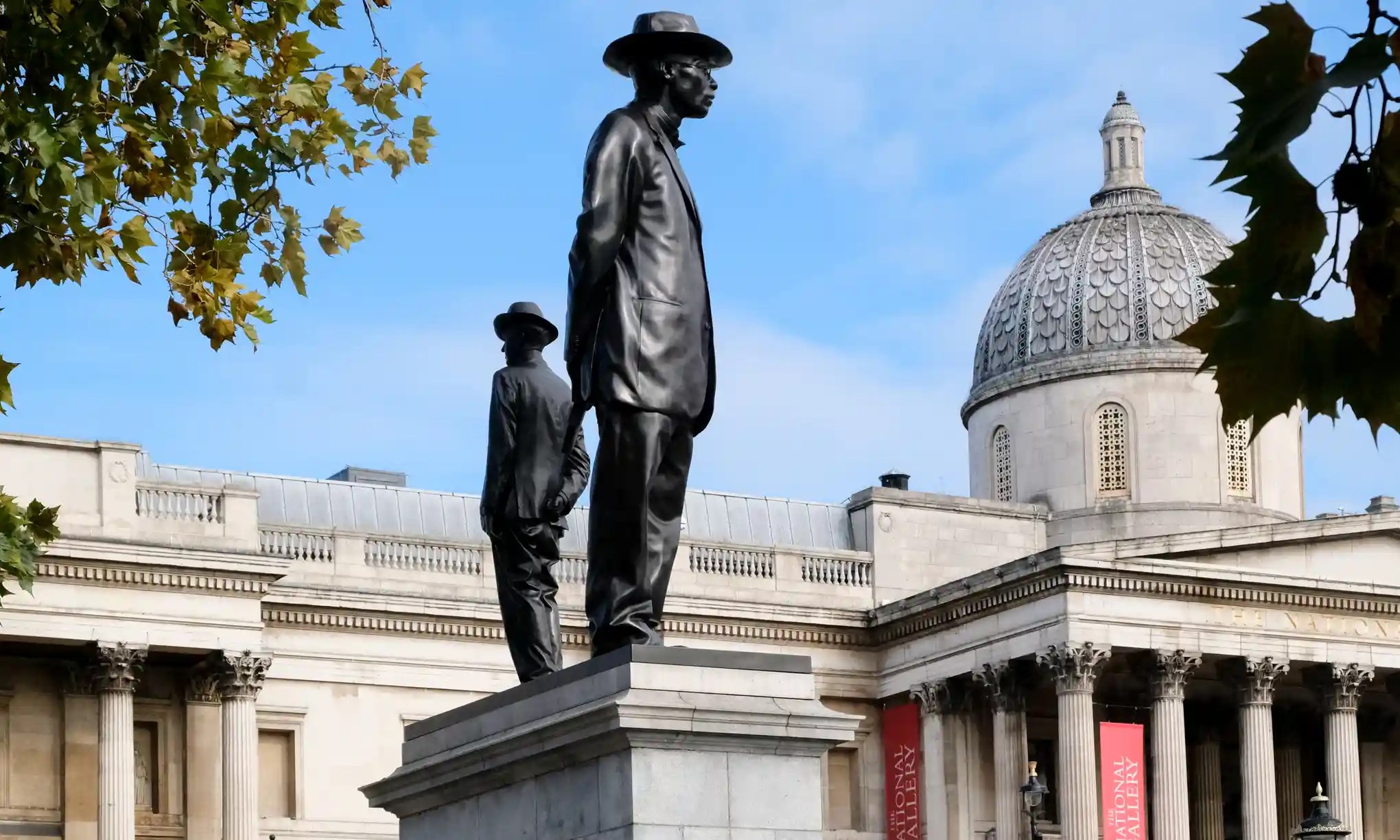
NEW STATUE: Antelope by Samson Kambalu: The fourth plinth in London’s Trafalgar Square is the prestigious site of rotating contemporary art installations, and from September 2022 to September 2024, it is home to Antelope by Malawian-born artist Samson Kambalu. This two-man bronze sculpture group reimagines a photograph of the pastor, educator, and revolutionary John Chilembwe (1871–1915) of Nyasaland (now Malawi) standing next to his friend John Chorley, a British missionary. Posing at the entrance of his newly built church, Chilembwe proudly wears a brimmed hat, flouting the law that Africans were not allowed to wear hats in the presence of their then colonial rulers. (Read more from Inno Chanza on Facebook, and from Harvard Magazine.) Kambalu’s sculpture shows the men facing away from each other instead of side-by-side, and he’s made Chilembwe almost twice as large as Chorley, elevating an underrepresented figure in the history of the British Empire in Africa.
Samson Kambalu (Malawian, 1975–), Antelope, 2022. Bronze, resin, 18 ft. high. Photo: Future Publishing / Getty Images.Pastor John Chilembwe and John Chorley at the dedication of Chilembwe’s New Jerusalem Baptist Church in Mbombwe village in what is today southern Malawi, January 24, 1914. The British colonial government demolished the church the next year and imprisoned or executed most of its leaders following an unsuccessful uprising against forced labor, racial discrimination, and conscription led by Chilembwe.
After years of agitating peacefully against British colonial rule to no avail, Chilembwe led an uprising in 1915, which resulted in his death but which laid the seeds for Malawian independence. John Chilembwe Day is observed annually on January 15 in Malawi.
+++
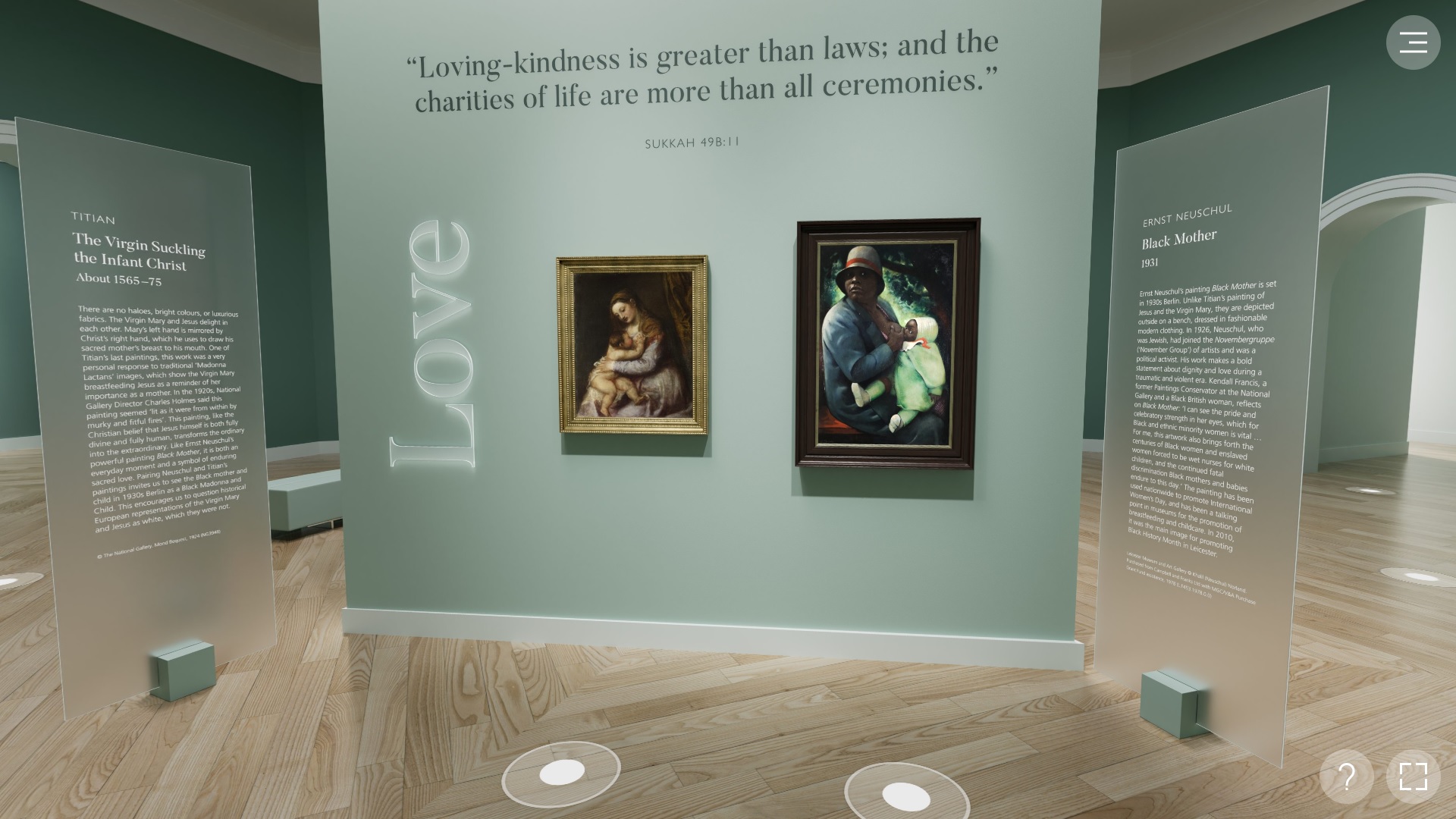
VIRTUAL EXHIBITION: Fruits of the Spirit: Art from the Heart: Curated by the Rev. Dr. Ayla Lepine as part of the National Gallery’s Art and Religion research strand, this new virtual exhibition was inspired by a passage from the apostle Paul’s letter to the Galatians, where he writes, “The fruit of the Spirit is love, joy, peace, patience, kindness, generosity, faithfulness, gentleness, and self-control. There is no law against such things” (5:22–23). The exhibition pairs nine artworks from the National Gallery’s collection with nine from UK partner institutions that represent these spiritual fruits, these virtues, which are held in common across faith traditions. The Renaissance through contemporary eras are represented. [HT: Jonathan Evens]
Screen capture from the online exhibition experience Fruits of the Spirit. This fictitious space consists of seven side galleries and two central displays, which can be navigated with your keyboard.
Accompanying the exhibition is a web-based catalog (with contributions by theologians, activists, novelists, artists), an audio guide, and a series of in-person and online events from November 2022 through April 2023. Next up is a free online talk by the curator on January 30 at 1 p.m. GMT (8 a.m. EST).
+++
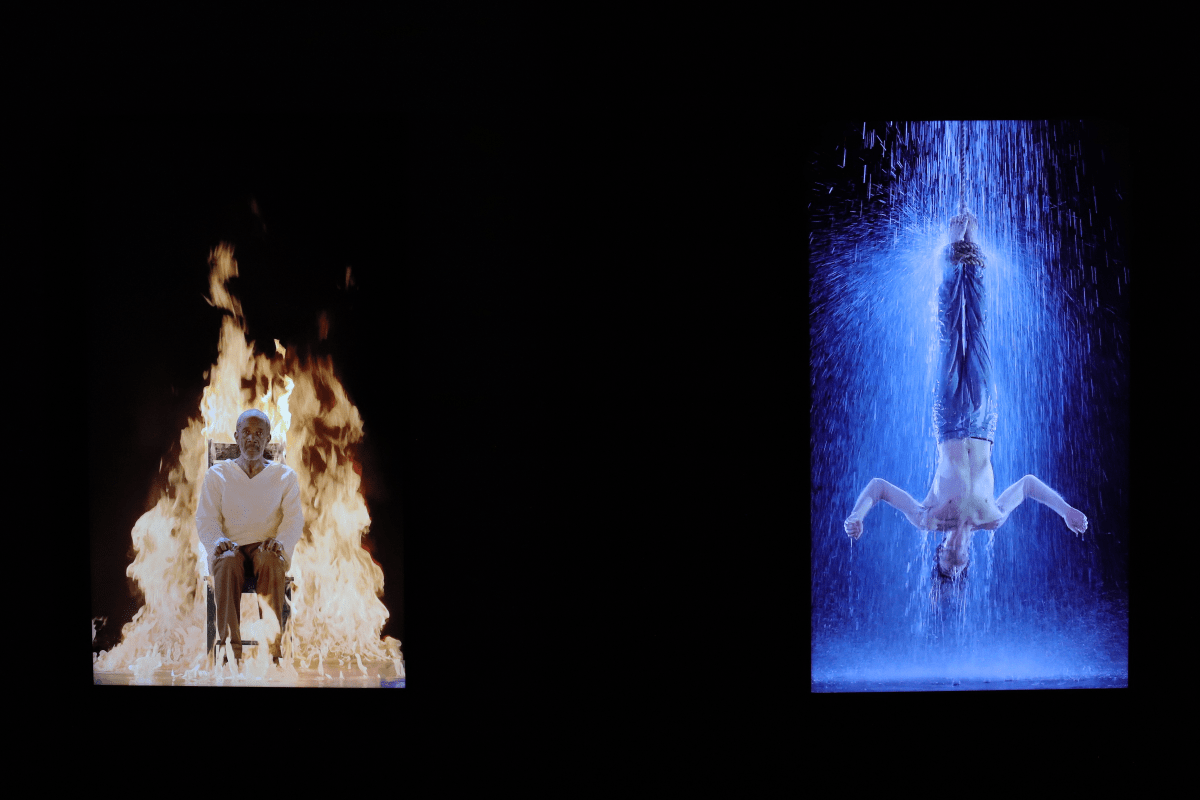
ARTICLE: “The Church of Secular Art” by David Carrier: “Bill Viola’s installation at a Naples church misses the spiritual mark,” reads the deck to this Hyperallergic article, a critic’s response to the Ritorno alla Vita (Return to Life) exhibition that ran from September 2, 2022, to January 8, 2023, at the Church of Carminiello in Toledo. The exhibition was organized by Vanitas Club, a Milan-based organization that throws artistic and cultural events in underutilized historic spaces, in collaboration with Bill Viola Studio.
Bill Viola, left: Fire Martyr (2014); right, Water Martyr (2014). Photo courtesy of Vanitas Club.
I didn’t see the exhibition, but I’m familiar with Viola’s work [previously], and I don’t agree with Carrier’s assertions, if my understanding of them is correct. It sounds to me like he’s saying that when a sacred artwork—say, a medieval altarpiece—is transplanted to a museum, the work becomes secular, and that when a secular artwork is shown in a sacred space, rather than the space sacralizing the work, the work secularizes and thus undermines the space. It seems that he’s saying that art made in a contemporary idiom, like Viola’s video art, does not belong in churches, because it does not and cannot function as religious art. Art museums and churches have fundamentally different goals that are irreconcilable.
“The paintings and sculptures in Neapolitan churches are meant to support and strengthen the spiritual lives of believers; representations of St. Gennaro and other saints are intended to reinforce faith. The videos in Ritorno alla Vita call for a fundamentally different response. The exhibition website notes that these videos ‘exemplify the human capacity to transform and to bear extreme suffering and even death in order to come back to life through action, fortitude, perseverance, endurance, and sacrifice.’ These are important ideals, but they can apply equally to secular and nonsecular contexts.” The description Carrier quotes does seem to water down the art’s Christian content/messaging in an attempt to make the art more widely accessible. I’ve noticed that fault with some other displays of contemporary art in churches—where the curator, seeing their role primarily as one of hospitality to the wider (unchurched) community, underinterprets the art’s Christian angle. Though it can be difficult, there is a way to honor a work’s particularity and universality in the exhibition text.
I think we need to let art function differently for different viewers. Cannot a contemporary artwork, regardless of the artist’s intentions or where the art is placed, cultivate my affection for Christ as much as a traditional artwork? How I as a Christian read and experience Viola will differ from how an atheist does, and that’s OK. The same is true for a religious painting hanging in a national gallery—it may elicit prayer in me, boredom or contempt in another, emotional identification in another, purely aesthetic contemplation in another, and historical curiosity in yet another. I don’t think an image loses or gains its sacredness by its location, though I don’t underestimate the power of the staged environment to enable that sacredness to best shine through. I think that if the viewer receives a work as sacred, then it is.
That Viola does not depict specific historical saints in his Martyr panels—originally commissioned as a quadriptych by St. Paul’s Cathedral in London—does widen their interpretive horizon, but it doesn’t make them less “Christian.” I see the work as a memorial to all the unknown martyrs. I think of all the contemporary Christian martyrs around the world whose names I do not know, who have died with Christ’s name on their lips and his Spirit within them, and am prompted to intercede immediately for believers suffering religious persecution in their countries, who worship Jesus under threat of imprisonment or execution.
+++
ARTICLE: “Openness to the world: Wes Campbell and his disturbing illusions of peace” by Jason Goroncy: In December 2022 theology professor Jason Goroncy spoke at the opening of a retrospective of the paintings of the Rev. Dr. Wes Campbell, hosted by Habitat Uniting Church in Melbourne. That talk is adapted here on the Australian Broadcasting Corporation’s Religion and Ethics web portal. Campbell is a retired Minister of the Word in the Uniting Church of Australia with experience in parish ministry, university chaplaincy, UCA synod and assembly roles, and a sustained commitment to peace, justice, and social responsibility. His roughly three decades of art making was integrally connected to these roles, as through his paintings he expounds a faith-fueled poetics of hope, “bearing witness to the trauma of creaturely existence alongside a refusal to abandon the world to its violence, nihilism, and despair.”
Wes Campbell (Australian, 1948–), Transfiguration of Christ, n.d. Acrylic on canvas, 59 × 23 5/8 in. (150 × 60 cm).
“Wes’s art . . . does not shy away from the risky boundaries where hope is threatened, sustained, lost, and birthed,” Goroncy says. “It, therefore, embraces the tragic and the ugly, as well as joy and beauty. Whether his subject matter is the human condition, or explicitly religious stories (such as the nativity or the transfiguration), or the Earth itself, Wes’s work is replete with this kind of fidelity to the contradictions that mark our lived experience. . . . It embodies the conviction that the arts can unmoor us, disrupt the worlds we assume, facilitate our lament, and open up possibilities for futures we hardly dare imagine.”
+++
PODCAST EPISODE: “Victoria Emily Jones: Art & Theology”: In early December I spoke with Luminous podcast host Peter Bouteneff, a systematic theology professor and the founding director of the Institute of Sacred Arts at St. Vladimir’s Orthodox Theological Seminary, about my work at Art & Theology. We discuss how I got into this cross-disciplinary field, definitions of “sacred art,” and more.
Bouteneff earned his DPhil in theology from Oxford University under the supervision of Metropolitan Kallistos Ware. Besides theology, he also has an academic background in music, having studied jazz and ethnomusicology at the New England Conservatory. He has written two books on the music of Estonian composer Arvo Pärt.
I’ve been following the podcast since its inception in 2021. My favorite episodes are the ones with poet Scott Cairns; artist Bruce Herman; art historian Lisa DeBoer, author of Visual Arts in the Worshiping Church; curator Gary Vikan, a specialist in Byzantine art and the director of the Walters Art Museum from 1994 to 2013; and historian Christina Maranci, an expert on the development of Armenian art and architecture. Browse all the episodes here.
Patrick Dougher, Higher Power, acrylic and mixed media on canvas, 28 × 22 in.
’Mid the discordant noises of the day I hear thee calling;
I stumble as I fare along Earth’s way; keep me from falling.

Mine eyes are open but they cannot see for gloom of night:
I can no more than lift my heart to thee for inward light.

The wild and fiery passion of my youth consumes my soul;
In agony I turn to thee for truth and self-control.

For Passion and all the pleasures it can give will die the death;
But this of me eternally must live, thy borrowed breath.

’Mid the discordant noises of the day I hear thee calling;
I stumble as I fare along Earth’s way; keep me from falling.
This poem was originally published in Harlem Shadows (Harcourt Brace, 1922) and is in the public domain.
Claude McKay (1889–1948) was a Jamaican American poet and fiction writer who was a key figure in the Harlem Renaissance, his work ranging from celebrations of Jamaican life and culture to protests of racial and economic inequities in the United States. Born in Sunny Ville, Jamaica, to well-to-do farmers of Malagasy (from Madagascar) and Ashanti descent, he was raised in the Baptist faith and with an appreciation for literature, philosophy, science, and theology. He came to the US in 1912 to attend Tuskegee Institute and was shocked by the racism he experienced in his newly adopted country. He moved to New York City in 1914 and became involved in social causes on behalf of Blacks and laborers. From 1923 to 1934 he traveled through Europe and North Africa, eventually returning to Harlem and becoming an American citizen in 1940. He started associating with Catholic social activists and studying Catholic social theory, and in October 1944 he converted to Catholicism. He died of heart failure at age fifty-seven.
I’ll be attending the first two, intermittently working the Daily Prayer Project table at Calvin. If you’re there, be sure to say hello!
Calvin Symposium on Worship Date: February 8–10, 2023 Location: Calvin University, Grand Rapids, Michigan Cost: $180 (or $25 for students and faculty of any school) Organizers:Calvin Institute of Christian Worship and the Center for Excellence in Preaching Presenters: James Abbington, Latifah Alattas, Jeremy Begbie, Carlos Colón, Justin Giboney, Wendell Kimbrough, Te-Li Lau, Karin Maag, Debra Rienstra, W. David O. Taylor, and many more Description: “The Calvin Symposium on Worship is an annual conference (since 1988) that brings together people from many different denominations and traditions, from a variety of roles in worship and leadership, including pastors, worship planners and leaders, musicians, scholars, students, worship bands and teams, organists, visual artists, preachers, chaplains, missionaries, liturgists, council and session leaders, and more; and encourages leaders in churches and worshiping communities of all sizes and settings.” This year’s theme is Paul’s letter to the Colossians.
Ordinary Saints—Creativity, Community, and Collaboration Date: February 17–18, 2023 Location: The Trust Performing Arts Center, Lancaster, Pennsylvania Cost: $210 Organizer:Square Halo Books Presenters: Malcolm Guite and Elissa Yukiko Weichbrodt (keynotes) Description: Celebrating Square Halo’s twenty-fifth year publishing “extraordinary books for ordinary saints,” as its tagline reads. Coincides with the release of Ordinary Saints: Living Everyday Life to the Glory of God, an anthology of essays by forty-plus writers on such topics as knitting, home repair, juggling, traffic, pipes, chronic pain, pretzels, and naps. Art historian Elissa Yukiko Weichbrodt, author of the forthcoming Redeeming Vision: A Christian Guide to Looking at and Learning from Art, will be speaking on “Corporeality and Modern Art in Dialogue” and will participate in a panel discussion with Ed Knippers and Ned Bustard, and poet Malcolm Guite will be giving several talks. There will also be breakout sessions led by a range of guests, a pop-up printmaking studio, songwriting roundtables, a performance by Reverie Actor’s Company, and a concert by The Arcadian Wild.
Society for Christian Scholarship in Music (SCSM) Annual Meeting Date: March 2–4, 2023 Location: Duke Divinity School, Durham, North Carolina Cost: $100–$150 Organizer:Society for Christian Scholarship in Music Presenters: Luke Powery (keynote) and others Description: The Rev. Dr. Luke A. Powery, dean of Duke Chapel and associate professor of homiletics at Duke Divinity School whose publications include devotionals based on the African American spirituals, will offer the keynote address. The conference will also include twenty-three research paper presentations, panel sessions, a lecture recital, a choral concert, and more. Full details will be published soon on the SCSM website.
Art, the Sacred, and the Common Good: Renewing Culture through Beauty, Education, and Worship Date: April 21–22, 2023 Location: Princeton Theological Seminary, Princeton, New Jersey Cost: Free Organizer:Scala Foundation Presenters: Aidan Hart, Jonathan Pageau, Anna Bond, Peter Carter, David Clayton, Margarita Mooney Clayton, Paul Coyer, Robert Jackson, and RJ Snell Description: “The modern myth that beauty emerges from the subconscious of a self-seeking creative genius goes against the traditional understanding that beauty emerges from a living tradition under the inspiration of God. For example, C.S. Lewis and J.R.R. Tolkien met regularly in Oxford’s pubs to discuss their writing and their faith. In the early 20th century, Russian exiles in Paris formed a community focused on the re-establishment of the great tradition of iconography so central to Christian worship. Composers like Handel and Mozart created beautiful music accessible to all people that directed listeners to the transcendent. “Conversations and community among creators and thinkers have always been essential to shaping culture. These eminently human moments—and the friendships they inspire—must be cultivated if we are to illuminate America’s darkening culture and society. “American culture is in rapid collapse in large part because of an abandonment of beauty in education and worship. The Scala Foundation’s 2023 conference on art, the sacred, and the common good grows out of its deep work around Princeton to bring together artists, students, teachers, and scholars. In a world increasingly hostile to the idea that beauty is anything more than self-aggrandizement or yet one more tool of oppression, this event offers the warmth of community to anyone who is passionate to restore the connections between beauty and truth and between reason and creativity.”
Hutchmoot UK (*open to UK residents only) Date: May 18–21, 2023 Location: Hayes Conference Center, Swanwick, Derbyshire Cost: £365 (all-inclusive) Organizer:The Rabbit Room Description: A weekend of live music, delicious food, conversation, and a series of discussions centered on art, faith, and the telling of great stories across a range of mediums.
And when Christ, who is your life, is revealed to the whole world, you will share in all his glory.
—Colossians 3:4
Epiphany, meaning “revelation,” is the capstone of the Christmas season. In this final post of this year’s Christmas series, I leave you with a striking, light-flecked painting from Japan and a slow-tempo Black gospel song from the US. What marvel, that God’s glory fills such places as ours, and that he invites us not only to behold his glory but also to participate in it.
May God’s light continue to guide and enfold you throughout the year, and may you never stop seeking his face.
To view a compilation of this season’s numbered Christmas posts, click here; for Advent, here.
LOOK: Morning Star by Hiroshi Tabata
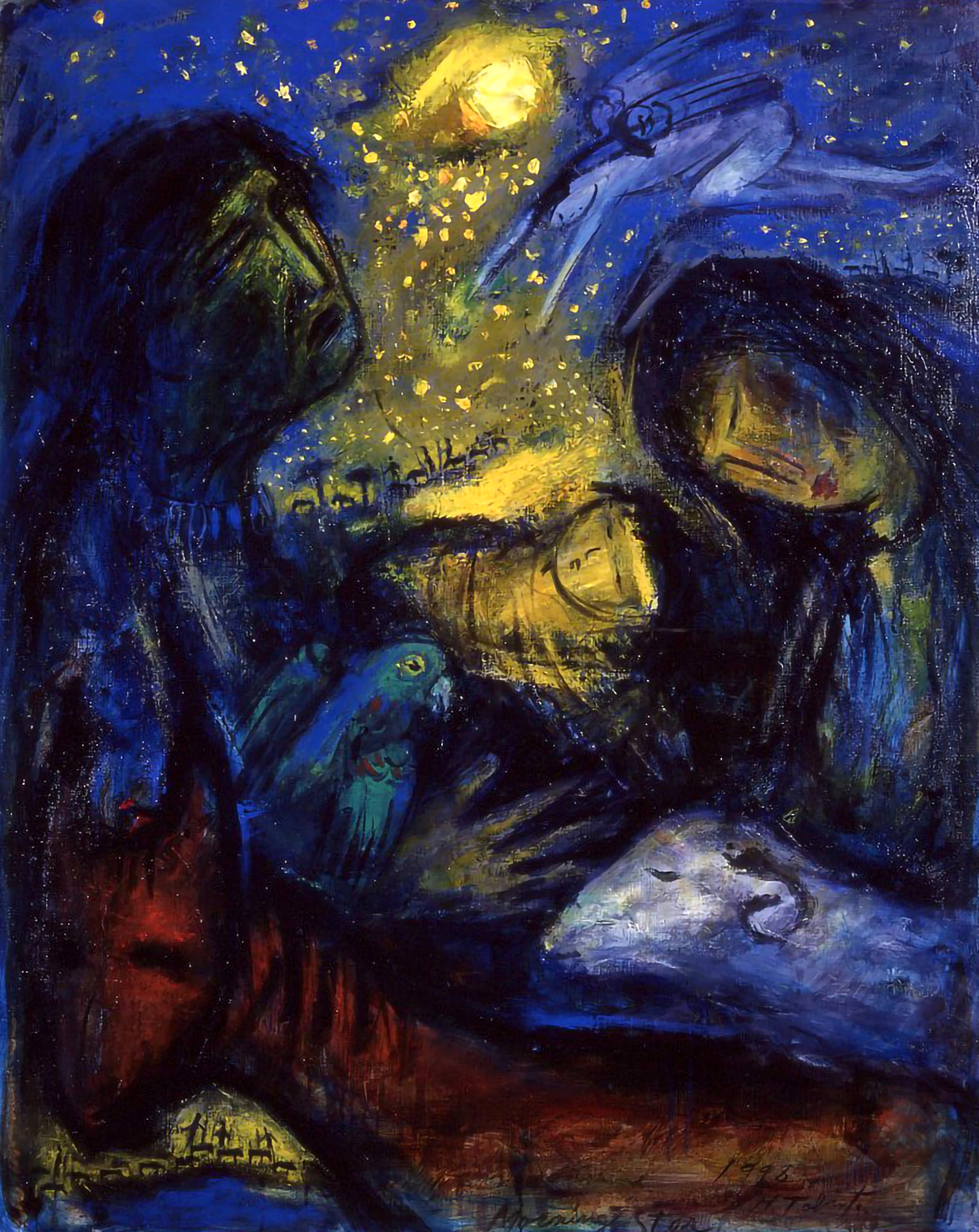
Hiroshi Tabata (田畑弘) (Japanese, 1929–2014), Morning Star, 1998. Oil on canvas, 90.9 × 72.7 cm. Private collection. Photo courtesy of the Estate of Hiroshi Tabata.
Born in Takaoka City, Hiroshi Tabata (1929–2014) studied art at the University of Toyama, later moving to France for two years for further art education. He exhibited his work throughout Japan and at Parisian salons. From 1966 to 1972 he lived intermittently in Brazil among the Xingu people, which led to his conversion to Christianity. From then on until his death, he painted biblical subjects. “The Bible is the ultimate theme for me,” he said; its world is “infinitely deeper” than we can comprehend.
In Tabata’s expressionistic Morning Star, starlight falls in a luminescent sheen over the face of the Christ child, whom Mary looks upon in tender adoration as Joseph wonders at the angelic activity above. The tight cropping around the Holy Family heightens the sense of intimacy. A sheep, donkey, and Amazon parrot (the latter a callback to his time in Brazil) crowd into the foreground, while on distant hills shepherds behold the glorious light display, hear the announcement that will propel them to their newborn Messiah. The wise men, too, are on their way. Epiphany is at hand. Heaven’s raining down (Isa. 45:8).
This visual reflection (by me) originally appeared in the Christmas/Epiphany 2022–23 edition of the Daily Prayer Project. Tabata’s art appears on the cover, by kind permission of his son-in-law. To view more biblical art by Tabata, see the beautifully produced, full-color book 田畑弘作品集 一つの星 (Hiroshi Tabata Works: Morning Star); the text is all Japanese.
LISTEN: “A Star Stood Still (Song of the Nativity)” | Words and music by Barbara Ruth Broderick and Johnny Broderick, 1956 | Performed by Mahalia Jackson with the Falls-Jones Ensemble, conducted by Johnny Williams, on Silent Night: Songs for Christmas, 1962
And we shall share In the glorious light
In Bethlehem The wind had ceased The Lamb lay sleeping On the hill
When all the earth Was stilled with peace Then lo, a star stood still
A star stood still On yonder hill Praise God that star still Shining still
And we shall share In the glory of love Because a star stood still That night a star stood still
A star stood still On yonder hill Praise God that star still Shining still
And we shall share In the glory of love Because a star stood still That night a star stood still
Note to readers: Art & Theology is noncommercial, but I do accept donations (monetary, or in-kind books!) to help keep it running.Learn more here.
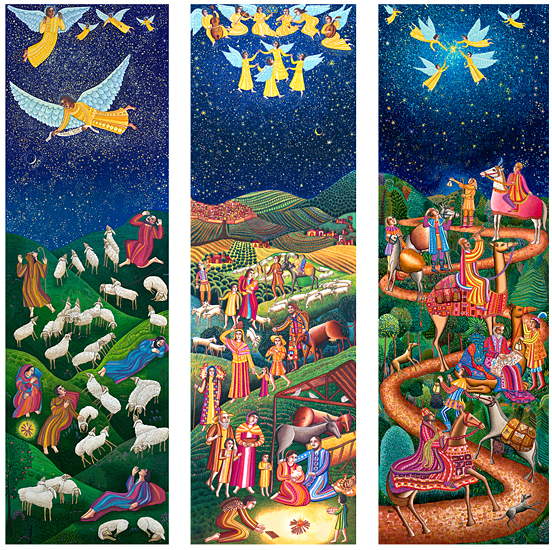
John August Swanson (American, 1938–2021), Epiphany, 1988. Serigraph, 38 × 12 in. Edition of 210. [for sale]
Tomorrow, January 6, is the feast of Epiphany, commemorating the visit of the magi to the infant Christ, an episode that represents God’s manifestation to the nations beyond Israel. Printmaker John August Swanson visualizes their journey in a starkly vertical composition that was conceived as the right wing of a triptych (three-paneled artwork), the other two panels depicting the Annunciation to the Shepherds and the Nativity. In subsequent years he addedA Visit (depicting the Annunciation to Mary), Flight into Egypt, and Presentation in the Temple to the set.
Epiphany depicts the journey of the three Magi as they travel up a serpentine trail. One of the Wise Men is seated as he looks at a map of the constellations with his magnifying glass; his servant holds a lamp so that he can see. Another Magi searches with his telescope into the sky. They look up in search of their beautiful guiding star as angels surround and point to it. They have exotic birds, peacocks, and dogs among their animals. I have tried to capture the details of the many plants, bushes, and trees and to create a variety of colors of green.
I used many symbols within the tapestries draping the animals. These patterns depict the Lion of Judah, the lamp in the darkness, the rain falling on the parched ground, the key to the locked door, the crown and the heart, and the gates to the city.
This is part of a series of three images (triptych). They were inspired by the Mexican tradition that I am familiar with for Christmas. Families will each create a beautiful crèche (nacimiento) with many figures and animals, creating a whole environment with landscaping in miniature around the Nativity figurines.
His other inspirations for this set include the opera Amahl and the Night Visitors by Gian Carlo Menotti and the medieval stained glass windows in Chartres Cathedral.
John August Swanson, Advent Triptych, 1985–88 [for sale as poster or card]
John August Swanson (1938–2021) [previously] was born in Los Angeles of a Mexican mother and Swedish father. His father died when he was young, and he was raised in a multigenerational Mexican Catholic home. He studied serigraphy under Corita Kent [previously], and it became his primary medium. A serigraph is a type of print in which each color is individually layered by applying ink through a silkscreen onto paper. Epiphany has forty-eight individual colors.
LISTEN:“Bright and Glorious” | Original Danish text (“Deilig Er Den Himmel Blaa”) by Nikolai F. S. Grundtvig, 1810 | English translation by Jens Christian Aaberg, 1927; first stanza adapted by the editors of the Lutheran Service Book and Hymnal, 1958 | Music by Seth Thomas Crissman and Greg J. Yoder, 2017 | Performed by the Walking Roots Band on Hark! A Walking Roots Band Christmas, 2017
Bright and glorious is the sky Radiant are the heavens high Where the golden star is shining All its rays to earth inclining Leading to the newborn king Leading to the newborn king
Him they found in Bethlehem Yet he wore no diadem They but saw a maiden lowly With an infant pure and holy Resting in her loving arms Resting in her loving arms
Guided by the star, they found Him whose praise the ages sound We, too, have a star to guide us That forever will provide us With the light to find our Lord With the light to find our Lord
As a star, God’s holy word Leads us to our King and Lord Brightly from its sacred pages Shall this light throughout the ages Shine upon our path of life Shine upon our path of life
The Walking Roots Band (TWRB) is an acoustic folk/bluegrass-ish music group steeped in Anabaptist hymn-singing traditions and based in Harrisonburg, Virginia. Several of its members are the creative forces behind The Soil and The Seed Project, a liturgy and arts initiative that launched in 2021.
Here they’ve retuned an Epiphany hymn from Denmark, which compares the star that led the magi to Jesus to the Bible, God’s word, which serves as a guiding light for spiritual seekers, leading us to Christ himself. Its pages offer countless epiphanies—revelations of God’s glory, opportunities for divine encounter. Its wisdom and truth can illuminate our paths if we let it.
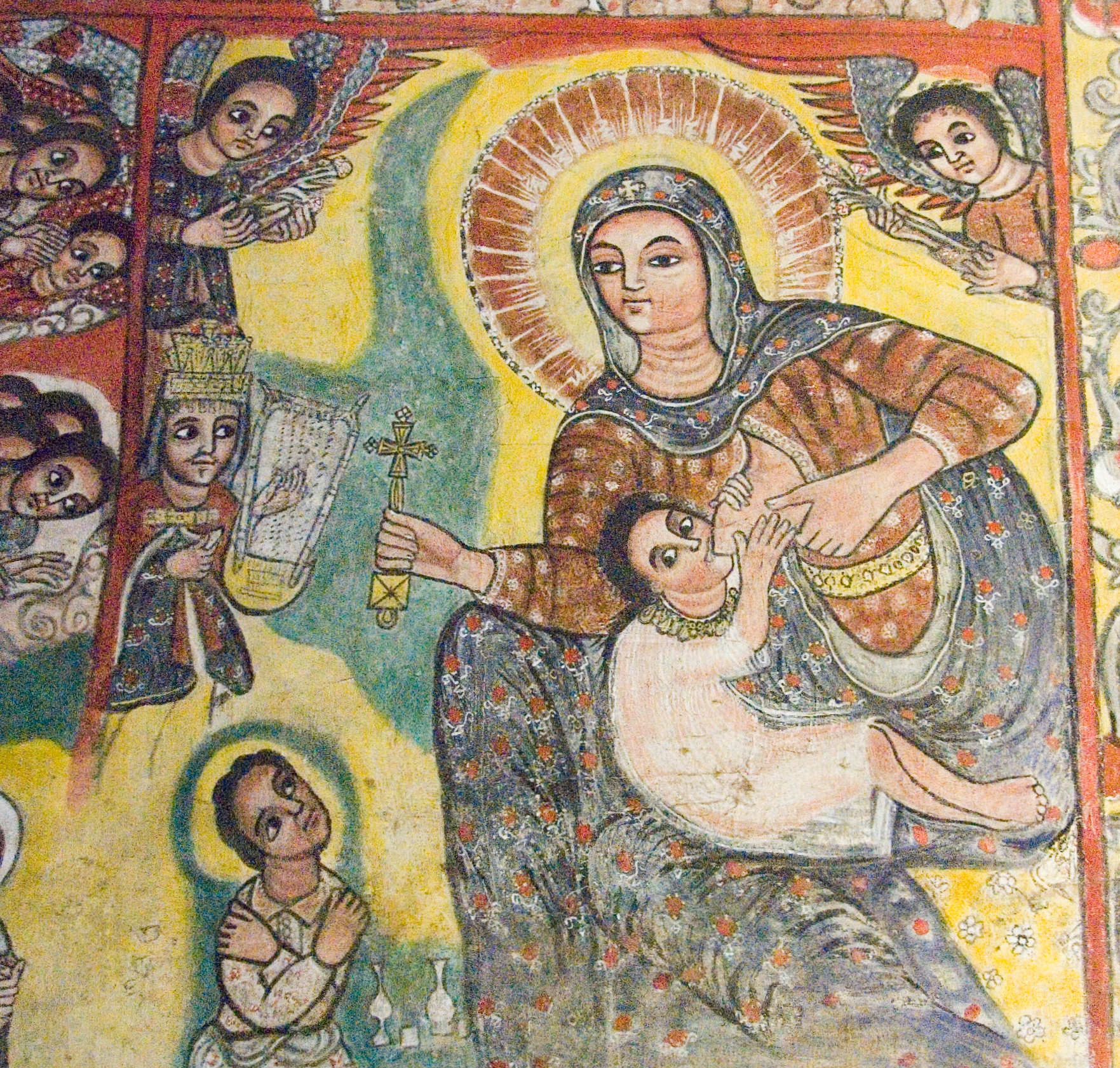
Maria lactans, late 18th century. Fresco, Church of Narga Selassie, Dek Island, Lake Tana, Ethiopia. Photo: Alan Davey.
Glory to that Voice that became a body,
and to the lofty Word that became flesh.
Ears even heard Him, eyes saw Him,
hands even touched Him, the mouth ate Him.
Limbs and senses gave thanks to
the One Who came and revived all that is corporeal.
Mary bore a mute Babe
though in Him were hidden all our tongues.
Joseph carried Him, yet hidden in Him was
a silent nature older than everything.
The Lofty One became like a little child,
yet hidden in Him was a treasure of Wisdom that suffices for all.
He was lofty but he sucked Mary’s milk,
and from His blessings all creation drinks.
He is the Living Breast of living breath;
by His life the dead were suckled, and they revived.
Without the breath of air no one can live;
without the power of the Son no one can rise.
Upon the living breath of the One Who vivifies all
depend the living beings above and below.
As indeed He sucked Mary’s milk,
He has given suck—life to the universe.
As again He dwelt in His mother’s womb,
in His womb dwells all creation.
Mute He was as a babe, yet He gave
to all creation all His commands.
For without the First-born no one is able
to approach Being, for He alone is capable of it.
Translated from the Syriac by Kathleen E. McVey in Ephrem the Syrian: Hymns (Classics of Western Spirituality) (Mahwah, NJ: Paulist Press, 1989), 100–101



.png)



 Art & Theology