El Greco (Doménikos Theotokópoulos) (Greek Spanish, 1541–1614), The Adoration of the Shepherds, 1612–14. Oil on canvas, 319 × 180 cm. Museo del Prado, Madrid.
One of my most memorable museum-going experiences has been spending time in the El Greco gallery at the Prado Museum in Madrid, with its dynamic, richly hued, floor-to-ceiling paintings of scenes from the life of Christ. It was the first time I had seen any of the artist’s monumental paintings in person (the Adoration is ten and a half feet tall!), and I was captivated. The color, the intensity, the distortions, the interplay of earthly and heavenly. I could feel their spiritual vigor.
El Greco (“The Greek”) was born in Crete in 1541 but ended up settling in Spain and is associated with the Spanish Renaissance. The expressiveness he achieved through his elongated, twisting figures and loose brushwork have led today’s art historians to describe him as a modern artist stuck in the sixteenth century.
Set in a dark and undefined space, El Greco’s Prado Adoration of the Shepherds shows Mary, Joseph (at left in blue tunic and yellow drapery), and three shepherds beholding the wonder of God made flesh. They gather around the naked Christ child, bathed in the light he emits—warming their hands in it, it seems. One shepherd reverentially crosses his arms over his chest. Even the ox is on its knees, adoring.
Overhead, a group of angels unfurls a banner that reads, GLORIA IN EXCEL[SIS DEO E]T IN TERRA PAX [HOMINIBUS] (“Glory to God in the highest, and on earth peace to men”) (Luke 2:14).
Adoration of the Shepherds was El Greco’s final painting. He painted it for his family burial chapel at the convent of Santo Domingo del Antiguo in Toledo, Spain, not knowing that his own body would be resting there so soon, as shortly after he completed the painting, he died of a sudden illness. Even after El Greco’s remains were transferred by his son to the new convent of San Torcuato just a few years later, the painting remained in the possession of the original convent, who moved it to their church’s high altar. It was acquired by the Prado Museum in 1954.
LISTEN: “In a Cave” | Words by Harold B. Franklin, 1961; adapt. | Music by Caleb Chancey, 2020 | Performed by musicians from Redeemer Community Church, Birmingham, Alabama, 2020
LOOK: The Angel Brings Good News to the Shepherds by Luke Hua Xiaoxian
Luke Hua Xiaoxian (華效先), The Angel Brings Good News to the Shepherds (天使向牧人傳佈嘉訊), 1948. Chinese watercolor on silk, mounted as hanging scroll, 47.5 × 53 cm (painting) / 123 × 65.5 cm (mounting). Collection of the Ricci Institute for Chinese-Western Cultural History at Boston College (formerly at the University of San Francisco).
LISTEN: “Pengyou, Ting!” | Words: Anonymous, ca. 1935 | Traditional Chinese melody, arr. Carolyn Jennings, 1994 | Performed by Calvin University’s Capella, dir. Pearl Shangkuan, 2021
Pengyou, ting zhe hao xin xi: Yesu jiangshi wei jiu ni Benlai ta shi tian shang shen Te lai wei jiu shi shang ren
Pengyou, ting zhe hao xin xi: Yesu jiangshi wei jiu ni Yesu Judu, Yesu Jidu Jiangsh wei jiu wo, jiu ni!
English translation:
Listen, friend! Good news: Jesus came to earth for you! Came from heaven where he was Lord! Came to save, to save us all!
Listen, friend! Good news, hear this great good news! Jesus Christ came to earth for you! For me, for you!
Jun Ong (Malaysian, 1988–), STAR/KL, 2021. Installation of 111 LED beams, Air Building, Kuala Lumpur, Malaysia. Photo: David Yeow.
Installed in a former warehouse in Malaysia’s capital city, this site-specific work by Jun Ong consists of 111 LED beams fashioned into a starburst that radiates out from the center of the building. The explosive light coming from an abandoned cave-like structure is evocative of Christ’s Nativity.
LISTEN: “Joining in the Joy” by Coram Deo Music, on Swallowed Up Death (2015) | Words by Megan Pettipoole | Music by Luke and Megan Pettipoole
Founded in 2005, Coram Deo Music is a consortium of worship musicians and songwriters based out of Coram Deo Church in Omaha, Nebraska.
Darkness settled over our weary heads Then pierced by a great and heavy light A child, a Son, has made glorious the way
Rejoice A child is born
Our forests felled by your hand against us But a shoot sprouts from the stump foretold Peace and truth and justice are its fruit
Rejoice A child is born
A day is coming when the earth, it will be full We’ll join together, God with man Peace and truth we’ll pursue
Joining in the joy Joining in the joy of redemption
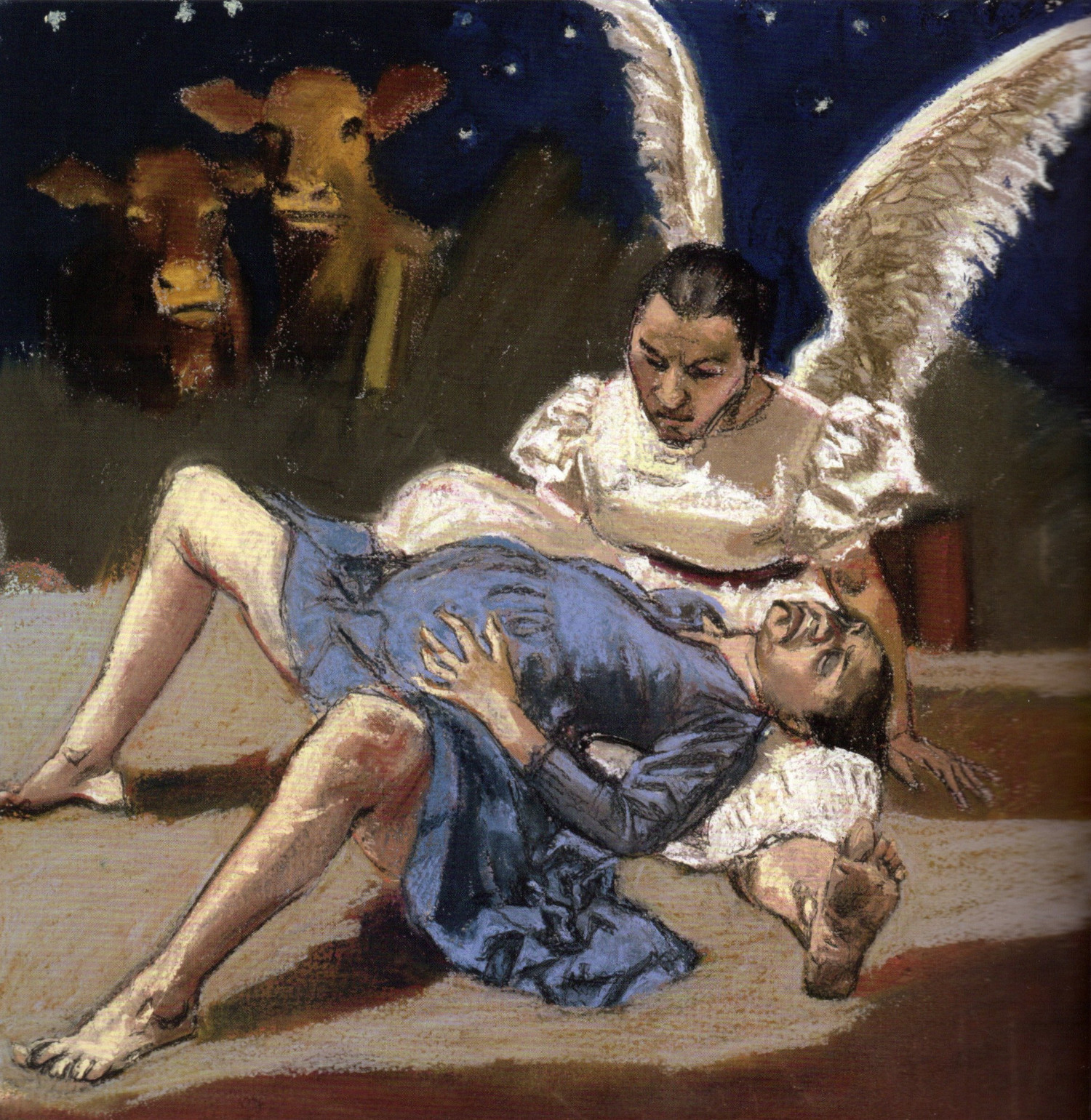
Paula Rego (Portuguese British, 1935–2022), The Nativity, 2002. Pastel on paper mounted on aluminum, 21 3/8 × 20 1/2 in. (54 × 52 cm). Palácio de Belém, Lisbon, Portugal. Source: Paula Rego: The Art of Story, p. 226.
It is time.
My body’s clock gongs
your salvation’s hour.
The water has left the pasture
and flowed toward the river’s mouth.
Follow or you will wither
in the desert that remains.
I will bleed for you
on this your first dark journey,
but in time, when life pushes you
headlong through black canyons,
the wounds will be your own.
May you learn early:
at the end light always shines.
It is here, child.
The time is come.
Breathe.
This poem was originally published in the Winter 1982/83 issue of Today’s Christian Woman and appears in the book Mary’s Journal: A Mother’s Storyby Evelyn Bence (Grand Rapids, MI: Zondervan, 1992). Used by permission of the author.(Thanks to Maureen E. Doallas, curator of the exhibition Mary, Mary, for introducing me to it!)
Evelyn Bence (born 1952) is a writer and editor living in Arlington, Virginia. She is the author of Room at My Table; Prayers for Girlfriends and Sisters and Me; Spiritual Moments with the Great Hymns; and the award-winning Mary’s Journal, a novel written in the voice of Jesus’s mother. She has served as religion editor at Doubleday, managing editor for Today’s Christian Woman, and senior editor at Prison Fellowship Ministries. Her personal essays, poems, and devotional reflections have appeared in various publications.
All shall be well, and all shall be well, and all manner of thing shall be well.
—Julian of Norwich, Revelations of Divine Love (late 14th century)
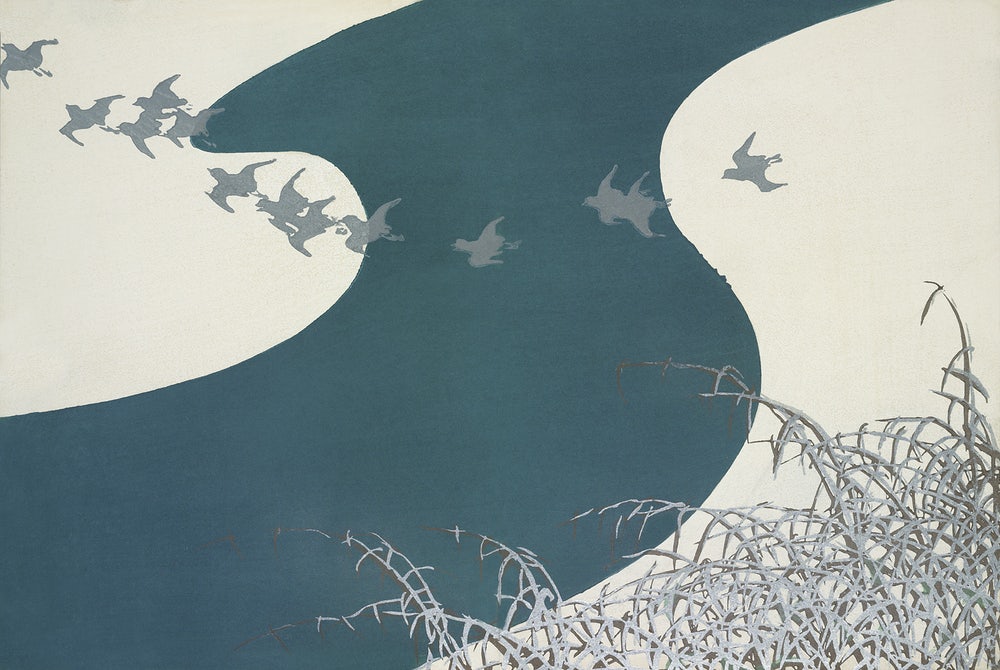
LOOK: River in Winter by Kamisaka Sekka
Kamisaka Sekka (Japanese, 1866–1942), Fuyu no kawa (River in Winter), from volume 3 of the woodblock-printed book Momoyogusa (A World of Things), 1909–10. Ink, color, and metallic pigments on paper, 11 3/4 × 17 11/16 in. (29.8 × 44.9 cm).
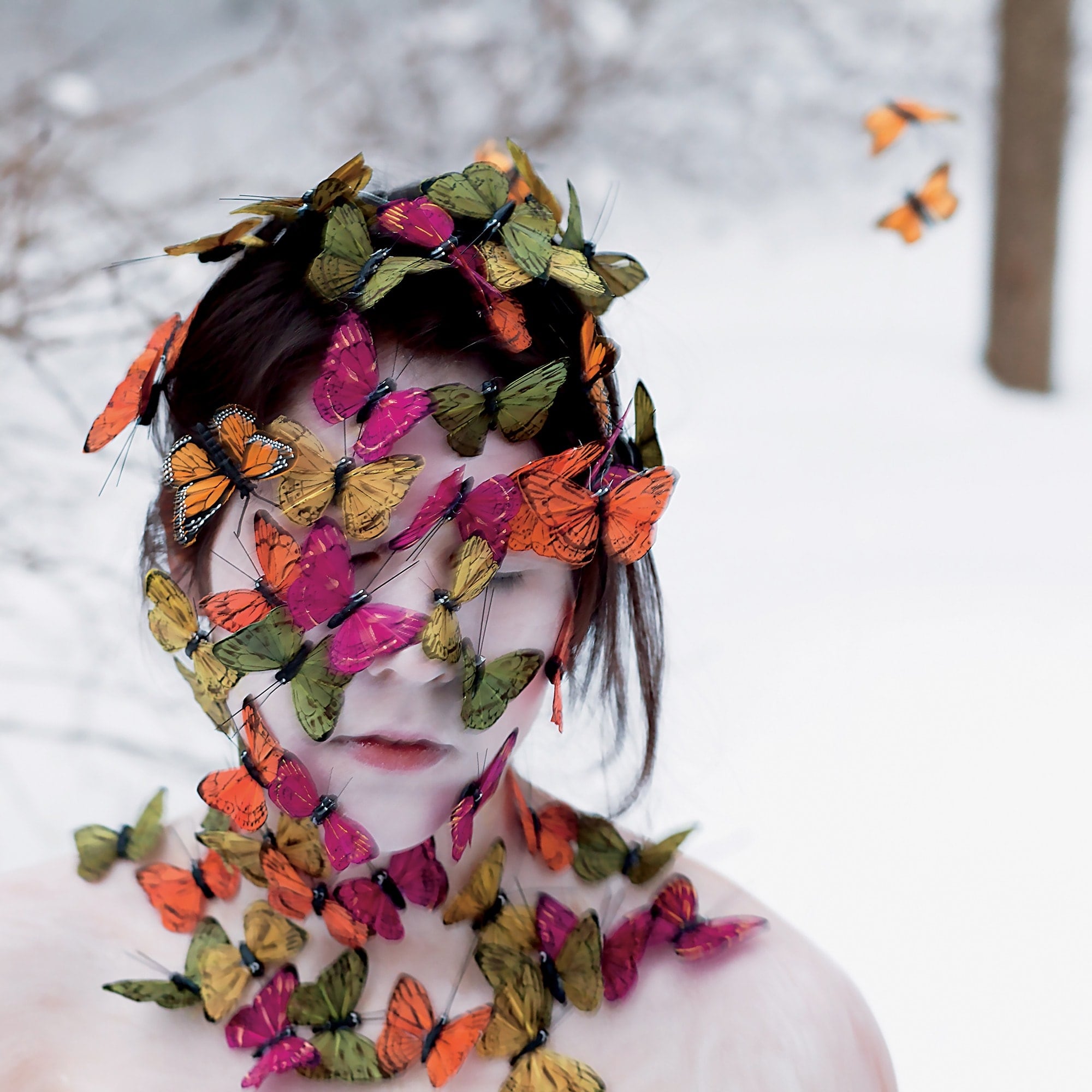
Meryl McMaster (Canadian, 1988–), Anima, from the In-Between Worlds series, 2012. Digital chromogenic print, 36 × 36 in. (91.4 × 91.4 cm). McMaster uses photographic self-portraiture to explore her dual Indigenous (Plains Cree) and European (British and Dutch) heritage.
Awake! Awake, and greet new morn (Turn from despair and groaning, turn from despair and groaning) Sing out your joy, for he is born (The child of your great longing, salvation’s light is dawning)
Come as a babe (so weak and poor) He opens wide (the heavn’ly door) To bind all hearts (together) God with us, now and forever!
In darkest night, the coming light (To all the world despairing, his saving song now sharing) Like morning light, so clear, so bright (So warm and gentle, caring; a hopeful song worth sharing)
Then shall the mute (break forth in song) And weak be raised (above the strong) And every sword (and weapon) Shall be broken into plowshares
Rejoice! Rejoice! Take heart despite (The winter dark and cheerless, the winter dark and cheerless) The rising sun beams down its light (Be strong and loving, fearless; be strong and loving, fearless)
Love, be our hope (Love, be our prayer) Love, be our song (each day to share) Love, be our strength Until at last he brings us into glory
Love, be our hope (Love, be our prayer) Love, be our song (each day to share) Love, be our hope (Love, be our prayer) Love, be our song (each day to share)
Love, be our hope (Love, be our prayer) Love, be our song (each day to share) Love, be our strength Until at last he brings us into glory
CHRISTMAS EVE SERVICE 2021, Good Shepherd New York:Good Shepherd New York is an interdenominational church located in the Chelsea neighborhood of Manhattan. When the pandemic hit in 2020, like many churches, they pivoted to online services. This video-only format enabled them to expand their music ministry, soliciting participation from nonlocal musicians, who collaborated virtually with the church’s in-house musicians to release some stellar worship music—beautiful arrangements and performances. While GSNY now meets again in person for worship, they also release separate digital worship services on their YouTube channel to reach a wider community. Last year I tuned in to their Christmas Eve service, which I really enjoyed, particularly the music. “Mary’s Lullaby,” written by associate pastor David Gungor and sung by his wife, Kate, with harmonizing vocals by Liz Vice, is my favorite from the list.
Children’s skit
4:31: Prelude: “Carol of the Bells,” cello solo by David Campbell
28:05: “Mary’s Lullaby” (by The Brilliance), feat. Kate Gungor and Liz Vice
30:03: Sermon by Michael Redzina
44:55: “Silent Night,” feat. Matthew Wright and Liz Vice
48:43: “Happy Xmas (War Is Over)” (by John Lennon)
Many of these songs were released last month on the Good Shepherd Collective’s debut Christmas album, Christmas, Vol. 01, available wherever music is sold or streamed.
Good Shepherd New York will be holding an in-person candlelight service at 5 p.m. on Christmas Eve this year in the Chapel of the Good Shepherd at 440 West 21st Street. Musician Charles Jones will be there.
+++
EXHIBITION WALK-THROUGH: Słowo stało się Ciałem (The Word Became Flesh), Warsaw Archdiocese Museum, March 3–31, 2021: Last year a collection of contemporary Ukrainian and Polish icons on the theme of Incarnation was exhibited in Warsaw. In this video, curator Mateusz Sora and Dr. Katarzyna Jakubowska-Krawczyk, head of the Department of Ukrainian Studies at the University of Warsaw, discuss some of the pieces. I don’t speak a lick of Polish, and closed captioning is not available, so I’m not sure what is said—but the camera gives a good visual overview. You can also view a full list of artists and photos of select icons in this Facebook post.
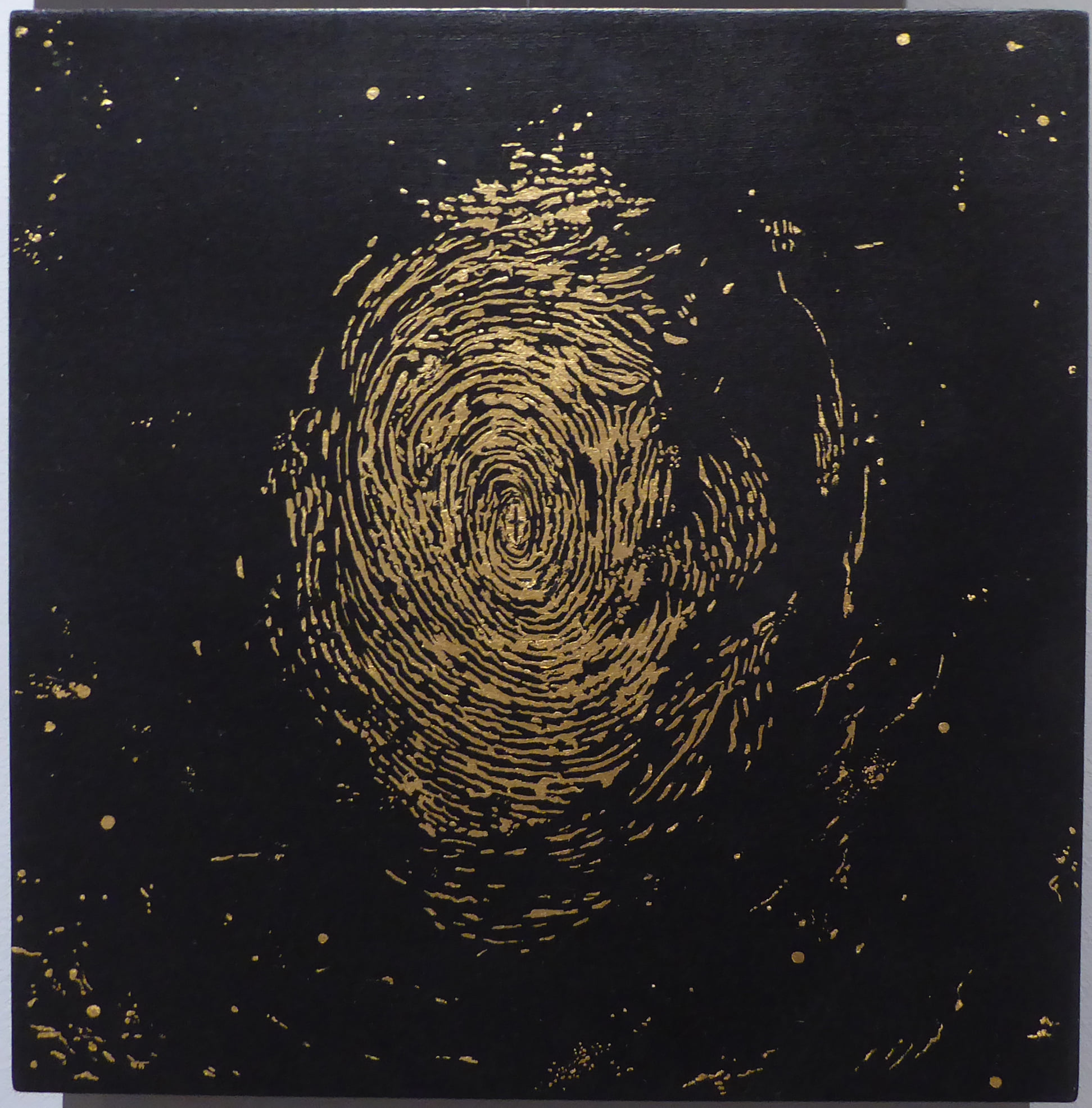
Kateryna Kuziv (Катерина Кузів) (Ukrainian, 1993–), Annunciation, 2020. Egg tempera and gilding on gessoed wood, 40 × 40 cm. [IG: @kateryna_kuziv]Borys Fiodorowicz (Polish), 3,1415926535879323846264338327, 2020. God has fingerprints! [IG: @borysfiodorowicz]
ON A RELATED NOTE: There’s a public exhibition of icons by several of these artists happening in North Carolina at Gordon-Conwell Theological Seminary–Charlotte through February 17, 2023: East Meets West: Women Icon Makers of Western Ukraine. I attended an earlier iteration of East Meets West in Massachusetts back in 2017 (mentioned here), and it was wonderful. The icons are owned by the American collector and former news correspondent to the USSR John A. Kohan, and he has added more pieces to this area of his collection since I last saw it.
There will be a special event on Wednesday, February 1, from 7 to 9 p.m., featuring a talk about the history of iconography by Professor Douglas Fairbairn and a video introduction by Kohan; RSVP here.
+++
ICON INTERPRETATION: “The ‘All-Seeing Eye of God’ Icon” by David Coomler: Icons expert David Coomler unpacks a preeminent example, and two variants, of this unusual icon type that emerged in Russia at the end of the eighteenth century, influenced by the “Eye of Providence” symbol found, for example, on the Great Seal of the United States. Moving from the center outward, four concentric circles show a young Christ Emmanuel, a sun-face, the Theotokos (Virgin Mary), and the angelic hosts, with Lord Sabaoth (God the Father) at the top and symbols of the Four Evangelists at the corners. Inscriptions include “As the burning coal that appeared to Isaiah, a sun arose from the virgin’s womb, bringing to those who wandered in darkness the light of the knowledge of God” (a variant of the Irmos, Tone 2, from the Easter Octoechos) and “My eyes [shall be] on the faithful of the land, that they may dwell with me” (Psalm 101:6).
All-Seeing Eye of God icon, Russia, late 19th or early 20th century
SONG:“Almajdu Laka” (Glory to You) (cover) by the Sakhnini Brothers: The Sakhnini family has lived in Nazareth—Jesus’s hometown!—for generations and is part of the town’s minority Arab Christian population. Adeeb, Elia, and Yazeed Sakhnini [previously] record traditional and original Arabic worship songs together as the Sakhnini Brothers. This is their latest YouTube release, just in time for Christmas. The song is by the Lebanese composer Ziad Rahbani. Turn on “CC” to view the lyrics in English, and see the full list of performers in the video description.
+++
BLOG SERIES: Twelve Days of Carols by Eleanor Parker: There’s a plethora of medieval English Christmas carols preserved for us in medieval manuscripts, a few of which are still part of the repertoire around the world but most of which have fallen into disuse or that are at least lesser known. Medievalist Eleanor Parker spotlights twelve from the latter category. She ran this series back in 2012–13 with the intention of doing twelve posts, one for each day of Christmas, but she stopped short at seven—so I’ve added links to additional carol-based posts of hers from other years. She provides modern translations of the Middle English and, in some cases, brief commentary.
Note that #11 contains an Old English word that Tolkien adopted in his Lord of the Rings!
When journeying through your dark night Burn this as a light Until the dawn horizon Burn, burn this as a light
What God has voiced inside you Burn, burn this as a light Creation all about you Burn, burn this as a light
The song of children laughing Burn, burn this as a light The sound of people singing Burn, burn this as a light
The morning star arises Burn, burn this as a light Raising our joys from sorrows Burn, burn this as a light
The tree of life bearing fruit Burn, burn this as a light The healing of the nations Burn, burn this as a light
When you come to take us home We’ll lay our oil lamps down In the abiding light of the Lamb We’ll lay our oil lamps down
Beside your glorified body We’ll lay our oil lamps down Healed by the holy hands of love We’ll lay our oil lamps down
“Burn This as a Light” is the last of twelve songs on an album of the same name. Tom Wuest (pronounced “weest”) and his wife, Karen, recorded Burn This as a Light with their sons, Isaiah (trumpet) and Arbutus (alto saxophone and clarinet), over the course of 2016 at their home in the Ohio River Valley. Friends Kenny Havens, Peter La Grand (of Ordinary Time), Calum Rees, and Jono Ryan also play on the album, the latter three contributing parts from their remote locations.
Tom writes,
These songs of hope, which are all rooted in the biblical narrative, grew out of particular stories of sorrow and reflect our prayerful working while watching and waiting for a God-breathed dawn to arise. . . . We sing [these prayers] for the healing of the nations, the land, and the waters of the earth. Burn this as a light. We sing for the renewal of the church. Burn this as a light. We sing for God’s peace upon the poor and oppressed, near and far. Burn this as a light. We sing for our creaturely neighbors and the creation that graces these hills. Burn this as a light.
The title track acknowledges the darkness through which we pilgrims travel but catalogs a number of earthly glimmers of the new day that can embolden our faith, our hope, our love along the way. Communal song, children’s laughter, the natural world, our callings, our moral consciousness—these are but a few of the things that we can “burn as a light,” that is, that can remind us of the goodness and beauty that is our origin and destiny, and thus light the path forward, help us make it Home.
We can also “burn as a light” those passages of scripture that tell us who we are and where we’re headed. The song references several biblical visions—for example, those of the ancient Hebrew prophets, who saw with their inner eye sorrow turned to joy (Isa. 35:10; 61:3; Jer. 31:13), and God’s revelation to John of the new heavens and the new earth (Rev. 22). It’s a passage we’ve visited several times already in this Advent series, but it’s so good, I’ll quote it again:
Then the angel showed me the river of the water of life, bright as crystal, flowing from the throne of God and of the Lamb through the middle of the street of the city. On either side of the river is the tree of life with its twelve kinds of fruit, producing its fruit each month, and the leaves of the tree are for the healing of the nations. Nothing accursed will be found there any more. But the throne of God and of the Lamb will be in it, and his servants will worship him; they will see his face, and his name will be on their foreheads. And there will be no more night; they need no light of lamp or sun, for the Lord God will be their light, and they will reign forever and ever. . . .
“See, I am coming soon . . . I, Jesus, . . . the root and descendant of David, the bright morning star.”
—Revelation 22:1–5, 12, 16
In the end we’ll lay our oil lamps down, because we will have made it through the dark. There will be only light, the light of Christ—blazing, transfiguring, fulfilling.
Singer-songwriter and farmer Tom Wuest was born in Cincinnati, Ohio. He married Karen in 1993 and, after she finished her MFA in creative writing in Colorado, the two of them moved to Vancouver, where their sons were born. In Vancouver Tom studied theology at Regent College while writing singable music for churches. He also helped start Red Clover Farm (then part of the ministry Jacob’s Well), growing organic produce on vacant lots for distribution to the community. After seven years of urban farming, in 2008 the Wuests moved to Galiano Island, one of the Gulf Islands off the southern coast of British Columbia, to farm in a rural context.
In 2011 Tom and his family returned to the US and lived among the Vineyard Central community in Norwood, Ohio, before moving, in 2012, about an hour southeast to a one-hundred-acre plot of land in Adams County, where they set about restoring an old farmstead, living in a dairy barn while they built their house. It’s there, at the foothills of the Appalachian Mountains, that they live now. On their farm they tend animals, vineyards, and large gardens; make their own cheese, butter, bread, and wine; and forage onions, garlic, mushrooms, and other wild foods. They regularly hosted and supported the “parish farmers” of Moriah Pie, a pay-as-you-can, locally sourced pizzeria in Norwood founded by Robert and Erin Lockridge, during its eight years of operation.
“A large part of my vocation is connected to sustainable building and tending the beauty, integrity, and health of the community of creation,” Tom told me. “The songs I write all come out of the confluence of this labor as I seek to love this place, this community, and all who dwell here—offered in love to the broader community of ‘seekers and sufferers’ (as Jürgen Moltmann puts it) in the world.”
Tom’s most recent musical project has been collaborating on the Parish Collective’s Songs of Place, a live album that will be released in the coming months and that features six of Tom’s original songs. When writing music, he says, he likes to look for places where the story of God meets our story.
Our nights are long, but they’re getting shorter Ever since you crossed over our border. Our candles burn while we wait for dawn. The night is long, but not for long.
Our hope has come. Our despair is buried. The light of the world is the child of Mary. God in our bones, God who knows our song. The night is long, but not for long.
It seems so hard, harder than it should be, To see the world the way it could be, To press right on when hope is almost gone. The night is long, but not for long.
But this world is good, good enough for Jesus To come and live a life that frees us, To bend toward right everything that’s wrong. The night is long, but not for long.
Our nights are long, but they’re getting shorter. These growing days show a new order. Winter will pass. Spring will come along. The night is long, but not for long.
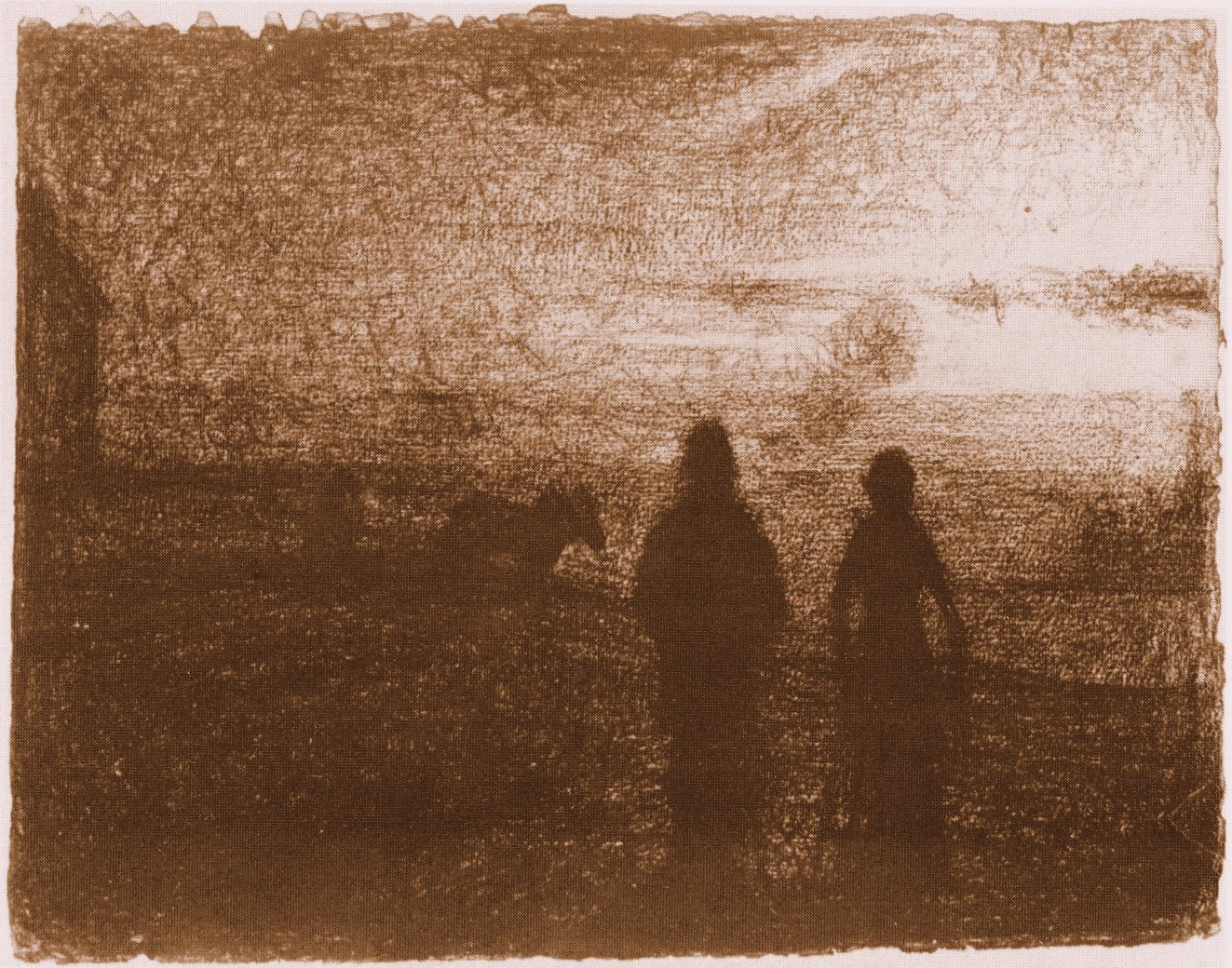
Georges Seurat (French, 1859–1891), Ploughing, ca. 1882. Conté crayon on paper, 27.5 × 32 cm. Musée du Louvre, Paris (DH 525). Source: Seurat by Richard Thomson (Salem House / Phaidon, 1985), p. 30.





 Art & Theology