
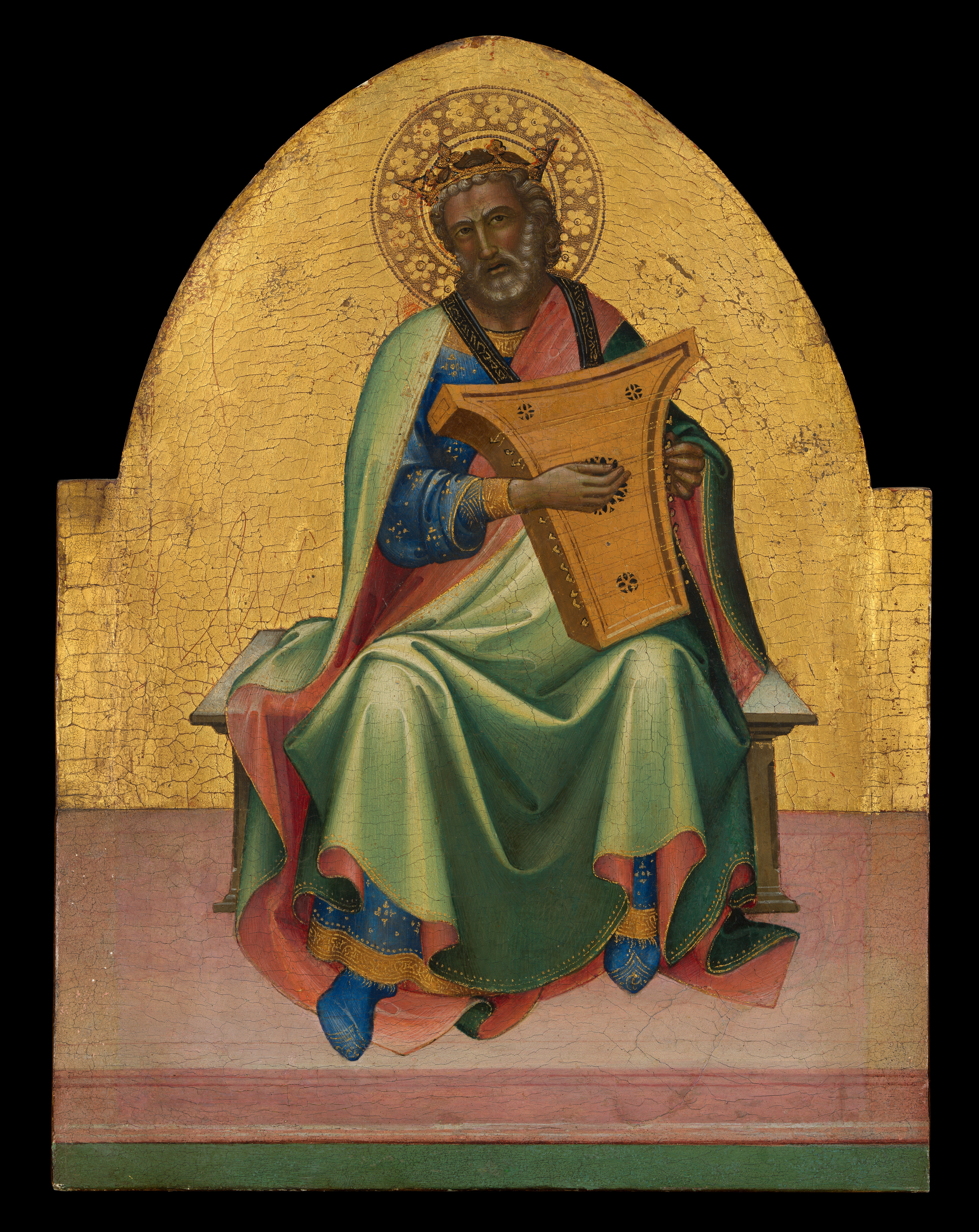
EXHIBITION: Sing a New Song: The Psalms in Medieval Art and Life, Morgan Library and Museum, New York, September 12, 2025–January 4, 2026: Sing a New Song traces the impact of the Psalms on people in medieval Europe from the sixth to sixteenth centuries, showing how this poetic book of the Bible suffused daily life, church liturgies, and art. The exhibition features, of course, numerous illuminated Psalters, as well as other art objects influenced by the Psalms, culled from the Morgan’s own collection and some two dozen institutions around the world.
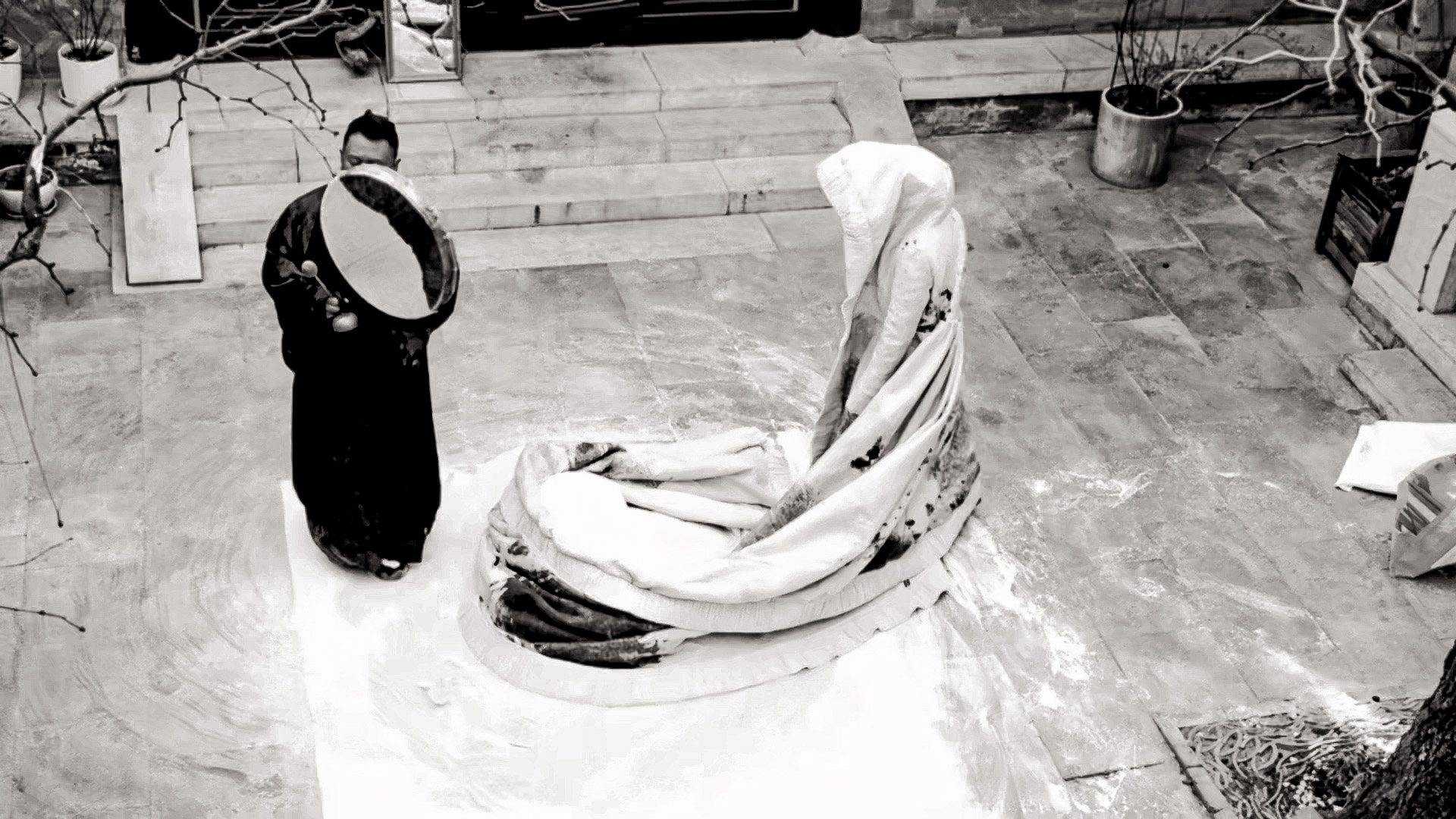
To coincide with the exhibition, on October 10 at 2 p.m. and 3 p.m., the Beijing-based artist Bingyi will be premiering a site-specific performance work in the Morgan’s garden (free with museum admission), made possible in part by the Foundation for Spirituality and the Arts. Titled Heaven and Earth: The Garden of Cosmos, the processional performance is “inspired by Psalm 104 and its reverence for creation, divine order, and cosmic harmony that transcend cultural boundaries.” Drawing on her longstanding engagement with both Abrahamic scriptures and Chinese philosophical traditions, Bingyi will be clad in a flowing, ink-painted garment and be joined by the Tibetan ritual master Nanmei and the Yi singer Aluo.
+++
ONLINE FILM SEMINAR: Dreaming the World: Looking at the World through the Eyes of the Other with Gareth Higgins, September 30–November 11, 2025: “We live in anxious times, with our vision often limited to suspicion of others, concern about the future, and withdrawing into enclaves of the familiar. It can become a self-fulling prophecy, a vicious cycle which does not nurture the security, never mind the happiness we seek. It’s becoming clearer by the day that we need to be dislodged from the narrow circles of self-oriented, tribal thinking. There is a more expansive universe, characterized by connection, sharing, and taking responsibility for co-creating the next good day.”
Sponsored by Image journal and The Porch, Dreaming the World is a seven-week course in which participants will watch seven movies—one from each continent—and learn a more global way of thinking. Leader Gareth Higgins [previously] will share a short video introduction and written essay for each film, and registrants are invited to join a members’ Facebook page for conversation, as well as a weekly video call to discuss the movie and its implications for how we might live better. Those video calls will take place on Tuesdays from 7:00 to 8:15 p.m. ET on September 30, October 7, October 14, October 21, October 28, November 4, and November 11, 2025, but will also be recorded for asynchronous viewing.
The seminar is valued at $195, but the organizer is generously allowing registrants to pay what they can. I will be participating. Join me?
+++
CALLS FOR PAPERS:
>> From the Association of Scholars of Christianity in the History of Art: “‘And Who is My Neighbor?’: Refuge, Sanctuary, and Representation”: “The parable of the Good Samaritan (Luke 10:25–37) endures as a powerful meditation on compassion, hospitality, and the boundaries of moral responsibility. In an age marked by geopolitical instability, mass displacement, and deepening social divides, the question ‘And who is my neighbor?’ acquires renewed urgency. We welcome proposals that consider the ways in which visual culture has interpreted, challenged, or reimagined the ideals of refuge and hospitality within religious and intercultural frameworks. How have artistic practices responded to religious calls to welcome the stranger? In what ways do images negotiate the tensions between inclusion and exclusion, faith and politics, identity and alterity? How do modern and contemporary artworks embody, resist, or reinterpret Christian and other religious conceptions of community, care, and obligation? Proposals that engage Catholic visual cultures or interpretive frameworks, perspectives from the Global South, or comparative interreligious approaches are especially encouraged.” To be presented February 17, 2026, at ASCHA’s day-long symposium at DePaul University Chicago, or February 18–21 2026, at the 114th annual CAA Conference. Proposal submission deadline: October 15, 2025.
>> From the Raclin Murphy Museum of Art at the University of Notre Dame: “The Art of Encounter: Exploring Spiritual Engagement with Art Objects”: This museum is seeking papers exploring the relationship between art, spirituality, and museum spaces, to be presented April 24, 2026, at the museum’s spring symposium. Proposals that investigate how encounters with art can shape spiritual understanding, foster theological insight, or deepen contemplative practice are all welcome. Proposal submission deadline: November 3, 2025.
+++
SONGS:
September 15 through October 15 is Hispanic Heritage Month. One of the many ways Latinos have contributed to Christian artistic culture has been through the writing and singing of coritos: short, rhythmic, Spanish-language choruses used in worship. Here are two examples, the first one traditional and the second one new.
>> “Montaña” (Mountain), led by Josue Avila: Recorded live on November 29, 2020, from Calvary Orlando’s Unity Sunday Service, this corito is based on Matthew 17:20. The lyrics translate to: “If you have faith like a mustard seed, thus says the Lord: you can tell the mountain, ‘Move, move,’ and that mountain will move!”
Watch another performance, from a concert context, by the Austin, Texas–based band Salvador.
>> “Sal 22 / Te Amo” (Psalm 22 / I Love You) by Israel and New Breed with Aaron Moses: These two coritos, which released this summer as a single track, were written by Israel Houghton, Meleasa Houghton, Ricardo Sanchez, Aaron Lindsey, Rene Sotomayor, and Aaron Moses. The first is based on Psalm 22:3, which says that God is enthroned on the praises of his people, and is sung by Moses on lead; Houghton sings lead on the second.
Aaron Moses, of Dominican and Ecuadorian descent, is best known for his work with Maverick City Música.
Israel Houghton is not himself Latino (his mother is white, his biological father Black), but he was significantly influenced by his upbringing in a Hispanic neighborhood and church, a culture reflected in his musical output and that he remains connected to, not least through his wife, Adrienne Bailon (whom I know from The Cheetah Girls!).
+++
VIDEO: “In the Studio: Doris Salcedo making ‘A Flor de Piel’”: Produced by White Cube, this fourteen-minute documentary charts the collaborative, scientifically informed, labor-intensive process of making Doris Salcedo’s A Flor de Piel, an enormous shroud made of real rose petals as a memorial for a nurse who was brutally captured and murdered in Colombia. (“The title,” explains Lauren Hinkson, “is a Spanish idiomatic expression used to describe an overt display of emotions.”) The film includes footage from Salcedo’s Bogotá studio as well as interviews with the team of people who produced the work. I found this peek into the technical aspects of the piece fascinating.
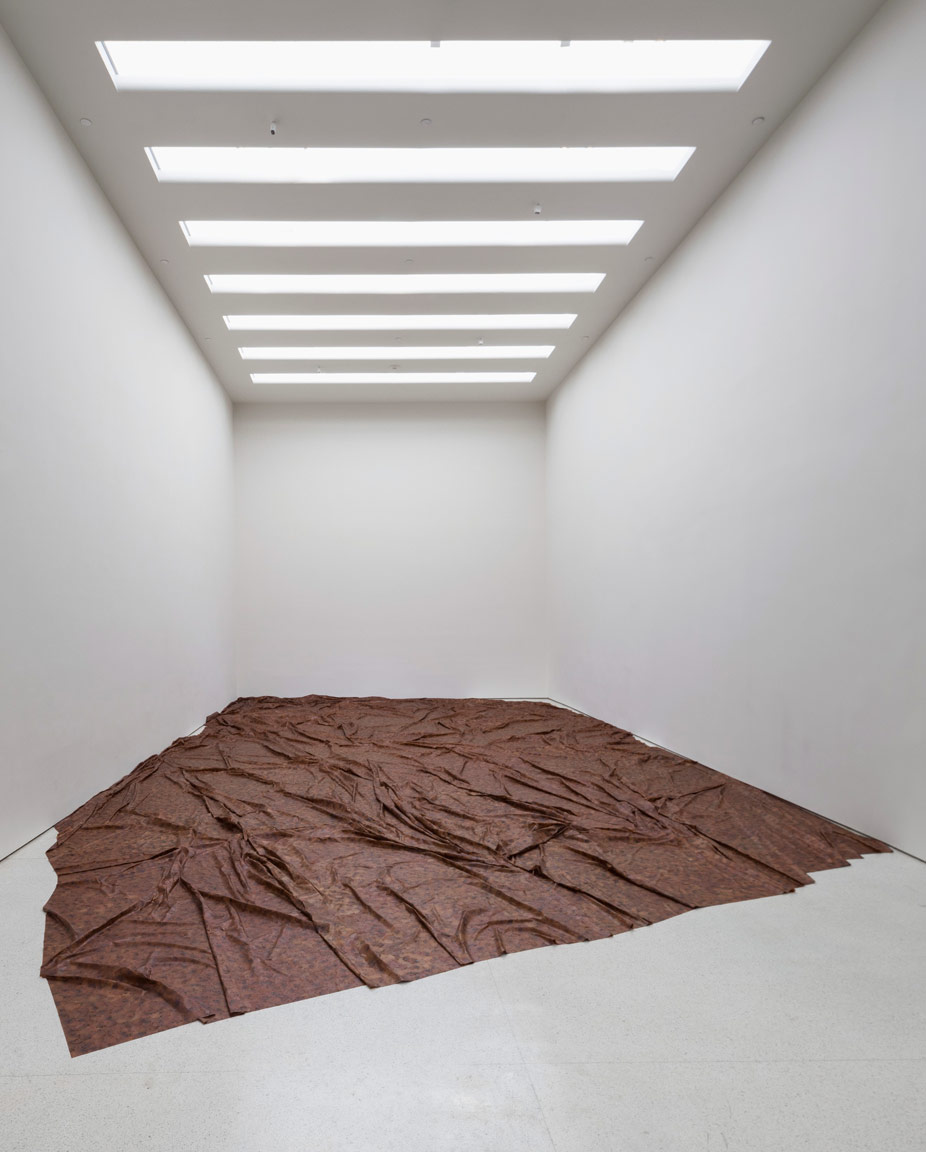
However, the video doesn’t venture into the inspiration behind or meaning of the work. For a bit of that, see this audio clip from the Guggenheim (where A Flor de Piel was exhibited in 2015), and also Jonathan A. Anderson, The Invisibility of Religion in Contemporary Art, pages 123–24.




 Art & Theology