
Roundup: Upcoming conferences, “Rupture as Invitation,” and more

UPCOMING CONFERENCES:

>> Calvin Symposium on Worship, February 7–9, 2024, Calvin University, Grand Rapids, MI: I’ve promoted this event in years past—see, e.g., here and here—and am excited to be attending again this year! I’ll be coleading a breakout session with Joel Littlepage and Ashley Williams about our work at the Daily Prayer Project, curating textual, visual, and musical resources from across time and place to encourage a life of prayer that reflects the church’s beautiful diversity. There are plenty of other sessions being offered as well; a few that stand out to me are “Blues: The Art of Lament” with Ruth Naomi Floyd (she’s also leading a Jazz Vespers service), “Music, Architecture, and the Arts: Early Christian Worship Practices” with Vince Bantu [previously], and “The First Nations Version New Testament and Its Impact on Worship” with Terry Wildman. This is in addition to what is probably my favorite part: the multiple worship services, led by liturgists, preachers, and musicians from different denominations and cultural backgrounds. I love my local church community, but I also love worshipping with folks from outside it—a reminder that the church is far broader than what I’m used to on a weekly basis.

>> “Poetry and Theology: 1800–Present,” February 22–24, 2024, Duke University, Durham, NC: Supported in part by Duke Initiatives in Theology and the Arts, next month Duke is hosting a poetry symposium that’s free and open to the public! The speakers are Lisa Russ Spaar, Judith Wolfe, Toby Martinez de las Rivas, Thomas Pfau, Kevin Hart, Anne M. Carpenter, Ian Cooper, Anthony Domestico, Luke Fischer, Dante Micheaux, Łukasz Tischner, and Bernadette Waterman Ward. Papers are on the poetry of Hopkins, Eliot, Rilke, Miłosz, and more.

>> “Return to Narnia: Creativity, Collaboration, and Community” (Square Halo Books), March 8–9, 2024, Lancaster, PA: Organized by book publisher, author, illustrator, printmaker, and gallerist Ned Bustard, this year’s Square Halo conference will feature author Matthew Dickerson as its keynote speaker and Sarah Sparks as its musical guest, along with various breakout session leaders, such as Brian Brown of the Anselm Society and Stephen Roach of the Makers & Mystics podcast. Tickets are $210 if purchased in advance or $220 at the door.

>> The Breath and the Clay, March 22–24, 2024, Awake Church, Winston-Salem, NC: Organized by Stephen Roach and friends, this annual creative arts gathering aims to foster community and connection around the pursuit of truth, beauty, and goodness, providing opportunities for immersive encounters and kindling for the imagination. There will be main-room sessions, workshops, a juried art exhibition (entry deadline: February 16), a poetry slam and songwriters’ round, a panel discussion on reconciling artists and the church, concerts, a dance performance, a short film screening, and more. Musical artists include Victory Boyd, John Mark McMillan, Young Oceans, and Lowland Hum, and among the keynote speakers are Rachel Marie Kang, Mary McCampbell, Junius Johnson, Vesper Stamper, and Justin McRoberts. I appreciate the bringing together of various artistic disciplines and the emphasis on practice. For tickets, there are both virtual ($99) and in-person ($299) options.

+++

NEW SONG: “MLK Blessing” by the Porter’s Gate: Written by Paul Zach and IAMSON (Orlando Palmer) and just released for Martin Luther King Jr. Day, this song is based on a benediction that MLK prayed, a variant of the ancient Jewish benediction known as the Birkat Kohahim or Aaronic blessing (Num. 6:24–26). It’s sung by Liz Vice and Paul Zach.

+++

PAST LECTURE: “Rupture as Invitation: Generosity and Contemporary Art” by Elissa Yukiko Weichbrodt: I’ve mentioned Elissa several times on the blog—I find her work so illuminating—and was grateful to have her in town last fall to deliver a lecture for the Eliot Society. “Contemporary art can often be unexpected or downright unsettling in its form and subject matter. But what if we reframed our discomfort as an invitation to enter rather than an unbridgeable divide? In this lecture from November 11, 2023, Dr. Elissa Yukiko Weichbrodt demonstrates how approaching contemporary art with humility, love, and courage can be a powerful means of growing in love for our neighbors.”

+++

UPCOMING EVENT: “Why Should Christians Care About Abstract Art?” with Elissa Yukiko Weichbrodt and Jonathan Anderson, February 22, 2024, Gordon-Conwell Theological Seminary–Charlotte, NC: Hosted by the Leighton Ford Initiative for Art, Theology, and Gospel Witness, this evening will consist of an opening of the exhibition Alfred Manessier: Composer in Colors (on display through April 30) and dessert reception, lectures by Elissa Yukiko Weichbrodt and Jonathan Anderson, and a Q&A. “For some people of faith, abstract art is difficult to engage because the meaning remains unclear, and the form can appear chaotic or uncompelling. For others, abstract art is an invitation to engage the whole person, contemplate spiritual realities, and encounter God in transformative ways. If abstract art can facilitate the latter, then Christians have a unique opportunity to learn and care about abstract art for theological, practical, missional, and relational reasons. This event is a unique opportunity to experience abstract art, learn about abstract art, and have formative interaction with one another on this topic.” The cost is just $10, and there is an online option.

Manessier, Alfred_Mount Calvary
Alfred Manessier (French, 1911–1993), La montée au Calvaire (Mount Calvary), from the Suite de Pâques (Easter Series), 1978. Chromolithograph on Arches paper, 22 × 29 9/10 in. (56 × 76 cm). Edition of 99.

+++

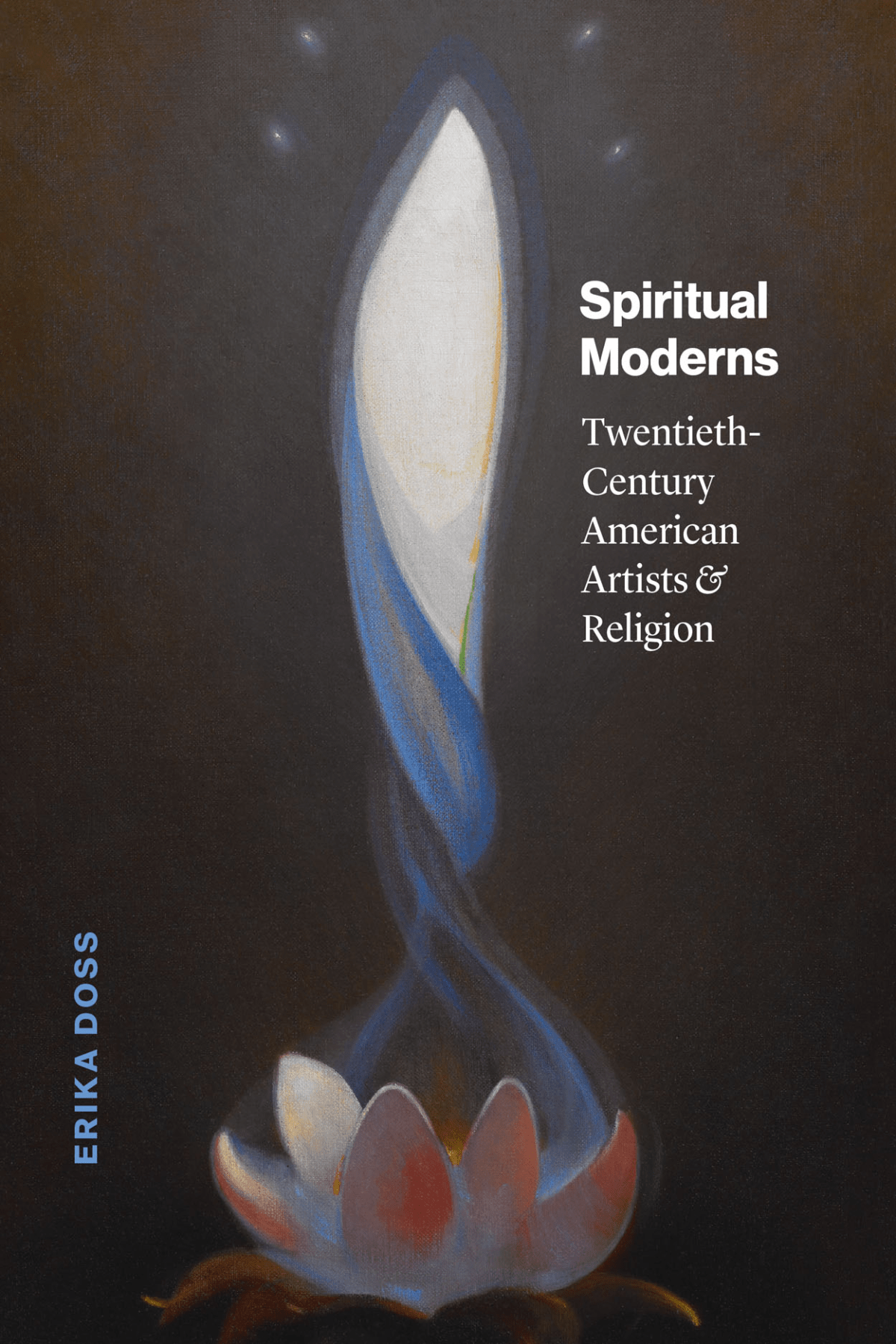
BOOK REVIEW: “Religion’s Understated Influence on Modern Art” by Daniel Larkin, on Spiritual Moderns: Twentieth-Century American Artists and Religion by Erika Doss: Challenging the presumed secularity of modern art, the new book Spiritual Moderns centers on four iconic American artists who were both modern and religious: Andy Warhol, Mark Tobey, Agnes Pelton, and Joseph Cornell.

+ ROUNDTABLE DISCUSSION: Also responding to this publication: the Association of Scholars of Christianity in the History of Art (ASCHA) will be presenting a session at the College Art Association Annual Conference in Chicago on February 16 at 2:30 p.m. that will put four prominent scholars—Stephen S. Bush, Matthew J. Milliner, Robert Weinberg, and Gilbert Vicario—in dialogue with Doss to “explore the assumptions, motivations, and insights of [her] analysis, and consider a more open, inclusive, and diverse reading of American Modernism.”
Online highlights from the 2023 Calvin Symposium on Worship

On February 8–10, 2023, I had the pleasure of attending in person my first Calvin Symposium on Worship, an annual ecumenical gathering of Christian worship leaders from throughout North America (and some from overseas) organized by the Calvin Institute of Christian Worship at Calvin University and the Center for Excellence in Preaching at Calvin Theological Seminary in Grand Rapids, Michigan. The half-week is full of diverse worship services, lectures, breakout sessions, and opportunities to meet and mingle with folks who serve the church as pastors, liturgists, musicians, publishers, scholars, etc. It was an invigorating time!

The CICW is generous in providing recordings of much of its symposium content for free on their YouTube channel several months after the event, and they’ve just released a big batch. Below are some of my highlights that are shareable.  

Though music is not the exclusive focus of the symposium, it is a major component, and my ministry background is in that area, so I want to share with you some of the new songs I learned.

The worship service on February 9, titled “Rooted in Christ,” was excellent and worth watching in full (the sermon, on Colossians 2:6–15, was preached by Rev. Dr. Marshall E. Hatch, pastor of New Mount Pilgrim Missionary Baptist Church in Chicago), but here are three standout songs. The first two are led by the Calvin University Gospel Choir, directed by Nate Glasper Jr., and feature guest soloist Eric Lige.

“On Christ the Solid Rock,” adapt. and arr. Gerald Perry, 2022:

This song is a new gospel adaptation and arrangement by Gerald Perry of the classic Edward Mote–William Bradbury hymn “The Solid Rock.” It appears on the 2022 album Legacy by the James Family Singers (which is on Spotify), a West Michigan gospel group founded by Oscar and Erma James in 1981 and to which Perry belongs, along with more than two dozen members of his extended family.

“God Is Good” by Morris Chapman, 1992:

A call-and-response song written by Lige’s late mentor, Morris Chapman (1938–2020), a Grammy- and Dove Award–nominated composer and recording artist. The song appears on the 2010 compilation album Incredible Gospel, vol. 2.

“If God” by Casey Hobbs, John Webb Jr., and Natalie Sims, 2019:

This song of lament was sung by Samantha Caasi Tica, then a senior in Calvin’s speech-language pathology department, and Calvin alum Emma Gordon as the “Prayer of Intercession” portion of the service. The congregation (is that what you’d call the group of worshippers at a symposium?) was asked to come in on the chorus and the “Nothing but the Blood of Jesus” bridge. For the official live video of the song as performed by its writer, Casey J, see here.

And now from other worship services at the symposium:

“Los que sembraron con lágrimas” (Those Who with Tears Went Out Sowing) (Psalm 126) by Carlos Colón, 2019:

The Bifrost Arts setting of Psalm 126 by Isaac Wardell is one of my favorite congregational songs—it leans into the “weeping” aspect of the psalm. But this new setting by Carlos Colón leans into the psalm’s “joy” aspect, which gives it a different tone that works equally well, I think. It was led by Colón at the piano, with the help of Calvin University students and guest Wendell Kimbrough. (Watch full worship service.) It is #333 in the bilingual hymnal Santo, Santo, Santo: Cantos para el pueblo de Dios (Holy, Holy, Holy: Songs for the People of God).

“His Love Is My Resting Place (Psalm 23)” by Wendell Kimbrough, 2020:

There’s no standalone video for this song from the symposium, but I cued up the service video to where the song starts at 13:42; you can also listen to the solo recording released by songwriter Wendell Kimbrough in 2020. Director of music and songwriter at Church of the Incarnation in Dallas, Kimbrough is one of today’s foremost composers of biblical psalm settings for contemporary worship. Despite the dozens of settings that already exist of this most famous psalm, which begins “The Lord is my shepherd . . . ,” Kimbrough’s take is not a redundancy but rather a vibrant new and easily singable addition to this catalog of options. I brought it back with me to the local congregation I’m a member of, and the people took to it really well.

“Anta Atheemon” (You Are a Great God) by Ziad Samuel Srouji, 1990:

“Anta Atheemon” is sung by Christians throughout the Middle East and the Arabic-speaking world. It was written by Ziad Samuel Srouji, who was born in Haifa, Israel, and raised in Lebanon but then displaced by civil war to the United States. He is pastor of the Gate International Church in San Mateo, California.

“Soul, Adorn Yourself with Gladness / Vengo a ti, Jesús amado” (cued to 59:00):

What a wonderful song for the celebration of the Eucharist! “Bless the one whose grace unbounded this amazing banquet founded! The high and exalted and holy deigns to dwell with you most lowly. Be thankful! Soul, adorn yourself with gladness and rejoice!” I love the exuberant Puerto Rican melody.

The source of this hymn is the German communion chorale “Schmücke dich, O liebe seele” by Johann Franck (1618–1677). After being translated into Spanish by Albert Lehenbauer (1891–1955) for Lutherans in South America, the chorale traveled up to Puerto Rico, where it was reset to the tune CANTO AL BORINQUEN by Evy Lucío Cordova (b. 1934), now with an added refrain by Esther Eugenia Bertieaux (b. 1944). The English in the bilingual version here, published in Evangelical Lutheran Worship‎ #489, is a composite translation, borrowing from Catherine Winkworth (1827–1878) and others.

+++

The worship services, several a day, are only one component of the Calvin Symposium on Worship. There are also wonderful talks, panel discussions, and workshops—such as “Hardwired to Sing: Entrainment, Interactional Synchrony, and the Spirit-ed Magic of Corporate Song” by Dr. W. David O. Taylor. In this talk Taylor, a liturgical theologian teaching at Fuller Theological Seminary, expands on what I think is the most fascinating chapter of his latest book, A Body of Praise: Understanding the Role of Our Physical Bodies in Worship, which is “The Nature of the Body: Scientific Perspectives on the Body in Worship.”

“First, I wish to suggest that it is the Holy Spirit’s pleasure to work in and through our physical bodies, not just in our heads and hearts, in order to form us wholly into Christ’s body,” Taylor says. “And second, I would like to show how the sciences offer empirical insights into the metaphysical work of the Spirit to form our embodied communal singing.”

Citing Hebbian theory—namely, that “neurons that fire together wire together”—he says that singing together in corporate worship bonds us in ways that nothing else can, strengthening our kinship with one another through our bodies. “People who sing together experience a wiring together of their neural networks. They become tethered to one another in neurological and physiological ways, not just affective or relational ways.” He demonstrates this principle with the help of some audience volunteers.

The last twenty-five minutes of the video are Q&A. Unfortunately, the questioners aren’t miked, and not all the questions are repeated for the recording, so that part is a little hard to follow.

My favorite session that I attended was “The Practice of Lament,” a panel discussion with Drs. Wilson de Angelo Cunha, Cory B. Willson, and Danjuma Gibson, moderated by David Rylaarsdam—all Calvin faculty. “What are the different faces of lament? What is the goal of lament? How can pastoral leaders facilitate lament? What does lament reveal about the nature of God and what it means to be human?” It’s an excellent introduction to this important Christian discipline.

“Lament is a central part of our mission as God’s people, and I will say, we have largely failed,” says Willson. And later: “You cannot be a hopeful people or community if you don’t lament. And we need each other to hold out hope for us when we can’t find the strength to swing our feet from the bed to take another step toward a future.”

Asked to define lament, Gibson, a professor of pastoral care and a practicing psychotherapist, said, “Lamentation, or griefwork, is the process you engage in to come to terms with what has been lost, the rupture, the unattaching to what you have loved—that may be a way of life, that may be a person, that may be an image of how you thought things should have been—when there is a tragedy.”

Later in the discussion, in response to a question about how lament coheres with the apostle Paul’s call to rejoice always, Gibson clarifies: “Lamentation is not the opposite of joy. Lamentation is a particular manifestation of joy. And how I understand joy in my own work is this: joy is the inner assurance that you cultivate over time that you belong to God no matter what. . . . Lamentation is a declaration of that joy.”

Again, the questions from the audience are inaudible. But from memory, I can tell you that one was about divine impassibility (Greek apatheia), an attribute ascribed to God in classical theology that means that God does not feel pain or have emotions. This is an ascription that has always puzzled me and that I reject (it makes a virtue out of Stoicism), and indeed many Christian theologians have problems with it as well, because the picture of God that we have in both Testaments is of a God who is passionate, who grieves and gets angry and exults, and who is responsive to his people, empathetic.

Another question mentions the beating to death of Tyre Nichols by police officers in Memphis. Another asks how we know when we’re done lamenting a particular tragedy.

There’s so much that’s helpful and illuminating in this conversation; please give it a listen.

Another great panel discussion at the symposium was “Worship Music from Africa and the African Diaspora,” between Drs. James Abbington, Stephanie Boddie, Brandon A. Boyd, Pauline Muir, and Jean Kidula:

“What treasures and insights from the rich history of Christian worship music on the continent of Africa as well as from African diaspora communities in the United States and England should be more celebrated and cherished? What misunderstandings should be corrected? How can we learn from this rich history without misappropriating it? What signature examples of congregational song should we all learn more about and from? How can we all continue to learn more and explore more deeply connections across continents and Christian traditions?”

At 57:35, Abbington asks each panelist if they could teach the church one congregational song, one that’s important for the church to know, what would it be?

At the symposium, I also really enjoyed the lecture “More Than We Can Ask or Imagine: Music and the Uncontainability of Hope” by Dr. Jeremy Begbie, a theologian and pianist—but it is not and will not be available online. However, it draws on the themes of his new book from Baker Academic, Abundantly More: The Theological Promise of the Arts in a Reductionist World, which just released this week.


There were lots of other sessions offered as well—on creating a sense of belonging with youth in worship, intergenerational worship in global contexts, worshipping God with our public witness, sacred architecture and space design, cultural intelligence, singing the Psalms, wisdom from Indigenous Christians in Australia, how to shape a compelling sermon, lessons for leading congregational singing, refugia faith, and more. Several of these were recorded and are now hosted online in the Calvin Institute of Christian Worship Resource Library, which has content going back more than a decade (see also their YouTube channel @worshiprenewal).

Registration for next year’s Calvin Symposium on Worship has not yet opened, but the dates have been announced: February 7–9, 2024. The theme is Ezekiel. Find out more at https://worship.calvin.edu/symposium/index.html.

Calvin Symposium on Worship 2021

The mission of the Calvin Institute of Christian Worship is to “promote the scholarly study of the theology, history, and practice of Christian worship and the renewal of worship in worshiping communities across North America and beyond.” Their programming centers on resources, grants, and events—the biggest of which is the annual Calvin Symposium on Worship, held in January at Calvin University. This year this enormous gathering of pastors, worship leaders and planners, artists, musicians, scholars, students, and others has moved online—and it’s all free! Click here to register and to gain access to a bevy of wonderful content.

Online Calvin Symposium on Worship 2021 opened January 6 and is running through January 26, and much of the content will be archived for future on-demand viewing. With more than ninety contributors, it comprises twenty livestreamed worship services from around the world, twenty livestreamed sessions (some interactive), audio and video talks and interviews, panel discussions, chapter downloads, a compilation of Psalms-based music and art, and expert-guided discussion boards on technology for worshipping communities, Christian history, and pastoral and self-care lessons from 2020.

Calvin Symposium on Worship 2021

I’ve only just dipped my toes in so far, and have a lot more to explore. A few items I’m looking at are Catherine Gunsalus González, Justo González, and David Rylaarsdam on “Learning about Worship from the Ancient Church”; Katharine Hayhoe on how worship practices can help heal our broken relationship with the more-than-human creation; and Mary Hulst, Glenn Packiam, and Joni Sancken on preaching and singing the resurrection (Jesus’s and our own) with care, including at funerals.

I’m also looking at the symposium’s many offerings on multiculturalism and racial justice, such as “Leadership for a Multicultural Age” with Juana Bordas, “Celebrating Christianity’s Global Identity” with Vince Bantu, “Faithful Anti-Racism and the Christian Life” with Christina Edmondson, “What Is the Color of Compromise?” with Jemar Tisby, racial justice and reconciliation work in Richmond, Virginia (documentary and Q&A), Justo González on how Saint Augustine’s mestizo identity (his mother was African, his father Roman) influenced his life and theology, and minister and youth advocate Khristi Lauren Adams on her new book, Parable of the Brown Girl: The Sacred Lives of Girls of Color.

I’ve really been enjoying the worship services, which are hosted by churches and institutions not just throughout the US but also in Buenos Aires, Dublin, Beirut, Cairo, Hong Kong, Singapore, and several cities in Brazil.

A bilingual service led by Constanza Bongarrá and Marcelo Villanueva, Worship with Seminario Internacional Teológico Bautista in Buenos Aires [previously] premiered January 11. The six songs, performed by a small group of supertalented musicians, represent different styles/genres originating in or developed in Argentina—tango, cueca, huayno. A full list of participants and music credits is available at the link.

  • 4:56: “Veni, Emanuel” (O Come, O Come, Emmanuel)
  • 8:06: “Hemos venido” (We’ve Come)
  • 17:58: “Este es el día” (This Is the Day)
  • 21:01: “Tenemos esperanza” (We Have Hope) [previously]
  • 26:56: “Vencerá el amor” (Love Shall Overcome)
  • 29:33: “El cielo canta alegría” (Heaven Is Singing for Joy)

Rev. Rob Jones from Ireland preaches on Romans 12 in Worship at Holy Trinity Rathmines Church, Dublin, and Discovery Gospel Choir performs three songs.

  • 5:32: “O Nzambi” (O Lord) (from the Democratic Republic of Congo, in Kongo)
  • 36:00: “Uthando Luka Baba” (The Love of the Father) (from Zimbabwe/South Africa, in Ndebele/Xhosa)
  • 48:18: “Alleluia” (from Mauritius, in Creole)

What a joy to be introduced to Ireland’s leading multicultural choir! Discovery Gospel Choir was formed in 2004 by the Church of Ireland to reflect the country’s (and the church’s) ethnic and linguistic diversity. Its motto is taken from Romans 12:17b (MSG): “Discover beauty in everyone.” The songs here, and more, can be found on the choir’s 2015 album, Look Up. I especially loved “Uthando Luka Baba” (that solo!).

There’s also a lot of music (and some visual art and dance) in the “Global Psalm Gallery,” made up of submissions from the public.

Josh Rodriguez [previously] submitted an original cello composition that’s just gorgeous. It’s movement 1 (“Oh Lord, Our Lord”) from his “Meditations on Psalm VIII,” based on a tune by Louis Bourgeois from the Genevan Psalter (1542) and performed here by Robert Nicholson. The boldface link includes a score, a reflection by Rodriguez on how the piece interprets Psalm 8, and liturgical suggestions.

Another standout in the gallery is “Psalm 150” for unaccompanied flute, by Delvyn Case, which “explores the mystical connection between breath, life, music, and praise as described in the psalm.” Wow!

Not all the submissions are instrumental art music; there’s also congregational songs, choral pieces, etc.

Again, here’s the sign-up link to the symposium: https://worship.calvin.edu/symposium/. And in addition to this year’s new content, the CICW has an enormous archive of resources from past years that is definitely worth checking out, especially if you are a church leader, of worship or otherwise.