Favorite Films of 2025, Part 2

Read part 1 here.

Favorite Films of 2025

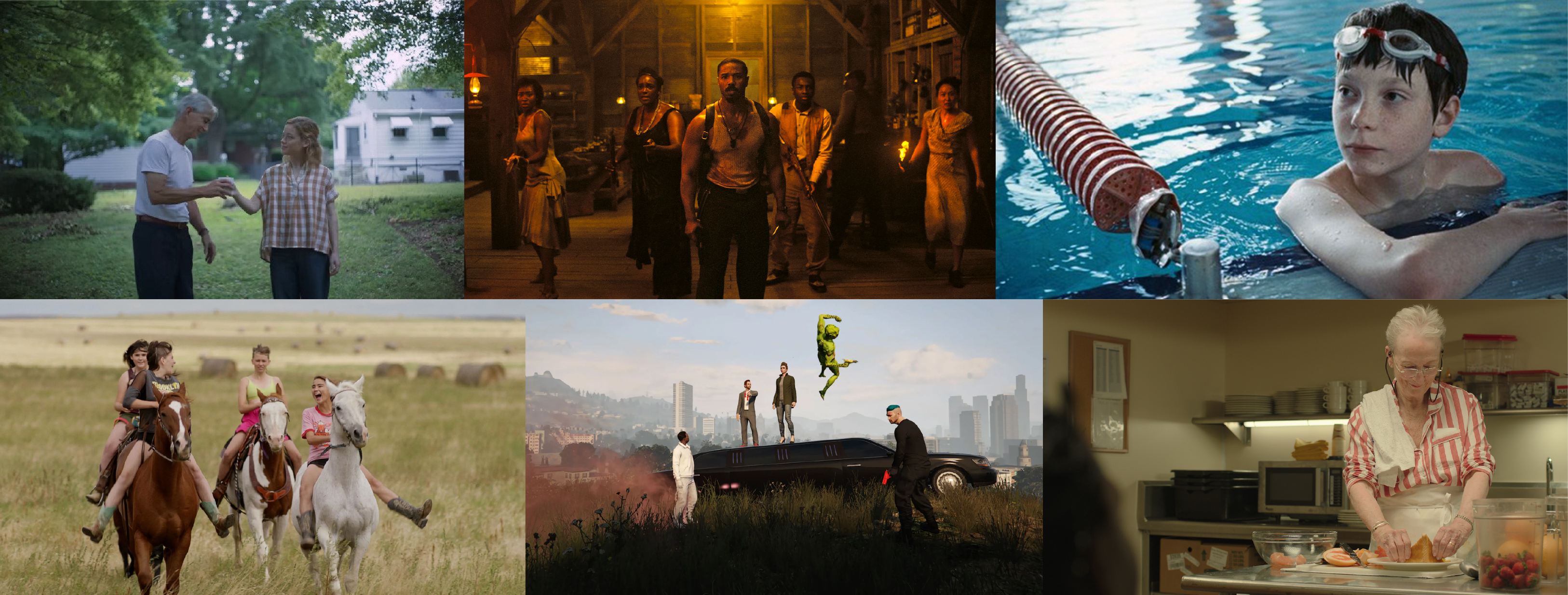
11. The Ballad of Wallis Island, dir. James Griffiths. The award goes to Charles Heath (Tim Key) for being 2025’s most endearing onscreen character, and for eliciting the most laughs. Charles is a quirky, widowed lottery winner living on a remote island off the coast of Wales. As a superfan of McGwyer Mortimer, a folk duo who broke up over a decade ago, he hires the two musicians, Herb (Tom Basden) and Nell (Carey Mulligan), to reunite for the performance of a private concert at his home. Herb didn’t know Nell was coming, and her presence causes tension, as they used to be in a romantic relationship—from which Herb has never fully moved on—and now she’s married.

The Ballad of Wallis Island was written by the male costars, Key and Basden, longtime comedy collaborators, who based the script on a short film they released in 2007. It’s about growing apart in love and ambition; looking back with gratitude on what once was while also recognizing the inability to recover it, and embracing new possibilities.

Streaming on Prime Video.

12. The Plague, dir. Charlie Polinger. A psychodrama with elements of body horror, The Plague is set at a middle school boys’ water polo summer camp in 2003. Ben (Everett Blunck) is kind and timid but also eager to fit in, so he cautiously befriends cool guy Jake (Kayo Martin). Jake and the other boys bully the socially awkward Eli (Kenny Rasmussen), who has a severe rash that they call “the plague” and that they claim spreads through contact. Ben feels sympathy for Eli and surreptitiously reaches out to him, at the risk of his own ostracization. The film explores the brutal peer group dynamics that male adolescents must navigate, especially as they seek to conform to cultural definitions of masculinity and normalcy. The performances by the three main child actors are excellent.

13. Familiar Touch, dir. Sarah Friedland. When the film opens, we’re inside Ruth’s (Kathleen Chalfant) kitchen; a former professional cook, she’s fixing a gourmet lunch for a date with a younger man (H. Jon Benjamin). But it turns out that man is not a boyfriend but her son; and the luggage he has prepared for her is not for some romantic getaway but for her new home in the “Memory Lane” wing of an assisted living facility. Familiar Touch is a humane (nonmiserabilist) portrayal of living with dementia, granting priority to Ruth’s perspective as she adjusts to her new living situation, facing fears and disorientation but also finding moments of comfort, connection, and joy. Writer-director Sarah Friedland said she wanted to tell a coming-of-old-age story, a transition as dramatic, she says, as that from teen to adult.

Streaming on MUBI.

14. A Little Prayer, dir. Angus MacLachlan. As I started watching this film, I thought how similar it feels to Junebug, one of my favorite movies—then I realized it’s by the same writer, who here also steps into the director’s chair. Shot and set in Winston-Salem, North Carolina, where MacLachlan has spent his whole life, A Little Prayer is, as reviewer Brian Tellarico sums up on Letterboxd, “a gentle dramedy about a decent man realizing he hasn’t raised a decent son.”

David (Will Pullen) and his wife Tammy (Jane Levy) live with David’s parents, Bill (David Strathairn) and Venida (Celia Weston). When Bill discovers that David is being unfaithful in his marriage, he confronts him. He is protective of his daughter-in-law. Bill and Tammy’s relationship is the central one of the film and is beautifully portrayed—the genuine affection they have for one another; they’re “kindred spirits,” as Tammy says. Bill finds it easier to talk with Tammy than with his own two children. (His flaky daughter is a sometime tenant in the house, whenever she’s fighting with her cocaine-dealing romantic partner.)

I also really like, in Bill and Venida’s characters, the portrayal of a seasoned marriage, especially as relates to parenting adult children. They want their kids to be strong, kind, fulfilled, principled—but they are continually disappointed in these hopes. The film shows them trying to accept the freedom their kids have to make their own choices, even when what they choose is short-sighted, dangerous, or immoral.

15. Souleymane’s Story, dir. Boris Lojkine. Souleymane (Abou Sangaré) is a Guinean immigrant to Paris, working illegally as a food delivery cyclist while in the process of seeking asylum. Set over two days, this social realist drama is empathetic and unsentimental in its look at the precarity of living in Europe without documents and the stress of navigating government bureaucracies to attain them. Other than the asylum interviewer, all the actors in the film are nonprofessionals. The lead was an auto mechanic when the casting director found him and is himself a Guinean seeking permanent residency in France. The story Souleymane tells at the end of the film is Sangaré’s real story of why and how he came to Paris.

Streaming on Kanopy.

16. Sinners, dir. Ryan Coogler. A southern gothic horror blockbuster, this is the most talked-about movie on my list, and the most ambitious. It’s October 1932, and twin brothers Smoke and Stack (both played by Michael B. Jordan) have just returned to their hometown of Clarksdale, Mississippi, after having worked with Al Capone in Chicago. They are opening a juke joint to carve out a space of freedom for their Black community, and they arrange for their cousin Sammie (Miles Caton), the blues-loving son of a disapproving preacher, to perform. But Sammie’s music—its ability to “pierce the veil between life and death, past and future”—attracts a group of white vampires led by the centuries-old Irishman Remmick (Jack O’Connell). He’s seeking converts to his community of “fellowship and love,” and when they don’t join willingly, he takes them by force.

Going in, I had assumed the film would be an allegory of the terror of white supremacy, but it is more layered than that, and I’m not sure I understand all the layers. It’s in one sense about how white people feed on Black culture in destructive ways. But Remmick is a complex villain, as he shares with the protagonists a history of being oppressed, and he seems to be motivated by his homesickness for Ireland; he mourns the loss of his culture and yearns to reconnect with his ancestors. If that’s Remmick’s objective, it’s unclear to me how his actions would achieve that. I’m also confused as to what Remmick is selling—a melting pot of world musics? a vast, cross-cultural ancestral community? harmonious coexistence?—but most interpret it as assimilation in the guise of “let’s all get along.” While the film’s treatment of racial and cultural identities, ancestral ties, and racism is complex, its treatment of religion is (sadly) simplistic, portraying Christianity only as a sinister colonizing force, a system that not only does not contain the resources for liberation but that is itself oppressive both for cultures, which it kills or dilutes, and for individuals, restricting the pursuit of bodily pleasures.

Still, I rate Sinners highly for its big swings, its entertainment value, its cinematic craftsmanship, the popular discourse it has sparked, its phenomenal music, and the best scene of the year—the one in which the juke joint fills with centuries’ worth of African and African American music and dance traditions (from Senegalese xalam playing to G-funk, Zaouli dancing to Alvin Ailey ballet), creating an energy that literally burns the house down.

Streaming on HBO.

17. Grand Theft Hamlet, dir. Sam Crane and Pinny Grylls. Cinema, theater, and gaming combine in this unique and riotous documentary shot entirely inside Grand Theft Auto Online, an online multiplayer action-adventure game in which players roam as criminals through a hyperviolent variation on Los Angeles. During the COVID-19 pandemic lockdown in January 2021, two professional but out-of-work actor friends from the UK, Sam Crane and Mark Oosterveen, found themselves increasingly spending time on GTA and decided, for a fun challenge and for community, to stage a complete production of Shakespeare’s Hamlet inside the video game. They posted notices for auditions (no experience required), recruited security (to deter shootings), assigned parts, scouted locations, chose costumes, ran rehearsals, then oversaw the performance of the full play in July 2022 before an audience of in-game avatars, excerpts of which are shown in the last fifteen minutes of the film.

What makes the film so charming is the incongruity of it all. Grand Theft Auto enables players to indulge all sorts of depravities through a fictional character—steal cars, pick up prostitutes, blow people up. While sure, there’s depravity in Hamlet too, I wouldn’t think that those who enjoy GTA would enjoy classic Elizabethan drama. One taps into our baseness, the other into our nobler sentiments. So it’s surprising that Crane and Oosterveen’s project gained traction. And so comical! But also beautiful, in how lonely, isolated people all over the world endeavored to make art together in this unlikely virtual space during quarantine.

Streaming on MUBI.

18. When Fall Is Coming, dir. François Ozon. Michelle (Hélène Vincent) lives in the Burgundian countryside, enjoying a quiet retired life, which includes the regular company of her longtime friend Marie-Claude (Josiane Balasko). Michelle has a good relationship with her preteen grandson Lucas (Garlan Erlos), but not with her daughter Valérie, Lucas’s mother (Ludivine Sagnier). When Valérie is hospitalized one day after eating poisonous mushrooms her mom unwittingly served for lunch, she cuts her off from Lucas. Meanwhile, Marie-Claude’s son Vincent (Pierre Lottin) has just gotten out of prison, and Michelle forms a motherly bond with him. He, in turn, becomes protective of Michelle and, seeing the pain she’s in being separated from Lucas, tries to mediate a reconciliation between mother and daughter—but his confrontation of Valérie causes a whole new set of troubles and turns this domestic drama into a character-driven mystery.

Streaming on Tubi and Prime Video.

19. East of Wall, dir. Kate Beecroft. Just east of Wall, South Dakota, the real-life Tabatha Zimiga works as a rancher, rescuing, training, and selling horses with her teenage daughter Porshia, a champion barrel racer. On her 1,200 acres, she also offers refuge to local teens who have fled abusive situations or whose parents can’t afford to take care of them, giving them a home and coaching them in competitive rodeo. Filmmaker Kate Beecroft met the Zimiga family (which also includes sons Chevy and Stetson) while looking for a story, and ended up living with them for three years in preparation for shooting the docufiction drama East of Wall, a female western. Other than professional actors Jennifer Ehle and Scoot McNairy, all the actors, including the two leads, play versions of themselves. The film centers on the mother-daughter pair, who are grieving the death of their husband and stepfather while also finding strength and solace in riding and in the community they’ve built.

20. Don’t Let’s Go the Dogs Tonight, dir. Embeth Davidtz. When casting the lead for her adaptation of a portion of Alexandra Fuller’s best-selling memoir, director Embeth Davidtz was looking for a grubby-faced wild child who could ride a horse and a motorbike and who had never acted before—and she found one in a small village in the South African bush in Lexi Venter, whose performance as eight-year-old Alexandra, aka “Bobo,” a white Rhodesian, is extraordinary. The movie depicts Bobo’s life on her family’s cattle farm during the final stages of the Bush War in the late 1970s, in which Black Rhodesians fought for independence from their white (British and British-descended) colonizers. Bobo is plucky and imperious and says outrageous things, some of which she’s heard from adults; family chaos, racial tensions, and national politics are narrated from her perspective, innocent (in the sense of simple, candid, ingenuous) and ignorant as it is. Davidtz plays Bobo’s mentally unstable mother, who drinks heavily to deal with her grief, not primarily over a collapsing way of life but over something more personally wrenching.

The title is a British idiom meaning “Let’s avoid ruin” or “Let’s not act in degrading ways,” an admonition spoken especially before parties—let’s not become like spoiled food thrown to the dogs. It originated with a poem by the English humorist A. P. Herbert, who writes, “Don’t let’s go to the dogs tonight, / For mother will be there.”

HONORABLE MENTIONS: Eephus (MUBI); Rental Family; The Baltimorons (AMC+); If I Had Legs I’d Kick You; Wake Up Dead Man (Netflix)

Roundup: Empty chair, how to read a Last Judgment icon, and more

ARTWAY VISUAL MEDITATIONS:

ArtWay.eu is an online hub of resources related to faith and the visual arts. Every Sunday a new “visual meditation” is released on a selected artwork, written by one of a diverse range of volunteers from across the globe. (I contributed last week’s, on Eduardo Kingman, and another of mine, on a Flight to Egypt painting by Pranas Domsaitis, will be forthcoming.) Sign up here to receive the free weekly meditation in your inbox. Here are two examples from the past year, with Advent vibes, that I’ve found particularly meaningful.

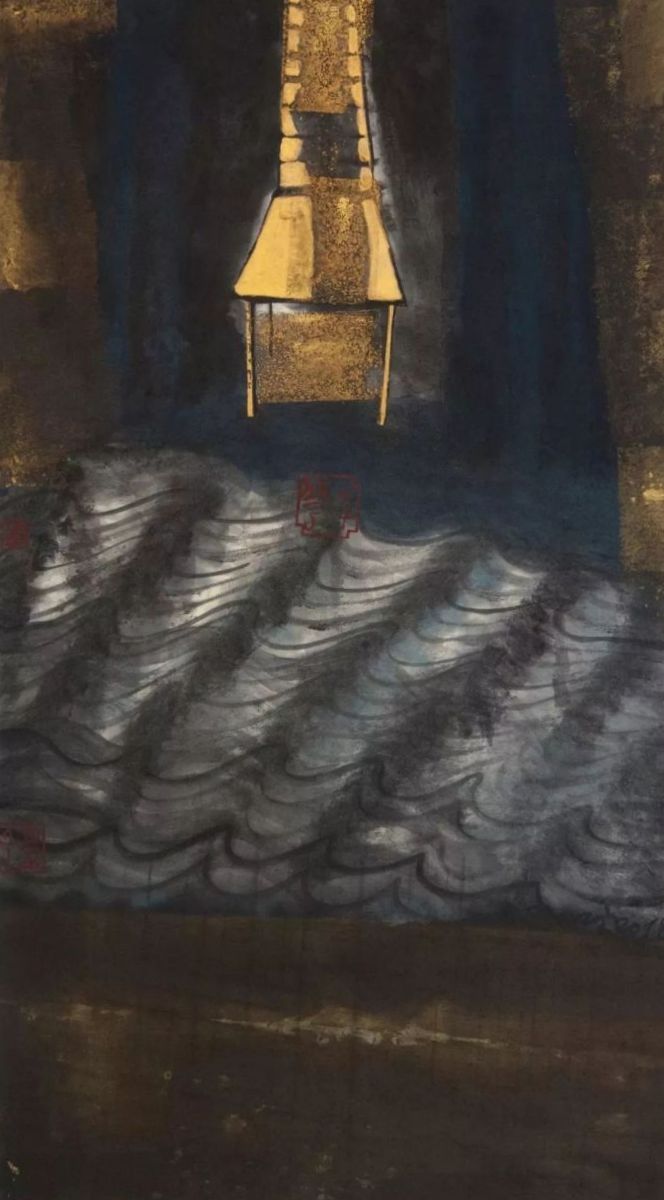
>> “The Empty Chair in a Season of Waiting” by Rachel Hostetter Smith: Last year, in the midst of the COVID-19 pandemic, art history professor Rachel Hostetter Smith wrote about a series of Chinese ink wash paintings by Daozi. They’re a tribute to his friend, the Chinese human rights activist Liu Xiabo (1955–2017), who was unable to accept his 2010 Nobel Peace Prize in person because he was in prison, so he was represented at the ceremony by an empty chair. Smith brings this image of an empty chair into conversation with all the uncertainty and absence in this current time of pandemic; the Jewish Passover Seder liturgy and its setting a place at the table for the prophet Elijah; Franciscan priest Richard Rohr on the liminal space between the old world and the world to come; and John the Revelator’s eschatological vision of a throne descending from heaven (Rev. 21).

Daozi_The Empty Chair on the Sea Ridge
Daozi (aka Wang Min) (Chinese, 1956–), The Empty Chair on the Sea Ridge, 2018. Ink and color on paper, 97 × 54 cm.

This and fifty-four other contemporary artworks are part of the international traveling exhibition Matter + Spirit: A Chinese/American Exhibition, which Smith curated (click the link to explore the art—it’s very compelling!). The exhibition is a product of a gathering of North American and Chinese art professors in June 2018 in Beijing, Nanjing, and Shanghai, sponsored by the Nagel Institute for the Study of World Christianity.

>> “Waiting for the Lord” by Mary McCampbell: Mary McCampbell [previously] writes about a painting by Douglas Coupland, best known for his work as a novelist and for popularizing the term Generation X. “In I wait and I wait and I wait for God to appear (2011), the artist has painted a colorful QR (Quick Response) code, defamiliarizing a familiar symbol of daily life. . . . Like most QR codes, if a viewer holds up her camera to the graphic image, a message is decoded via smart phone. A contrast to the hard geometric edges of the painting, the message that magically appears is soft and human: ‘I wait and I wait and I wait for God to appear.’ . . . The painting reflects a longing for the real God to manifest himself, no longer merely an idea, a doctrine, a rhetorical position. Where is God in the intricate, detailed, yet seemingly random pattern of life? How can we discern WHO He is? . . . This atypical reminder to ‘Wait for the Lord; be strong and take heart and wait for the Lord’ (Psalm 27:14) discloses the curious, humble faith of a non-believer, one hoping and waiting for eyes to see the ‘appearance’ of the Lord.”

Coupland, Douglas_Waiting for the Lord
Douglas Coupland (German, 1961–), I wait and I wait and I wait for God to appear, 2011. Acrylic and latex on canvas, 182.9 × 182.9 cm. Queen’s University, Kingston, Ontario, Canada.

+++

LECTURE: “Understanding the Last Judgment” by Jonathan Pageau: “The traditional icon of the Last Judgment is a very complex image which is both the synthesis of Christian typology as well as an image of the eschatological finality of all things.” In this talk given at St. John Chrysostom Byzantine Catholic Church in Seattle, Jonathan Pageau breaks down Last Judgment iconography, explaining how to read it scene by scene.

Elements include:

  • The Deësis, a representation of Christ enthroned between Mary and John the Baptist
  • The hetoimasia, or prepared throne, which awaits the return of Christ
  • The psychostasis, or weighing of souls
  • The ladder of divine ascent, representing the struggle to reach illumination
  • Paradise, with the “good thief,” Abraham’s bosom, and the Mother of God
  • The last trump and the resurrection of the dead, with beasts regurgitating their human prey
  • The river of fire, per Daniel 7:10, with the damned being swallowed by the mouth of Hades

Why am I sharing this now? Because Advent is eschatological and future-oriented in nature, and, though it tends to be underemphasized in our era, judgment is a major theme—which Fleming Rutledge does a great job unpacking in her book Advent: The Once and Future Coming of Jesus Christ.

+++

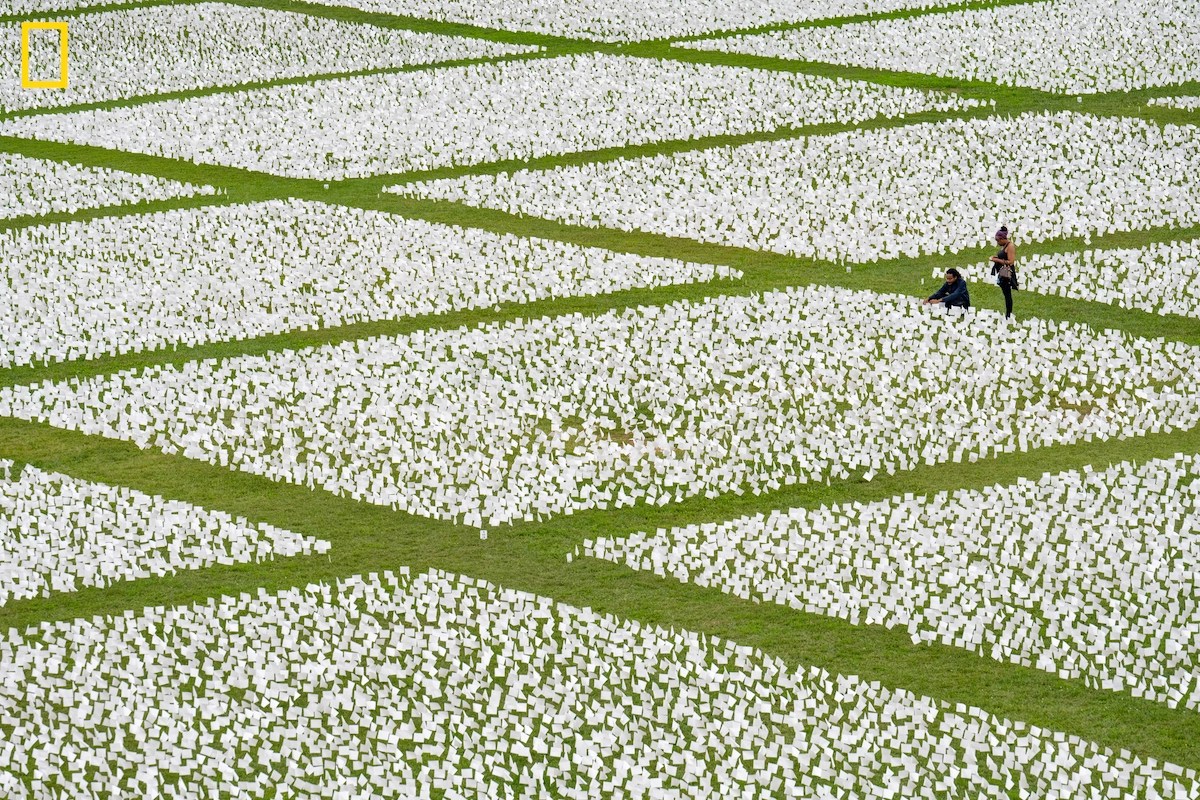
COVID MEMORIAL: From September 17 to October 3, 2021, the National Mall in Washington, DC, was blanketed with some 670,000 white flags, each one representing an American life lost to COVID-19. Titled In America: Remember, the installation was conceived by artist Suzanne Brennan Firstenberg as a way to visualize the magnitude of loss the country has suffered over the past two years in relation to the pandemic, and to invite mourning. Visitors were invited to personalize flags for someone they lost.

Stephen Wilkes’s photos of the memorial undid me. The enormity of suffering represented is difficult to fathom. Every single flag is a devastation. And since the installation was put up this fall, there have been another 100,000-plus COVID deaths in the US, while the global death toll has surpassed 5.2 million.

In America: Remember (detail)
Photo: Stephen Wilkes / National Geographic

In America: Remember (detail)
Photo: Stephen Wilkes / National Geographic

In America: Remember (photo by Stephen Wilkes)
In America: Remember, September 17–October 3, 2021, an installation of 670,000+ white flags on the National Mall, conceived by Suzanne Brennan Firstenberg. Photo: Stephen Wilkes / National Geographic.

+++

ART COMPETITION: “Macierzyństwo Maryi” (The Motherhood of Mary): The results are in for Poland’s first annual Ogólnopolski Konkurs Sztuki Sakralnej (National Competition of Sacred Art, or OKSSa for short), organized by the Fundacji Maria i Marta (Mary and Martha Foundation). The theme was Mary’s motherhood.

First place, with a prize of 15,000 zł (about USD $3,600), went to Błażej Guza for Macierzyństwo Maryi, which shows Mary drawing a hopscotch board on the pavement, its shape portending her boy’s fate. Jesus is not visible in frame, save for his shadow, which reveals simply an innocent child ready to play.

This piece and thirty-four others from among the many entries were exhibited at Concordia Design Wrocław November 25–30, 2021, and this month a few of them will be shown at the National Museum in Wrocław. You can view the top three winners as well as four honorable mentions at the boldface link above, or on the foundation’s Facebook page. And here’s an exhibition view.

The Fundacji Maria i Marta aims to promote the development of contemporary Christian art in Poland by organizing competitions, exhibitions, and workshops and by providing artistic consultation for churches.

Guza, Blazej_The Motherhood of Mary
Błażej Guza, Macierzyństwo Maryi (The Motherhood of Mary), 2021. Acrylic and chalk, 90 × 60 cm.

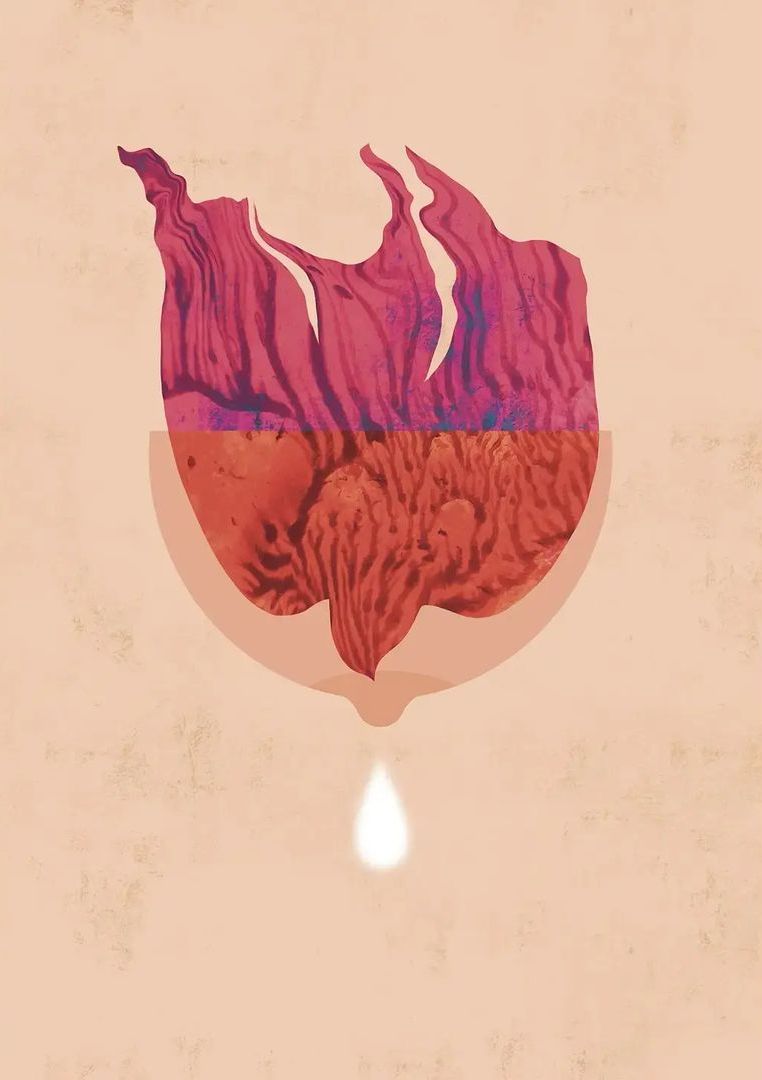
Kowalewska-Tylka, Beata_Fullness of Spirit
Beata Kowalewska-Tylka, Pełnia ducha (Fullness of Spirit), 2021. Digital painting, 70 × 50 cm. The OKSSa jury commented on how this piece shows “the interpenetration of the spiritual and human dimensions of Mary’s motherhood,” the shape of the fiery red cloth evoking the Holy Spirit as dove, and the breast that gives milk signifying Mary’s physical nourishment of her son from her own body.

Roundup: “Art and Social Impact,” Auld Lang Syne in Birmingham, and more

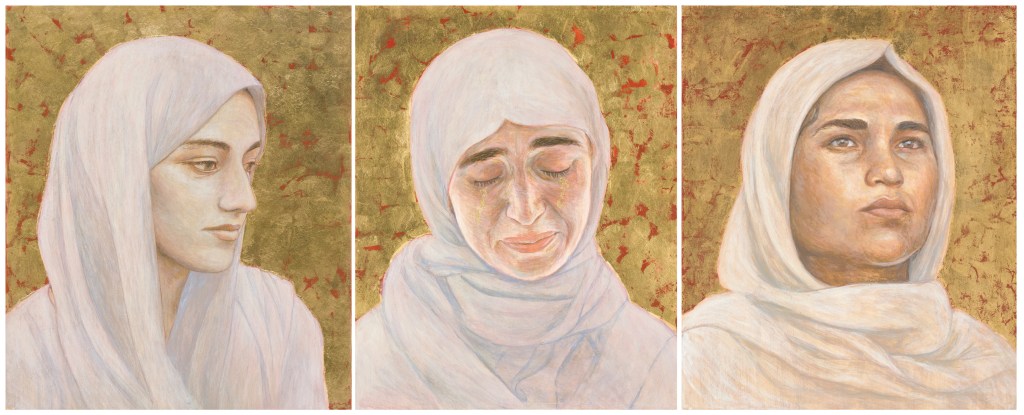
ONLINE PANEL: “Art and Social Impact,” January 26, 2021, 14:30 GMT (9:30 a.m. EST): Next Tuesday the Rev. Jonathan Evens [previously], associate vicar at St Martin-in-the-Fields in London, will be talking with interdisciplinary photography and media artist André Daughtry [previously], sculptor Nicola Ravenscroft, portrait painter and humanitarian Hannah Rose Thomas, and graphic designer Micah Purnell about their personal journeys in addressing issues of social concern in their art practices. The session will also explore ways in which churches can engage with such art and use it for exploring issues with congregations and beyond. Register here for a Zoom invite. (Update: View the recording.)

Tears of Gold by Hannah Rose Thomas
Hannah Rose Thomas, paintings from the Tears of Gold series, 2017. Click image to learn more, and see the Google Arts & Culture exhibition.

Ravenscroft, Nicola_With the Heart of a Child
Nicola Ravenscroft, With the Heart of a Child, 2016. Sculpture installation comprising seven life-size bronze children. The artist calls the figures “eco-earthling-warrior-mudcubs.” Click image for artist interview, and here for a theological reflection.

+++

VISUAL COMMENTARIES: Elijah’s Ascent by Victoria Emily Jones: My latest contribution to the Visual Commentary on Scripture was published this month. It’s a mini-exhibition on 2 Kings 2:1–12, featuring a seventeenth-century Russian icon, a 1944 painting by African American artist William H. Johnson, and a 1985 painting (a Jewish chapel commission) by Polish-born Israeli artist Shlomo Katz. (For more context on the Katz painting, see here.)

+++

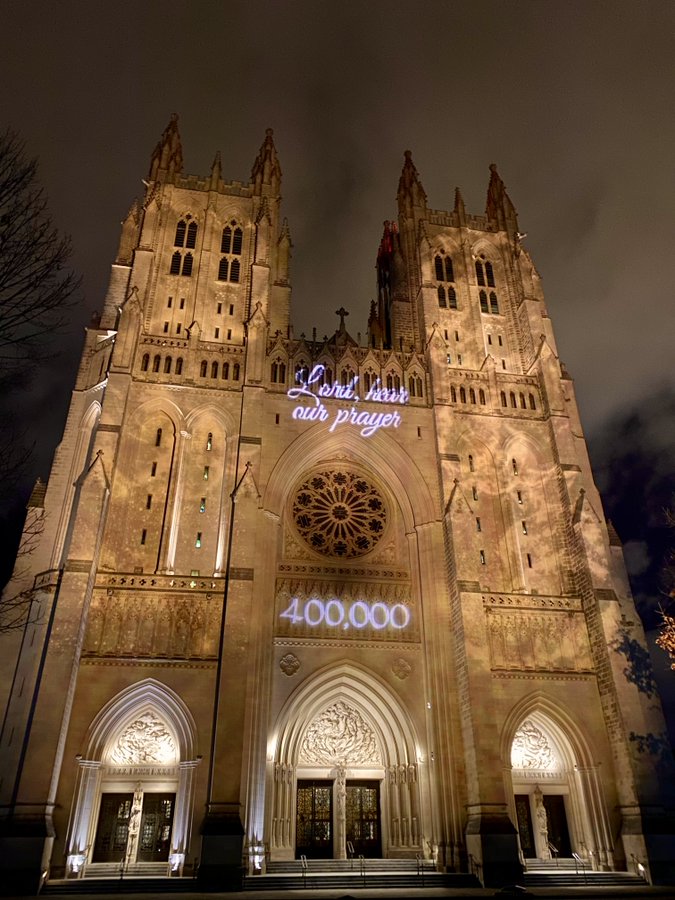
NATIONAL MOURNING: Washington National Cathedral tolled its mourning bell four hundred times Tuesday evening in remembrance of the 400,000 lives lost from COVID in the United States thus far—each ring representing one thousand dead. I spent the thirty-eight-minute livestream lamenting this enormous loss, praying for all those who are grieving and for patients and health care workers, and pleading with God for an end to this virus.

The origami paper doves you see in the video are part of the Les Colombes installation by Michael Pendry [previously], erected in December in the cathedral’s nave to symbolize hope and the Holy Spirit.

Washington National Cathedral COVID memorial

+++

MUSIC VIDEO: “For the Sake of Old Times” (Auld Lang Syne): Directed by Tyler Jones of the narrative studio 1504, this short film premiered December 30, 2020, by NPR. “From the pews of a church where white deacons once refused to seat African Americans, a group of Black singers in Alabama reminds us why preserving our memories of this historic year is vital—even if we’d rather just leave 2020 behind.” [HT: ImageUpdate]

“To me the piece is a personal encouragement going into the future,” Jones says, “that we hopefully strive to work together for a kinder future, especially at a time where we are so distanced.” Read about the making of the film at https://n.pr/3n6d8Ct.

+++

ARTICLE: “On the Gifts of Street Art” by Jason A. Goroncy, Zadok: The Australasian Religious Press Association awarded silver prize for “Best Theological Article” to Jason Goroncy [previously] for this piece. (How cool that it won in the theology category!) Like all art, street art can function as a form of civic dialogue, protest, play, hope, remembrance, etc., but Goroncy discusses how some of its particular qualities uniquely position it to perform those functions: its (usually) unsanctioned and interventionist nature, its fragility and impermanence, its celebration and development of culture, its inseparability from place, and its redefinitions of proprietorship. [HT: Art/s and Theology Australia]

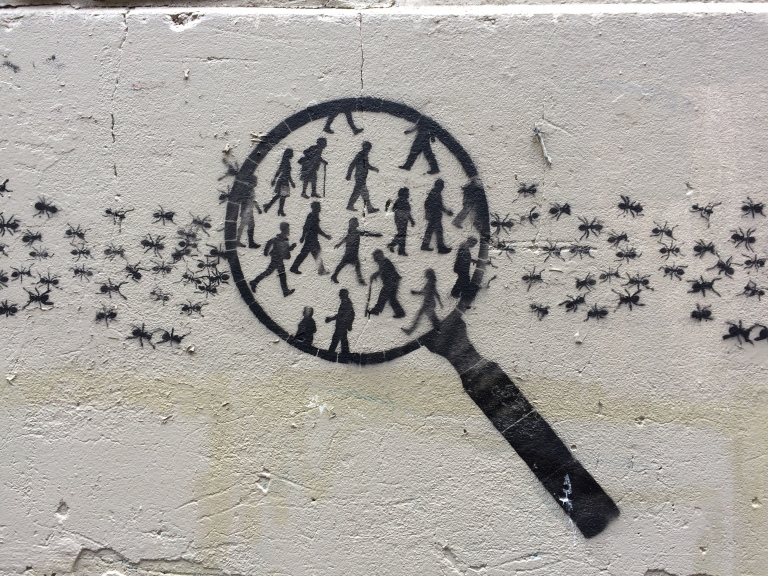
Human Ants (street art)
Human Ants, Liverpool Street, Melbourne, Australia. Photo: Jason Goroncy.

“Among the many gifts that street artists offer,” Goroncy writes, “is a proclivity to bear witness to how things are and not merely to how they might appear to be. Such a proclivity involves a telling of the truth about those largely-untampered-with and untraversed spaces of our urban worlds, about what is present but underexposed or disregarded; and even, as Auden hints, to lead with ‘unconstraining voice’ the way toward healing and toward a renewed sense of enchantment, freedom and praise beyond the pedestrian and clamorous. Such a proclivity is also a form of urban spirituality. It can even be a form of public theology.”

Roundup: Virtual Advent concerts, dreams deferred, pop-up floral memorials, and more

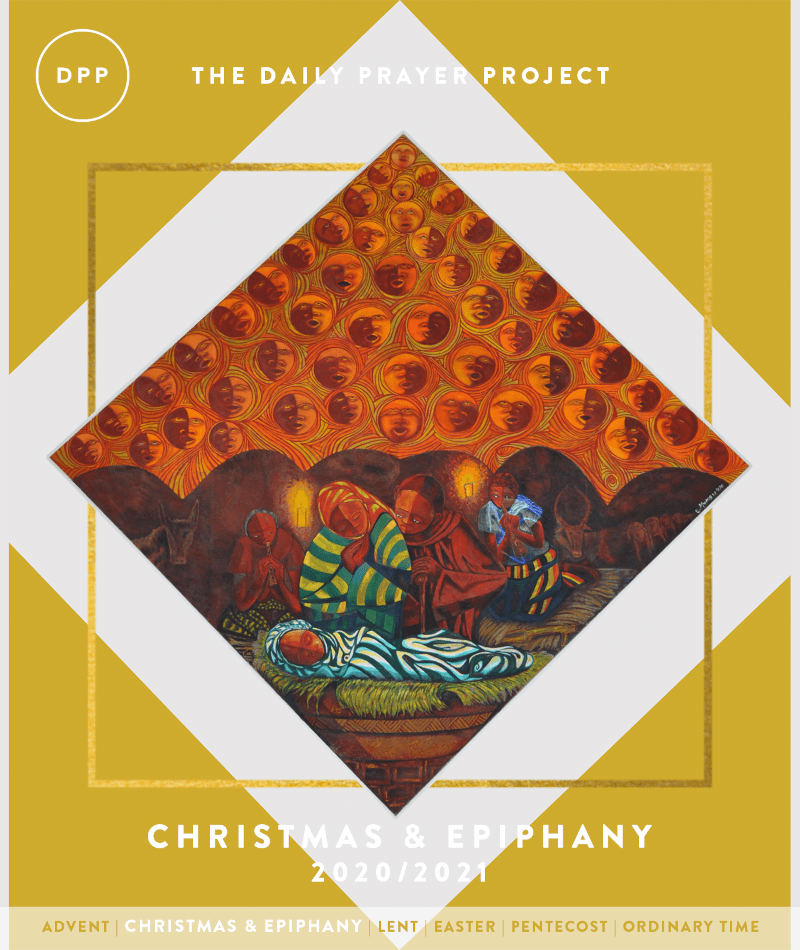
The Christmas–Epiphany 2020/21 edition of the Daily Prayer Project [previously], a publication I work for part-time, released this week! The cover image is from the sanctuary mural at Holy Angels Catholic Church in Chicago, by Cameroonian artist-priest Engelbert Mveng. (See the full mural here.) Also in this edition are images of Grace Carol Bomer’s From Strength to Strength, showing Light stepping into darkness, and the Piper-Reyntiens stained glass window in Coventry Cathedral, with its yellow sunburst amid an abstract pattern of reds, blues, and greens. We include visual art as a supplement to the prayers, scripture readings, and songs with the understanding that it, too, can promote spiritual development and a deeper communion with God.

You can purchase a digital copy (PDF) of the Christmas–Epiphany edition (December 24–February 16) through the website, and if in the future you’d like to receive hard copies, starting with Lent 2021, you can become a monthly subscriber. Part of the money goes to supporting artists.

+++

Whenever I see a Helena Sorensen [previously] byline, I perk up, because I always find myself connecting so much with her writing. She’s a regular contributor to the Rabbit Room blog. Her two most recent posts are “Things Fall Apart” and “Advent, Week One: Hope.” They’re both great.

+++

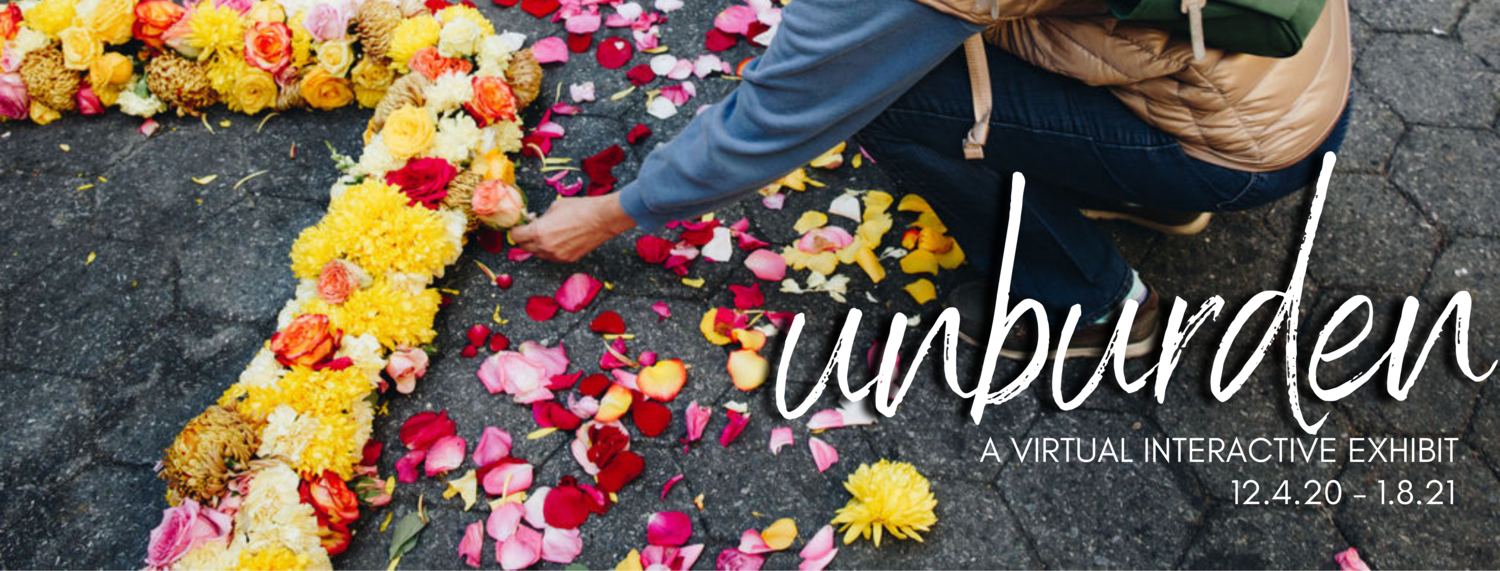
Unburden: A Virtual Interactive Exhibit, December 4, 2020–January 8, 2021: The Gallery at W83 is part of a 45,000-square-foot cultural center built by Redeemer Presbyterian Church in Manhattan’s Upper West Side as a service to the city’s artists and larger community. W83 Events and Programming Director Eva Ting has curated a virtual exhibition of photographs and stories from Kristina Libby’s Floral Heart Project, a series of living memorials to those lost to or suffering from COVID-19. Libby initiated the project in New York City in May, partnering with 1800Flowers.com to place floral heart garlands all around the city to create space for ceremony and to invite the community to process and mourn. The project has since grown nationwide.

“Many of us are carrying burdens of loss, anxiety, and uncertainty as we move towards the end of 2020,” Ting writes. “We have all been impacted in some way by the events of this year, and we bear fatigue weighed heavier by the inability to gather as a community to collectively grieve. In this interactive virtual exhibit Unburden, the Gallery at W83 invites you to participate in an unburdening of the load we carry.”

The exhibition webpage invites you to release personal burdens by writing down any grief, fears, loss, or anxiety you wish to let go of (can be submitted anonymously if desired). These words will be incorporated into a new floral heart laying on December 20 at Fort Tryon Park, an event that will be livestreamed. You can also ask for prayer, and members of the W83 team will pray for your requests. “Through these individual and collective acts of unburdening, may we imagine what it would look like to truly let go of these burdens.”

Floral Heart Project (Brooklyn Bridge)
Photo by Erica Reade

+++

I enjoyed attending the virtual “Songs of Hope: A TGC Advent Concert,” featuring music and spoken-word performances from a variety of artists (see YouTube description), interspersed with Advent readings. It was a truly meaningful worship experience.

I’m sure there are many more virtual Advent/Christmas concerts and other online events coming up. What ones are you most looking forward to?

One that I’ll probably be tuning in to is “We Three Queens Holiday Show” by Pegasis, a sister trio, on December 17, 8:30 p.m. EST (7:30 p.m. CST). It will be live on Facebook and and Instagram. (Update, 12/17/20: View the performance here. My favorite two songs are probably “Poncho Andino” at 19:04 and “Mary Had a Baby” at 45:24—such a unique arrangement!)

There’s also “A Candlelit (Virtual) Room: The Advent Christmas Music of Ben Thomas” on December 11 and 12 (10 p.m. EST and 8 p.m. EST, respectively), two private Zoom concerts open to the first twenty-five registrants each. He’ll be performing original songs from his albums The Bewildering Light, The Wilderness Voice, and Peace Here, all of which I recommend. My favorite tracks: “Justice Will Sprout from the Ground,” “Zechariah and the Least Expected Places,” and “Shepherds and Angels.” (The latter two were recorded under the name So Elated.)

+++

POEM: “Harlem” by Langston Hughes: This is a brilliant poem—its sensory images, its rhythm, its rhyme, its multivalence (especially the last line). I loved it so much when I first read it in ninth grade that I memorized it unbidden. When writer and podcaster Joy Clarkson posted a reflection on the poem for her Patreon community in October, resulting in a lively conversation thread in the comments section, it reignited my enthusiasm for and got me thinking more deeply about “Harlem.” She opened by quoting Proverbs 13:12: “Hope deferred makes the heart sick, / But desire fulfilled is a tree of life.”

“What happens to a dream deferred? // Does it dry up / like a raisin in the sun?” Written in 1951 as part of a sequence of poems exploring black life in Harlem, “Harlem” is inextricably tied to the civic discourse of the contemporary American moment, writes Scott Challener in Poetry Foundation’s guide to the poem. The “dream” he refers to is the American Dream, unattainable for so many due to racial inequalities and oppression. (Also assigned in ninth-grade English curricula in the US is Lorraine Hansberry’s A Raisin in the Sun, which takes its title from and addresses the questions of “Harlem.”)

While not wishing to strip the poem of its specific context, I have been thinking about all the dreams that have been deferred this year—put on hold, or even irretrievably lost, because of COVID-19. Hughes posits a string of descriptive similes for a deferred dream: a dried-up raisin, a festering sore, rotting meat, a crusted-over sweet, a sagging load. One commenter on Joy’s Patreon observed how a raisin can’t turn back into a grape, rotten meat can’t be made fresh again, and an overcooked dessert can’t be cooked back down, but a sore can heal and a load can be lifted.

The final suggestion—“or does it explode?”—can be read in myriad ways. In one respect it could refer to the explosion of cultural output, of creativity, that results from deferred dreams—i.e., the Harlem Renaissance. I’ve definitely seen this happen this year, as people, in the face of crushing personal and professional disappointments, have found unique ways to come together and produce and share works of beauty within the restrictiveness of health and safety protocols. One example—speaking of Harlem—is the Dance Theatre of Harlem, a groundbreaking neoclassical ballet company founded at the height of the civil rights movement in 1969 and still active today. Bans on gatherings of certain numbers have meant that dancers and other performers have had to find alternative ways of reaching their audiences, so DTH artists Derek Brockington and Alexandra Hutchinson created “Dancing Through Harlem,” taking choreography from Robert Garland’s “New Bach” out into the streets and capturing it on video for people to enjoy from home. To help support the DTH during this time, you can donate easily through the fundraising sidebar on the video’s YouTube page or through the company’s website.

+++

SONG: “400 Years” by Sarah Sparks: This original song, sung with Kate Lab, appears on Sarah Sparks’s new album, Advent, Pt. One. It’s about how the centuries-long silence of God between the ministry of Malachi (ca. 420 BCE) and the appearance of John the Baptist in the early first century CE was broken with the birth of Jesus—the Word made flesh. Its refrain, “For the first time, not a silent night,” cleverly turns on its head the sweet, familiar carol “Silent Night.” Through the incarnation, God spoke to all who would listen.

Short Prayers in a Time of Virus

From March 28 onward, Melbourne-based creative nonfiction writer, oral storyteller, and arts educator Julie Perrin has been writing and publishing collects (short prayers, pronounced KÄ-lekts) for anyone to freely use and republish (with credit) in this time of pandemic. I’m so grateful for her giving us this language to voice our anxieties, sadness, and pleas to God, and for reminding us of who God is. (And thanks to Art/s and Theology Australia for alerting me to this collect series.)

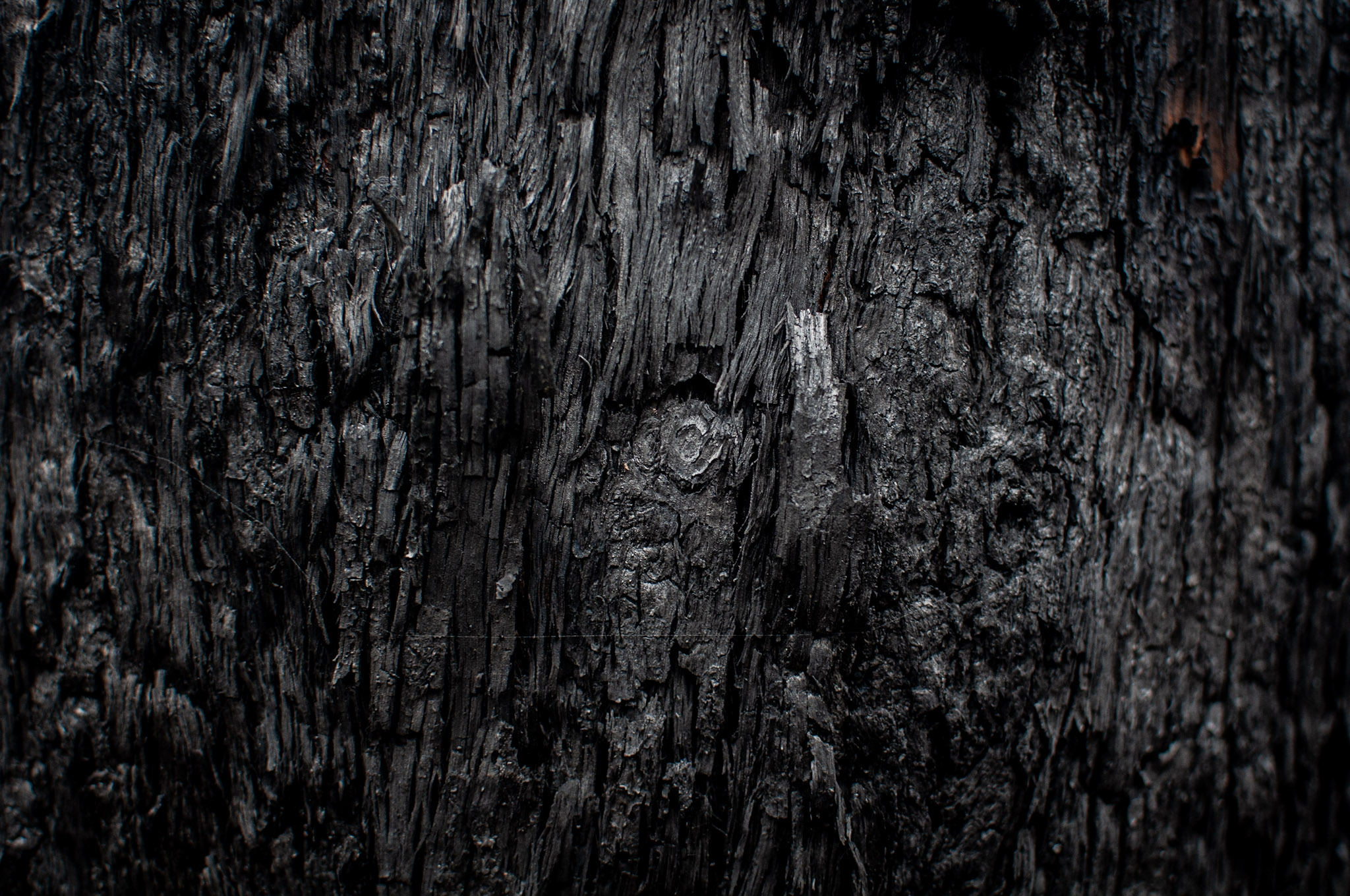
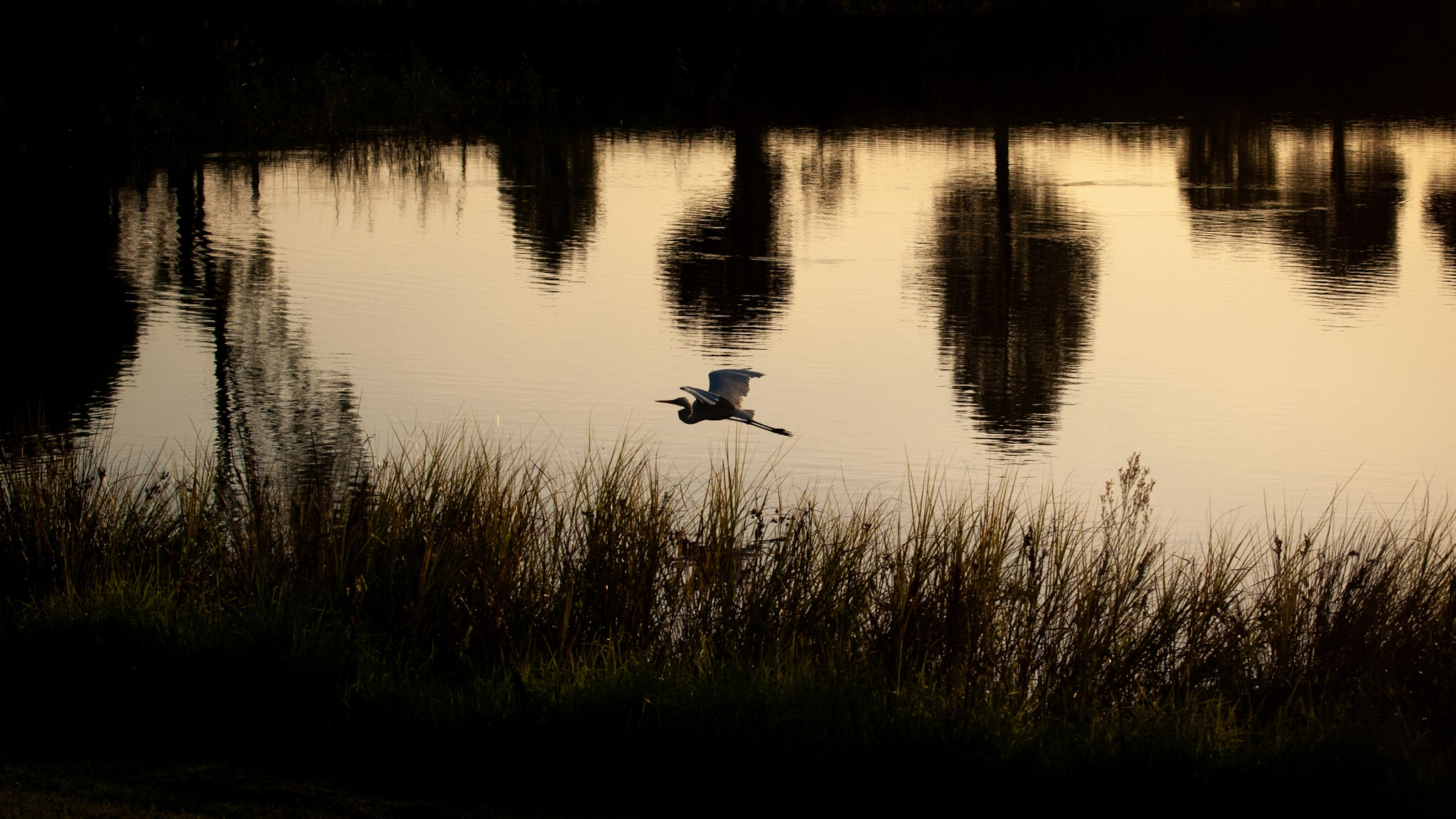
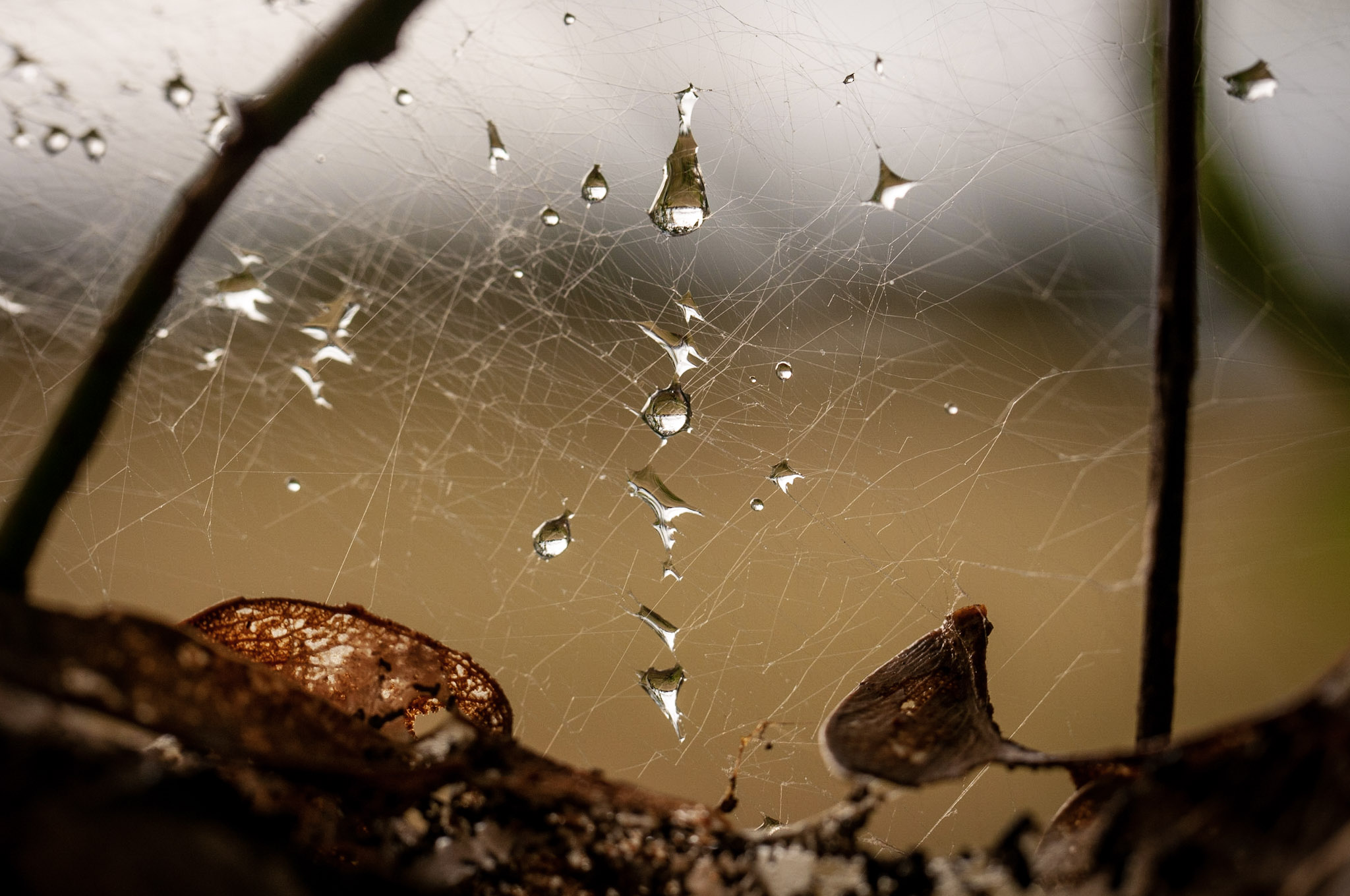
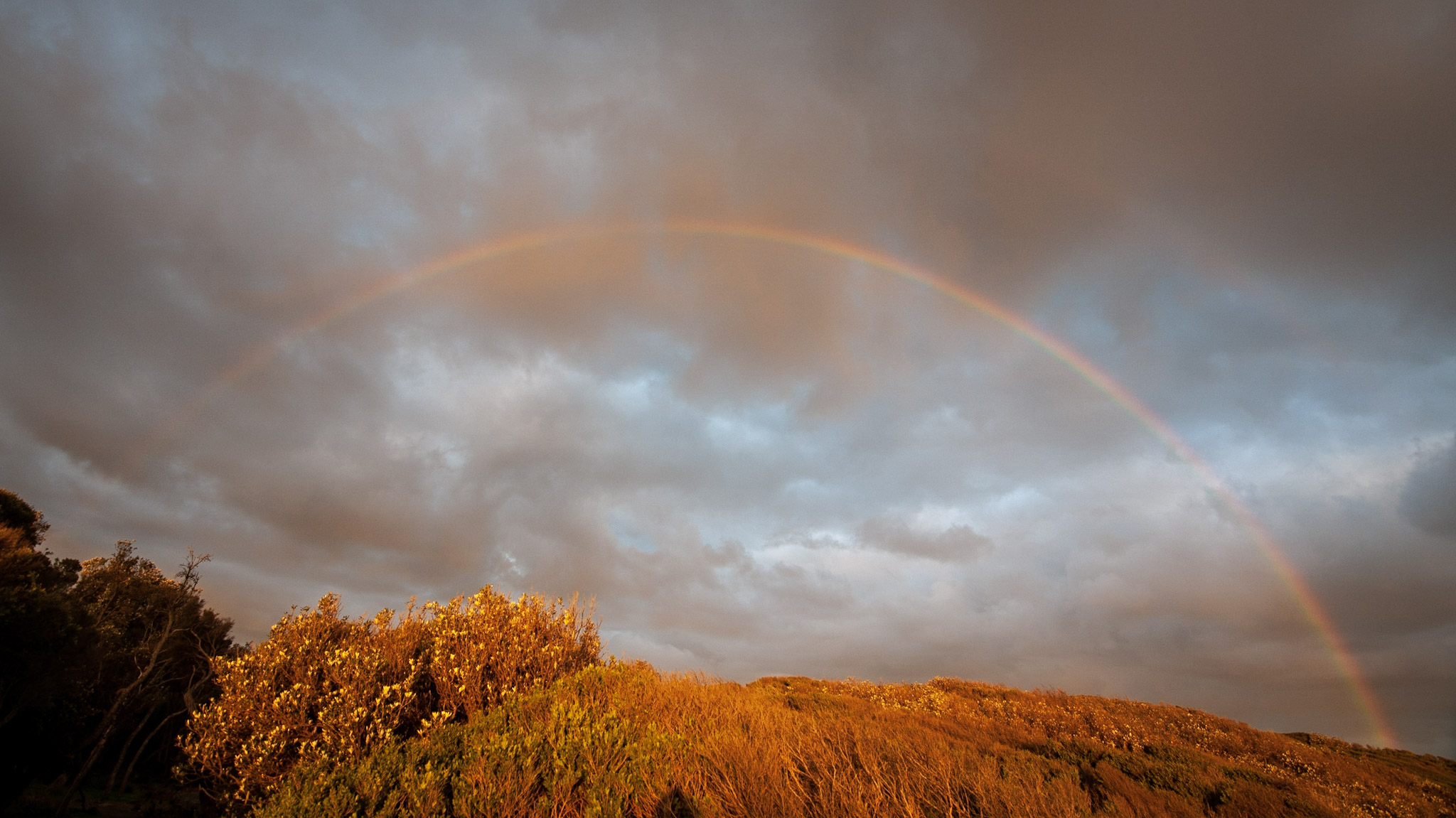
The photographs, posted here with permission, are by Ian Ferguson, a minister at Brunswick Uniting Church in Melbourne. They were taken in East Gippsland in February and March, following the Australian bushfires.

Burnt Tree, (c) Ian Ferguson

God of those who are numbed,
stunned by loss,
enfold us in a gentle darkness,
a hidden sleep, a long stillness.
Re-member us to ourselves,
awaken the courage we’d forgotten we had. [source]

God who knows chaos,
Who creates in darkness,
makes life from mud.
Give us back to ourselves
dissolved and helpless
may we feel ourselves forming
know our own shape. [source]

Fierce Lover of life,
give strength to our arms and our resolve.
Critical is this time for cleaning, swabbing, scrubbing
and washing our hands again.
And again, and again.
Let us join ourselves to the task
with readiness, steadiness, clarity.
Because we too love life,
our own and our neighbour’s. [source]

Bird over lake, (c) Ian Ferguson

Brooding God,
Who hovers over the waters,
Remain with us, for we are stranded on tiny islands of fear.
Draw a circle around our solitude,
hold us back from bringing danger to ourselves and others.
And where touch can no longer reach,
let love spin light across dark waters,
a thread of sweetness for small songs we might sing. [source]

God who speaks the word ‘Beloved,’
Keep watch on those who give voice to care,
Who speak trenchant truths,
explaining, instructing and chiding without blame.
Let us hear the warmth and strength in voices that stir response
and nourish hope in thoughtful action.
Give us ears to listen without fear. [source]

Spiderweb, (c) Ian Ferguson

God of the frail in body and mind,
be a companion in loneliness,
a consolation in absence,
a balm in mystified sorrow.
When doors, through dire necessity, must stay shut,
Let love arise in memory of gesture and embrace. [source]

God of Shadows,
give shelter to hollow, shaken humans
bewildered by sudden closure.
Sturdy structures shattered, hopeful trade ended,
meaningful work gone.
In the shocking silence where nothing can be said,
let birdsong be heard. [source]

Rainbow, (c) Ian Ferguson

Holy One who fears no fracture,
Lend your clarity to us for we are full of fear.
Already the abyss appears
Cracks in the earth, shifts in the ground we took for granted,
Now there is rupture
We do not trust our capacity to live.
That which is holy, divine, beyond us
frightens and allures us.
Call us to the mystery of the holy. [source]

God of the despondent,
Who sees our tiredness at futile effort,
Who knows that fear breeds phantoms,
help us we pray.
We are weary, and everywhere we turn
another impediment rises.
Our shoulders sag, the breath goes out of us.
In this stripped-back bareness, give us breath,
May we delight in human kindness, meet holiness anew. [source]

God of the harried,
Help us in the tension of these days,
for we are crushed by too many tasks,
nervous of new skills and tools in the too-much of this moment.
May we give heed without collapse,
restore our trust in longer spans of time – beyond the urgency of now. [source]

Ducks, (c) Ian Ferguson

Lover of all, Who watches through the night,
draw close to those who are dying,
and to those who mourn.
Calm our terror of abandonment.
Let us hold faith with one another
that love reaches beyond death. [source]

God who weeps,
comfort those who are dying,
may they die without fear.
And while they are yet living
give us courage to tell our love and trust in yours. [source]

Green fern in forest, (c) Ian Ferguson

This final prayer is not strictly a collect but rather a litany of things to love:

Great God who calls us to belonging,
Who delights in curiosity, invention, ingenuity:
Praise be for minds that bend and flex despite restriction,
for bodies that signal love by staying apart.
Praise be for neighbours talking across fences,
calling from balconies, waving through windows,
for greetings that cross the space between us.
Praise be for strangers, careful on footpaths,
for children asking their questions,
for truth tellers who earn our trust and speak to our fear.
Praise be for friends who warn and chide and encourage,
for human warmth in time of distance.
Praise be. [source]

You can follow Julie Perrin through her blog, Telling Words.