ANNOUNCEMENT: Vatican to hold Stations of the Cross art contest: Artists from across the globe are encouraged to participate in the Vatican-sponsored contest for fourteen new Stations of the Cross paintings. The winner will be announced September 30, 2024, awarded €120,000 (about $131,000), given a year to complete the commission, and then have their set of paintings exhibited in St. Peter’s Basilica during Lent 2026. The first step is to fill out an online application, which will become available January 8, with a deadline of January 31. Learn more at the link. (Update: The registration link is now live at https://contest.viacrucis2026.va/en/registration.)
+++
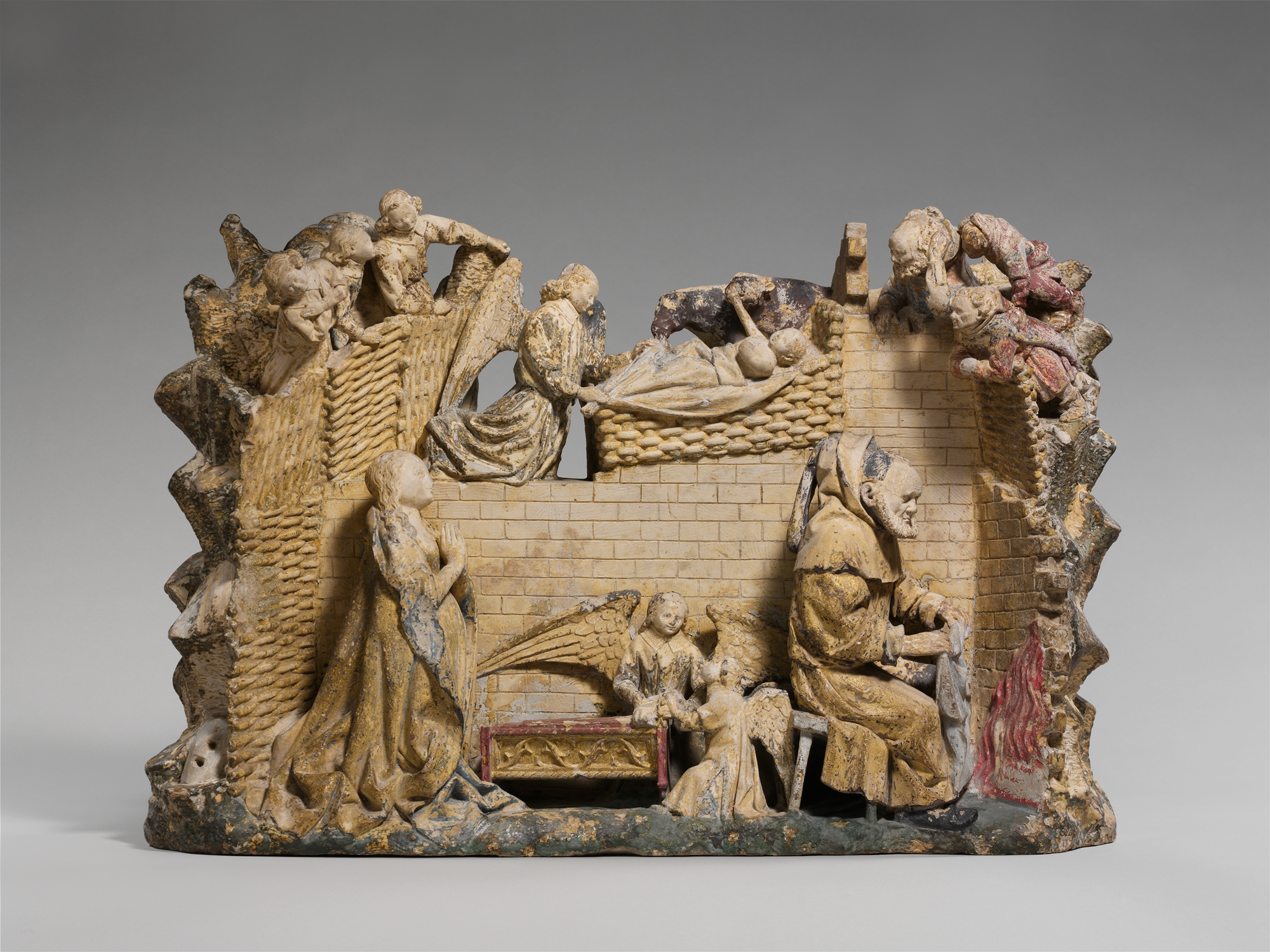
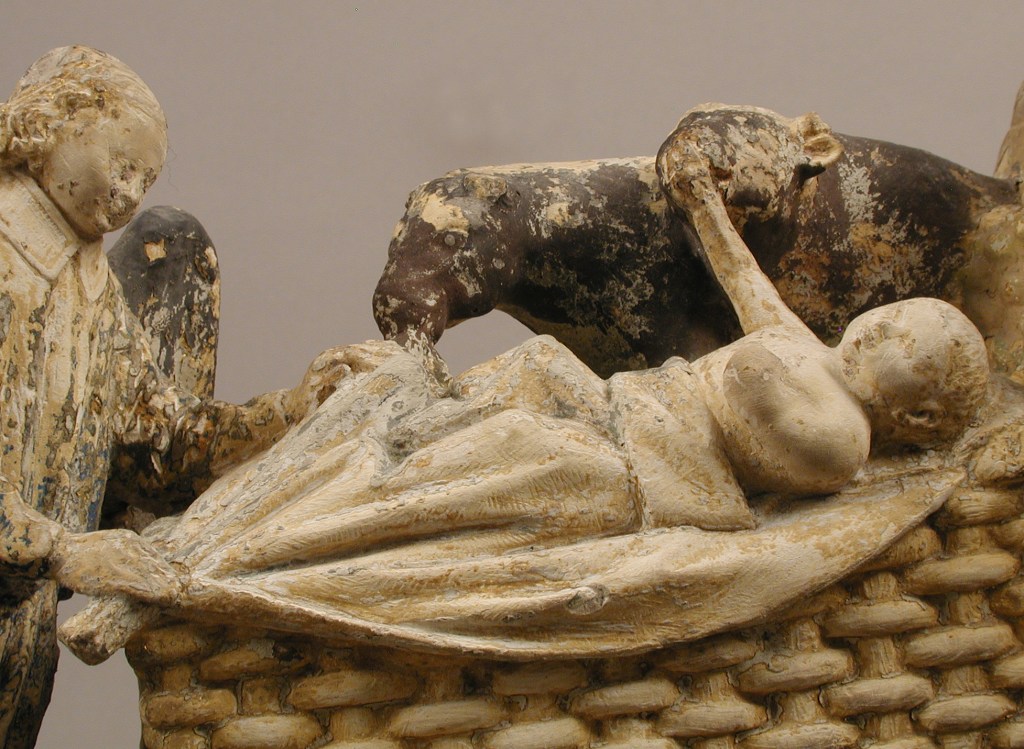
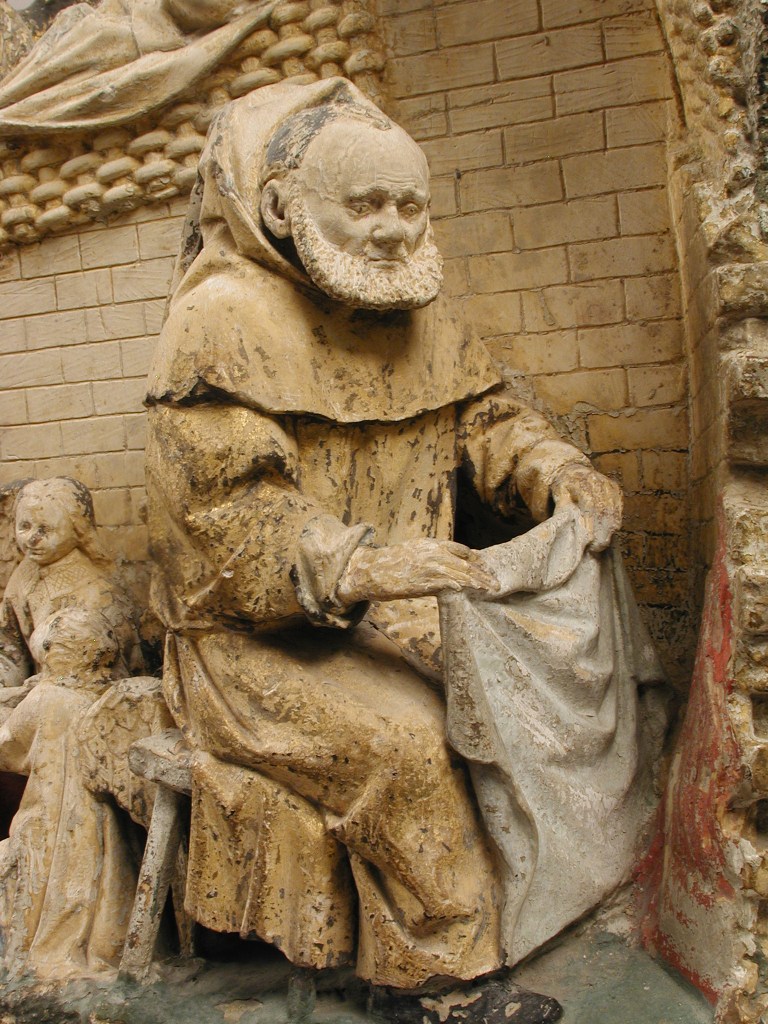
ART OBJECT: Burgundian Crèche, ca. 1450: In researching depictions of Joseph at the Nativity, I came across this charming little limestone-carved crèche from fifteenth-century Burgundy, France, acquired by the Metropolitan Museum of Art. Set inside a dilapidated brick interior patched with wattled matting, the scene portrays the infant Christ lying in a wattled manger that rests on a crumbling wall ledge. Such an unusual composition! I’m not sure why the infant is placed so precariously and at a height when there’s a carved cradle available on the ground, where angels kindly fluff his pillow, but I suppose it was to avoid overcrowding and for visual balance.
Circle of Antoine Le Moiturier (French, 1425–1495), Nativity, Burgundy, France, ca. 1450. Limestone with later paint and gilding, 17 3/4 × 25 7/8 × 7 1/4 in. (45.1 × 65.7 × 18.4 cm). Metropolitan Museum of Art, New York.
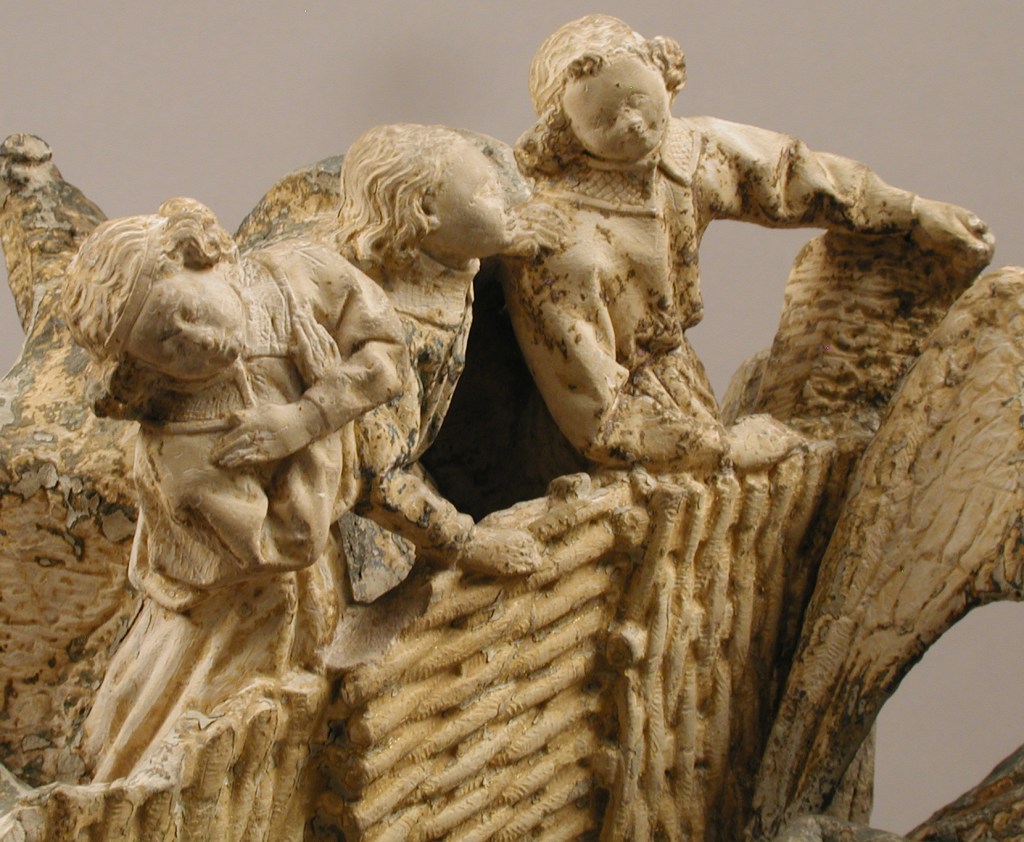
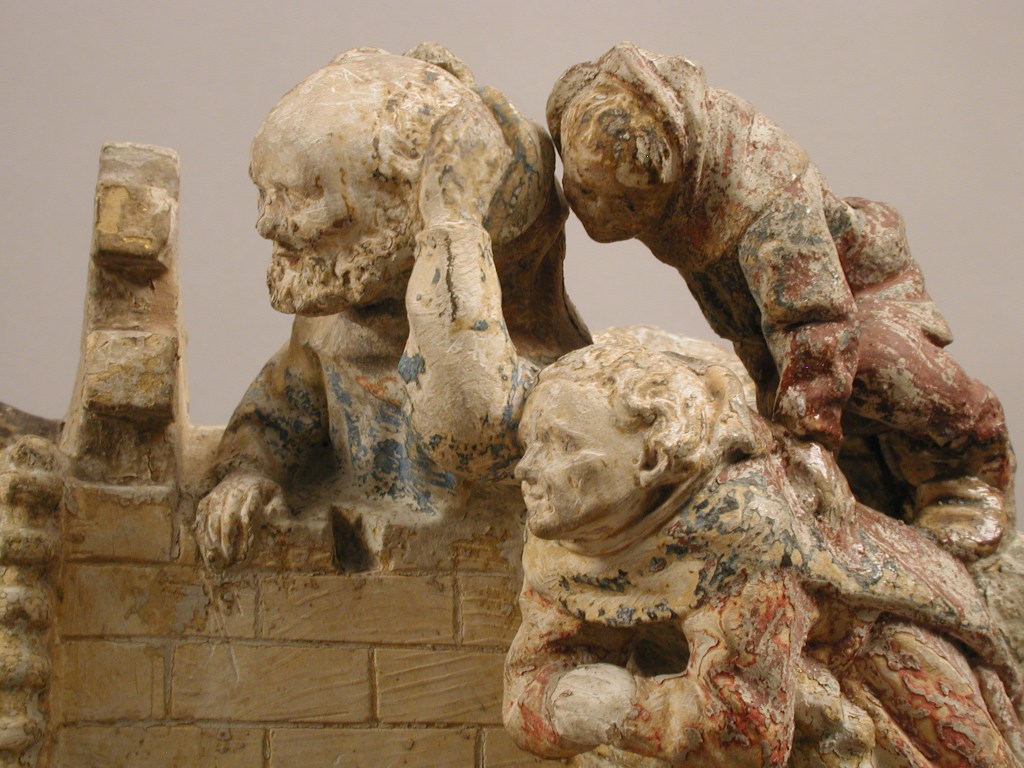
A donkey licks Christ’s feet while an ox licks his hand, which he appears to delight in, as he lifts his arm for better access. To the left and right of him are a trio of angels and shepherds, respectively, excitedly leaning in from outside to get a better look. Mary gazes up at her son in adoration while Joseph dutifully tends to a parental chore: drying one of Jesus’s freshly washed linens at the fire. (Dad doing laundry—huzzah!)
ART COMMENTARY: On The Adoration of the Magi by Domenico Veneziano: From the Visual Commentary on Scripture comes this 2022 video, one in a series filmed on-site at the Gemäldegalerie in Berlin. Theologian Ben Quash and art historian Jennifer Sliwka discuss an early Italian Renaissance tondo depicting the Adoration of the Magi.
+++
SONGS:
>> “Rejoice with Exceeding Great Joy”: Written by Lanny Wolfe in 1978 and performed by Reggie Smith, Charlotte Ritchie, and Ladye Love Smith at Bill and Gloria Gaither’s Homecoming Christmas 2006:
>> “Star of Bethlehem”: Written by Noel Dexter, arranged by C. S. (Cedron) Walters, and performed by the Jamaica Youth Chorale at their 2019 Christmas concert. Noel Dexter (1938–2019) was a Jamaican composer, choir director, and music educator, and this is probably his best-known work. It’s set to a Nyabinghi rhythm.
When the star of Bethlehem arise, hallelujah When the star of Bethlehem arise, hallelujah When the star of Bethlehem arise Come show me where the young child born!
There were wise men coming from the east, hallelujah There were wise men coming from the east, hallelujah There were wise men coming from the east Come show me where the young child born!
They brought gold, frankincense, and myrrh . . .
Not a man can save my soul . . . But Jesus! Show me where the young child born!
+++
VIDEO:“#NatZooZen: Giant Pandas Mei Xiang and Tian Tian in the Snow”: This Smithsonian’s National Zoo cam footage from January 2021 shows two giant pandas at play, sliding down a snowy hill! So adorable. Tian Tian and Mei Xiang arrived at the National Zoo in 2000 and in 2020 produced a cub, Xiao Qi Ji. All three pandas returned to Beijing in November, having been lent to the US by China as part of a cooperative research program whose contract has expired.
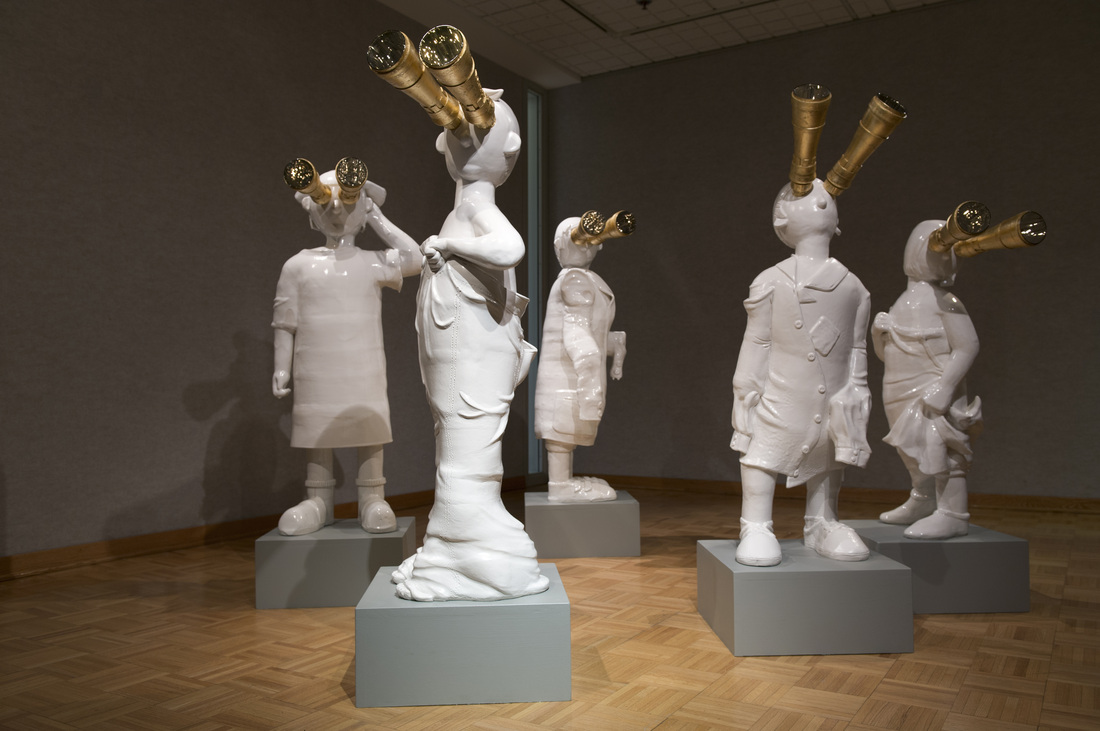
Namdoo Kim (Korean, 1985–), Golden Binoculars, 2013. Glass, ceramic, mixed media, each figure 42 × 20 × 20 in. Installation at the 2018 SOFA Chicago art fair (now Intersect Chicago).
Watchman, tell us of the night, what its signs of promise are. Traveler, o’er yon mountain’s height, see that glory-beaming star. Watchman, does its beauteous ray aught of joy or hope foretell? Traveler, yes; it brings the day, promised day of Israel.
Watchman, tell us of the night; higher yet that star ascends. Traveler, blessedness and light, peace and truth its course portends. Watchman, will its beams alone gild the spot that gave them birth? Traveler, ages are its own; see, it bursts o’er all the earth.
Watchman, tell us of the night, for the morning seems to dawn. Traveler, darkness takes it flight; doubt and terror are withdrawn. Watchman, let thy wanderings cease; hie thee to thy quiet home. Traveler, lo! the Prince of Peace, lo! the Son of God is come!
Unfolding in alternating couplets, this nineteenth-century hymn from England presents a dialogue between a traveler and a watchman—that is, someone stationed at a vantage to look out for coming invasions or things out of the ordinary. The traveler asks the watchman what he sees and what its meaning is; the watchman responds that he sees a glorious star ascending up over the mountains, portending blessing and peace not just for the land of its rising but for all peoples. A beneficent invasion!
This post is part of a daily Advent series from December 2 to 24, 2023 (with Christmas to follow through January 6, 2024). View all the posts here, and the accompanying Spotify playlist here.
In the church calendar, the linked seasons of Advent, Christmas, and Epiphany are sometimes referred to as the “cycle of light.” “Since earliest times the Christian community has utilized light as a primary symbol to convey the meaning of the Christ-event,” writes Wendy M. Wright in The Vigil: Keeping Watch in the Season of Christ’s Coming. “The power of the symbol was not lost on most generations of believers who lived closer than we do to the truth that we are all ultimately dependent upon the light of the sun for warmth, vision, and life itself” (152). Light imagery permeates scripture and the writings of the church fathers.
The capstone of the cycle of light, celebrated each year on January 6, is Epiphany, which means “manifestation” or “appearance.” In the West, this feast commemorates the visit of the magi, to whom the divinity of Christ was revealed, and who brought back the light they received to their homelands, an early spreading of the gospel. Epiphany is exactly one month away, but I wanted to provide a few resources in advance. For those in the DC metro area: note that there are just two weeks left to see the Anne Lindberg exhibition!
+++
NEW PLAYLIST: Epiphany (Art & Theology): I put together a playlist of nearly a hundred Epiphany songs that celebrate Jesus as the light of the world and that mark the magi’s transformative encounter with him.
Besides the classic “We Three Kings,” it also includes a few versions of the ancient hymn “Phos Hilaron” (originally written in Koine Greek and translated into English as “Gladsome [or Gladdening] Light”), a Provençal carol popularized by Bizet, a shape-note hymn from Appalachia, aguinaldos from Puerto Rico, Arabic hymns from Syria and Lebanon, plainchant scripture settings, Renaissance motets, traditional and contemporary Black gospel songs, indie songs (including retuned hymns) from the past decade, and choral works from the UK, Jamaica, and Argentina. Some of the selections are quieter, more reflective, whereas others are very exuberant, like “Jesus Is the Light” by Hezekiah Walker and the Love Fellowship Crusade Choir:
And “Los Reyes Magos,” the fifth movement of Ariel Ramirez’s folk drama Navidad Nuestra (lyrics here); the song was written as a taquirari, a type of Bolivian folk song that has a syncopated rhythm and that is danced to, and features a charango (small guitar) and siku (Andean panpipe):
+++
ART COMMENTARIES: The VCS Advent Calendar 2023: Every Advent, the Visual Commentary on Scripture sends out a daily image from its online archives to its email list around a seasonal theme. This year’s theme is “light.” The images are keyed to particular scripture passages having to do with light and are accompanied by commentary from a range of contributors. So far the VCS has featured a Genesis 1–inspired Sistine Chapel fresco, John Piper and Patrick Reyntiens’s extraordinary Baptistery Window at Coventry Cathedral, a Trinitarian miniature from an English book of hours, a heliotropic landscape sculpture by David Wood, a light installation by Dan Flavin at a church in Milan, and Vincent van Gogh’s Starry Night.
Baptistery Window, Coventry Cathedral. Designed by John Piper and made by Patrick Reyntiens, 1957–61. Stained glass, 85 × 56 ft.
+++
EXHIBITIONS:
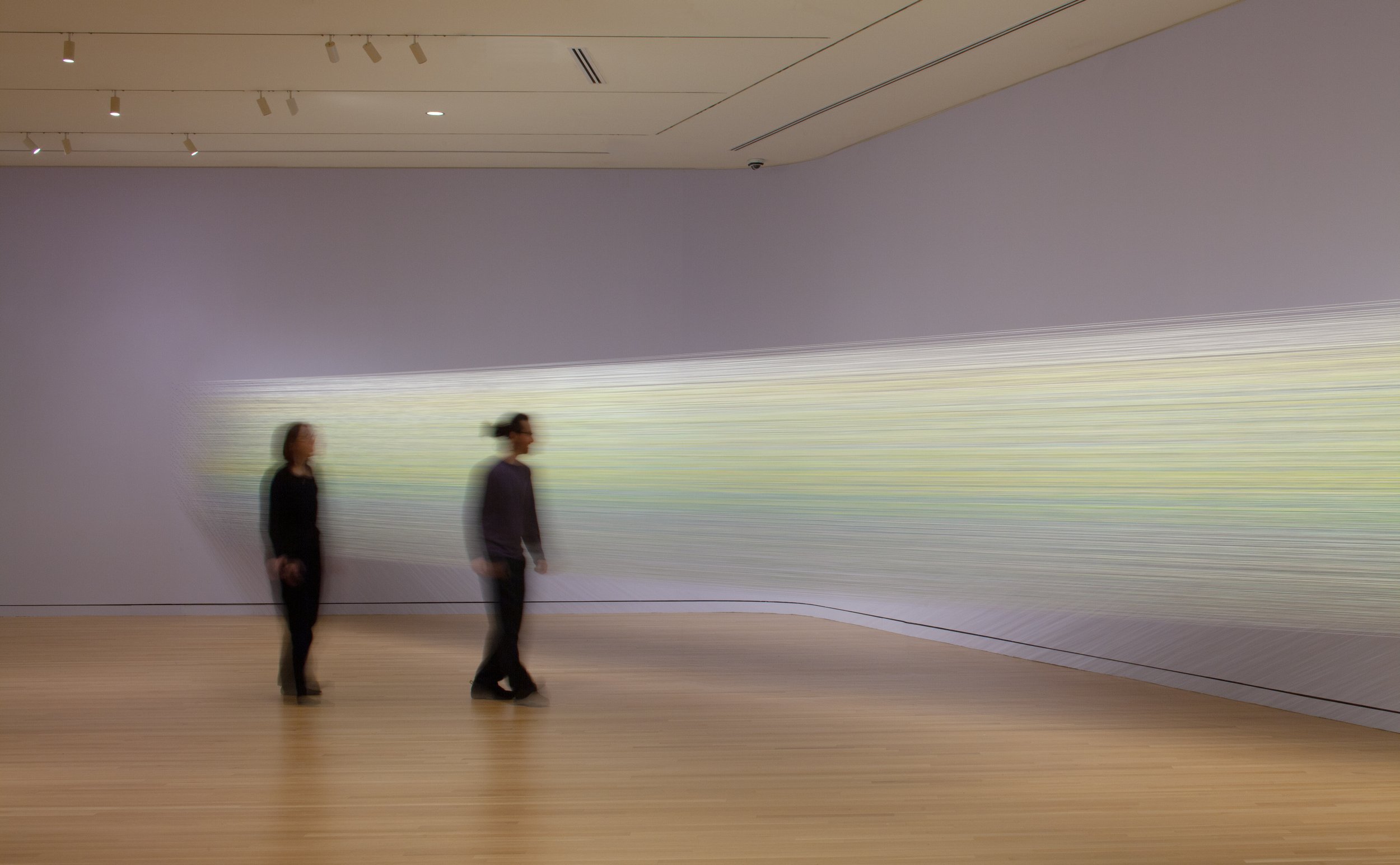
>> What color is divine light? by Anne Lindberg, January 5–December 22, 2023, Textile Museum at George Washington University, Washington, DC: I saw this installation last month, and it is striking! About four thousand strands of complementary yellow and blue cotton thread (and some white and green), stretching across the gallery against a backdrop of lavender-painted walls, evoking light. The artist describes the work as a drawing made of textile material in the air. It was inspired by a 1971 essay of the same title by the art historian Patrik Reuterswärd (see The Visible and Invisible in Art: Essays in the History of Art), and it opened adjacent to an exhibition of prayer carpets, titled Prayer and Transcendence.
Anne Lindberg (American, 1962–), What color is divine light?, 2023. Cotton thread, staples, 5 × 55 × 14 ft. Solo exhibition at the Textile Museum, George Washington University, Washington, DC. Photo: Derek Porter.
>> Bubble Universe: Physical Light, Bubbles of Light, Wobbling Light, and Environmental Light by teamLab, opens early February 2024, Borderless (museum), Azabudai Hills, Tokyo: teamLab is an international collective of “ultra-technologists” consisting of artists, programmers, engineers, CG animators, mathematicians, and architects who collaborate on immersive art projects. One of their upcoming installations is a room with hundreds of glowing spheres, each containing unique changing lights that interact with guests and the environment itself. [HT: My Modern Met]
teamLab, Bubble Universe, 2023 (work in progress). Interactive installation, Borderless, Azabudai Hills, Tokyo.
+++
NEW ALBUMS:
>> The Light by Sarah Sparks: A four-song EP by a Christian singer-songwriter from Hawaii. Here’s the first track:
>> Morning Star: Music for Epiphany Down the Ages by the Gesualdo Six: Released November 3, this wonderful album comprises twenty-one choral pieces for Epiphany—a mix of plainchant propers for Mass, hymns, Renaissance motets, and twenty-first-century works. One of the contemporary works is a setting by Owain Park of Psalm 43:3: “O send out thy light and thy truth, that they may lead me; let them bring me unto thy holy hill, and to thy dwelling”:
Frida Hansen (Norwegian, 1844–1931), Melkeveien (Milky Way), 1898. Tapestry, 260 × 345 cm. Museum für Kunst und Gewerbe (Museum of Arts and Crafts), Hamburg, Germany.
This art nouveau tapestry by Norwegian artist Frida Hansen received a gold medal at the world’s fair in Paris in 1900. It shows angelic figures unfolding a starry veil over the night sky. They glide forward above a band of Hebrew script that references the creation of the stars in Genesis 1.
The God who brought light in darkness in the beginning is bringing light again as we enter a new liturgical year.
Comprising the first five weeks of that new year, Advent-Christmas-Epiphany is a time of starlight, promise, and revelation. The first of the triad, Advent, is particularly concerned with themes of longing, waiting, lament, and future-oriented hope. We make ready our hearts to receive Christ—he who came to us first as a babe in a manger, in a vulnerable body like ours, to teach and suffer and redeem, and who is coming back one day in unveiled power and majesty to bring the fullness of God’s heavenly kingdom to earth.
Two millennia ago, God hung a special star in the sky for the magi to follow, guiding them on their way to the Christ child. May God similarly illumine our way to Christ as we seek him this season, giving us eyes to see and ears to hear the gospel of God-with-us and cultivating in us an eager readiness for Christ’s return.
I think of Hansen’s crowned young ladies as ushering us into the deep, dark blue of Advent to behold the signs that sparkle in scripture, foretelling a wondrous future.
LISTEN: “Star of Wonder” by Sara Groves, on O Holy Night, 2008; adapted and arranged from the refrain of “We Three Kings” by John Henry Hopkins, 1857
Star of wonder, star of light Star of royal beauty bright Guide us O guide us Won’t you guide us
Want to follow along with the music on Spotify? Most of the songs in this Advent blog series, and many more besides, can be found on the Art & Theology Advent Playlist.
Following the popularity of last year’s “25 Poems for Christmas,” I’ve decided to publish a brand-new installment, and will perhaps make this a yearly tradition! All the selections can be read online—just follow the links.
Despite the pithy title of this post, not all the poems are “Christmas” poems, strictly speaking, but rather they encompass the season of Advent too, as well as Epiphany. Advent is a four-week season leading up to Christmas that is characterized by a mood of longing and expectation; it is oriented not only toward Jesus’s first coming but also toward his second. Christmas, of course, celebrates the birth of Jesus, the Word of God made flesh. And Epiphany, on January 6, commemorates the visit of the magi to the crib, representing God’s self-revelation to the wider world.
Each poem is accompanied by a micro-commentary or short descriptive blurb, which I suggest you read after reading the poem itself. There’s a benefit to first entering a poem without having any context—then after registering your initial impressions and questions, to consider another person’s framing or analysis or highlights, and reread. And then a third time! Each reading can potentially reveal new meaning.
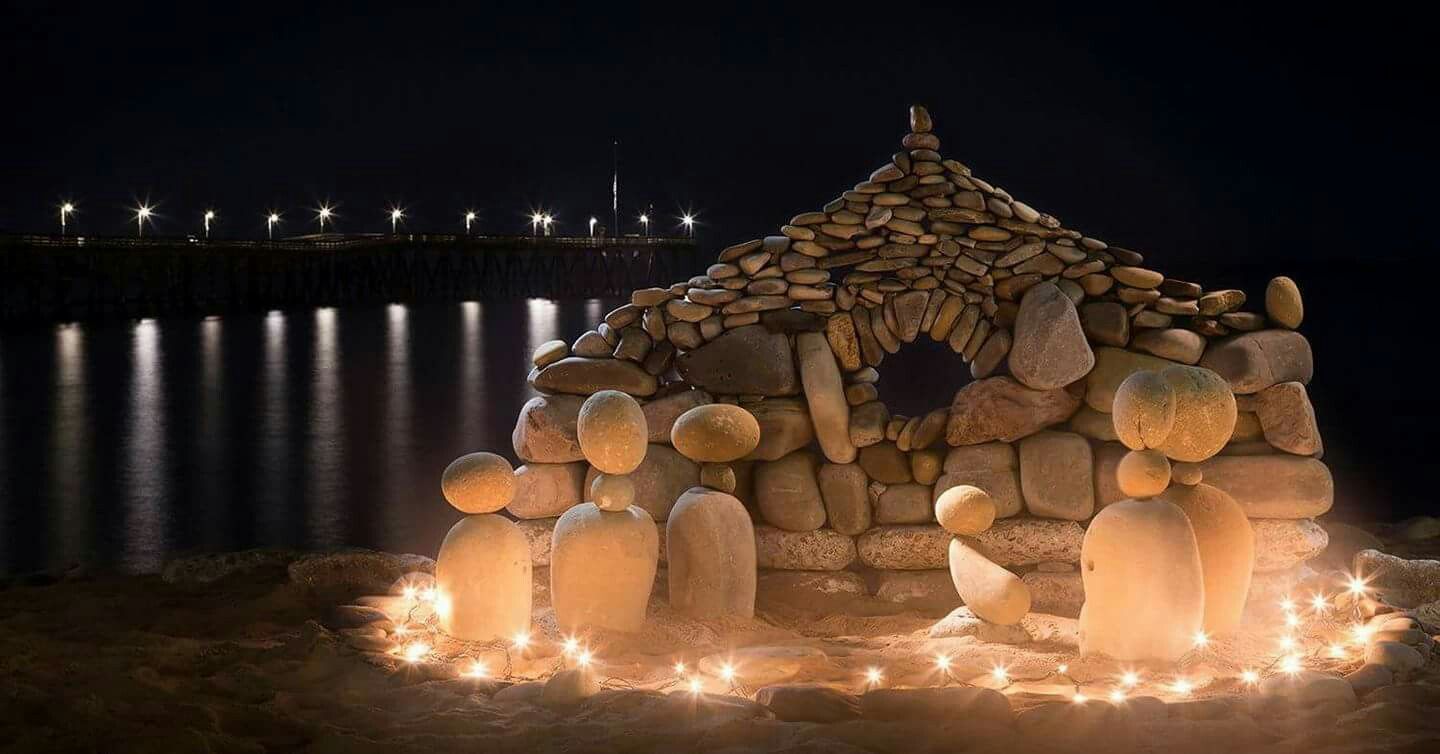
Stone Nativity by Juan Manuel Cisneros, Ventura, California, December 2016 [learn more]
1.“Haiku for an Advent Calendar” by Richard Bauckham: Church services during Advent tend to focus on messianic prophecies from the Hebrew Bible, rumblings of a coming savior. In this sequence of twenty-four haiku, Richard Bauckham pulls a detail from each book of the Jewish scriptures, finding anticipations of Christ. For example, Isaiah: “In the wilderness / a voice cries for centuries / seeking an echo.” Or Job: “God answered Job but / not his question. Maybe he / will do that again.”
2. “How Christ Shall Come” (anonymous): The cosmological Christ blew in from the four cardinal directions, coming as lover, knight, merchant, and pilgrim. So says this fourteenth-century Middle English lyric, rich in metaphor, compiled in a book of preaching aids and sermons by John Sheppey (d. 1360), bishop of Rochester. (It is unclear whether he is the author of the poem.) The great medieval literature scholar Carleton Brown gave it the title “How Christ Shall Come” in his landmark Religious Lyrics of the XIVth Century (1924), and Grace Hamman brought it to my attention recently in her wonderful monthly Substack, Medievalish, providing a modern English translation and commentary.
3.“Hawk Lies Down with Rabbit” by Seth Wieck: What would it look like for death to no longer have dominion in the animal world? Grappling with Isaiah’s end-time vision of a peaceable kingdom void of predation, this poem describes in graphic terms a bird of prey making its kill, feeding on flesh, and wonders how a hawk could still be itself with rewired impulses. Hear the author read and provide context for the poem on the Reformed Journal Podcast.
4.“john” by Lucille Clifton: Written in the voice of John the Baptist, this poem is part of an extraordinary sixteen-poem sequence titled “some jesus,” which features a range of biblical characters. In her retelling of his ministry as forerunner to the Messiah, Lucille Clifton casts John as a Black Baptist preacher, preparing his listeners to receive the one who “com[es] in blackness / like a star.” Clifton’s larger body of work would suggest that “blackness” here is multivalent, describing what Jesus comes into and as: the word suggests the darkness of the world that Christ entered, on the one hand, but also functions as a positive racial identifier. In Clifton’s revisioning, Christ comes as a Black man, wearing “a great bush / on his head”—which, again, could be read as an Afro, and/or as a mystical reference to the site at which God revealed himself to Moses in the Sinai desert. Luminous with truth, Christ comes, “calling the people brother.”
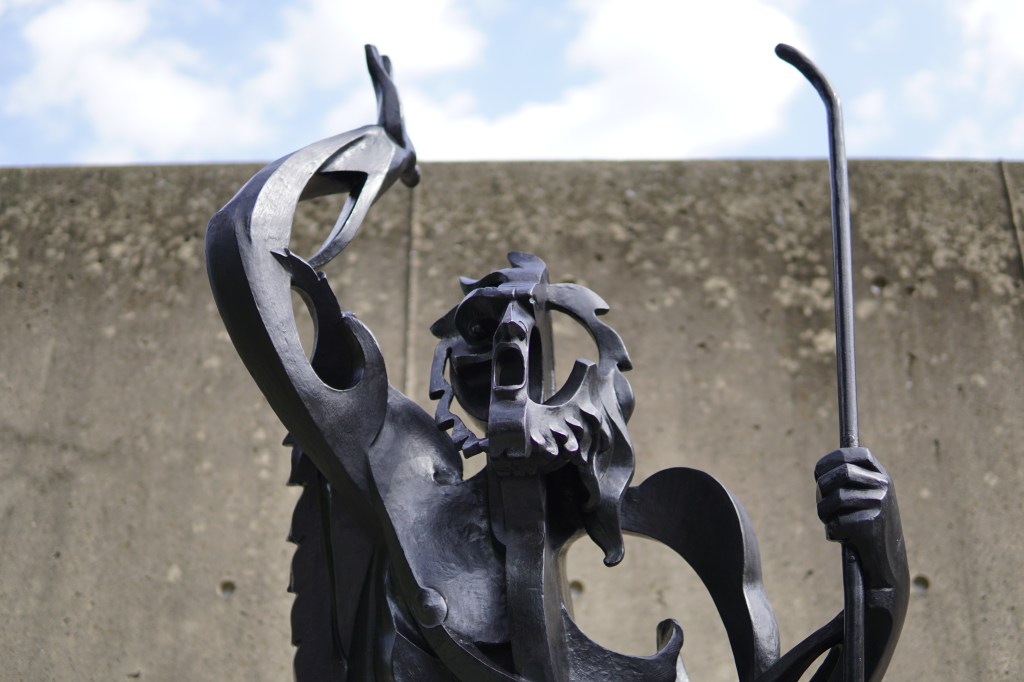
Pablo Gargallo (Spanish, 1881–1934), The Prophet (St. John the Baptist) (detail), 1933. Bronze, 91 3/4 × 29 1/2 × 19 in. Wurtzburger Sculpture Garden, Baltimore Museum of Art. Photo: Victoria Emily Jones.
5. “Christmas Mail” by Ted Kooser: Every December the story of an ancient birth comes alive again in couriers’ mailbags, in tin boxes at the ends of driveways, on mantels and fridges. This poem honors those postal workers who deliver good tidings in the form of Christmas cards, the magic spilling out the envelopes to make even the most tiresome routes sparkle a bit.
6. “December 25” by George MacDonald: Through the mid-nineteenth century, denominations influenced by the Reformed tradition, including the Church of Scotland in which George MacDonald was raised, typically did not observe Christmas, the rationale being that no one day should be thought of as holier than any other. But in his book-length dramatic poem Within and Without, MacDonald refers to December 25 as “this one day that blesses all the year”—and in this seven-liner from his Diary of an Old Soul, he describes Christmas as a gleaming blue sapphire, a structural center around which all the other jewels of the church calendar are oriented.
7. “On a Cardinal Climbing Down a Manhole to Restore Power to 400 Homeless People” by Michael Stalcup: On May 11, 2019, Cardinal Konrad Krajewski, the papal almoner (Pope Francis’s special appointee to distribute charity), crawled into a manhole and broke a police seal to personally restore power to a homeless shelter in Rome whose electricity had been shut off due to its failure to pay its bills. The shelter was occupied by some 450 people at the time, 100 of them children, who had been without electric light, hot water, and refrigeration for nearly a week. In this poem, which can be read Christologically, Michael Stalcup celebrates this defiant humanitarian act that brought light to a people living in darkness.
8. “Incarnation” by Amit Majmudar: “Inheart yourself, immensity. Immarrow, / Embone, enrib yourself.” So begins the five-poem sequence “Seventeens.” Musical and witty, this first poem is a plea to the great I AM to take on a body and “be all we are, and all we aren’t.”
9.“The Lord Is with Thee” by Micha Boyett: Written in 2010 as the third in a five-poem sequence commissioned by John Knox Presbyterian Church in Seattle, this poem centers on the Visitation episode described in Luke 1:39–58. It’s about Mary finding belonging in God’s story, especially through the companionship of her elder cousin Elizabeth, who has nurtured Mary’s faith since infancy and continues to do so in this her moment of crisis. “How easily she spoke of God, / as if he were a neighbor, a fish vendor on the street,” Mary admires. Elizabeth supports Mary physically, emotionally, and spiritually, holding her hair back as she vomits, protecting her from vicious rumors, affirming the work of God in her life, and accompanying her at the start of this wild path God has set them both on.
Odilon Redon (French, 1840–1916), Mystical Conversation, ca. 1896. Oil on canvas, 65 × 46 cm. Museum of Fine Arts, Gifu, Japan.
10.“Our Lady” by Mary Elizabeth Coleridge: The great-grandniece of the Romantic poet Samuel Taylor Coleridge, Mary Elizabeth Coleridge (1861–1907) grew up in a home visited by family friends Alfred Lord Tennyson, Anthony Trollope, John Ruskin, and Robert Browning, among others. In this poem she marvels at how God chose the common-born Mary for such a task as mothering the Christ, singing along with Mary’s Magnificat about how God raises up the lowly.
Source: Fancy’s Following (privately published, 1896). Public Domain.
11. “Traveling Man”by Marjorie Maddox: With his pregnant wife alongside, Joseph plods down south to Bethlehem, “convinced of the predestined / roll of dice chrismated with Miracle.” An epigraph from a Leonard Cohen song sets the tone.
12.“Sonnet in the Shape of a Potted Christmas Tree” by George Starbuck: This charming shape poem contrasts the extravagance of our popular celebrations of Christmas with the poverty of the first-century event it marks. The first half describes the furious wind of decorative activity that uproots evergreens from their natural habitats to bring them indoors and deck them with baubles and ribbon. I don’t know how to interpret “no scapegrace of a sect,” but “Daughter-in-Law Elect” refers to a duet from the Gilbert and Sullivan opera The Mikado. The turn comes with “a son born / now / now,” the latter two lines styled as the visible trunk of the tree; here the scene shifts to the simple stable of old, where Mary lies “spent” next to her newborn along with a cow and donkey, a sole “firework” guiding the magi and us all to the spot.
13.“Christmas (I and II)” by George Herbert: George Herbert (1593–1633) is one of the most celebrated poets of the English language. In part 1, a sonnet, of this two-part poem, he imagines himself a weary traveler who chances upon a humble inn where he unexpectedly finds his Lord, the infant Christ. It’s the inn of Bethlehem. Having then received rest from Christ his host, in the closing couplet he expresses his desire to reciprocate—to offer his own soul, lowly though it is, as a residence for Christ, praying that God first adorn it to make it hospitable. In the second part of the poem, Herbert uses a metaphysical conceit (extended metaphor) comparing his soul to a shepherd whose flock of thoughts, words, and deeds pastures on God’s word and who, like the shepherds of Bethlehem, sings glory to God. His shepherd-soul seeks eternal daylight, which he finds in the Son/sun, whose beams so intertwine with his song that the beams sing and his song shines.
14. “Descending Theology: The Nativity” by Mary Karr: The physicality of childbirth, from the contractions (which pierce the Virgin like a star, Karr writes) to the bodily fluids, is heavily featured in this poem. Jesus emerges from his mother “a sticky grub” with a “lolling head” and “sloppy mouth” that seeks out her breast for food. And as she feeds him physically, he feeds her spiritually. Then he falls asleep. His first nap, Karr writes, is a foretaste of the sleep of death he will eventually come to taste. But for now, he wakes up crying—as all babies do.
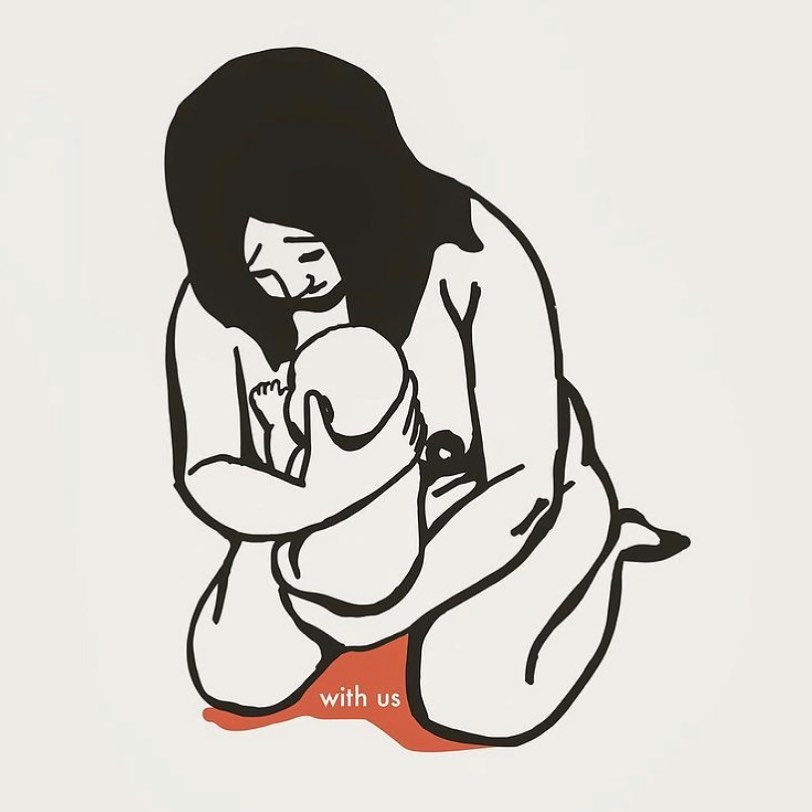
Scott Erickson (American, 1977–), With Us, Face to Face, 2016. Digital art. [available for purchase]
15.“from spiralling ecstatically this”by E. E. Cummings: What a fantastic opening line! The heavenly spheres whirling, twirling, down into the “proud nowhere”—Bethlehem—“of earth’s most prodigious night.” Heretofore living in mundanity, the domestic animals, hungry for miracle, for newness, are vouchsafed to be witnesses of this supernatural event, before which they kneel “humbly in their imagined bodies.” Overhead floats the “perhapsless mystery of paradise,” a phrase suggesting that heaven is beyond human understanding but not without certainty; it’s a declarative reality, not subjunctive, even if it can’t quite be put into words. Mary herself has no words—she silently, knowingly smiles, while the created world erupts in song around her. The “mind without soul” is a reference to Herod, who seeks to snuff out this new life, but to no avail.
The omission of spaces after punctuation marks (e.g., “a newborn babe:around him,eyes”) is not a mistake; that’s how E. E. Cummings liked it. Scholars say it’s to create a faster rhythm, but in this poem I don’t think that choice is as effective, as pauses and slow savoring seem more appropriate to its contemplative mood.
16.“How the Natal Star Was Born”by Violet Nesdoly: Narrated by the angel Gabriel, this poem imaginatively describes heaven’s nervously awaiting the birth of Jesus during the nine months following Gabriel’s dispatch to Mary, and then busting out in celebration when at last they hear his infant-cry. When his Son is born, instead of cigars, the Father passes out trumpets to his company of friends, who sound them all the way to Bethlehem’s fields, and pops open a bottle of champagne whose bubbles spray far and wide.
17. Sections 9–10 of “The Child” by Rabindranath Tagore: Hinduism was the religion of Rabindranath Tagore’s birth and upbringing, but he also held deep respect for Jesus Christ. (For more on the influence of Christianity on Tagore’s thought and writing, see chapter 4 of Rabindranath Tagore and Interfaith Dialogue by Manas Kumar Ghosh [DMin thesis, Charles Sturt University, 2010].) “The Child” is a free-verse poem that Tagore wrote in English in 1930 after seeing a passion play in Germany and then translated into Bengali in 1932 with the title “Sishutirtha” (Pilgrimage to Childhood). In it a “Man of faith” gathers people from all walks of life to join him on a “pilgrimage of fulfilment,” to “struggle [through the dark] into the Kingdom of living light.” Initially met with enthusiasm, the Man later becomes a target of the people’s anger and distrust, and they kill him. Disorientation ensues. But a man in the crowd is able to rally the others to repent and resume their quest, following the spirit of “the Victim.”
The final two sections, 9 and 10, are the selection I’ve chosen. (Scroll right to read the last.) At “the first flush of dawn,” when the time is ripe, the pilgrims arrive at a thatched hut in a palm grove, where they finally meet the eternal Light they’ve been seeking: “the mother . . . seated on a straw bed with the babe on her lap, / . . . the morning star.” Here is the Child of the title, humanity’s redeemer.
Source: The Child (London: George Allen and Unwin, 1931)
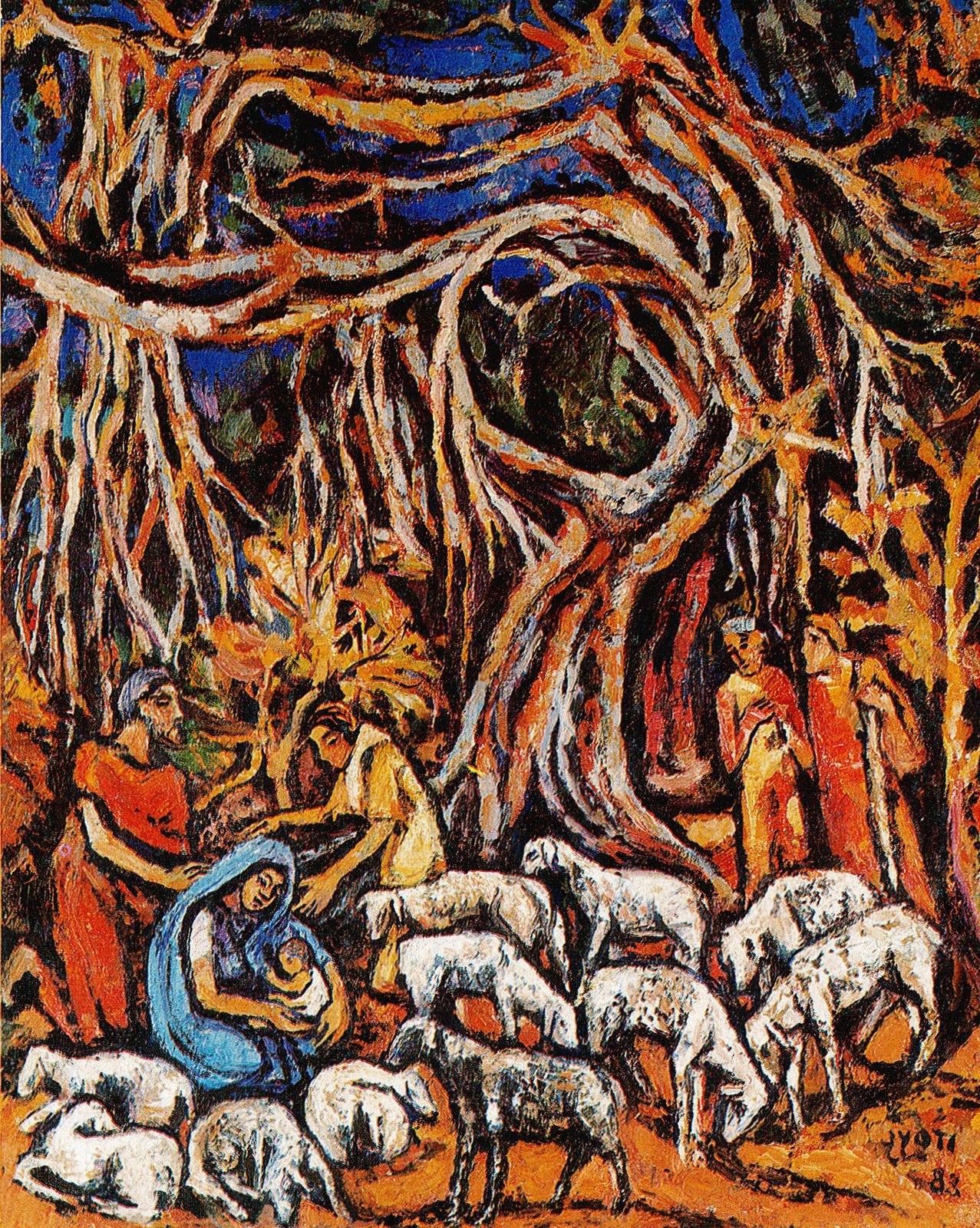
Jyoti Sahi (Indian, 1944–), Adoration of the Shepherds, 1983. Oil and acrylic on canvas.
18. “Love’s Bitten Tongue (11)”by Vassar Miller: This poem, “You, my God, lonesome man, Love’s bitten tongue,” is from a crown of twenty-two sonnets, a type of sequence in which the last line of each sonnet is repeated as the first line of the next, but each time with a new twist of syntax and sense. The crown as a whole expresses the poet-speaker’s struggle against her ego, and her desire for Christ (whom she gives such an evocative name in the title!). In this particular sonnet she describes waiting at the edge of her bed every Christmas Eve as a child in anticipation of both Santa’s arrival with gifts and the holy mystery of Christ’s birth, an admixture of sacred and profane longings that fill her still as an adult.
19. “Gloria in Profundis” by G. K. Chesterton: G. K. Chesterton’s poems are of variable quality, but this one is brilliant, emphasizing God’s descent from the rich heights of heaven into an obscure cave in a simple town. “Glory to God in the lowest!” it exclaims, a clever inversion of the angels’ song to the shepherds in Luke 2:14. The poem was originally published in a 1927 Christmas pamphlet with wood engravings by Eric Gill. The Latin title translates to “Glory in the Depths.”
Source: Gloria in Profundis by G. K. Chesterton (Ariel series pamphlet) (London: Faber and Gwyer, 1927); compiled in The Spirit of Christmas (New York: Dodd, Mead, 1985)
20.“Silent Night” by Bonnie Bowman Thurston: Rev. Dr. Bonnie Thurston invokes a tradition that says the night of Christ’s birth, there was a whole hour in which time stood still and all was silent. What a fascinating legend! Thurston told me its origin is northern European, said she remembers reading it in some scholarly Celtic studies; I wasn’t able to locate any such mentions, but the second-century Protoevangelium of James, chapter 18, probably written in Egypt or Syria, does describe everything momentarily freezing in place around Joseph as he steps out to find a midwife for Mary. Anyway, the poem ends with a striking metaphor! Word, flesh: fire. (Reminds me of this digital artwork by Scott Erickson.)
21. “After Luke 2:19” by Michelle Ortega: When the shepherds recounted to Mary what the angels had told them in the fields about Jesus being the promised Messiah, “Mary treasured all these words and pondered them in her heart,” Luke narrates in his Gospel. Poet Michelle Ortega expounds on this verse, emphasizing the relationship of Mary’s body to her son’s from conception to birth and now postpartum—an intimacy known well by mothers across the centuries. As wondrous as it was to be part of a cosmic story writ large in the skies, Ortega suggests that Mary treasured just as much as the grand pronouncements those small moments of being just an ordinary mama.
22. “Christmas: 1924”by Thomas Hardy: “We the civilized world have given Christianity a fair trial for nearly 2000 years, & it has not yet taught countries the rudimentary virtue of keeping peace,” lamented the British novelist and poet Thomas Hardy (1840–1928) in a letter to Florence Henniker dated February 25, 1900, during the Boer War. World War I only increased his cynicism, which is on display in this sour little epigram that opens with an ironic quotation of the angels’ proclamation to the shepherds the night of Jesus’s birth.
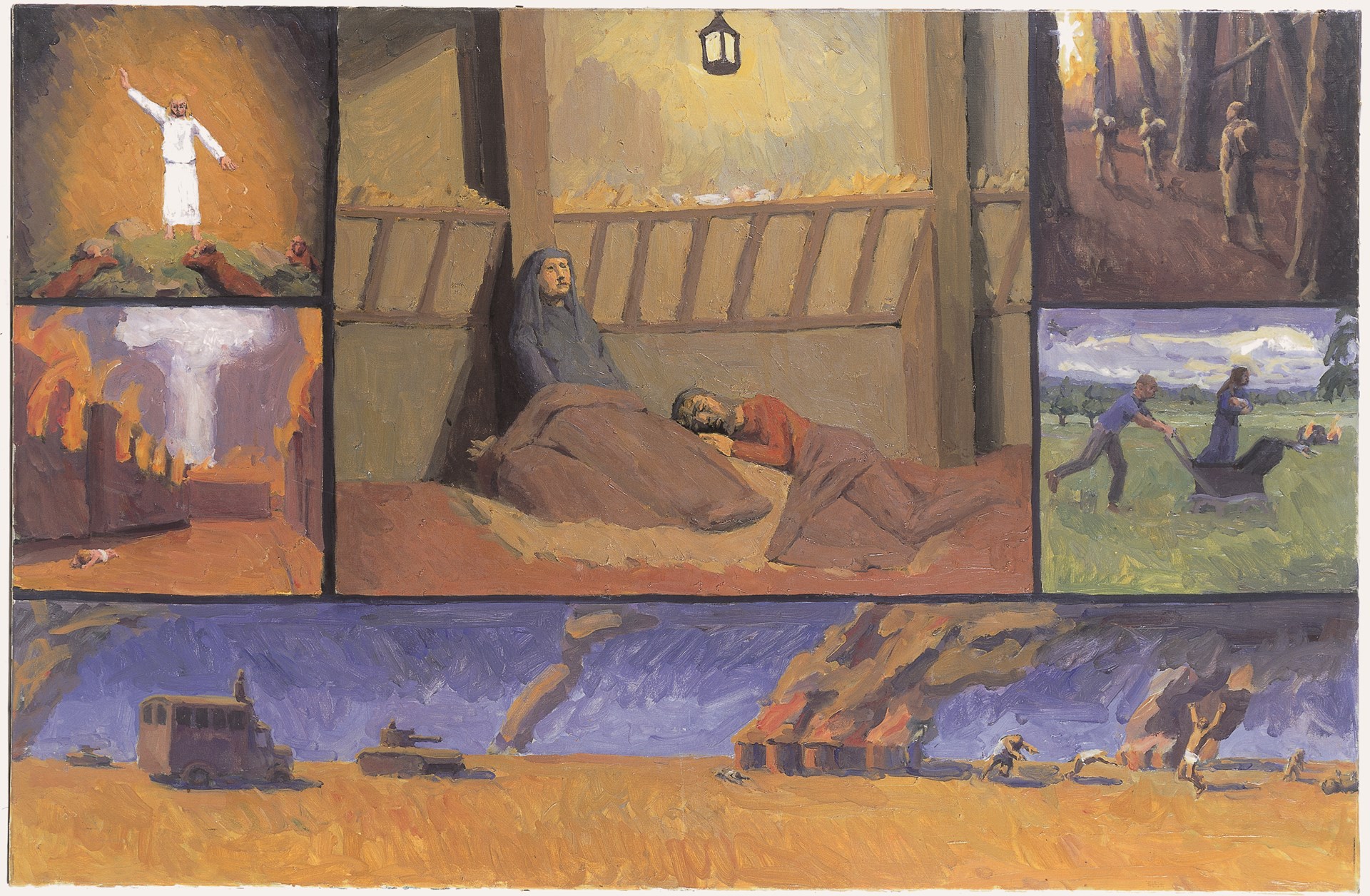
Francis Hoyland (British, 1930–), Nativity, 1961. Oil on canvas, 90 × 120 cm. Methodist Modern Art Collection, HOY/1963/1.
23. “Eating Baklava on New Year’s Eve” by Anya Krugovoy Silver: Poet Anya Silver (1968–2018) reads a spiritual benediction in her piece of baklava, layered and sweet and consumed on the eve of a new year.
Source: Second Bloom (Eugene, OR: Cascade Books, 2017)
24. “A Ballad of Wise Men”by George M. P. Baird: Jesus so often confounds the wisdom of the wise, starting with his birth. With gentle humor and in iambic rhythm and rhyme, this poem celebrates the simple access we all have to Christ.
Source: Rune and Rann (Pittsburgh: Aldine Press, 1916). Public Domain.
25. “Excrucielsis”by Hannah Main-van der Kamp: Originally published at ArtWay.eu as a response to the contemporary Romanian sculpture The Spring by Liviu Mocan, this poem alternates between the weary journeying toward truth of one of the biblical magi and that of a modern-day seeker similarly “longing for / the something more.” It can be a trudge, finding the Light—it involves risk, a willingness to follow the signs, and the tenacity to hold on to your “vision burden,” “clutch[ing] the weight” of it all the way over rough and varied terrain. But the epiphanic moment awaits, to sound like a trumpet blast. The title of the poem is a neologism combining the words “excruciating” and “excelsis” (Latin for “the heights”); “every excelsis contains something excruciating, that’s how we get to genuine excelsis,” the poet told me in an email. Read a related prose reflection by Main-van der Kamp here.
Source: The Slough at Albion (Victoria, BC: Ekstasis Editions, forthcoming)
Disclosure: This post contains Amazon affiliate links, meaning I earn a small commission from qualifying Amazon purchases originating from clicks on this site.
And when Christ, who is your life, is revealed to the whole world, you will share in all his glory.
—Colossians 3:4
Epiphany, meaning “revelation,” is the capstone of the Christmas season. In this final post of this year’s Christmas series, I leave you with a striking, light-flecked painting from Japan and a slow-tempo Black gospel song from the US. What marvel, that God’s glory fills such places as ours, and that he invites us not only to behold his glory but also to participate in it.
May God’s light continue to guide and enfold you throughout the year, and may you never stop seeking his face.
To view a compilation of this season’s numbered Christmas posts, click here; for Advent, here.
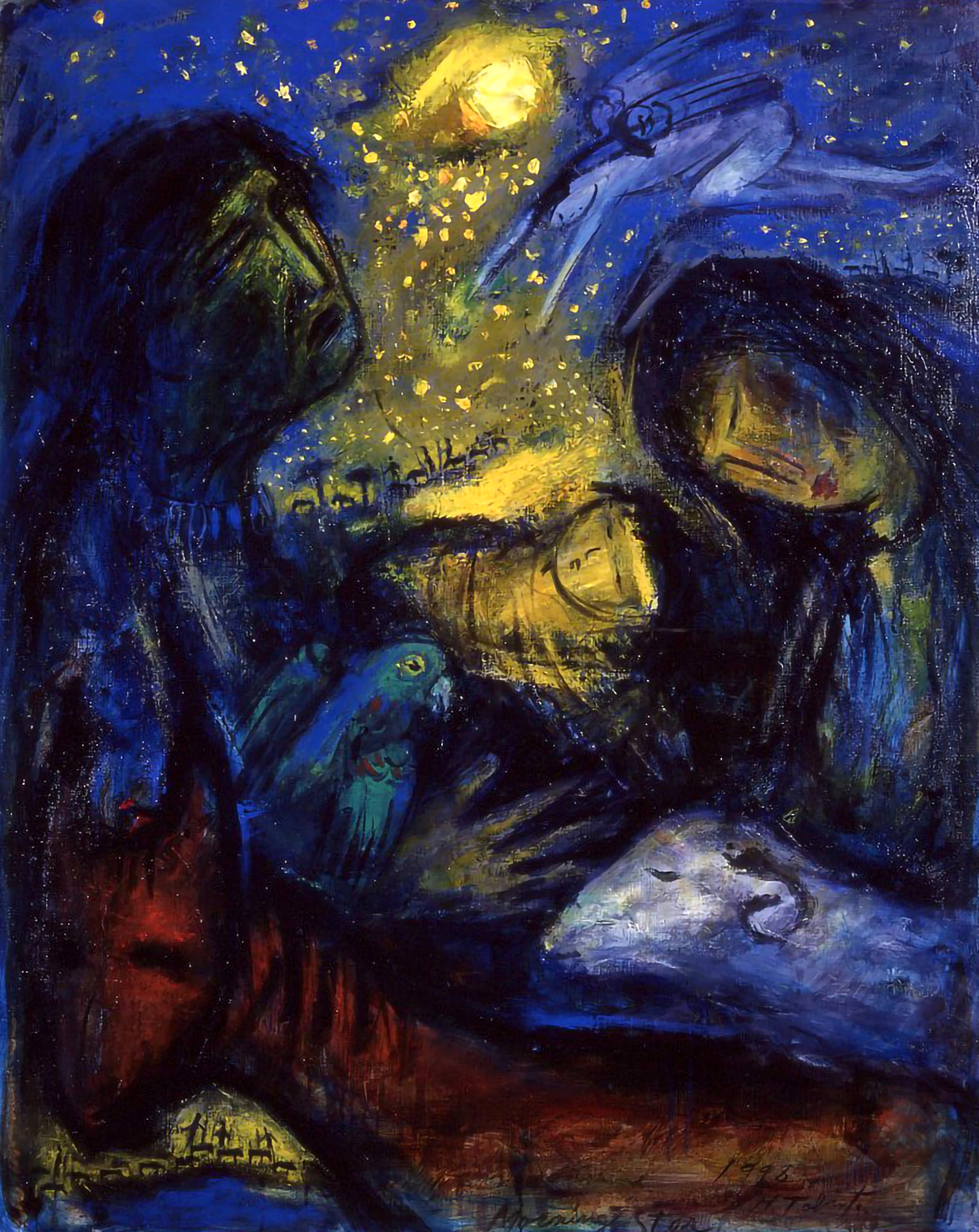
LOOK: Morning Star by Hiroshi Tabata
Hiroshi Tabata (田畑弘) (Japanese, 1929–2014), Morning Star, 1998. Oil on canvas, 90.9 × 72.7 cm. Private collection. Photo courtesy of the Estate of Hiroshi Tabata.
Born in Takaoka City, Hiroshi Tabata (1929–2014) studied art at the University of Toyama, later moving to France for two years for further art education. He exhibited his work throughout Japan and at Parisian salons. From 1966 to 1972 he lived intermittently in Brazil among the Xingu people, which led to his conversion to Christianity. From then on until his death, he painted biblical subjects. “The Bible is the ultimate theme for me,” he said; its world is “infinitely deeper” than we can comprehend.
In Tabata’s expressionistic Morning Star, starlight falls in a luminescent sheen over the face of the Christ child, whom Mary looks upon in tender adoration as Joseph wonders at the angelic activity above. The tight cropping around the Holy Family heightens the sense of intimacy. A sheep, donkey, and Amazon parrot (the latter a callback to his time in Brazil) crowd into the foreground, while on distant hills shepherds behold the glorious light display, hear the announcement that will propel them to their newborn Messiah. The wise men, too, are on their way. Epiphany is at hand. Heaven’s raining down (Isa. 45:8).
This visual reflection (by me) originally appeared in the Christmas/Epiphany 2022–23 edition of the Daily Prayer Project. Tabata’s art appears on the cover, by kind permission of his son-in-law. To view more biblical art by Tabata, see the beautifully produced, full-color book 田畑弘作品集 一つの星 (Hiroshi Tabata Works: Morning Star); the text is all Japanese.
LISTEN: “A Star Stood Still (Song of the Nativity)” | Words and music by Barbara Ruth Broderick and Johnny Broderick, 1956 | Performed by Mahalia Jackson with the Falls-Jones Ensemble, conducted by Johnny Williams, on Silent Night: Songs for Christmas, 1962
And we shall share In the glorious light
In Bethlehem The wind had ceased The Lamb lay sleeping On the hill
When all the earth Was stilled with peace Then lo, a star stood still
A star stood still On yonder hill Praise God that star still Shining still
And we shall share In the glory of love Because a star stood still That night a star stood still
A star stood still On yonder hill Praise God that star still Shining still
And we shall share In the glory of love Because a star stood still That night a star stood still
Note to readers: Art & Theology is noncommercial, but I do accept donations (monetary, or in-kind books!) to help keep it running.Learn more here.
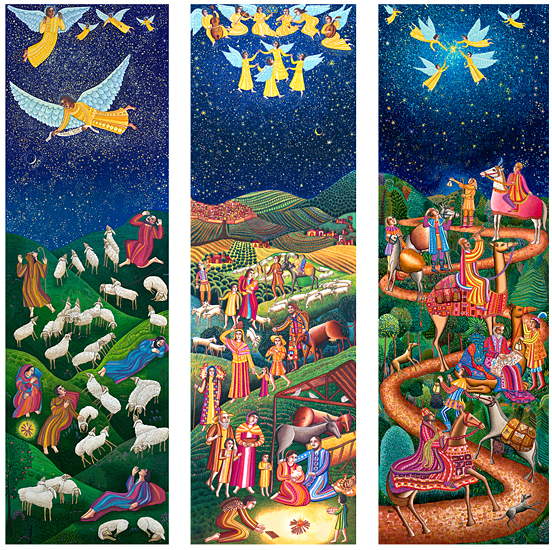
John August Swanson (American, 1938–2021), Epiphany, 1988. Serigraph, 38 × 12 in. Edition of 210. [for sale]
Tomorrow, January 6, is the feast of Epiphany, commemorating the visit of the magi to the infant Christ, an episode that represents God’s manifestation to the nations beyond Israel. Printmaker John August Swanson visualizes their journey in a starkly vertical composition that was conceived as the right wing of a triptych (three-paneled artwork), the other two panels depicting the Annunciation to the Shepherds and the Nativity. In subsequent years he addedA Visit (depicting the Annunciation to Mary), Flight into Egypt, and Presentation in the Temple to the set.
Epiphany depicts the journey of the three Magi as they travel up a serpentine trail. One of the Wise Men is seated as he looks at a map of the constellations with his magnifying glass; his servant holds a lamp so that he can see. Another Magi searches with his telescope into the sky. They look up in search of their beautiful guiding star as angels surround and point to it. They have exotic birds, peacocks, and dogs among their animals. I have tried to capture the details of the many plants, bushes, and trees and to create a variety of colors of green.
I used many symbols within the tapestries draping the animals. These patterns depict the Lion of Judah, the lamp in the darkness, the rain falling on the parched ground, the key to the locked door, the crown and the heart, and the gates to the city.
This is part of a series of three images (triptych). They were inspired by the Mexican tradition that I am familiar with for Christmas. Families will each create a beautiful crèche (nacimiento) with many figures and animals, creating a whole environment with landscaping in miniature around the Nativity figurines.
His other inspirations for this set include the opera Amahl and the Night Visitors by Gian Carlo Menotti and the medieval stained glass windows in Chartres Cathedral.
John August Swanson, Advent Triptych, 1985–88 [for sale as poster or card]
John August Swanson (1938–2021) [previously] was born in Los Angeles of a Mexican mother and Swedish father. His father died when he was young, and he was raised in a multigenerational Mexican Catholic home. He studied serigraphy under Corita Kent [previously], and it became his primary medium. A serigraph is a type of print in which each color is individually layered by applying ink through a silkscreen onto paper. Epiphany has forty-eight individual colors.
LISTEN:“Bright and Glorious” | Original Danish text (“Deilig Er Den Himmel Blaa”) by Nikolai F. S. Grundtvig, 1810 | English translation by Jens Christian Aaberg, 1927; first stanza adapted by the editors of the Lutheran Service Book and Hymnal, 1958 | Music by Seth Thomas Crissman and Greg J. Yoder, 2017 | Performed by the Walking Roots Band on Hark! A Walking Roots Band Christmas, 2017
Bright and glorious is the sky Radiant are the heavens high Where the golden star is shining All its rays to earth inclining Leading to the newborn king Leading to the newborn king
Him they found in Bethlehem Yet he wore no diadem They but saw a maiden lowly With an infant pure and holy Resting in her loving arms Resting in her loving arms
Guided by the star, they found Him whose praise the ages sound We, too, have a star to guide us That forever will provide us With the light to find our Lord With the light to find our Lord
As a star, God’s holy word Leads us to our King and Lord Brightly from its sacred pages Shall this light throughout the ages Shine upon our path of life Shine upon our path of life
The Walking Roots Band (TWRB) is an acoustic folk/bluegrass-ish music group steeped in Anabaptist hymn-singing traditions and based in Harrisonburg, Virginia. Several of its members are the creative forces behind The Soil and The Seed Project, a liturgy and arts initiative that launched in 2021.
Here they’ve retuned an Epiphany hymn from Denmark, which compares the star that led the magi to Jesus to the Bible, God’s word, which serves as a guiding light for spiritual seekers, leading us to Christ himself. Its pages offer countless epiphanies—revelations of God’s glory, opportunities for divine encounter. Its wisdom and truth can illuminate our paths if we let it.
Sessions are free and open to the public and will not be livestreamed (and the conversations require advance registration):
June 4, 7–9pm: Live Concert (Seattle, WA)
June 5, 9:45–11am: Worship Service (Normandy Park, WA)
June 5, 7–9:30pm: A Conversation on: Faith and the Arts (Seattle, WA)
June 6, 6:30–8:30pm: A Conversation on: Faith and Technology (Bellevue, WA)
June 7, 7–9pm: A Conversation on: Faith and Work (Seattle, WA)
Guite and Bell have been collaborating for years. Below are two snippets of them performing together. In the first video Guite comedically performs (to rhythmic accompaniment!) a villanelle he wrote in response to something a woman who worked at the venue of one of his poetry talks exasperatedly said to him when his hurried photocopying caused a paper jam. The second video showcases a sonnet by Guite on the baptism of Christ, from his collection Sounding theSeasons: Seventy Sonnets for the Christian Year, and the song that Bell adapted it into, released on Keening for the Dawn.
+++
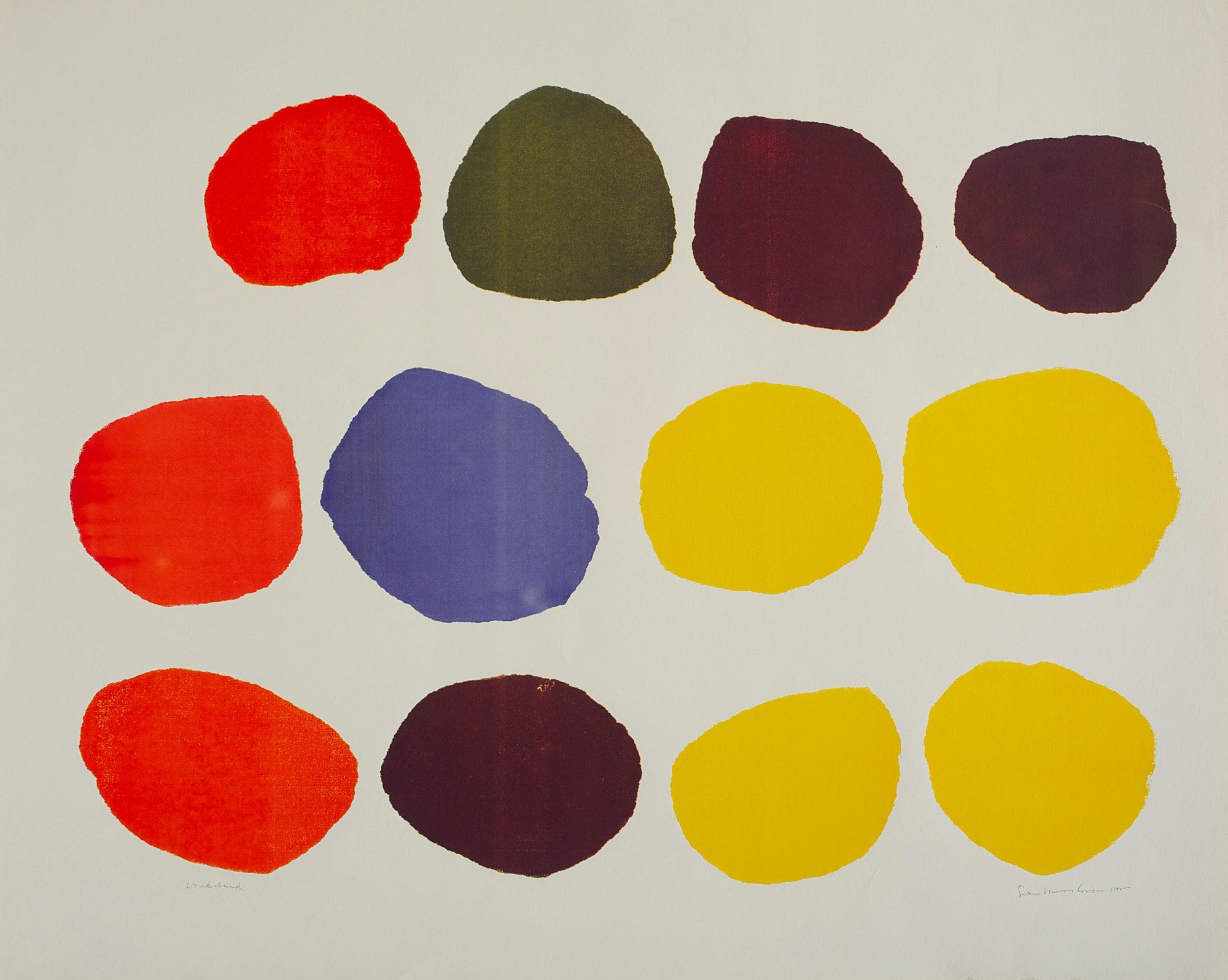
ESSAY: “The Listening Heart: Corita Kent’s Reforming Vision” by Michael Wright:Corita Kent (1918–1986) [previously] was an American pop artist who was also, for over three decades, a nun. Michael Wright writes about how “she became interested not just in depicting scenes from the Bible but answering this: what might happen if a Christian imagination engaged the world around us through the arts? That art might look less like an illustration from a children’s Bible and more like exploring seeing the stuff of life—even a bread bag—as dialogue partners with mysteries of faith.” wonderbread is one of four works he discusses—“a playful meditation on sacred time, wonder, and communion.”
Corita Kent (American, 1918–1986), wonderbread, 1962. Serigraph, 25 1/2 × 30 1/2 in.
While I do think even Kent’s biblical artworks push the genre of religious art forward, I appreciate how Wright challenges Christians to give a chance to her works that are less straightforwardly religious, as these are often the most imaginative and profound. And they, too, are “deeply Christian work.” Let’s not think so narrowly about what “Christian art” must look like!
+++
LIVING PRAYER PERIODICAL: Pentecost 2022: One of the organizations I work for is the Daily Prayer Project [previously], which publishes seven ecumenical Christian prayer periodicals a year, structured around the liturgical calendar. I do the curation for the Gallery section, which comprises three art images with written reflections, and the editing. Our latest edition covers June 5 (the feast of Pentecost) through August 6, and it includes prayers from India, Japan, Korea, Algeria, Italy, the Choctow Nation, and more. I’m excited to feature on the cover Corita Kent’s word picture: gift of tongues! As many of her screenprints do, it integrates image and text—in this case Acts 2:1–2a, which sprawls out through the sky and onto a billowing banner, like a sail, over a crowd of people aflame with the fire of the newly descended Spirit of God.
On the website there are options for one-time purchase or group subscription, and for digital only or print and digital.
+++
PRAYER: “The Lord’s Prayer, Extended Dance Mix” by Nadia Bolz-Weber: In March, actor Jennifer Garner asked Lutheran pastor and author Nadia Bolz-Weber if she could offer a prayer and a benediction on her InstaLive. Bolz-Weber vamped on the traditional words of the Lord’s Prayer, the text of which you can read at the boldface link.
One of the things I appreciate about Bolz-Weber’s spiritual teaching is her avoidance of clichés. She gives fresh language to the experiences of faith and life in general and to theology, which often reawakens me to the beauty of God and of Christ’s gospel. Describing why she regularly turns to prayer, she says in the Instagram video:
When I don’t have enough—like if I don’t have enough patience, if I don’t have enough compassion for myself or other people, when I don’t have enough resources—prayer is this way in which I can remind myself that there is enough. That I have a connection to my own divine source. I have a connection to God. And in the heart of God there’s enough forgiveness when I don’t have enough. In the heart of God there’s enough compassion when I don’t have enough. And so for me, it’s about reminding myself of that connection.
+++
SONG: “Dry Bones” by Gregory Porter: From Gregory Porter’s 2021 album Still Rising, this song was inspired by Ezekiel 37. The official music video features dancing skeletons in yellow cowboy boots(!), animated by L’Incroyable Studio. The song’s bridge quotes the African American spiritual “Dem Bones.”
The first verse goes,
I won’t die, won’t bury, won’t sink ’Cause love is the spirit I drink I’ll be free in the morning light ’Cause your touch is the medicine of life There’s a dance to this beat, let’s shake Every move—feel my body awake There’s a sound—you and me are one And your hope is the rhythm I drum
Arise, shine; for your light has come, and the glory of the LORD has risen upon you. For darkness shall cover the earth, and thick darkness the peoples; but the LORD will arise upon you, and his glory will appear over you.
—Isaiah 60:1–2
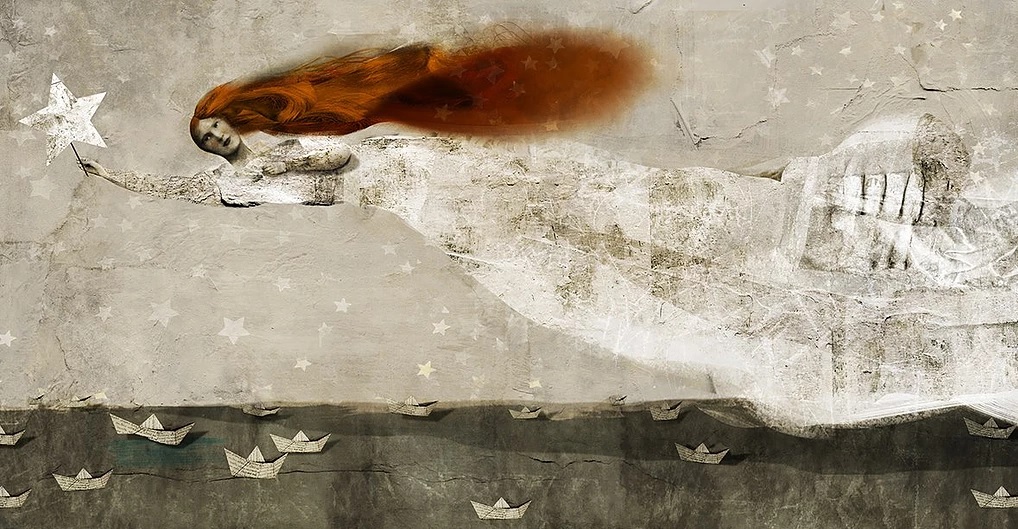
LOOK: Comet by Antonello Silverini
Comet, a digital collage by Antonello Silverini (Italian, 1966–). Used with permission.
LISTEN: “May It Be” | Words by Roma Ryan, 2001 | Music by Enya, 2001 | Performed by Voces8, 2018
May it be an evening star Shines down upon you May it be when darkness falls Your heart will be true You walk a lonely road Oh, how far you are from home
Mornië utúlië Believe and you will find your way Mornië alantië A promise lives within you now
May it be the shadow’s call Will fly away May it be you journey on To light the day When the night is overcome You may rise to find the sun
Mornië utúlië Believe and you will find your way Mornië alantië A promise lives within you now A promise lives within you now
At the behest of composer Howard Shore, film director Peter Jackson approached Enya to write a song for his 2001 epic fantasy adventure The Lord of the Rings: The Fellowship of the Ring, the first in a trilogy. Enya brought her lyricist Roma Ryan on board, and together they wrote “May It Be.” The song, which plays during the movie’s end credits, contains two lines in the fictional Elvish language Quenya that J. R. R. Tolkien invented: “Mornië utúlië” and “Mornië alantië,” which translate to “Darkness has come” and “Darkness has fallen.”
Why am I sharing this “secular” song (inspired by a tale of hobbits, elves, and wizards) on today’s feast of Epiphany, the grand finale of the Christmas season? I could have chosen one of the church’s many beautiful works of music written explicitly for this day (and I have in previous years, such as here, here, and here, not to mention yesterday’s festive feature)—perhaps something louder, brighter, more triumphant—but instead I wanted to cap off the Twelve Days of Christmas with a benediction. It’s from an unlikely source, sure, but it speaks well, I think, to where we’re at in the liturgical year.
According to Christianity, darkness entered the world with humanity’s rebellion against their Creator in the garden of Eden. Sin and death became a reality that, millennia later, we still grapple with. But a promise was spoken in the beginning, was born in a manger at Christmas, walked the dusty streets of Israel-Palestine teaching the Way and performing wonders, was nailed to a cross and buried but then rose from the grave and now lives in the hearts of millions. Jesus Christ is the embodiment of God’s promise of salvation and holistic restoration—shalom, the world set right again.
The light of Christ shone on the small Jewish town of Bethlehem at the Nativity and on the wider Gentile world at Epiphany (when the magi traveled from afar to receive personal revelation, an experience they brought back with them to their homelands), and it continues to shine, often in unexpected places.
Advent is a journey through the dark into the light that breaks at Christmas/Epiphany. Although in one sense morning has broken, in another sense this earth is still very much in darkness. Even the “children of light” (1 Thess. 5:5), those who have been reborn in Christ, experience (and sometimes, sadly, inflict) ache and horror as much as anyone else.
But hope has come. The Word has been spoken, redemption won, even if it’s not yet been consummated. We walk in the valley of shadows, but eventually the night will be vanquished, as Enya’s song says, and we will rise and greet the sun—or, to put a Christian inflection on it, the Son!
May we walk forward into 2022 true to our calling as sons and daughters of God. May we welcome God’s light and bear it to others, and trust the Promise that indwells us.
This is the final post in the 2021–22 Advent/Christmas series. Thanks for following! You can find a collation here (Advent) and here (Christmas). I will now return to my regular publication schedule of roughly one post a week.
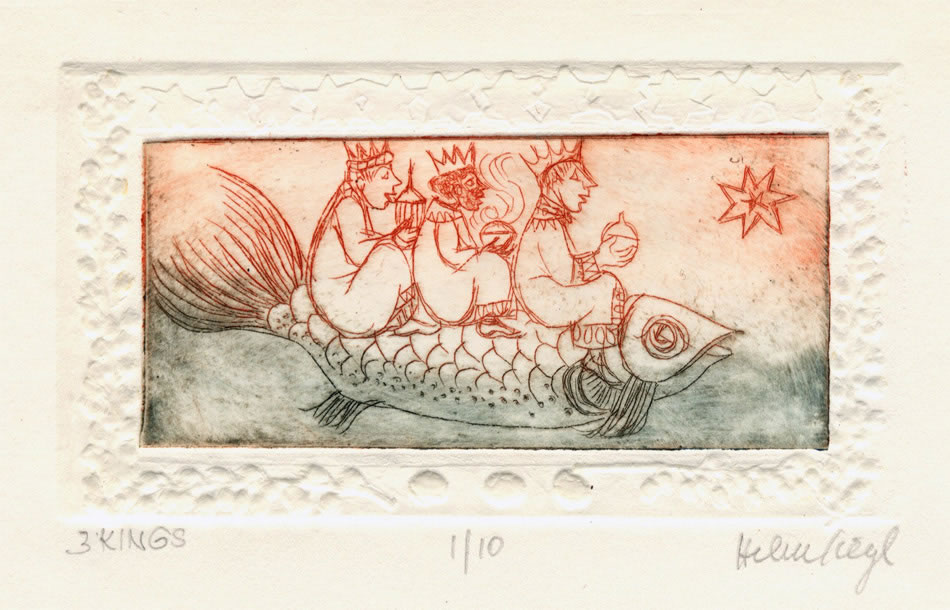
Helen Siegl (Austrian American, 1924–2009), 3 Kings, n.d. Etching and collagraph, 3 × 5 in. (7.6 × 12.7 cm).
Ah, such whimsy!
LISTEN: “We Three Cool Kings” | Words and music by John H. Hopkins, 1857 | Arranged by Eugene Gwozdz, 2015 | Sung by Alan H. Green, Mykal Kilgore, Dennis Stowe, Nili Bassman, Josh Davis, Kevin Smith Kirkwood, Linda Mugleston, Brian O’Brien, Mary Michael Patterson, Mike Schwitter, and Rashidra Scoti on Broadway’s Carols for a Cure, vol. 17, 2015
We three kings of Orient are; bearing gifts, we traverse afar, field and fountain, moor and mountain, following yonder star.
O star of wonder, star of light, star with royal beauty bright, westward leading, still proceeding, guide us to thy perfect light.
Born a king on Bethlehem’s plain, gold I bring to crown him again, King forever, ceasing never, over us all to reign.
Frankincense to offer have I; incense owns a Deity nigh; prayer and praising, voices raising, worshipping God most high.
Myrrh is mine; its bitter perfume breathes a life of gathering gloom; sorrowing, sighing, bleeding, dying, sealed in the stone-cold tomb.
Glorious now behold him arise, King and God and Sacrifice: Alleluia, Alleluia, sounds through the earth and skies.
This jazzified version of the Christmas classic “We Three Kings” is performed by the Broadway cast of At This Performance… Written in the voices of the magi (whose traditional names are Caspar, Melchior, and Balthazar), it propounds the symbolic significance of the three gifts they give to the Christ child. I love how the arranger has layered those middle three verses!
Launched in 1999, Carols for a Cure is an annual collection of seasonal songs sung by members of the Broadway and Off-Broadway theater community to raise money for the charity Broadway Cares / Equity Fights AIDS. Its latest volume, number 21, was released in 2019.







 Art & Theology