Book Review: Accumulated Lessons in Displacement: Poems by Rachel E. Hicks

. . . each day a misery and a marvel, each person also.

—Rachel E. Hicks, from “Accumulated Lessons in Displacement”

A white American born in the foothills of the Himalayas to international school educators, Rachel E. Hicks is a second-generation third-culture kid (TCK) whose writing reflects decades of living as a global nomad, exploring themes of memory, connection, suffering, exile (both physical and spiritual), hospitality, and hope. She grew up in six countries—India, Pakistan, the United States, Jordan, the Democratic Republic of the Congo, and Hong Kong—and spent seven years as an adult in Chengdu, China, where she worked for the relief and development organization Food for the Hungry.

In 2013, she, her husband, and their two kids repatriated to the US, settling in Baltimore, where they live today. Hicks has lived in Baltimore longer than in any other city. But even with this rootedness, “the soil of each place in which I’ve lived still clings,” she says.
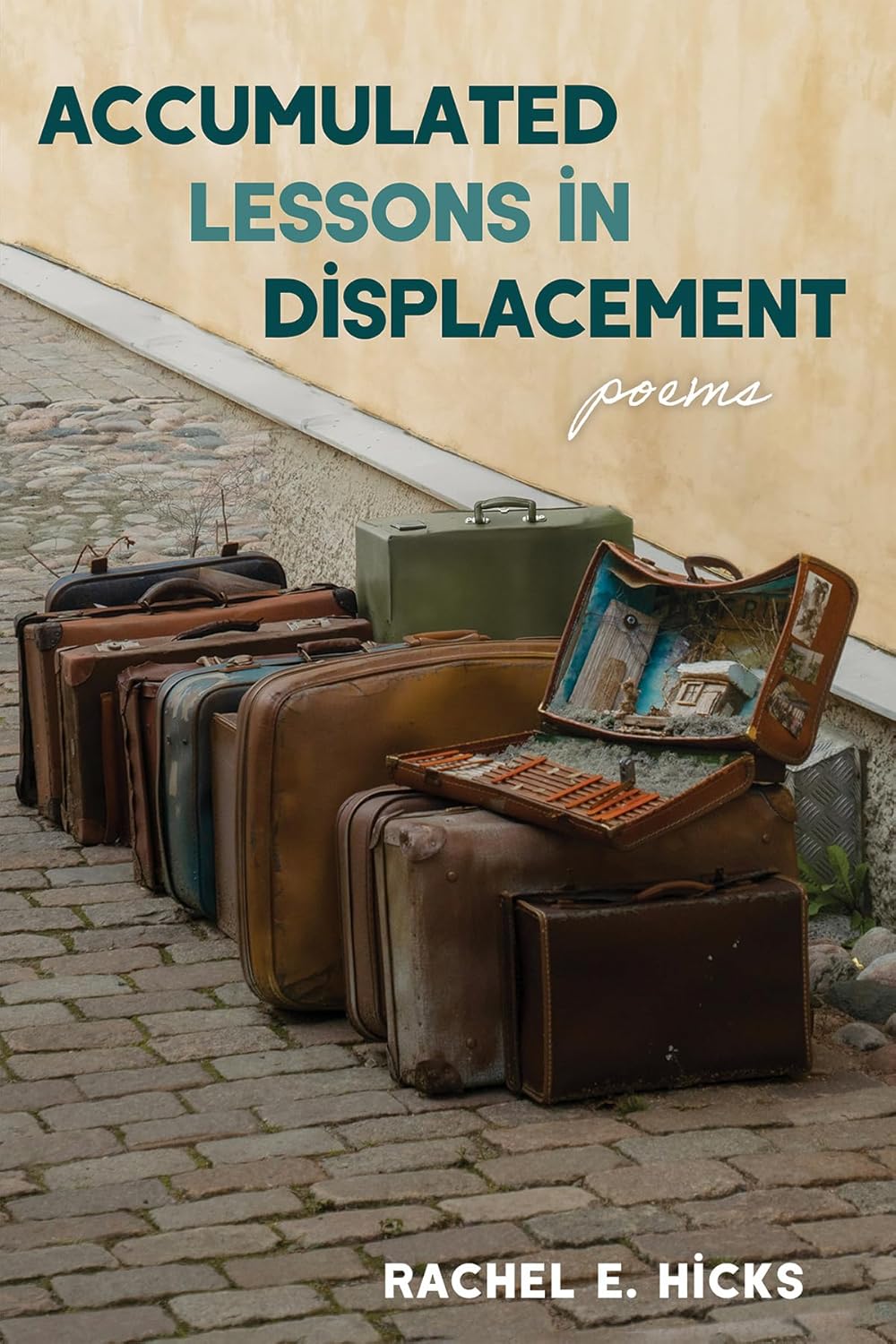
Accumulated Lessons in Displacement

In her debut poetry collection, Accumulated Lessons in Displacement (Wipf & Stock / Resource Publications, 2025), Hicks grapples with the experience of being a “perpetual pilgrim”—on her way to a particular place but also attuned to the significance of each moment along the way. “Pilgrims learn to walk a life of paradox: even though their hearts are set on their final destination, they walk through each day alive to its possibilities, people and lessons,” she wrote in a 2014 blog post.

What is “home”? How can we bear to leave home, whether forced to do so by war, famine, or natural disaster, or we choose to for opportunity or ministry? What do we do with feelings of alienation when we find ourselves in a culture not our own or in which we don’t fit well? How do we live cross-culturally? How do we make a home where we’re at? What are our responsibilities to place? Who is our neighbor?

“I believe that many—all?—of us live our lives with some sense of exile,” Hicks writes on her blog. “We experience it and are aware of it to varying degrees, but it’s there. So many of our quests, our longings, our purpose-seeking, and the stories we create and tell are about trying to find our way home. Home being that place—literal or figurative—in which we feel wholeness and true belonging.”

Accumulated Lessons is divided into two parts: “Bright Sadness, Bitter Joy” and “A Deeper Knowing.” The term “bright sadness”—a translation of the Greek word charmolypê—comes from the Eastern Orthodox tradition, and it describes the paradoxical state of mourning over sin while rejoicing in God’s grace. It can also describe the paradox of living a life of joy amid suffering.

I was trying to learn the word for joy

that settles awkwardly in grief’s nest, an oversized bird.
I didn’t want to scare it away.

So says the speaker in the book’s title poem, “Accumulated Lessons in Displacement.” Unfolding over eight sections, this persona poem draws on Hicks’s own experience of abrupt displacement from Kinshasa as a teenager, as well as the experiences of Bosnian refugee friends, and Syrian refugees she had only read about in the news.

It opens with a reflection on “home” in all its ordinariness—the yellow coffee cup, the dusty houseplant, the sunlit window seat—and laments that “no footpath exists leading back to these things,” which, the reader is led to presume, have been destroyed by armed conflict, or its residents blocked from returning by threat of death.

The poem contains several arresting images, like the green threads of a sweater on barbed wire tracing a path across miles. A boy who collects bullet casings to make a necklace for his sister. Charred diary pages dancing around a blown-out living room, “ma[king] a strange poem in my heart.”

Hicks wrestles with the savage violence humans are capable of:

It makes no sense that a soldier can press a button

and somewhere a baby ignites into flame.
And he goes home and brushes his teeth.

What we do to each other, to other created souls.
Always I carry this burden like a child on my hip.

Another powerful poem in the collection is “Visit to Sarajevo,” where Hicks describes visiting the Bosnian-Herzegovinan capital with her friend Dragan, who was forced to flee it as a young married adult with a child in the 1990s after the city was besieged by Serbian forces. Hicks had met Dragan and his family in 2000 through her husband, Jim, who worked alongside him at a refugee resettlement agency in Phoenix, Arizona, and the families became close. Meeting up years later in Dragan’s hometown, Dragan leads Hicks through the once-familiar streets “in a haze of pride, nostalgia, nightmare,” giving her a tour of sites both historically significant and deeply personal.

Hicks’s passport country too has its national traumas, one of which was precipitated by 9/11, when in 2001, terrorists flew planes into the World Trade Center in New York City, killing almost three thousand people. In “Disaster Chaplaincy Training,” she describes a course she took, taught by a Ground Zero worker, to become further equipped for her work in China, which was focused on disaster preparedness and response. In the course, she learned how to “loiter with intent” in zones of disaster, “acclimat[ing] to [suffering’s] pungency.” Make sure, said the instructor, to “let them see you cupping a small ball / of hope—toss it up, catch it.”

Nationwide crisis struck the US again when on April 12, 2015, a young Black man from Baltimore, Freddie Gray, died of a spinal cord injury while in police custody, allegedly due to police brutality—though none of the six involved officers was ultimately held responsible. Gray’s death led to civil unrest in Baltimore (which Hicks had recently made her home) and throughout the country, as citizens demanded recognition, in word and practice, that “Black lives matter.”

Hicks wrote “The Morning After Freddie Gray’s Funeral” while Baltimore was on lockdown. Fumbling for words, she tries to explain to her children what’s going on as she, too, tries to educate herself more deeply about the history of racism in America and the longstanding grievances of the Black community she lives in. In the poem, she harvests mint from her garden to brew a gallon of black mint tea to share with her neighbor—

             as what? An offering, apology?

A way to say I’m trying—learning
about all that fuels these fires still
smoldering this hushed morning?

The staining of the clear water as the tea steeps becomes a metaphor.

Accumulated Lessons in Displacement addresses global suffering, more localized suffering, as well as personal and family suffering.

One example of the latter has to do with Hicks’s daughter’s diagnosis, following an ankle sprain, with complex regional pain syndrome (CRPS), Ehlers-Danlos syndrome (EDS), and postural orthostatic tachycardia syndrome (POTS), chronic conditions that cause extreme nerve pain. “Bright Sadness” describes a return car ride from a fruitless medical visit, her daughter crying and gasping in agony in the back seat, when offhandedly, Hicks insists, “Turn your cries into opera!” This unexpected and ridiculous suggestion defuses, if for just a moment, the intense situation, resulting in “joy-laughing” amid plaintive contralto tones all the way home.

“Post-Miracle (I)” celebrates her daughter’s miraculous healing, holds the strange, tentative, empty-handed feeling of a fervent prayer request graciously granted. But then comes “Post-Miracle (II),” written when, after two months of her daughter being pain-free, the CRPS returned. Hicks wrestles with gratitude for the brief reprieve and anger at God’s “undoing” the miracle. She wonders about some of the healings Jesus performed in the Gospels, and whether they stuck.

“Post-Miracle (II)” is one of the few poems in the collection with end rhyme, each quatrain following an abba pattern. Perhaps the choice to work with a rhyme scheme for this particular subject represents, consciously or subconsciously, her attempt to make things rhyme again, to harmonize the reality of chronic pain with a good and loving God, to impose structure on the chaos.

Several of Hicks’s poems engage with biblical stories: the Suffering of Job, the Parable of the Prodigal Son, the Massacre of the Innocents, Zacchaeus encountering Jesus, the Walk to Emmaus. She performs poetic midrash, imaginatively interpreting and expanding the texts to connect with them on a deeper level.

Besides the biblical authors, some of her literary conversation partners in this collection are Frederick Buechner, Henri Nouwen, Simone Weil, Czesław Miłosz, Dostoevsky, G. K. Chesterton, Gregory of Nyssa, Paul Kingsnorth, and Karen Blixen.

Although there’s a heaviness to much of the material, it’s not overwhelming, as small graces are woven throughout: complimentary walnuts from a fruit shop owner on a winter Sunday; laughter over language barriers; refreshment from a water hose; the scent of turmeric and cardamom at a Punjab store in Baltimore, reminders of the poet’s birthplace; “the comfort of the priest’s thick thumb / upon my forehead, the signature of / Jesus,” on Ash Wednesday; dandelions and buttercups brushing ankles; a cairn at West Clear Creek; the monks at Great Lavra, Greece, making room for the dispossessed; bundles of sheep ascending limestone slopes at dawn in the Cotswolds; the delightful word cusp; her son’s euphoria upon gliding down a mountain on skis; the slow labor of opening a pomegranate and obtaining its ruby-red seeds for her daughter to eat.

The book is shot through with joy—a joy that coexists with suffering and that is sustained through faith.

“These are poems to live by—to help you stay human, love people, find joy in sorrow, pay attention to the world around you, open yourself to God, welcome mystery, and understand our times at a deeper level,” Hicks wrote in an email announcing the launch of the book. “You’ll journey all around the world and find it—in spite of its sorrow—full of beauty and worth loving.”

One of my favorite poems is “Just Before,” a perfect reading for the upcoming Advent season. It spans four cities of the world—places where people work, play, pray, and rest; places of economic disparity, of spiritual longing as well as mundane concerns—in each imagining the moment just before Jesus returns. In the midst of our threshing corn or lighting a lamp or settling a legal dispute or herding sheep, Jesus will come with a beauty that blossoms all the way out to the horizon, calling all nomads home.

“Just Before” by Rachel E. Hicks

When Jesus comes again
in all his glory, somewhere in
the Sichuan mountains tires will crackle
over corn spread out on the road—
easy threshing—while a small child
urinates in the gutter, absorbed
in watching the car shoot by.

As the first rent opens
a fingernail tear in the hazy sky,
a woman in the foothills above Rishikesh
will lay down her firewood burden
and light the clay Diwali lamp
in the chilling dusk,
circling her cupped hands in blessing.

In the pause before the clamor
of heaven’s trumpets,
the jurors’ waiting room in Baltimore’s
civic court will throb with the quiet
turning of pages, a buzzing phone
in the hand of a tired man, berating
himself for forgetting to bring coffee.

Just before we are aware of him,
Jesus will pause to survey the view;
two shepherd boys amidst boulders
in the Wadi Rum hills south of Amman
wipe sleep from their eyes and stand amazed
at the blood-red poppies at their feet
stretching to the eastern horizon.


Purchase Accumulated Lessons in Displacement here. (Update, 11/14/25: Wipf & Stock is offering a 50% discount through November 30, 2025; use code CONFSHIP at checkout. Media mail shipping is free.)

“Just Before” is reproduced with permission from Wipf and Stock Publishers, www.wipfandstock.com.
Roundup: Advent songs, “Medicinal Flowers of Lebanon,” and more

ONLINE EVENT: “Every Breath a Birth: Meditations for Advent and Christmastide,” Wednesday, December 13, 5–6 p.m. ET: RSVP for Image journal’s third annual Advent Art Salon [previously], featuring a musical performance by Page CXVI, seasonal recipes by Ashley Rodriguez and Mark Sprinkle, poetry readings by Thomas Lynch and Suphil Lee Park, a homily by Bobby Gross, and a blessing by James K. A. Smith.

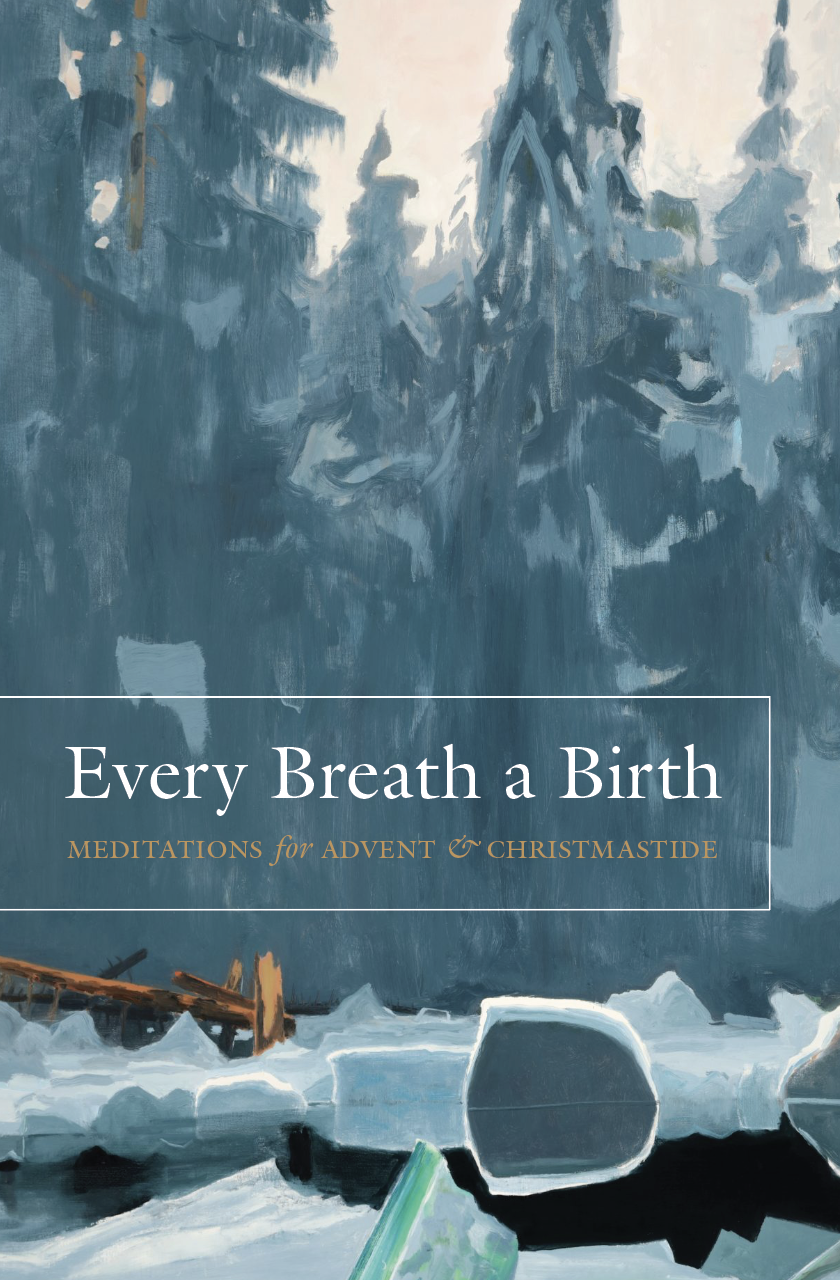
Image has also published a new chapbook this month, Every Breath a Birth, featuring twenty-three distinct creative works (poems, short stories, literary essays, visual art) that draw from its thirty-five-year archival history to celebrate the seasons of Advent and Christmas. Before December 3, it’s $17—or you can purchase it along with an annual subscription to the quarterly Image for just $30!

Every Breath a Birth

(The cover art is the painting Ice Out (Allagash) by Eric Aho, from the “In the Studio” feature in Image no. 110.)

+++

SONGS:

Advent is a season of waiting with deep longing and hope for that long-looked-for day when fear and pain will be no more because Christ will reign and set this world free. These songs tap into that.

>> “It Will Go One Day” by Mac Meador (2015):

>> “Redemption Draweth Nigh” by Gordon Jensen (1970), performed by Rumbi Lee (2018): The title and refrain of this contemporary hymn are drawn from Luke 21:28: “And when these things begin to come to pass, then look up, and lift up your heads; for your redemption draweth nigh” (KJV).

+++

STREET ART SERIES: Medicinal Flowers of Lebanon by Faith XLVII: In September 2021, South African artist Faith XLVII (Liberty Du) traveled to Beirut to paint curative flowers across the rubble of the Lebanese city in the wake of the August 4, 2020, port explosion that caused at least 218 deaths, 7,000 injuries, and $15 billion in property damage, as well as leaving an estimated 300,000 people homeless. Rosehips, horned poppies, chicory, African carline thistle—all these botanicals are used in remedies for common ailments. “Each flower urges us, in a sense, towards healing as they grow out of the concrete,” the artist said.

Faith47_Medicinal Flowers of Lebanon
Faith XLVII (South African, 1979–), Glaucium flavum, from the Medicinal Flowers of Lebanon series, Beirut, Lebanon, 2021. Photo courtesy of the artist.

+++

NEW ALBUMS:

>> The Soil and The Seed Project, vol. 8: Advent-Christmas-Epiphany: For the Advent-Christmas-Epiphany triad of the church year comes this new album from The Soil and The Seed Project, a ministry of Virginia Mennonite Missions—and recently Lilly-Endowed! All their music is free—for download, and even as physical CDs while supplies last. Below are two of my favorite tracks, both written by new contributors to the project. The first verse of Philip Fisher Rhodes’s “Bethlehem One” is in the voice of the in utero Christ; the second, the shepherds; the third, the wise men. The song is sung by Ben Luna. And “Peace Prayer” by Susan Gascho-Cooke is a plea that God would hold his arms around “this tilting planet,” the world’s wounds, and all people.

Each TSATP album is part of a larger project that also includes “Little Liturgies” booklets perfect for families with small kids (but that can also be used by individuals and small groups). Each booklet includes litanies, prayers, reflection questions, suggested activities, and visual art—and again, they’re free! Request a digital or physical copy here.

>> Kindness Is Solid Stone, Violence Is a Heavy Loan to Pay by David Benjamin Blower: Released November 3 and available on Bandcamp only, this album features nine original songs by writer, poet, theologian, and podcaster David Benjamin Blower of Birmingham, UK. I appreciate the minimalist sound and the stark lyricism. My favorite track is probably “Meet Me Where I Sing and Stamp My Feet”:

Advent, Day 4: Maranatha (multilingual)

LOOK: God Heals by Anila Hussain

Hussain, Anila_God Heals
Anila Hussain, God Heals, metallic black and white print on Fujifilm paper with frame, 50 × 50 cm

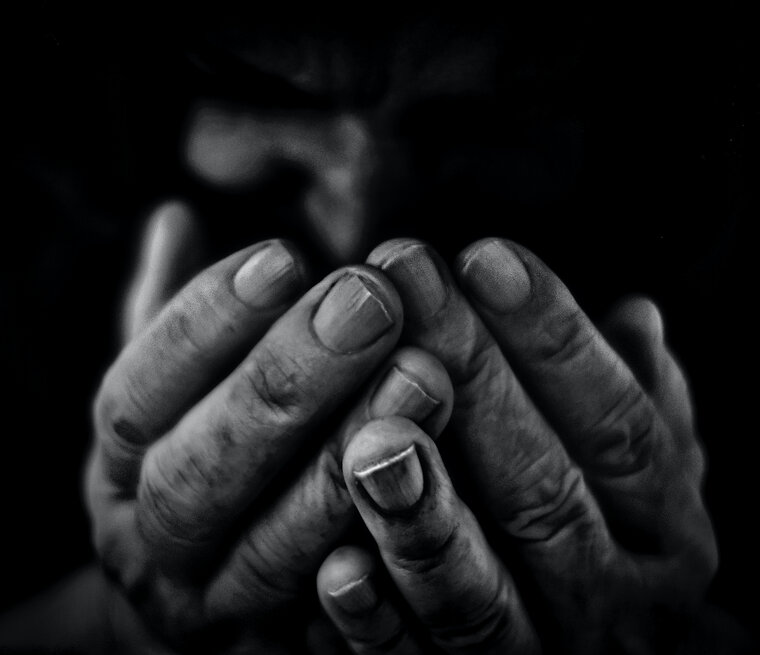
A finalist for the 2021 Chaiya Art Awards, this black-and-white photograph shows a person at prayer, her hands cupped, anticipating in faith the receipt of what she’s asked for but open to whatever God gives. The woman pictured is photographer Anila Hussain’s eighty-something-year-old mother, who has suffered for years from chronic pain and prays multiple times a day for relief. Hussain is her primary caregiver.

With the woman’s face in the shadows and her rough, overlapping hands illuminated, closely cropped, and in the foreground, God Heals emphasizes a posture of humble and heartfelt entreaty.

LISTEN: “Ven, Señor Jesús, Maranathá” (Come, Lord Jesus, Come, O Lord), performed by Harpa Dei, 2020 [HT: Global Christian Worship]

Born in Germany and raised in Ecuador, siblings Nikolai, Lucía, Marie-Elisée, and Mirjana Gerstner form the sacred vocal quartet Harpa Dei. Here they sing a traditional chant invoking Christ’s return in ten languages, shifting voice parts and harmonies to beautiful effect. The lyrics are in the video and also below.

Māranā thā is Aramaic (the language of Jesus) for “Come, O Lord.” Christians have prayed this prayer since the apostolic era, looking toward the cosmic healing and restoration that Christ’s second coming will usher in.

SPANISH: ¡Ven, Señor Jesús, Maranathá!
ENGLISH: Come, Lord Jesus, Maranatha!
GERMAN: Komm, Herr Jesus, Maranatha!
FRENCH: Viens, Seigneur Jésus, Maranatha!
ITALIAN: Vieni, Signor Gesù, Maranatá!
CHINESE: 来吧,主耶稣 (Lai ba, zhu Ye su, Maranatha!)
HEBREW: !בּוֹא אָדוֹן יֵשׁוּעַ  מרנאתא (Bo Adon Jeshua, Maranatha!)
RUSSIAN: Гряди, Господи (Gryadi Gospodi, Maranatha!)
GREEK: ἔρχου, Κύριε (Erhu Kyrie, Maranatha!)
LATIN: Veni Domine, Maranatha!

Sheet music can be found here.

Lent, Day 6

LOOK: Breathe by Billie Bond

Bond, Billie_Kintsugi Heads
Billie Bond (British, 1965–), Breathe (diptych), 2018. Black stoneware, resin, gold, 15.8 × 13 × 7.9 in. each. [available for sale]

This pair of ceramic busts by British sculptor Billie Bond is inspired by the Japanese art of kintsugi, or “golden seams,” by which a broken pottery vessel is repaired using gold lacquer. With this technique the cracks are purposefully accentuated rather than hidden, and the mended object is even more beautiful than the original.

Japanese American author, speaker, and artist Makoto Fujimura has spoken extensively about kintsugi as a metaphor for human brokenness and mending in Christ. We come to Christ in fragments; he lovingly puts us back together. The scars remain, but like his, they shine.

For Bond, the kintsugi heads represent human fragility and resilience—particularly healing after grief or psychological trauma, and enlightenment gained through experience. View more of Bond’s kintsugi sculptures here.

Bond, Billie_Smashed ceramic head
Smashed ceramic head by Billie Bond, before being reassembled and repaired with gold

LISTEN: “Come Healing” by Leonard Cohen and Patrick Leonard, 2012 | Performed by Elayna Boynton at Crosswalk Church, Redlands, California, 2012; and on The Farewell (Original Motion Picture Soundtrack), 2019

O gather up the brokenness
And bring it to me now
The fragrance of those promises
You never dared to vow
The splinters that you carry
The cross you left behind
Come healing of the body
Come healing of the mind

And let the heavens hear it
The penitential hymn
Come healing of the spirit
Come healing of the limb

Behold the gates of mercy
In arbitrary space
And none of us deserving
The cruelty or the grace
O solitude of longing
Where love has been confined
Come healing of the body
Come healing of the mind

O see the darkness yielding
That tore the light apart
Come healing of the reason
Come healing of the heart

O troubledness concealing
An undivided love
The Heart* beneath is teaching
To the broken Heart above
O let the heavens falter
Let the earth proclaim:
Come healing of the Altar
Come healing of the Name

O longing of the branches
To lift the little bud
O longing of the arteries
To purify the blood
And let the heavens hear it
The penitential hymn
Come healing of the spirit
Come healing of the limb

O let the heavens hear it
The penitential hymn
Come healing of the spirit
Come healing of the limb

* The official website of Leonard Cohen, maintained by Sony Music Entertainment, capitalizes “Heart” in this stanza; same with “Altar” and “Name.”

Known as “the poet of brokenness,” Leonard Cohen (1934–2016) is widely considered one of the greatest songwriters of all time. Spiritual yearning characterizes quite a few of his songs, the most famous of which is “Hallelujah.” He was Jewish, with a respect for other spiritual traditions and a fondness for Jesus Christ as a universal figure.

“Come Healing” is from Cohen’s 2012 album Old Ideas. Elayna Boynton, perhaps discovered through this YouTube video from a worship service at her Southern California church, was asked to record the song for the 2019 film The Farewell (an excellent watch!). Cohen’s deep growl of a voice, though it has its admirers, is not attractive to me, so Boynton’s cover really helped me hear the tremendous beauty of this song.

Elliot R. Wolfson describes “Come Healing” as “a poem that is prayer in its purest distillation, a prayer clothed in quintessential nakedness, an anthem that celebrates and laments the wholehearted fragmentariness of the human condition.”

The speaker prays for healing of body and spirit, head and heart. We bring our failures and our lack, our guilt and regrets and all manner of pain to the altar, to the “gates of mercy.” We long to bloom, to be purified. In the mystical unity of love that ties our hearts to God, our hurt hurts him. His heart breaks over seeing us suffer, whether as a result of our own sin (which is what Cohen’s “penitential hymn” seems to focus on) or due to things outside our control.

When we bring our cracked or shattered selves to God, acknowledging our inability to fix the damage, he will restore us to wholeness.

While spiritual salvation is granted instantly (at least in the understanding of my tradition) to the one who turns to God, through Christ, in faith and repentance, what about other types of brokenness that we come to him with? Why won’t he heal us of that chronic physical condition? Or that debilitating mental illness? Or the effects of trauma? Why won’t he heal that broken relationship between us and our parent, despite our efforts at reconciliation?

I don’t have an answer for that—why, though none of us is free of pain and hardship in this life, some suffer much more than others; or why some receive healing and others do not. But eventual wholeness, shalom, is promised to those who are in Christ. In the new heavens and the new earth, salvation will be holistic, infusing spirits as well as bodies, minds, relationships, systems, and the whole created world.

And sometimes we do receive glimpses of that wholeness here and now! Sometimes the cancer goes away. Sometimes the depression is effectively treated, and fulfillment made possible again. Sometimes the sobriety sticks.

Often God is piecing us back together slowly, such that the progress may be imperceptible until years later, we look back and can see it.

The song suggests that although we don’t always deserve the slings and arrows that come our way, neither do we deserve the lavish graces God bestows. Sometimes we’re so focused on the one that we fail to see the other.

Even though complete wholeness is not possible in this life, God still invites us to reach out to him with the shards of our life, to seek his healing in specific areas—with faith that he can heal whatever it is that’s broken! He will tend to the shards with loving tenderness. And maybe put them back together in a way we didn’t expect.

“Waiting” by Edith Lovejoy Pierce

Spilliaert, Léon_The Bather

Life is a waiting beside the pool of Bethesda,
Where the reeling crowds go by
Under the five porches of sense.
Life is a lying crippled
Beside the pool of deep longing,
Waiting for the water to unfold
Its white petals of healing,
Waiting for Someone to draw near and say: “Arise.”

This poem, inspired by John 5:1–9, appears in Therefore Choose Life by Edith Lovejoy Pierce (Harper and Brothers, 1947).

Image credit: Léon Spilliaert (Belgian, 1881–1946), The Bather, 1910, India ink and pastel on paper, Musée Modern Museum (Royal Museums of Fine Arts of Belgium), Brussels.

Roundup: Pool of Bethesda, Argentine tango hymn, Ernesto Cardenal, beauty and suffering, “Spiritual Cosmonaut” playlist, and “The Two Popes”

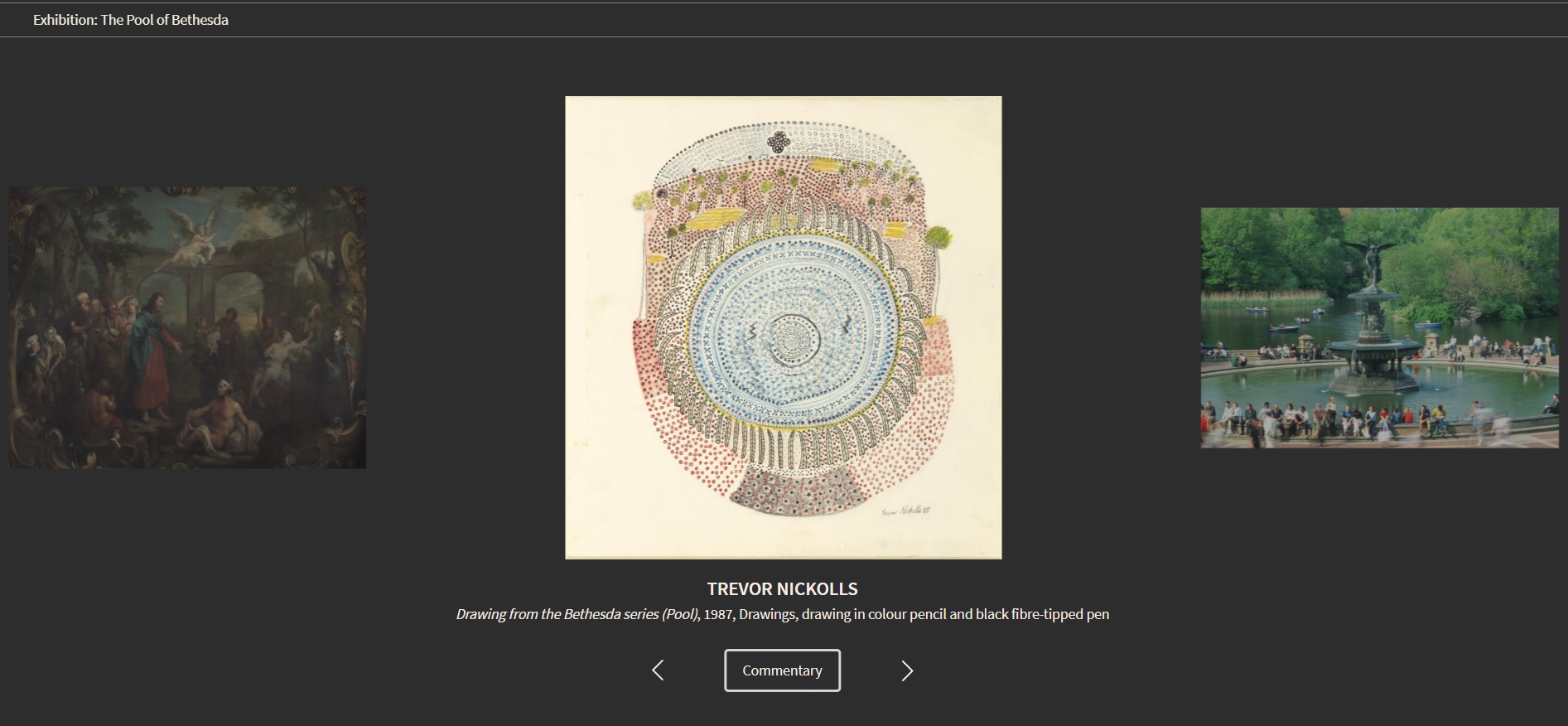
VISUAL COMMENTARIES: “The Pool of Bethesda” by Naomi Billingsley: In a recent contribution to the online Visual Commentary on Scripture [previously], Naomi Billingsley has compiled and written about three artworks based on John 5:1–18, a story in which Jesus heals a paralyzed man at a reservoir in Jerusalem. A source of hydration, cleansing, and tranquility, the pool of Bethesda, Billingsley says, is a symbol that transcends individual religious traditions.

Pool of Bethesda

She discusses William Hogarth’s painting of the subject for a hospital, showing sick patients receiving care; a “Dreamtime” drawing from Aboriginal Australian artist Trevor Nickolls’s Bethesda series, created during his recovery from a major car accident; and The Angel of the Waters fountain in Bethesda Terrace in Manhattan’s Central Park, designed by Emma Stebbins in 1842 to celebrate an aqueduct that brought clean water to New York City and improved public health (and which you may recognize as the site where John the Baptist baptizes disciples in the opening sequence of the movie Godspell).

+++

ARGENTINE TANGO HYMN: “Tenemos Esperanza” (We Have Hope): This hymn text was written in 1979 by Federico Pagura (1923–2016), a Methodist bishop and human rights champion from Argentina, and set to tango music by Homero Perera (1939–2019) of Uruguay. Argentinian pastor Federico “Fede” Apecena, who lives in Georgia in the US, recently introduced the song to his friend Josh Davis, who heads the multicultural worship ministry Proskuneo, and the two banged out this awesome video performance. “The song is a record of all that Jesus came to do and to be,” Apecena explains at the end of the video. [HT: Global Christian Worship]

+++

OBITUARY: Ernesto Cardenal (1925–2020), poet and priest who mixed religion and politics in his commitment to social justice in Nicaragua, dies at 95: A Catholic priest, poet, and political revolutionary from Nicaragua, Ernesto Cardenal was a controversial figure. He supported the Sandinista insurrection against the dictatorial Somoza regime in the seventies and, when the Sandinista government (which claimed to integrate Marxist and Christian ideals) came to power, served as its minister of culture from 1979 to 1987. He viewed this post as an extension of his priestly office and, refusing to quit it at Pope John Paul II’s behest, was forthwith suspended from the priesthood in 1984. (Pope Francis absolved him of canonical censure in February 2019, permitting him to administer the sacraments once again.)

Cardenal’s most enduring achievement was his 1966 founding of a religious community among the peasant farmers and fishermen of the Solentiname archipelago in Lake Nicaragua. He saw to the construction of a small wooden church, where he led collaborative Masses: instead of giving a homily on the week’s assigned Gospel reading, he opened up dialogues about it with his parishioners, relishing their insights. Transcripts of these conversations were published in four volumes as El Evangelio en Solentiname (The Gospel in Solentiname) between 1975 and 1977, with English translations appearing in 1976–82—a classic work of liberation theology.

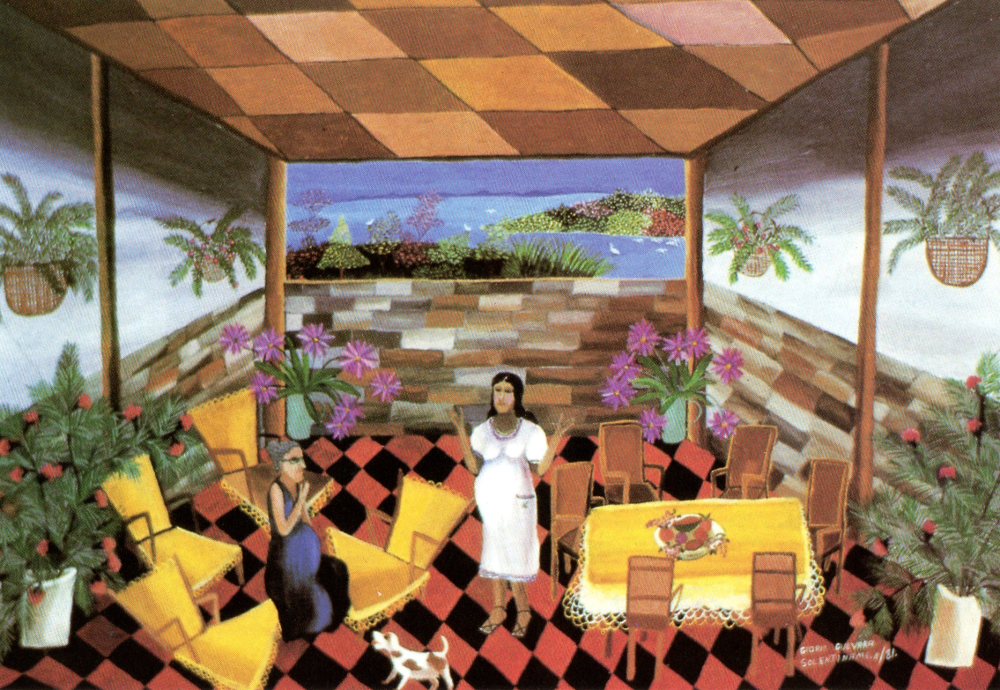
Besides cultivating the islanders’ interest in the Bible, Cardenal also took notice of their creative talents. He brought in artists to lead workshops, which led to the development of a primitivist art school that achieved international recognition for its paintings, many of them depicting Jesus’s birth, ministry, and passion taking place in Solentiname, in and around the familiar thatched-roof buildings, blue waters, and lush vegetation. In 1984 Orbis Books editors Philip and Sally Scharper combined several such images with a heavily abridged version of The Gospel in Solentiname and published it as The Gospel in Art by the Peasants of Solentiname, a slim, full-color hardcover that I highly recommend.

Guevara, Gloria_Visitation
Gloria Guevara (Nicaraguan, 1954–), The Visitation, 1981 [source: The Gospel in Art by the Peasants of Solentiname]
“It was the Gospel which radicalized us politically,” Cardenal said. “The peasants began to understand the core of the Gospel message: the announcement of the kingdom of God, that is, the establishment on this earth of a just society, without exploiters or exploited.” Afraid of the dangerous ideas taking root in Solentiname, Somoza’s National Guard razed the settlement to the ground in 1977, and Cardenal was forced to flee to Costa Rica. He gave his blessing to his community’s decision to join the Sandinistas, the people’s army, to attempt an overthrow of Somoza, a victory they achieved in 1979. The surviving peasants returned to Solentiname to rebuild, and their practice of art and faith continues to thrive to the present day.

Cardenal is also known as a poet. I’ve read only one volume of his poetry, in English translation: Apocalypse: And Other Poems (New Directions, 1977). I didn’t connect well with a lot of it, but it does have a few gems, like “Prayer for Marilyn Monroe,” “The Cosmos Is His Sanctuary (Psalm 150),” and “Behind the Monastery,” reprinted here in full:

Behind the monastery, down the road,
there is a cemetery of worn-out things
where lie smashed china, rusty metal,
cracked pipes and twisted bits of wire,
empty cigarette packs, sawdust,
corrugated iron, old plastic, tires beyond repair:
all waiting for the Resurrection, like ourselves.

(translated from the Spanish by Robert Pring-Mill)

+++

LECTURE: “On Beauty” by Natalie Carnes: “Beauty has been leveraged in ways that wound us, with legacies of misogyny, class hatred, and racial injustice,” says Dr. Natalie Carnes, associate professor of theology at Baylor University. “And yet I want to suggest that beauty tends those same wounds, and can be found in those same wounds, for beauty is a name for God.”

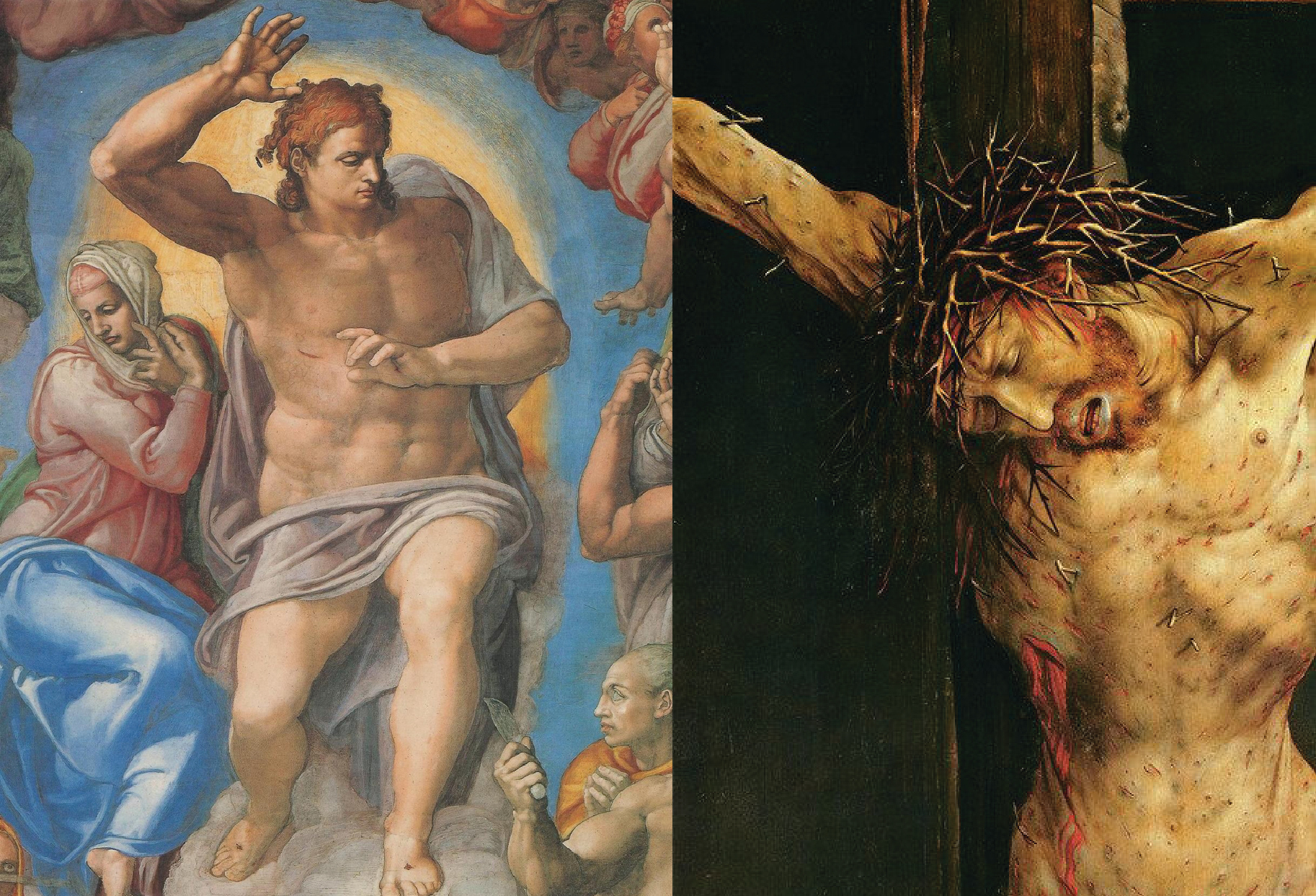
In this half-hour talk given November 1, 2017, at Dallas Theological Seminary as part of school’s Arts Week, Carnes examines the paradox, expressed in the church’s art and theology across history, that God is both beautiful and not beautiful. In his suffering, Carnes says—his entering the ravaged and scarred places of our humanity—God does not renounce his beauty but reveals it.

The divine presence in grotesque suffering is not a departure from the divine life but characteristic of it. And that movement into the grotesque is not antagonistic to beauty but the revelation of it. God’s faithfulness goes by way of intimacy with not-God, and beauty by way of the grotesque. The beauty that rejects suffering is false, and the one who follows the call of beauty faithfully will find herself in the scarred places of the world. Beauty, after all, is a name for God, and God does not abandon divinity in identifying with the suffering and afflicted but expresses through such identification the very marker of divine life.

This is not to say that suffering, affliction, or poverty is beautiful. Beauty is distinct from the mode of its arriving. Poverty and suffering can be important sites of beauty, even as they are not themselves beautiful, because they mediate the beauty of the God who is charity. . . .

Beauty and Suffering
Left: Michelangelo, Last Judgment (detail), 1536–41 | Right: Matthais Grünewald, Isenheim Altarpiece (detail), 1515

Natalie Carnes is the author of Beauty: A Theological Engagement with Gregory of Nyssa, Image and Presence: A Christological Reflection on Iconoclasm and Iconophilia, and (forthcoming) Motherhood: A Confession.

+++

PLAYLIST: “Spiritual Cosmonaut,” compiled by Latifah Alattas: Last month singer-songwriter and music producer Latifah Alattas [previously] curated a short Spotify playlist of “Spiritual songs that stir my soul. Melodies that tap into mystery. Sounds that open me up to the wonder and peace of God.” It’s great!

Alattas is the frontwoman of the band Page CXVI [previously], which has just returned from a six-year hiatus. I’m so moved by their recently released rendition of “Great Is Thy Faithfulness,” with piano, synthesizer, and pedal steel guitar. Alattas has made the song more communal, subbing out all first-person singular pronouns for first-person plural, even rewording whole lines, like the last two of the chorus, which become “Amidst the pain of this world you grieve with us—unfailing faithfulness, dwelling so near.” Or the final line of the final verse, which she changed from “Blessings all mine, with ten thousand beside!” to “Blessings for all, Christ within us resides.”

People who are attached to singing the song a certain way might object to such lyrical revisions, but I see them, along with the creative musical liberties she takes, as helping to bring out the themes that are already there. Alattas helped me to hear this classic hymn with new ears.

+++

FILM: The Two Popes (2019), dir. Fernando Meirelles: I recently watched this Oscar-nominated biographical drama and enjoyed it more than I thought I would! I wasn’t expecting the respect it gives to its subjects and to Christianity. Its title refers to the fact that, for the first time in six hundred years, the Roman Catholic Church has one reigning pope and one retired pope, the “pope emeritus.” (When Benedict announced his resignation in 2013, it shocked the world, as it’s expected that, if chosen, you serve in that role until death.)

The movie is primarily about the relationship between the traditionalist Pope Benedict XVI (born Joseph Ratzinger) and the progressive Pope Francis (born Jorge Bergoglio), which starts out antagonistically but buds into a friendship of sorts. It’s dialogue-heavy (it was adapted from a stage play), but in the most interesting way, as the two engage in “a series of philosophical and dogmatic discussions and disagreements about the nature of faith and forgiveness, and the direction of a church struggling to maintain relevance in the modern world” [source].

But it’s not just about the church’s struggle or the burdens of high office; it’s also about personal faith as a struggle—how to discern one’s calling in life, how to hear God’s voice and deal with his silence, and how to forgive oneself for one’s own tragic silences (in Benedict’s case, regarding the sex abuse perpetrated by clergy; in Francis’s, regarding the Dirty War in his home country of Argentina in the late seventies and early eighties, while he was serving as priest).

Francis’s backstory, of which I knew nothing beforehand, is told in flashbacks. (The fiancée is fictional, though the real Francis has admitted to having romantic crushes as a teenager and even as a seminarian.) The portrayal of both men, by Anthony Hopkins as Benedict and Jonathan Pryce as Francis, is very humanizing (not initially for Benedict, but his character gets there)—and not just because of the glimpse it provides into Francis’s life prior to the cloth, but also, in part, because of little nods it gives to their interests beyond the church, like Francis’s love of soccer and tango dancing, and Benedict’s piano playing and Fanta drinking. And because it shows their personal fallibility, their regret over past misdeeds.

It should be noted that the meeting of the two men at the papal summer residence of Castel Gandolfo prior to Benedict’s resignation is invented, as are many of their lengthy dialogues, which are nonetheless inspired by speeches, letters, and other writings of theirs, brought into conversation with one another by playwright and screenwriter Anthony McCarten.