Holy Week starts this Sunday. Per usual, I’ll be publishing daily art and music pairings during that period (so, too, during the Easter Octave), but here is some additional art and music, and a theological reflection, for the occasion. You might also consider spending time with the Holy Week Playlist I curated on Spotify.
TENEBRAE SERVICE: Good Friday, April 2, 2021, Good Shepherd New York: Not all churches host a service on Good Friday, but for me, it is one of the most meaningful services of the year and helps make Easter all the more potent and celebratory. It wasn’t until 2011 that I attended my first Good Friday service—of the Tenebrae variety, Latin for “darkness,” meaning we started with multiple lit candles, and they were gradually extinguished throughout the evening, symbolizing the Light of the World dying out. If you’re curious about what such a service might look like, here’s a great example from 2021, from Good Shepherd New York. Filmed during the pandemic, it was a digital-only offering. As is typical, it combines song and scripture readings to tell the story of Christ’s death. Some Tenebrae services include a brief homily, but this one does not. I’ve included a list of time stamps to the songs below.
1:15: “When I Survey the Wondrous Cross” by Isaac Watts and Lowell Mason
6:26: “I Need Thee Every Hour” by Annie Hawks and Robert Lowry
24:28: “How Deep the Father’s Love for Us” by Stuart Townend
31:08: “Remember Me” by Paul Zach
35:50: “Were You There?,” African American spiritual (with a watercolor by Soyoung L Kim, inscribed with Isaiah 53:11a: “Out of the anguish of his soul he shall see and be satisfied”)
+++
INSTRUMENTAL MUSIC FOR GOOD FRIDAY: The one Facebook group I belong to is Liturgy Fellowship; I joined when I was a worship planner and stick around because of the many great resources, especially musical ones and ideas for marking holy days as a congregation, that are shared by Christians across denominations. One post I made note of is from Andrew Kerhoulas, the associate pastor at Grace Mills River in Mills River, North Carolina. As a prelude for their 2023 Good Friday service, he said, Grace Mills River musicians played an excerpt from the fifth movement of Olivier Messiaen’s Quartet for the End of Time. Here’s the full movement, performed by cellist Bingxia Lu and pianist Jackie Tu:
“The piece is avant-garde and not a little abrasive to those with pop music sensibilities,” Kerhoulas wrote to the group. “But once you know that it was written in 1941 by a French prisoner of war while in a German prison and first performed for fellow prisoners, it takes on depths of meaning. So too the cross: It is grotesque and horrific, but it becomes meaningful and even beautiful when you know the occasion—the deeper story—in which Jesus gave up his life.”
The church concluded its Good Friday service with a string quintet postlude, “On the Nature of Daylight” by Max Richter, played to the dimming of lights. Again, the following performance is not from Grace Mills River, but rather by Louisa Fuller, Natalia Bonner, John Metcalfe, Chris Worsey, and Ian Burdge for the fifteenth anniversary edition of The Blue Notebooks album.
Some people think that music used in Christian worship as a focal piece (i.e., not in the background) needs to have words to be worshipful and productive. I strongly disagree. Instrumental music conveys beauty and sets a mood and, yes, even communicates—often that which is difficult to express verbally. I love Grace’s thoughtful inclusion of these two modern and contemporary pieces from the classical tradition in their community’s observance of Good Friday.
+++
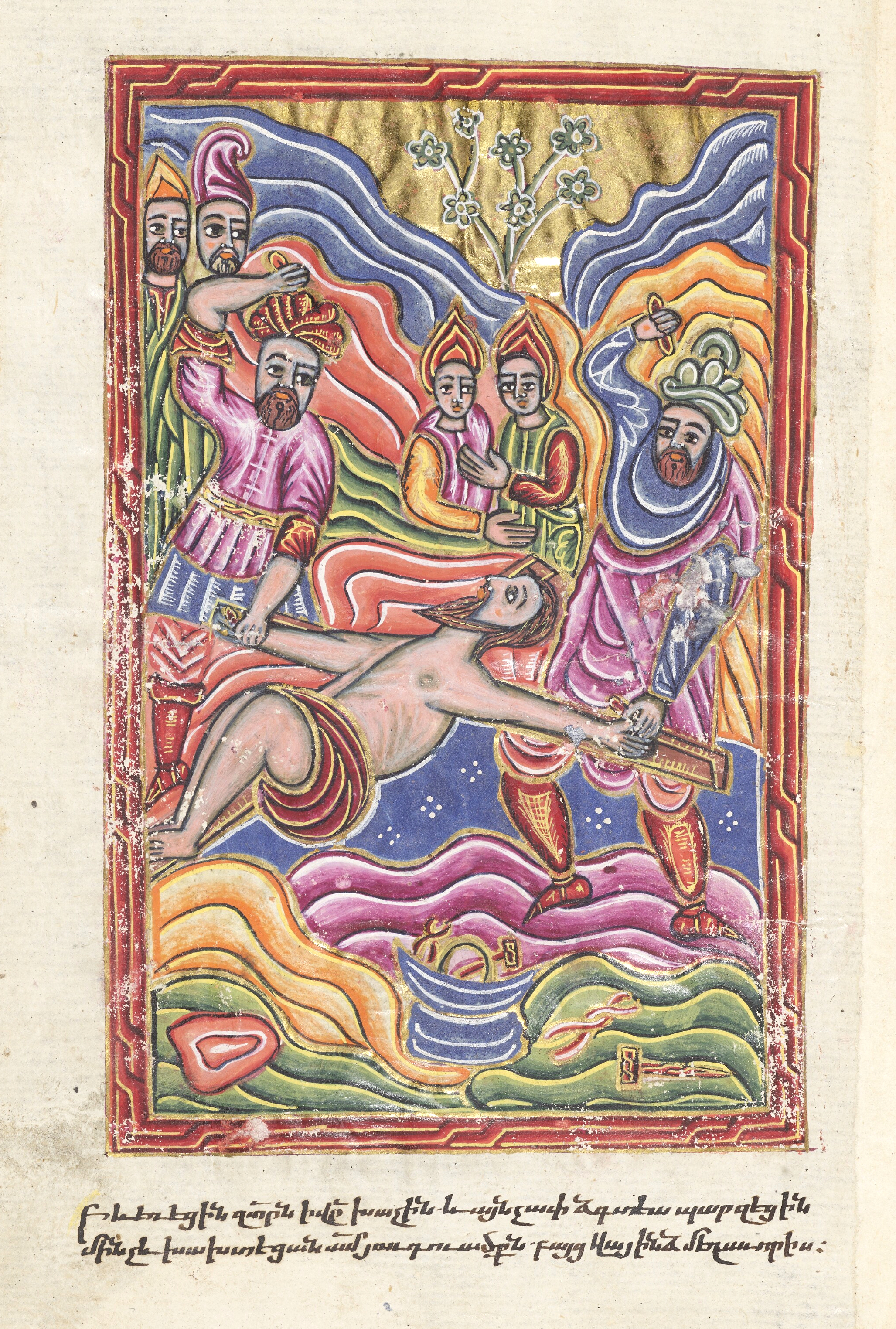
ART COMPILATION: “Crucifixion: Armenian Illuminated Manuscripts” by Levon Ounanian: This compilation brings together thirty-one Armenian miniatures of Christ’s passion. (Miniatures are painted illustrations in a manuscript, so called not because they’re small, though they usually are, but because artists often sketched them using a red lead pigment called minium.) According to the author, of the 31,000 Armenian manuscripts currently listed around the world, about 6,000 of them contain miniatures, not to mention the many more that contain non-narrative decoration.
Mesrop of Khizan (Armenian, active in Persia, ca. 1560–ca. 1652), The Nailing on the Cross, from an Armenian Gospel book, 1609. Oxford, Bodleian Library, MS. Arm. d.13, fol. 13v. Click to view the fully digitized manuscript.
+++
SONG: “Saare Paap” (सारे पाप) (All Sins), performed by James Bovas: In this video, James Bovas [previously] performs a Hindi version of a Malayam song about the Crucifixion. The Hindi lyrics and English translation were supplied to me by the Indian gospel media production company Sarah Creation.
सारे पाप और दाग ममटाकर, मुक्क्त देने के मलए मुक्क्त दाता ने बहाया, खून अपना क्रूस से खून के प्यासे भेडियों ने, आके घेरा यीशु को मारे कोिे टोकी कीले, धारे ननकली ज़ख्मों से मेरे मन तू याद कर ले, क्यों सहे दुुःख यीशु ने तेरा खानतर जान देकर, दी ररहाई यीशु ने श्राप सारे लेके मेरे, दे दी मुझको आमशषे यीशु के पावन लहू से, भाग्य मेरे खुल गए
To remove all the stains and sin, and to give salvation The Redeemer shed his blood on the cross Bloodthirsty wolves surrounded Jesus He was scourged, nailed, and a stream of blood issued forth from his wounds O my soul, never forget why Jesus suffered! He gave his life to set you free He took all my curses and gave me all the blessings By the holy blood of Jesus, my destiny changed forever
+++
ESSAY: “The Path from Death to Life” by Kurt Koch, Plough, March 30, 2024: A Catholic cardinal reflects on the dark side and the bright side of Holy Saturday. “As the day Jesus rested in the grave, Holy Saturday is the day of God’s concealment and silence in history,” Koch writes. “And yet, Holy Saturday also has a hopeful and joyful aspect. . . . [On this day] Jesus traveled to [Hades,] the place of greatest loneliness – a place completely bereft of any human relationships – and stirred the souls and limbs trapped by rigor mortis with the warming love of God. He transformed their grave into a place of new life.” This essay is anthologized in the revised and expanded edition of Bread and Wine: Readings for Lent and Easter (Plough, 2026).
SPOTIFY PLAYLIST: January 2026 by Art & Theology: Almost every month I compile thirty faith-inspired songs on Spotify—roughly two hours of listening—to showcase just a sampling of the well-crafted, spiritually nourishing music that is out there. Though this is several days late, here are some songs to kick off the new calendar year.
+++
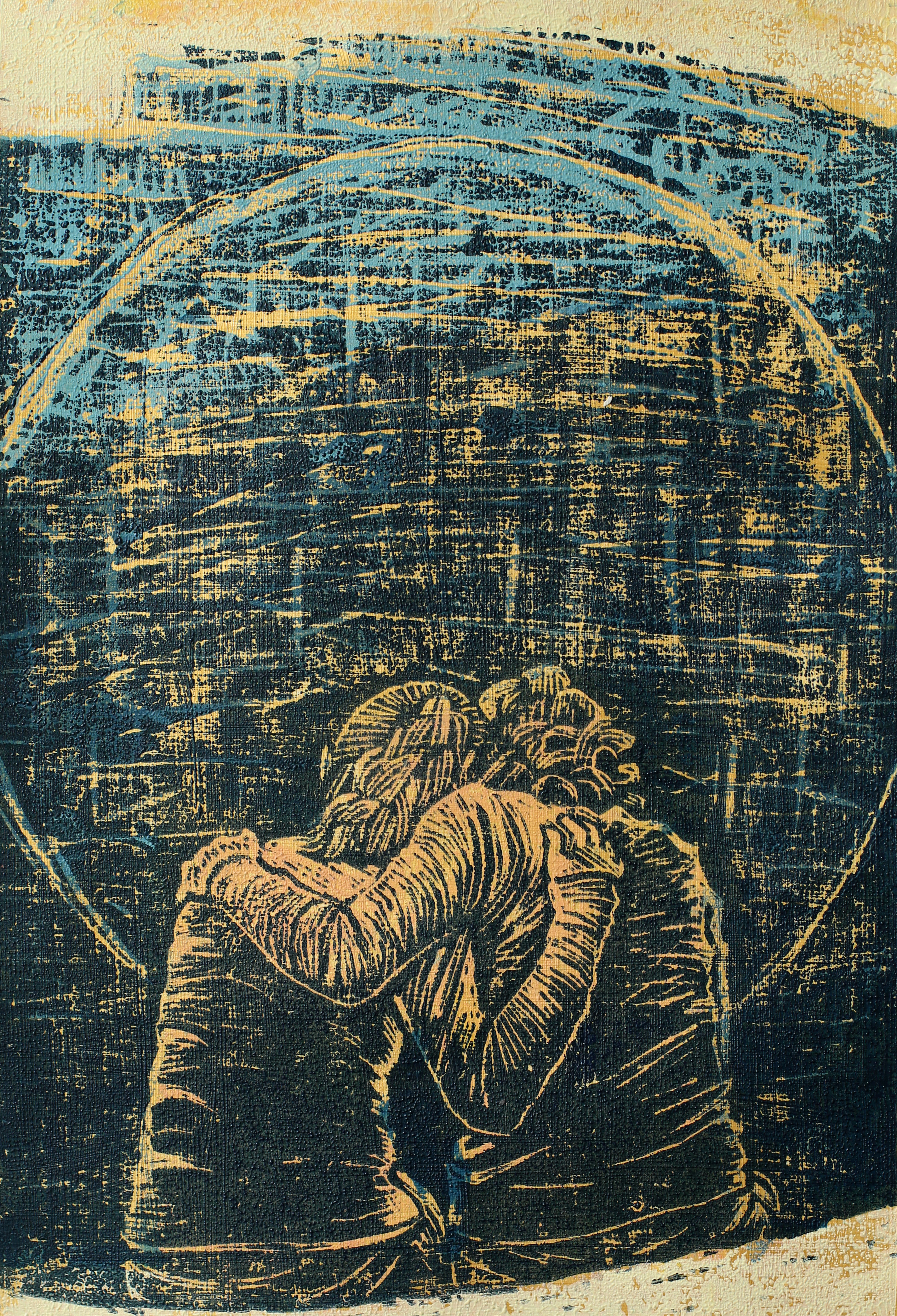
NEW ALBUM + OTHER RESOURCES: Matthew: Gospel Collection by The Soil and The Seed Project: Directed by Seth Thomas Crissman, an educator, musician, and pastor in the Mennonite Church, The Soil and The Seed Project is “a community-supported ministry of the church working for spiritual renewal—in individuals, families, and communities—through beautiful, creative resources that help us together turn towards Jesus in the ordinary moments of life.” I always look forward to their releases, the latest of which is a thirty-song “folk opera,” as they call it, based on the Gospel of Matthew, accompanied by seven commissioned linocut prints by Bethany Tobin (free for church use), seven poems by Michael Stalcup, and twenty-five “little liturgies.”
The beautiful opening track, cowritten and performed by Spectator Bird (“Won’t you tell me a story that’s true . . .”), is followed by a range of narrative-based songs (on the Dreams of Joseph, the Temptation in the Wilderness, the Calming of the Storm, the Transfiguration, the Entry into Jerusalem, the Last Supper, the Resurrection, etc.); settings of the Beatitudes, the Lord’s Prayer, and other teachings from the Sermon on the Mount, as well as cherished sayings about the greatest commandment and Jesus’s easy yoke; songs on parables such as the foolish builder, the sower, the lost sheep; and more. There are far fewer songs about Christ’s passion than I would have expected, but that may be because there’s a relative dearth in music that engages the other parts of the Gospel, or because they anticipate overlap with forthcoming Gospel Collection albums on Mark, Luke, and John. I love what they present here.
Bethany Tobin, Mary Magdalene and Mary sit opposite the tomb, 2025. Used courtesy of The Soil and The Seed Project.
>> RELEASE CONCERT: On Sunday, January 18, 2026, at 3 p.m. at First Presbyterian Church in Harrisonburg, Virginia, The Soil and The Seed Project are going to perform the entire album from start to finish, with a full band and almost all the contributing artists. Admission is free, but they ask that you consider donating some toiletry items for the local food pantry; there will be a collection box on-site. Find more info at https://www.thesoilandtheseedproject.org/matthew#release-concert.
+++
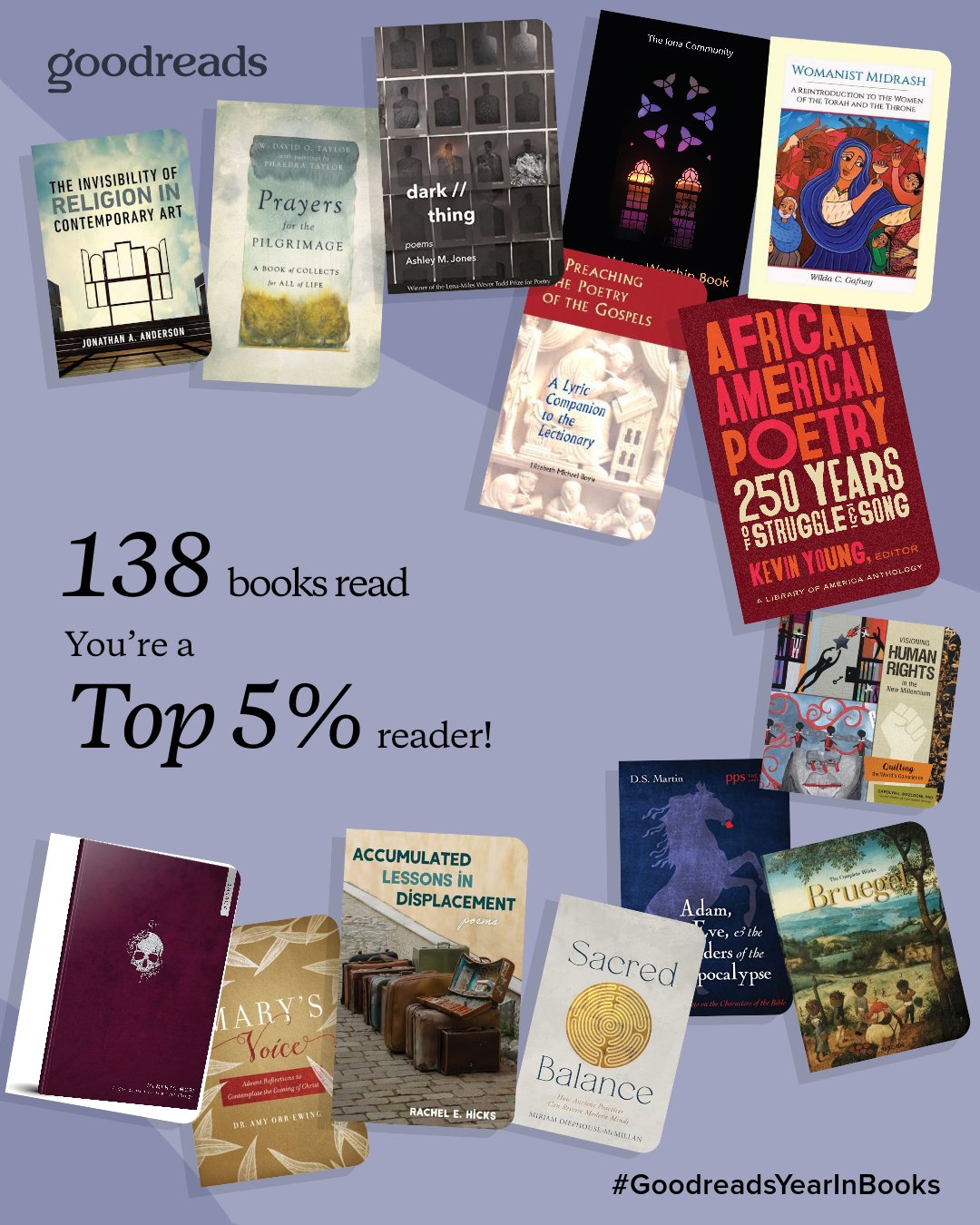
END-OF-YEAR READING STATS: My Year in Books 2025 (Goodreads): I read 138 books last year, mostly poetry. Exactly half were written by women—I’ve been more intentional about seeking out female authors, ever since someone challenged me on that. I hadn’t realized how disproportionately I was reading male authors, especially for theology. Nothing wrong with men!—but in the interest of closing the gender gap in my personal reading habits so that I can benefit from a wider swath of voices and support women writers, I commit to reading at least as many women as men each year.
(The book covers in this graphic are randomly generated by Goodreads from my list of read books.)
I’ve mentioned several of my favorite recent reads on the blog already (e,g., A Whole Life in Twelve Movies, An Axe for the Frozen Sea, Picturing the Apocalypse), but let me mention a few more. I wish I had time to write thoughtful reviews. I’m obliged to mention that if you make a purchase from any of the following links, I earn a small commission from Amazon.
Motherhood: A Confession by Natalie Carnes: This one’s hard to describe, but here’s the publisher’s attempt: “What if Augustine’s Confessions had been written not by a man, but by a mother? How might her tales of desire, temptation, and transformation differ from his? In this memoir, Natalie Carnes describes giving birth to a daughter and beginning a story of conversion strikingly unlike Augustine’s―even as his journey becomes a surprising companion to her own.” Despite my not being a mother, this book, which is also about embodiedness, and by a theologian I’ve met at conferences on multiple occasions, really captivated me. Thank you to a reader who purchased it for me from my wish list!
I really love the newish Fullness of Time series from InterVarsity Press, edited by Esau McCaulley, which celebrates the riches of the church year in seven short little volumes. It starts withAdvent: The Season of Hopeby Tish Harrison Warren and Christmas: The Season of Life and Light by Emily Hunter McGowan. As someone who didn’t grow up observing the liturgical calendar but who now does and gets asked about it by Christians for whom it’s unfamiliar, I find these explainers to be a helpful resource as well as personally enriching, and I look forward to reading more.
Bruegel: The Complete Works: This monster of a book from the art publisher Taschen, which comes in a carrier case, was a present from my husband. It’s beautifully produced, with full-color reproductions, foldouts, essays, and cataloging info. Pieter Bruegel (the Elder), a sixteenth-century Flemish artist, is known for his detailed, densely populated (sometimes a hundred-plus figures!) paintings of biblical narratives and peasant scenes, many of which were copied by his son, Pieter Bruegel the Younger. I give the text four stars but an overall five stars merely for the quality of the images (especially the inclusion of high-resolution details, which are generally not accessible online) and the value of having an authoritative catalog of all the artist’s authenticated works.
Goodreads is a social cataloging website for book lovers. I use it mainly to keep track of the books I’ve read and the ones I want to read. You can also tag books, a feature I use to group by topic or genre, though I’m not entirely consistent with the labeling. I’m a volunteer Goodreads Librarian, meaning I can edit book details and create new book records. Follow me on Goodreads.
+++
Victoria’s Book Wish List: If you would like to support Art & Theology, buying me a book from my Amazon wish list is one tangible way to do that. (Only those with a US Amazon account can do this, I believe.) The books I read influence the content I write and the artists I feature. I keep this link up-to-date year-round, and it lives permanently on this site’s Donate page (where there’s also a link to give financially through PayPal). I only include books that relate to the objectives of this blog. Thank you to those who have gifted me with surprise shipments throughout this past year! My husband says my eyes light up the brightest when I’m receiving a new book. I think it’s because I delight so much in growing my mind and spirit through wisdom and beauty.
Sometimes people ask me how I decide which books to buy versus which to get from the library. On his Astonishing Things Substack, Wes Vander Lugt shares the criteria he uses—and mine are largely the same. He writes:
Is it a book from a favorite writer that I will want to digest slowly, re-read, and cherish having in my home? Buy it.
Is it a book that piques my interest but the quality of writing and value of the content is relatively unknown? Get it from the library.
Is it a novel from a trusted author that I may not be able to finish in a month and/or will most likely want to re-read or at least revisit for inspiration and reflection? Buy it.
Is it a novel that I can reasonably finish in a month without feeling rushed? Get it from the library, along with the audiobook format if available.
Is it a book by a friend? Buy it!
Is it a book by a writer who feels like a friend, and none of the local libraries have a copy after a reasonable time following the release? Buy it.
Is it a book I would really love to own but my buy-it list is too long? Get it from the library first, and if it strikes a deep chord and the book budget is not maxed out, buy it.
I do get many books from the Linthicum Public Library right down the road from my house here in Maryland, which I usually visit at least once a week. I’m grateful for the service they provide, and for their partnership with Marina Interlibrary Loan, through which I can request books from other libraries in the state. I also regularly borrow movies from the library. However, books that I will take a long time to read, will reference again and again, or would want to lend to a friend—or that simply are not available through the library system in my area but that I desperately want to read and are reasonably priced—those are the kinds I’m likely to add to my wish list or purchase myself.
+++
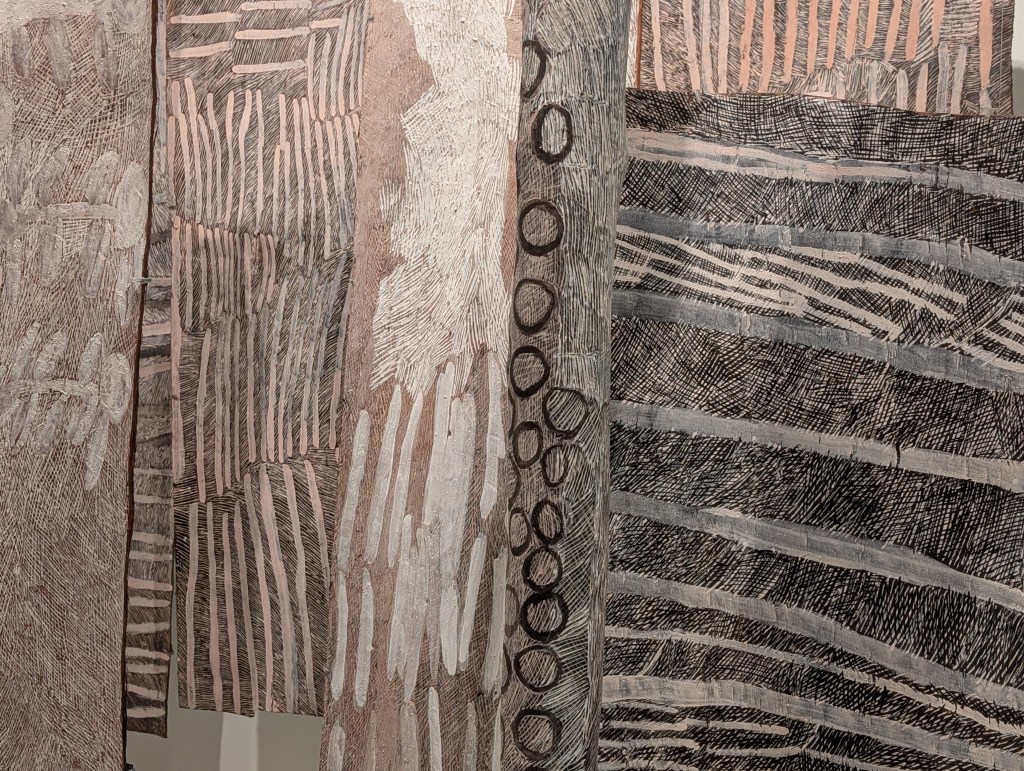
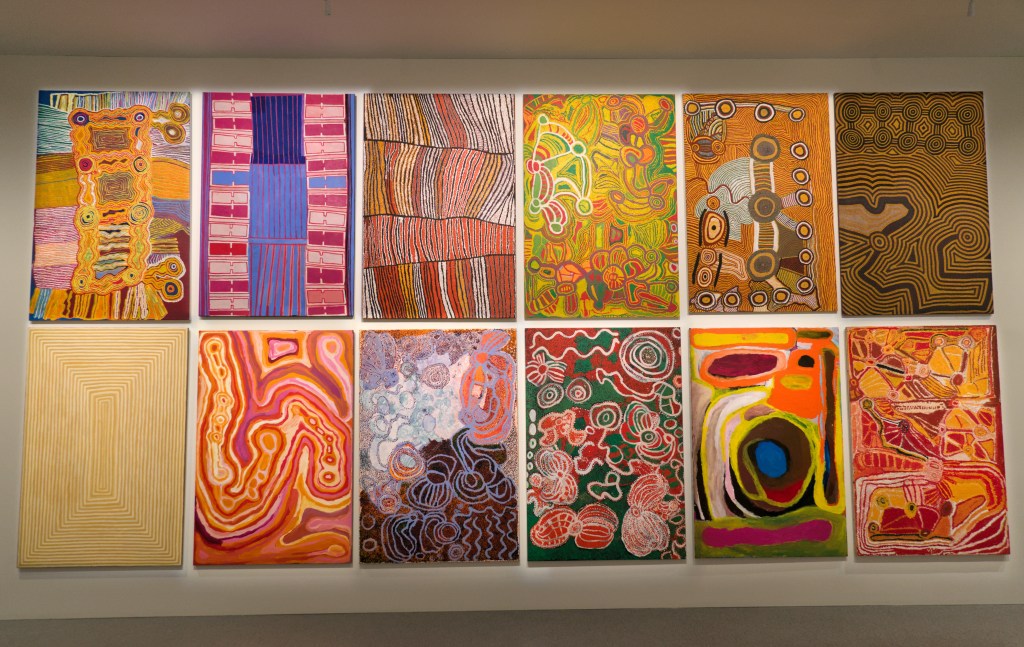
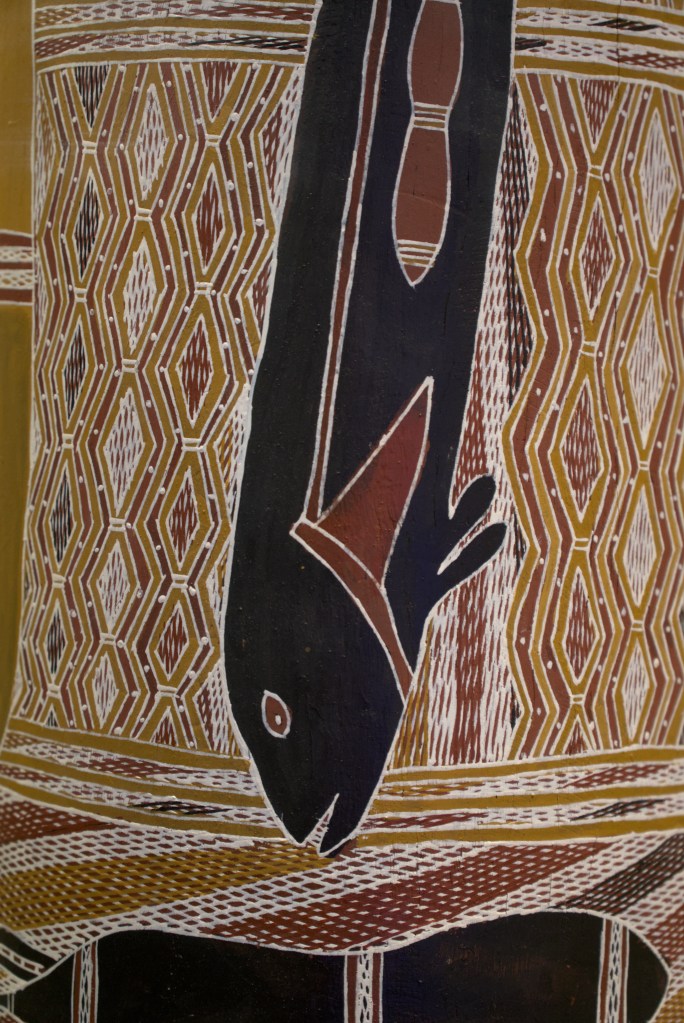
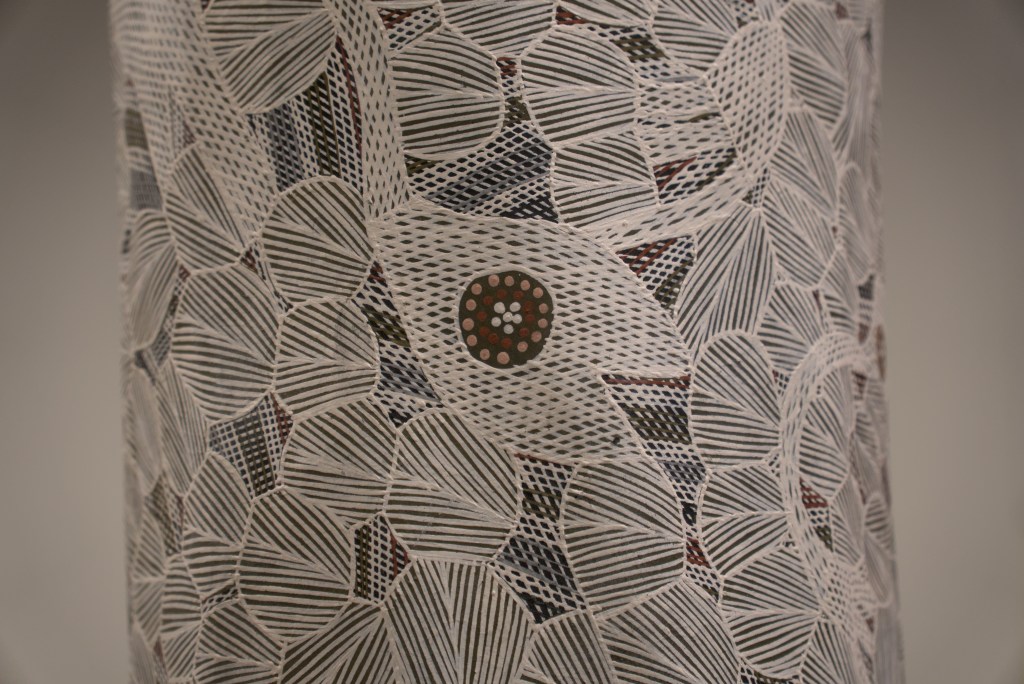
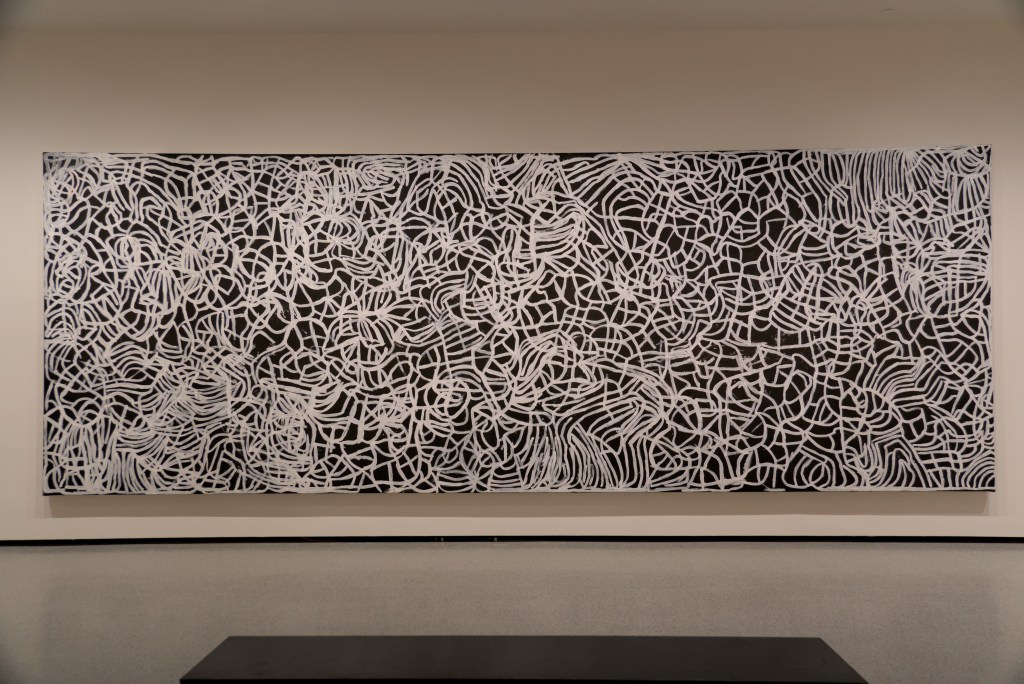
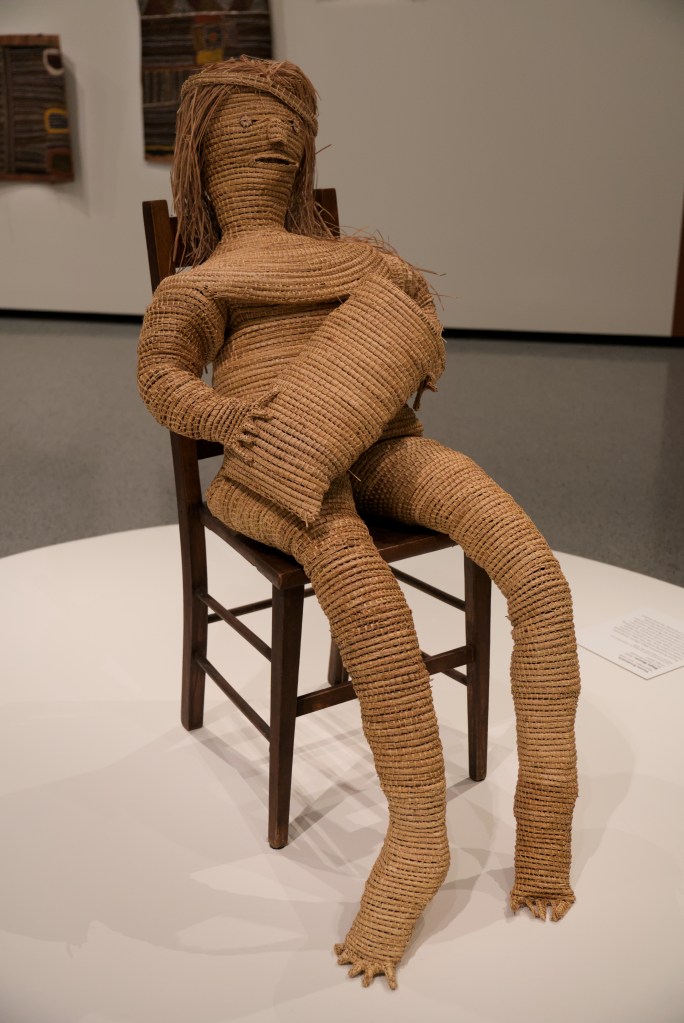
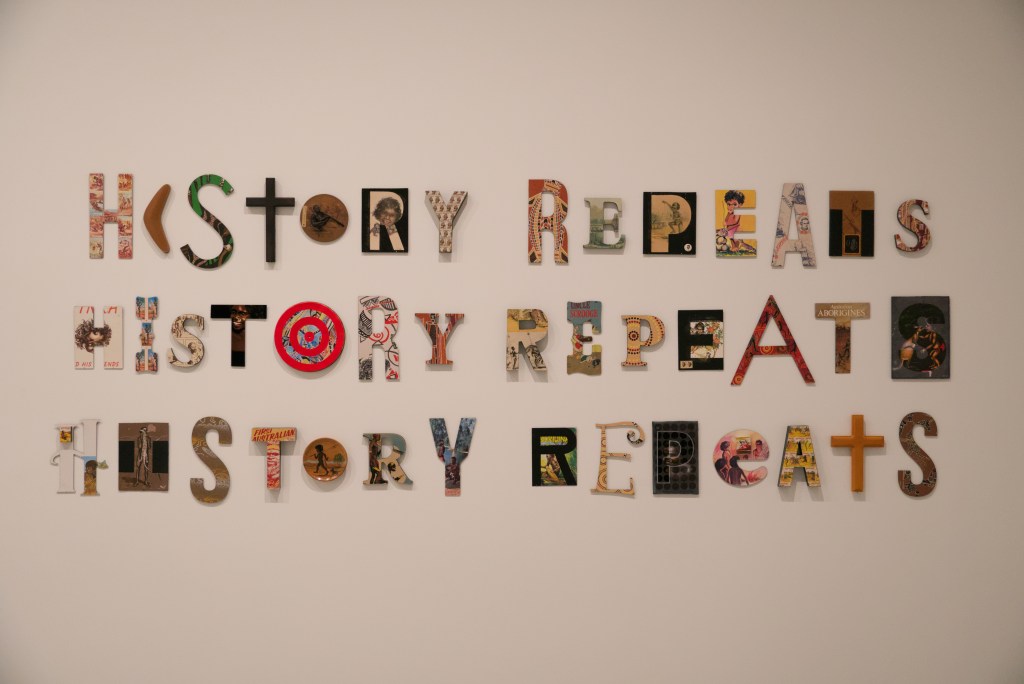
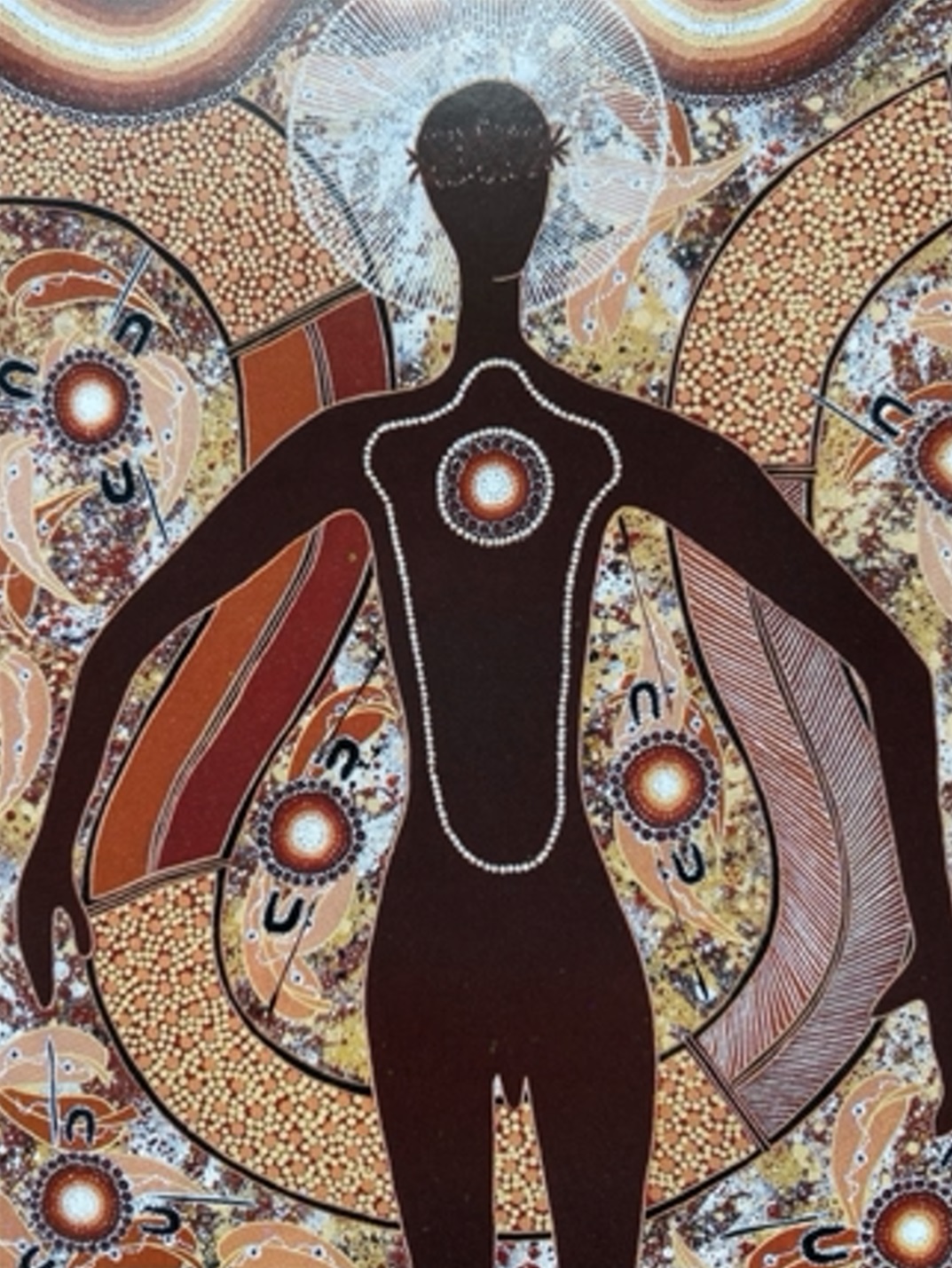
EXHIBITION: The Stars We Do Not See: Australian Indigenous Art, November 15, 2025–March 1, 2026, National Gallery of Art, Washington, DC: I saw this show last month, curated by Myles Russell-Cook from the collection of the National Gallery of Victoria in Melbourne, and it was fantastic. I recommend the free guided tour, especially if Aboriginal art is new to you. “Don’t miss this once-in-a-lifetime exhibition of Aboriginal and Torres Strait Islander art—the largest ever shown in North America. Australian Indigenous art is a visual thread connecting more than 250 nations across 65,000 years. Explore its breadth and brilliance through nearly 200 works from the late 1800s to today. You’ll find ochre paintings made on bark, maps of the Central and Western deserts (so-called ‘dot paintings’), groundbreaking works in neon, video, and photography, and more. And you’ll meet iconic artists who maintain and reinvigorate Ancestral traditions—revealing the rich, living history of creativity behind the world’s longest continuous culture.”
Here are some of the photos I took:
Nyapanyapa Yunupiŋu (Gumatj, ca. 1945–2021), Gäna (Self), Yirrkala, Northern Territory, 2009–18. Earth pigments on eucalyptus. National Gallery of Victoria, Melbourne. Photo: Victoria Emily Jones.
Nyapanyapa Yunupiŋu, Gäna (Self) (detail)
Gulumbu Yunupiŋu (Gumatj, 1945–2012), Garak (The Universe), Yirrkala, Northern Territory, 2008. Earth pigments on eucalyptus. National Gallery of Victoria, Melbourne. Photo: Victoria Emily Jones.
Gulumbu Yunupiŋu, Garak (The Universe) (detail)
Paintings by (top, left to right) Kunmanara (Patju) Presley, Boxer Milner Tjampitjin, Walangkura Napanangka, Tjayanka Woods, Donkeyman Lee Tjupurrula, Ronnie Tjampitjinpa, (bottom, left to right) Turkey Tolson Tjupurrula, Nora Wompi, Wingu Tingima (×2), Wakartu Cory Surprise, Eubena Nampitjin
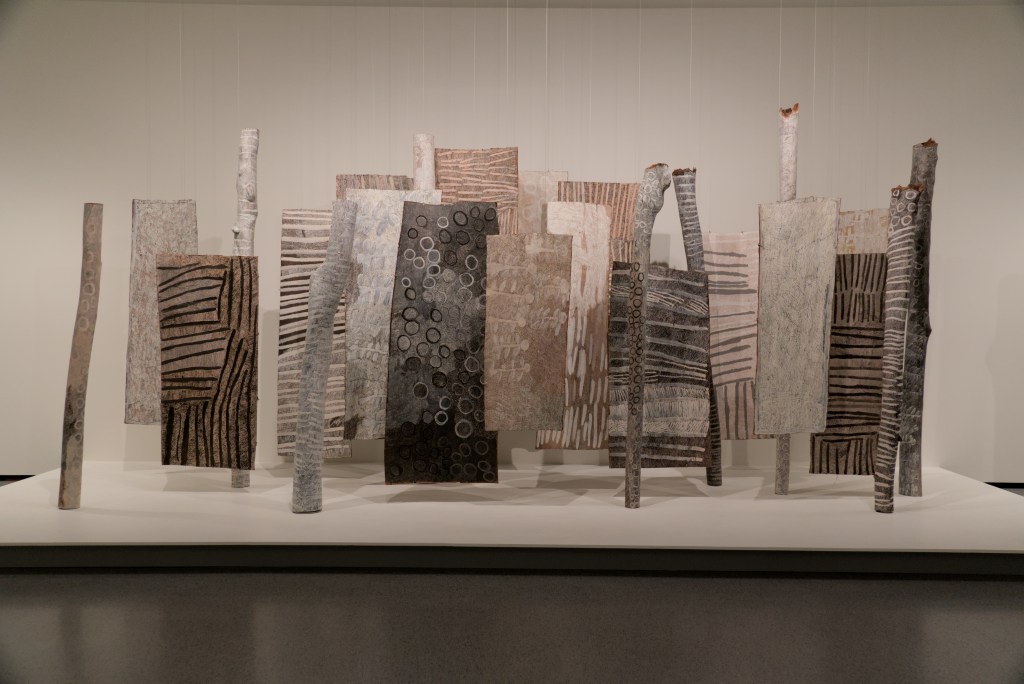
Larrakitj (memorial poles) are hollowed eucalyptus logs, carved and painted, made by the Yolŋu people of Arnhem Land, Australia, traditionally to hold ancestral bones, though some, like these, are made exclusively for the contemporary art market and contain no human remains. Photo: Victoria Emily Jones.
Gawirriṉ Gumana (Dhalwangu, ca. 1935–2016), Guyamirrilil (detail), Gäṉgaṉ, Northern Territory, 2003. Earth pigments on eucalyptus. National Gallery of Victoria, Melbourne. Photo: Victoria Emily Jones.
Malaluba Gumana (Dhalwangu, 1953–2020), Dhatam (Waterlilies) (detail), Gäṉgaṉ, Northern Territory, 2017. Earth pigments on eucalyptus. National Gallery of Victoria, Melbourne. Photo: Victoria Emily Jones.
Emily Kam Kngwarray (Anmatyerre, ca. 1910–1996), Anwerlarr Anganenty (Big Yam Dreaming), Delmore Downs, Northern Territory, 1995. Synthetic polymer paint on canvas. National Gallery of Victoria, Australia. Photo: Victoria Emily Jones.
Claudia Moodoonuthi (Kaiadilt, 1995–), 360 Flip on Country, Meanjin/Brisbane, Queensland, 2014. Synthetic polymer paint on skateboards. National Gallery of Victoria, Melbourne. Photo: Victoria Emily Jones.
Yvonne Koolmatri (Ngarrindjeri, 1944–), Magic Weaver, Berri, South Australia, 2005. Sedge, wood. National Gallery of Victoria, Melbourne. Photo: Victoria Emily Jones.
Tony Albert (Girramay / Yidinji / Kuku Yalanji, 1981–), History Repeats, Meanjin/Brisbane, Queensland, 2022. Found kitsch objects and timber. National Gallery of Victoria, Melbourne. Photo: Victoria Emily Jones.
The title of the exhibition comes from the late artist Gulumbu Yunupiŋu, known affectionately as “Star Lady.” She developed “a signature style characterized by dense networks of crosses unified by fields of dots. Each cross represents a star and all that is visible within the known universe, while the dots in between symbolize everything that remains unknown.” See images 3 and 4 in the slideshow above.
After its run at the National Gallery in Washington, The Stars We Do Not See will be traveling to the Denver Art Museum in Colorado, the Portland Art Museum in Oregon, and the Peabody Essex Museum in Massachusetts.
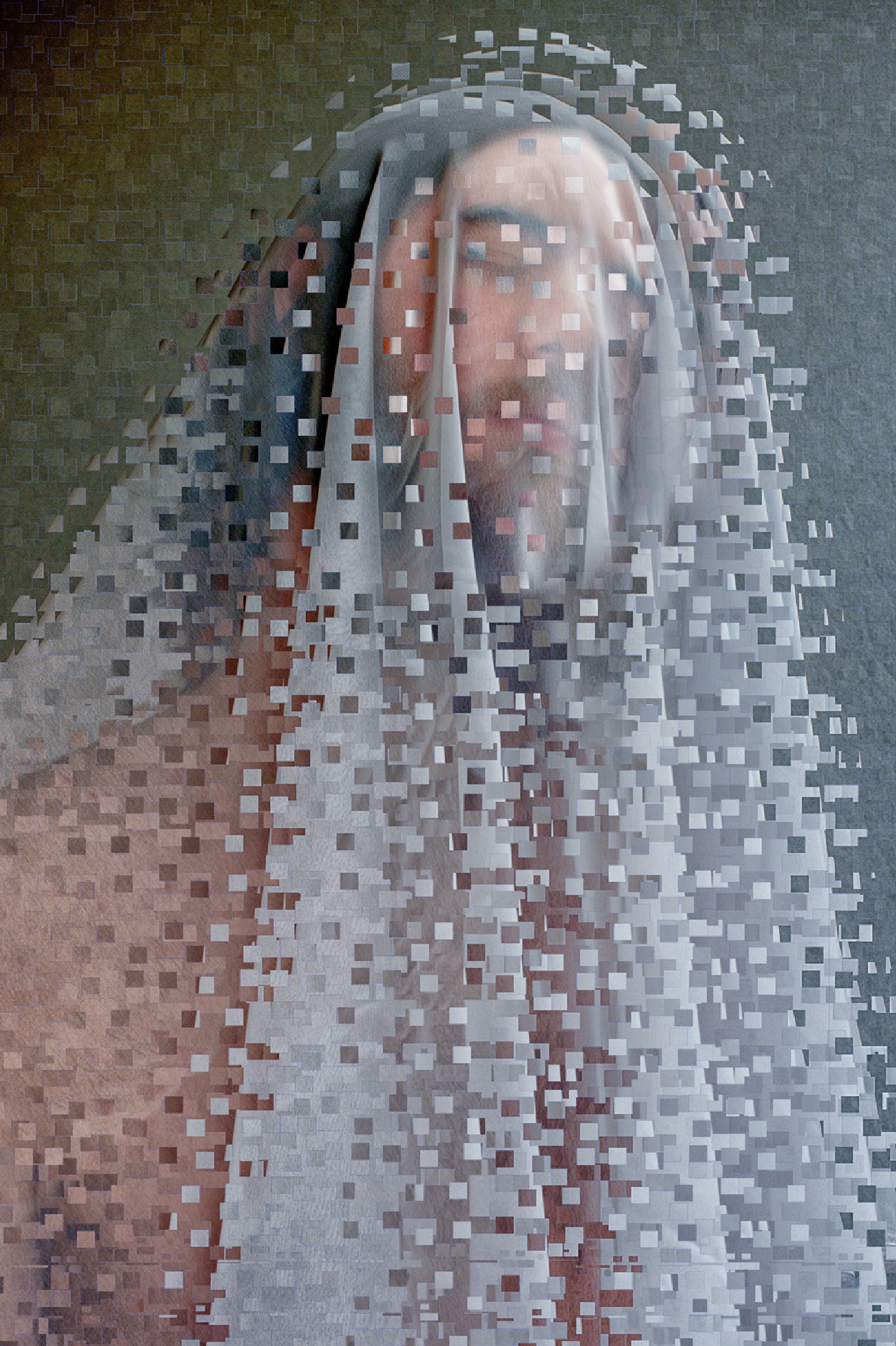
Brett Canét-Gibson (Australian, 1965–), Anastasis, 2016. Photographic digital print, 90 × 60 cm.
Anastasis is the Greek word for “resurrection.” This image by the Australian photographer Brett Canét-Gibson shows the dead Christ covered in a translucent burial shroud, which appears pixelated, out of joint. Some kind of mysterious transformation is afoot. It’s as if Jesus is in the process of waking up, reconstituting, his form coming back into focus as death comes undone. The shimmying squares create a sense of motion and effervescence.
LISTEN: “The Communion Verse of Holy Saturday” | Traditional Orthodox liturgical hymn (in Tone 4), arr. Boris Ledkovsky, mid-20th century | Performed by the Holy Trinity Monastery and Seminary Choir of the Russian Orthodox Church Outside Russia, Jordanville, New York, on Let Us Sing of John, the Hierarch of Christ, 2011
This verse is sung at the end of the Vespers with Divine Liturgy service of the Orthodox Church on the morning of Great and Holy Saturday. Here is the Slavonic text, followed by a phonetic rendering and the English translation:
Воста яко спя Господь: и воскресе спасаяй нас. Аллилуиа.
Vosta yako spya Gospod, i voskrese spasayai nas. Aleluija.
The Lord awoke as one out of sleep, and he is risen to save us. Alleluia.
Even though Holy Saturday commemorates Jesus’s repose in the tomb, this hymn for the occasion anticipates his resurrection. The first half is taken from Psalm 78:65a: “Then the LORD awaked as one out of sleep.”
As we wait in the darkness of what looks like defeat, victorious new life is stirring, about to emerge.
The following exhortation is by Kenneth Tanner, pastor of Holy Redeemer church in Rochester Hills, Michigan, and the author of Vulnerable God: Reviving the Wonder of God-with-Us in Our Humanity, forthcoming from Brazos Press. He originally posted it on Facebook on March 26, 2018, and I reprint it here with his permission.
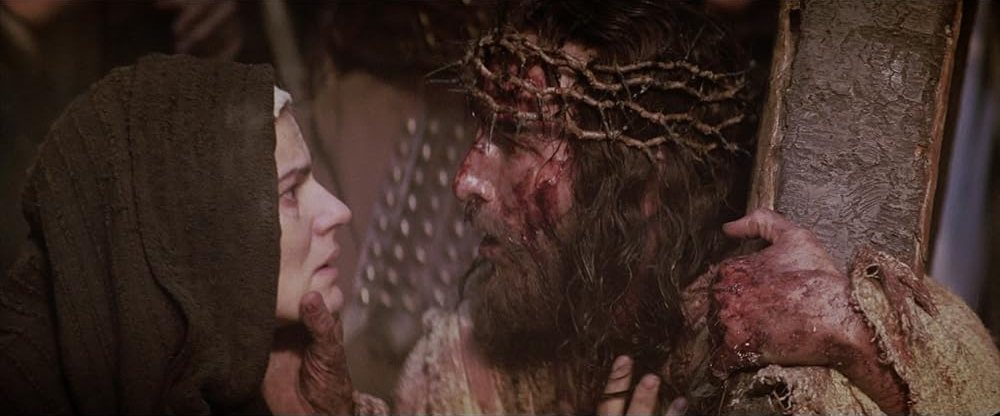
[In 2004] a film premiered during Lent. The film was about this week we are entering, the week that changes the world.
There’s a scene in the film of Jesus falling flat on his face into a dusty road; surrounded by crowds, a crown of thorns on his head, the heavy timber he is carrying comes down hard on his back.
He falls at the intersection of an alleyway where we see his mother Mary huddled in anguish as she waits in horror to glimpse Jesus passing.
When Jesus hits the ground just yards from her, Mary flashes back to a moment when as a child Jesus stumbled and hurt himself. In the memory, Jesus runs to her in pain and she takes him into her arms of comfort.
Startled back from her vision, back to the reality of her son laying prostrate in the dust, Mary springs to life and rushes to the aid of her son. When Jesus sees her, he shoulders his cross, and as he slowly rises back to his feet, he looks at Mary and says, “Behold, mother, I make all things new.”
Film still from The Passion of the Christ (2004), dir. Mel Gibson
Once a year Christians let this story be the priority in their lives. We take children out of music lessons and sporting events. We don’t plan social engagements. We pause. We take a deep breath. We put ordinary busyness on hold. We take a long weekend of sabbaths.
We pray. We sing. We lament. We remember. We find silence and dwell in it. We worship.
We ENTER the story together by the Spirit in gathered liturgies that re-enact the gift of the Last Supper, the command to love as God has loved us, the anxious questions and perspiration of Gethsemane.
We come together again to take a hard look at the cross, at our own violence toward God, at the Love that forgives even as we betray and deny and flee, as we smite and whip and nail and mock.
In the quiet of Holy Saturday we ponder a world without God, where death reigns without the resurrection.
Then we gather once more with great joy to remember that death is not the end of anyone or the end of the world, that the resurrection is the end of all things.
I want to encourage you to disconnect from the grind and walk the way of the cross this week, to stay with Jesus and the women and John in the darkness that has to come before the new dawn.
You will never quite understand our community, ancient practices, or the deeper meanings of this week until you let it take over your life once a year. And with every passing year, as you keep this sacred week sacred, free from other obligations and pursuits, you will see and experience and encounter Jesus Christ anew.
So I invite you to surrender and enter contemplation of the mighty acts whereby God has reconciled the world to himself in Jesus Christ, the things only Jesus can do, for we cannot do them ourselves, where we find genuine rest from our labors in the acts of Love that make the world new.
To assist your contemplations, I’ll be sharing a song and an artwork here on each day of Holy Week, as is my custom. (You can view the archived posts in this annual series, from 2024, 2023, 2022, 2021, and 2020.) Some of the songs can be found on Art & Theology’s Holy Week Playlist:
O set me as a seal upon thy heart O set me as a seal upon thine arm For love is strong, strong as death, my love And jealousy is cruel as the grave
Its flashes are the living flame of a blazing fire That cannot be drowned out in a flood All earthly gold in exchange for love Would be utterly contemptible and scorned
Come, my love Let me hear your voice My companions and I wait in the garden Make haste, my love, and shine out like the rising sun Like a stag appearing on the mountain
After the crucifixion of Jesus, a small group of his female followers purchased spices and prepared them to bring to the tomb to anoint his body on Sunday morning. (Sabbath restrictions prevented them from doing work on Saturday.) This was an act of love and reverence that served the practical function of counteracting the smell of decomposition.
The singer-songwriter Katy Wehr [previously] imagines the women consoling each other by singing excerpts from the Song of Songs as they crushed the myrrh, mixed it with oil, and bottled it up for transport—maybe also as they headed over to the gravesite. Wehr has set to music four of the verses from the book’s final chapter, a setting she says she hopes conveys a tone that is both mournful and hopeful.
The Song of Songs, or Song of Solomon, is an ancient collection of Hebrew love poems that Christians have long read as allegorical of the love between Christ and his bride, the church.
Wehr’s selections comment on the nature of love: it is permanent, strong, passionate, inextinguishable, and priceless. The female speaker in the poem seeks to stamp herself on her lover’s heart like a seal, claiming him as hers. She professes love’s power, which is as severe and enduring as death. In the context of this passage, the word “jealousy” appears to be used in the positive sense to mean zeal or passion—a resolute devotion.
She goes on to describe love as fiery and intense.
It seems her lover has gone out for the day, or gone on a trip, and she calls him back home. She can’t wait to hear his voice again. She waits outside for him in the garden, wishing for him to come bounding back into her arms.
“Make haste, my love, and shine out like the rising sun.” One can imagine the myrrh-bearing women of the Gospels hoping beyond hope that their beloved Jesus would arise, would speak their names once more, would prove that love is indeed stronger than death.
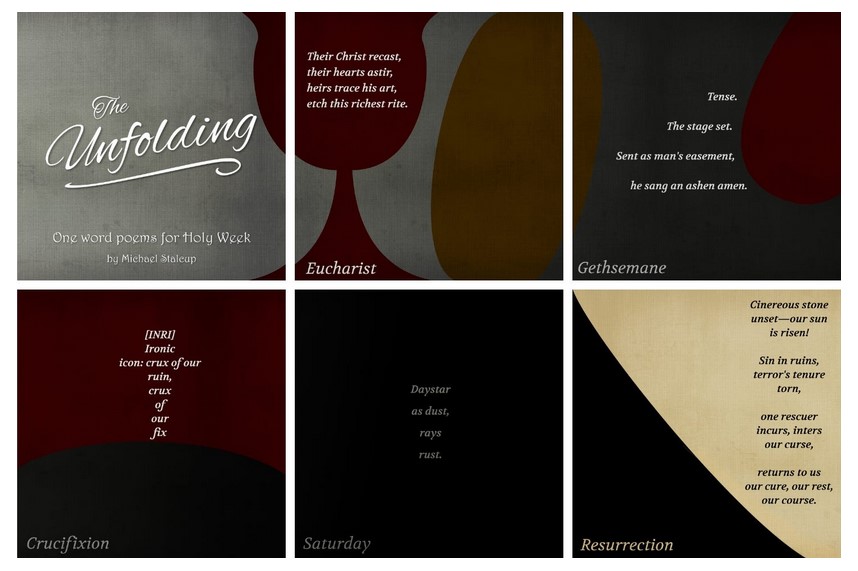
POEM SEQUENCE: “The Unfolding” by Michael Stalcup: Michael Stalcup has published a sequence of five short poems in Solum Journal that “tells the story of Jesus’ death and resurrection by unfolding five words that take us from Maundy Thursday through Easter Sunday,” he says. “I wrote these poems in a very unusual way, restricting myself to words that could be formed from the letters in each poem’s title. . . . This poetic form calls for creativity within intense limitations, which seems fitting for Holy Week—a time when Jesus crafted the most beautiful art this world has ever known within the constraints of his own suffering and death.” Stalcup has also presented them on Instagram (click on the image below).
+++
ARTICLE: “Don’t Rush Past Good Friday” by Brian Zahnd: Pastor and author Brian Zahnd cautions us not to shortchange the cross on the way to Easter, but rather to slow down and dwell there, beholding the crucified Christ.
+++
SONGS:
>> “Friday Morning” by Sydney Carter, performed by Timothy Renner: This Good Friday song by the English folk musician Sydney Bertram Carter (1915–2004) is difficult—one might even say blasphemous. That’s because it’s voiced from the perspective of the “bad” thief, who is spewing hatred and bitterness over his fate and blaming God for having created such a cruel world. But we’re aware of an irony in the refrain that the convicted man is not: “It’s God they ought to crucify / Instead of you and me, / I said to the carpenter / A-hanging on the tree.”
>> “Go to Hell” by Nick Chambers: This song is a setting of a poem by Pádraig Ó Tuama from his collection Sorry for Your Troubles (Canterbury Press Norwich, 2013). The title is shocking, I know, but it’s derived from a line in the Apostles’ Creed, where we Christians profess that after Jesus died, he “descended into hell.” The singer-songwriter, Nick Chambers, writes in the YouTube video description: “In between Good Friday and Easter Sunday is possibly strangest day of the Christian year. On Holy Saturday, not only is Jesus, the God-Man, in the grave; traditions abound about his descent to the dead, his ‘harrowing of hell.’ What does it mean for the coming down of God-with-us not to end on earth but ‘under the earth,’ extending hope to the furthest regions of human pain and abandonment? Such a question deserves more poetry than explanation.”
“Go to hell” is a slang expression of scorn or rejection, to which Jesus was no stranger. As in the previous song, there’s an irony here, in telling Jesus to go to hell—because he did. Literally. Ó Tuama meditates on how Jesus shares in our vulnerabilities and yearnings and seeks to pull us out of the hells we’re in and redeem our stories.
Hear the poem read by the poet here, or at the end of the Stations of the Cross video below. “he is called to hell, this man / he is called to glory . . .”
+++
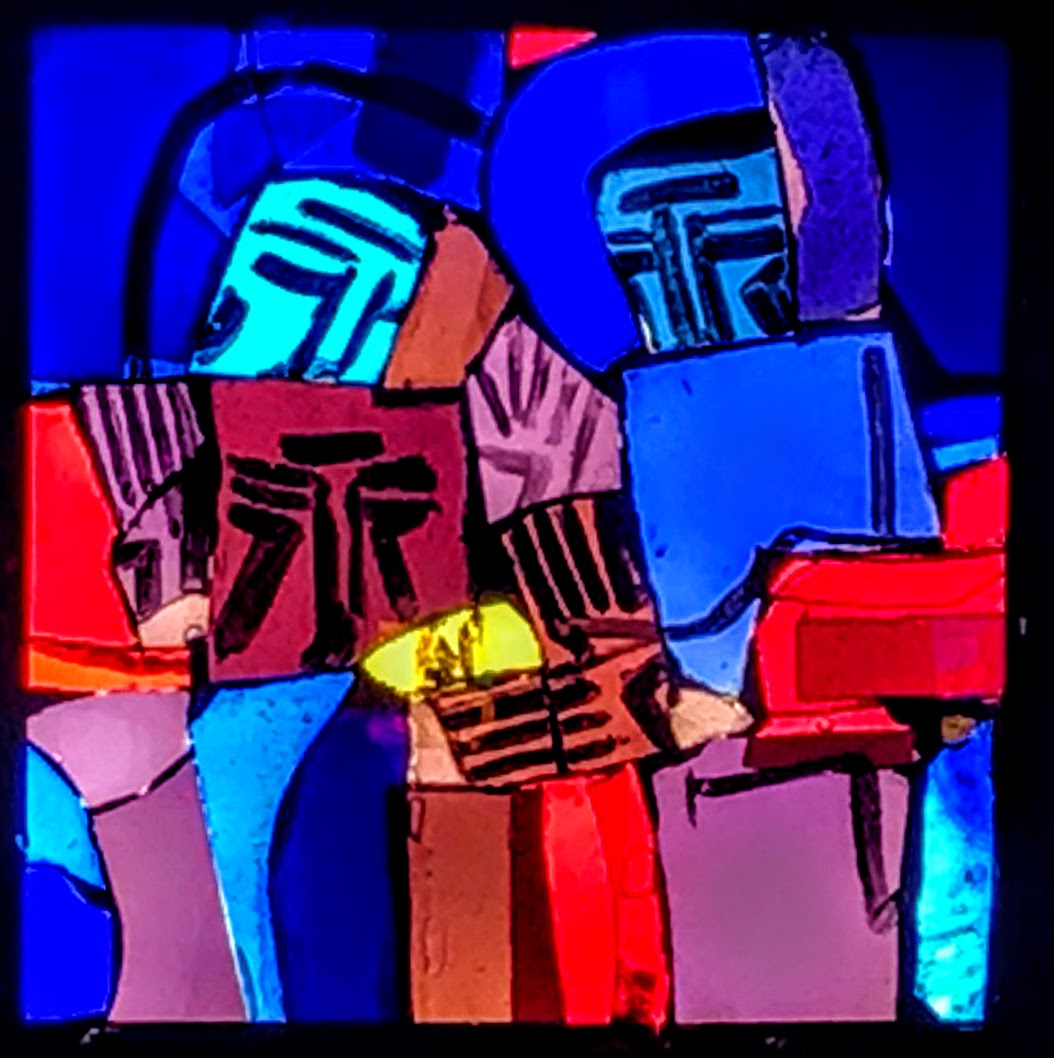
GUIDED MEDITATION: “Stations of the Cross, Good Friday, 2020” by Pádraig Ó Tuama: In 2020 the poet-theologian Pádraig Ó Tuama put together this twenty-minute video reflection for Good Friday structured around the Stations of the Cross, consisting of photos of art he’s taken and the praying of collects he’s written. (Several of the collects can be found in his book Daily Prayer with the Corrymeela Community from 2017.) The throughline is a set of stained-glass Stations by Sheila Corcoran at the Church of Our Lady Queen of Heaven at Dublin Airport; others are by Jong-Tae Choi, Gib Singleton, Sieger Köder, Richard P. Campbell, and Audrey Frank Anastasi.
Sheila Corcoran, Station 6: Veronica Wipes the Face of Jesus, ca. 1964. Stained glass, Church of Our Lady Queen of Heaven, Dublin Airport. Photo: Patrick Comerford.Richard P. Campbell (Dunghutti/Gumbaynggirr, 1958–), Station 10: Jesus is stripped of his garments, 2001. Reconciliation Church, La Perouse, Sydney, Australia.
But before stepping onto Jesus’s Via Dolorosa, Ó Tuama considers Judas, sharing a stained glass panel by Harry Clarke that illustrates a medieval legend about the Irish monastic saint Brendan the Navigator. According to the Navigatio Sancti Brendani Abbatis, on one of his voyages St. Brendan encountered Judas at sea, tied to an iceberg. He learned that an angel had taken pity on Judas in hell and given him a reprieve of one hour to cool himself from the flames of judgment. Ó Tuama then prays for those who, like Judas, are tormented by guilt and see no way out.
He closes with a reading of his poem “Go to Hell” (set to music in the previous roundup item).
+++
SONG: “For the Songless Hearts” by Jon Guerra: “There’s a lot of hubbub around Easter weekend in churches. And for good reason,” says singer-songwriter Jon Guerra. “But our hearts can’t always cooperate with the prescribed mood of the Easter season: ‘Celebrate! Be happy! Sing!’ Sometimes the last thing we are able to do is sing. Thankfully, Good Friday and Easter are not about mustering a mood. Good Friday and Easter are about remembering that there is One who meets us in our life and meets us in our death. He sings for us—and over us—when we can’t.”
That’s what “For the Songless Hearts” is about—a single released in 2017, and which Guerra sings with his wife, Valerie. In a Mockingbird blog post about it, Guerra admonishes, “Remember that before the tomb was empty, it was full. ‘When he was laid in the tomb, he laid right next to you.’” Jesus knew the depths of sorrow and the sting of death. We are not alone in such experiences.
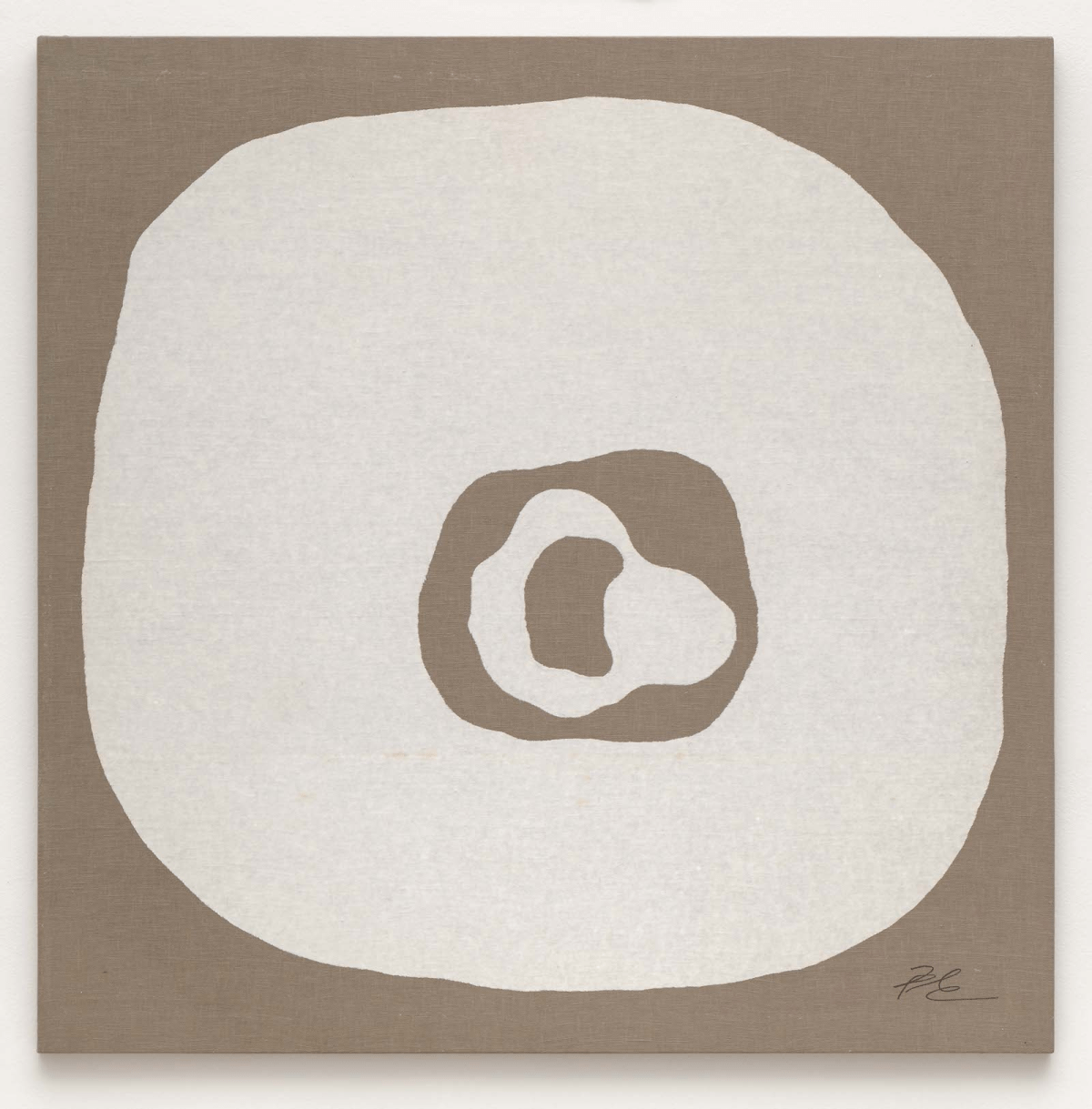
“Very truly, I tell you, unless a grain of wheat falls into the earth and dies, it remains just a single grain, but if it dies it bears much fruit.”
—John 12:24
LOOK: Untitled by Kwon Young-Woo
Kwon Young-Woo (Korean, 1926–2013), Untitled, 2002. Korean paper on canvas, 51 3/16 × 51 3/16 in. Photo: Chunho Ahn, courtesy the artist’s estate and Kukje Gallery.
Before the fruit is ripened by the sun, Before the petals or the leaves uncoil, Before the first fine silken root is spun, A seed is dropped and buried in the soil.
Before the Easter alleluias ring, Before the massive rock is rolled aside, Before the fear of death has lost its sting, A just and loving man is crucified.
Before we gain the grace that comes through loss, Before we live by more than bread and breath, Before we lift in joy an empty cross, We face with Christ the seed’s renewing death.
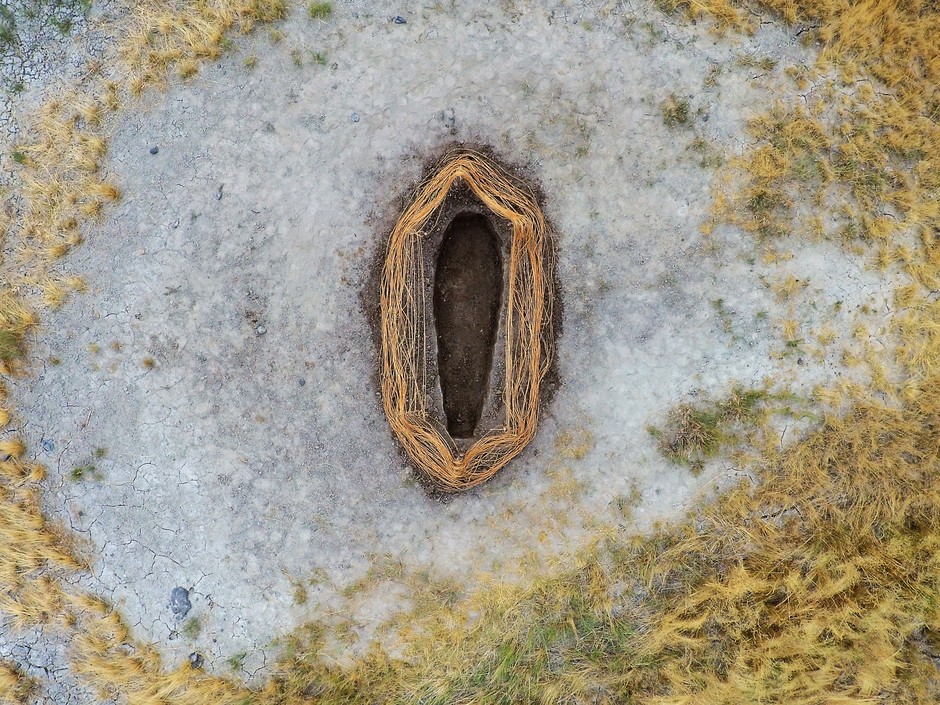
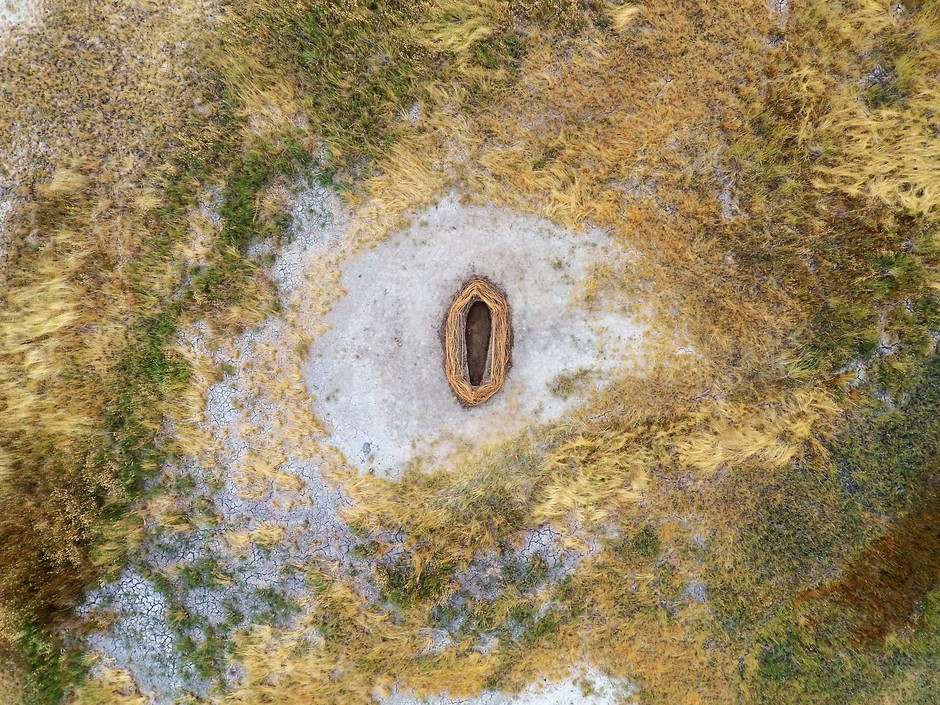
Craig Goodworth (American, 1977–), Playa Studies, 2017. Site-specific land-based artwork, Great Basin Desert, Oregon. Photograph by the artist.
Craig Goodworth’s practice encompasses installation, poetry, drawing, research, teaching, and farm labor. He holds master’s degrees in fine art, sustainable communities, and divinity, and his interests include land, place, religion, mysticism, and folk traditions.
During a four-week residency in the Great Basin Desert in Oregon, he made a series of land-based artworks called Playa Studies, which he documented through photographs. (A playa is an area of flat, dried-up land.) The shape of this one evokes a grave.
LISTEN: “Aestimatus sum” (I am counted . . .) by Tomás Luis de Victoria, 1585| Performed by Ars Nova Copenhagen, dir. Paul Hillier, 2017
Aestimatus sum cum descendentibus in lacum, factus sum sicut homo sine adjutorio, inter mortuos liber. Versus: Posuerunt me in lacu inferiori, in tenebrosis et in umbra mortis. Factus sum sicut homo sine adjutorio, inter mortuos liber.
English translation:
I am counted with them that go down into the pit: I am as a man that hath no strength: free among the dead. Verse: They have laid me in the lowest pit, in darkness, in the deeps. I am as a man that hath no strength: free among the dead.
This is the eighth responsory for Holy Saturday. Tomás Luis de Victoria [previously] of Spain, one of the principal composers of the late Renaissance, set it to music in 1585. It’s the penultimate motet (a multivoiced musical composition sung without instrumental accompaniment) in a set of eighteen by Victoria, titled Tenebrae Responsories.
The text is taken from Psalm 87:5–7 of the Latin Vulgate (Psalm 88:4–6 in the King James Version and most modern translations). The most depressing psalm in the Psalter, Psalm 88 ends not on a note of hope but with the lament that “darkness has become my only companion.” (Hello darkness, my old friend.)
While the psalmist spoke in metaphors of death, Jesus went there literally. After suffering much affliction, he descended “into the pit” of the earth—his grave. He knew emotional and spiritual darkness, and now he was surrounded by the physical reality. The Light had gone out. The Word was made silent.
Imagine what Jesus’s followers must have felt the day after the Crucifixion. Grief, devastation, loneliness, bewilderment, hopelessness. They were left bereft of their Lord’s presence.
On Holy Saturday, we sit in the pocket of that grief, that loss.
N. T. Wright says, “We cannot be Easter people if we are not first Good Friday people and then Holy Saturday people. Don’t expect even a still, small voice. Stay still yourself, and let the quietness and darkness of the day be your only companions.”
All four canonical Gospel accounts of the retrieval of Jesus’s body from the cross and its entombment are very matter-of-fact. There is no mention of grieving. The focus is on the roles of Joseph of Arimathea and Nicodemus, though Matthew and Mark mention two Marys being present (Matt. 27:61; Mark 15:47), and Luke refers generically to “the women who had come with him from Galilee” (Luke 23:55). Mark and Luke also mention the women preparing and, after the Sabbath, returning with burial spices (Mark 16:1; Luke 23:56–24:1).
Leave it to the artists, poets, and composers to inject some emotion into these undeniably wrenching moments! Of carrying the corpse of a loved one, cleaning it, dressing it, and saying goodbye as it’s put into the earth. There is an enormous number of paintings, sculptures, music, and literary texts composed over the centuries to aid Christians in meditating on the dead Christ and vicariously lamenting with those present, especially the Virgin Mary.
After Mary and the others laid Jesus to rest on Friday, their mourning continued, I’m sure, into Saturday. They were utterly bereft.
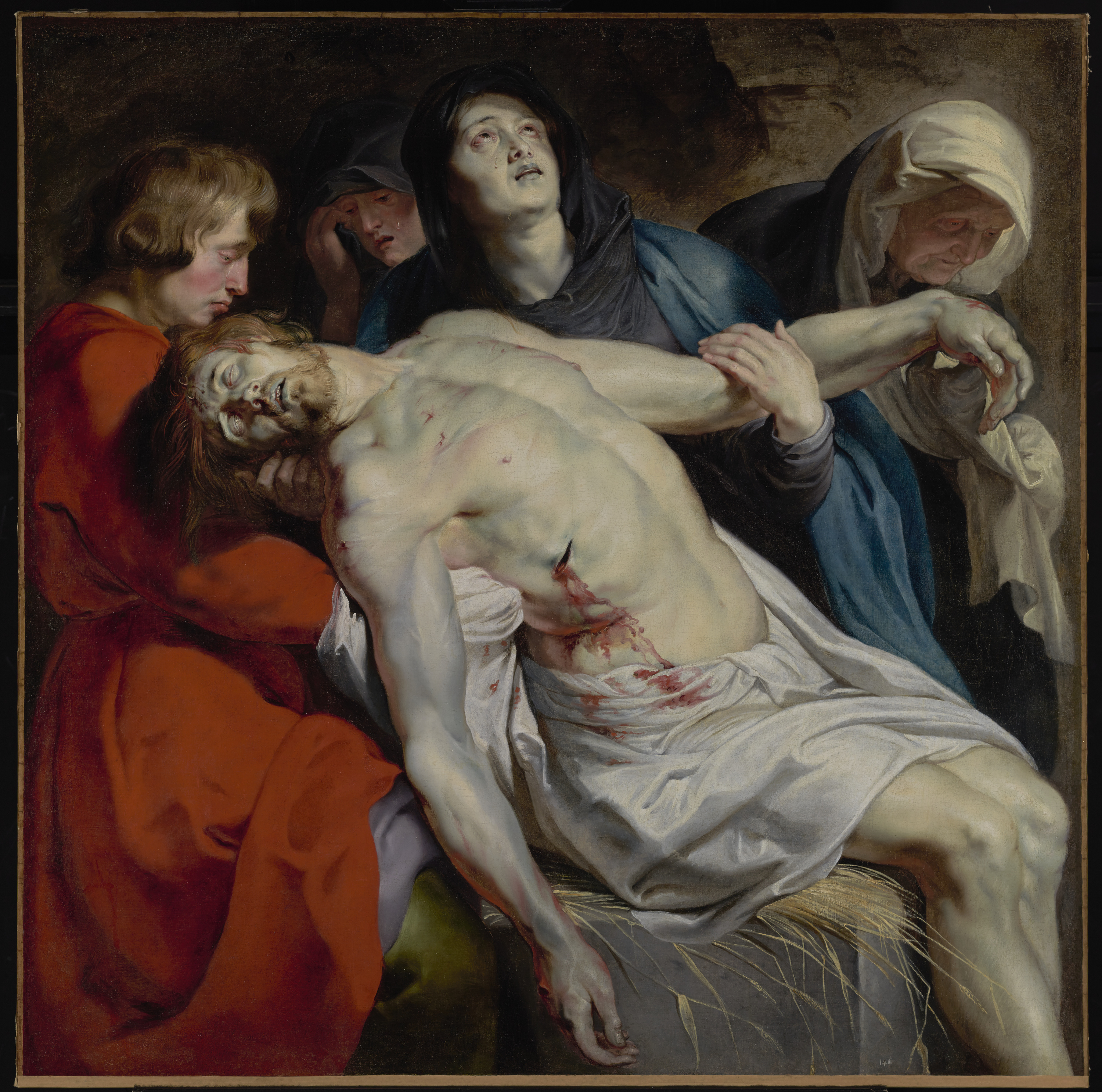
LOOK:Peter Paul Rubens (Flemish, 1577–1640), The Entombment, ca. 1612. Oil on canvas, 51 5/8 × 51 1/4 in. (131.1 × 130.2 cm). J. Paul Getty Museum, Los Angeles.
The Flemish Baroque artist Peter Paul Rubens painted scenes of the lamentation of Christ many times. I saw this one in person at the Getty a few years ago, and it really drew me in. It shows Saint John and the Virgin Mary supporting Jesus’s body as they lay him down onto a stone slab. Mary Magdalene weeps from behind, and another, older Mary, the mother of James the Younger and Joseph (Matt. 27:56; Mark 15:40), gingerly lifts his wounded hand, fixing her sorrow there.
Rubens does not shy away from the ugliness of death, showing Jesus’s eyes rolled back in his head, his lips blue, and blood caked in his hair and dried up around the gaping laceration in his side. His whole body is pale with death, his skin green-tinged, in contrast to John’s ruddy complexion; his mother wears the same deathly pallor. Her eyes are red and puffy, and she looks up to the heavens as if to question why, or to petition God for strength.
The wheat that Jesus lies on alludes to the straw he was bedded in as a newborn and to the bread of the Eucharist on the altar. Christ’s body is given as a holy offering for the sins of the world.
Áine Minogue is an award-winning Irish harpist, singer, arranger, and composer, now living in the Boston area. She plays and sings a mix of traditional tunes and original songs, most with Gaelic lyrics. “Song of Keening” wasn’t written explicitly for Holy Week, but it is a funeral lament that uses non-word utterances to express grief. Minogue writes,
In old Ireland, the practice of keening provided a physical and emotional release for those who grieved. Sometimes, keening was a direct emotional response to loss, practiced by both men and women, though particularly by women who had lost young children—a common occurrence in the past, when child mortality rates were significantly higher.
However, often a professional keener was hired by a family as a way of honoring the dead. These professional mourners were always women, and their keening was more stylized, taking the form of an improvisation based on particular structures and handed-down phrases. Though practiced in diverse cultures from Ireland to Greece, keening was generally frowned upon by church authorities, and treated with disdain by those who embraced the trappings of modernity. The practice now has virtually died out.
This piece is improvised in the old style, using old structures and vocables.
Professional mourners (moirologists) were used in ancient Israel too, at least by those wealthy enough to afford them. There’s no indication that any were present at the death of Jesus. In art history the chief mourners at Jesus’s crucifixion and burial are his mother, Mary; John, to whose care Mary was entrusted; Mary Magdalene; and Jesus’s other female followers.
There are hundreds of thousands of musical works, from a range of genres, inspired by Christ’s passion, especially his death on the cross, which, along with the resurrection, is the centerpiece of the Christian faith. I’ve curated just a sampling of these on Spotify, from across time periods and countries, to serve as an aural guide through the final week of Jesus’s life. The drama begins with Christ’s triumphal entry into Jerusalem on a donkey, where he’s hailed with hosannas, and then continues with a last supper shared with his disciples, an agonized prayer in Gethsemane followed by betrayal and arrest, then, all in one day, multiple trials (religious and civil), conviction by mob, a public execution, and burial. Many of the playlist selections are narrative in character, while some have a more theological bent. My hope is that these pieces aid you in observing this most holy of weeks, walking with Christ through the shadows, taking in how “he himself bore our sins in his body on the tree, that we might die to sin and live to righteousness. By his wounds [we] have been healed” (1 Pet. 2:24).
To add the playlist to your account, open the Art & Theology Holy Week Playlist link, then click on the More (…) icon and select “Save to Library.”
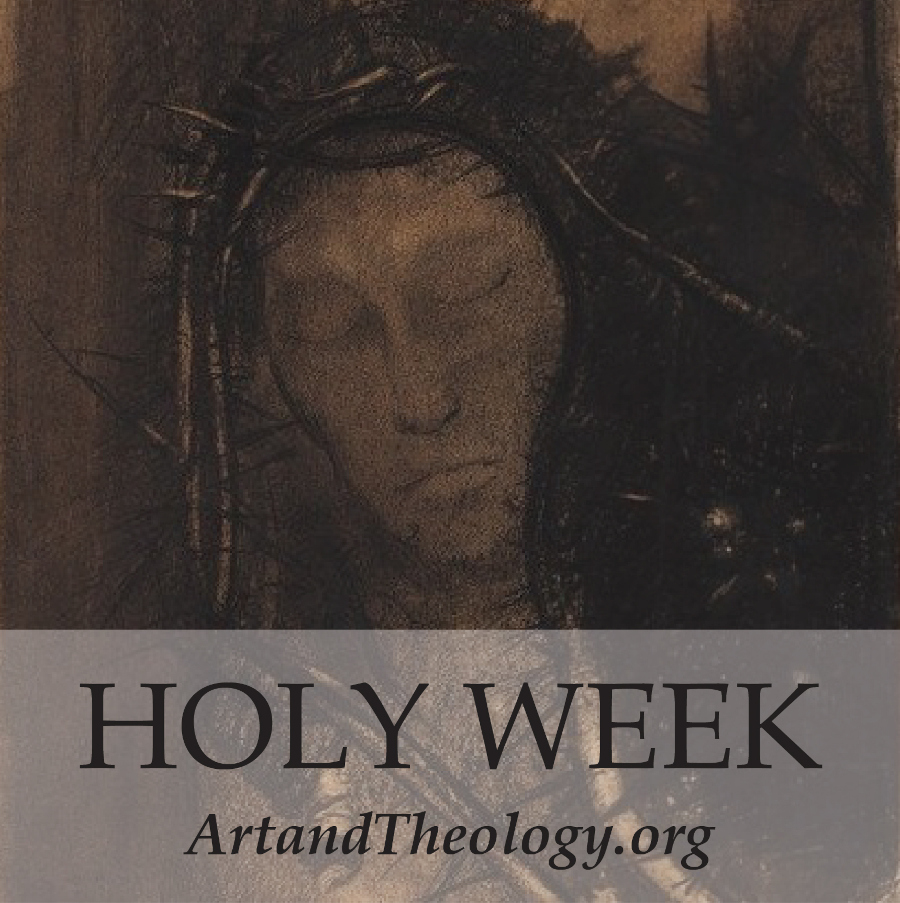
[Playlist cover art: Odilon Redon, Christ, ca. 1895, charcoal, chalk, pastel, and pencil on paper, Museum of Modern Art, New York]
The playlist is a mixture of classical and popular (indie-folk, gospel) music. In this post I want to provide a little context for some of the pieces, by which I mainly mean translations of all the non-English lyrics. Because of what you see here, you might get the wrong impression that the list is almost entirely classical; actually, it’s only about half.
The opening track, “Herr, unser Herrscher” (Lord, Our Ruler), is a unique arrangement of the opening chorus from Johann Sebastian Bach’s St. John Passion, a Good Friday oratorio in German.
Herr, unser Herrscher, dessen Ruhm
In allen Landen herrlich ist!
  Zeig uns durch deine Passion,
  Daß du, der wahre Gottessohn,
  Zu aller Zeit,
  Auch in der größten Niedrigkeit,
  Verherrlicht worden bist!
Lord, our ruler, whose fame
In every land is glorious!
  Show us, through your passion,
  That you, the true Son of God,
  Through all time,
  Even in the greatest humiliation,
  Have become transfigured! [source]
Unique, because the Baroque choir and orchestra are accompanied by an ensemble of Gabonese musicians who contribute their own rhythmic profile, along with solo percussionists Sami Ateba from Cameroon and Naná Vasconcelos from Brazil. The recording, rereleased on the compilation album Babel (2008), is originally from Lambarena: Bach to Africa (1995), a collaboration between French composer and producer Hughes de Courson and Gabonese composer and guitarist Pierre Akendengué, synthesizing two disparate sound worlds. (“Bombé / Ruht wohl, ruht wohl, ihr heiligen Gebeine” is another highlight from the album. For weeks I debated whether to include it on this playlist—adding it, taking it off, adding it back again—ultimately deciding to leave it off, the reason being that it overlays Bach’s choral rondo with music and invocations to the dead from a Bwiti religious ritual. Though sonically compelling and worth listening to, I felt that it might impede some Christians’ ability to engage this list in a devotional way; so I opted for a traditional Western classical recording instead.)
Other selections from Bach’s St. John Passion are:
>> “Christus, der uns selig macht”
Christus, der uns selig macht,
Kein Bös’ hat begangen,
Der ward für uns in der Nacht
Als ein Dieb gefangen,
Geführt für gottlose Leut
Und fälschlich verklaget,
Verlacht, verhöhnt und verspeit,
Wie denn die Schrift saget.
Christ, who makes us blessed,
committed no evil deed,
for us he was taken in the night
like a thief,
led before godless people
and falsely accused,
scorned, shamed, and spat upon,
as the scripture says. [source]
>> “Petrus, der nicht denkt zurück”
Petrus, der nicht denkt zurück,
Seinen Gott verneinet,
Der doch auf ein' ernsten Blick
Bitterlichen weinet.
Jesu, blicke mich auch an,
Wenn ich nicht will büßen;
Wenn ich Böses hab getan,
Rühre mein Gewissen!
Peter, who did not recollect,
denied his God,
who yet after a serious glance
wept bitterly.
Jesus, look upon me also,
when I will not repent;
when I have done evil,
stir my conscience! [source]
>> “O große Lieb”
O große Lieb, O Lieb ohn alle Maße,
Die dich gebracht auf diese Marterstraße!
Ich lebte mit der Welt in Lust und Freuden,
Und du mußt leiden.
O great love, O love beyond measure,
that brought you to this path of martyrdom!
I lived with the world in delight and joy,
and you had to suffer. [source]
>> “Ruht wohl, ihr heiligen Gebeine”
Ruht wohl, ihr heiligen Gebeine,
Die ich nun weiter nicht beweine,
Ruht wohl und bringt auch mich zur Ruh!
Das Grab, so euch bestimmet ist
Und ferner keine Not umschließt,
Macht mir den Himmel auf und schließt die Hölle zu.
Rest well, you blessed limbs;
now I will no longer mourn you.
Rest well and bring me also to peace!
The grave that is allotted to you
and encloses no further suffering
opens heaven for me and closes off hell. [source]
For Bach’s St. Matthew Passion—one of the most celebrated works of classical sacred music ever written, right up there with Handel’s Messiah—I’ve drawn from the abridged English version (rather than the original German), translated by the Rev. Dr. John Troutbeck and performed in 1962 by the New York Philharmonic and Collegiate Chorale under the direction of Leonard Bernstein. I chose just a few pieces from it, not wishing to replicate the whole thing; as you can see, I tend to favor chorales over arias.






 Art & Theology