Roundup: “Beauty Is Oxygen,” SparkShorts, and more

SPOTIFY PLAYLIST: August 2024 (Art & Theology): An assortment of psalms, hymns, and spiritual songs, old and new.

+++

OBITUARIES:

>> Jürgen Moltmann (1926–2024): Jürgen Moltmann, one of the leading Christian theologians of the twentieth century, died June 3 at age ninety-eight. His conversion to Christianity began while he was a German soldier in a POW camp in Belgium during World War II, and he afterward spent most of his career as a theology professor at the University of Tübingen, confronting the theological implications of Auschwitz, among other topics. The pastors of the first church I joined as an adult were deeply influenced by Moltmann (and his protégé Miroslav Volf), so I have been shaped by his theology, especially in the areas of theodicy (which he binds inextricably to Christology) and eschatology.

Moltmann challenged the classical doctrine of divine impassibility, which says God does not feel pain or have emotions, in his seminal book The Crucified God (1974), articulating how God the Father, not just God the Son, is a being who feels and is moved and who also suffered on Good Friday; understanding this, he says, is key to understanding how God relates to the suffering of the world. In Theology of Hope (1964), Moltmann tackled eschatology, which he defines not as the theology of last things but as the theology of hope; not of the end of time but of the fullness of time toward which God is moving all creation, even now. The gospel, he says, must be taken as good news not just of a past event (the birth, life, death, and resurrection of Jesus Christ) but also of a promised future, with vast implications for the present.

>> Bernice Johnson Reagon (1942–2024): Bernice Johnson Reagon [previously], a civil rights activist who cofounded The Freedom Singers and later started the African American vocal ensemble Sweet Honey in the Rock, died July 16 at age eighty-one. I’m so inspired by her Christian witness through nonviolent resistance and music—her songs are on regular rotation in my house.

+++

PODCAST EPISODES:

>> “Beauty Is Oxygen with Wesley Vander Lugt,” Maybe I’m Amazed, June 21, 2024: Dr. James Howell speaks with Dr. Wes Vander Lugt—a pastor, theologian, writer, educator, Kinship Plot cofounder, and director of the Leighton Ford Center for Theology, the Arts, and Gospel Witness at Gordon-Conwell Theological Seminary in Charlotte—about his new book, Beauty Is Oxygen: Finding a Faith That Breathes.

Beauty isn’t necessarily pretty, pleasant, soothing, Vander Lugt says. Beauty is whatever makes our being gasp a little—whether in delight, or in terrified awe. Beauty demands attention. It also dislodges us from the center of the story, Vander Lugt continues—it unselfs us, in a way, curving us outward. It can be present in what’s torn. (“God goes belonging to every riven thing,” as the poet Christian Wiman puts it.)

I was struck by a remark that Howell, the host, who is a pastor, made near the beginning of the conversation: he said preachers should be less like an instructor imparting moral lessons and more like a docent at an art museum who points out the beauty of the paintings, drawing people’s eyes to its various aspects. What a compelling way to frame the ministry of preaching!

>> Malcolm Guite on Poetry and the Imagination, The Habit: Conversations with Writers about Writing (Rabbit Room), May 7, 2020: In the eleventh poem of his “Station Island” cycle, Seamus Heaney writes about “the need and chance // To salvage everything, to re-envisage / The zenith and glimpsed jewels of any gift / Mistakenly abased.” In this podcast episode, poet-priest Malcolm Guite [previously] talks with host Jonathan Rogers about the “salvaging of the mistakenly abased gift of imagination.” Imagination, Guite says, is as much a truth-bearing faculty as reason; in order to know things well, wemust engage the imagination. It’s not about a private, subjective world or inward fantasies devised to compensate for the cruelty of the world; it’s about truly seeing.


One of the gifts mistakenly abased by our culture for about the last two or three hundred years is the gift of the imagination. We’ve sidelined it so it’s only about the subjective, [whereas] out there is the objective world of dry, rational facts. And we’ve abased that gift of intuitively knowing the truth and value of things and expressing that in warm and poetic imagery, rather than simply reducing everything to a set of tiny particles or mathematical formulae.

—Malcolm Guite


The Romantic poets, for example, Guite says, “aimed at awakening the mind’s attention, removing the film of familiarity and restoring to us that vision of the freshness and depth of nature for which we have eyes that see not, ears that hear not, and hearts that neither feel nor understand. So they weren’t trying to make stuff up. They were trying to take away this film which [Samuel Taylor Coleridge] says our selfishness and solicitousness have cast over the world, and unveil a deeper but equally real truth about nature which is more than just the surfaces we see.”

Also in this conversation, Guite reveals the poet who made him want to be a poet, the poem that prompted his reconversion to Christianity, what we lost when poetry changed from oral to written, and why he writes poetry in meter.

+++

SHORT FILM SERIES: SparkShorts, produced by Pixar, streaming on Disney+: Did you know Pixar Animation Studios launched an experimental shorts initiative in 2017, giving employees the opportunity, through funding and resourcing, to flex their creative muscles with a great measure of freedom? “The SparkShorts program is designed to discover new storytellers, explore new storytelling techniques, and experiment with new production workflows,” says Pixar President Jim Morris. “These films are unlike anything we’ve ever done at Pixar, providing an opportunity to unlock the potential of individual artists and their inventive filmmaking approaches on a smaller scale than our normal fare.”

Eleven SparkShorts have been released since 2019, all streaming on Disney+. Here are my favorites:

>> Self, dir. Searit Kahsay Huluf: Released February 2, 2024, this stop-motion–CGI hybrid is about a woman who self-sabotages to belong. Writer-director Searit Kahsay Huluf says it was inspired by her family story: her mother immigrated to the US from Ethiopia to escape a civil war and had to learn how to assimilate without losing herself, and as a second-generation African immigrant growing up in Los Angeles, she herself wrestled with identity issues. The way in which Huluf tells the story is beautiful, clever, and kind of dark! Notice the differentiation of textures and sound between the wood of the main character (portrayed by a puppet) and the metal of the “Goldies.”

Self SparkShort

>> Float, dir. Bobby Rubio: A father discovers his infant son has a unique characteristic that differentiates him from others and then tries to hide him to avoid judgment—but when doing so visibly deflates his son’s spirit, he vulnerably releases him out into the world to be who he is. Writer-director Bobby Rubio created Float for his son, Alex, who is on the autism spectrum. As a dad, Rubio initially struggled with the diagnosis, and this is his story of learning to embrace the beauty of it. It’s one of the few portrayals of a Filipino American family on film, and a warmhearted celebration of neurodivergence—or any other type of divergence.

Float SparkShort

>> Nona, dir. Louis Gonzales: Nona is looking forward to a day to herself to just chill in front of the TV, watching her favorite show, E.W.W. Smashdown Wrestling. But when her five-year-old granddaughter is unexpectedly dropped off, she has to adapt her plans—begrudgingly at first. Writer-director Louis Gonzales says Nona is based on his own grandma, with whom he shared a love of wrestling. I appreciate how the film addresses dealing with disruptions to a cherished routine; it’s honest about the frustration (even if the disrupter is someone you love dearly!) while also showing how a gracious, go-with-the-flow attitude can unlock surprising new joys. What a fitting watch for the current season of Ordinary Time!
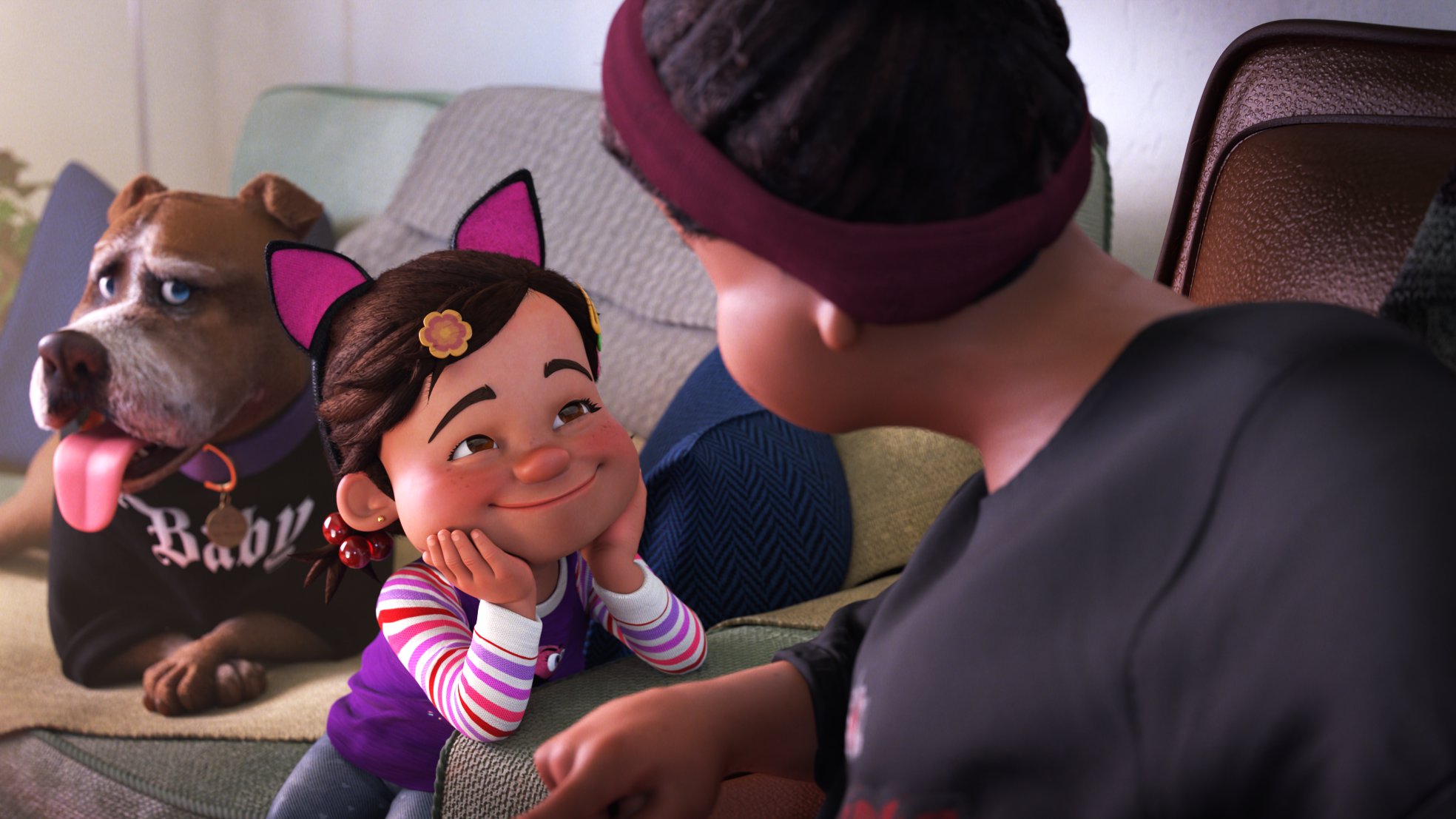
Nona SparkShort

Roundup: Reading the Bible imaginatively, women of Genesis in poetry, and more

VIDEO INTERVIEW: “InStudio: An Image book launch celebrating Abram Van Engen’s Word Made Fresh, including a conversation with Shane McCrae”: The other week I mentioned the upcoming July 9 virtual event hosted by Image journal with Word Made Fresh author Abram Van Engen, who teaches poetry to university students, church groups, and (through his podcast Poetry for All, which he hosts with Joanne Diaz) an online public. The recording for the Image conversation is now available, in case you missed it!

Van Engen answers questions from poet Shane McCrae and from the audience, addressing how to read a volume of poetry, how poetry produces an experience, the role of understanding and not understanding when it comes to poems, why Christians in particular should read poetry, hymns as poetry, how Adam’s naming creation in Genesis 2 relates to the task of the poet, his favorite poets, and the qualities of a good poem.

Two especially great questions from attendees were:

  • How do you imagine poetry nourishing discipleship and/or corporate worship, if used by a church leader?
  • What, if anything, would you like to see more of from Christian poets writing today?

Regarding the first, he says,

I often think that ministers in particular—and especially the heavier the preaching tradition, the more true this is—need creative literature—poetry, novels, and other things—to enliven what it is they’re doing from the pulpit. Not just to understand human life in all of its flourishing and misery, but to connect to people in different kinds of ways than pure principle and message can do.

He mentions the recurring summer seminar for pastors co-led by Dr. Cornelius “Neal” Plantinga, “Imaginative Reading for Creative Preaching,” to help participants explore the possibilities and homiletical impact of engaging in an ongoing program of reading novels, poetry, short fiction, children’s lit, and nonfiction outside the category of Christianity—not just to mine for sermon illustrations but also to develop a “middle wisdom” (“insights into life that are more profound than commonplaces, but less so than great proverbs”) and to deepen their perception of people.

+++

PODCAST EPISODE: “Opening Your Bible? Turn on Your Imagination” with Russ Ramsey and Sandra McCracken, The Gospel Coalition Podcast, May 8, 2020: This is a recording of a breakout session—“Reading Scripture with an Engaged Imagination”—from the Gospel Coalition’s 2019 National Conference in Indianapolis. Pastor Russ Ramsey (author of Rembrandt Is in the Wind: Learning to Love Art through the Eyes of Faith) and singer-songwriter Sandra McCracken (“We Will Feast in the House of Zion,” “Thy Mercy, My God”) discuss the role the imagination plays in reading scripture and understanding and conveying its truth.

Scripture calls for reading with a fully engaged imagination, Ramsey says, because that’s how literature works and that’s how people work. “How are you supposed to understand Scripture if you’re not trying to empathize or get into a situation and walk around inside of it?” he asks. They discuss wonder, mystery, and paradox—the unresolved dissonance and complexity present in many Bible stories—and the need to take a Bible story on its own terms instead of always trying to extract a moral or “life application” from it.

Though they don’t use the term, they’re basically advocating for Ignatian contemplation, a.k.a. the Ignatian method of Bible reading and prayer, in which you put yourself into the story and try to experience it with all your senses. Ramsey demonstrates with the story of Mary and the nard. “In those hours as Jesus is being arrested and tried and flogged and crucified, he smells opulent. And I think we’re supposed to get that, you know. We’re supposed to . . . especially a first-century reader is going to say, ‘He left a lingering scent as he went down the Via Dolorosa, and it was the scent of royalty. And it was the scent of extravagance.’”

Some of the names that come up along the way are Robert Alter, Ellen Davis, Eugene Peterson, and Frederick Buechner.

+++

IMMERSIVE ART EXPERIENCE: Rembrandt’s Christ in the Storm on the Sea of Galilee at Frameless in London: I’ve been seeing these kinds of exhibitions advertised more and more—ones that use animation and projection-mapping technology and dozens of loudspeakers strategically placed around the room to create a wall-to-wall, multisensory experience built around one or more masterpiece paintings. Some people say it’s gimmicky or overstimulating, but though I’ve never been to one, I generally think they look like fun! They’re not meant to be a substitute for seeing the actual artwork in person.

In the case of Rembrandt van Rijn’s Christ in the Storm on the Sea of Galilee, though, that’s not possible, as the painting was stolen from the Isabella Stewart Gardner Museum in Boston in 1990 and has not been recovered. In collaboration with their long-term partner Cinesite, Frameless recently developed an immersive art experience based on the painting—the Dutch master’s only seascape—in which visitors can get a sense of the terror and exasperation Jesus’s disciples must have felt that night they were caught at sea in a torrential wind- and rainstorm while Jesus lay calmly asleep in the boat’s stern (see Matt. 8:23–27; Mark 4:36–41; Luke 8:22–25). Here’s a making-of featurette for that experience, which garnered a nomination for a prestigious Visual Effects Society award earlier this year:

Frameless is permanently housed in the Marble Arch Place in London’s West End cultural district. Christ in the Storm is one of forty-two works of art they riff on across four galleries.

+++

POEMS:

Here are two poems published this month that each explores a different episode from the story of Jacob’s family in the book of Genesis—one of his wife Rachel stealing her father’s household gods as they flee to Canaan, and one of Jacob’s sons avenging the rape of their sister, Dinah. Both are examples of how poems can stimulate renewed engagement with scripture, as these were stories I had forgotten some of the details of, and the poems did not make sense until I revisited the relevant Bible passages. Poems can help us walk around inside the biblical narratives, both familiar and unfamiliar ones, and see things from the perspectives of different characters, especially ones who are not given a voice in scripture, such as a Shechemite woman taken captive by Jacob’s sons.

>> “Rachel, Cunning” by Patricia L. Hamilton, Reformed Journal: Read the poem first, then Genesis 29–31, then my commentary.

Voiced by Jacob’s second wife, Rachel, in this poem Rachel vents her jealousy over Jacob having first married her sister, Leah, who bore him six sons to her one at this point. This marriage was due to the trickery of her father, Laban, who also tried to cheat Jacob out of fair shepherding wages—so Rachel resents her father. As she prepares to secretly leave Paddan-aram for Canaan with Jacob, Leah, and their children, she steals her father’s teraphim (small images or cult objects used as domestic deities or oracles by ancient Semitic peoples).

In the biblical narrative, Rachel’s motive for stealing the idols is not given. Was she seeking to prevent Laban from consulting them to find out which way she and her family went? Was possession of the gods in some way connected to property inheritance, as some scholars have attested? Was she stealing a blessing from her ancestors? Did she take them for their monetary value? Or leaving her homeland, did she simply wish to take with her a little piece of home, for nostalgia’s sake?

I think the most likely reason is she still believed in these gods’ power—her allegiance to the God of Jacob had not yet been firmly established—and so she stole them for protection. That’s what Hamilton imagines in her poem: that Rachel sees them as “talismans against the spite of brothers,” averting the evil Jacob’s older twin brother, Esau, wished him for his having stolen their father’s blessing that belonged to him. (According to Genesis 27:41–45, before Jacob left for Paddan-aram, Esau had vowed to kill him.)

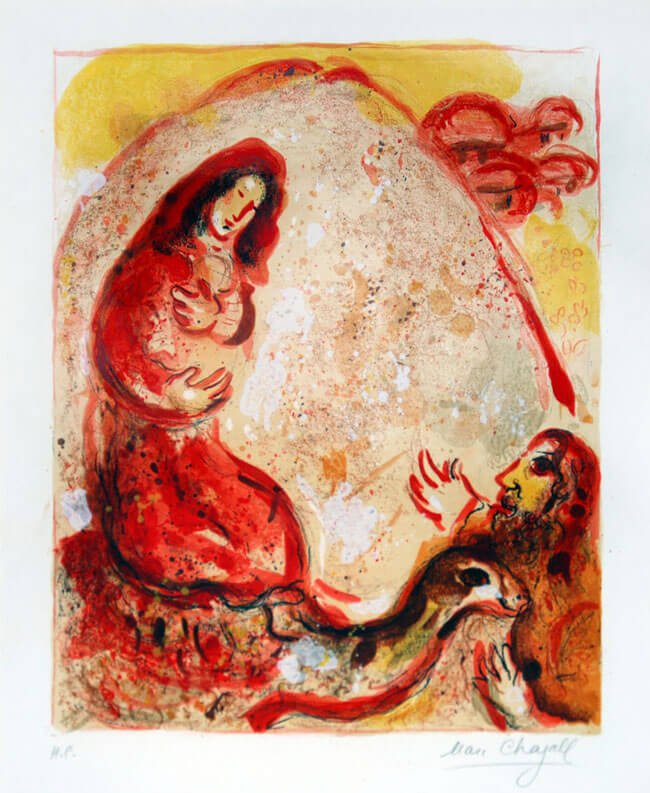
Chagall, Marc_Rachel Hides Her Father's Household Gods
Marc Chagall (Belarusian French, 1887–1985), Rachel dérobe les idoles de son père (Rachel Hides Her Father’s Household Gods), from The Bible series, 1960. Original color lithograph on Arches wove paper, image size 14 × 10 1/2 in. (35.6 × 26.7 cm).

Caught between two tricksters—her husband and her father—Rachel herself becomes a trickster. When Laban catches up with their traveling party and searches among their possessions for the stolen gods, Rachel, who’s sitting on them, lies and says she cannot get up because she’s menstruating (Gen. 31:34–35). She deceives her deceitful father to keep her deceitful husband and her son Joseph safe from Esau’s rage, as she believes the gods will act in the interests of whoever possesses them. The poem explores the ever-thickening web of deceptions woven in Jacob’s and Rachel’s families and also reminds us that Rachel, remembered now as a great Jewish matriarch, was not raised in the then-still-developing Israelite religion, nor was her turn to Yahweh necessarily immediate upon her marriage to Jacob. I hear in the poem a lament for fraternal and sororal rivalries, and a subtle sad awareness of the vulnerabilities and pressures of women in patriarchal cultures, who are bought and sold in marriage, valued primarily for their childbearing capacities, and typically forced to rely on men for survival, often suffering the consequences of men’s mistakes. (In the poem at least, Rachel’s feeling of insecurity comes from Esau’s threat of vengeance.)

Based on a lithograph by Marc Chagall, this ekphrastic poem is one of twenty-four from the unpublished chapbook Voiced by Patricia Hamilton, all inspired by biblical artworks by Chagall. Hamilton is currently looking for a publisher to take on the collection.

(Related post: “Bithiah’s defiance: Kelley Nikondeha and poet Eleanor Wilner imagine Pharaoh’s daughter”)

>> “For the Circumcision of a Small City” by Emma De Lisle, Image: The deception continues in Genesis 34; like father, like sons. This poem is based on the episode of the massacre of the men at Shechem by Jacob’s sons Simeon and Levi to avenge the rape of their sister, Dinah. Shechem, meaning “shoulder,” was the name of both the city in Canaan where the rape took place and the Hivite prince’s son who committed the rape. Jacob and his family were sojourning there, having even bought land. After sexually assaulting Dinah, Shechem wanted to make her his wife. Dinah’s brothers were disgusted by this request, but they pretended they would entertain bride-price discussions on the condition that all the males in the city be circumcised. Shechem’s father agreed, and his position as ruler meant the people obeyed. A few days after the mass circumcision, while the men were still sore, Simeon and Levi attacked with swords, killing all the males in the city. Their brothers then joined them in capturing the men’s wives and children and plundering their wealth.

Emma De Lisle’s poem is written from the perspective of a woman of Shechem, taken captive in the slaughter. The women of the city scorned the lengths Shechem was willing to go to for the homely Dinah, barely old enough to have her period. “Jacob’s silence for you” alludes to Genesis 34:5, which says that when he found out about his daughter’s rape, “Jacob held his peace” until his sons returned from the fields. If he felt grief or outrage, it’s not apparent in the scripture text. His initial response was to say and do nothing, and then to defer to his sons, who exact an outsize punishment for the crime that Jacob admits after the fact disappointed him because when word spreads, it will negatively impact the hospitality of other Canaanite cities toward them.

Stanzas 4 and 5 refer to two of Jacob’s previous deceptions: donning goatskins on his hands and neck to impersonate his hairy brother, Esau, before their blind father, so as to steal the blessing of the firstborn (Gen. 27), and altering the breeding pattern of Laban’s flocks to increase the number of spotted sheep and goats (how this is accomplished is vague and has posed difficulties for interpreters) and so enrich himself, as the spotted animals were his agreed-upon wage (Gen. 30:25–43). The implication of this mention is, I think, that men will take what they feel is owed to them, whether by guile or force.

Sometimes women participate in this violence. The poetic speaker wonders whether Dinah will force her or the other captive women to bear children for her (future husband’s) family line, just as her mother, Leah, had used her slave, Zilpah, when her own womb had closed.

“The city bled one way // or another, before your brothers took interest,” the speaker says. Sexual violence was not new to them. The last sentence suggests that Dinah was not the only female victim of the lustful Shechem’s assault—the women of the city paid a price too, seeing their husbands, fathers, brothers, and sons murdered in retaliation and themselves taken prisoner.

+++

ORATORIO: The Book of Romans by Emily Hiemstra (2019): Consisting of musical settings of select passages from the apostle Paul’s letter to the Romans, this piece for SATB soloists, choir, and string orchestra was commissioned by Grace Centre for the Arts, a ministry of Grace Toronto Church, where it premiered October 22, 2019. (Hooray for churches that commission new art!) Read a statement from the composer on the Deus Ex Musica blog. The performers are Meghan Jamieson (soprano), Rebecca Cuddy (alto), Asitha Tennekoon (tenor), Graham Robinson (baritone), Lyssa Pelton (violin), Amy Spurr (violin), Emily Hiemstra (viola), and Lydia Munchinsky (cello).

Here is the video time stamp for each of the eight movements:

(Related post: “Book of Romans album by Psallos”)

Roundup: “Incarnation and Imagination” lecture, Planet Drum, and more

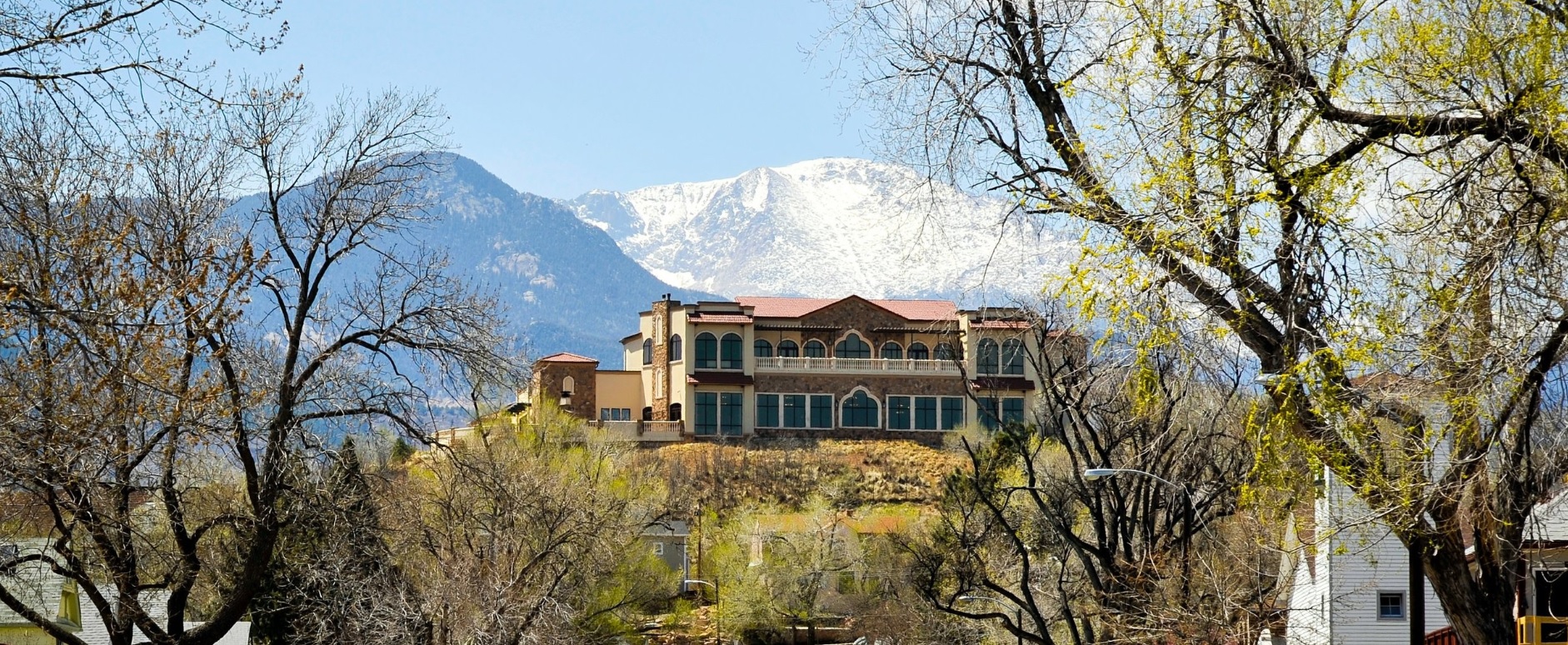
PODCAST EPISODE: “Incarnation and Imagination (with Malcolm Guite),” Imagination Redeemed: On March 28, 2015, the Anglican poet-priest Malcolm Guite from Cambridge, England, gave a talk in Colorado Springs for the Anselm Society, an ecumenical Christian organization whose mission is a renaissance of the Christian imagination. They have just released it on their podcast.

Guite discusses how the job of the arts is to link earth and heaven, heaven and earth; where a poem or other work of art stays on only one of those planes, it typically fails. He unpacks Theseus’s monologue from Act 5, scene 1 of Shakespeare’s A Midsummer Night’s Dream, focusing on these six lines: “The poet’s eye, in fine frenzy rolling, / Doth glance from heaven to earth, from earth to heaven. / And as imagination bodies forth / The forms of things unknown, the poet’s pen / Turns them to shapes and gives to airy nothing / A local habitation and a name.”

Shakespeare, Guite says, is riffing on the prologue to John’s Gospel.

The Logos . . . is bodied forth perfectly and beautifully in the living, walking poem of Jesus Christ, in whom everything eternal is made particular, and who invites everybody to come towards him . . . because he is a habitation with open doors. So of course in John’s Gospel he says, ‘I am the door’! . . . Open up, walk in! (48:51)

And one more quote from Guite!

The church . . . is founded by one who is himself artistically embodied meaning—meaning made visible, meaning made beautiful, meaning made habitable and hospitable and welcoming in the touch of the body and in the physical event, which is then transfigured, because it is also a meaningful event, because earth and heaven meet. (55:34)

It’s a brilliant and inspiring talk, and it integrates other poetic verse besides Shakespeare’s.

+++

MUSIC:

>> “More Love, More Power” by Paul Livingstone and Benny Prasad: This sitar-guitar duet is performed by Paul Livingstone (a multi-instrumentalist and composer of “ragajazz chamber music” who was one of the few American disciples of the late Ravi Shankar) and gospel musician Benny Prasad [previously]. The performance took place June 11 at Chai 3:16, a four-hundred-seat café and community space that Prasad founded in Bengaluru to reach out to college students. (Chai is Hebrew for “life,” and “3:16” refers to the famous verse in the Gospel of John about God’s love.) [HT: Global Christian Worship]

>> “King Clave” by Planet Drum: In 1991 Mickey Hart (best known as a drummer of the Grateful Dead) and Zakir Hussain (a classical tabla virtuoso from Mumbai) formed the Grammy-winning global percussion ensemble Planet Drum, bringing together the world’s greatest rhythm masters into a one-of-a-kind improvisational supergroup. Prompted by ongoing international strife, Planet Drum reconvened over the past two years to record their third album, In the Groove, which released August 5. It features six unique compositions led by Hart, Hussain, Sikiru Adepoju of Nigeria, and Giovanni Hidalgo of Puerto Rico.  

The centerpiece of the album is “King Clave” (the clave is a rhythmic pattern), created in partnership with Playing for Change and with funding from the United Nations Population Fund. The four core musicians mentioned above are joined by other percussionists and dancers from around the world. The music video uses the “Alternate Version” of the performance, released separately as a single.

Learn more about the Planet Drum project in this six-minute video:

+++

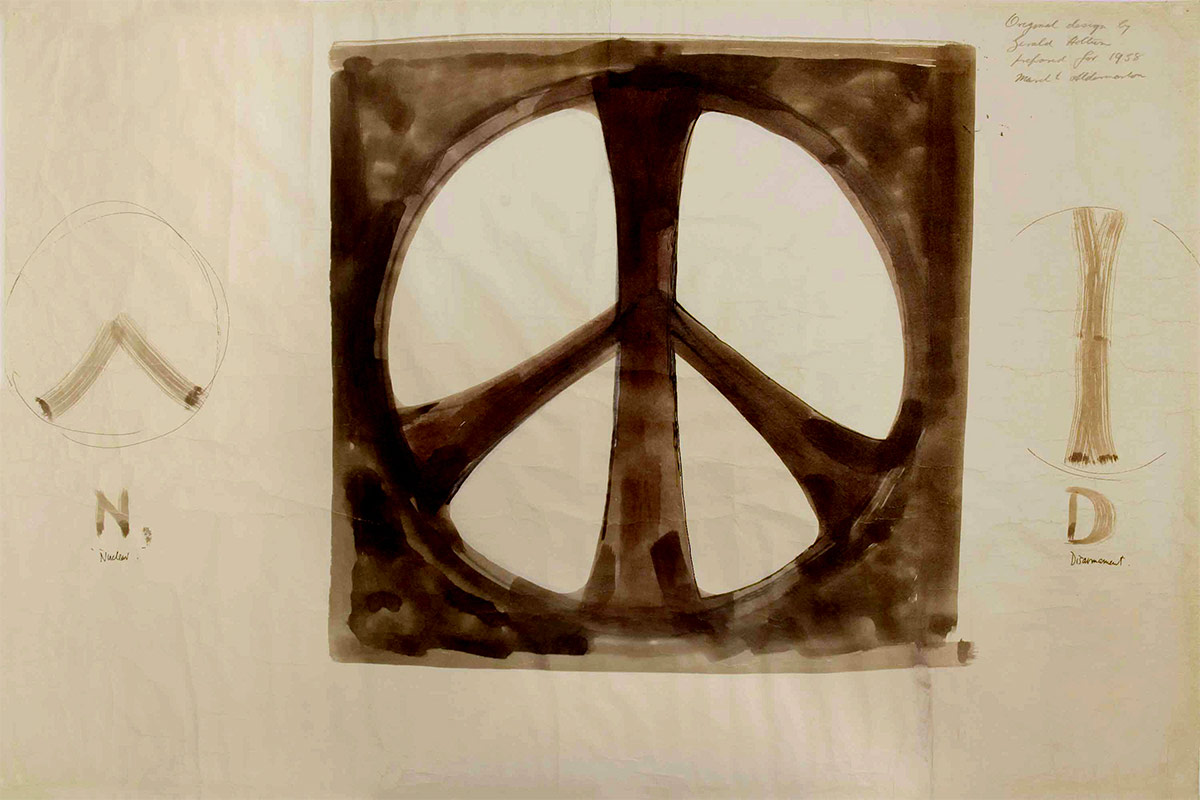
STILL LIFE EDITION: “The History of the Peace Symbol” by Michael Wright: Did you know that the peace symbol that spread worldwide during the 1960s was designed by a Christian from the UK? (Christian pacifism was one of the underappreciated drivers of the nuclear disarmament and antiwar movements.) Learn more about the symbol’s history and art historical and nautical influences in the August 15, 2022, edition of Michael Wright’s weekly letter on art and spirit, Still Life. Also included is the poem “Wildpeace” by Yehuda Amichai, and four weblinks of interest, such as an article on how the patristic tradition agrees with cognitive neuroscience, and a video of FKA Twigs performing in a church!

Holtam, Gerald_Peace
Sketch of nuclear disarmament symbol by Gerald Holtom, created for the first Aldermaston March in 1958. © Commonweal Collection, University of Bradford, England.

+++

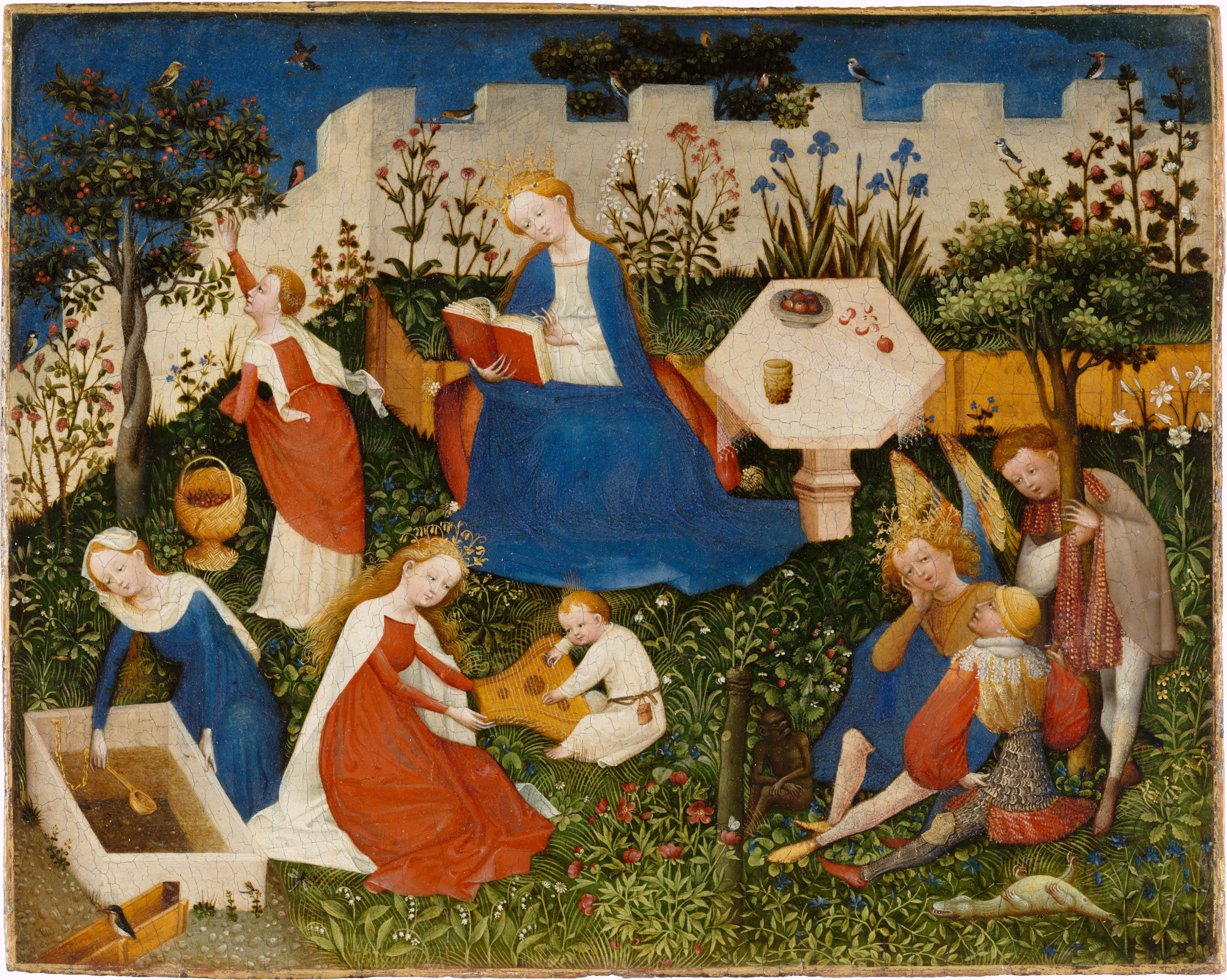
VIDEO LECTURE: “Symbolism and Sacramentality in Art: Medieval and Postmodern Representations of the Little Garden of Paradise” (Religion and Art Talks) by Tina Beattie: Dr. Tina Beattie is a professor emerita of Catholic Studies at the University of Roehampton whose research is at the intersections of art, gender, and theology. In this talk she explores the sacramental imagination of the medieval world through a Late Gothic painting from the Rhineland known as The Little Garden of Paradise. (You can zoom in in tremendous detail on the Städel Museum’s website.) It shows Mary reading in an enclosed garden in the company of saints, her little boy Jesus playing a psaltery at her feet. “Christ retunes the cosmos,” Beattie says. “The harmonies of creation were disrupted by sin. But all of creation is brought back into harmony through the Incarnation.”

Symbolism and allegory abound in medieval religious paintings, encoding profound meanings that can be discerned if we would but take the time to look and to meditate and to understand the world from which these images arose. “The visual image can say things that the theological text can’t,” Beattie asserts. “It can play with the doctrinal truth in ways that allow other meanings to emerge discreetly.”

Though many interpretations of hortus conclusus imagery focus on Mary’s virginity, and indeed that was a primary aspect motivating the creatives who developed such imagery, Beattie draws out themes of new creation and discusses the garden as the human soul.

The Little Garden of Paradise
The Little Garden of Paradise, Upper Rhine, ca. 1410–20. Mixed media on oak, 26.3 × 33.4 cm. Städel Museum, Frankfurt am Main, Germany.

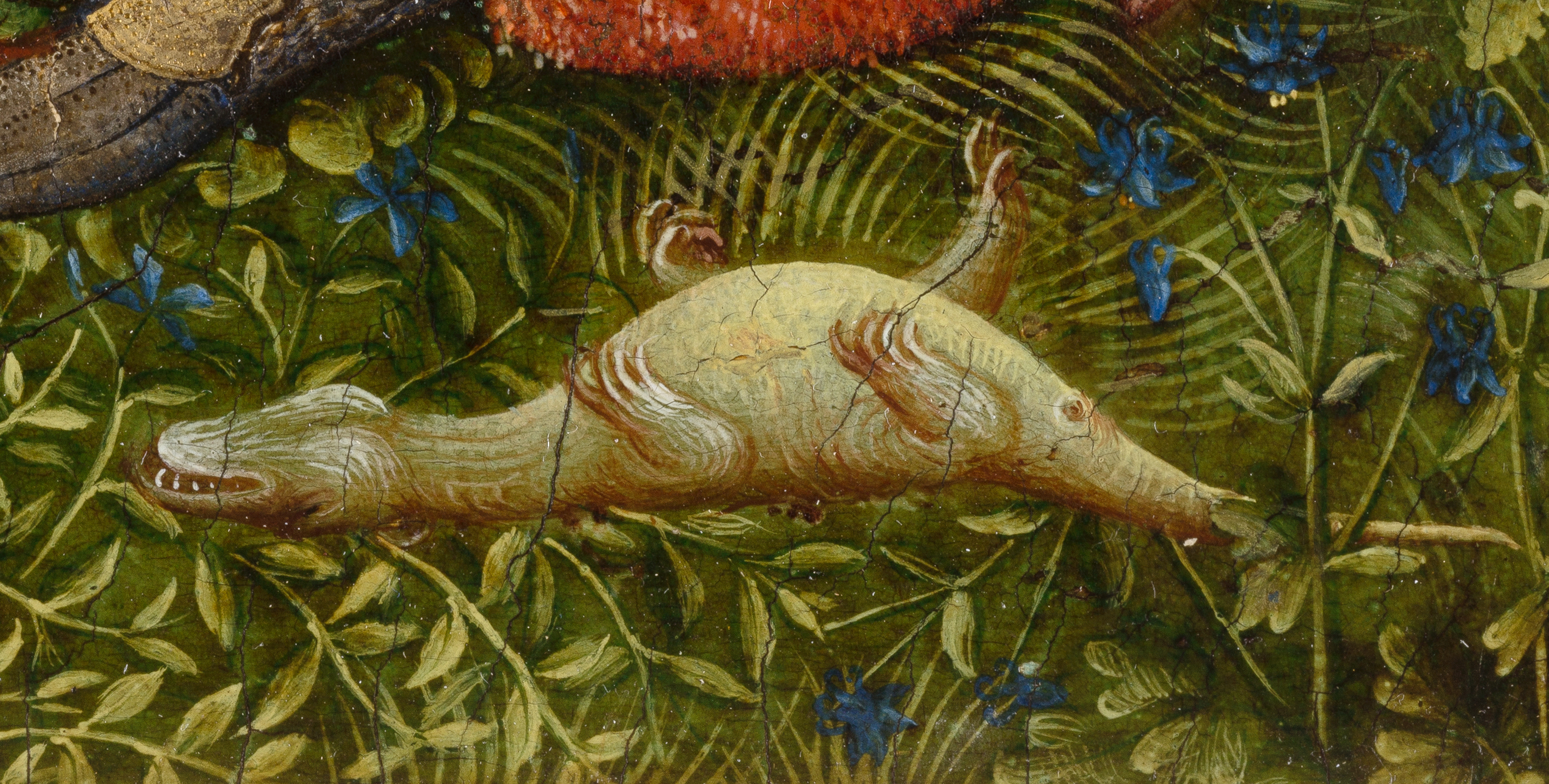
The Little Garden of Paradise (detail, dragon)
A small, slain dragon lies belly-up beside a man in greaves and chain mail, probably Saint George.

The other artworks she glosses are:

The last half hour of the video features audience engagement.

Roundup: The Soil and The Seed Project, Transfiguration art, and more

For the first time, this year I plan on publishing short daily posts for the entirety of Lent and for the Octave of Easter, pairing a visual artwork with a piece of music along the seasons’ themes (for an example of this format, see here)—just an FYI of what to expect. I also have several poems lined up. And you might want to check out the Art & Theology Lent Playlist and Holy Week Playlist on Spotify (introduced here and here respectively), which I’ve expanded since last year. I’m very pleased with the Holy Week Playlist in particular.

+++

NEW RESOURCE FOR HOME LITURGIES: The Soil and The Seed Project: Directed by Seth Thomas Crissman of The Walking Roots Band [previously] and with the contributions of a team of artists, writers, and musicians, “The Soil and The Seed Project nurtures faith through music, art, and Little Liturgies for daily and weekly use in the home. These resources help establish new rhythms of faith as together we turn towards Jesus, believing and celebrating the Good News of God’s Love for the whole world.” The project launched in November 2021 with its Advent/Christmas/Epiphany collection. When the project is complete it will consist of four volumes of music (forty-plus songs total—all original, save for a couple of reimagined hymns) and four liturgical booklets that include responsive scripture-based readings, reflection prompts, suggested practices, and an original artwork.

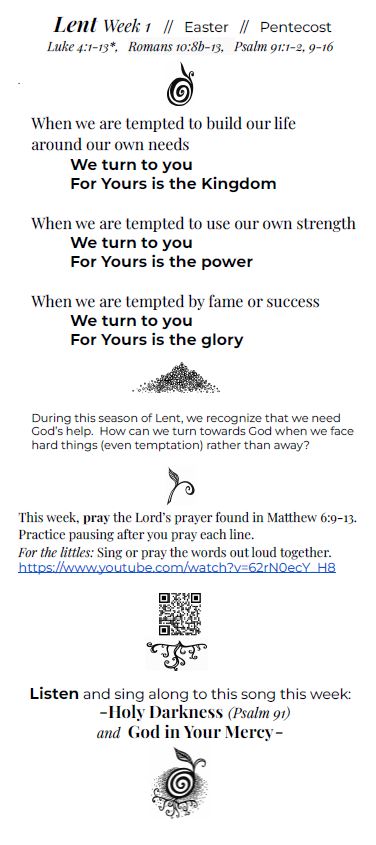
The Lent/Easter/Pentecost collection releases February 25, but as a special treat, Crissman is allowing Art & Theology readers a “first listen” with this private link (it will turn public on Friday). Here’s one of the songs, “I Want to Know Christ,” a setting of Philippians 3:10–11 by Harrisonburg, Virginia–based songwriter and jail chaplain Jason Wagner, followed by a Little Liturgies sample:

Little Liturgies, Lent Week 1

Thanks to a community of generous donors, The Soil and The Seed Project gives away all its content for free, including shipping, to anyone who is interested (individuals, couples, families, churches, etc.); request a copy of the latest music collection and liturgies here. CDs and printed booklets are available only while supplies last (1500 copies have been pressed/printed for this collection), but digital copies of course remain available without limit.

+++

CONVERSATIONS AT CALVIN: Below are two videos (of many!) from the 2022 Calvin Symposium on Worship, which took place earlier this month.

>> “Modern-Day Prophets: How Artists and Activists Expand Public Worship” with Nikki Toyama-Szeto: A writer, speaker, and activist on issues of justice, leadership, race, and gender, Nikki Toyama-Szeto is the executive director of Christians for Social Action and a leading voice for Missio Alliance. Here she is interviewed by preacher and professor Noel Snyder. They discuss the generativity of imagination, and its invitation to displacement; the connection between corporate worship and public witness; the movement of the Holy Spirit outside church walls; “political” and “pastoral” as classifications that differ from group to group; embracing messiness; and what pastors can learn from artists and activists.

A few quotes from Toyama-Szeto that stood out to me:

  • “Part of what we’re trying to do at Christians for Social Action is stir the Christian imagination for what a fuller followership of Jesus looks like in a more just society. The word ‘imagination,’ and I would say specifically Christian imagination, I think of as the dream that God dreams for his people and his creation. What does it mean to be oriented toward the dream that God is dreaming? Another word for it is shalom—the full flourishing of all his creation and all his people. And if you look at the gap between where we are today and what that dream is, that gap is imagination. How is it that we get from here, the broken world we see . . . how do we press in and lean into the dreams that God dreams for his people and for his world?”
  • “For me, I have found artists and prophets—those who are agitating for justice—are ones who help dislodge me from everyday things I take for granted, and those assumptions, and they help me to dream new and bigger dreams.”
  • “The pursuit of justice is the declaration of God’s character in the public square.”

Here are links to a few of the names and books she references: Sadao Watanabe, A Book of Uncommon Prayer, Andre Henry [previously], The Many.

>> “Christians and Cultural Difference,” with Pennylyn Dykstra-Pruim and David I. Smith: María Cornou interviews Calvin University professors Pennylyn Dykstra-Pruim and David I. Smith, authors of Christians and Cultural Difference (2016).

Smith shares his frustration that often the only Christians who endeavor to learn other languages and develop cultural intelligence and appreciation are those who are preparing to be missionaries in a foreign country, and they do it only for the purpose of missional effectiveness.

If you take one piece of theology [i.e., evangelism] and try and make that the bit that’s about cultural difference, that puts distortions into the conversation. . . . You might want to think about mission, but you might also want to think about what it means to be made in the image of God. Does that mean everyone’s the same, or does it mean everyone has responsibility for shaping culture and we might all do it in different ways, and you have to make space for that? We might need to think about the cross. We might need to think about God’s embrace of us and how we embrace each other. We might need to think about love of neighbor. We might need to think about the body of Christ and the makeup of the early church. . . . You might have to visit a whole bunch of different theological places to get a composite picture rather than saying this is the doctrine that somehow solves cultural difference for us.

I was also struck by Smith’s discussion of how cultural difference can help us read the scriptures in a new way (see 19:38ff.). He gives an example from In the Land of Blue Burqas, where Kate McCord, an American, describes her experience reading the Bible with Muslim women from Afghanistan, and particularly how they taught her a very different interpretation of John 4, the story of Jesus’s encounter with the Samaritan woman at the well. Wow.

+++

VISUAL COMMENTARY ON SCRIPTURE: The Transfiguration: In churches that follow the Revised Common Lectionary, this Sunday, the last Sunday in the Epiphany season, is Transfiguration Sunday, giving us a vision with which to enter Lent. (Other traditions celebrate Jesus’s transfiguration on August 6.) In this video from the Visual Commentary on Scripture project, art historian Jennifer Sliwka and theologian Ben Quash discuss this New Testament event through three visual artworks: a fifteenth-century icon by Theophanes the Greek, which shows the “uncreated light” revealed to Peter, James, and John on Mount Tabor; a fresco by Fra Angelico from the wall of a friar’s cell in Florence, where Jesus’s pose foreshadows his suffering on the cross; and a contemporary light installation by the seminary-educated American artist Dan Flavin, comprising fluorescent light tubes in the shape of a mandorla. Brilliant!

+++

CIVA TRAVELING EXHIBITION: Again + Again, curated by Ginger Henry Geyer with Asher Imtiaz: “A photography exhibition that invites recurring and fresh contemplation of the ordinary and extraordinary through the seasons of the Christian liturgical calendar,” sponsored by Christians in the Visual Arts. The show will be on view at Second Presbyterian Church in Indianapolis from February 26 to March 26 and is available for rental in North America after that. I saw it at St. David’s Episcopal Church in Austin in November at the CIVA biennial and was impressed! It is accompanied by a beautifully designed catalog that pairs each photograph with a poem, several of which were written specifically for the exhibition and which respond directly to a given photo.

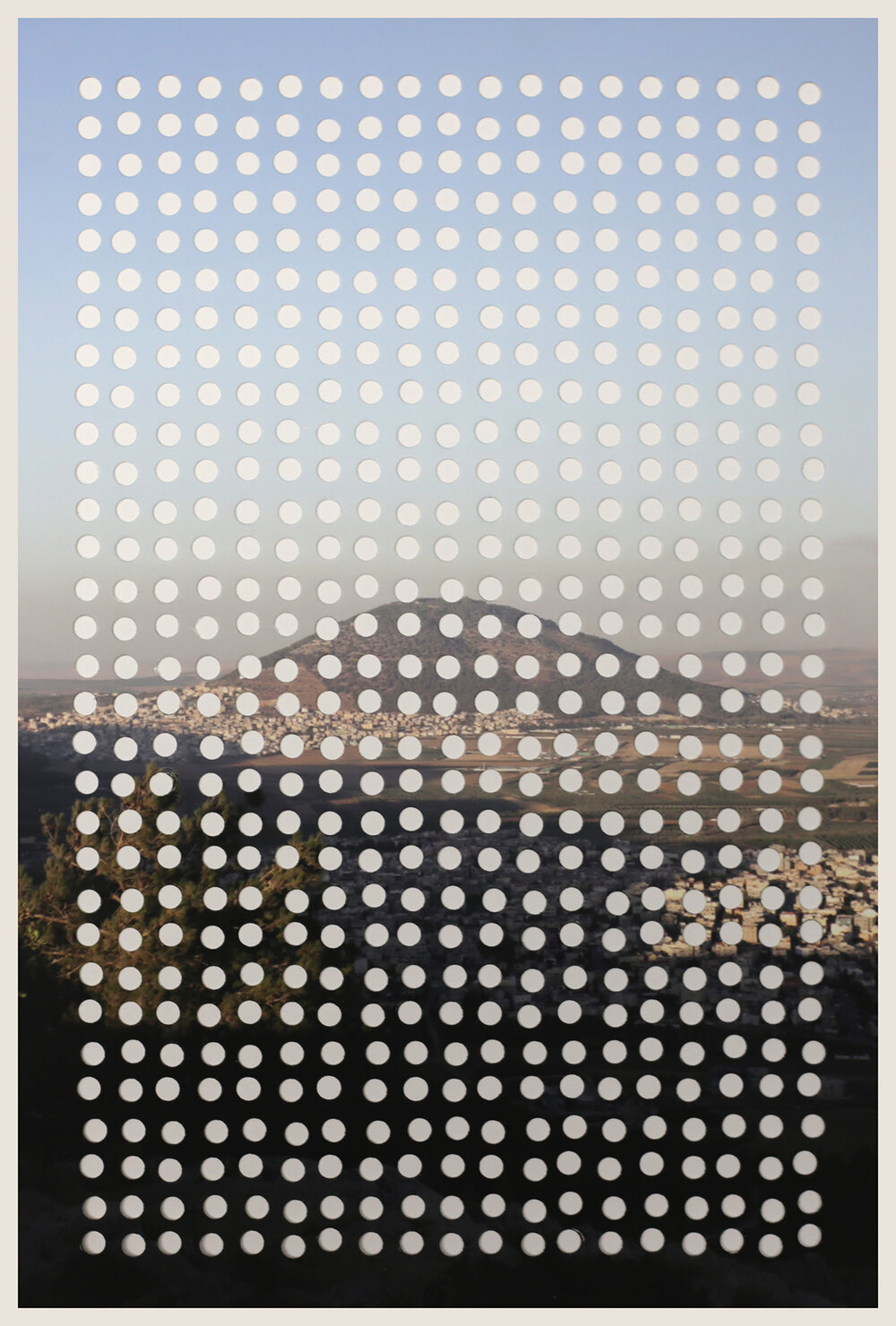
Winters, Michael_Mount Tabor, June 2017
Michael Winters, Mount Tabor, June 2017, 2017. Inkjet print with holes punched out in white wood frame, 19 × 13 in.

One of my favorite art selections is Mount Tabor, June 2017 by Michael Winters, the director of arts and culture at Sojourn Church Midtown in Louisville, Kentucky. “Mount Tabor . . . is where the transfiguration of Christ is thought to have occurred,” Winters writes. “I stood viewing that scene in 2017. It looked so normal. I’m not sure why I felt compelled to punch holes in this photograph, but I think it’s because I wanted to be able to see through this ‘normal’ landscape to the glory of the transfigured Christ—which is to say, I wanted to see reality.”

Browse all the Again + Again photographs on the CIVA website. Longtime followers of the blog will recognize some of the photos from Greg Halvorsen Schreck’s Via Dolorosa series that I featured back in 2016.

Upcoming conferences and symposia

It’s great to see how many gatherings are happening this spring around faith and the arts. I wish I could attend them all, but travel costs require me to be selective. I’m happy to say that I’ll be at the contemporary art symposium in Amsterdam in March (and taking a few side trips while I’m there) and the Anselm Society conference, “Your Imagination Redeemed,” in April, which convenes in the beautiful foothills of the Rocky Mountains in Colorado. If you’ll be at either, let me know so that I can be sure to meet you!

(This post has been updated to reflect new information.)

Calvin Symposium on Worship                                                  
Date: January 24–26, 2019
Location: Calvin College, Grand Rapids, Michigan
Cost: $270 (general; single-day options available); $30 (students)
Organizers: Calvin Institute of Christian Worship and the Center for Excellence in Preaching
Presenters: A very long list!
Description: “The conference brings together a wide audience of artists, musicians, pastors, scholars, students, worship leaders and planners, and other interested worshipers. People come from around the world for a time of fellowship, worship, and learning together, seeking to develop their gifts, encourage each other and renew their commitment to the full ministry of the church.” There are tons of seminars and workshops to choose from, on topics such as congregational songwriting, multilingual singing for English-speaking congregations, skills and drills for the emerging worship leader, technology in worship, worship in times of crisis and trauma, engaging our bodies in worship, the visual arts in worship, using the Psalms in worship, music as exegetical art, the art and science of repetition in worship, and much more. One of the plenary sessions is on “The Many Streams of African American Congregational Song.”
   Note: Although online registration has closed, walk-up registration is available. Also, the worship services and plenary sessions will be live-streamed for free (see times).

+++

brehm conference

“Worship, Theology, and the Arts in a Divided World”
Date: February 9, 2019
Location: Fuller Theological Seminary, Pasadena, California
Cost: $75 (general); $25 (student) – or, live-stream for free! (registration still required) [update: videos: Morning Session; Afternoon Session]
Organizer: Brehm Center
Presenters: David M. Bailey, Makoto Fujimura, W. David O. Taylor, Kutter Callaway, Lauralee Farrer, Todd E. Johnson, Robert K. Johnston, Roberta R. King, Shannon Sigler, Edwin M. Wilmington
Description: “To say that we live in a divided world is to state the obvious. Less obvious, perhaps, is to believe that worship might become a vehicle for reconciliation, or that theology might serve as an invaluable aid to mend our personal and social brokenness, or that the arts might forge unity across the divides—whether political or economic, racial or relational, linguistic or cultural, whether in the academy or in the public square, whether inside the church or outside of it. But that is exactly what this conference wishes to suggest.
   “A primary goal of this conference is to show how worship, theology, and the arts can become sources of good news to our divided world as well as resources to make tangible that good news by God’s grace. A secondary goal is to generate practical helps that extend beyond the immediate context of the conference in order to serve the broader community. This involves not just the presentations themselves, but online resource offerings: for instance, a one-page resource for small groups on art and racial reconciliation; a Spotify playlist for both pastors and worship leaders; a ‘top 10’ list of most common mistakes in multicultural worship; an annotated resource on global worship; a handout for church leaders on art in a post-Christian society; and more.”

+++

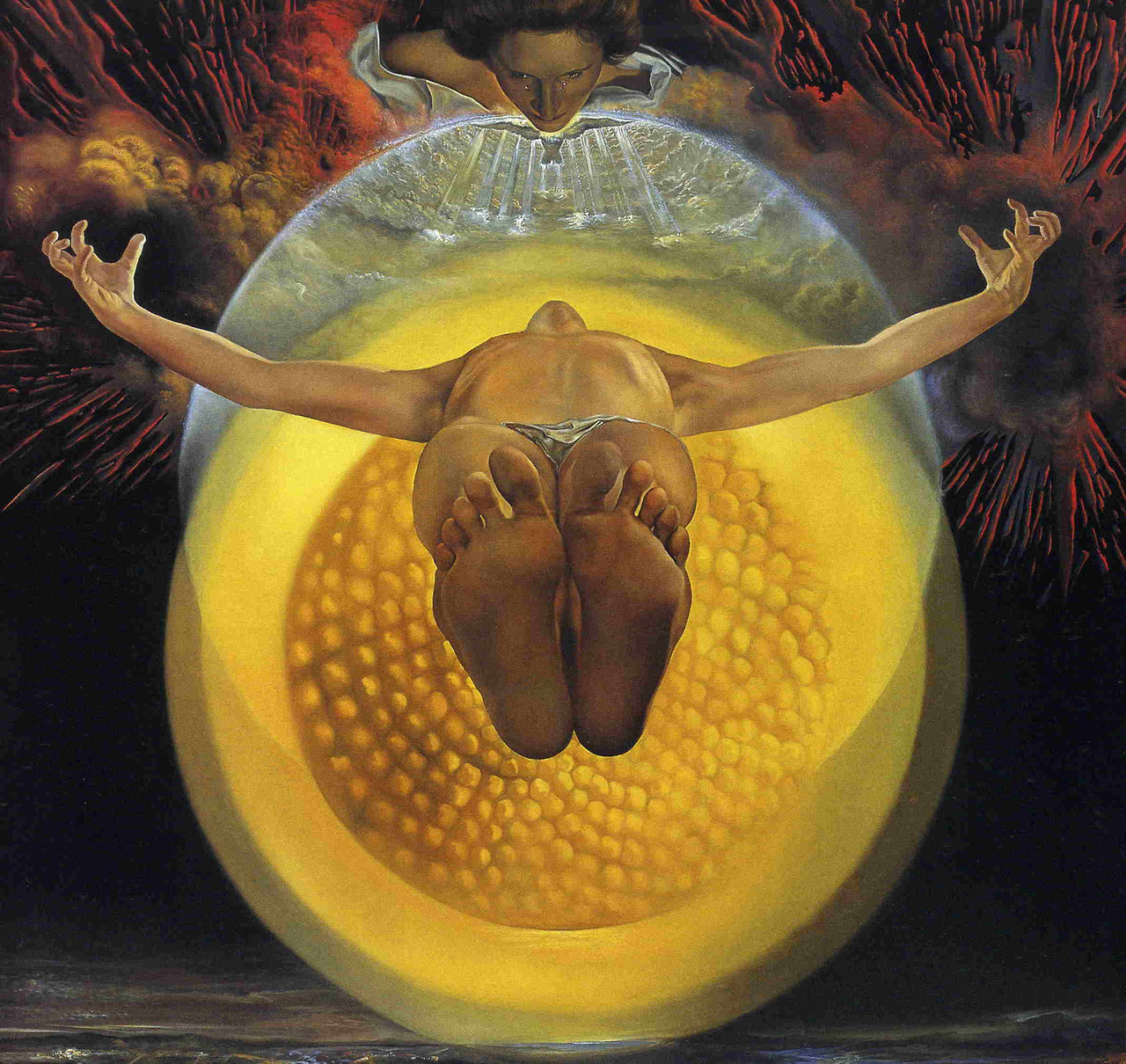
Ascension by Salvador Dali
Salvador Dalí (Spanish, 1904–1989), The Ascension of Christ, 1958. Oil on canvas, 115 × 123 cm (45¼ × 48⅜ in.). Pérez Simón Collection, Mexico.

“Modernist Prodigals: Aesthetic Aftermaths of Religious Conversion” (panel discussion)
Date: February 13, 2019
Location: New York Hilton Midtown, Manhattan
Cost: This is one of the 300+ sessions available to registrants of the College Art Association’s Annual Conference. (Registration starts at $185 and is restricted to CAA members.)
Organizer: Anne Greeley
Panelists: Linda Stratford, Emily Worjun Wing, Zoë Marie-Jones, Elliott H. King, Douglas R. Giebel
Description: “Over the past two decades, the long-presumed secularity of modern art has been called increasingly into question. Numerous scholars, from Sally Promey, to Jonathan Anderson and William Dyrness, to Thomas Crow, have challenged the secularization theory promulgated by art historians during the latter half of the twentieth century. Though the academy no longer finds it ‘inadmissible,’ as Rosalind Krauss once did, to connect the spiritual with the avant-garde, and while many religious impulses can be discerned throughout the field of modern art, it is nevertheless the case that many modern artists rejected religion outright—though some only temporarily.
“This panel aims to build on the discussion initiated by Jeffrey Abt in his 2014 panel on ‘Religion and the Avant-Garde.’ It seeks to further clarify modern art’s relationship to religion by examining the lives and work of certain ‘modernist prodigals,’ who during a period of religious apathy or disbelief made significant contributions to modernism before turning, or returning, to organized religion. If art can be said to constitute a mode of thought, and if thought is radically altered through religious conversion, then what might a study of the works of such artists, ‘pre-’ and ‘post-’conversion, reveal about the perceived compatibility of modern art (or of certain iterations or aspects thereof) with a religious worldview? Alternatively, what might it reveal about an artist’s faith?”

+++

“Art Matters”
Date: February 16, 2019
Location: Leith School of Art, Edinburgh, Scotland
Cost: ₤25
Organizer: Morphē Arts
Description: “A day symposium on art, faith and social responsibility. We will discuss the importance of the creative arts in the formation and care of culture from the perspective of Christian belief. The morning will be a series of short talks from artists, musicians, writers, designers, theologians and art philosophers on why the arts matter at this time. An afternoon symposium will lead into a drawing workshop (TBC) followed by an evening music event.”

+++

“The Breath and the Clay”
Date: March 22–24, 2019
Location: Awake Church, Winston-Salem, North Carolina
Cost: from $150
Organizer: The Breath and the Clay
Presenters: Stephen Roach, Josh Garrels, Emily P. Freeman, Amena Brown, CJ Casciotta, Marie Teilhard, Molly Kate Skaggs, Kelly Archer, and others
Description: “The Breath & the Clay is a creative arts gathering exploring the intersections of art, faith & culture. The weekend event features keynote speakers, performances, workshops and our curated Art Gallery juried by Ned Bustard of CIVA.” To learn more about the Breath and the Clay movement, check out its official podcast, Makers & Mystics.

+++

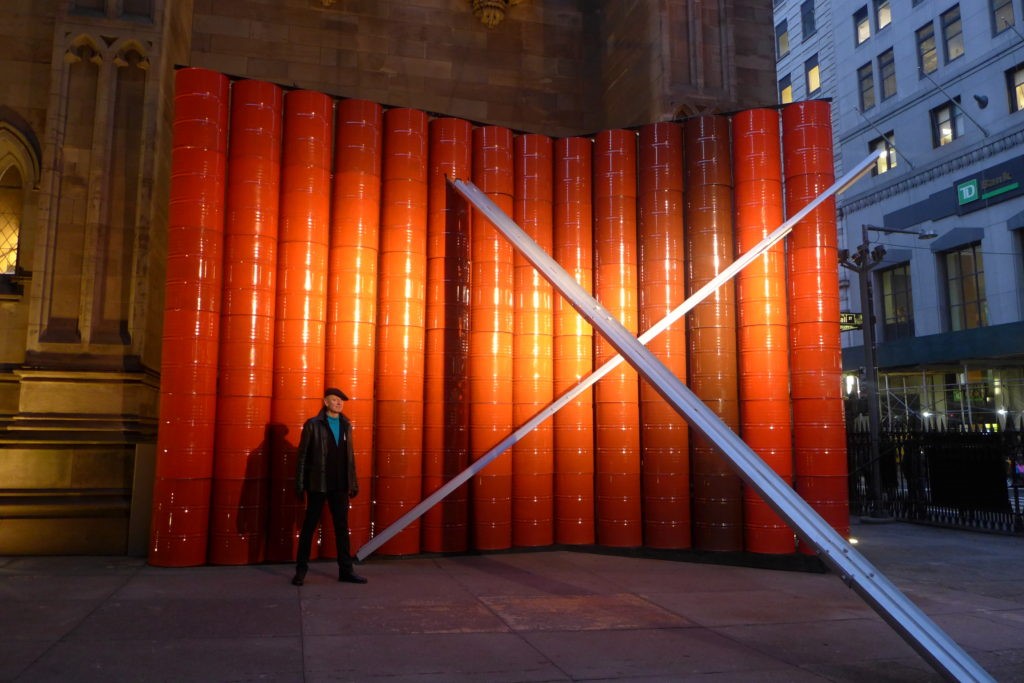
Stations by G. Roland Biermann
G. Roland Biermann (British, 1962–), Stations, 2018. 84 oil barrels on steel platform, 20 meters of guard rails. South churchyard, Trinity Wall Street, New York. Biermann participated in last year’s “Art Stations” and will be creating another site-specific installation for this year’s at Corvershof in Amsterdam.

“I Believe in Contemporary Art”
Date: March 23, 2019
Location: Doopsgezinde Singelkerk, Amsterdam
Cost: TBA
Organizer: ArtWay
Presenters: Adrienne Dengerink Chaplin, Alastair Gordon, and others (TBA)
Description: This day-long symposium with workshops is tied to the Art Stations of the Cross exhibition in Amsterdam, which will run from Ash Wednesday through Holy Saturday (March 6–April 20). As with previous iterations of this project in London, Washington, DC, and New York, the art—this time selected by Marleen Hengelaar-Rookmaaker and Aniko Ouweneel-Tóth—is dispersed in locations throughout the city, and a free digital audio guide will be provided. More details to come.

+++

“Sacrament & Story: Recasting Worship Through the Arts”
Date: April 5, 2019
Location: Resonance at SOMA Towers, Bellevue, Washington
Cost: $80
Organizer: Brehm Cascadia
Presenters: Tamisha Tyler, Stephen Newby, Jeffrey Overstreet, Shannon Sigler, and more
Description: “How do artists experience the world? How do creative hearts respond to the Story of God? . . . We believe that artists have a unique capacity to recast God’s Story in ways that are experiential, accessible, and enlivening. The arts can create spaces for worship that encompass a broader understanding of the nature of the Triune God—with room for joy, lament, fear, delight, and mystery. Will you join us as we explore how the arts can help us reimagine and more fully engage God’s Story in our worship and in the world?”

+++

“Majesty: An Art & Faith Incubator”
Date: April 18–21, 2019
Location: Nelson, New Zealand
Cost: $360 (includes all workshops and materials)
Organizer: ATELIER Studio|Gallery
Description: “A new resurgence of creativity in the kingdom of God is underway – a Renaissance, if you will, highlighting again the importance and significance of the arts in the body of Christ and to the world. Many artists with a living faith in Jesus Christ have existed only on the periphery, many are isolated, and many are underground. Still, yet, there are many in art schools and in the marketplace, and there are also many rising in their God-given identities returning to the purpose of creative expression.
“The definition of what it means to be creative and a follower of Jesus is far broader than what we might encounter during a Sunday service, it is far more powerful than what the term ‘Christian art’ could ever signify, and far more necessary than what many forms of Christian expression would give credence to. . . .
   “MAJESTY calls artists of faith together, to engage in a greater devotion to the One, to release a greater purpose through their making, and to reveal a greater promise – the heart of God. . . . [At this gathering,] visual art-making workshops, times of worship, new ideas and discussion, prophetic input, and plenty of ‘making time’ all flow together to release a new fire in the creative soul.”

+++

anselm society conference

“Your Imagination Redeemed”
Date: April 26–27, 2019
Location: The Pinery at the Hill, Colorado Springs, Colorado
Cost: $225
Organizer: Anselm Society
Presenters: Hans Boersma, John Skillen, Junius Johnson
Description: “For nearly two thousand years, the church held that the good, the true, and the beautiful were inseparable. But somewhere along the line, they got fragmented. And the result has been a disenchanted Christianity; a slew of inadequate books, music, and movies; and generations of Christians missing out on the redeemed imagination. The disenchanted, the lost, and the Church itself need a renaissance of the Christian imagination. . . . We will explore the redeemed imagination, meet the sacred on its own terms, and carry its light back into our lives, creative arts, and congregations.”

Roundup: Imagination; inclusive dance; art theft; singing through divorce; and more

JOHN PIPER ON IMAGINATION: “Obey God with Your Creativity: The Christian Duty of Imagination”: Within evangelicalism (the tradition I belong to), the imagination is often deemed more of a liability than a virtue, something to be distrusted, at the very least, and at most, to be rejected as evil. So I was thrilled earlier this month to hear John Piper, one of America’s leading evangelicals, speak out in strong affirmation of imagination, which he calls “one of the great duties of the Christian mind.” It can be used destructively, he cautions, but it’s a God-given capacity that God wants us to exercise and strengthen, like a muscle, so that we can see more clearly what is and what could or what will be.

“The imagination,” Piper writes, “calls up new words, new images, new analogies, new metaphors, new illustrations, new connections to say old, glorious truth—whether from the world or from the word of God. Imagination is the faculty of the mind that God has given us to make the communication of his beauty beautiful.” To communicate breathtaking truth in a boring way is “probably a sin,” he says, for God is “infinitely worthy of ever-new verbal, musical, and visual expressions.”

“A college—or a church, or a family—which is committed to the supremacy of God in the life of the mind will cultivate many fertile, and a few great, imaginations. And oh, how the world needs God-besotted minds that can say the great things of God and sing the great things of God and play the great things of God in ways that have never been said or sung or played before.”

+++

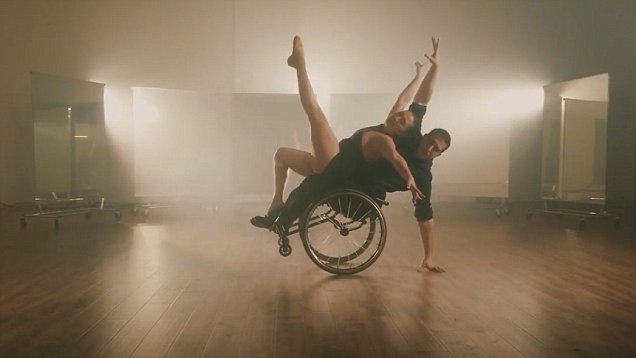
Wheelchair dancing (Infinite Flow)

INCLUSIVE DANCE: Founded by Marisa Hamamoto in 2015, Infinite Flow is a professional dance company and nonprofit whose mission is “to use dance as a vehicle to create an inclusive world and eliminate the stigma and inequality associated with disability,” especially wheelchair use. Artistic excellence, social innovation, empowerment, community, and integration are among its values, which are played out through dance classes, workshops, and outreach events that incorporate people with and without disabilities. You can view snippets from classes and rehearsals as well as polished, artfully filmed choreographed routines on their Facebook page—like this most recent one, in which Hamamoto dances with Piotr Iwanicki, a multiple wheelchair World Latin Champion.

After twenty years of training in ballet and contemporary dance, Hamamoto suffered a spinal cord infarction, which left her temporarily paralyzed from the neck down. Upon recovery, she developed an interest in and pursued ballroom dancing, which led her to imagine what an inclusive form of the genre might look like. To learn more about Infinite Flow, see these two promo videos, and follow them on Facebook. You’ll also want to check out “Gravity.”

+++

PODCAST: Speaking with Joy: Lately I’ve been devouring this podcast by Joy Clarkson, a doctoral candidate at the Institute for Theology, Imagination, and the Arts at St. Andrew’s University in Scotland (she’s studying the role of the affections and the arts in moral formation). Though it was launched last November, I first discovered it in July at the tail-end of her summer book series on The Great Divorce, an allegorical tale by C. S. Lewis, in which she discusses themes such as desire, grace, the real, incurvatus in se (St. Augustine), self-choice, being seen and known, and need-love versus gift-love. I was hooked! Now I’m a Patreon supporter.

Speaking with Joy

Speaking with Joy is such a bright corner of the Internet, full of hope, wisdom, and delight. The standard episode format is an exploration of a given theme through three pieces of art: one literary, one visual, and one musical. I really enjoyed the last three I listened to: “The Army of Emotions,” featuring St. Macrina, Mister Rogers’s ditty “What Do You Do with the Mad That You Feel?,” and the Irish animated film The Song of the Sea; “The Wisdom of Whimsy,” featuring Manalive by G. K. Chesterton, the illustrations of Beatrix Potter and Breezy Brookshire, and “On the Radio” by singer-songwriter Regina Spektor; and “Decent Men in Indecent Times,” which explores why and how we tell stories of the two world wars by looking at the contrasting poetry of Wilfred Owen and Laurence Binyon, the movie Dunkirk, and John Williams’s score for Schindler’s List.

+++

NEW IMAGE STAFF: Last week Image journal announced that James K. A. Smith, a professor of philosophy at Calvin College, will be taking the helm of Image as the journal’s new editor in chief. What a perfect choice! I’ve been hearing a lot of Smith since the publication of his book You Are What You Love: The Spiritual Power of Habit in 2016 and have appreciated his recognition of the important role of artists. “If you want to change how the world thinks, you first have to change how they imagine,” he once said. “That’s why, today, artists are our apologists.” More recently, in a letter to the Image search committee, he wrote,

The arts speak to aspects of human nature ignored or denied by a culture captivated by brutal notions of “efficiency” or quasi-scientific narratives that reduce us to animality. It’s in literature, poetry, film, and so many other art forms that we hear echoes of a biblical understanding of humanity—that we are created in God’s image, animated by hungers and hopes, made to delight and play. In other words, the arts are evidence of what I’ve called “cracks in the secular”—the recalcitrant mystery at the heart of the human that refuses to be eviscerated. Art continues to shout Nein! to our disenchantment.

I’m looking forward to this next chapter of Image.

+++

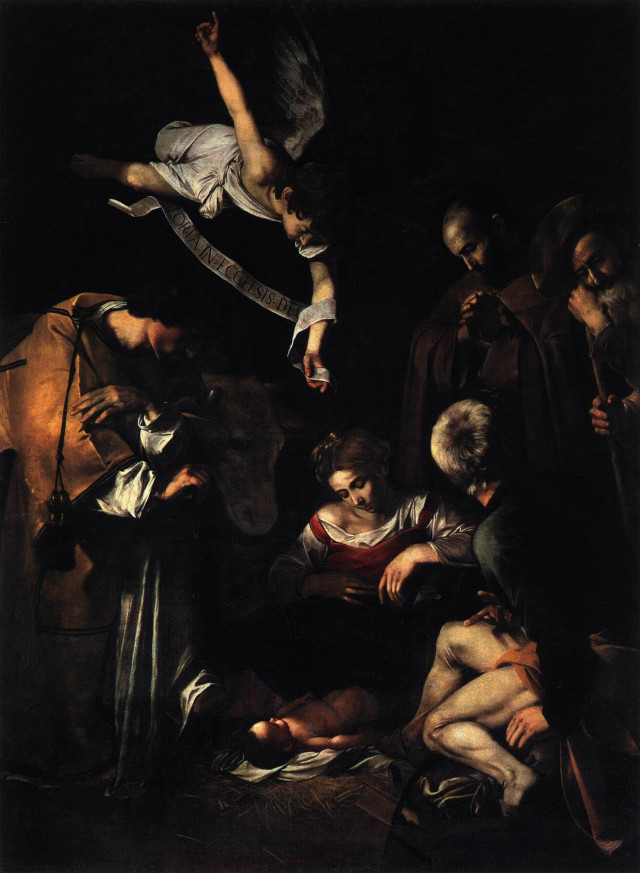
ART HEIST: “Police back on the trail of ‘world’s most wanted’ stolen Caravaggio painting”: On October 15, nearly fifty years after Caravaggio’s Nativity with San Lorenzo and San Francesco was stolen from the Oratory of San Lorenzo in Palermo, Sicily, experts met at the Vatican to discuss reinstating an active search. Speculation of mafia collusion and espionage have circulated around the case, which ranks second on the FBI’s list of top ten unsolved art crimes.

Nativity by Caravaggio
Caravaggio (Italian, 1571–1610), Nativity with San Lorenzo and San Francesco, 1609. Oil on canvas. The angel’s banderole reads, “Gloria in eccelsis Deo.”

+++

NEW ALBUM: Yesterday Moda Spira (the stage name of Latifah Alattas) released Divorce, an intimate musical chronicle of the unexpected end of her marriage and the journey of grief she’s been on since. “I hope it helps those of you that might feel alienated or lost in the throes of divorce or disconnection from someone you love,” she says. In response to a request, Alattas released a series of podcast episodes that discuss each song on the album in depth; listen here. I first learned about the project back in July when Stephen Roach interviewed Alattas on the Makers & Mystics podcast—such a rich and memorable conversation that deepened my empathy for the loved ones of mine who have had to endure the pain of divorce.

Below is a video promo Alattas made for the album’s Kickstarter campaign. Click here to view the variety of streaming and purchase options.