Roundup: Christian Imagery in Painting Now, “Antelope,” and more

This roundup is a bit longer than usual, but I’ve found that these six items I’ve gathered over the last month complement each other well, so I’m sharing them all at once. The Art in America and Hyperallergic articles raise interesting points about sacred art—what it is, how it functions, what its relevance is to contemporary life—and this is a topic I discuss in a podcast episode that was released earlier this month. Tammy Nguyen and Wes Campbell are two artists whose work I am glad to have just learned about and plan to explore more of. And there’s always something going on in London’s art scene to remark on as relates to theology or Christian history—this time a National Gallery–sponsored virtual exhibition on the fruits of the spirit, and the latest winning entry for the Fourth Plinth competition, which honors a Baptist pastor and freedom fighter from Malawi.

ARTICLE: “Seeing and Believing: Christian Imagery in Painting Now,” a roundtable conversation with four artists moderated by Emily Watlington: Religion is the theme of the December 2022 issue of the influential contemporary art magazine Art in America, and its cover story is a conversation with painters Frieda Toranzo Jaeger, Tammy Nguyen, Alina Perez, and Jannis Marwitz on their “bold reinventions of traditional Christian iconography.” They discuss the generativity of Christian imagery, the power of sacred images, their favorite Christian paintings, the function of metal leaf in illuminated manuscripts, Jesus as recognizable not by his specific likeness but by body language and symbol, “revisiting and repurposing history” as “a core practice of decolonization,” and the role of storytelling and transcendence in art.

I especially appreciated being introduced to Nguyen’s work and hearing her thoughtful and nuanced perspectives. She mentions her Stations of the Cross series, inspired by her visit to the island of Pulau Galang in Indonesia to connect with her Vietnamese parents’ history as refugees on nearby Kuku Island following the Vietnam War. In the decommissioned Galang Refugee Camp, now a tourist site, fourteen golden Stations of the Cross statues are preserved in the forest, which served as devotional aids for the many Vietnamese Catholic refugees—but they are now overgrown by nature. Nguyen was struck by this tropical takeover, and her resultant body of work setting Christ’s passion in the jungle explores not only environmental agency but also legacies of colonialism and the important role of faith in circumstances of trauma and grief. Hear her discuss the series in this five-minute video that the gallery Lehmann Maupin put out:

Nguyen, Tammy_Man of Sorrow
Tammy Nguyen (American, 1984–), Man of Sorrow, 2022. Watercolor, pastel, vinyl paint, and metal leaf on paper stretched over wood panel, 84 × 60 in. (213.4 × 152.4 cm).

I regret that besides Nguyen’s, all the other featured contemporary paintings in the Art in America article have only a very tenuous, sometimes indiscernible, connection to Christianity. Toranzo Jaeger’s End of Capitalism, the Future, a “queer utopia,” is based on Lucas Cranach’s Fountain of Youth—but Cranach’s subject (elderly women entering a pool to become young again) is not Christian, it’s mythological. And Marwitz’s The Raid supposedly references Caravaggio’s Madonna of Loreto, but I don’t see it at all, compositionally or otherwise. Perez mentions growing up Catholic in Miami, but that influence isn’t apparent in It Never Heals, unless we’re meant to read it in the painting’s flair for violence and drama. So the article’s subtitle, “Christian Imagery in Painting Now,” is a bit of a misnomer.

With the criteria of currently active painters consciously engaging with Christian imagery in ways that are not merely illustrative, I might have chosen to interview, for example, Jyoti Sahi (India), Daozi (China), Emmanuel Garibay (Philippines), Wisnu Sasongko (Indonesia), Marc Padeu (Cameroon), Harmonia Rosales (US), Stephen Towns (US), Rodríguez Calero (US), Trung Pham (US), Laura Lasworth (US), Patty Wickman (US), James B. Janknegt (US), Mark Doox (US), Sergii Radkevych (Ukraine), Ivanka Demchuk (Ukraine), Natalya Rusetska (Ukraine), Paul Martin (England), Filippo Rossi (Italy), Michael Triegel (Germany), Janpeter Muilwijk (Netherlands), Arne Haugen Sørensen (Denmark), Brett a’Court (Australia), or Julie Dowling (Australia).

I’m also disappointed that, from what I can tell from the interview, none of the four artists approaches their subjects from a place of Christian belief. I absolutely welcome non-Christians to engage with Christian stories and symbols—to play with them, reinterpret them, question them, or even use them as tools of critique or subversion. I just wish that in a conversation about ways that Christian imagery is being used today, the editors had thought to invite a Christian to the table, who could have provided a different viewpoint. But, kudos to Art in America for at least broaching the topic of religion in contemporary art!

+++

NEW STATUE: Antelope by Samson Kambalu: The fourth plinth in London’s Trafalgar Square is the prestigious site of rotating contemporary art installations, and from September 2022 to September 2024, it is home to Antelope by Malawian-born artist Samson Kambalu. This two-man bronze sculpture group reimagines a photograph of the pastor, educator, and revolutionary John Chilembwe (1871–1915) of Nyasaland (now Malawi) standing next to his friend John Chorley, a British missionary. Posing at the entrance of his newly built church, Chilembwe proudly wears a brimmed hat, flouting the law that Africans were not allowed to wear hats in the presence of their then colonial rulers. (Read more from Inno Chanza on Facebook, and from Harvard Magazine.) Kambalu’s sculpture shows the men facing away from each other instead of side-by-side, and he’s made Chilembwe almost twice as large as Chorley, elevating an underrepresented figure in the history of the British Empire in Africa.
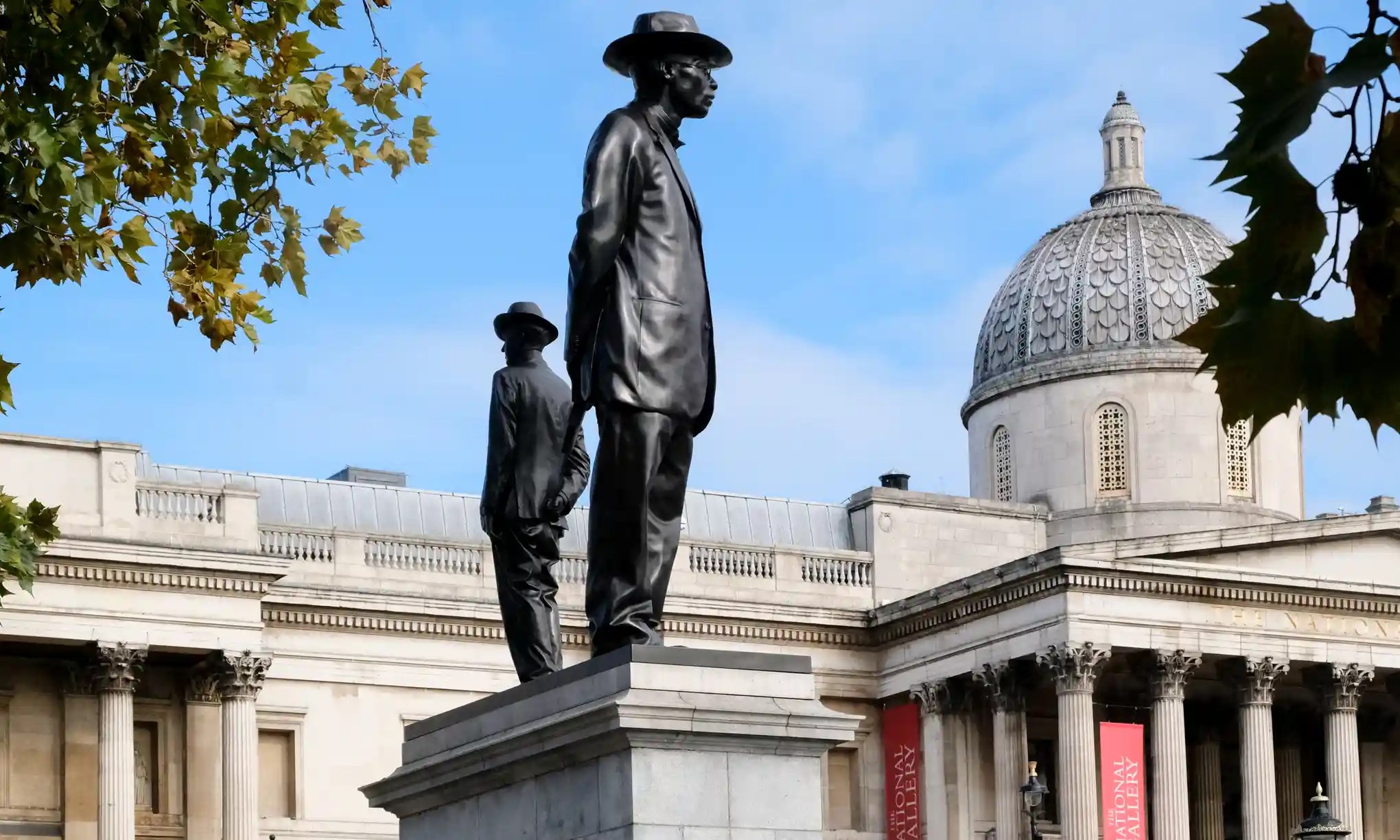
Kambalu, Samson_Antelope
Samson Kambalu (Malawian, 1975–), Antelope, 2022. Bronze, resin, 18 ft. high. Photo: Future Publishing / Getty Images.

John Chilembwe and John Chorley
Pastor John Chilembwe and John Chorley at the dedication of Chilembwe’s New Jerusalem Baptist Church in Mbombwe village in what is today southern Malawi, January 24, 1914. The British colonial government demolished the church the next year and imprisoned or executed most of its leaders following an unsuccessful uprising against forced labor, racial discrimination, and conscription led by Chilembwe.

After years of agitating peacefully against British colonial rule to no avail, Chilembwe led an uprising in 1915, which resulted in his death but which laid the seeds for Malawian independence. John Chilembwe Day is observed annually on January 15 in Malawi.

+++

VIRTUAL EXHIBITION: Fruits of the Spirit: Art from the Heart: Curated by the Rev. Dr. Ayla Lepine as part of the National Gallery’s Art and Religion research strand, this new virtual exhibition was inspired by a passage from the apostle Paul’s letter to the Galatians, where he writes, “The fruit of the Spirit is love, joy, peace, patience, kindness, generosity, faithfulness, gentleness, and self-control. There is no law against such things” (5:22–23). The exhibition pairs nine artworks from the National Gallery’s collection with nine from UK partner institutions that represent these spiritual fruits, these virtues, which are held in common across faith traditions. The Renaissance through contemporary eras are represented. [HT: Jonathan Evens]
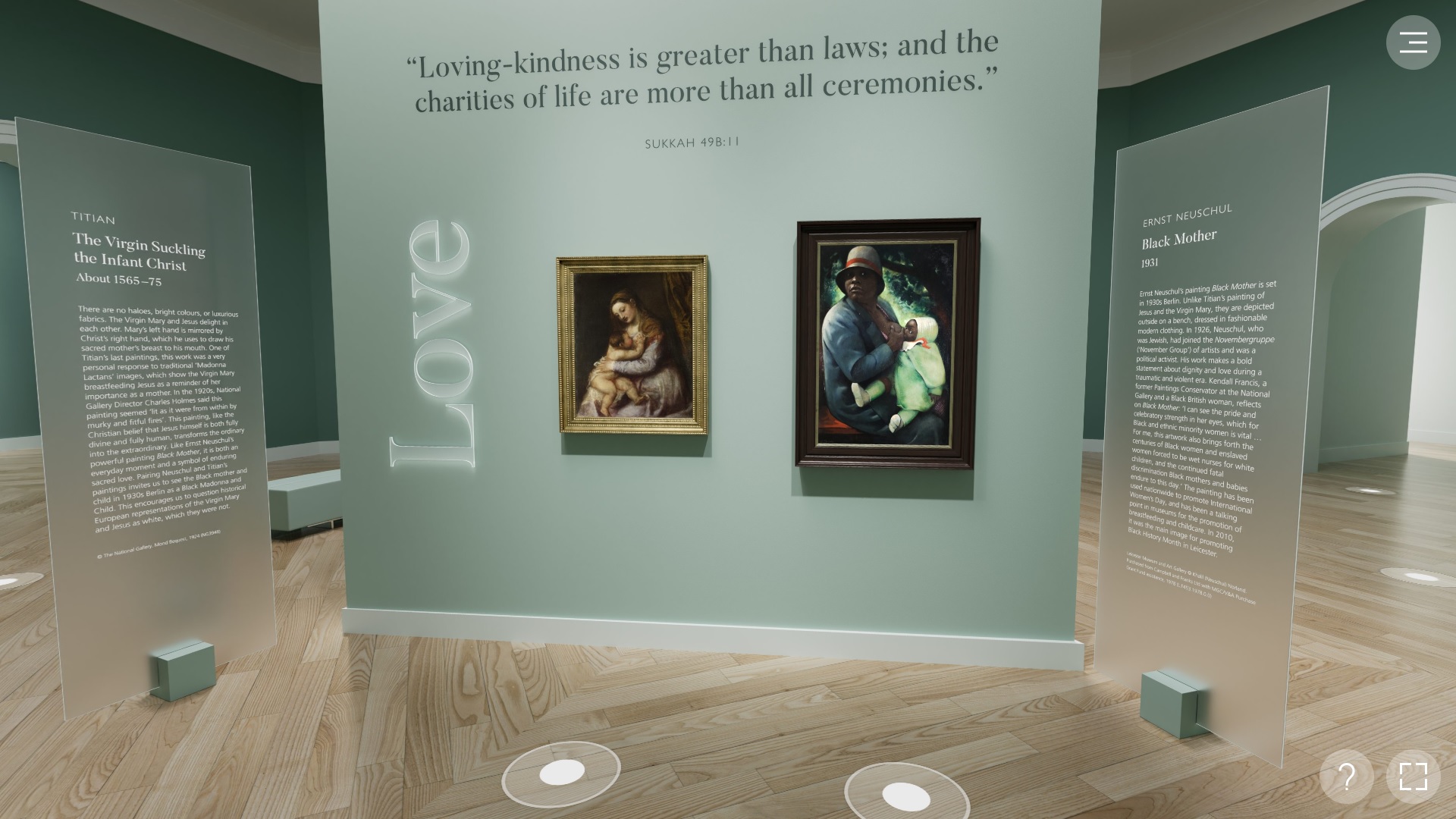
Fruits of the Spirit exhibition (Love)
Screen capture from the online exhibition experience Fruits of the Spirit. This fictitious space consists of seven side galleries and two central displays, which can be navigated with your keyboard.

Accompanying the exhibition is a web-based catalog (with contributions by theologians, activists, novelists, artists), an audio guide, and a series of in-person and online events from November 2022 through April 2023. Next up is a free online talk by the curator on January 30 at 1 p.m. GMT (8 a.m. EST).

+++

ARTICLE: “The Church of Secular Art” by David Carrier: “Bill Viola’s installation at a Naples church misses the spiritual mark,” reads the deck to this Hyperallergic article, a critic’s response to the Ritorno alla Vita (Return to Life) exhibition that ran from September 2, 2022, to January 8, 2023, at the Church of Carminiello in Toledo. The exhibition was organized by Vanitas Club, a Milan-based organization that throws artistic and cultural events in underutilized historic spaces, in collaboration with Bill Viola Studio.
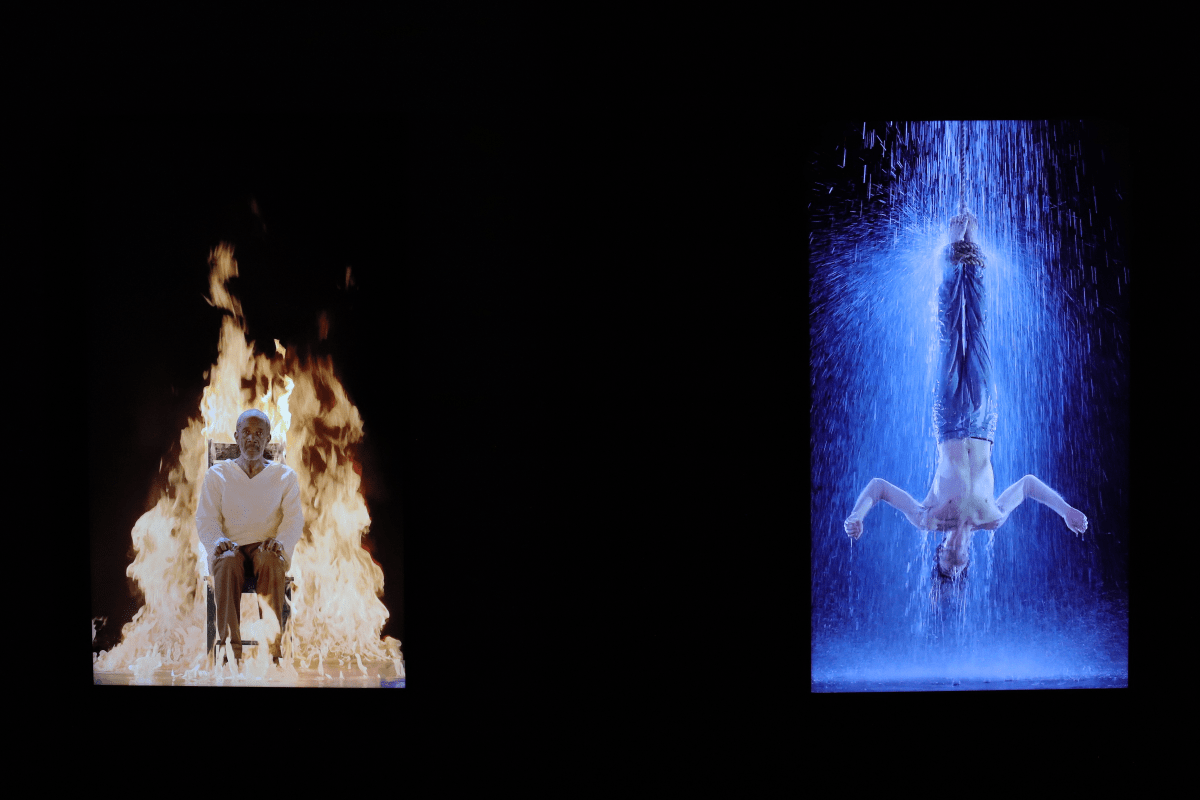
Viola, Bill_Fire Martyr and Water Martyr
Bill Viola, left: Fire Martyr (2014); right, Water Martyr (2014). Photo courtesy of Vanitas Club.

I didn’t see the exhibition, but I’m familiar with Viola’s work [previously], and I don’t agree with Carrier’s assertions, if my understanding of them is correct. It sounds to me like he’s saying that when a sacred artwork—say, a medieval altarpiece—is transplanted to a museum, the work becomes secular, and that when a secular artwork is shown in a sacred space, rather than the space sacralizing the work, the work secularizes and thus undermines the space. It seems that he’s saying that art made in a contemporary idiom, like Viola’s video art, does not belong in churches, because it does not and cannot function as religious art. Art museums and churches have fundamentally different goals that are irreconcilable.

“The paintings and sculptures in Neapolitan churches are meant to support and strengthen the spiritual lives of believers; representations of St. Gennaro and other saints are intended to reinforce faith. The videos in Ritorno alla Vita call for a fundamentally different response. The exhibition website notes that these videos ‘exemplify the human capacity to transform and to bear extreme suffering and even death in order to come back to life through action, fortitude, perseverance, endurance, and sacrifice.’ These are important ideals, but they can apply equally to secular and nonsecular contexts.” The description Carrier quotes does seem to water down the art’s Christian content/messaging in an attempt to make the art more widely accessible. I’ve noticed that fault with some other displays of contemporary art in churches—where the curator, seeing their role primarily as one of hospitality to the wider (unchurched) community, underinterprets the art’s Christian angle. Though it can be difficult, there is a way to honor a work’s particularity and universality in the exhibition text.

I think we need to let art function differently for different viewers. Cannot a contemporary artwork, regardless of the artist’s intentions or where the art is placed, cultivate my affection for Christ as much as a traditional artwork? How I as a Christian read and experience Viola will differ from how an atheist does, and that’s OK. The same is true for a religious painting hanging in a national gallery—it may elicit prayer in me, boredom or contempt in another, emotional identification in another, purely aesthetic contemplation in another, and historical curiosity in yet another. I don’t think an image loses or gains its sacredness by its location, though I don’t underestimate the power of the staged environment to enable that sacredness to best shine through. I think that if the viewer receives a work as sacred, then it is.

That Viola does not depict specific historical saints in his Martyr panels—originally commissioned as a quadriptych by St. Paul’s Cathedral in London—does widen their interpretive horizon, but it doesn’t make them less “Christian.” I see the work as a memorial to all the unknown martyrs. I think of all the contemporary Christian martyrs around the world whose names I do not know, who have died with Christ’s name on their lips and his Spirit within them, and am prompted to intercede immediately for believers suffering religious persecution in their countries, who worship Jesus under threat of imprisonment or execution.

+++

ARTICLE: “Openness to the world: Wes Campbell and his disturbing illusions of peace” by Jason Goroncy: In December 2022 theology professor Jason Goroncy spoke at the opening of a retrospective of the paintings of the Rev. Dr. Wes Campbell, hosted by Habitat Uniting Church in Melbourne. That talk is adapted here on the Australian Broadcasting Corporation’s Religion and Ethics web portal. Campbell is a retired Minister of the Word in the Uniting Church of Australia with experience in parish ministry, university chaplaincy, UCA synod and assembly roles, and a sustained commitment to peace, justice, and social responsibility. His roughly three decades of art making was integrally connected to these roles, as through his paintings he expounds a faith-fueled poetics of hope, “bearing witness to the trauma of creaturely existence alongside a refusal to abandon the world to its violence, nihilism, and despair.”

Campbell, Wes_Transfiguration of Christ
Wes Campbell (Australian, 1948–), Transfiguration of Christ, n.d. Acrylic on canvas, 59 × 23 5/8 in. (150 × 60 cm).

“Wes’s art . . . does not shy away from the risky boundaries where hope is threatened, sustained, lost, and birthed,” Goroncy says. “It, therefore, embraces the tragic and the ugly, as well as joy and beauty. Whether his subject matter is the human condition, or explicitly religious stories (such as the nativity or the transfiguration), or the Earth itself, Wes’s work is replete with this kind of fidelity to the contradictions that mark our lived experience. . . . It embodies the conviction that the arts can unmoor us, disrupt the worlds we assume, facilitate our lament, and open up possibilities for futures we hardly dare imagine.”

+++

PODCAST EPISODE: “Victoria Emily Jones: Art & Theology”: In early December I spoke with Luminous podcast host Peter Bouteneff, a systematic theology professor and the founding director of the Institute of Sacred Arts at St. Vladimir’s Orthodox Theological Seminary, about my work at Art & Theology. We discuss how I got into this cross-disciplinary field, definitions of “sacred art,” and more.

Bouteneff earned his DPhil in theology from Oxford University under the supervision of Metropolitan Kallistos Ware. Besides theology, he also has an academic background in music, having studied jazz and ethnomusicology at the New England Conservatory. He has written two books on the music of Estonian composer Arvo Pärt.

I’ve been following the podcast since its inception in 2021. My favorite episodes are the ones with poet Scott Cairns; artist Bruce Herman; art historian Lisa DeBoer, author of Visual Arts in the Worshiping Church; curator Gary Vikan, a specialist in Byzantine art and the director of the Walters Art Museum from 1994 to 2013; and historian Christina Maranci, an expert on the development of Armenian art and architecture. Browse all the episodes here.
Roundup: Afro-Atlantic Histories, upcoming events, and more

EXHIBITION: Afro-Atlantic Histories, National Gallery of Art, Washington, DC, April 10–July 17, 2022: There are still two more weeks to catch this excellent exhibition in the US capital, which I saw in June, before it travels to the Los Angeles County Museum of Art (December 11, 2022–April 30, 2023) and the Dallas Museum of Art (dates TBA). “For centuries, artists have told and retold the complex histories of the African Diaspora. Explore this enduring legacy in the exhibition Afro-Atlantic Histories, which takes an in-depth look at the historical experiences and cultural formations of Black and African people since the 17th century. More than 130 powerful works of art, including paintings, sculpture, photographs, and time-based media by artists from Africa, Europe, the Americas, and the Caribbean, bring these narratives to life.”

I wish I had more time to devote to it here before it wraps, as there are so many compelling artworks, but instead let me just share a two-minute video tour, followed by a lecture from April 10, which both provide a good overview:

The exhibition is divided into six sections: Maps and Margins, Enslavements and Emancipations, Everyday Lives, Rites and Rhythms, Portraits, and Resistances and Activisms. Kanitra Fletcher, associate curator of African American and Afro-Diasporic art at the National Gallery of Art, says in her talk,

The word histories in the title indicates the plurality of the narratives represented in the exhibition. They are fictional and nonfictional, mythical and factual. As a framework to coalesce narratives that have been left aside at the margins and forgotten, Afro-Atlantic Histories is open, plural, diverse, and inclusive, refusing the canon of traditional art history. This show resists the idea of a definitive history or a “grand narrative” of the Diaspora and presents diverse accounts of the past that challenge long-established hierarchies and forges new questions and connections that show how complex and intertwined are all of our histories.

Here’s an artwork that isn’t included in either of the above videos and that was new to me:

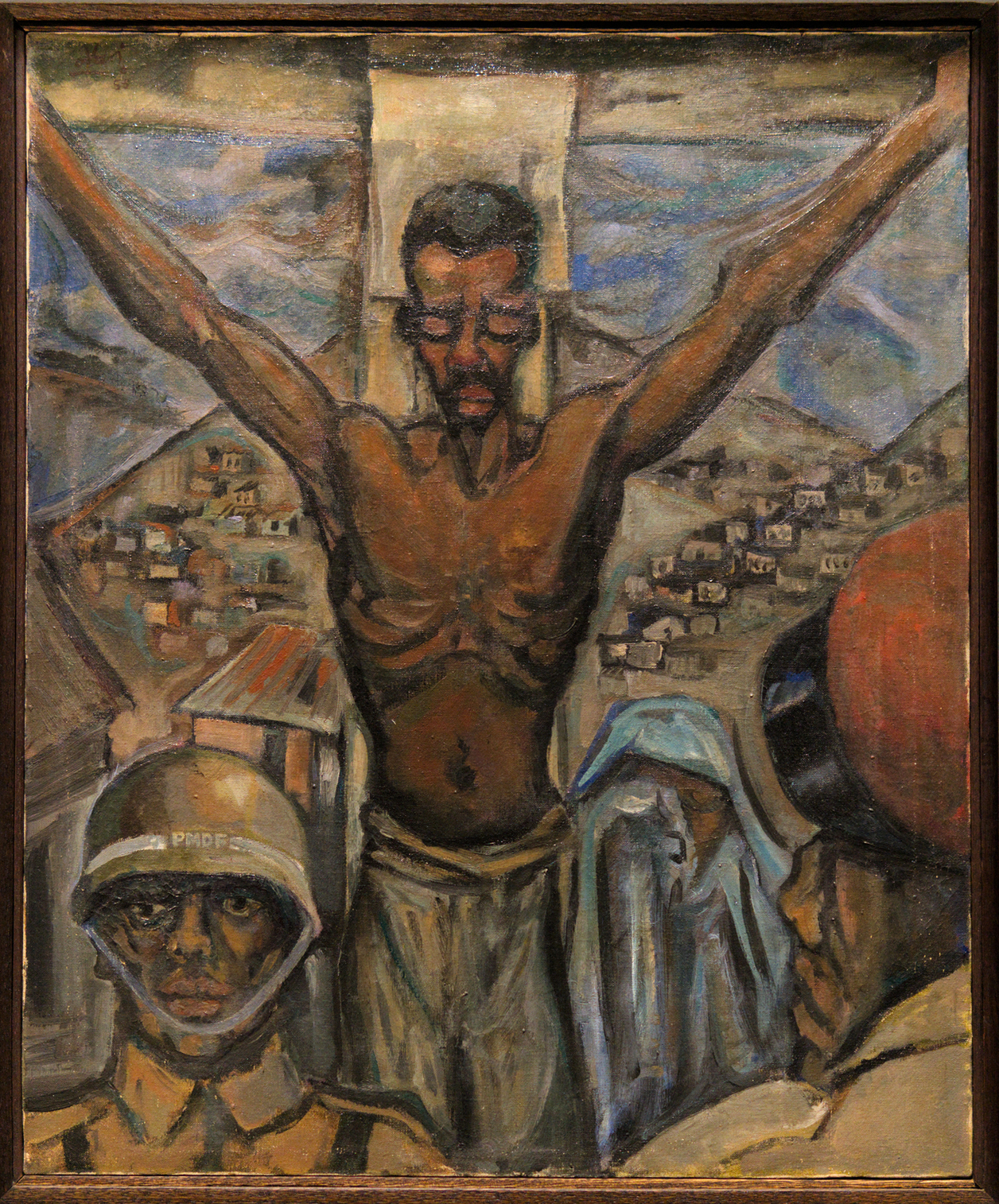
Araujo, Octavio_Slum Christ
Octávio Araújo (Brazilian, 1926–2015), Cristo favelado (Slum Christ), 1950. Oil on canvas, 64 × 53 cm. Collection of the Instituto de Pesquisas e Estudos Afro-Brasileiros (IPEAFRO), Rio de Janeiro. Photo: Victoria Emily Jones, at Afro-Atlantic Histories at the National Gallery of Art, Washington, DC, June 2022.

Artist Octávio Araújo entered this painting in the Black Christ contest held in 1955 by the Teatro Experimental do Negro (Black Experimental Theater) in Rio de Janeiro (I mentioned this contest previously in relation to another submission, a painting by Djanira da Motta e Silva). It shows Christ crucified in a Brazilian favela, his Roman tormentors replaced with military police officers, perpetrators of state-sanctioned violence against the nation’s Black people.

+++

ONLINE COURSE: “Theology and the Arts,” with Jason Goroncy, Rod Pattenden, and guest artists, September 19, 20, 21, 26, 27, 28 and October 21, 2022: Whitley College, a teaching college of the University of Divinity outside Melbourne, is offering a seven-day intensive online course on theology and the arts this fall (description below), taught by the coeditors of the new book Imagination in an Age of Crisis: Soundings from the Arts and Theology. Registration is open to anyone, but participants will need to be available to engage live online from 9:30 a.m. to 3:00 p.m. (Melbourne time) on each of the scheduled days, for lectures, discussions, and other online activities, such as “meet the artist,” gallery visits, interviews, and student presentations. The cost to audit the course is AUD $500 (~ USD $343). There’s also an option to receive academic credit. Professor Goroncy writes,

When, in 1741, George Frideric Handel completed writing the Hallelujah Chorus for his oratorio Messiah, he reportedly told his servant: ‘I did think I did see all Heaven before me, and the great God Himself [sic] seated on His throne, with His Company of Angels’. More recently, the Australian musician Nick Cave described how the gods are closely associated with the flight of the imagination. Both musicians had a sense, each in their own way, of how closely related are the arts and theological work.

Theology and art are often considered separate expressions of human activity, but are they? How might they relate? What influence do they have on one another, and how might such inform our understanding of faith, of the human condition, of the creature’s vocation, and maybe even of God?

Whitley College is offering a unit of study to explore such questions. ‘Theology and the Arts’ expands traditional views of theology into the world of the arts in a way that both delights and challenges. It will be delivered online by Jason Goroncy and Rod Pattenden, together with a host of guest artists, including Emmanuel GaribayJulie PerrinDoug PurnellTrish WattsPaul MitchellRebekah Pryor, and Libby Byrne.

The registration deadline is July 15—but if there are still open spots available, it’s possible you could get in after that date. Email Dorothy Morgan at registrar@whitley.edu.au for an application form and more information.

+++

SYMPOSIUM: “Humanity Redeemed: The Theological Vision of Georges Rouault,” September 23–24, 2022, Gordon Conwell Theological Seminary, Charlotte, NC: I’m considering attending! The early-bird rate, good through July 23, is $80 for the general public and includes a Friday dinner and Saturday lunch. “Georges Rouault (1871–1958) was unique among French modernist artists due to his Christian commitment and its influence on his work. The theological vision unveiled through his art is honest and complex, one that reflects the changing climate and tumultuous events of the early twentieth century. In doing so, Rouault showed the possibility of salvation and hope within the inexplicable suffering and mundane realities of human life. His close friend Jacques Maritain identified this as ‘the art of humanity redeemed.’

“This symposium will gather teachers, pastors, artists, ministry leaders, and others to reflect on the theological vision of Georges Rouault and his ongoing impact. Prominent scholars and practitioners with expertise in theology, art history, philosophy, therapy, and community leadership will be offering papers and leading the discussion. One of the speakers, Philippe Rouault, is the great grandson of Georges Rouault and will be providing a personal introduction to his life, work, and family. In addition, several artists will present new work inspired by Rouault, which will both enrich our experience together and show the ongoing generativity of Rouault’s vision and style.”

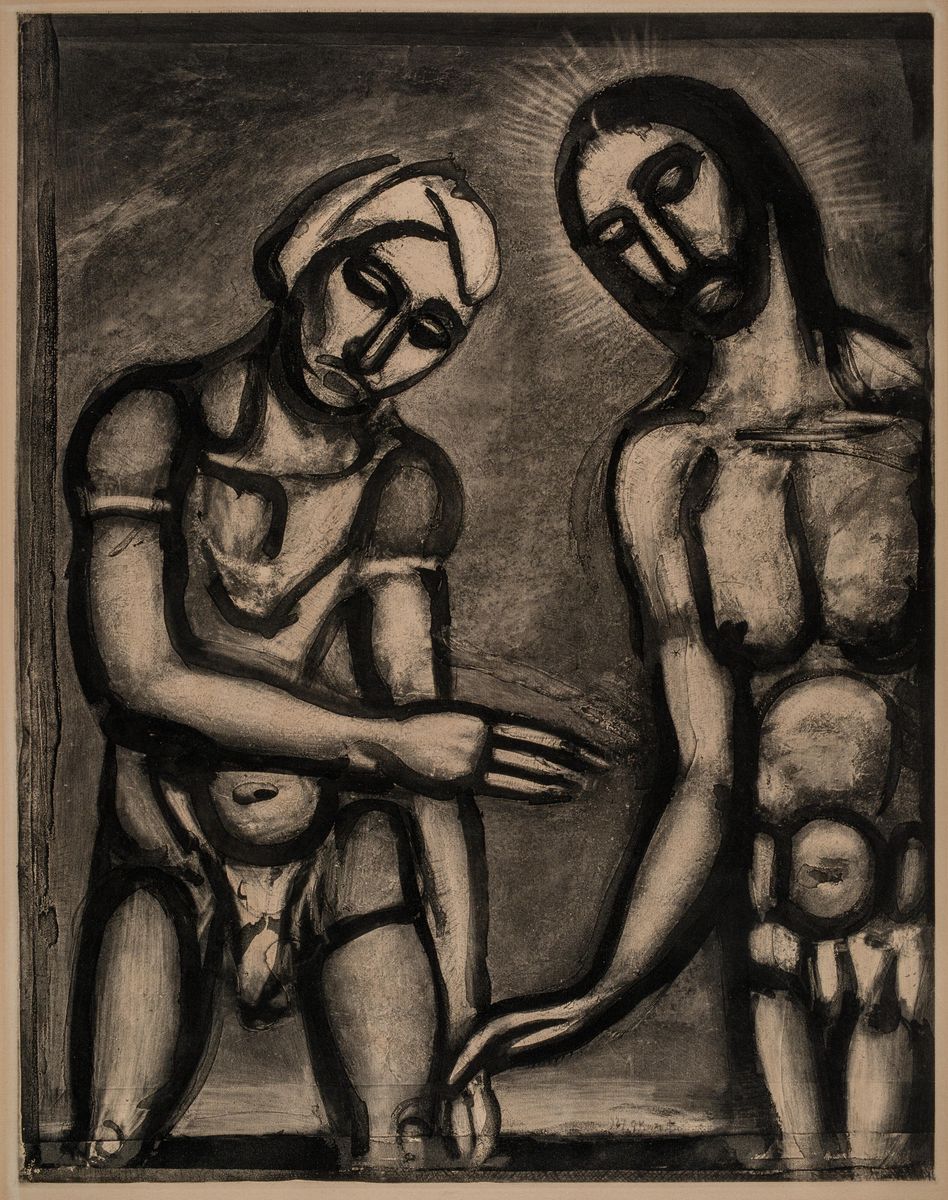
Rouault, Georges_Lord, it is you, I know you
Georges Rouault (French, 1871–1958), Seigneur, c’est vous, je vous reconnais [Lord, it is you, I know you], plate 32 from the Miserere et Guerre series, 1948. Aquatint, roulette, drypoint over heliogravure on paper, 57.4 × 44.9 cm (plate). Art Gallery of South Australia, Adelaide.

+++

SPOTIFY PLAYLIST: July 2022 by Victoria Emily Jones: Includes a thirteenth-century antiphon for the Holy Spirit by Hildegard of Bingen (“Love abounds in all . . .”); a Luganda praise song for children’s choir; an excerpt from an Orthodox Vespers service in the Yup’ik language from Kodiak, Alaska; a gospel-style setting of Psalm 23; and more. Below are live recordings on YouTube of a few songs from the list: a cover by Amir Darzi and Lital Regev of “Long, Long, Long” from the Beatles’ White Album, which songwriter George Harrison said addresses God; “Love Like There’s No Tomorrow” by gospel-blues husband-wife duo The War and Treaty; and “Here in the Vineyard of My Lord,” a Primitive Baptist hymn compiled in The Good Old Songs (1913) and performed by Americana/folk music duo Anna & Elizabeth.

Roundup: “Art and Social Impact,” Auld Lang Syne in Birmingham, and more

ONLINE PANEL: “Art and Social Impact,” January 26, 2021, 14:30 GMT (9:30 a.m. EST): Next Tuesday the Rev. Jonathan Evens [previously], associate vicar at St Martin-in-the-Fields in London, will be talking with interdisciplinary photography and media artist André Daughtry [previously], sculptor Nicola Ravenscroft, portrait painter and humanitarian Hannah Rose Thomas, and graphic designer Micah Purnell about their personal journeys in addressing issues of social concern in their art practices. The session will also explore ways in which churches can engage with such art and use it for exploring issues with congregations and beyond. Register here for a Zoom invite. (Update: View the recording.)

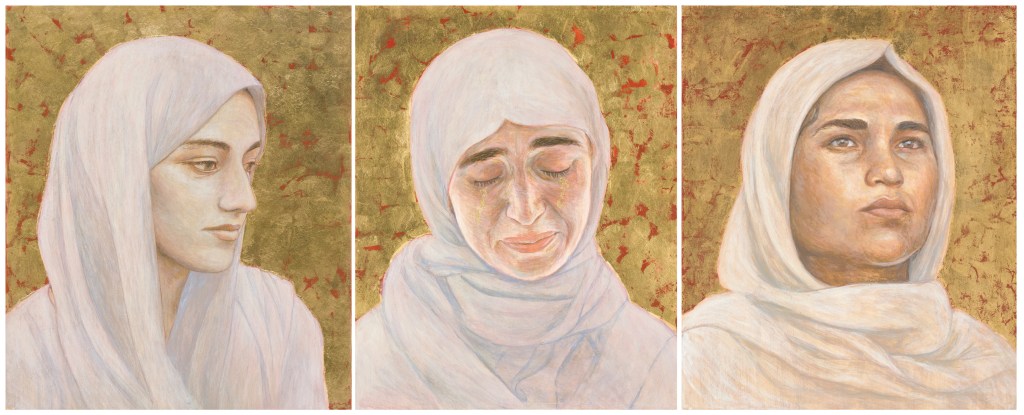
Tears of Gold by Hannah Rose Thomas
Hannah Rose Thomas, paintings from the Tears of Gold series, 2017. Click image to learn more, and see the Google Arts & Culture exhibition.

Ravenscroft, Nicola_With the Heart of a Child
Nicola Ravenscroft, With the Heart of a Child, 2016. Sculpture installation comprising seven life-size bronze children. The artist calls the figures “eco-earthling-warrior-mudcubs.” Click image for artist interview, and here for a theological reflection.

+++

VISUAL COMMENTARIES: Elijah’s Ascent by Victoria Emily Jones: My latest contribution to the Visual Commentary on Scripture was published this month. It’s a mini-exhibition on 2 Kings 2:1–12, featuring a seventeenth-century Russian icon, a 1944 painting by African American artist William H. Johnson, and a 1985 painting (a Jewish chapel commission) by Polish-born Israeli artist Shlomo Katz. (For more context on the Katz painting, see here.)

+++

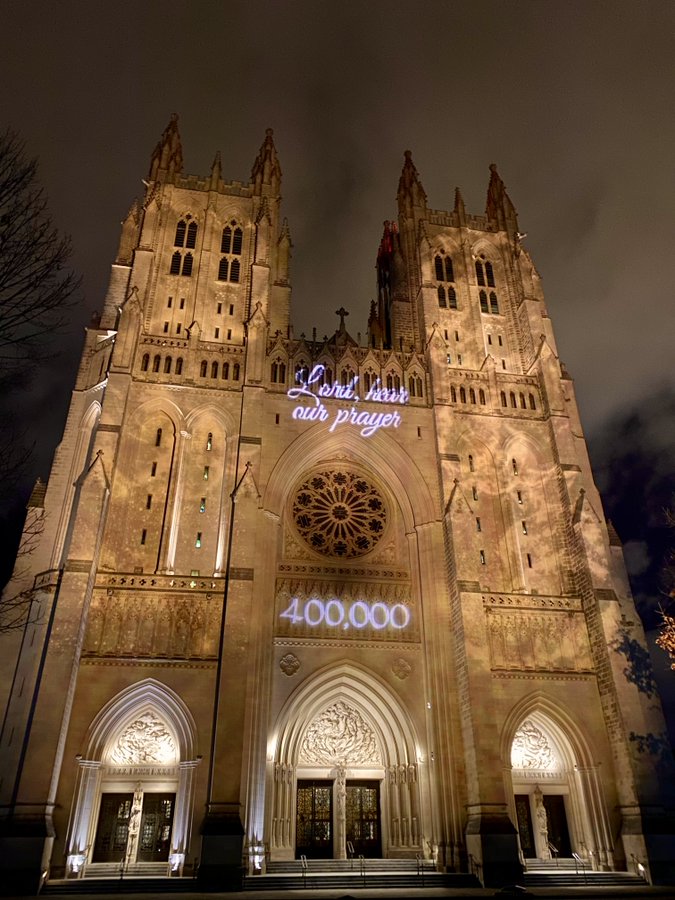
NATIONAL MOURNING: Washington National Cathedral tolled its mourning bell four hundred times Tuesday evening in remembrance of the 400,000 lives lost from COVID in the United States thus far—each ring representing one thousand dead. I spent the thirty-eight-minute livestream lamenting this enormous loss, praying for all those who are grieving and for patients and health care workers, and pleading with God for an end to this virus.

The origami paper doves you see in the video are part of the Les Colombes installation by Michael Pendry [previously], erected in December in the cathedral’s nave to symbolize hope and the Holy Spirit.

Washington National Cathedral COVID memorial

+++

MUSIC VIDEO: “For the Sake of Old Times” (Auld Lang Syne): Directed by Tyler Jones of the narrative studio 1504, this short film premiered December 30, 2020, by NPR. “From the pews of a church where white deacons once refused to seat African Americans, a group of Black singers in Alabama reminds us why preserving our memories of this historic year is vital—even if we’d rather just leave 2020 behind.” [HT: ImageUpdate]

“To me the piece is a personal encouragement going into the future,” Jones says, “that we hopefully strive to work together for a kinder future, especially at a time where we are so distanced.” Read about the making of the film at https://n.pr/3n6d8Ct.

+++

ARTICLE: “On the Gifts of Street Art” by Jason A. Goroncy, Zadok: The Australasian Religious Press Association awarded silver prize for “Best Theological Article” to Jason Goroncy [previously] for this piece. (How cool that it won in the theology category!) Like all art, street art can function as a form of civic dialogue, protest, play, hope, remembrance, etc., but Goroncy discusses how some of its particular qualities uniquely position it to perform those functions: its (usually) unsanctioned and interventionist nature, its fragility and impermanence, its celebration and development of culture, its inseparability from place, and its redefinitions of proprietorship. [HT: Art/s and Theology Australia]

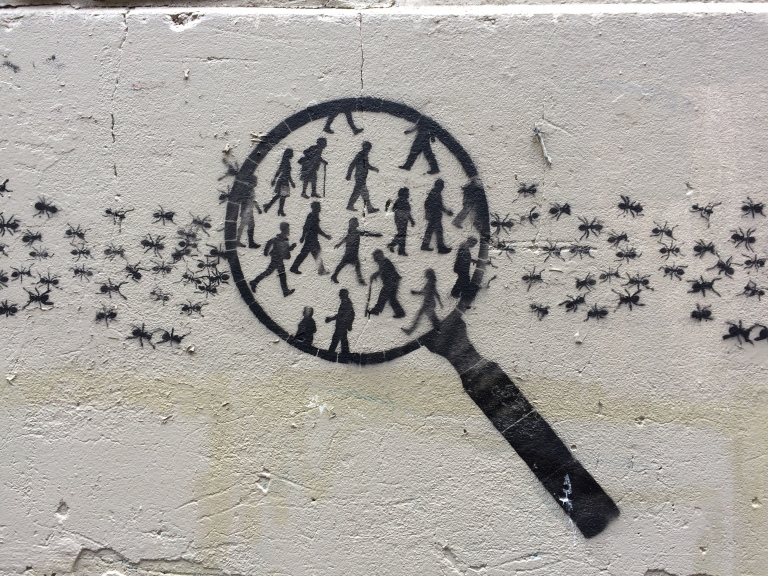
Human Ants (street art)
Human Ants, Liverpool Street, Melbourne, Australia. Photo: Jason Goroncy.

“Among the many gifts that street artists offer,” Goroncy writes, “is a proclivity to bear witness to how things are and not merely to how they might appear to be. Such a proclivity involves a telling of the truth about those largely-untampered-with and untraversed spaces of our urban worlds, about what is present but underexposed or disregarded; and even, as Auden hints, to lead with ‘unconstraining voice’ the way toward healing and toward a renewed sense of enchantment, freedom and praise beyond the pedestrian and clamorous. Such a proclivity is also a form of urban spirituality. It can even be a form of public theology.”

Roundup: Saar installation, Christian themes in Australian and New Zealand art, “heart of God” chant, jazz Communion song

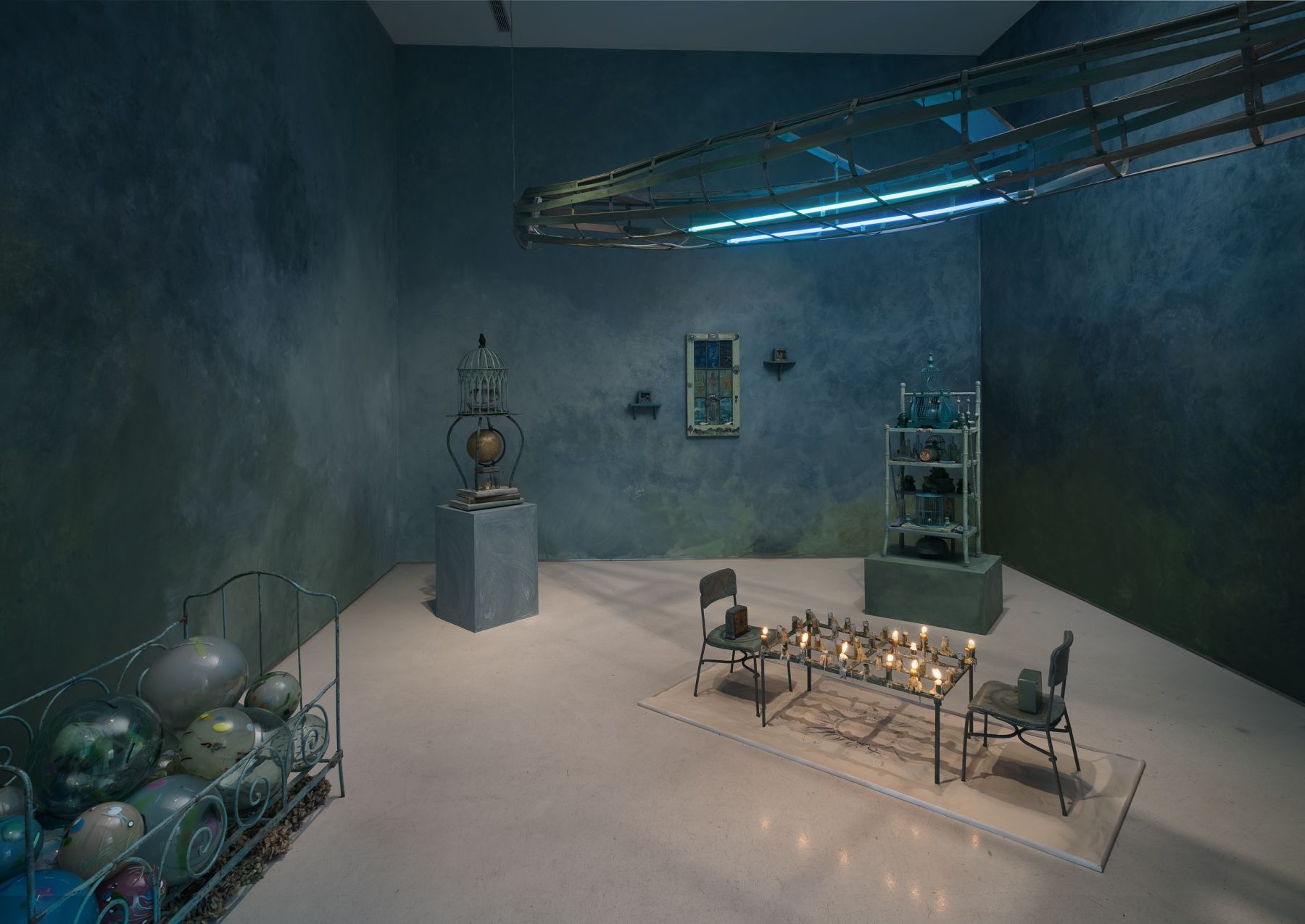
VISUAL MEDITATION: On The Alpha & The Omega by Betye Saar: A few weeks ago my commentary on a Betye Saar installation was published on ArtWay.eu. The idiomatic Hebrew in the title is a reference not to Christ but to the beginning and the end of life, a theme Saar explored by arranging around a blue-painted room such found objects as an antique cradle, dried hydrangeas, a boat shell, a mammy figurine, a washboard, empty apothecary bottles, books, clocks, a moon-phase diagram, etc.

Saar, Betye_Alpha and Omega installation
Betye Saar, The Alpha & The Omega: The Beginning & The End, 2013. Installation at Roberts & Tilton, Culver City, California.

With an educational background in design, Saar began her career as a printmaker and working in theater on costumes and sets. She then ventured into collage, which led to assemblage (for which she is most celebrated), sculpture, and installations. With installations, she likes how “the whole body has the experience”—how you are quite literally inside the work. Saar is one of today’s leading American contemporary artists, with two exhibitions currently running in the United States: one at MoMA, and the other at LACMA. I first encountered her in a college art history course, through her most famous work, The Liberation of Aunt Jemima. Race, memory, and spirituality are recurring themes in her oeuvre.

+++

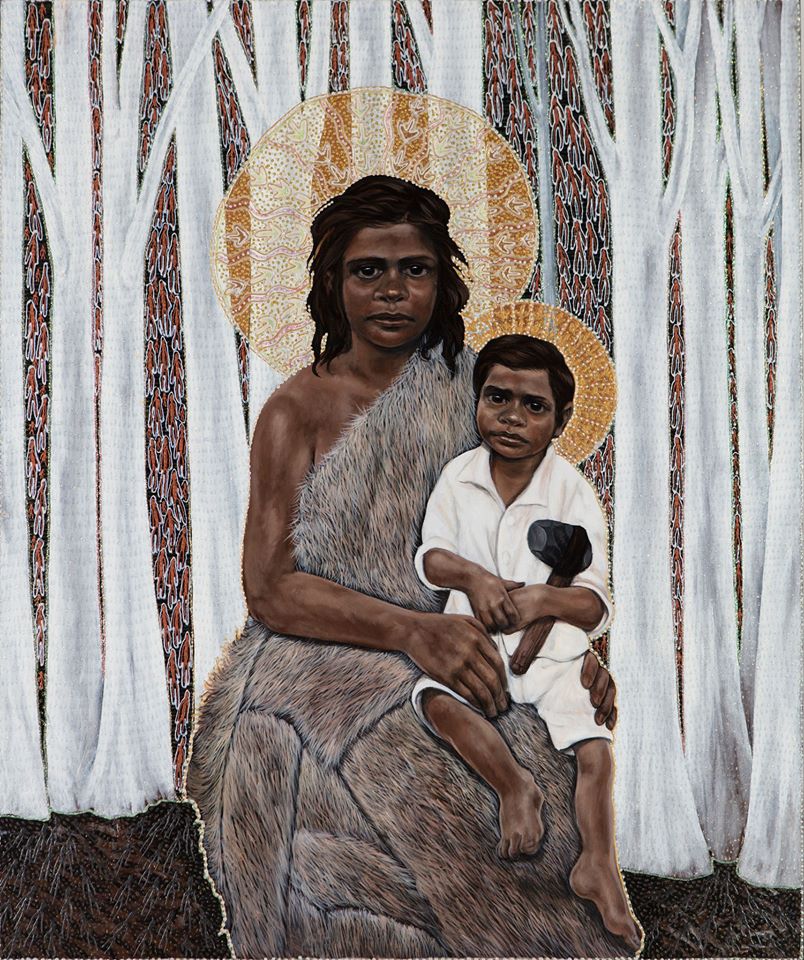
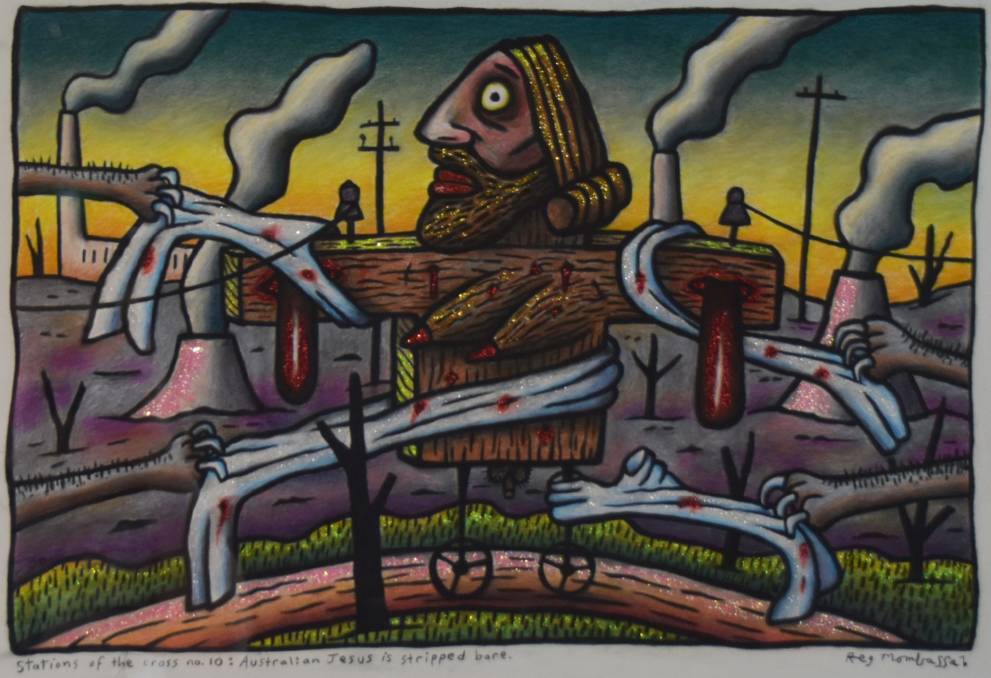
ESSAY: “‘A pretty decent sort of bloke’: Towards the quest for an Australian Jesus” by Jason A. Goroncy: “What happens to religious images and symbols when they get employed outside of their traditional contexts and charged with unapproved and heterodox interpretations?” asks Goroncy. “From many Aboriginal elders, such as Tjangika Napaltjani, Bob Williams and Djiniyini Gondarra, to painters, such as Arthur Boyd, Pro Hart and John Forrester-Clack, from historians, such as Manning Clark, and poets, such as Maureen Watson, Francis Webb and Henry Lawson, to celebrated novelists, such as Joseph Furphy, Patrick White and Tim Winton, the figure of Jesus has occupied an endearing and idiosyncratic place in the Australian imagination. It is evidence enough that ‘Australians have been anticlerical and antichurch, but rarely anti-Jesus’. But which Jesus? In what follows, I seek to listen to what some Australians make of Jesus, and to consider some theological implications of their contributions for the enduring quest for an Australian Jesus.” [HT: Art/s and Theology Australia]

Dowling, Julie_Black Madonna, Omega
Julie Dowling (Badimaya/Yamatji/Widi, 1969–), Black Madonna: Omega, 2004. Synthetic polymer paint, red ocher, glitter, and metallic paint on canvas, 120 × 100 cm. Art Gallery of Western Australia. “I painted this in honour of First Nation mothers who have their children stolen from them by white governments in order to assimilate their children.”

Mombassa, Reg_Jesus Is Stripped Bare
Chris O’Doherty (aka Reg Mombassa) (Australian, 1951–), Australian Jesus Is Stripped Bare, station 10 from the Stations of the Cross cycle. Chapel at the Australian Centre for Christianity and Culture, Barton, ACT, Australia. Photo: Katherine Spackman.

Goroncy quotes Wilson Yates, who says that Jesus has become “a part of the culture and life far beyond the final control of the church, . . . imaged in diverse ways by non-Christian as well as Christian artists, often contrary to the church’s dominant interpretation. . . . This should not be viewed as threatening,” however, but rather as “a means by which, paradoxically, the traditional symbols are kept vital – are kept alive in the midst of human life.”

+++

AUDIO INTERVIEW: Justin Paton on New Zealand artist Colin McCahon: In celebration of the centenary of Colin McCahon’s birth, art critic and curator Justin Paton has published McCahon Country, which examines nearly two hundred of the artist’s paintings and drawings. In this Saturday Morning (RNZ) interview, Paton says that McCahon is one of the great modern religious artists; an unabashed Christian, he grappled with how to make religious art in a post-religious age, often interweaving biblical themes and texts with New Zealand landscapes. His paintings, Paton says, are “an unequivocal statement of faith,” painted at times with “sophisticated unsophistication.” In 1948 one critic described them dismissively as “like graffiti in some celestial lavatory”—a comparison Paton affirms but sees as commendatory.

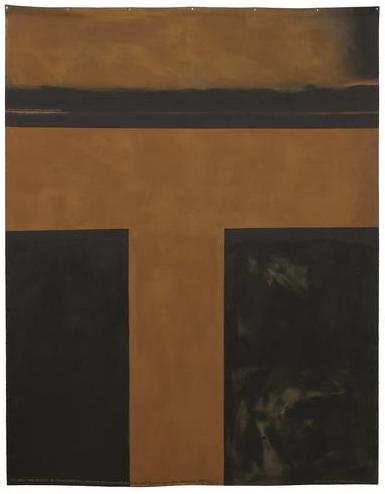
McCahon, Colin_The days and the nights in the wilderness
Colin McCahon (New Zealand, 1919–1987), The days and the nights in the wilderness showing the constant flow of light passing into a dark landscape, 1971

McCahon, Colin_The Resurrection of Lazarus
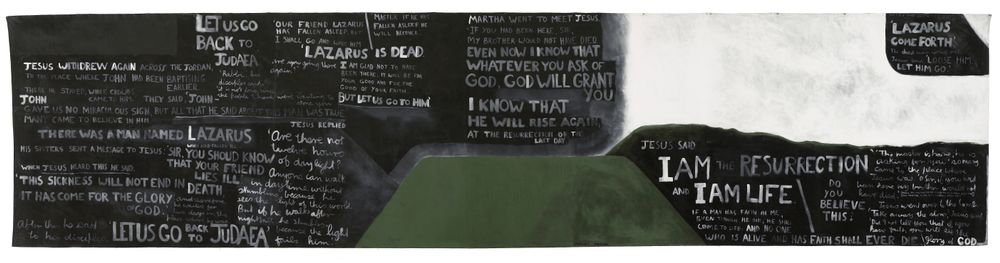
Colin McCahon (New Zealand, 1919–1987), Practical religion: The resurrection of Lazarus showing Mount Martha, 1969–70. Acrylic on unstretched canvas, 207.5 × 807 cm. Te Papa (Museum of New Zealand), Wellington.

I was familiar with McCahon’s early works—Annunciations, Crucifixions—but not so much the later ones featured here. For example, The days and the nights, about which Paton says,

You could take a first look at this thing and you could think it’s not so exciting, in a way. It’s . . . smeary blacks and then there’s this . . . kind of clay color—muddy, you might say. . . . The form is this kind of ocher cross with black surrounding it. But give it some time, and you realize that the space above describes a horizon line. You can see the riffle of clouds along that horizon. If you know Muriwai on the West Coast, you can recognize it as a West Coast landscape, which is of course the spirit landscape up which souls travel in Maori mythology. And then you realize that this cross is also a kind of estuary, that it is descending through to areas or gates. So it is at once the Christian cross, it’s the Buddhist idea of light as grace which descends towards us . . .

About Lazarus:

McCahon said the Lazarus story was one of the great stories about seeing: all those people who were witnesses to this event saw as never before. What’s wonderful in the work is, as you read your way from left to right—and it really is this kind of epic telling of the story—when you’re about two-thirds of the way across, he almost makes you into Lazarus. He puts you into the position of this person who is emerging from the tomb, because there’s this sliver of light that opens up and bursts then fills the right-hand third of the painting. It’s like coming out of a dark space and suddenly being blinded by sunlight.

It’s a great example of what a great reader he was. He got into these texts with the avidity of a fan. You really felt he was there with these people in this ancient story and then tries to put us inside it as we stand and walk in front of this giant canvas. It has a terrific oscillation between something worldly and vernacular and then something exalted and sacred at the other end.

For more on McCahon, see “Victory over death: The gospel according to Colin McCahon” by Rex Butler (2012), The Spirit of Colin McCahon by Zoe Alderton (2015), and Colin McCahon: A Question of Faith (2003).

+++

CHANT: “I Am Here in the Heart of God” by Erin McGaughan, adapt. & arr. Chandra Rule: At the Singing Beloved Community workshop held in September in Cincinnati, song leader Chanda Rule led participants in a chant that she adapted from Erin McGaughan. To McGaughan’s original, Rule added three new verses with a modulation between each, and she presented the whole of it in a call-and-response format. [HT: Global Christian Worship]

I am here in the heart of God
God is here in the heart of me
Like the wave in the water and the water in the wave
I am here in the heart of God

I am here in the breath of God
God is here in the breath of me
Like the wind in the springtime and the springtime in the wind
I am here in the breath of God

I am here in the soul of God
God is here in the soul of me
Like the flame in the fire and the fire in the flame
I am here in the soul of God

I am here in the mind of God
God is here in the mind of me
Like the earth in my body and my body in the earth
Like the flame in the fire and the fire in the flame
Like the wind in the springtime and the springtime in the wind
Like the wave in the water and the water in the wave
I am here in the heart of God

+++

SONG: “I Hunger and I Thirst,” words by John S. B. Monsell (1866), with new music by Wally Brath: I was listening to the video recording of the Grace College Worship Arts jazz vespers service that took place November 8 at Warsaw First United Methodist Church in Indiana, when I heard this striking hymn. Written by a nineteenth-century Anglican clergyman, it was set to music by Wally Brath, an assistant professor of worship arts at Grace College, who’s playing the piano in the video. The performance features Grammy Award–winning bassist John Patitucci, and vocalist Ethan Leininger. Click here to listen to the whole service and to see the full list of musicians. [HT: Global Christian Worship]

I hunger and I thirst:
Jesu, my manna be;
ye living waters, burst
out of the rock for me.

Thou bruised and broken Bread,
my life-long wants supply;
as living souls are fed,
O feed me, or I die.

Thou true life-giving Vine,
let me thy sweetness prove;
renew my life with thine,
refresh my soul with love.

Rough paths my feet have trod
since first their course began:
feed me, thou Bread of God;
help me, thou Son of Man.

For still the desert lies
my thirsting soul before:
O living waters, rise
within me evermore.