
Juneteenth roundup: “Joy” by Raye, flower-festooned carriages, “Requiem for Colour,” and more

Juneteenth (June 19) is a holiday that celebrates the end of race-based chattel slavery in the United States. It rejoices in the expansion of freedom, but it also reckons with the shadow of freedoms still denied. It is thus both backward- and forward-looking. (For more on the holiday, see the article that historian Jemar Tisby published this morning: “Juneteenth Is the Counter-Narrative to America 250.”) Below are a few artistic pieces that speak to the themes of Juneteenth.

ARTWORKS: From my two most recent visits to New York City.

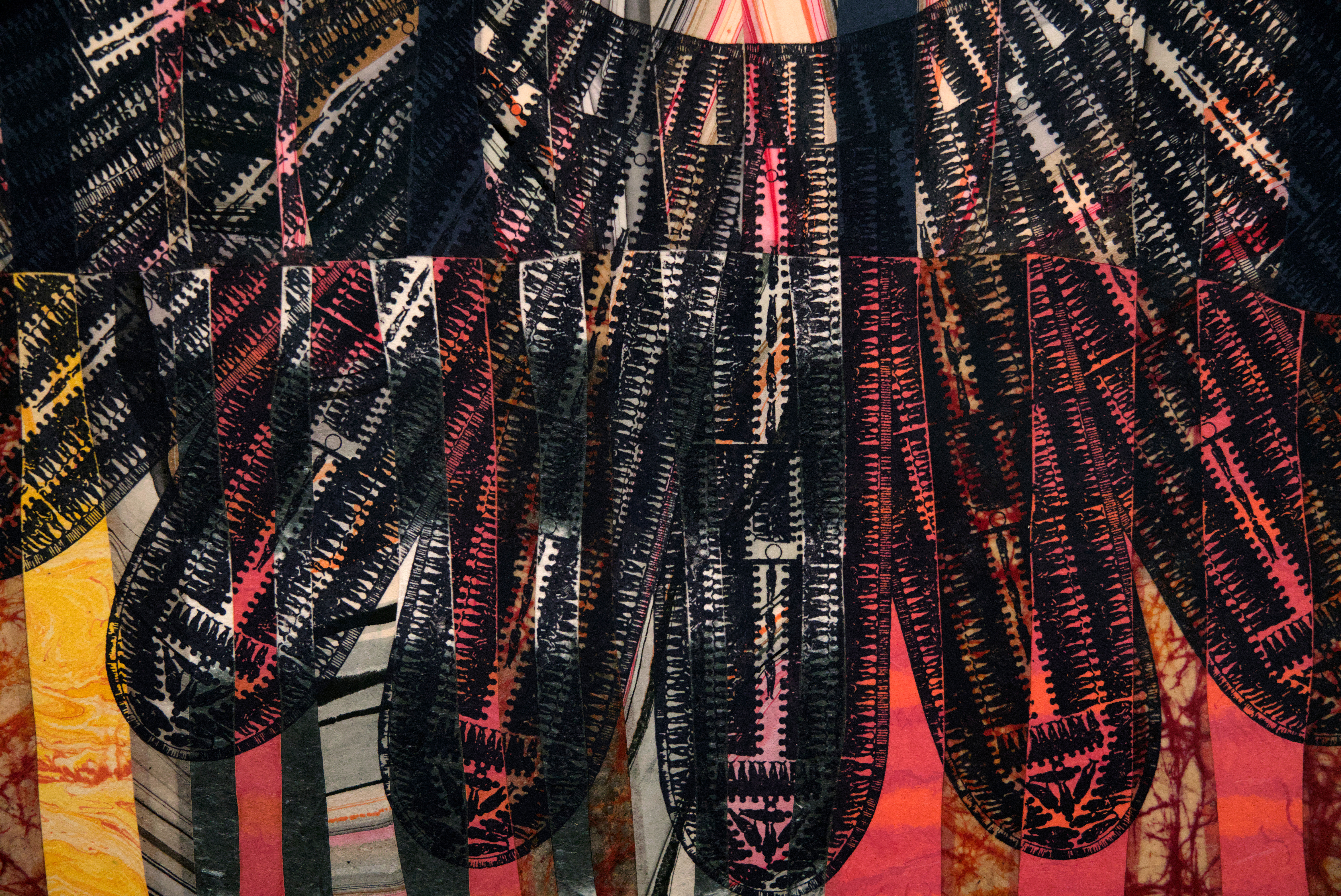
>> The Floating World: Lotus (125th) by Sanford Biggers: Lotus (125th) is part of the 2013 Floating World series by the multidisciplinary artist Sanford Biggers, employing paper collage, stencils, screenprint, and spray paint to construct layered compositions that blend Japanese aesthetics with African American history. “Floating world” translates the Japanese term ukiyo-e, referring to Edo-era woodblock prints, and “125th” likely refers to the main street in Harlem. The work features a mandala-like lotus flower whose petals are eighteenth-century diagrams showing enslaved humans tightly packed into the cargo hold of a ship. What looks pleasing from a distance is, on closer inspection, horrifying.
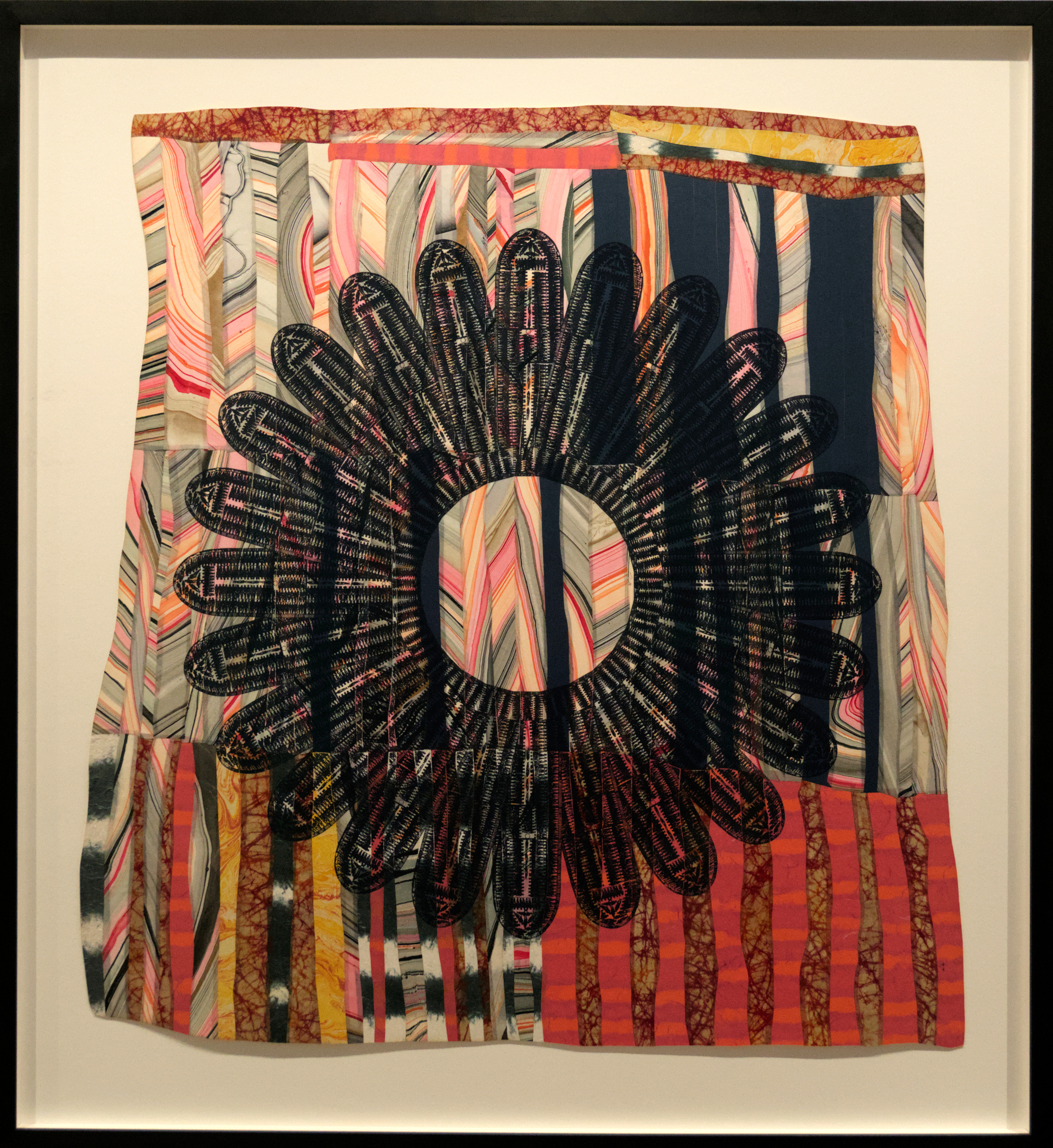
Biggers, Sanford_The Floating World: Lotus (125th)
Sanford Biggers (American, 1970–), The Floating World: Lotus (125th), 2013. Screenprint and collage, image: 27 15/16 × 26 3/8 in. (71 × 67 cm), sheet (irregular): 27 15/16 × 26 3/8 in. (71 × 67 cm). Edition 1/30. The Miriam and Ira D. Wallach Division of Art, Prints and Photographs: Print Collection, New York Public Library. Photo: Victoria Emily Jones. [object record]

Biggers, Sanford_The Floating World: Lotus (125th) (detail)

Biggers lived in Japan for three years in the 1990s, where he became greatly influenced by Zen Buddhism. In Buddhism, the lotus is associated with awakening, purity, transcendence. The slave-ship-lotus is a motif the artist has used in other works—see, e.g., here and here—and I’m not exactly sure what to make of it. Is it about how the pain, trauma, and destruction wrought by slavery can be transmuted into enlightenment, progress? Or is the disjunction between beautiful flower and ugly abuse meant to be ironic, perhaps a statement about how we tend to palliate the vile parts of American history?

(Related post: “Stained glass in West Side Chicago church reclaims an identity for Black youth”)

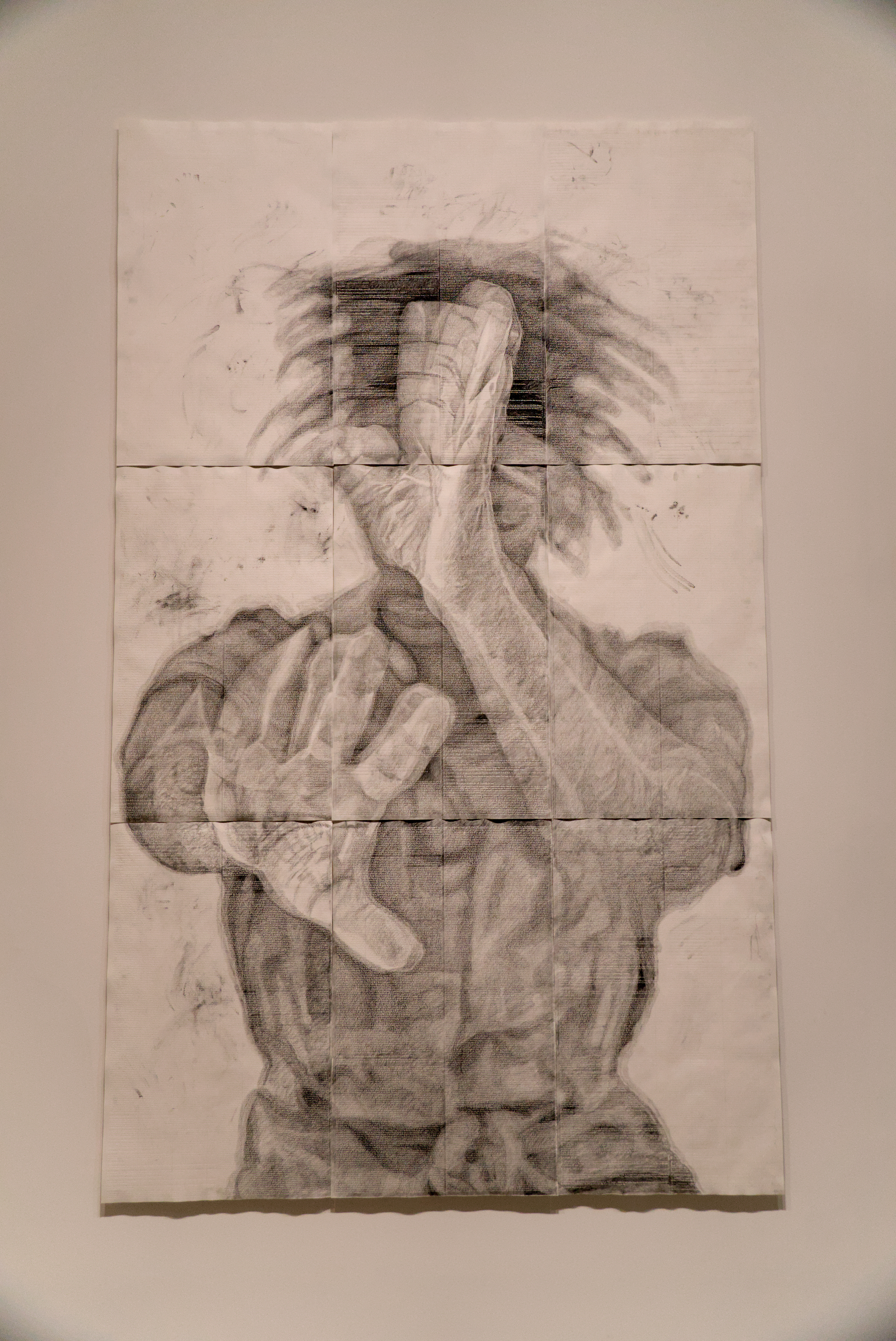
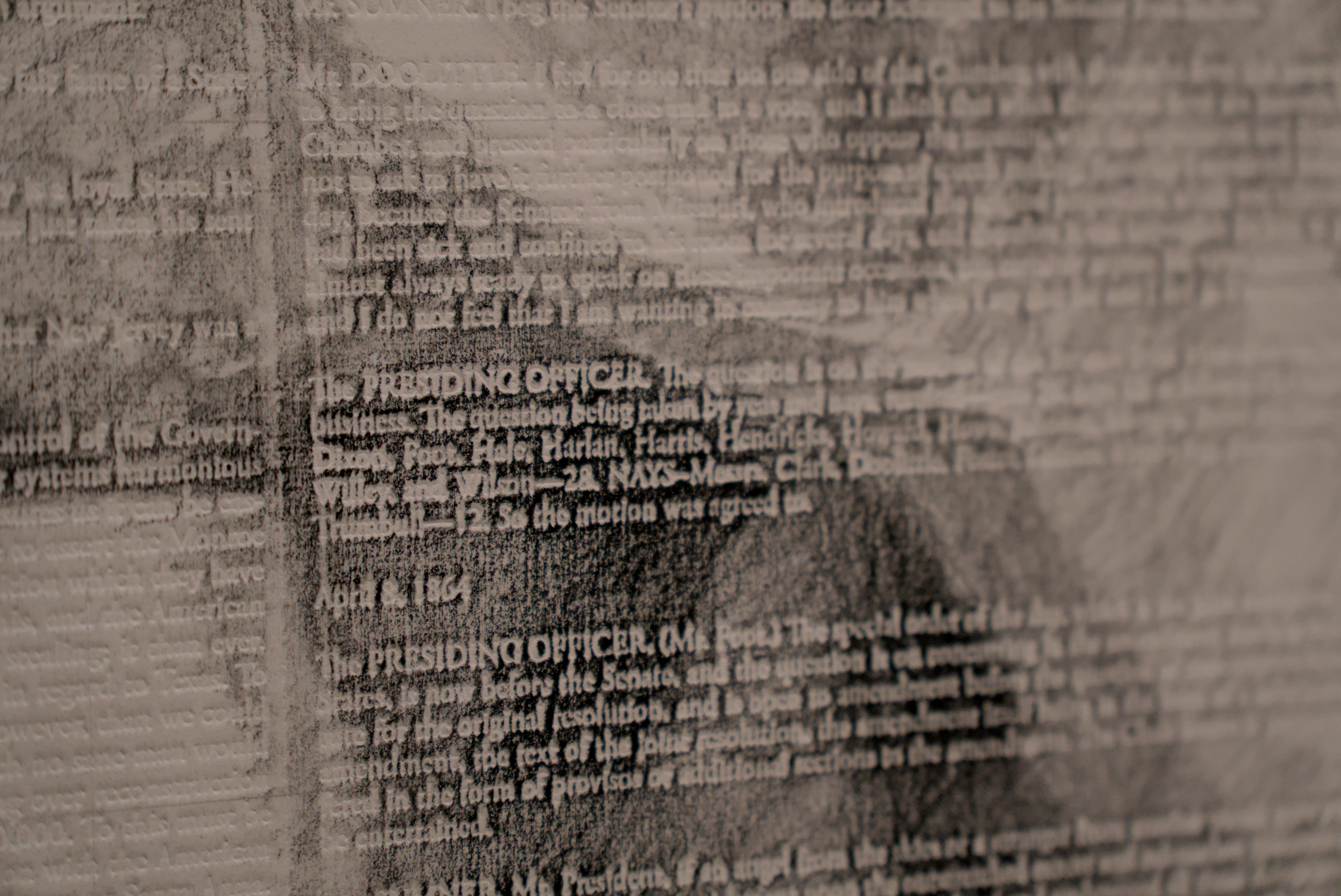
>> Contending with Contingency I by Kenturah Davis: Kenturah Davis is a multidisciplinary artist working between Los Angeles and Accra. Oscillating between facets of portraiture and design, her work explores the fundamental role language has in shaping how we understand ourselves and the world. Contending with Contingency I is the first work in a series engaging the Thirteenth Amendment to the US Constitution, which abolished slavery, with one exception: Those convicted of a crime can be subjected to forced labor. The amendment was a milestone, but the punishment clause creates a contingency under which slavery can remain legal. (Ava DuVernay’s illuminating documentary 13th, on Netflix, examines how this loophole has and continues to be exploited to disproportionately incarcerate Black people.)
Davis, Kenturah_Contending with Contingency I
Kenturah Davis (American, 1984–), Contending with Contingency I, 2021. Carbon pencil, pencil, and blind debossing on nine sheets of paper, 132 × 81 in. (335.3 × 205.7 cm). Museum of Modern Art, New York. Photo: Victoria Emily Jones. [object record]

Davis, Kenturah_Contending with Contingency I (detail)

The eight pieces in Davis’s Contending with Contingency series depict a Black woman dancing over transcripts of the 1864–65 congressional debates regarding the language and provisions of the Thirteenth Amendment, and whether to pass it. Here’s an excerpt, for example, of the opinion given by Senator Lazarus Powell from Kentucky:

I do not believe it was ever designed by the founders of our Government that the Constitution of the United States should be so amended as to destroy property. I do not believe it is the province of the Federal Government to say what is or what is not property. . . . You seem to care for nothing but the negro. . . . You seem to be inspired by no other wish than to elevate the negro to equality and give him liberty. . . . I believe this government was made by white men and for white men; and if it is ever preserved it must be preserved by white men.

“The structures that shape our experience in the world extend from the ways we use language,” Davis says. “The implications of this language are activated through our bodies.” The legislators’ oppositional words, and the legacy they reflect and perpetuate, impede the free movement of the dancing figure—but she appears to be pushing past the obstacles, resisting dissent, claiming her right to liberty. I read the work, especially in light of the whole series, as ultimately emancipatory.

+++

SONGS:

Here are two songs I’ve added to my Juneteenth Playlist.

>> “Joy” by Raye, Mike Sabath, Tom Richards, Amma, and Absolutely: This song appears on the second studio album of the British pop sensation Raye (the stage name of Rachel Agatha Keen), This Music May Contain Hope, released in March. It’s based on Psalm 30:5: “Weeping may linger for the night, but joy comes with the morning.” Here’s Raye singing it on The Late Show with Stephen Colbert with her sisters Amma and Absolutely. (A worship song on late-night TV!) See also the recent cover by the Good Shepherd Collective.

>> “Someday We’ll All Be Free” by Donny Hathaway and Edward Howard, performed by the Good Shepherd Collective: In 1973, the American soul singer Donny Hathaway wrote the melody to this classic, and his friend Edward Howard wrote the lyrics. Howard said he intended it as an encouragement to Hathaway, who was struggling with paranoid schizophrenia; but it has since become an anthem of Black American civil rights. It’s sung here by Charles Jones for a Good Shepherd New York digital worship service.

+++

COMPILATION: Early Photographs of Juneteenth Celebrations,” Public Domain Review: Many of the photographs that survive from turn-of-the-century Juneteenth celebrations in Texas depict elegantly dressed groups in horse-drawn carriages elaborately decorated with flowers down to the wheels.
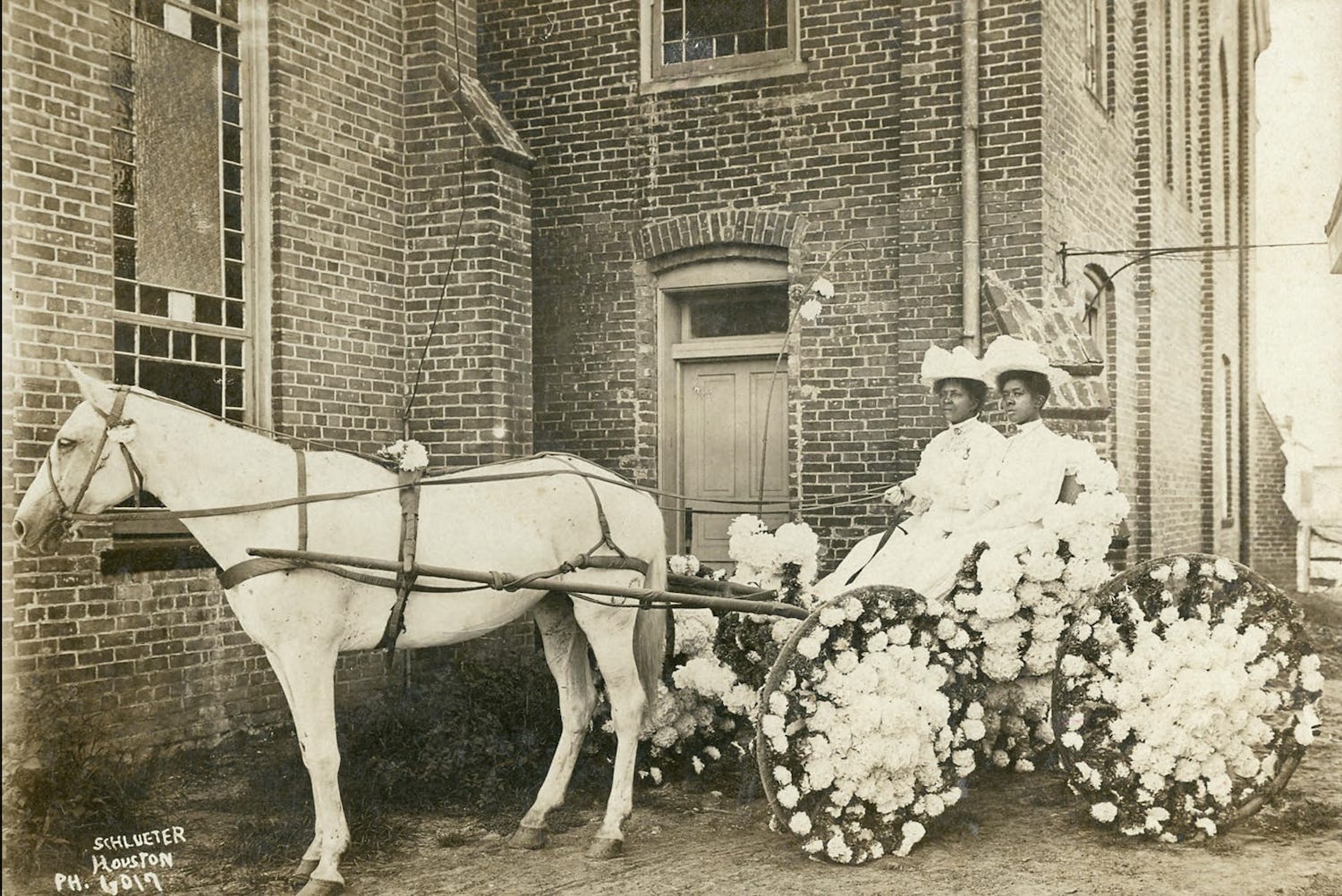
Juneteenth carriage
Martha Yates Jones (left) and Pinkie Yates (right), daughters of Rev. Jack Yates, park their decorated carriage in front of Antioch Baptist Church in Houston’s Fourth Ward on June 19, 1908. Photo courtesy of the Houston Public Library Digital Archives.

+++

POEM: “Gospel” by Rita Dove: This poem is from Rita Dove’s Pulitzer Prize–winning collection Thomas and Beulah (Carnegie Mellon University Press, 1986), based on the lives of her maternal grandparents, who moved from Tennessee and Georgia to Akron, Ohio, during the Great Migration. Opening with the instantly recognizable phrase “Swing low” from the African American spiritual “Swing Low, Sweet Chariot,” it describes her grandparents’ Black church congregation as “a humming ship of voices / big with all / the wrongs done / done them,” but that “ride[s] joy.” Hymns, gospel songs, and spirituals have had a formative influence on Dove, a member of the African Methodist Episcopal (AME) Zion Church, as they did too for her predecessors, lifting them out of the miseries inflicted on them by Jim Crow America and into heaven, a place of wholeness, affirmation, and triumph, where racism and lynch mobs can’t touch.

+++

CHORAL-ORCHESTRAL WORK: Requiem for Colour: A Journey through Lament and Joy by Jeffrey L. Ames: Composed by Dr. Jeffery AmesRequiem for Colour (2022) is a thirteen-movement work for SATB choir, soprano, tenor, orator, rapper, orchestra, and African percussion that adapts the form of the Requiem Mass, traditionally offered for the repose of the souls of the deceased, to tell a story of Black enslavement and liberation. Gentry Publications, who publishes the score, provides this description:

Requiem for Colour by Jeffery L. Ames is a powerful choral and orchestral work that honors the lives and legacies of enslaved Blacks from 1619 to 1865 and contemporary Black martyrs who sacrificed for equality and freedom. This masterwork skillfully blends idiomatic Black musical genres with Western European composition styles, creating a unique and profound musical journey. The requiem traces the Black experience from West Africa, through the Middle Passage, slavery, and sharecropping in the South, to the Civil Rights Movement and today’s ongoing fight against racism and injustice. The libretto incorporates narratives from enslaved people, sharecroppers, and contemporary activists, offering an aesthetic experience that both commemorates and challenges. This deeply moving work is a testament to the resilience and complexity of Black American history.

The finale, “Celebration Omega: Heaven,” is explosive! View the full score.

In this February 5, 2025, performance at the Fisher Center for the Performing Arts at Belmont University in Nashville, Ames conducts the Belmont University Oratorio Chorus and Orchestra, comprising over 450 students. The performance features soprano NaGuanda Nobles, tenor Rodrick Dixon, and orators Jasmine Simmons and Elliott Robinson, plus a lyrical rap by the composer’s daughter, Lydia Ames. The concert and its recording—which aired June 18, 2025, on WNPT, Nashville’s PBS station—were made possible by a grant from the Creative Arts Collective.
Roundup: “Demons” (Dostoevsky) book club, quilting in prison, church installation by Kimsooja, and more

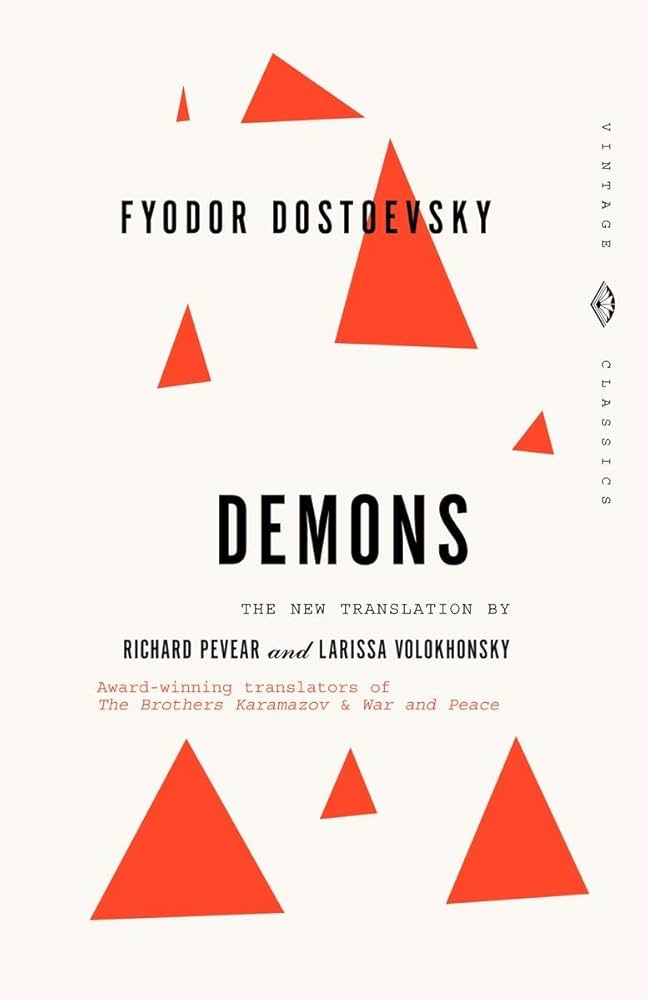
ONLINE COURSE: Studying the novel Demons by Fyodor Dostoevsky with Brian Zahnd, January 3–March 9, 2026: This ten-week online course led by Pastor Brian Zahnd (a Christian writer and preacher I admire) will explore Dostoevsky’s “darkest and most prophetic novel”: Demons (aka The Possessed or The Devils), a social and political satire, psychological drama, and large-scale tragedy inspired by the true story of a 1869 political murder in Russia. The course sounds intriguing to me, and I’m contemplating whether I can invest the time in a seven-hundred-page book—but I did buy a copy just in case! It’s the only one of the literary master’s four novels I haven’t read.

Demons (book cover)

“Dostoevsky’s Demons changed me,” Zahnd writes on Substack. “From it I learned the danger of giving oneself to an ism instead of to Christ. Isms are idols and they often become demonic. Admittedly Demons is a difficult novel, but it’s also prophetic and timely. . . . As you read Demons, expect to be horrified, but also expect to laugh—you are meant to. During the course we will be horrified and warned, but we will also laugh and learn together.”

The live Q&As will take place the first ten Mondays of 2026 at 5 p.m. CT (6 p.m. ET).

+++

SEMINAR (VIDEO): How to Watch a Movie (as a Christian)” with Chris Retts and Morgan Jefferson: On his Footnotes Substack, historian Jemar Tisby recently hosted a teach-in with two team members from the Los Angeles Film Studies Center, a nonprofit educational program designed to give undergraduate students at Christian colleges and universities meaningful experience in the film industry during a semester “abroad” in Los Angeles. Chris Retts is the director of the center, and Morgan Jefferson is an instructor.

Before discussing how to watch a movie, they discuss why Christians should watch movies in the first place, beyond the obvious (enjoyment):

  1. Because general revelation can happen anywhere, even at the movies (Rom. 1:20).
  2. Because movies generate empathy, which is central to the greatest commandment (Matt. 22:37–40).
  3. Because every movie has a theology, and media literacy makes it conscious and discernable (1 John 4:1).

They also discuss the four modes of meaning that filmmakers work with; cinematic language; and four steps for exegeting (“drawing out”) a film.

How does film relate to Dr. Tisby’s work at the intersection of faith, history, and justice? He has written for years about the dangers of white Christian nationalism. He says adherents of that ideology, or any, are not evaluating a list of propositions but are buying into a narrative; and “you can’t meet a narrative with logical reasoning,” he says. “You have to invite them into a counter-narrative—a more beautiful story.” Story is why he’s interested in film, as film is an engaging, and probably the most popular (in the US), storytelling medium. “Stories shape our sense of what’s true, what’s possible, and who belongs. That’s as true for political movements as it is for movies.”

For some of my movie recommendations, see my Top 20 Films of 2024 list and “Five Films about Finding Commmunity.”

+++

DOCUMENTARY SHORT: The Quilters (2024), dir. Jenifer McShane: This thirty-minute documentary on Netflix follows a group of men in a maximum-security prison in Missouri who design and sew custom quilts for children in foster care using donated fabrics and old machines. They care deeply about the quality of their work—they’re proud of what they make—and are emotional about the recipients, some of whom send thank-you cards. The film is about creating beauty and meaning within strict confines, not letting destructive choices from your past stymie you from making constructive ones in the present.

+++

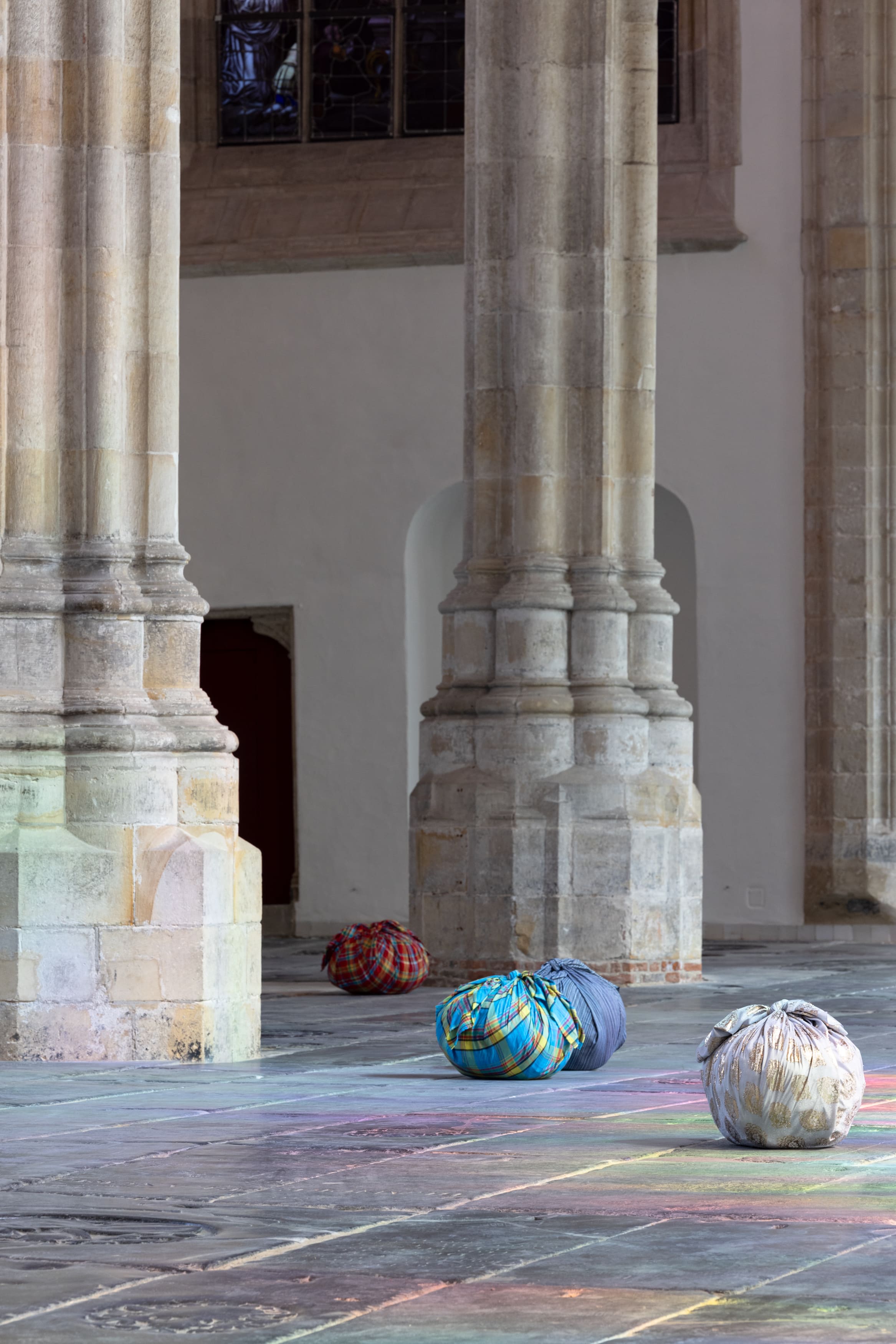
TEMPORARY INSTALLATION: To Breathe—Mokum by Kimsooja, Oude Kerk (Old Church), Amsterdam, May 23–November 9, 2025: Sorry I didn’t get this out while the installation was still up (it wrapped on Sunday), but please do explore the photographic documentation. Kimsooja’s To Breathe—Mokum explores themes of migration, belonging, and the transient nature of home; the Yiddish word in its subtitle means “safe haven.” “At the work’s heart are Kimsooja’s iconic bottari—colorful textile bundles inspired by traditional Korean wrapping cloths,” designboom writes. “Spread across the [medieval] stone floor of the church, these bundles are filled with clothing donated by members of Amsterdam’s diverse communities. Each piece of clothing represents the lives and stories of the people who contribute to the city’s rich multicultural fabric. These textile bundles serve as symbols of both personal and collective journeys, embodying the arrival and departure of individuals who have shaped the identity of the city” over its 750 years.

Kimsooja_To Breathe (Mokum)
Kimsooja (Korean, 1957–), To Breathe—Mokum (partial view), 2025. Site-specific installation at Oude Kerk, Amsterdam. Photo: Natascha Libbert.

+++

POEMS:

>> “On the Staten Island Ferry” by A. E. Stallings, Plough, July 1, 2025: Liberty is an American ideal—but for many in this country, an illusory one. Riding in New York Harbor with a boatload of commuters and tourists, Stallings lets settle what a young girl, pointing to the Statue of Liberty, exclaims.

(Related post: “One sonnet vs. shouted prose: Lady Liberty, Emma Lazarus, and Trump”)

>> “The Pillar of Cloud and Fire” by Anna A. Friedrich, Monafolkspeak (Substack), October 29, 2025: The poet reflects on her confusion as a child about this manifestation of God from the Old Testament, which leads her to surprising insights.

Roundup: Alabaster Gospels, the lone cathedral-builder, Pacheco at Chichester, lamenting racial injustice

Alabaster page spread

New Gospel-book set promotes aesthetic reading experience: Photographer Bryan Chung and designer Brian Chung, both campus ministers (and no relation), believe that beauty is fundamental to understanding who God is. So they’ve teamed up for project Alabaster: a brand-new design of the holy Gospels, in four volumes, integrated with contemplative photographs. They’ve already well exceeded their funding goal on Kickstarter, which means there’s already a lot of interest in having Bible reading be a visual experience—and at a 7½ × 9½ trim, the books are definitely wieldy, meant to be regularly handled and read! If you want a guaranteed copy, be sure to back the project on Kickstarter, as the number of names in the system will determine the size of the print order. You have until October 7; the publication month is April 2017. This project aligns so well with my mission here at Art & Theology, and I’m thrilled to see it in the works.

+++

90-year-old man spends lifetime building a cathedral by hand: From Great Big Story: “For 53 years, Justo Gallego has been building a cathedral by hand on the outskirts of Madrid almost entirely by himself. Gallego has no formal architecture or construction training, but that hasn’t stopped him from toiling on this herculean task. At 90 years old, Gallego knows that he will not be able to finish the project in his lifetime. But he keeps at it anyway, day after day, driven by his faith.”

+++

Shadows of the Wanderer by Ana Maria Pacheco
Ana Maria Pacheco (Brazilian, 1943–), Shadows of the Wanderer, 2008. Polychromed wood sculpture, 260 × 390 × 605 cm. Installation view at Norwich Cathedral, 2010, via Pratt Contemporary Art.

Art installation at Chichester Cathedral speaks to the refugee experience: Shadows of the Wanderer by Brazilian-born artist Ana Maria Pacheco is on display in the north transept of Chichester Cathedral through November 14. A multipiece figurative sculpture in polychromed wood, it has as its centerpiece a young man carrying an elderly man on his back—a reference to the Aeneid’s Aeneas carrying his lame father out of the ruins of Troy. The cathedral has organized events around the installation, including a lecture by Christopher Wintle on the representation of suffering in Pacheco’s art (audio here, transcript here); a series of workshops for schools and colleges exploring the refugee experience, developed in partnership with Amnesty International; a debate titled “Refugees: Problem or Gift?”; an interview with the artist; and a woodcarving workshop. The photo above is an installation view from 2010 inside Norwich Cathedral; to see photos of the work in its current location at Chichester, click here.

+++

Addressing racial injustice as a church: Paul Neeley at Global Christian Worship has compiled an excellent list of resources for churches looking for ways to address racial tensions in America with an eye toward healing, including a prayer service of lament by Paul Burkhart; two litanies by Fran Pratt; a list of relevant hymns, curated by the Hymn Society; an article by Sandra Van Opstal, “Reconciling Witness And Worship: Six Ways To Begin”; and materials from the 2016 Reconciliation and Justice Network conference. I’d like to add to it the lecture series “Race and the Church,” especially Jemar Tisby’s “Understanding the Heart Cry of #BlackLivesMatter,” which I live-streamed with my church back in July. (It definitely sparked fruitful conversation.) For common objections to the movement, like “What about black-on-black crime?” and “Don’t #AllLivesMatter?,” he refers listeners to the video below, produced by MTV.

+++

SONG: “Light a Candle”: Also on Neeley’s website I found a video performance of the song “Light a Candle” by Mary Louise Bringle (words) and Lori True (music). It’s sung here, to a ukulele accompaniment, by Becky Gaunt, director of music and liturgy at St. Jude of the Lake Catholic Church in Mahtomedi, Montana.

She posted it on her Facebook page in July along with this note:

We cannot continue to let language divide us. We cannot continue to let language distract us from loving one another. We cannot continue to let words like “black lives matter” or “all lives matter” cause us to keep missing the point!

I’m sad and tired. And you probably are too. But now is NOT the time to be neutral! The Sun may be shining outside, but we need to come together and light a candle in this oppressive darkness. This beautiful song by Lori True (amazing text by Mary Louise Bringle) is my prayer right now. I invite you to pray this with me.

Boy with a Candle by Gerard Sekoto
Gerard Sekoto (South African, 1913–1993), Boy with a Candle, 1943. Oil on canvas, 46.2 × 36 cm.