Jörg Länger (German, 1964–), Chr. Geb., 2006. Linocut, wax, oil, and graphite pencil on paper, 33 × 33 cm, cast with resin between two Optiwhite sheets of glass, 38 × 38 cm.
The contemporary German artist Jörg Länger creates extraordinary mixed-media works, many of which are in dialogue with Christian art history. In addition to earning an advanced degree in art, Länger has also done university coursework in theology and philosophy, so it’s no wonder his pieces demonstrate a keen theological awareness and spiritual sensibility.
After some fifteen years of working in photography, installation art, performance art, and conceptual art, in 1998 Länger shifted gears to focus on drawing, painting, and printmaking. He developed a series, still ongoing, that he calls “Protagonisten aus 23.000 Jahren Kulturgeschichte” (Protagonists from 23,000 Years of Cultural History), in which he takes figures from prehistoric petroglyphs and bas-reliefs, ancient Greek vases, medieval manuscripts, European Renaissance paintings, and contemporary art, simplifies them, and puts them into a new pictorial context. He copies the figure’s outline onto a linoleum block, inks and prints it to produce a sort of silhouette, and builds out from there using oil paint, pastels, wax, and/or gold leaf, while still retaining a minimalist aesthetic.
In his 2006 piece Chr. Geb. (short for Geburt Christi, “Birth of Christ”), the silhouetted figures are taken from Matthias Grünewald’s Isenheim Altarpiece and Fra Angelico’s Entombment of Christ.
Matthais Grünewald (German, ca. 1475/80–1528), The Nativity, central panel (first open view) of the Isenheim Altarpiece, 1515. Oil on wood, 269 × 307 cm. Unterlinden Museum, Colmar, France. Photo: Steven Zucker.Fra Angelico (Italian, ca. 1400–1455), Entombment of Christ, 1438–40. Tempera on wood, 37.9 × 46.6 cm. Alte Pinakothek, Munich.
With the shadowy blue central pair of Mother and Child, the ghostly impression of Christ’s crucified body (being dragged into a tomb in the scene it’s excised from), the expanding puddle of gold that holds together both birth and death, and the light that presses in from the edges, the work has a mystical feel. It shows the Eternal One entering time, born of a woman, to live and die and rise and so bring humanity back to God and back to their truest selves.
LISTEN: “O Vis Aeternitatis” by Hildegard of Bingen, ca. 1140–60 | Performed by Azam Ali, 2020
V. O vis aeternitatis
que omnia ordinasti in corde tuo,
per Verbum tuum omnia creata sunt
sicut voluisti,
et ipsum Verbum tuum
induit carnem
in formatione illa
que educta est de Adam.

R. Et sic indumenta ipsius
a maximo dolore
abstersa sunt.

V. O quam magna est benignitas Salvatoris,
qui omnia liberavit
per incarnationem suam,
quam divinitas exspiravit
sine vinculo peccati.

R. Et sic indumenta ipsius
a maximo dolore
abstersa sunt.

V. Gloria Patri et Filio
et Spiritui sancto.

R. Et sic indumenta ipsius
a maximo dolore
abstersa sunt.
V. O power within Eternity: All things you held in order in your heart, and through your Word were all created according to your will. And then your very Word was clothed within that form of flesh from Adam born.
R. And so his garments were washed and cleansed from greatest suffering.
V. How great the Savior’s goodness is! For he has freed all things by his own Incarnation, which divinity breathed forth unchained by any sin.
R. And so his garments were washed and cleansed by greatest suffering.
V. Glory be to the Father and to the Son and to the Holy Spirit.
R. And so his garments were washed and cleansed by greatest suffering.
Hildegard of Bingen [previously] was a twelfth-century German nun and polymath who wrote works on theology, medicine, and natural history; hymns, antiphons, and a drama for the liturgy (all with original music); and one of the largest bodies of letters to survive from the Middle Ages. In 1136 she was unanimously elected to lead her Benedictine community as abbess, which she did until her death in 1179.
“O vis aeternitatis” is the first entry in Hildegard’s Symphonia armonie celestium revelationum (Symphony of the Harmony of Celestial Revelations), a compilation of her liturgical songs that she made during her lifetime. It is labeled a “Responsory to the Creator.” “The responsory, one of several compositional forms Hildegard used,” explains medievalist Nathaniel M. Campbell, “is a series of solo verses [marked V] alternating with choral responses [marked R] sung at the first office of the day, vigils (matins), in the monastic liturgy.” It’s basically a call-and-response song.
This responsory, Campbell continues, “contemplate[s] the Incarnation . . . as the pivotal moment in which creation reached its perfect and predestined trajectory.” He notes how the refrain meditates on the cleansing of Adam’s flesh both from suffering and by (Christ’s) suffering. God put on our humanity and redeemed it.
Here’s how the medievalist Barbara Newman translates the responsory on page 99 of the critical edition of the Symphonia published by Cornell University Press:
Strength of the everlasting! In your heart you invented order. Then you spoke the word and all that you ordered was, just as you wished.
And your word put on vestments woven of flesh cut from a woman born of Adam to bleach the agony out of his clothes.
The Savior is grand and kind! From the breath of God he took flesh unfettered (for sin was not in it) to set everything free and bleach the agony out of his clothes.
Glorify the Father, the Spirit, and the Son.
He bleached the agony out of his clothes.
In the video above, “O vis aeternitatis” is performed by Azam Ali, an internationally acclaimed singer, producer, and composer who was born in Iran and raised in India and is now based in Los Angeles. She writes in the video’s YouTube description that Hildegard is part of the canon of universal spirituality and mysticism and that she is attracted to her cosmology, especially her articulation of the ancient philosophical concept of “the music of the spheres.”
In addition to her solo work, Ali is part of the musical group Niyaz, who blend medieval Sufi poetry and ancient Middle Eastern folk songs with modern electronic and trance music.
Virgin and Child, northern France, ca. 1250. Ivory, 11 5/8 × 4 3/4 × 4 1/16 in. (29.5 × 12.1 × 10.3 cm). Metropolitan Museum of Art, New York.
I love the affection between mother and child in this thirteenth-century ivory statuette from northern France. A variation of the Virgin Eleousa (Virgin of Tenderness) icon type, it shows Jesus seated in Mary’s lap, sweetly touching her chin, while she reciprocates with a squeeze of his foot.
LISTEN: “Quid petis, o fili?” (What Do You Seek, O Son?) | Words: Anonymous | Music by Richard Pygott, ca. 1510 | Performed by The Sixteen, dir. Harry Christophers, on Christus Natus Est: An Early English Christmas, 1996
ORIGINAL MIDDLE ENGLISH:
Quid petis, o fily? Mater dulcissima ba ba. O pater, O fili? Michi plausus oscula da da!
The moder full manerly and mekly as a mayd, Lokyng on her lytill son, so laughyng in lap layd, So pretyly, so pertly, so passingly well apayd, Full softly and full soberly unto her swet son she saide:
Quid petis, o fily? . . .
I mene this by Mary, our Maker’s moder of myght, Full lovely lookyng on our Lord, the lanterne of lyght, Thus saying to our Saviour; this saw I in my syght; This reson that I rede you now, I rede it full ryght:
Quid petis, o fily? . . .
Musyng on her manners, so ny mard was my mayne, Save it plesyd me so passyngly that past was my payn; Yet softly to her swete sonne methought I hard her sayn: Now, gracious God and goode swete babe, yet ons this game agayne.
Quid petis, o fily? . . .
Source: London, British Library, Add. MS 31922, fols. 112v–116r; transcribed in John Stevens, Music and Poetry in the Early Tudor Court (Cambridge University Press, 1979), p. 421, cat. H105
MODERNIZED SPELLINGS:
Quid petis, O fili? Mater dulcissima, ba ba. O pater, O fili? Mihi plausus oscula, da da.
[Translation: “What do you seek, O son?” “Sweetest mother, kiss, kiss.” “O father, O son?” “Clapping hands, give me kisses!” – or – “Applaud me with kisses!” – or – “Kisses on me, give, give!”]
The mother, full mannerly and meekly as a maid, Looking on her little son, so laughing in lap laid, So prettily, so pertly, so passingly well apayed, [pertly = beautifully; apayed = contented] Full softly and full soberly, unto her sweet son she said:
Quid petis, O fili? . . .
I mean this by Mary, our Maker’s mother of might, [I mean this by = I refer to] Full lovely looking on our Lord, the lantern of light. Thus saying to our Savior, this saw I in my sight; This reason that I read you now, I read it full right: [reason = statement]
Quid petis, O fili? . . .
Musing on her manners, so nigh marred was my main, [sapped was my strength] Save it pleased me so passingly that passed was my pain; Yet softly to her sweet son, methought I heard her sayn: “Now, gracious God and good sweet babe, yet once this game again”:
Quid petis, O fili? . . .
This carol for four voices is from the so-called Henry VIII Manuscript, an anthology of polyphonic songs and instrumental music from the Tudor court. Of the 108 compositions in the collection, “Quid petis, O fili” is one of the few religious ones. The author of the text is unknown, but the composer is Richard Pygott (ca. 1485–1552).
The four-line Latin burden* is a dialogue between Mary and the Christ child. Presumably he’s wiggling or making noise, because she asks him what he wants. “Kisses!” he replies. She calls him, oddly, both son and “father,” which reflects her unusual relationship with the God-boy she bore into the world: He’s both her child and her God.
There are three stanzas in the carol—all in English—voiced by a first-person narrator who has witnessed the playful mother-son exchange. It so endeared him that he wants to share it with others.
* Scholars of medieval carols differentiate between a refrain and what’s called a burden. “The refrain . . . is a repeated element which forms part of a stanza, in the carols usually the last line. The burden, on the other hand, is a repeated element which does not form any part of a stanza, but stands wholly outside the individual stanza-pattern.” Richard Leighton Greene, ed., The Early English Carols, 2nd ed., revised and enlarged (Clarendon Press, 1977; 1st ed. 1935), clx.
Wondering why I’m still posting Christmas content? Because Christmas is a twelve-day feast that began December 25 and extends through January 5. While the stores and most media have moved on, the church continues to celebrate. So I encourage you to keep your Christmas decorations up, keep singing and playing carols, and keep partying!
Here’s a link to my Christmastide playlist, comprising over twenty-seven hours of hand-picked sacred Christmas music. Also check out my Epiphany playlist for January 6.
+++
SONGS:
>> “Mary’s Boy Child / Oh My Lord” by Boney M.: The calypso carol “Mary’s Boy Child” was written in 1956 by Jester Hairston and popularized by Harry Belafonte, who recorded it that year. The most famous cover, though, is by Boney M., a reggae, funk, and disco band founded in 1975 in West Germany by the record producer Frank Farian. Its four original members were Liz Mitchell and Marcia Barrett from Jamaica, Maizie Williams from Montserrat, and Bobby Farrell from Aruba. Boney M. released their disco-lite version of “Mary’s Boy Child,” in medley with the new song “Oh My Lord” (by Frank Farian and Fred Jay), as a single in 1978 and then on their full-length Christmas album in 1981. It’s one of the best-selling singles of all time in the UK.
The song makes me smile so much—it’s bright and catchy—especially when I watch the music video, which shows the band singing and dancing in a white room wearing furry white coats. It’s one of two music videos they made for the song, the other cut together with kids enacting the Nativity.
>> “O Ho, Masih Aaya, Zameen Par” (Oh, Christ Has Come! There Is Joy on Earth!) by Akshay Mathews: This contemporary carol from India opens, “Oh, Christ has come! There is joy on earth, there is joy throughout the heavens. Oh, Christ has come!” Then it describes the Annunciation to the Shepherds. Read the Hindi lyrics here. In the video, singer-songwriter Akshay Mathews [previously], who lives in Delhi, triplicates himself using a clone effect so that he is shown playing all three accompanying instruments: guitar, keyboard, and hand drum.
>> “There’s a Fire in Bethlehem,” arr. Conrad Susa: I learned of this traditional Spanish villancico, “En Belén tocan a fuego,” from Calvin University’s 2022 Lessons and Carols Service, For God So Loved the Cosmos. As part of that program, the song was performed in English by the university’s Women’s Chorale, as arranged by Conrad Susa. It opens with imagery of the fire of God’s love flaring out from a stable, and develops into a scene of fish, rivers, and birds rejoicing in the birth of their Redeemer. There was a recording error that puts the lips out of sync with the sound, but the music otherwise comes across just fine.
I love the playful chorus, where the tempo picks up and the pianist shifts to staccato technique (detached and bouncy): “Fish in the river are glistening and dancing, dancing and leaping to celebrate his birthday.” In the sixteenth-note piano run that signals the transition between chorus and verse, I can picture the cavorting, splashing, and darting of our gill-bearing brothers. Although several animal characters make an appearance in Christmas songs, fish usually aren’t one of them. I like how the anonymous writer of this song includes them among the ones who celebrate Christ’s birth. Reminds me a bit of the animated Christmas short from Russia that I shared back in 2017.
To hear a professional recording by the Balthasar-Neumann-Chor, click here.
Angelo da Fonseca (Indian, 1902–1967), Mother and Child, 1952. Watercolor on paper. Photo courtesy of the Xavier Centre of Historical Research, Goa.
>> “A Resolution for People Who Are Already Doing Their Best” by Kate Bowler, Everything Happens (Substack): “Every January, we perform this ritual together. We shake off the indulgence of the holidays and brace ourselves for improvement. We tell ourselves that this will be the year we get it together . . . that any mess was temporary . . . that with the right plan, the right habits, the right mindset, we can finally become the person we were always supposed to be. This is not a small thing. In the United States and Canada (bless us all), New Year’s resolutions have become a kind of secular sacrament—an annual recommitment to the belief that limits are a problem to be solved. But what if they aren’t?”
Kate Bowler [previously], an award-winning author, podcaster, and historian of American self-help, breaks the illusion of unlimited agency and shares the question she’s asking herself for the new year instead of “What should I fix?”
“One of poetry’s great gifts is to slow us down,” writes Peggy Rosenthal in Praying the Gospels through Poetry. “We’re used to racing ahead as we read, whether it’s a newspaper or an email memo or even an essay: language in these forms propels us forward, urging us to grab up its main points. But poetry doesn’t press ahead so much as hold us still—in the wonder of words crafted to open into another dimension.”
Below are twenty-five poems to “hold us still” this holiday season.
I’ve collected hundreds of Advent and Christmas poems over the past decade, but for this feature one of the selection criteria was that the poem must be freely available online. I chose the number twenty-five because that is standard in most Advent calendars—tools for counting down the days to Christmas. This way, you can choose, if you wish, to bookmark this page and read just one poem a day from December 1 to 25, each one a little treat.
The order progresses, in general, from Advent longing and anticipation to Christmas joy and wonder to post-nativity moments like the presentation in the temple and the visit of the magi.
1. “Advent Madrigal” by Lisa Russ Spaar: I’m not sure I understand this poem, but I like it. A madrigal is a part-song, and this is a song of waiting in simultaneous belief and doubt, of being irresistibly attracted to God’s story while also skeptical of aspects. The speaker compares the moon to a flashlight that a theater usher shines down the aisle to escort folks to their seats. What does it mean that “the treetops sough // & seize with” escape? Escape from what? And that the earth has been purloined? I don’t know, but the final couplet really lands for me—about how in the dark night of our not-knowing, we make our Advent wreaths, decking them with evergreens, their round shape an O of lament and awe before the yet-to-be-seen.
Source: University of Virginia Office of Engagement
2. “Prayer” by John Frederick Nims: The first in a sequence of five poems, “Prayer” expresses a sense of emptiness and desire, beckoning an unnamed one whom I read as Christ to come and fill. “Come to us, conceiver, / You who are all things, held and holder. / . . . / Come, infinite answer to our infinite want.”
3. “how he is coming then” by Lucille Clifton: This poem is part of a sequence on the life of Mary; it appears between “mary’s dream” (on the Annunciation) and “holy night” (on Mary’s ecstatic birthing experience). In answer to the title, Clifton gives three similes.
4. “Advent 2” by Anna A. Friedrich: This poem is the second in a series of Advent villanelles commissioned by the poet’s church in Boston last year to converse with one or more of the lectionary readings for each week of the season. Malachi 3:1–4 is the primary touchstone here, a formidable prophetic passage that compares God in the day of his coming to a blazing fire that refines metal. Stanza 3 references the fiery repentance-preaching of John the Baptist from Luke 3:1–6, and then Friedrich draws in another, unexpected “fire” text: Daniel 3, in which three young Hebrew men are thrown into a furnace by a Babylonian king for their refusal to worship his gods but are preserved from harm when a mysterious fourth person appears with them in the flames. Friedrich connects this story to the promise that the earth and its inhabitants will not be wholly consumed in the fire of God’s judgment—only the impurities, the dross, will be destroyed, so that all may be restored to their truest selves. Hence why, in Friedrich’s words, “We pray for His fire. We trust this flame.”
5.“Desert Blossoming” by Amit Majmudar: A reflection on the messianic promise of Isaiah 35:1–2, this poem celebrates how, through the deserts of Israel, Jesus “scattered his verses on the secretly gravid ground,” causing the wilderness to blossom. Majmudar mentions red, the color of fire (an image he connects to the light of faith), rhyming it with “bled.” Although he uses this final word in the sense of spreading into or through—oases bleeding into one another as dry land becomes water—one can’t help but think of Jesus’s sacrificial death, his blood extraordinarily fertile, producing life.
Joseph Stella (American, 1877–1946), Tree, Cactus, Moon, ca. 1928. Gouache on paper, 104.1 × 68.6 cm. Reynolda House Museum of American Art, Winston-Salem, North Carolina.
6.“Name One Thing New”by Seth Wieck: This six-line poem takes the Teacher of Ecclesiastes to task, responding to his cynical claim that “there is nothing new under the sun” (Eccles. 1:9) with a counterexample.
7.“For My Mother at Advent” by Brian Volck: The poet recalls a simple Advent tradition his mother established in his childhood and reflects on her spiritual legacy, her lifetime of Christ-inspired kindnesses that continue to pillow him. How might we soften the hardness of the world for others?
8. “Advent” by Suzanne Underwood Rhodes: This stunning poem makes unlikely intertextual connections, bringing Matthew 19:24 (one of Jesus’s hard sayings regarding wealth) to bear on John 1. Its unique angle on the Incarnation and its evocative imagery have inspired an experimental jazz composition and several paintings.
9. “An Hymn to Humanity” by Phillis Wheatley: “Lo! for this dark terrestrial ball / Forsakes his azure-pavèd hall / A prince of heav’nly birth!” So begins this poem on the Incarnation by Phillis Wheatley (ca. 1753–1784), the first African American to publish a book of poetry. In stanzas 2 and 3, God the Father dispatches the Son to establish his throne on earth, “enlarg[ing] the close contracted mind, / And fill[ing] it with thy fire.” The “languid muse” in stanza 5 refers to Wheatley herself, whereas the “celestial nine” are the ancient Greek inspirational goddesses of literature, science, and the arts. The “smiling Graces” is another classical reference.
Michael Wolgemut (German, 1434–1519), The Father sending the Son into the world, 1491. Hand-colored woodcut from the Schatzbehalter (published by Anton Koberger, Nuremberg), 43.7 × 27.5 cm. British Museum, London.
10. “In My Hand” by Sarah Robsdottir: Mary remembers the moment she conceived Jesus, one ordinary day when sitting down to a bowl of lentil stew.
Source: Aleteia, April 9, 2018
11. “The Risk of Birth, Christmas, 1973”by Madeleine L’Engle: Best known for her children’s novel A Wrinkle in Time, Madeleine L’Engle was also a poet. Here she compares our era to the one in which Jesus was born—both are characterized by violence and hate, and yet Jesus, the embodiment of divine love, willingly entered the peril.
12. “On Another’s Sorrow” by William Blake: Through the Incarnation, God lovingly, humanly, entered the world of human woe to experience it firsthand. “He doth give His joy to all,” Blake writes: “He becomes an infant small, / He becomes a man of woe, / He doth feel the sorrow too.” I featured this poem about Emmanuel, God-with-us, in a musical setting by singer-songwriter David Benjamin Blower in 2023 but was surprised that Blower omitted Blake’s final stanza, whose closing couplet I find striking, as it conveys Jesus’s continued identification with and compassion for humanity, how he moans alongside us in our suffering. For a different musical interpretation, also in an acoustic indie folk mode, see the one by Portland-based artist Michael Blake, from his 2021 album Songs of Innocence and Experience:
Source: Songs of Innocence and Experience (London, 1794). Public Domain.
13.“Missing the Goat”by Lorna Goodison: An immigrant from Kingston, Jamaica, to Toronto, Ontario, Goodison writes of the heightened feeling of exile but also of creative adaptations during the holidays as she tries to carry out the food traditions of her native country on a foreign soil where some of the ingredients are in more limited supply. For the sorrel wine, traditionally made with roselle (Hibiscus sabdariffa) petals, tropically grown, she has to make do with redbuds. And the local shops have run out of goat meat—“the host of yardies” (people of Jamaican origin) who’ve moved to the area have already bought it all up—so “we’ll feast then on curried some-other-flesh.” Despite the differences from home, Christmas is still Christmas, and she raises her “hybridized wassail cup” to her new place, her new neighbors (many of them, like her, also recent arrivals from the Caribbean), and the creation of new rituals in multicultural Toronto.
Source: Controlling the Silver (University of Illinois Press, 2010); compiled in Collected Poems (Carcanet, 2017)
14. “Word Made Flesh”by Kathleen Raine: Awarded the CBE (Commander of the Order of the British Empire) for her significant contributions to literature and culture, Raine has been described as a mystical and visionary poet. Here is her revoicing of John 1. What a powerful last two lines!
15.“Nativity”by Barbara Crooker: In the heavy dark, in the windy cold, “love is born in the world again” every December when we retell the story of Christ’s birth.
Gary Kuehn (American, 1939–), Straw Pillow, 1963. Straw, plaster. Ludwig Museum, Cologne, Germany, Inv. ML/SK 5185. Photo: Victoria Emily Jones.
16. “First Miracle”by A. E. Stallings: The first miracle Jesus performed, according to the Gospel of John, was turning water into wine. Stallings reflects on an earlier miracle performed by his mother’s body, and all birth-giving mothers’: turning nutrients from her blood into milk.
17.“What Sweeter Music Can We Bring” (or “A Christmas Carol, sung to the King in the Presence at Whitehall”)by Robert Herrick: “The Darling of the world is come”! Originally written as a song for soloists (each number corresponds to a different singer) and chorus, this poem reverses the typical seasonal imagery of Christmas, remarking how, at Jesus’s birth, “chilling Winter’s morn / Smile[s] like a field beset with corn” and “all the patient ground [is turned] to flowers.” The original music by Henry Lawes is lost, but many contemporary composers have written settings of the text, most famously John Rutter.
Source: Hesperides: Or, Works Both Human and Divine (London, 1648). Public Domain.
18.“Sharon’s Christmas Prayer”by John Shea: A five-year-old recounts the Christmas story, and when she reaches the clincher, she can’t hold back her glee.
19.“God”by D. A. Cooper: Riffing on Williams Carlos Williams’s “The Red Wheelbarrow,” this spare poem attends to the birth and death of the incarnate God, upon which so much depends.
Source: Reformed Journal, September 3, 2024
Katarzyna Malinowska (Polish, 1989–), Juxtapose (diptych), 2021. Digital painting, 20 × 30 cm.
20. “Lullaby after Christmas”by Vassar Miller: The speaker wishes sweet sleep for the newborn Christ child, wishes to keep him innocent of his fate for as long as possible—for “even God has right to / Peace before His pain.” Consisting of four sestets whose second, fourth, and sixth lines rhyme, the poem has a sing-songy quality that is jarring for the juxtaposition of words like “soft,” “warm,” and “tinkling” with the likes of “blood,” “gore,” and “die.”
21. “Journey of the Magi”by T. S. Eliot: Eliot wrote this poem shortly after his conversion to Christianity in 1927. Opening with a passage from a Christmas sermon by the seventeenth-century Anglican bishop Lancelot Andrewes, it is from the perspective of one of the magi, who made a long, toilsome journey in search of the meaning of a mysterious guiding star. After the magi’s encounter with the Christ child, they would never be the same; their paganism would no longer satisfy. The poem is about the transformative impact Christ has on those with humility enough to see him for who he is (having followed the light of revelation) and to worship him accordingly. And that transformation is in some ways painful, as it involves giving up some of the things one once held dear.
“Were we led all that way for / Birth or Death?” the magus asks. Jesus’s wasn’t the only birth they witnessed; they, too, were (re)born in Bethlehem. But spiritual rebirth is also a sort of death—the magi died to their old selves and false loves and loyalties. Thus, when they returned to Babylon, they felt like strangers in a strange land. They were now citizens of a different kingdom, and filled with a longing for its consummation.
Source: Journey of the Magi (Ariel Poems) (Faber & Gwyer, 1927). Public Domain.
Jörg Länger (German, 1964–), The Three Kings, 2013. Linocut and gesso on aluminum dibond, 38 × 38 cm. The linocut is after a 12th-century illumination from the St Albans Psalter, held at the Dombibliothek, Hildesheim, Germany.
22. “Twelfth Night”by Sally Thomas: (Scroll to second poem.) As the Christmas season draws to a close, holly berries shrivel and drop, the “candles drown themselves in waxen lakes,” “the tree’s a staring corpse,” and a spider has built a web across the mantel nativity. Thomas uses the passing of the season to reflect more broadly on the passing of time and our own dustiness and desiccation—and by contrast, the unchangeability of God.
23. Untitled poemby S. E. Reid: Most reflections on the New Year are full of enthusiastic goal-setting and go-getting, but Reid, gardening in her greenhouse in the crisp cold of January, describes a “fall[ing] backwards,” “dropping into the dark,” “shivering,” herself a seed, latent in the soil, trusting God that growth will come.
24. “Anna the Prophetess” by Tania Runyan: Forty days after Jesus’s birth, Mary and Joseph presented him in the Jerusalem temple. Runyan imagines this event from the perspective of Anna, a woman who was widowed young and thenceforth lived at the temple into old age, devoted to prayer, fasting, praise, and prophecy.
25. “The Work of Christmas”by Howard Thurman: Drawing on Jesus’s mission statement in Luke 4, the great African American theologian and civil rights leader Howard Thurman urges us to continue the work of Christmas—finding, healing, feeding, etc.—throughout the year. Listen to the simple yet vigorous choral setting by Elizabeth Alexander.
This a continuation of yesterday’s article.In part 1 I shared three room highlights from my visit to Kolumba museum in Cologne, Germany, run by the city’s Catholic archdiocese; in this final part I will do the same for KMSKA in Antwerp, Belgium, whose Old Masters galleries received a “contemporary injection” in an exhibition that wrapped this week.All photos are my own.
[Content warning: This article contains female nudity: a controversial Renaissance painting of the Virgin Mary, and three photographs of women who have just given birth.]
KMSKA, Antwerp
The Royal Museum of Fine Arts Antwerp, or KMSKA for short, is a world-famous museum whose collection spans seven centuries, from the Flemish Primitives to the Expressionists.
When I was there last month, the featured exhibition was Collected with Vision: Private Collections in Dialogue with the Old Masters, which ran from April 4 to October 12, 2025. Organized in conjunction with Geukens & De Vil Projects, it interwove postwar and contemporary works by internationally renowned artists from Belgian private collections with the existing museum collection, “expanding the transhistorical approach already in place. The exhibition offers a reflection on the history of art collecting and asks probing questions about social issues such as gender, power and identity. The role of museums and collectors is the focal point. Do the interventions create a harmonious dialogue with 700 years of art history, or do they give rise to challenging contrasts?” Featured artists included Cindy Sherman, Olafur Eliasson, David Claerbout, Francis Alys, Christian Boltanksi, Tracey Emin, Marlene Dumas, Luc Tuymans, and Louise Bourgeois.
The galleries of the exhibition were organized by theme: Holy, Impotence, Horizon, Image, Entertainment, Profusion, Lessons for Life, Fame, The Salon, Heroes, Evil, The Madonna, Suffering, Redemption, Prayer, Heavens, and Power.
I’ll spotlight what I consider the most successful and intriguing pairings.
First, the “Madonna” room, anchored by the famous Madonna Surrounded by Seraphim and Cherubim by the late medieval French court painter Jean Fouquet. It’s the right wing of a diptych that originally hung above an altar at the Collegiate Church of Notre-Dame in Melun.
Jean Fouquet (French, 1410/30–1477/81), Madonna Surrounded by Seraphim and Cherubim, ca. 1450. Oil on panel, 92 × 83.5 cm. Koninklijk Museum voor Schone Kunsten Antwerpen (KMSKA, Royal Museum of Fine Arts Antwerp).
The painting is historically significant—I first encountered it in a college art history course. Commissioned by Etienne Chevalier, treasurer to King Charles VII of France, it portrays the Virgin Mary as the Queen of Heaven, baring her breast ostensibly to nourish the Christ child with her milk. She was probably modeled after Agnès Sorel, the king’s recently deceased mistress and mother of three of his daughters, considered the ideal of feminine beauty at that time in western Europe: pale-skinned, with a high forehead, and fashionable in her ermine cloak.
Though I can appreciate the technical excellence of this painting and the intense reds and blues of the angels, I don’t really like it. Mary seems cold, not very maternal. There’s also an eroticization of her body—not because her breast is exposed, which was common in Marian art, but because it seems to be on display for the viewer; her son’s not interested in feeding—that’s wholly inappropriate for the subject. Why you’d want to memorialize your boss’s sex partner in such a way is beyond me. I’m no prude, but I much prefer Jan van Eyck’s Madonna at the Fountain, on display in the same room:
Jan van Eyck (Flemish, 1390/99–1441), Madonna at the Fountain, 1439. Oil on panel, 19 × 12 cm. Koninklijk Museum voor Schone Kunsten Antwerpen (KMSKA, Royal Museum of Fine Arts Antwerp).
This small painting originally hung not in a church but in someone’s house. Though there’s still an air of formality, it has all the tenderness and connection that the other one lacks. Mother and son embrace in a garden of roses, irises, and lilies of the valley, he reaching round her neck and holding a string of prayer beads, she gazing adoringly at him. They stand beside a fountain, recalling Jesus’s discussion in John 4 about the “living water” he gives to those who thirst. The original wood frame bears the artist’s motto: “As well as I can.”
The deeply engrained portrait of motherhood embodied by the Virgin Mary is juxtaposed most potently with a series of three black-and-white portraits of new mothers by the Dutch photographer Rineke Dijkstra.
Gallery 2.17 (“The Madonna”) from the KMSKA exhibition Collected with Vision: Private Collections in Dialogue with the Old Masters
The accompanying text read:
Jean Fouquet portrays motherhood as something sacred. Mary as a symbol of purity and devotion is richly dressed in cool colours. Rineke Dijkstra homes in on the vulnerable reality. Her mothers are scantily clad and marked by childbirth. Both works are innovative: Fouquet may have painted his Mary for the first time from a real person, and in its day the painting was regarded as ‘modern’. Dijkstra shows motherhood in all its rawness, a taboo usually withheld from view.
Julie wears hospital pads and mesh underwear, which women often do for several weeks after giving birth to manage postpartum bleeding and urinary incontinence. As for Tecla, blood is running down her leg. And Saskia bears a scar from her cesarean section. A linea nigra (dark line) zips down the abdomen of all three, a temporary pigmentation increase caused by increased hormone levels. I love this triptych that shows motherhood’s glorious, messy, alterative impact on the body—the real physicality of the vocation of bearing children into the world.
I wish there were more imagery of Mary like this, as it would, I think, deepen the wonder of the Incarnation and enhance women’s ability to identify with Mary and thus further enliven her story.
Also in the Madonna gallery was a unique “light poetry” installation by Nick Mattan and Angelo Tijssens—one of seventeen spread throughout the second floor, collectively titled Licht dat naar ons tast (Light that reaches for us). KMSKA had commissioned this couple to bring to life the short verses the museum’s late writer-in-residence Bernard Dewulf had written in response to the galleries’ stated themes.
“Inspired by the museum’s many reading and praying figures, as well as James Ensor’s expressive hand sketches, [Mattan and Tijssens] sought a subtle way to make [Dewulf’s] words tangible,” the museum writes. Their solution was to project them onto the gallery floors from brass cylinders suspended from the ceiling. The words shine like faint specks of light, becoming legible only when a visitor holds their hands, a sweater, or something else up to the light.
Here my husband “holds” a poem written in the voice of Mary:
Nick Mattan (Belgian, 1987–) and Angelo Tijssens (Belgian, 1986–), Licht dat naar ons tast (Light that reaches for us), 2023, featuring seventeen poems by Bernard Dewulf. Commissioned by and permanently installed at the Koninklijk Museum voor Schone Kunsten Antwerpen (KMSKA, Royal Museum of Fine Arts Antwerp).
“Madonna” by Bernard Dewulf
Virgin, mother, wife – I have two breasts that stand for my three souls. I show you one of them, and whose it is is yours to choose.
Translated from the original Dutch by David Colmer
Kind of cheeky! Dewulf speaks of Mary’s three identities and lets us decide if the breast she bares in Fouquet’s painting represents her naked innocence, her nurturing impulse, or her desire to please her husband. (Traditionally in art, it has always stood for the second.)
The next gallery I entered was themed “Suffering.”
Gallery 2.19 (“Suffering”) from the KMSKA exhibition Collected with Vision: Private Collections in Dialogue with the Old Masters
As one would expect, it’s inhabited by several Old Master paintings of Christ’s passion, most notably a triptych by the Flemish Baroque artist Peter Paul Rubens.
Peter Paul Rubens (Flemish, 1577–1640), Epitaph of Jan Michielsen and His Wife Maria Maes (aka Christ on the Straw, Madonna, and Saint John), 1618. Oil on panel, 138 × 178 cm. Koninklijk Museum voor Schone Kunsten Antwerpen (KMSKA, Royal Museum of Fine Arts Antwerp).
The central panel shows the dead Christ being laid out on a marble slab and wrapped in a shroud by Joseph of Arimathea, while his mother and Mary Magdalene (and the apostle John in the background) mourn him. The left wing shows Mary supporting the pudgy little baby Jesus as he takes some of his first steps, while the right wing shows John, whose symbol is the eagle, writing his Gospel that will place Jesus’s death in the context of the larger story of his life of ministry and his resurrection.
This painting, along with Anthony van Dyck’s Lamentation over the Dead Christ and The Holy Trinity by a follower of Rubens’s (which shows God the Father cradling the dead body of God the Son in an image type sometimes referred to as the Mystic Pietà), are juxtaposed with three photographs by Nan Goldin that show the impact of AIDS on her friend, the Parisian gallery owner Gilles Dusein, and his partner, the artist Gotscho.
Nan Goldin (American, 1953–), Gilles in Hospital, Gilles’ Arm, and Gotscho Kissing Gilles, 1993. C-prints. Private collection.
Dusein’s emaciated arm, resting weakly on a hospital sheet, recalls the limp arm of Christ in paintings of the Deposition and Entombment; and Gotscho’s kiss, the love and grief of Jesus’s mother and friends as they watched their loved one suffer and succumb to death.
By displaying these disparate artworks from vastly different contexts across from each other, we are encouraged to draw connections between the suffering of Christ and that of the LGBTQ+ community. While Christians in Rubens’s day would sit before images of Jesus in pain or sorrow or having died a torturous and untimely death, and deepen their empathy and love, so too might we do well to sit prayerfully, humbly, empathetically, with contemporary images of suffering, seeking to enter the stories they tell.
Antonello da Messina (Italian, 1430–1479), Calvary, 1475. Oil on panel, 52.5 × 42.5 cm. Koninklijk Museum voor Schone Kunsten Antwerpen (KMSKA, Royal Museum of Fine Arts Antwerp).
Compare these figures to contemporary Belgian artist Berlinde de Bruyckere’s Schmerzensmann (Man of Sorrows), on loan from the collection of David and Indré Roberts (see wide-view photo above). The piece consists of a wax and resin mold of a contorted human form, its skin stretched and broken, its legs wrapped around a tall rusty pole.
“Man of Sorrows” is also the title of an Early Netherlandish painting by Albrecht Bouts and a modern painting by James Ensor, which KMSKA displays side-by-side.
Albrecht Bouts (Flemish, 1451/55–1549), Man of Sorrows, 1500–1525. Oil on panel, diameter 29 cm. Koninklijk Museum voor Schone Kunsten Antwerpen (KMSKA, Royal Museum of Fine Arts Antwerp).
The earlier one is an incredibly moving image of pathos. Christ wears a thick, twisted, mock crown whose thorns dig holes into his forehead and draw blood. His eyes are red with tears and sunken in, and his lips are turning blue with the pallor of death. I find it quite beautiful, insofar as an image of suffering can be beautiful. (That’s a topic for another day.)
James Ensor (Belgian, 1860–1949), Man of Sorrows, 1891. Oil on panel, 20 × 15.5 cm. Koninklijk Museum voor Schone Kunsten Antwerpen (KMSKA, Royal Museum of Fine Arts Antwerp).
The Ensor painting, on the other hand, is decidedly not beautiful. In fact, I think it’s the ugliest image of Christ I’ve ever seen, with his crumpled face, scraggly hair, and bared teeth. There’s something very unsettling about his expression, and no wonder, as the curatorial text informs that Ensor drew inspiration from the masks of demon characters in Japanese theater. “His [Ensor’s] Jesus screams with rage about the injustice inflicted on him,” the label says. Is that what that expression is? To me he looks sinister. Like he’s growling at us. And I dislike his dinky crown that he wears like a headband; give me Bouts’s gnarly one instead.
I’m in favor of Christ images that show the rage he must have felt, but I don’t think Ensor is successful if that was his aim. To name a few modern artists who were: Guido Rocha (Tortured Christ, 1975) and David Mach (Die Harder, 2011), both of whom capture Jesus’s cry of dereliction on the cross.
The final themed gallery I’ll call out is “Heavens.”
Gallery 2.22 (“Heavens”) from the KMSKA exhibition Collected with Vision: Private Collections in Dialogue with the Old Masters
The dominant Old Master work is a set of three panels from the upper tier of a colossal altarpiece that Hans Memling painted for the church at the Benedictine Abbey of Santa Maria la Real in Najera in northern Spain. All the other panels are lost.
The museum titles the central panel God the Father with Singing Angels—but I think the figure is more properly God the Son, Jesus Christ, portrayed as Salvator Mundi (Savior of the World). In his left hand he holds a cross-surmounted crystal globe, signifying his dominion over the earth, and with the other hand he gestures blessing. He wears a tiara and a red cope decorated with gold-thread embroidery, pearls, and precious stones, and his collar bears the words Agyos Otheos (Holy God).
Hans Memling (German Flemish, ca. 1430–1494), God the Father with Singing Angels, 1483–94. Oil on panel, 164 × 212 cm. Koninklijk Museum voor Schone Kunsten Antwerpen (KMSKA, Royal Museum of Fine Arts Antwerp).
Surrounding him is a musical band of angels, singing his praises from songbooks and, in the flanking panels, playing a variety of wind and string instruments: (from left to right) a psaltery, a tromba marina, a lute, a trumpet, a shawm, a straight trumpet, a looped trumpet, a portative organ, a harp, and a fiddle.
Hans Memling (German Flemish, ca. 1430–1494), Music-Making Angels (left), 1483–94. Oil on panel, 165 × 230 cm. Koninklijk Museum voor Schone Kunsten Antwerpen (KMSKA, Royal Museum of Fine Arts Antwerp).Hans Memling (German Flemish, ca. 1430–1494), Music-Making Angels (right), 1483–94. Oil on panel, 165 × 230 cm. Koninklijk Museum voor Schone Kunsten Antwerpen (KMSKA, Royal Museum of Fine Arts Antwerp).
This ensemble probably evokes for you a particular sound—something like Tallis or Palestrina—soaring polyphonic vocals, a gentle yet majestic accompaniment. But instead, a different soundtrack played, audibly, in the room: songs from the 1967 debut album of the American rock band the Velvet Underground, several of which use religious language to describe the experience of doing drugs. “Heroin” opens like this:
I don’t know just where I’m going But I’m gonna try for the kingdom, if I can ’Cause it makes me feel like I’m a man When I put a spike into my vein
And I’ll tell you things aren’t quite the same When I’m rushing on my run And I feel just like Jesus’ son
This aural element was complemented, on the gallery wall, by the guitar of Lou Reed, the band’s lead singer and songwriter. It’s signed by Andy Warhol, who produced and championed the Velvet Underground & Nico album and made its banana cover art, replicated on the instrument.
Lou Reed’s “Banana Guitar,” from a private collection
Adding to the mix, in the corner of the room was an installation by the Copenhagen-born and -based artist Olafur Eliasson, called Lighthouse Lamp. “Affixed to a tripod, a lamp situated within a Fresnel lens—a compact lens which was developed for lighthouses—emits a band of white light in 360 degrees,” the artist’s website explains. In this space, the beam takes on a triangular shape.
Olafur Eliasson (Icelandic Danish, 1967–), Lighthouse Lamp, 2004. Mixed media. Collection of Filiep and Mimi Libeert.
There was also an altarpiece of The Last Judgment and the Seven Acts of Mercy by Bernard van Orley, which references Jesus’s teaching in Matthew 25 about one’s entry into heaven being contingent on whether, in this life, you feed the hungry, give shelter to the homeless, visit the prisoner, and so on.
The “Heavens” gallery begs the question: How does one define “heaven”? Is it a physical place? A state of mind? An encounter? I think of related words like bliss, beatitude, communion, the sublime.
The celestial scene painted by Memling—and remember, it’s only partial, as the rest is missing—is beautifully rendered, but it also encapsulates what has become the popular cliché of heaven: angels on clouds, strumming harps, and a regal God swaying his scepter. Music-making, angelic beings, and the reign of God are all certainly a part of how the Bible describes heaven. But it’s also so much more. It’s a garden and a city. It’s healing and restoration. It’s the righting of wrongs. It’s all things made new. It’s jubilee. It’s a wedding—deep and lasting union between God and humanity. It’s an eternal interlocking of God’s space and ours (earth). It’s a global, transhistorical community of faith, gathered together around Christ their head, worshipping him in diverse languages, musical styles, dances, and other cultural expressions. It’s the culmination of the greatest story ever told.
Today, Memling’s vision of heaven probably fails to captivate most people, even Christians. So it’s an interesting experiment to compare it to how others conceive of the concept.
Eliasson’s Lighthouse Lamp wasn’t a commission on or explicit treatment of the theme, but the curator saw fit to place it beside Memling, because heaven is often conceived of as a light-filled space, and light can evoke the divine. For this reason, Memling painted his background gold. What’s more, the three-sidedness of Eliasson’s light beam may, for some, evoke the Trinity, the classical Christian doctrine of Father, Son, and Holy Ghost that Memling alludes to with the three precious stones on the fibula of Christ’s mantle.
Still, other folks experience what could be termed “heavenly” transcendence through the use of mind-altering substances, as did the members of the Velvet Underground, whose drug trips gave birth to their experimental music—which, in turn, has taken others to a transcendent place.
Whether in special exhibitions or displays of their permanent collections, I want to see more of this in museums: bringing old and new artworks into conversation with one another around universal themes, in the same room. (In some museums, the labels sometimes cross-reference works in other galleries, but that’s not the same.) Although there are benefits to the traditional approach of laying out art chronologically to give you discrete pictures of different historical eras and allow you to progress by time period, a thematic approach that compiles works from across time also has its benefits.
I’ve found cross-temporal art displays to be especially vitalizing, because instead of trying to tell history, they more naturally invite personal reflection and tend to be less academic in tone. Such an approach makes the art accessible to a larger number of people, especially those who don’t frequent museums. It helps us see the relevance of the Old Masters (or whatever the museum’s collection focus) for today—how the subjects they depicted often address topics or questions we still ask or wonder about or that reflect aspects of the common human experience, such as joy, suffering, family, death, betrayal, or festivity. Creating relationships between works made centuries apart, highlighting similarities and differences, can give us a broader perspective.
And for this museumgoer (pointing at myself) who is attracted to medieval and early Renaissance art and sometimes bypasses the contemporary galleries, the integrative approach is more engaging. Giving contemporary works a point of connection with the works I’m already inclined to like helps me enter into them more easily and fruitfully, and I’m more likely to spend time with them than if they were segregated.
New and old don’t have to be equally represented—Kolumba skews heavily contemporary, whereas KMSKA lets its strengths shine with the Old Masters, and yet the occasional unexpected intervention from years past or future always caused me to pause and be curious. Over the last several years I’ve been noticing other museums engaging in similar playful exchange—plopping a contemporary work into the medieval section, or vice versa, in a way that provides some kind of illumination.
This was my first and only visit to KMSKA, and as I understand, there’s not the same degree of intermixing of old and new year-round; this was a special exhibition that brought in contemporary works from outside, as the institution itself owns very few. But they did do something similar last year with the exhibition What’s the Story?, and the dangling light poems by Bernard Dewulf are a permanent fixture in the Old Masters galleries.
Have you been to a museum where works from different time periods were displayed side-by-side to create a discourse, and if so, did that choice enhance your engagement, insight, or appreciation? I’d love to hear what other museums are doing this!
This article took me some forty hours to write and to select and edit photos for. If you appreciate learning about my museum experiences and having access to high-resolution, downloadable art images, would you please consider adding to my “tip jar” (PayPal), or sponsoring a book from my Amazon wish list? Thank you!
PRAYER: “God, I Wake” by Rev. Maren Tirabassi: A morning prayer for Ordinary Time.
+++
SONG: “Sólo le pido a Dios” (I Only Ask of God), performed by the Alma Sufí Ensamble: This is a cover of a 1978 song written in Spanish by the Argentine folk rock singer-songwriter León Gieco—a personal prayer that he would not be unfeeling, not numb to injustice. In a November 2023 collaboration with the Alma Sufí Ensamble, Gieco joined the Argentine Jewish cantor Gastón Saied (also a guest artist) and the ensemble’s own Nuri Nardelli, a practicing Sufi (Muslim mystic), in singing the song in Spanish, Hebrew, and Arabic, respectively. “Three languages, one heart. And one prayer for peace in the Middle East,” they write. View the original Spanish lyrics and English translation here.
+++
VIDEOS:
The following videos are two of thirteen—the ones focusing on the continent’s Christian heritage—from the docuseries Africa’s Cultural Landmarks, produced by the Metropolitan Museum of Art in collaboration with the World Monuments Fund and directed by Sosena Solomon. The series was commissioned to coincide with the reopening of the museum’s Arts of Africa galleries this May, after being closed for four years as part of a major redesign and renovation of the Michael C. Rockefeller Wing.
>> “Rock-Hewn Churches of Lalibela, Ethiopia”: “Stepping into one of the rock-hewn churches of Lalibela is an experience unlike any other. Carved directly from volcanic rock, from the top to bottom, unlike traditional buildings built from the ground up, the eleven wondrous churches of Lalibela are monumental expressions of devotion and symbols of Ethiopia’s spiritual heartland. Visually captivating and rich with personal insights from priests entrusted with care of the churches, this documentary reveals how these sanctuaries—both magnificent and fragile—face the constant threat of erosion. Meet the dedicated guardians balancing conservation and sacred duty, to ensure Lalibela’s living pilgrimage tradition thrives for generations to come.”
Bete Giyorgis (Church of Saint George), Lalibela, Ethiopia, 13th century
>> “Rock-Hewn Churches of Tigray, Ethiopia”: “High in Ethiopia’s Northern Highlands, the rock-hewn churches of Tigray stand as breathtaking sanctuaries of faith carved into sandstone cliffs. For centuries, some 120 rock-hewn churches, and the paintings and artifacts preserved within their walls, were protected by their remote locations. However, during the 2020–2022 war in Tigray, some churches were targeted, and the use of heavy weapons resulted in vibrations that caused cracks in the stone. Through evocative imagery and intimate testimonies, this documentary explores the endurance of these remarkable sites of devotion, as local priests reflect on the spiritual and cultural legacies at risk.”
Virgin and Child wall painting, 15th century, inside Abuna Yemata Guh (The Chapel Near the Sky) in Tigray, Ethiopia, which contains the best-preserved medieval paintings in the region
+++
ESSAY: “Shaped for People: Sacred Harp Singing in the Age of AI” by Mary Margaret Alvarado: From Image journal’s summer 2025 issue: “What is that, I thought, when I first heard shape note singing. It was groaning, and some voices keened. It was loud. It was muscular, this music. There was glory, but it was not pretty. The voices did not blend, and the sound was not nice. All I knew was that I wanted to hear it again. Maybe it seemed to me like an aesthetic that does not lie? I feel surrounded, often, by aesthetics that do lie. . . . So there’s a contrarian appeal to a song that sounds sung by humans in their (young, old, crooked, fat, gorgeous, hairy, halt, jacked, sexy, bald, injured, hale) human bodies . . .”
Writer Mary Margaret Alvarado reflects on her experiences participating in shape-note hymn sings, a democratic form of communal music making using the “sacred harp” of the human voice. She provides an abridged history of such singing, which developed in late eighteenth- and early nineteenth-century New England but is now carried on throughout the US and in the UK and Germany. I’d love to take part in a shape-note hymn sing someday, as I’ve long been drawn to the sound and tradition, which I know only from recordings. Besides the small gatherings organized by local communities, there are also large conventions, and I’ve been intrigued to learn that, despite the hymns’ deep rootedness in Christianity, non-Christians are often among the attendees.
Below are a few of the hymns Alvarado mentions in her essay: “Youth like the Spring Will Soon Be Gone” (MORNING SUN), “David’s Lamentation” over the death of his son Absalom, and “I’m Not Ashamed of Jesus” (CORINTH). Traditionally, the singers start by singing through an entire verse using only the four syllables of the Sacred Harp notation system (fa, sol, la, mi) as their lyrics, to orient themselves to the tune.
To browse previous Art & Theology posts that have featured hymns from the Sacred Harp tradition—albeit not all performed in a traditional manner; several are arranged for soloists or otherwise stylistically adapted—see https://artandtheology.org/tag/sacred-harp/.
+++
NEW ALBUM: Radiant Dawn by the Gesualdo Six: Released August 1 by the British vocal ensemble the Gesualdo Six, this album features “an ethereal combination of trumpet and voices to explore different shades of light . . . from the soft, golden glow of a summer evening as shadows lengthen to the shimmering of moonlight on calm waters,” writes director Owain Park. “Some texts contrast the terror of darkness with the brilliance of dazzling sunlight; others explore the blurred boundaries between heaven and earth. Plainchant threads this programme together . . .” A range of composers are represented, from the Middle Ages to the present day.
Several of the songs are based on biblical episodes—Simeon’s response to having held the Christ child in the temple, the transfiguration of Christ on Mount Tabor, the arrival of the holy women at Jesus’s tomb on Easter morning, the walk to Emmaus—or passages such as Psalm 5:2 (“O hearken thou . . .”) and Revelation 21:23 (“And the city had no need of the sun . . .”). There are bedtime prayers, a meditation on the glory of the angels, an O Antiphon for the approach of Christmas, and settings of contemporary poems, like “Grandmother Moon” by the Mi’kmaq poet Mary Louise Martin and “Aura” by Emily Berry, about the death of her mother. View the track list at https://www.hyperion-records.co.uk/dc.asp?dc=D_CDA68465.
Below, from the album, is the Gesualdo Six’s performance of “Night Prayer” by Alec Roth, a setting of the Te lucis ante terminum, featuring Matilda Lloyd on trumpet. “The stark setting reminds me of the ravages of war,” one YouTube user remarks. “The singing, of a prayer sent out over the carnage, blessing those who have suffered. Sacred space indeed.”
Last month I saw the exhibition Elizabeth Catlett: A Black Revolutionary Artist at the National Gallery of Art in Washington, DC, an impactful display of over two hundred prints and sculptures from throughout Catlett’s illustrious seven-decade career. Organized in partnership with the Brooklyn Museum of Art, where it first opened last year, the show focuses on Catlett’s advocacy, through her art and her on-the-ground activism, against poverty, racism, war, and gender oppression—her promotion of human dignity and freedom for all. Her work especially celebrates the beauty and strength of African American working-class women.
The exhibition title comes from a speech Catlett delivered in May 1970 by phone from Mexico to attendees at the Conference on the Functional Aspects of Black Art at Northwestern University outside Chicago, which she could not attend in person because the United States refused her entry to the country on the grounds of her allegedly dangerous politics: “I have been, and am currently, and always hope to be a Black revolutionary artist, and all that it implies,” Catlett stated.
Born in 1915 in Washington, DC, and raised there, Catlett witnessed class inequality, racial discrimination, and US imperialism firsthand, which formed her consciousness and influenced the direction her art would go. After graduating from Howard University, she spent time teaching in Durham (North Carolina), New Orleans, and Harlem and studying art in Iowa and Chicago before permanently settling in Mexico in 1946, becoming a Mexican citizen in 1962. She married the Mexican printmaker and muralist Francisco Mora in 1947, and they had three children together, all sons.
Black motherhood is a recurring subject in Catlett’s work, starting with her MFA thesis project in 1941 at the University of Iowa, a limestone sculpture of a mother and child that won first prize at the America Negro Exposition in Chicago that year but that is now lost. “Black women have been cast in the role of carrying on the survival of Black people through their position as mothers and wives, protecting and educating and stimulating children and Black men,” Catlett said. “We can learn from Black women. They have had to struggle for centuries.”
The social justice framework of the current retrospective exhibition leaves plenty of room for Catlett’s depictions of mothers with their children. What follows are photos I took of some such works.
Elizabeth Catlett (American, active in Mexico, 1915–2012), Mother and Child, 1956. Terracotta, 28.6 × 17.8 × 17.8 cm (11 1/4 × 7 × 7 in.). Museum of Modern Art, New York.
My favorite is a terracotta sculpture made just a year after the lynching of fourteen-year-old Emmett Till, whose mother Mamie Till’s response was an important catalyst of the civil rights movement. It brings two bodies—that of mother and infant son—into one volume. Art historian Leah Dickerman remarks on
the uncanny way that it seems both intimate and monumental at once. Intimacy lies in the way the weight of the child’s face presses against the mother’s breast, the mother’s right leg pushed back to stabilize her balance and her head nestled against the child’s scalp, breathing in that smell. Tenderness, both affectionate and shielding, is conveyed so keenly it almost aches. . . . Catlett seems to capture, somehow, the idea of remembering something fleeting, the sculpture a tiny memorial to loving protection that cannot be maintained.
Platformed across from this sculpture is another, in mahogany, this one modernist, abstracted:
Elizabeth Catlett (American, active in Mexico, 1915–2012), Mother and Child, 1970. Mahogany, 49.5 × 33 × 21 cm (19 1/2 × 13 × 8 1/4 in.). Currier Museum of Art, Manchester, New Hampshire.
It shows a mother holding her baby in a swaddle, his or her head gleefully poking out from the folds. While the baby seems happy, the mother seems stressed, as she turns her head away and grabs her head with her hand, which I interpret as her taking a deep breath to compose herself for several more hours of caregiving before bedtime.
Another mahogany sculpture is borrowed from the New Orleans Museum of Art:
Elizabeth Catlett (American, active in Mexico, 1915–2012), Mother and Child, 1983. Mahogany, 134.6 × 33 × 33 cm (53 × 13 × 13 in.). New Orleans Museum of Art, Louisiana.
The adjacent wall text quotes art historian Melanie Anne Herzog, author of Elizabeth Catlett: An American Artist in Mexico:
Becoming a mother, Catlett told me, was her most creative endeavor. She returned to the theme of maternity throughout her career in sculptures that illuminate the intimate physical bond between mother and child, a child’s comfort in its mother’s embrace, and the anguish of mothers who know they cannot protect their children from future harm. Catlett’s boldly corporeal rendering of maternity centers Black and Brown women in her depiction of this universal theme. I feel the fierce tenderness of this stately standing figure cradling her child, its body melded with hers. Her pensive expression and resolute stance call us to reflect on what she has endured and what her child, too, will encounter in the world that awaits.
One of Catlett’s earliest prints of the mother-child subject is a lithograph from 1944:
Elizabeth Catlett (American, active in Mexico, 1915–2012), Mother and Child, 1944, printed 1945. Lithograph, image: 19.7 × 14.3 cm (7 3/4 × 5 5/8 in.); sheet: 31.4 × 23.8 cm (12 3/8 × 9 3/8 in.). Canton Museum of Art, Canton, Ohio.
The label notes how it “recasts Christian Madonna and Child iconography in the context of a racially segregated United States. A leafless tree in the background and the mother’s protective clutch hint at the brutal history of lynching and violence against Black people.”
Even after her move to Mexico, Catlett remained connected to the Black liberation struggle in the US. Her Torture of Mothers from 1970 is based on the photograph by Bud Lee published on the cover of Life magazine’s July 28, 1967, issue, showing a twelve-year-old Black boy lying in a pool of his own blood in the middle of a street in Newark, New Jersey, having been shot by two stray police bullets. The police were trying to suppress the riots that had erupted in protest of the beating of a Black cab driver in Newark by two white police officers, and while Joe Bass Jr. was outside playing with his friends, he got caught in the crossfire.
Elizabeth Catlett (American, active in Mexico, 1915–2012), Torture of Mothers, 1970. Hand-colored lithograph, sheet: 38.1 × 56.5 cm (15 × 22 1/4 in.); framed: 48.3 × 66 cm (19 × 26 in.). Collection of Juanita and Melvin Hardy.
“Catlett’s composition visualizes the emotional toll such events have on Black mothers and women of color more broadly,” the gallery label reads—mothers whose minds are continually haunted by the racial violence, sometimes even state-authorized, that threatens the safety of their boys. “While Catlett was tracking police brutality in the US, she was also aware of similar state violence against Mexican youth, including the mass shooting of student protestors in 1968 by police at the Universidad Nacional Autónoma de México where Catlett taught.”
Several of the mothers in Catlett’s art are posed in a protective embrace that seeks to shield their children from harm. The arms of her 1982 Madonna, for example, wrap around a son and a daughter, though her averted eyes look worried:
Elizabeth Catlett (American, active in Mexico, 1915–2012), Madonna, 1982. Lithograph, sheet: 76.2 × 56.5 cm (30 × 22 1/4 in.). Stanley Museum of Art, University of Iowa, Iowa City.
In African American families, children are often raised by their grandmothers. Reflecting adaptability and support, such kinship care is memorialized in These Two Generations, which shows in profile a young boy and the primary maternal figure and caregiver in his life: his grandma.
Elizabeth Catlett (American, active in Mexico, 1915–2012), These Two Generations, 1979, printed 1987. Lithograph, image: 48.3 x 55.7 cm (19 x 21 15/16 in.); sheet: 56.7 x 76.2 cm (22 5/16 x 30 in.); framed: 69.9 x 80 cm (27 1/2 x 31 1/2 in.). Collection of Otis and Harryette Robertson.
Skipping ahead to this millennium, the exhibition includes Danys y Liethis, a portrait of the artist’s niece and great-niece:
Elizabeth Catlett (American, active in Mexico, 1915–2012), Danys y Liethis, 2005. Offset lithograph, sheet: 71 × 50.8 cm (27 15/16 × 20 in.); framed: 91.4 × 71.1 cm (36 × 28 in.). Collection of Barbara J. Luke.
Lastly, suspended from the ceiling at the exhibition’s entrance/exit, is Catlett’s most unique mother-child sculpture, Floating Family:
Elizabeth Catlett (American, active in Mexico, 1915–2012), Floating Family, 1995. Mexican primavera wood, overall length: 304.8 cm (120 in.). Collection of the Chicago Public Library.
In many of her depictions of motherhood, Catlett unifies the mother and child into a single form, emphasizing their intimacy. But I’ve been thinking about her large-scale sculpture Floating Family, which usually hangs above the circulation desk at the Legler Branch of the Chicago Public Library. Here, mother and daughter are still tethered together, but instead of standing upright they are now perfectly horizontal. Are they maple seed pods, spinning and falling to the earth to plant something new? Or a rotor, lifting upwards, leaving gravity behind? Despite the seeming precarity of the moment, the mother’s face is calm and set, and the daughter looks up at her, trusting.
I imagine that it does something different in the context of a library than as the closing object in a museum retrospective. For me in October, after seeing so many sculptures of mothers cuddling their children close, this work evoked the particular terror and thrill of parenting adolescents. Now, it suggests more than that: the labor and love we give not only our children but our communities and the way that hope can sometimes feel like a free fall.
Aminah Brenda Lynn Robinson (1940–2015) was an artist working in multiple media whose work celebrates Black history and culture. She was a lifelong resident of Columbus, Ohio, and bequeathed her art, writings, home, and personal property to the Columbus Museum of Art, who established the Aminah Robinson Legacy Project in 2020.
The drawing above is one of twenty-six from Robinson’s excellent book The Teachings: Drawn from African-American Spirituals (Harcourt Brace Jovanovich, 1992). These drawings, she writes in the introduction, “have grown from the stories and songs that were given to me by my family and my early teachers, and I offer them here to the children of today’s troubled world and the children of tomorrow. They carry a message of dignity, knowledge, and wisdom . . . speak of survival, of freedom and determination, of love and faith, of justice and of hope . . .”
The artist’s estate is represented in the US by Fort Gansevoort in New York, which is currently showing Aminah Brenda Lynn Robinson: Character Studies through January 25.
Another exhibition of her work, Aminah Robinson: Journeys Home, a Visual Memoir, will be touring nationally for the next few years: to the Springfield Museum of Art in Ohio (February 1–July 13, 2025), the Newark Museum of Art in New Jersey (October 16, 2025–March 1, 2026), the Mobile Museum of Art in Alabama (March 26, 2026–January 9, 2027), and two remaining venues to be announced. This is a major exhibition that brings together Robinson’s drawings, prints, paintings, textiles, collages, homemade books, dolls, “hogmawg” sculptures (made of a mixture of mud, clay, twigs, leaves, lime, animal grease, and glue), and “RagGonNon” pieces (monumental swaths of fabric encrusted with buttons, beads, and other found objects) to create a portrait of her life.
LISTEN: “Mary, What You Gonna Name That Pretty Little Baby?,” African American spiritual | Arranged by Alex Bradford, 1961 | Performed by Princess Stewart and Marion Williams on Black Nativity: Gospel on Broadway! (Original Broadway Cast), 1962
Mary, Mary, what you gonna name that pretty little baby? Mmm, mmm, pretty little baby Mmm, mmm, pretty little baby Glory be to the newborn King
Some call him one thing, I think I’ll call him Jesus Mmm, mmm, sweet Jesus Mmm, mmm, (ain’t he sweet?) sweet Jesus Glory be to the newborn King
Some call him Jesus, I think I’ll call him Wonderful Mmm, mmm, wonderful Mmm, mmm, he’s so wonderful Glory be to the newborn King
Some call him Wonderful, I think I’ll call him Emmanuel Mmm, mmm, King Emmanuel Mmm, mmm, (ain’t he the king?) Emmanuel Glory be to the newborn King
Some call him Emmanuel, I’m gonna call him the Prince of Peace Mmm, mmm, Prince of Peace Mmm, mmm, Prince of Peace Glory be to the newborn King
Some call him Prince of Peace, I’m gonna call him Jesus Mmm, mmm, sweet Jesus Mmm, mmm, (ain’t he sweet?) sweet Jesus Glory be to the newborn King
Mary, Mary, what you gonna name that pretty little baby? Mmm, mmm, pretty little baby Mmm, mmm, pretty little baby Glory be to the newborn King
This Christmas spiritual, a dialogue between an unnamed visitor and the new mother Mary, has been recorded by many artists. I think I like the original cast recording from the Langston Hughes musical Black Nativity best, featuring soloist Princess Stewart on the first verse and Marion Williams on the remaining six, backed by the Stars of Faith.
But here’s a handful of other versions I like. Because the song was passed down orally, it has taken on different lyrical variations and accrued new verses. Some reference the wise men.
>> “The Virgin Mary Had One Son” by the Staple Singers, arr. Roebuck “Pops” Staples, on The 25th Day of December (1962):
>> “The Virgin Mary Had One Son” by Josh Garrels, on The Light Came Down (2016):
>> “What ’Cha Gonna Call the Pretty Little Baby” by the National Lutheran Choir, dir. David M. Cherwien, arr. Ronald L. Stevens, on Christ Is Born (2016):
>> “Glory to the Newborn King” by Chicago a Cappella, dir. Jonathan Miller, arr. Robert Leigh Morris, on Holidays a Cappella Live (2002):
>> “Virgin Mary Had One Son” by Joan Baez and Bob Gibson, live at the 1959 Newport Folk Festival (see also “Virgin Mary,” a bonus track on the 2001 Vanguard reissue of Baez’s 1966 album Noël):
Jacob Riis (Danish American, 1849–1914), In the Home of an Italian Rag-Picker, Jersey Street, ca. 1890. Photograph, 7 15/16 × 9 3/4 in. (20.2 × 24.7 cm).
My soul magnifies the poor
the sore
the raw
and my spirit rejoices in God
my downcast
my outcast
my twig-bone wrong caste
for He regards the low estate
the no-go estate
the empty plate
and squats there with those generations.

For at Whose Name the cosmos shakes
and canyons quake
sought sanctuary within a womb
a young girl’s chaste, unopened room
a sparse, unblemished catacomb
and holy is He amongst the lame.

His mercy is on those who fear Him
hear Him
those near Him
in desert flapping bivouac or dehydrated barrio.

The night sky rolled out by His arm,
the preening proud ignore His balm
and slink towards the warlock charm
of their small ambitions;
and those on thrones end up alone
replaced by fly-pecked innocents.

He only eats with the hungry,
and if they don’t, He too refrains;
and as for the rich –
a table cannot be found for them.

My soul magnifies the poor
the sore
the raw
and my spirit rejoices in God
my outcast.
Stewart Henderson is a poet, song lyricist, and broadcaster. His children’s poems, taken from his three best-selling children’s collections (Poetry Emotion, All Things Weird and Wonderful, and Who Left Grandad at the Chip Shop?), are included in the UK’s national education curriculum. As a song lyricist, the music magazines Q and Mojo place his lyrics alongside those of Randy Newman and Radiohead. And as an award-winning presenter and producer of many documentaries for BBC network radio, he continues in the grand tradition, established by the likes of Dylan Thomas, Louis MacNeice, Cecil Day-Lewis, and others, of leading poets being commissioned to make primetime programs for Britain’s national broadcaster. Liverpool-born but long since residing on the southwest fringes of London, Henderson has been a regular participant, since its inception in 1974, in the Greenbelt Festival, an annual summer event in England dedicated to the arts, faith, and justice, for which Henderson served as a board director for twelve years.
>> “Jack’s Bookshelf: Julian of Norwich” with Dr. Grace Hamman, Pints with Jack: The “Jack’s Bookshelf” podcast series explores the authors and books that influenced the life and writings of C. S. Lewis. Hosted by David Bates, this episode covers Julian of Norwich (ca. 1343–after 1416), an English anchorite and mystic who authored what editors call Revelations of Divine Love or The Showings, the first English-language book by a woman. The most famous quote from this work is “Sin is behoovely, but all shall be well, and all shall be well, and all manner of thing shall be well.” Medieval scholar Grace Hamman [previously] unpacks the quote and discusses other key passages and themes from Julian, as well as what little we know of her biography. An excellent introduction!
>> “Ben Myers—The Divine Comedy,”Life with God: One of the many gifts my parents have given me over the years was a four-month study-abroad stay in Florence during my junior year of college, where one of my courses was devoted to reading and studying—in its original Italian and in the author Dante Alighieri’s hometown!—the masterful trilogy of narrative poems known as La Divina Commedia, or The Divine Comedy in English. Moving through hell, purgatory, and heaven, it is an allegory of the soul’s journey toward God. I enjoyed hearing Dr. Benjamin Myers [previously], director of the Great Books Honors Program at Oklahoma Baptist University, discuss this deeply influential work from the early fourteenth century, and sharing one of his own poems, “Listening to Reggae at the Nashville Airport.”
+++
VIRTUAL TOURS OF CATHEDRALS:
Cathedrals are, among other things, repositories of sacred art. I’m so appreciative of digitization initiatives that seek to make some of those treasures available to global publics online. Here are two admirable examples.
>> The York Minster Stained Glass Navigator:York Minster in northeastern England has the largest collection of medieval stained glass in the UK, with the earliest pieces dating from the late twelfth century. On behalf of the Chapter of York, the York Glaziers Trust is undertaking to photograph it all. These photos are available for viewing online through the cathedral’s “Stained Glass Navigator,” which enables you to hover over panels to identify the scenes, zoom in for higher resolution, and see where each panel in situated in the context of the window’s larger narrative.
I especially recommend exploring the extraordinary Great East Window, which depicts the beginning and the end of all things. The top section opens with the seven days of creation, followed by other select scenes from the Old Testament, but the bulk of the window—and my favorite sequence—consists of scenes from the book of Revelation. The bottom row depicts historical and legendary figures associated with the history of York Minster.
John Thornton of Coventry (British, fl. 1405–1433), St. John Takes the Book from the Angel (Rev. 10:8–11), 1405–8. Stained glass panel from the Great East Window, York Minster, York, England. Photo courtesy of the York Glaziers Trust.John Thornton of Coventry (British, fl. 1405–1433), The Dragon Gives Power to the Beast (Rev. 13:1–3), 1405–8. Stained glass panel from the Great East Window, York Minster, York, England. Photo courtesy of the York Glaziers Trust.John Thornton of Coventry (British, fl. 1405–1433), Satan Chained in the Bottomless Pit (Rev. 20:1–3), 1405–8. Stained glass panel from the Great East Window, York Minster, York, England. Photo courtesy of the York Glaziers Trust.
>> Life of a Cathedral: Notre-Dame of Amiens: Located in the heart of Picardy in northern France, Amiens Cathedral is one of the largest Gothic churches of the thirteenth century, renowned for the beauty of its three-tier interior elevation, its prodigious sculpted decoration, and its stained glass. This website put together by Columbia University’s Media Center for Art History offers a detailed virtual tour of the cathedral, drawing attention to its architectural features and artworks, from the many stone relief sculptures over its four portals (my favorite) to the octagonal labyrinth that adorns the marble floor in the nave to the early sixteenth-century misericords in the choir stall.
Detail of voussoirs from the south transept portal of St. Honoré at Amiens Cathedral, ca. 1240, featuring Adam working the ground, Noah building the ark, Jonah being disgorged from the fish, Hosea marrying Gomer, and other biblical figures and vignettes
+++
SONG: “Adon Olam,” performed by the Maqamat Masters, feat. Nissim Lugas: The well-loved text of this traditional Hebrew prayer in five stanzas probably originated in medieval Spain, having been first found in a thirteenth-century siddur (Jewish prayer book) from Andalusia. Drawn from the language of the Psalms, it praises God for both his transcendence and his immanence. He is incomparably great, the ruler over all, and yet he’s also a personal God, a refuge for those who call on him. The prayer’s title and opening phrase translates to “Master of the Universe” or “Eternal Lord.”
Various tunes have been used for the singing of this prayer over the centuries. The Maqamat Masters perform it here with a melody based on the traditional Armenian folk tune NUBAR NUBAR, arranged by Elad Levi and Ariel Berli. They also add to the prayer a few lines from the ghazals of the Persian Sufi poet Saadi (1210–ca. 1292), about the burning fire of God’s love; Lugas sings this Farsi passage from 3:06 to 4:08.
“Maqamat Masters is a unique group of musicians that coalesced around their work together teaching at the Maqamat School of Eastern Music in Safed, Israel,” 12 Tribes Music writes. “Each of the musicians is a master in a different traditional musical genre from the Middle East, and they bring their personal voices and decades of explorations together, to create a magical, new and innovative sound.”
+++
VIRTUAL EXHIBITION: The Faras Gallery: Treasures from the Flooded Desert: In 1960, Faras, a small town in Sudan near the Egyptian border, was one of the archaeological sites designated for flooding by the waters of the Nile to create Lake Nasser. Responding to an international call by UNESCO to preserve the area’s cultural heritage before it would be buried beneath the new reservoir, a Polish team led by Professor Kazimierz Michałowski proceeded with salvage excavations in 1961–64. Their efforts uncovered the wonderfully preserved ruins of a medieval cathedral, active from the eighth to fourteenth centuries (it was built on the remains of an early seventh-century church) and containing over 150 religious paintings, a trove of Nubian Christian art. By agreement with Sudan, half of the findings went to Poland’s National Museum in Warsaw, while the other half are kept in Sudan’s National Museum in Khartoum.
Wall Painting with Bishop Marianos under the protection of Christ and the Mother of God, early 11th century, excavated from Faras Cathedral in modern-day Sudan. Secco tempera on plaster, 247 × 155.5 cm. National Museum, Warsaw.
Curated by Paweł Dąbrowski and Magdalena Majchrzak and hosted by Google Arts & Culture, this virtual exhibition spotlights the wall paintings and artifacts from Faras that are housed in Warsaw. It discusses the importance of the discovery of the cathedral and the technical challenges of detaching the paintings (tempera on dry mud plaster) from the walls. It also includes digital reconstructions of the cathedral’s interior and exterior in 3D stereoscopy, as well as video elements. Here is one of the four videos from the exhibition:

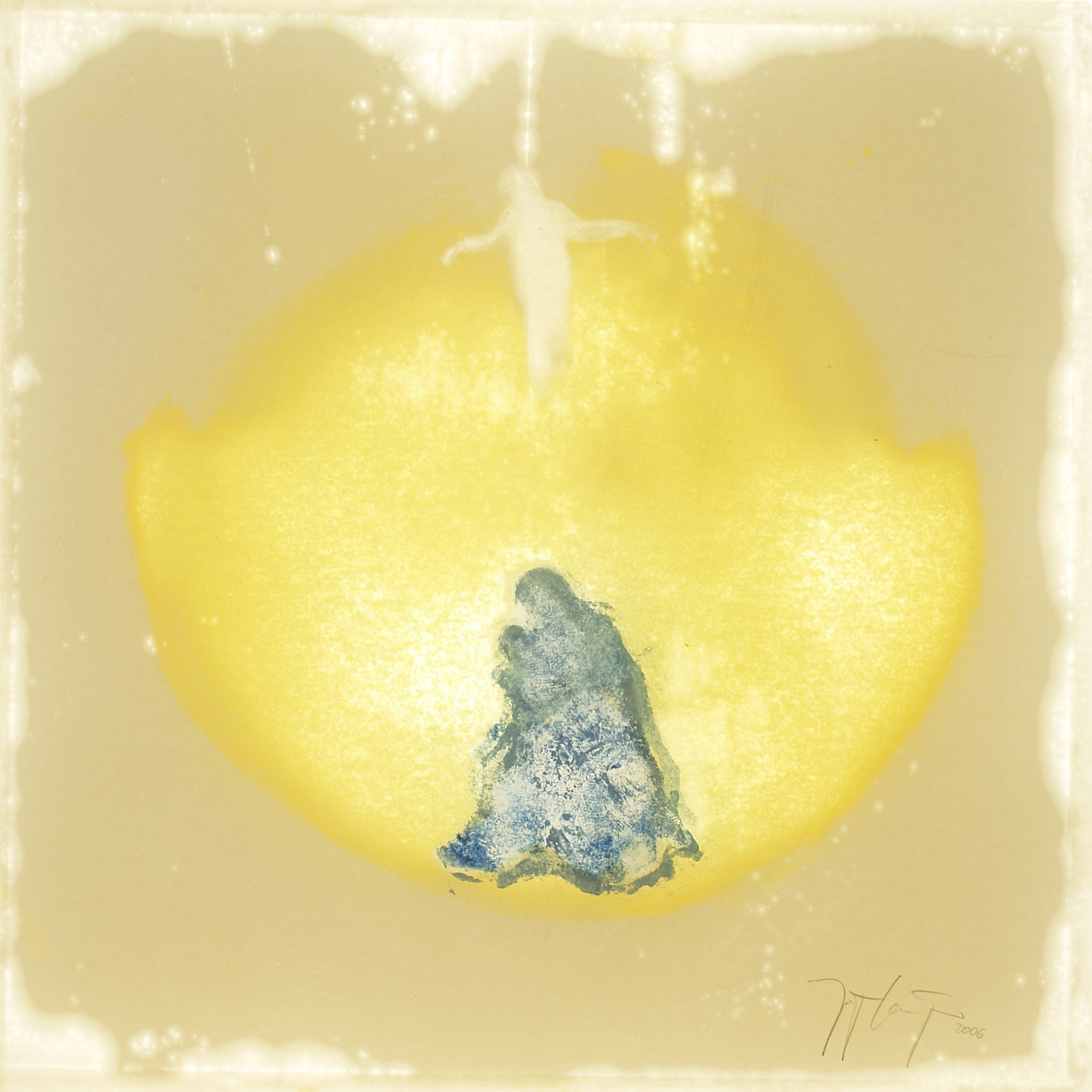
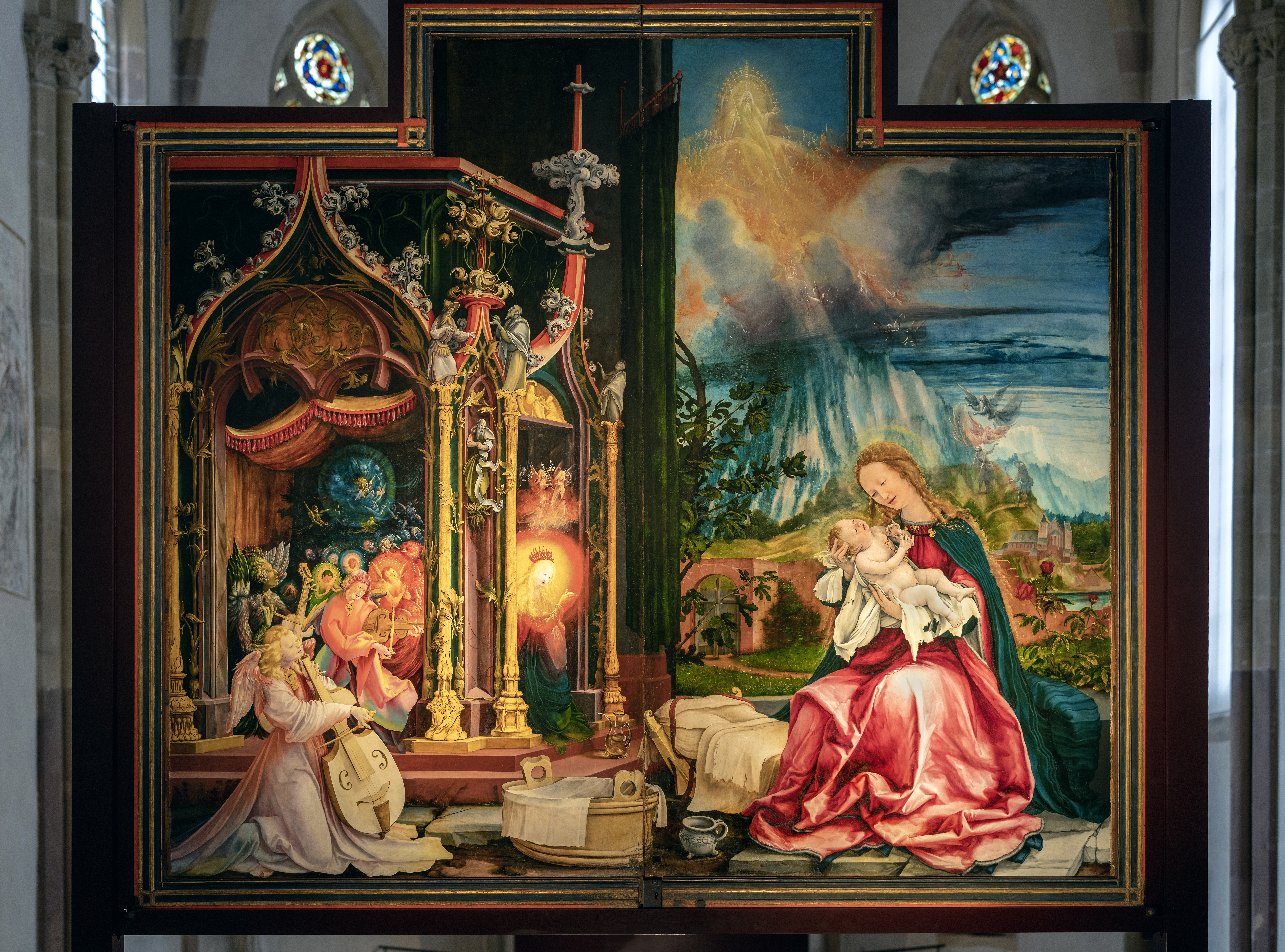
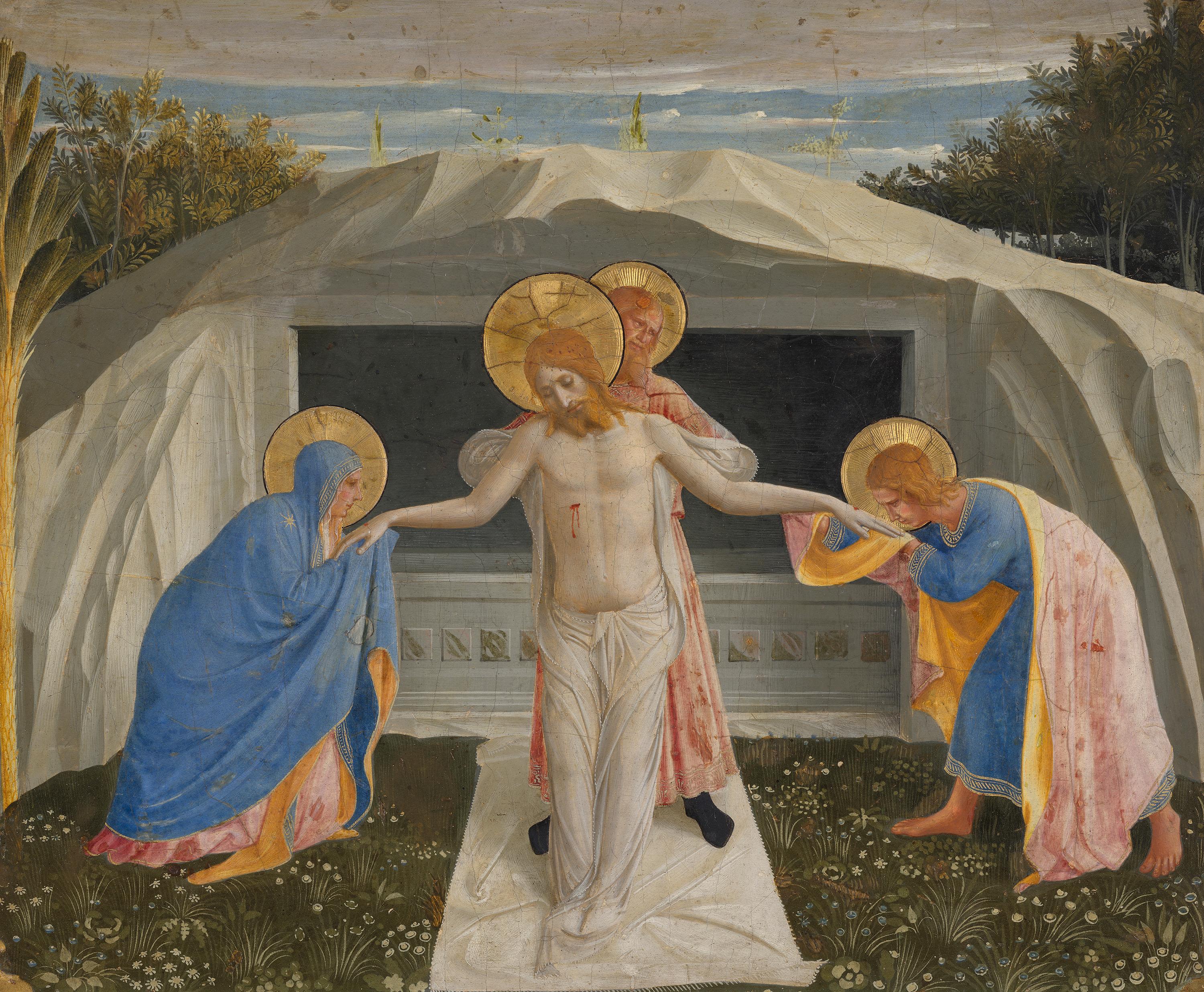
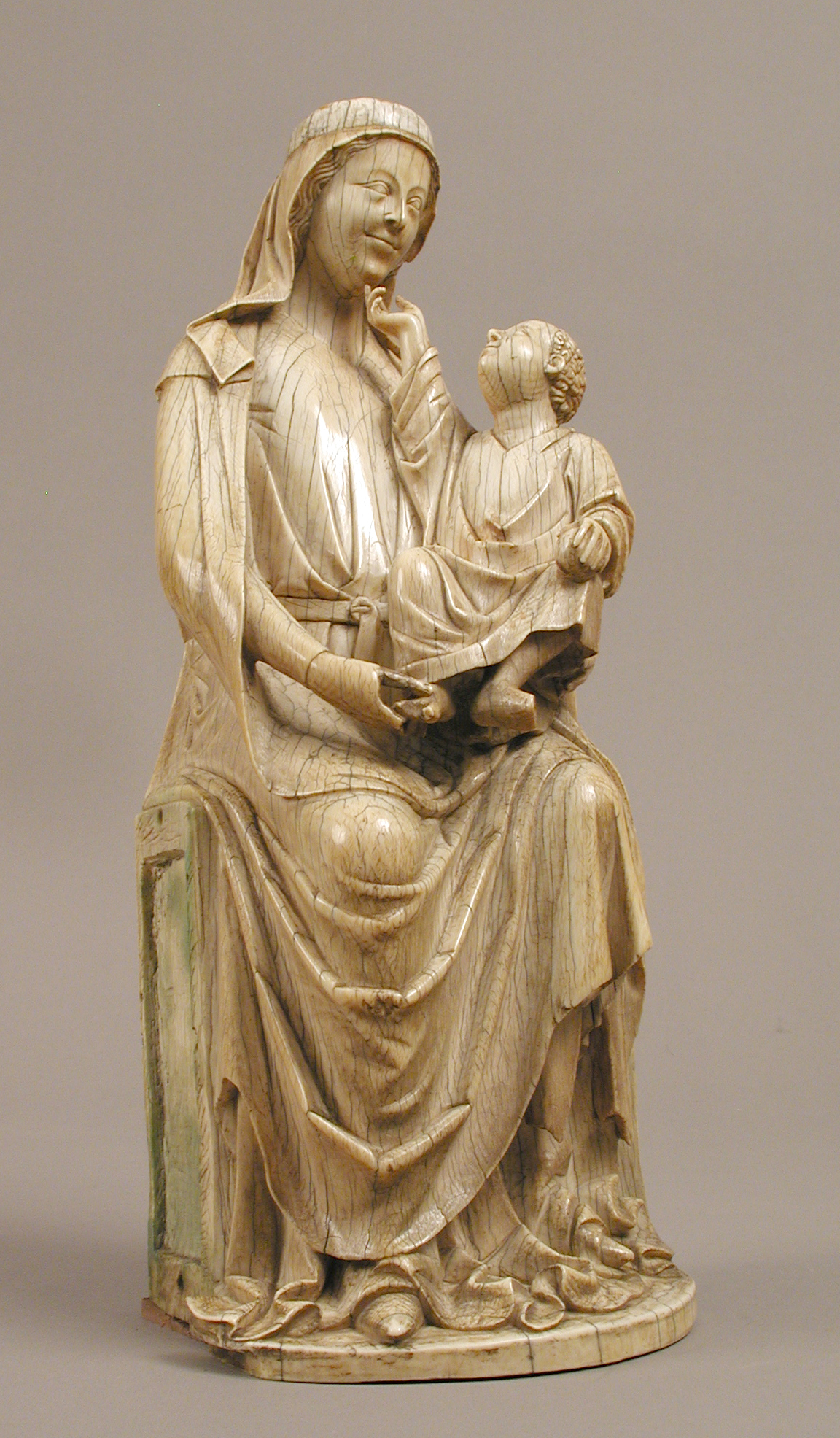
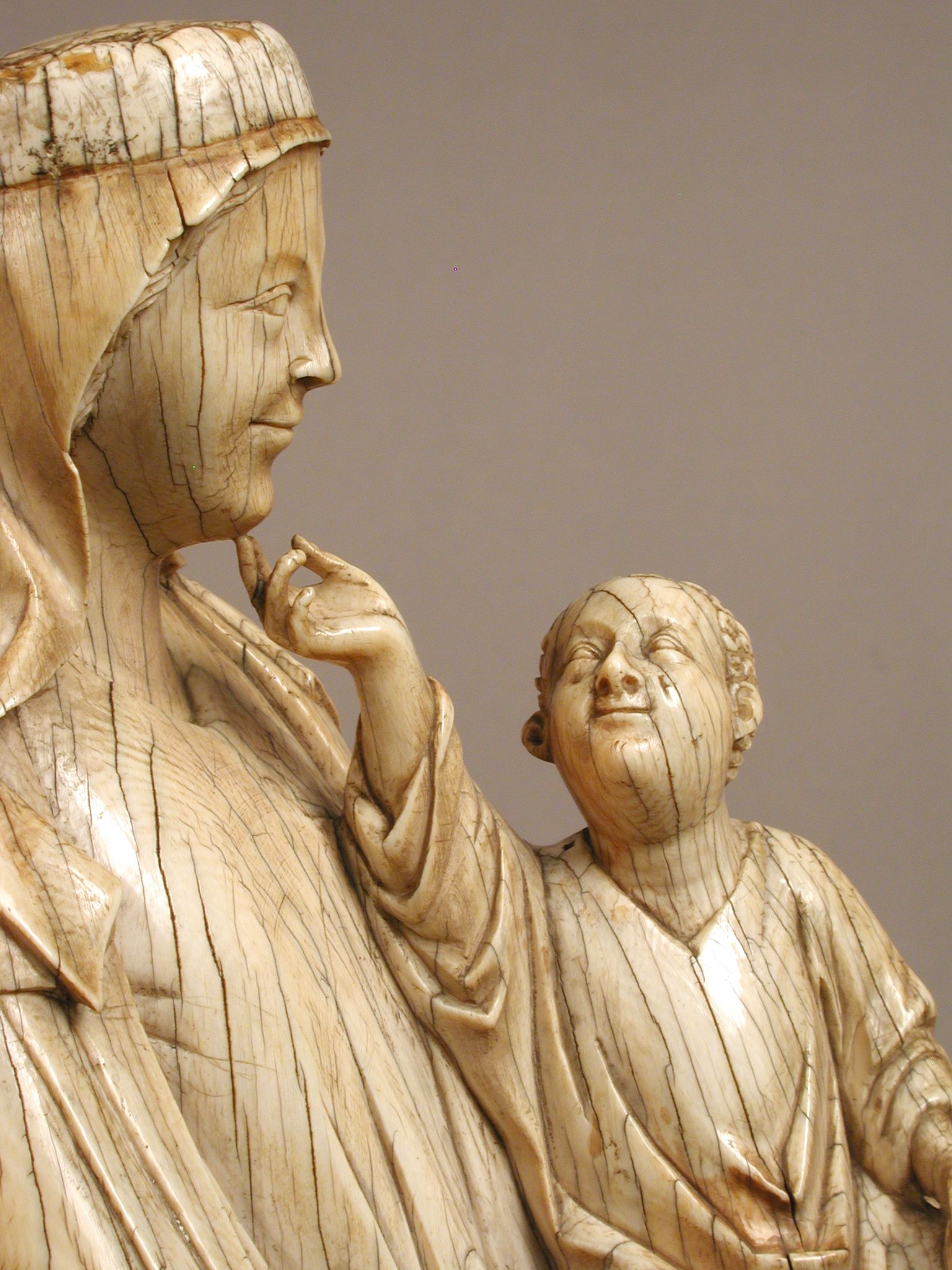
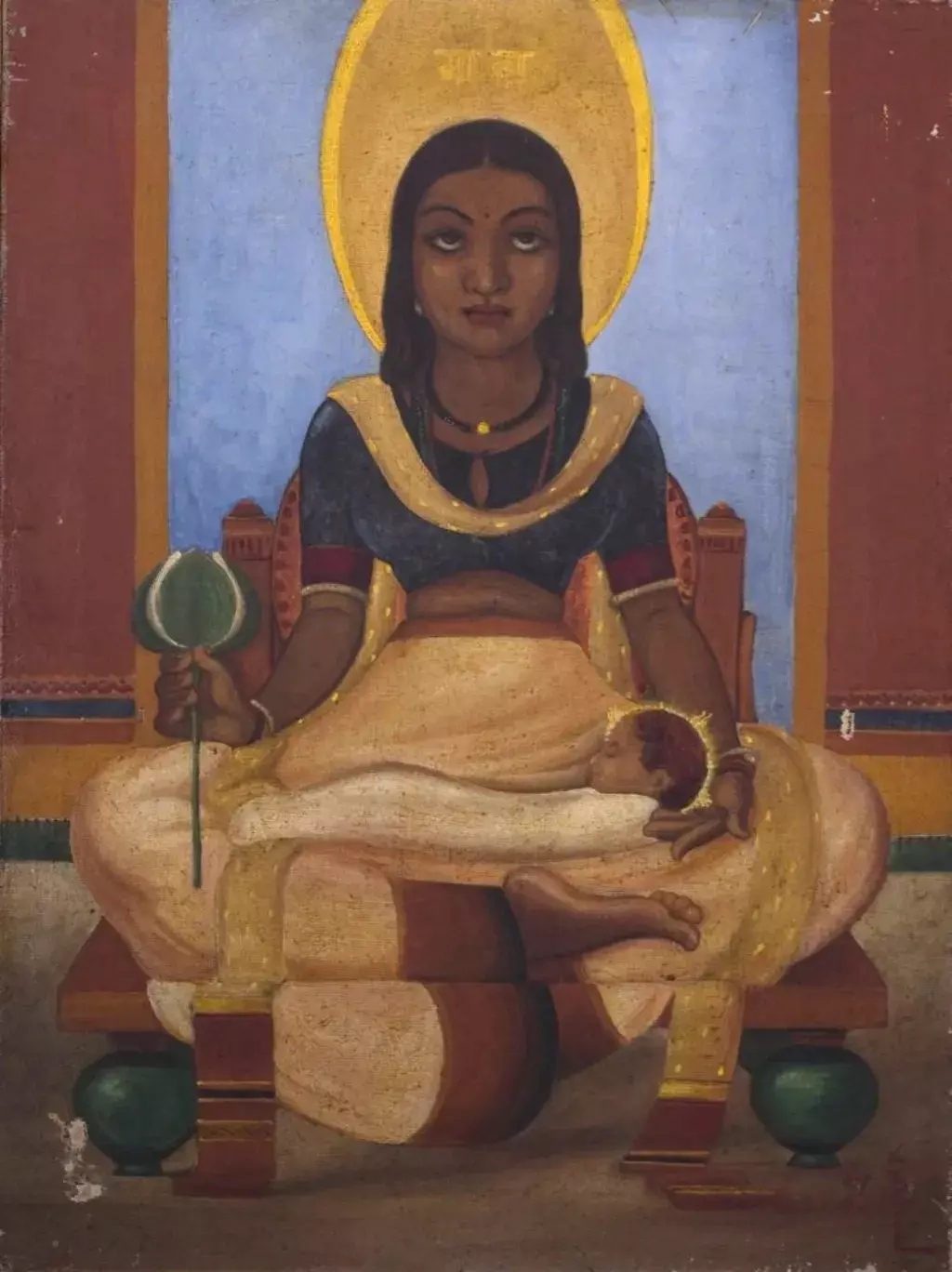
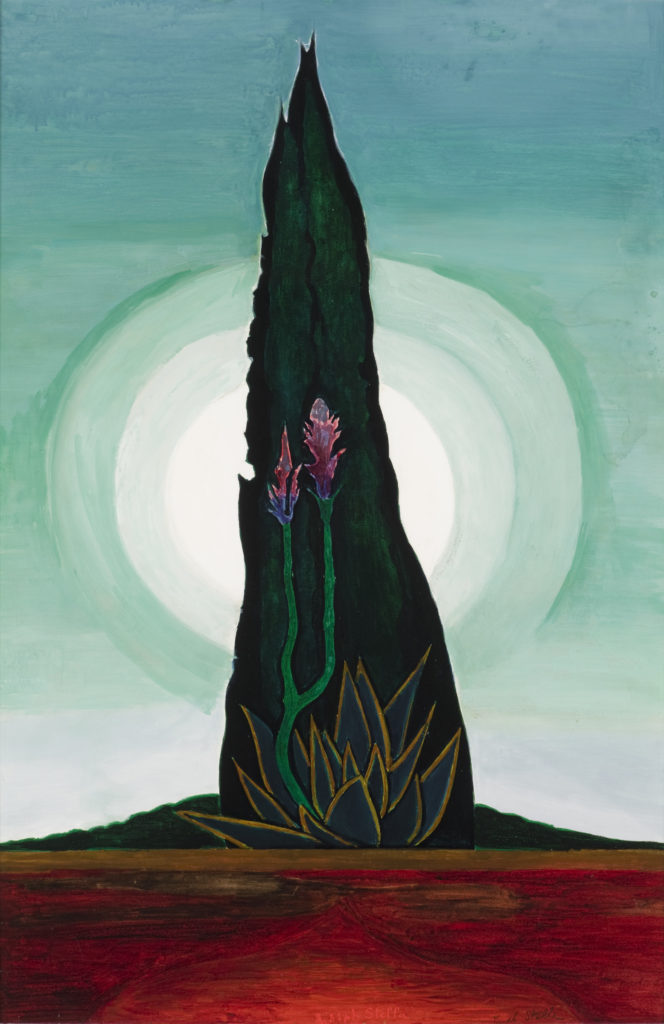
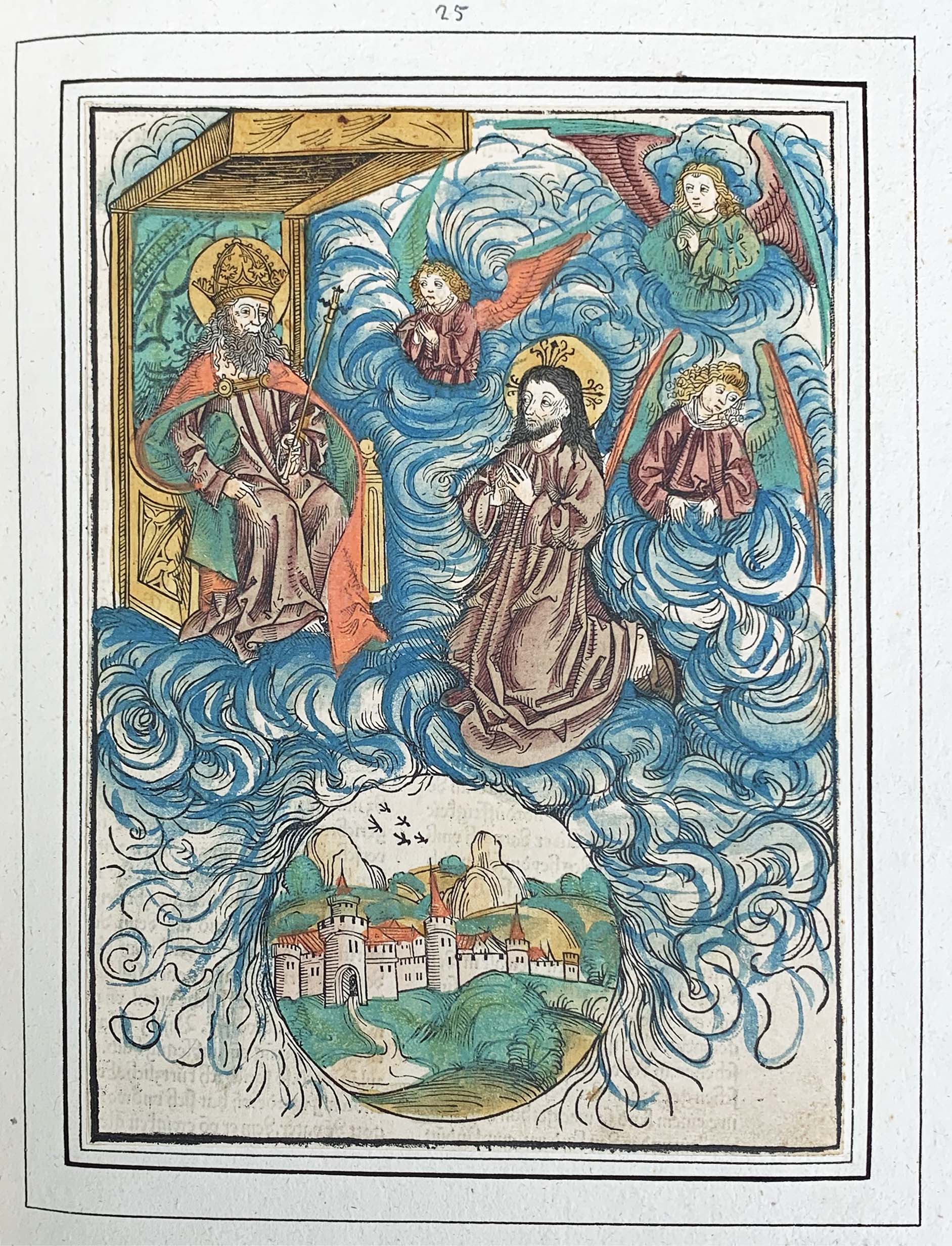
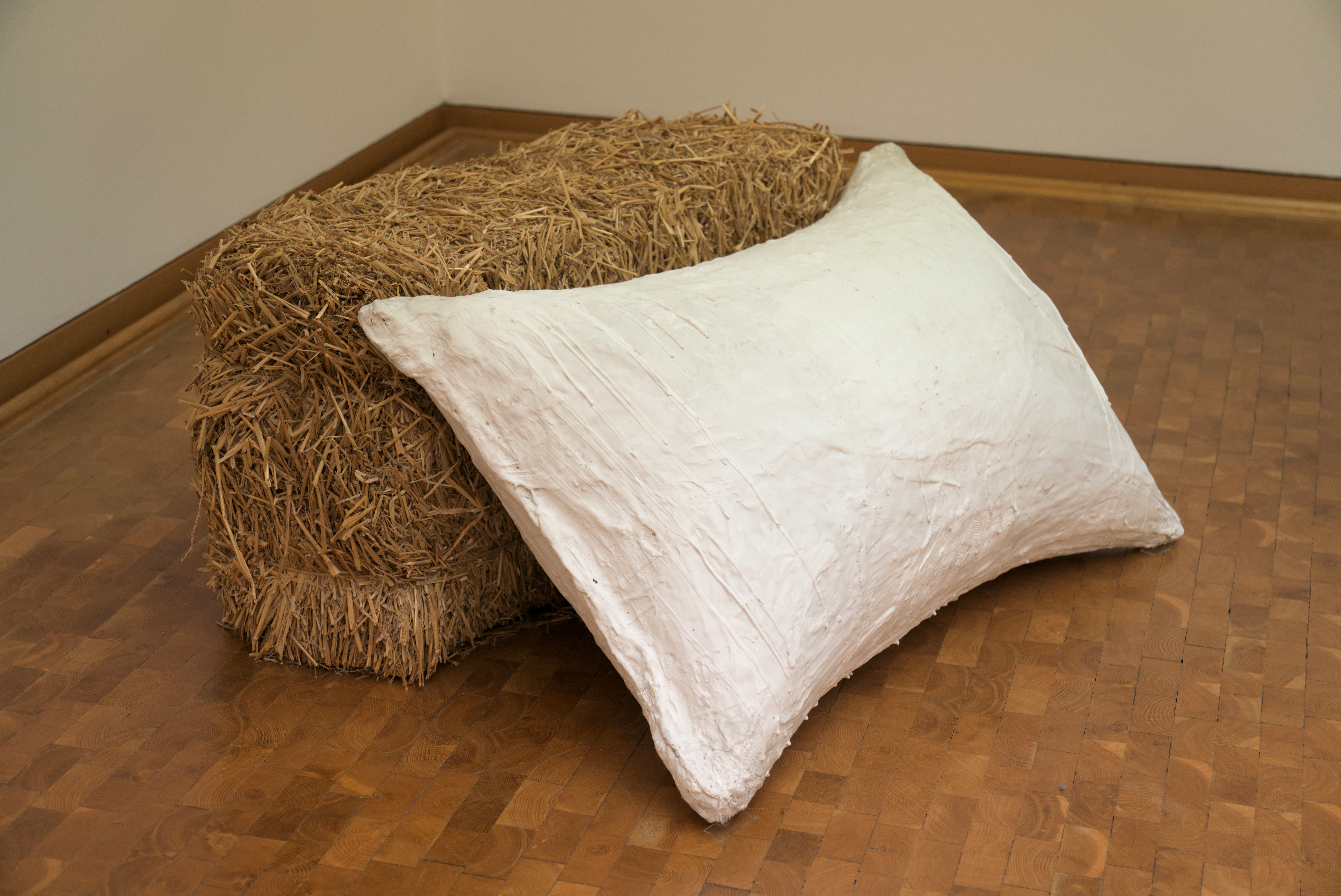
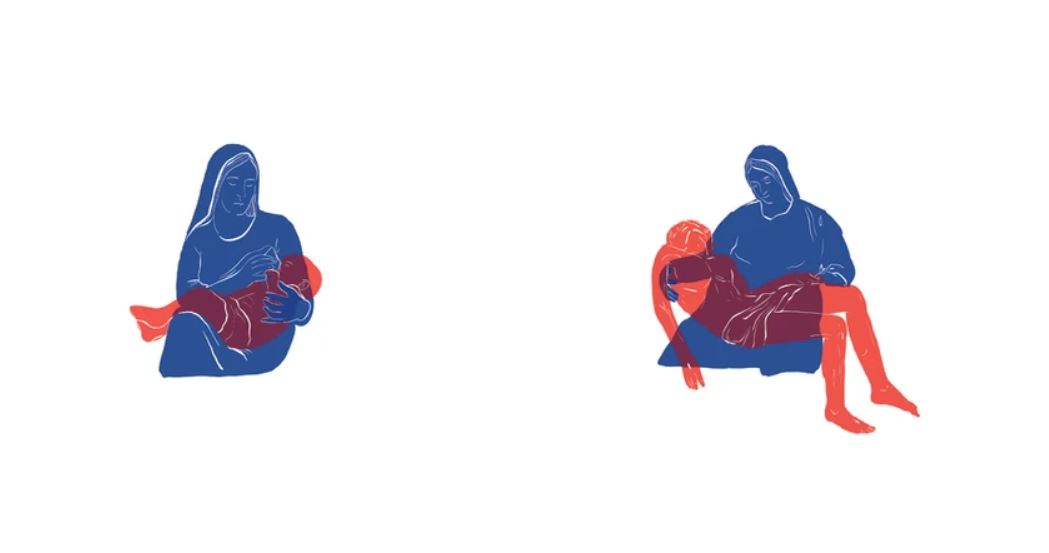
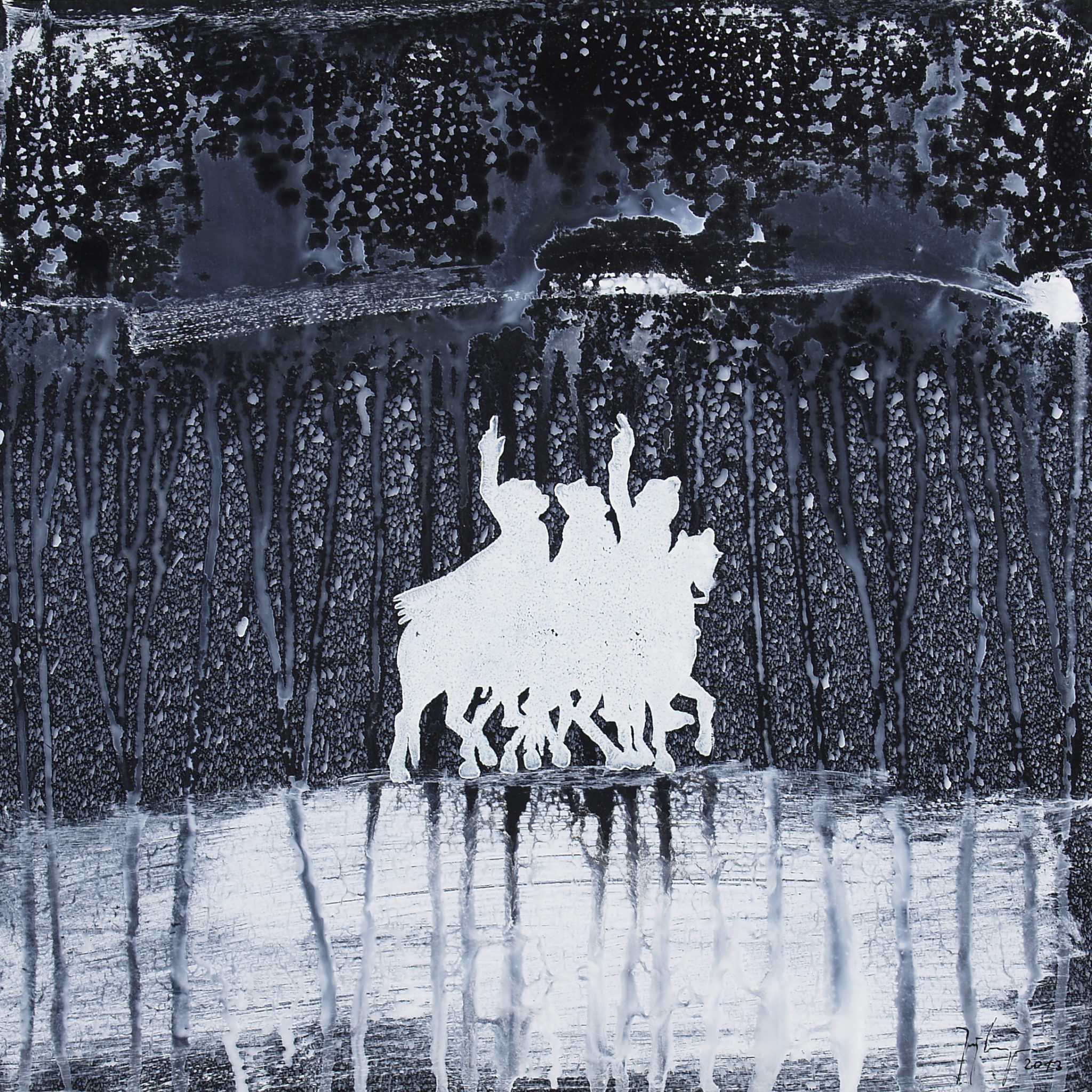
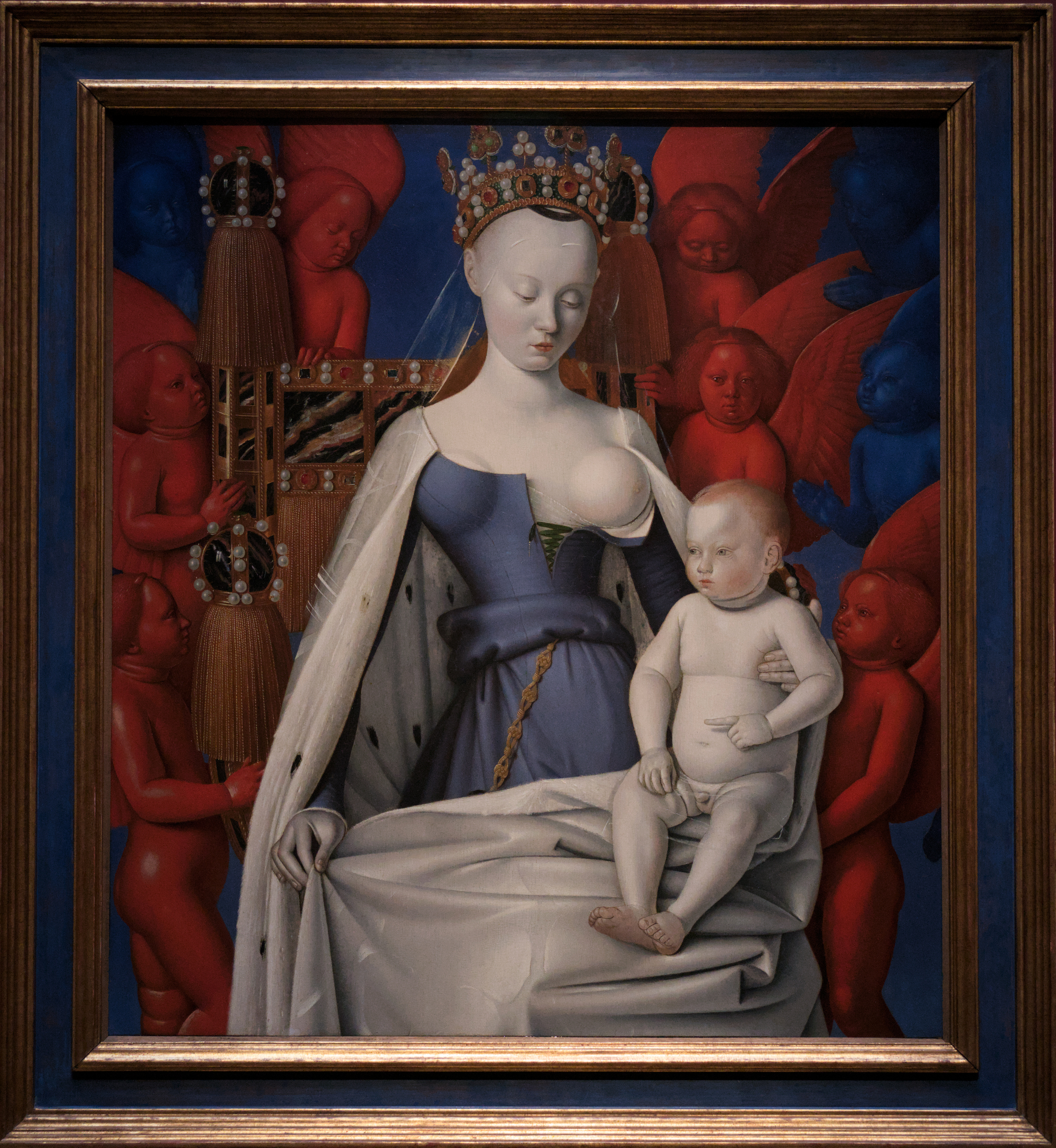
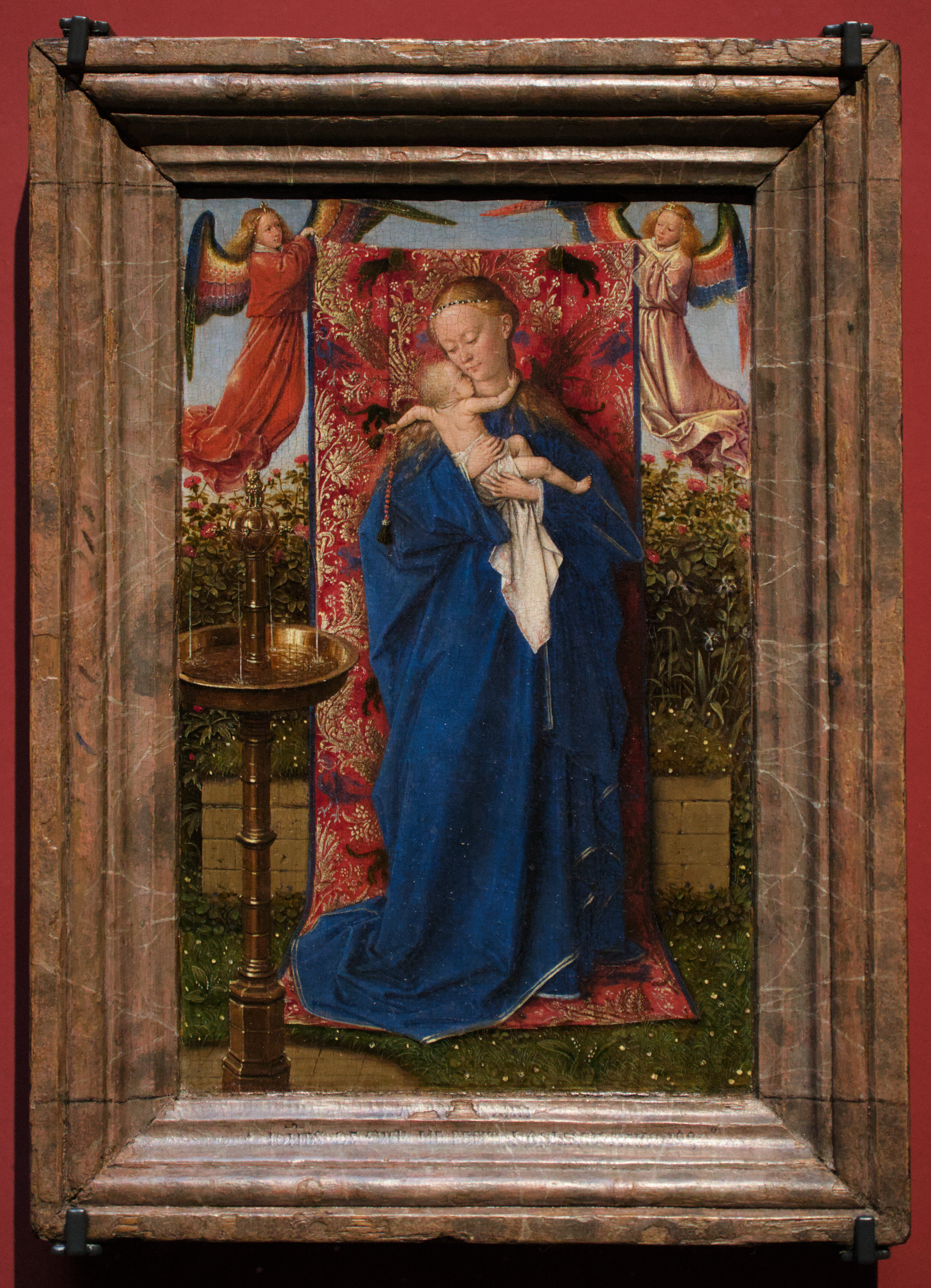
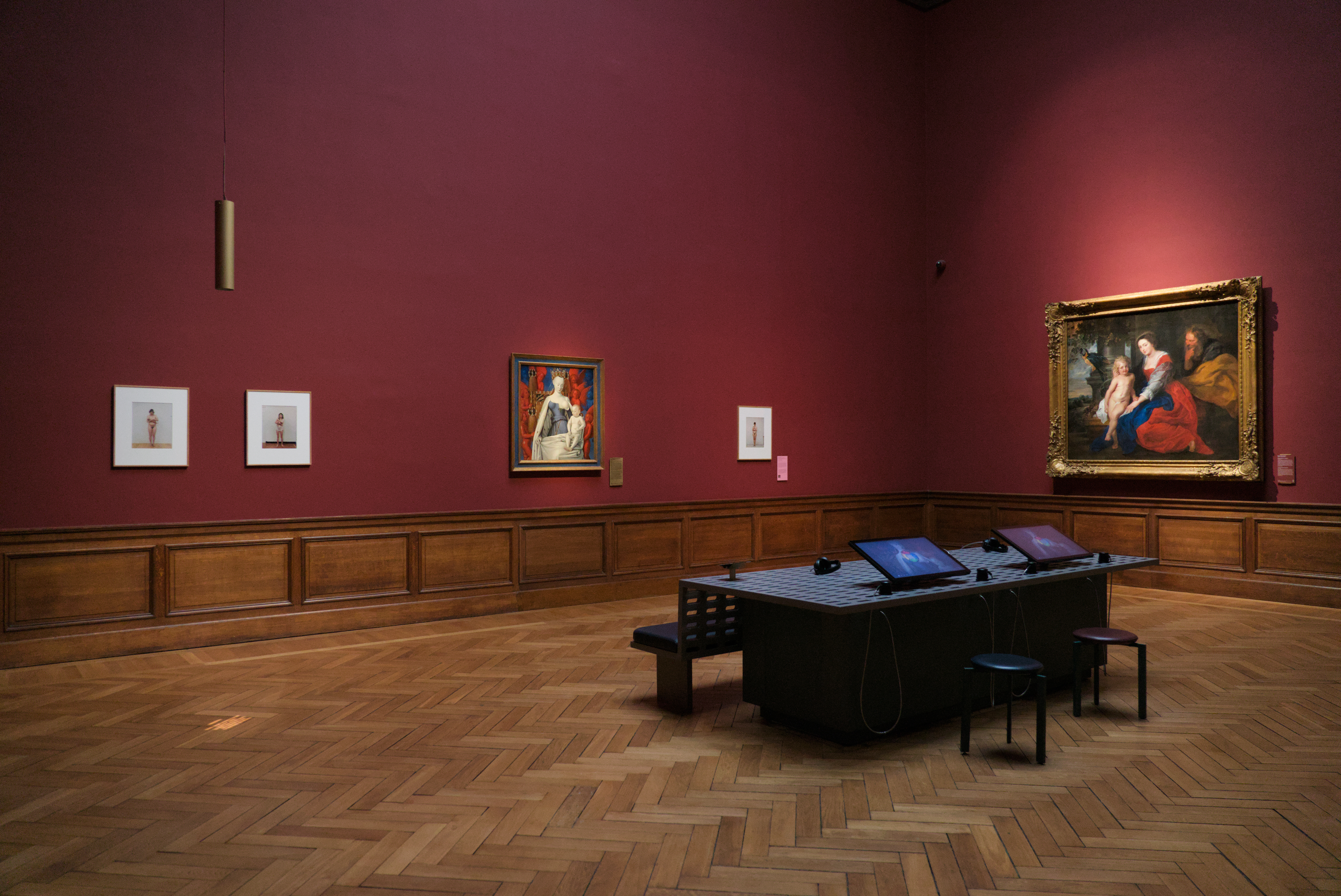
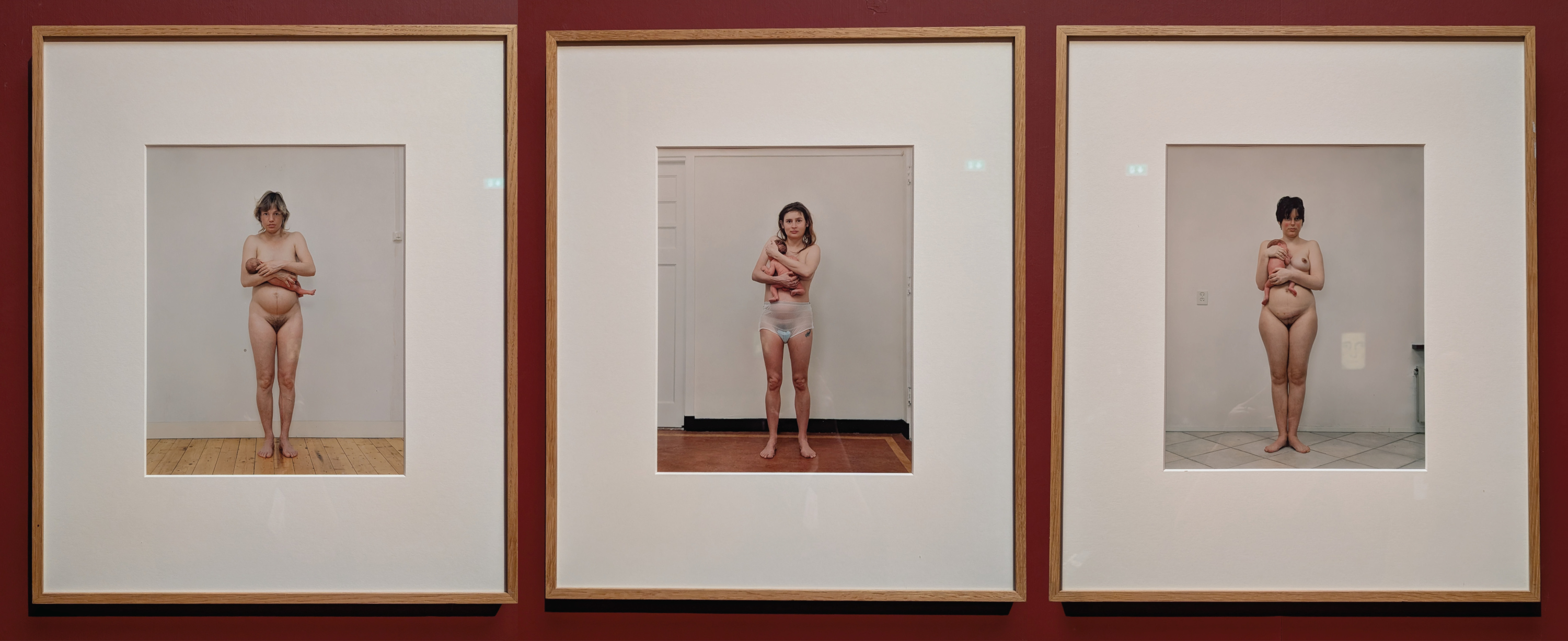
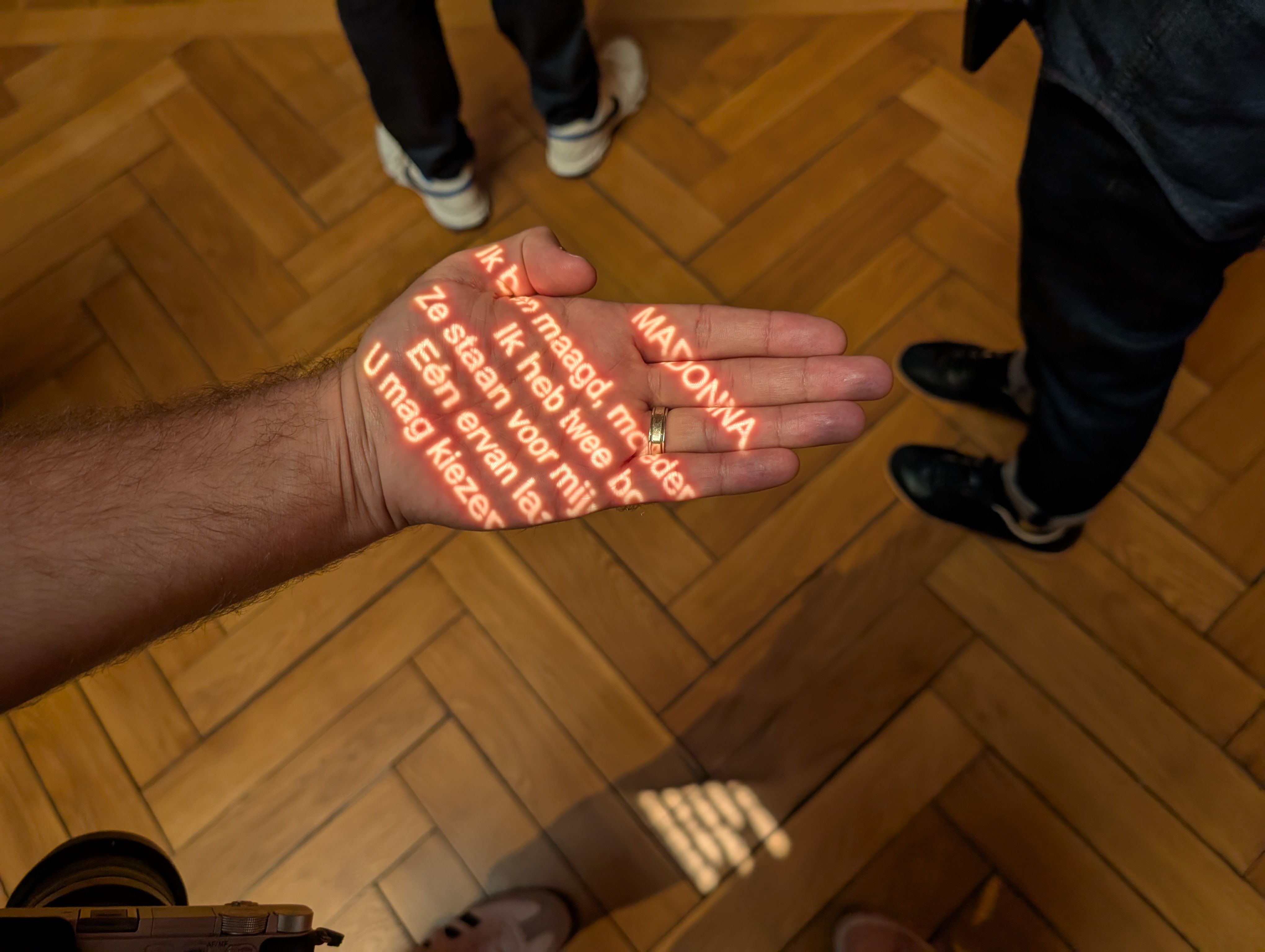
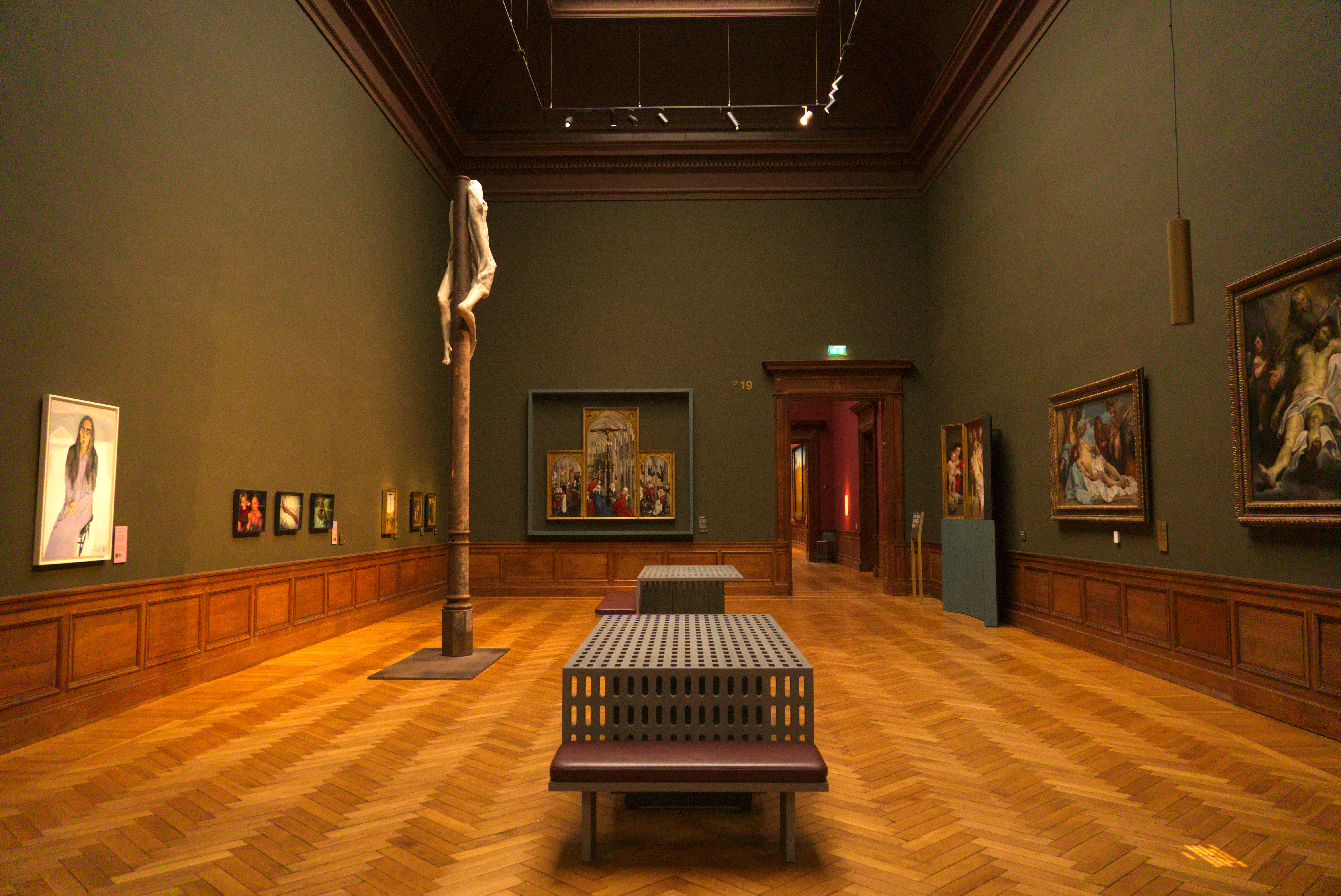
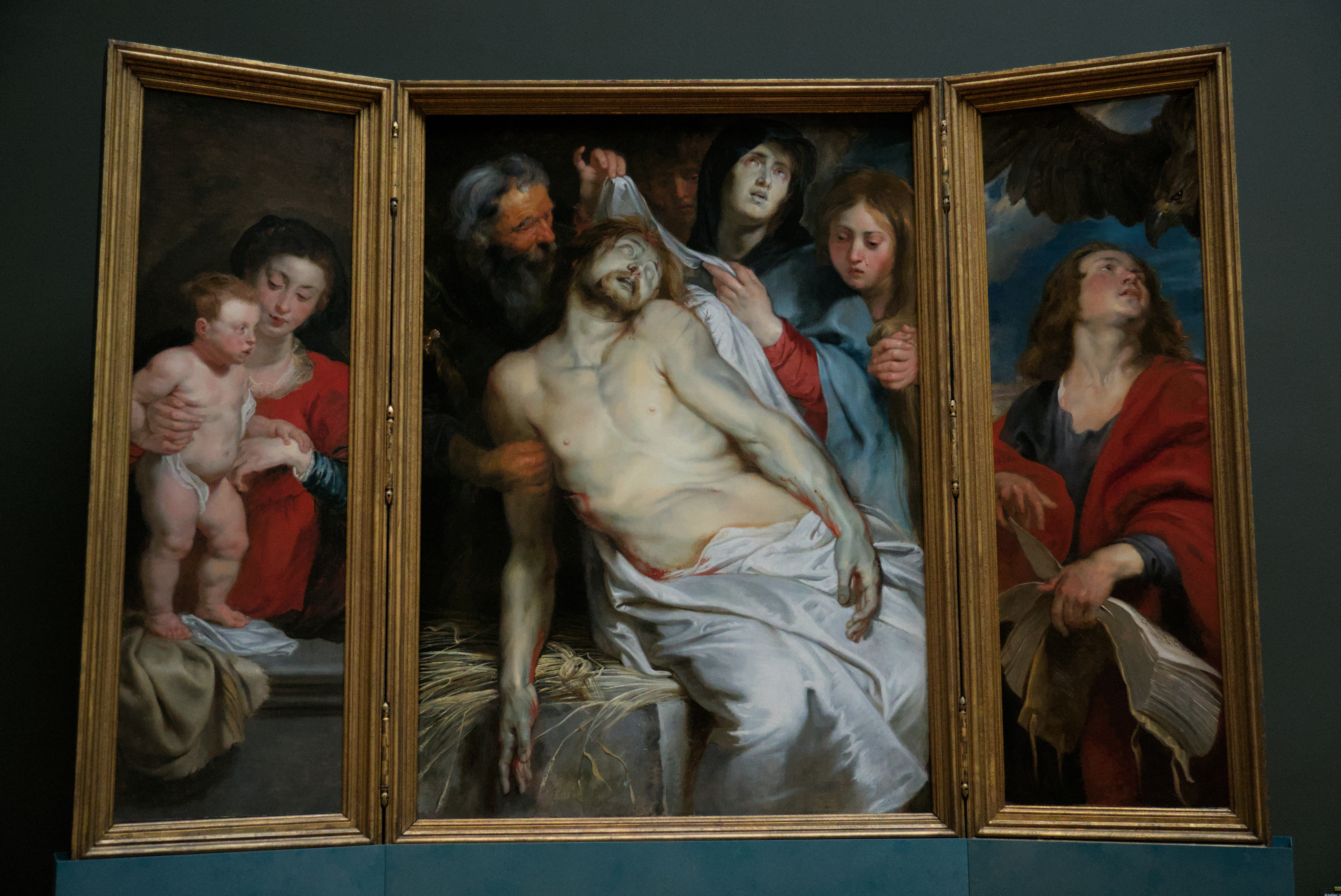
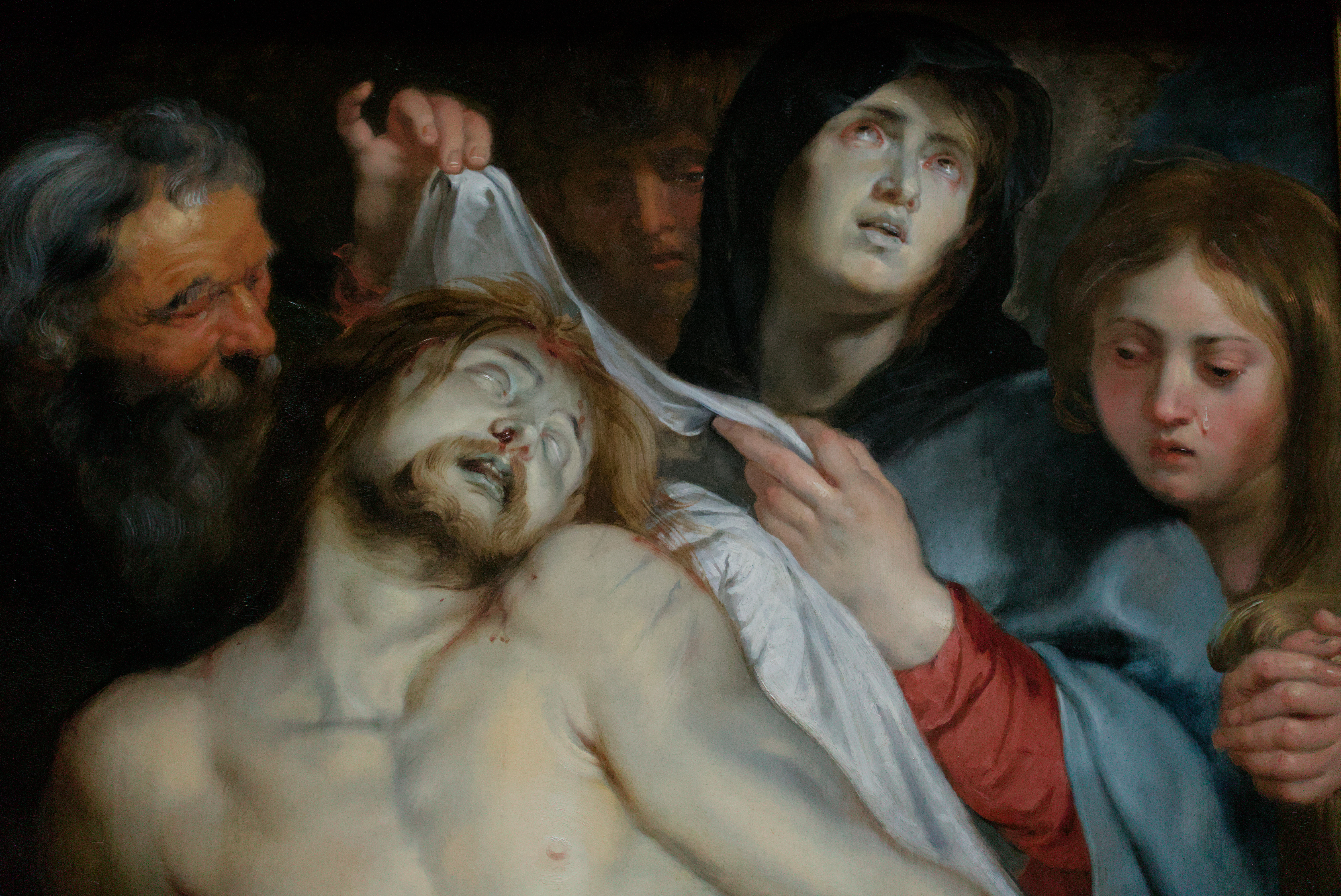
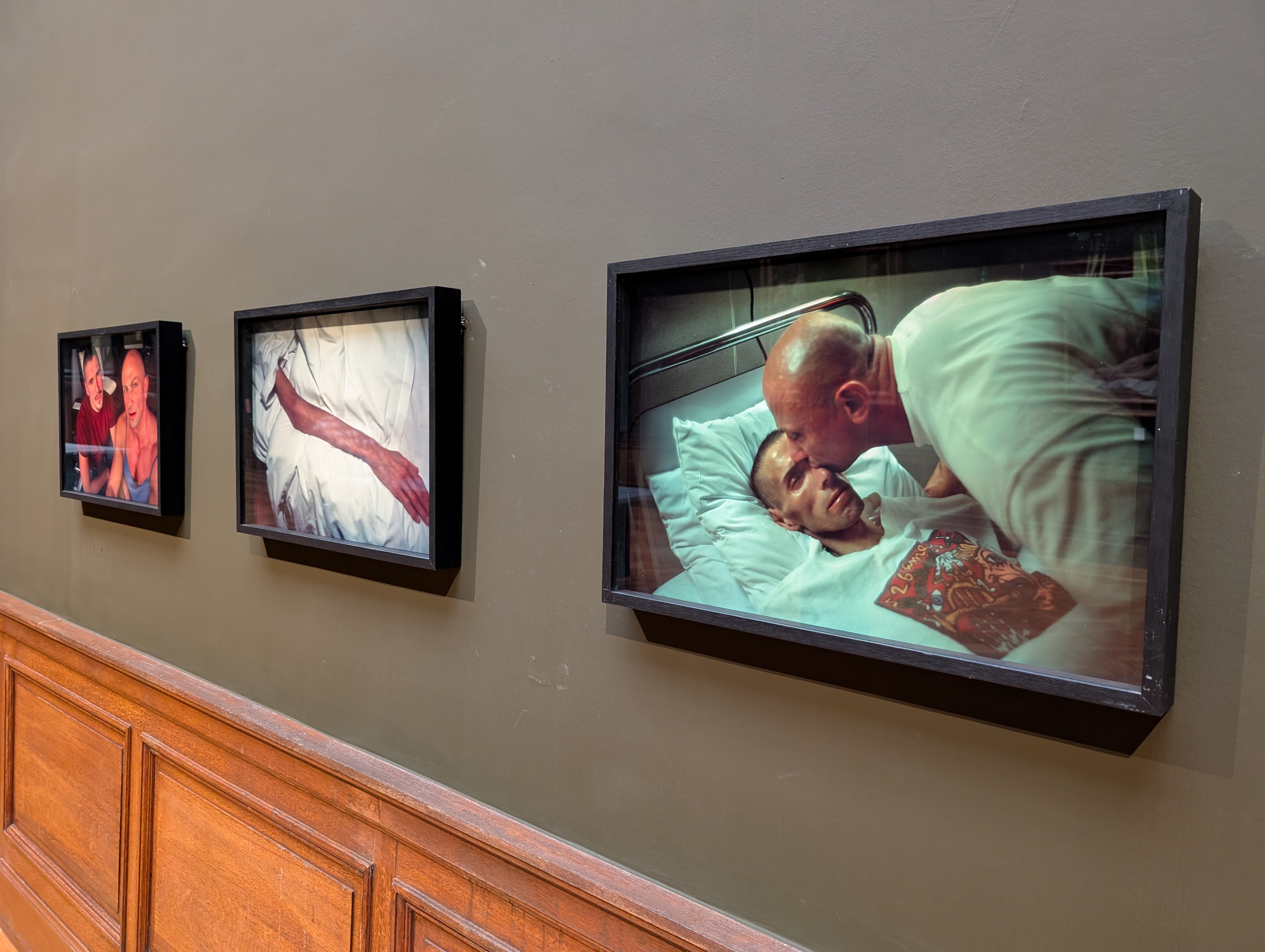
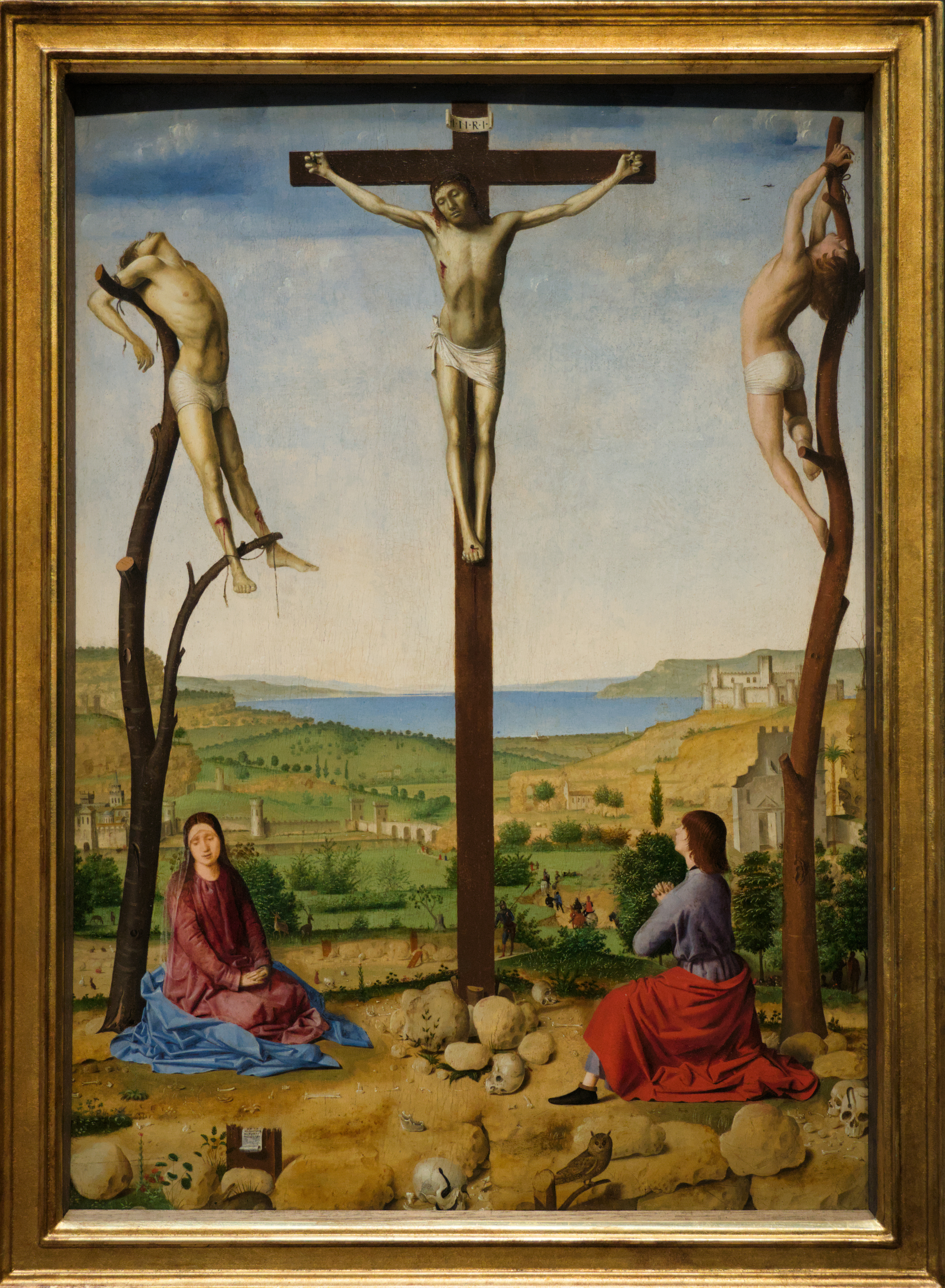
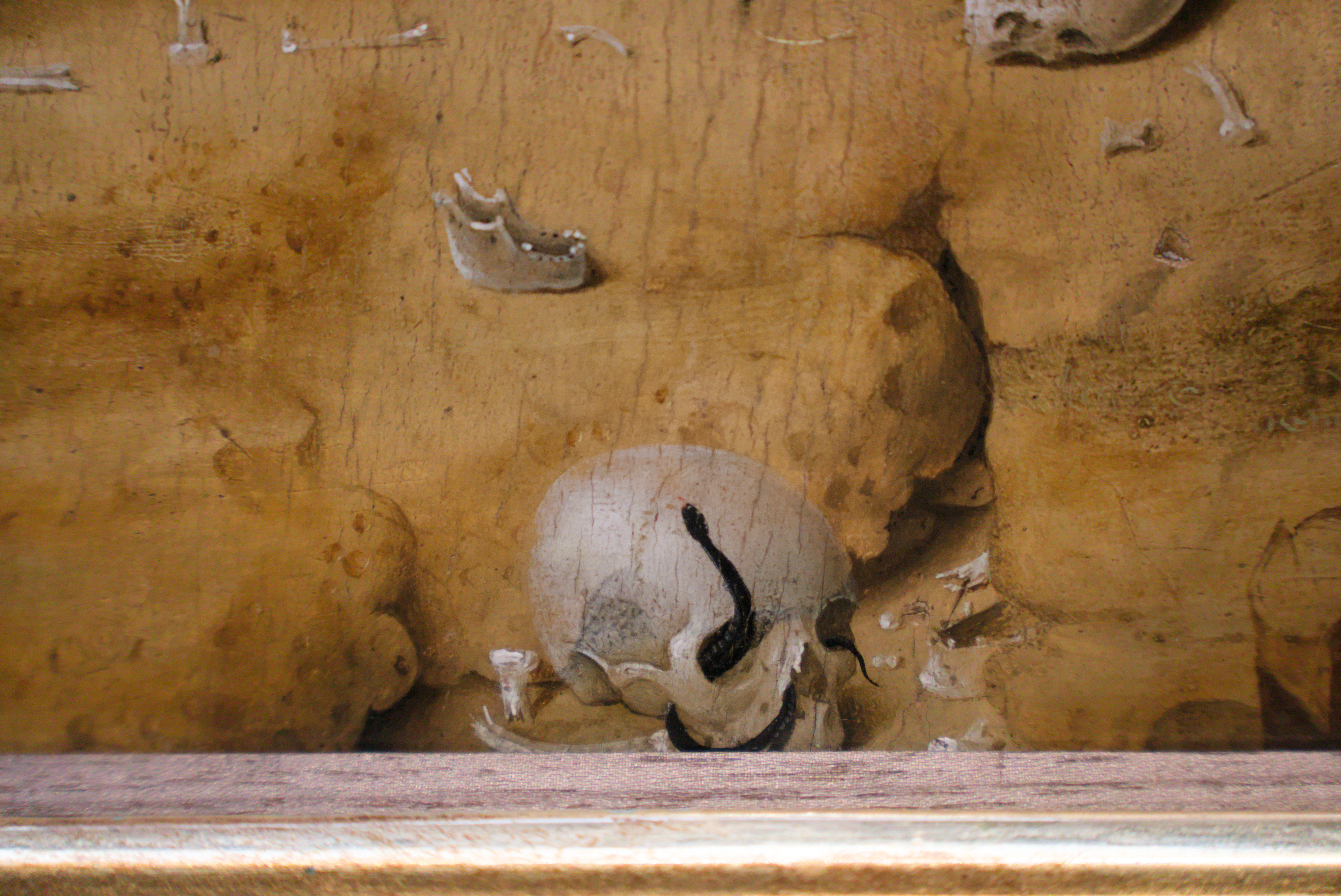
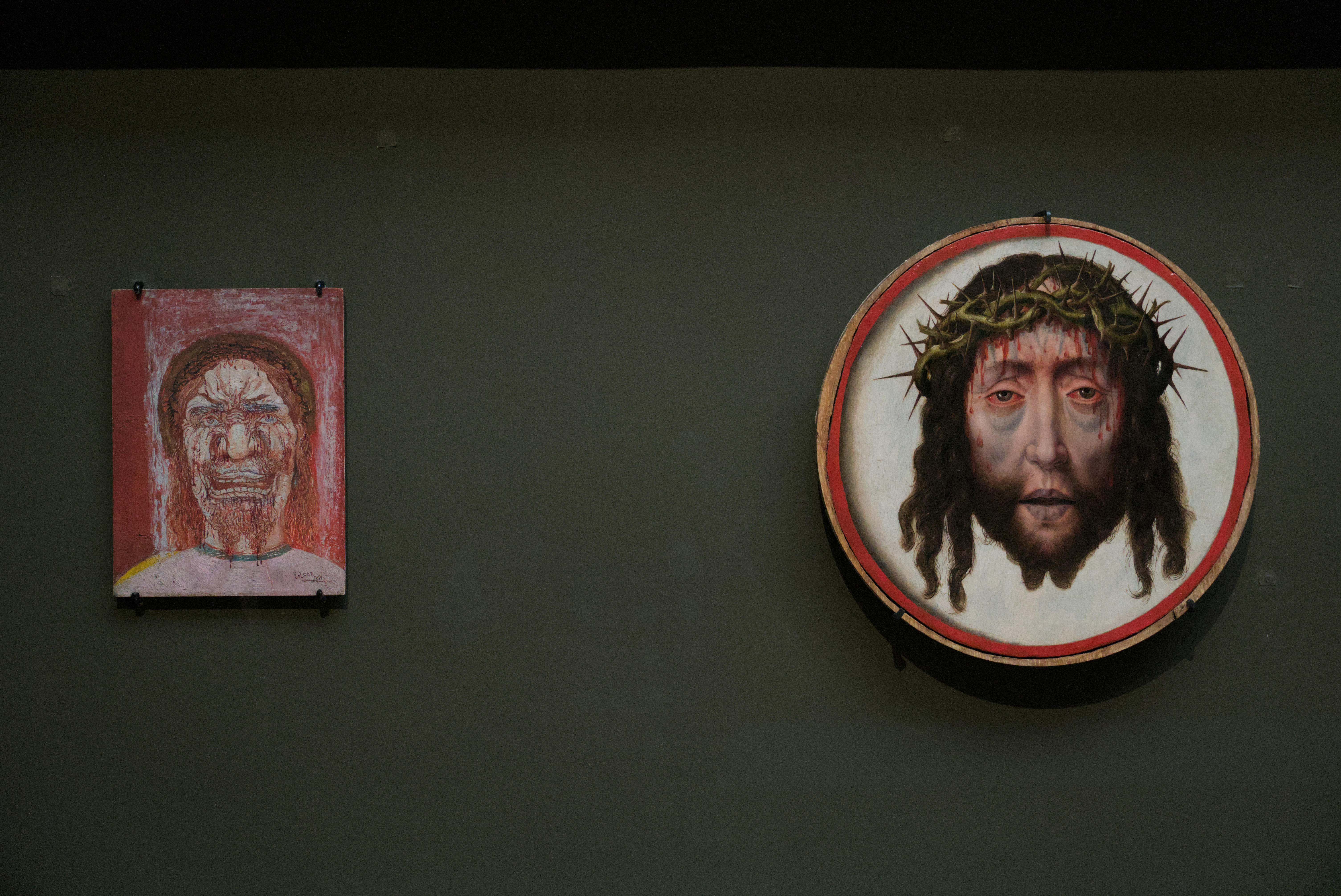
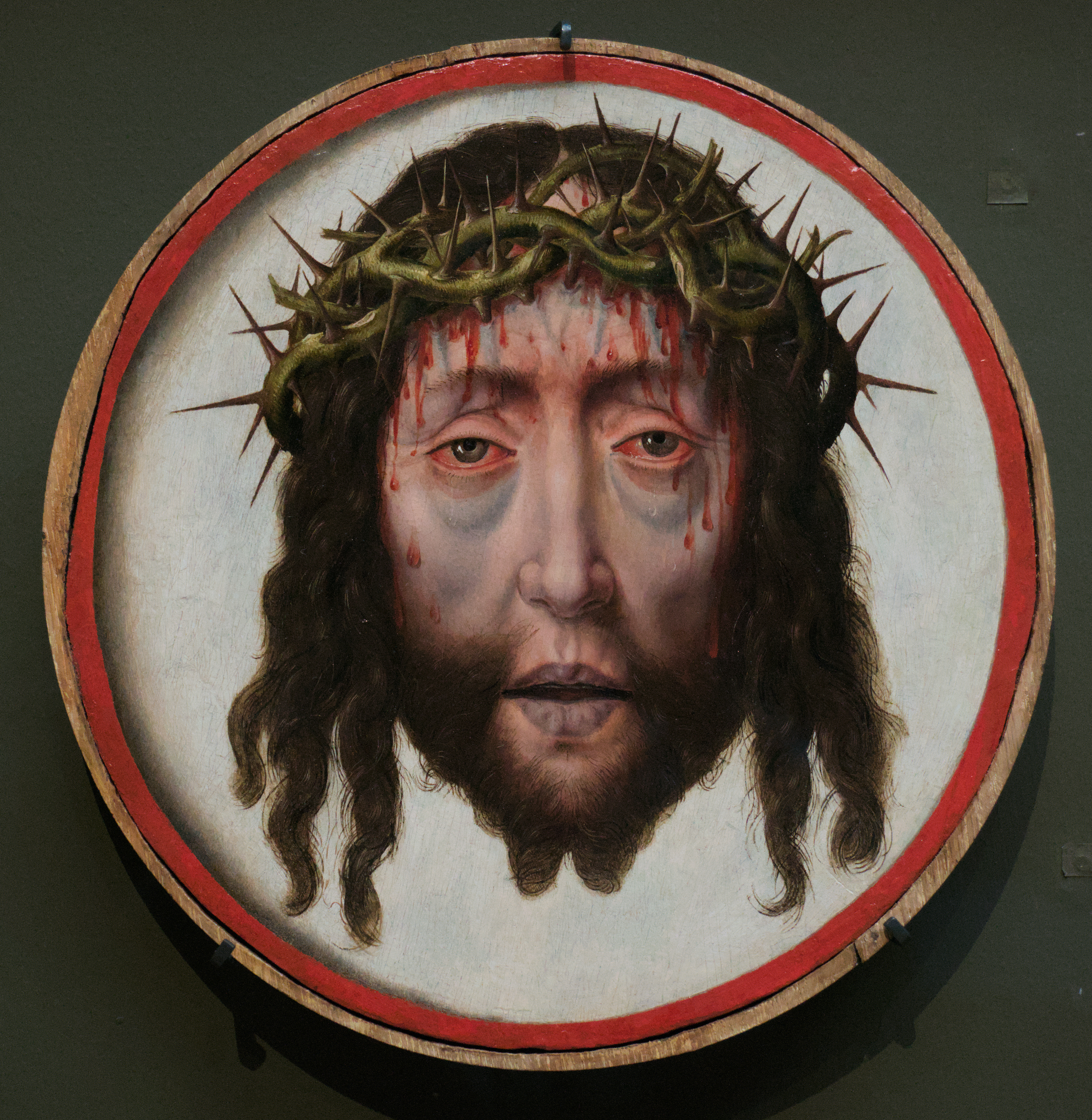
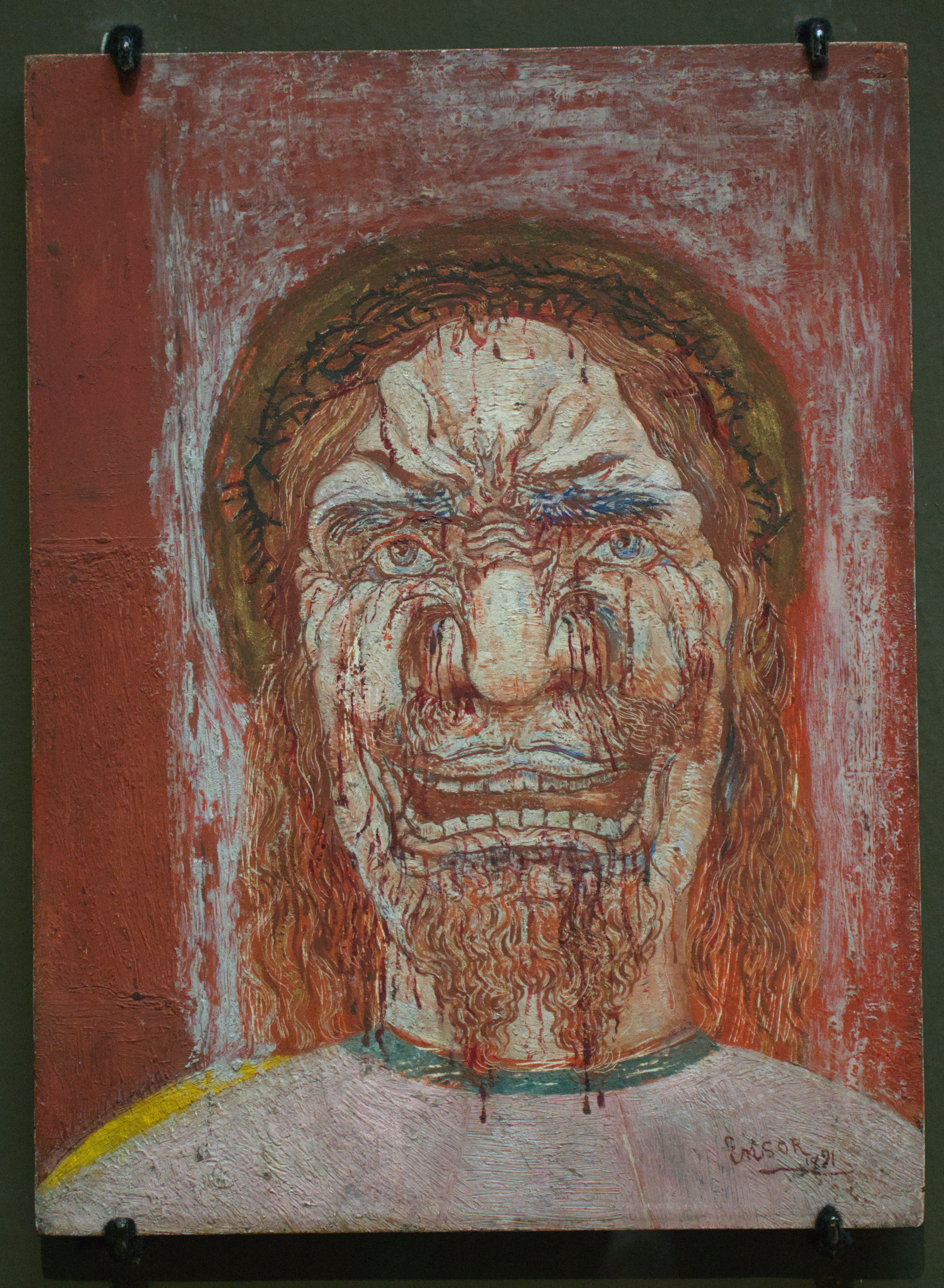
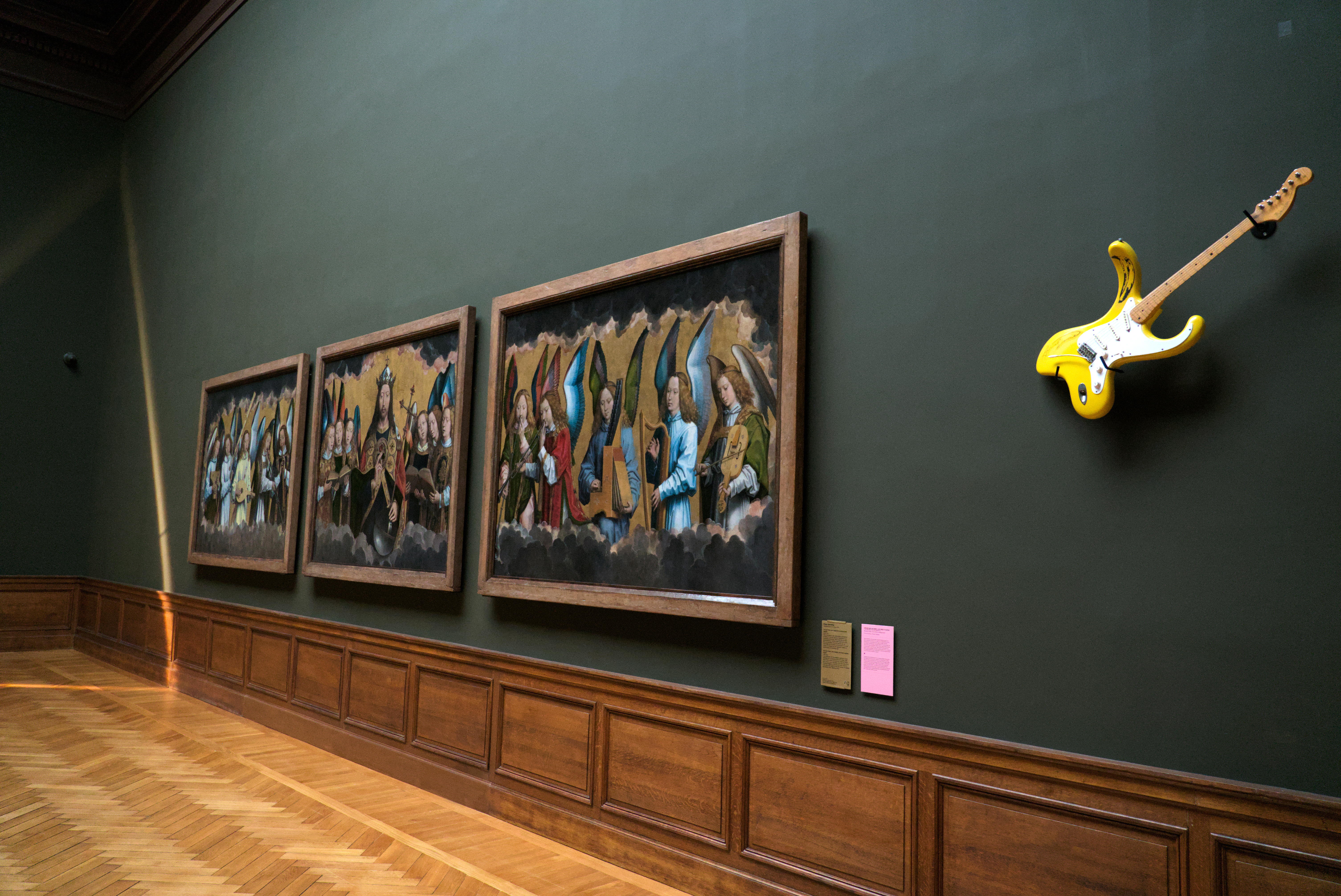
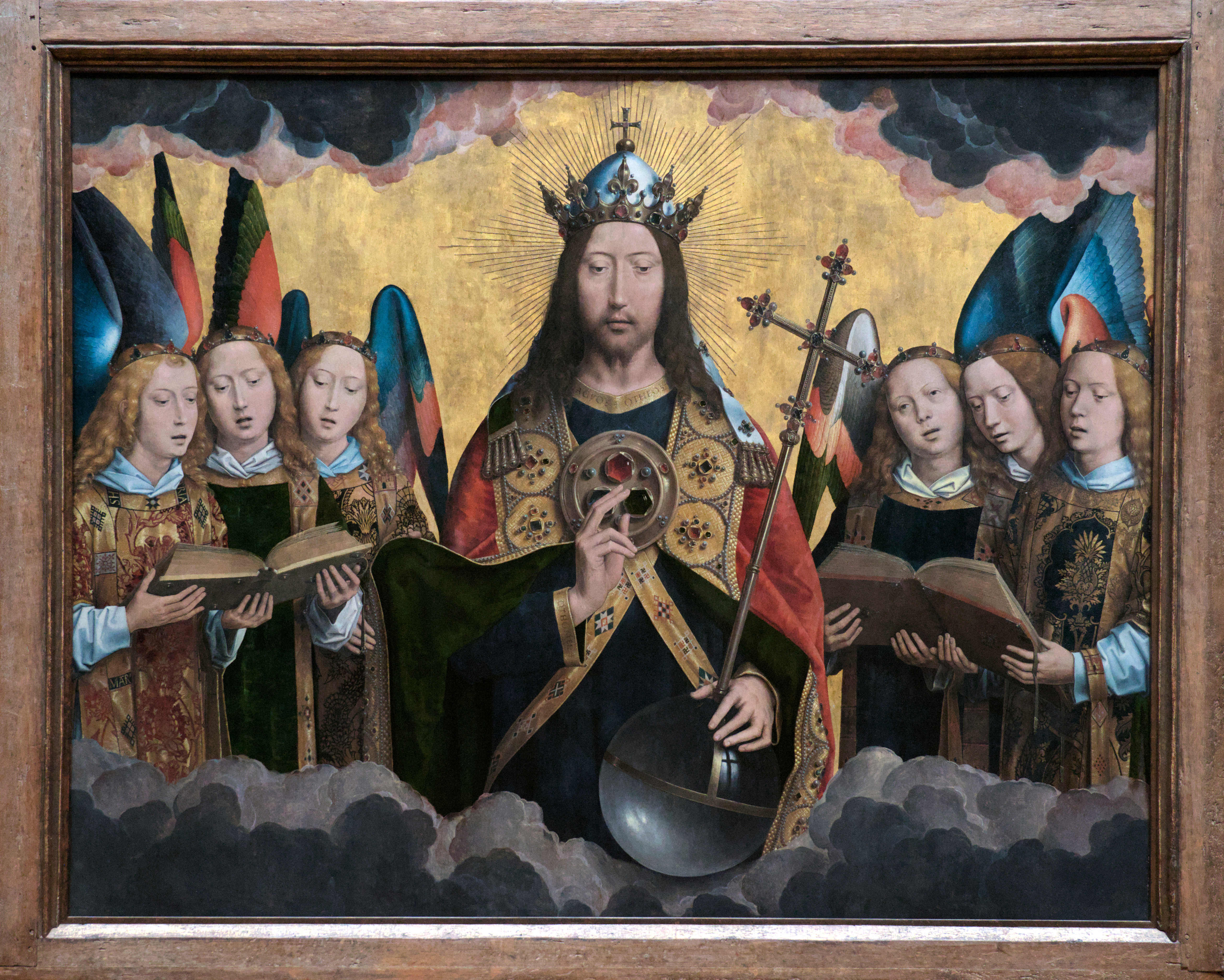
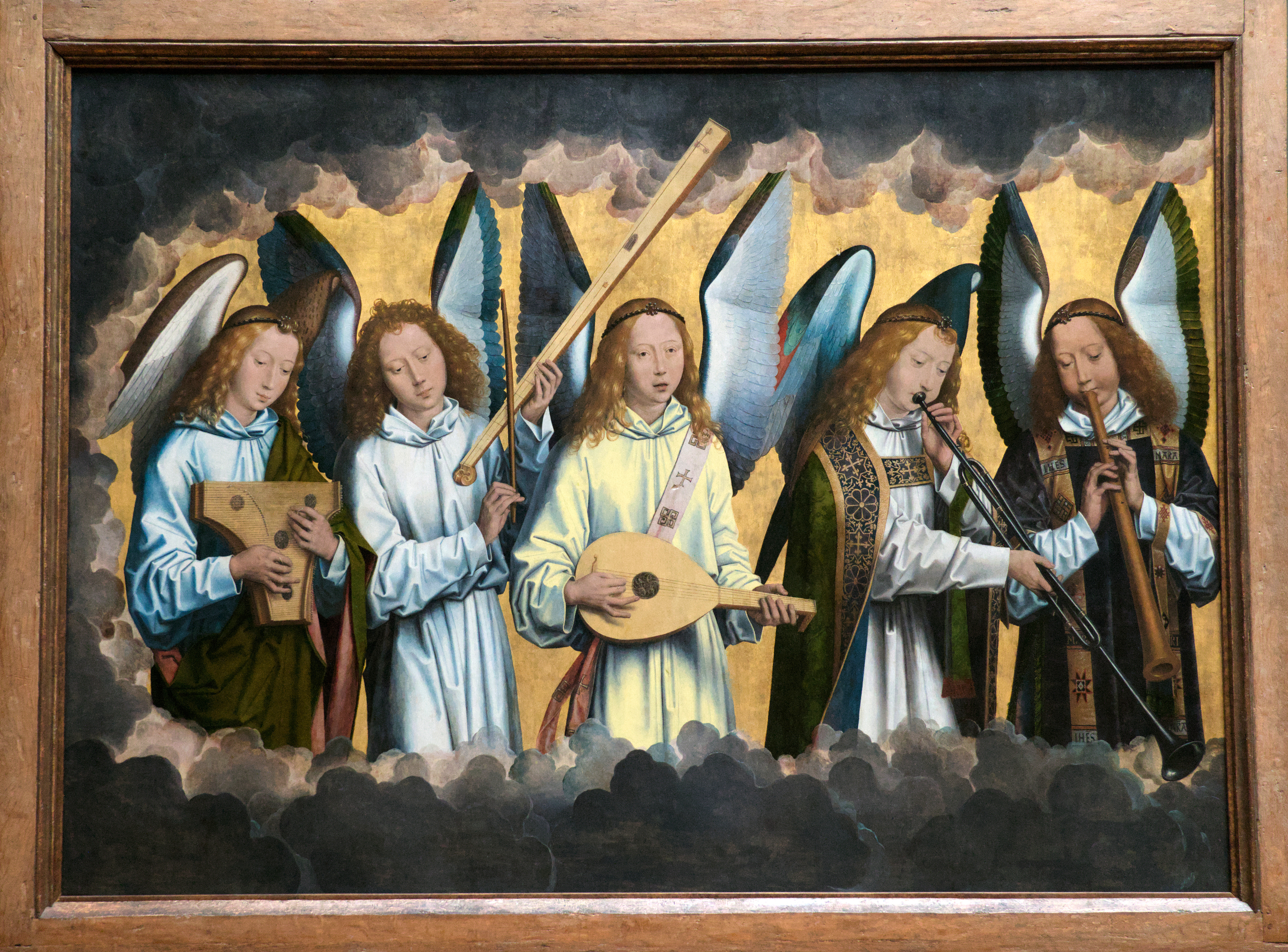
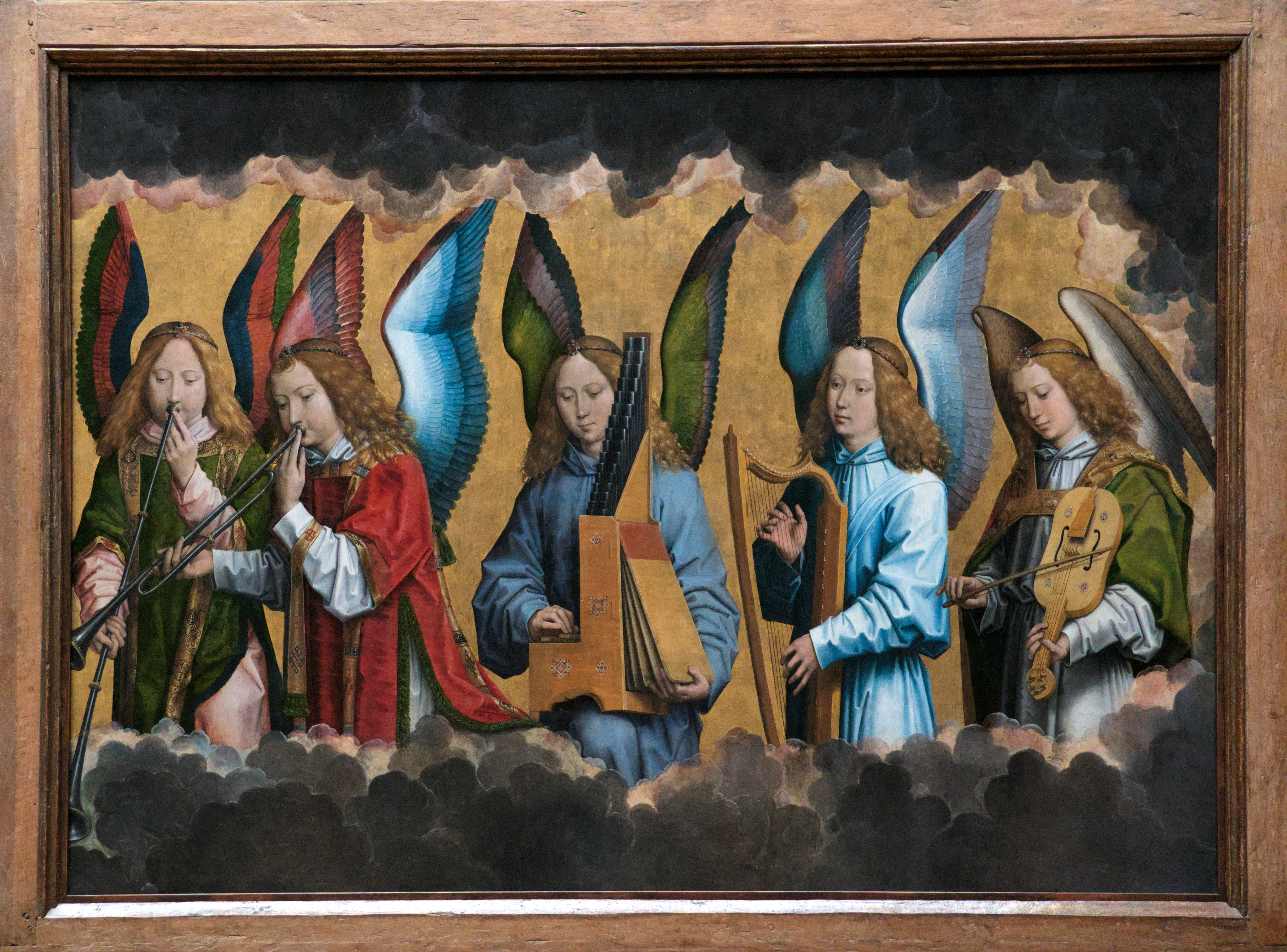
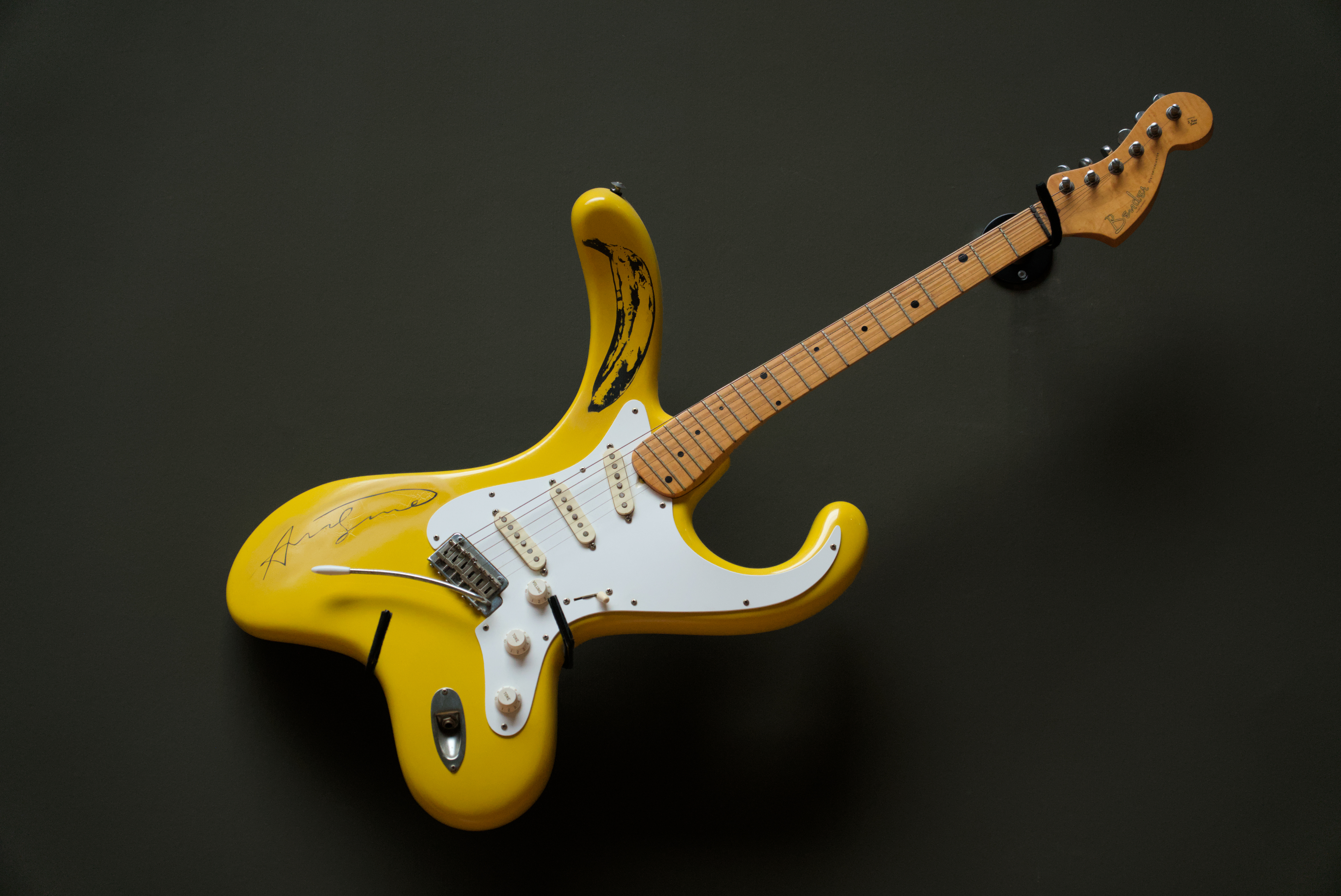
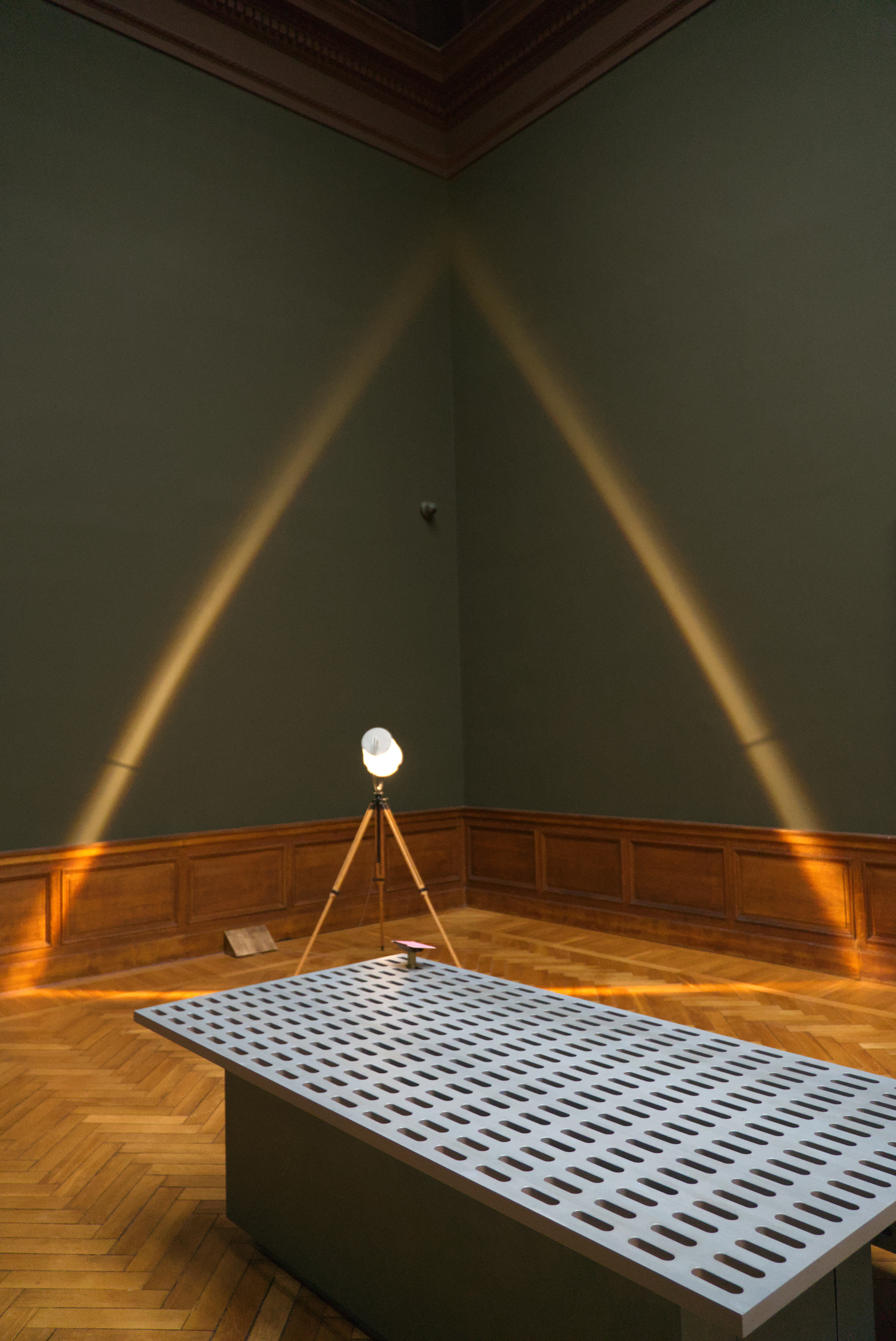
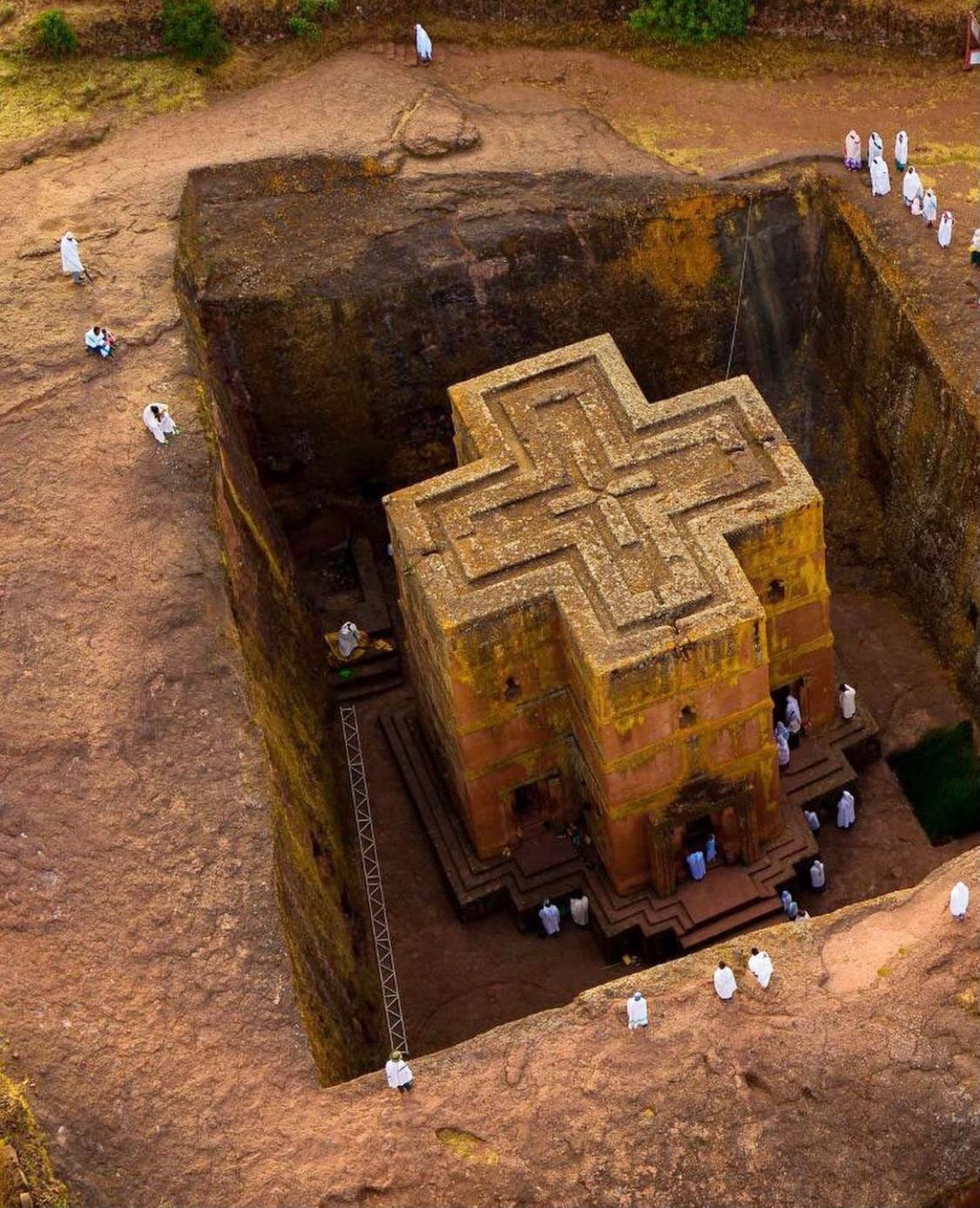
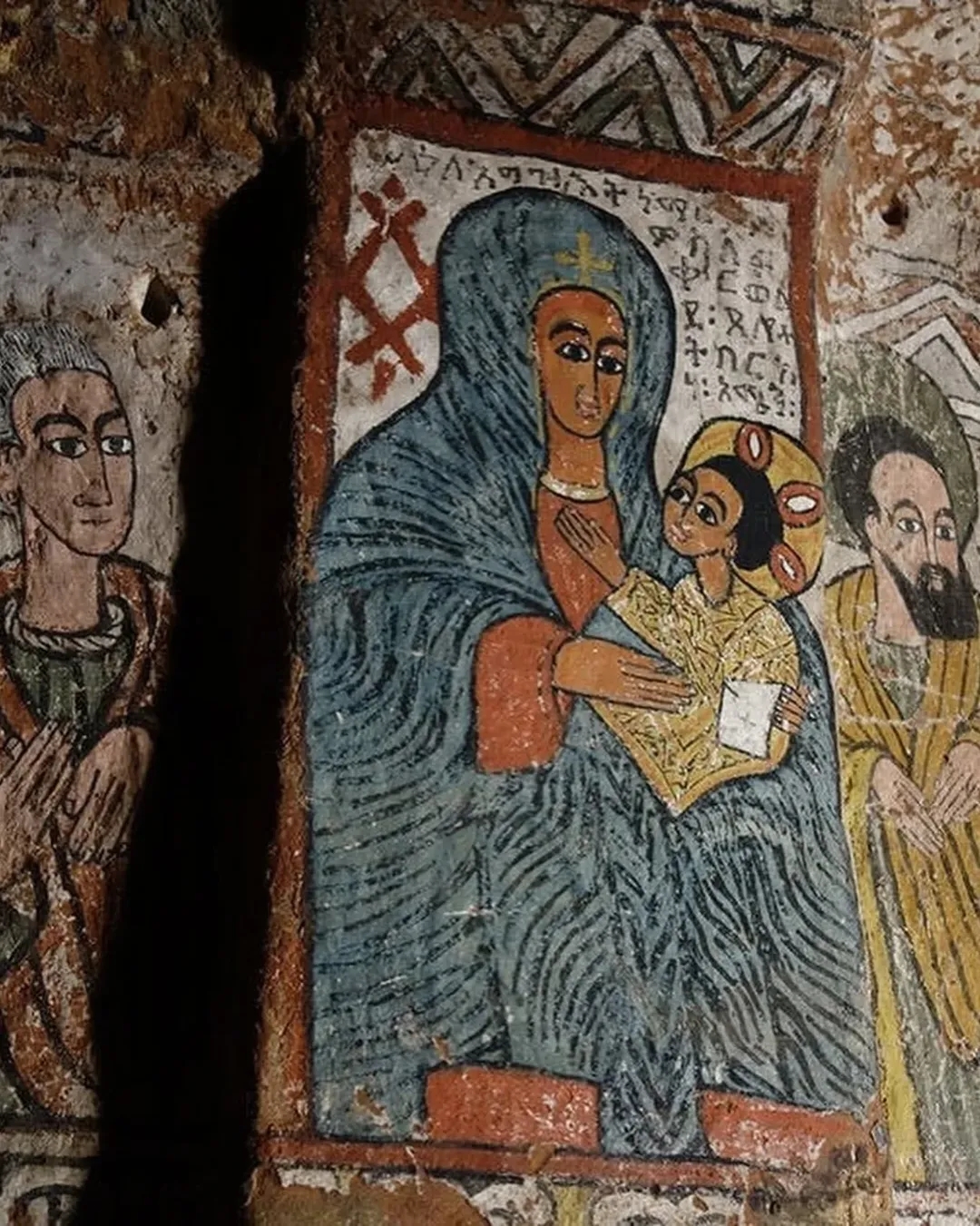
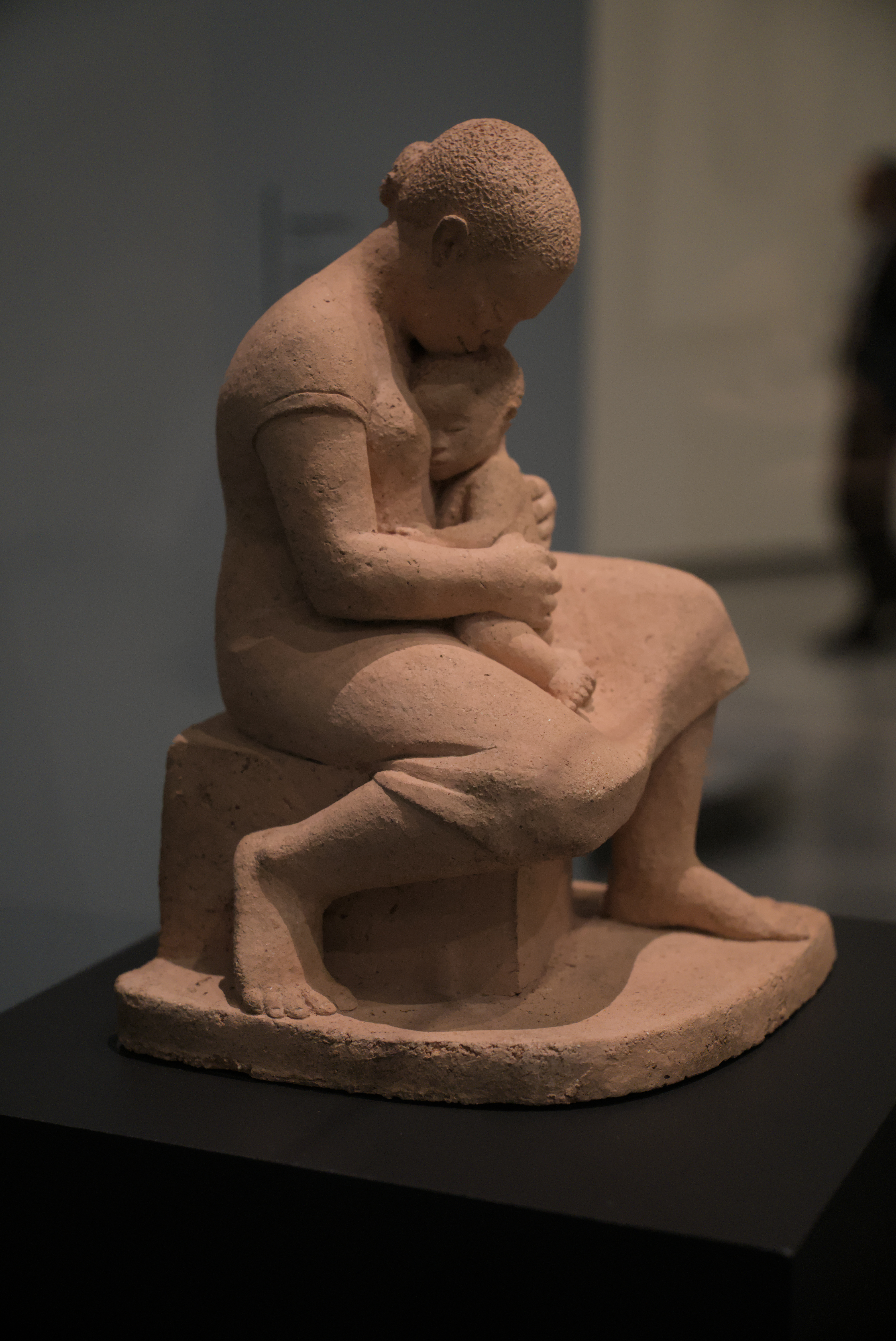


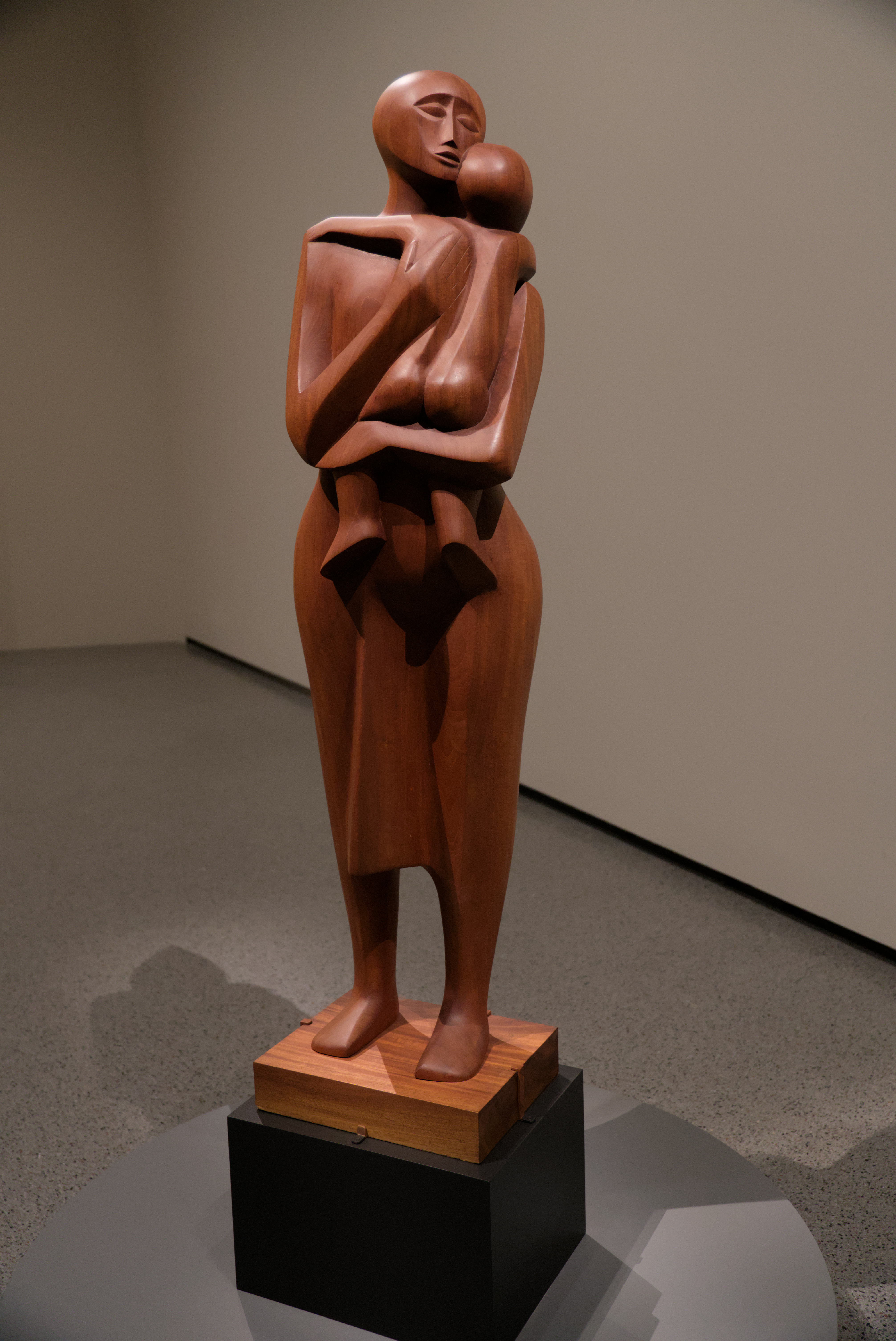
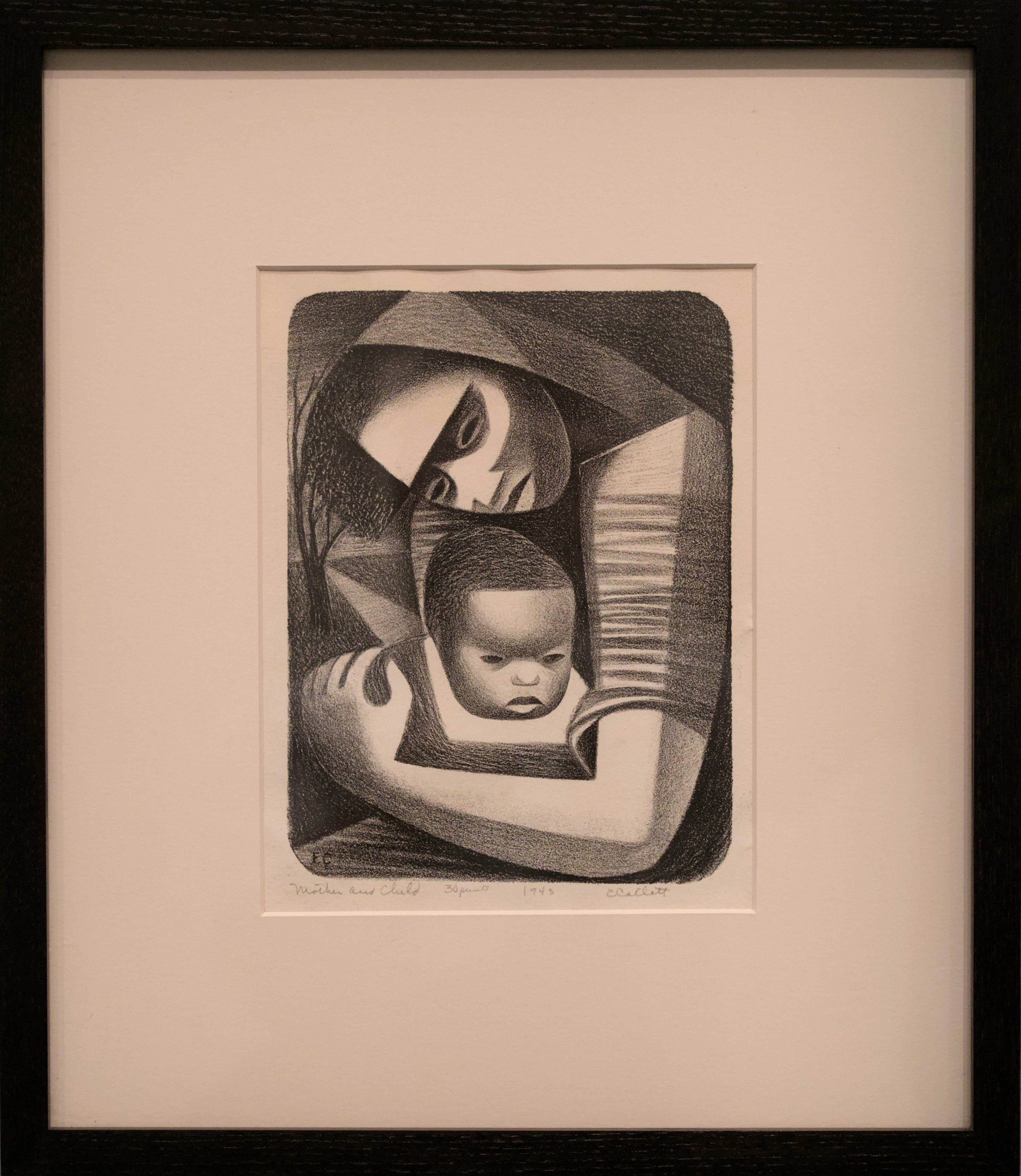
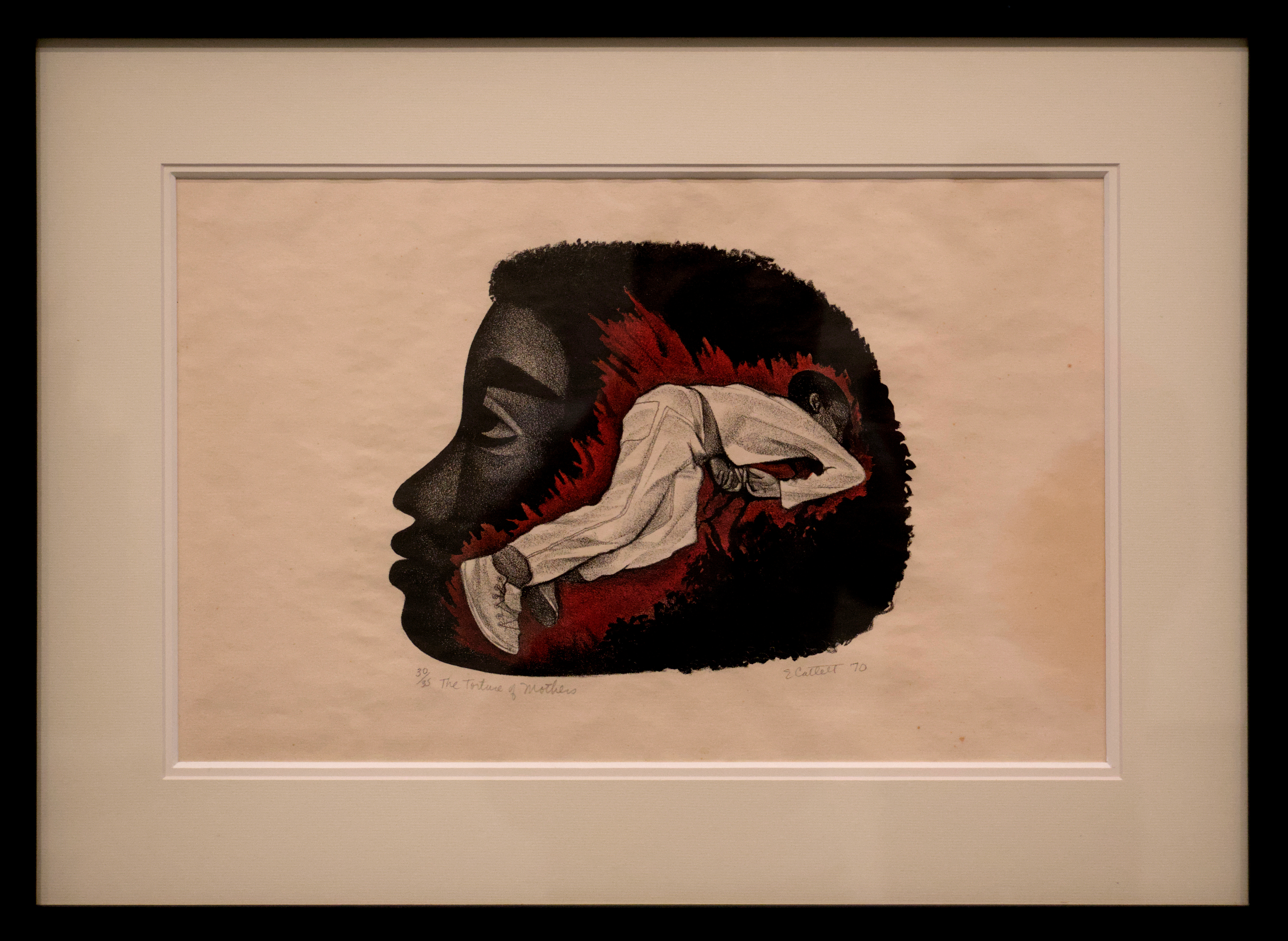


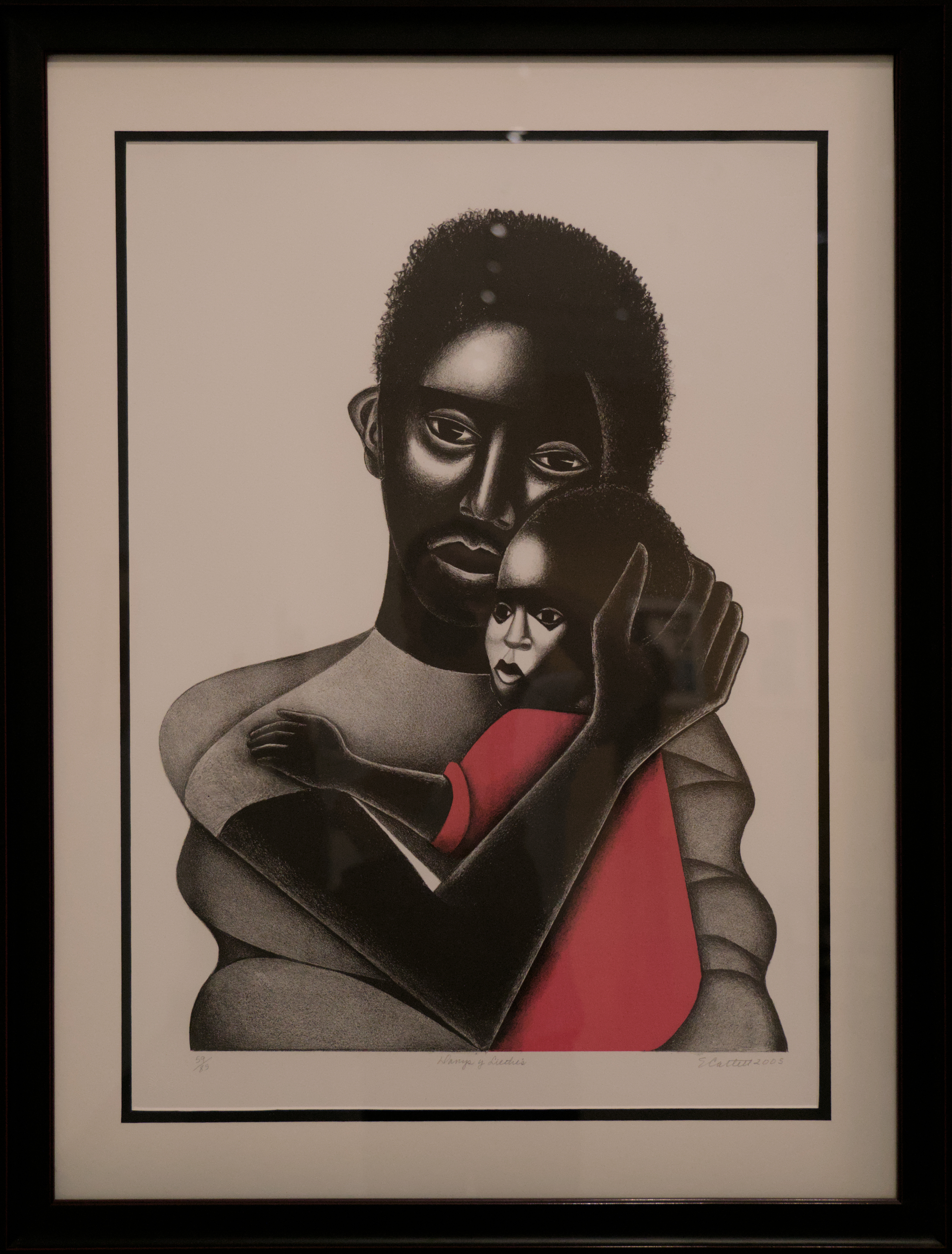

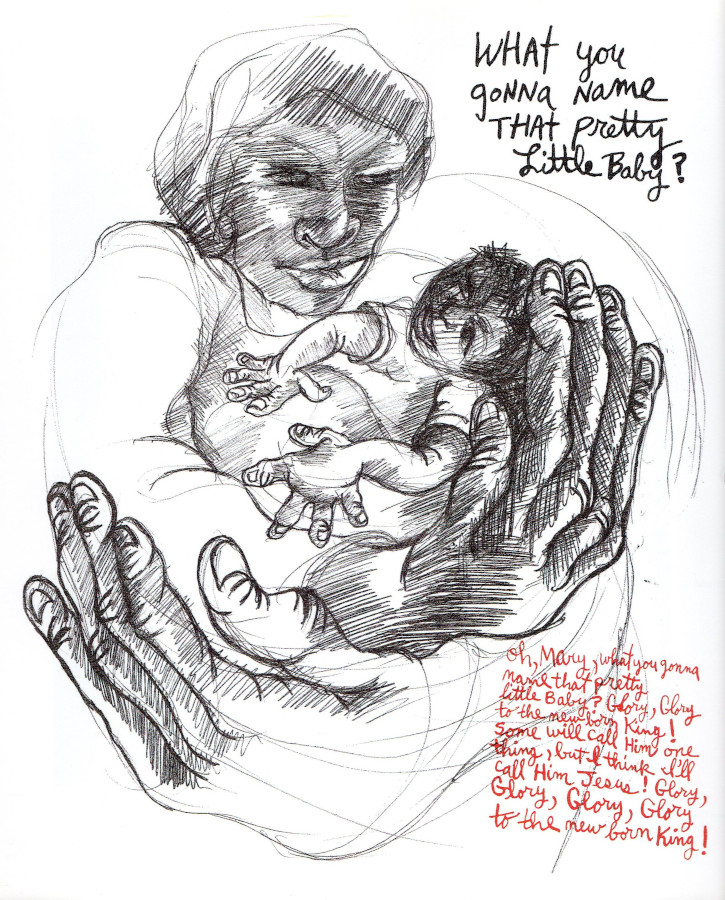

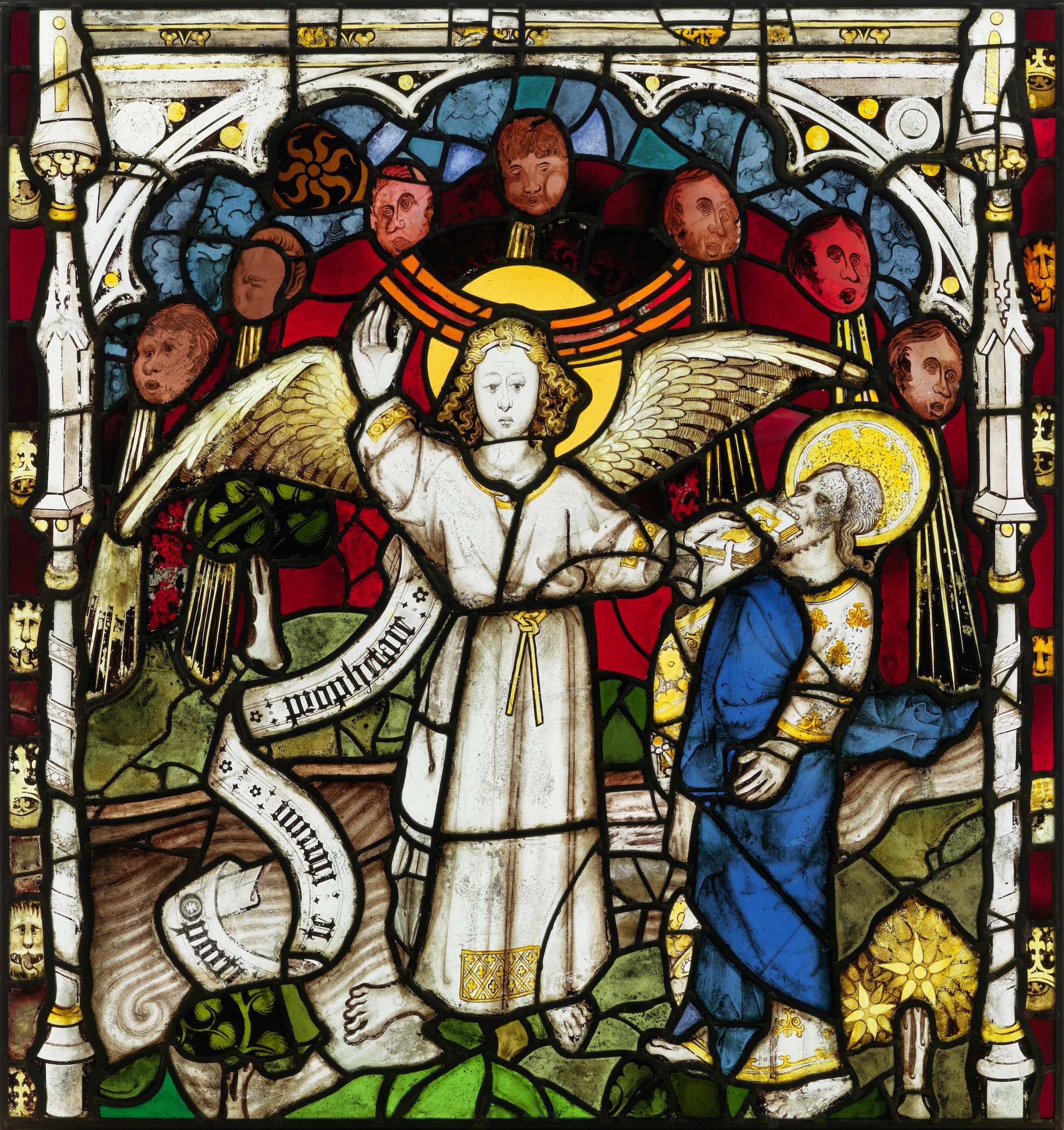
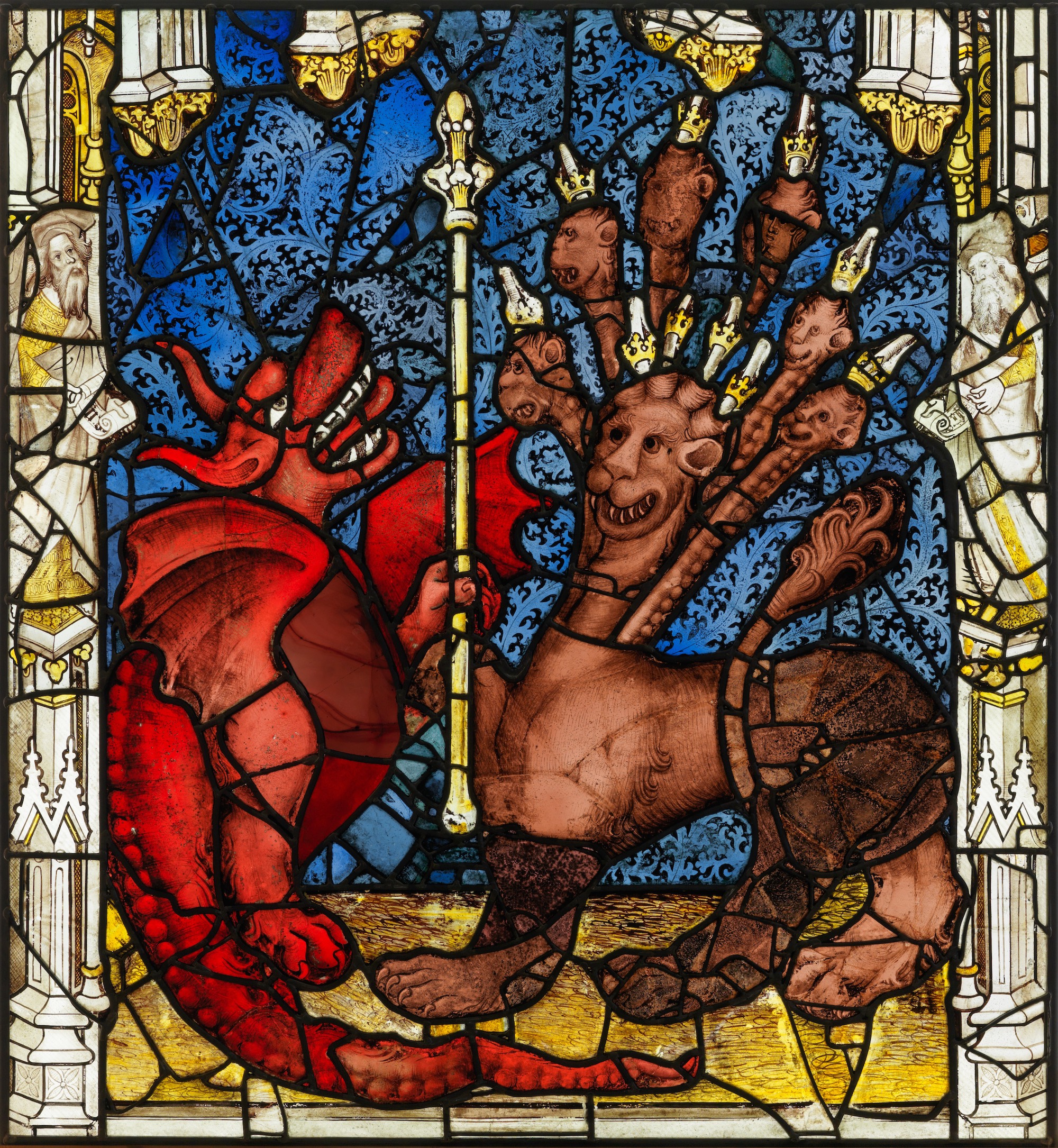
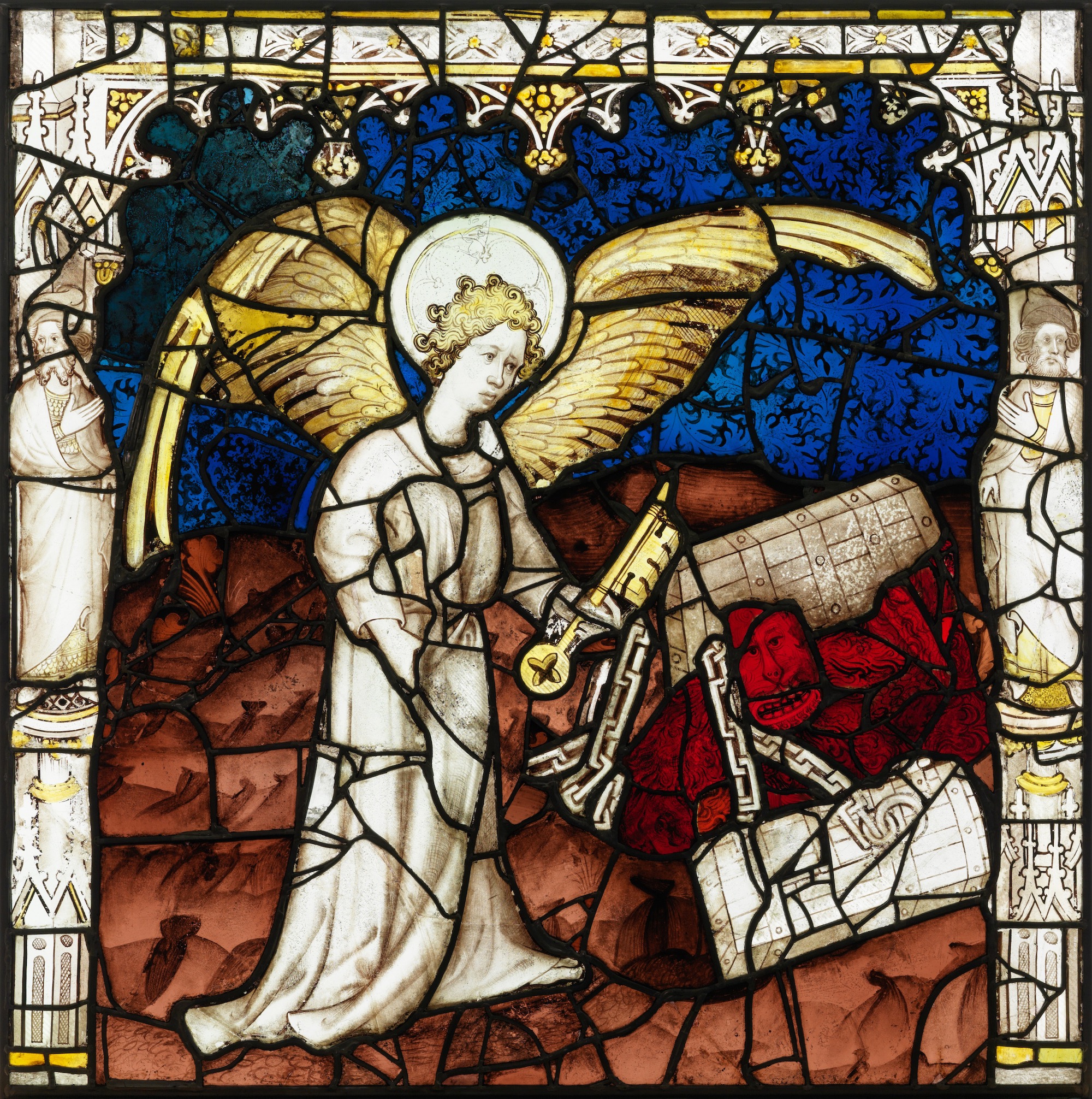
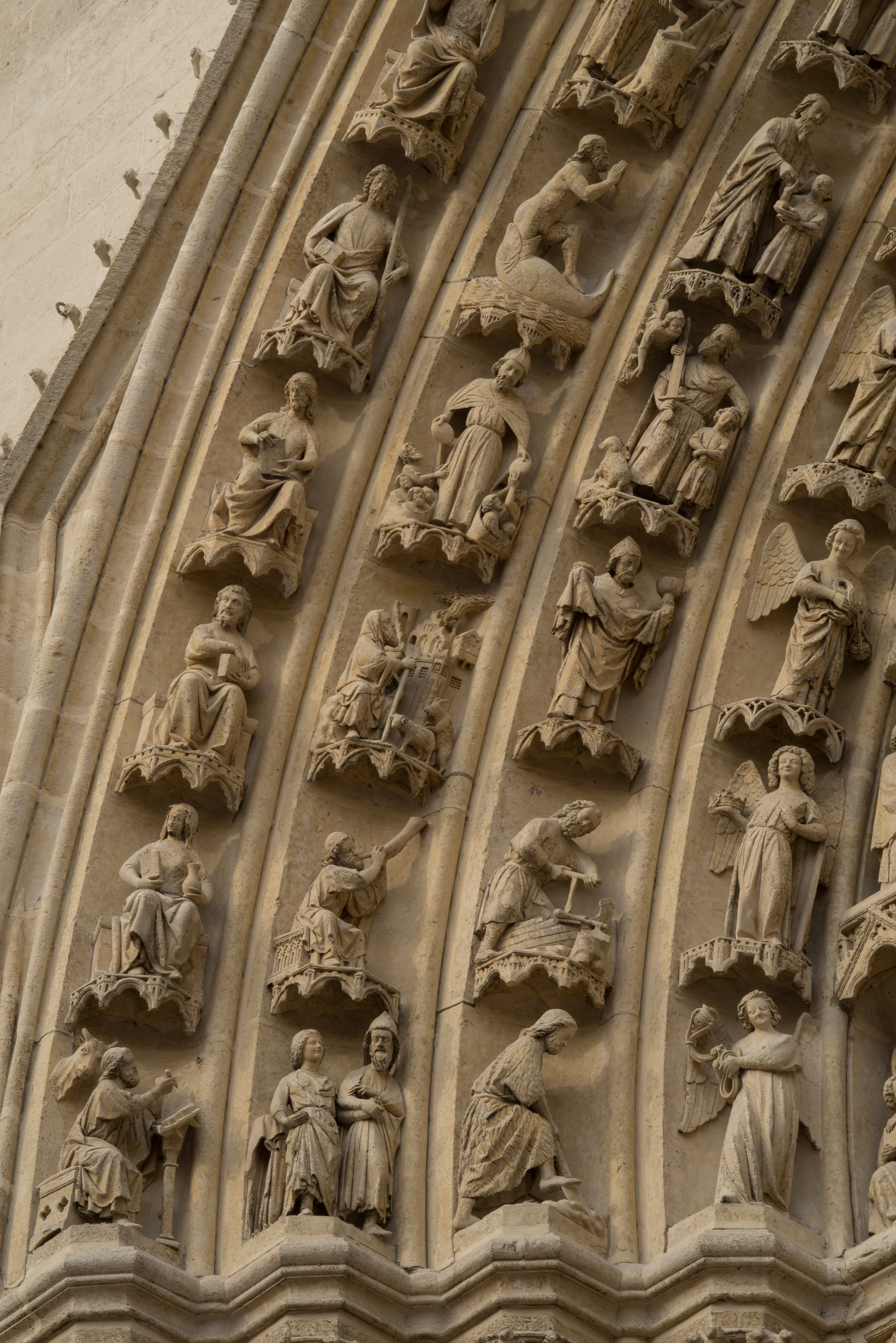


 Art & Theology