
Roundup: Trilingual antiwar song, rock-hewn churches of Ethiopia, “Sacred Harp Singing in the Age of AI,” and more

PRAYER: “God, I Wake” by Rev. Maren Tirabassi: A morning prayer for Ordinary Time.

+++

SONG: “Sólo le pido a Dios” (I Only Ask of God), performed by the Alma Sufí Ensamble: This is a cover of a 1978 song written in Spanish by the Argentine folk rock singer-songwriter León Gieco—a personal prayer that he would not be unfeeling, not numb to injustice. In a November 2023 collaboration with the Alma Sufí Ensamble, Gieco joined the Argentine Jewish cantor Gastón Saied (also a guest artist) and the ensemble’s own Nuri Nardelli, a practicing Sufi (Muslim mystic), in singing the song in Spanish, Hebrew, and Arabic, respectively. “Three languages, one heart. And one prayer for peace in the Middle East,” they write. View the original Spanish lyrics and English translation here.

+++

VIDEOS:

The following videos are two of thirteen—the ones focusing on the continent’s Christian heritage—from the docuseries Africa’s Cultural Landmarks, produced by the Metropolitan Museum of Art in collaboration with the World Monuments Fund and directed by Sosena Solomon. The series was commissioned to coincide with the reopening of the museum’s Arts of Africa galleries this May, after being closed for four years as part of a major redesign and renovation of the Michael C. Rockefeller Wing.

>> “Rock-Hewn Churches of Lalibela, Ethiopia”: “Stepping into one of the rock-hewn churches of Lalibela is an experience unlike any other. Carved directly from volcanic rock, from the top to bottom, unlike traditional buildings built from the ground up, the eleven wondrous churches of Lalibela are monumental expressions of devotion and symbols of Ethiopia’s spiritual heartland. Visually captivating and rich with personal insights from priests entrusted with care of the churches, this documentary reveals how these sanctuaries—both magnificent and fragile—face the constant threat of erosion. Meet the dedicated guardians balancing conservation and sacred duty, to ensure Lalibela’s living pilgrimage tradition thrives for generations to come.”

Bete Giyorgis, Lalibela, Ethiopia
Bete Giyorgis (Church of Saint George), Lalibela, Ethiopia, 13th century

>> “Rock-Hewn Churches of Tigray, Ethiopia”: “High in Ethiopia’s Northern Highlands, the rock-hewn churches of Tigray stand as breathtaking sanctuaries of faith carved into sandstone cliffs. For centuries, some 120 rock-hewn churches, and the paintings and artifacts preserved within their walls, were protected by their remote locations. However, during the 2020–2022 war in Tigray, some churches were targeted, and the use of heavy weapons resulted in vibrations that caused cracks in the stone. Through evocative imagery and intimate testimonies, this documentary explores the endurance of these remarkable sites of devotion, as local priests reflect on the spiritual and cultural legacies at risk.”
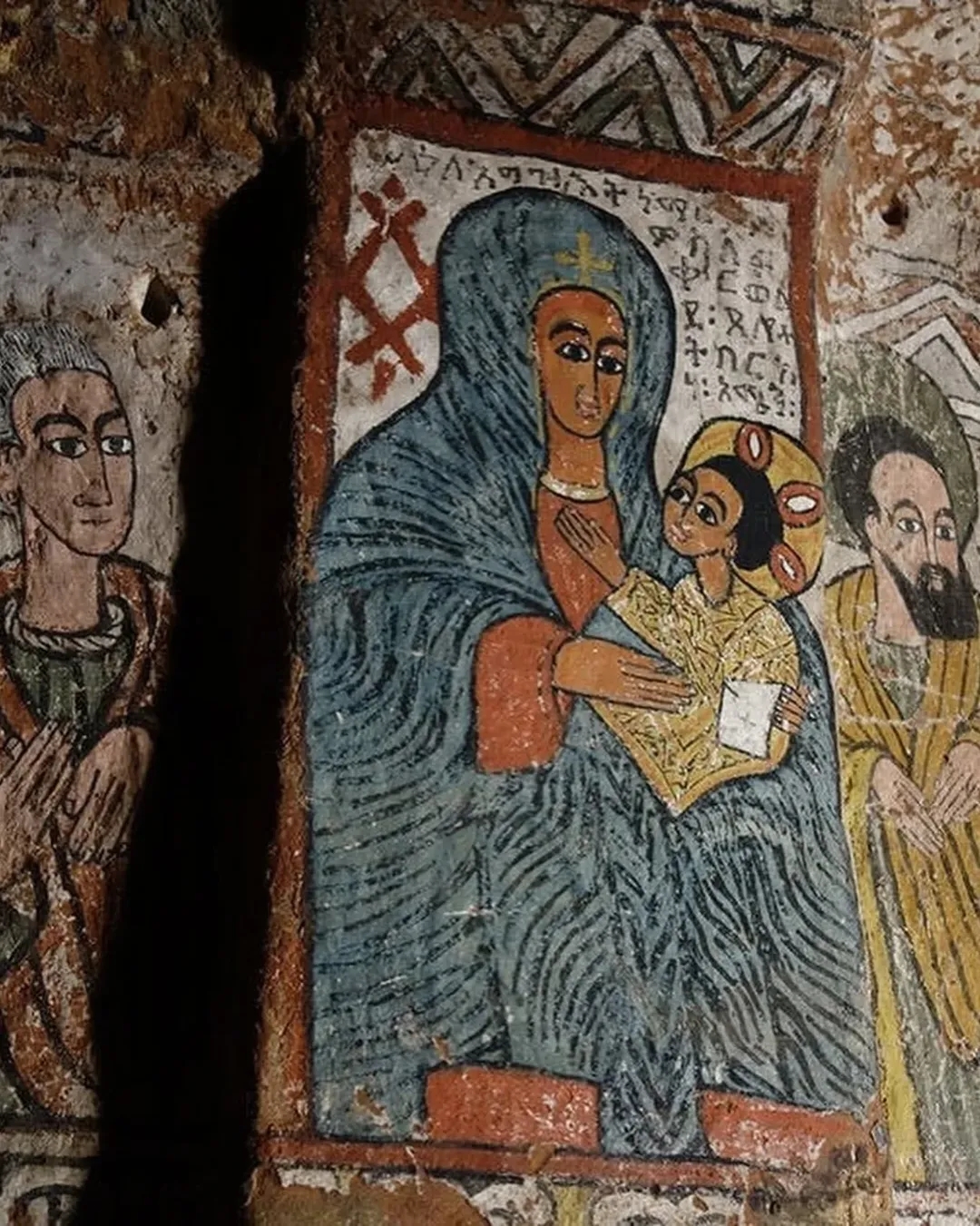
Madonna and Child (Abuna Yemata, Ethiopia)
Virgin and Child wall painting, 15th century, inside Abuna Yemata Guh (The Chapel Near the Sky) in Tigray, Ethiopia, which contains the best-preserved medieval paintings in the region

+++

ESSAY: “Shaped for People: Sacred Harp Singing in the Age of AI” by Mary Margaret Alvarado: From Image journal’s summer 2025 issue: “What is that, I thought, when I first heard shape note singing. It was groaning, and some voices keened. It was loud. It was muscular, this music. There was glory, but it was not pretty. The voices did not blend, and the sound was not nice. All I knew was that I wanted to hear it again. Maybe it seemed to me like an aesthetic that does not lie? I feel surrounded, often, by aesthetics that do lie. . . . So there’s a contrarian appeal to a song that sounds sung by humans in their (young, old, crooked, fat, gorgeous, hairy, halt, jacked, sexy, bald, injured, hale) human bodies . . .”

Writer Mary Margaret Alvarado reflects on her experiences participating in shape-note hymn sings, a democratic form of communal music making using the “sacred harp” of the human voice. She provides an abridged history of such singing, which developed in late eighteenth- and early nineteenth-century New England but is now carried on throughout the US and in the UK and Germany. I’d love to take part in a shape-note hymn sing someday, as I’ve long been drawn to the sound and tradition, which I know only from recordings. Besides the small gatherings organized by local communities, there are also large conventions, and I’ve been intrigued to learn that, despite the hymns’ deep rootedness in Christianity, non-Christians are often among the attendees.

Below are a few of the hymns Alvarado mentions in her essay: “Youth like the Spring Will Soon Be Gone” (MORNING SUN), “David’s Lamentation” over the death of his son Absalom, and “I’m Not Ashamed of Jesus” (CORINTH). Traditionally, the singers start by singing through an entire verse using only the four syllables of the Sacred Harp notation system (fa, sol, la, mi) as their lyrics, to orient themselves to the tune.

To browse previous Art & Theology posts that have featured hymns from the Sacred Harp tradition—albeit not all performed in a traditional manner; several are arranged for soloists or otherwise stylistically adapted—see https://artandtheology.org/tag/sacred-harp/.

+++

NEW ALBUM: Radiant Dawn by the Gesualdo Six: Released August 1 by the British vocal ensemble the Gesualdo Six, this album features “an ethereal combination of trumpet and voices to explore different shades of light . . . from the soft, golden glow of a summer evening as shadows lengthen to the shimmering of moonlight on calm waters,” writes director Owain Park. “Some texts contrast the terror of darkness with the brilliance of dazzling sunlight; others explore the blurred boundaries between heaven and earth. Plainchant threads this programme together . . .” A range of composers are represented, from the Middle Ages to the present day.

Several of the songs are based on biblical episodes—Simeon’s response to having held the Christ child in the temple, the transfiguration of Christ on Mount Tabor, the arrival of the holy women at Jesus’s tomb on Easter morning, the walk to Emmaus—or passages such as Psalm 5:2 (“O hearken thou . . .”) and Revelation 21:23 (“And the city had no need of the sun . . .”). There are bedtime prayers, a meditation on the glory of the angels, an O Antiphon for the approach of Christmas, and settings of contemporary poems, like “Grandmother Moon” by the Mi’kmaq poet Mary Louise Martin and “Aura” by Emily Berry, about the death of her mother. View the track list at https://www.hyperion-records.co.uk/dc.asp?dc=D_CDA68465.

Below, from the album, is the Gesualdo Six’s performance of “Night Prayer” by Alec Roth, a setting of the Te lucis ante terminum, featuring Matilda Lloyd on trumpet. “The stark setting reminds me of the ravages of war,” one YouTube user remarks. “The singing, of a prayer sent out over the carnage, blessing those who have suffered. Sacred space indeed.”
Roundup: Songs of thanksgiving, NYC art exhibitions, and more

SPOTIFY PLAYLIST: November 2024 (Art & Theology)

+++

SONGS:

In addition to the new, nonthematic playlist above, I also have a Thanksgiving Playlist that I published in 2021 and have been adding to sporadically. Here are three new songs, among others, that you can hear on it:

>> “I Just Want to Thank You, Lord” by Lynda Randle: Singer-songwriter Lynda Randle has been performing on the Gaither Homecoming videos and tours since 1993. Here she sings one of her original gospel songs with Gayle Mayes and Angela Primm.

>> “Thanks a Lot” by Raffi: Raffi Cavoukian, who goes by his first name only, is an Armenian Canadian children’s singer-songwriter and book author, best known for his song “Baby Beluga.” “Thanks a Lot” expresses gratitude—presumably to God, though God is not named—for the sun, clouds, wind, birds, stars, “the wondering me,” and so on. This live recording is on the 1984 release A Young Children’s Concert with Raffi. I’m guessing he told the kids in the audience to close their eyes, to help cultivate a prayerful state.

>> “Herraa Hyvää Kiittäkää” (Thank the Good Lord) by Herännäisnuorten kuoro: This hymn was originally written in Swedish by Jesper Swedberg in 1694 and was translated into Finnish six years later. It uses an older (1640) tune—nice and hearty! and in a minor key—by the German composer Heinrich Albert. You can follow along with the Finnish lyrics here.

+++

VIDEO: Jazz Vespers Worship Service, Duke Chapel, November 19, 2019: Duke University in Durham, North Carolina, has hosted a Jazz Vespers worship service nearly every March and November since 2014, a collaboration between Duke Chapel and the Duke Jazz Program. In this recorded service from the fall 2019 semester, Rev. Dr. Luke Powery (the chapel dean) leads the liturgy and Rev. Joshua Lawrence Lazard (the chapel’s minister for student engagement) delivers the sermon, which is from 1 Thessalonians 5:16–18: “Rejoice always, pray without ceasing, give thanks in all circumstances, for this is the will of God in Christ Jesus for you.” The music is led by Duke music professor John Brown, a Grammy-nominated jazz bassist and composer, and his Little Big Band. I can’t find the names of the two vocalists.

List of songs:

  • “Every Day Is a Day of Thanksgiving” by Shelby Wills
  • “Glory, Glory (Since I Laid My Burden Down)”
  • “Because of Who You Are” by Vicki Yohe
  • “I Feel Like Praising Him” by Shirley Caesar
  • “Amazing Grace” by John Newton
  • “Perfect Love Song” by Anita Wilson
  • “You Can’t Beat God Giving” by Billy Preston
  • “Thank You, Lord, for All You’ve Done for Me” by Walter Hawkins

Duke’s next Jazz Vespers service is Thursday, November 14, 2024, at 7 p.m. at Duke Chapel.

+++

LITANY: “Celebrating the Gifts of Immigrants” by Rev. Maren C. Tirabassi: “A prayer for the United States which has come to a time of conflict, when the discussion of immigration seems to be limited to a choice of two – fears of burden or pity for the vulnerable – ignoring the third truth – deep gratefulness.”

+++

VIRTUAL WORKSHOP: “Evocations: Advent Responsive Writing” with Marilyn McEntyre, Nov 26, Dec 3, Dec 10, Dec 17, 2024: Each Tuesday over the course of a month, from 7:00 to 8:30 p.m. ET, Marilyn McEntyre will be leading an online gathering of writers in reflecting on and working with words and images gleaned from centuries of song, poetry, and paintings that celebrate Advent, the season of waiting. Participants will engage in lectio divina and visio divina as a foundation for writing personal reflections, memoir, and poetry. Hosted by Image journal. Registration cost: $195.

+++

ART EXHIBITIONS:

I don’t know that I’ll be able to make it up to New York City before these two exhibitions close in January, but I will try! They both look excellent.

>> Siena: The Rise of Painting, 1300–1350, Metropolitan Museum of Art, October 13, 2024–January 26, 2025: Siena: The Rise of Painting, 1300–1350 examines an exceptional moment at the dawn of the Italian Renaissance and the pivotal role of Sienese artists—including Duccio, Pietro and Ambrogio Lorenzetti, and Simone Martini—in defining Western painting. In the decades leading up to the catastrophic onset of the plague around 1350, Siena was the site of phenomenal artistic innovation and activity. While Florence is often positioned as the center of the Renaissance, this presentation offers a fresh perspective on the importance of Siena, from Duccio’s profound influence on a new generation of painters to the development of narrative altarpieces and the dissemination of artistic styles beyond Italy.”

The New York Times published a glowing review of the exhibition, calling it “revelatory . . . the art show of the season.” Here’s a video tour:

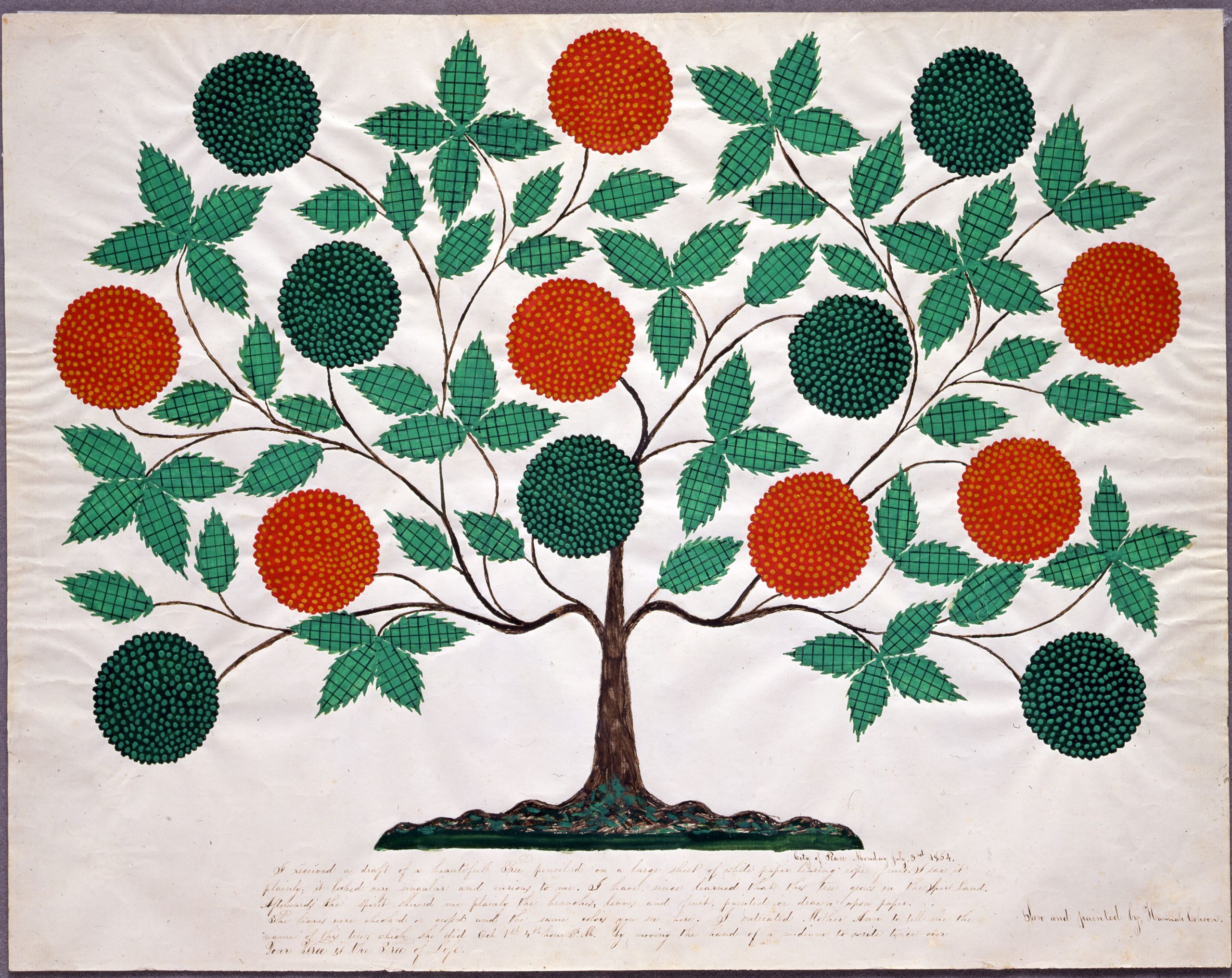
>> Anything but Simple: Gift Drawings and the Shaker Aesthetic, American Folk Art Museum, September 13, 2024–January 26, 2025: “The Shakers, often celebrated for their minimalist approach to design, will be showcased in a new light with the exhibition Anything but Simple: Gift Drawings and the Shaker Aesthetic. Made by women in the mid-19th century and believed to represent divine messages, the ‘gift’ drawings on display represent a departure from the simplicity typically associated with Shaker material culture.

“Opening during the 250th year of Shakerism in the United States, the exhibition features drawings widely considered to be among the finest surviving examples of this rare type. These symbols of love and nature were often given as ‘tokens’ to other Shakers during meetings. Brightly colored and replete with intricate ornamentation, they represent a stunning world of celestial imagery. Compared to examples of Shaker clothing and furniture that will also be included in the exhibition, the vibrancy of the drawings will mark a distinct contrast with the clean lines typically associated with Shaker design.”

Cohoon, Hannah_The Tree of Life
Hannah Cohoon (American, 1788–1864), The Tree of Life, 1854. Ink and watercolor on paper, 18 1/8 × 23 5/16 in. Collection of the Hancock Shaker Village, Pittsfield, Massachusetts.

“Improv on 1 Corinthians 13 for Ash Wednesday on Valentine’s Day” by Rev. Maren Tirabassi

If I speak in tongues of justice or spirituality,
but do not have ashes,
I am a self-congratulating vigil,
a Sunday service inspired by itself.

If I have social media outreach,
a labyrinth in the church garden,
Bible study in the brewpub,
and if I have a capital campaign
to remove pews, put in church chairs,
and even add a coffee shop,
but do not have ashes, I am nothing.

If I give to church-wide offerings,
and go on mission trips so that I may boast,
but do not have ashes, I gain nothing.

Ashes are awkward; ashes are dirty;
ashes, like love,
are not envious, boastful, arrogant, or rude.
Ashes do not insist on a perfect Lent;
they do not even need to be in church
or be a gimmick getting folks to church;
they do not inventory wrongdoing,
especially the wrongdoing of others,
but rejoice in the precious now,
the very fragility of life.

Ashes bear love, believe in love,
hope in the possibility
of forgiveness for everyone,
endure even times of lovelessness.
Forgiveness never ends.

As for spiritual practices,
they will come to an end;
as for precious old hymns
and passionate praise songs,
they will grow quiet;
as for theology and faith formation,
believe me, it will shift and change again.

For churches are always reaching
for a part of things,
while those who flee church
reach for another part,
but when the full forgiveness comes,
it will look more like Valentine’s Day.

When I was a child, I said, “I love you,”
I cut out pink and red hearts,
I sent them to everyone, even the bullies,
but when I became an adult,
I decided to make it more complicated.

Now in our churches and lives
we have become too fond of mirrors,
but someday we will see each other
face to smudged face.
Now I love only in part;
then I will love fully,
even as I have been fully loved.

Today ashes, dust,
and a child’s pink paper art abide, these three;
but the greatest of these is the heart.

Source: https://www.facebook.com/maren.tirabassi/posts/7212956592101295 [HT]