
Emily Dickinson (1830–1886) of Amherst, Massachusetts, is one of America’s most celebrated poets. There are hundreds of musical settings, from various genres, of her poems. Here are ten I really like.
(Search the archive: https://artandtheology.org/tag/emily-dickinson/)
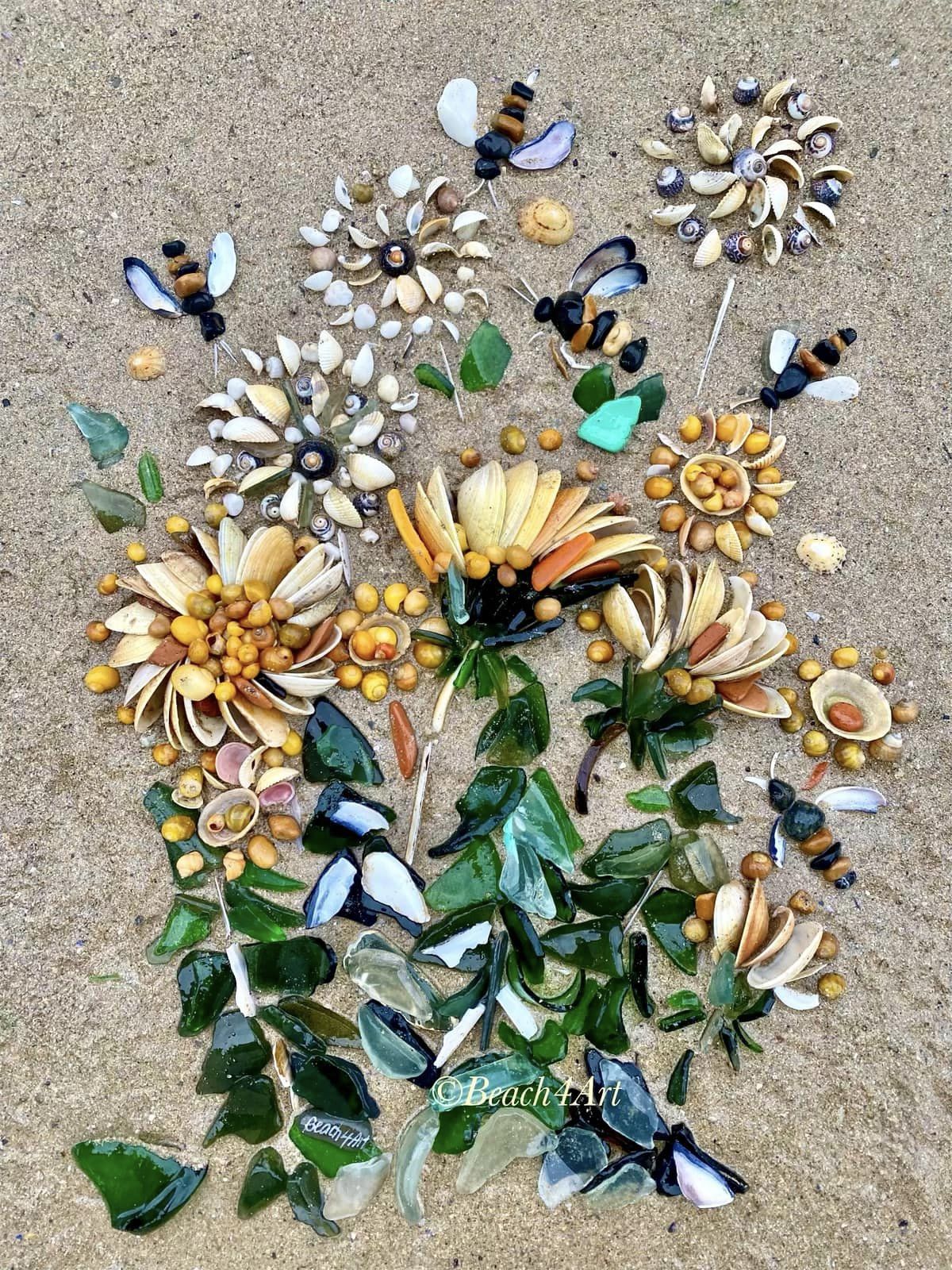
1. “I’m Nobody” by Emma Wallace: This is the first poem I ever read by Dickinson—in sixth grade. I was hooked, and I relished the assignment to memorize it and recite it to the class. The idea of being famous was apparently distasteful to Dickinson, and though she was a prolific writer of almost 1,800 poems, only ten were published during her lifetime, and those anonymously; some she sent in letters to friends, but most she kept private. She wrote this one in 1861, and it has contributed to her mystique. Singer-songwriter Emma Wallace turned it into a lovely, understated, minor-key waltz for The Thing with Feathers (2021), one of her several literary-themed albums.
I’m Nobody! Who are you?
Are you – Nobody – too?
Then there’s a pair of us!
Don’t tell! they’d advertise* – you know!How dreary – to be – Somebody!
How public – like a Frog –
To tell your name – the livelong June –
To an admiring Bog!
* Dickinson often provided alternative words in the margins of her pages, which some editors have favored; “advertise” she marked as a possible substitute for “banish us.”
2. “I Shall Not Live in Vain” by Bard and Ceilidh (Mary Vanhoozer): Mary Vanhoozer’s debut album, Songs of Day and Night (2015), comprises original settings of classic poems by the likes of Emily Dickinson, Christina Rossetti, Henry Wadsworth Longfellow, and others. “Music has a unique ability to transform ordinary things into special things—the mundane into the extraordinary,” she writes. “This song cycle is all about exploring that further. Each song roughly represents an hour of the day. The CD begins at dawn and ends at dusk. As we travel through the day, we learn to perceive familiar objects and situations in a new light, infusing joy and a sense of mystery into the everyday experience.” For this track she is joined by her husband, Josh Rodriguez, on guitar. The text is a sort of purpose statement, committing to a life of love, kindness, and compassionate outreach.
If I can stop one Heart from breaking
I shall not live in vain
If I can ease one Life the Aching
Or cool one PainOr help one fainting Robin
Unto his Nest again
I shall not live in vain.
3. “His Feet Are Shod with Gauze” by Emily Lau: The natural world, especially bees, was one of Dickinson’s favorite topics to write about. I think of her as a poet of summer. (Other great bee poems: “Bee! I’m expecting you!” and “Bees are Black, with Gilt Surcingles –.”) “His Feet are shod with Gauze –,” a panegyric, praises bees’ delicacy, might, and beauty. This musical setting is part of the suite Seven Dickinson Songs by composer and vocalist Emily Lau, which appears on her album Isle of Majesty (2019). Be sure to check out the other songs, including “I Can Wade Grief” and “I Never Saw a Moor,” in which Lau is joined by her chamber music ensemble, The Broken Consort.
His Feet are shod with Gauze –
His Helmet, is of Gold,
His Breast, a single Onyx
With Chrysophras, inlaid –His Labor is a Chant –
His Idleness – a Tune –
Oh, for a Bee’s experience
Of Clovers, and of Noon!
4. “Some keep the Sabbath going to Church” by Michael McGuane: Dickinson was raised as a Congregationalist but never officially joined the church and by 1868 had stopped attending altogether. Her poems vary in tone toward Christianity, with some expressing devout sentiments and others irreverence. One thing that’s clear is that she often encountered God in nature. In this poem the fruit trees create a sanctuary for her and the birds serve as choir—an elevating, worshipful experience. Christians throughout history have spoken of how the “book of nature” complements the book of scripture, both revealing God’s truth. Here Dickinson acknowledges the same, emphasizing the goodness of creation, our enjoyment of which is sacred. On YouTube, the Americana musician Michael McGuane performs a guitar-picked, folk-rock tune he wrote for the poem.
Some keep the Sabbath going to Church –
I keep it, staying at Home –
With a Bobolink for a Chorister –
And an Orchard, for a Dome –Some keep the Sabbath in Surplice –
I, just wear my Wings –
And instead of tolling the Bell, for Church,
Our little Sexton – sings.God preaches, a noted Clergyman –
And the sermon is never long,
So instead of getting to Heaven, at last –
I’m going, all along.
5. “Split the Lark” by Drum & Lace (Sofia degli Alessandri-Hultquist) and Ian Hultquist, feat. Ella Hunt: This pop music setting of “Split the Lark” was written by husband-and-wife composing duo Drum & Lace and Ian Hultquist for the Apple TV+ comedy-drama Dickinson (which I have mixed feelings about). It’s featured in season 2, episode 6, where it’s sung by Ella Hunt, the actress who plays Emily’s sister-in-law (and in the show, secret lover), Susan Huntington Gilbert Dickinson. Emily is attending an opera performance in Boston and imagines—in place of the soprano—Sue, singing her own words to her.
Split the Lark – and you’ll find the Music –
Bulb after bulb, in Silver rolled –
Scantily dealt to the Summer Morning
Saved for your Ear, when Lutes be old –Loose the Flood – you shall find it patent –
Gush after Gush, reserved for you –
Scarlet Experiment! Sceptic Thomas!
Now, do you doubt that your Bird was true?
Containing echoes of William Wordsworth’s “We murder to dissect,” this poem derides empiricism as the sole method of arriving at truth. The addressee wants to better comprehend the lark’s song, to observe the internal apparatus that enables it to make such beautiful music. Go ahead, the speaker exasperatedly tells him: take up your scalpel and dissect the bird. You’ll unleash a flood of blood and guts (“bulb after bulb” could refer to globular anatomical structures—e.g., the aortic bulb, the jugular bulb—or organs, or to musical notes). But would such prying really bring you closer to knowing the lark? Your experiment will have only caused the song to stop. The poem references the apostle Thomas, who demanded physical proof of Christ’s resurrection (personally, I think he’s unfairly maligned for this; his probing does, in fact, lead him to a deeper level of knowledge).
Dickinson was very much a supporter of science, but she also recognized its limitations when it comes to explaining certain mysteries or trying to produce physical evidence of the invisible. On one level, this poem may describe Dickinson’s stance on poetry, which, once you start to pick it apart, can sometimes lose its magic. I’m all for poetic analysis, but there’s something to be said for simply letting the sounds and musicality of poetic verse wash over you without going at it with a scalpel.
6. “I Had No Time to Hate” by Gerda Blok-Wilson: Look what Dickinson can do with the cliché “Life is too short to be angry”! She had a dark wit, which you get a glimmer of here. The poem is structured in two stanzas, the first about hate, so we might expect the second to wax rhapsodic about the virtues of love. But instead we get a matter-of-fact admission that life is also too short to complete the work of love. However, because we must choose either hate or love, she chooses love—it’s for us to fill in why it’s the superior choice. I like the interplay of littleness and largeness, suggesting that even in small caring acts, there’s a substantiality and a sufficiency, no matter how imperfect our love may be. The following recording, from June 2021, is of the premiere performance of Gerda Blok-Wilson’s choral setting of “I had no time to Hate –” by the Vancouver Chamber Choir, directed by Kari Turunen.
I had no time to Hate –
Because
The Grave would hinder me –
And Life was not so
Ample I
Could finish – Enmity –Nor had I time to Love –
But since
Some Industry must be –
The little Toil of Love –
I thought
Be large enough for Me –
7. “I felt a Funeral, in my Brain” by Andrew Bird, feat. Phoebe Bridgers: This is another Dickinson poem that made a strong impression on me when I read it in school—what a fabulous first line. Though some have interpreted the poem as Dickinson imagining her own funeral, I see the funeral as a metaphor—for, possibly, the loss of a cherished friendship, long-held belief, or hope or dream, any of which would take a heavy psychological toll, or for the temporary loss of sanity, a mental breakdown, due to some stressor. The mood is oppressive, and the speaker grows increasingly unraveled. The singer-songwriter, violinist, and whistler Andrew Bird set the poem to “a simple two-note melody,” he said, and, in collaboration with the Emily Dickinson Museum in Amherst, made a music video featuring Dickinson’s handwriting and footage of her lifelong home.
I felt a Funeral, in my Brain,
And Mourners to and fro
Kept treading – treading – till it seemed
That Sense was breaking through –And when they all were seated,
A Service, like a Drum –
Kept beating – beating – till I thought
My mind was going numb –And then I heard them lift a Box
And creak across my Soul
With those same Boots of Lead, again,
Then Space – began to toll,As all the Heavens were a Bell,
And Being, but an Ear,
And I, and Silence, some strange Race
Wrecked, solitary, here –And then a Plank in Reason, broke,
And I dropped down, and down –
And hit a World, at every plunge,
And Finished knowing – then –
8. “Because I Could Not Stop for Death” by Susan McKeown: From the 2002 album Prophecy by Susan McKeown, a Grammy-winning musical artist from Ireland, this song takes as its lyrics one of Dickinson’s most famous poems, one that promotes a gentle, welcoming attitude toward death. It personifies Death as a kindly gentleman driving a carriage, transporting the speaker at a casual pace past the final traces of her mortal life and into eternity. (Note: Emma Wallace, from the first entry, also wrote a compelling setting!)
Because I could not stop for Death –
He kindly stopped for me –
The Carriage held but just Ourselves –
And Immortality.We slowly drove – He knew no haste
And I had put away
My labor and my leisure too,
For His Civility –We passed the School, where Children strove
At Recess – in the Ring –
We passed the Fields of Gazing Grain –
We passed the Setting Sun –Or rather – He passed Us –
The Dews drew quivering and Chill –
For only Gossamer, my Gown –
My Tippet – only Tulle –We paused before a House that seemed
A Swelling of the Ground –
The Roof was scarcely visible –
The Cornice – in the Ground –Since then – ’tis Centuries – and yet
Feels shorter than the Day
I first surmised the Horses’ Heads
Were toward Eternity –
9. “Hope’s the Thing with Feathers” by Julie Lee: Another classic poem, this one about the warmth and persistence of hope. Julie Lee gives it an uplifting banjo tune.
“Hope” is the thing with feathers –
That perches in the soul –
And sings the tune without the words –
And never stops – at all –And sweetest – in the Gale – is heard –
And sore must be the storm –
That could abash the little Bird
That kept so many warm –I’ve heard it in the chillest land –
And on the strangest Sea –
Yet – never – in Extremity,
It asked a crumb – of me.
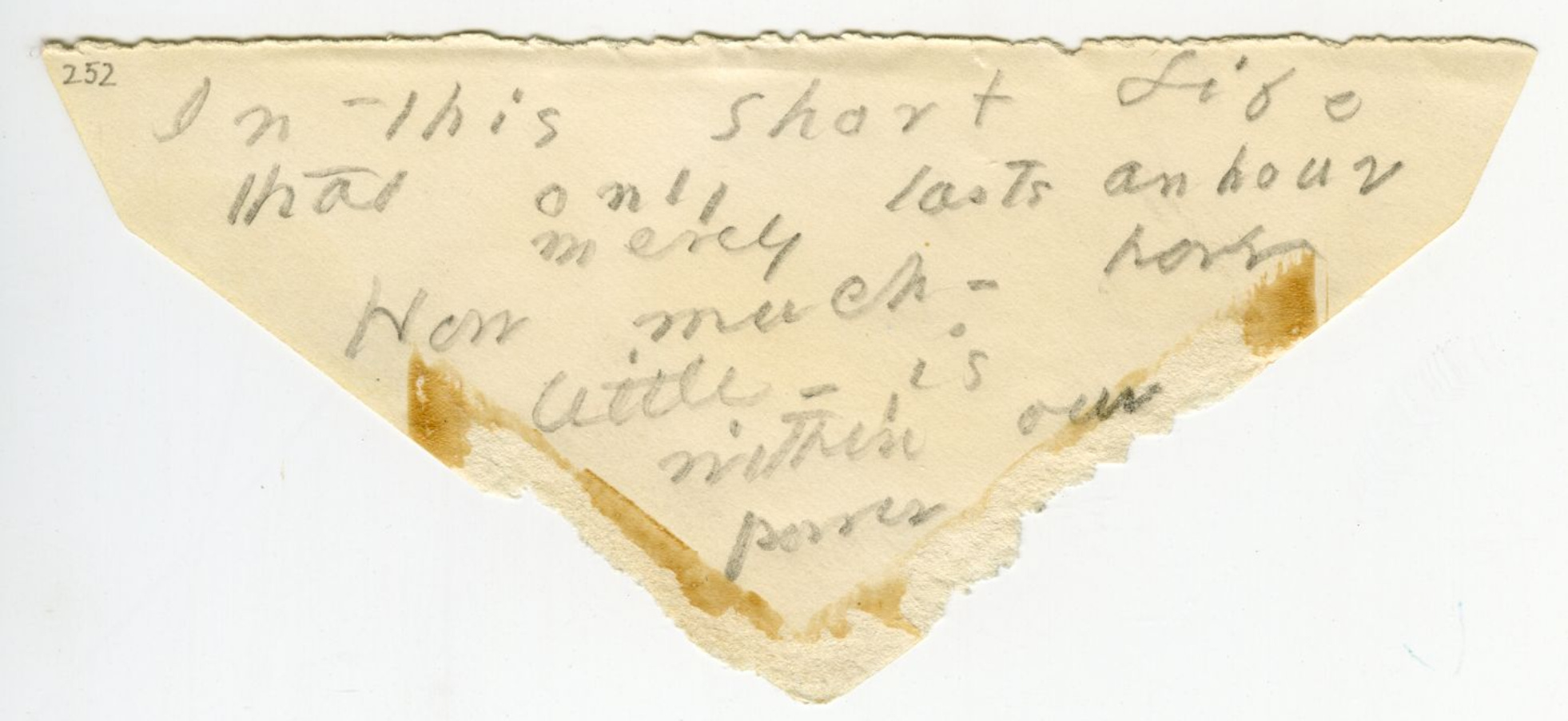
10. “In this short Life” by Scott Joiner: Dickinson wrote this compact poem of just two lines on an upcycled envelope flap, as she was wont to do, around 1873 and saved it. It expresses the paradox that we humans possess free will, a potent trait, and yet so many things are beyond our control. Composer Scott Joiner wrote a piece for voice and piano for this text, performed by Jessica Fishenfeld and Milena Gligić on the album Emily that released just this month (it features settings by Joiner of five poems by Dickinson and five by her near contemporary from across the pond, Emily Brontë). The tone is contemplative and resigned.
In this short Life that only lasts an hour
How much – how little – is within our power

 Art & Theology