Reformation Roundup

FIVE R’S FOR REFORMATION COMMEMORATION

As a guard against Reformed hubris, Churches Together in England has issued a statement urging churches to mark the Reformation’s fifth centenary with sensitivity to other branches of the faith, providing 5 R’s as guidelines. Keep the anniversary, it says, with the spirit of

Rejoicing – because of the joy in the gospel which we share, and because what we have in common is greater than that which divides; and that God is patient with our divisions, that we are coming back together and can learn from each other.

Remembering – because all three streams of the Reformation have their witnesses and one church’s celebration could be another’s painful memory; and yet all believed they acted in the cause of the gospel of Jesus Christ for their time.

Reforming – because the Church needs always to grow closer to Christ, and therefore closer to all who proclaim him Lord, and it is by the mutual witness of faith that we will approach the unity for which Christ prayed for his followers.

Repenting – because the splintering of our unity led us to formulate stereotypes and prejudices about each other’s traditions which have too often diverted our attention from our calling as witnesses together to the mercy of God in proclamation and service to the world.

Reconciling – because the call to oneness in Christ begins from the perspective of unity not division, strengthening what is held in common, even though the differences are more easily seen and experienced.

This is not to say we can’t celebrate the achievements of the Reformation (we certainly should!), but we ought not to do so with denigration toward our Catholic brothers and sisters, nor hold our own branch above reproof. All church history, before and after the major splits, is our history as a body. Read the full CTE statement here. For other initiatives to foster common witness, service, and understanding between Protestants and Catholics, see the documents “Evangelicals and Catholics Together” (1994) and “Joint Declaration on the Doctrine of Justification” (1999).

+++

ECUMENICAL ARTS SYMPOSIUM

The last two weekends in October will cap off the international “Arts and Ecumenism” symposium organized by the Mount Tabor Ecumenical Centre for Art and Spirituality to commemorate the five hundredth anniversary of the Reformation. With events in Paris, Strasbourg, and Florence, the symposium is now coming to the US to continue the discussion on Catholic and Protestant approaches to art.

The penultimate session, “Sacred Arts in North American Contexts,” will take place October 20–21 at Yale University. “Arts in Celebration: The Word in Color, Action, Music, and Form,” the final session, will take place October 27–29 at the Community of Jesus in Orleans, Massachusetts, and will include demonstrations of mosaic, fresco, and Gregorian chant; lectures and panel discussions with Timothy Verdon, William Dyrness, Deborah Sokolove, and others; exhibits of contemporary sacred art by Susan S. Kanaga and Filippo Rossi (view the catalog); liturgies of the Divine Office and Holy Eucharist; an organ recital; and a fully staged presentation of Ralph Vaughan Williams’s opera The Pilgrim’s Progress, performed by the community’s critically acclaimed Gloriae Dei Cantores choir and Elements Theatre Company. Click here for the schedule.

I stayed at the Community of Jesus last week, and trust me, $425 is a great price for two days and nights at this beautiful Cape Cod monastery, with its Benedictine hospitality, and access to a high caliber of visual, musical, and dramatic art and prominent voices in the field of Christianity and the arts. But the best part, I think, will be the opportunity to inhabit the ecumenical vision the community has established, whereby all Christians—Catholic, Protestant, and Orthodox—live together, eat together, and worship together. Some community members have taken vows of celibacy, while others have chosen marriage and live with spouse and children on the compound. Partaking of the Eucharist last Friday with brothers and sisters from other streams of Christianity and multiple generations was an experience I will not soon forget. Be sure to take advantage of the early-bird registration discount, which ends September 1.

(Click here to take a virtual tour of the Community of Jesus’s Church of the Transfiguration.)

Church of the Transfiguration
Church of the Transfiguration, Orleans, Massachusetts. Photo: Victoria Emily Jones
Vento by Filippo Rossi
Vento (detail) by Filippo Rossi, from the exhibition “Spirito Creatore”

+++

PAST LECTURE: “Visual Ecumenism” by Matthew Milliner: Milliner is an evangelical Anglican who teaches art history (his specialization is Byzantine) at a Protestant liberal arts college in Illinois. In this talk given April 7, 2017, at the Wheaton Theology Conference “Come, Let Us Eat Together!,” he discusses how we can “put on” other Christian traditions without losing our own by engaging their artistic output, by opening ourselves up to the material expressions of the gospel present all across the denominational spectrum:

I’m taking a particularly cherished part of my tradition—the law/gospel distinction—and showing that it can be found in other traditions as well. This might seem like I’m colonizing other traditions with my Protestantism, but I’m actually trying to strip my own tradition of its exclusive possession of this message and see it elsewhere, so that evangelicals can be at home in late medieval Catholic devotional manuals or in Russian Orthodox cathedrals. (19:04)

In reverse chronological fashion, he examines Lucas Cranach’s Law and Grace (Protestant), Berthold Furtmeyr’s Tree of Life and Death (Catholic), and the Sinai Pantocrator icon (Orthodox). Michelangelo’s late drawings and tomb for Pope Julius II are discussed in light of his involvement in the Spirituali, a Catholic reform movement in Italy that emphasized intensive personal study of scripture and justification by faith. More personally, Milliner describes how he was able to make it through repeated Hail Marys during a Catholic prayer service he inadvertently stumbled into one time and, on another Marian note, shares the Madonna of Mercy mural created last year by a group of Protestant art students he co-taught in Orvieto, Italy, with Bruce Herman, showing how they honored this subject that originated outside their tradition while also bringing it in line with their theological convictions—which, they discovered, were corroborated by Vatican II. In an earlier essay on visual ecumenism, Milliner wrote,

Just as there is, according to our Bibles, ‘one Lord, one faith, one baptism,’ so perhaps there is also one variegated yet unified Christian aesthetic, to which the different traditions, at their utter best, ascend. Full maturity (which for evangelicals has been a long time coming!) is not to see with Protestant, Orthodox or Catholic eyes—but with the eyes of Christ.

Madonna of Mercy (Gordon in Orvieto)
Madonna of Mercy painting by the 2016 Gordon in Orvieto cohort

Milliner has given similar talks in the past: “Toward a Visual Ecumenism,” at Duke; “Toward 2017: Visualizing Christian Unity,” at George Fox; “Altars on the Jordan and the Rhine,” at the Institute for Ecumenical Research in Strasbourg; “Against Confessional Aesthetics,” at Baylor; and “Hearing Law, Seeing Gospel: A Mockingbird History of Art,” at the 2017 Mockingbird Conference. I hope they turn into a book!

+++

UPCOMING LECTURE: “An Evening with Ken Myers: Luther’s Artistic Legacy,” Saturday, September 9, 7:30 p.m., Wallace Presbyterian Church, College Park, Maryland: To kick off its second season, the Eliot Society has scheduled Mars Hill Audio founder Ken Myers to discuss Martin Luther’s contributions to Christian hymnody. “With the help of some local musicians, Myers will examine the artistic climate Luther helped to create, as well as some of the great composers of sacred music who followed after him. The lecture will argue that the pattern of Luther’s artistic engagement provides a model for contemporary efforts to reconnect faith and the arts.” Click on the link above to reserve your free ticket.

+++

FROM THE ARCHIVES: “An early Protestant painting (commissioned by Luther)”: On my previous blog I wrote a post about an altarpiece Martin Luther commissioned from his friend Lucas Cranach to promote Protestant theology. (It’s the same painting Milliner opens his above talk with.) Luther was more accepting of religious images than many of his fellow reformers, elucidating his position in his Invocavit Sermons (1522) and in the treatise Against the Heavenly Prophets in the Matter of Images and Sacraments (1525). I plan to feature vast swaths of these texts on Art & Theology in the near future.

Law and Grace by Lucas Cranach the Elder
Lucas Cranach the Elder (German, 1472–1553), Law and Grace, 1529. Tempera on linden wood, 82.2 × 118 cm. Castle Museum Schloss Freidenstein, Gotha, Germany.

Roundup: Advent as a season of pregnancy, an Oh Hellos Christmas, jumbo cathedral tapestry, new film column, music education ministry

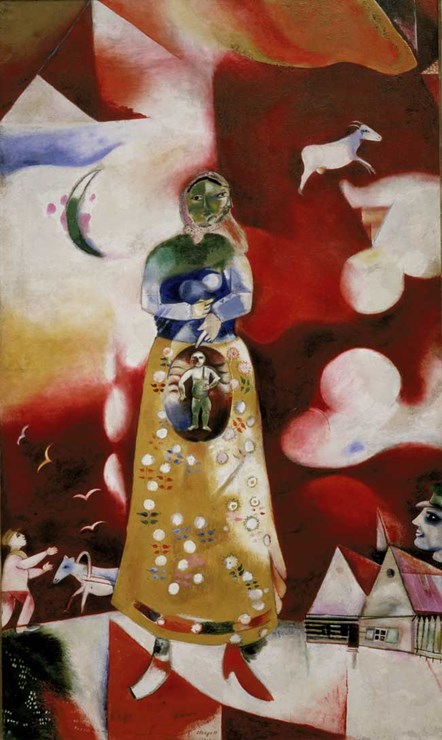
“ART OF ADVENT” SERMON: In his chapel address last December at Wheaton College, assistant professor of art history Matthew Milliner opened with a marriage analogy: If you love your spouse, you’ve got to love their parents. Do we love Mary and Joseph? Have we even met them? “Before the swaddled baby comes the swollen belly,” Milliner reminds us. He helps us dwell in those nine months before Christ’s birth, showing examples of the Virgin of the Sign icon (“ultrasound Jesus”) and Marc Chagall’s modern interpretation of it; these images are good for “target practice,” he says: for focusing our primary affections on Christ. He also shares how Mariko Mori’s video piece Miko No Inori (The Shaman-Girl’s Prayer) reminds him of a Visitation sculpture group by a fourteenth-century German artist, who inset Mary and Elizabeth’s bellies with a gem. Advent is a season of pregnancy, in which we are called to bear Christ within us. Not only that, it’s about “the pregnancy of a groaning planet,” waiting for deliverance from suffering. This address was given a few weeks after the death of Wheaton English professor Brett Foster, and Milliner notes how putting Brett’s body in the ground was an Advent act, in that we wait for it to rise.

The Pregnant Woman by Marc Chagall
Marc Chagall (Russian/French, 1887–1985), The Pregnant Woman, 1913. Oil on canvas. Stedelijk Museum Amsterdam.

+++

CHRISTMAS EXTRAVAGANZA TOUR + MUSIC DOWNLOAD: The Oh Hellos—folk rock sibling duo Maggie and Tyler Heath (and my husband Eric’s favorite band)—are hitting up eight US cities on their Christmas Extravaganza Tour this month, each show “an evening of Christmas music, carols, originals, bad jokes, sing-alongs, dancing, revelry, and all the holiday cheer you can squeeze into one room!” Sure to be featured are the four “movements” from their Family Christmas Album, which blend carol excerpts: “O Come, O Come, Emmanuel” with “The Coventry Carol”; “While Shepherds Watched Their Flocks by Night” with “O Come, All Ye Faithful”; “Silent Night”; and “Joy to the World” with “I Saw Three Ships.” I’ve embedded the first one in the player below. They’re offering this Christmas album for free download at NoiseTrade (tips appreciated), or if you want a physical disc, you can purchase it from Bandcamp.

+++

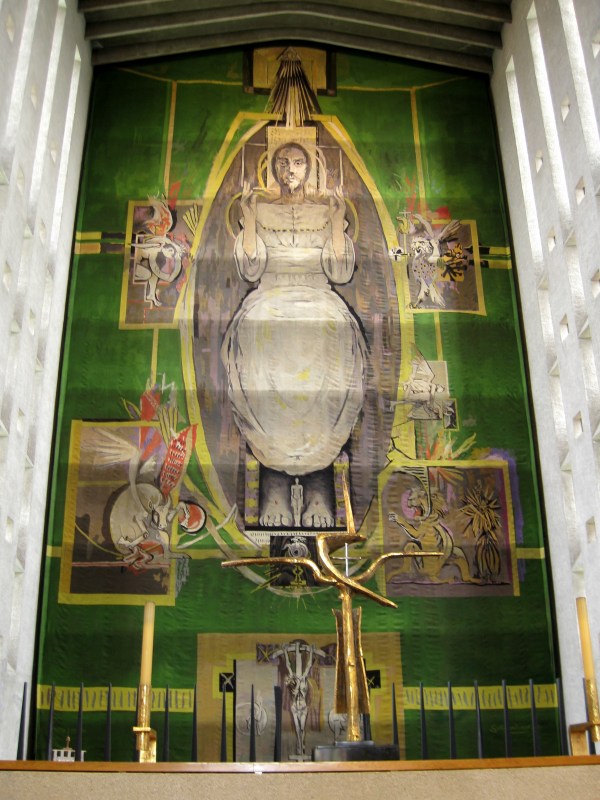
VISUAL MEDITATION: My latest visual meditation for ArtWay is on the gigantic Christ in Glory tapestry by Graham Sutherland that hangs behind the altar of Coventry Cathedral—one of many modern church art commissions in England necessitated by World War II bomb damage. Visiting the cathedral in 2013 was one of the most spiritually rich experiences I’ve ever had, and I plan to share it on this blog sometime in the future. Such a variety of artists were involved in the interior decoration program, and somehow it all comes together, collectively testifying to the power of resurrection. Sutherland wrote of his aspirations for the Christ figure: “The figure must look real—in the sense that it is not a rehash of the past. It must look vital; non sentimental, non-ecclesiastical; of the moment: yet for all time.” I’m taken by the final result, but an elderly gentleman who observed me staring at it for a while approached me and told me how much he hates it, how he thinks the eyes look unkind. (The man has lived in Coventry his whole life and remembers worshiping in the original cathedral before the war.) What do you think?

Christ in Glory by Graham Sutherland
Christ in Glory in the Tetramorph. Tapestry designed by Graham Sutherland (British, 1903–1980) and woven by Pinton Frères in France, 1962. Dimensions: 75 × 38 ft. Location: Coventry Cathedral, Coventry, UK.

+++

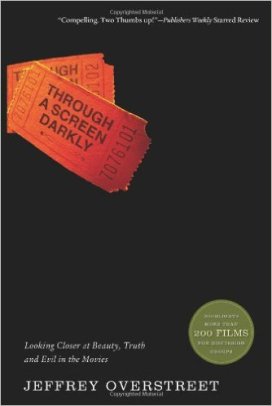
FILM COLUMN: This fall I’ve really been enjoying film critic Jeffrey Overstreet’s new Christianity Today column, “Viewer Discussion Advised,” designed to help Christians explore and discuss a broad range of films. His kickoff article on the foreign drama Timbuktu, which is about the city’s occupation by Muslim extremists, highlights how the film “bears artistic witness to the sufferings of our neighbors.” (Quoting Frederick Buechner: “If we are to love our neighbors, before doing anything else we must see our neighbors.”) “Christians can choose to dwell on—and invest in—movies that show us what we already like, tell us what we already know, assure us of our own salvation, and make us feel happily entertained. That isn’t wrong. But might we make better use of our time? Might we exercise courage and conscience, step outside of our comfort zones, attend to our neighbors, and learn from their experiences?”

Through a Screen Darkly

In addition to Timbuktu, Overstreet has covered the comedy The Station Agent; the US criminal justice system documentary 13th; the Hitchcock thriller Vertigo; the biographical drama A Man for All Seasons; the Marvel superhero flick Doctor Strange; the Coen brothers’ comedies; and the sci-fi feature Arrival, ending each article with group discussion questions. Overstreet has been writing about art, film, and faith for more than a decade at LookingCloser.org and is the author of Through a Screen Darkly: Looking Closer at Beauty, Truth, and Evil in the Movies. He is currently teaching an online film course for Houston Baptist University and creative writing at Seattle Pacific University. To receive weekly installments of “Viewer Discussion Advised” to your email inbox, sign up for the CT Entertainment Newsletter.

+++

MUSIC VIDEO: My friend Nabil Ince is a third-year music major at Covenant College who writes and produces music under the rap name Seaux Chill. After an internship this summer he became assistant program director for the New City Fellowship–based nonprofit East Lake Expression Engine in Chattanooga, Tennessee, whose mission is to provide children in the East Lake neighborhood with a free music education in a gospel-centered environment. Inspired by the El Sistema movement, the organization believes that music is an effective avenue for developing children’s creativity and problem-solving skills and for building up a strong community. They provide year-round classes on music history, theory, composition, and performance, including choir, bucket band, and orchestra. Below is the music video for “It Always Rains on Tuesdays,” a song Nabil wrote for the kids. The refrain is “Feed the plants / Clean all the cars / Fill the potholes / Tears from the stars.”

Book Review: The Image of God in an Image Driven Age, ed. Beth Felker Jones and Jeffrey W. Barbeau

The Image of God in an Image Driven AgeThe doctrine of the imago Dei—which states that human beings were uniquely created in the image of God and continue to bear that image—is central to Christian theology, for it tells us who (and Whose) we are. The book The Image of God in an Image Driven Age: Explorations in Theological Anthropology (Downers Grove, Illinois: InterVarsity Press, 2016), edited by Beth Felker Jones and Jeffrey W. Barbeau, delves into that doctrine, examining its implications for relationships, ethics, sexuality, consumer visual culture, art making, dissemination of the gospel, and more. Comprising twelve essays that resulted from the 2015 Wheaton Theology Conference, the book explores what it means to be made in God’s image and issues a challenge: that we resist all the false images that try to topple the one true image in our lives.

Two of the chapters revolve around visual images. In chapter 5, “Culture Breaking: In Praise of Iconoclasm,” Matthew J. Milliner starts out by stating that we live in an optocracy—that is, we are ruled by what our eyes see. Advertisements (billboards, commercials, magazines, web banners), celebrity coverage, and product packaging and store displays are high up on the throne, and we think and act according to their influence.

To illustrate the takeover of unedifying imagery, he cites Limelight Shops, a mini-mall in New York City that inhabits the deconsecrated Church of the Holy Communion. Where a Christian community once thrived, signage and shop displays now parody Christianity, beckoning shoppers to “be transformed,” to try on True Religion jeans in confession-booth dressing rooms, and to indulge in a “slice of heaven” at the pizzeria.

Milliner calls for opposition to the deleterious aspects of our optocracy, a reclamation of our iconoclastic heritage (which, he notes later with examples, belongs to all three branches of Christianity, not just Protestantism):

Evangelicals have spent the last half of the century embarrassed of their iconoclastic heritage and attempting to make themselves culturally serious. But the challenge that is so clear in the case of Limelight Shops might spur us to reactivate our iconoclastic heritage as well. Our charge may be not only to go about culture making but to do some culture breaking as well, for breaking is what the people of God do when they find themselves in Babylon. (112)

He endorses not a literal breaking but a mental and rhetorical breaking, much as the Israelites did when they were in Babylon (e.g., Jeremiah 10:5). We need to break the power certain images hold over us, say no to their attempts to shape and define us. God alone can tell us who we truly are, and we bear his imprint.

Many contemporary artists in the macro–art world would claim to share Milliner’s iconoclastic impulse, but in practice, most of them fail to effectively break anything, and Milliner gives a few examples of those failures. Then he recounts several successes from within his own immediate sphere: works by his art faculty colleagues at Wheaton College. Among the commendable works he discusses are Jeremy Botts’s Bee in Hand; Greg Halvorsen Schreck’s Lambertian photograph The Shroud and his American Trinity and the Cry of the Deer (I covered Botts’s and Schreck’s Via Dolorosa cycle in February); David J. P. Hooker’s Corpus (pictured on the book’s cover); and Joel Sheesley’s Camels and his Good Shepherd mural at the local All Souls Anglican Church—all of which are reproduced as halftones in the book. These artists demonstrate different ways to break by making and vice versa—to engage in “creative destruction,” as Philip Jenkins puts it in the final chapter (259).

Camels by Joel Sheesley
Joel Sheesley (American, 1950–), Camels, 1993. Oil on canvas, 58 × 53 in. In the narthex of All Souls Anglican Church, Wheaton, Illinois.

Continue reading “Book Review: The Image of God in an Image Driven Age, ed. Beth Felker Jones and Jeffrey W. Barbeau”