Every warrior’s boot used in battle and every garment rolled in blood will be destined for burning, will be fuel for the fire. For to us a child is born, to us a son is given, and the government will be on his shoulders. And he will be called Wonderful Counselor, Mighty God, Everlasting Father, Prince of Peace.
—Isaiah 9:5–6 NIV
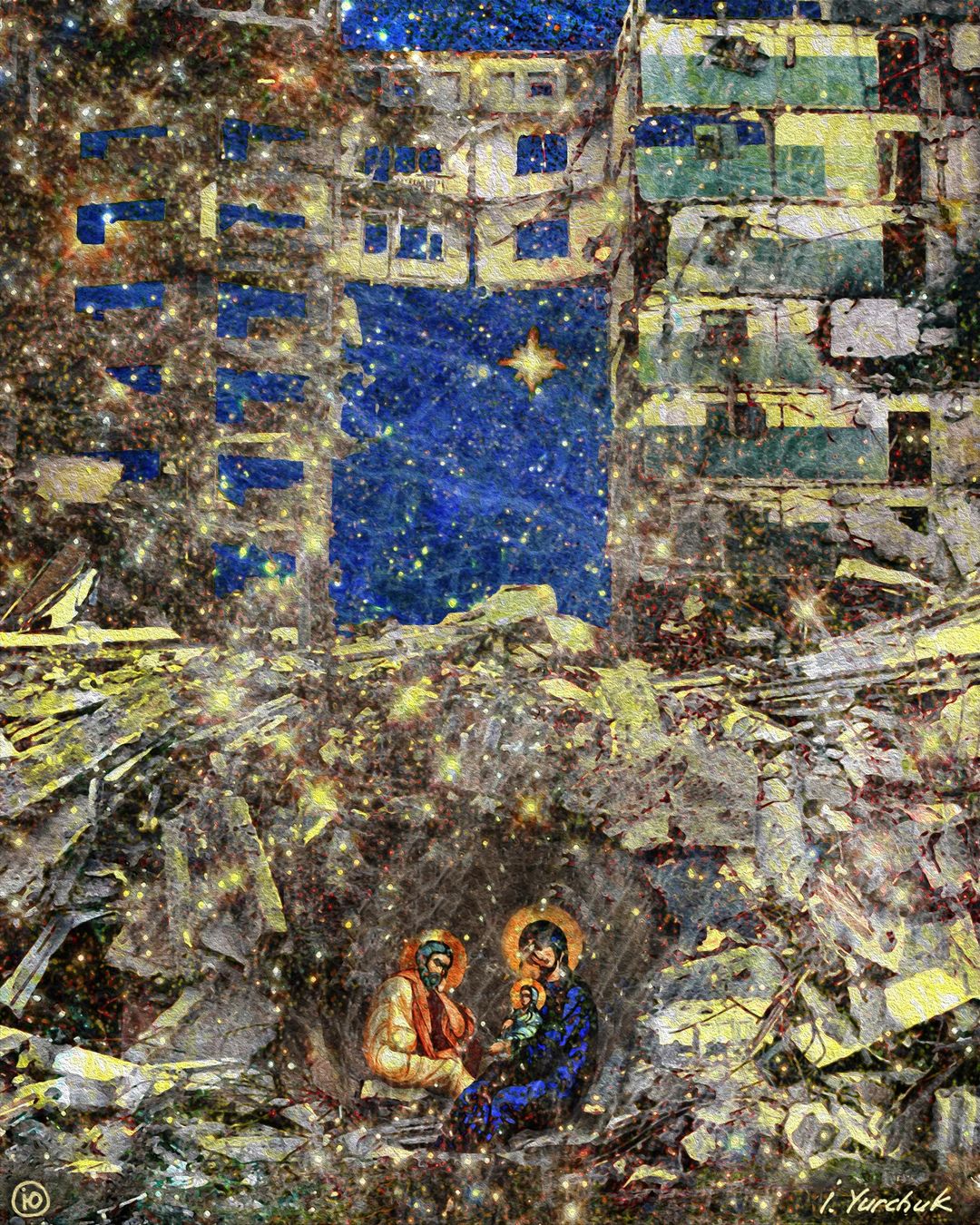
LOOK: Nativity by Irenaeus Yurchuk
Irenaeus Yurchuk (Іриней Юрчук), Nativity, 2022. Mixed media on canvas. Used with permission.
Irenaeus Yurchuk was born in Ukraine during World War II and raised in central New York, where he still resides. He worked professionally as an urban planner until 2010, when he turned to art full-time.
“Over the years my work has evolved to combine multiple-image photography with drawing and painting, using a variety of digital editing and physical montage techniques,” Yurchuk says. “This includes adjusting inkjet images by applying acrylics, watercolors, pastels, markers, colored pencils together with selected collage materials to achieve a desired effect.”
Yurchuk’s Nativity is a response to Russia’s 2022 military invasion of Ukraine. This is no facile depiction of that historic birth, no cozy winter idyll. It is a war-zone Nativity. It shows the Holy Family, rendered in iconic style, sheltering at night in the rubble of a bombed-out apartment complex. Surrounded by fallen steel beams, concrete, and broken glass, Mother Mary holds the newborn Jesus while a downcast Joseph sits beside them with head in hands. Though their circumstances are dire, through the building’s shell shines one particularly bright star, signifying hope in the horror.
One of the biblical names for Jesus is Emmanuel, Hebrew for “God with us.” By showing the Christ child being born amid the ruins of a contemporary Ukrainian city, Yurchuk reinforces the ongoing relevance of the Incarnation, meditating on God’s descent into our world of woe to dwell with and to deliver. Jesus is “God with us” in our suffering. When everything around us is crumbling, God is there too, hurting alongside and calling all oppressors to account.
Do you recall the famous Christmas text from Isaiah, further immortalized by Handel, that begins “Unto us a child is born . . .”? Well, it is immediately preceded by a prophecy of war’s final demise, of soldiers’ uniforms and accoutrements and all their bloody violence being consigned to one great big burning trash heap. In the new world government established by Christ, the Prince of Peace, tyrants will be overthrown (Luke 1:51–52), and the nations will study war no more (Isa. 2:4).
May this artwork and the song below prompt you to intercede for those suffering under war today, in Ukraine and elsewhere.
LISTEN: “Drive Out the Darkness” by Paul Zach, Isaac Wardell, Dan Marotta, and John Swinton, on Lament Songs by the Porter’s Gate (2020)
Refrain: Come, O come Be our light Drive out the darkness Come, Jesus, come
Every year under the thorn Every wrong that we have known Every valley will be raised Ancient ruins will be remade [Refrain]
Every weapon made for war Every gun and every sword Will be melted in the flame To be used for gardening [Refrain]
In the emptiness of grief Through the night of suffering In the loss and in the tears God of comfort, O be near [Refrain]
Coda: Come, and end all the violence Come, do not be silent Come, we cling to your promise Come, you’ll break all injustice Come, Jesus, come
For my review of the Lament Songs album by the Porter’s Gate, see here.
In addition to these words that the Porter’s Gate has given us to pray, I commend to you this prayer by Rev. Kenneth Tanner, which he posted October 13 in response to recent atrocities in Israel and Gaza (I’ve been returning to it a lot over the past month):
This post is part of a daily Advent series from December 2 to 24, 2023 (with Christmas to follow through January 6, 2024). View all the posts here, and the accompanying Spotify playlist here.
PODCAST EPISODE: “Incarnation and Imagination (with Malcolm Guite),”Imagination Redeemed: On March 28, 2015, the Anglican poet-priest Malcolm Guite from Cambridge, England, gave a talk in Colorado Springs for the Anselm Society, an ecumenical Christian organization whose mission is a renaissance of the Christian imagination. They have just released it on their podcast.
Guite discusses how the job of the arts is to link earth and heaven, heaven and earth; where a poem or other work of art stays on only one of those planes, it typically fails. He unpacks Theseus’s monologue from Act 5, scene 1 of Shakespeare’s A Midsummer Night’s Dream, focusing on these six lines: “The poet’s eye, in fine frenzy rolling, / Doth glance from heaven to earth, from earth to heaven. / And as imagination bodies forth / The forms of things unknown, the poet’s pen / Turns them to shapes and gives to airy nothing / A local habitation and a name.”
Shakespeare, Guite says, is riffing on the prologue to John’s Gospel.
The Logos . . . is bodied forth perfectly and beautifully in the living, walking poem of Jesus Christ, in whom everything eternal is made particular, and who invites everybody to come towards him . . . because he is a habitation with open doors. So of course in John’s Gospel he says, ‘I am the door’! . . . Open up, walk in! (48:51)
And one more quote from Guite!
The church . . . is founded by one who is himself artistically embodied meaning—meaning made visible, meaning made beautiful, meaning made habitable and hospitable and welcoming in the touch of the body and in the physical event, which is then transfigured, because it is also a meaningful event, because earth and heaven meet. (55:34)
It’s a brilliant and inspiring talk, and it integrates other poetic verse besides Shakespeare’s.
>> “King Clave” by Planet Drum: In 1991 Mickey Hart (best known as a drummer of the Grateful Dead) and Zakir Hussain (a classical tabla virtuoso from Mumbai) formed the Grammy-winning global percussion ensemble Planet Drum, bringing together the world’s greatest rhythm masters into a one-of-a-kind improvisational supergroup. Prompted by ongoing international strife, Planet Drum reconvened over the past two years to record their third album, In the Groove, which released August 5. It features six unique compositions led by Hart, Hussain, Sikiru Adepoju of Nigeria, and Giovanni Hidalgo of Puerto Rico.
The centerpiece of the album is “King Clave” (the clave is a rhythmic pattern), created in partnership with Playing for Change and with funding from the United Nations Population Fund. The four core musicians mentioned above are joined by other percussionists and dancers from around the world. The music video uses the “Alternate Version” of the performance, released separately as a single.
Learn more about the Planet Drum project in this six-minute video:
+++
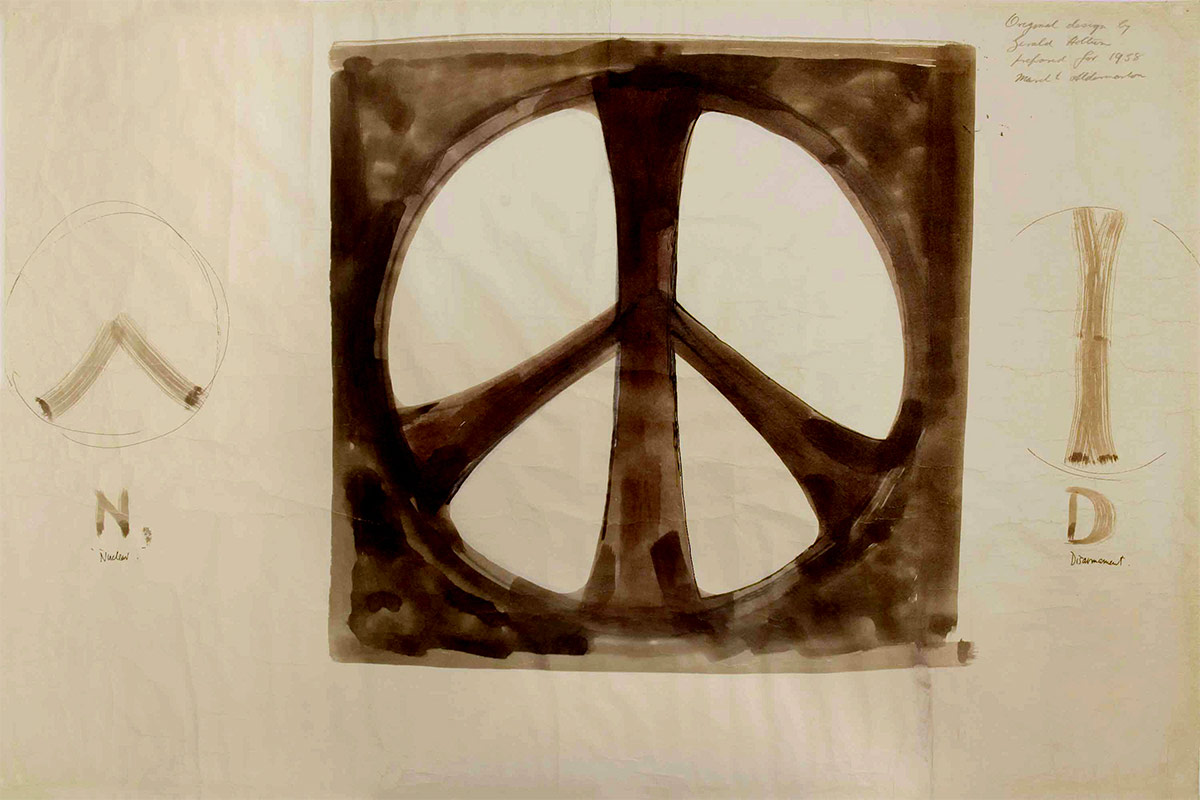
STILL LIFE EDITION: “The History of the Peace Symbol” by Michael Wright: Did you know that the peace symbol that spread worldwide during the 1960s was designed by a Christian from the UK? (Christian pacifism was one of the underappreciated drivers of the nuclear disarmament and antiwar movements.) Learn more about the symbol’s history and art historical and nautical influences in the August 15, 2022, edition of Michael Wright’s weekly letter on art and spirit, Still Life. Also included is the poem “Wildpeace” by Yehuda Amichai, and four weblinks of interest, such as an article on how the patristic tradition agrees with cognitive neuroscience, and a video of FKA Twigs performing in a church!
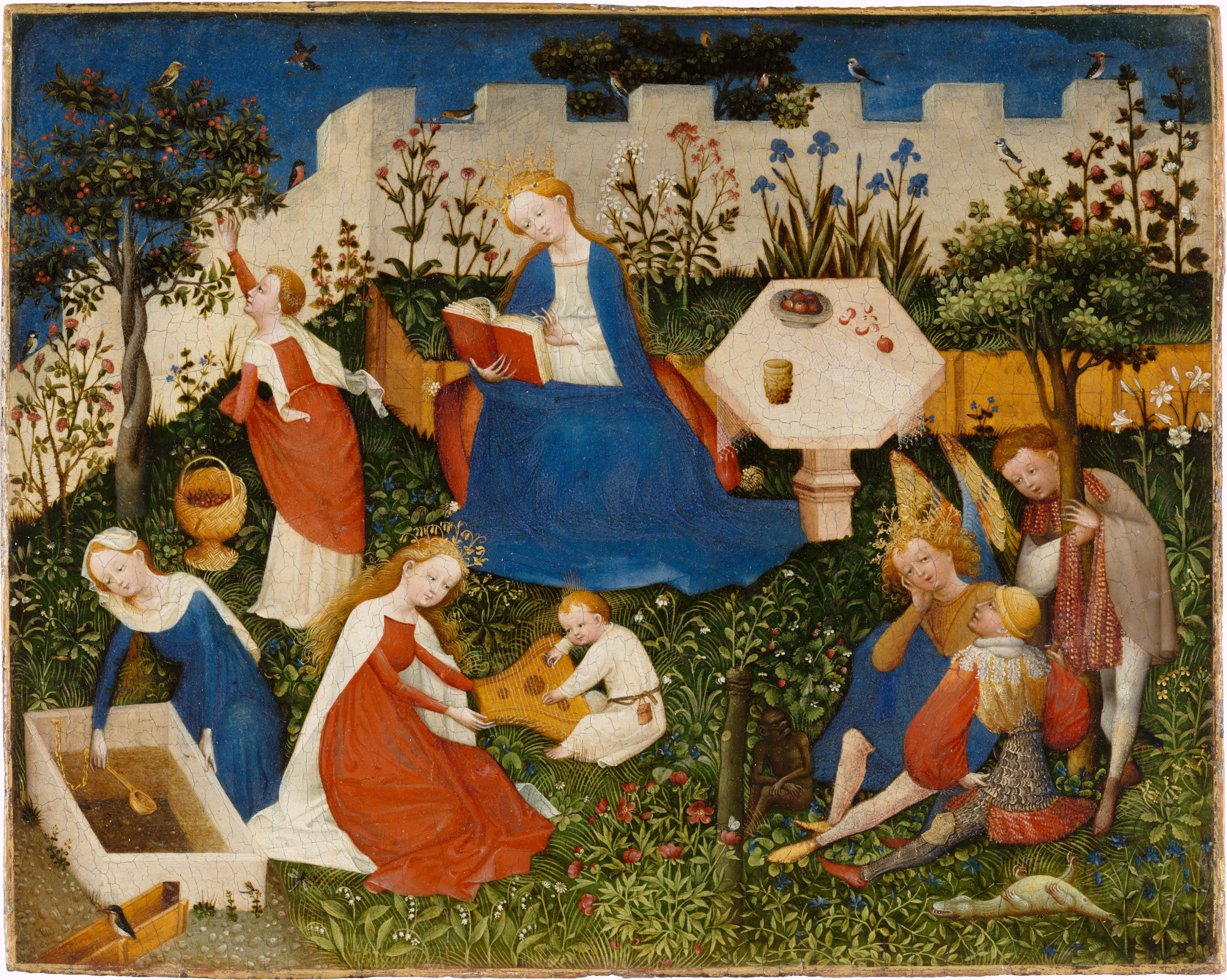
VIDEO LECTURE: “Symbolism and Sacramentality in Art: Medieval and Postmodern Representations of the Little Garden of Paradise” (Religion and Art Talks) by Tina Beattie: Dr. Tina Beattie is a professor emerita of Catholic Studies at the University of Roehampton whose research is at the intersections of art, gender, and theology. In this talk she explores the sacramental imagination of the medieval world through a Late Gothic painting from the Rhineland known as The Little Garden of Paradise. (You can zoom in in tremendous detail on the Städel Museum’s website.) It shows Mary reading in an enclosed garden in the company of saints, her little boy Jesus playing a psaltery at her feet. “Christ retunes the cosmos,” Beattie says. “The harmonies of creation were disrupted by sin. But all of creation is brought back into harmony through the Incarnation.”
Symbolism and allegory abound in medieval religious paintings, encoding profound meanings that can be discerned if we would but take the time to look and to meditate and to understand the world from which these images arose. “The visual image can say things that the theological text can’t,” Beattie asserts. “It can play with the doctrinal truth in ways that allow other meanings to emerge discreetly.”
Though many interpretations of hortus conclusus imagery focus on Mary’s virginity, and indeed that was a primary aspect motivating the creatives who developed such imagery, Beattie draws out themes of new creation and discusses the garden as the human soul.
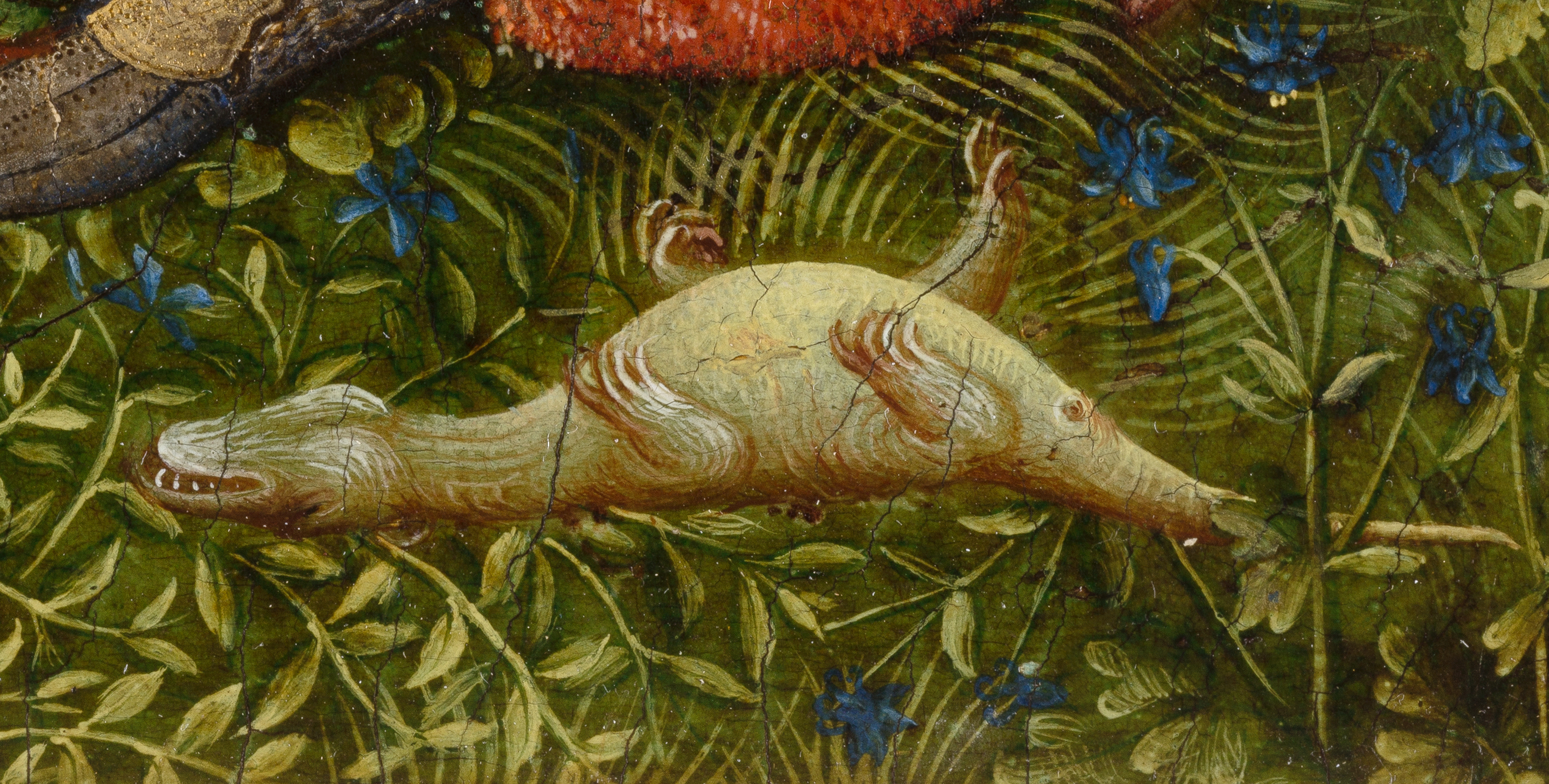
The Little Garden of Paradise, Upper Rhine, ca. 1410–20. Mixed media on oak, 26.3 × 33.4 cm. Städel Museum, Frankfurt am Main, Germany.A small, slain dragon lies belly-up beside a man in greaves and chain mail, probably Saint George.
The other artworks she glosses are:
Resurrection XI by Edward Armitage Robinson (1963)
“Come unto me, all ye that labour and are heavy laden, and I will give you rest.”
—Matthew 11:28 (KJV)
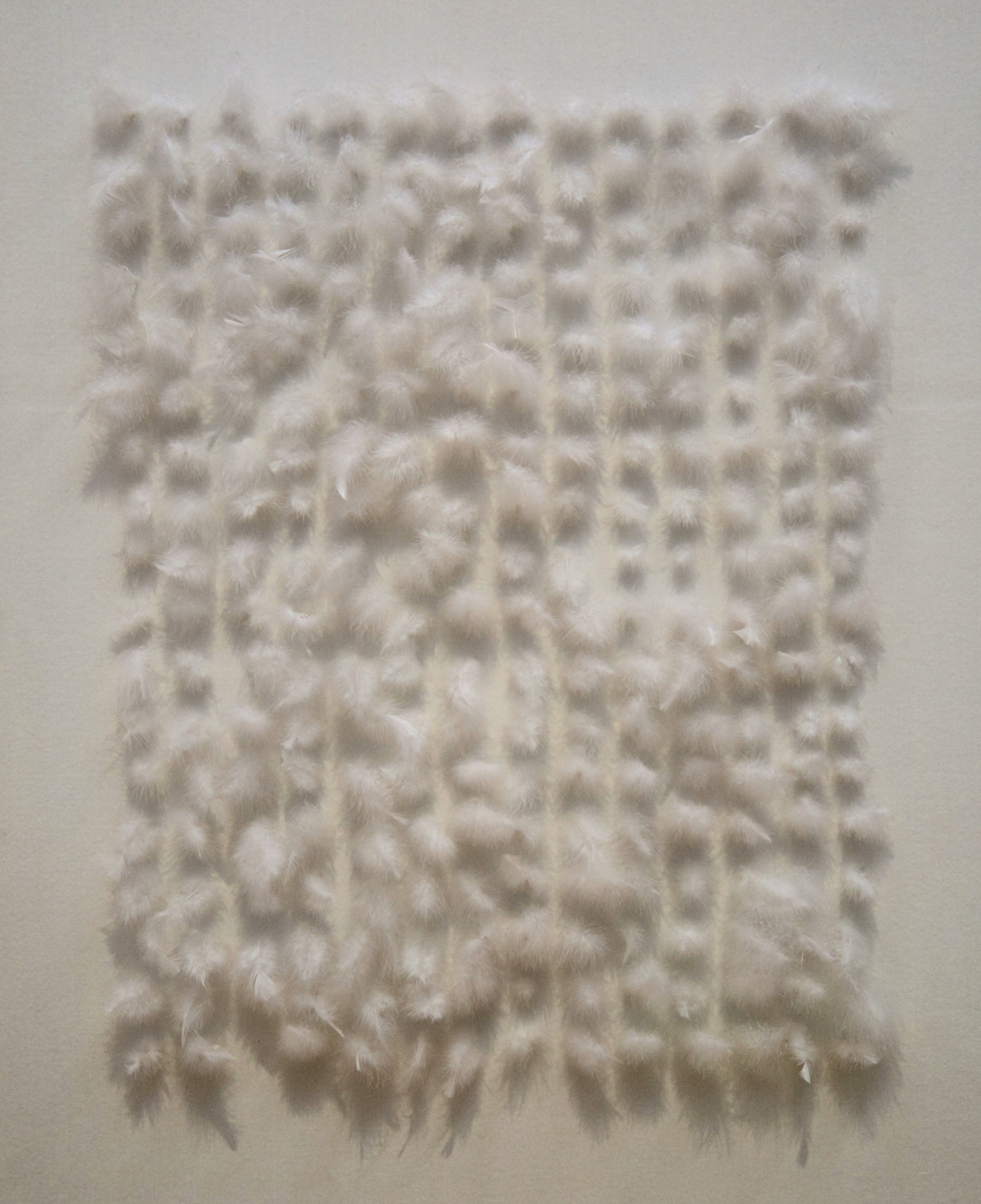
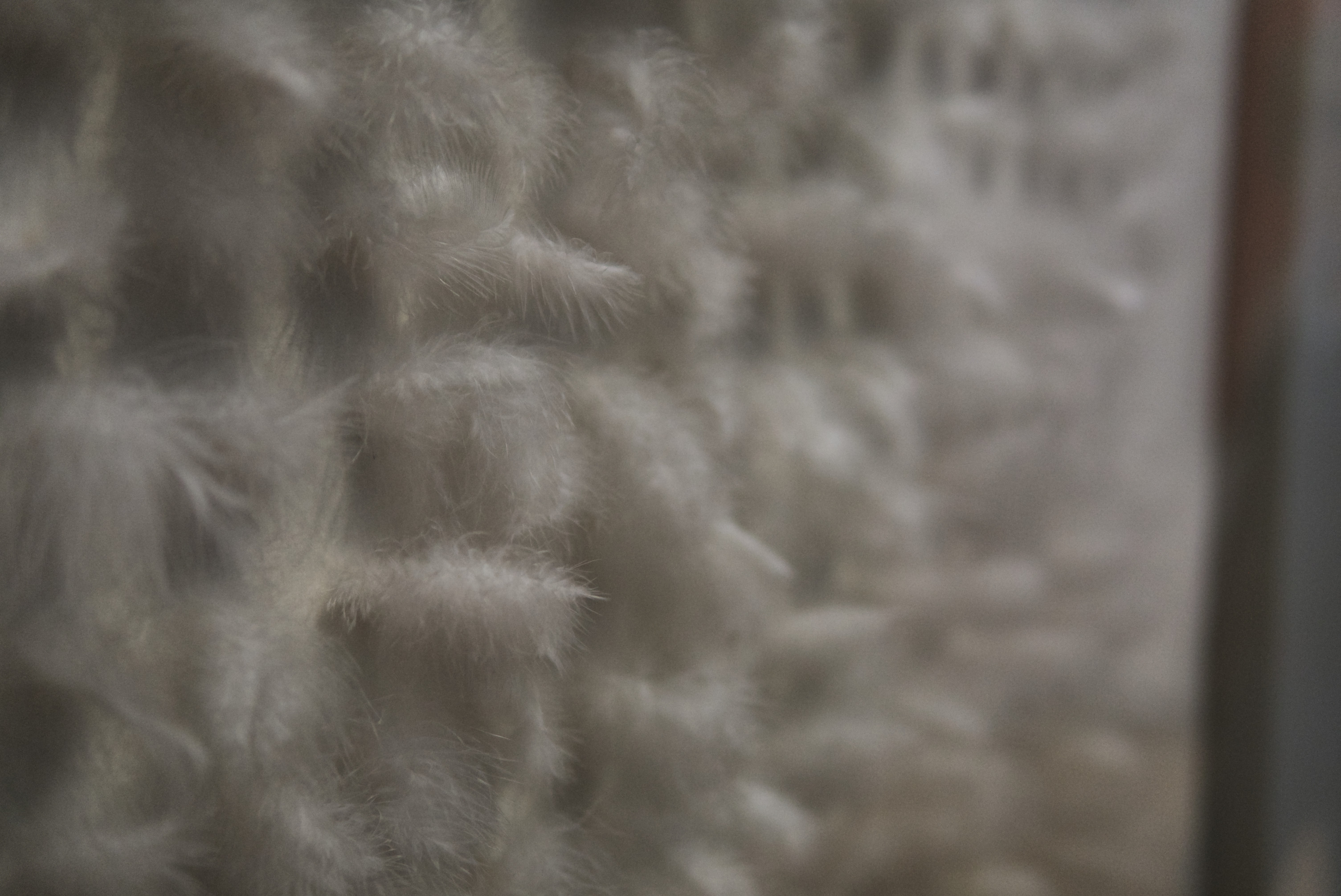
LOOK: 62-33 (White Feathers on White Background) by Henk Peeters
Henk Peeters (Dutch, 1925–2013), 62-33 (White Feathers on White Background), 1962. Feathers and velvet on hardboard, 153 × 133 cm. Stedelijk Museum Amsterdam, Netherlands. Photo: Victoria Emily Jones. [object record]
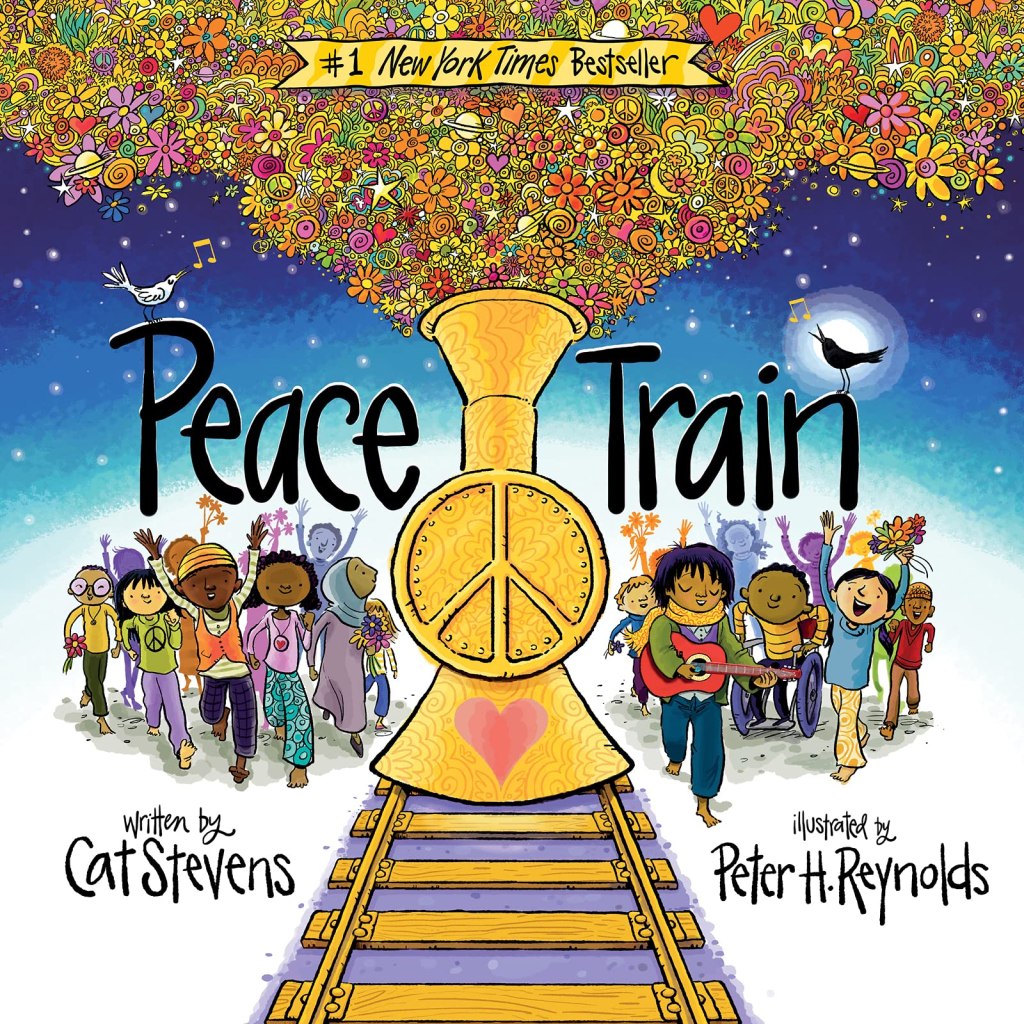
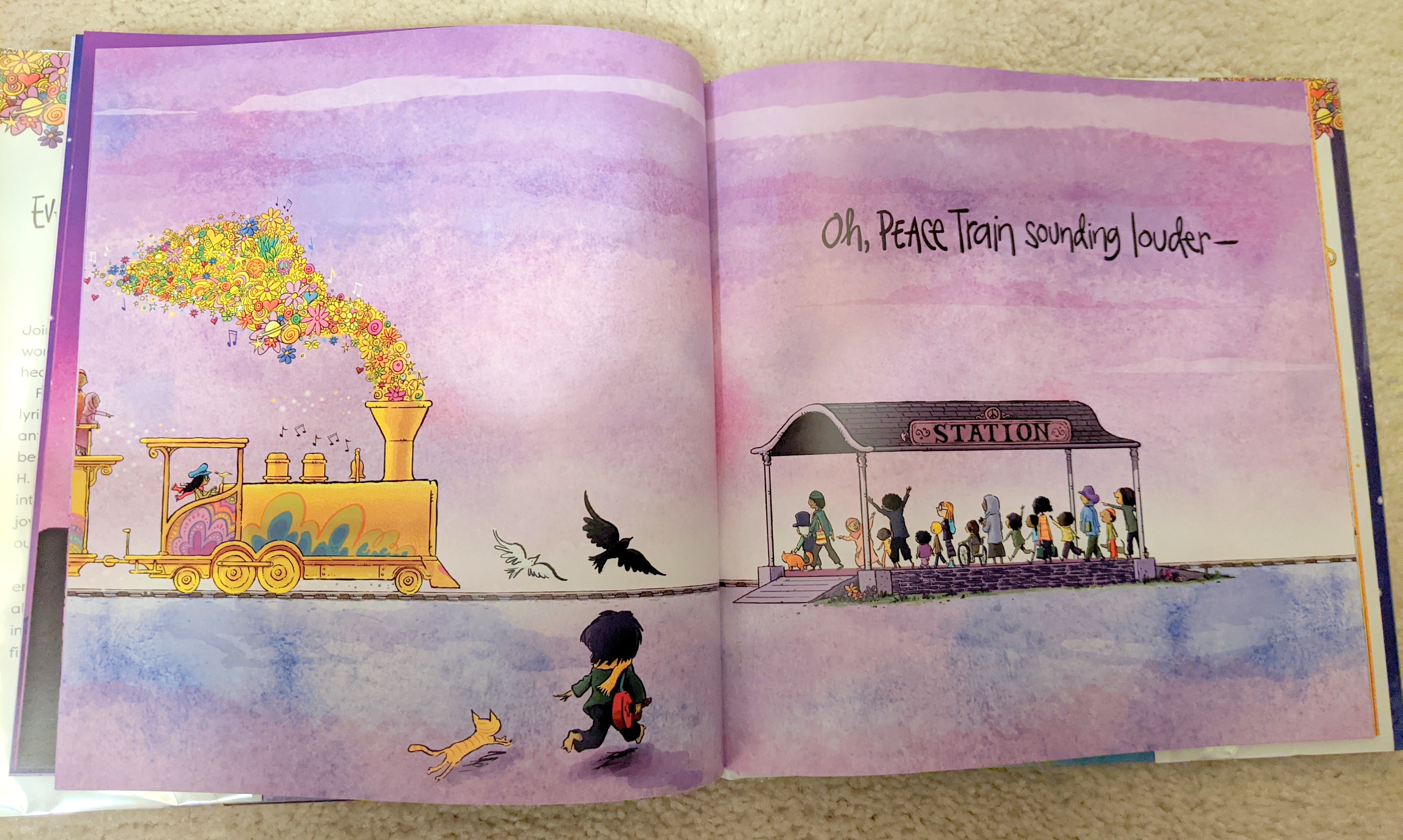
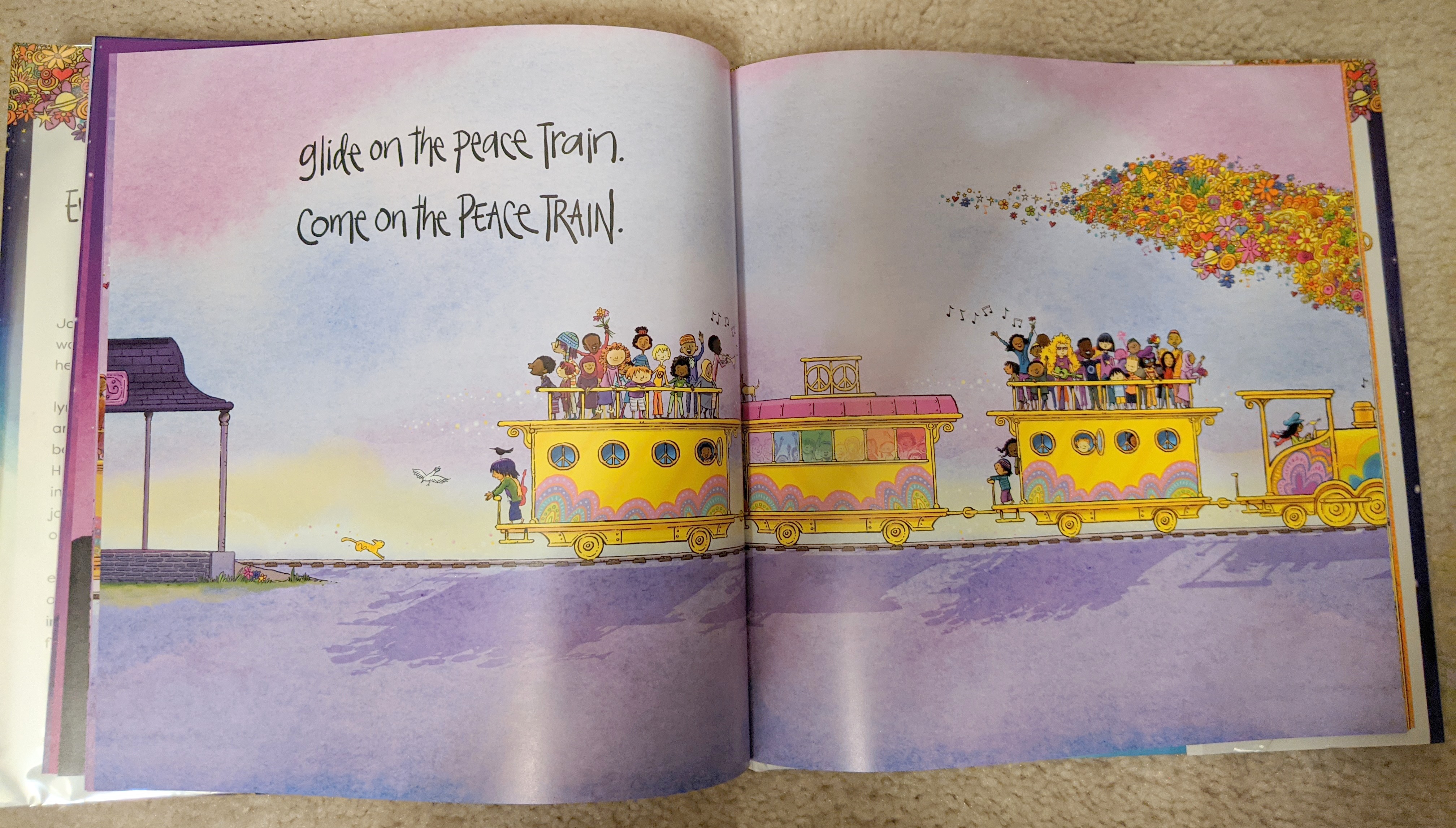
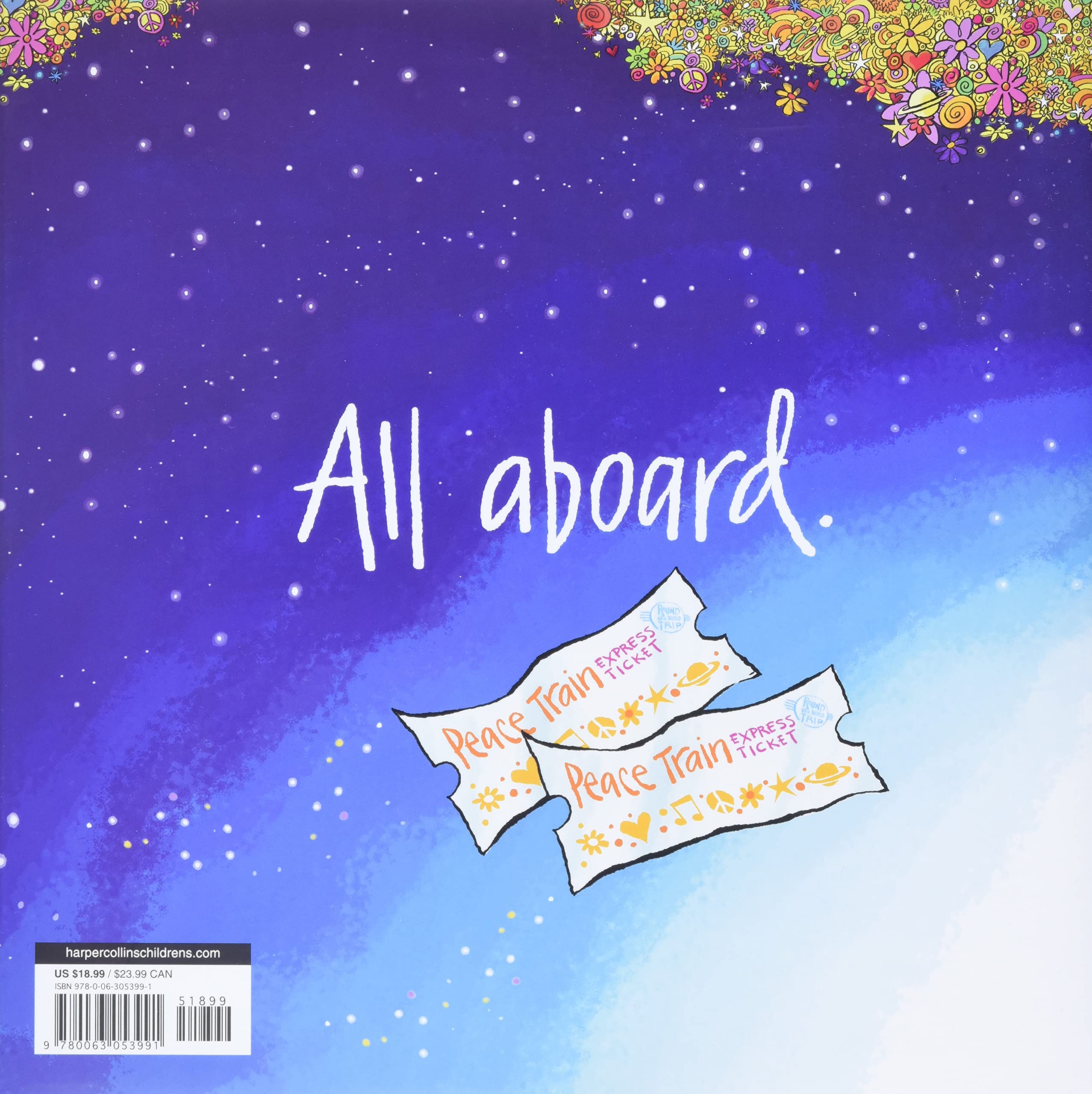
To commemorate the fiftieth anniversary of Yusuf / Cat Stevens’s song “Peace Train,” this year HarperCollins published a picture book adaptation of the song by Yusuf, with delightful illustrations by Peter H. Reynolds.
LISTEN: “Peace Train” by Yusuf / Cat Stevens, on Teaser and the Firecat (1971)
The Spotify link below is to Yusuf’s original studio album recording, but the YouTube video, released this year for World Peace Day on September 21, is a “Song Around the World” version of “Peace Train” produced by Playing for Change [previously]. In addition to Yusuf, the video features thirty-five musicians from twelve countries, including oud player Ghassan Birumi from Palestine; Grammy-winning American artists Keb’ Mo’ and Rhiannon Giddens; Senegalese artist Baaba Maal; the Roots Gospel Voices of Mississippi choir; musicians from the Silkroad Ensemble and the Afro-Brazilian percussive group Olodum; Tushar Lall playing the harmonium in Delhi, India; Joshua Amjad playing the khartal in Karachi, Pakistan; and more.
Now I’ve been happy lately Thinking about the good things to come And I believe it could be Something good has begun
Oh, I’ve been smiling lately Dreaming about the world as one And I believe it could be Someday it’s going to come
’Cause out on the edge of darkness There rides a Peace Train Oh, Peace Train take this country Come take me home again
Now, I’ve been smiling lately Thinking about the good things to come And I believe it could be Something good has begun
Oh, Peace Train sounding louder Glide on the Peace Train! Come on the Peace Train
Yes, Peace Train, holy roller Everyone jump up on the Peace Train! Come on the Peace Train
Get your bags together Go bring your good friends too Because it’s getting nearer It soon will be with you
Now come and join the living It’s not so far from you And it’s getting nearer Soon it will all be true
Oh, Peace Train sounding louder Glide on the Peace Train! Come on the Peace Train
Now, I’ve been crying lately Thinking about the world as it is Why must we go on hating? Why can’t we live in bliss?
’Cause out on the edge of darkness There rides a Peace Train Oh, Peace Train, take this country Come take me home again
Oh, Peace Train sounding louder Glide on the Peace Train! Come on the Peace Train
Yes, Peace Train, holy roller Everyone jump up on the Peace Train Come on, come on, come on Yes, come on, Peace Train Yes, it’s the Peace Train
Come on now, Peace Train Oh, Peace Train
Cat Stevens converted to Islam in 1977 and adopted the name Yusuf Islam the following year. For the next two decades he gave up his singing-songwriting, regarding it then as incompatible with his new faith. But after the 9/11 terrorist attacks, he agreed to sing “Peace Train” at a benefit concert in New York City. At the encouragement of his Muslim community, he slowly returned to his music career. His latest album is Tea for the Tillerman 2, released in 2020.
Inclusive of all faiths, “Peace Train” invites people to join in committing to the way of peace, and to ride that commitment all the way “home.” Or, to put it another way, to let Peace transport you. In the introduction to Peace Train the book, Yusuf writes,
Each of us has the power to imagine and to dream. We all have our own picture of what a place called “heaven” would look like, and the ONE thing—for sure—we’d all expect to find there is PEACE. That’s what my song is based on: a train gliding to a world we all would like to share.
In Christianity, especially in the spirituals tradition, salvation is often pictured as a train that carries its passengers to their heavenly destination. “Peace Train” uses the same imagery, acknowledging that peace is already on the move (the Spirit is active, as Christians might say); we need only to get onboard. The song captures a sense of excited journeying toward. The train has arrived, and it’s taking us somewhere new.
Watch Yusuf “read” (sing!) the book, flipping page by page, in this Storytime Read Aloud video from HarperKids:
Also check out Yusuf’s Peace Train initiative, launched in 2020 to deliver relief, medical aid, and education globally.
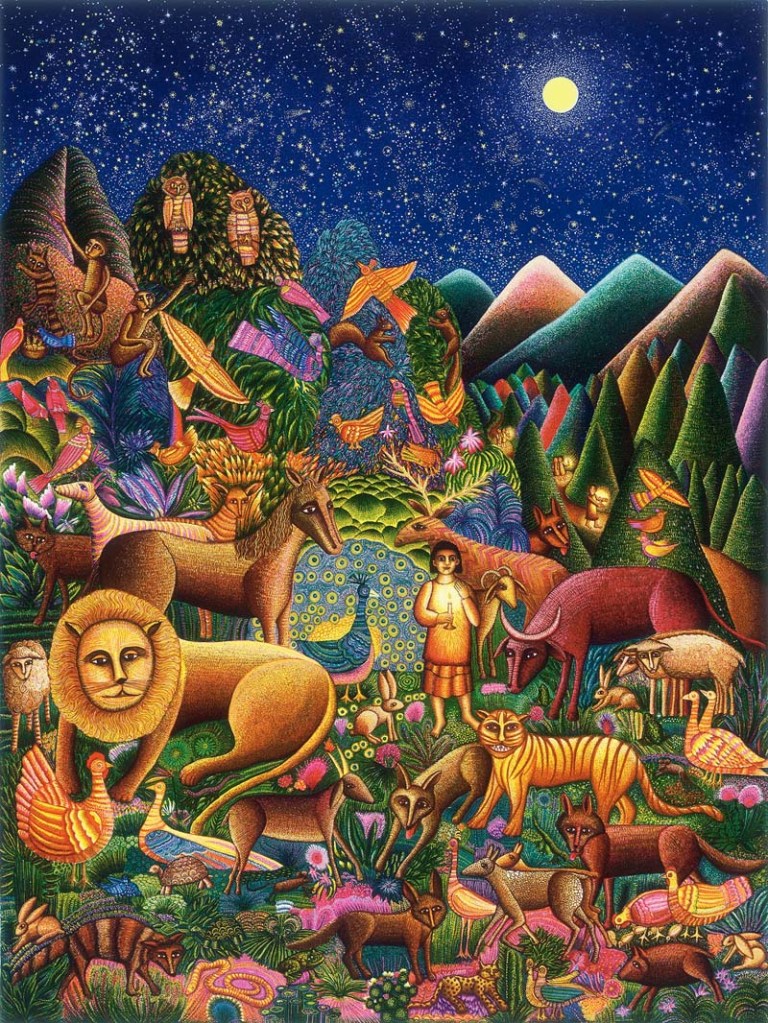
LOOK: John August Swanson (American, 1938–), Peaceable Kingdom, 1994. Serigraph, edition of 250, 30 × 22 1/2 in.
John August Swanson, a Los Angeles–based artist of Mexican and Swedish heritage, says his style is “influenced by the imagery of Islamic and medieval miniatures, Russian iconography, the color of Latin American folk art, and the tradition of Mexican muralists.” In this forty-seven-color serigraph (limited-edition screen print), monkeys, frogs and lizards, mice and rabbits, owls and peacocks, a pig and a turtle accompany the wolves, lambs, leopard, goat, lion, ox, and snake of Isaiah 11, a vision of creation restored and at peace.
O day of peace that dimly shines Through all our hopes and prayers and dreams Guide us to justice, truth, and love Delivered from our selfish schemes
May swords of hate fall from our hands Our hearts from envy find release Till by God’s grace our warring world Shall see Christ’s promised reign of peace
Then shall the wolf dwell with the lamb Nor shall the fierce devour the small As beast and cattle calmly graze A little Child shall lead them home
Then the meek shall learn to love All creatures find their true accord The hope of peace shall be fulfilled For all the earth shall know the Lord
Laurent de La Hyre (French, 1606–1656), The Kiss of Peace and Justice, 1654. Oil on canvas, 21 5/8 × 30 in. (54.9 × 76.2 cm). Cleveland Museum of Art, Ohio, USA.
Lord, thou hast been favourable unto thy land: thou hast brought back the captivity of Jacob.
Thou hast forgiven the iniquity of thy people, thou hast covered all their sin. Selah.
Thou hast taken away all thy wrath: thou hast turned thyself from the fierceness of thine anger.
Turn us, O God of our salvation, and cause thine anger toward us to cease.
Wilt thou be angry with us for ever? wilt thou draw out thine anger to all generations?
Wilt thou not revive us again: that thy people may rejoice in thee?
Shew us thy mercy, O LORD, and grant us thy salvation.
I will hear what God the LORD will speak: for he will speak peace unto his people, and to his saints: but let them not turn again to folly.
Surely his salvation is nigh them that fear him; that glory may dwell in our land.
Mercy and truth are met together; righteousness and peace have kissed each other.
Truth shall spring out of the earth; and righteousness shall look down from heaven.
Yea, the LORD shall give that which is good; and our land shall yield her increase.
Righteousness shall go before him; and shall set us in the way of his steps.
—Psalm 85 KJV
This psalm is a community lament, probably written during the period of Israel’s return from the Babylonian exile—to a ruined city, a fallen temple, and a mourning land. The people seek forgiveness for their covenant unfaithfulness and restoration, appealing to the benevolence God has shown them in the past. The closing section expresses confidence that salvation will come.
Verse 10 personifies four of God’s virtues: mercy (lovingkindness; Heb. hesed, Lat. misericordia), truth (Heb. emeth, Lat. veritas), justice (righteousness; Heb. tsedeq; Lat. iustitia), and peace (Heb. shalom, Lat. pax). Mercy and Truth meet together, and Justice and Peace embrace with a kiss. In medieval Christian writings these virtues came to be allegorized as the “four daughters of God,” a motif developed most famously by Hugh of St. Victor and Bernard of Clairvaux.
Many churches sing Psalm 85 at Advent or Christmastime, the birth of Jesus being a time when God’s salvation came near and “glory . . . dwell[ed] in our land.” All the virtues of God kissed each other in Christ, bringing heaven to earth. Others read the psalm as prophesying Jesus’s atoning death.
I love how Eugene Peterson translates this psalm in The Message, which suggests that these virtues of God are ones that humanity should emulate, and indeed what the gospel calls us to:
Our country is home base for Glory!
Love and Truth meet in the street,
Right Living and Whole Living embrace and kiss!
Truth sprouts green from the ground,
Right Living pours down from the skies!
Oh yes! GOD gives Goodness and Beauty;
our land responds with Bounty and Blessing.
Right Living strides out before him,
and clears a path for his passage. (vv. 9b–13)
Jesus lived rightly and bound up the brokenness he encountered, bringing wholeness. His ministry announced, verbally and in tangible ways, a kingdom to come, and we are to pave the way for that kingdom by embodying its values.
+++
SONG: “O God, Will You Restore Us” by Isaac Wardell | Performed by Bifrost Arts, feat. Yolonda Coles Jones, on Lamentations, 2016
O God, will you restore us, And grant us your salvation? (×2)
I will hear what God proclaims.
The Lord our God proclaims peace.
Kindness and truth shall meet,
Justice and peace shall kiss.
O God, will you restore us, And grant us your salvation?
“Here is the fast that I choose:
To loosen the bonds of the oppressed and break their chains.
Let righteousness and justice go out before you,
Then you will call out and I will hear.”
O God, will you restore us, And grant us your salvation?
Near indeed is his salvation to those who call on him.
He will incline his ear and hear their prayers.
Truth shall spring out of the earth,
and justice will rain down from heaven.
O God, will you restore us, And grant us your salvation?
The Lord will guide you on a righteous path,
His vindication will shine down forth as the dawn.
Your people will be called repairers of broken walls,
Making straight the path to proclaim his reign!
O God, will you restore us, And grant us your salvation?
O God, will you restore us? Please grant us your salvation.
Isaac Wardell’s “O God, Will You Restore Us” cleverly integrates Psalm 85 with Isaiah 58, which both center on themes of restoration, blessing, and social responsibility, even using similar word pictures. The refrain is based on the plea of Psalm 85:6–7, the heart of the psalm.
Opening with that plea, Wardell’s first verse then moves into Psalm 85:8, 10: God proclaims shalom. Verse 2 articulates what that looks like: the bonds of wickedness loosed, the oppressed set free. This verse is derived from God’s words in Isaiah 58:6, 8–9, in which God expresses the work he wants his people to be about—namely, justice. Only when his people practice true piety—emancipating captives, feeding the hungry, sheltering the homeless—will he answer their prayers.
The third verse is drawn from Psalm 85:9, 11, an image of abundance and refreshment. And finally, verse 4 seems to be based on Isaiah 58:8, 12 and Psalm 85:13 (cf. Isa. 40:3).
Unmetered and in a minor key, the song has the feel of a Gregorian chant.
+++
“The Allegory of Justice and Peace,” or “Justice and Peace Kissing,” was a popular subject in the seventeenth and eighteenth centuries in the art of the Italian and Flemish Baroque and the French Neoclassical, including works by Giovanni Battista Tiepolo, Corrado Giaquinto, Pompeo Batoni, Artemesia Gentileschi, Theodoor van Thulden, Maerten de Vos, Jacob de Backer—and the artist featured above, Laurent de La Hyre. Although the image comes from the Hebrew Bible, where it is rooted in God’s dealings with his people, artists often used it for secular purposes, to express political peace. Some such paintings were gifted to rulers as a form of flattery.
The iconography that developed draws on classical symbolism and mythology, with both virtues being personified as women. Justice’s attributes include a crown, a sword, scales, and a fasces; Peace’s, an olive branch, an inverted torch (which burns weapons and armor), ears of wheat and/or a cornucopia (because peace leads to plenty), and a caduceus (one myth suggests that Mercury saw two serpents entwined in mortal combat and separated them with his wand, bringing about peace between them).
The Hebrew word for “kiss” in Psalm 85 refers seldom to an erotic kiss, says Sigrid Eder, but rather to a form of greeting or goodbye exchanged by near relatives or to the final phase of a peacemaking ritual. In medieval Europe, where the visual motif of Justice and Peace Kissing was first introduced, kissing was even more widespread than in the ancient Jewish world; it was common for people of equal rank, both male and female, to exchange lip-to-lip kisses. (See a compilation of medieval “kiss paintings,” showing a variety of contexts, here.) But the Baroque taste for undraped figures means that quite a few artistic renditions of Justice and Peace can be read as sexualized, as when one of the women has a bared breast, for example.
In Laurent de La Hyre’s The Kiss of Peace and Justice, the action is set within a larger landscape. An olive-wreathed Peace embraces a blue-beribboned Justice beside a fountain inscribed with Iusticia et Pax // osculatae sunt, from the Latin Vulgate. The women are surrounded by ruins—upturned roadstones, crumbled walls and detached columns, a cracked garden urn. But this is an image of hope. A lion-faced spigot emits fresh, flowing water, which sheep flock to for refreshment, and trees part to reveal a vista. After the upheaval, healing and repair are underway. Justice and Peace have harmonized.
The Cleveland Museum of Art, which owns the painting, notes that its date coincides with the end of the Fronde, a period of civil war in France during which the parlement (law courts) and the nobility sought—unsuccessfully—to limit the power of the monarchy. So it’s likely the painting is an allusion to the climate of general reconciliation between parties.
This post belongs to the weekly series Artful Devotion. If you can’t view the music player in your email or RSS reader, try opening the post in your browser.
To view all the Revised Common Lectionary scripture readings for Proper 14, cycle A, click here.
Lent begins next week, and as usual, I’ll be sharing visual art, music, poetry, and other media throughout the season that I hope will be a quiet support to your spiritual walk. If you are giving up social media for Lent but want to be kept aware of new Art & Theology posts, sign up to receive the posts by email by clicking the “Subscribe” button—on the right sidebar if you’re on a desktop, or at the bottom of this post if you’re on your phone. (Note that the sidebar/footer is not visible from the homepage; you have to click through into a post to see it.)
+++
NEW LENT DEVOTIONALS: I’ve become aware of two new poetry devotionals for Lent published this year.
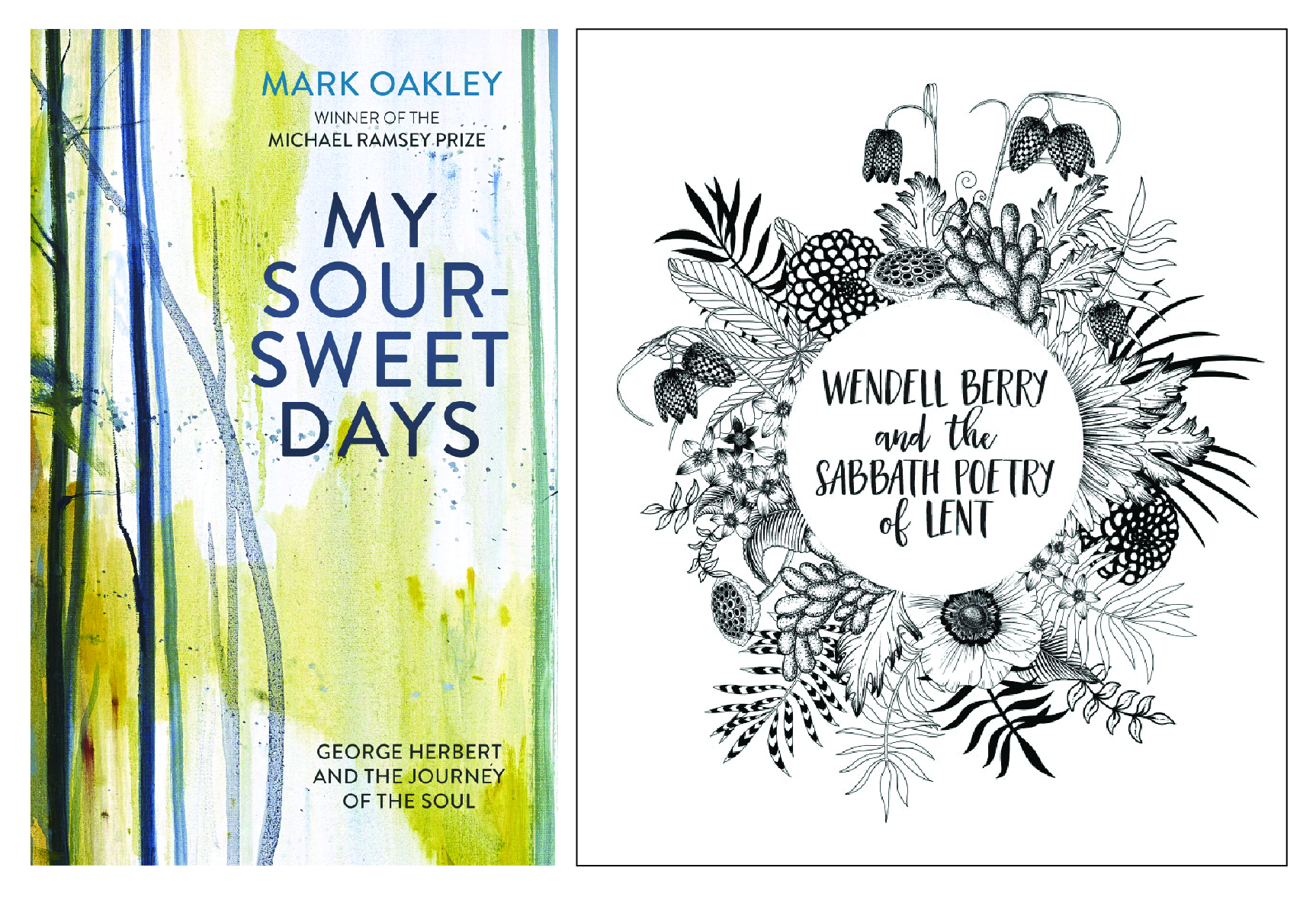
My Sour-Sweet Days: George Herbert and the Journey of the Soul by Mark Oakley: “George Herbert is one of the great 17th century poet-priests. His poems embrace every shade of the spiritual life, from love and closeness, to anger and despair, to reconciliation and hope. And his work is always rich with audacious playfulness: he seems to take God on, knowing God will win, as if he’s having an argument with a faithful friend he knows is not going to leave. In much of theology and spirituality, God is a critical spectator to human lives, but for Herbert, his sense of relationship with God is primarily of a friendship that can never be broken. These are some of the themes Mark Oakley explores in this book. He offers a poem for every day in Lent, with a two-page commentary on each of the forty included.”
Wendell Berry and the Sabbath Poetry of Lent by SALT Project: “In this Lenten devotional, biblical texts and simple, accessible practices walk hand-in-hand with Wendell Berry’s poetic vision of sabbath and the natural world. All you’ll need is your favorite Bible and Wendell Berry’s This Day: Collected and New Sabbath Poems. Week by week, we’ll walk through the woods together toward Easter morning, keeping sabbath as we go—with Wendell Berry as our guide.” Sold as a professionally designed, downloadable PDF with printing and folding instructions.
I really enjoyed SALT Project’s Lent devotional from last year, built around the poetry of Mary Oliver, so I bought this new one and gave it a breeze-through so I could recommend it here prior to Lent; I look forward to spending more time with it throughout the season. Devotions are provided for Ash Wednesday; the first, second, third, fourth, and fifth Sundays of Lent; Palm Sunday, Maundy Thursday, Good Friday, and Easter Sunday. Each one includes an instruction to read a Bible passage and a Wendell Berry poem, a short meditation that draws the two together, an additional reading of two more related Berry poems, a candle lighting and one-sentence prayer (on the themes of silence, trust, delight, care, insight, resurrection, joy, love, sorrow), a few recommended practices for the week, and personal questions to ponder and discuss with a friend, if desired.
I especially appreciate the “Practices” section, which includes ideas like: make a list of your favorite little delights (“the sunlight’s slant in the late afternoon, your dog’s ears, the steam rising from your coffee—no delight is too slight!”) and read it aloud with family or friends over a meal; take a neighborhood walk and count how many shades of green you see; ignore a household chore for an entire day each week.
+++
DANCE VIDEO: “Seas of Crimson”: In this music video for one of the pieces on Bethel Music’s album Without Words: Synesthesia, Jessica Lind of the Oregon Ballet Theatre dances with dust that by the composition’s end turns to vibrant color. A metaphor for the Lenten journey, perhaps? [HT: A Sacramental Life]
Joseph Shabalala, the gentle-voiced South African songwriter whose choir, Ladysmith Black Mambazo, brought Zulu music to listeners worldwide, died on [February 11] in a hospital in Pretoria. He was 78. . . . Mr. Shabalala began leading choral groups at the end of the 1950s. By the early ’70s his Ladysmith Black Mambazo — in Zulu, “the black ax of Ladysmith,” a town in KwaZulu-Natal Province — had become one of South Africa’s most popular groups, singing about love, Zulu folklore, rural childhood memories, moral admonitions and Christian faith. Ladysmith Black Mambazo’s collaborations with Paul Simon on his 1986 album “Graceland,” on the tracks “Homeless” and “Diamonds on the Soles of Her Shoes,” introduced South African choral music to an international pop audience.
Shabalala was an ordained minister in the Pentecostal Church of God of Prophecy, having become a Christian in 1976. He said he hopes his music shows people “how to be good to God, how to praise God, how to respect, how to forgive each other . . .”
Below is a video of Shabalala with Ladysmith Black Mambazo singing one of his songs, “King of Kings,” live in Montreux, Switzerland, in 2000. Written during apartheid, it is a prayer for peace in South Africa and the rest of the world. It was first released on the 1987 album Shaka Zulu. [Listen on Spotify]
+++
KIDS’ SONGS: I’m not a mom, but I often enjoy listening to “children’s music,” as there’s so much of quality out there these days. Here are two songs released this year in that too-restrictively-titled genre (because hey, there’s much for grown-ups to love here too!), along with animated music videos.
“Glad You’re Here” by Justin Roberts: This new single by “the Judy Blume of kiddie rock” (New York Times) is for a new or soon-to-be-born baby. So fun, warm, and adorable! (Note: The video was produced by the same company that brought you the Wendell Berry devotional mentioned above.)
“Dinosaurs in Love” by Fenn Rosenthal, feat. Tom Rosenthal: This sad-sweet song about two dinosaurs eating cucumbers and having parties and then, well, you’ll have to listen . . . was written by three-year-old Fenn Rosenthal from London (with some help on the tune from her dad, Tom). At the end of January Tom Rosenthal, who is himself a singer-songwriter, posted a recording of Fenn singing this one-minute creation of hers on Twitter, and it went viral. Now the song is streaming on Spotify and is up on iTunes, Amazon, and other e-tailer websites, with all proceeds benefitting wildlife charities. It was also picked up by directorial team Hannah Jacobs, Katy Wang, and Anna Ginsburg, who created a music video using 2D frame-by-frame animation. [HT: Colossal]
+++
DRAWING CONTEST: “Doodle for Google,” for K–12 artists:Google Doodles are those special drawings, sometimes animated, that embellish Google’s logo on the website’s homepage from time to time. For the twelfth consecutive year, that highly visible space is up for grabs to one young artist in the US through the tech company’s “Doodle for Google” competition, open to ages K–12. This year the theme is “How do you show kindness?” In addition to having their work featured on Google’s landing page for an entire day, the winner will receive a $30,000 college scholarship, and the winner’s school will be awarded a $50,000 technology package. The deadline for submissions is March 13, 2020, at 11 p.m. ET. [HT: Hyperallergic]
Sister Mary Ann Osborne, SSND, Paths of Peace, 2005. Linden wood, glass, brass wire, gold leaf, and paint, 36 × 27 × 1 in.
Jesus answered him, “If anyone loves me, he will keep my word, and my Father will love him, and we will come to him and make our home with him. Whoever does not love me does not keep my words. And the word that you hear is not mine but the Father’s who sent me.
“These things I have spoken to you while I am still with you. But the Helper, the Holy Spirit, whom the Father will send in my name, he will teach you all things and bring to your remembrance all that I have said to you. Peace I leave with you; my peace I give to you. Not as the world gives do I give to you. Let not your hearts be troubled, neither let them be afraid. You heard me say to you, ‘I am going away, and I will come to you.’ If you loved me, you would have rejoiced, because I am going to the Father, for the Father is greater than I. And now I have told you before it takes place, so that when it does take place you may believe.”
—John 14:23–29
+++
SONG: “I Leave You My Peace” | Music by Maxime Kovalevsky, French Orthodox Church, Paris, 1940s–50s | Arranged by Josef Gulka, Holy Cross Orthodox Church, Medford, NJ | Performed by the St. Symeon Orthodox Church Choir, Birmingham, AL, on Fire and Light (2010)
The mixed-media artwork above is by Sister Mary Ann Osborne, a Minnesota nun in the order of the School Sisters of Notre Dame. The Good Shepherd figure references a Christian fresco from the third-century catacomb of St. Callixtus in Rome, where the shepherd carries a sheep over his shoulders, securing it with one hand while carrying a milk pail in the other; it’s an image of care and protection derived from scripture. Sister Mary Ann has added two open-palmed hands rising up behind, or perhaps emerging from, the shepherd, a posture of prayer (orans) but also of benediction (see, e.g., Lev. 9:22; Luke 24:50).
Christ is pronouncing a blessing—it could be the words of peace and promise from his farewell discourse, excerpted in Sunday’s lectionary reading. We, his people, receive it. He has forged “paths of peace” for us to follow, as Sister Mary Ann’s work suggests, with road markings at the bottom left inviting us to set off where Christ has trod. And he goes with us in the Spirit.
He has called the world to a new order, signified by the shofar at the right, which announces Jubilee. As one of seven, the trump also carries connotations of the day of the Lord.
This post belongs to the weekly series Artful Devotion. If you can’t view the music player in your email or RSS reader, try opening the post in your browser.
To view all the Revised Common Lectionary scripture readings for the Sixth Sunday of Easter, cycle C, click here.
ALBUM REVIEW: Hebrews by Psallos: My first published article for The Gospel Coalition! Psallos is a music collective led by Cody Curtis, and they’re doing amazing work—adapting entire New Testament epistles for folk rock band and chamber orchestra. (I reviewed the group’s first major album, Romans, two and a half years ago.) The track “Ex Paradiso” interprets John Piper’s favorite Advent text and implements a clever twist on Fauré’s Requiem. You’ll also hear a few other famous musical quotations, including, in track 3, “Angels We Have Heard on High”—again, with a lyrical twist—and a jarring rendition of “Nothing but the Blood.” Curtis is a wonderfully talented and versatile composer, writing in styles from bluegrass and Irish dance to slow hip-hop and hot jazz, all united under one overarching structure. The “Before the Throne” theme that’s developed throughout is truly sublime.
+++
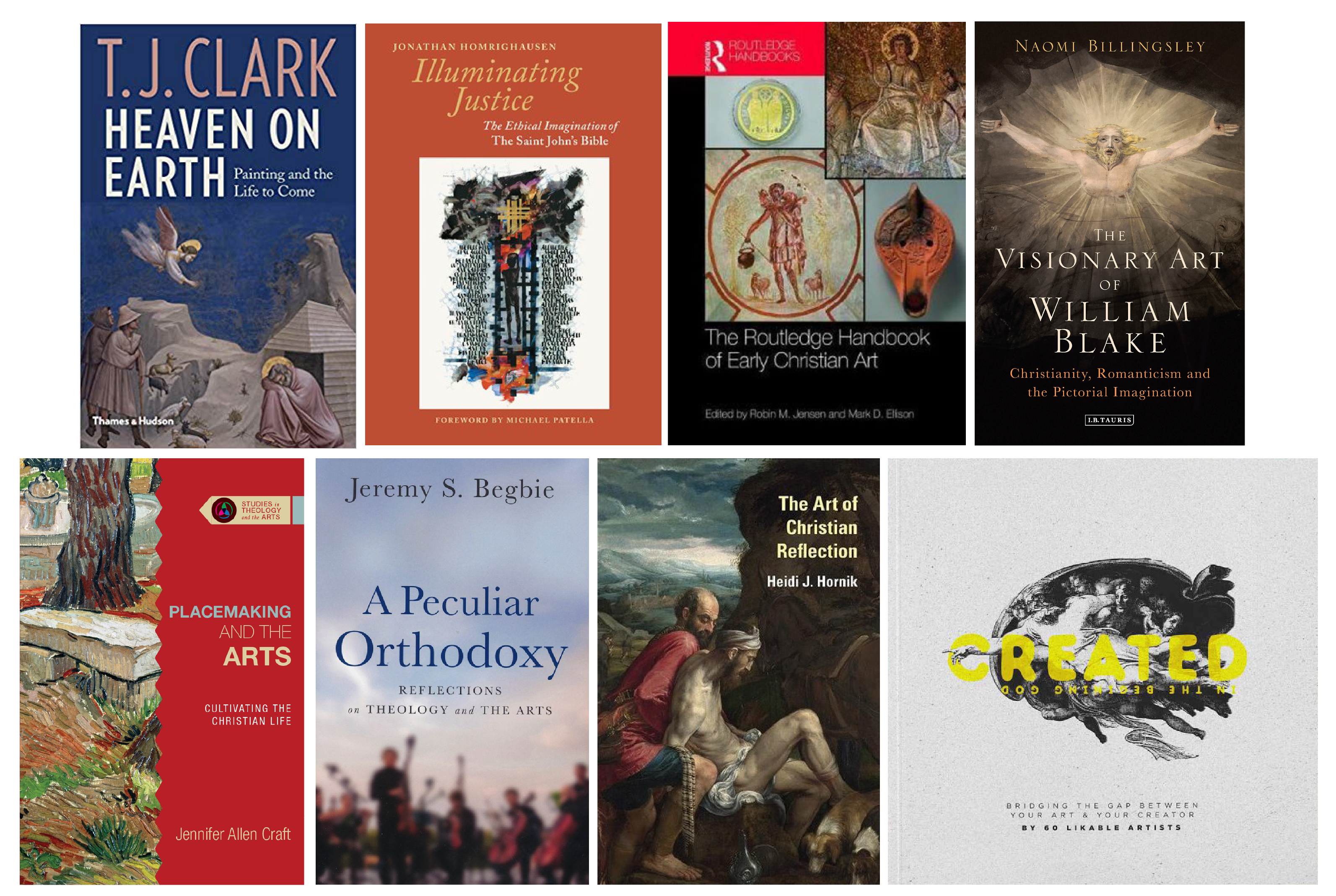
ANNOTATED BOOK LIST: “Art and theology” books published in 2018: I put together this compilation for ArtWay, so the emphasis is on visual art. I’ve already featured a few of the books on the blog, like Wounded in Spirit and The Annunciation: A Pilgrim’s Quest, but there are over a dozen more, a mix of academic and nonacademic. These include, among others, a large reference work on early Christian art; books on individual artists William Blake and Keith New; two books by Jeremy Begbie, which emphasize the need for biblically grounded creedal orthodoxy in discussions on the arts; and two books on the modern illuminated Saint John’s Bible—one of which (Illuminating Justice by Jonathan Homrighausen) was just named among the top twelve theology books of the year by the Englewood Review of Books. Like Homrighausen, art historian Heidi J. Hornik also links art and ethics, in her book The Art of Christian Reflection. Created: Bridging the Gap between Your Art and Your Creator is probably the most unique offering; published by Likable Art design studio, it features sixty-two responses to the question “What are your first five words to the world of artists?,” and edgy graphic designs.
Let me know if I’m missing any titles. For book lists from previous years, see 2014–16 and 2017.
+++
ANIMATED SHORTS
Lost & Found (2018): Widely lauded at film festivals since its debut earlier this year, Lost & Found is an endearing stop-motion film that chronicles a dramatic turning point in the relationship between two crocheted animal toys, a fox and a dinosaur. Since finding each other in the lost-and-found bin of a Japanese restaurant, it was love. But when the fox topples into a fountain, the dinosaur must sacrifice himself, yarn by yarn, to save her. Directed by Andrew Goldsmith and Bradley Slabe.
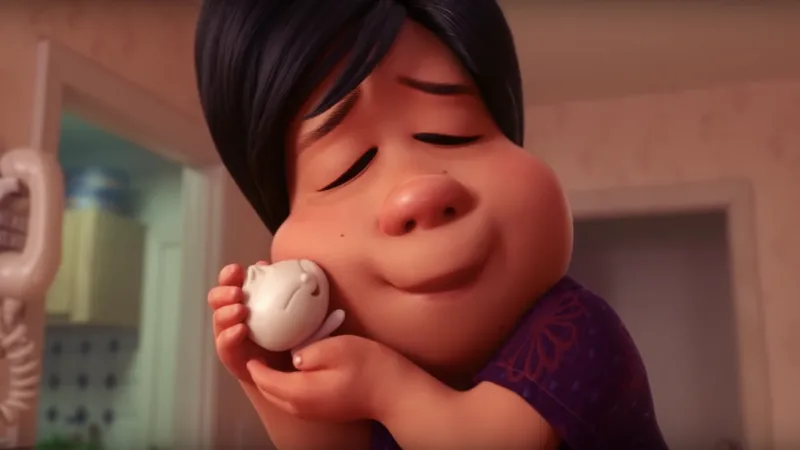
Bao(2018): This computer-animated short film, written and directed by Domee Shi and produced by Pixar, premiered on June 15 with Incredibles 2. It’s about a lonely, aging Chinese Canadian mother, suffering from empty-nest syndrome, who receives an unexpected second chance at motherhood when she makes a dumpling that comes to life as a boy. “I was that overprotected little dumpling,” Shi said in an interview; this project, she said, was her attempt to try to better understand her mother. One of the strongest powers of film, I’ve always thought, is its ability to incite empathy. (Update, 12/25: It appears that this film was being offered for free online viewing for only a very limited time, as it is now behind a paywall: https://www.youtube.com/watch?v=ypEuSSwB1Rk.)
+++
DAILY ART: 2018 Advent Calendar by the Ashmolean Museum: I know the season’s almost over, but it’s still worth checking out this free online calendar published by the Ashmolean, an art and archaeology museum in Oxford. Each day of December, they’ve been revealing a different winter- or Christmas-themed object from their collection. Entries thus far have included a bronze “reindeer” brooch from second-century Amiens, a decorated star tile from thirteenth-century Iran, a winter kimono with a design of snowy pines, an ivory netsuke in the form of a boy rolling a yuki-daruma (snowman), and a Delftware tile depicting three ships a-sailing. I dig this creative idea for public engagement! I’ve seen art museums do Pinterest boards, but this is the first time I’ve seen an Advent calendar.
Below I’ve reproduced the etching from Day 2, Epiphany, which F. L. Griggs made to celebrate the end of World War I one hundred years ago. A tall memorial crucifix stands atop a triple bridge, towering over roofless homes and illuminated by bright starlight. The Latin inscription translates as “The King of Peace whom the whole world desireth to see, hath shown His greatness. The King of Peace hath shown His greatness above all kings of the whole Earth.” Griggs’s son would die in World War II.
Frederick Landseer Maur Griggs (British, 1876–1938), Epiphany, 1918–19. Etching, 17.3 × 12.5 cm. Ashmolean Museum of Art and Archaeology, Oxford, England.
+++
WALTZING MARBLES: Kinetic artist Mark Robbins of DoodleChaos made a series of Rube Goldberg-like contraptions with blocks and magnets and set a marble rolling along it to Tchaikovsky’s “Waltz of the Flowers” from The Nutcracker, with other marbles later joining the dance. The synchronization is perfect! I got such a kick out of this.





 Art & Theology