Roundup: Call for creation care songs; an ode to red hair; and more

SONGWRITING CONTEST: 2021 Creation Care and Climate Justice Songwriting Contest, sponsored by The Porter’s Gate: “We are working on new worship resources celebrating God’s creation and His call to care for the created world. Over the next year we’ll be writing new songs on this subject and recording them. As part of this project, we are looking for submissions from anyone who would like to write a song or has already written a song on this subject. If you are a songwriter or composer, or if you know a songwriter who would be interested, click on this link for all the details of the contest. Songwriters are invited to submit worship songs related to caring for God’s creation, and we are offering a $500 cash prize to the winner. We’ll also record the winning piece.” No entry fee. Deadline August 30, 2021.

+++

CINEPOEM: “First Grade Activist” – Poem by Nic Sebastian, video by Marie Craven: This 2014 short by Australian filmmaker Marie Craven takes a poem written and read by Nic Sebastian—one of many poems made freely available for “remixing” through the now-defunct Poetry Storehouse—and sets it to moving images and music. About bullying in schools and transforming perceptions, the poem suggests concrete ways to turn a personal attribute that elicits taunts into one that’s praiseworthy, merely by reframing it. It’s an ode to red hair!

Video poetry, sometimes called “cinepoetry,” is a hybrid genre that combines the best of both art forms to make dynamic new works. To explore more, visit Moving Poems, Poetry + Video, filmpoetry.org, and the Film and Video Poetry Society, which is currently accepting submissions for its fourth annual symposium.

+++

NEW SONGS BY IAMSON:

IAMSON is the alias of Orlando Palmer, a Christian singer-songwriter from Richmond, Virginia. Here are two of his recent songs, each of which he invited a friend to perform.

>> “Peace” by IAMSON, performed by Caleb Carroll:

>> “Always with Me (Song for Anxiety)” by IAMSON, Jessica Fox, Paul Zach, and Kate Bluett; performed by IAMSON and Caiah Jones:

(See the original solo recording by IAMSON here.)

+++

PODCAST EPISODE: “Worship and the Formative Power of the Arts” with Dr. W. David O. Taylor, Theology in Motion: An excellent conversation with one of my favorite people! Host Steve Zank, director of theology at the Center for Worship Leadership at Christ College, Concordia University Irvine, talks with liturgical theologian, author, and professor David Taylor about his book Glimpses of the New Creation: Worship and the Formative Power of the Arts, about how the arts help shape individuals and communities, particularly in corporate worship contexts.

They discuss the role of metaphor in the Bible, the unique powers of different art forms, and the ways our aesthetic choices open up and close down opportunities for formation in worship.

I so appreciate Taylor’s ecumenicism. He’s an Anglican priest in the United States but does not prescribe any one “right” way of using the arts in worship. In all his examples from across Christian traditions and even historical eras, he’s keen on exploring what motivates aesthetic choices and the benefits and drawbacks of any given choice. For instance, he compares the experiences of worshipping in a Gothic cathedral versus in a living room; neither one is inherently better than the other, but each setting will inevitably form worshippers in distinct ways. He also compares two songs centered on the idea of God as rescuer: the Gettys’ “In Christ Alone” and Hillsong’s “Oceans”; both have a similar aim but take very different approaches to reach it, and that’s OK.

Lots of great content here, folks, and a great intro to the themes in Taylor’s book.

Roundup: Call for Jubilee-themed submissions; “coronasolfège for 6”; and more

NEW PLAYLIST: August 2021 (Art & Theology): This month’s thirty-song roundup opens with a 1936 recording by blues guitarist and singer Blind Roosevelt Graves and goes on to include “Amazing Grace” sung to the tune of HOUSE OF THE RISISNG SUN; “Amaholo,” a song in Luganda performed by a youth choir from Kkindu Village, Uganda (its first line is “God’s blessing can’t be blocked by the devil!”); some Joan Baez and Johnny Cash; “Pretty Home,” a Shaker hymn by Patsy Roberts Williamson, an enslaved African American woman whose freedom was purchased by the Pleasant Hill Shaker community in the early 1800s; Psalm 118:1–4 in Hebrew, set by one of the most popular contemporary singer-songwriters of Jewish religious songs, Debbie Friedman, and sung by a trio of brothers; a gospel song from one of my favorite films of 2019, Peanut Butter Falcon; and “God Yu Takem Laef Blong Mi,” a Melanesian choir rendition of “Take My Life and Let it Be” from Terrence Malick’s The Thin Red Line.

+++

CALL FOR PITCHES: Geez 63 Jubilee: “What would the biblical practice of Jubilee look like today? Geez magazine is looking for submissions that reimagine ideas of debt forgiveness, reparations, trumpets singing, and a whole lot of radical rest. Deadline for pitches: August 12.” [HT: ImageUpdate]

Creative nonfiction essays, investigative articles, “flash nonfiction” (short insights, as few as fifty words), photographs, and poems are among the forms accepted. To get you started, Geez provides a whole host of questions for pondering, as well as specific prompts, such as:

  • Rewrite Isaiah 61, “The year of the Lord’s favor,” in the context of today’s struggles for justice.
  • Take a nap. Write a poem about it.
  • Write a street liturgy for the front steps of Navient, American Educational Services, or other student loan debt collectors.
  • Explore global social movements that have employed practices of Jubilee, implicitly or explicitly.
  • Describe the sounds of a great Jubilee party.

If you want to stay apprised of what the quarterly is up to in the future, sign up for their newsletter (there’s an option to receive contributor pitch emails) and/or follow them on Facebook and Twitter.

+++

THE GESUALDO SIX:

The Gesualdo Six is an award-winning British vocal ensemble directed by Owain Park. I’ve really been enjoying all the content on their YouTube channel, which includes original performances of sacred motets, hymns, carols, chansons, and contemporary pieces—like the two below, both written specifically for the group. Be sure to check out their website for information about live concerts!

>> “The Blue Bird” by Andrew Maxfield: The composer writes, “The text [see below]—a beloved poem by Mary Elizabeth Coleridge—evokes ‘blueness’ not just in its title; every image is blue: the lake, the bird’s wings, the sky above and beneath. Far from being monochromatic, though, this poetic meditation reveals a multiplicity within the narrow spectrum we label ‘blue.’ Royal. Navy. Cobalt. Tiffany. Sky. Midnight. All of these flash, but only briefly, as our winged protagonist catches his fleeting reflection in the lake’s glassy surface. Blue, then, is the subject and substance of my musical setting. Harmonically, the piece hovers, as the bird does, in what feels to me like a cool, gentle, blue sound—little variations and reflections on the wings and water here and there, but the piece attempts to remain ‘blue in blue’ (or what Miles Davis might have called ‘Kind of Blue’) and, after not too long, disappears, as the birds shifts, glides, and vanishes. Melodically, this bird nods to another: to William Byrd, one of the great composers of the English Renaissance, whose contrapuntal inventiveness inspires me. And—I couldn’t help myself—my setting alludes to Joni Mitchell’s song ‘Blue,’ but I leave it to you to locate the reference.”

The lake lay blue below the hill.
O’er it, as I looked, there flew
Across the waters, cold and still,
A bird whose wings were palest blue.

The sky above was blue at last,
The sky beneath me blue in blue.
A moment, ere the bird had passed,
It caught his image as he flew.

>> “coronasolfège for 6” by Héloïse Werner: Super-fun and quirky!

+++

ONLINE EVENTS:Origin, an Art House Dallas program, seeks to establish a wholeness and connectedness between spiritual formation, imagination, and the arts with the ultimate intent to establish a sacred perspective on how we individually and collectively live and create. We believe that beauty shown through the arts, culture, and creation holds a powerful ability to form the way we see ourselves, the world, and our interaction with both.”

This summer’s iteration of the program consists of a series of online Thursday night talks by artists or pastors, followed by facilitated discussions. Two of these have already passed, but two are still upcoming: “Embodiment” with Guy Delcambre on August 12, and “Beauty” with Kelly Kruse on August 26. RSVP at Eventbrite.

In addition to the free events, there’s an accompanying anthology of articles, poems, visual art, scripture, and questions for prayerful reflection, which is on sale for $8.

+++

MOVIE OPENING: I’m working my way through all the Best Picture Oscar winners since the award’s inception in 1928 and have come upon 1980’s Ordinary People, Robert Redford’s directorial debut. Based on the novel by Judith Guest, it’s about the fragmentation of an upper middle-class family, the Jarretts, following the death of the eldest son, Buck, in a sailing accident and a subsequent suicide attempt by the other son, Conrad (played by Timothy Hutton).

I was really struck by its opening, which features a sacred choral version of Pachelbel’s Canon in D by Noel Goemanne. Although the film is not a religious one, the choice to open it with a prayer from the lips of Conrad, albeit one assigned by his high school choir teacher, is very fitting, as it voices the character’s longings. Throughout the film Conrad will struggle to find that peace, joy, and love he sings about in class—learning over time to assert with sincerity, in spite of grave tragedy, “Alleluia.”

The full lyrics by Goemanne are below, and you can watch a performance of the full song by the Meridian Community College Chorus and Guitar Ensemble here.

In the silence of our souls
O Lord, we contemplate Thy peace
Free from all the world’s desires
Free of fear and all anxiety

O Lord our God
Wisdom, joy, and peace and love divine
O Lord our God
Glory, praise, and honor be always thine

O dearest Lord, come to us now
Have mercy on us, stay with us and protect us all

O Lord our God
Wisdom, truth, and love and peace and joy
O Lord our King
Thy praises we will always sing

Alleluia

Roundup: Conferences, recorded talks by Jyoti Sahi and Patty Wickman, and the arts in spiritual formation

UPCOMING CONFERENCES:

>> (Virtual) Christian Fellowship of Art Music Composers, October 23, 2021: The CFAMC is soliciting videos of live musical performances (or works designed with videography), original hymns, and papers. Twelve art music pieces will be chosen to be shown at the conference, followed by conversations about each, as will three hymns, to be sung during a time of worship.

>> (In Person) Transcend, CIVA Biennale, November 4–6, 2021, Austin, Texas: I’ll be attending! “Beauty is compelling. It binds itself to the Truth and the Good in such a way that, as Dante said, ‘Beauty awakens the soul to act.’ It moves us from the rooted realities of canvas, clay, notes, or language into the transcendental nature of God Himself, our Beautiful, True, and Good Creator. Join CIVA [Christians in the Visual Arts] as artists, pastors, curators, and cultural leaders explore the divine spark of the image of God in each of us that initiates and propels our journey to perceiving anew an intuitive, expressive, and fulfilling reality.” The conference will include a juried art show, plenary talks, paper presentations, times of worship, workshops, portfolio reviews and mentoring sessions, author signings, “explore groups” around the city (I signed up for the Blanton Museum of Art and Ellsworth Kelly’s Austin), and artists’ show and tell.

+++

ARTIST PRESENTATIONS:

It can be so illuminating to hear an artist discuss their work—their influences, their process, how particular artworks came about. Below are two virtual talks I attended last month and really enjoyed, both by artists who are Catholic.

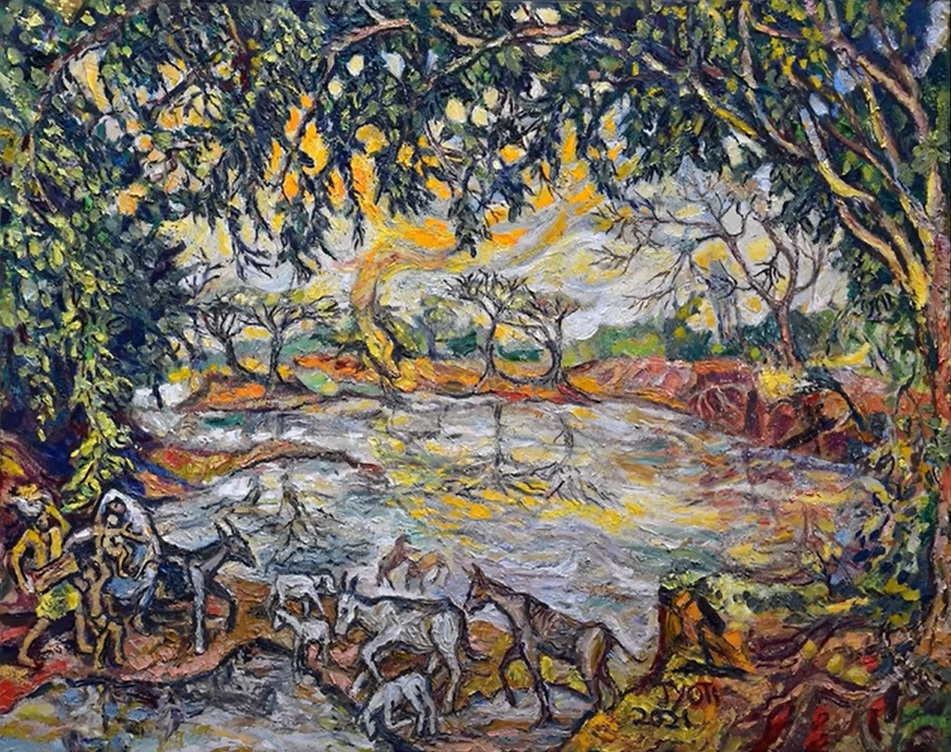
>> Jyoti Sahi, June 19, 2021: In this virtual talk organized by the UK organization Christians Aware, my friend Jyoti Sahi [previously] shares several of the paintings he has produced during the past year in quarantine in and around his home in Silvepura Village in Karnataka, South India, inspired by the local landscapes and vegetation. Over the years Jyoti has developed a Christian spirituality that is very earthy, one that sees the natural world as reflective of, and even participating in, the divine mysteries. His Jesus is in and of the land. Images start at 11:20.

Sahi, Jyoti_Flight of the Holy Family
Jyoti Sahi (Indian, 1944–), Flight of the Holy Family, 2021. Oil and acrylic on canvas.

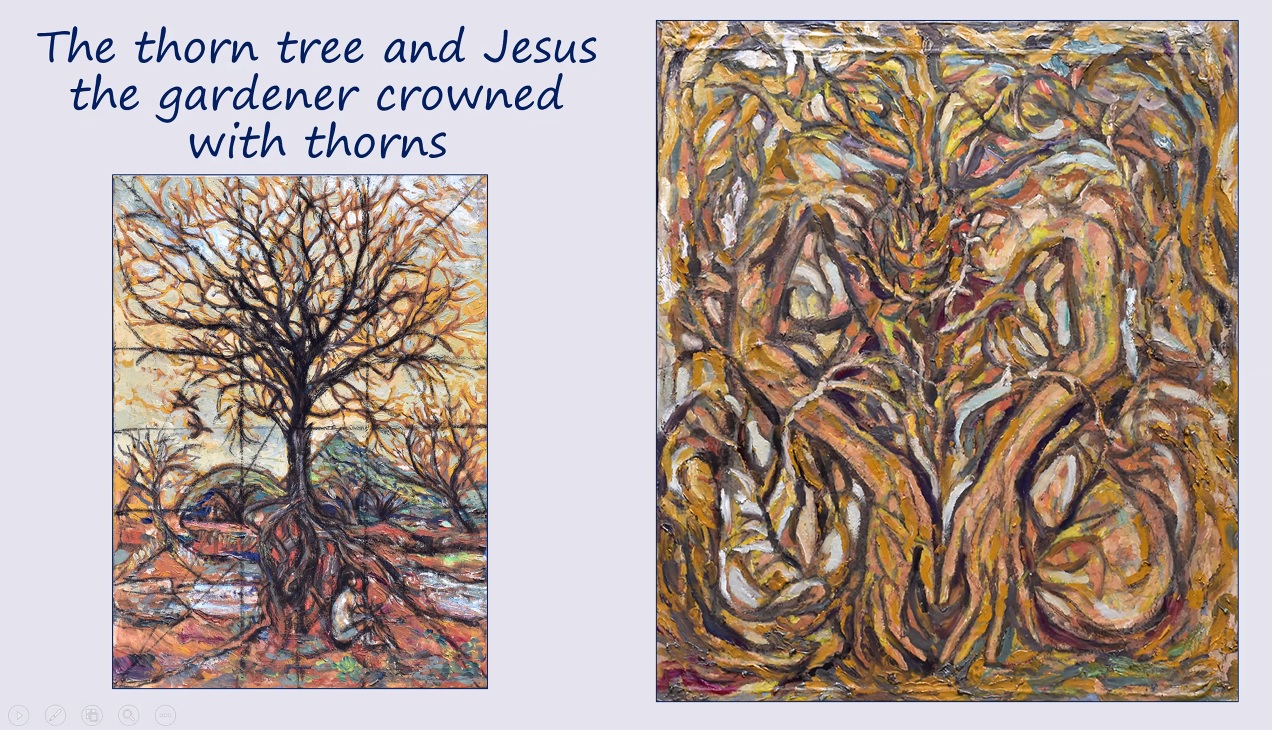
Sahi, Jyoti_Jesus the Gardener

In his recent body of work, Jyoti shows, among other things:

  • Jesus being born in a makeshift encampment beside a kere (manmade lake), among the brick kilns, a child of migrant laborers.
  • Jesus giving a sermon in a sacred grove underneath a yellow bodhi tree, where herdsmen graze their flocks. The snake-stones, erected by the Adivasi (tribal peoples of India), allude to healing and to Jesus’s being lifted up on the cross like the serpent on Moses’s staff (John 3:14–15; cf. Num. 21:4–9).
  • Jesus entering Jerusalem, his face gloriously framed by palm fronds. He’s reminiscent of the leafy-headed Green Man present in the mythologies of many ancient cultures but found particularly in medieval English church carvings.
  • Christ crucified in the palash tree, the “flame of the forest.” (Jyoti notes that in the Sanskrit epic poem the Mahabharata, the hero’s wounds are compared to the flowers of the palash tree.)
  • Jesus in the garden of the resurrection, standing in front of a flowering datura tree, which is poisonous but also medicinal. (“Poison can be a way of discovering healing,” Jyoti says—a truth that has implications for a theology of the cross.)
  • The journey to Emmaus, showing two of Jesus’s disciples entering the garden, a metaphor for wholeness or home.

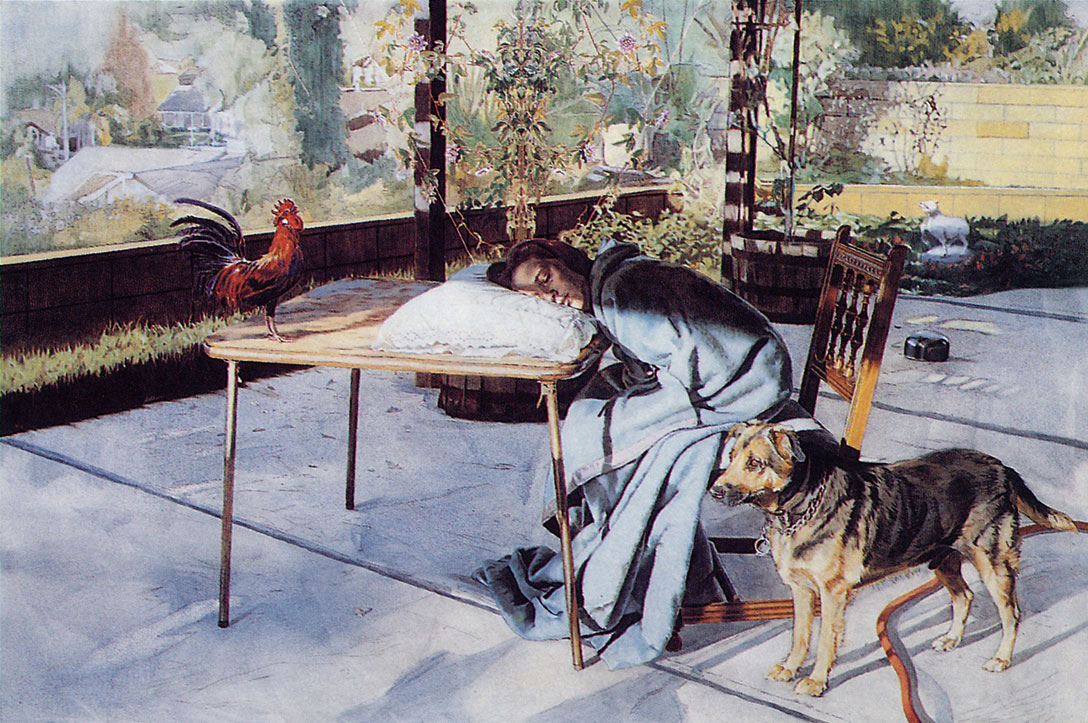
>> “Gift Paintings: The Invitation to See Anew” with Patty Wickman, June 24, 2021: As part of its Art & Faith series, Holy Family Church in South Pasadena, California, hosted a virtual talk by one of its members, Patty Wickman [previously], a nationally exhibited artist and longtime professor in UCLA’s art department. Her paintings are figural, and she describes several of them as “gifts,” sparked by things like the discovery of one of her mother’s unusual rest rituals, encounters with unhoused persons in San Jose, a cut-paper environment inside a Disney World ride, flea market finds, a plate of dirt her young daughter served her, and a little boy’s eating apples stark naked on a hot summer day in her backyard.

Among her influences are Shaker gift drawings and worship spaces; Victorian hair wreaths; the illuminations of Hildegard of Bingen; performance art pieces by Joseph Beuys, Chris Burden, and Ana Mendieta; Cindy Sherman’s photographic self-portraits; and historical religious paintings by Fra Angelico, Piero della Francesca, Georges de La Tour, Geertgen tot Sint Jans, Caravaggio, and others.

At twenty-four minutes in she starts discussing her own work, with reference to specific artworks that informed her. Compare her Entheos, for example, to Caravaggio’s Crucifixion of Saint Peter; her Struggle Garden to frescoes by Giotto of Anne and Joachim at the golden gate, and Judas betraying Jesus in Gethsemane; and her A Thief in the Night to Peter Menzel’s Material World project. When her early days of motherhood prevented her from having the time to plan and execute large-scale paintings like these, she painted smaller, quicker works—daily during Lent—with subjects including dust bunnies, daddy longlegs, a stick of incense, and a birdbath with the first blooms from her camellia tree having fallen inside. Her work has a sacramental quality to it that’s really compelling.

Wickman, Patty_Passion Painting
Patty Wickman (American, 1959–), Passion Painting, 1997. Oil on canvas, 60 × 90 in.

Wickman, Patty_Circumscribe
Patty Wickman (American, 1959–), Circumscribe, 2017–19. Oil on linen, 84 × 104 in.

The last half-hour of the video is Q&A.

+++

ARTICLE: “Artful Discipleship: The Role of the Arts in Spiritual Formation” by Carolyn Arends: Singer-songwriter Carolyn Arends discusses four ways the arts are important in our training to follow Jesus: (1) the arts help us train to pay attention; (2) the arts help us train in longing; (3) the arts help us train for the renewing of our minds; and (4) the arts help us train to appreciate things (and especially people) for more than their ​“usefulness.” She closes with a list of suggestions for practicing intentional engagement with the arts.

(See also a recent interview with Arends, “Art and Spiritual Formation,” on the Art & Faith Conversations podcast.)

Roundup: My new YouTube channel, “Constructed Mysteries” exhibition, and more

VISUAL MEDITATION: “Mary’s Fecund Yes” by Victoria Emily Jones, on Annunciation by Mats Rehnman: My latest ArtWay reflection was published Sunday. It’s on a whimsical Annunciation painting by touring storyteller, author, and visual artist Mats Rehnman, influenced in part by the Annunciation design woven into several nineteenth-century carriage cushions from Scania, Sweden.

Rehnman, Mats_Annunciation
Mats Rehnman (Swedish, 1954–), Annunciation, 2001. Aquarelle and acrylic.

Annunciation carriage cushion (Sweden)
Carriage cushion: The Annunciation, Scania (Skåne), Sweden, first half of 19th century. Tapestry weave, 52 × 96.5 cm.

+++

ART TALK: “Saying Yes: The Annunciation in Contemporary Art” by Victoria Emily Jones: Speaking of the Annunciation . . . my March 18 presentation from the Breath and the Clay creative arts gathering is now online! (The aforementioned Rehnman piece is one of six I discuss.) With permission from the conference organizers, I have uploaded it to my YouTube channel for public viewing.

It’s an act of vulnerability for me to share it with you, as I’m aware of the ways in which it is deficient (in terms of speech delivery and production values). I lack technical prowess and a charismatic personality and am self-conscious about being on camera—but hopefully with practice, I will improve. The main thing is, I want the work of these artists to be known and shared. I hope to demonstrate how art can pull us deeper into the biblical story, revealing new and sometimes surprising angles or simply helping us dwell there with love and intent, and also how it’s possible to do “theology through art,” relying not exclusively on academic writings or sermons (great as they both are) to do that important work.

While I have created a video for a scholar friend’s art history channel, this is the first on my own channel—which I invite you to subscribe to. (I need at least 100 subscribers to create a custom URL for the channel.) I don’t have imminent plans for more videos, but I am starting to brainstorm ideas and will probably send out a survey to my blog subscribers to get a better sense of what you all would want to see. Several of you have requested that I get into video making, but I’ve been slow to move on it, wanting to better figure out my niche and what I could uniquely bring to such a dense market. I realize that video is a content format that is overwhelmingly preferred to blog posts these days, so I want to make use of it. But videos are much more time-consuming and difficult to produce without having a budget or a team behind me, and also not having the direct access to artworks that museums and other entities have. Please pray for this upcoming venture!

+++

CROSS-CONTINENTAL MUSIC VIDEO: “Song of Hope” by Praveen Francis and friends: This Afro-pop music video is a collaboration between musicians, dancers, and technicians in India, Guatemala, the UK, Republic of the Congo, Cameroon, and the United States. The project was initiated by Praveen Francis, a music producer and sound engineer from Coimbatore in Tamilnadu, India, who wrote the original composition. The languages are English, French, and Lingala, but the hook is a series of nonlexical vocables: “Na na na . . .” [HT: Global Christian Worship]

The video was released April 10, 2021, shortly before the second COVID wave hit India. “This Pandemic has ravaged all our lives,” Francis says. “But we will not give up. We will fight back because there is still HOPE.”

+++

EXHIBITION: Constructed Mysteries: Spirituality and Creative Practice, February 8–April 18, 2021, Olson Gallery, Bethel University: Curated by Kenneth Steinbach and Michelle Westmark Wingard, Constructed Mysteries showcased the art of nine mid-career artists or artist teams whose work engages Christian spirituality: Heather Nameth Bren, Shin-hee Chin, Caroline Kent, Scott Kolbo, Joyce Yu-Jean Lee, Nery Gabriel Lemus, Marianne Lettieri, Cherith Lundin, and Justin Randolph Thompson and Bradly Dever Treadaway. The exhibition has come to a close, but there’s a wonderful twenty-minute video tour of it that’s archived on YouTube, with artist commentaries starting at 2:44:

In addition to the video, there’s an exhibition catalog available for online viewing. It features a series of artist interviews, which address topics such as silence, the importance of process, and the nature of parable. And of course it includes photos of all the works in the exhibition. Let me highlight just two.

Lettieri, Marianne_Fenetre de Reparateurs
Marianne Lettieri, Fenêtre de Réparateurs (Window of Repairers), 2020. Vintage pincushions, wood, paper, 33 × 18 × 3 1/2 in.

The first is by my friend Marianne Lettieri [previously], whose work is informed by her “increased awareness of the enchantment of everyday actions and moments—the sequences of ordinary human existence.

I would hate to think that life is just the important events. You get married, you get an award, have a baby. These are big things, and some are what we call sacraments in the church, but I’ve realized that peeling potatoes, fixing the faucet, and other common tasks make up most of our daily living. The big moments are a part of it, but it’s the string of these small moments that are present and sacred acts we need to pay attention to.

Much of her art illuminates the value of domestic labor, such as Fenêtre de Réparateurs, which sets forty-one used pincushions, still bearing the threads put there by their previous owners, into a wooden framework, evoking a stained glass window. “This work speaks about a culture of menders—people who choose to save, repair, and transform damaged things,” says Lettieri.

Baby Needs New Shoes (Thompson and Treadaway)
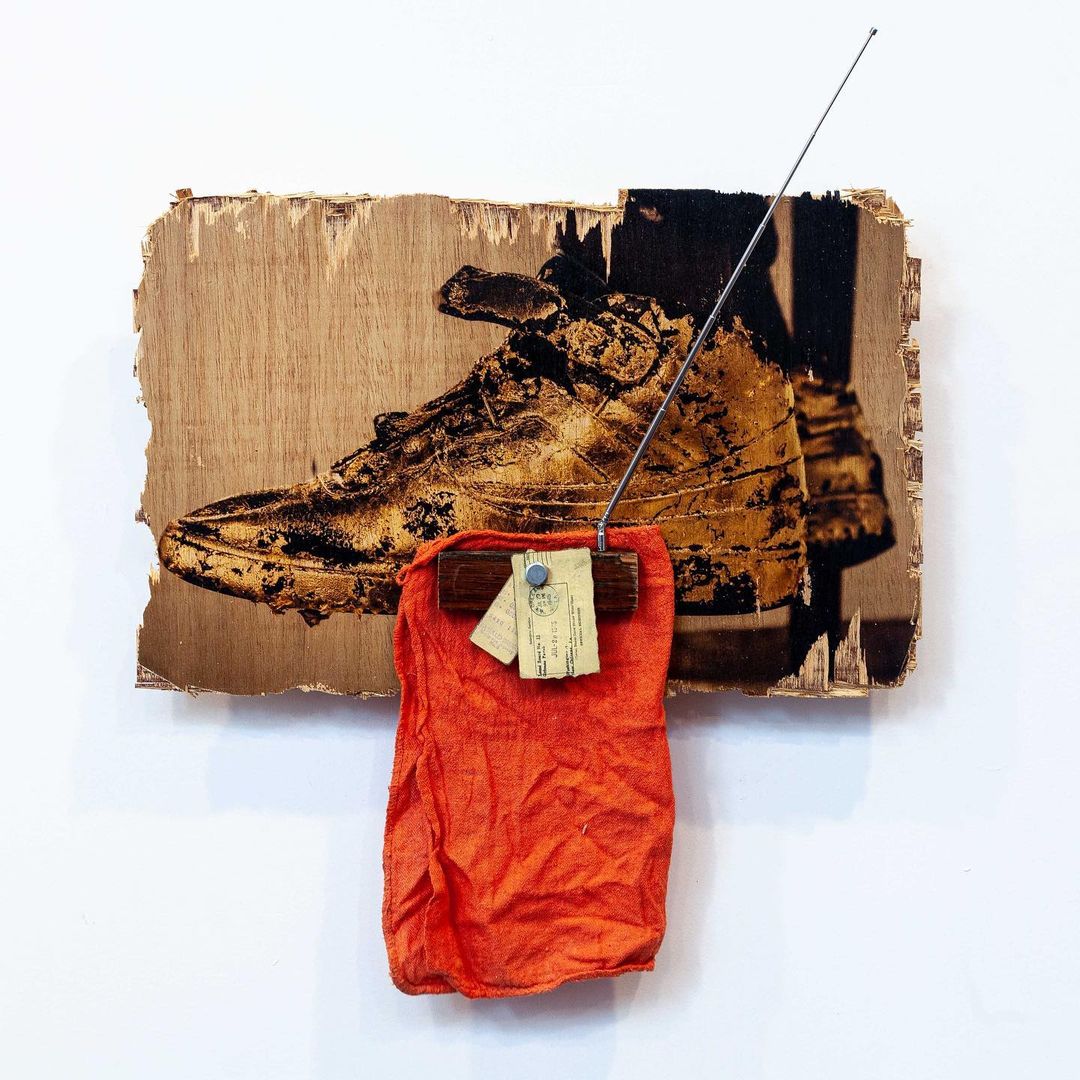
Justin Randolph Thompson and Bradly Dever Treadaway, Baby Needs New Shoes, 2021. Photographic transfer on wood with antenna and rag, 20 × 13 × 2 in.

Second, Traveling Shoes is a performative sound work by longtime collaborators Justin Randolph Thompson and Bradly Dever Treadaway, from 2013’s Flux Night in Atlanta. It involved a two-seat shoe-shine “chariot” being dragged through the crowds, stopping to gold-leaf the shoes of anyone who was interested. All the while, on the back of the chariot, a three-piece jazz band played the traditional African American song “Traveling Shoes,” which is about getting ready for Jesus’s return. The original performance, which lasted around three hours and has been re-created in several different contexts since then, is archived in a twelve-minute video, which is what was on display at Bethel. To go alongside, the curators asked the duo to submit a photograph from the performance series; they went the extra mile and used a photo as the basis of a new mixed-media work that incorporates objects used in the performance, such as a mechanic’s rag and an antenna, which is what I’ve posted here.

+++

RELIGIOUS POEMS SAMPLER: “Original and unorthodox poems about theology,” compiled by Mark Jarman: An excellent selection of ten poems, all but one available for reading from the Poetry Foundation. Jarman is a leading poet of the twenty-first century and a Christian. He was too humble to include one of his own poems on the list, but his poetry is much in this vein, so for number 11 I would add Jarman’s “Five Psalms,” from his collection To the Green Man (2004).

Roundup: Ethan Hawke on creativity; Jesse Pinkman as child-prophet; 1843 abolitionist hymn; and more

JULY PLAYLIST: The songs I’ve compiled this month on Spotify include Audrey Assad’s rewrite of a classic patriotic hymn [previously], a Bach partita with added words by Alanna Boudreau inspired by Dante’s Inferno, a Sotho interpretation of Psalm 23 by the Soweto Gospel Choir, a celebration of God as artist written and sung by a Franciscan friar from the Bronx, a song of testimony performed by blues musician Elizabeth Cotten and her great-granddaughter Brenda Evans, a multilingual song setting of Matthew 5:9 (“Blessed are the peacemakers . . .”) (again, with multigenerational participation!), Psalm 103 sung in Hebrew with ancient Middle Eastern instruments, and more.

+++

KICKSTARTER CAMPAIGN: Great Cloud by Nick Chambers: This is one of the creative projects I donated to this week. Chambers writes, “For over a decade, I have written music for the Church without much concern for the songs reaching beyond the particular place and people to which I belong. Now I want to release and share this music more widely. And you can help.

“I write songs to help give voice for people to pray, question, confess, doubt, lament, give thanks, and praise. Because I owe so much in this to the many faithful voices of history of the Church, this first record will be a collection of prayers of the saints—faithful voices such as Ephrem the Syrian, Teresa of Avila, Howard Thurman, and more.

“I have been planning with producer Isaac Wardell (The Porter’s Gate, Bifrost Arts) to record in early September in Paris near where he is currently based. The Porter’s Gate will be recording the same week, which means your support toward my $15k goal will go toward my record and travel costs, as well as allowing me to contribute in person to the next Porter’s Gate project.”

Here’s an example of Chambers’s singing-songwriting—a setting of Psalm 22:

+++

TED TALK: “Give yourself permission to be creative” by Ethan Hawke: I could listen to actor Ethan Hawke talk about any subject; he’s so interesting and passionate. (His recent conversation with the American Cinematheque on his new limited series The Good Lord Bird, for example, about abolitionist John Brown, was fascinating!) In this video he was asked to talk about creativity and the arts. He says,

There’s a thing that worries me sometimes whenever you talk about creativity, ’cause it can have the feel that it’s just nice, you know; or it’s warm or it’s something pleasant. It’s not. It’s vital. It’s the way we heal each other. In singing our song, in telling our story, . . . we’re starting a dialogue. And when you do that, healing happens. And we come out of our corners. And we start to witness each other’s common humanity. We start to assert it. And when we do that, really good things happen.

+++

TRANSPOSITIONS ESSAYS:

>> “‘Stop Working Me’: Jesse Pinkman as Child-Prophet in Vince Gilligan’s Breaking Bad by Mary McCampbell: Jesse Pinkman from Breaking Bad, played by Aaron Paul, is one of my favorite TV characters of all time; I think I can truly say I’ve never been more emotionally invested in, or rooted harder for, any other. Mary McCampbell, author of the forthcoming book Imagining Our Neighbors as Ourselves: Empathy, the Arts, and the Religious Imagination (Fortress, 2021), writes about Jesse’s role as “child-prophet,” who sees and exposes with increasing clarity and conviction the amoral decay of the empire he helped Walt build. (Note: the article contains some series spoilers.)

>> “Revealing the Father: L. M. Montgomery, Dorothy L. Sayers, and Doctrine in Art” by Alicia Pollard: This article examines how the doctrine of God the Father shows up in Lucy Maud Montgomery’s novel Anne of Green Gables and Dorothy Sayers’s play The Emperor Constantine. The former chooses “the way of whimsical unorthodoxy”; the latter, “the way of passionate orthodoxy and reenchanted dogma as a living agent of truth.”

+++

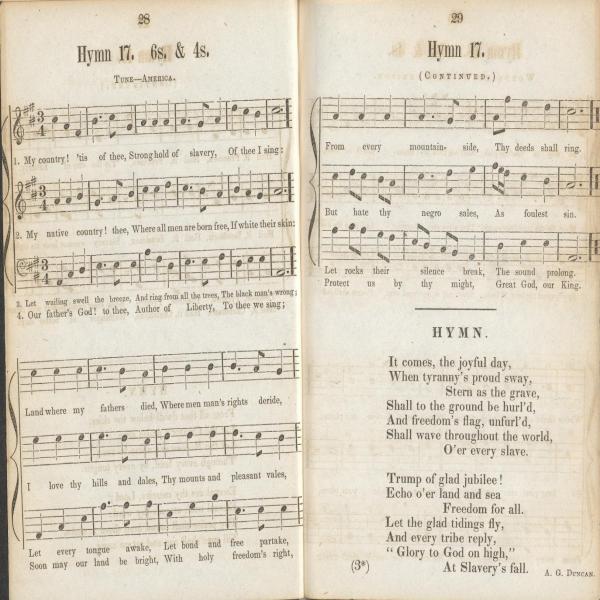
SONG: “My Country ’Tis of Thee” (abolitionist version by A. G. Duncan, 1843): I wanted to post this for Juneteenth, but alas, I’m two weeks late. Just twelve years after Samuel Francis Smith wrote “My Country ’Tis of Thee,” a scathing rewrite by abolitionist A. G. Duncan was published in Massachusetts in the book Anti-Slavery Melodies. Exposing the hypocrisy of a nation that proclaimed life and liberty for all and yet perpetuated the evil institution of race-based chattel slavery, it’s a call to lament—“let wailing swell the breeze”—as well as an anticipation of coming liberation, God be praised. (Again, this was 1843, almost two decades before the Civil War.) This vocal arrangement and performance using Duncan’s alt lyrics is by Chase Holfelder, who sings the song in a minor key. [HT: Global Christian Worship]

My country, ’tis of thee,
Stronghold of slavery, of thee I sing;
Land where my fathers died,
Where men man’s rights deride,
From every mountainside thy deeds shall ring.

My native country, thee,
Where all men are born free, if white’s their skin;
I love thy hills and dales,
Thy mounts and pleasant vales,
But hate thy negro sales, as foulest sin.

Let wailing swell the breeze,
And ring from all the trees the black man’s wrong;
Let every tongue awake;
Let bond and free partake;
Let rocks their silence break, the sound prolong.

Our father’s God! to thee,
Author of Liberty, to thee we sing;
Soon may our land be bright,
With holy freedom’s right,
Protect us by thy might, great God, our King.

It comes, the joyful day,
When tyranny’s proud sway, stern as the grave,
Shall to the ground be hurl’d,
And freedom’s flag, unfurl’d,
Shall wave throughout the world o’er every slave.

Trump of glad jubilee!
Echo o’er land and sea freedom for all.
Let the glad tidings fly,
And every tribe reply,
“Glory to God on high,” at Slavery’s fall!

Antis

Roundup: Juried exhibition call for entries, Malayalam worship song, and more

PLAYLIST: I can’t keep up with all the quality Christian (or, for artists who eschew that label, spiritually inflected?) music recordings that are out there—recent releases as well as back catalogs dating as far back as the thirties. There really is a breadth, and I sometimes get frustrated when I hear people claim otherwise. (Yes, there’s a lot of really crummy Christian music too . . . but that doesn’t mean the entire genre should be dismissed!) During this season of Ordinary Time I’m going to endeavor to release a monthly Spotify playlist consisting of a random assortment of thirty psalms, hymns, and spiritual songs, each by a different artist. Here’s June’s:

https://open.spotify.com/playlist/1exgudtuLRdwfrKj26AXr9?si=b24fd1f9006e47cd

+++

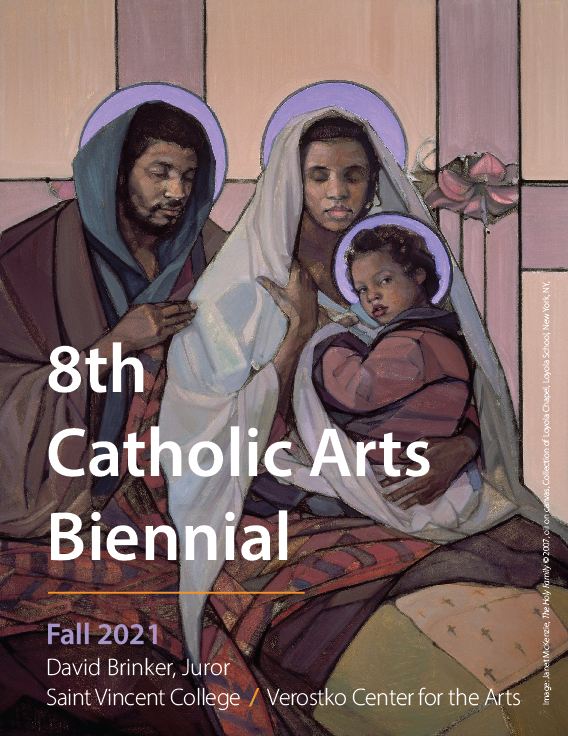
CALL TO ARTISTS: 8th Catholic Arts Biennial: Saint Vincent College in Latrobe, Pennsylvania, has issued a call for submissions for its eighth biannual juried exhibition of Christian-themed art. “This Biennial encourages submissions that expand representations of Christ, the Virgin Mary, biblical narratives, and the lives of the saints beyond Eurocentric presentations. Artwork made by women and persons of color is strongly encouraged. In addition to depictions of traditional Christian subjects, artists are urged to submit works that address social concerns from perspectives of faith pertinent to the contemporary moment. Works investigating the diversity of the human experience enlivened by Gospel values are also desired.”

8th Catholic Arts Biennial

Artists can be of any religious or denominational affiliation and can submit up to three works by the deadline of June 25. In addition to being exhibited September 6–October 29, 2021, at the Verostko Center for the Arts, the finalists will also be eligible for a top prize of $1,000, plus other cash prizes. The juror this year is David Brinker, director of the Museum of Contemporary Religious Art at Saint Louis University. (The painting on the promotional poster is The Holy Family by Janet McKenzie, a previous winner.)

+++

SONGS:

>> “Prarthana Kelkaname” (Hear Our Prayer): Jijo Hebron, a Christian worship leader from Kerala, India, and his wife Niveda Jijo released this YouTube recording on Sunday, in which they sing to God in the Malayalam language. The song’s English meaning is below. [HT: Global Christian Worship]

Hear our prayer and supplication, oh Lord
It is the promise in your Son’s name:
Whatever we ask, it will be granted.
There is no one to take care of my worries apart from you
Who stands as my father and mother

>> “Morning Prayer” by Langhorne Slim: From the album Strawberry Mansion, released this January.  

+++

ANIMATED SHORT: If Anything Happens I Love You: “In the aftermath of tragedy, two grieving parents journey through an emotional void as they mourn the loss of a child.” Written and directed by Will McCormack and Michael Govier and animated by Youngran Nho and team, this thirteen-minute film won Best Animated Short at the 2021 Oscars. It’s amazing how much I feel for these characters after such a short time of getting to know them. Streaming on Netflix.

+++

ARTICLE: “Art and Interfaith Conversation” by Andrew Smith: Birmingham, England, is a religiously diverse city, home not only to Christians but also to Muslims, Sikhs, Hindus, Buddhists, Jews, and others. The Church of England recognizes this rich presence and has on staff a director of interfaith relations for the bishop of Birmingham, Canon Dr. Andrew Smith. Smith is interested in how art and artifacts can be used to develop conversations between people of different faiths and to create new conversations, and here he discusses a Birmingham Conversations project he led along that vein: multifaith group tours at the Birmingham Museum and Art Gallery and St. Philip’s Cathedral. These he embarked on with a posture primarily of learning, not teaching. [HT: Still Life]

Smith served as a consultant for the museum’s faith gallery, which highlights religious objects from various traditions. He discusses the importance of honoring the integrity of each object’s spiritual significance, and some of the difficulties of creating a space that’s welcoming to people of all faiths when certain faiths regard certain imagery as problematic or even forbid it. He also shares some of the responses of non-Christian participants to specific works of Christian art, in both the museum and the cathedral. Some from the latter are recorded in the following video:

The Birmingham Conversations also commissioned two local artists, Jake Lever and Mandy Ross, to produce work informed by their visits over a yearlong period to different places of worship around Birmingham.

Lever, Jake_Dance
Jake Lever (British, 1963–), Dance, 2016. Ink and gouache on paper.

Roundup: “God is…” exhibition, new song cycle inspired by turn-of-the-century photographs, healing the imagination, and more

EXHIBITION: “God is . . . ,” May 14–23, gallery@oxo, London: The winning entry from the second Chaiya Art Awards competition, along with forty-nine shortlisted others, are being exhibited in London’s South Bank starting tomorrow. The exhibition also has a virtual option, which I received an advance preview of, along with the catalog. Read my review at ArtWay.eu. There is a diverse range of responses to the theme of “God is . . . ,” in a range of media!

Chaiya Art Awards 2021

+++

VIRTUAL CONCERT: “I Should Be Glad”: On May 2 the Choral Society of Durham and the Duke University Chorale put on a virtual concert, performing songs of lament and hope. They sing of “hours that go on broken wings” and “the unchanging ache of things”; of “this long, hard climb, carr[ying] ancestral sorrow”; of violence and murder; of God’s seeming absence; of feeling like a “moanin’ dove.” But they also sing invitations to be glad, to lay down one’s burden, to see beauty, to soar. Click here for a copy of the program, which contains credits, texts, and translations. I really enjoyed the selection of pieces—most were new to me—and the execution (technical and artistic) is excellent. An hour very well spent. Note that in lieu of a ticket charge, a $10 donation is recommended.

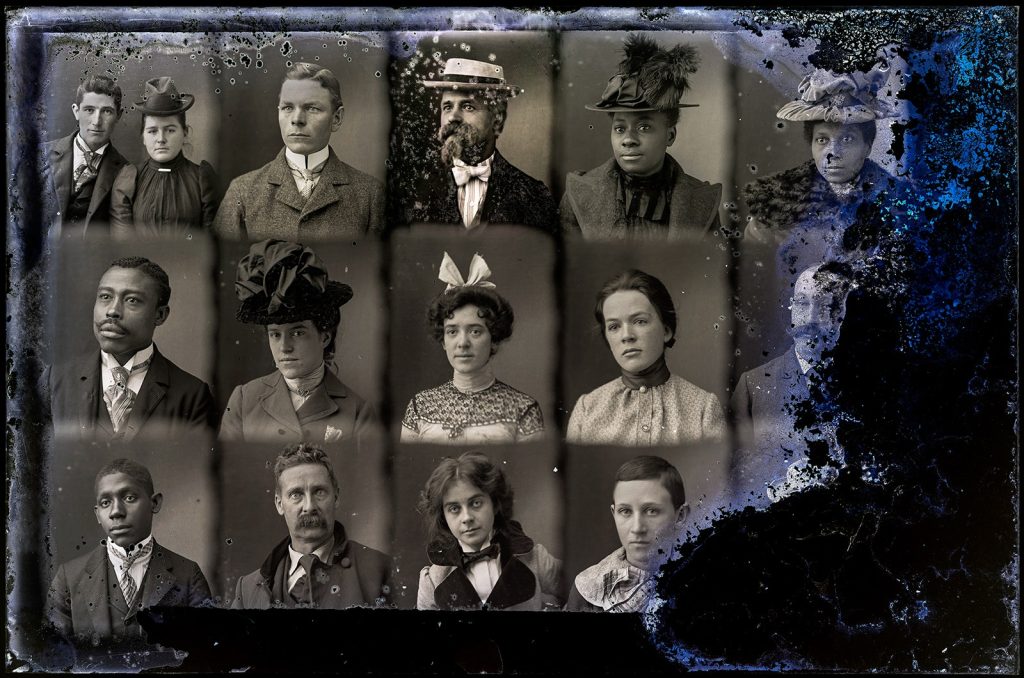
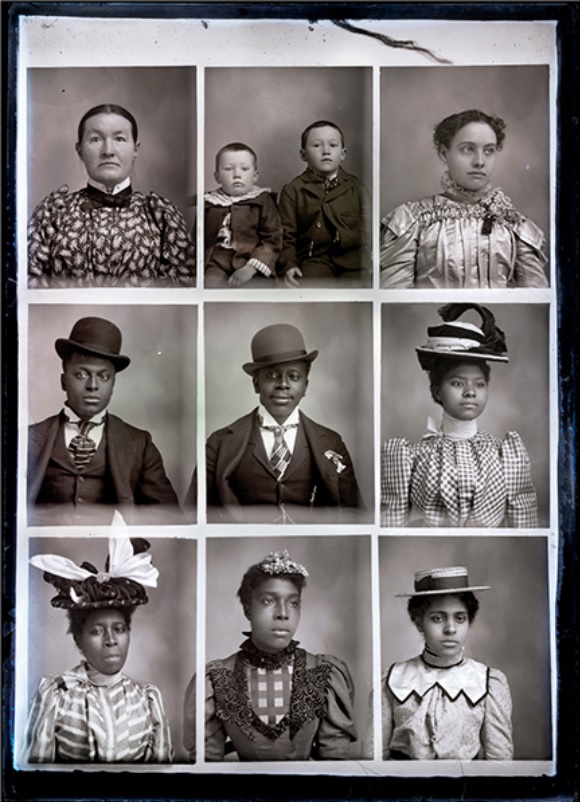
Among the songs are contemporary choral settings of traditional prayers, a civil rights hymn, and the world premiere of the five-movement Where We Find Ourselves by Michael Bussewitz-Quarm (she/her), inspired by the photographs of Hugh Magnum. Magnum, who was white, ran an integrated portrait studio in the Jim Crow South from 1897 until his death in 1922, photographing white and Black clients with equal dignity. The glass plate negatives and contact prints languished in his family’s moldering tobacco barn in Durham, North Carolina, until the 1970s, when they were discovered prior to the property’s slated demolition. They were transferred (many of them damaged) to the Duke University archives, where they again lay mostly dormant until being recently dug out by photographer-writers Margaret Sartor and Alex Harris, who compiled and presented them as an exhibition and accompanying book. Bussewitz-Quarm’s composition is a moving meditation on these timeworn photographs, and the lyrics by Shantel Sellers are pure poetry.

Hugh Magnum photographs
Photographs by Hugh Magnum, courtesy of the David M. Rubenstein Rare Book & Manuscript Library at Duke University, Durham, NC

Hugh Magnum photographs
In some of the negatives the panels have fused, causing the subjects to extend past their frames and thus giving the illusion that they were sitting together.

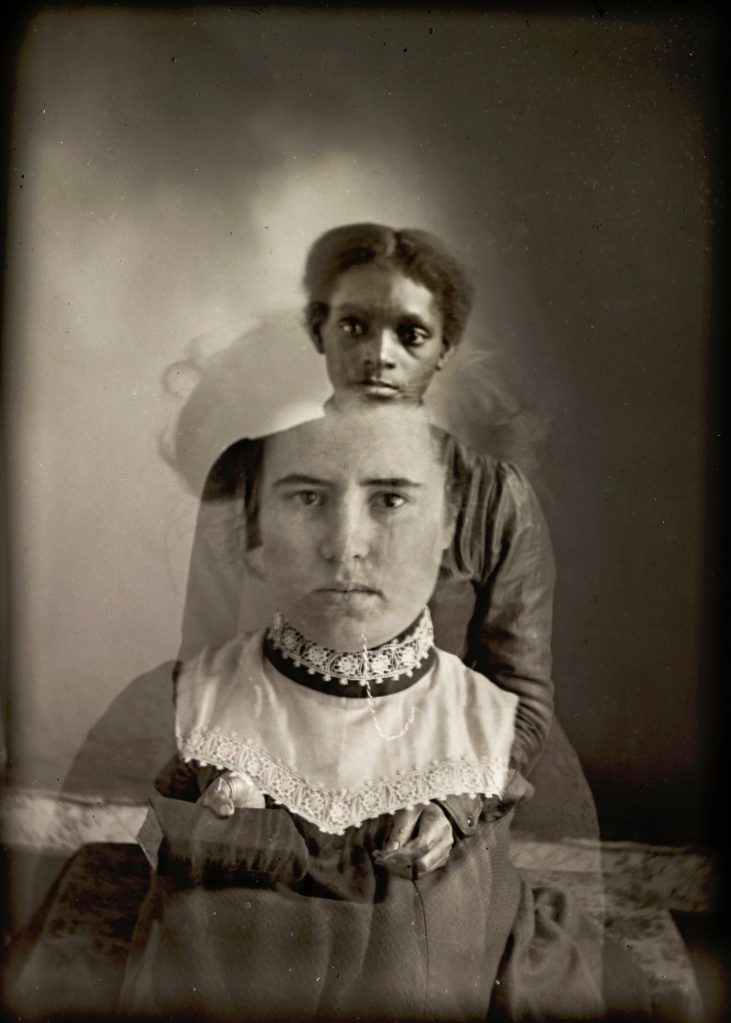
Hugh Magnum photograph
“The portraits are often accidentally double-exposed,” writes Sarah Blackwood for the New Yorker, “and many of the double exposures overlay images of white and black sitters, who suddenly seem to sit alongside or even atop one another. Such ghostly interactions produce from two Mangum portraits an entirely new image altogether, one in which the pride and pleasure of self-presentation is shadowed by the racial realities of the time.”

Set list:

  • “I Should Be Glad” by Susan LaBarr (composer) and Sara Teasdale (lyricist)
  • “Sometimes I Feel,” traditional African American spiritual, arr. Alice Parker and Robert Shaw
  • “Meet Me Here” (from Considering Matthew Shepard) by Craig Hella Johnson
  • “Wanting Memories” by Ysaye M. Barnwell
  • “Hymn for These Times” by Jay Rogers (composer) and Meggan Moorhead (lyricist)
  • “Ave Maria” by Robert Nathaniel Dett (composer)
  • “Our Father” by Paul D. Weber (composer)
  • “Where We Find Ourselves” by Michael Bussewitz-Quarm (composer) and Shantel Sellers (lyricist)
  • “Hymn to Freedom” by Oscar Peterson (composer) (arr. Paul W. Read) and Harriette Hamilton (lyrics)

+++

POEM COMMENTARY: “The Night” by Henry Vaughan, commentary by Dr. Grace Hamman (blog post | podcast episode): I’ve featured poems by Henry Vaughan several times on this blog but not the one that just might be his most famous: “The Night,” about the Pharisee Nicodemus’s midnight rendezvous with Jesus (see John 3). It contains the beautiful and much-lauded line “There is in God, some say, / A deep but dazzling darkness . . .” Medieval literature scholar Grace Hamman [previously], podcaster and blogger at Old Books with Grace, reads and unpacks the poem, first giving some historical and biographical context. Vaughan was an Anglican Welshman living during the English Civil War when the Puritans were in power, which means he was cut off from the forms of worship through which he was used to encountering Christ. This, Hamman says, influenced his writing of the poem and of the larger collection, Silex Scintillians, it’s a part of.

She has made the commentary available in both written and audio form.

+++

EDITORIALS by JAMES K.A. SMITH:

When I see a James K.A. Smith [previously] byline, I know what follows is going to be good. He’s a fantastic thinker, writer, and speaker—and he’s the editor in chief of my favorite arts journal, Image. Below is a link to the opening editorial he wrote for each of the last two issues. (The whole journal is full of rich content. Subscribe!)

>> “Healing the Imagination: Art Lessons from James Baldwin,” Image no. 107 (Winter 2020): Here Smith engages with James Baldwin’s 1964 essay “The Uses of the Blues,” in which Baldwin discusses how we “project onto the Negro face, because it is so visible, all of our guilts and aggressions and desires”; white America invents stories and images of Black Americans that reflect our disfigured imaginations. “The imagination is a form of habit, a learned, bodily disposition to the world. . . . It’s the imagination—well- or malformed—that determines what I see before I look,” Smith writes.

He connects Baldwin’s essay to Jesus’s parable of the good Samaritan, showing how the priest and the Levite had different habits of perception than the protagonist. “To see the person before me as an enemy or animal”—or, I would add, a burden—“is a failure of imagination; to see a neighbor instead is a feat of the imagination. Our society is grappling with a soul-sickness that is ultimately an infection of our imagination.” We reflexively imagine others as threats, competitors, adversaries.

The arts can play a huge role in reshaping our imaginations, in retraining us to see people rightly. “I dream of a third Great Awakening,” he says, “in which our imaginations would be reborn, a sanctification of sight baptized by stories and images such that even our first glance is holy. The tents for this revival would be galleries and cinemas; we’ll sing from poems and novels; the altar call will invite us to attend plays and contemplate sculpture.” He’s not saying art should replace church or religion but that art is a powerful agent of spiritual and perceptual formation; “the arts pluck the strings of our imagination uniquely.”

In their March 3 episode, “Healing the Imagination, with James K.A. Smith,” The Weight podcast had Smith on to expound on some of the points in the editorial, to unpack this musing: “Could it be that the arts are more likely to move the needle on our collective perception of one another?” He discusses definitions of “culture” and “art,” both creational goods (God has deputized human beings to unfurl the tacit possibilities he has folded into creation!); the influence of Augustine and Kuyper on his thought; the “transcending, opening, decentering” potential of artistic encounters; his experience of becoming an American citizen; and why he believes national healing will come not primarily through politics but through the arts. He mentions a few commendable recent examples of churches’ hospitality toward artists, citing Pope John Paul II’s 1999 Letter to Artists, written “to all who are passionately dedicated to the search for new ‘epiphanies’ of beauty so that through their creative work as artists they may offer these as gifts to the world,” and Redeemer Church of Knoxville, who converted the unused rooms of their building into artist studios for the larger community to use.

“Christian communities, if they actually really care about healing the soul of a nation, could do no better than to invest in the arts,” Smith says. “Not so we can go make Thomas Kinkade paintings or Kirk Cameron movies or whatever, but so that we have artists who are actually speaking to our neighbors in ways that meet them as human.”

>> “How to Visit a Museum: Disciplines of Availability,” Image no. 108 (Spring 2021): “Aesthetic experiences I didn’t go looking for that burrow their way most deeply into my psyche . . . are only possible if I am cultivating a way of life that puts me in front of artworks that don’t conform to my preferences. That might mean signing up for the disciplines of an aesthetic way of life in which I am puzzled or frustrated or decentered by the feeling of ‘not getting it.’ It means approaching paintings and poems without expecting immediate returns. In my experience, the way of surprise lies in listening to a community of friends bear witness to what has captivated them and letting my puzzlement be an impetus to explore new territory. When Shane McCrae gushes about a poet who has felt inaccessible to me, I assume I have something to learn. And so I taste and see. A life hungry for aesthetic surprise does not settle for daily doses of predictably poignant comfort; instead, I need to expose my palate to strange, maybe even unsavory tastes as a way of making myself available for the sublime. While we can’t manufacture the surprise, we can learn to make ourselves available.” Read more at the link.

Reminds me of a creative prompt given last November by Corey Frey of The Well Collaborative in Frederick, Maryland: “Find a challenging poem or work of art or piece of music that doesn’t trigger your appreciative mechanism quite so easily. Sit with it. Let it confuse you. Allow its toe to creep in the crack of the door of your respect (re-spect: look a second time).”

Roundup: Visio divina with He Qi, MacDonald book club, and more

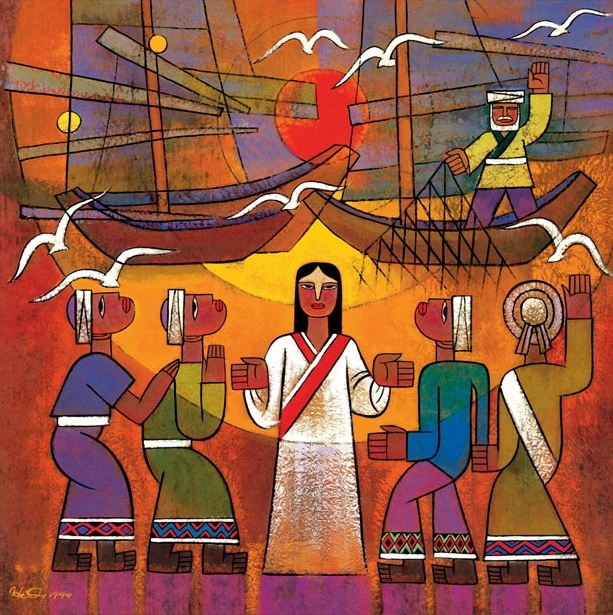
VISIO DIVINA SERIES: “During Asian Pacific American Heritage Month, C4SO [Diocese of Churches for the Sake of Others] celebrates artist He Qi, who reinterprets sacred art within an ancient Chinese art idiom. His work is a blend of Chinese folk art and traditional painting technique with the iconography of the Western Middle Ages and Modern Art. On each Sunday during May, we have licensed one of He’s paintings to illuminate one of the lectionary readings. We will provide prompts for you to do Visio Divina, or ‘sacred seeing,’ an ancient form of Christian prayer in which we allow our hearts and imaginations to enter into a sacred image to see what God might have to show us.” [HT: Global Christian Worship]

He Qi, "Calling the Disciples"
He Qi (Chinese, 1950–), Calling the Disciples, 1999. Oil on canvas.

May 2: “Jesus Calls His Disciples”: https://c4so.org/visio-divina-jesus-calls-his-disciples/
May 9: “Mary and Martha”: https://c4so.org/visio-divina-perfect-love/
May 16: “Look Toward Heaven”: https://c4so.org/visio-divina-after-the-ascension/
May 23: “Pentecost”: https://c4so.org/visio-divina-pentecost/
May 30: “Abraham and the Angels” (Trinity Sunday): https://c4so.org/visio-divina-trinity-sunday/

For this past Lent the C4SO brought us the Stations of the Cross by Laura James, a self-taught painter of Antiguan heritage, combined with a liturgy by their scholar in residence, Rev. Dr. W. David O. Taylor. I appreciate their recognition of the value of visual art to the individual and corporate lives of their people.

+++

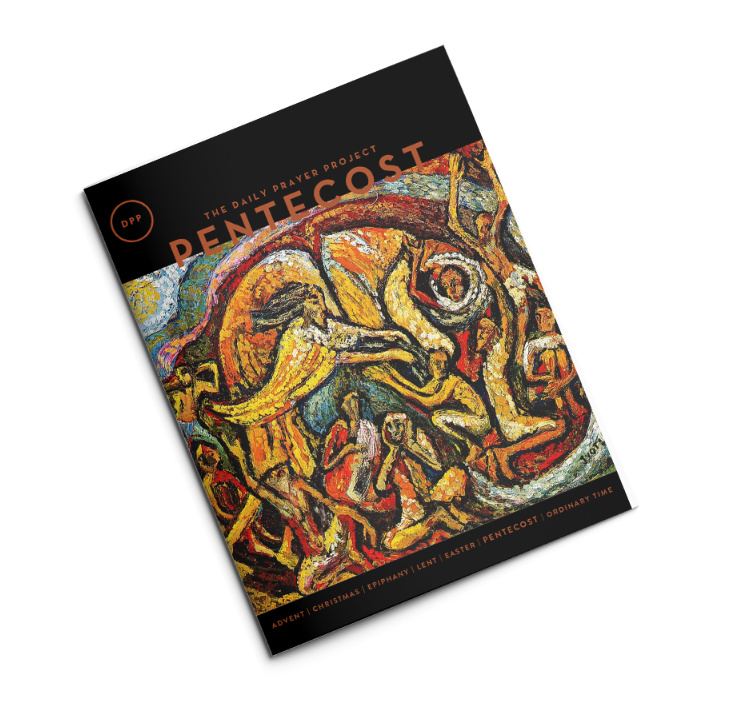
NEW DPP EDITION: Pentecost 2021: Pentecost is May 23, kicking off a new season of the church year—which means a new periodical from The Daily Prayer Project is hot off the presses! This is one of the publications I work for. “We celebrate and join in prayer with a vastly diverse church in this edition of the DPP. The Indian artist Jyoti Sahi’s dynamic painting Receive the Holy Spirit adorns the cover and leads us to a powerful remembrance of and meditation on that great outpouring of Pentecost. The church of the Caribbean gifts us with their song of Pentecost: ‘Fire, fire, fire! Fire fall on me!’ The Christian Council of Nigeria leads us in prayer and asks God to ‘grant us a vision of our land that is as beautiful as it could be . . . [and the] grace to put this vision into practice.’ The Korean songwriter Geon-yong Lee offers up a lament for the fractures of the church and invites us to truly long and work for unity: ‘Come, hope of unity; make us one body. Come, O Lord Jesus; reconcile all nations.’ . . .”

The two other featured artworks in this edition, which will be added to our online gallery May 23, are an abstract ink drawing by Takahiko Hayashi, evocative of the Spirit’s vitality, and a piece by Yuanming Cao that celebrates the steadfastness of the church in China using as its medium the everyday devotional materials of rural Christians in the Suzhou region.

[electronic (PDF) copy] [physical copy]

+++

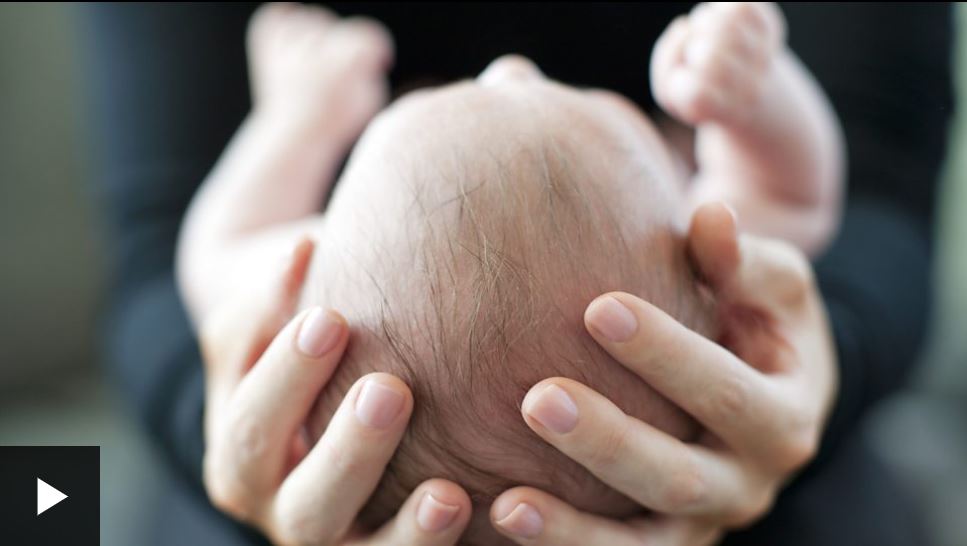
VIDEO: “What happens to humans when we can’t touch?”: “Touch is how we first communicate as babies. And it’s fundamental to human wellbeing. So what happens when we can’t touch?” This recent BBC Radio 4 video by Daniel Nils Roberts discusses the importance of touch to human development, connection, and health. Roberts talks to scientists—and a cuddle therapist!—about why touch makes us feel good, and the skyrocketing of “touch hunger” since the onset of COVID-19. While I have been deprived of physical contact with friends for the past year and I sorely miss it (I hadn’t realized how much hugs, shoulder pats, etc., mean to me), I live with my husband and have been able to receive touch from him; I can’t imagine what it would be like for those who have been completely without touch during this time of restrictiveness. [HT: Joy Clarkson]

+++

NEW BOOK: Enjoying the Bible: Literary Approaches to Loving the Scriptures by Matthew Mullins: Released in January by Baker Academic. “Many Christians view the Bible as an instruction manual. While the Bible does provide instruction, it can also captivate, comfort, delight, shock, and inspire. In short, it elicits emotion—just like poetry. By learning to read and love poetry, says literature professor Matthew Mullins, readers can increase their understanding of the biblical text and learn to love God’s Word more.”

I found out about this book through the interview by Jessica Hooten Wilson in the current issue of Christianity Today, “Reading God’s Word like a Poem, Not an Instruction Manual” [HT: ImageUpdate]. In the interview Mullins says he hopes the book reaches those Christians who tend to privilege information and instruction in their scripture reading above enjoyment—people who go to the Bible only for facts about God or practical guidance, not an encounter. Mullins shows how the Bible wants to shape not only our intellectual understanding but also our desires and emotions, and that many scripture passages are not reducible to a simple message or takeaway. Those who read and enjoy poetry inherently grasp this about the Bible. Here’s a short lecture Mullins gave on the topic in 2018, “You Can’t Understand the Bible If You Don’t Love Poetry”:

+++

ONLINE POETRY RETREAT: Send My Roots Rain, Saturday May 15, 10 a.m.–3 p.m. UK time: Brought to you by the Church Times and Sarum College, this event will feature readings and/or presentations by Pádraig Ó Tuama, Malcolm Guite, Helen Wilcox, Mark Oakley, and others. The cost is £15 (about USD$20). [HT: Arts and the Sacred at King’s (ASK) weekly e-bulletin; email Chloë Reddaway to subscribe]

+++

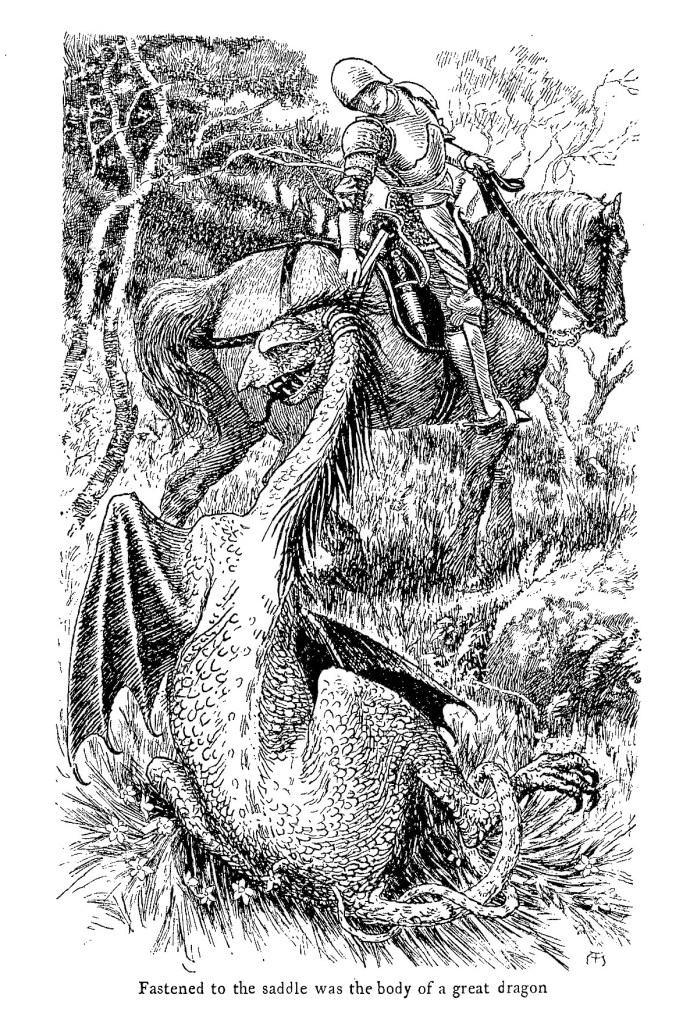
SUMMER READING GROUP: Phantastes by George MacDonald, led by Kirstin Jeffery Johnson: The Rabbit Room is sponsoring an online book club this summer centered on Phantastes by George MacDonald, a fantasy novel whose young hero Anodos wakes up in Fairy Land one day and is forced to reassess his assumptions about himself and others. Fantasy is not a genre I naturally gravitate to, but I keep hearing about this novel from different sources—how perplexing yet alluring it is—so I’m going to give it a try! I’m especially thrilled that the discussions will be led by MacDonald scholar Kirstin Jeffrey Johnson. Oh, and fun fact: this is the book that C. S. Lewis said most shaped his vocational attitude and philosophy of life.

“The ‘live’ version of this book group, including the online forum, opens May 25 [with chapters 1–4] and will include Zoom chats every Tuesday night at 7:00 p.m. CST for five weeks. However, you are welcome to join at any time, even after the live chats have ended. The discussions will be archived, and the forum will be open indefinitely for new registrants to continue reading and discussing the book.” You can purchase a copy of the book through the Rabbit Room Store, or there’s this annotated edition I bought, edited by John Pennington and Roderick McGillis. (It has a beautiful cover, but the annotations seem geared more toward middle-grade readers.)

Hughes, Arthur_Phantastes illustration
Illustration by Arthur Hughes, from chapter 23 of the third edition of Phantastes by George MacDonald, published by Arthur C. Fifield in 1905

As a bonus, listen to “Giving as the Angels Give,” a two-part session from Hutchmoot 2019 that explores “some of the ways in which, as an author, teacher, and community-builder, MacDonald intentionally manifested hospitality.” Part 1 is a personal on-ramp to the topic by Jennifer Trafton (“I can’t think of any other writer who makes me feel the intimacy of God’s welcome more than MacDonald does,” she says), and part 2, which focuses more on MacDonald’s biography, is by Kirstin Jeffrey Johnson.


Note to reader: “HT” stands for “hat tip”; it’s an acknowledgment of where or from whom I first found mention of the content I link to—that is, if I did not discover it directly from the source itself. I include these tags, along with strategic hyperlinks on the names of people and institutions, because, other than simply being courteous, I want to aid you in building your own “Christianity and the arts” network. One of the primary questions I get from people is “Who should I follow?” or “Where did you find about . . . ?” Soon I will compile a list, on its own tab, of like-minded content curators/providers that inspire me, but regular readers of the blog will, I’m sure, have already picked up on who a lot of those are. And I’m learning of new ones all the time!

Roundup: Black church–inspired art exhibition; new albums; visual Easter Vigil liturgy; and more

EXHIBITION: Otherwise/Revival, Bridge Projects, Los Angeles, April 9–June 26, 2021: Curated by Jasmine McNeal and Cara Megan Lewis, this group exhibition visualizes the impact of the historic Black church—specifically the Black Pentecostal movement—on contemporary artists. Included are several artists I’ve featured on the blog before—Lava Thomas [here], Kehinde Wiley [here], Clementine Hunter [here], Letitia and Sedrick Huckaby [here]—plus twenty-six others.

Phyllis Stephens (American, 1955–), High and Lifted Up, 2020. Cotton fabric, 57 × 33 in. Private collection. Courtesy of the artist and Richard Beavers Gallery, New York.

Davis, Kenturah_Namesake I
Kenturah Davis (American, 1984–), Namesake I, 2014. Incense ink on rice paper, applied with rubber stamp letters, 39 × 36 in. Courtesy of the artist and the Petrucci Family Foundation, New Jersey.

I regret that I won’t be able to see the exhibition in person, but there’s a wealth of relevant content available on the gallery’s website, including photos, artist bios and statements, and commentaries. I haven’t fully delved in yet, but some of the artist names are new to me, and I look forward to jumping over to their websites to learn more. There’s also a series of free events that have been scheduled. The premiere of the virtual music performance yes! lord by Ashton T. Crawley and a symposium on the Azusa Street Revival have already passed (both are archived online for on-demand viewing), but here are some upcoming opportunities you can reserve a spot for:

+++

ARTICLE: “5 Films About the Beauty of Resurrection” by Brett McCracken: “Resurrection’ tropes are so familiar in certain genres that they can numb us to the jarring beauty and bracing surprise of resurrection. But other films capture the magic and shock of resurrection by situating it within more mundane realities and contexts. Here are five of my favorite examples of this kind—movies that capture resurrection in all of its miraculous, unsettling, hope-giving glory.” One of his selections is Happy as Lazzaro, which I saw last year and enjoyed:

+++

NEW ALBUMS:

>> Hymns I by Lovkn: Steven Lufkin is a singer-songwriter from Phoenix, Arizona, recording under the name Lovkn. His latest EP, a collection of eight acoustic hymn covers, was released April 2. (Also, he’s currently raising funds to record an album of original songs, to be released later this year: kickstarter.com/projects/lovkn/new-album-2021.)

>> Prayers for the Time of Trial by Joel Clarkson: Released April 7, this EP comprises five original SATB choral compositions by Joel Clarkson, which he recorded with his sister Joy Clarkson. My favorite is the first, “Lighten Our Darkness,” a setting of the Book of Common Prayer’s Collect for Aid Against Perils: “Lighten our darkness, we beseech thee, O Lord; and by thy great mercy defend us from all perils and dangers of this night; for the love of thy only Son, our Savior, Jesus Christ. Amen.”

The other four are “Sub Tuum Praesidium” (Beneath Thy Protection), a third-century hymn to the Virgin Mary as Theotokos; “Hail King,” a poem by Joel’s other sister, Sarah Clarkson, that marvels at how rocky cliffs and sea waves and herring gulls sing God’s praises in their own way; “Ubi Caritas,” an ancient hymn centered on the theme of Christian charity; and the simple benediction “May the peace of the Lord be with you now and always.”

In addition to composing music, Joel is also a professional audiobook narrator and the author of Sensing God: Experiencing the Divine in Nature, Food, Music, and Beauty.

+++

ORTHODOX CHANT: Russian Kontakion of the Departed: At Prince Philip’s funeral service at St. George’s Chapel at Windsor Castle on April 17, a choir of four sang, among other pieces, the Russian Kontakion of the Departed, translated into English by William John Birkbeck and arranged by Sir Walter Parratt. “The Russian Kontakion of the Departed is an ancient Kiev chant with its origins in the Russian Orthodox liturgy. This moving chant expresses the sorrow of grief but reminds us of the Christian hope of everlasting life; in the face of sadness, we sing Hallelujahs.” [HT: Global Christian Worship]

Give rest, O Christ, to thy servant with thy saints:
where sorrow and pain are no more;
neither sighing but life everlasting.
Thou only art immortal, the creator and maker of man:
and we are mortal formed from the dust of the earth,
and unto earth shall we return:
for so thou didst ordain,
when thou created me saying:
Dust thou art und unto dust shalt thou return.
All we go down to the dust;
and weeping o’er the grave we make our song:
Alleluia, alleluia, alleluia.

+++

VISUAL LITURGY: “After Ezekiel” by Madeleine Jubilee Saito: Remember those flip books you probably encountered as a kid—the ones with a series of images that gradually change from one page to the next, giving the illusion of animation when viewed in quick succession? Well, this is a digital version of that. In 2019 cartoonist and illustrator Madeleine Jubilee Saito created an image sequence intended to be swiftly clicked through as part of the Easter Vigil at a church in Boston. It was inspired by the story of Ezekiel in the valley of dry bones (Ezek. 37). Very compelling!

Roundup: Hope installation, new musical setting of Saint Ephrem’s Prayer, Global Stations of the Cross, and more

EXHIBITION: “I hope . . .” by Chiharu Shiota, January 12–March 21, 2021, König Galerie, Berlin: Grace Ebert of Colossal writes, “A towering expanse of red thread, a new installation by Chiharu Shiota suspends 10,000 letters within the nave of Berlin’s König Galerie, a Brutalist-style space located in the former St. Agnes church. The immersive construction runs floor to ceiling and is awash with notes from people around the world who share their dreams following a particularly devastating year. Aptly named ‘I hope…,’ the large-scale project hangs two wire boats that appear to float upward at its center, evoking travel into an unknown future.” On view for a few more days!  

Shiota, Chiharu_I hope
Chiharu Shiota (Japanese, 1972–), “I hope . . . ,” 2021. Rope, paper, steel, installation view at König Galerie, Berlin. Photo: Sunhi Mang, VG Bild-Kunst, Bonn.

+++

SONGS:

>> “Saint Ephrem” by Prairie House Hymns: Sam(antha) Connour, whom you might know as Lo Sy Lo, has a new home for her church music: she will now be releasing it under the name Prairie House Hymns, which harkens to her roots in small-town churches and Midwestern culture. (“Seriously melodic theology from the Great Plains”!) Her first single since this rebrand is a prayer attributed to the fourth-century Syrian theologian Ephrem. “In the Byzantine tradition, this prayer is considered to be the most succinct summation of the spirit of Great Lent and is hence the Lenten prayer par excellence, prayed during all Lenten weekday services” (source). The video below is a demo that Connour recorded in November 2020, followed by the official recording released March 15, which includes backup vocals by Alec Watson. I’ve added the song to the Art & Theology Lent Playlist on Spotify.

O Lord and Master of my life
Keep me from indifference
Keep me from discouragement
Lust of power and idle chatter

Will you grant to me your servant
The spirit of wholeness of being
Humblemindedness
Patience and love

O Lord and King of my life
Grant me grace to be aware
Of my sins and not to judge
My brother and my sister

For you are blessed
Now and forever
For you are blessed
Now and forever

>> “Your Blood” by Matt Redman, arr. Sam JC Lee: This video recording is from the “Jazz Hymns and Liturgy” concert at The Lilypad in Cambridge, Massachusetts, on February 16, 2020. Composer, bassist, and bandleader Sam JC Lee [previously] leads his group in an original jazz arrangement of this contemporary hymn. The musicians are Gabriela Martina on vocals, Gregory Groover Jr. on sax, Jiri Nedmoa on piano, Tyson D. Jackson on drums, and Lee himself on bass.

+++

VIRTUAL EXHIBITION/PILGRIMAGE: Global Stations of the Cross 2021: These fifteen contemporary artworks, organized around the Stations of the Cross but with a multifaith approach, were curated by Dr. Aaron Rosen, director of the Henry Luce III Center for the Arts and Religion at Wesley Theological Seminary in Washington, DC. In 2019 I participated, as pilgrim, in the Amsterdam iteration of the annual Stations of the Cross project that Rosen cofounded (which I chronicled in detail here), and his project inspired the Stations of the Cross experience I designed, independently, at the Smithsonian American Art Museum—which, I know from people having reached out to me, has been utilized by several churches, families, and neighborhoods over the years.

McAfee, Antonio_Roger's Station (Ninth Station)
Antonio McAfee (American, 1983–), Roger’s Station (Ninth Station), 2021

Though “in previous years, the central experience of Stations of the Cross involved walking through host cities, inviting visitors to experience the incidental insights and revelations that come from navigating urban spaces in search of sacred experiences,” COVID has required adaptation. So Rosen took the opportunity to make this year’s exhibition multicity and global, and entirely online. Audio commentary is provided by the artists, as are photos of each work. The theme is “monuments and memorials,” and many of the artists have a personal connection to the topics they address, which include the execution of Catholics under the Joseon dynasty in nineteenth-century Korea, political imprisonment under Stalin, the bombing of Coventry during World War II, displacements caused by the British Partition of India in 1947, rising Sinophobia (anti-Chinese sentiment) this past year, California wildfires, gun violence, police brutality, and the ongoing refugee crisis. Here is an excerpt from Rosen’s curatorial statement:

Each station in this journey responds to a monument or memorial, reflecting a tumultuous year in which fresh memorials sprung up to grieve the dead and historic monuments to prejudice were toppled and dismantled. We invited artists to keep these connotations in mind, but ultimately we left the terms ‘monument’ and ‘memorial’ open to interpretation, for artists to construct as they saw fit. Some, like Todd Forsgren, turned familiar images, like the Washington Monument, on their head—evoking the disorienting, disturbing politics of the past four years, and especially the recent insurrection at the nation’s capital. G. Roland Biermann photographed the Millennium Wheel in London, a tourist attraction that now sits sedentary as a stone, lit by an eerie blue light in honor of National Health Service workers. Others chose sites which are legible as memorials only to an intimate circle, who know the tragedy which transpired there. This is the case for Antonio McAfee’s work, which honors his cousin, murdered at a Baltimore metro stop. Another artist, S. Billie Mandle, reminds us that the natural world can, within moments, turn into a graveyard, as she reveals in a photograph taken in the aftermath of devastating wildfires in her home state of California.

There is no single memorial which can effectively capture the myriad traumas of the past year, from the staggering toll of the pandemic to bleak examples of systemic racism and climate crises of biblical proportion. While these challenges have intersected this past year, often with devasting effect, Stations of the Cross does not attempt to summarize them, or generalize the agonizing impact they have had on specific communities, families, and individuals. Instead, this project invites viewers to bear witness to this troubling season through the intimate reflections of individual artists, who find in the Passion a lens to interpret the present.

. . .

While the celebration of resurrection is unabashedly Christian, as it should be, the via dolorosa offers a path that can be instructive across multiple faiths, and none. Christians may travel its route in anticipation of salvation, but that is not the only possible destination. The Stations of the Cross invite an empathy that knows no theological copyright and requires no passport. It demands, quite simply, the capacity to behold—to truly see—the suffering of the Other in our midst. And, at least for the moment, that may be miracle enough.

+++

LECTURE: “Otto Dix and the Gospel of Matthew: An Exercise in Wirkungsgeschichte by Dr. Jonathan T. Pennington: In 1960 the German expressionist artist Otto Dix [previously] published Matthäus Evangelium, a cycle of thirty-three lithographs based on the Gospel of Matthew, recounting Jesus’s birth, healing ministry and other miracles, passion, and resurrection. Last year Sojourn Arts, a ministry of Sojourn Church in Louisville, Kentucky, hosted an exhibition of this body of work as well as a contextualizing talk by New Testament scholar and Sojourn East staff preacher Jonathan T. Pennington, given February 21, 2020. Pennington shows how Dix uses Matthew to say something about his own time and culture, and how Dix helps us see certain things about Matthew because of his own situatedness. Starting at 13:25, Pennington walks through the images one by one, interpreting them with a facility I don’t often see in preachers without an art specialization! (He says he spent several weeks studying and reflecting on the lithographs, which goes to show how an image’s meaning reveals itself to those who are willing to sit with it; a bit of biographical research helps too.)

The exhibition Otto Dix: Matthäus Evangelium is available for rental for just $250/month plus shipping—a killer deal! The loaner is Sandra Bowden, a collector of twentieth- and twenty-first-century biblical art who is also an artist herself. She’s such a generous person, and I had the pleasure of meeting her once at her home in Cape Cod, not far from the Community of Jesus, of which she is an oblate.

Dix, Otto_Flight to Egypt
Otto Dix (German, 1891–1969), Die Flucht nach Ägypten (The Flight to Egypt), lithograph from Das Evangelium nach Matthäus (The Gospel according to Matthew), 1960

Dix, Otto_Christ Mocked
Otto Dix (German, 1891–1969), Die Verspottung (Christ Mocked), lithograph from Das Evangelium nach Matthäus (The Gospel according to Matthew), 1960