Roundup: Laura James unveils new painting series, Vessel art trail puts contemporary art in rural churches, and more

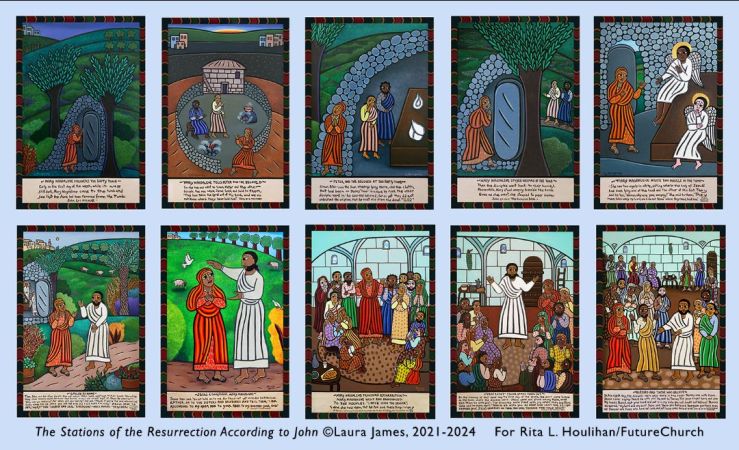
VIRTUAL ARTIST’S TALK: “The Stations of the Resurrection according to John” with Laura James, July 30, 2024, 7:00–8:15 p.m. ET: Next Tuesday, Bronx-based artist Laura James will discuss her latest painting series, The Stations of the Resurrection according to John, in a live online conversation with patron Rita L. Houlihan. Register at the link above.

James, Laura_Stations of the Resurrection

The series began in 2021 with four paintings—Called by Name, Jesus Commissions Mary Magdalene, Mary Magdalene Proclaims Resurrection, and Pentecost: Jesus Sends Them Out, collectively the Mary Magdalene and the Risen Jesus series (which you can purchase as a set of cards)—and then expanded to include the full resurrection narrative from John 20. View details of all ten paintings for the first time, and hear from the artist about the artistic choices she made.

The daughter of immigrants from Antigua in the Caribbean, Laura James is especially celebrated for her vibrant paintings that depict biblical figures, including Jesus, as dark-skinned, influenced in part by the long tradition of Ethiopian Christian art. Rita Houlihan, who commissioned the Stations of the Resurrection series from James, is a founding member of FutureChurch’s Catholic Women Preach and Reclaim Magdalene projects and a longtime advocate for the restoration of historical memory regarding early Christian women leaders, especially Mary Magdalene.

Update, 8/4/24: You can view the series and purchase reproductions of individual pieces from it, or the complete set, at https://shop.laurajamesart.com/the-stations-of-the-resurrection/. And the video recording of the July 30 event is here:

+++

VIRTUAL BOOK LAUNCH: Refractions, 15th anniversary edition, by Makoto Fujimura, August 6, 2024, 3:00 p.m. ET: Artist, speaker, writer, and IAMCultureCare founder Makoto Fujimura is one of the most prominent voices in the “art and faith” conversation in the US. On Tuesday, August 6, he’s hosting a Zoom event to celebrate the release of the fifteenth anniversary edition of his essay collection Refractions: A Journey of Faith, Art, and Culture, which is updated and expanded. He will read new selections from the book and host a time of Q&A and sharing. Register for the event at the above link, and you will receive a 30% discount on copies of the book preordered before the end of July.

+++

ART TRAIL: Vessel, miscellaneous locations along the Welsh-English border, August 8*–October 31, 2024: An exciting new art trail has been curated by Jacquiline Creswell [previously] for the group Art and Christianity. From the press release: “Vessel is a curated art trail in remote rural churches near the Black Mountains between Usk and Hay-on-Wye [in the border country between South Wales and England]. Seven artworks by seven [contemporary] artists will be shown in seven churches, six of which are maintained by the Friends of Friendless Churches who keep them open all year round. The theme of ‘vessel’ references bodies, boats, secretions and receptacles; each of the artworks will be sited in a particular relationship to the church and its material culture.”

*Lou Baker’s installation at Dore Abbey opens August 21.

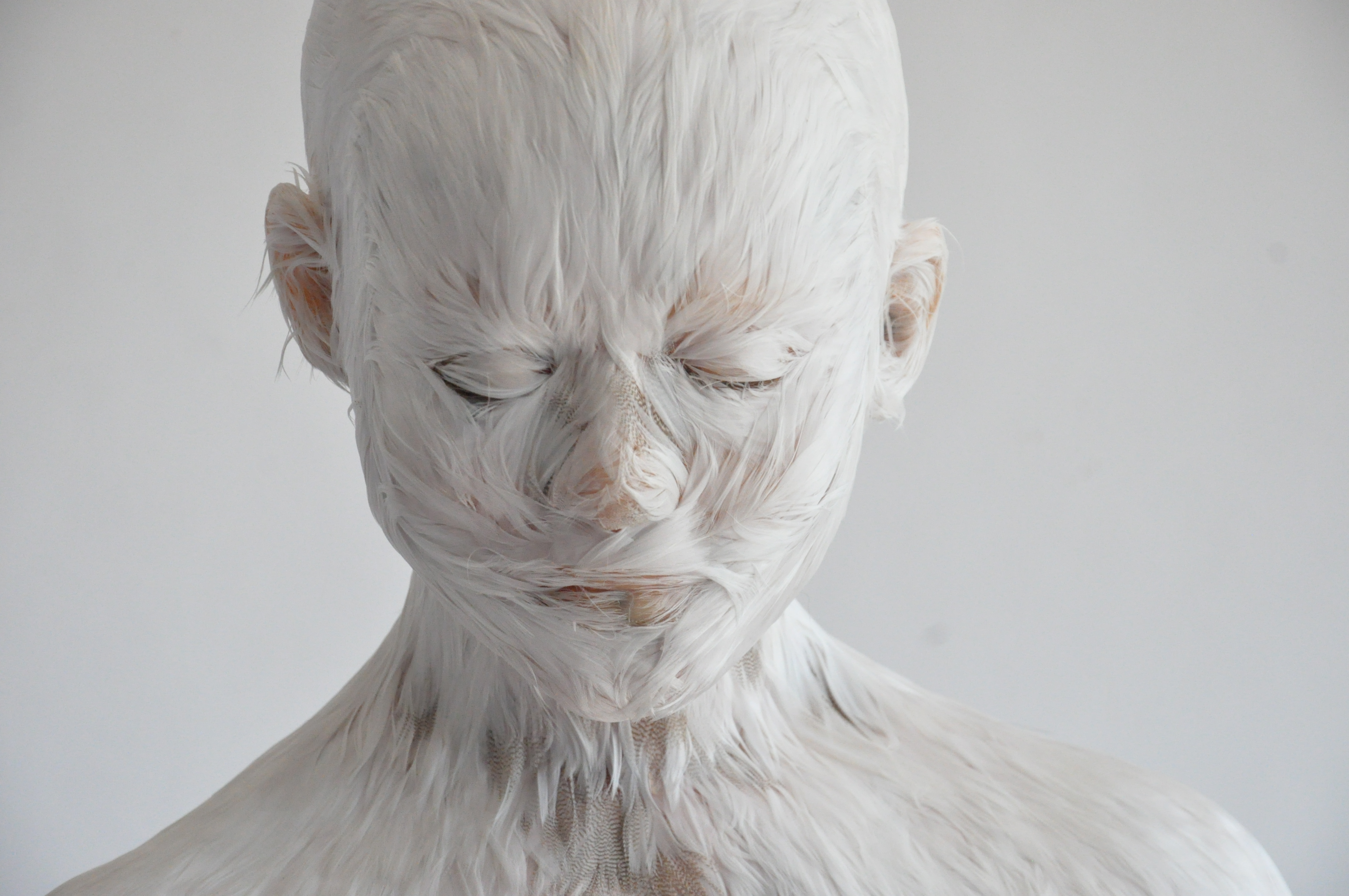
Glendinning, Lucy_White Hart (detail)
Lucy Glendinning (British, 1964–), White Hart (detail), 2018. Wax, Jesmonite, timber, duck feathers, 175 × 73 × 58 cm. Photo courtesy of Art and Christianity. [artist’s website]

Here is the list of venues, artists, and artworks:

  • St Michael and All Angels’, Gwernesney, Monmouthshire, Wales: Grace Vessel by Jane Sheppard
  • St Cadoc, Llangattock Vibon Avel, Monmouthshire, Wales: Wiela by Barbara Beyer
  • St Mary the Virgin, Llanfair Kilgeddin, Monmouthshire, Wales: Centre by Steinunn Thórainsdóttir
  • St Jerome, Llangwm Uchaf, Monmouthshire, Wales: White Hart by Lucy Glendinning
  • St David, Llangeview, Monmouthshire, Wales: Compendium by Andrew Bick
  • Dore Abbey, Herefordshire, England: Life/Blood by Lou Baker
  • Castle Chapel, Urishay, Herefordshire, England: Simmer Down I by Robert George

Art + Christianity is offering a weekend retreat September 13–15, based in Abergavenny, that will include a guided minibus tour (led by the curator) to all seven sites, a lecture by Fr. Jarel Robinson-Brown titled “Living Stones: Buildings, Bodies and Spirit,” a presentation and panel discussion on curating and organizing art in rural churches and chapels, and a performance by Holly Slingsby, Felled, Yet Unfurling, that draws on the iconography of the Tree of Jesse. (St Mary’s Priory in Abergavenny houses an extraordinary fifteenth-century oak carving of the Old Testament figure of Jesse that once formed the base of an elaborate sculpture depicting Jesus’s ancestry; to contextualize this artwork, in 2016 a Jesse Tree Window designed by Helen Whittaker was installed in the church’s Lewis Chapel.) Ticket pricing starts at £35 and does not include accommodations.

+++

VIDEO: “Art and Transcendence: Alfonse Borysewicz”: This month the Templeton Religion Trust released a new video profile on Brooklyn-based artist Alfonse Borysewicz (pronounced Boruh-CHEV-itz), a 2022 recipient of a Templeton Foundation Grant on the topic of “Art and Transcendence,” part of the foundation’s Art Seeking Understanding initiative [previously].

“As religious affiliation declines, can art provide fresh ways of exploring the questions posed by theology?” Borysewicz asks. “Might art—its creation as well as reception—lead to the discovery of new spiritual information? What do faith traditions lose when they overemphasize the written word and neglect the role of images?

“Historically, faith traditions have focused on both the written word and images as sources of knowledge and meaning. Some would claim that words have taken undue precedence as theologies have developed, while images seem to have been left behind. Has this shift in focus left us wanting?”

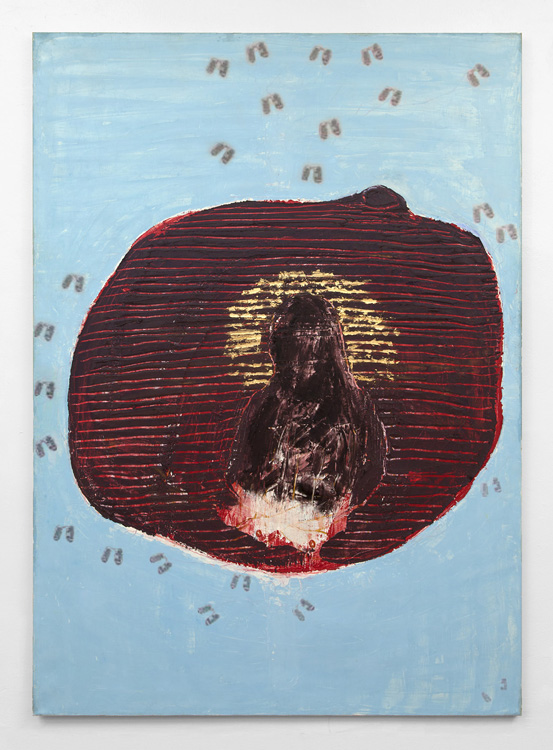
Borysewicz, Alfonse_Pomegranate
Alfonse Borysewicz (American, 1957–), Pomegranate, 2010–11. Oil and wax on linen, 70 × 50 in. The artist said, “When I see a pomegranate at the market, I see it as a visible sign of the resurrection of Christ; or a hive, the community of Christ.”

+++

SONGS:

>> “Kasih Tuhan” (God’s Love) by Abraham Boas Yarona, performed by Prison Akustik: This video shows, from what I can gather, a group of inmates from Lapas Abepura (Abepura Prison) in Papua, Indonesia, playing and singing an Indonesian Christian song together. It’s one of many lagu rohani (spiritual songs) uploaded to the Prison Akustik YouTube channel (the group is also active on Instagram and TikTok).

>> “Del amor divino, ¿quién me apartará?” (Who Can Separate Me from the Love of God?) by Enrique Turrall and José Daniel Verstraeten, performed by Coro del Seminario Internacional Teológico Bautista: Based on Romans 8:31–39, the lyrics of “Del amor divino” are by Enrique Turrall (1867–1953) of Spain, and the music is by José Daniel Verstraeten (b. 1935). The song was performed in 2018 by a vocal and instrumental ensemble from Seminario Internacional Teológico Bautista (International Baptist Theological Seminary) in Buenos Aires [previously], under the direction of Constanza Bongarrá. The instrumentalists are Jimena Garabaya (guitar), Marcelo Villanueva (charango), and Samy Mielgo (bombo). [HT: Daily Prayer Project]

>> “Caritas abundat in omnia” (Love Aboundeth in All Things) with “O virtus Sapientie” (O Virtue of Wisdom) by Hildegard of Bingen, sung by St. Stanislav Girls’ Choir of the Diocesan Classical Gymnasium, feat. Julija Skobe: Combining two Latin antiphons by the medieval German polymath Hildegard of Bingen [previously], who wrote both the words and music, this song is performed a cappella inside St. Joseph’s Church in Ljubljana, Slovenia, by a student choir with some forty singers between the ages of sixteen and nineteen, directed by Helena Fojkar Zupančič. Mesmerizing! Turn on closed captioning for English subtitles, or see here and here.

Roundup: “Word Made Fresh” book on poetry; cantata on Smart’s “Jubilate Agno”; and more

SPOTIFY PLAYLIST: July 2024 (Art & Theology): This month’s “mixtape” includes a worship song by Daniel P. Cariño from Baguio, the Philippines; a 1954 recording from the streets of New Orleans of the itinerant preacher, singer, and guitarist Elder David Ross; a piano-violin arrangement of “Amazing Grace” by Carlos Simon; a nineteenth-century American folk hymn; an excerpt from Mendelssohn’s oratorio Elijah; a Jesus bhajan in Hindi from Toronto; a one-word song by choral-pop composer Michael Engelhardt; a brand-new Porter’s Gate single; and more.

+++

NEW BOOKS:

New books: Diary of an Old Soul; Word Made Fresh

>> Diary of an Old Soul: Annotated Edition by George MacDonald, with introduction and notes by Timothy Larsen: At last, a keepsake edition of George MacDonald’s devotional poetry collection Diary of an Old Soul! Last week InterVarsity Press released a cloth-bound hardcover with ribbon bookmark, an introduction and sparing notes by the modern British religious history scholar Timothy Larsen, and, as MacDonald stipulated in the book’s first printing in 1880, a blank page facing each page of verse for readers to continue the conversation. C. S. Lewis gave a copy of Diary of an Old Soul to his future wife, Joy Davidman, as a Christmas gift in 1952, and it would make a wonderful Christmas gift still. For each day of the year MacDonald offers a seven-line poem that voices his spiritual longings, struggles, or joys; the Victorian tastemaker John Ruskin extolled the collection as proof that worthy religious poetry could still be written in the modern age. I highlighted my favorite selections from the book in a blog post last year, but on reading this new edition, new lines are standing out to me.

>> Word Made Fresh: An Invitation to Poetry for the Church by Abram Van Engen: Several Christians have told me they want to read more poetry and learn to better appreciate it but don’t know where to start. I usually recommend starting with an anthology, to get a taste of a wide range of styles and eras, and see if there are particular kinds they gravitate to. But now I’m thrilled I can recommend Abram Van Engen’s Word Made Fresh: An Invitation to Poetry for the Church, with a foreword by Shane McCrae. (Full disclosure: I was the copyeditor!) Endorsed by such luminaries as Christian Wiman and James K. A. Smith, the book is an excellent introduction to how and why to read poetry. Van Engen discusses sixty-two distinct poems, almost all of them reproduced in full, ranging from John Donne, Ben Jonson, and Frances Ellen Watkins Harper to Gwendolyn Brooks, Richard Wilbur, and Li-Young Lee and including, too, church hymns and biblical psalms, two forms of poetry with which Christian readers are likely already familiar. In part 1 he demonstrates six ways to read poetry: personally, for pleasure, inquisitively, like it’s a friend, considering form, and through erasure. In part 2 he answers the question “Why read poetry?”: to name creation, to tell the truth, to rejoice with those who rejoice, and to weep with those who weep. Van Engen insists that poetry is for everyone, and Word Made Fresh substantiates the claim.

Image journal is hosting an hour-long virtual book launch on Tuesday, July 9, which will feature readings with Van Engen and Image staff (register here), and for a limited time is also offering a free one-year subscription to Image to those who buy the book and provide proof of purchase (new subscribers only). You can read an excerpt from Word Made Fresh at Reformed Journal.

To access all the poems I’ve shared on this blog, see the “Poetry” tab at the top of the website: https://artandtheology.org/poetry/.

+++

PRINT INTERVIEW: “Through the Rent, Eternity Enters: A Conversation with Marilyn Nelson and Christian Wiman,” moderated by Abram Van Engen, Hedgehog Review: In December 2023, The Carver Project at Washington University in St. Louis brought together award-winning poets Marilyn Nelson and Christian Wiman for a discussion of poetry, faith, love, perception, ambition, humility, prayer, and grace, moderated by Abram Van Engen. Poets, I’ve noticed from attending conferences and reading or listening to interviews with them, tend to have an immense storehouse of wise quotes from other poets and thinkers at the ready, as this interview corroborates. There’s so much here to chew on!

+++

ESSAY: “Christianity and Poetry” by Dana Gioia, First Things: “This brief and inadequate historical survey,” writes poet and literary critic Dana Gioia, “is offered to demonstrate the powerful continuity of Christian poetry in English. Our literary canon is suffused with religious consciousness, which has expressed itself in ways beyond the imagination of theology and apologetics. Milton boasted that his Paradise Lost would ‘justify the ways of God to men,’ but his masterpiece was only one of countless poems that engaged, enlarged, and refined the spirituality of the English-speaking world. Christianity went so deeply into the collective soul of the culture that its impact continues even in our secular age.”

He proposes, “All that is necessary to revive Christian poetry is a change in attitude—a conviction that perfunctory and platitudinous language will not suffice, an awareness that the goal of liturgy, homily, and education is not to condescend but to enliven and elevate. We need to recognize the power of language and use it in ways that engage both the sense and the senses of believers.”

+++

CANTATA: Rejoice in the Lamb by Benjamin Britten, performed by VOCES8 and the VOCES8 Foundation Choir & Orchestra, dir. Barnaby Smith:Rejoice in the Lamb (Op. 30) is a cantata for four soloists, SATB choir and organ composed by Benjamin Britten in 1943 and uses text from the poem Jubilate Agno by Christopher Smart (1722–1771). The poem, written while Smart was in an asylum, depicts idiosyncratic praise and worship of God by different things including animals, letters of the alphabet and musical instruments. Britten was introduced to the poem by W. H. Auden whilst visiting the United States, selecting 48 lines of the poem to set to music with the assistance of Edward Sackville-West. The cantata was commissioned by the Reverend Walter Hussey for the celebration of the 50th anniversary of the consecration of St Matthew’s Church, Northampton. Critics praised the work for its uniqueness and creative handling of the text.” (Wikipedia)

I know this poem from its famous passage about Jeoffry the cat, in which Smart celebrates his cat’s relationship with God: “For I will consider my Cat Jeoffry. / For he is the servant of the Living God duly and daily serving him. / For at the first glance of the glory of God in the East he worships in his Way. / For this is done by wreathing his body seven times round with elegant quickness. / For then he leaps up to catch the musk, which is the blessing of God upon his prayer. . . .” See 3:52 of the video.

Britten’s seventeen-minute work is performed here using the orchestration by Imogen Holst (1907–1984), written at Britten’s request. The performance is available on VOCE8’s new album To Sing of Love, available on all streaming platforms. Follow along with the lyrics here. Read the full text of Christopher Smart’s poem here.

+++

SONG: “Wild Strawberries” by Nick Chambers: This song from 2020 expresses yearning to know the God whose beauty is revealed in nature and who is mysterious, “divinely robed in dark and radiant haze.” It’s based on a 1819 Swedish hymn by Johan Olaf Wallin that was quoted by the aging professor Isak Borg in Ingmar Bergman’s multi-award-winning film Wild Strawberries.

“In the gospel narratives,” Chambers writes, “the risen Jesus is always one step ahead, beckoning us further. We follow after tangible touches and traces he leaves behind—folded grave clothes and broken bread. He travels with us but isn’t always recognizable, still teaching his friends how to fish, readying breakfast on the beach. Wherever he appears and withdraws, the background becomes the foreground, inviting us to see and seek him everywhere. Resurrection cannot be confined; all creation is drawn into its trajectory.” Read more from Chambers in the YouTube video description.

Roundup: Call for Lord’s Prayer songs, two lectionary poems, new theology podcast takes kids’ questions, and more

NEW SONG + CALL FOR SUBMISSIONS: Sing the Prayer from BibleProject: To cap off their five-part podcast series on the Lord’s Prayer this month, BibleProject commissioned singer-songwriters Brian Hall (of the family band TENTS) and Liz Vice to write and record a new setting of the Lord’s Prayer, using the translation by Tim Mackie and the BibleProject Scholar Team:

Our Father who is in the skies, may your name be recognized as holy. May your kingdom come and may your will be done as it is in the skies, so also on the land. Our daily provision of bread, give to us today. And forgive us our debts, just as we also have forgiven those indebted to us. And don’t lead us to be tested, but deliver us from the evil one. Amen. (Matt. 6:9–13; cf. Luke 11:2–4)

(You may be wondering, as I did, where’s the final line, “For thine is the kingdom, and the power, and the glory, for ever.” As Mackie explains, that line is not in the earliest manuscripts of Matthew or Luke; the addition first appeared in the Didache, an early Christian teaching manual.)

You can listen to and download Hall and Vice’s new setting of the Lord’s Prayer, which Vice sings to Hall’s guitar accompaniment, at the “Sing the Prayer” link above. In addition, the Good Shepherd Collective video-recorded a more fully instrumented arrangement for a digital worship service; see here. And here are links to the recent Lord’s Prayer episodes of the BibleProject podcast:

  1. “How Does Jesus Teach Us to Pray?”
  2. “What Does ‘Hallowed Be Thy Name’ Mean?”
  3. “What Does Jesus Mean by ‘Daily Bread’?”
  4. “What Forgiveness Is and Isn’t”
  5. “Does God Lead Us into Temptation?”

All you composers out there can get involved too! Through September 15, 2024, BibleProject is accepting submissions of musical settings of the Lord’s Prayer. You can sing the text verbatim using a translation of your choice, or you can rephrase it or write a song based on the prayer’s themes. Purely instrumental responses are also welcome. Send in a song file using their online form, and they will select some of their favorites to host on their website (for streaming, not download). View the early selections at https://bibleproject.com/singtheprayer/all.

+++

TV SHOW EXCERPT: Opening montage from season 3, episode 4 of The Chosen, “Clean, Part 1”: Several people have asked for my opinion of The Chosen, a television adaptation of the Gospels created by Dallas Jenkins. I think it’s great! Creatively (not woodenly, as is too often the case) written, culturally and historically immersive, high production values, and humanizing—it portrays the disciples (the Twelve and others, including the women) as complex, rounded characters with backstories, families, and distinct personalities. Jonathan Roumie is fantastic as Jesus; so is Liz Tabish as Mary Magdalene. If I were to identify a weakness in the series, it would be the portrayal of the Roman soldiers and rulers, especially Quintus, as cartoonish, one-dimensional—although that begins to shift with at least one Roman in season 3—and the occasional awkward dialogue that’s used to explain to the audience ancient Jewish practices and law codes with which we’re likely to be unfamiliar.

I’m in the middle of season 3 right now and was particularly struck by the opening montage of episode 4, a narrative embellishment of Luke 10:1, which says that Jesus “sent them [his appointed followers] on ahead of him in pairs to every town and place where he himself intended to go.” In the series, this is the first time the disciples perform healings. They’re surprised and confused by, and even a little fearful of, the power working through them; they don’t understand it and aren’t always sure how to wield it. This eight-minute segment shows them growing into their roles as they bring the gospel in word and deed throughout the region, preparing the way for Jesus.

Hear the cast discuss the montage.

The Chosen is streaming for free on its own custom app, as well as on Hulu, Netflix, Amazon, and Peacock.

+++

POEMS:

This coming Sunday’s Gospel reading in the Revised Common Lectionary is Mark 5:21–43, which recounts the Healing of the Woman with an Issue of Blood and the Raising of Jairus’s Daughter. Here are two poems based on that passage. (As a side note related to the previous item: The Chosen, season 3, episodes 4–5 center on these two healing narratives; “Veronica’s” arc is especially cathartic!)

>> “Haemorrhoissa” by Leila Chatti: In her early twenties, the poet Leila Chatti [previously] had uterine tumors and suffered from severe bleeding and pain for two and a half years. She explores the shame, discomfort, isolation, and trauma of that condition as well as cultural taboos surrounding women’s bodies in her debut collection, Deluge (Copper Canyon Press, 2020), influenced by her dual Islamic-Christian heritage. In this poem she finds kinship with the unnamed hemorrhaging woman in the Synoptic Gospels and admires her boldness in touching Jesus’s hem. The title of the poem, a transliteration of “ἡ αἱμοῤῥοοῦσα,” is the Greek term used in the New Testament to refer to this woman, often translated as the “woman with an issue of blood” or “bleeding woman.”

(Related post: https://artandtheology.org/2022/03/09/lent-7/)

>> “Jairus” by Michael Symmons Roberts: The poetry collection Corpus by Michael Symmons Roberts (Jonathan Cape, 2004) also centers on the body, especially on the relationship between corporeality, death, and resurrection. This poem from it, in which the speaker (a disciple of Jesus’s, perhaps?) addresses Jairus, celebrates physical appetite, an instinctive desire that helps keep us alive and that here also represents the hunger for living.

+++

NEW PODCAST: Curiously, Kaitlyn: Launched this spring under the aegis of Holy Post Media, Curiously, Kaitlyn is a weekly podcast hosted by author and theologian Kaitlyn Schiess in which she and other scholars respond to theological questions submitted by kids, unpacking complex concepts in simple terms. Questions so far have included “Is God a boy or a girl?,” “What will we look like in heaven? ’Cause I want my Nana to look like Nana, but she might want to look younger!,” and the clarification-seeking “Does God bring heaven to earth?” (the latter of which occasioned a super-helpful distillation of a key theme in N. T. Wright’s teaching). I’ve really been enjoying this!

Curiously, Kaitlyn

+++

NEW DOCUMENTARY: God and Country, dir. Dan Partland: Released earlier this year, this documentary produced by Rob Reiner “looks at the implications of Christian Nationalism and how it distorts not only the constitutional republic, but Christianity itself. Featuring prominent Christian thought leaders, God & Country asks this question: What happens when a faith built on love, sacrifice, and forgiveness grows political tentacles, conflating power, money, and belief into hyper-nationalism?”

If you are an American Christian, you need to see this film. White Christian nationalism is becoming an increasingly larger threat in the US as it becomes more mainstream, and we need to be aware of it and denounce it. God and Country features interviews with several folks whom I’ve followed for years and deeply respect, including historians and best-selling authors Jemar Tisby and Kristin Kobes Du Mez, Holy Post podcaster and VeggieTales creator Phil Vischer, political commentator David French, and ethicist Russell Moore. Some of the footage from worship services is disturbing, to say nothing of the attack on the Capitol on January 6, 2021.

God and Country is currently available on Kanopy, an on-demand streaming service that many public and academic library patrons have free access to.

Juneteenth roundup: Songs, poems, two painting series, and Step Afrika! performance

Juneteenth is a federal holiday that commemorates the end of slavery in the United States. It is celebrated annually on June 19, the date on which, in 1865, the Union army finally arrived in the nation’s farthest reaches—Texas—to enforce the proclamation Lincoln had signed more than two and a half years earlier. While the holiday is marked predominantly by joy, it also calls on celebrants to reflect on the complicated meaning of freedom—“freedom that came at the end of the bloodiest war on the American soil where more than 700,000 lives were lost, freedom that came at the death of many enslaved people who never lived to see it, and freedom that people still fight for today,” historian Daina Ramey Berry told Life & Letters. In the words of another historian, Mitch Kachun, Juneteenth is a time “to celebrate, to educate, and to agitate.”

Yesterday I published a long-form article on the three twenty-first-century stained glass windows at New Mount Pilgrim Missionary Baptist Church in Chicago, which explore America’s stained past, Black communities’ resilience, present-day gang violence, and “the values of the village.” The article provides ample fodder for possible ways to honor Juneteenth, such as these:

  • Donate to the MAAFA Redemption Project to support the promise and genius of Chicago’s Black and Brown youth. Or choose another Black cause, publication, individual, or business to invest in.
  • Watch the documentary All These Sons to learn about how two Chicago organizations are loving and transforming their neighborhoods, seeking to free residents from cycles of violence and help them reclaim their self-worth.
  • Spend ten minutes looking at and meditating on each of the three rose windows at New Mount Pilgrim. Think of them as visual prayers that you can enter into.
  • “Read” (that is, view, as it’s almost entirely a picture book) The Middle Passage by Tom Feelings, pausing at each illustration to really feel the weight of the atrocities perpetrated during the transatlantic slave trade. Practice lament.
  • Watch the groundbreaking miniseries Roots, based on Alex Haley’s novel, which traces the saga of a Mandinka family for three generations, before, during, and after slavery. It originally aired on ABC over eight consecutive nights in 1977, and later that year on BBC One; it’s streaming for free on Tubi (no account needed) in the form of six ninety-minute episodes.
  • For a firsthand account of slavery written by someone who was himself enslaved, read Olaudah Equiano’s autobiography, or passages from it.
  • Read the poet Lucille Clifton, who writes about Black womanhood, history, family, and religion. A good place to start would be her National Book Award–winning Blessing the Boats.
  • Peruse the Adinkra Symbol Index, put together by web designer Jean MacDonald, to learn more about this West African writing system and some of the concepts and proverbs represented in it.

+++

YOUTUBE PLAYLIST: Juneteenth 2024, compiled by Victoria Emily Jones: As a follow-up to the Juneteenth Playlist I published on YouTube in 2022, I’ve put together a brand-new one of nineteen songs, including a ring shout from South Carolina, a Sam Cooke cover, a virtuosic performance by the Trinidadian pianist Hazel Scott, a song-turned-children’s-book by Rhiannon Giddens, some seventies funk, and more. Here are two selections from the list:

>> “Feelin’ Good”: Written in 1964 by English composers Anthony Newley and Leslie Bricusse for the musical The Roar of the Greasepaint – The Smell of the Crowd, this song became a classic when Nina Simone recorded it the following year for her album I Put a Spell on You. In 2021, Dove, Verve Records, UMe, and the Nina Simone Charitable Trust teamed up to create the first-ever music video for Simone’s version of the song. Directed by Sarah Lacombe and featuring dancer Raianna Brown, the new music video “aims to continue Simone’s important legacy by telling a story of Black female empowerment . . . follow[ing] four generations of Black women living their truths, loving each other, celebrating their hair, and feeling good,” according to the press release.

>> Soul Force by Jessie Montgomery:Soul Force is a one-movement symphonic work which attempts to portray the notion of a voice that struggles to be heard beyond the shackles of oppression,” writes composer Jessie Montgomery. “The music takes on the form of a march which begins with a single voice and gains mass as it rises to a triumphant goal. Drawing on elements of popular African-American musical styles such as big-band jazz, funk, hip-hop and R+B, the piece pays homage to the cultural contributions, the many voices, which have risen against aggressive forces to create an indispensable cultural place.” It’s performed here by the national youth ensembles NYO-USA, NYO2, and NYO Jazz, established by Carnegie Hall.

The title of the work comes from Rev. Dr. Martin Luther King’s “I Have a Dream” speech, in which he states, “We must not allow our creative protest to degenerate into physical violence. Again and again, we must rise to the majestic heights of meeting physical force with soul force.”

Click here to access all nineteen songs on Art & Theology’s YouTube playlist for Juneteenth 2024. (See also my Juneteenth playlist on Spotify.)

+++

WASHINGTON, DC, EVENTS:

I live about an hour north of DC in Central Maryland, so I try to take advantage of some of the many cultural offerings of that city. If you, too, live nearby and don’t already have plans for Juneteenth, here are two ideas of things to do outside the house.

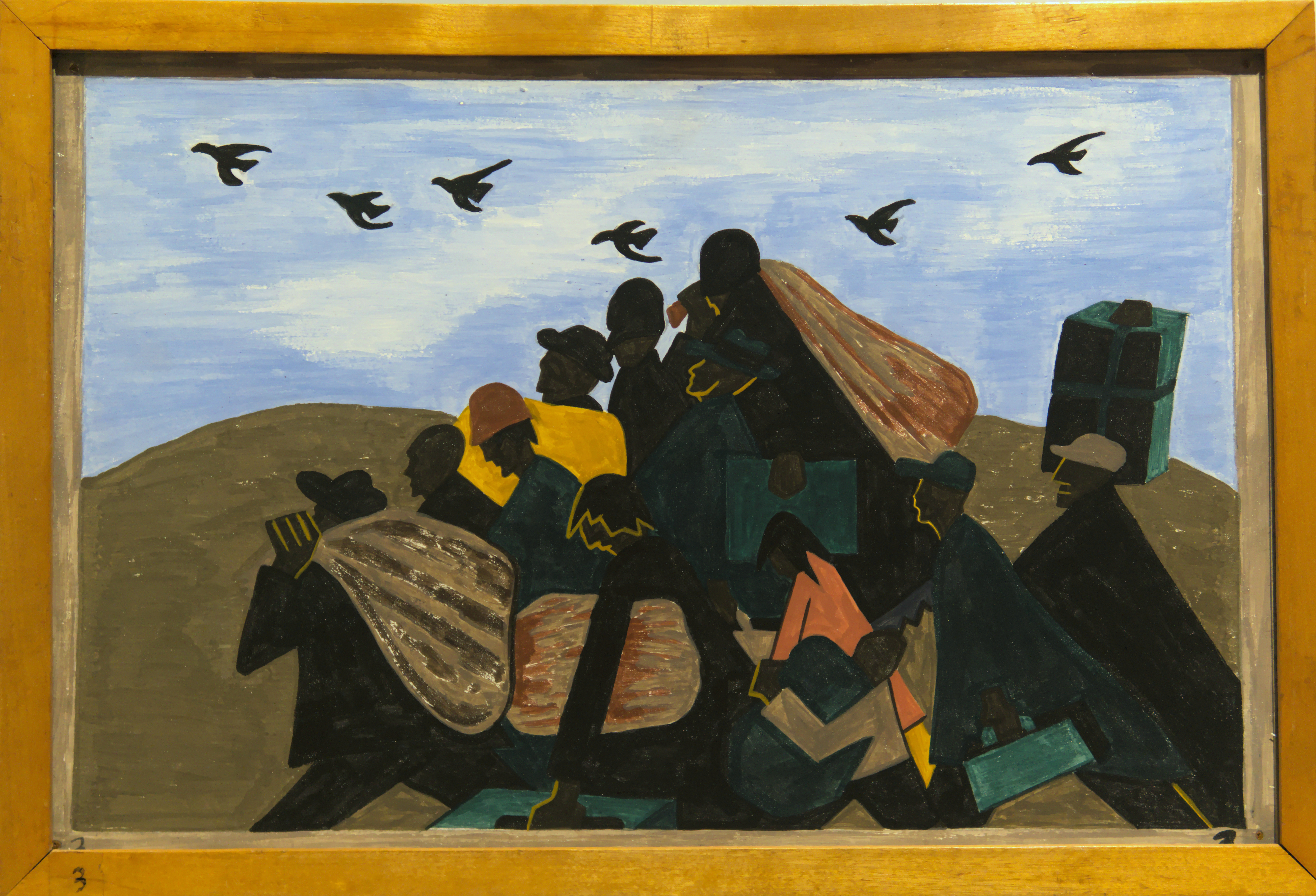
>> STEPPING PERFORMANCE: “Step Afrika! The Migration: Reflections on Jacob Lawrence,” Arena Stage, running through July 14: I’ll be going tomorrow, thanks to an invite from a friend! “Using its hallmark style of percussive dance-theater, Step Afrika!’s The Migration: Reflections on Jacob Lawrence tells the story of one of the largest movements of people in United States history, when millions of African American migrants moved from the rural South to the industrial North in the 1900s to escape Jim Crow, racial oppression, and lynchings. Inspired by Jacob Lawrence’s iconic 60-panel The Migration Series (1940-41), this signature work from the award-winning dance company uses the images, color palette, and motifs in the painting series to tell this astonishing story through pulsating rhythms and visually stunning movement.” The performance fuses body percussion, tap, and contemporary dance with live gospel, jazz, and blues.

Here’s a video promo made by New Victory Theater when the show toured there a few years ago:

Lawrence, Jacob_Migration Series 3
Jacob Lawrence (American, 1914–2000), “From every southern town migrants left by the hundreds to travel north,” panel 3 from The Migration Series, 1940–41. Casein tempera on hardboard, 12 × 18 in. Phillips Collection, Washington, DC. Photo: Victoria Emily Jones. [object record]

Browse all sixty panels from The Migration Series at https://lawrencemigration.phillipscollection.org/. Lawrence pictures different aspects of the northern migration story, such as crowded train stations, rotting crops, lynchings, urban housing, educational opportunity, and church life.

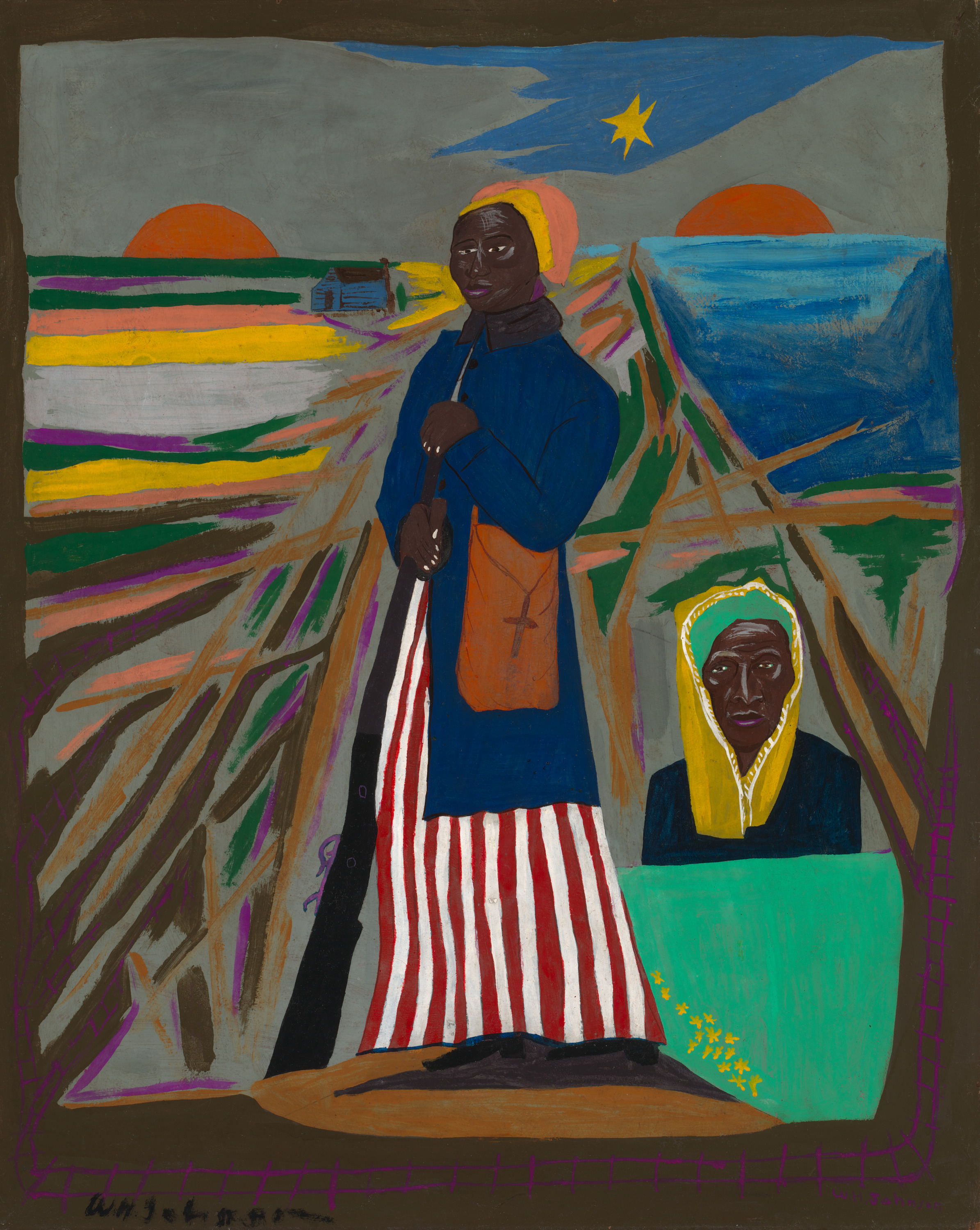
>> ART EXHIBITION: Fighters for Freedom: William H. Johnson Picturing Justice, Smithsonian American Art Museum, March 8–September 10, 2024: Another African American artist who was working around the same time as Jacob Lawrence is William H. Johnson (1901–1970). Last weekend I saw his Fighters for Freedom series of paintings at the SAAM—the first time the works have been shown together since 1946. He painted the series in the mid-1940s as a tribute to African American activists, scientists, teachers, and performers as well as international leaders working to bring peace to the world. Interactive kiosks identify the many historical figures. I learned so much! I can picture this exhibition being a good teaching tool for children as well. Spending time with every painting would be overwhelming for them, but choosing a few select artworks as entry points into talking about the freedom fighters depicted and the larger freedom story they’re a part of should work well.

Johnson, William H._Harriet Tubman
William H. Johnson (American, 1901–1970), Harriet Tubman, ca. 1945. Oil on paperboard, 28 7/8 × 23 3/8 in. (73.5 × 59.3 cm). Smithsonian American Art Museum, Washington, DC.

At the exhibition there are also signs and photos that inform viewers of related artifacts at other Smithsonian museums in the city, including:

(Click on the links for short video features about these objects, made specially for this exhibition.)

+++

POEMS:

>> “Paul Robeson” by Gwendolyn Brooks: Though in popular culture he is best remembered as an international star of stage and screen, the bass-baritone singer and actor Paul Robeson was also a prominent activist who graduated from law school and fought for civil rights. In this poem, Gwendolyn Brooks celebrates that latter legacy of his, his commitment to seeing the Black community in America, as well as other oppressed people groups around the world, flourish. The powerful final lines—“we are each other’s / harvest: / we are each other’s / business: / we are each other’s / magnitude and bond”—communicate the wisdom that we reap the good fruit that grows from seeds sown by others. She references Robeson’s most famous song, “Ol’ Man River,” sung by the character Joe in the musical Show Boat; the song laments the hardships faced by African Americans and expresses envy of the carefree Mississippi River, which just keeps rolling along, free from toil. But Brooks was happy to see Robeson move beyond the despondency embodied by Joe the deck hand, to take a much more empowered stance in public life.

>> “Juneteenth” by Marilyn Nelson: Here Nelson reflects on the childhood of her mother, Johnnie, who grew up in the all-Black pioneer town of Boley, Oklahoma. In Boley, then as now, June 19 is a “second Easter,” a time of food, family, games, and celebration. After several stanzas spent recounting the lighthearted festivities, the last line lands with a thud, a brutal reminder of the terror these community members fled to establish a place of their own. The poem is ultimately about overcoming, but even as the Black residents of Boley have built a new life for themselves and their families, racism is still a wound they bear. “Juneteenth” can be found in the excellent collection The Fields of Praise: New and Selected Poems by Marilyn Nelson (Louisiana State University Press, 1997).

Roundup: Worship songs in Tamil and Sesotho, contemporary church architecture, and more

SONGS:

>> “Ennil Adanga Sthothiram” (எண்ணிடலங்கா ஸ்தோத்திரம்) (Of Many Blessings I Will Sing Forever), performed by Zanbeni and Benny Prasad: On February 10, 2019, at Trinity Worship Center in Chennai, Zanbeni Prasad Odyuo, who is from Nagaland in northeastern India, sang a popular Tamil Christian praise song, accompanied on guitar by her husband, Dr. Benny Prasad. Tamil is not her native language (Lotha is), but she learned the words phonetically and worked with Tamil-speaking friends on pronunciations. The song expresses gratitude for God’s goodness and enjoins all of creation—dwellers on land and in the seas and skies—to praise him. I love this jazz waltz arrangement and Zanbeni’s gorgeous vocals.

>> “Tlotlo le be ho Modimo” (Glory to God in the Highest): A song from the Catholic Mass in the Sesotho language of South Africa, with a Latin refrain taken from Luke 2:14.

Here are the lyrics, with a rough English (auto)translation on the right:

Tlotlo le be ho Molimo
Ea busang maholimong
Khotso e be teng lefatsheng
Ho batho ba lokileng
Re u boka ka thabo
Re phehella thorisong
Gloria! Gloria! in excelsis Deo!

Re ntse re u khumamela
Ka tumelo e phelang
A re rosiseng Molimo
Tebohong e sa feleng
U mohloli e moholo
Ea busang maholimong
Gloria! Gloria! in excelsis Deo!

Jesu mora oa Molimo
U konyana e tlosang
Libe tsa lefatshe lohle
Re batla ho u rata
U re hauhele bohle
Ba llang mona lefatsheng
Gloria! Gloria! in excelsis Deo!
Glory be to God
Who reigns in the heavens
Peace be on earth
To righteous people
We praise you with joy
We pursue praise
Gloria! Gloria! in excelsis Deo!

We continue to worship you
With living faith
Let us praise God
In eternal gratitude
You are a great source
Who reigns in the heavens
Gloria! Gloria! in excelsis Deo!

Jesus, Son of God
You are the Lamb who takes away
The sins of the whole world
We want to love you
You have mercy on all
Who cry here on earth
Gloria! Gloria! in excelsis Deo!

+++

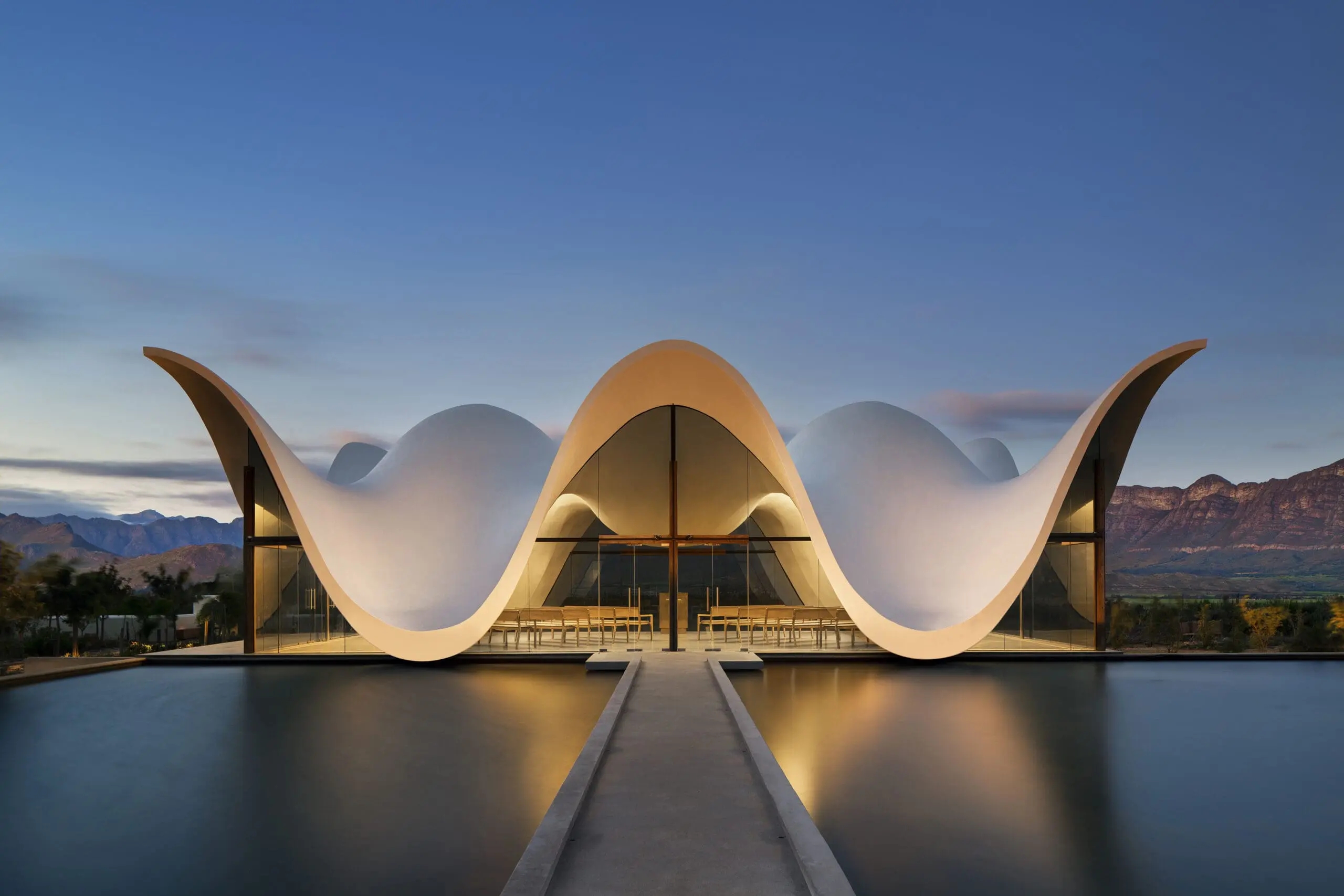
PRINT INTERVIEW (heavily illustrated!): “The Architecture of Prayer” with Amanda Iglesias, Comment: For his latest Material Mysticism column in Comment magazine, art historian Matthew J. Milliner talks with architect Amanda Iglesias, who curated the traveling exhibition The Architecture of Prayer to showcase the best of contemporary church architecture across a variety of cultures, denominations, and budgets. She discusses traditional versus modernist architecture, the church as the longest and richest of architectural experiments (even today, Christianity remains a generative influence on architecture, she says), examples of churches as conversations with history or as an exegesis of scripture, architecture’s redemptive capacity, why church projects are desirable for an architect, advice for congregations with modest means seeking to work with an architect, advice for those looking to enter the field of architecture, and book recommendations.

Bosjes Chapel
Bosjes Chapel in South Africa, designed by Steyn Studio, completed 2016. Photo: Adam Letch. The sinuous, winged form of this building was inspired by Psalm 36:7: “All people may take refuge in the shadow of your wings.”

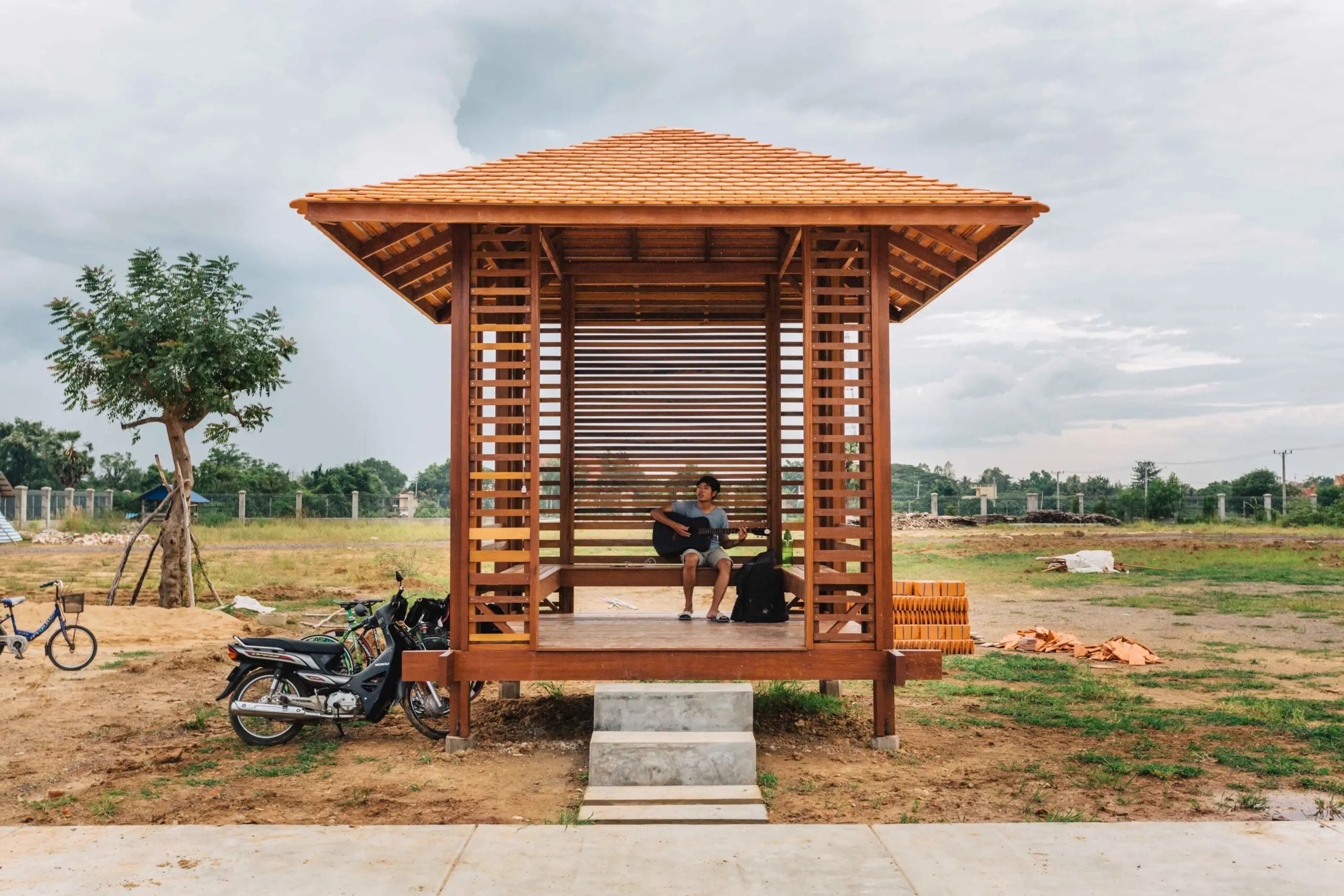
Cambodian Prayer Pavilion
Christian prayer pavilion, or “gathering hut,” on the campus of the University of the Nations, Battambang, Cambodia, designed by 100 Fold Studio, completed 2017. Photo courtesy of 100 Fold Studio.

The Architecture of Prayer is on display at the Brauer Museum of Art at Valparaiso University in Indiana through September 28. (I saw the exhibition last year at Calvin University, and it’s great! Take a virtual walk-through, and view the gallery booklet.) You can follow Iglesias on Instagram @iglesiasproject.

+++

ARTICLE: “Inuce designs Mountain Church of Julong as ‘more than just a place of worship’” by Tom Ravenscroft, Deezen: The construction of a remarkable new church has recently been completed in Julong, China. It’s the first church in the city, and one of several churches in China designed by the international architecture studio Inuce (including a pink pebbledash church in Fuzhou and a church wrapped in 100,000 panes of stained glass in Luoyuan). “Located at the foot of a mountain surrounded by forest and with views across the town, the Mountain Church of Julong references both the form and representation of an ark,” Ravenscroft writes in the article. Inuce founder Dirk U. Moench told him that “biblical archetypes were fundamental in our design process. . . . As a powerful symbol for shelter and new beginnings, the ark of salvation, safely landed on a foundation of rock, became the crystallisation point for our design.” [HT: Mark Meynell]

Mountain Church of Julong
The Mountain Church of Julong near Quanzhou, China, designed by the architecture studio Inuce and completed in 2024, evokes the form of an ark resting on a rock, as in Genesis 8:4.

+++

VIDEO PODCAST INTERVIEW: “Dr. David Taylor on Worship, Embodiment, and the Value of Beauty in Church Buildings,” Making Space: Sara Joy Proppe is the founder of Proximity Project, which helps churches discover real estate and placemaking solutions that fit their mission in the neighborhood. Here she presents a recent Barna poll result in which, when asked, “Which do you feel are the most important to having a meaningful experience at a church?,” 64 percent of Christians and 65 percent of non-Christians responded “art and beauty in the building.” She then speaks with liturgical theologian and author W. David O. Taylor on how we’re shaped by the physical spaces we worship in. I appreciate the charitable attitude of Taylor, who is Anglican, toward a variety of Christian traditions and aesthetic expressions, not holding any single one up as the only right way but rather inviting us to consider how our notion of “church” plays out in the buildings we construct and how we use them. The conversation with Taylor starts at the 11:48 timestamp. (There are overlaps with a podcast interview of his that I recommended in 2021.)

“I love church architecture, I love how it can tell the story of God’s creative and recreative work, I love how our bodies are integrally attuned to spaces and can come alive (or go dead) in particular spaces, and I love how architects invite us to pray with our whole beings in order that we might be both re-habituated and re-sensitized to our calling to be Christ’s ‘little tabernacles’ wherever we may go,” Taylor wrote on social media when sharing this interview.

Making Space is a podcast of the Christian research organization Barna Group and the Aspen Group, a church design and construction firm headquartered in Frankfort, Illinois. Learn more at https://www.barna.com/MakingSpace/.

+++

VISUAL COMMENTARY ON SCRIPTURE: “The Earthly Tent (2 Corinthians 5:1–10)” by Sarah White: For this coming Sunday’s New Testament lectionary reading from Paul’s second letter to the church at Corinth, Sarah White, a visual arts program curator and artist mentor at Morphē Arts, has curated a VCS mini-exhibition of three contemporary artworks that speak obliquely to that text: a performance art piece in a Manhattan cathedral by Eiko Otake; a forest diorama by Alyssa Coffin, meant to be “read” and “seen” through touch; and a giant hand-sewn jute sack sculpture by Ibrahim Mahama, which is draped over buildings. “Internal to this section of 2 Corinthians is a series of accumulating metaphors of architecture, clothing, geography, and time,” White writes. “The dynamics of these allusions are accentuated and shifted as we consider the performance of materials, bodies, and spaces in all three of these artworks.”

Eiko at St John the Divine
Eiko Otake (Japanese, 1952–), Eiko at St John the Divine, 26 November 2016, No. 1374, 2016. Photographed dance performance. Photo: William Johnston.

For example, at the Cathedral of Saint John the Divine in New York, Otake articulated both a personal and collective mourning through “the contortions and contractions of her body and face” and “moments of stumbling, falling, and lying down,” evoking Paul’s line about our groaning and longing. Her performance came out of her time as artist in residence at Saint John’s. I’m always intrigued by how artists respond to church spaces and help awaken worshipping communities (and curious publics!) to aspects of God’s story and our own—and I’m thrilled when churches invest in artists’ work. I wish that were more normative.

Roundup: Fargo, “When We Love,” and more

SPOTIFY PLAYLIST: June 2024 (Art & Theology): Here are thirty selections of good, true, and beautiful music for your listening this month, spanning genres but leaning heavily into folk and gospel. The first song is written by my friend and Daily Prayer Project colleague Joel Littlepage!

+++

TV SERIES: Fargo, season 5: The latest season of the dark comedy anthology series Fargo, written by Noah Hawley and streaming on Hulu, has been my favorite so far, in part because of its subversive (i.e., redemptive) ending. (I also recommend seasons 1 and 2!) Set in the American Midwest, the series is inspired by the 1996 Coen brothers’ film of the same name but has all-new characters and plots, and each season is self-contained (though those who watch all the seasons will find Easter eggs). Viewer beware: the show contains graphic violence, and season 5 centers on domestic violence.

Debt is a major theme in Fargo’s season 5. In the first episode, two men invade main character Dorothy “Dot” Lyon’s (Juno Temple) home, having been sent by someone in her past who is collecting a debt, revealing her to be a hardcore survivalist. (We gradually learn more of her backstory, especially through a fantastic puppet sequence in episode 7.) Dot is married to the kindest man, Wayne (David Rysdahl), whose billionaire mother, Lorraine (Jennifer Jason Leigh), is the CEO of a debt collection agency. Both women eventually come to heads with Roy Tillman (Jon Hamm), an extreme alt-right Christian nationalist running for the office of police chief. One of his lackies is Ole Munch (pronounced “oo-lah moonk”) (Sam Spruell), a mysterious man from Wales via Scandinavia who we learn is a “sin-eater” wandering the earth without hunger, rest, or hope, taking on himself the sins of the powerful and privileged.

Injuries are inflicted back and forth in a seemingly unending cycle of violence and retaliation. How can the cycle be broken? When should a debt be forgiven? In its final twenty minutes, which at first feels like a coda but actually moves the story someplace new, Hawley explores the power of love and empathy, of baking and breaking bread together. The last shot (which is not the one pictured here; I don’t want to spoil it) is perfect.

Fargo season 5
Juno Temple as Dot in the finale of Fargo’s season 5, “Bisquik”

After you watch season 5, read what Hawley had to say about the ending: to the Hollywood Reporter and Variety magazine.

+++

SONGS:

>> “When We Love,” performed by Laudate Mennonite Ensemble: This work for a cappella SATB choir is by Charles Anthony Silvestri (words) and Elaine Hagenberg (music). It looks to the natural world for lessons in love: the tree that provides shade, shelter, and rest, and the mother bird who builds a nest for the nurture of her young. “When we love, simply love, even as we are loved, our weary world can be transformed,” goes the refrain. You can preview and purchase the sheet music through GIA.

>> “Amazing Grace,” performed by Tori Kelly and Jon Batiste: Tori Kelly and Jon Batiste are both multiple-Grammy-winning artists who are unabashed Christians working in secular spaces. Here they perform a classic Christian hymn together on late-night television—unrehearsed!—with Kelly on vocals and Batiste on piano. The video was recorded live at Steinway Hall in New York City in August 2019 for The Late Show with Stephen Colbert. Kelly’s voice is gorgeous, and Batiste—my oh my, his talent blows me away. Listening to Kelly sing, he improvises a piano arrangement that follows and responds to her lead, weaving into and around those tones, providing ornamentation and support.

+++

ARTICLE: “12 Easy Ways to Improve Your Listening” by Blake Glosson: “True listening isn’t just hearing words but selflessly seeking understanding,” writes MDiv student Blake Glosson in this recent Gospel Coalition article. It’s not a fixed trait that you either have or you don’t, but rather a habit that can be formed with practice. He offers twelve tips for improving your listening so that those you converse with are heard and loved. These may seem obvious, but I found it helpful to have them listed all in one place, as I never really thought about listening in a systematic way. The “Ask engaging questions” and “Ask clarifying questions” is something I always appreciate when others do it for me and that I need to improve myself.

+++

VIDEO: “Art Break: Alma Thomas” with Jan Haugen: Jan Haugen is a docent at the National Gallery of Art in Washington, DC, who also leads “art breaks” for the spiritual formation ministry Coracle as part of their “Space for God” video series. In this installment she guides us through a practice of gratitude using the story and artwork of the African American artist Alma Thomas, whom I profiled two years ago in a post that includes many photos of her paintings.

View more devotional content from Coracle on their Vimeo channel and on their website, https://inthecoracle.org/.

Roundup: Visitation hymn, word games with George Herbert, The Message set to music, and more

HYMN FOR THE FEAST OF THE VISITATION: “Somewhere I hear the church bells ringing” by Gracia Grindal: There are many church songs on the Magnificat, the canticle Mary sings in Luke 1:46–55 when she greets her cousin Elizabeth at Elizabeth’s home in the hills of Judea, but very few hymns, at least in Protestantism, that narrate the Visitation event that occasions it, including Elizabeth’s glad affirmations. Gracia Grindal’s “Somewhere I hear the church bells ringing” is one example of the latter—a four-stanza hymn she wrote in 2010 for the Feast of the Visitation, celebrated every year on May 31, with Elizabeth as the poetic speaker. The hymn captures the excitement of the Messiah coming into the world, and references an Alfred Lord Tennyson poem along the way.

On her blog Hymn for the Day, Grindal provides the lyrics and a reflection on this hymn, as well as sheet music that uses a melody Daniel Charles Damon wrote specifically for the text, which is also available in Damon’s collection Garden of Joy (Hope Publishing, 2011). For public-domain tune alternatives, Grindal suggests DISTRESS or KEDRON from William Walker’s Southern Harmony (1835), or the Renaissance tune by Thomas Tallis known as TALLIS’ CANON—all three of which are commonly used with Fred Pratt Green’s twentieth-century hymn “O Christ, the Healer, We Have Come.”

A professor emerita at Luther Seminary in St. Paul, Minnesota, Gracia Grindal is a prolific writer and translator with expertise in Scandinavian hymns. She has served on several hymn committees and boards and is the author of A Treasury of Faith, a three-volume series of over seven hundred hymn texts on the lessons of the Revised Common Lectionary (Wayne Leupold Editions, 2006–9); Preaching from Home: The Stories of Seven Lutheran Women Hymn Writers (Eerdmans, 2011); an English translation of Hallgrímur Pétursson’s Icelandic Passíusálmar (Hymns of the Passion) (Hallgrím Church, 2020); and Jesus the Harmony: Gospel Sonnets for 366 Days (Fortress, 2021), among many other books.

+++

SUBSTACK POSTS:

>> “The Slow Way: On Being ‘at Peace and in Place’” by Micha Boyett, The Slow Way: When her third child was born with Down syndrome, Micha Boyett, an emerging writer, knew she needed to release herself from the anxiety of producing and focus on parenting; she decided to slow down in order to be faithful to her son. Drawing on themes in her new book, Blessed Are the Rest of Us: How Limits and Longing Make Us Whole, Boyett reflects in this post on the slow, remarkable, intricate work God does when we “allow all that we are to nourish the place we find ourselves”; when we let go of plans and rest in the goodness of what God has for us at this moment. “Rest is something that nourishes our long-term lives. And rarely, if ever, does rest improve our influence, our finances, or our platforms,” she writes. “Rest is an invisible gift to ourselves that results in invisible growth, invisible peace, invisible relational wholeness.”

>> “Word Games with George Herbert” by Grace Hamman, Medievalish: This Herbert poem was new to me, and what a delight it is! It consists of five tercets, each with an end word that gradually diminishes through loss of a letter with each subsequent line—e.g., CHARM, HARM, ARM. Playing this word game, Herbert develops the conceit of himself as a tree in God’s enclosed garden-orchard.

Peach (Tradescants’ Orchard)
“The Nuingetonn Peeche” from the Tradescants’ Orchard, 1620–29. Oxford, Bodleian Library MS. Ashmole 1461, fol. 105r.

I always enjoy the literary works, which are mostly medieval or early modern, that Dr. Grace Hamman explores through her newsletter and podcast—and the “Prayer from the Past” she curates for each newsletter sign-off, like the one in this edition, by Richard Brathwait (1588–1673).

+++

SONG: “Te Atua” (Dear Lord): I heard this popular New Zealand hīmene (hymn) in the Taika Waititi–directed movie Boy (2010) (such a great movie!). It’s a traditional Māori Christian text, set to the Appalachian folk tune NEW BRITAIN (best known for its pairing with “Amazing Grace”) and performed in 1997 by the St. Joseph’s Māori Girls’ College Choir, featuring soloist Maisey Rika. The arrangement is by the college’s principal, Georgina Kingi. Bearing echoes of Jesus’s parable of the sower, this song is particularly appropriate for the season of Ordinary Time that we’re now in, during which the seeds that were planted in us in the first half of the Christian year germinate, grow, and bear fruit.

E te Atua kua ruia nei 
Ö purapura pai
Hömai e koe he ngákau hou
Kia tupu ake ai

E lhu kaua e tukua
Kia whakangaromia
Me whakatupu ake ia
Kia kitea ai ngá hua

A má te Wairua Tapu rá
Mátou e tiaki
Kei hoki ki te mahi hé
Ö mátou ngákau höu
Dear Lord, you have spread
Your seeds of goodness
Give us new hearts
So that these seeds may grow

Dear Lord, do not allow
These seeds to be lost
But rather let them grow
So that the results may be seen

May the Holy Spirit
Guide us
Lest our hearts should
Return to our evil ways

[source]

+++

NEW ALBUMS:

>> Message Songs by the Porter’s Gate: For this album, the Porter’s Gate Worship Project partnered with the Eugene Peterson Center for Christian Imagination at Western Theological Seminary to set to music excerpts from Peterson’s best-selling translation of the Bible, The Message. Included are adaptations of Psalms 5, 16, 27, and 121, Matthew 11:28–30, Luke 15, and John 1—by a range of songwriters. The album release this month coincided with the publication of The Message Anniversary Edition, available from NavPress.

>> Volume 10 (Ordinary Time) of The Soil and The Seed Project: This double album—which is completely free!—features twenty-four songs by musicians of faith under the direction of Seth Thomas Crissman, a Mennonite pastor, educator, songwriter, and multi-instrumentalist from Harrisonburg, Virginia. Here’s one of the songs, “The Way Your Kingdom Comes” by Lindsey FitzGerald Stine, sung by her and her sister Rachel FitzGerald:

The music is one element of a larger project that also includes liturgies and newly commissioned artworks. Learn about the project’s free summer concert series on their Events page, which will feature contributors to the most recent album and other friends.

Roundup: Korean-English worship, “God Breathed” by Ruth Naomi Floyd, John Witvliet on liturgical sincerity, and more

WORSHIP SERVICES:

In February I shared a few of the Vespers services offered at this year’s Calvin Symposium on Worship at Calvin University in Grand Rapids, Michigan, which I was privileged to attend. Here are two of the full-fledged services that give you a sense of what the larger corporate gatherings are like. (The theme was Ezekiel.) I love the cross-cultural sharing that goes on, learning new songs alongside others, getting refreshed by prayer and formed by liturgy, sitting under the teaching of wise ministers of God from various backgrounds, and taking Communion with friends new and old.

>> “God’s Glory Departs from Israel,” February 8, 2024 (with bilingual Korean-English music and liturgy): This worship service was led in Korean and English by the Woodlawn Christian Reformed Church Choir, directed by Chan Gyu Jang; the Living Water Church Worship Team, directed by Yohan Lee; and members of the Calvin University and Calvin Theological Seminary Korean communities. Rev. Dr. Anne Zaki from Evangelical Presbyterian Seminary in Cairo, Egypt, preached on Ezekiel 10–11.

This is an example of bilingual worship done really well! (I’ve seen it done poorly: with lack of communication of intention, one-sided involvement in the design or execution, inadequate pronunciation coaching for non-native speakers at the mic, unclear instructions that create confusion as to who is supposed to say or sing what, unintelligibility, etc.) I’m so grateful for all the creativity and thoughtfulness that went into creating this service—with a special shout-out to the bulletin designers and livestream technicians.

The bulletin provides this note on bilingual worship:

Two languages are intertwined together in this bilingual service. At times, words are spoken in one language, and their translation—unspoken—is provided on the righthand column; at times, the leaders demonstrate to the congregation how to sing or speak the words through transliteration; and at other times, the leaders and congregation converse in both languages, providing meaning to each other, so that no word sung or spoken is left unintelligible. We seek understanding and order in the sharing of our gifts.

In our pursuit, however, we practice patience and hospitality. In this service, we are called not only to speak and sing, but also to listen, to take turns. By listening, we create a room—a shelter—for travelers and strangers in this land, since language and music have power to transport one’s soul homeward. By taking turns, we practice the pace and posture of dialogue, even monolingual dialogue.

Beautiful! Here are three songs I’ll call out for special attention:

  • 9:14: “Joo-yeo, Come, O Lord” by Sunlac Noh: This song, which is particularly well suited for Advent, originated in the Anglican Church of Korea and was translated into English last year by Martin Tel (see podcast interview below). The version we sang at the symposium preserves two of the Korean titles for Jesus.
  • 23:36: 우리에게 향하신 (Woo-ri-e-ge Hyang-ha-shin) (Never-Ending Is God’s Love) by Jin-ho Kim, based on Psalm 117:2: Sung entirely in Korean, this was used as a refrain during the Assurance of Pardon and the Prayers of the People. A simple, repeated line, either sung or spoken, is a good way to involve non-native speakers of a given language.
  • 1:14:37: 주님 다시 오실 때까지 / Rise, My Soul, Till Jesus Comes Again” by Hyeong-won Koh: The closing song is a charge to continue in the way of Jesus, all the way Home. The vocalists on stage sang the song themselves in its original Korean the first time through, and then we all joined in in English for the second time.

All the song credits are provided in full in the YouTube video description.

>> “The Valley of Dry Bones,” February 8, 2024: Rev. Dr. Brianna K. Parker from Dallas, founder of Black Millennial Café, preached on the famous Ezekiel 37 passage, and the Calvin University Gospel Choir, directed by Nate Glasper, led music, along with guest artist Ruth Naomi Floyd.

I want to especially draw your attention to 23:31, where Floyd premieres an extraordinary new song of hers, “God Breathed.” It opens and closes with a flute, and in between are her powerful jazz vocals, singing an original poetic text based on Ezekiel 37, accompanied by James Weidman on piano. (Update: Here’s a standalone video of the song.)

+++

PODCAST EPISODE: “Fighting Back Against the Storms of Life with Martin Tel,” Psalms for the Spirit: Host Kiran Young Wimberly interviews Martin Tel, director of music at Princeton Theological Seminary and senior editor of Psalms for All Seasons: A Complete Psalter for Worship (2012), about the Psalms—the importance of psalm singing in his Dutch Reformed upbringing; the Psalms as a form of resistance and protest; the Psalms as a means of praying our own prayers and those of others; our need to overhear some psalms as being prayed against us (that is, have you considered that you might be someone else’s oppressor?); and ideas for framing a psalm with a refrain, such as these:

  • Combine the Charles Albert Tindley gospel song “The Storm Is Passing Over” with Psalm 57 (“In the shadow of your wings I will take refuge, until the destroying storms pass by . . .”). Sing into the storm.
  • Choose a Gospel passage of someone in deep lament (e.g., the ten lepers in Luke 17:11–19), surround it with Psalm 88, and have the congregation sing “Kum Ba Yah” (Gullah for “Come by Here”) in minor mode as a refrain (“Someone’s crying, Lord . . .”). A choir can hum the spiritual while the reader(s) read the scriptures.
  • Intersperse the verses of Psalm 14 (“Fools say in their heart, ‘There is no God.’ . . . They have all gone astray . . .”) with the refrain “Prone to wander, Lord, I feel it . . .” to help the congregation members see their own foolishness instead of assuming it’s someone else who’s the fool.

+++

ARTICLE: “The Mysteries of Liturgical Sincerity” by John Witvliet, Worship (reprinted Pray Tell), May 2018: Some Protestants accuse the more liturgically inclined Christians, like me, of not valuing sincerity in worship because we value prewritten prayers and other set forms. But just because something is scripted or done habitually does not make it “rote” or “empty.”

“Among my mostly Protestant students, no theme is more contested, misunderstood, or cherished” than sincerity, writes John D. Witvliet, director of the Calvin Institute of Christian Worship and professor of worship, theology, and congregational and ministry studies at Calvin University and Calvin Theological Seminary. In this article he explores several different definitions of sincerity, which vary widely across cultures, centuries, philosophical frameworks, and Christian traditions, and then offers six “corrective lenses” to common astigmatisms in the free-church Protestant way of viewing the world: outside-in sincerity, vicarious sincerity, trait sincerity, symbiotic sincerity, sincerity as gift, and aspirational sincerity.

This article is SO GOOD. I have been greatly influenced over the years by Dr. Witvliet’s teachings on liturgical formation, and I strongly encourage you all to read this piece.

+++

EKPHRASTIC POEMS:

An ekphrastic poem is a poem written in response to a work of visual art. Here are two examples I like from the past two years:

>> “Christ Preaching” by Keene Carter, Image: “I forgive the absent boy,” begins this poem based on a Rembrandt etching, directing our attention to the young child in the foreground who has turned away, disinterested, from Jesus’s sermon, drawing on the ground instead. Jesus gives grace to those in the crowd with averted gazes or who are distracted, simply continuing to preach on on the virtue of empathy—of seeing yourself in others—and on true life.

Rembrandt_Christ Preaching (1652)
Rembrandt van Rijn (Dutch, 1606–1669), Christ Preaching (La Petite Tombe), ca. 1652. Etching, engraving, and drypoint on paper, 6 1/4 x 8 5/16 in. (15.9 × 21.1 cm). National Gallery of Art, Washington, DC.

>> “L’Angélus” by Seth Wieck, Grand Little Things: The Angelus is a traditional Christian prayer whose name comes from its opening words in Latin, “Angelus Domini” (The angel of the Lord). For centuries it was prayed by the faithful three times a day—at 6 a.m., noon, and 6 p.m.—the times announced by the ringing of bells from church towers. In the nineteenth century Millet famously painted two peasant farmers at dusk pausing from their labor in the fields to bow their heads and pray the Angelus. Seth Wieck interprets the painting through poetry, homing in on the part of the prayer that says, “Let it be done to me according to thy word,” expressing an attitude of surrender to God’s will. Wieck imagines the hard life of the man and woman shown pulling up potatoes from the earth—the same earth in which, shortly hence, they’ll bury a child, lost to sickness. The poem becomes a meditation on death, harvest, and acceptance.

Millet, Jean-Francois_The Angelus
Jean-Franҫois Millet (French, 1814–1875), The Angelus, 1857–59. Oil on canvas, 55.5 × 66 cm. Musée d’Orsay, Paris.


DONATE

I am committed to keeping all Art & Theology posts freely available to all; no paywalls here. To help me make a part-time living developing content for the site, would you consider donating to the work, or supporting my research by buying me a book from my Amazon wish list? I appreciate it!

Marian roundup: Contemporized statuettes, Mary as an icon of literacy, and more

Since the Middle Ages, the Roman Catholic Church has celebrated May, a time of new growth, as “Mary’s month.” The calendrical placement of this celebration probably has to do in part with the fact that the ancient Greeks celebrated a festival to Artemis, the goddess of fecundity, in May; the ancient Romans, Flora, the goddess of flowers and spring. Because Mary, by the power of the Holy Spirit, conceived in her womb and brought to birth the life of the world, Jesus Christ, Christians see her as standing at the threshold of an eternal springtime.

[Related posts: “‘May is Mary’s month’: Hopkins poem meets Glasgow style”; “Bursting with God-News (Artful Devotion)”]

POLL QUESTION: Before moving on to the six roundup items below, if you are a regular reader of this blog or other media like it, would you please help me out by answering the following poll question? (I’m trying out this WordPress feature for the first time!) Over the years I’ve gathered a lot of compelling poems and artworks on the Annunciation, encompassing a variety of eras, styles, and perspectives, and I’d like to pursue the idea of turning one or the other, or both, into a book. Which kind of Annunciation-themed book would you be most inclined to buy? Keep in mind that a book with art would cost significantly more because it would be in full color and probably a larger hardcover. Also note that a book that combines art and poetry would obviously have fewer selections of each than a book dedicated fully to one or the other.

+++

UPCYCLED MARY STATUETTES: Soasig Chamaillard is a French artist who, since 2006, has been acquiring small, damaged statues of the Virgin Mary—either from garage sales or received donations—and restoring and transforming them, often with reference to children’s toy lines and media franchises, comic book heroes, or other pop-culture icons. Some are silly or irreverent; others, merely quirky. Here are two I like, which both modernize Mary, by her dress or her reading material. Click on the images to view detail photos of the final product, and see here and here for blog posts that document the transformation process.

Jeans Mary (before-after)
Before/After. Right: Soasig Chamaillard (French, 1976–), Jeans-Marie (Jeans Mary), 2015. Plaster, acrylic paint, resin, metal frame, height 48 cm.

Chamaillard, Soasig_New Bible (before-after)
Before/After. Right: Soasig Chamaillard (French, 1976–), Nouvelle Bible (New Bible), 2008. Plaster, acrylic paint, resin, digital print, height 40 cm.

The first shows Mary in high-waisted jeans and red Converse high-tops with rosettes on the tongues. The second one, a Madonna del Parto, shows her pregnant and reading the book J’élève mon enfant (Raising My Child) by Laurence Pernoud, picking up tips on being a new mom.

+++

ESSAY: “Mary: Evolution of a Bookworm” by Joel J. Miller: “It’s unlikely the historical Mary could read at all, but medieval Christians transformed her into an icon of literacy,” often showing her with a book in hand, whether as a child learning to read from her mother, Saint Anne; at the Annunciation, with the book of Isaiah, the Psalter, or a book of hours splayed open on her lap; or teaching her own child, Jesus, how to read. Drawing on the research of Laura Saetveit Miles, author of The Virgin Mary’s Book at the Annunciation: Reading, Interpretation, and Devotion in Medieval England [previously], Joel J. Miller discusses how images of Mary reading “rode a wave of rising female literacy and simultaneously encouraged its expansion.”

Annunciation (Brunswick Casket)
Ivory plate of the Annunciation from the Brunswick Casket, made in Metz, France, ca. 860–70. Herzog Anton Ulrich Museum, Braunschweig, Lower Saxony, Germany. This is the earliest known representation of the Virgin Mary with a book at the Annunciation.

Costa, Lorenzo_Annunciation
Lorenzo Costa (Italian, 1460–1535), Annunciation (Mary Reading), first third of 16th century. Oil on panel, 62 × 60.5 cm. Gemäldegalerie Alte Meister (Old Masters Picture Gallery), Dresden, Germany.

+++

CONVERSATION: “Sacra Conversazione” with Walter Hansen and Bruce Herman: In this written conversation from Image no. 62, artist Bruce Herman [previously] and patron Walter Hansen discuss the two large altarpieces Herman produced comprising six paintings on the life of the Virgin Mary: Miriam, Virgin Mother and Second Adam. The article is about the creative process and Herman’s collaboration with Hansen and with student apprentices in Orvieto, Italy, but it’s also about attempting to recover Mary’s image from a heap of the saccharine or overly exalted on the one hand, and ironic detachment on the other. Herman says,

I had vivid memories of Boston art critics and museum people back in the 1980s telling me that [religious] subject matter could only be approached ironically, but I had a persistent feeling that they were wrong. I’ve sensed for many years that the tradition of biblical imagery in art is far from exhausted—maybe simply stalled out due to loss of nerve or imagination. To me, much of the recent religious imagery we’ve inherited is fairly shallow. I know this might sound odd, given more than a thousand years of tradition, but I honestly believe that new insights are arrived at in every generation. Why can’t a contemporary artist paint the Virgin Mary without irony—and maybe even specifically attack the problematic nature of much Marian imagery? Why can’t a century of experimentation in painting yield something relevant to that tradition?

It’s an excellent conversation! You may have to subscribe to Image journal to access it, but it’s well worth it for all the wonderful content they put out quarterly and access to their archives.

Herman, Bruce_Miriam, Virgin Mother
Bruce Herman (American, 1953–), Miriam, Virgin Mother, 2007. Oil on wood with silver and gold leaf, 95 × 154 in. (241.3 × 391.2 cm).

Read more about the two altarpieces and view more photos at www.bruceherman.com/magnificat, and in the beautifully produced catalog magnificat, with a foreword by Hansen and essays by Rachel Hostetter Smith and John Skillen. The book also features four paintings from Herman’s related Woman series.

+++

ART VIDEOS:

What follows are my two favorite videos from the Visual Commentary on Scripture’s twelve-episode series “Unlocking Christian Art: The Virgin Mary,” in which theologian Ben Quash and art historian Jennifer Sliwka discuss religious artworks from museums in Berlin.

>> “Holy Kinship”: The subject of this video is a late medieval German limewood carving by Hans Thoman depicting Jesus’s extended family on his mother’s side. He and his mom, grandma, grandpa, step-grandpas, aunts, and cousins pose for this matriarchal family portrait that reflects a medieval legend (rejected by the Council of Trent) that Saint Anne was grandmother not just to Jesus but also, through two subsequent marriages, to five of the twelve apostles: James the Greater, Simon, Jude, James the Less, and John the Evangelist. Also included in this sculpture group are Elizabeth and Zechariah with their son, John the Baptist, and Emelia with her son Servatius of Tongeren, a fourth-century saint whom legends name a distant relative of Jesus. [view object record]

>> “Leave-Taking”: From the same period and general region as the above sculpture comes a painting by Bernhard Strigel (1460–1528) that shows Jesus taking leave of his mother just before his entry into Jerusalem the week of his death, a popular subject in northern Europe in the sixteenth century. The episode derives from a versified Marienleben (Life of Mary) from the early fourteenth century written by the Carthusian monk Philipp von Seitz, aka Bruder Philipp, from Middle Franconia. [view object record]

View more videos like this on the VCS YouTube channel.

+++

SONG: “Mary” by Patty Griffin: “Mary, you’re covered in roses, you’re covered in ashes, you’re covered in rain . . .” From the 1998 album Flaming Red by the country-folk artist Patty Griffin, the song “Mary” is a tribute to the woman who mothered Jesus and mothers us all. A compassionate presence who lives on in heaven at her son’s right hand, she feels the pain of other mothers who’ve lost their children. Griffin sings of Mary’s beautiful, big, humble, suffering, nurturing, pondering heart.

+++

POEM: “Christ’s Mother Reflects: His Childhood” by Micha Boyett: This is the last in a series of five Advent poems written from the perspective of Mary for John Knox Presbyterian Church in Seattle in 2010, the other four being on the subjects of the Annunciation, the boy who is snatched away by a dragon in Revelation 12, the Visitation, and the Nativity. Here, after Jesus’s death, Mary reflects back on his life—an early heartbreak of his, his contemplative nature, a question he once asked, his delight in scripture study, the hard choices he made, her own unfulfilled hope for normalcy on his behalf, the tearing of his flesh that mends us.

Roundup: Exhibition at Ely Cathedral, Faith Ringgold video, Ascension Day hymn, and more

Each month I put together a collection of thirty songs on Spotify—an assortment of psalms, hymns, and spiritual songs, old and new. Here’s the playlist for May:

+++

PRESS RELEASE: “Belmont University Launches Creative Arts Collective for Christian Life and Faith”: Supported by a $32 million grant from the Lilly Endowment, Belmont University in Nashville announced on March 26 the launch of a major new nationwide initiative: the Creative Arts Collective for Christian Life and Faith. “Positioned at the intersection of faith and artistry, the Creative Arts Collective is a vibrant community dedicated to exploring the divine through the lens of creativity. We believe in the transformative power of the arts to connect us with God’s profound narrative, uplifting spirits, and uniting hearts in a shared journey of discovery.”

The executive director is Rick Rekedal, who worked for twenty years at DreamWorks Animation on such projects as Shrek, Trolls, Prince of Egypt, Madagascar, Kung Fu Panda, and How to Train Your Dragon.

I’m looking forward to seeing what they do in the coming year!

+++

ART EXHIBITION: “Am I my brother’s keeper?” by Sean Henry, Ely Cathedral, England, April 26–September 1, 2024: Curated by Jacquiline Creswell [previously], this new exhibition places twenty-eight painted, contemporary figures from the oeuvre of British sculptor Sean Henry in various spaces in and outside the historic Ely Cathedral. The exhibition is titled after Cain’s indifferent response to God in Genesis 4, after he has just murdered his brother—a question that prompts us to consider our moral responsibility to care for and support one another.

Henry, Sean_Am I my brother's keeper
Sean Henry (British, 1965–), T.P.O.L.R., 2005, bronze, and LM, 2014, bronze. From “Am I my brother’s keeper?,” an exhibition at Ely Cathedral, 2024. Photo courtesy of the cathedral.

Henry, Sean_Am I my brother's keeper
Sean Henry (British, 1965–), Hedda, 2018, ceramic. From “Am I my brother’s keeper?,” an exhibition at Ely Cathedral, 2024. Photo courtesy of the cathedral.

Henry “captures the human form with compassion, depicting the emotions, struggles, and joys that define us as human,” Creswell writes. “His figures also convey the vulnerability, strength and resilience that exist within each individual. They tell stories, evoke emotions and create connections with the viewer.” View more photos from the exhibition on Creswell’s Instagram page, and see also photos from the similar exhibition she curated for Salisbury Cathedral in 2011, Conflux: A Union of the Sacred and Anonymous.

+++

VIDEO INTERVIEW: “Faith Ringgold’s art of fearlessness and joy”: Faith Ringgold (1930–2024), the trailblazing artist best known for her story quilts documenting African American life, died this month at age ninety-three. This CBS Sunday Morning segment from 2021 is a good introduction to her and her work, which you can explore more of at www.faithringgold.com.

Ringgold, Faith_Church Picnic
Faith Ringgold (American, 1930–2024), Church Picnic Story Quilt, 1988. Tie-dyed, printed fabrics and acrylic on cotton canvas, 74 1/2 × 75 1/2 in. High Museum of Art, Atlanta.

Ringgold, Faith_The Flag Is Bleeding #2
Faith Ringgold (American, 1930–2024), The Flag Is Bleeding #2, from the American Collection series, 1997. Acrylic on canvas, painted and pieced border, 76 × 79 in. Pippy Houldsworth Gallery, London.

+++

HYMN FOR ASCENSION DAY (May 9):

“See the Conqueror mounts in triumph” is a ten-stanza hymn by Christopher Wordsworth, nephew of the great poet William Wordsworth, published in his collection The Holy Year in 1862. The Hymnology Archive provides the full lyrics, a revision history, a textual analysis, and sheet music for the tune Wordsworth preferred for it and the one Henry Smart wrote for it six years later. This is not a widely sung hymn, however. I’ve enjoyed hearing how contemporary songwriters have revitalized it through new tunes. Here are two examples:

>> Music by Jenny & Tyler, on Open Your Doors (2012): This married musical duo living in Nashville, Tennessee, uses a 6/8 time signature in their setting, and they’ve added a bridge.

>> Music by Wes Crawford, on Hymns for This World and the Next (2024): Wes Crawford, the worship pastor at Christ Church of Austin, released an album of thirteen retuned hymns this February, and “See the Conqueror” is one of them.

We need more Ascension hymns! Search this site’s “Ascension” tag to find a few more, as well as other Ascension Day content (sometimes mixed into roundups with other miscellany).

+++

ART COMPILATION: “Ascending Jesus—The Last Glimpse” by Aidan Kimmel: Fr. Aidan Kimmel has compiled eighteen medieval paintings depicting the Ascension of Christ, mostly from manuscripts. In several Jesus leaves behind footprints on the Mount of Olives. So delightful!

Ascension (medieval MS)
The Ascension, from a Bible moralisée made in Bruges, ca. 1455–60. The Hague, National Library of the Netherlands, KB, 76 E 7, fol. 219r. The foregrounded figures are Saint Peter and the Virgin Mary.