Playlist: The Lord Is My Shepherd (Psalm 23, etc.)

Tomorrow’s readings in the Revised Common Lectionary, for the fourth Sunday of Easter, include what’s probably the most famous passage in the Bible, Psalm 23:

The LORD is my shepherd; I shall not want.

He maketh me to lie down in green pastures: he leadeth me beside the still waters.

He restoreth my soul: he leadeth me in the paths of righteousness for his name’s sake.

Yea, though I walk through the valley of the shadow of death, I will fear no evil: for thou art with me; thy rod and thy staff, they comfort me.

Thou preparest a table before me in the presence of mine enemies: thou anointest my head with oil; my cup runneth over.

Surely goodness and mercy shall follow me all the days of my life: and I will dwell in the house of the Lord for ever.

In characterizing God as a shepherd, the psalmist expresses how God leads, protects, rescues, feeds, and cares for his own. The author of Psalm 95 uses the same metaphor when he writes, “For he is our God, and we are the people of his pasture, and the sheep of his hand” (v. 7)—as do Isaiah and Ezekiel. During his teaching ministry, Jesus described himself as “the good shepherd [who] lays down his life for the sheep,” and whose flock knows his voice and follows him (John 10:1–18).

There are hundreds of metrical paraphrases and musical settings of Psalm 23. I’ve compiled some three dozen of the best into a Spotify playlist, along with a handful of other songs that reference or adapt other biblical passages that speak of God as a shepherd. There are settings by Philippe Rogier, Franz Schubert, Antonin Dvořak, Noel Paul Stookey (of Peter, Paul and Mary), John Michael Talbot, Val Parker, David Gungor, Luke Morton, and others. Besides English, languages include Hebrew, Latin, Spanish, French, German, Czech, Arabic, Mandarin, Urdu, Swahili, and Sotho.

Rae, Ronald_Shepherd
Ronald Rae (Scottish, 1946–), Shepherd, 1988. Granite, 4 × 5 × 4 ft. Private collection, Peak District, Scotland.

The Psalm 23 settings that are most widely reproduced in modern English-language hymnals are:

  • “The Lord’s My Shepherd,” written by Francis Rous but extensively revised by committee and published by the General Assembly of the Church of Scotland in the Scottish Psalter (1650). This text is most commonly matched with the 1872 tune CRIMOND by Ms. Jessie Seymour Irvine of Scotland, but I really like it with the early American folk tune PISGAH, as recorded, for example, by the William Appling Singers. However, both melodies, I feel, are difficult to sing congregationally.
  • “My Shepherd Will Supply My Need” by Isaac Watts, from The Psalms of David Imitated in the Language of the New Testament (1719). This text is traditionally paired with the tune RESIGNATION, first published in the fifth edition of the shape-note hymnal The Beauties of Harmony (Pittsburgh, 1828), compiled by Freeman Lewis, but first appearing with the Watts text in The Valley Harmonist in 1836. My playlist features a performance by the female a cappella quartet Anonymous 4 (the music arranged by Johanna Maria Rose; see video embed below), as well as by folk singer Claire Holley, who recorded the hymn at the request of a friend who told her it was the song that helped her get sober for good. I also like the minor-key setting by Stephen Gordon.
  • “The Lord Is My Shepherd (No Want Shall I Know)” by James Montgomery (1822), with music by Thomas Koschat (1862). Here’s the Lower Lights:
  • “The King of Love My Shepherd Is” [previously] by Henry Williams Baker (1868). This hymn is most often sung to a traditional Irish tune known as ST. COLUMBA (my playlist features both a choral performance by the Choir of Kings School, Canterbury, and a folksy solo by Luke Spehar) and occasionally to MCKEE, also from Ireland, as recorded by Redeemer Knoxville.

At my church we use Wendell Kimbrough’s musical adaptation of the psalm, “His Love Is My Resting Place.” Do you sing Psalm 23 at your church, and if so, what version?

Probably my favorite choral setting is by Bobby McFerrin, “The 23rd Psalm,” performed below by his VOCAbuLarieS, featuring SLIXS & Friends, live in Gdansk, Poland, at the Solidarity of Arts Festival on August 17, 2013:

Some people are thrown off by McFerrin’s use of feminine pronouns for the Divine in this song. God has no literal sex because God does not possess a body, so our gendered binaries are inadequate—but scripture and church tradition refer to God using masculine pronouns. I’m not bothered by the “She” throughout, or even “Mother,” but the substitution of “Daughter” for “Son” in the Trinitarian doxology at the end is theologically confusing, since Jesus was a man. But I get what McFerrin is doing.

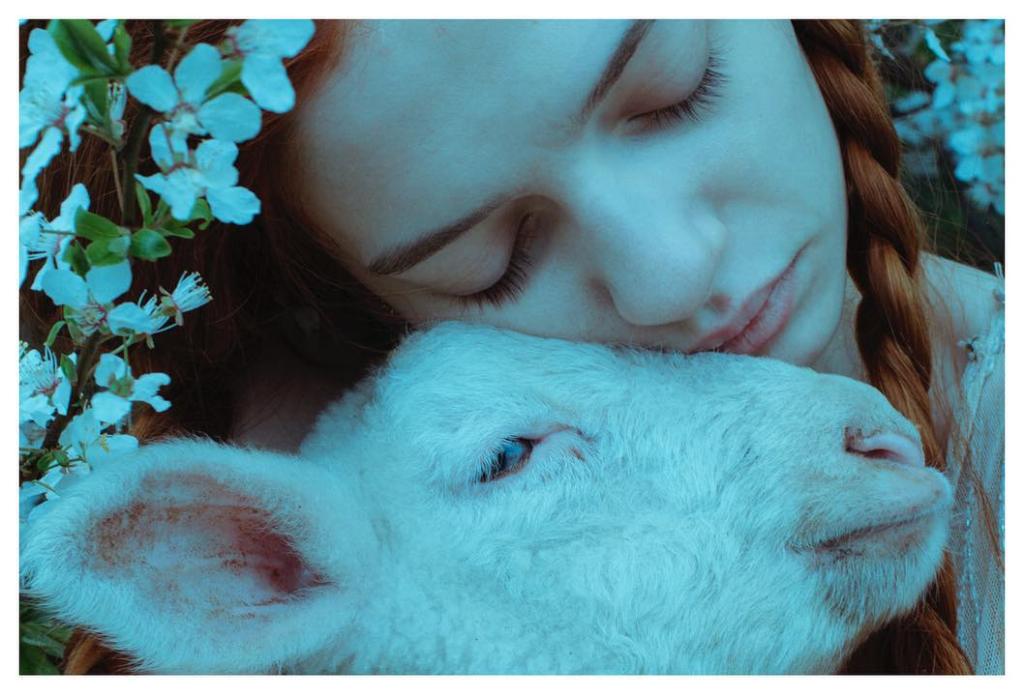
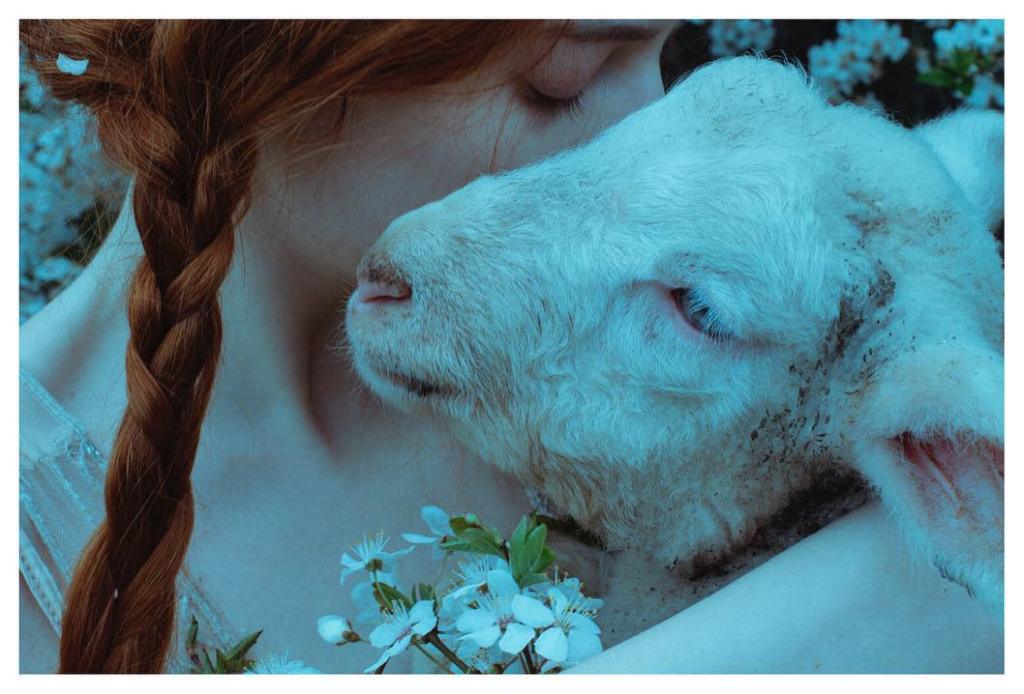
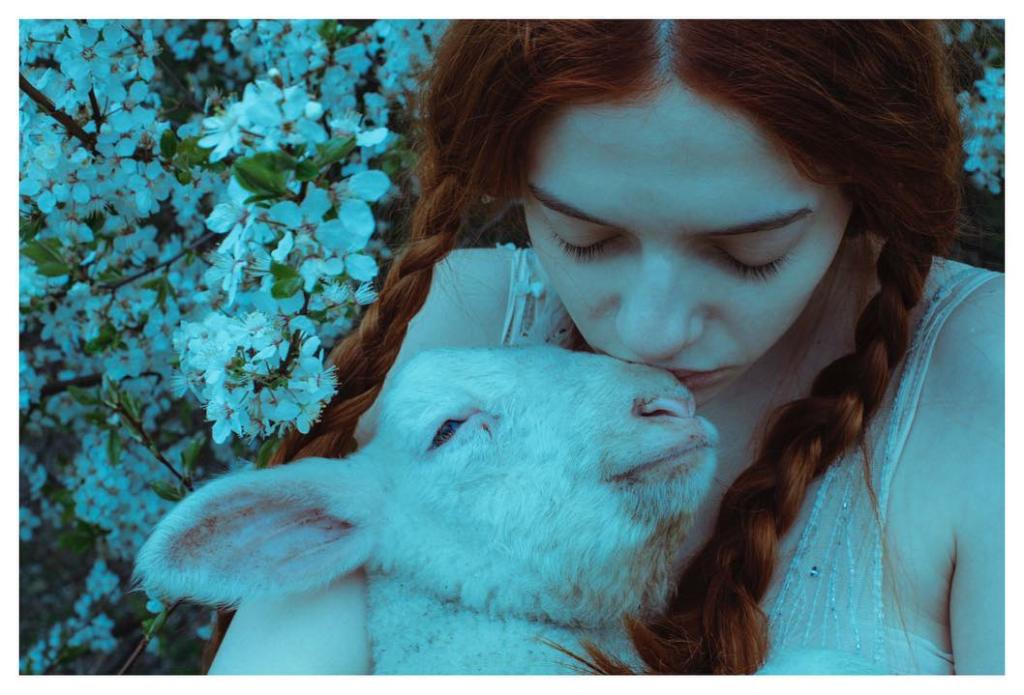
How does the change in gender impact your reception of the psalm text? We’re used to seeing religious imagery of a man with a sheep slung over his shoulders to embody the metaphor of God as shepherd—but what happens when you picture a shepherdess in the role? Note that it was not unusual in the ancient Near East for girls and women to tend their family herds (think of Rachel and Zipporah in the Old Testament, for example), and still today across the globe there are many female shepherds.

McFerrin dedicated his “23rd Psalm” to his mother.
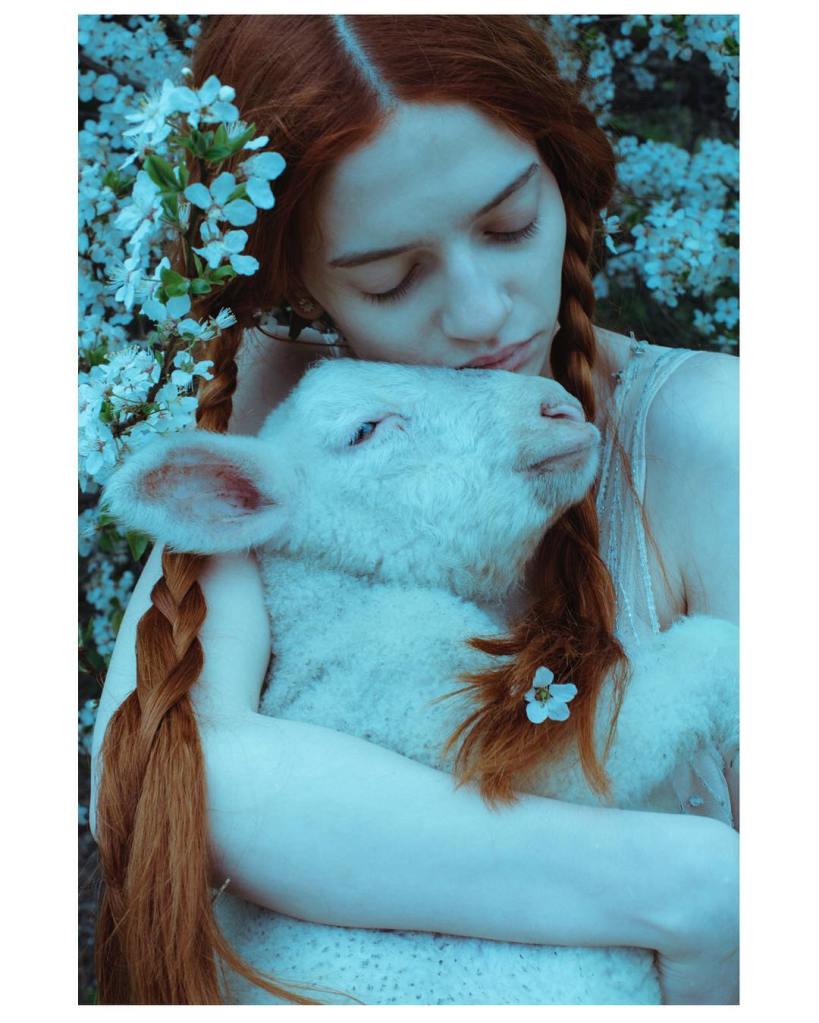
(The above artworks, sourced from Instagram, are from the 2019 series The Shepherd by Laura Makabresku, a fine-art photographer from Poland whose work is influenced by her Catholic faith and by fairy tales.)

Here is a selection of other songs from the playlist:

>> “Adonai Ro’i” is a setting of the original Hebrew of Psalm 23 by Jamie Hilsden of Misqedem, a band from Tel Aviv, Israel, that is heavily influenced by Middle Eastern and North African music styles, often utilizing microtonal scales, irregular time signatures, and regional instruments. The song is sung by Shai Sol. (Available on Bandcamp.)

>> “The Lord Is My Shepherd” by Paul Zach of the United States:

>> “El Señor es mi Pastor” by Omar Salas of the Dominican Republic, a salsa song:

>> “Ke Na Le Modisa” by the Soweto Gospel Choir, sung live at the Nelson Mandela Theatre in Johannesburg in 2008. The song is in Sotho, an official language in South Africa and Lesotho.

>> “The Shadow Can’t Have Me” by Arthur Alligood:

>> “Done Found My Lost Sheep,” an African American spiritual sung by Lucy Simpson [previously] for Smithsonian Folkways, based on Jesus’s parable of the lost sheep (Luke 15:1–7):
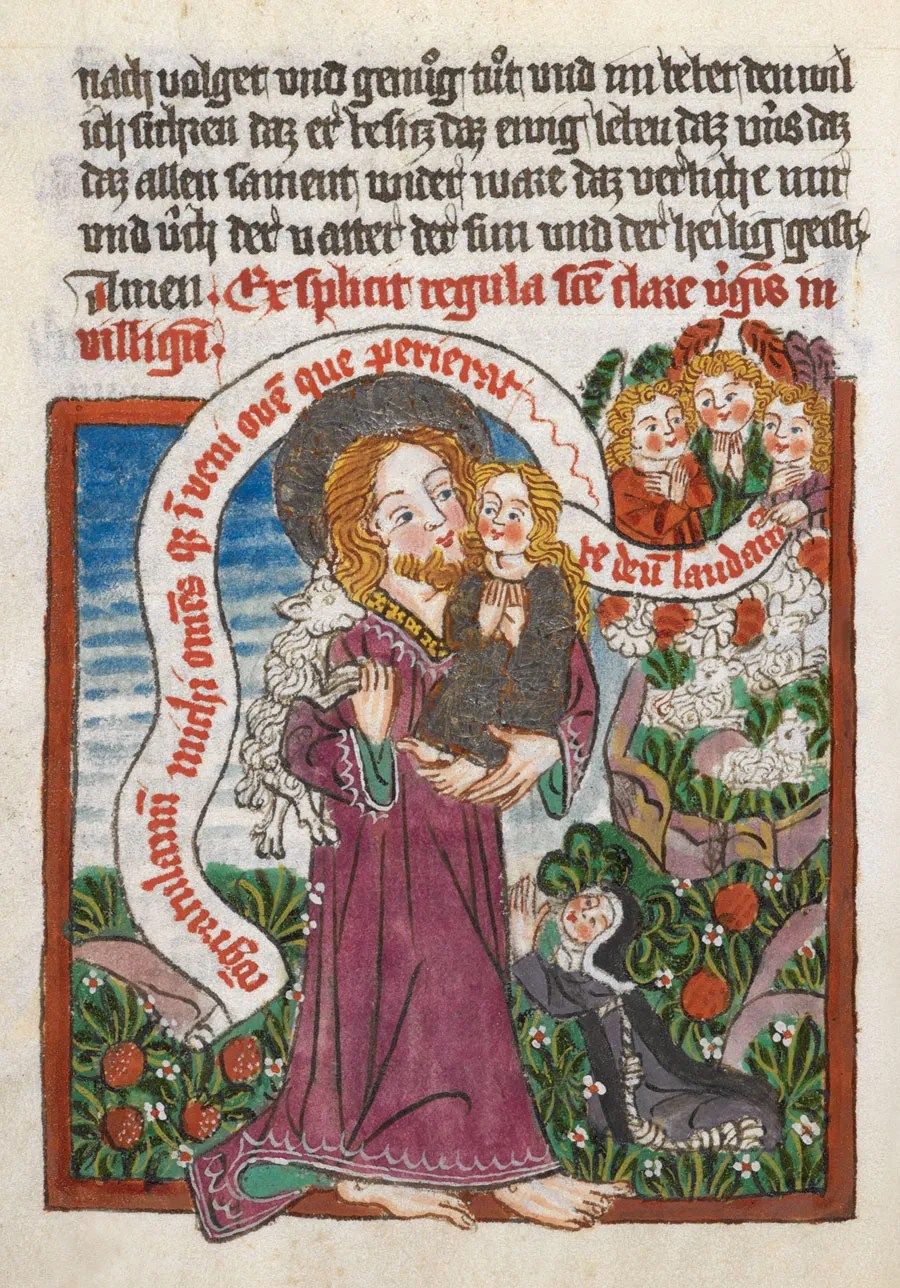
Lost sheep found (British Library)
Illustration by the nun Sibylla von Bondorf (German, ca. 1440–1525), from a copy of the Clarrissan Rule, Freiburg, ca. 1480. Opaque pigments on parchment, 15 × 10 cm. London, British Library, Add. MS 15686, fol. 30v. The banderole reads, “Rejoice with me, for I have found my sheep that was lost” (Luke 15:6). [HT]

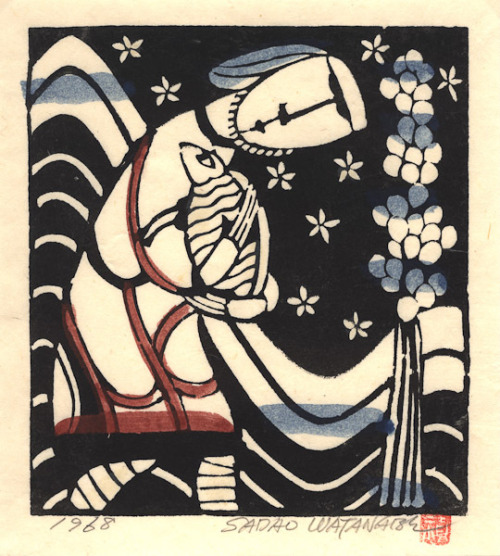
Watanabe, Sadao_Good Shepherd
Sadao Watanabe (Japanese, 1913–1996), Good Shepherd, 1968. Katazome stencil print.

>> “Our Psalm 23” by Gabriella Velez, Kevin Dailey, Justin Gray, and JonCarlos Velez of Common Hymnal, featuring Sharon Irving:

Roundup: Worship album by Parchman inmates, major new acquisition at Toledo Museum of Art, and more

SPOTIFY PLAYLIST: November 2023 (Art & Theology): In this month’s playlist I nod, in part, to All Saints’ Day (November 1), Christ the King Sunday (November 26), and world events. It includes “Ad Ana” (How Long), a setting of Psalm 13 in its original Hebrew by Miqedem (a Tel Aviv–based band made up of Shai Sol [previously] and three other musical artists from a mix of Jewish and Christian backgrounds), and “Touba” (Blessed), a sung recitation of the Beatitudes in Arabic by the Sakhnini Brothers [previously], Arab Christians from Nazareth, with oud and keyboard accompaniment.

As American Thanksgiving is November 23, you may also want to check out my Thanksgiving Playlist, comprising songs of gratitude. Originally created in 2021, each year I add to and remix the list as I encounter new recordings. One of the newer additions is “He Has Made Me Glad” by Leona Von Brethorst, based on Psalm 100, as arranged and performed on organ by the amazing Cory Henry.

The Christian life consists of both praise and lament, both tears and laughter—which is why in any given worship service or Art & Theology playlist or blog post, as in the biblical psalter, you can find songs that express joy and others, heaviness. They don’t negate one another but rather give fuller expression to the breadth of religious experience.

+++

NEW ALBUM: Some Mississippi Sunday Morning by Parchman Prison Prayer: After a bureaucratic process that took over three years, music producer Ian Brennan was finally granted permission in February to record a Sunday worship service at the Mississippi State Penitentiary, aka Parchman Farm, a notorious prison with a rich musical history. The prison chaplains convened a unique service of inmate singers from various Christian denominations ranging in age from twenties to seventies, who were given turns at the mic and even collaborated on a few tracks. Brennan said he wanted to give the men a platform for their voices to be heard. All profits from the album benefit the Mississippi Department of Corrections Chaplain Services.

Here’s “You Did Not Leave Me, You Bless Me Still,” a cover of a Melvin Williams gospel song sung by J. Sherman, age sixty-three.

“You can hear the way Sunday services are particularly restorative for someone incarcerated – not simply because of the promise of redemption, but the solace of not being alone,” writes Sheldon Pearce for the Guardian. “Some Mississippi Sunday Morning feels like these men reaching out for the things such a barbaric system tries to deny them: compassion, intimacy, and mercy. The songs are not just purges of anxieties accrued on the inside or calls for the Lord’s embrace, but also pleas to be acknowledged as a person and not an ID number.”

(Thanks to Art & Theology reader Ted Olsen for alerting me to this! He compared the album to Angola Prison Spirituals, recorded in the 1950s.)

+++

PODCAST EPISODE: “Sarah Clarkson: The Gift of Beauty,” Life with God: A Renovaré Podcast, October 20, 2023: Sarah Clarkson, author of This Beautiful Truth: How God’s Goodness Breaks into Our Darkness, speaks with Renovaré community life director Nathan Foster about her struggle with OCD and, amid the great suffering wrought by that illness, how God’s goodness has been mediated to her by beauty—in nature, poetry, music, story, tea, ritual, and so on. Responding to the idea that beauty is a luxury for the affluent, she says, “Well, [it is] if beauty is about having a perfect house. But beauty is healing those who have been hurt in a war zone. It’s creating shelters where children can have refuge. It’s rebuilding what has been destroyed. . . . Beauty is a defiance of the forces of evil and disorder and destruction because it is [their] opposite: where evil tears down, beauty creates; where there is absence, beauty fills.”

+++

PRESS RELEASE: “Toledo Museum of Art Adds Armenian Gospel Manuscript with 46 Paintings to the Collection”: After centuries passing through private collections, in June the Pozzi Gospels, a sixteenth-century illuminated manuscript from Armenia, entered the collection of the Toledo Museum of Art, which will make it more accessible to the public. (I’m not sure when the book will go on display. And it doesn’t have an object page on the museum’s website yet.) The artist and scribe of this extraordinary, sumptuous manuscript was Hakob Jughayets’i. His forty-six full-page miniatures and marginal decorations combine Christian iconography with Byzantine, Islamic, and Buddhist design elements. 

The Sam Fogg gallery, which exhibited the manuscript last year as part of The Medieval Body, created this short video about it, narrated by art historian Jack Hartnell:

Creation of Eve and Temptation (Pozzi Gospels)
Hakob Jughayets’i (Armenian, ca. 1550–1613), The Pozzi Gospels, 1586. Paper with blind-stamped brown leather binding, 403 folios with 46 full-page illuminations and numerous marginal miniatures, 7 3/4 × 5 3/4 in. (19.8 × 14.5 cm). This spread shows the Creation of Eve and the Temptation of Eve.

The Pozzi Gospels is one of nine extant illuminated manuscripts by Hakob. For more information, see Hakob’s Gospels: The Life and Work of an Armenian Artist of the Sixteenth Century by Timothy Greenwood and Edda Vardanyan (2006).

+++

VIRTUAL MUSIC COLLECTION: Armenian Spiritual Music Special Vol. 1: NTS Radio in London has curated ninety minutes of traditional Armenian Christian music. (They’ve done the same for Byzantine chant, Welsh hymns, Hildegard von Bingen, and numerous other categories.) I wish the lyrics and translations were provided, but regardless of my understanding of the words, what beauty. [HT: ImageUpdate]

Thirst (Artful Devotion)

Thirst by Stephen Watson
Stephen Watson (American), Thirst, 2013. Shorter University Arnold Art Gallery, Rome, Georgia.

O God, you are my God; earnestly I seek you;
my soul thirsts for you;
my flesh faints for you,
as in a dry and weary land where there is no water.

—Psalm 63:1

+++

SONG: “Tzama Lecha Nafshi” (My Soul Thirsts for You) by Sasha Fishman | Performed by Shai Sol, 2016

Shai Sol is a singer-songwriter from Tel Aviv, Israel, and a Jewish follower of Yeshua (Jesus). Follow her on Facebook, Bandcamp, and/or YouTube.

+++

Artist Stephen Watson (previously) describes his 2013 installation Thirst: “These 2,500+ empty cups are arranged in the shape of a river. Unfilled, they create a dry river bed. In their multitude, they depict the severity of the thirst of an unquenched soul.”


This post belongs to the weekly series Artful Devotion. If you can’t view the music player in your email or RSS reader, try opening the post in your browser.

To view all the Revised Common Lectionary scripture readings for the Third Sunday in Lent, cycle C, click here.