Roundup: “Rothko in Florence,” disabled minister portraits, Shaker songs, and more

EXHIBITIONS:

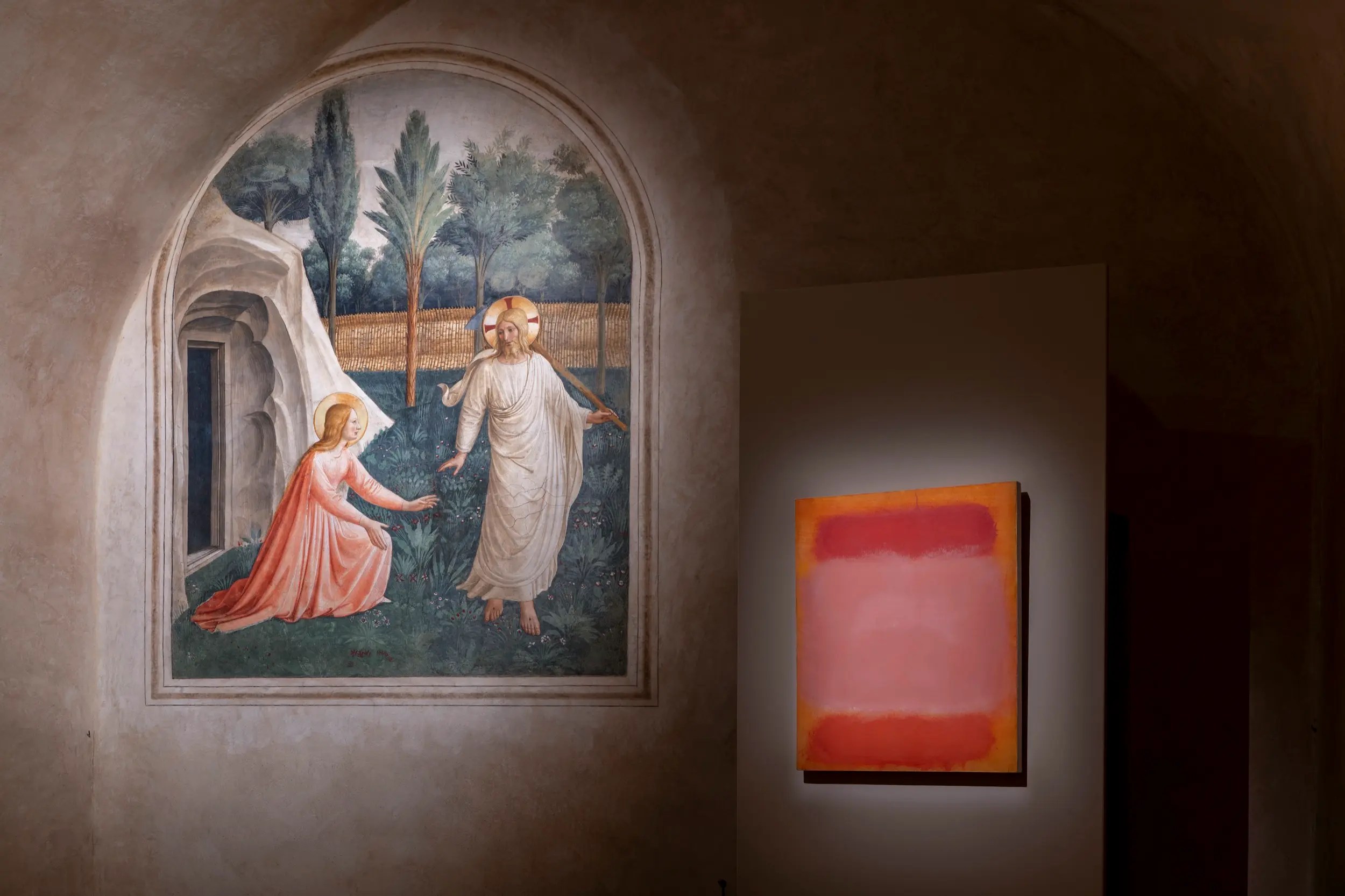
>> Rothko in Florence, multiple sites in Florence, Italy, March 14–August 23, 2026: Presented by the Fondazione Palazzo Strozzi and curated by Christopher Rothko and Elena Geuna, Rothko in Florence explores the influence of the city on Mark Rothko’s art, especially in terms of space and color. Rothko visited Florence in 1950, 1959, and 1966 and was particularly taken by the monastery-turned-museum San Marco, its cells frescoed with devotional scenes by Fra Angelico, and the vestibule of the Biblioteca Medicea Laurenziana, designed by Michelangelo. Now those two Renaissance sites are host to a display of Rothko’s works: five of his paintings hang alongside Fra Angelico’s monastic frescoes, and two studies for his Seagram Murals hang in the Laurentian Library.
Rothko in Florence
Installation view: Rothko in Florence, San Marco Museum, Florence, 2026. Photo: Ela Bialkowska, OKNO Studio. (Read Georges Didi-Huberman’s reflection on the Fra Angelico painting at left.)

But the primary site of the exhibition is the fifteenth-century Palazzo Strozzi, which shows over seventy of Rothko’s works from private collections and international museums, spanning the different stylistic phases of his career, from figurative to neo-surrealist to color field. And in dialogue with the exhibition, the sacristy of the Chapel of San Nicolò, inside the complex of the Officina Profumo-Farmaceutica di Santa Maria Novella, one of the oldest pharmacies in the world, has been converted into a “listening room”; Rothko Chapel, a composition for chorus, celesta, cello, and percussion written by Morton Feldman in 1971 at Rothko’s commission, plays through speakers, washing over frescoed scenes of Christ’s passion painted by Mariotto di Nardo di Cione between 1385 and 1408.

You can read reviews of the exhibition in The New York Times and The Brooklyn Rail and view photos, including of all five relevant cells in San Marco, on Ruth Philo’s Instagram page.

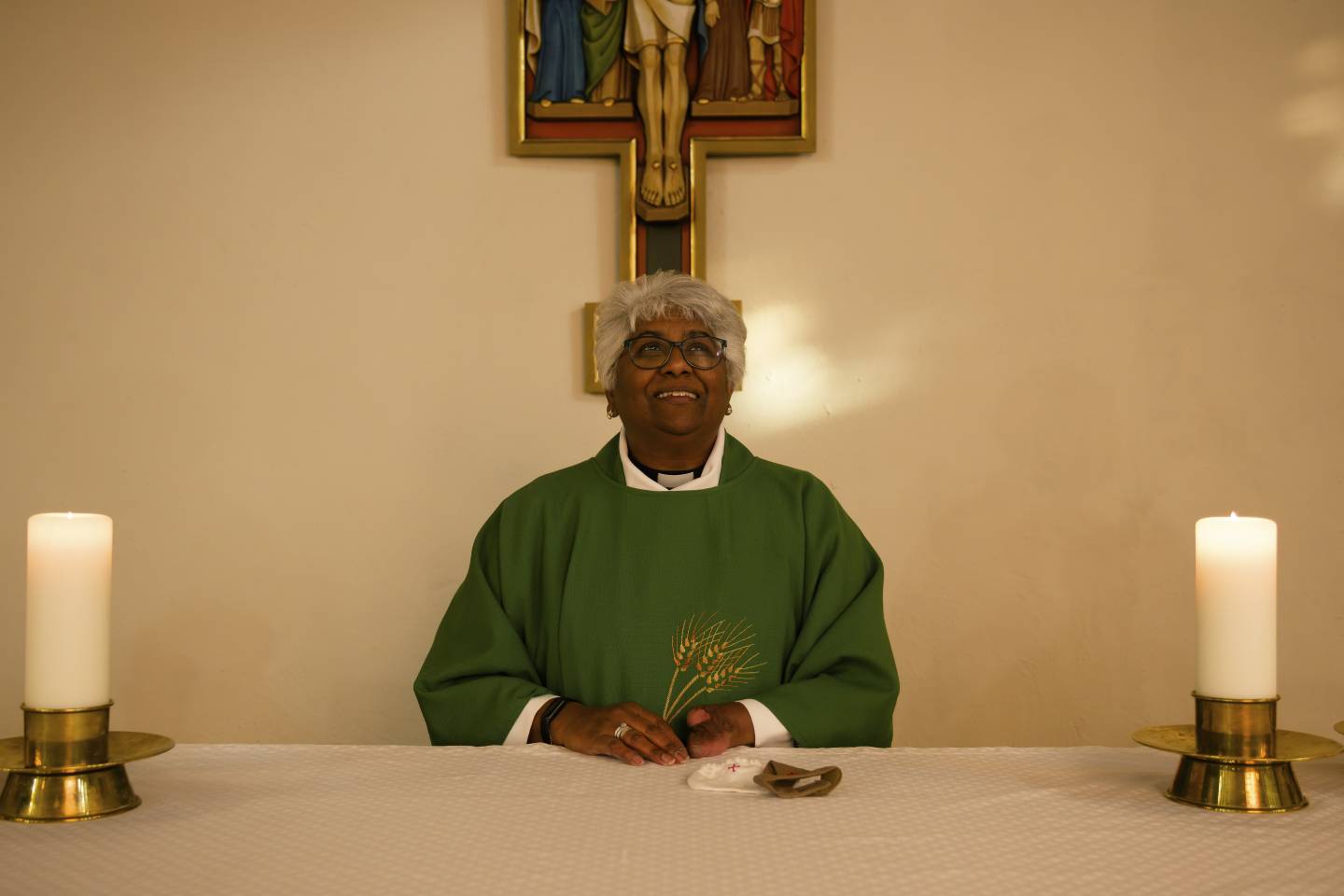
>> Called as We Are, York Minster, July 12–August 10, 2026 (then to other locations): Presented by the Church of England’s Disability Project in partnership with Art and Christianity, this exhibition consists of twelve photographic portraits by Ruth Samuels of leaders in the Church of England who are Deaf, disabled, and/or neurodivergent. “Called As We Are brings Deaf, disabled and neurodivergent people in ordained and lay ministries into focus and explores the enriching and dynamic contribution that difference brings to their personal ministries and the ministry of the church,” says Rev. John Beauchamp, a blind priest who serves as disability ministry enabler in the Diocese of London. Samuels, the photographer, herself has chronic fatigue syndrome.
Vanessa Thornborough
Rev. Vanessa Thornborough, curate at St. Edmund of Canterbury, Hayes, who has a hand difference, is one of the church leaders featured in the Disability Project exhibition Called as We Are. Photo by Ruth Samuels.

Each photograph is accompanied by insights and observations from the subject, telling us about their disability, their faith journey, and adaptations that have helped them along their way. There are also audio descriptions, as well as BSL (British Sign Language) interpretation. After its time at York Minster, the exhibition will travel to the following locations:

  • Exeter Cathedral, August 12–19, 2026
  • Liverpool Cathedral, September 14–October 4, 2026
  • Chelmsford Cathedral, October 12–November 9, 2026
  • St Alban’s Cathedral, November 10–26, 2026
  • St Giles Cripplegate, London, January 18–February 8, 2027

Read the press release here.

+++

CALL FOR ART: St. Francis Exhibition, Creo Arts Gallery, Wilmore, Kentucky: “This November, Creo Arts invites you to explore the life, legacy, and spiritual vision of St. Francis through the arts. Whether inspired by his care for creation, his radical hospitality, his pursuit of peace, or the beauty of a life fully surrendered to God, we welcome works that engage with the enduring themes of his witness. Through painting, sculpture, poetry, photography, music, and more, this exhibition celebrates a life that continues to inspire artists and believers across generations.” Submission deadline: September 13, 2026. Selection emails will be sent out by September 21. The exhibition opening is November 6, and participating artists are encouraged but not required to attend.

+++

ARTICLE: “Take me to church: Ecclesiology and Hulu’s The Bear by Beth Felker Jones: “I want a church like a fine dining restaurant with a pickup window serving Chicago style beef sandwiches.” This is how theologian Beth Felker Jones opens her latest Substack post, drawing the hit television drama The Bear into conversation with ecclesiology, the study of the church. She critiques the either/or mentality that says the church has to either devote itself to beauty, depth, liturgy, theology, and careful formation or be accessible and meet practical needs; be specialized and transporting or down-to-earth, ordinary. Why can’t it be both? She then proceeds to reflect on hospitality, family (born and found), and giftedness.

+++

SHAKER SONGS:

Saro Lynch-Thomason is a song leader and folklorist living in Asheville, North Carolina. She identifies as pagan, but a number of songs in her repertoire are from the Christian tradition, including these two from Shakerism, a near-extinct sect whose distinctive practices include celibacy, communal living, and gender equality.

>> “In Yonder’s Valley”: This is the most widely remembered of the early Shaker songs. Written at Enfield, Connecticut, by Father James Whittaker (1751–1787), the second leader of the Shaker sect after Mother Ann Lee, it draws on the paradisal imagery in the second chapter of the Song of Songs (a reference shared by two other songs I’ve recently featured!), bidding the community to enter into unity with God, each other, and the rest of creation—to “take [their] fill” of heaven on earth, living in the cosmic harmony that has been ordained from the beginning. A variation of the song has “yonder” instead of “yonder’s” and “flows” instead of “grows.”

In yonder’s valley there grows sweet union
Let us arise and take our fill
The winter’s past and the spring appears
The turtledove is in our land
In yonder’s valley there grows sweet union
Let us arise and take our fill

>> “Ode to Contentment”: This Shaker hymn has been passed down with varying attributions of authorship and places of origin, but it was most likely written by Richard Pelham (words) and Issachar Bates (music) at the North Union Shaker village in Ohio in 1835. It apostrophizes the Christian virtue of contentment, asking her to come dwell in our hearts, bringing a stabilizing peace, endurance, and bliss. Lynch-Thomason sings three of the original nine verses.

Come, contentment, lovely guest!
Reign unrivaled in my breast;
Thou alone wilt do.
Thou alone canst fill the soul,
Every passion canst control;
When the stormy billows roll,
Thou canst bear me through.

All the lordlings of the earth,
All their boasts, what is it worth?
Nothing but a show.
All the wealth that kings possess,
All their vain and gaudy dress,
All is splendid wretchedness;
Peace they never know.

Nothing on this earth below,
Naught that heaven can bestow,
Fills the soul with peace,
If contentment dwell not there.
All is dreary, dark, and bare;
She alone makes heavenly fare,
She alone is bliss.

Roundup: Kristin Asbjørnsen interprets the spirituals, photos from Skid Row, and more

SPOTIFY PLAYLIST: July 2023 (Art & Theology): This month’s Spotify mix that I put together for you all includes a Shona worship song from Zimbabwe; “Adonai Is for Me,” a song in Hebrew by Shai Sol; a Black gospel rendition of the children’s classic “Jesus Loves Me”; a new setting of the Lord’s Prayer by Jon Guerra; a composition for clarinet and piano by Jessie Montgomery, written in April 2020 to try to make peace with the sadness brought about by the pandemic-prompted quarantine orders; a country-style setting of Psalm 121 by Julie Lee; and a benediction by Bob Dylan that I heard Leslie Odom Jr. sing in concert recently—its refrain, “May you stay forever young,” is not an anti-aging wish but rather a call to childlike faith, wonder, and curiosity in perpetuity.

The playlist also includes the following two songs.

>> “Come Go with Me”: A lesser-known African American spiritual performed by the Norwegian jazz singer-songwriter Kristin Asbjørnsen, from her excellent album Wayfaring Stranger: A Spiritual Songbook. She describes the spirituals as “existential expressions of life: songs of longing, mourning, struggling, loneliness, hopefulness and joyful travelling.” This particular one is about walking that pilgrim path to heaven, a path on which Satan lays stones to obstruct our progress but which Jesus, our “bosom friend,” clears away.

>> “Love, More Love”: A short Shaker hymn that opens with a common Shaker greeting: “More love!” “Our parents above” refers, I believe, to the elders of the faith who have passed on. The hymn uses horticultural imagery to describe the qualities of communal love—something planted and grown, becoming stronger and fuller and more beautiful as it is nurtured.

Love, more love
A spirit of blessing I would be possessing
For this is the call of our parents above

We will plant it and sow it
And every day grow it
And thus we will build up an arbor of love

The Shakers are a Christian sect founded in 1747, but because celibacy is one of their tenets (and thus they cannot rely on procreation for the community’s continuation), there are only two Shakers left: Sister June and Brother Arnold, who live in Dwellinghouse, Maine. But there has long been a historical interest in Shaker religious culture and aesthetics—which is why, for example, the Enfield Shaker Singers was formed, to preserve the hymnody.

+++

INTERVIEW + PHOTOS: “Photographer Shows the Raw, Unflinching Reality of Life on Skid Row”: For the past decade, anonymous street photographer Suitcase Joe has been spending time on Skid Row in downtown Los Angeles, a neighborhood inhabited by the largest unhoused community in America. He slowly developed trust and built relationships with the people in that community, learning more about their stories, and they granted him unprecedented access to their daily lives, allowing him to capture them on camera. Hear him talk about the experience, and about misconceptions people tend to have about those experiencing homelessness, in this interview, which also includes a sampling of photos. Even though the headline hawks “Raw!” and “Unflinching!,” I was more struck by how the photographs show experiences of joy and friendship.  

Photo by Suitcase Joe
Photograph by Suitcase Joe, Skid Row, Los Angeles

To find out ways to help meet the needs of those living on Skid Row, visit https://suitcasejoefoundation.org/.

+++

POEM WITH COMMENTARY: “The Rungs” by Benjamin Gucciardi, commentary by Pádraig Ó Tuama: Each week on the Poetry Unbound podcast, Ó Tuama reads and reflects on a different contemporary poem. In this episode’s featured poem, “a social worker holds a group for teenagers at a school. They only half pay attention to him. Then something happens, and they pay attention to each other.” The poem is from Gucciardi’s latest collection, West Portal.

+++

ARTICLE: Dool-Hoff: A Dutch Maze with New Jerusalem at its Centre (1705)”: The Public Domain Review is always uncovering unique, amusing prints and other artistic and literary curiosities from centuries past. Here they look at an early eighteenth-century religious maze published in Haarlem, Netherlands, whose pathways are filled with didactic verse, some leading to dead ends but others leading to heaven at the center.

Dool-Hoff (Dutch maze)
Dool-hoff (maze), signed by the Dutch Catholic printer Claes Braau, 1705. Photo courtesy of the Rijksmuseum, Amsterdam.

+++

SONG: “Home Inside” by Valerie June, performed by the Good Shepherd Collective: This Valerie June cover is sung so gorgeously by Sowmya Somanath with Kate Gungor, Bea Gungor, Jayne Sugg, Liz Vice, and Diana Gameros, and John Arndt accompanies on piano. It premiered in Good Shepherd New York’s March 12 digital service. The song is a prayer for belonging more fully to ourselves, to God, and to this earth; its speaker asks that she might be sensitive to the divine breath in all living things, and be soothed and refreshed by that great stream of water that flows from God’s heart. (Reminds me a bit of Universal Jones’s “River”!)

Here is the original recording by Valerie June.

Advent, Day 8

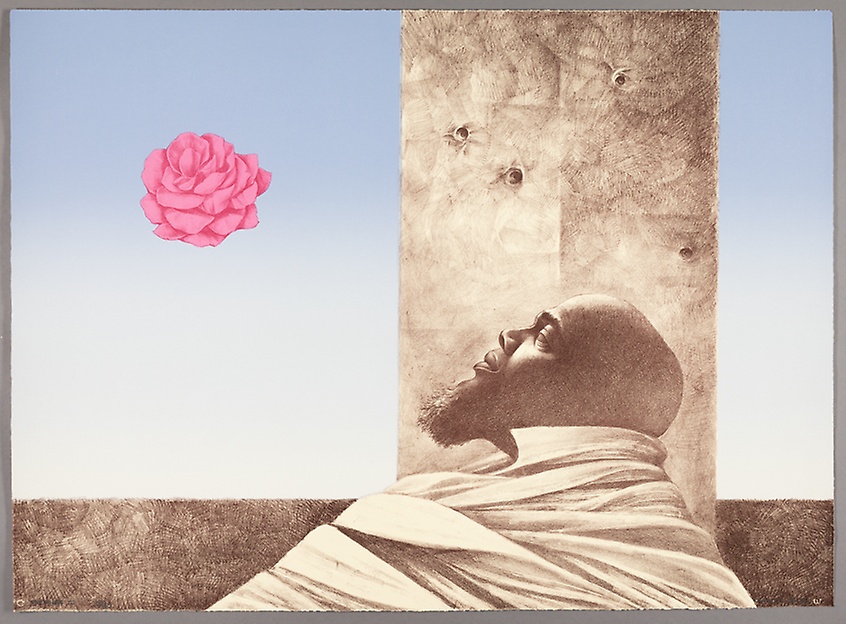
LOOK: Prophet I by Charles White

White, Charles_Prophet I
Charles White (American, 1918–1979), Prophet I, 1975. Color lithograph on white wove paper, 68.7 × 94.2 cm. Art Institute of Chicago.

Isaiah is the definitive Old Testament prophet of Advent, as he anticipates more than any other the coming of the Messiah and the renewal he will usher in. In chapter 35 he foresees deserts flowing with water and vegetative abundance: “the wilderness and the solitary place shall be glad; and the desert shall rejoice, and blossom as the rose” (v. 1).

Perhaps the modern Black artist Charles White had this scripture in mind when he created the lithograph Prophet I. It shows a robed man, who appears to be blind, gazing up at a pink rose suspended in the sky. (The blind prophet with keen inner sight is a common trope in ancient mythology.) On the cross-hatched wall he stands against are four eyes, which White said are there because the prophet sees more than the rest of us.

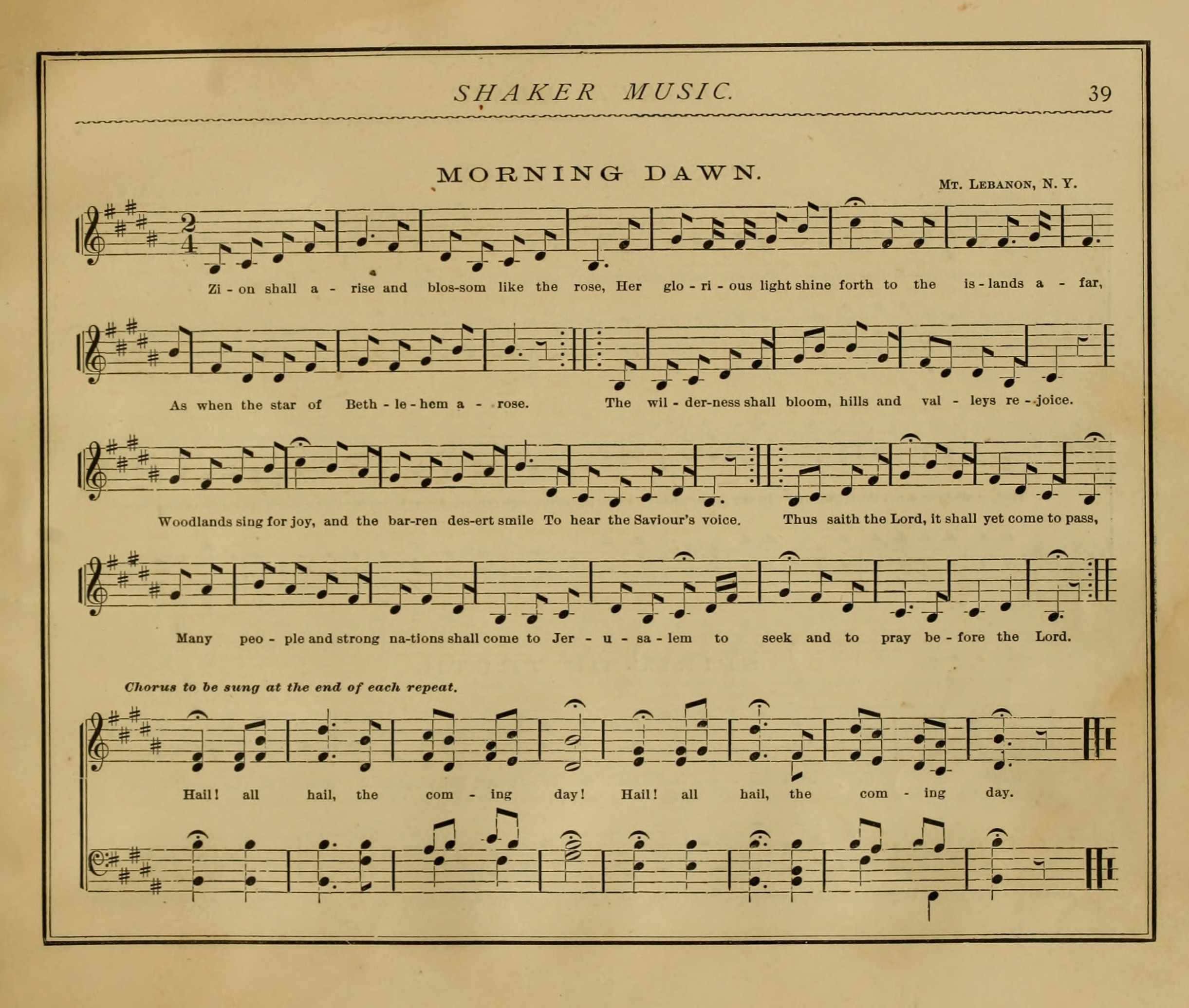
LISTEN: “Morning Dawn,” a Shaker hymn from New Lebanon, New York, 19th century | Performed by The Rose Ensemble on And Glory Shone Around: Early American Carols, Country Dances, Southern Harmony Hymns, and Shaker Spiritual Songs (2014)

Zion shall arise and blossom like the rose
Her glorious light shine forth to the islands afar
As when the Star of Bethlehem arose

Hail, all hail the coming day!

The wilderness shall bloom, hills and valleys rejoice
Woodlands sing for joy, and the barren desert smile
To hear the Savior’s voice

Hail, all hail the coming day!

Thus saith the Lord, it shall yet come to pass
Many people and strong nations shall come to Jerusalem
To seek and to pray before the Lord

Hail, all hail the coming day!

Roundup: Call for Jubilee-themed submissions; “coronasolfège for 6”; and more

NEW PLAYLIST: August 2021 (Art & Theology): This month’s thirty-song roundup opens with a 1936 recording by blues guitarist and singer Blind Roosevelt Graves and goes on to include “Amazing Grace” sung to the tune of HOUSE OF THE RISISNG SUN; “Amaholo,” a song in Luganda performed by a youth choir from Kkindu Village, Uganda (its first line is “God’s blessing can’t be blocked by the devil!”); some Joan Baez and Johnny Cash; “Pretty Home,” a Shaker hymn by Patsy Roberts Williamson, an enslaved African American woman whose freedom was purchased by the Pleasant Hill Shaker community in the early 1800s; Psalm 118:1–4 in Hebrew, set by one of the most popular contemporary singer-songwriters of Jewish religious songs, Debbie Friedman, and sung by a trio of brothers; a gospel song from one of my favorite films of 2019, Peanut Butter Falcon; and “God Yu Takem Laef Blong Mi,” a Melanesian choir rendition of “Take My Life and Let it Be” from Terrence Malick’s The Thin Red Line.

+++

CALL FOR PITCHES: Geez 63 Jubilee: “What would the biblical practice of Jubilee look like today? Geez magazine is looking for submissions that reimagine ideas of debt forgiveness, reparations, trumpets singing, and a whole lot of radical rest. Deadline for pitches: August 12.” [HT: ImageUpdate]

Creative nonfiction essays, investigative articles, “flash nonfiction” (short insights, as few as fifty words), photographs, and poems are among the forms accepted. To get you started, Geez provides a whole host of questions for pondering, as well as specific prompts, such as:

  • Rewrite Isaiah 61, “The year of the Lord’s favor,” in the context of today’s struggles for justice.
  • Take a nap. Write a poem about it.
  • Write a street liturgy for the front steps of Navient, American Educational Services, or other student loan debt collectors.
  • Explore global social movements that have employed practices of Jubilee, implicitly or explicitly.
  • Describe the sounds of a great Jubilee party.

If you want to stay apprised of what the quarterly is up to in the future, sign up for their newsletter (there’s an option to receive contributor pitch emails) and/or follow them on Facebook and Twitter.

+++

THE GESUALDO SIX:

The Gesualdo Six is an award-winning British vocal ensemble directed by Owain Park. I’ve really been enjoying all the content on their YouTube channel, which includes original performances of sacred motets, hymns, carols, chansons, and contemporary pieces—like the two below, both written specifically for the group. Be sure to check out their website for information about live concerts!

>> “The Blue Bird” by Andrew Maxfield: The composer writes, “The text [see below]—a beloved poem by Mary Elizabeth Coleridge—evokes ‘blueness’ not just in its title; every image is blue: the lake, the bird’s wings, the sky above and beneath. Far from being monochromatic, though, this poetic meditation reveals a multiplicity within the narrow spectrum we label ‘blue.’ Royal. Navy. Cobalt. Tiffany. Sky. Midnight. All of these flash, but only briefly, as our winged protagonist catches his fleeting reflection in the lake’s glassy surface. Blue, then, is the subject and substance of my musical setting. Harmonically, the piece hovers, as the bird does, in what feels to me like a cool, gentle, blue sound—little variations and reflections on the wings and water here and there, but the piece attempts to remain ‘blue in blue’ (or what Miles Davis might have called ‘Kind of Blue’) and, after not too long, disappears, as the birds shifts, glides, and vanishes. Melodically, this bird nods to another: to William Byrd, one of the great composers of the English Renaissance, whose contrapuntal inventiveness inspires me. And—I couldn’t help myself—my setting alludes to Joni Mitchell’s song ‘Blue,’ but I leave it to you to locate the reference.”

The lake lay blue below the hill.
O’er it, as I looked, there flew
Across the waters, cold and still,
A bird whose wings were palest blue.

The sky above was blue at last,
The sky beneath me blue in blue.
A moment, ere the bird had passed,
It caught his image as he flew.

>> “coronasolfège for 6” by Héloïse Werner: Super-fun and quirky!

+++

ONLINE EVENTS:Origin, an Art House Dallas program, seeks to establish a wholeness and connectedness between spiritual formation, imagination, and the arts with the ultimate intent to establish a sacred perspective on how we individually and collectively live and create. We believe that beauty shown through the arts, culture, and creation holds a powerful ability to form the way we see ourselves, the world, and our interaction with both.”

This summer’s iteration of the program consists of a series of online Thursday night talks by artists or pastors, followed by facilitated discussions. Two of these have already passed, but two are still upcoming: “Embodiment” with Guy Delcambre on August 12, and “Beauty” with Kelly Kruse on August 26. RSVP at Eventbrite.

In addition to the free events, there’s an accompanying anthology of articles, poems, visual art, scripture, and questions for prayerful reflection, which is on sale for $8.

+++

MOVIE OPENING: I’m working my way through all the Best Picture Oscar winners since the award’s inception in 1928 and have come upon 1980’s Ordinary People, Robert Redford’s directorial debut. Based on the novel by Judith Guest, it’s about the fragmentation of an upper middle-class family, the Jarretts, following the death of the eldest son, Buck, in a sailing accident and a subsequent suicide attempt by the other son, Conrad (played by Timothy Hutton).

I was really struck by its opening, which features a sacred choral version of Pachelbel’s Canon in D by Noel Goemanne. Although the film is not a religious one, the choice to open it with a prayer from the lips of Conrad, albeit one assigned by his high school choir teacher, is very fitting, as it voices the character’s longings. Throughout the film Conrad will struggle to find that peace, joy, and love he sings about in class—learning over time to assert with sincerity, in spite of grave tragedy, “Alleluia.”

The full lyrics by Goemanne are below, and you can watch a performance of the full song by the Meridian Community College Chorus and Guitar Ensemble here.

In the silence of our souls
O Lord, we contemplate Thy peace
Free from all the world’s desires
Free of fear and all anxiety

O Lord our God
Wisdom, joy, and peace and love divine
O Lord our God
Glory, praise, and honor be always thine

O dearest Lord, come to us now
Have mercy on us, stay with us and protect us all

O Lord our God
Wisdom, truth, and love and peace and joy
O Lord our King
Thy praises we will always sing

Alleluia

Give Good Gifts (Artful Devotion)

Mary Antoinette Lorania Pike and Sarah Adeline Pike
Joseph H. Davis (American, 1811–1865), Mary Antoinette Lorania Pike and Sarah Adeline Pike, 1835. Watercolor, pencil, and ink on paper, 8 1/2 × 11 in. American Folk Art Museum, New York. Photo: John Bigelow Taylor.

Let love be without hypocrisy. Detest evil; cling to what is good. Love one another deeply as brothers and sisters. Outdo one another in showing honor. Do not lack diligence in zeal; be fervent in the Spirit; serve the Lord. Rejoice in hope; be patient in affliction; be persistent in prayer. Share with the saints in their needs; pursue hospitality.

Bless those who persecute you; bless and do not curse. Rejoice with those who rejoice; weep with those who weep. Live in harmony with one another. Do not be proud; instead, associate with the humble. Do not be wise in your own estimation. Do not repay anyone evil for evil. Give careful thought to do what is honorable in everyone’s eyes. If possible, as far as it depends on you, live at peace with everyone.

—Romans 12:9–18 CEB

+++

SONG: “Give Good Gifts One to Another” by Sister Martha Jane Anderson, 1893 | Performed by The Rose Ensemble, on And Glory Shone Around: Early American Carols, Country Dances, Southern Harmony Hymns, and Shaker Spiritual Songs (2014)

Give good gifts one to another,
Peace, joy, and comfort gladly bestow;
Harbor no ill ’gainst sister or brother,
Smooth life’s journey as you onward go.

Broad as the sunshine, free as the showers,
So shed an influence, blessing to prove;
Give for the noblest of efforts your pow’rs;
Blest and be blest, is the law of love.

+++

Born in Limington, Maine, to a farming family, Joseph H. Davis was an itinerant artist who created small, inexpensive portraits of New England citizens from 1832 to 1837. He wandered from town to town through the border region between Maine and New Hampshire with his watercolors, paper, pencils, and brushes, initially seeking clients among his church connections. (He was a member of the Freewill Baptist Church.) His reputation spread by word of mouth, and over a five-year period he executed at least 150 watercolor portraits, most often posing together in profile a husband and wife or, as in the above painting, siblings, either in parlor settings or outdoors. The family pets are sometimes included too. Along the bottom borders he recorded the sitters’ names and ages.

After Davis’s daughter was born, he gave up painting and became involved in land speculation, manufacturing, and inventing.

Mary Antoinette Lorania Pike and Sarah Adeline Pike was part of the exhibition A Piece of Yourself: Gift Giving in Self-Taught Art, which ran from July 22, 2019, to January 10, 2020, at the American Folk Art Museum in New York City. Other pieces included quilts, handmade valentines and toys, Shaker gift drawings, a tin top hat (a tenth anniversary present), and a delicate, lacelike papercut made in 1830 by an inmate at Walnut Street Prison in Pennsylvania for a prison guard’s daughter.


This post belongs to the weekly series Artful Devotion. If you can’t view the music player in your email or RSS reader, try opening the post in your browser.

To view all the Revised Common Lectionary scripture readings for Proper 17, cycle A, click here.