Then the angel showed me the river of the water of life, bright as crystal, flowing from the throne of God and of the Lamb through the middle of the street of the city. On either side of the river is the tree of life with its twelve kinds of fruit, producing its fruit each month, and the leaves of the tree are for the healing of the nations.
—Revelation 22:1–2
LOOK: Tree of Life by Kateryna Shadrina
Kateryna Shadrina (Ukrainian, 1995–), Tree of Life, 2022. Acrylic on gessoed wood, 60 × 60 cm.
For the healing of the nations, God, we pray with one accord; for a just and equal sharing of the things that earth affords; to a life of love in action help us rise and pledge our word.
Lead us forward into freedom; from despair your world release, that, redeemed from war and hatred, all may come and go in peace. Show us how through care and goodness fear will die and hope increase.
All that kills abundant living, let it from the earth be banned; pride of status, race, or schooling, dogmas that obscure your plan. In our common quest for justice may we hallow life’s brief span.
You, Creator God, have written your great name on humankind; for our growing in your likeness bring the life of Christ to mind, that by our response and service earth its destiny may find.
I came across the following strange image in a book on Christian art at the British Museum, where it appears without any explanation other than that it is part of a group of popular religious prints with Spanish texts that were made in Europe for export to the Spanish-speaking South American market.
Cristo de la Encina (Christ of the Oak), 1750–60. Etching, 35.5 × 23.6 cm. Published by André Basset, Paris. Collection of the British Museum, London.
I was intrigued! I had seen art images before where Jesus is crucified on a living tree, his body sometimes melding into the trunk and branches. The motif of the cross as tree of life connects the beginning and the end of time, Eden and the eschaton, placing Christ’s act of self-giving at the crux and communicating its generative impact. But in this particular etching published in Paris, who is the Indigenous man at the base? The caption suggests that the image illustrates a miraculous appearance of Christ (or at least his form) in Latin America—so what’s the story behind it?
The answer is found in the Histórica relación del reyno de Chile (Historical Account of the Kingdom of Chile), a book by the Chilean Jesuit chronicler Alonso de Ovalle (1601–1651), published in Rome in 1646. Ovalle was serving in Rome as procurator for his order and wanted to teach Europeans about his homeland. He was glad to relate a supernatural occurrence, from just a decade prior, of Christ manifesting himself in nature, the subject of chapter 23, titled “En que se da fin a esta materia y se trata el prodigioso árbol que en forma de crucifixo nació en na de las montañas de Chile” (In which this subject is concluded and the prodigious tree that grew in the form of a crucifix in one of the mountains of Chile is discussed).
In 1636, Ovalle writes, an “Indian” in the valley of Limache near Valparaiso in Chile—he would have been Mapuche, though the artist of the Paris print shows him as a Tupi man of Brazil—went to cut down some trees for construction purposes. After striking an ax blow to one, he was astonished to realize that the tree was in the shape of a cross with a man on it. He immediately stopped hacking. The artist shows the ax flying out of the woodcutter’s hands as he throws them up in amazement. The caption reads, “El Santisimo Christo de la Ensina que se aparecio en el Campo de alcantara” (The Most Holy Christ of the Oak that appeared in the Alcántara countryside).
A variation of the legend, according to the blog El Señor de Renca, El Señor de los Milagros by Alejandro Caggiano, says the Mapuche woodcutter was blind, and that when he first struck the tree trunk, a few drops of sap got into his eyes, restoring his sight. It’s then that he saw Christ’s image.
Ovalle does not say whether the man converted to Christianity, but regardless, Ovalle considered the appearance of Christ’s form in the native plant life of Chile as a blessing and an encouragement—Christ taking root in the Americas. He says it should cause the reader to “admire the divine wisdom of our God and his most high providence in the means and motives that he has given us even in natural and insensible things for the confirmation of our faith and the increase of the piety and devotion of his faithful.”
Word spread of the miraculous tree, and pilgrims flocked to see it. Soon, as Orvalle recounts, a noblewoman had the tree uprooted and built a church nearby to house it, placing it behind the altar. That’s the building in the right background of the Paris print.
Sometime after Ovalle’s publication, the Jesuits relocated the tree to Renca, San Luis, in Argentina, just a few miles from Chile’s capital, and veneration continued. A fire destroyed most of the tree in 1729, but its charred remains were incorporated into a new wooden crucifix that is still in Renca. “The Lord of Renca, as the crucifix is now known, is a firm part of the regional religious folklore,” writes Georg T. A. Krizmanics, “and in a song called ‘Zamba del Señor de Renca,’ devoted parishioners and pilgrims cheerfully haunt the Mapuche soul by chanting ‘Christ, you were born Araucanian.’”
The Paris print in the collection of the British Museum is not the first artistic depiction of Christ of the Oak; that credit goes to an anonymous engraving published with Ovalle’s 1646 textual account of the miracle. No Indigenous person appears in this initial version—just the gnarled corpus of Christ crucified, embedded in a tree.
The Limache Cross, engraving from Alonso de Ovalle’s Histórica relación del reyno de Chile (1646)
The caption reads, Vera effigies cuiusdam arboris quae in hunc modum et figuram crucis et crucifixi inventa est in Regno Chilensi in America, ubi in Valle Limache colitur magna populi devotione ab anno Domini 1634 (“A true image of a certain tree that was found in this manner in the shape of a cross and a crucifix in the Kingdom of Chile in America, where it has been venerated in the Valle Limache with great devotion by the people since the year 1634”).
Here are some other, later examples of the subject, which attained popularity in Spain.
Cristo de la Encina, 1753. Oil on canvas. Capilla de San Juan Bautista (Chapel of St. John the Baptist), Iglesia de San Mateo, Cáceres, Spain. The next photo shows this painting in situ.Cristo de la Encina, 18th century. Oil on canvas. San Vicente de Alcántara, Badajoz, Spain. Photo: Isidro Álvarez / Tecnigraf.
I’m delighted by the parrots perching on the branches! The tree of crucifixion was a site of both death and life. Christ endured its agony so that we, like those birds that are so at home, could find welcome and rest.
El Señor de la Ensinia se apareció en Alcántara (The Lord of the Oak Appeared in Alcántara), late 18th century. Oil on paper. Private collection, Medellín, Colombia. Photo: Gustavo Adolfo Vives Mejía / PESSCA Archive.
One late eighteenth-century painting of Christ of the Oak shows, opposite the woodcutter, a kneeling woman in a black robe. The inscription identifies her as Doña Josefa Posadas. It looks to me like she is holding up a milagro (literally “miracle”), also known as an ex-voto, a small tinplate charm shaped like a body part that is or was in need of healing. Historically in many Hispano-Catholic communities, milagros are pinned to crosses and wooden statues of Christ and the saints, or are hung with ribbons from altars and shrines, to petition the Divine for a cure from a physical ailment or to offer thanks for healing received. Given the shape of Doña Josefa’s milagro, she likely suffered from a heart condition.
Or, it’s possible that it’s not the literal organ that’s referred to in what she holds, but rather the heart as the center of the emotions, will, understanding, and soul, which she offers to Christ.
Cristo de la Encina, 18th century. Wood, polychrome. Santuario de Nuestra Señora del Encinar (Sanctuary of Our Lady of the Oak), Ceclavín, Cáceres, Spain.Cristo de la Encina, 19th century. Wood, polychrome, 79 × 52 × 28 cm. Museo Monseñor Juan Sinforiano Bogarín, Asunción, Paraguay. Photo: Laura Mandelik.Cristo de la Encina, 18th century. Oil on canvas. Ermita de Nuestra Señora de la Hermosa, Fuente de Cantos, Badajoz, Spain.
This last example is interesting: in a revision of characters, it shows a Muslim (right) and a Jew whose leg shackles are falling off at the sight of Christ. The painting seems to be an aspirational extension of the Limache legend—a prayer that Christ would reveal himself not only to Indigenous populations but also to those of other religious backgrounds.
I share these images not to affirm or disaffirm the appearance of Christ of the Oak, and not to comment on the colonizing undertones of such images or the cult that sprung up around them, but instead merely to inform you of an iconography that I found curious and compelling and wanted to find out more about. So now if you ever come across an image of Christ crucified on a tree with his bloody knees poking through the bark and an Indigenous, ax-wielding man reacting with surprise, you’ll know a bit about its context!
(This post is optimized for viewing in a web browser on a computer screen.)
Pelican in Her Piety, 1880–81. Mosaic, Palatine Chapel, Aachen, Germany.
The pelican was one of the most popular animal symbols for Christ in the Middle Ages, appearing widely in art and literature. The association was first made in the Physiologus, a Late Antique Greek compilation of moralized animal lore written (probably around the year 200) in Alexandria and intended for Christian edification. Its anonymous author says the mother pelican is such “an exceeding lover of its young” that, to revive them from death, she pierces her breast with her beak and spills her blood over them.
The church sometimes refers to this allegorical bird as the vulning pelican (from the Latin vulnerō, “to wound”), or the Pelican in Her Piety.
The Christological parallel is obvious: Jesus submitted to being pierced with nails and spear on the cross, his heart’s blood spilt, in order to give life to his children. But the Physiologus cites a more obscure biblical passage: “ὡμοιώθην πελεκᾶνι ἐρημικῷ” (Ps. 101:7a LXX). In the Latin Vulgate, that’s “Similis factus sum pelicano solitudinis,” and in English, “I am like a pelican of the wilderness” (Ps. 102:6a KJV). The Physiologus author puts these words of the psalmist, which express a sense of isolation, into the mouth of Christ, lonely in his messianic ministry and in his passion.
Detail from the 13th-century Redemption Window at Chartres Cathedral in France, showing a pelican (a figure of Christ) feeding her young with her own blood as King David looks on, holding a scroll with the inscription “Similis factus sum pellicamo,” from Psalm 102:6. Photo: Adrian Barlow. There are similar glass panels at Rouen and Le Mans.
Not all parts of the pelican legend recounted in the Physiologus map easily onto Christ’s love for his church. The chicks are dead because they kept striking their parents in the face, and their parents, striking back, killed them. The parents feel bad, and it’s after three days of mourning that mama bird breaks herself open to bring back her little ones.
In his commentary on Psalm 102, Augustine writes, “Let us not pass over what is said, or even read, of this bird, that is, the pelican.” Standing over her dead chicks, “the mother wounds herself deeply, and pours forth her blood over her young, bathed in which they recover life. This may be true, it may be false: yet if it be true, see how it agrees with him, who gave us life by his blood. It agrees with him in that the mother’s flesh recalls to life her young with her blood; it agrees well. For he calls himself a hen brooding over her young. If, then, it be so truly, this bird does closely resemble the flesh of Christ, by whose blood we have been called to life.”
Augustine then goes on to explain how the mother’s killing her young relates to God metaphorically killing our old self so that he can then raise us up to new life in Christ; he likens conversion to death and rebirth. Medieval theologians loved to stretch allegories to the extreme!
A more streamlined version of the pelican legend that got passed down omits the filicide, focusing simply on the bird’s animating sacrifice—on how her shed blood raises the dead to life. And after the Feast of Corpus Christi was established in 1311, a variant emerged that said the pelican feeds her young with her blood when no other food would satisfy, a picture that resonated with the increased attention on the Eucharist in the Latin West.
The Physiologus, which contains the earliest known appearance of the pelican legend, was translated from Greek into Latin sometime between the fourth and early sixth centuries, and from there into Ethiopic, Armenian, Syriac, and a multitude of European and Middle Eastern vernaculars. By the end of the twelfth century its legends were absorbed into the bestiary, a genre of popular nature-book in keeping with the encyclopedic taste of the High Middle Ages.
In Art
The vulning pelican has appeared in all kinds of visual media from late antiquity through the medieval and premodern eras and on into the twentieth and twenty-first centuries, including illuminated prayerbooks, missals, bestiaries (as in the tiled gallery below; hover to view captions, or click to enter carousel); panel paintings, frescoes; mosaics; stained glass windows; tapestries; lecterns, roof bosses, bench ends, misericords, corbels; and a range of liturgical objects and vestments.
From a miscellany containing an illustrated copy of Hugh of Fouilloy’s De avibus, Italy, late 13th or early 14th century. Biblioteca Statale di Cremona, MS 199, fol. 11v. https://bestiary.ca/beasts/beastgallery244.htm
From an illuminated copy of Der Naturen Bloeme (The Flower of Nature) by Jacob van Maerlant, Flanders, ca. 1350. The Hague, Koninklijke Bibliotheek, KA 16, fol. 96vb. https://manuscripts.kb.nl/show/images/KA+16/page/26
Pelican in Her Piety, 1331–32. Stained glass, Lady Chapel, St Michael and All Angels, Felton, Northumberland, England. Photo: Ann Chapman.Pelicanin Her Piety, 15th century. Stained glass, All Saints Church, Oaksey, England. Photo: Rex Harris.Pelican in Her Piety, All Saints Church, Bishop Burton, East Riding of Yorkshire, EnglandPelican in Her Piety, 1476. Fresco, Bollerup Church, Sweden. Photo: Stig Alenas.Painted choir vault, 15th century, Mariakerk (St. Mary’s Church), ‘t Zandt, Groningen, Netherlands. Photo: Ana Sudani.Oak wood roof boss, ca. 1470–80, St Mary the Virgin, Shrewsbury, Shropshire, England. Photo: Ana Sudani.Bench end by Henry Ringham, 19th century, St Margaret, Ipswich, Suffolk, England. Photo: Simon Knott.Carved oak misericord from Sheffield Cathedral, England, 1920Sculpture with Pelicans, Switzerland, 16th century. Painted linden and willow wood, 29.5 × 27 × 26 cm. Landesmuseum (Swiss National Museum), Zurich, LM-3972.Triptych with the Virgin and Child (detail), Cologne or Lower Rhine, ca. 1425–30. Tempera and gold leaf on oak wood. LVR-LandesMuseum Bonn, Germany. [view full triptych]Plate with the Pelican in Her Piety, Dinant or Malines, Netherlands, 15th century. Brass, diameter 19 7/8 in. Metropolitan Museum of Art, New York. It’s unknown whether this plate was used domestically or liturgically (i.e., for the Eucharist).Tapestry with a Pelican Feeding Her Young (detail), Germany (Lüne Abbey), ca. 1500. Linen and wool, 65 × 233 cm. Kloster Lüne Museum für sakrale Textilkunst, Lüneburg, Germany, Inv. LUEKO Ha 010.05. Source: Book of Beasts: The Bestiary in the Medieval World, cat. 41bCushion cover (detail), England, ca. 1640–70. Wool and silk embroidery on linen, 55.9 × 107.5 cm. Victoria and Albert Museum, London. The primary scenes are the Hospitality of Abraham and the Sacrifice of Isaac. [view full cushion]Pelican in Her Piety, Russia, early 19th centuryPelican in Her Piety, 1907–9. Relief carving from the exterior of Holy Trinity Church, St Andrews, Scotland. Photo: Joy Marie Clarkson.Pelican of Mercy, 1956. Stone relief carving, exterior of Blessed Sacrament Catholic Church, Sioux City, Iowa.
The bird doesn’t always look like an actual pelican, though. It could be that some of the artists had never seen one, although the Dalmatian pelican, which has the long bill and the expandable throat pouch that we most associate with the genus, had been widespread across Europe since ancient times. More likely, the imaginative rendering of the pelican in Christian art derives from the account of the bird in book 12 (“De animalibus”) of the widely influential compendium Etymologies by the Spanish archbishop Isidore of Seville, written around 623, which repeats the popular legend and adds that the pelican lives in Egypt. An exotic bird therefore required exotic treatment.
Neither does the behavior the Physiologus ascribes to pelicans have any basis in natural fact. It’s possible the legend arose from the observation that the pelican sometimes bends its beak into its chest, which may look like it’s piercing it, and that some pelicans have a reddish tinge on their breast plumage and/or a red tip on their beak. However, zoological accuracy was not the point; the point was to convey theological truth.
In The Bestiary of Christ, Louis Charbonneau-Lassay says the pelican first started appearing as a Christian symbol on clay oil lamps in ancient Carthage (present-day Tunisia), citing “L. Delattre, Carthage,Symboles eucharistiques, p. 91”—the French archaeologist Alfred Louis Delattre (1850–1932). But I’ve not been able to track down the cited text or find any such examples. If you can point me to photographs, please do!
In the “Ējmiacin [Etchmiadzin] Codex” entry in The Eerdmans Encyclopedia of Early Christian Art and Archaeology, Paul Corbey Finney identifies the border illustrations in that Armenian Gospel book’s Baptism of Christ miniature from ca. 600 as depicting a pink-bodied pelican spreading its blue wings and pecking its breast while standing in a bejeweled chalice. The figure is repeated ten times.
Pelican detail from The Baptism of Christ in the Codex Etchmiadzin, an Armenian Gospel book. Yerevan, Mesrop Mashtots Institute of Ancient Manuscripts (Matenadaran), Cod. 2374, fol. 229v. The image is dated to ca. 600, but it was added to a 10th-century manuscript.
Finney mentions that a vulning pelican also appears in the Rabbula Gospels from sixth-century Syria. I think he’s referring to the bird at the top of the canon tables on folio 5a, which also shows the prophets Joel and Hosea and the Wedding at Cana. The iconography is far less obvious here.
One illuminated manuscript page I love that makes use of the pelican symbol comes from the late Flemish Boussu Hours, a prayerbook made for Isabelle de Lalaing, probably after the death of her husband Pierre de Hennin, lord of Boussu.
Master of Antoine Rolin (Flemish, active 1490–1520), Le pélican, symbole du Christ (Pelican, symbol of Christ), from the Boussu Hours, Cambrai, France, ca. 1490–95. Paris, Bibliothèque de l’Arsenal, Ms 1185 réserve, fol. 187r.
Appearing opposite a full-page miniature of Christ in Gethsemane, folio 187r opens the Hours of the Passion prayer cycle:
V: Domine labia mea aperies. R: Et os meum annunciabit laudem tuam. V: Deus in adiutorium meum intende. R: Domine ad adiuvandum me festina. Gloria Patri, et Filio: et Spiritui sancto. Sicut erat in principio, et nunc, et semper: et in saecula saeculorum.
English translation:
V: O Lord, open my lips, R: And my mouth shall declare thy praise. V: Incline unto my aid, O God. R: O Lord, make haste to help me. Glory be to the Father, and to the Son, and to the Holy Ghost, as it was in the beginning, is now, and ever shall be: world without end.
The historiated initial “D” shows Christ before Pilate, and in the margin a pelican exudes her lifeblood into the mouths of her two chicks, a scene set against a gold background likewise dripping with blood—as well as sweat and tears. It’s “almost as if the gold margin were an expanded microcosm of the bird’s broken breast,” writes Katharine Davidson Bekker in her essay “Those Who Weep: Tears, Eyes, and Blood in the Boussu Hours.” Bekker further notes that “the pansy flower in the margin, the name of which references the French penser (‘to think’), . . . encourages the reader to think deeply about the images on the page.”
Another remarkable appearance of the pelican in medieval manuscript illumination is in the Holkham Bible Picture Book from fourteenth-century England—remarkable because it appears not in a passion cycle, as was typical, but in a creation cycle!
The Tree of Knowledge, from the Holkham Bible Picture Book, southeastern England, ca. 1327–35. British Library, Add MS 47682, fol. 3v.
In the garden of Eden, God the Creator, portrayed here as Christ, instructs Adam and Eve that they may freely eat of any tree except the tree of the knowledge of good and evil, which he points to with one hand and with the other wags his finger in a forbidding manner. Various birds perch atop the adjacent trees, but at the apex of this fateful one at the center is the vulning pelican, foreshadowing the sacrifice of Christ that will be required for humanity to reenter Paradise after the fall.
Compare this image to the diagrammatic one on folio 125v of the De Lisle Psalter, which was inspired by Bonaventure’s meditational treatise the Lignum vitae. It shows a pelican nesting atop the tree of life on which Christ is crucified, wounding herself to feed her offspring with her blood:
Tree of Life, from the De Lisle Psalter, England, 1310–39. London, British Library, Arundel MS 83, fol. 125v.
The Latin inscription above it in red reads, Pellicanus dicor, pro pullis scindo mihi cor (“I am called a pelican, because I tear open my heart for my chicks”). The twelve branches contain texts relating to Christ’s humanity, passion, and glorification, while the surrounding panels contain Old Testament witnesses.
The Crucifixion is the narrative context in which the vulning pelican most often appears in art, reinforcing the notion of Christ’s self-emptying sacrifice. It was especially popular in proto- and early Renaissance panel paintings from Italy—which the gallery below reflects, in addition to featuring a few other examples from France, Greece, and Armenia.
Fra Angelico, Christ on the Cross, the Virgin, Saint John the Evangelist, and Cardinal Torquemada (detail), ca. 1453–54. Harvard Art Museums / Fogg Museum, Cambridge, Massachusetts. Photo: Victoria Emily Jones [view full painting]
In the Simone di Filippo Benvenuti example above (third row, left), notice the little winged dragon fleeing the pelicans’ nest as the mother pelican undoes the harm he has inflicted. A similar detail can be found in the Crucifixion fresco from the altar wall of the Oratory of St. John the Baptist in Urbino, which shows a snake slithering away from the perishing chicks, who are brought back to life by their intervening mother:
Lorenzo Salimbeni (Italian, 1374–ca. 1418) and Jacopo Salimbeni (Italian, ca. 1370/80–after 1426), Crucifixion (detail), ca. 1416. Fresco, Oratorio di San Giovanni Battista (Oratory of St. John the Baptist), Urbino, Italy.
The snake motif references a version of the pelican legend found in De natura rerum (On the Nature of Things) by the Flemish Dominican friar Thomas of Cantimpré (ca. 1200–1272) and the slightly later De animalibus (On Animals) by the German Dominican friar Albertus Magnus (ca. 1200–1280). According to these two works, when the mother pelican leaves her nest to find food for her fledglings, she returns to find them dead from the bite of an ambushing snake. She then tears her own flesh to revive them with her blood, which is full of healing properties.
One of the most unique visual treatments of the vulning pelican that I found is a painting by the Dutch Renaissance artist Hieronymus Bosch. Rendered in grisaille (gray monochrome), his pelican appears in the center of a ring depicting scenes from the passion of Christ. It’s painted on the reverse of a panel that shows John the Evangelist in exile on Patmos, penning the book of Revelation.
Hieronymus Bosch (Netherlandish, ca. 1450–1516), Scenes from the Passion of Christ (reverse of John on Patmos), ca. 1500. Oil on panel in grisaille, 62.8 × 43.2 cm. Staatliche Museen zu Berlin, Gemäldegalerie.
Staged around mountain crags, the passion cycle begins on the right with Jesus praying in Gethsemane and continues clockwise with the Arrest of Christ, Christ before Pilate, the Flagellation, the Crowning with Thorns, the Carrying of the Cross, the Crucifixion, and the Entombment.
Outside this ring of scenes is a darkness populated by shadowy demons:
But the inner disc, the focal point of the composition, contains the promise of redemption. Emerging from the still waters of a vast postdiluvian landscape is a hillock with a hollow that houses a burning fire. On the summit, a large mother bird spreads her protective wings over her brood, inclining her head toward her chest—an iconography we recognize as the vulning pelican, symbolic of the deep, saving love God embodied on the cross.
As we view this painting, we progress from the outer darkness with its infernal powers, to the growing light actualized by the events of Maundy Thursday and Good Friday, and finally to the brilliant center with its red flame—which, other than two dim, flickering torches in Gethsemane, contains the sole bit of color in the whole painting. Images of the Sacred Heart of Jesus, which would gain prominence in the seventeenth century, feature a flame, representing Christ’s ardent love burning bright. And that’s what we have here.
Red is also the color of blood. I’m reminded of Robert Southwell’s poem “Christ’s Bloody Sweat,” which combines imagery of the pelican and the self-immolating but ultimately indestructible phoenix, marveling at “how bleedeth burning love.” (I’ll explore a few more poems about the pelican in the next section.)
As John writes in the wonderful prologue to his Gospel, “The light shines in the darkness, and the darkness did not overtake it” (John 1:5).
In Bosch’s painting, the Christbrand bursts, like the pelican’s split side. The flame of redemption is lit, like a lighthouse, calling us home into the love of God.
Another especially compelling art object that draws on the pelican legend is a silver-plated tabernacle monstrance from Portuguese Goa in southwestern India.
Tabernacle monstrance made in Goa, India, 17th century. Silver on wood, glass, 142 × 72 cm, globe 66 cm. Museum of Christian Art, Convent of Santa Monica, Old Goa, India.
In the Roman Catholic Church, a tabernacle is a container in which the consecrated hosts (small unleavened wafers of bread) of the Eucharist are stored as part of the “reserved sacrament” rite, and a monstrance is a vessel that displays the consecrated host on the altar and in procession. This object combines both into one—the spherical base serving as the tabernacle, with access gained through an opening at the back, and the bird’s breast bearing a transparent aperture surrounded by a golden sunburst halo, through which the host can be viewed. The body of Christ, broken for you.
In researching this essay, I found that the pelican is a subject that recurs (so charmingly!) in the folk art of eighteenth- and nineteenth-century Pennsylvania Germans:
A Pelican in Its Piety, Bucks County or Montgomery County, Pennsylvania, ca. 1800. Watercolor and ink on laid paper, 8.9 × 8.3 cm. Promised gift of Joan and Victor Johnson to the Philadelphia Museum of Art.David Kulp (American, 1777–1834), Pelican in Its Piety, Bucks County, Pennsylvania, ca. 1810. Watercolor and ink on wove paper, 18.6 × 12.2 cm. Free Library of Philadelphia.Pelican, Pennsylvania, ca. 1850. Watercolor and ink on wove paper, 31.6 × 25.4 cm. Free Library of Philadelphia.A Pelican in Its Piety, Pennsylvania, ca. 1825. Watercolor and ink on wove paper, 24.1 × 19.1 cm. Promised gift of Joan and Victor Johnson to the Philadelphia Museum of Art.
From the Victorian era, I’m especially fond of the stained glass pelican design by the Pre-Raphaelite artist Edward Burne-Jones, fabricated by Morris & Co. to serve as part of the East Window of St Martin’s Church, Brampton, in Cumbria. Burne-Jones drew his design in 1880, and after the window was completed the following year, he returned to the drawing out of personal fondness, embellishing it with colored chalks, and gold for the blood drops, thus developing it into a more substantial work.
Edward Burne-Jones (British, 1833–1898) and Morris & Co., Pelican on Nest (detail), 1880. East Window, St Martin, Brampton, Cumbria, England. Photo: Dave Webster. [view full window]Edward Burne-Jones (British, 1833–1898), Pelican in Her Piety, 1880–81. Pencil, colored chalk, and gold on paper, 172.7 × 57.3 cm. William Morris Gallery, London.
Contemporary artists have also turned to the subject of the vulning pelican, especially the Ukrainian Catholic women iconographers of Lviv:
Natalya Rusetska (Ukrainian, 1984–), Pelican, 2017. Egg tempera on gessoed wood, 19 × 15 cm.Natalya Rusetska (Ukrainian, 1984–), Jesus the Grapevine and the Last Supper, 2021. Egg tempera on gessoed wood, 30 × 24 cm.Kateryna Kuziv (Ukrainian, 1993–), Pelican, 2021. Egg tempera on gessoed wood, 30 × 30 cm.Kateryna Kuziv (Ukrainian, 1993–), Crucifixion, 2022. Egg tempera on gessoed wood, 65 × 49 cm.Ulyana Tomkevych (Ukrainian, 1981–), Pelican, 2021. Egg tempera on gessoed wood, diameter 30 cm.Olya Kravchenko (Ukrainian, 1985–), Sacrifice and Victory, 2022. Tempera and silver leaf on gessoed wood, 40 × 40 cm.
Addendum, 4/8/25: Shortly after publishing this, a reader reminded me of Josh Tiessen’s painting All Creatures Lament from his Vanitas and Viriditas series, which shows an American white pelican protecting her chicks in the face of another oil spill and the accumulation of fishing-related plastic waste. Tiessen, an artist of faith, directs the symbolism of the pelican toward a call for wildlife conservation. (I previously featured Tiessen’s work here.)
Josh Tiessen (Canadian, 1995–), All Creatures Lament, 2023. Oil on braced Baltic birch, diameter 26 inches.
In Poetry and Song
Probably the most universally famous poetic treatment of the pelican as an emblem of Christ is the eucharistic hymn “Adoro te devote” (Hidden God, Devoutly I Adore Thee). Written around 1260 by Thomas Aquinas, it is one of the most beautiful medieval poems in Latin. Aquinas did not originally write it for the liturgy, but it was added to the Roman Missal in 1570 and since then has been used in the Catholic Mass. The penultimate stanza reads:
Pie pelicane, Jesu Domine,
Me immundum munda tuo sanguine,
Cujus una stilla salvum facere
Totum mundum quit ab omni scelere.
Like what tender tales tell of the Pelican,
Bathe me, Jesus Lord, in what thy bosom ran—
Blood that but one drop of has the pow’r to win
All the world forgiveness of its world of sin.

Trans. Gerard Manley Hopkins
Here’s a great video of the hymn put out by the Fundación Canto Católico, set to a Benedictine plainsong melody from the thirteenth century, as has become standard. Our pelican passage appears at the 4:10 mark. The subtitles are in Spanish, but you can turn on CC for English.
(If, like me, you’re wondering what in the world the video’s images are from, an explanatory note in the YouTube comments section explains: they are from the Cuasimodo festival in Chile, celebrated the second Sunday of Easter. The festival has nothing to do with Victor Hugo’s famous hunchback but rather is about bringing Communion to the sick and elderly who were unable to leave their residences to participate in the sacrament during Holy Week. [The Spanish Cuasimodo comes from the Latin Quasimodo, from the incipit of the day’s introit based on 1 Peter 2:2: “Quasi modo géniti infántes . . . ,” or “As newborn babes . . .”] Traditionally for this task, priests were escorted by horsemen, who showed them the route and protected them from assaults.)
The vulning pelican also appears in the liturgy of the Eastern Orthodox Church, whose members sing at Matins on Good Friday evening, “Like a pelican wounding her breast, Thou, O Word, hast made Thy mortal children to live, for Thou hast shed upon them life-giving streams.”
Dante Alighieri, the great medieval Italian writer, calls Christ “nostro Pelicano” (our Pelican) in canto 25 of his Paradiso, the third book in his Divine Comedy trilogy of extended narrative poems.
The Christ-pelican appears, too, in English poetry from the late Middle Ages onward. One Middle English poem found in a prayerbook from ca. 1460 reads:
The pellicane his bloode dothe blede
Therwith his birdis for to fede.
It figureth that God with his bloode
Us fede hanging on the rode,
Whane he us brought oute of hell
In joy and blis with him to dwel,
And be oure fader and oure fode,
And we his childerne meke and good.

[Bodleian Library MS Douce 1, fol. 57r]
The pelican his blood doth bleed,
Therewith his birdies for to feed.
It figures God, who, with his blood,
Fed us hanging on the rood,
By which he brought us out of hell,
In joy and bliss with him to dwell,
To be our father and our food,
And we his children meek and good.
Our Pelican, by bleeding thus, Fulfill’d the law, and cured us.
Look here, and mark (her sickly birds to feed) How freely this kind Pelican doth bleed. See how (when other salves could not be found) To cure their sorrows, she herself doth wound; And when this holy emblem thou shalt see, Lift up thy soul to him, who died for thee.
For this our hieroglyphic would express That Pelican which, in the wilderness Of this vast world, was left (as all alone) Our miserable nature to bemoan; And in whose eyes the tears of pity stood, When he beheld his own unthankful brood His favors and his mercies then condemn, When with his wings he would have brooded them, And sought their endless peace to have confirm’d, Though to procure his ruin, they were arm’d.
To be their food, himself he freely gave; His heart was pierc’d, that he their souls might save, Because they disobey’d the sacred will, He did the law of righteousness fulfill; And to that end (though guiltless he had been) Was offered for our universal sin.
Let me, oh God! forever fix mine eyes Upon the merit of that sacrifice: Let me retain a due commemoration Of those dear mercies, and that bloody passion, Which here is meant; and by true faith, still feed Upon the drops this Pelican did bleed; Yea, let me firm unto thy law abide, And ever love that flock for which he died.
I already mentioned, in relation to Bosch’s pelican painting above, “Christ’s Bloody Sweat” by the English Catholic martyr Robert Southwell.
More recently, the Anglican priest Matt Simpkins, who performs music under the name Rev Simpkins, wrote a song titled “Pelican,” which he released on his album Big Sea (2020). Gritty and impassioned, here’s a live performance at Colchester Arts Centre:
Pelican feeds the hungry and needy I kneel before her My throat like an open grave
Food cannot fill me Water dilutes me Nothing contents me Pelican, pity me
She tears her breast, her children to refresh By her I am blessed, led to life from living death
Though death entreats me Her life flows sweetly Given so freely Given in flesh and blood
She tears her breast, her children to refresh By her I am blessed, led to life from living death
Pelican feeds me Loves me completely Though I’m unworthy She gives so graciously
She tears her breast, her children to refresh By her I am blessed, led to life from living death
She crowns the whole earth, the heavens and seas The Pelican tears her breast for me
She’s queen of what was and what is to be The Pelican tears her breast for me
She gives of herself in infinity The Pelican tears her breast for me
She’s compassion and love, she’s strength and glory The Pelican tears her breast for me
I love it when contemporary artists engage with historical Christological symbols, whether from the animal world or elsewhere, tapping into a creative wisdom the saints of ages past have bequeathed to us but that is too often dismissed in favor of literalism or wordy, intellectual articulations of doctrine.
I wholeheartedly support the endeavor of academic theology, but it must be remembered that for centuries, the church has developed her theology not just through discursive prose but also through liturgy, verse, and visual art. While many modern Christians may discount medieval allegories of Christ as naive, backward, too fanciful, or too obscure, I want to suggest that there’s value in learning (at least some of) them and even incorporating them into new material, to explore how they might come alive in new contexts.
By studying the pelican of ancient lore, for example, as it has been adapted in Christian art and literature, I’ve grown in my appreciation for the mother-love of God, who, to restore me to life and to nourish me—his child, his dependent—allowed his sacred flesh to be torn, so that I might know the power in the blood.
This essay took many hours to research and write and came to fruition only after several years spent collecting enough Pelican images to reach a critical mass. If you have the inclination and means to support more essays like this, I’d really appreciate a donation!
The RFP is open to interested individual artists, artist collaboratives, church leaders, scholars/theologians, arts-affiliated organizations, faith-based nonprofit organizations, or institutions who reside or operate in the United States. Eligible applicants may submit proposals with requests ranging from $50,000 to $250,000 that may be used over one year. Chosen applications will then be requested to submit a full grant proposal for the competitive 2025 Spring Grant Program.
The 2025 grant-seeking theme is “Performing Shalom.” Applicants are invited to reflect the theme in their project or program, but it is not a requirement when applying for a grant. Please click here for more information.
+++
SUBSTACK POST: “On Artists, Kings, and Mending the Multiverse” by Houston Coley: A wise and rousing reflection after the US presidential election. Houston Coley is an Atlanta-based documentary filmmaker, video essayist (YouTube @houston-coley), podcaster, and writer on TV and film, who “cultivat[es] spiritual imagination around art and pop culture,” as one person put it.
+++
POEM: “What to Do After Voting” by James A. Pearson: The poet James Pearson shared this poem from his collection The Wilderness That Bears Your Name (Goat Tail Press, 2024) on Instagram on Election Day last Tuesday. He writes, “What’s driving [all our voting] are two things: Our common needs for love, safety, and belonging. And our often conflicting attempts to meet them. Rumi wrote: ‘Out beyond ideas of wrongdoing and rightdoing, there is a field. I’ll meet you there.’ History is offering us a fork in the road. Let’s turn towards what we can do—vote. Then let’s find each other in that field and do the long, slow work of building a world where everyone has access to the love, safety, and belonging they need.” [HT: Amy Peterson]
He writes further on his website, “This poem doesn’t pretend to be a full prescription for what our country needs. It’s just my way of acknowledging that all electoral choices are imperfect. Because even more important is what happens between elections—the long, slow work of building a culture of love and justice for our politicians to live up to. And the better we do that work, the better our options will be next time elections come around.”
+++
SONG: “Apsáalooke Praise Song,” sung by Sarah Redwolf (née Bullchief):Sarah Redwolf is a member of Crow Nation in Montana and a follower of the Jesus Way whose Apsáalooke name is Baawaalatbaaxpesh (Holy Word). Here she sings a praise song by her grandmother Xáxxeáakinnee (Rides the Painted Horse). The Apsáalooke lyrics are below; I couldn’t find an English translation, and the artist has not yet returned a message I sent ten days ago, but I believe the song was written with Christian intent, as Christianity has been in Sarah’s family for generations. Her father, Duane Bull Chief, is a traveling Pentecostal preacher and the leader, with his wife, Anita, of Bull Chief Ministries, and Sarah has often led worship for church services and other Christian gatherings. What a beautiful voice!
In conversation with Chesterton’s The Everlasting Man, Milliner explores contact points between Christianity and Indigenous North American art, symbol, ritual, and history. The discussion touches on pre-contact petroglyphs carved into Teaching Rocks near Peterborough, Ontario (one of them, a sun figure, quite possibly representing Gitchie Manitou, the Great Spirit—Christ incarnate?), the Sun Dance (which many Native Christians interpret as a prophecy of the Crucifixion), the Ghost Dance (about resurrection and renewal), the Mishipeshu (an underwater panther often representing death, which some Native Americans used to characterize white settlers), the Thunderbird, Black Elk’s vision of a mysterious figure with holes in the palms of his hands, and the cross as an axial tree conjoining the above and below worlds. Just as ancient Hebrew culture contained pointers to Christ, so too, Milliner argues, do the Indigenous cultures of North America. Artists, preachers, and visionaries from among the Ojibwe, Kiowa, Lakota, and other peoples are “our North American Virgils,” he says—Virgil being a Latin poet whose Fourth Eclogue, written around 40 BCE, prophesied the birth of a divine savior who would usher in a golden age.
Sun Dance Scene, Teton Lakota, Central Plains or Northern Plains, Wyoming, ca. 1885. Muslin cloth with watercolor paint, 36 × 91 1/2 in. (91.5 × 232.5 cm). Art Institute of Chicago. See 32:55 of Milliner’s lecture.Vision of a Kiowa man named Fiqi (Eater), received during the revived Ghost Dance, of Christ blessing the ceremony, collected by ethnologist James Mooney, ca. 1890. Pencil and crayon drawing from MS 2538, National Anthropological Archives, Smithsonian Institution, Washington, DC. See 38:49 of Milliner’s lecture and pages 11–12, 130, 142–44 of his book The Everlasting People.See 59:24 of Milliner’s lecture and page 8 of his book The Everlasting People
There’s much more I could say, as there’s certainly more nuance and complexity to this, but instead let me simply refer you to Milliner’s lecture and finely footnoted book. There’s also a great audio interview with Milliner about The Everlasting People from November 2021, conducted by Jason Micheli for the Crackers and Grape Juice podcast.
+++
VIDEO: Chapel service led by Terry Wildman, November 6, 2023, Azusa Pacific University, California: Earlier this year I got to have dinner with Terry Wildman [previously] and his wife, Darlene, who form the Nammy Award–winning musical duo RainSong. It was exciting to hear all about their work with Native InterVarsity and other projects. They live in Maricopa, Arizona, on the traditional lands of the Pima and Tohono O’odham peoples. Wildman, who has both Ojibwe and Yaqui ancestry, was the lead translator, general editor, and project manager of the First Nations Version: An Indigenous Bible Translation of the New Testament. (The nativity narrative from the FNV translation of the Gospel of Luke, you may be interested to know, was adapted into an illustrated book titled Birth of the Chosen One: A First Nations Retelling of the Christmas Story, which just released this fall.)
Last November Wildman led a worship service for Azusa Pacific University students. Here are the key elements:
The opening three minutes are an animated video of the gospel story, narrated by Terry Wildman to a flute accompaniment by Darlene Wildman
8:12: Blessing of the Gabrielino-Tongva people
9:38: The Lord’s Prayer (FNV)
10:57: Sermon: “Worship in Spirit and in Truth” (John 4:1–42)
21:17: Reading of Psalm 8 (FNV)
23:48: Song: “Lift Up Your Heads” by Terry and Darlene Wildman, based on Psalm 24
28:40: Song: “Hoop of Life” by Terry Wildman – Native American powwows often feature hoop dancers, who dance a prayer that Creator will bring harmony and goodwill to all the gathered people. Wildman says, “I look at Jesus and I call him the Great Hooper Dancer. Because he’s the one who ever lives to pray for us, to make intercession for us, and when he dances his prayer, he is bringing harmony and balance to the whole world, to the whole universe. And if we follow him, if we give our hearts to him, he will produce that harmony and balance in us and with each other.”
35:56: Song: “Nia:wen” (Mohawk for “Thank You”) by Jonathan Maracle of Broken Walls
In addition to the new, nonthematic playlist above, I also have a Thanksgiving Playlistthat I published in 2021 and have been adding to sporadically. Here are three new songs, among others, that you can hear on it:
>> “I Just Want to Thank You, Lord” by Lynda Randle: Singer-songwriter Lynda Randle has been performing on the Gaither Homecoming videos and tours since 1993. Here she sings one of her original gospel songs with Gayle Mayes and Angela Primm.
>> “Thanks a Lot” by Raffi:Raffi Cavoukian, who goes by his first name only, is an Armenian Canadian children’s singer-songwriter and book author, best known for his song “Baby Beluga.” “Thanks a Lot” expresses gratitude—presumably to God, though God is not named—for the sun, clouds, wind, birds, stars, “the wondering me,” and so on. This live recording is on the 1984 release A Young Children’s Concert with Raffi. I’m guessing he told the kids in the audience to close their eyes, to help cultivate a prayerful state.
>> “Herraa Hyvää Kiittäkää” (Thank the Good Lord) by Herännäisnuorten kuoro: This hymn was originally written in Swedish by Jesper Swedberg in 1694 and was translated into Finnish six years later. It uses an older (1640) tune—nice and hearty! and in a minor key—by the German composer Heinrich Albert. You can follow along with the Finnish lyrics here.
+++
VIDEO: Jazz Vespers Worship Service, Duke Chapel, November 19, 2019: Duke University in Durham, North Carolina, has hosted a Jazz Vespers worship service nearly every March and November since 2014, a collaboration between Duke Chapel and the Duke Jazz Program. In this recorded service from the fall 2019 semester, Rev. Dr. Luke Powery (the chapel dean) leads the liturgy and Rev. Joshua Lawrence Lazard (the chapel’s minister for student engagement) delivers the sermon, which is from 1 Thessalonians 5:16–18: “Rejoice always, pray without ceasing, give thanks in all circumstances, for this is the will of God in Christ Jesus for you.” The music is led by Duke music professor John Brown, a Grammy-nominated jazz bassist and composer, and his Little Big Band. I can’t find the names of the two vocalists.
List of songs:
“Every Day Is a Day of Thanksgiving” by Shelby Wills
“Glory, Glory (Since I Laid My Burden Down)”
“Because of Who You Are” by Vicki Yohe
“I Feel Like Praising Him” by Shirley Caesar
“Amazing Grace” by John Newton
“Perfect Love Song” by Anita Wilson
“You Can’t Beat God Giving” by Billy Preston
“Thank You, Lord, for All You’ve Done for Me” by Walter Hawkins
LITANY: “Celebrating the Gifts of Immigrants” by Rev. Maren C. Tirabassi: “A prayer for the United States which has come to a time of conflict, when the discussion of immigration seems to be limited to a choice of two – fears of burden or pity for the vulnerable – ignoring the third truth – deep gratefulness.”
+++
VIRTUAL WORKSHOP: “Evocations: Advent Responsive Writing” with Marilyn McEntyre, Nov 26, Dec 3, Dec 10, Dec 17, 2024: Each Tuesday over the course of a month, from 7:00 to 8:30 p.m. ET, Marilyn McEntyre will be leading an online gathering of writers in reflecting on and working with words and images gleaned from centuries of song, poetry, and paintings that celebrate Advent, the season of waiting. Participants will engage in lectio divina and visio divina as a foundation for writing personal reflections, memoir, and poetry. Hosted by Image journal. Registration cost: $195.
+++
ART EXHIBITIONS:
I don’t know that I’ll be able to make it up to New York City before these two exhibitions close in January, but I will try! They both look excellent.
>> Siena: The Rise of Painting, 1300–1350, Metropolitan Museum of Art, October 13, 2024–January 26, 2025: “Siena: The Rise of Painting, 1300–1350 examines an exceptional moment at the dawn of the Italian Renaissance and the pivotal role of Sienese artists—including Duccio, Pietro and Ambrogio Lorenzetti, and Simone Martini—in defining Western painting. In the decades leading up to the catastrophic onset of the plague around 1350, Siena was the site of phenomenal artistic innovation and activity. While Florence is often positioned as the center of the Renaissance, this presentation offers a fresh perspective on the importance of Siena, from Duccio’s profound influence on a new generation of painters to the development of narrative altarpieces and the dissemination of artistic styles beyond Italy.”
>> Anything but Simple: Gift Drawings and the Shaker Aesthetic, American Folk Art Museum, September 13, 2024–January 26, 2025: “The Shakers, often celebrated for their minimalist approach to design, will be showcased in a new light with the exhibition Anything but Simple: Gift Drawings and the Shaker Aesthetic. Made by women in the mid-19th century and believed to represent divine messages, the ‘gift’ drawings on display represent a departure from the simplicity typically associated with Shaker material culture.
“Opening during the 250th year of Shakerism in the United States, the exhibition features drawings widely considered to be among the finest surviving examples of this rare type. These symbols of love and nature were often given as ‘tokens’ to other Shakers during meetings. Brightly colored and replete with intricate ornamentation, they represent a stunning world of celestial imagery. Compared to examples of Shaker clothing and furniture that will also be included in the exhibition, the vibrancy of the drawings will mark a distinct contrast with the clean lines typically associated with Shaker design.”
Hannah Cohoon (American, 1788–1864), The Tree of Life, 1854. Ink and watercolor on paper, 18 1/8 × 23 5/16 in. Collection of the Hancock Shaker Village, Pittsfield, Massachusetts.
Then I saw a new heaven and a new earth, for the first heaven and the first earth had passed away, and the sea was no more. And I saw the holy city, the new Jerusalem, coming down out of heaven from God . . .
It has a great, high wall with twelve gates, and at the gates twelve angels, . . . and the twelve gates are twelve pearls. . . .
I saw no temple in the city, for its temple is the Lord God the Almighty and the Lamb. And the city has no need of sun or moon to shine on it, for the glory of God is its light, and its lamp is the Lamb. The nations will walk by its light, and the kings of the earth will bring their glory into it. Its gates will never be shut by day—and there will be no night there. . . .
Then the angel showed me the river of the water of life, bright as crystal, flowing from the throne of God and of the Lamb through the middle of the street of the city. On either side of the river is the tree of life with its twelve kinds of fruit, producing its fruit each month, and the leaves of the tree are for the healing of the nations. Nothing accursed will be found there any more. But the throne of God and of the Lamb will be in it, and his servants will worship him; they will see his face, and his name will be on their foreheads. And there will be no more night; they need no light of lamp or sun, for the Lord God will be their light, and they will reign forever and ever.
—Revelation 21:1–2, 12, 21–25; 22:1–5
LOOK: The New Heaven by Leroy Almon
Leroy Almon (American, 1938–1997), The New Heaven, 1984. Carved wood, light bulbs, artificial pearls, glue, glitter, plastic letters, paint, 36 × 28 in. (91.4 × 71.1 cm). Toledo Museum of Art, Ohio. [object record]
This mixed-media depiction of heaven by African American folk artist Leroy Almon draws on imagery from the book of Revelation, showing centrally a crystal-bright river, the water of life, flowing forth from the mouth of God (Rev. 22:1–2). It courses through the paradisal scene, past the tree with its twelve fruits and healing leaves, and is pumped into twelve fountains, from which Black and white people drink together. Across lines of race, the new-city dwellers unite in worship, fellowship, and play. Notice the group of children with the ball in the bottom register!
For a framing device, Almon has used two wooden doors that bow out, as if the scene in all its fullness cannot be contained; as if the borders of the new city must bend to embrace the multitudes and their joy. The shape communicates an expansiveness that is the heart of God.
God is shown as majestic, mountain-like, and yet bearing a tender expression. The plastic beads on his forehead are printed with letters that read, “THE NEW HEAVEN,” and his eyes (not lit in this photo) are battery-powered light bulbs! He is, as John the Revelator tells us, the unending light dispelling all darkness.
Almon was born in 1938, so for about the first three decades of his life, he lived in a country where racial segregation was enforced legally in many states and socially in others. By and large, Blacks and whites were made to live in separate neighborhoods, attend separate schools, swim in separate pools, eat at separate restaurants, drink from separate water fountains, pass through separate public building entrances, wait in separate waiting rooms, sit in separate sections of the bus and the theater and even (woe is us) the church, and so on. Even after the passage of the Civil Rights Act in 1964, mandating desegregation, racial prejudices and hostilities continued to persist, as they do today. And because sinful human beings create and run systems (criminal legal, economic, educational, medical, etc.), it’s no surprise that the sin of racism can be found there as well.
Almon longed to see racial justice and (re)conciliation, and he knew Jesus has the power to make it happen. Almon’s preaching ministry went hand-in-hand with his art making. Through both, he shared the good news that Jesus, through his life, death, and resurrection, calls us to a new way of being in the world, which involves repentance of sin and turning to the divine light of love that knows no bounds. His New Heaven envisions a world saved and transformed by Christ’s love, where power is shared equally, forgiveness sought and granted, and friendship is the order of the day, as is a shared rejoicing in the greatness of God. In The New Heaven, Black and white praise Jesus side-by-side, eat at the tree of life together, and put their lips to the same bubbling fount of living water.
And not only are relationships healed and humanity restored to its original harmony in the new heaven, but also personal sorrows and hardships are no more. Physically, mentally, emotionally, spiritually, socially, we flourish in the light of God that never dims.
LISTEN: “Great Rejoicing” by Thad Cockrell, on To Be Loved (2009) | Performed by Rain for Roots, feat. Sandra McCracken and Skye Peterson, on Waiting Songs (2015)
There’s gonna be a great rejoicing (2×)
The troubles of this world Will wither up and die That river of tears made by the lonely Someday will be dry There’s gonna be a great rejoicing
There’s gonna be a great joy river (2×)
Questions of this world Someday will be known Who’s robbing you of peace And who’s the giver
There’s gonna be a great joy river
Someday you will find me Guarded in His fortress Open heart and wings That never touch the ground Someday we will gather In a grand reunion Debts of this old world Are nowhere to be found Nowhere to be found
There’s gonna be a great rejoicing (5×)
We are now halfway through Advent! Many of the songs featured in this Advent series, including today’s, appear on my Advent Playlist. I also have a companion Christmastide Playlist, which has been revised and expanded since last year to include some choral selections.
Anthony Falbo (American, 1953–), It Is Finished, 2004. Oil and charcoal on paper, 24 × 18 in.
Exaggerated proportions and a sense of humor and play are characteristic of Anthony Falbo’s paintings, including the ones on religious subjects. In It Is Finished, the title is a pun that refers to one of the seven last words of Christ while also affirming that yes, despite half of the paper being unpainted, this artwork is complete as is.
The contrast of minimalist charcoal sketch marks with richly hued oil paints is the painting’s most striking feature. The boxed outline around the Crucifixion and the concentration of color there create the impression of a picture within a picture. But the scene cannot be contained; it spills out, the cross-tree taking root outside the frame, the blood pooling there too. Here is where the mourners—traditionally John and the three Marys—stand, one of them reaching up into the picture. Angels fly about in the margins; one gestures toward the dying Christ as if to tell the viewer, “This is for you.”
The color helps center our attention on Christ’s face and punctuates other details—namely, the three nails, and the blood at the base of the tree. Christ’s figure is painted in some places but line-drawn in others, evoking a sense of fading—but fading out, or in? That is, are we witnessing life giving way to death, or death giving way to life? Is the picture losing color or gaining it? Surely both.
Two rich color fields meet in the background: purple and blue. In addition to royalty, purple is traditionally associated with penitence and mourning and is the liturgical color for Lent. Blue represents heaven and/or truth.
Falbo cleverly uses trompe l’oeil effects to allude to other elements of the Crucifixion narrative. The peeling back of a paint layer references the tearing of the temple veil, a symbolic grant of access for all people to God through the eternal mediating priesthood of Christ. Across from that, an apparent puncture in the picture references the piercing of Christ’s side by a Roman soldier to confirm his death, which unleashed a discharge of water and blood—the symbolic birthing fluids of the church.
Falbo also draws on the traditional tree of life motif, which pictures the cross as a still-living tree, that of Genesis 3:22 and Revelation 22:2. There is art historical precedent for the fusing of Christ’s body to the wood, seen here especially in the hands, suggesting that he himself is life. Uniquely, though, Falbo’s rendition shows hands dangling from the branches, grasping apples, harking back to the Genesis narrative of Adam and Eve’s disobedience in Eden and thereby reminding us of the sin from which Christ’s death redeems us.
LISTEN: “’Tis finished! The Messiah dies”| Wordsby Charles Wesley, 1751 and 1788, with additions by Austin Pfeiffer, 2016 | Music by Austin Pfeiffer, 2016 | Performed by Salem Presbyterian Church musicians at the PCA General Assembly in Greensboro, North Carolina, June 15, 2017 | CCLI #7192481 [Chord chart]
’Tis finished! The Messiah dies, cut off for sins, but not his own. Accomplished is the sacrifice, the great redeeming work is done. Done, done, done!
The veil is rent; in Christ alone the living way to heav’n is seen; the middle wall is broken down, and all the world may enter in. Enter in!
Refrain: When the Messiah took on flesh and he gave up throne and home to be with us, the vict’ry we could never grasp was captured when they cut and cast his broken body on the altar of the Lord.
’Tis finished!—all my guilt and pain; I want no sacrifice beside. For me, for me the Lamb is slain; ’tis finished! I am justified. Justified! [Refrain]
The reign of sin and death is o’er, and all may live from sin set free. Satan hath lost his mortal power; ’tis swallowed up in victory. Victory! [Refrain]
The Rev. Austin Pfeiffer (ThM, Duke Divinity School) is an associate pastor at Salem Presbyterian Church in Winston-Salem, North Carolina, one of whose roles is to oversee music and liturgy. In summer 2017 he led a worship session at the annual business meeting of the Presbyterian Church in America (PCA) that included a retuned version he wrote, with new refrain, of Charles Wesley’s “’Tis finished! The Messiah dies.” The music really draws out the celebratory aspect of the lyrics and the sense of finality and accomplishment, especially with the accented repetition of each stanza’s end word or two. And the refrain expounds on Wesley’s imagery of sacrifice, in addition to connecting the Crucifixion and the Incarnation.
I’ve embedded a video of the performance above, extracted from the General Assembly livestream footage, with Pfeiffer’s permission. He is joined onstage by fellow musicians from Salem Pres: Hannah Proulx and Elizabeth Ottenjohn on vocals, Jared Meyer on vocals and guitar, Margaret Raney on fiddle, and John Daniel Ray on upright bass.
I’ve featured Charles Wesley many times on the blog, as he’s perhaps my favorite hymn-writer. This hymn text of his exists in several iterations, as he returned to it with a revisionary touch throughout his life. The earliest version, consisting of two eight-line stanzas, appears in a manuscript he completed in 1751 and was first published in 1762 in volume 2 of his Short Hymnson Select Passages of the Holy Scriptures:
’Tis finished! The Messias dies, Cut off for sins, but not his own! Accomplished is the sacrifice, The great redeeming work is done; Finished the first transgression is, And purged the guilt of actual sin, And everlasting righteousness Is now to all the world brought in.
’Tis finished, all my guilt and pain, I want no sacrifice beside, For me, for me, the Lamb is slain, And I am more than justified; Sin, death, and hell are now subdued, All grace is now to sinners giv’n, And lo, I plead th’ atoning blood, For pardon, holiness, and heaven.
But the most commonly reproduced version in hymnals today uses lines 1–4 and 9–12 (slightly altered) of the original, plus two of the four additional stanzas Wesley wrote on his deathbed in 1788, which weren’t published until 1830. (See the final eight-stanza version by Wesley.)
The hymn is often paired with William Bradbury’s tune OLIVE BROW, from 1853. It’s an alright tune, but I much prefer Pfeiffer’s.
Taddeo Gaddi (Italian, 1290–1366), Tree of Life, ca. 1350. Fresco painted for the refectory of the Franciscan church of Santa Croce in Florence (now a museum).
The Lignum Vitae (Tree of Life) by Bonaventure, an early Franciscan theologian from Bagnoregio, Italy, is a meditational treatise on the life of Christ. It asks readers to picture in their minds a tree bearing twelve fruits (cf. Rev. 22:2), its roots watered by an ever-flowing stream. Standing for specific attributes of Christ or events from the Gospels, “this fruit is offered to God’s servants to be tasted so that when they eat it, they may always be satisfied, yet never grow weary of its taste,” Bonaventure writes. “I call these fruits because they delight with their rich sweetness and strengthen with their nourishment the soul who meditates on them and diligently considers each one.” The chapter outline, organized by “fruit,” is as follows (translation by Ewert Cousins):
PART I. ON THE MYSTERY OF HIS ORIGIN
First Fruit: His Distinguished Origin
Jesus Begotten of God Jesus Prefigured Jesus Sent from Heaven Jesus Born of Mary
Second Fruit: The Humility of His Mode of Life
Jesus Conformed to His Forefathers Jesus Shown to the Magi Jesus Submissive to the Law Jesus Exiled from His Kingdom
Third Fruit: The Loftiness of His Power
Jesus, Heavenly Baptist Jesus Tempted by the Enemy Jesus Wonderful in His Miracles Jesus Transfigured
Fourth Fruit: The Plenitude of His Piety
Jesus, the Solicitous Shepherd Jesus Bathed with Tears Jesus Acclaimed King of the World Jesus, Consecrated Bread
PART II. ON THE MYSTERY OF HIS PASSION
Fifth Fruit: His Confidence in Trials
Jesus Sold through Guile Jesus Prostrate in Prayer Jesus Surrounded by the Mob Jesus Bound with Chains
Sixth Fruit: His Patience in Maltreatment
Jesus Denied by His Own Jesus Blindfolded Jesus Handed Over to Pilate Jesus Condemned to Death
Seventh Fruit: His Constancy Under Torture
Jesus Scorned by All Jesus Nailed to the Cross Jesus Linked with Thieves Jesus Given Gall to Drink
Eighth Fruit: Victory in the Conflict of Death
Jesus, Sun Dimmed in Death Jesus Pierced with a Lance Jesus Dripping with Blood Jesus Laid in the Tomb
PART III. ON THE MYSTERY OF HIS GLORIFICATION
Ninth Fruit: The Novelty of His Resurrection
Jesus Triumphant in Death Jesus Rising in Blessedness Jesus, Extraordinary Beauty Jesus Given Dominion over the Earth
Tenth Fruit: The Sublimity of His Ascension
Jesus, Leader of His Army Jesus Lifted Up to Heaven Jesus, Giver of the Spirit Jesus Freeing from Guilt
Jesus, King, Son of the King Jesus, Inscribed Book Jesus, Fountain-Ray of Light Jesus, Desired End
Written in Latin around 1260, the Tree of Life became an instant classic, giving rise to many visual representations—first in manuscript miniatures, then in panel paintings and large-scale frescoes, including one by the Florentine artist Taddeo Gaddi.
Painted in the mid-fourteenth century in the refectory (dining room) of the Franciscan church of Santa Croce in Florence, the fresco depicts, in its central register, Christ crucified, with twelve scrolls unfurling from the vertical shaft like branches on a tree. On these scrolls, inscribed in Latin, are all the subheadings from Bonaventure’s treatise—IHS EX DEO GENITUS, IHS PREFIGURATUS, and so on, where “IHS” is an abbreviation for the name Jesus. Leafy roundels bear the names of the twelve “fruits,” and others feature busts of prophets.
At the bottom of the cross is the Virgin Mary supported by three other women; St. John the Evangelist; the fresco’s patron, probably Vaggia Manfredi, kneeling in prayer; St. Francis, hugging the cross; St. Bonaventure, writing, “O crux, frutex salvificus, / Vivo fonte rigatus, / Quem flos exornat fulgidus, / Fructus fecundat gratus”; St. Anthony of Padua; St. Dominic; and St. Louis of Toulouse.
LISTEN: “O Crux (Frutex Salvificus)” | Original Latin words by Bonaventure, 13th century; translated into English by James Monti | Music by Elizabeth Duffy | Performed by Sister Sinjin on Incarnation (2016; reissued 2019)
O Cross, salvific stem, The watering, living fount, Whose blossom is fragrant, Whose fruit is longed for.
Jesus, begotten of God, Jesus foreshadowed, Jesus sent from heaven, Jesus born of Mary.
Jesus with the patriarchs, Jesus shown the magi, Jesus subject to the law, Jesus from your kingdom.
Jesus holy in the womb, Jesus tempted by Satan, Jesus wondrous in the signs, Jesus transfigured.
Jesus the good shepherd, Jesus sprinkled with tears, Jesus King of the world, Jesus Sacred Bread.
The Sister Sinjin song “O Crux (Frutex Salvificus)” layers the sixteen subheadings from part 1 of Bonaventure’s Tree of Life, “On the Mystery of His Origin,” with the first stanza of a poem that appears in different forms in the various manuscripts of Bonaventure’s works, including the Tree of Life. Another translation of this refrain’s source text, by José de Vinck, is “O cross, tree bearing the fruit of salvation / Refreshed by a living stream / Your blossom so sweetly scented / Your fruit so worthy of desire.”
Detail from Taddeo Gaddi’s Tree of Life. Contemplating the Crucifixion, Bonaventure pens one of his famous poetic lines, “O CRUX FRUTEX SALVIFICUS” (“O cross, tree bearing the fruit of salvation”).
The melody and stylings of the song are evocative of the Middle Ages. Elizabeth Duffy, Kaitlyn Ferry, and Elise Erikson Barrett sing to their own gentle guitar, mandolin, and banjo accompaniment.
For another Advent devotion featuring Sister Sinjin and an even older Italian fresco, see here.
“Christ in Mandorla with evangelists,” Reichenau, Germany, early 11th century. BSB Clm 4454, fol. 20v, Bayerische Staatsbibliothek, Munich.
Oh come, let us sing to the LORD; let us make a joyful noise to the rock of our salvation! Let us come into his presence with thanksgiving; let us make a joyful noise to him with songs of praise! For the LORD is a great God, and a great King above all gods. In his hand are the depths of the earth; the heights of the mountains are his also. The sea is his, for he made it, and his hands formed the dry land. Oh come, let us worship and bow down; let us kneel before the LORD, our Maker! For he is our God, and we are the people of his pasture, and the sheep of his hand.
—Psalm 95:1–7
This is the Psalm reading for the last Sunday of the liturgical year, Christ the King Sunday. I’ve paired it with an Ottonian miniature from around 1015, which shows Christ, framed by a mandorla (an almond-shaped aureole), standing in a branched tree of life. The gold-leaf outline of this glory cloud encompasses heaven (Caelus, the top figure) and earth (Terra, aka Terrus, at bottom), two realms connected by Christ himself. (Earth is his footstool! That is, part of his throne.) He holds a globe in his right hand and is surrounded by symbols of the four evangelists (the tetramorph)—each supported by a water nymph representing one of the four rivers of paradise—and Sol (sun) and Luna (moon). I love how this image emphasizes the life-giving nature of Christ’s rule, and how it extends over all of creation.
From our limited human perspective, it can be hard to see the divine reality that this artist is pointing to. It sometimes doesn’t feel like Jesus is on the throne, holding together everyone and everything in love. But I look at that little orb, and I think of all the sin and suffering and love and grace and stress and beauty swirling around in that one small part of the cosmos, and I see that it’s rendered in precious gold, and is gripped firmly by the hand of God, who—zoom out—is “a great King above all,” who made the heights and the depths and who gives us his word and indeed his very self, a tree of life for the healing of the nations. As we head into Advent, may we not lose this vision of the Christ who reigns.
More about the art: In the tenth and eleventh centuries, the Benedictine abbey on the island of Reichenau in Lake Constance in southern Germany was the site of one of Europe’s largest and most influential schools of manuscript illumination, known as the Reichenau school. The painting above is from a Gospel-book produced there, commissioned by Holy Roman Emperor Henry II (r. 1002–24) for the cathedral he founded in Bamberg. The book is now housed at the Bayerische Staatsbibliothek (Bavarian State Library) in Munich, along with two other similar illuminated manuscripts from Bamberg Cathedral: the Gospel-book of Otto III (Clm 4453) and the evangeliary of Henry II (Clm 4452). Find out more about this particular manuscript at the World Digital Library. You can also browse the images here by selecting the links in the “Content” sidebar at the left.
Do you know of any good nonliteral images that say to you, “The world is in God’s hands”? That is, a visual artwork that helps you sense God’s sovereignty? I often fall back on traditional visual conceptualizations of theological teachings like this, but I’d like to expand my repertoire!
+++
SONG: “He’s Got the Whole World in His Hands,” African American spiritual
There are hundreds of professional recordings and live performance videos of this traditional song. It was first published in the paperbound hymnal Spirituals Triumphant, Old and New in 1927 and became an international pop hit in 1957 when it was recorded by thirteen-year-old English singer Laurie London.
First off, I want to feature a fairly recent two-part video compilation released by TrueExclusives. Back in March, as the first wave of the coronavirus hit the US, Tyler Perry posted a video of himself singing one verse of “He’s Got the Whole World in His Hands” to provide a word of assurance in the face of rising death tolls and social isolation. He called on his fellow musicians and other friends to likewise video-record a verse or two, in whatever key or style they wished—just a simple, unpolished phone recording—tagging it #tylerperrychallenge. These were then collected into two videos, a string of contributions from people like Mariah Carey, Usher, Patti Labelle, Jennifer Hudson, Shirley Caesar, LeAnn Rimes, Aubrey Logan, Israel Houghton, and many more. For a list of all the singers with time stamps, see the comment by YouTube user benzmusiczone for the first video and the comment by The Cherie Amour Show for the second.
(Update, January 2023: The original two YouTube videos from the TrueExclusives channel have been removed—not sure why—but you can view the originals on Tyler Perry’s Facebook page: part 1 and part 2.)
Some participants sing in other languages—for example, Nicole Bus in Dutch, Jencarlos Canela in Spanish. Others adapt the lyrics to more specifically address the context of our global pandemic. Kelly Rowland, for example, sings, “He’s got the doctors and the nurses in his hands.” Stevie Mackey names specific countries and virus hot spots. And not only does God have the itty bitty babies in his hands, Ptosha Storey reminds us; he also has the elderly. BeBe Winans spans the cosmic to the small in his verse, emphasizing that God’s sovereign care is both expansive and intimate: “He’s got the moon and the stars in his hands / He’s got Pluto and Mars in his hands / And as I’m sitting in this car, I’m in his hands / He’s got the whole world in his hands.”
A lush choral and orchestral arrangement by Mack Wilberg, featuring Alex Boyé [previously] and the Mormon Tabernacle Choir, from 2010:
Similarly lush, a duet performed by operatic sopranos Jessye Norman and Kathleen Battle, backed by the Metropolitan Opera Chorus, the New York Philharmonic, and the Metropolitan Opera Orchestra. The performance was conducted by James Levine at Carnegie Hall in 1990 and is included on the album Spirituals in Concert (1991). The arrangement is by Robert de Cormier:
This post belongs to the weekly series Artful Devotion. If you can’t view the music player in your email or RSS reader, try opening the post in your browser.
To view all the Revised Common Lectionary scripture readings for Proper 29 (Reign of Christ), cycle A, click here.
I didn’t post an Artful Devotion this week, as I struggled to satisfactorily put together image and song for any of the readings, but I’ve now cycled through all three lectionary years on the blog, which are stored in the archives. For content on Sunday’s lectionary reading from the psalms, Psalm 133, see “When Brothers Dwell in Unity (Artful Devotion)” (featuring a Chicago mural by William Walker and a joyful new psalm setting from the Psalter Project); see also the poem “Aaron’s Beard” by Eugene Peterson.
+++
NEW ALBUM: Quarantine Sessions by Eric Marshall: Eric Marshall is the frontman of and songwriter for the meditative art rock band Young Oceans. During the COVID-19 quarantine he recorded eleven of the band’s old songs acoustically in his home studio—just his voice and guitar—and has released them digitally on Bandcamp. Several music artists have been making stripped-down records during this season, and I’m digging it!
+++
ART COMMENTARIES from ART/S AND THEOLOGY AUSTRALIA
Art/s and Theology Australia is an online publication that aims to provoke public reflection and promote research on conversations between the arts and theology, predominantly in Australian contexts. Here are a few articles from the recent past that I particularly enjoyed.
Michael Galovic (Serbian Australian, 1949–), Creation of Lights in the Heavens, n.d.
^^“Jesus Dreaming: A Theological Reaction to Michael Galovic’s Creation of Lights in the Heavens” by Merv Duffy:Creation of Lights in the Heavens by contemporary artist and iconographer Michael Galovic is an authentically Australian reading and rewriting of one of the Byzantine creation mosaics at Monreale Cathedral. Like its visual referent, it shows the Logos-Christ seated on the cosmos, hanging the sun in place (medieval artists tended to show God the Son, who is depictable, as Creator), but the gold background, used in icons to represent the eternal uncreated light of God, is replaced with dots, curves, and circles that represent the Dreamtime of Aboriginal theology, the origin of time and eternity.
Penny Dunstan, Sixteen Earth Bowls, 2018. Installed at Holy Trinity Anglican Church, Merriwa, for the Festival of the Fleeces.
^^ “Sixteen Earth Bowls” by Penny Dunstan: Soil scientist and visual artist Penny Dunstan has crafted bowls out of topsoil from rehabilitated coal mines in the Hunter Valley in Warkworth, New South Wales, which she exhibits in churches, among other places. “Making earth bowls is a way of thinking about my ethical responses to soil use in a post-mining landscape,” she writes. “It is a way of thinking with my heart and not just my head. As I work with each Hunter Valley topsoil, I come to understand each as an individual, a special part of God’s creation. Each soil behaves according to its own chemical nature and historical past when I fashion it into a bowl shape. . . .
“These soils, full of tiny lives, are responsible for growing our food, making our air and storing atmospheric carbon. Our very lives as humans on the earth depend on them. By fashioning these soils into bowls and placing them in sacred places, I hope to remind us to honour the earth that we stand upon, that earth that speaks to us by pushing back at our feet.” (Note: See also Rod Pattenden’s ArtWay visual meditation on Dunstan’s work.)
Andrew Finnie (Australian, 1957–), The Body of Christ, The Tree of Life, 2014. Pigment print on Hahnemuhle paper, 78 × 182 cm.
^^“The Cross and the Tree of Life” by Rod Pattenden: “One of the pressing questions for the Church is how we see Christology being renewed in the face of climate change and the potential for the quality of life on this planet to decline,” writes art historian Rod Pattenden [previously]. “Who is Jesus for us in the midst of the profound changes that are occurring to the earth, water, and air of our world? . . .
“Andrew Finnie’s image The Body of Christ, The Tree of Life”—a large-scale ecotheological digital collage—“is an attempt to re-imagine the figure of Christ in conversation with the earth and the networks that sustain human life in all its thriving beauty. Here, the traditional figure of the cross has become entwined in the roots of the tree, a tree of life that is giving form to the variety and beauty of the natural world.”
+++
SONG: “Kadosh” by Wally Brath, sung by Nikki Lerner: The Kedushah is part of the Amidah, the central prayer of the Jewish liturgy. Its first verse is taken from the song of the seraphim in Isaiah 6:3: “Holy, holy, holy, is the LORD of hosts; the whole earth is full of his glory!” (Kadosh means “holy.”) In this original composition for voice, piano, and string quartet, Wally Brath [previously] has combined this Hebrew exclamation from the book of the prophets with an English excerpt from the Lord’s Prayer taught by Jesus in Matthew 6:10: “Thy kingdom come, thy will be done on earth as it is in heaven.” [HT: Multicultural Worship Leaders Network]
The performance captured in this video, featuring Nikki Lerner, took place at Winona Lake Grace Brethren Church in Winona Lake, Indiana, on July 11, 2020. A full list of performers is given in the YouTube description.
+++
CONCERT FILM: Amen! Music of the Black Church: Recorded before a live audience at the Second Baptist Church in Bloomington, Indiana, and airing April 26, this PBS special explores the rich traditions, historical significance, and meaning of black church music. Dr. Raymond Wise leads the Indiana University African American Choral Ensemble in twenty-one spirituals, hymns, and gospel songs, showing how black church music is not monolithic. He demonstrates the stylistic spectrum you can find among black church communities using a song text derived from Psalm 24:7–10 (“Lift up your heads . . .”): one performed with the European aesthetic preferred in more affluent congregations, one a classical-gospel hybrid, and one pure gospel. One thing I learned from the program is that there is a tradition of shape-note singing in the black church! (See, e.g., The Colored Sacred Harp.) [HT: Global Christian Worship]
Here’s the set list:
“We’ve Come This Far by Faith” by Albert Goodson
“Kumbaya”
“Run, Mary, Run”
“Oh Freedom”
“What a Happy Time” by J. M. Henson and J. T. Cook
“Amazing Grace” by John Newton
“Ain’t Got Time to Die” by Hall Johnson
“I’ve Been ’Buked”
“Lift Up Your Heads” by Emma Louise Ashford, arr. Lani Smith
“Lift Up Your Heads” by Clinton Hubert Utterbach
“Lift Up Your Heads, All Ye Gates” by Raymond Wise
“Glory, Glory, Hallelujah”
“Jesus on the Mainline”
“I Need Thee Every Hour” by Annie S. Hawks and Robert Lowry
“You Can’t Beat God Giving” by Doris Akers
“Come to Jesus” by E. R. Latta and J. H. Tenney
“We Shall Overcome” by Charles Tindley
“Lord, Keep Me Day by Day” by Eddie Williams
“Lord, Do It for Me” by James Cleveland
“Oh Happy Day” by Edwin Hawkins
“I’ve Got a Robe” by Raymond Wise
“Hallelujah, Praise the Lord, Amen” by Raymond Wise
+++
INTERVIEW: Last September The Cultivating Project interviewed Malcolm Guite [previously] on his latest poetry collection After Prayer, the poet-priest George Herbert, the life of a writer, art as faithful service, doubt and despair, his Ordinary Saints collaboration with Bruce Herman and J.A.C. Redford, his friendship with Michael Ward (author of Planet Narnia), the blessing of seasons (both earthly and liturgical), and making room for joy. The interview includes three of Guite’s poems: “Christ’s side-piercing spear,” “A Portrait of the Artist,” and “St. Augustine and the Reapers.”
Bruce Herman (American, 1953–), Malcolm Guite, 2016. Oil on panel with gold leaf, 30 × 30 in.

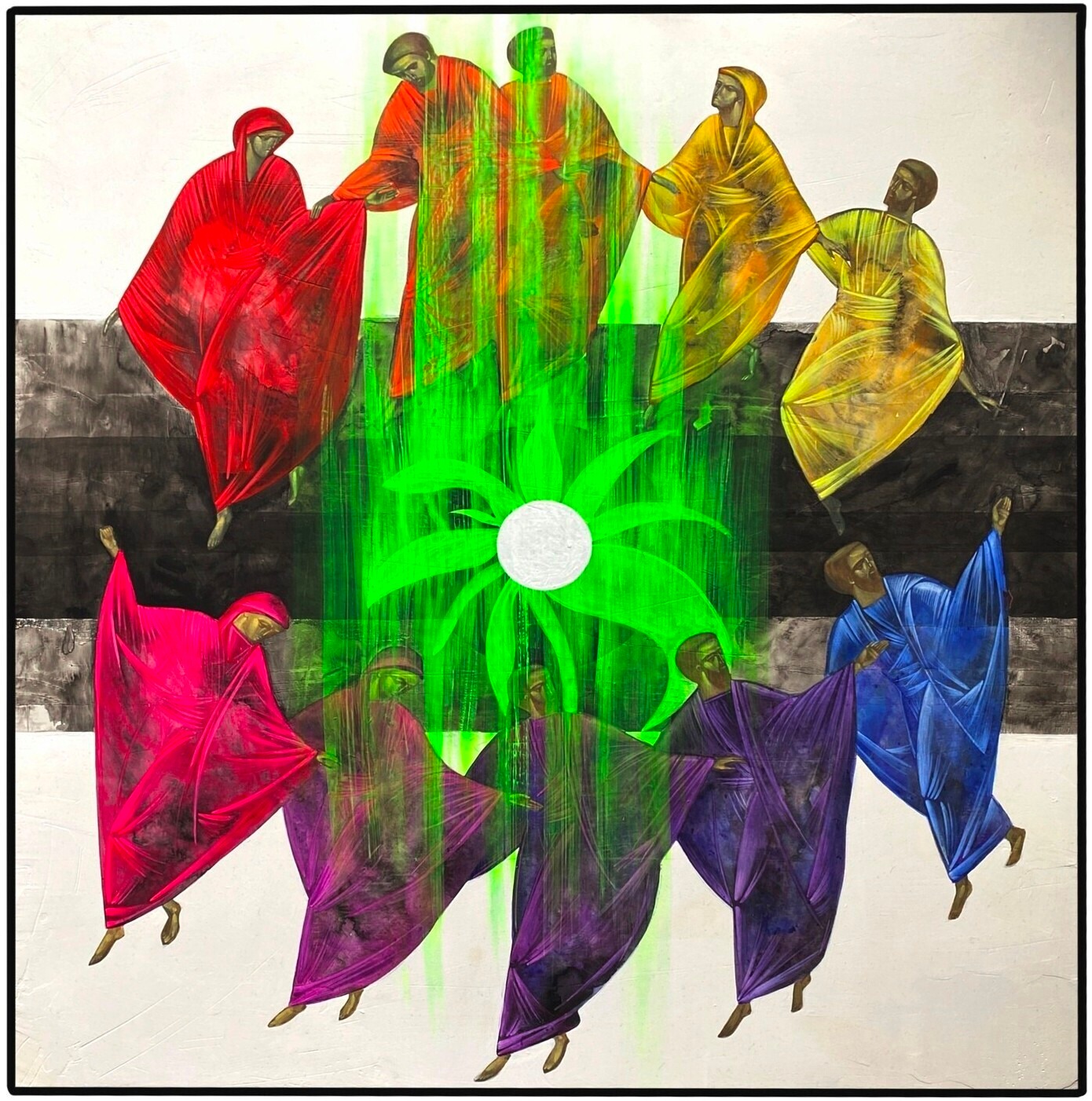
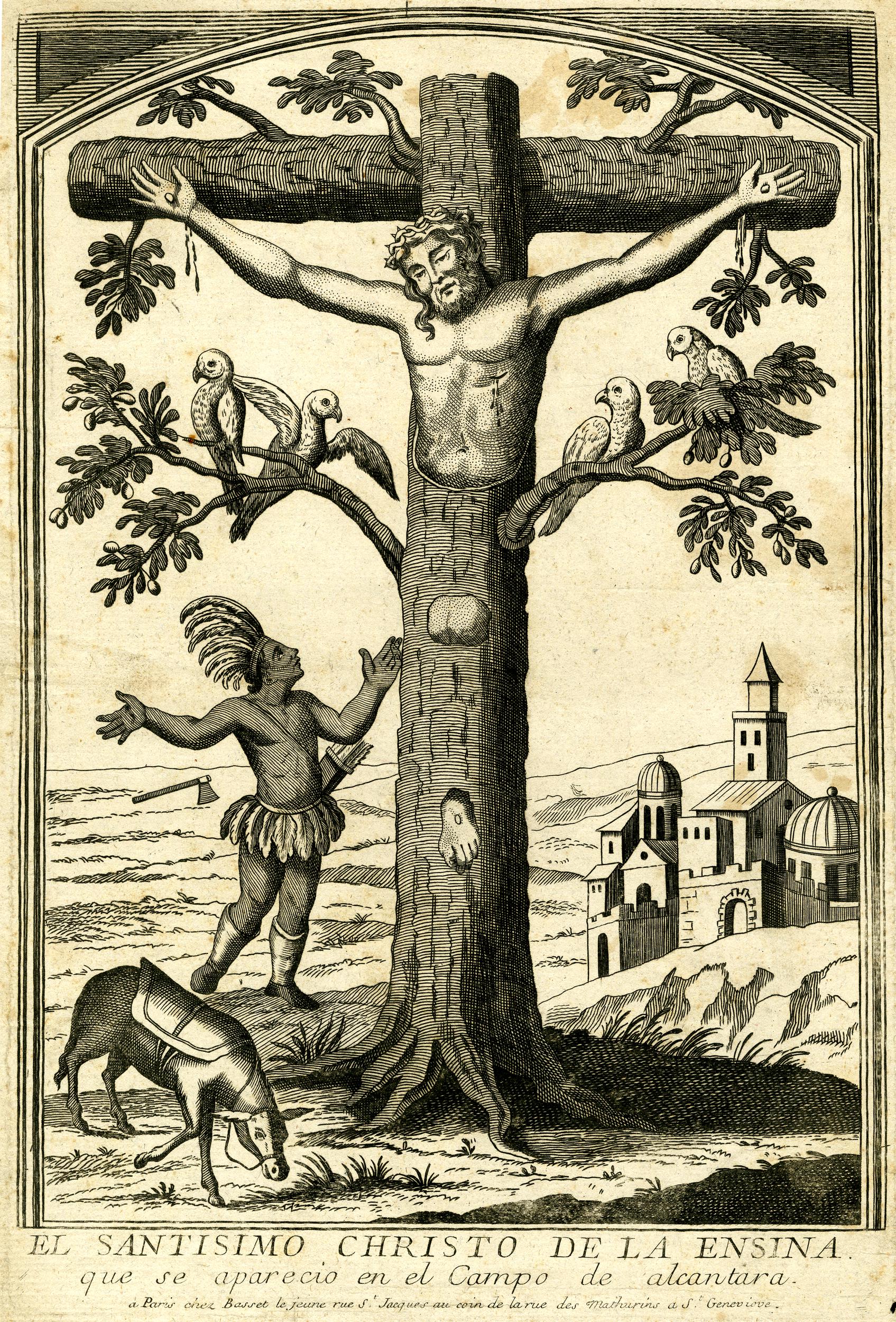
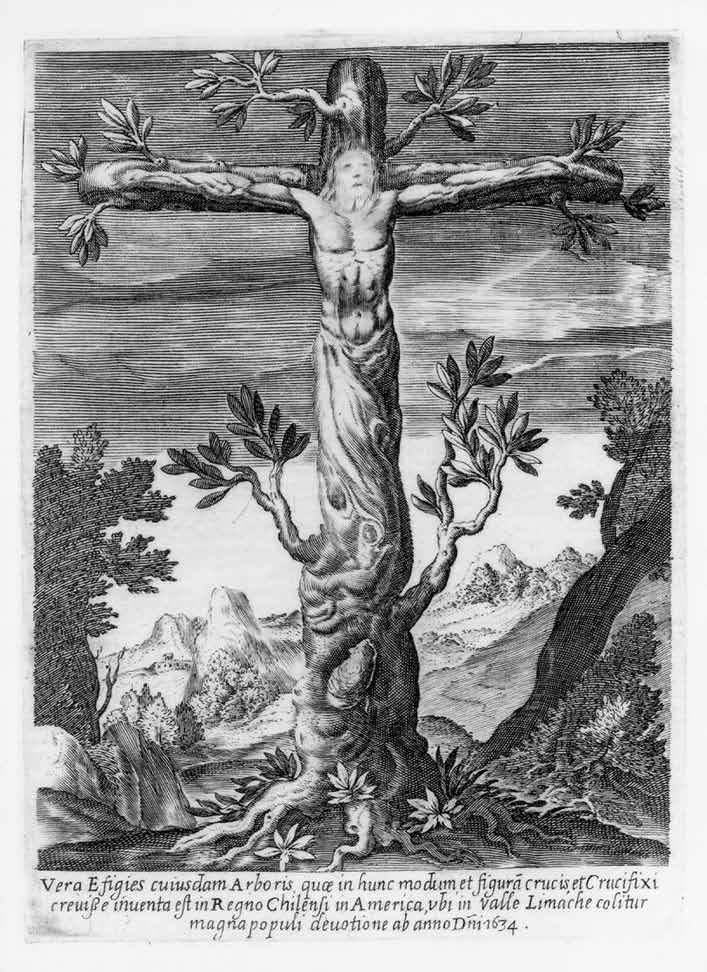
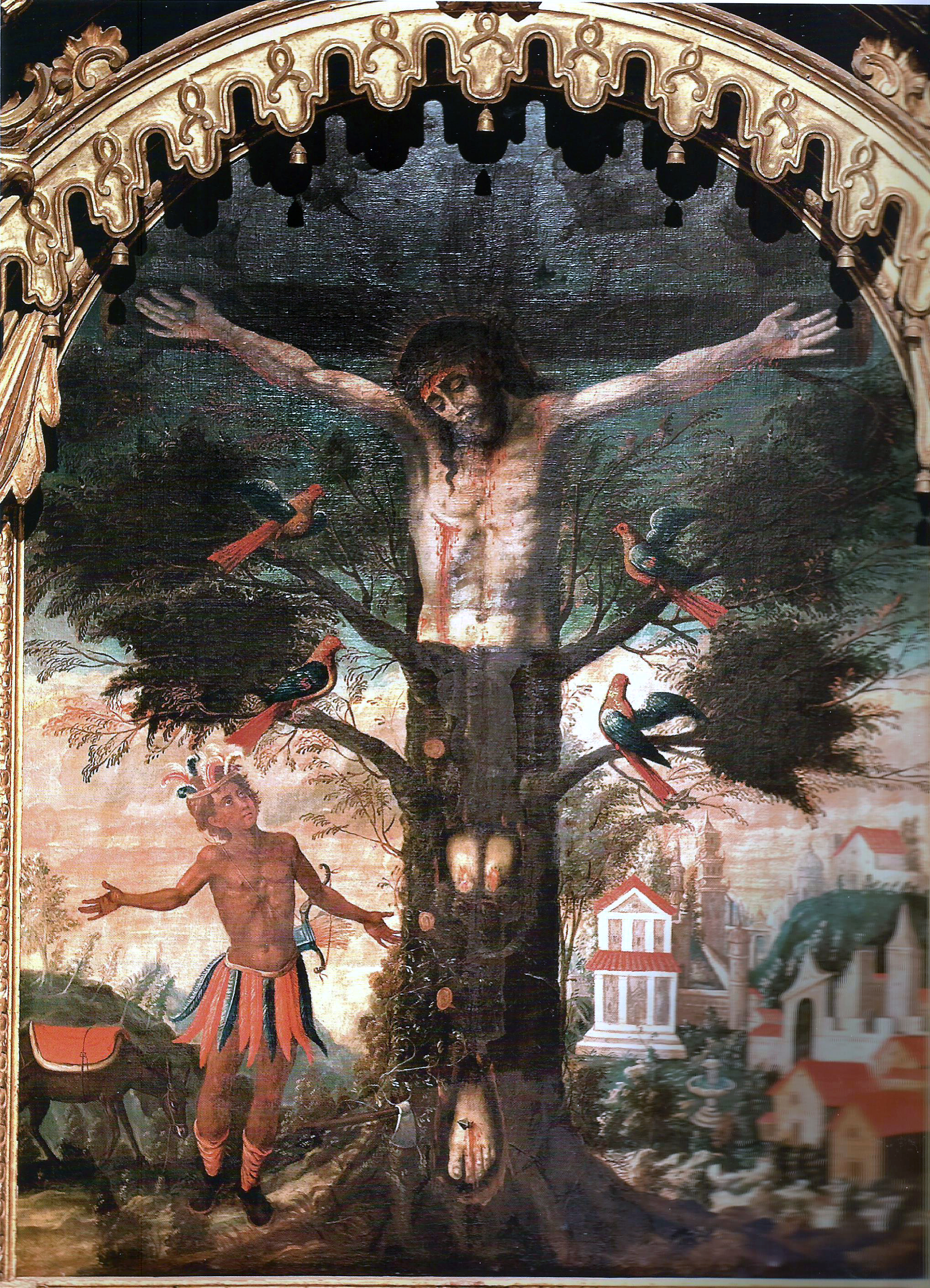
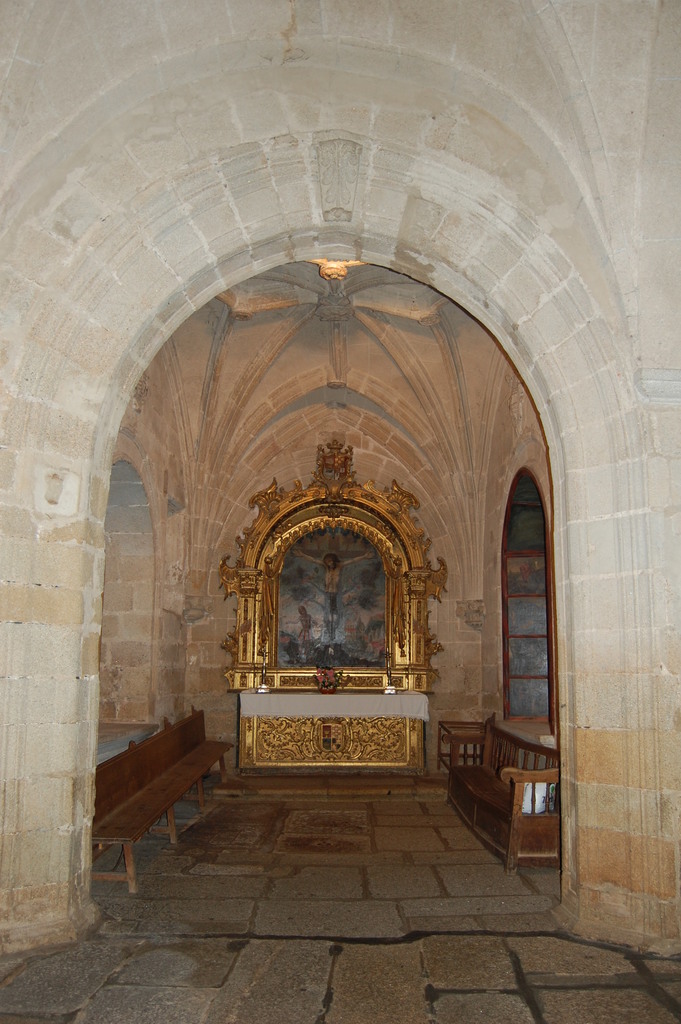
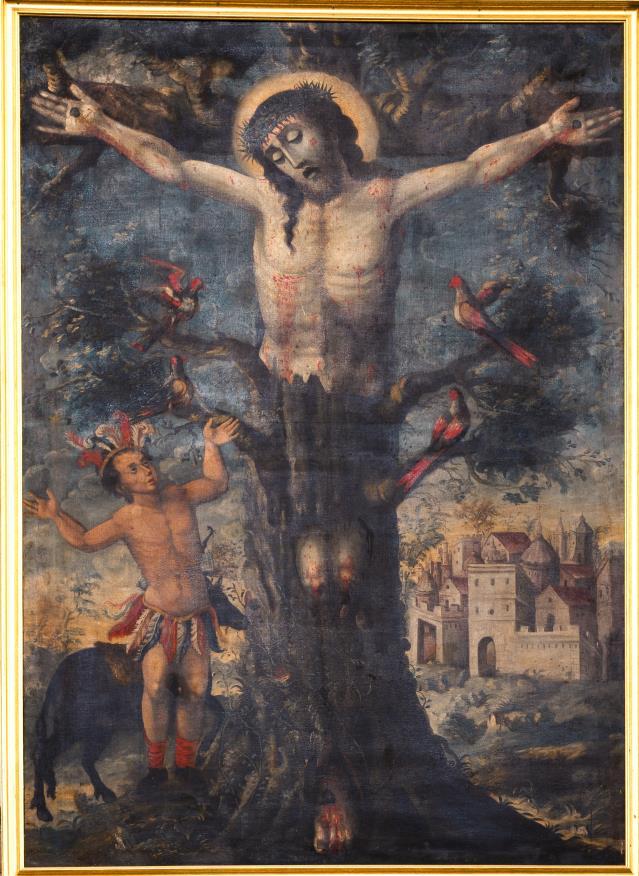
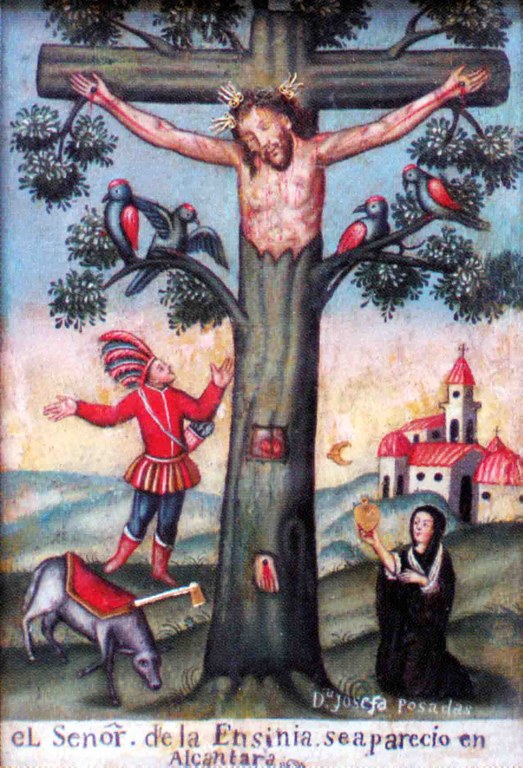
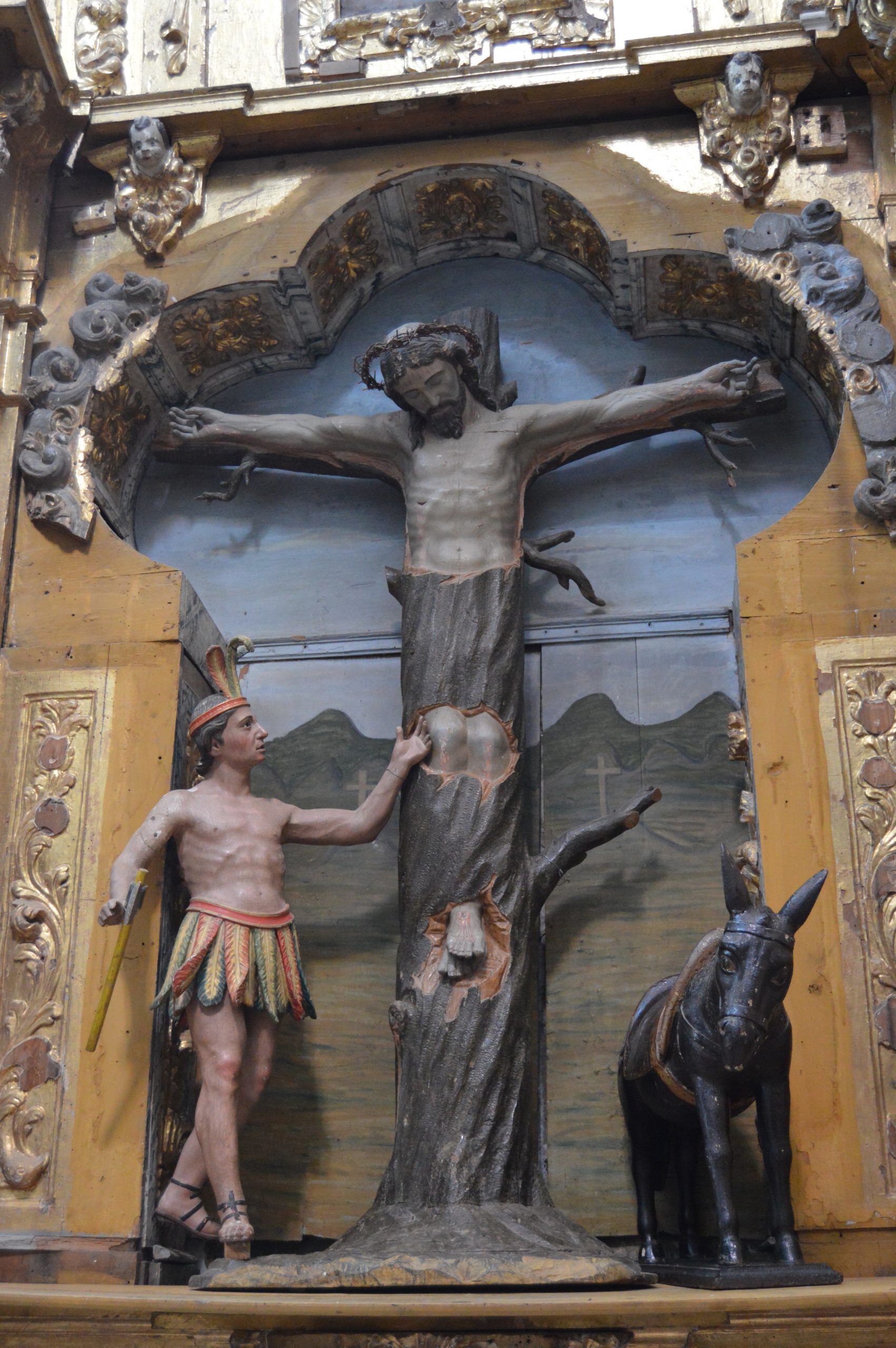
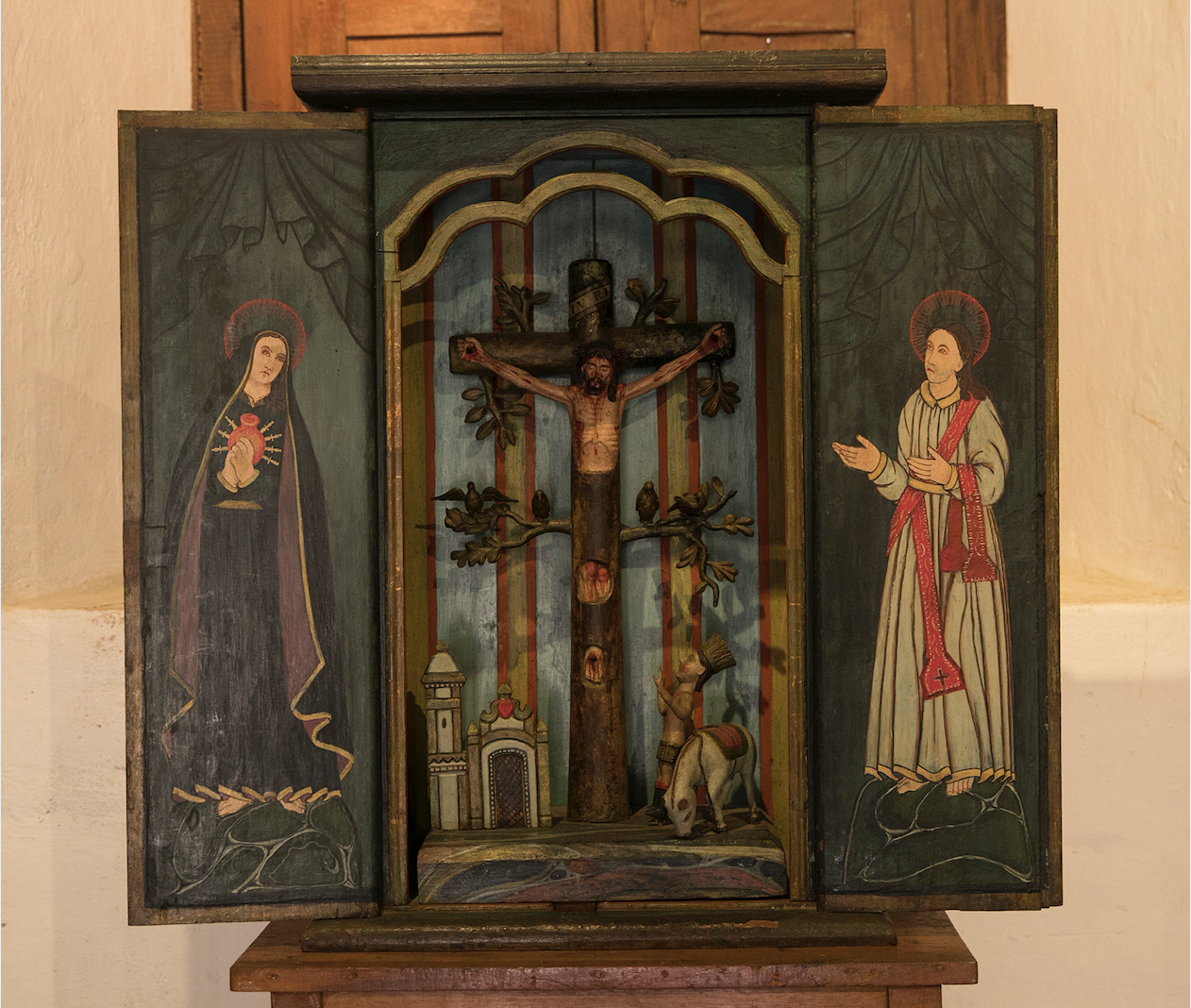
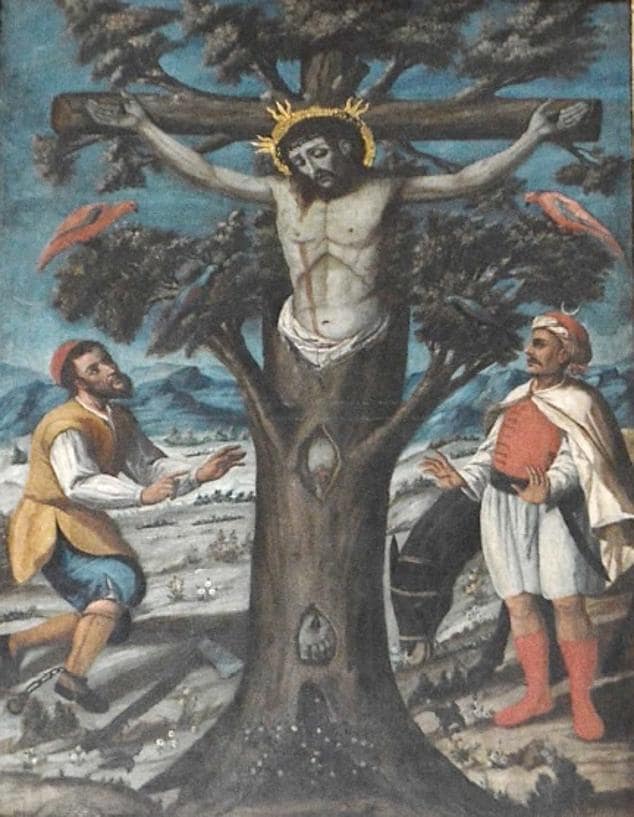

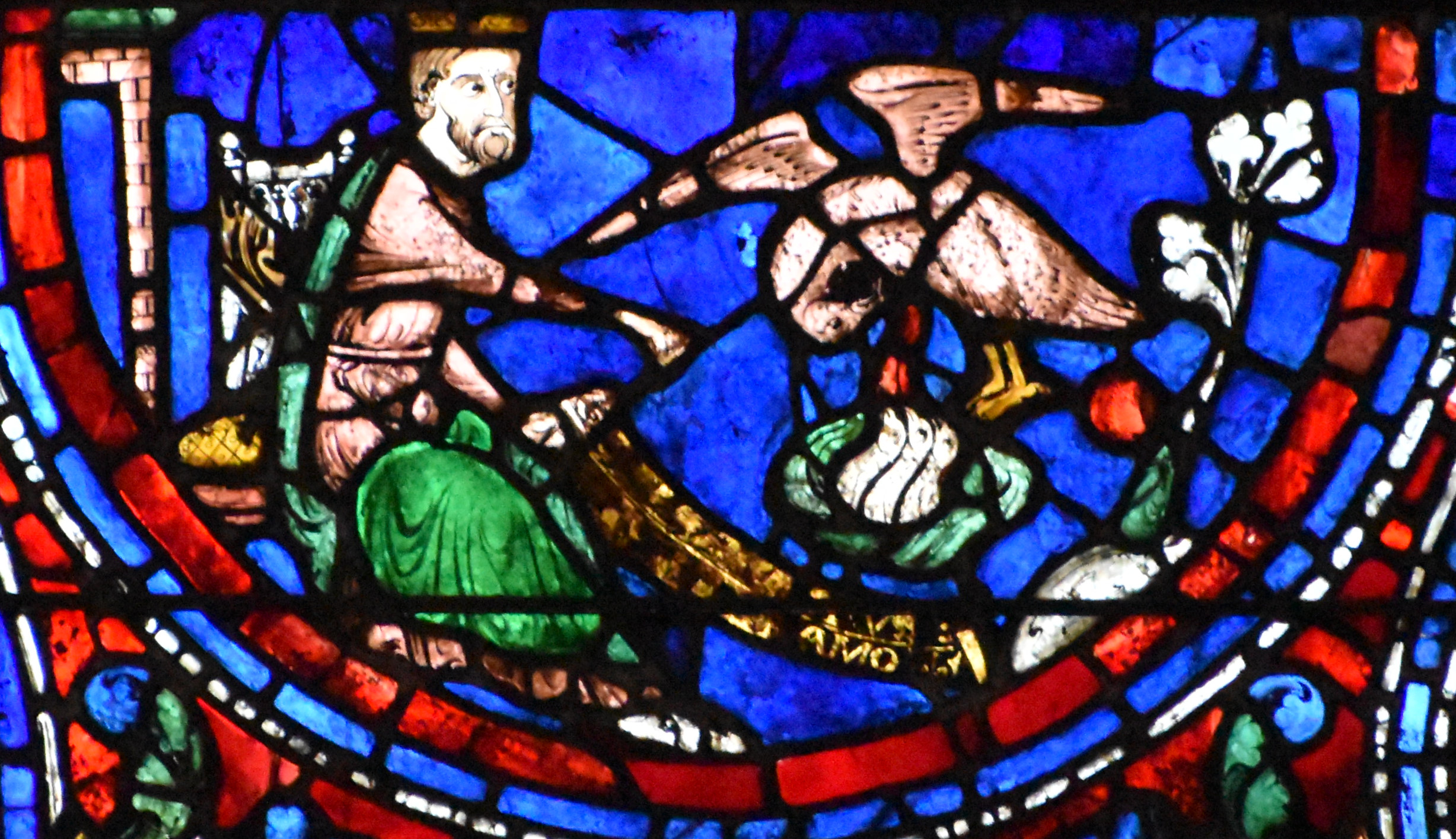


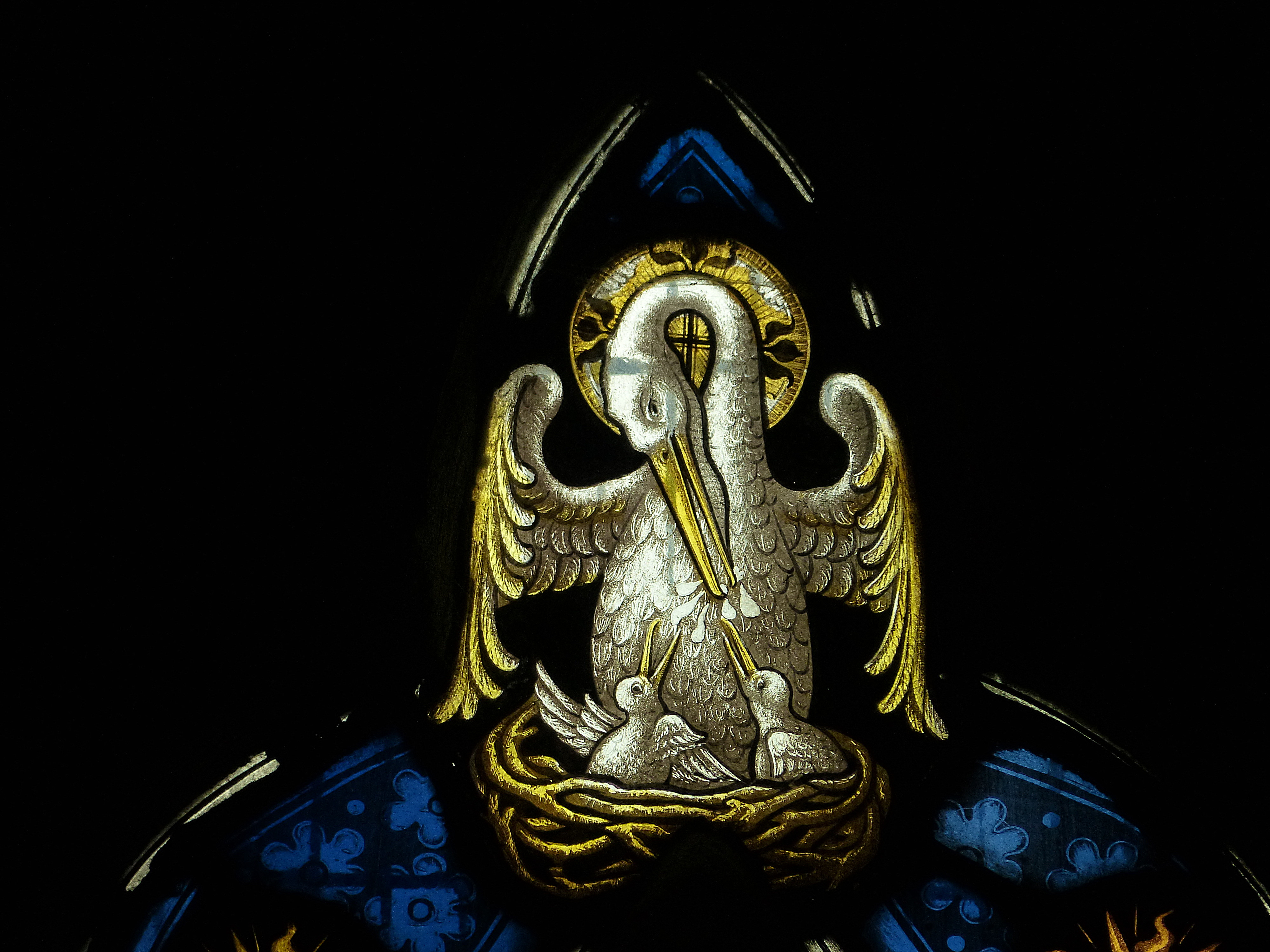
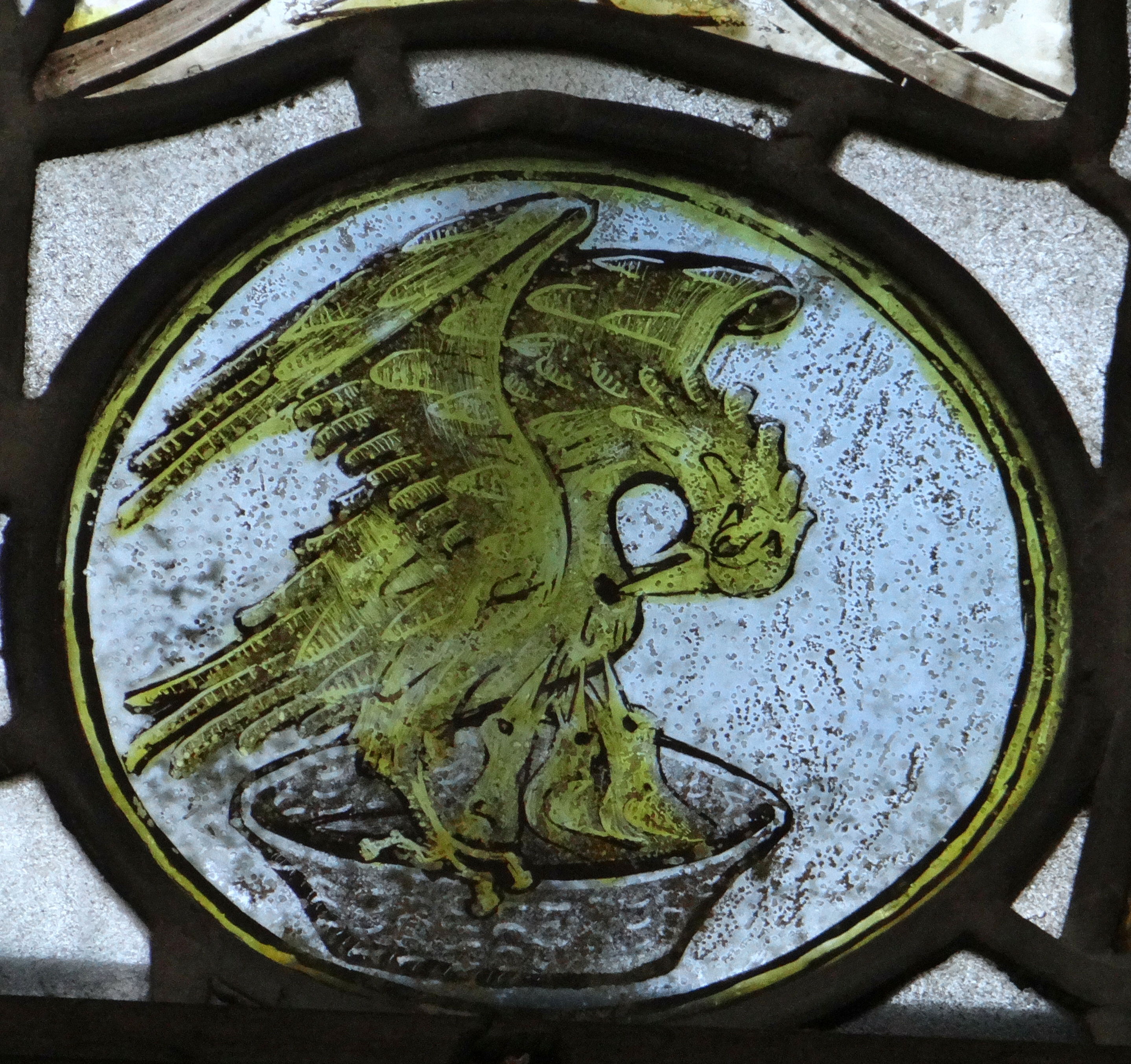
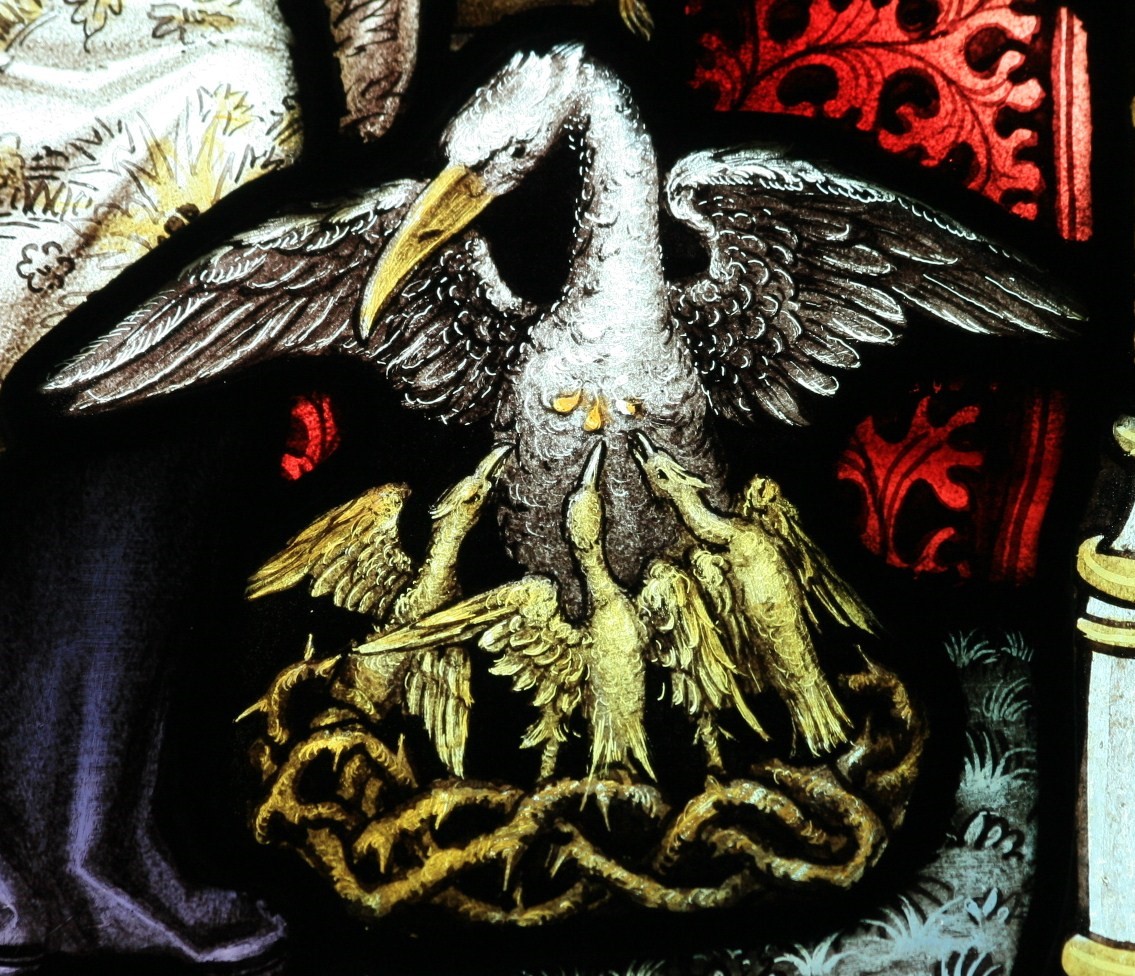
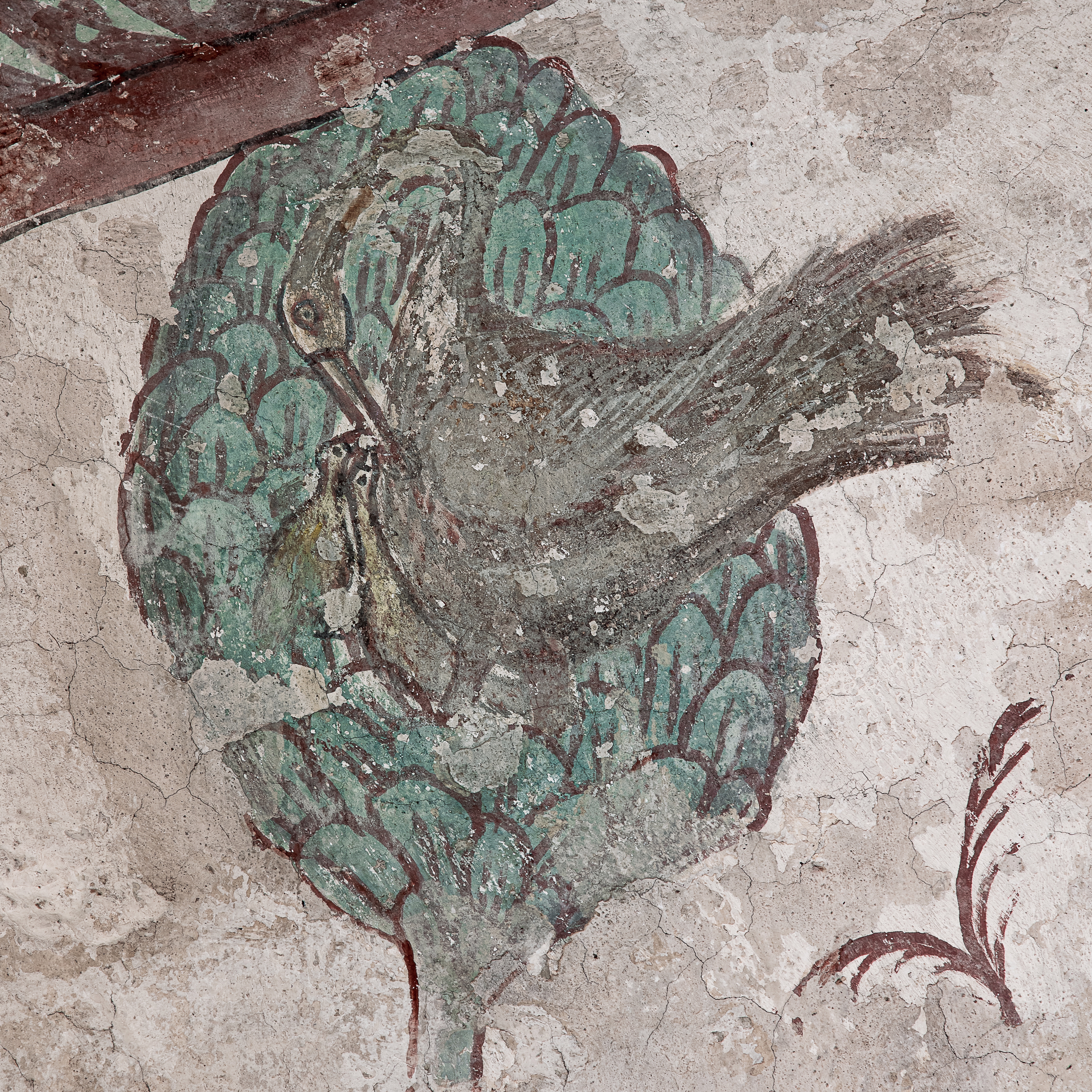
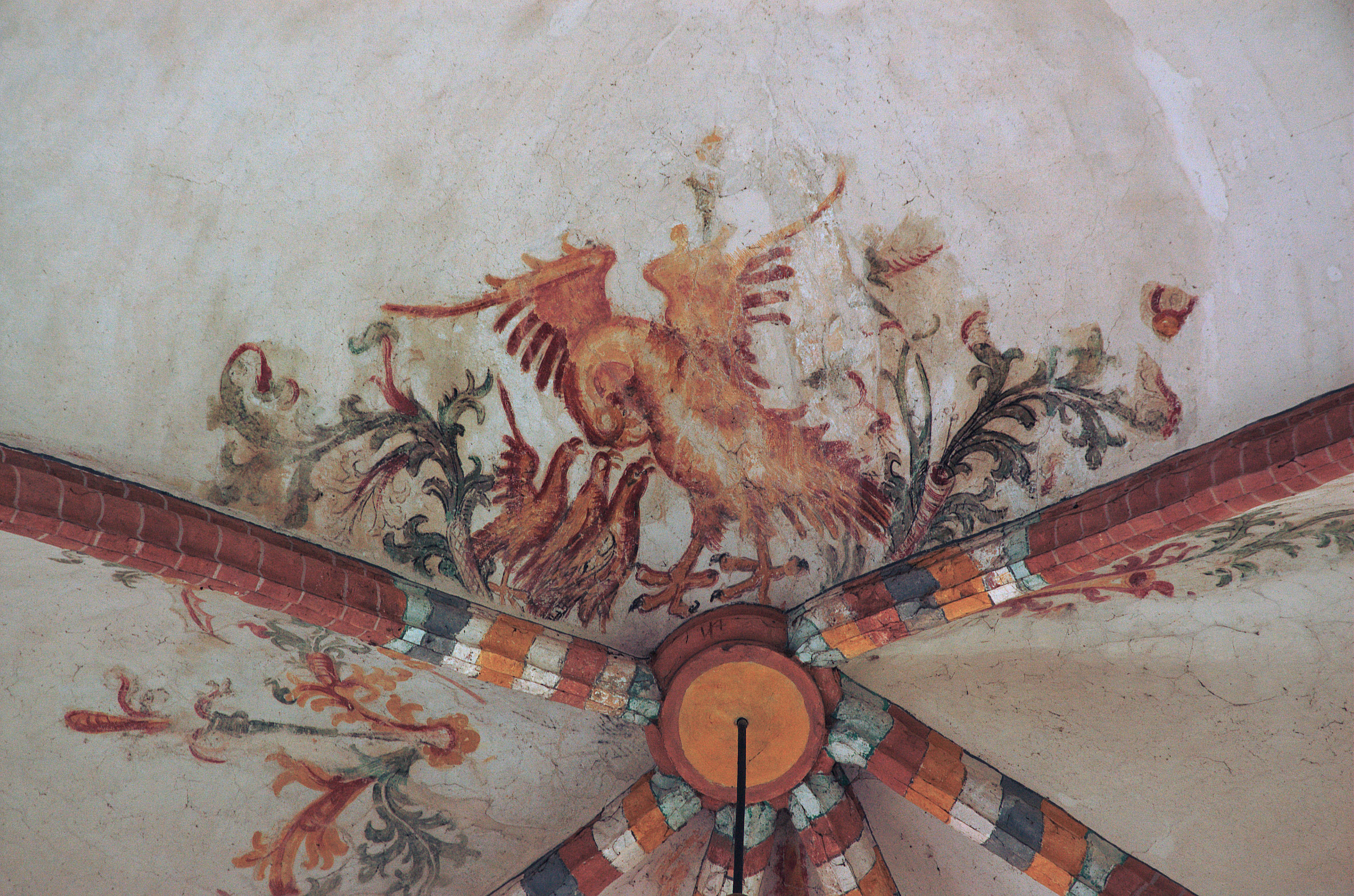
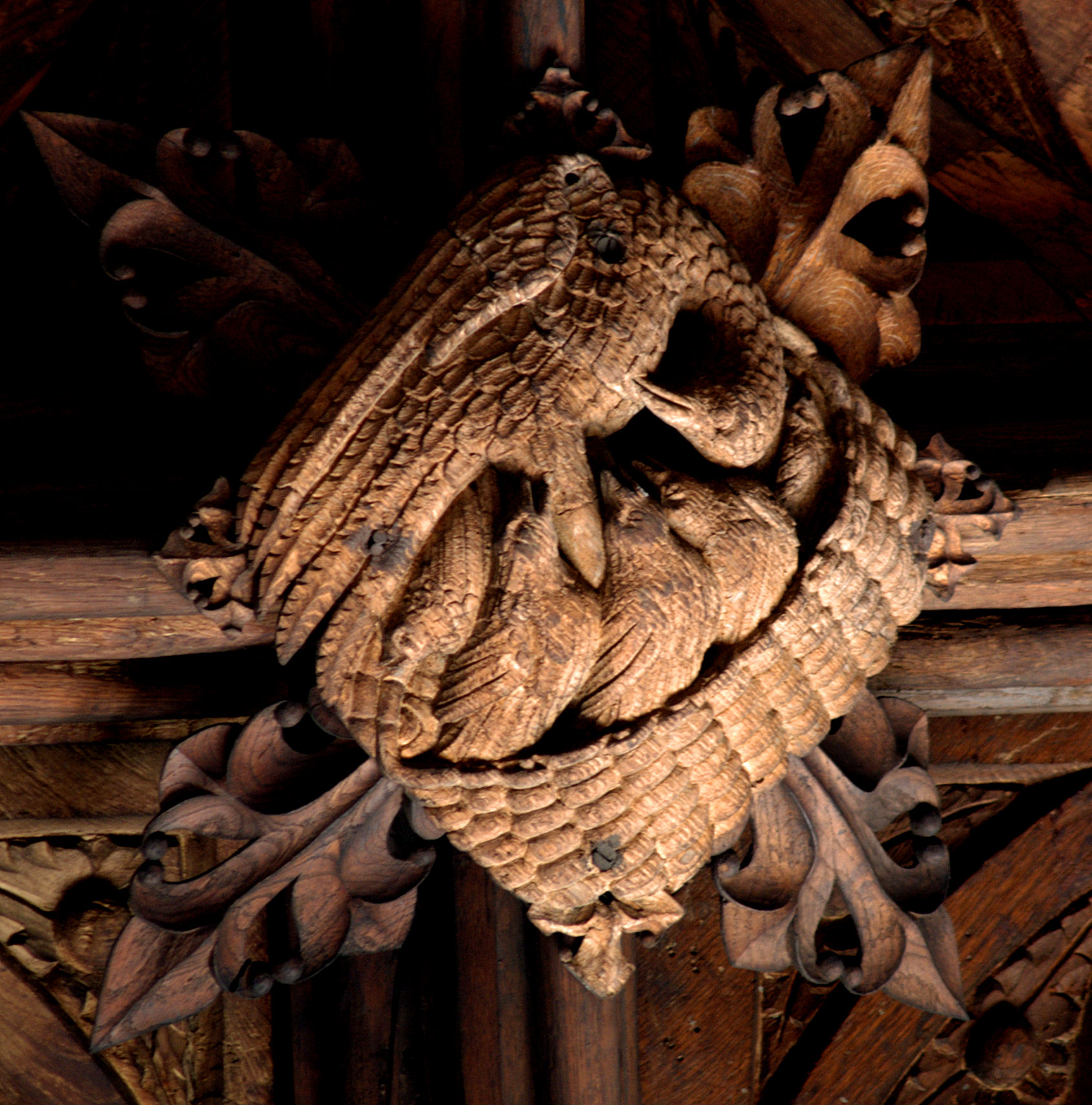
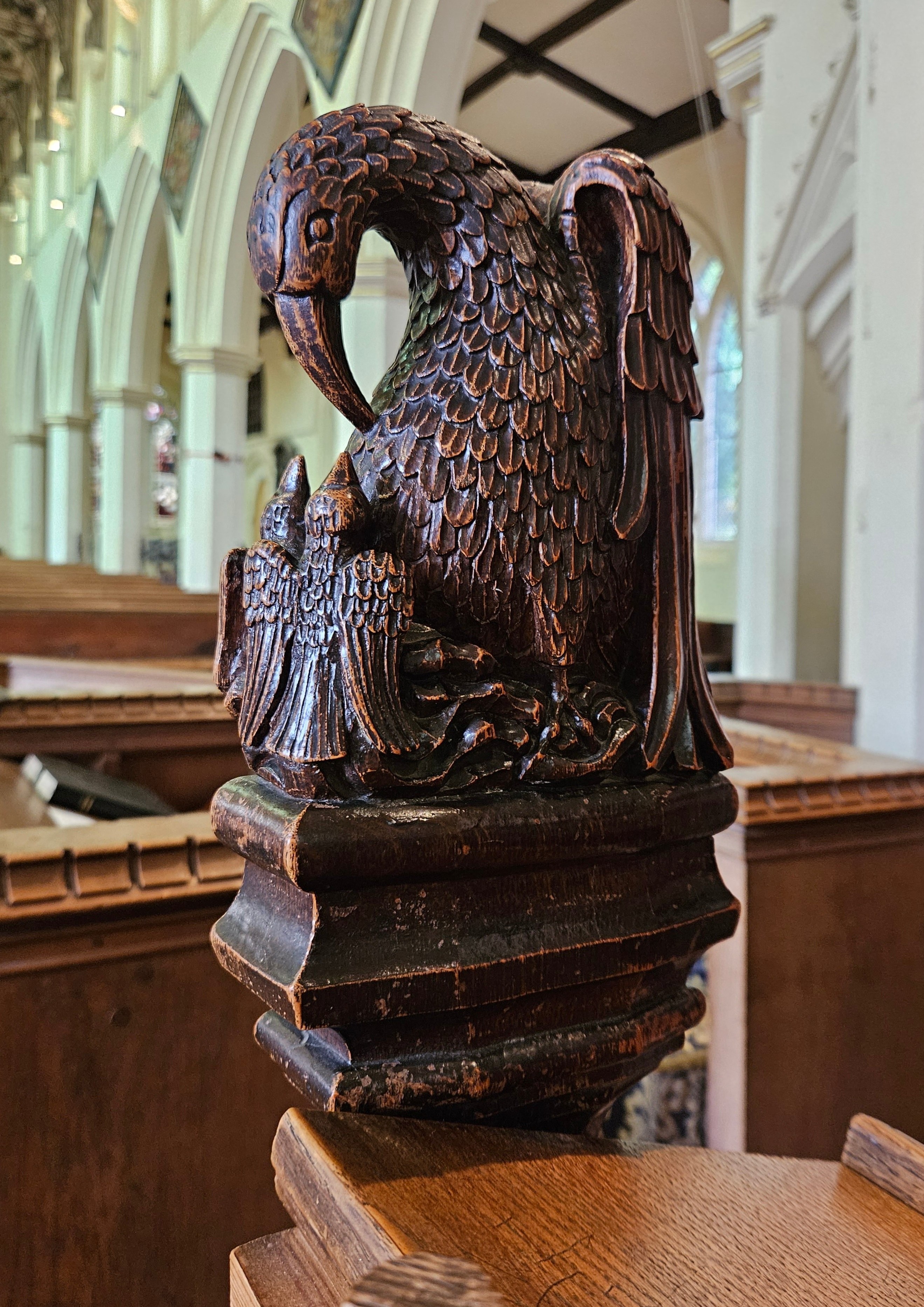
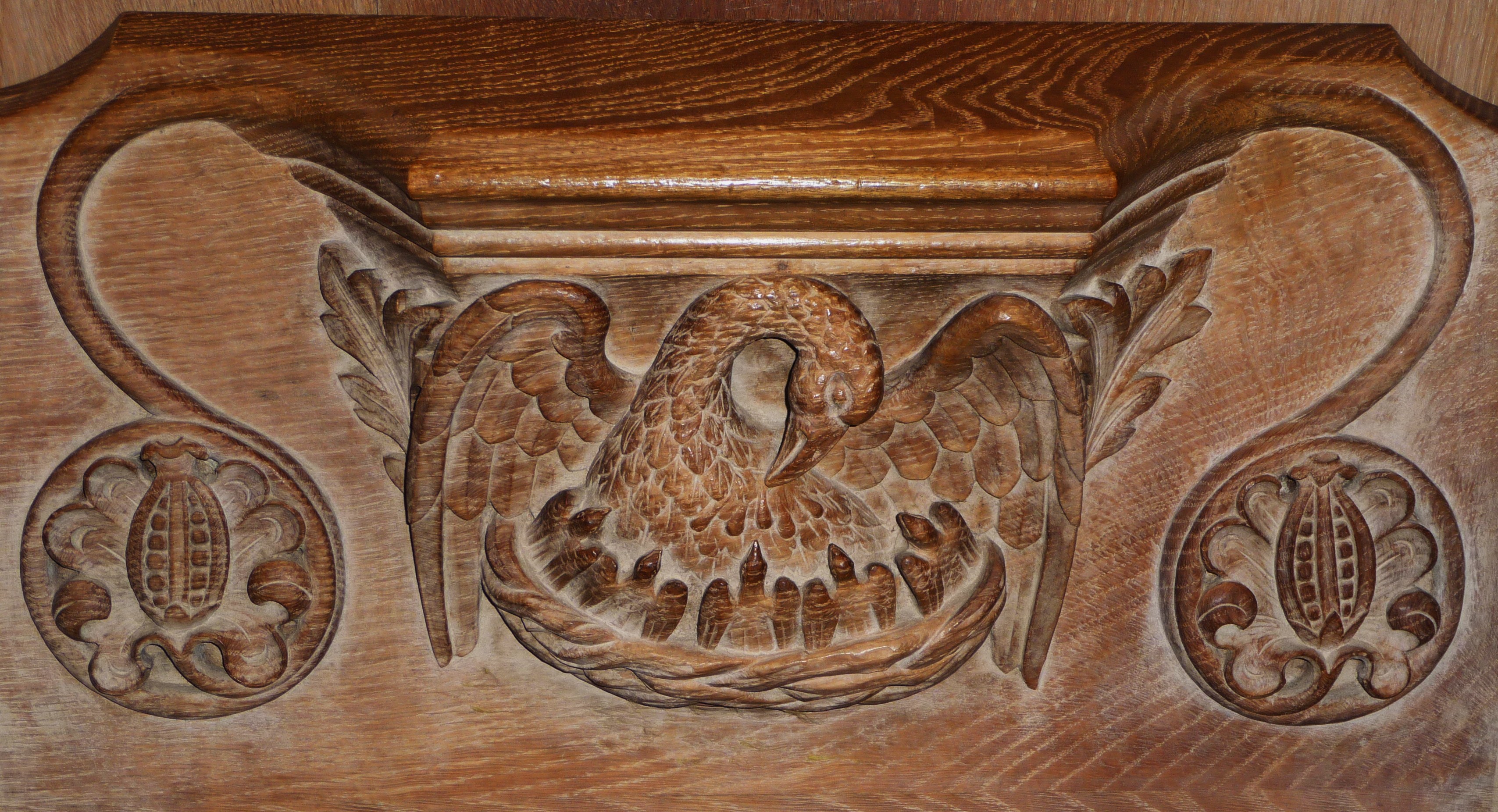
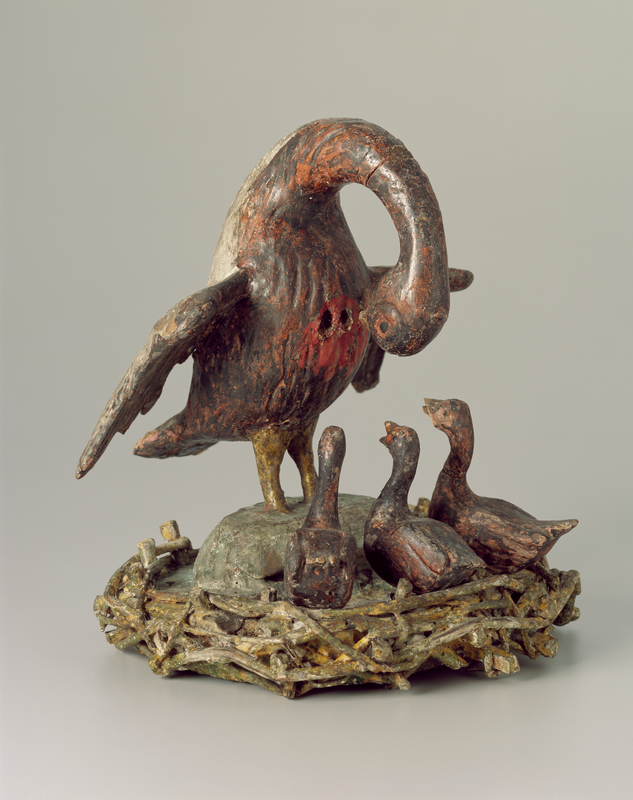
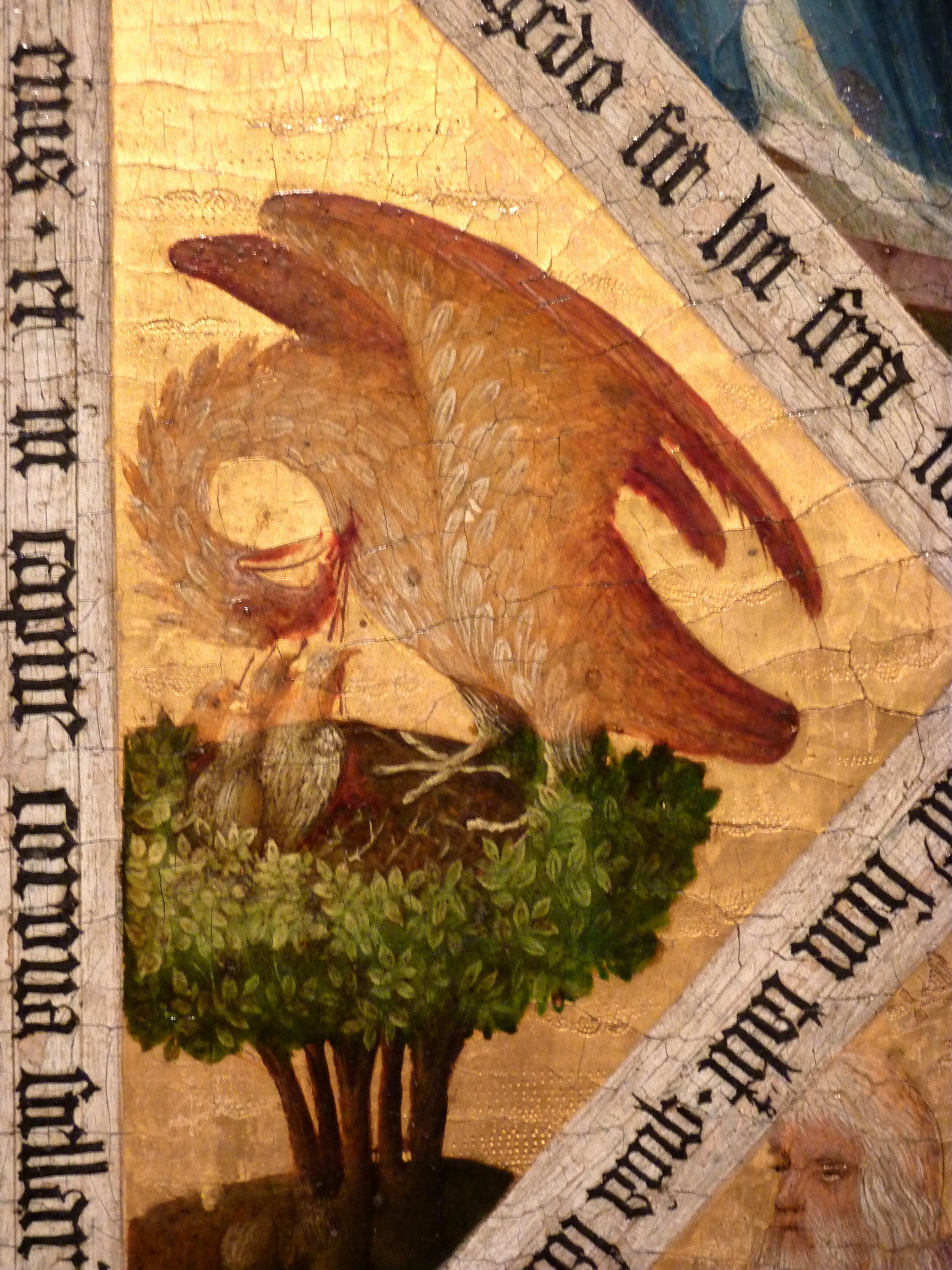
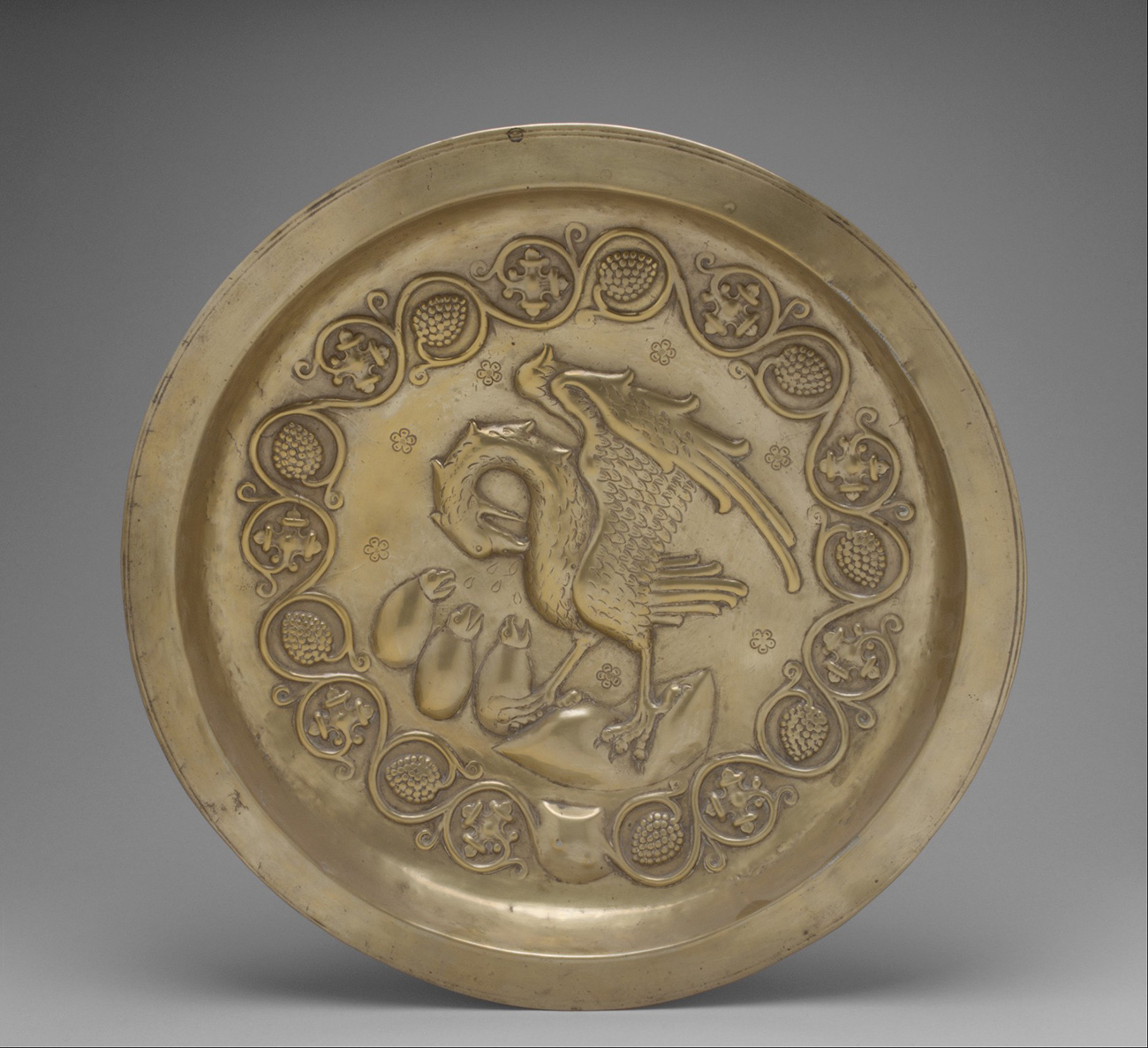
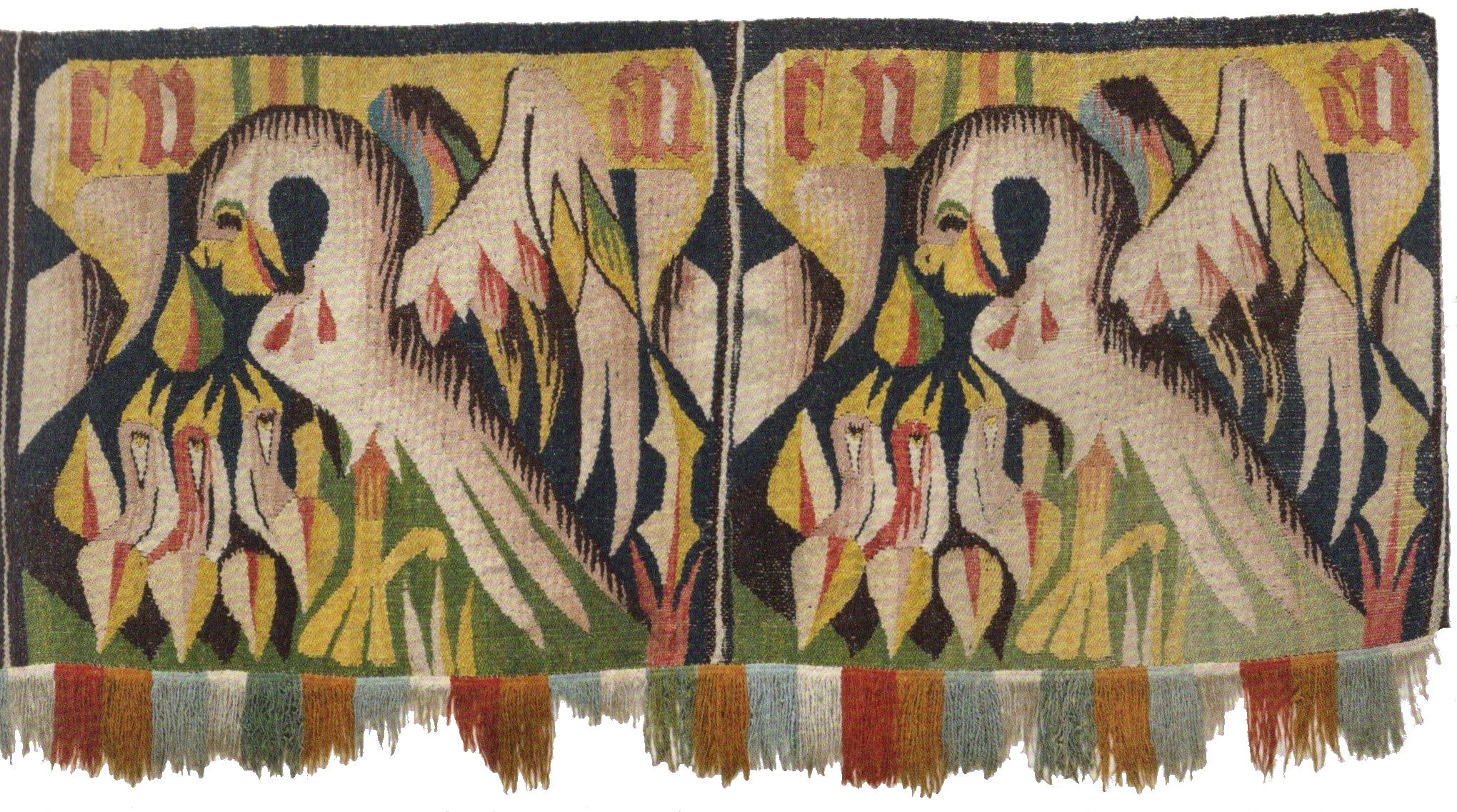
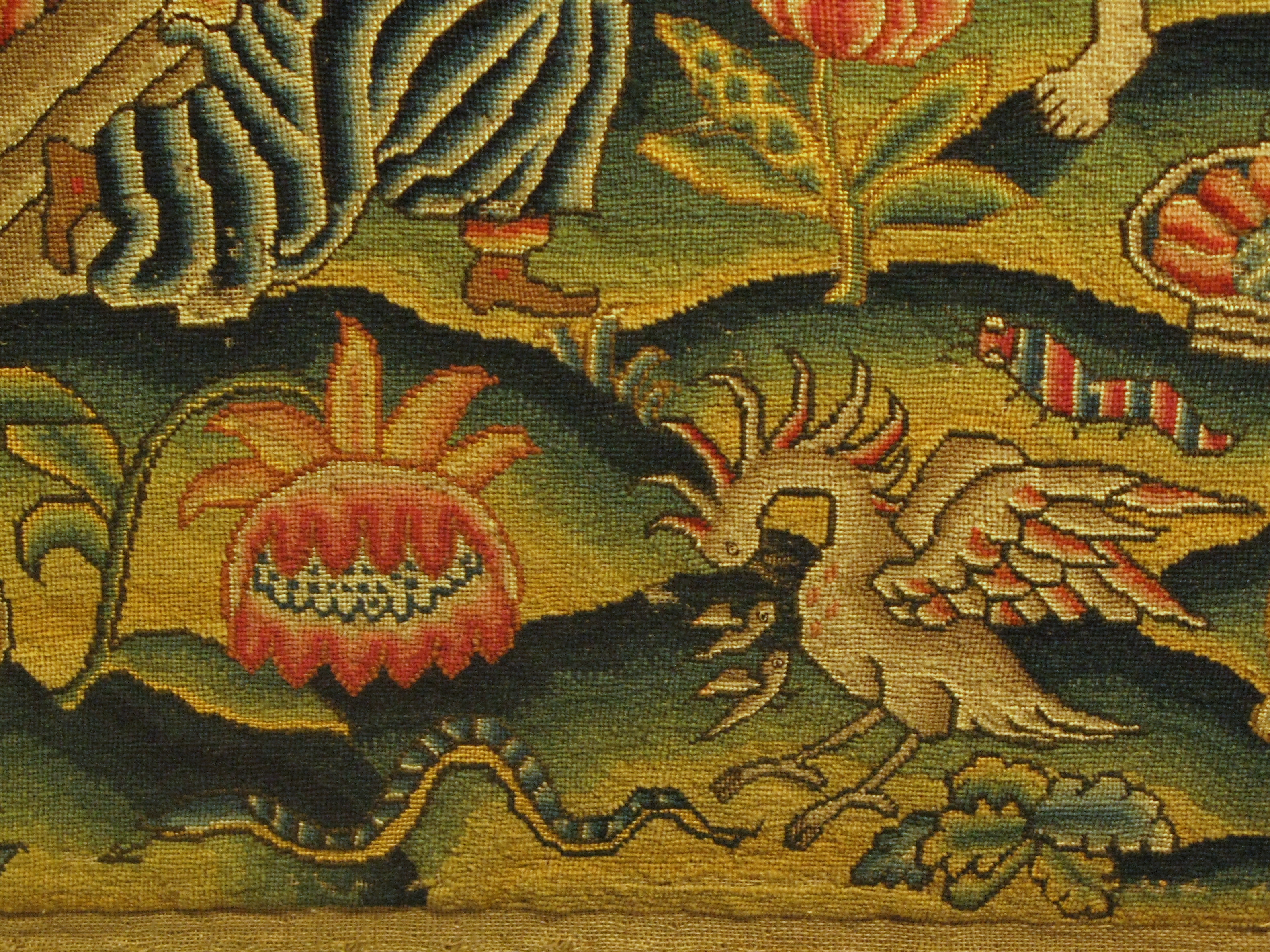
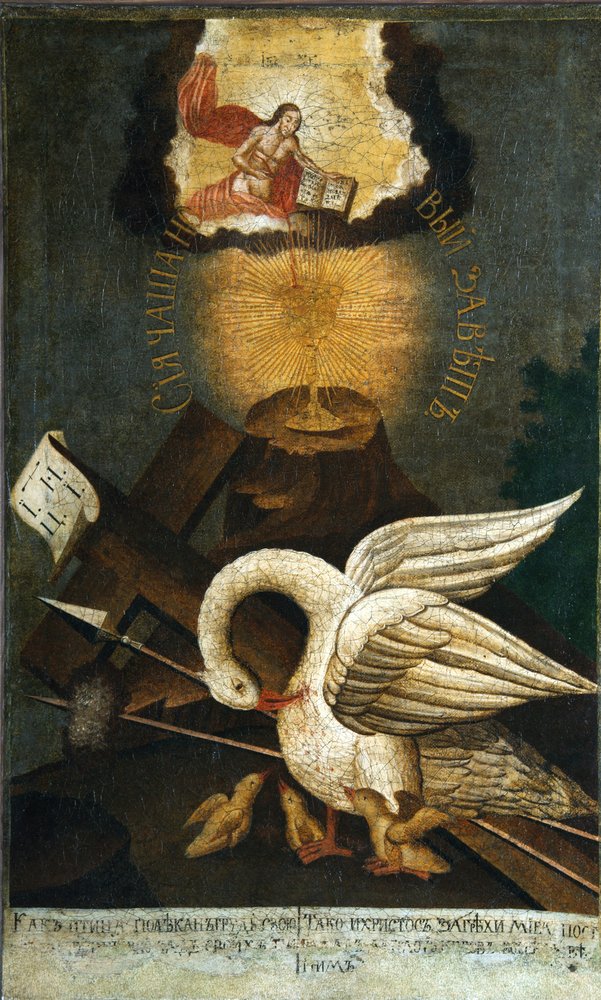
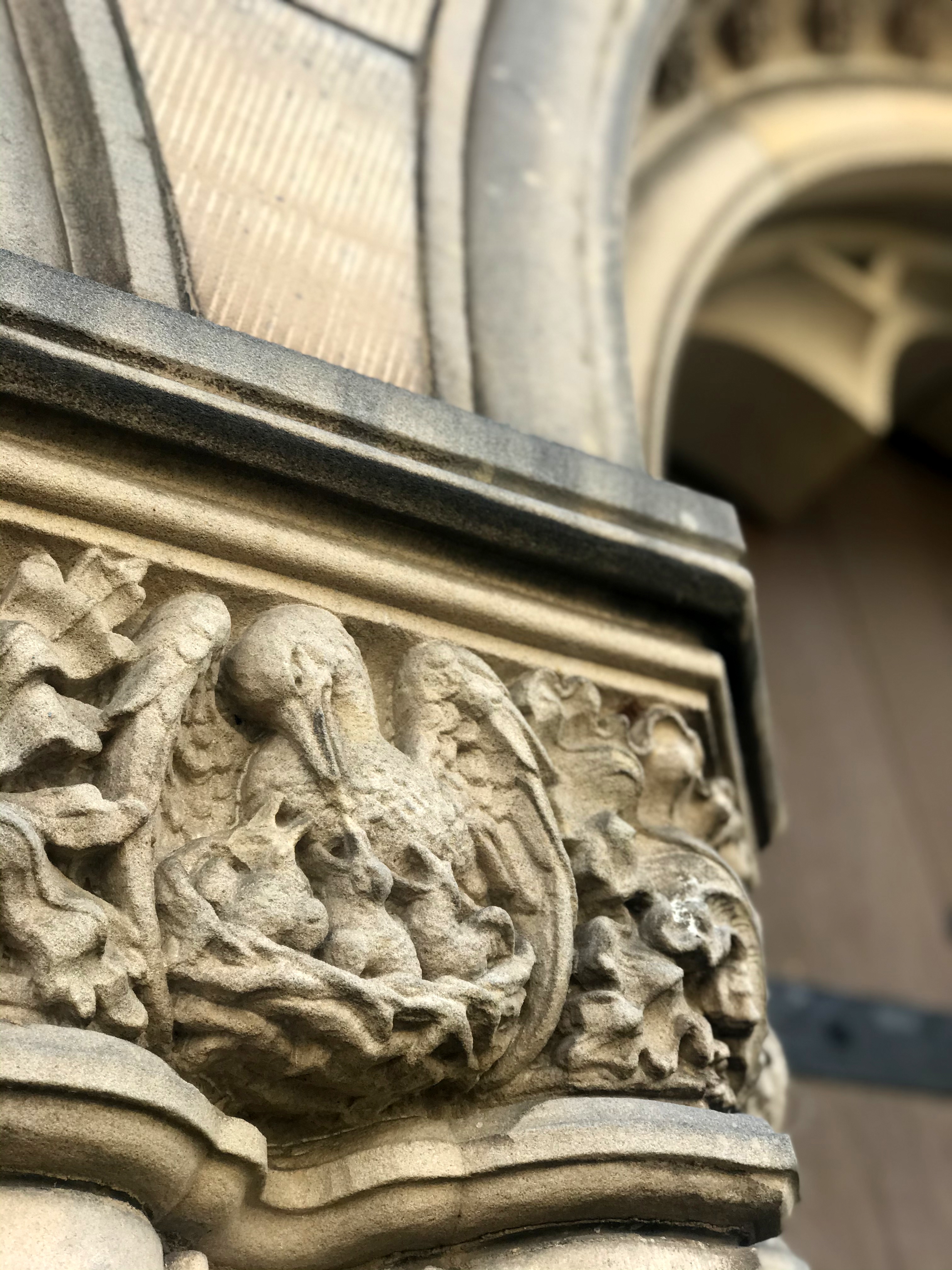
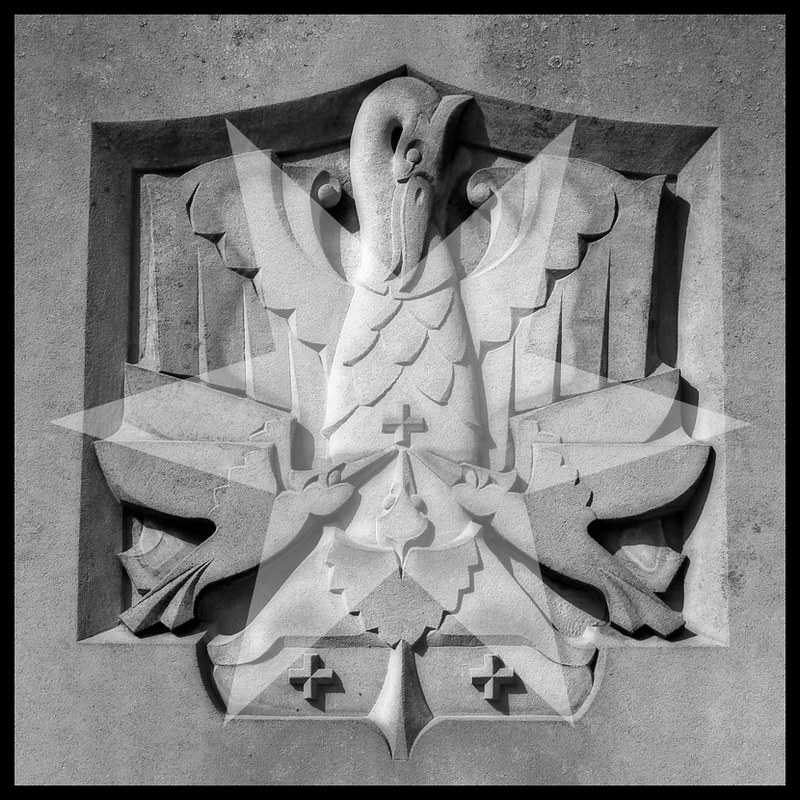
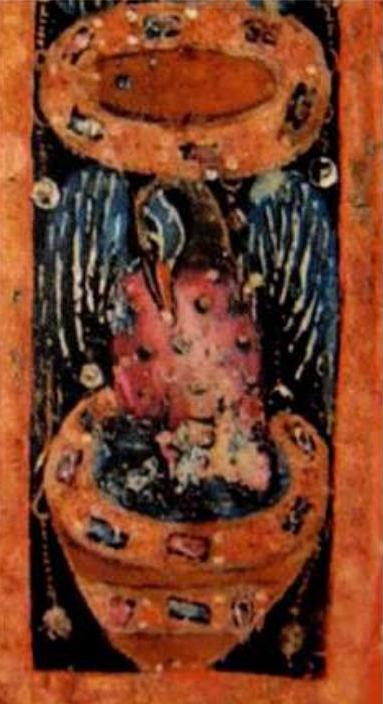
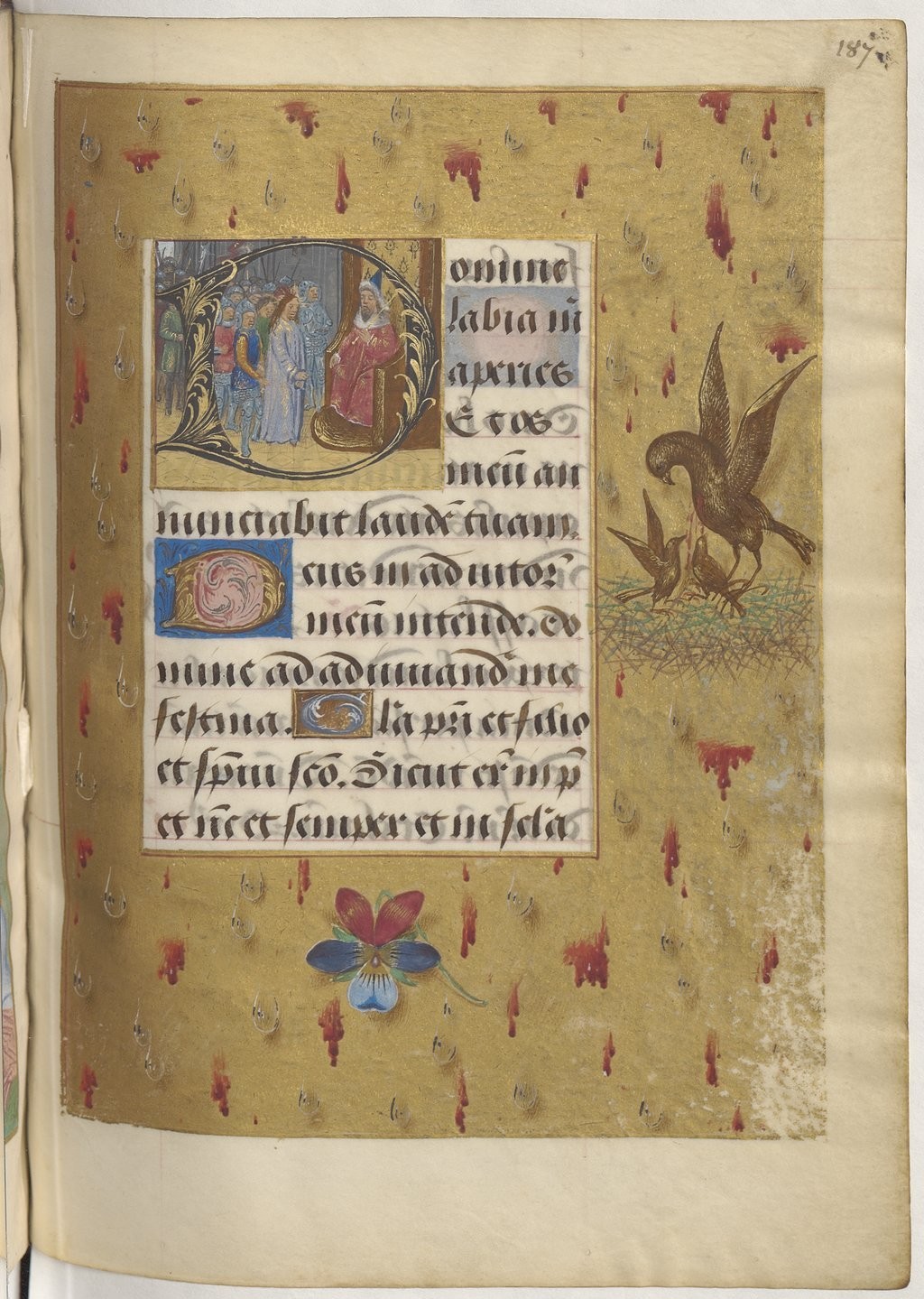
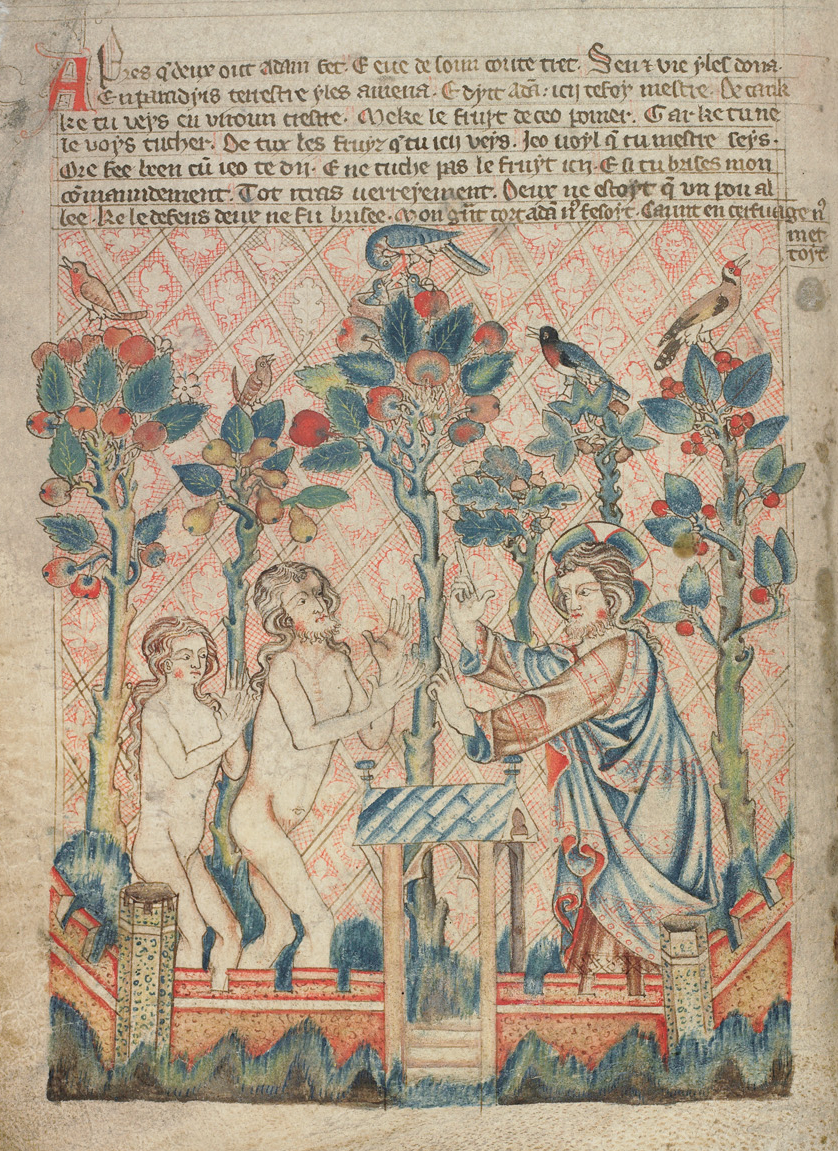
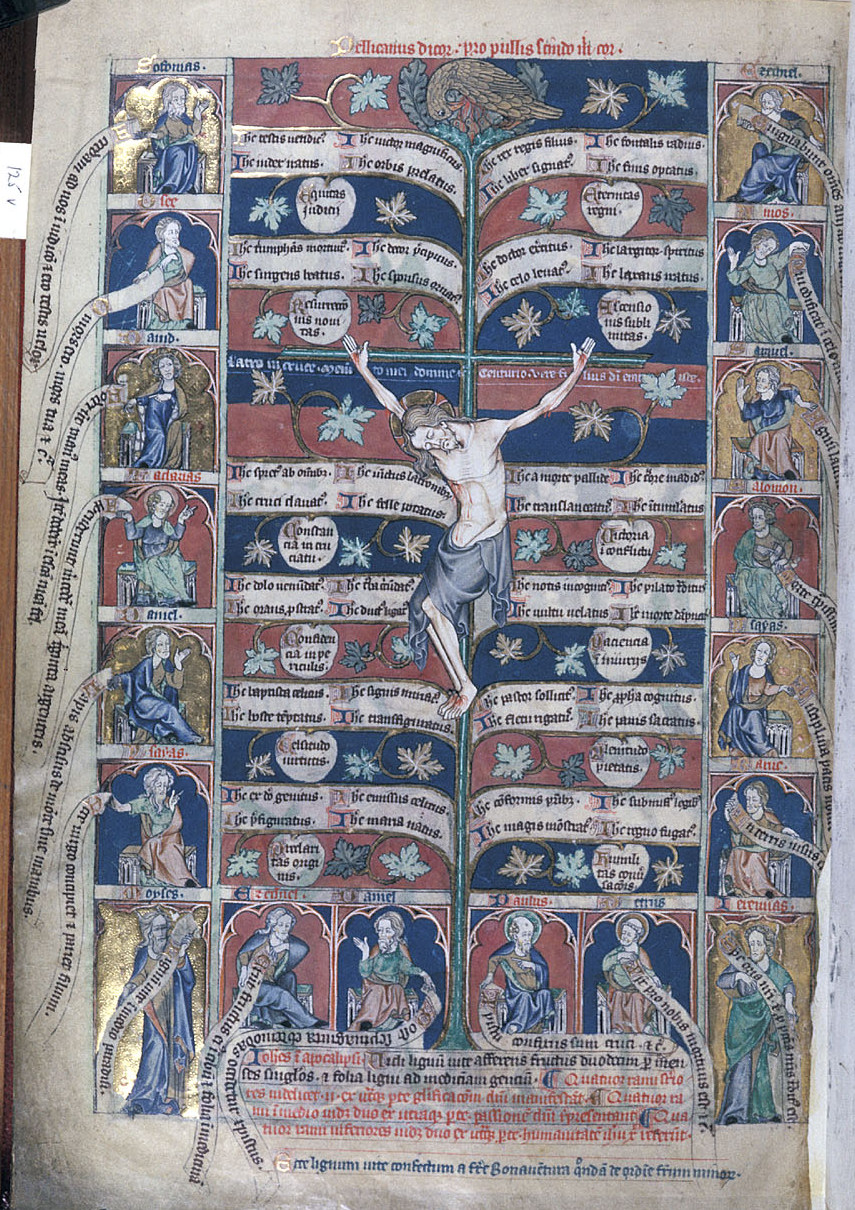


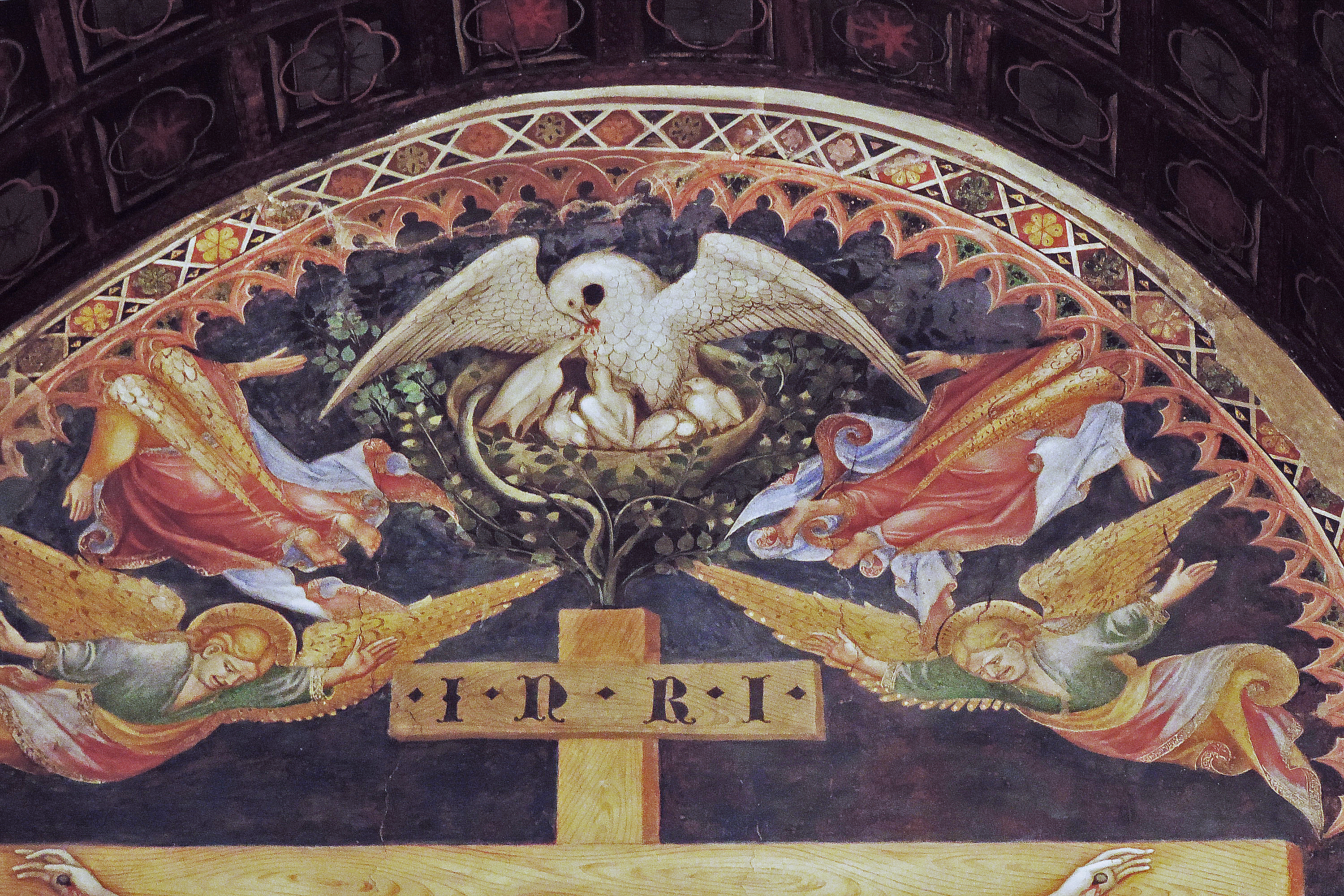
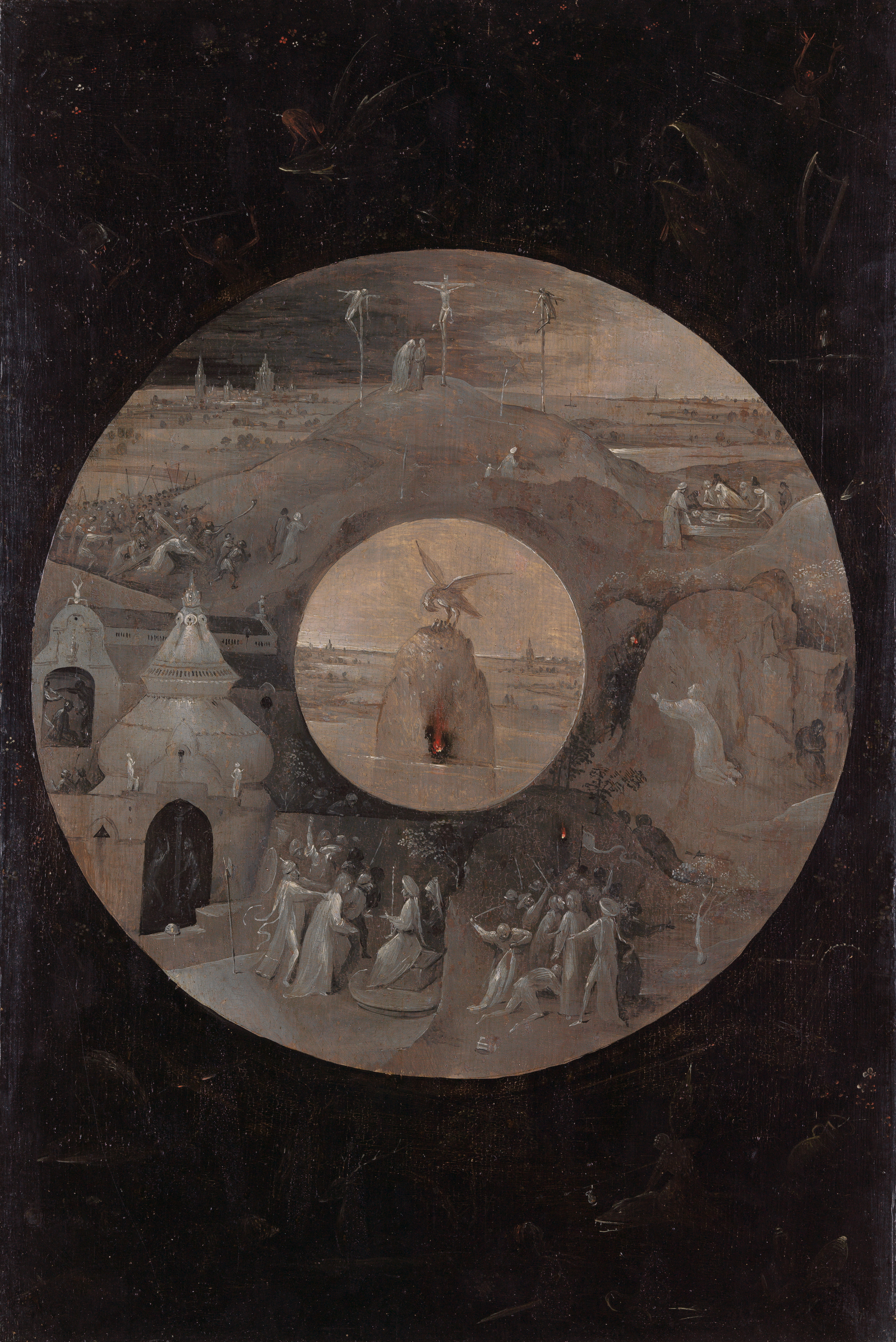
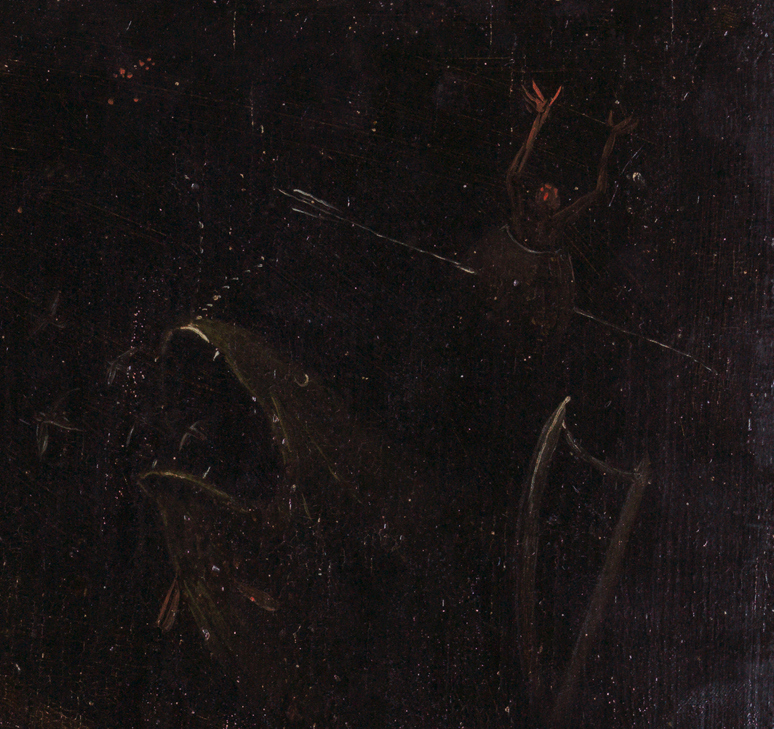
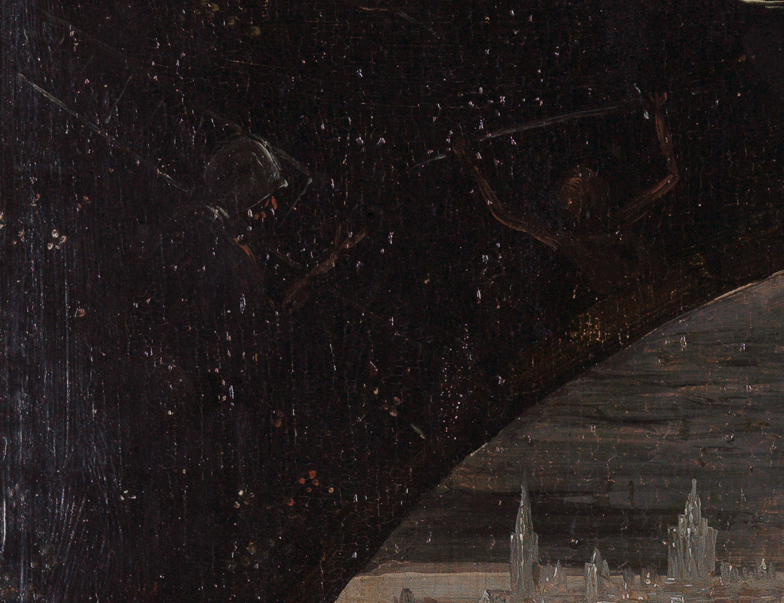
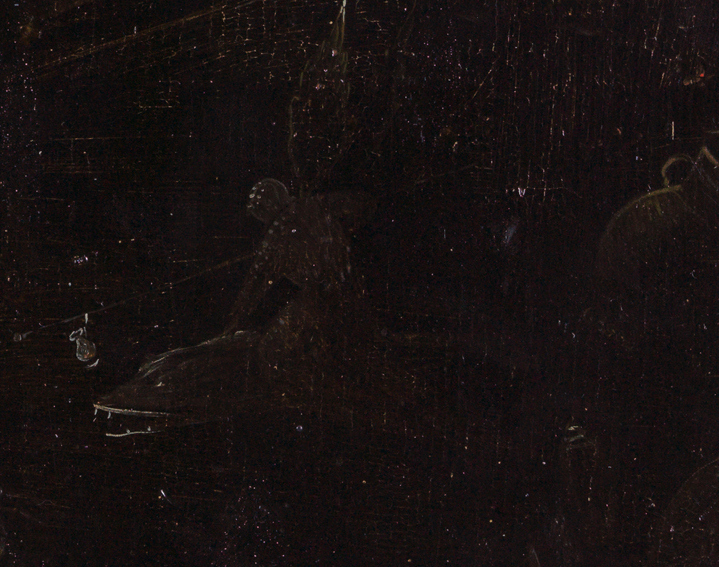

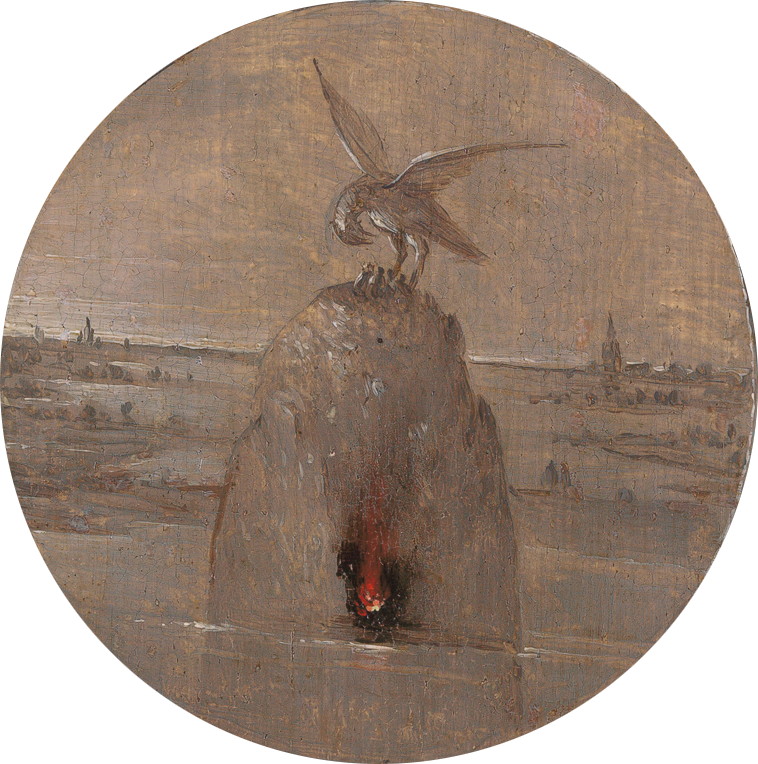
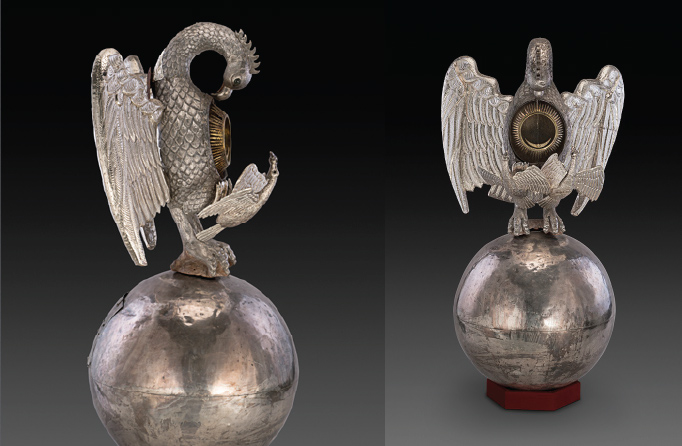
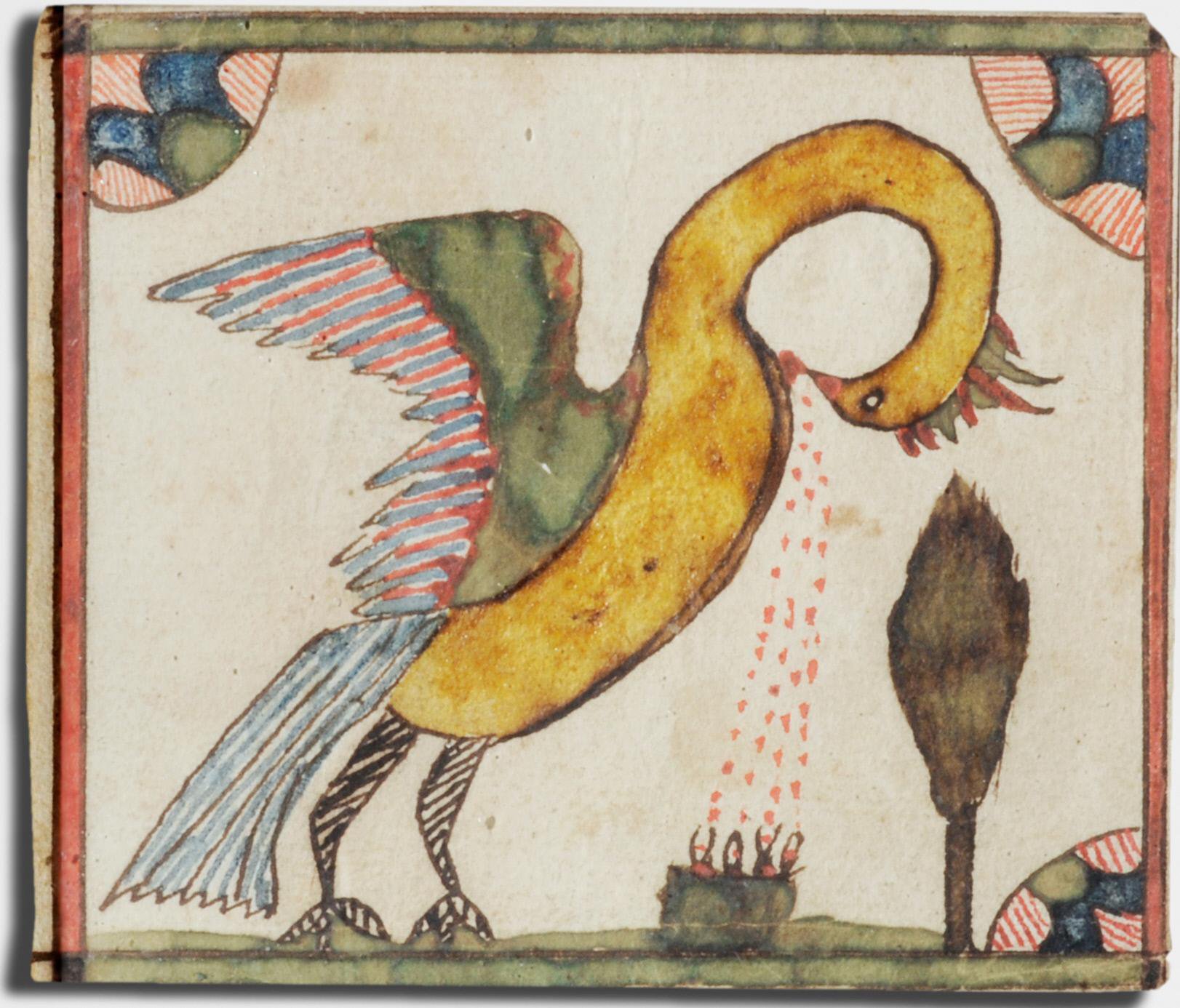
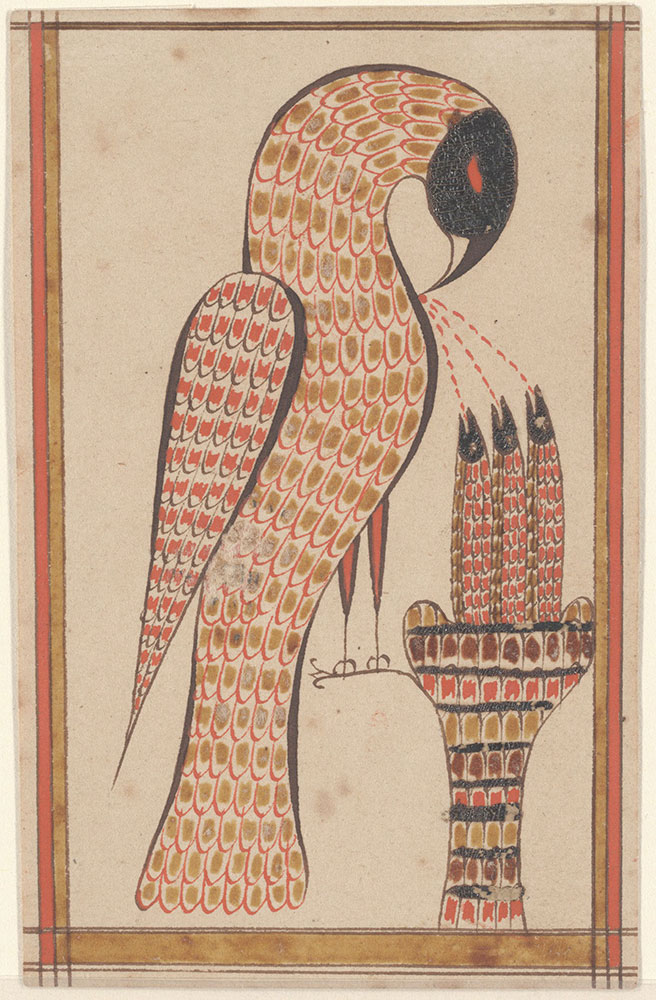
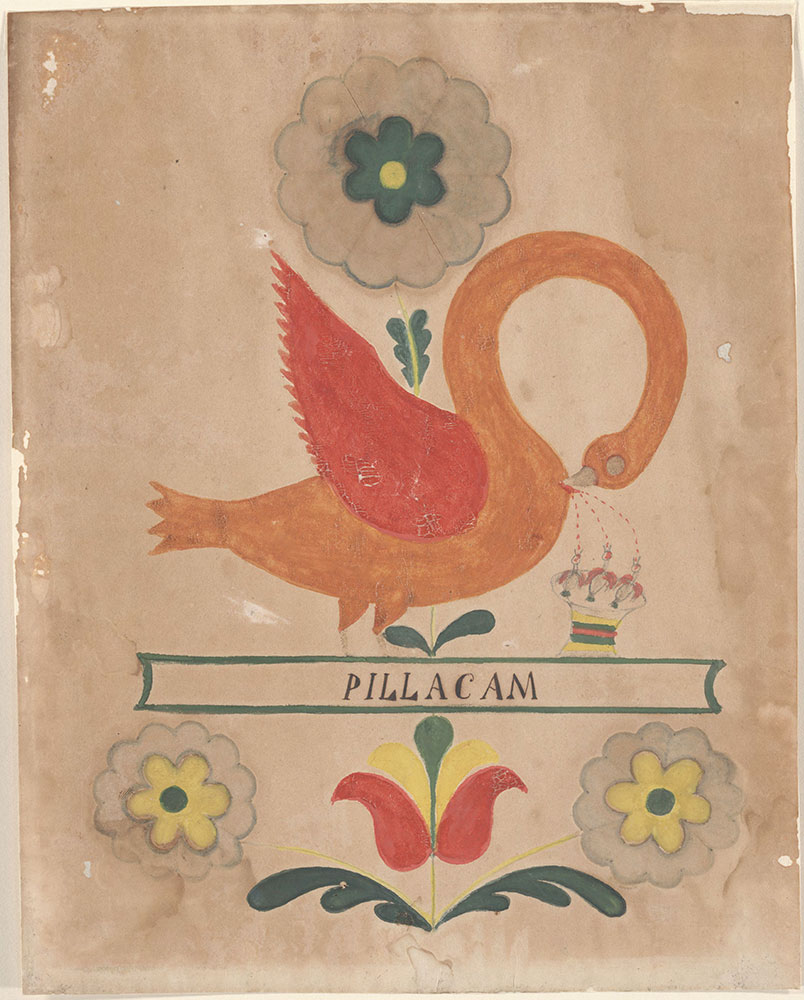
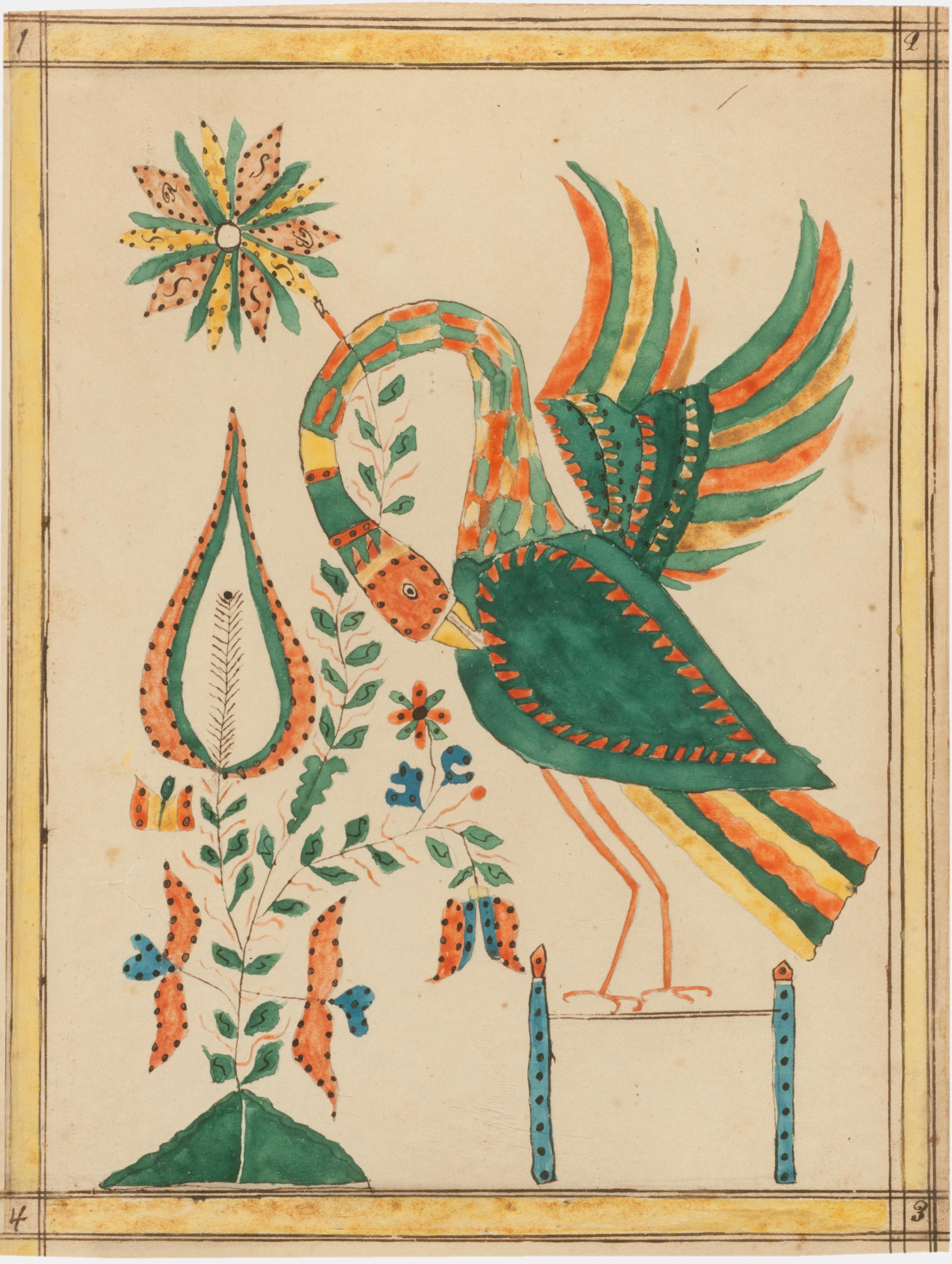
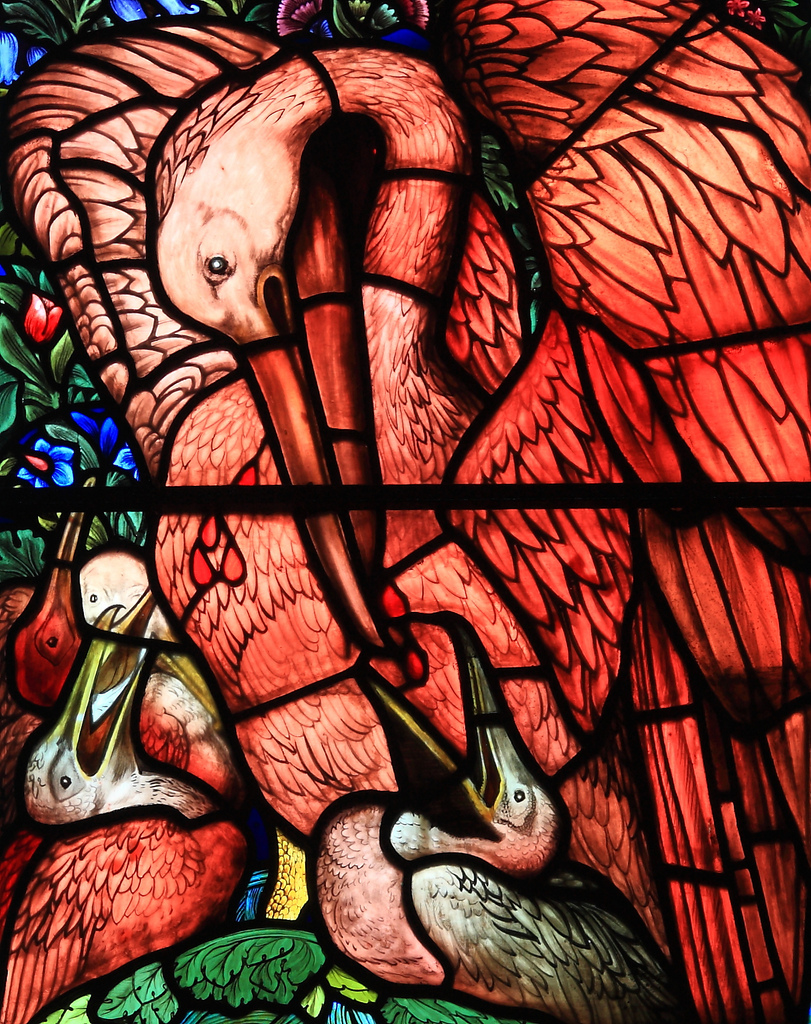
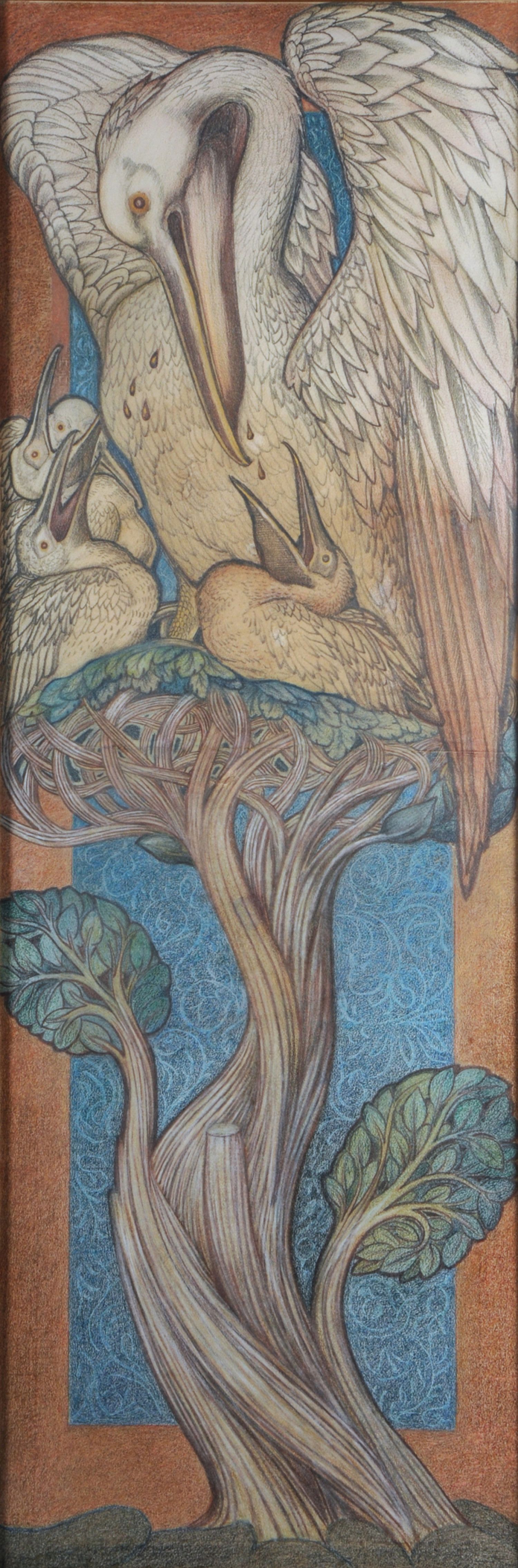
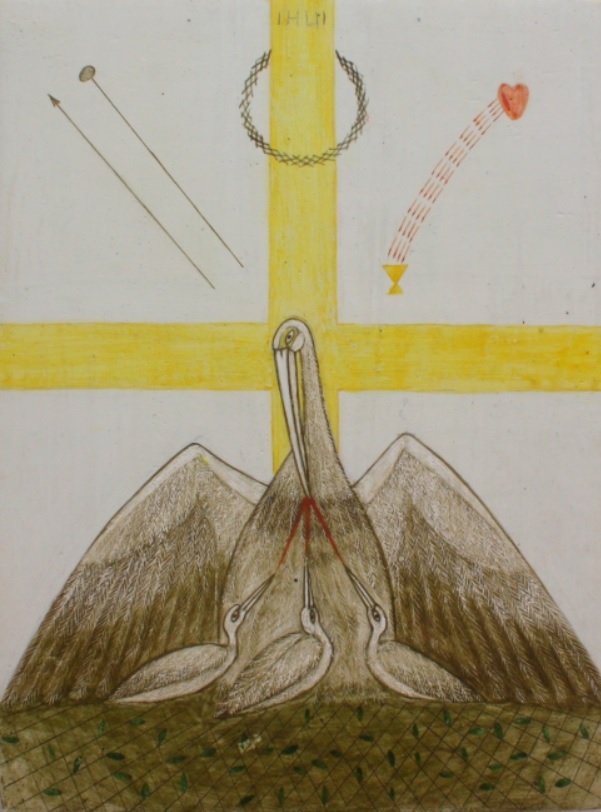
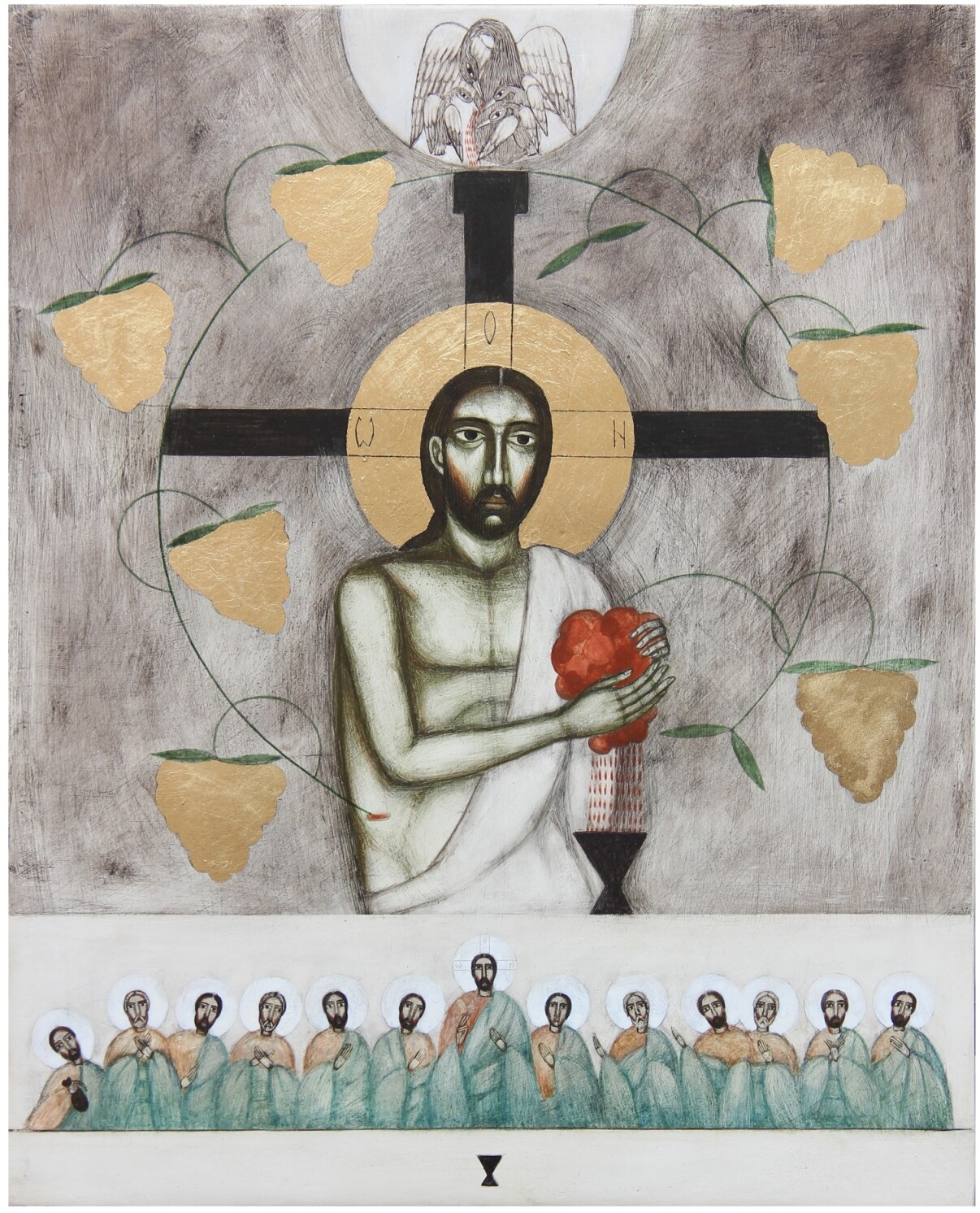
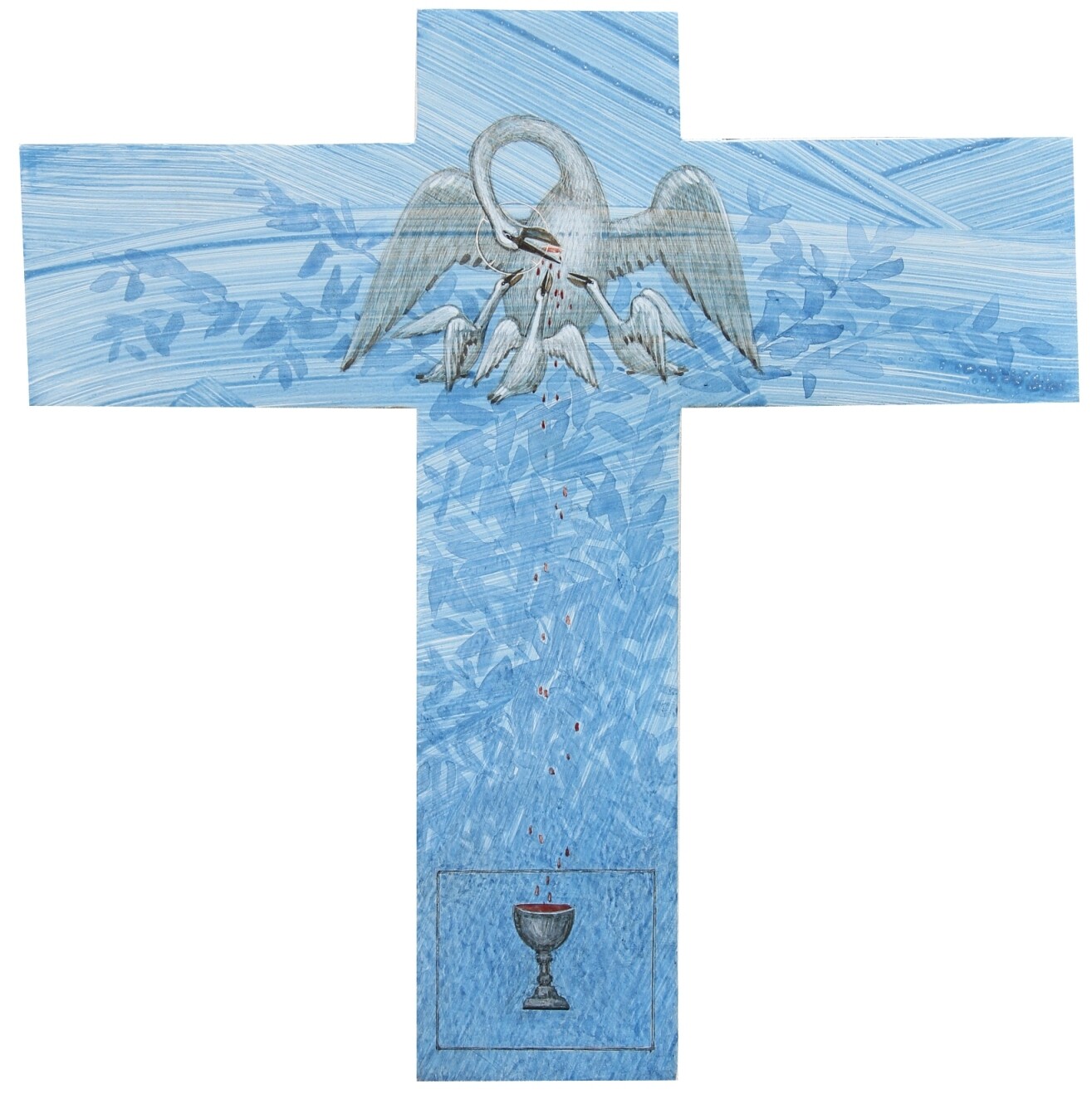
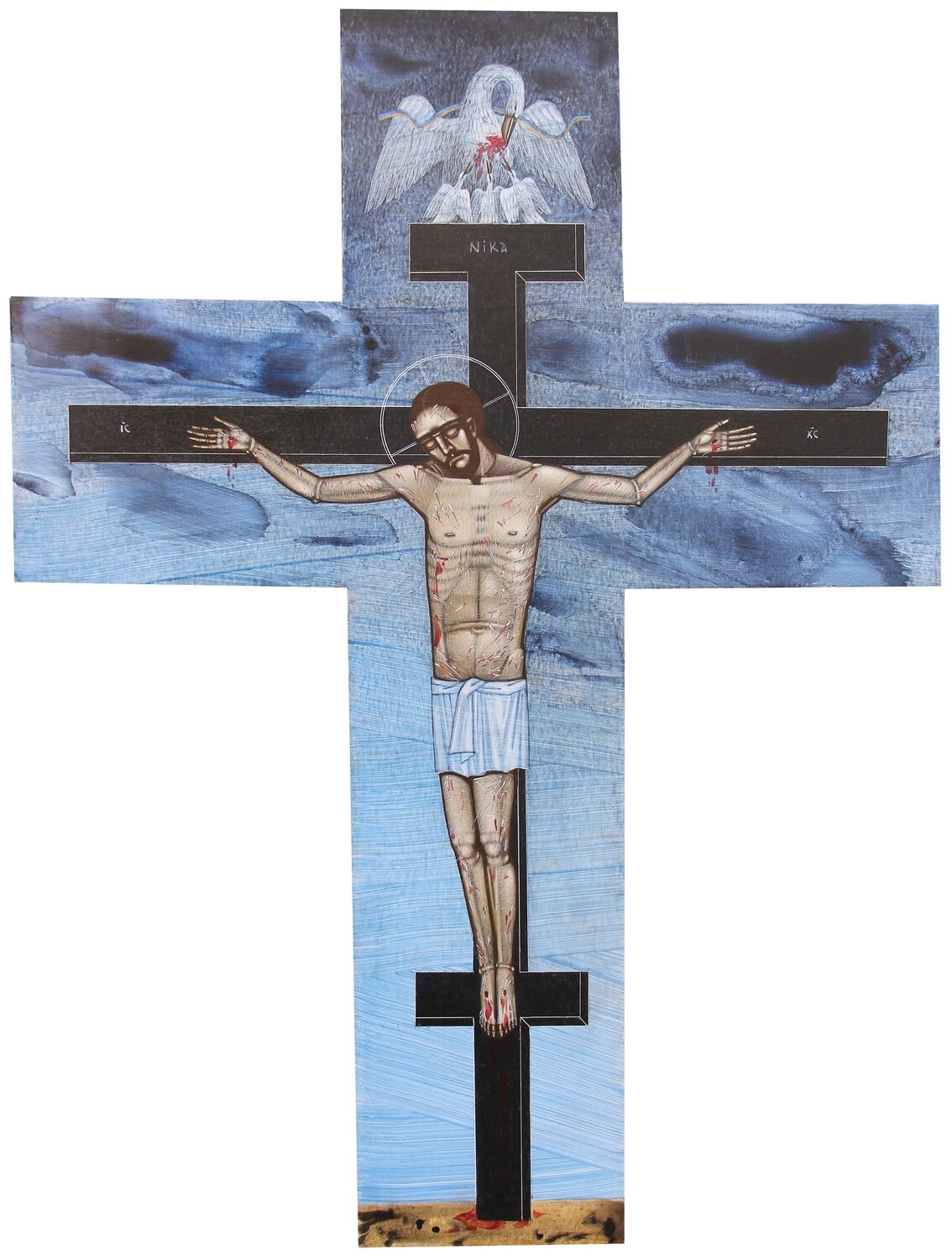
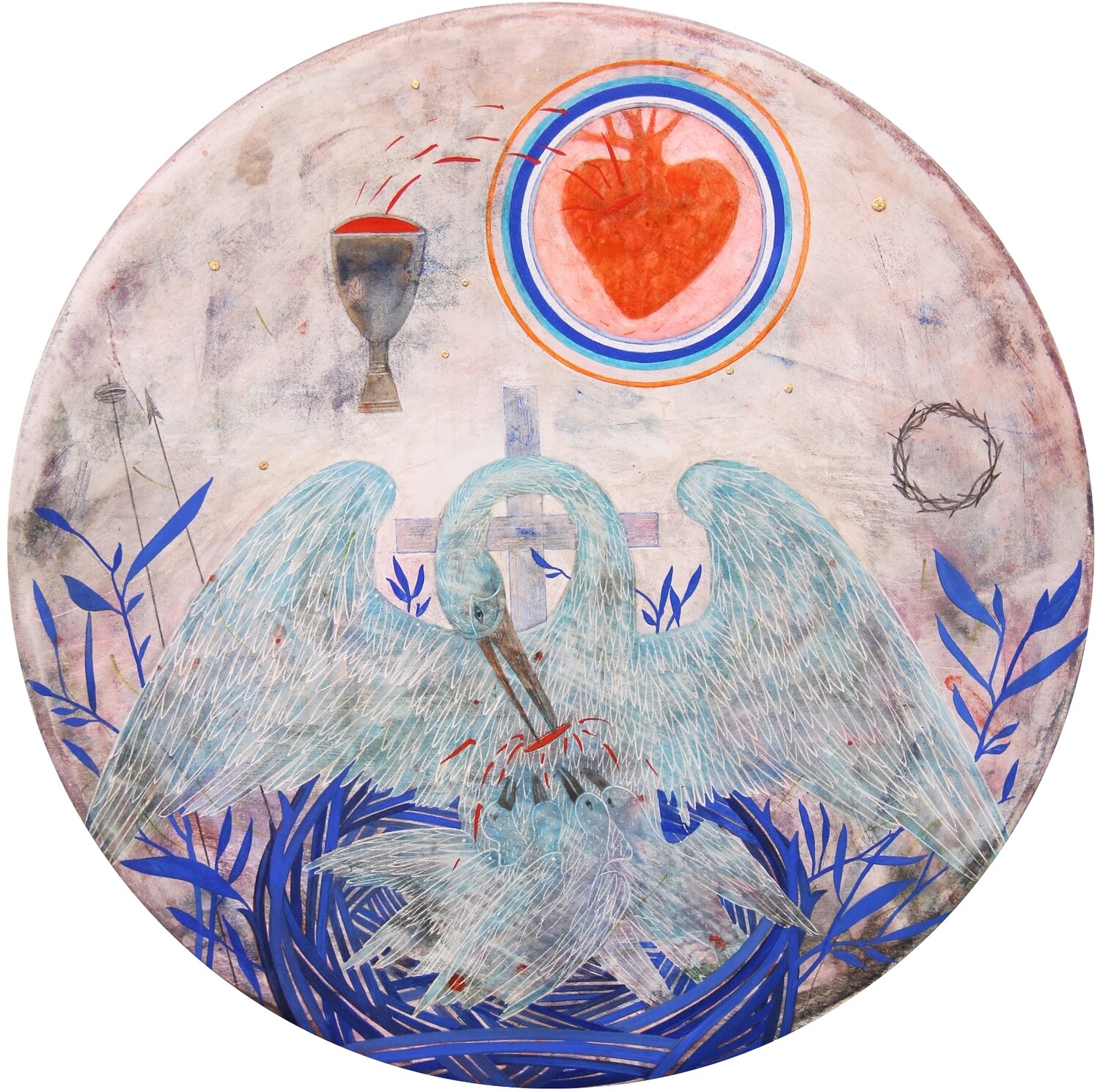
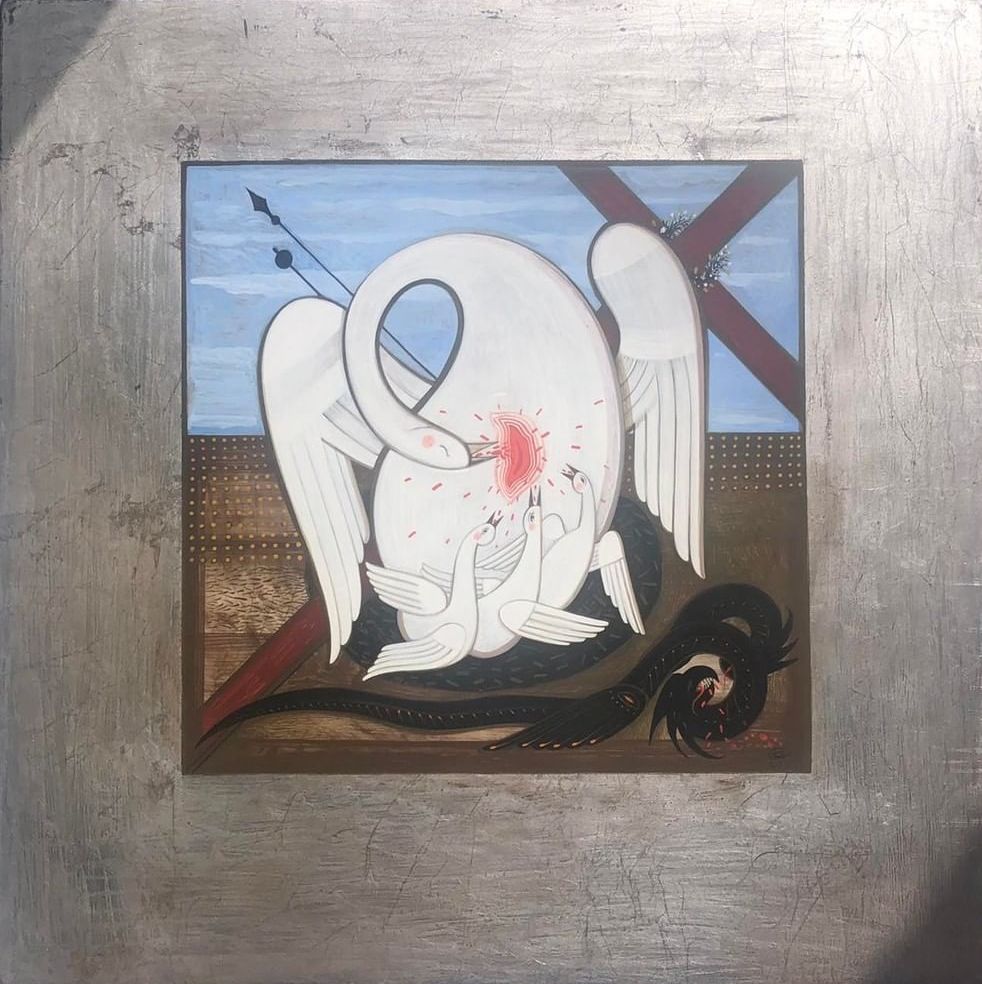
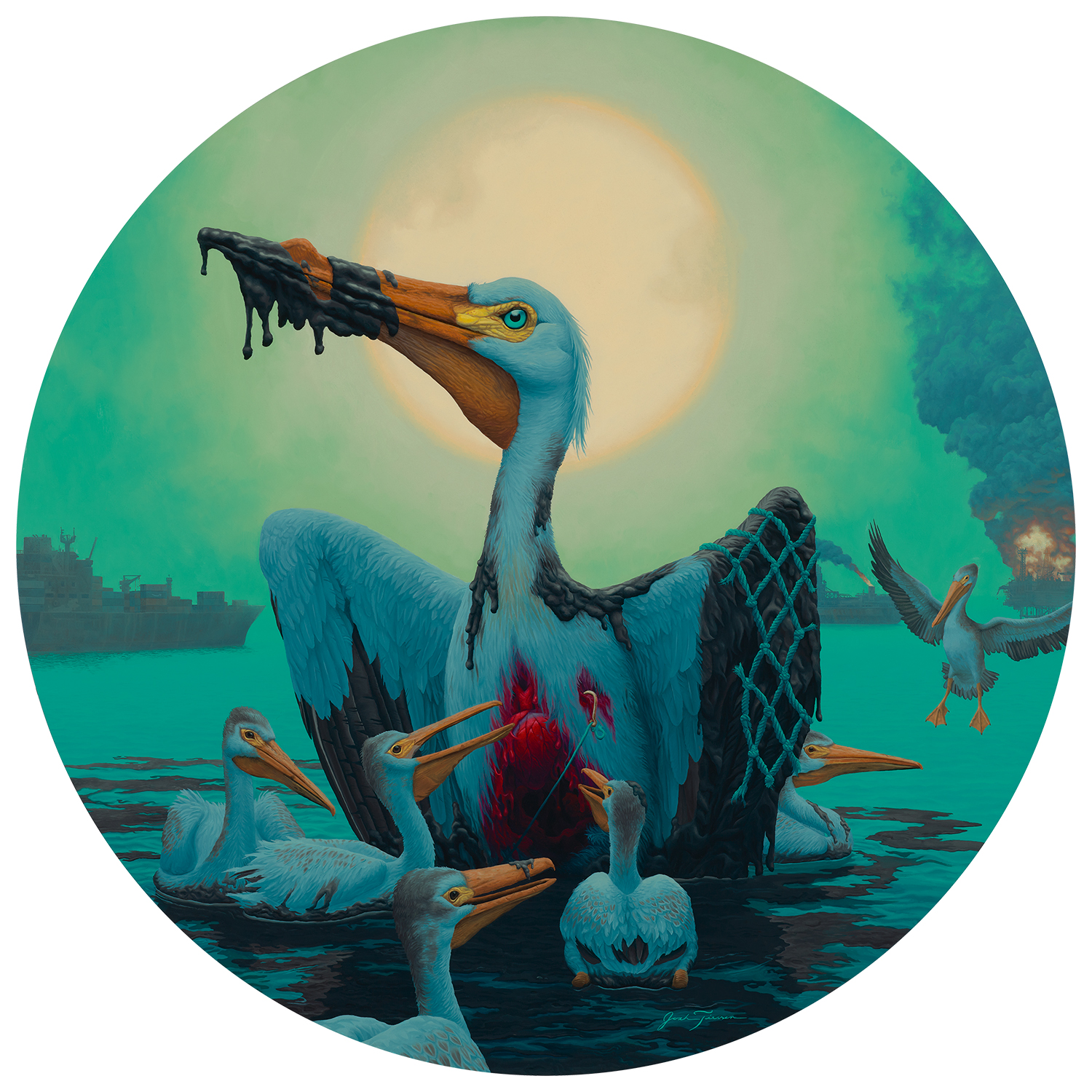
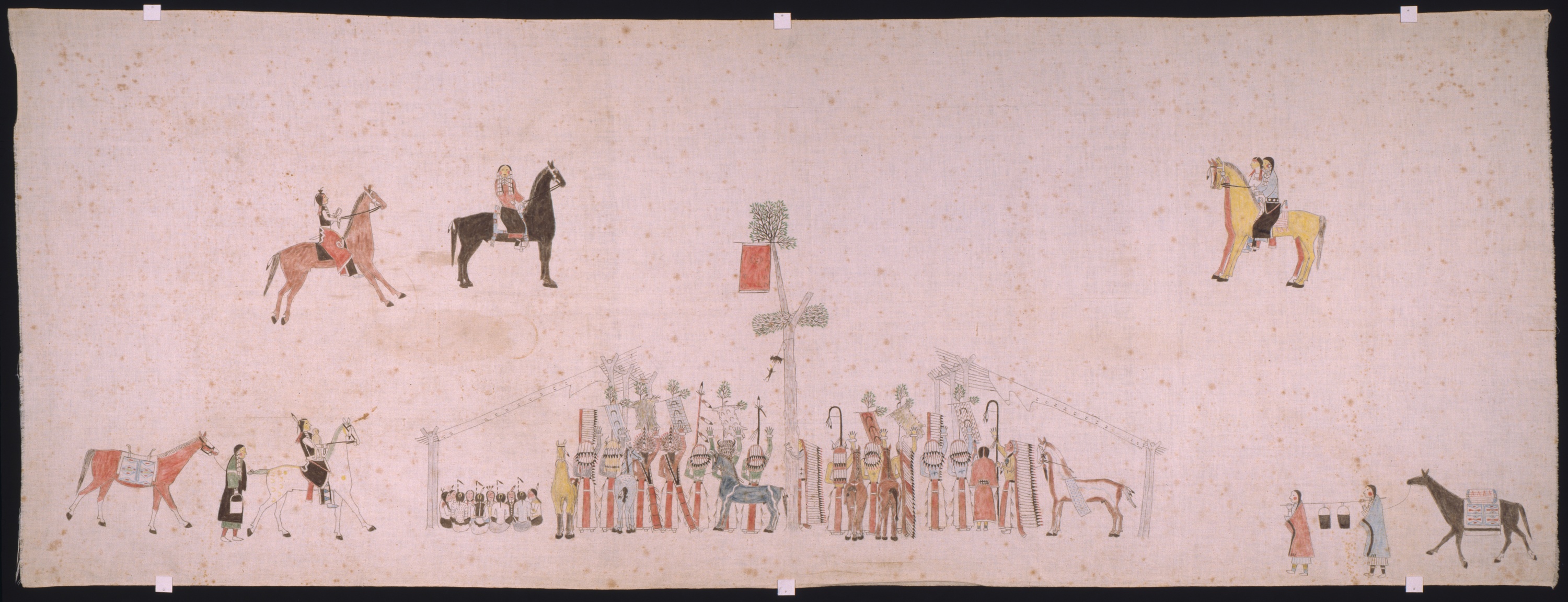
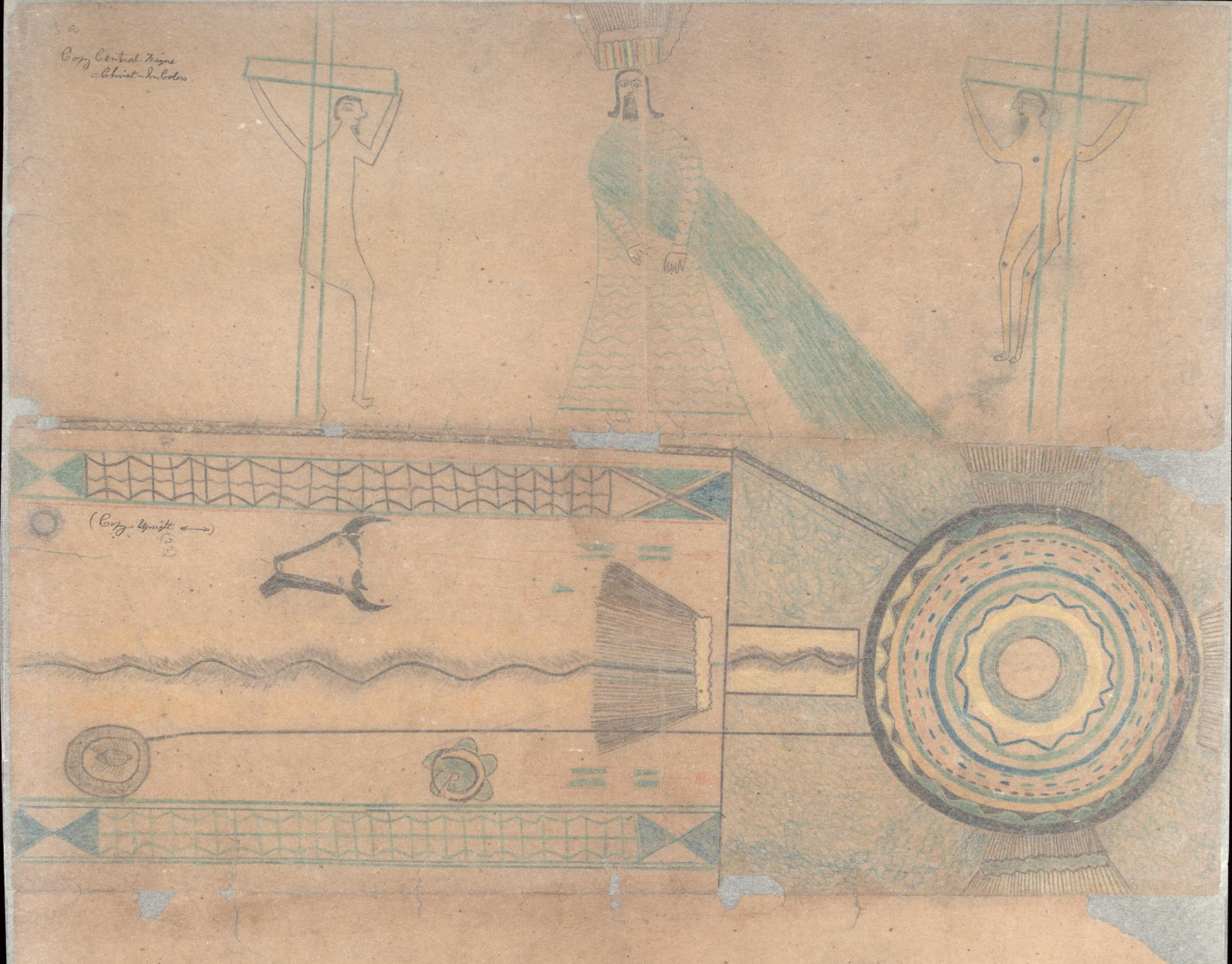
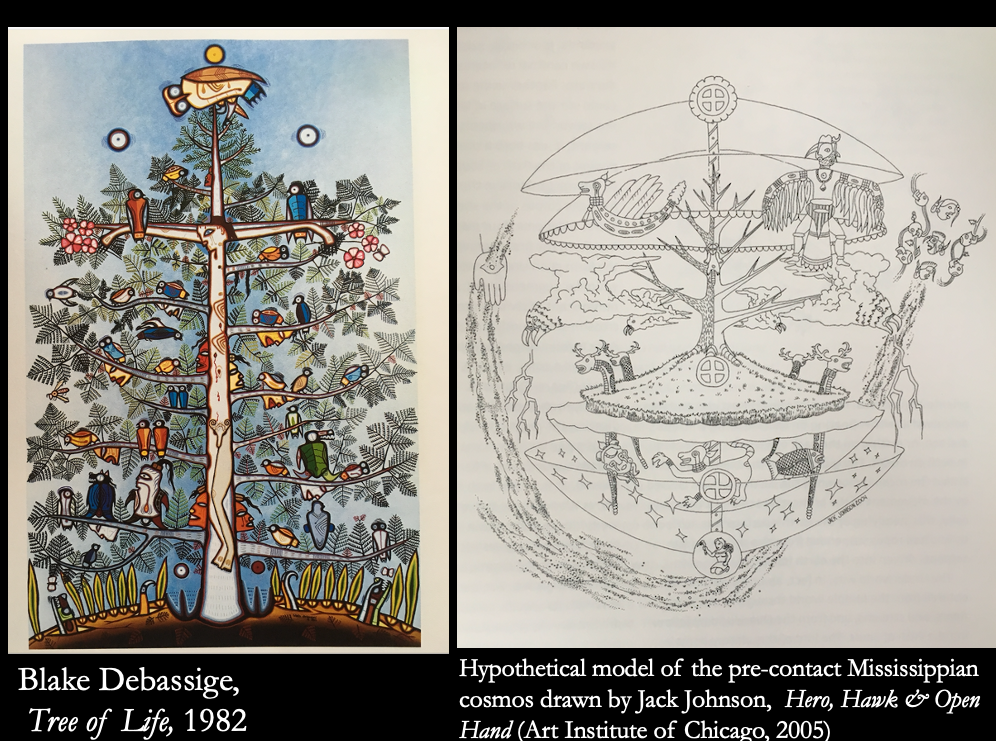
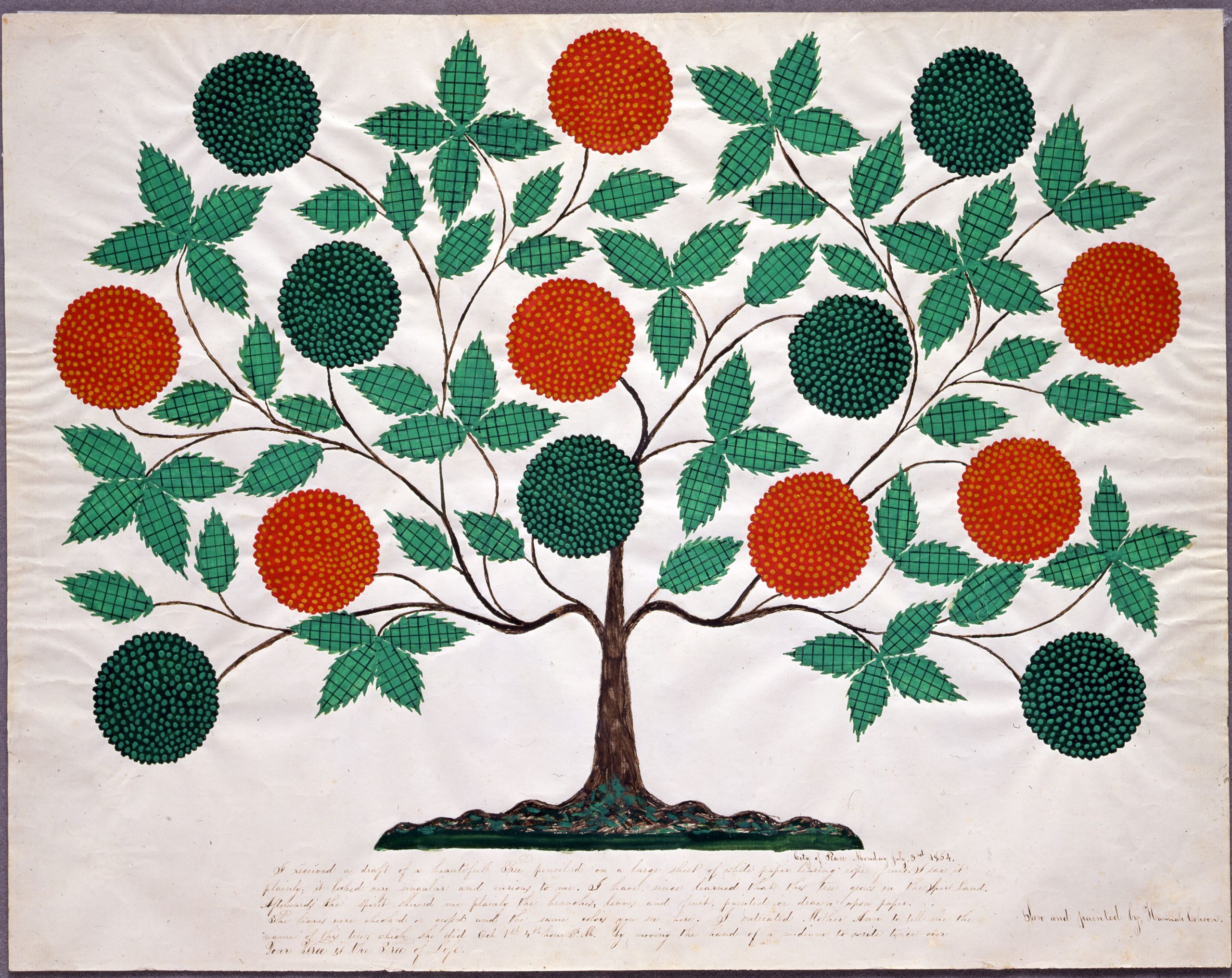
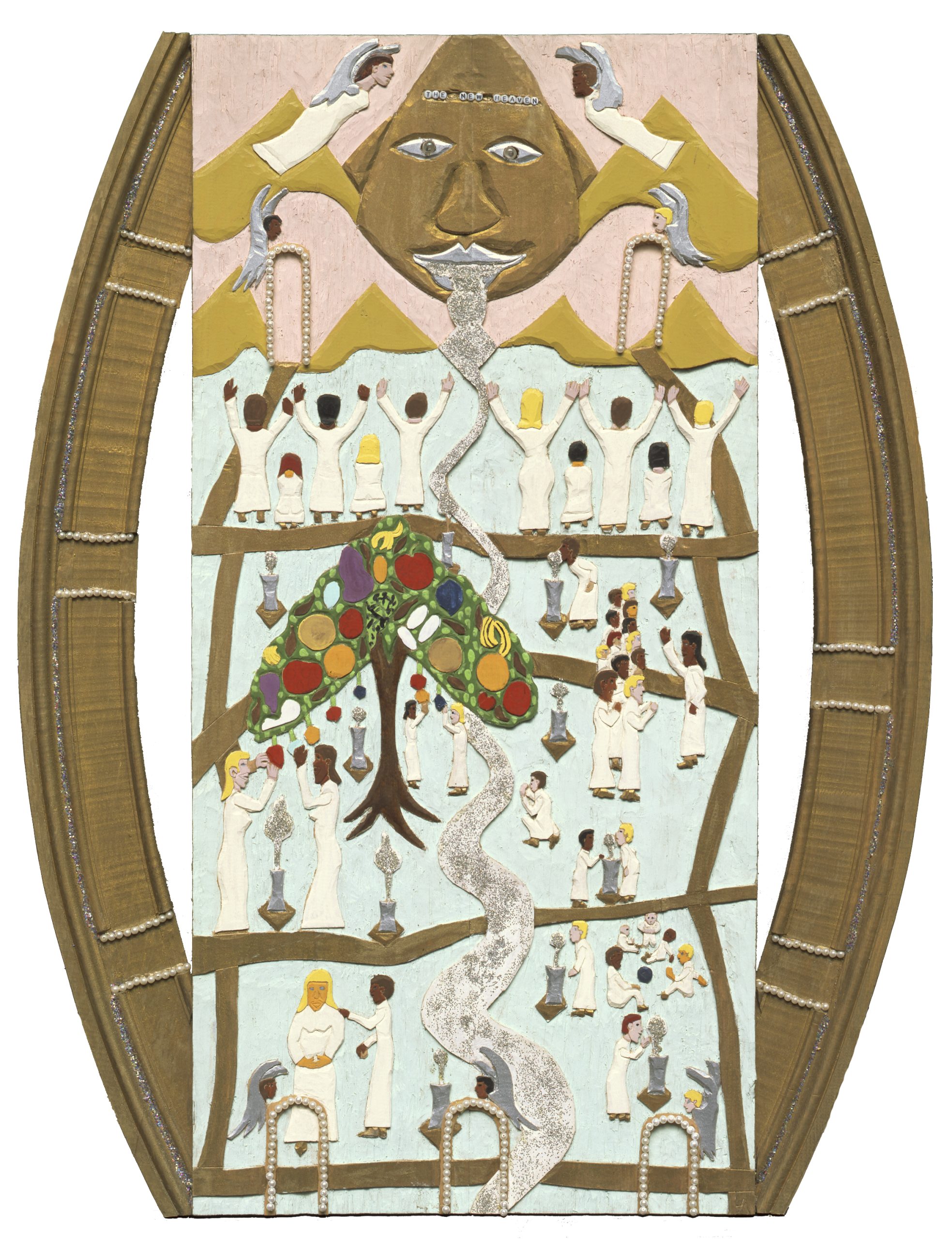
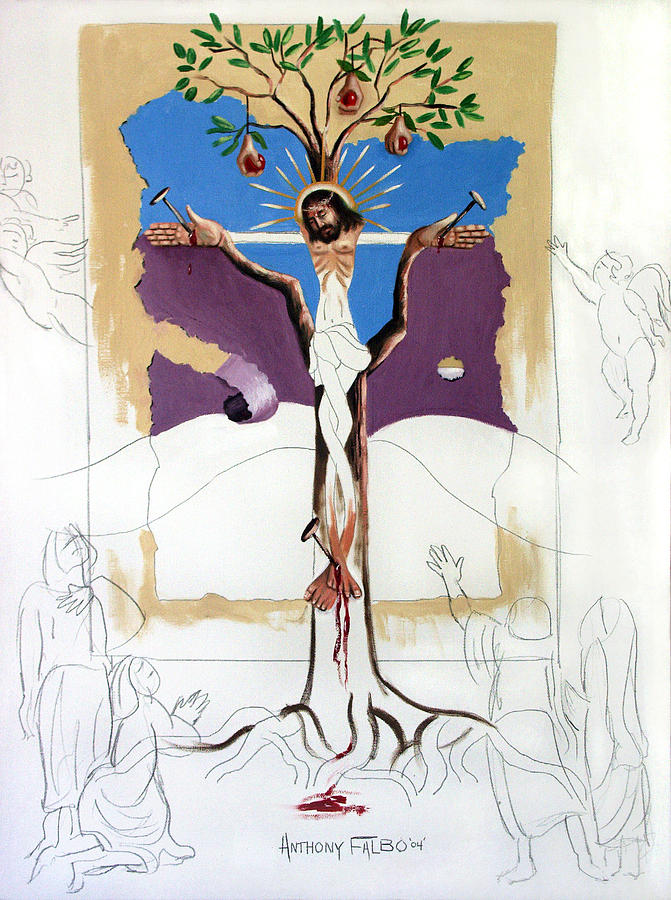
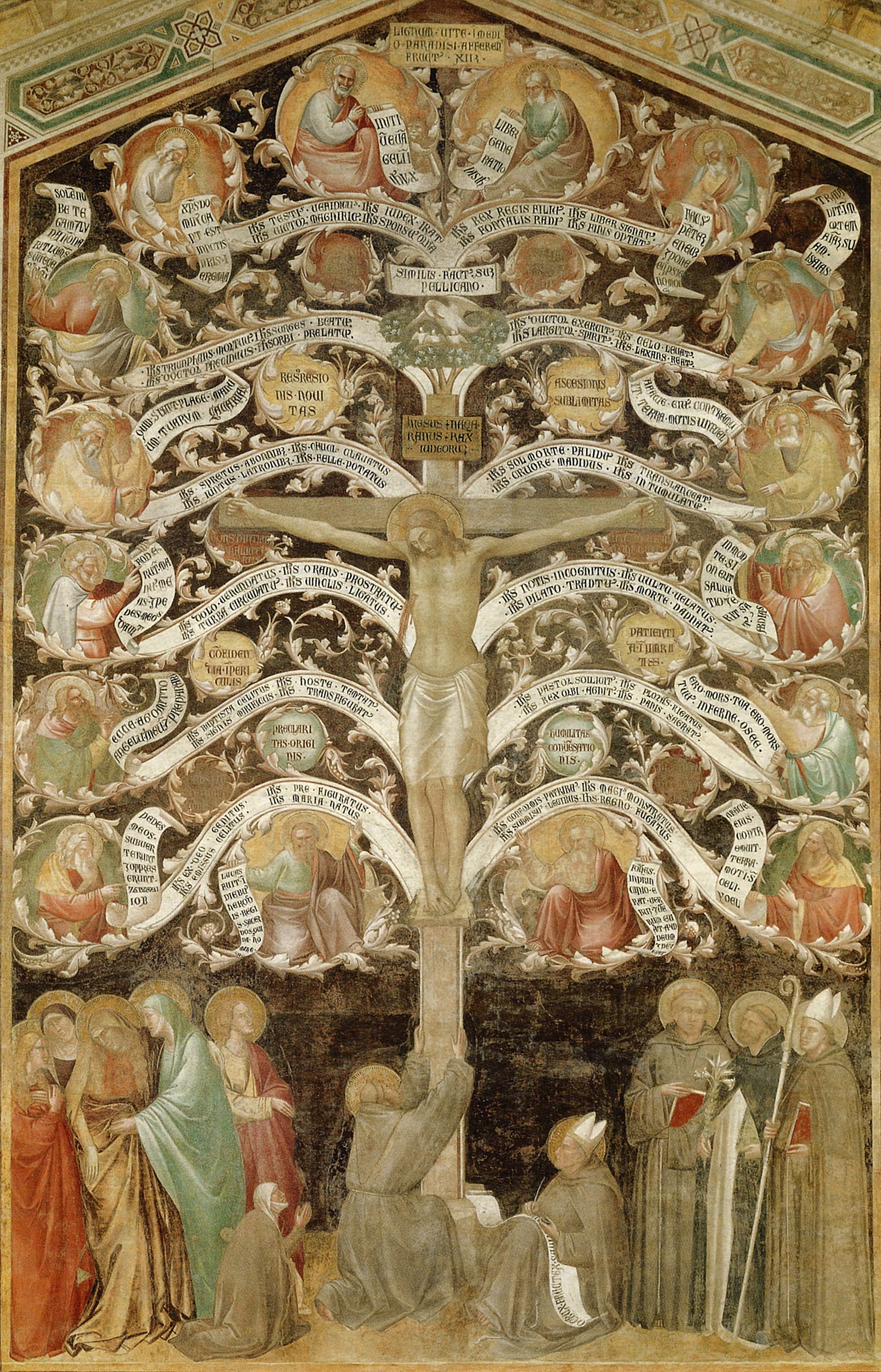
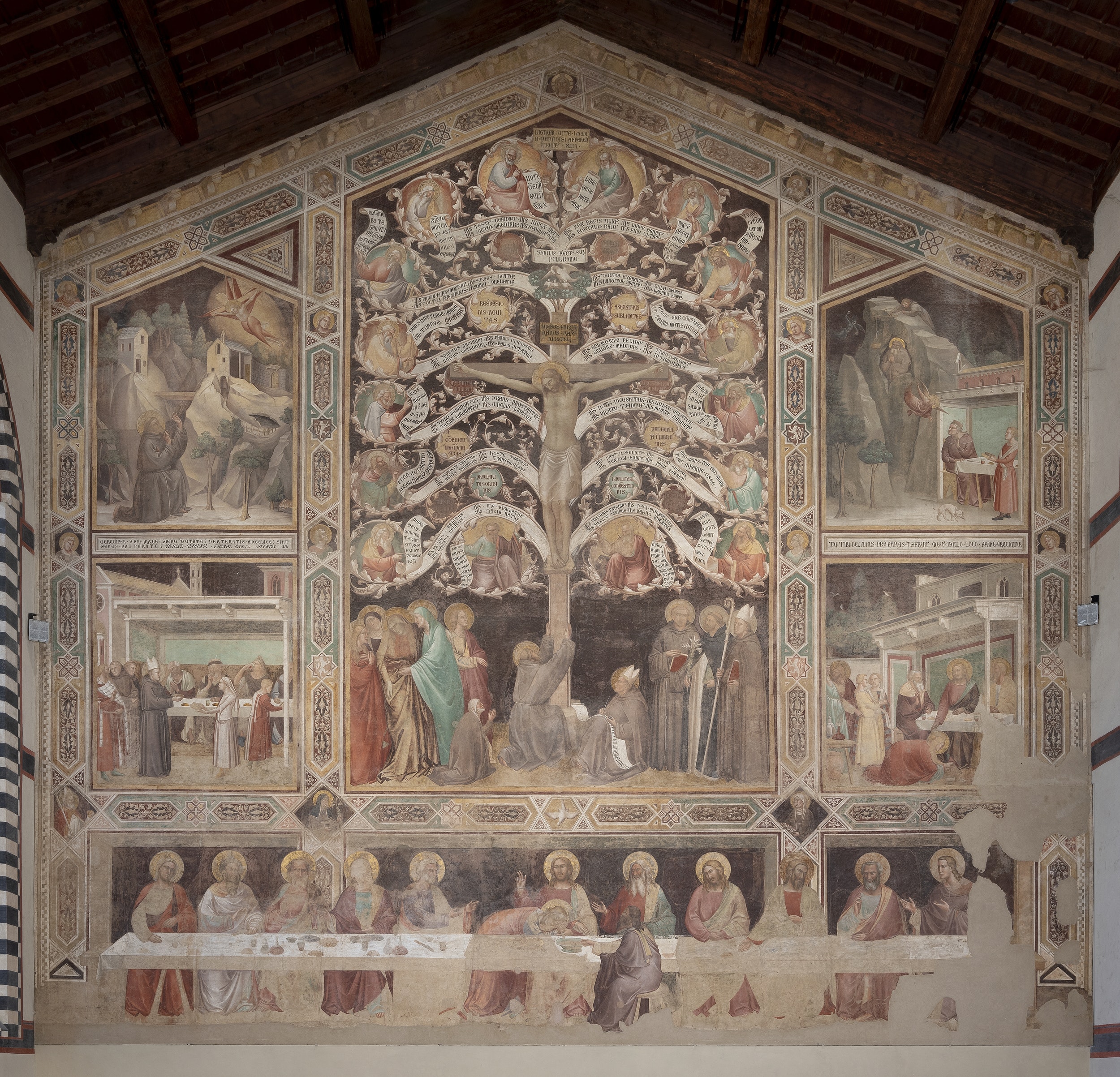
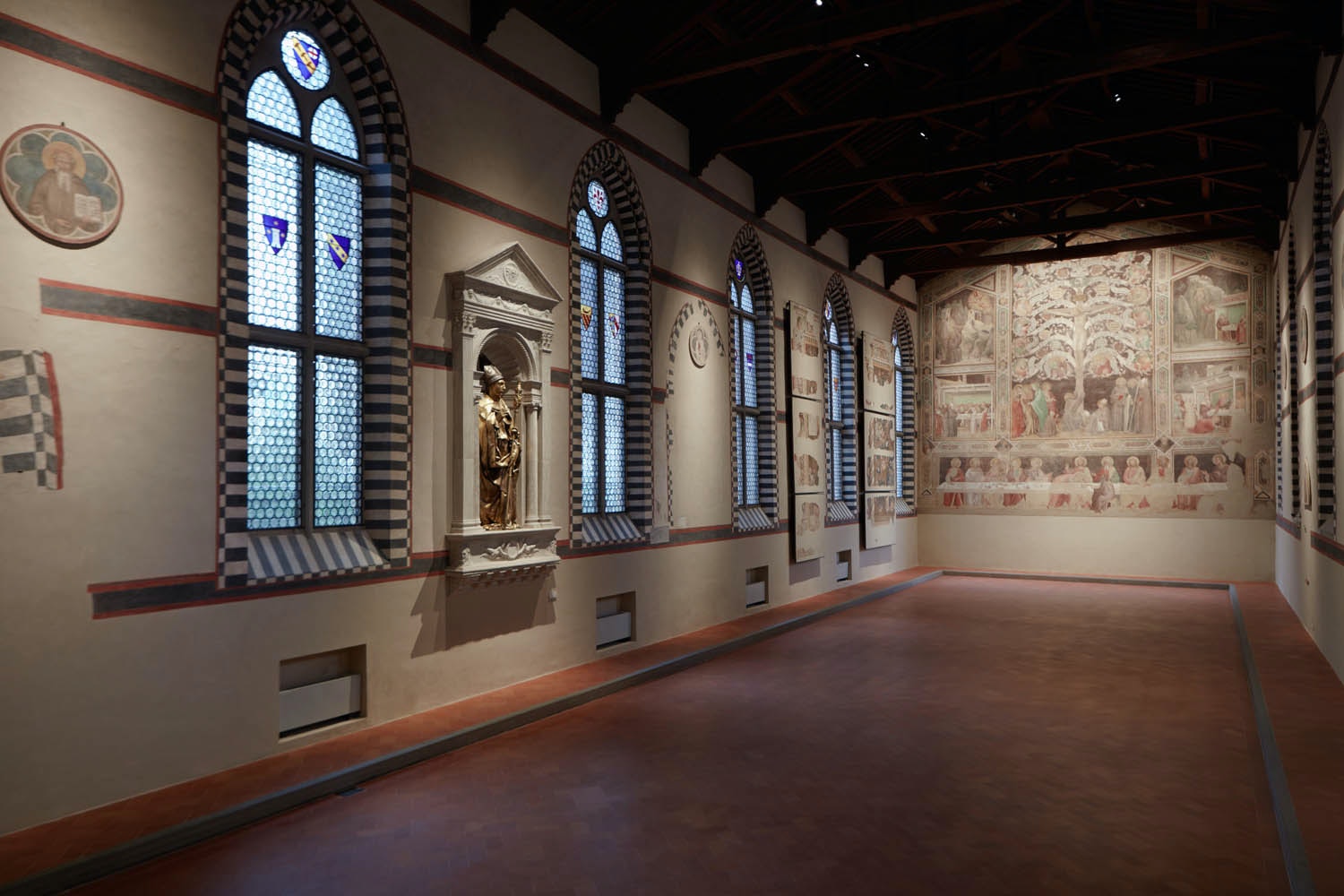
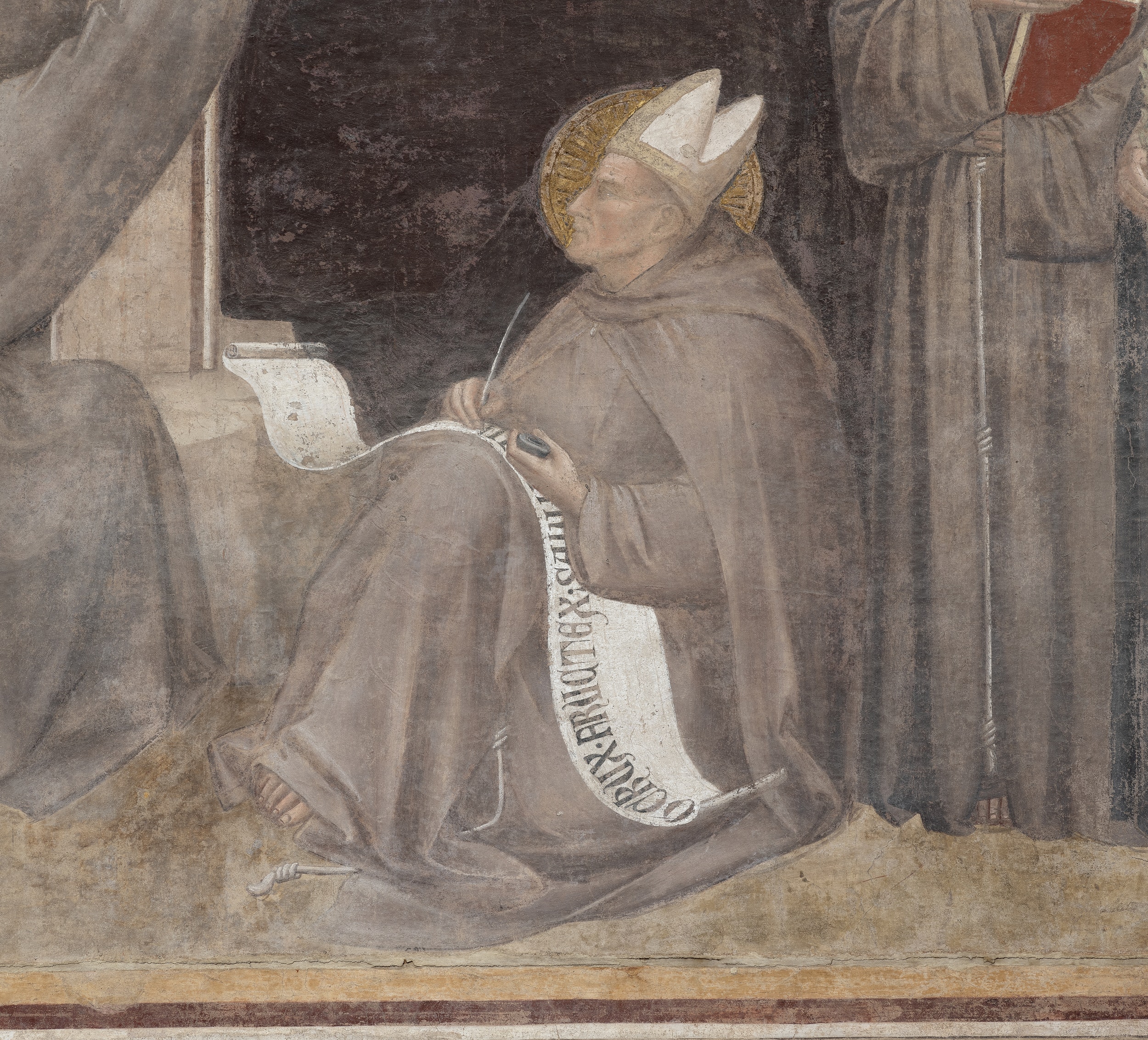
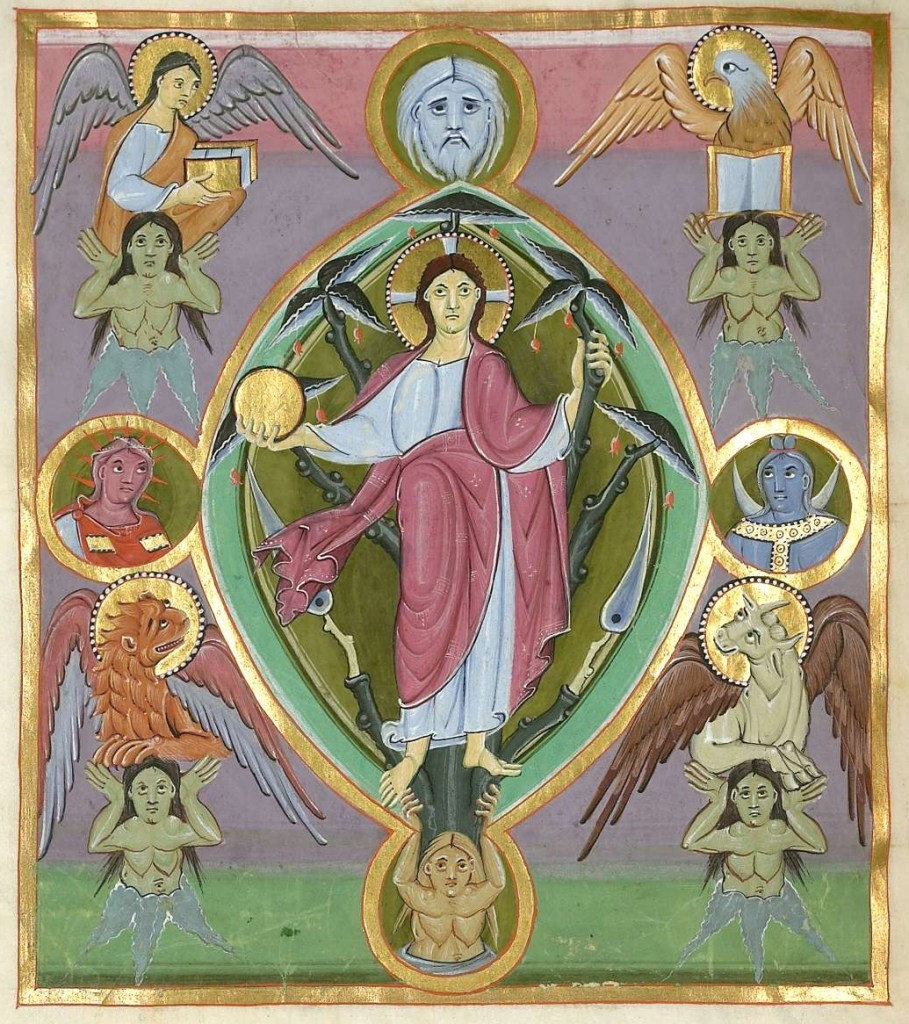
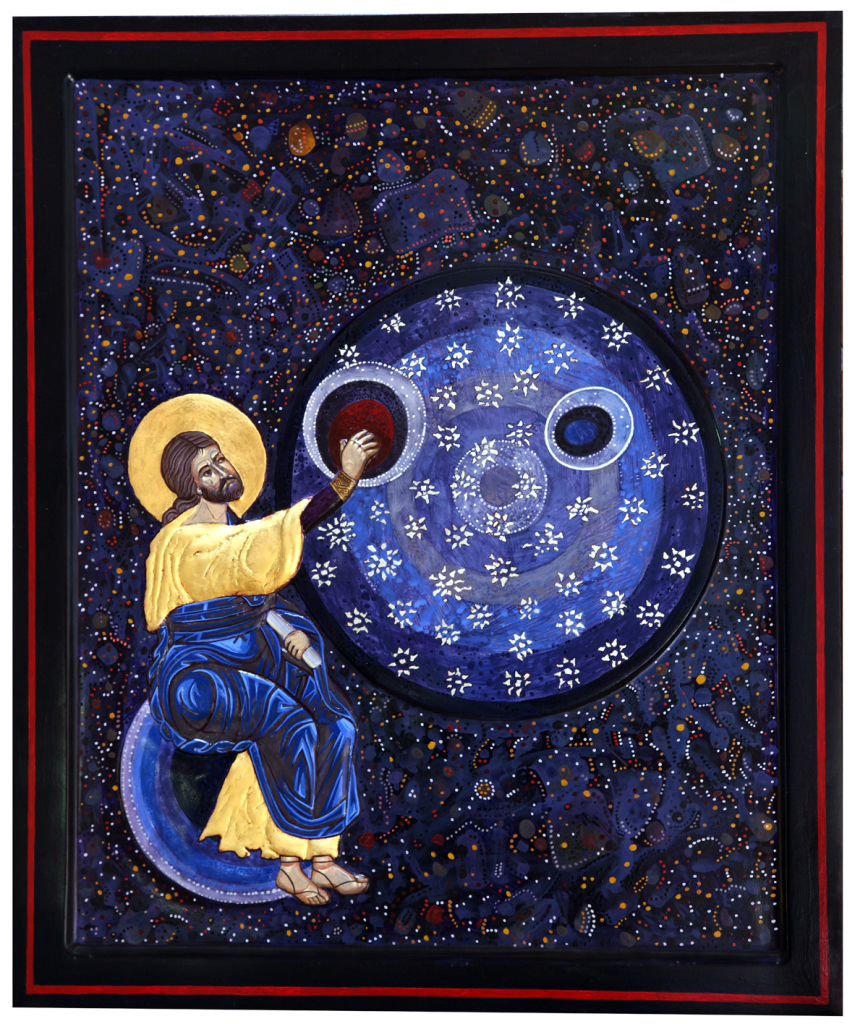
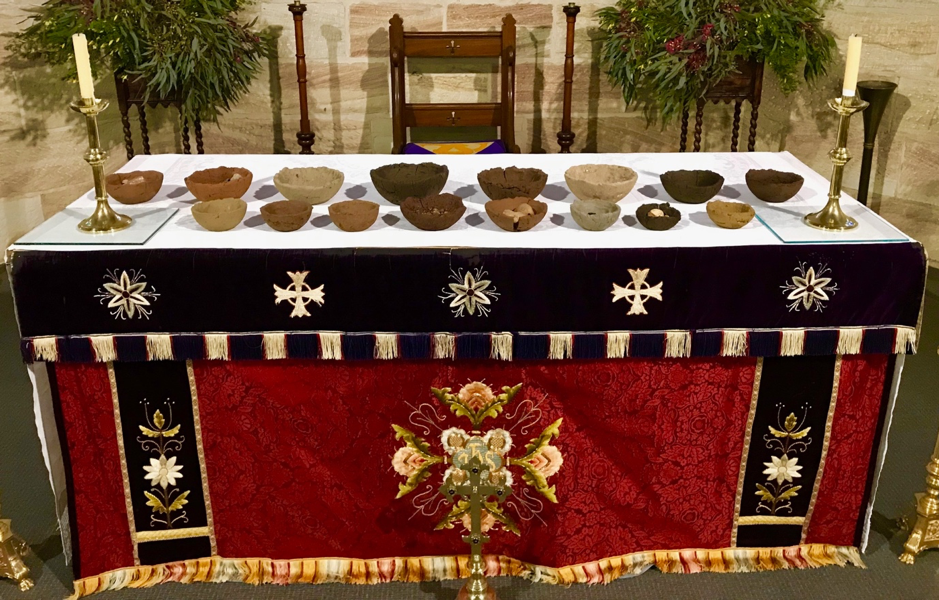
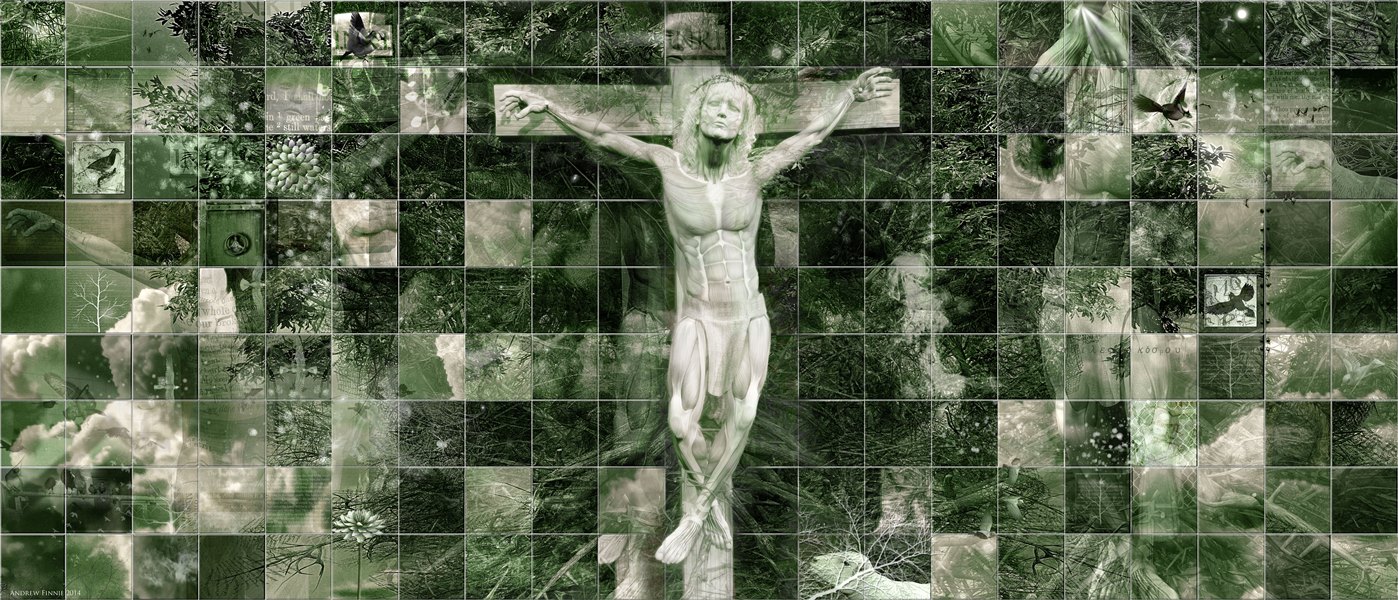
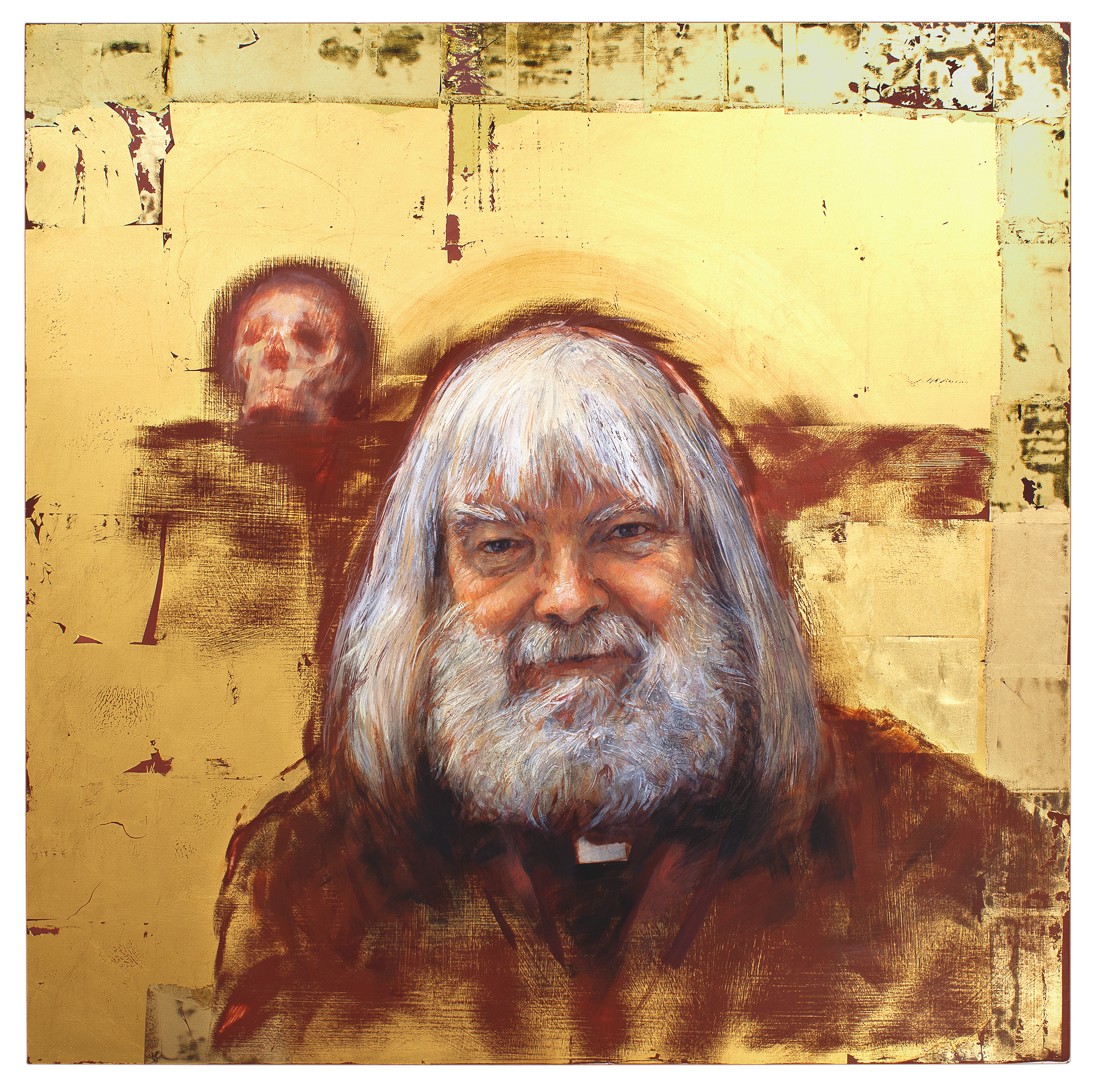
 Art & Theology