25 Poems for Christmas, vol. 4

“One of poetry’s great gifts is to slow us down,” writes Peggy Rosenthal in Praying the Gospels through Poetry. “We’re used to racing ahead as we read, whether it’s a newspaper or an email memo or even an essay: language in these forms propels us forward, urging us to grab up its main points. But poetry doesn’t press ahead so much as hold us still—in the wonder of words crafted to open into another dimension.”

Below are twenty-five poems to “hold us still” this holiday season.

I’ve collected hundreds of Advent and Christmas poems over the past decade, but for this feature one of the selection criteria was that the poem must be freely available online. I chose the number twenty-five because that is standard in most Advent calendars—tools for counting down the days to Christmas. This way, you can choose, if you wish, to bookmark this page and read just one poem a day from December 1 to 25, each one a little treat.

The order progresses, in general, from Advent longing and anticipation to Christmas joy and wonder to post-nativity moments like the presentation in the temple and the visit of the magi.

For previous years’ installments, see volume 1, volume 2, and volume 3.

1. “Advent Madrigal” by Lisa Russ Spaar: I’m not sure I understand this poem, but I like it. A madrigal is a part-song, and this is a song of waiting in simultaneous belief and doubt, of being irresistibly attracted to God’s story while also skeptical of aspects. The speaker compares the moon to a flashlight that a theater usher shines down the aisle to escort folks to their seats. What does it mean that “the treetops sough // & seize with” escape? Escape from what? And that the earth has been purloined? I don’t know, but the final couplet really lands for me—about how in the dark night of our not-knowing, we make our Advent wreaths, decking them with evergreens, their round shape an O of lament and awe before the yet-to-be-seen.

Source: University of Virginia Office of Engagement

2. “Prayer” by John Frederick Nims: The first in a sequence of five poems, “Prayer” expresses a sense of emptiness and desire, beckoning an unnamed one whom I read as Christ to come and fill. “Come to us, conceiver, / You who are all things, held and holder. / . . . / Come, infinite answer to our infinite want.”

Source: Five Young American Poets, vol. 3 (New Directions, 1944); compiled in The Powers of Heaven and Earth: New and Selected Poems (Louisiana State University Press, 2022)

3. “how he is coming then” by Lucille Clifton: This poem is part of a sequence on the life of Mary; it appears between “mary’s dream” (on the Annunciation) and “holy night” (on Mary’s ecstatic birthing experience). In answer to the title, Clifton gives three similes.

Source: Two-Headed Woman (University of Massachusetts Press, 1980); compiled in The Collected Poems of Lucille Clifton (BOA Editions, 2012)

4. “Advent 2” by Anna A. Friedrich: This poem is the second in a series of Advent villanelles commissioned by the poet’s church in Boston last year to converse with one or more of the lectionary readings for each week of the season. Malachi 3:1–4 is the primary touchstone here, a formidable prophetic passage that compares God in the day of his coming to a blazing fire that refines metal. Stanza 3 references the fiery repentance-preaching of John the Baptist from Luke 3:1–6, and then Friedrich draws in another, unexpected “fire” text: Daniel 3, in which three young Hebrew men are thrown into a furnace by a Babylonian king for their refusal to worship his gods but are preserved from harm when a mysterious fourth person appears with them in the flames. Friedrich connects this story to the promise that the earth and its inhabitants will not be wholly consumed in the fire of God’s judgment—only the impurities, the dross, will be destroyed, so that all may be restored to their truest selves. Hence why, in Friedrich’s words, “We pray for His fire. We trust this flame.”

Source: Monafolkspeak, December 11, 2024 | https://annaafriedrich.substack.com/

5. “Desert Blossoming” by Amit Majmudar: A reflection on the messianic promise of Isaiah 35:1–2, this poem celebrates how, through the deserts of Israel, Jesus “scattered his verses on the secretly gravid ground,” causing the wilderness to blossom. Majmudar mentions red, the color of fire (an image he connects to the light of faith), rhyming it with “bled.” Although he uses this final word in the sense of spreading into or through—oases bleeding into one another as dry land becomes water—one can’t help but think of Jesus’s sacrificial death, his blood extraordinarily fertile, producing life. 

Source: Heaven and Earth (Story Line, 2011) | http://www.amitmajmudar.com/
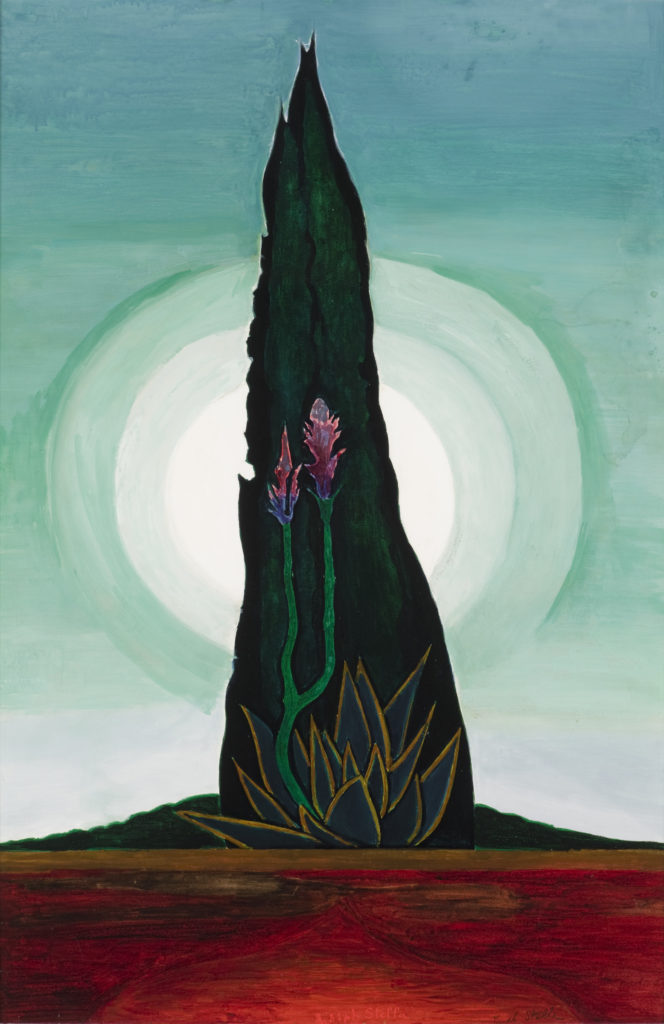
Stella, Joseph_Tree, Cactus, Moon
Joseph Stella (American, 1877–1946), Tree, Cactus, Moon, ca. 1928. Gouache on paper, 104.1 × 68.6 cm. Reynolda House Museum of American Art, Winston-Salem, North Carolina.

6. “Name One Thing New” by Seth Wieck: This six-line poem takes the Teacher of Ecclesiastes to task, responding to his cynical claim that “there is nothing new under the sun” (Eccles. 1:9) with a counterexample.

Source: Ekstasis, December 6, 2021 | https://www.sethwieck.com/

7. “For My Mother at Advent” by Brian Volck: The poet recalls a simple Advent tradition his mother established in his childhood and reflects on her spiritual legacy, her lifetime of Christ-inspired kindnesses that continue to pillow him. How might we soften the hardness of the world for others?

Source: Flesh Becomes Word (Dos Madres, 2013) | https://brianvolck.com/

8. “Advent” by Suzanne Underwood Rhodes: This stunning poem makes unlikely intertextual connections, bringing Matthew 19:24 (one of Jesus’s hard sayings regarding wealth) to bear on John 1. Its unique angle on the Incarnation and its evocative imagery have inspired an experimental jazz composition and several paintings.

Source: What a Light Thing, This Stone (Sow’s Ear, 1999) | https://www.suzanneunderwoodrhodes.com/

9. “An Hymn to Humanity” by Phillis Wheatley: “Lo! for this dark terrestrial ball / Forsakes his azure-pavèd hall / A prince of heav’nly birth!” So begins this poem on the Incarnation by Phillis Wheatley (ca. 1753–1784), the first African American to publish a book of poetry. In stanzas 2 and 3, God the Father dispatches the Son to establish his throne on earth, “enlarg[ing] the close contracted mind, / And fill[ing] it with thy fire.” The “languid muse” in stanza 5 refers to Wheatley herself, whereas the “celestial nine” are the ancient Greek inspirational goddesses of literature, science, and the arts. The “smiling Graces” is another classical reference.

Source: Poems on Various Subjects, Religious and Moral (London, 1773). Public Domain.
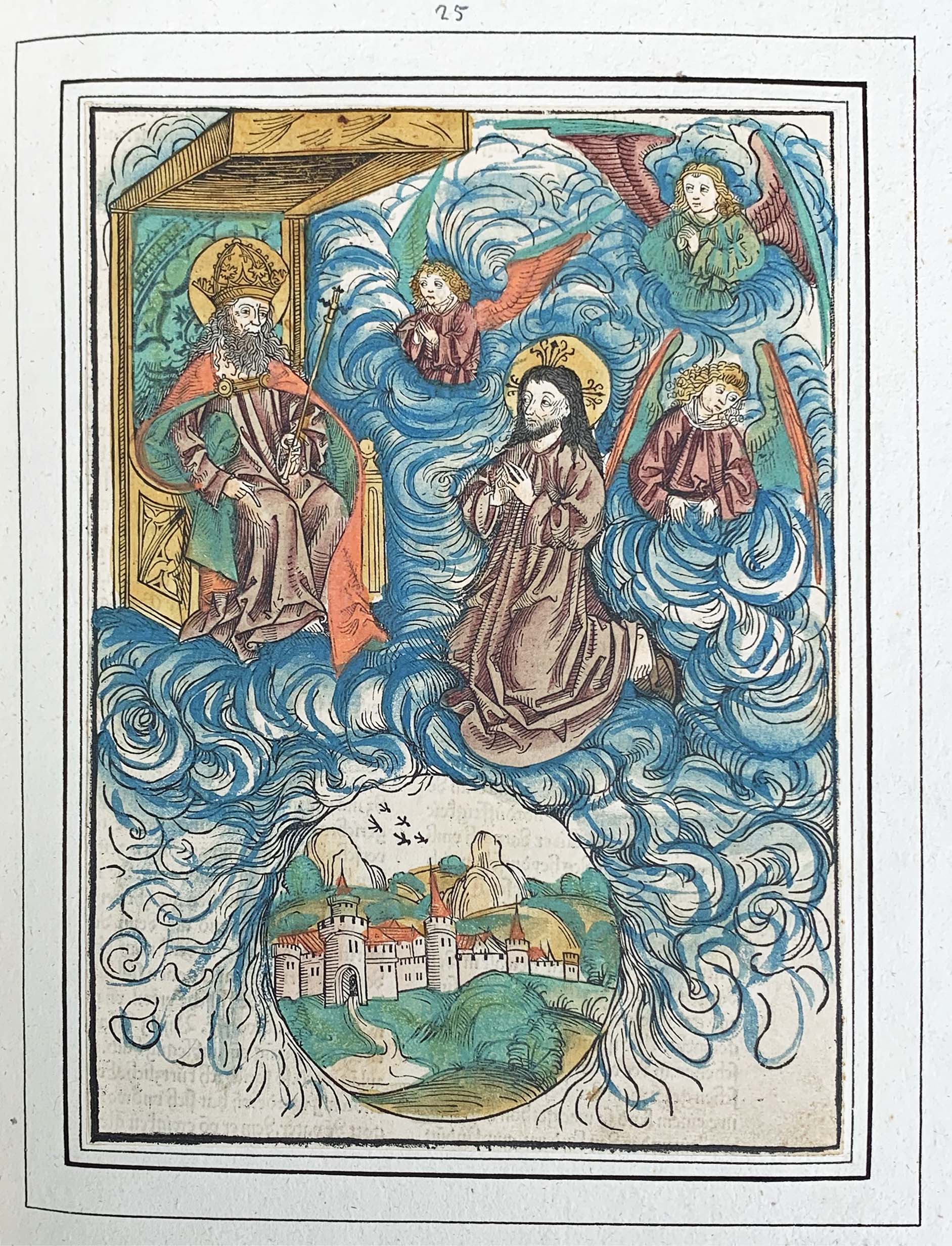
Father sending the Son
Michael Wolgemut (German, 1434–1519), The Father sending the Son into the world, 1491. Hand-colored woodcut from the Schatzbehalter (published by Anton Koberger, Nuremberg), 43.7 × 27.5 cm. British Museum, London.

10. “In My Hand” by Sarah Robsdottir: Mary remembers the moment she conceived Jesus, one ordinary day when sitting down to a bowl of lentil stew.

Source: Aleteia, April 9, 2018

11. “The Risk of Birth, Christmas, 1973” by Madeleine L’Engle: Best known for her children’s novel A Wrinkle in Time, Madeleine L’Engle was also a poet. Here she compares our era to the one in which Jesus was born—both are characterized by violence and hate, and yet Jesus, the embodiment of divine love, willingly entered the peril.

Source: The Weather of the Heart (Doubleday, 1978); compiled in The Ordering of Love (Crosswicks, 2005) | https://www.madeleinelengle.com/

12. “On Another’s Sorrow” by William Blake: Through the Incarnation, God lovingly, humanly, entered the world of human woe to experience it firsthand. “He doth give His joy to all,” Blake writes: “He becomes an infant small, / He becomes a man of woe, / He doth feel the sorrow too.” I featured this poem about Emmanuel, God-with-us, in a musical setting by singer-songwriter David Benjamin Blower in 2023 but was surprised that Blower omitted Blake’s final stanza, whose closing couplet I find striking, as it conveys Jesus’s continued identification with and compassion for humanity, how he moans alongside us in our suffering. For a different musical interpretation, also in an acoustic indie folk mode, see the one by Portland-based artist Michael Blake, from his 2021 album Songs of Innocence and Experience:

Source: Songs of Innocence and Experience (London, 1794). Public Domain.

13. “Missing the Goat” by Lorna Goodison: An immigrant from Kingston, Jamaica, to Toronto, Ontario, Goodison writes of the heightened feeling of exile but also of creative adaptations during the holidays as she tries to carry out the food traditions of her native country on a foreign soil where some of the ingredients are in more limited supply. For the sorrel wine, traditionally made with roselle (Hibiscus sabdariffa) petals, tropically grown, she has to make do with redbuds. And the local shops have run out of goat meat—“the host of yardies” (people of Jamaican origin) who’ve moved to the area have already bought it all up—so “we’ll feast then on curried some-other-flesh.” Despite the differences from home, Christmas is still Christmas, and she raises her “hybridized wassail cup” to her new place, her new neighbors (many of them, like her, also recent arrivals from the Caribbean), and the creation of new rituals in multicultural Toronto.

Source: Controlling the Silver (University of Illinois Press, 2010); compiled in Collected Poems (Carcanet, 2017)

14. “Word Made Flesh” by Kathleen Raine: Awarded the CBE (Commander of the Order of the British Empire) for her significant contributions to literature and culture, Raine has been described as a mystical and visionary poet. Here is her revoicing of John 1. What a powerful last two lines!

Source: The Pythoness (Hamish Hamilton, 1949); compiled in The Collected Poems of Kathleen Raine (Golgonooza, 2000)

15. “Nativity” by Barbara Crooker: In the heavy dark, in the windy cold, “love is born in the world again” every December when we retell the story of Christ’s birth.

Source: Small Rain (Purple Flag, 2014) | https://www.barbaracrooker.com/
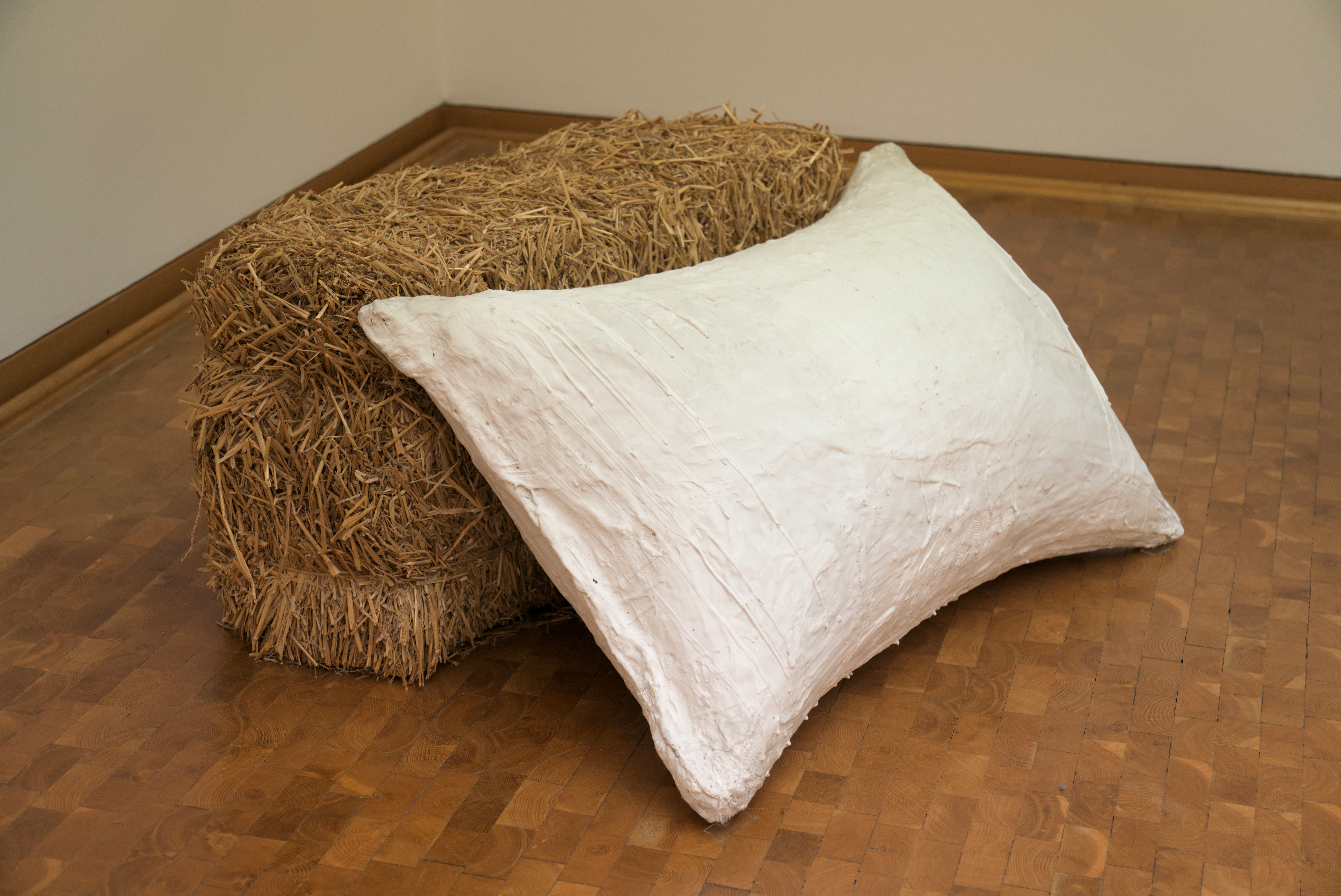
Kuehn, Gary_Straw Pillow
Gary Kuehn (American, 1939–), Straw Pillow, 1963. Straw, plaster. Ludwig Museum, Cologne, Germany, Inv. ML/SK 5185. Photo: Victoria Emily Jones.

16. “First Miracle” by A. E. Stallings: The first miracle Jesus performed, according to the Gospel of John, was turning water into wine. Stallings reflects on an earlier miracle performed by his mother’s body, and all birth-giving mothers’: turning nutrients from her blood into milk.

Source: Like: Poems (Farrar, Straus & Giroux, 2018)

17. “What Sweeter Music Can We Bring” (or “A Christmas Carol, sung to the King in the Presence at Whitehall”) by Robert Herrick: “The Darling of the world is come”! Originally written as a song for soloists (each number corresponds to a different singer) and chorus, this poem reverses the typical seasonal imagery of Christmas, remarking how, at Jesus’s birth, “chilling Winter’s morn / Smile[s] like a field beset with corn” and “all the patient ground [is turned] to flowers.” The original music by Henry Lawes is lost, but many contemporary composers have written settings of the text, most famously John Rutter.

Source: Hesperides: Or, Works Both Human and Divine (London, 1648). Public Domain.

18. “Sharon’s Christmas Prayer” by John Shea: A five-year-old recounts the Christmas story, and when she reaches the clincher, she can’t hold back her glee.

Source: The Hour of the Unexpected (Argus Communications, 1977); also in Seeing Haloes: Christmas Poems to Open the Heart (Liturgical Press, 2017)

19. “God” by D. A. Cooper: Riffing on Williams Carlos Williams’s “The Red Wheelbarrow,” this spare poem attends to the birth and death of the incarnate God, upon which so much depends.

Source: Reformed Journal, September 3, 2024
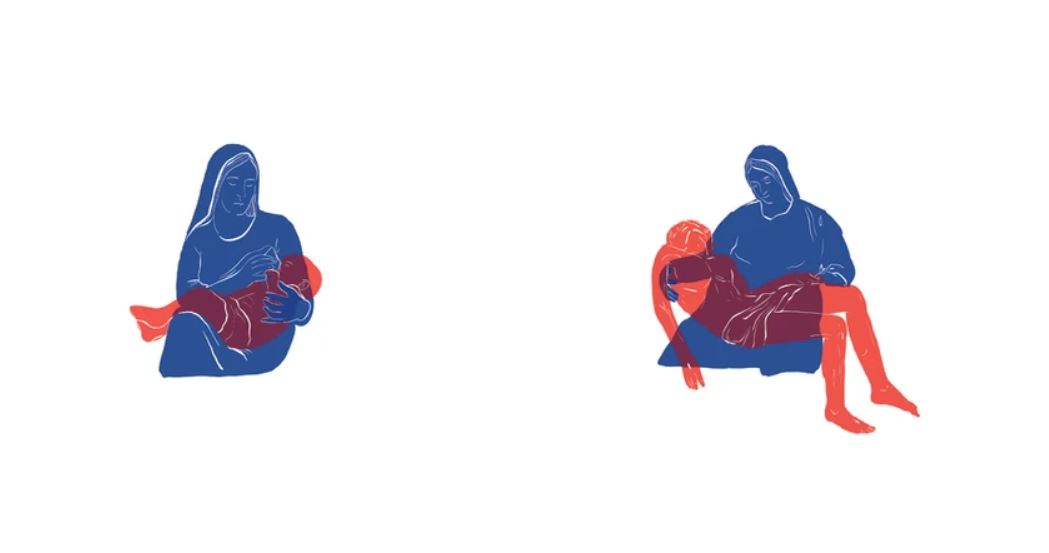
Malinowska, Katarzyna_Juxtapose
Katarzyna Malinowska (Polish, 1989–), Juxtapose (diptych), 2021. Digital painting, 20 × 30 cm.

20. “Lullaby after Christmas” by Vassar Miller: The speaker wishes sweet sleep for the newborn Christ child, wishes to keep him innocent of his fate for as long as possible—for “even God has right to / Peace before His pain.” Consisting of four sestets whose second, fourth, and sixth lines rhyme, the poem has a sing-songy quality that is jarring for the juxtaposition of words like “soft,” “warm,” and “tinkling” with the likes of “blood,” “gore,” and “die.”

Source: Onions and Roses (Wesleyan University Press, 1968); compiled in If I Had Wheels or Love: Collected Poems of Vassar Miller (Southern Methodist University Press, 1991)

21. “Journey of the Magi” by T. S. Eliot: Eliot wrote this poem shortly after his conversion to Christianity in 1927. Opening with a passage from a Christmas sermon by the seventeenth-century Anglican bishop Lancelot Andrewes, it is from the perspective of one of the magi, who made a long, toilsome journey in search of the meaning of a mysterious guiding star. After the magi’s encounter with the Christ child, they would never be the same; their paganism would no longer satisfy. The poem is about the transformative impact Christ has on those with humility enough to see him for who he is (having followed the light of revelation) and to worship him accordingly. And that transformation is in some ways painful, as it involves giving up some of the things one once held dear.

“Were we led all that way for / Birth or Death?” the magus asks. Jesus’s wasn’t the only birth they witnessed; they, too, were (re)born in Bethlehem. But spiritual rebirth is also a sort of death—the magi died to their old selves and false loves and loyalties. Thus, when they returned to Babylon, they felt like strangers in a strange land. They were now citizens of a different kingdom, and filled with a longing for its consummation.

Source: Journey of the Magi (Ariel Poems) (Faber & Gwyer, 1927). Public Domain.
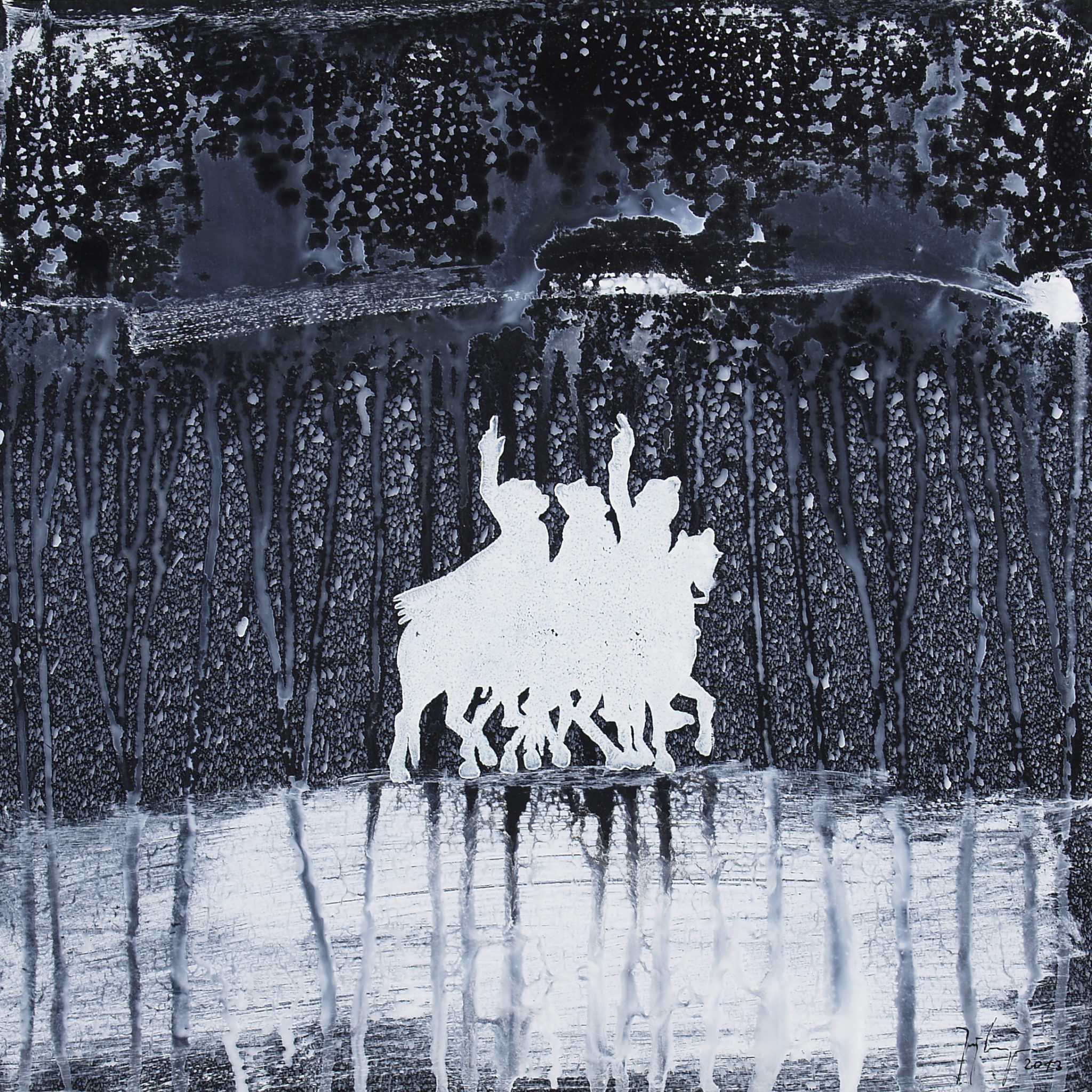
Länger, Jörg_The Three Kings
Jörg Länger (German, 1964–), The Three Kings, 2013. Linocut and gesso on aluminum dibond, 38 × 38 cm. The linocut is after a 12th-century illumination from the St Albans Psalter, held at the Dombibliothek, Hildesheim, Germany.

22. “Twelfth Night” by Sally Thomas: (Scroll to second poem.) As the Christmas season draws to a close, holly berries shrivel and drop, the “candles drown themselves in waxen lakes,” “the tree’s a staring corpse,” and a spider has built a web across the mantel nativity. Thomas uses the passing of the season to reflect more broadly on the passing of time and our own dustiness and desiccation—and by contrast, the unchangeability of God.

Source: Pulsebeat Poetry Journal no. 2 (May 2022) | http://www.sally-thomas.com/

23. Untitled poem by S. E. Reid: Most reflections on the New Year are full of enthusiastic goal-setting and go-getting, but Reid, gardening in her greenhouse in the crisp cold of January, describes a “fall[ing] backwards,” “dropping into the dark,” “shivering,” herself a seed, latent in the soil, trusting God that growth will come.

Source: The Wildroot Parables, January 8, 2024 | https://sereid.substack.com/

24. “Anna the Prophetess” by Tania Runyan: Forty days after Jesus’s birth, Maryand Joseph presented him in the Jerusalem temple. Runyan imagines this event from the perspective of Anna, a woman who was widowed young and thenceforth lived at the temple into old age, devoted to prayer, fasting, praise, and prophecy.

Source: Simple Weight (FutureCycle, 2010) | https://taniarunyan.com/

25. “The Work of Christmas” by Howard Thurman: Drawing on Jesus’s mission statement in Luke 4, the great African American theologian and civil rights leader Howard Thurman urges us to continue the work of Christmas—finding, healing, feeding, etc.—throughout the year. Listen to the simple yet vigorous choral setting by Elizabeth Alexander.

Source: The Mood of Christmas and Other Celebrations (Friends United, 1985)
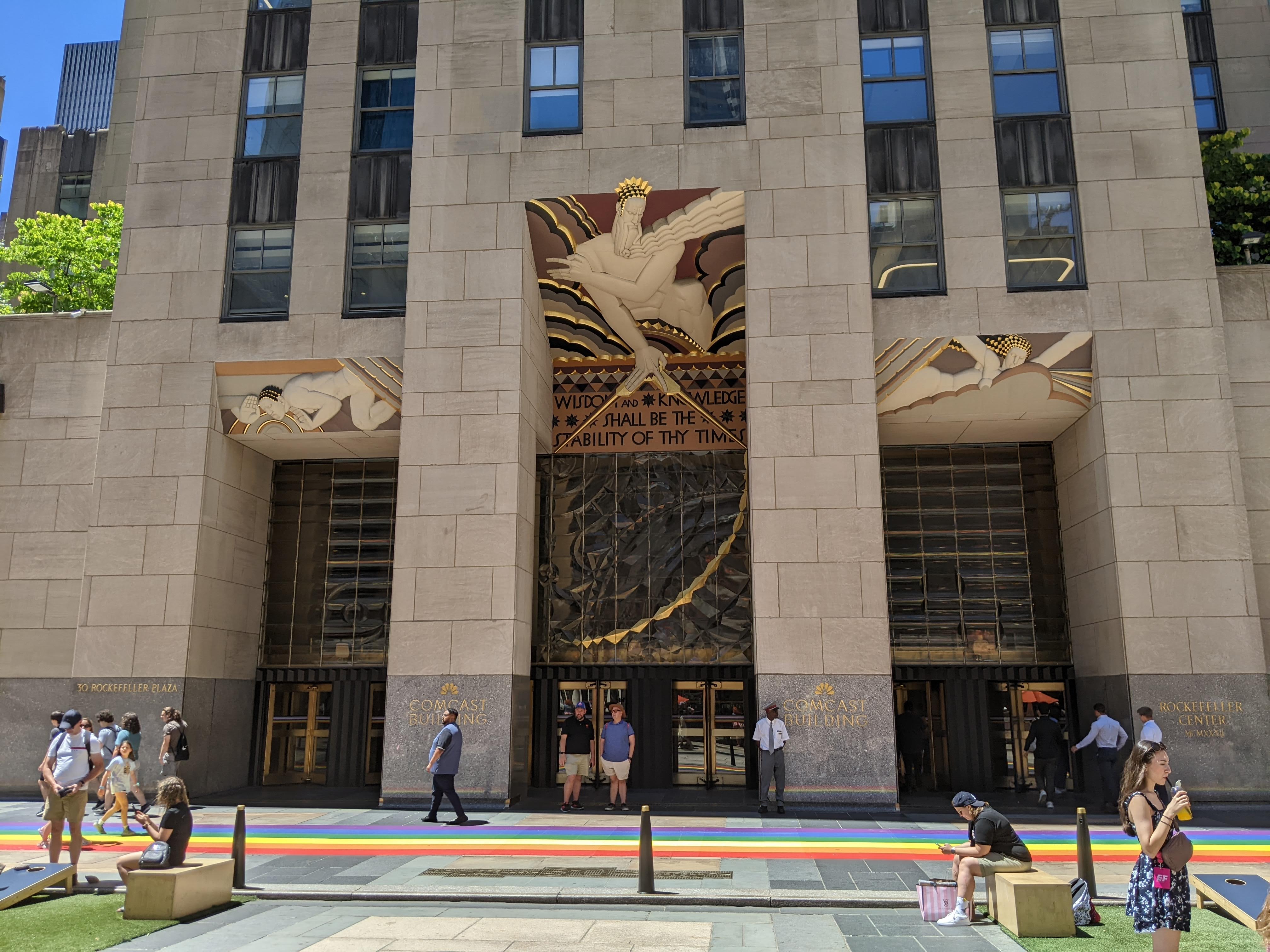
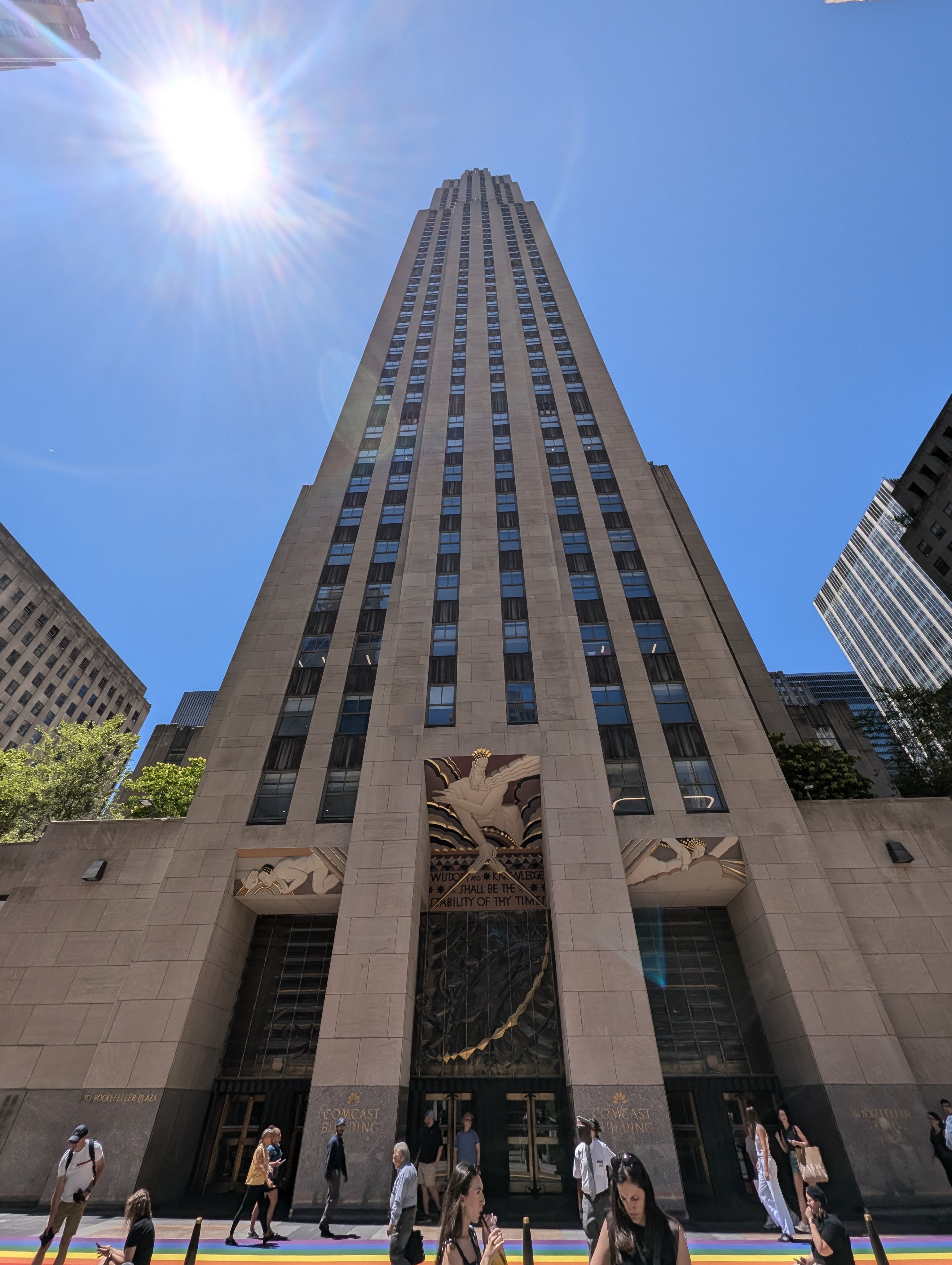
Art deco Wisdom sculpture at Rockefeller Center

(All Art & Theology posts are optimized for viewing in a web browser—ideally on a computer, but they should also display adequately on a phone. If you’re receiving this post by email, simply click on the hyperlinked title at the top of the message for a better reading experience.)

30 Rock. Home to NBC Studios and a slew of other business offices, it’s an iconic skyscraper in midtown Manhattan, towering 850 feet and capped by the ticketed Top of the Rock Observation Deck. It forms the backdrop to the famous ice-skating Rink at Rockefeller Center and, in December, New York City’s largest Christmas tree. Designed by architect Raymond Hood, it was originally named the RCA Building (1933–1988) after its main tenant, and then the GE Building (1988–2015), but since 2015 it has been the Comcast Building.

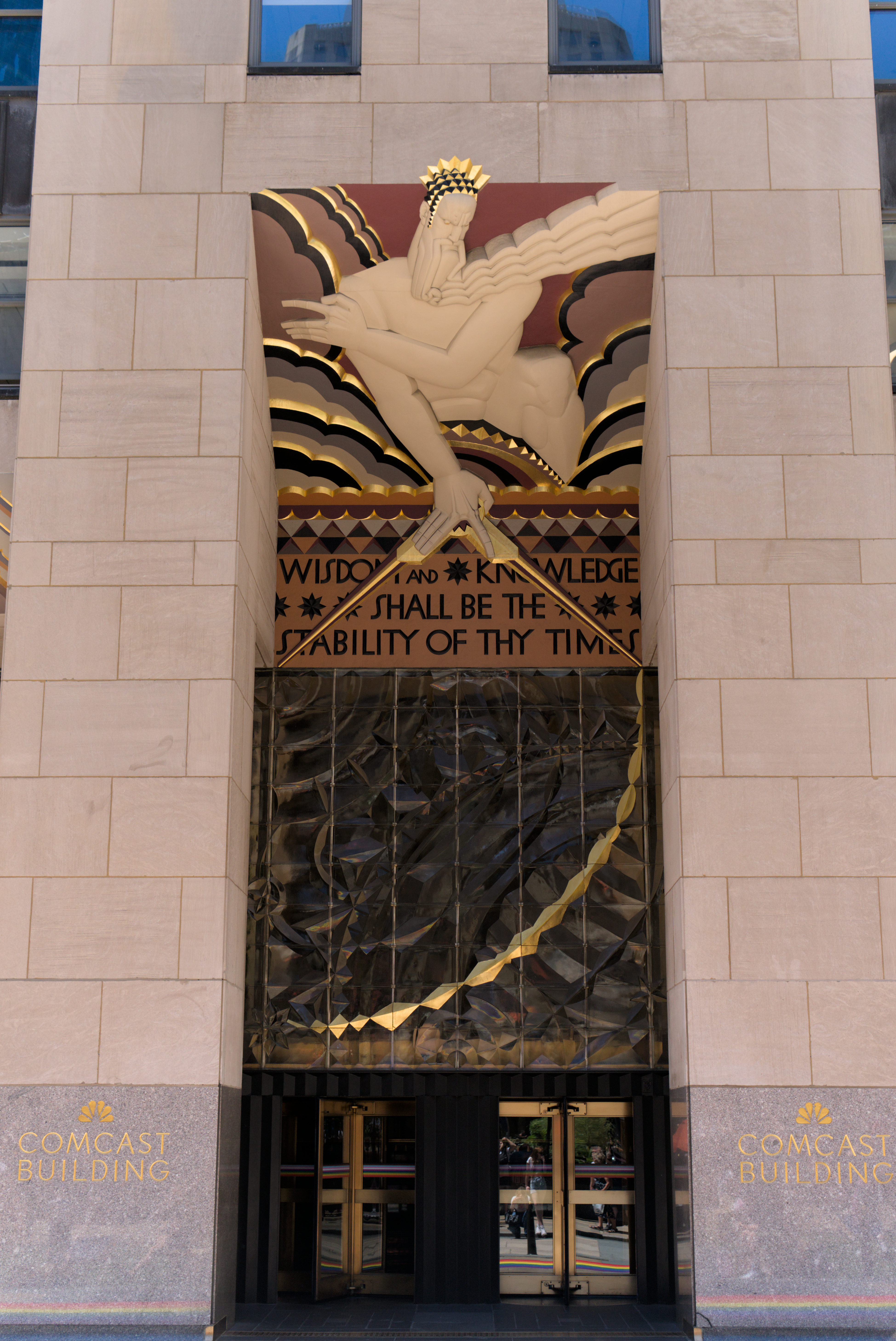
In June I stopped by to take in the art deco sculptures on the exterior, particularly the three limestone bas-reliefs over the main entrance, depicting Wisdom in the center, flanked by Sound on the left and Light on the right. This sculpture group was carved by Lee Lawrie (1877–1963) and painted and gilded by Léon-Victor Solon (1873–1957), who designed the color scheme for Rockefeller Center. Underneath is a trifold screen comprising 240 rectangular blocks of glass cast in eighty-four different molds, executed by Corning Glass Works.

Lawrie, Lee_Wisdom, with Light and Sound
Lee Lawrie (American, 1877–1963), Wisdom, with Light and Sound, 1933. Polychromed limestone, 240 cast-glass bricks. Comcast Building, 30 Rockefeller Plaza, New York City. Photo: Victoria Emily Jones.

Comcast Building, Rockefeller Center (photo: Victoria Emily Jones)

I wanted to see how the iconography works, as I knew the central lintel to feature a Bible verse. It’s an excerpt from Isaiah 33:6: “And wisdom and knowledge shall be the stability of thy times, and strength of salvation: the fear of the LORD is his treasure” (KJV). In this oracle from the eighth century BCE, the prophet Isaiah is speaking to the people of Israel as they face threats from Assyria. He assures them that a wealth of salvation, wisdom, and knowledge is theirs as long as they revere God.

It’s not surprising that for this commercial building built in 1933, the biblical quote is truncated to exclude mention of God—the ancient prophet’s words are appropriated to suit a modern corporate context in religiously pluralistic America. Instead of (explicitly) honoring a divine source of wisdom and knowledge, the decorative program celebrates human ingenuity, which is practiced by workers inside the building in the fields of media, medicine, law, and finance, among others.

So what of the imagery that this Bible verse captions?

An old undated brochure for Rockefeller Center, presumably published in the 1930s, provides commentary:

The central figure of this work represents the genius which interprets to the human race the laws and cycles of the cosmic forces of the universe, and thus rules over all of man’s activities. On the right of the central panel is represented Light, and on the left, Sound—two of these cosmic forces. The compass of the genius marks, on the glass screen below, the cycles of Light and Sound.

Although there are other cosmic forces which govern the universe, Mr. Lawrie selected those of Light and Sound because they are an active and vital part of everyday life, and particularly because within contemporary times great discoveries have been made by means of them, and man’s technical knowledge of the laws of these two forces has been vastly enlarged.

The official title of the sculpture group is Wisdom, a Voice from the Clouds, with Light and Sound. A commanding presence, Wisdom, depicted as a nude male with a long windswept beard, measures, discerns, harnesses, creates. With his right hand he wields a compass to scribe a circle, and with his left he shoves back clouds of ignorance. He embodies humanity’s accumulated philosophical and scientific knowledge and creative power. The male and female figures on either side of him “herald the advent of radio (sound) and the motion picture industry and television (light), two industries that were achieving global significance as the Center was being built,” the Rockefeller Center website says. Circles emanate from Sound’s mouth, and electrical signals from Light’s raised arms.

Lawrie, Lee_Wisdom (photo: Victoria Emily Jones)
Lawrie, Lee_Wisdom (upward view) (photo: Victoria Emily Jones)

It’s a humanistic artwork, exuding optimism and complemented throughout the Center by other works such as the four lobby murals by José Maria Sert collectively titled Man’s Intellectual Mastery of the Material Universe (1934), which picture the evolution of machinery, the abolition of slavery, the suppression of war, and the conquest of disease; American Progress (1937), another mural, by Sert; Lee Lawrie’s bronze Atlas (1937), showing the titular Titan holding the celestial vault on his shoulders; and Paul Manship’s gilded bronze Prometheus (1934), depicting the Titan champion of humanity who stole fire (representing technology and culture) from the gods and gave it to humans.

In the art at Rockefeller Center, human agency and advancement are emphasized, but the Christian God is not entirely absent from the narrative they collectively tell. Frank Brangwyn’s Man’s Search for Eternal Truth (1933) in the south corridor of the 30 Rock lobby addresses the importance of Jesus’s teachings in the Sermon on the Mount, particularly on love and brotherhood, depicting modern folks gathered around an elevated Christ figure and an inscription that reads, “Man’s ultimate destiny depends not on whether he can learn new lessons or make new discoveries and conquests, but on his acceptance of the lesson taught him close upon two thousand years ago.”

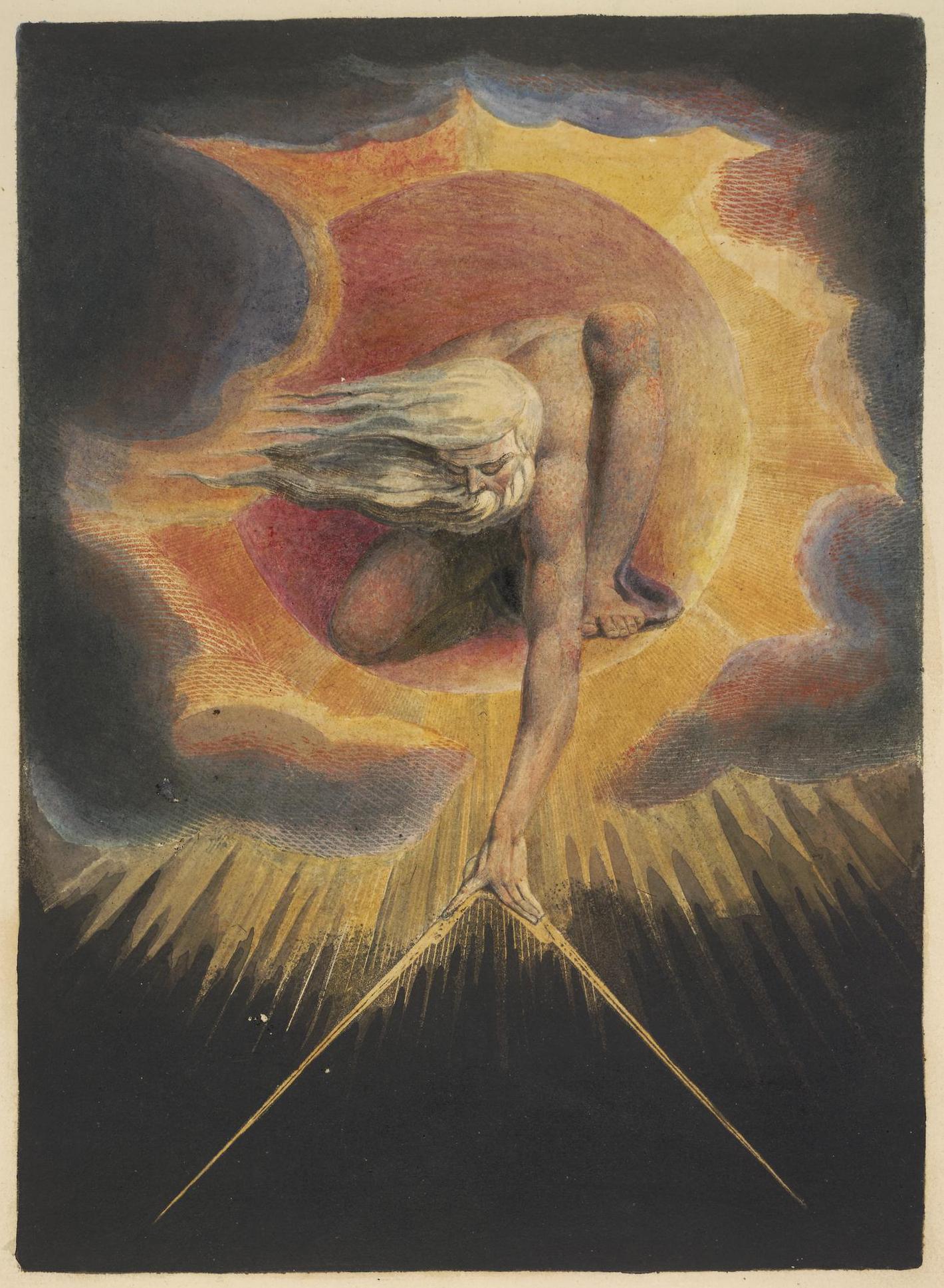
A key visual influence on Lawrie’s Wisdom sculpture was William Blake’s Ancient of Days, a hand-colored relief etching that shows a white-bearded nude male crouching in a heavenly sphere with a large golden compass, creating the world. This is Urizen, a mythological deity invented by Blake to personify reason and law.

Blake, William_Ancient of Days
William Blake (British, 1757–1827), The Ancient of Days, 1794. Relief etching with watercolor, 23.3 × 16.8 cm. This hand-colored print is the frontispiece to Blake’s poem Europe, a Prophecy, copy D, owned by the British Museum in London.

Urizen is a reconfigured version of Yahweh in the Old Testament. The title of Blake’s print is taken from a prophetic vision of the Divine in the book of Daniel: “As I looked, thrones were set in place, and the Ancient of Days took his seat. His clothing was as white as snow; the hair of his head was white like wool. His throne was flaming with fire, and its wheels were all ablaze” (Dan. 7:9 NIV).

This verse has inspired centuries’ worth of iconography picturing God as an old man—because hey, he’s ancient (in fact, he’s the oldest being there is, as he has always existed), and Daniel saw him with white hair! Also, age and wisdom are traditionally correlated.

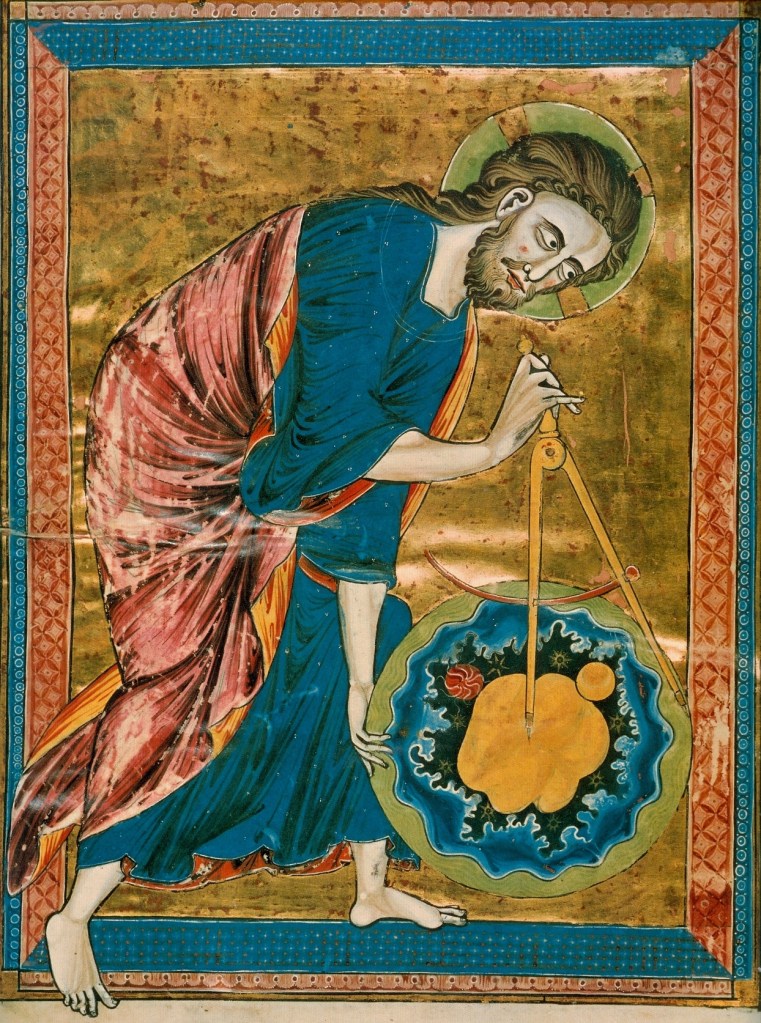
Depictions of God the Father as a fully anthropomorphized, aged being with white hair didn’t show up until the late Middle Ages and didn’t become a trend until the Renaissance.

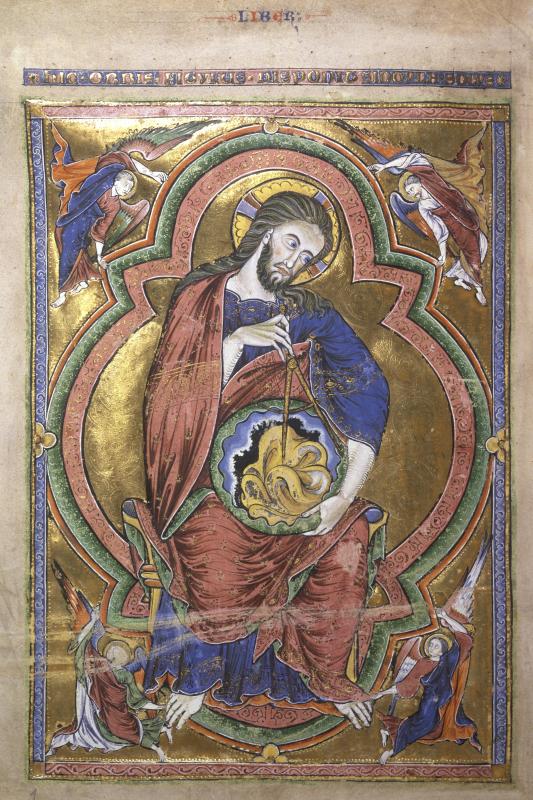
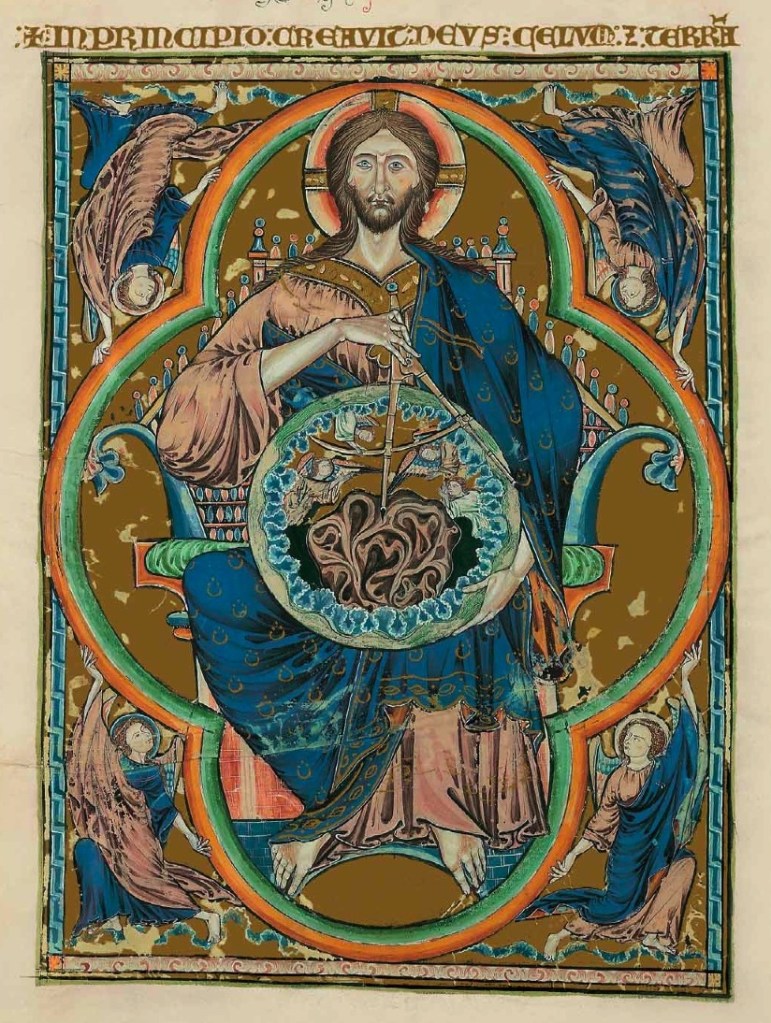
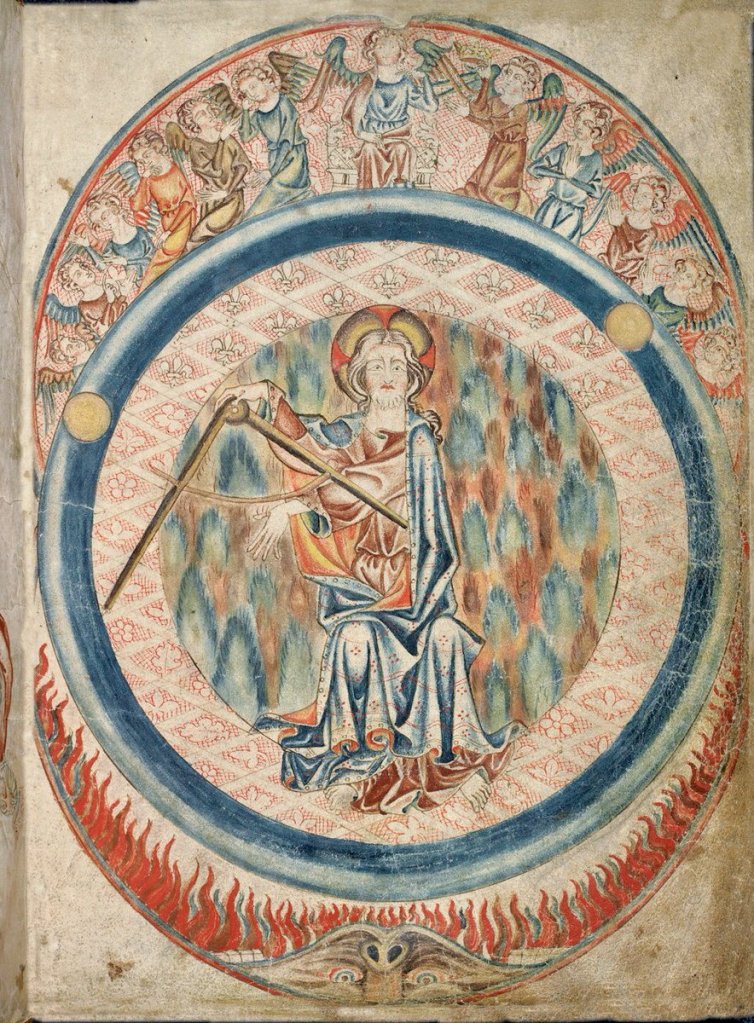
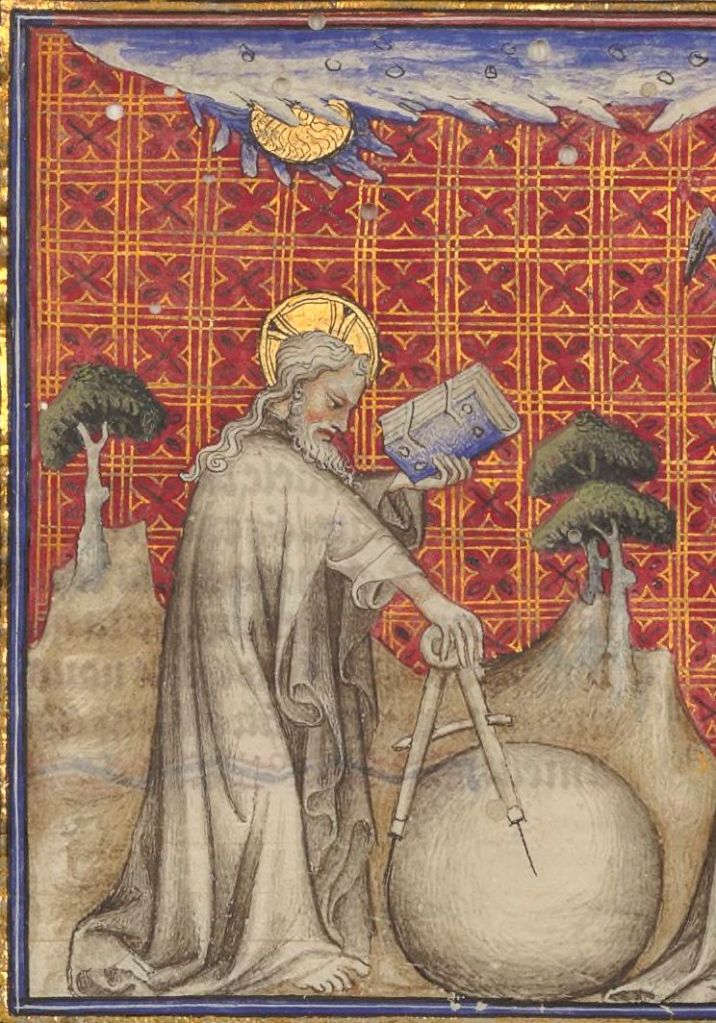
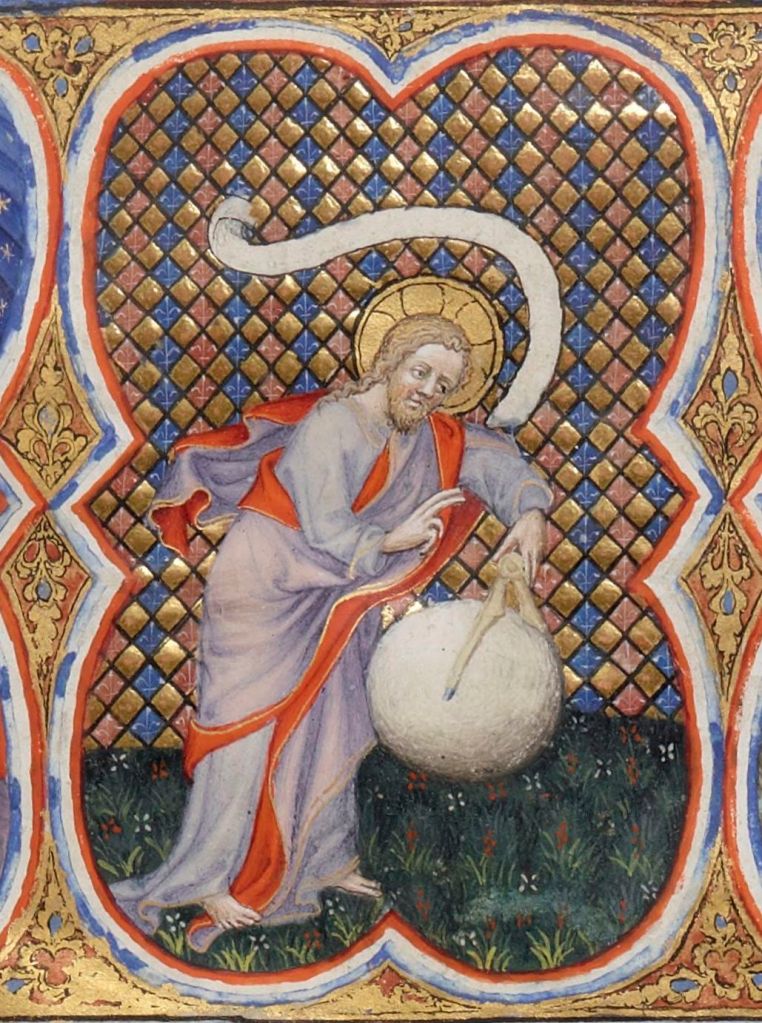
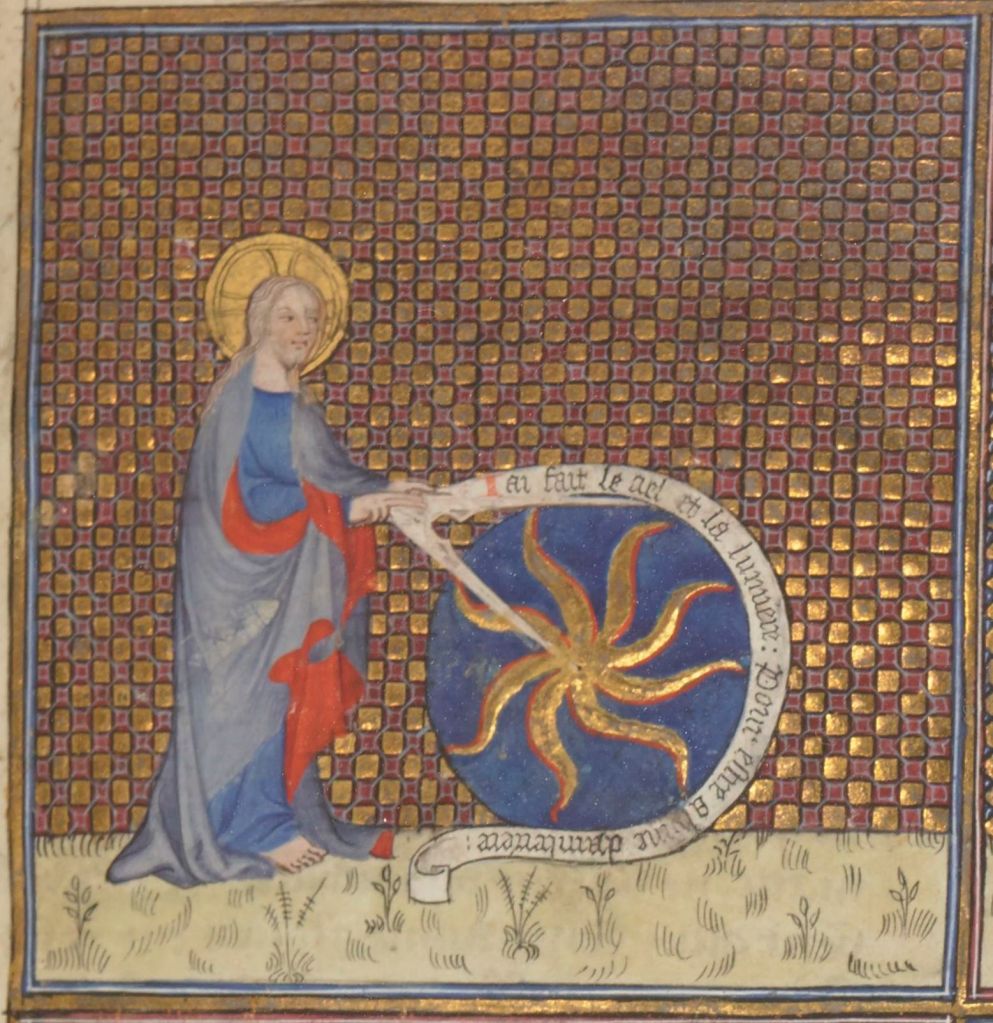
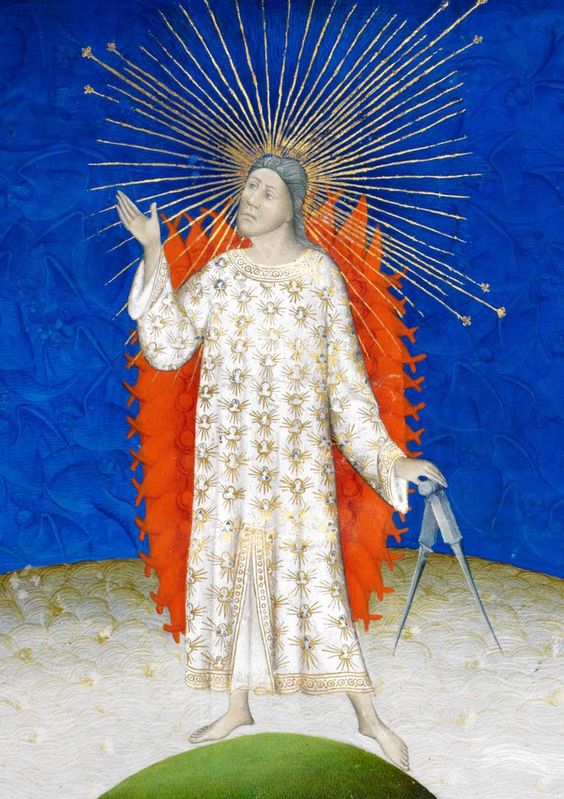
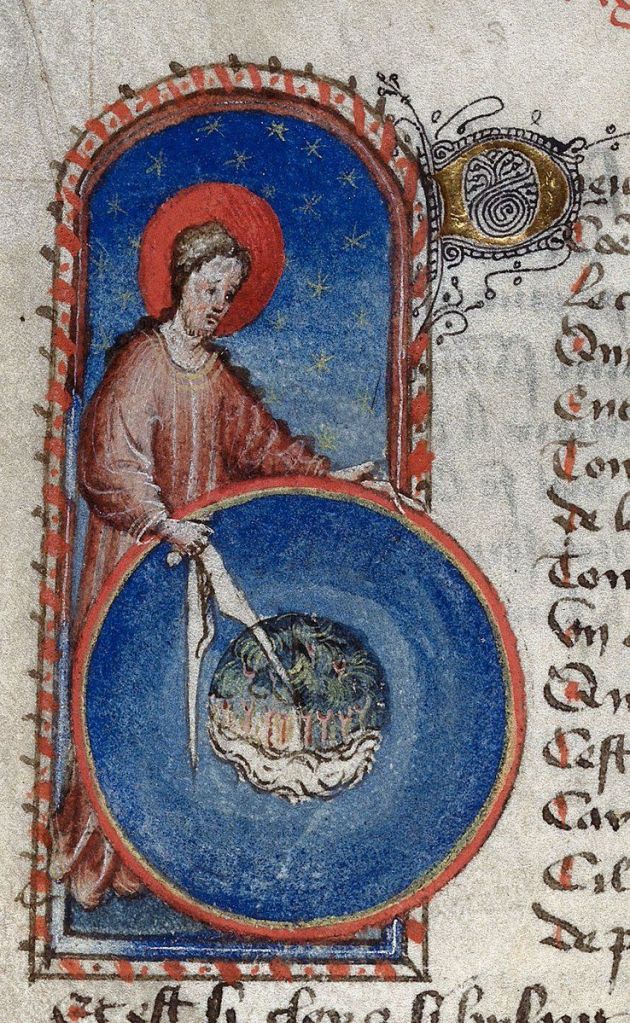
When medieval artists portrayed scenes from Genesis 1 and 2, they typically cast Christ in the role of Creator, intentionally avoiding depicting the first person of the Trinity, who is spirit, but also drawing on New Testament references like John 1:1–4 and Colossians 1:15–17 that describe Christ as participating in the creation of the universe. They often gave him a compass, an architectural tool, to show him marking out the planet Earth and celestial bodies with studied precision. Christ is sometimes identified with the person of Wisdom in Proverbs 8, who proclaims that “when he [God] prepared the heavens, I was there: when he set a compass upon the face of the depth . . .” (v. 27 KJV, emphasis mine).

In his epic poem Paradise Lost, John Milton describes how the “Omnific Word” created all that is:

. . . . . . . . . . . . . . . . . . . . . . . . . . . . and in his hand
He [Jesus] took the golden compasses, prepared
In God’s eternal store, to circumscribe
This universe, and all created things:
One foot he centered, and the other turned
Round through the vast profundity obscure,
And said, “Thus far extend, thus far thy bounds,
This be thy just circumference, O world.” (VII.224–31)

In his making of Ancient of Days, Blake was no doubt influenced by the many visual and literary depictions of God as architect of the universe, as compass-wielding geometer, that came before. And so Lawrie, too, implicitly drew on this heritage when he sculpted the majestic figure of Wisdom for the main building of Rockefeller Center.

At first glance, you might interpret the prominent trio at the Center’s entrance as God creating the heavens and the earth, assisted by angels. But while Christian iconography factored into the design, and a Judeo-Christian sacred text forms the inscription, the sculpture group is mainly meant to represent the promise of science and technology.

Construction began at 30 Rockefeller Plaza during the Great Depression (though the Center was conceived prior to that national economic crisis, in 1927); John D. Rockefeller Jr. said he wanted to build a place where New Yorkers could come and surround themselves with art and motifs that celebrated the best of the human spirit. When you step off West 49th or 50th Street into the plaza that’s featured in so many New York City–set movies and TV shows, Rockefeller’s wish was that you’d feel hopeful and energized.

When I was there, during Pride Month (hence the temporarily rainbow-painted sidewalk), the mood was indeed uplifting, with locals and tourists alike passing through with ice-cream cones and lemonades and conversation. It being summer, the Rink was transformed into an al fresco dining area with umbrella-topped tables providing some relief from the heat.

While my faith in humanity’s future is rooted in God and not ultimately our own capabilities, I am obviously grateful for and supportive of progress and achievement. God wants us to grow in knowledge and skill and to use them responsibly and imaginatively to better the world.

In his essay “On Fairy-Stories,” J. R. R. Tolkien says that we humans are “sub-creators” under God, expressing the image of our Creator by exercising creativity. While he was talking specifically about writers creating fantasy worlds, the principle applies to people in any vocation, whether you’re making a book, a bed, or a nanochip. God bids us, “Create!” That we would see ourselves in Lawrie’s Wisdom, crowned and bearing power and authority, is therefore not necessarily arrogant or sacrilegious, as the cultural mandate in Genesis 1:28 charges humans with the noble task of cultivating the stuff of creation, including discovering and leveraging the physical laws of nature, for the flourishing of all.  

You can browse more of the art at Rockefeller Center at www.rockefellercenter.com/art. And for a well-photographed New York Times article featuring Lawrie’s artwork and some of the others on the premises, see “Rockefeller Center’s Art Deco Marvel: A Virtual Tour” by Michael Kimmelman.

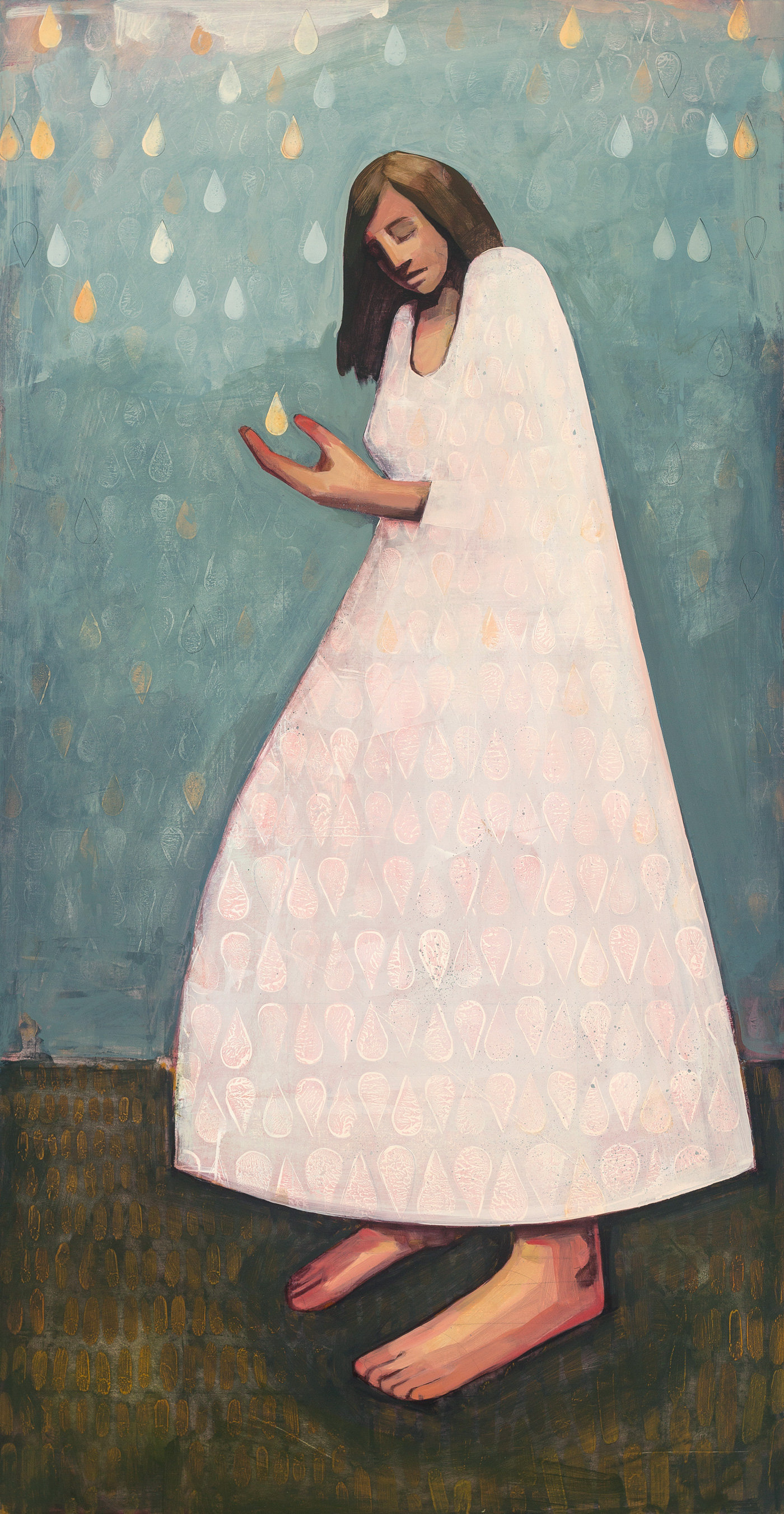
Advent, Day 6: Tears

LOOK: the heavens wept with me by Caitlin Connolly

Connolly, Caitlin_the heavens wept with me
Caitlin Connolly (American, 1986–), the heavens wept with me, 2018. Oil on canvas.

LISTEN: “A Dream / On Another’s Sorrow” | Words by William Blake, from Songs of Innocence, 1789, adapt. | Music by David Benjamin Blower, on Innocence & Experience, 2022

Once a dream did weave a shade
O’er my Angel-guarded bed,
That an Emmet lost its way
Where on grass methought I lay.

Troubled, ’wildered, and forlorn,
Dark, benighted, travel-worn,
Over many a tangled spray,
All heart-broke I heard her say:

“O my children! do they cry?
Do they hear their father sigh?
Now they look abroad to see:
Now return and weep for me.”

Pitying, I dropped a tear;
But I saw a glow-worm near,
Who replied: “What wailing wight
Calls the watchman of the night?

“I am set to light the ground,
While the beetle goes his round:
Follow now the beetle’s hum;
Little wanderer, hie thee home.”

*

Can I see another’s woe,
And not be in sorrow too?
Can I see another’s grief,
And not seek for kind relief?

Can I see a falling tear,
And not feel my sorrow’s share?
Can a father see his child
Weep, nor be with sorrow filled?

Can a mother sit and hear
An infant groan, an infant fear?
No, no! never can it be!
Never, never can it be!

And can They who smile on all
Hear the wren with sorrows small,
Hear the small bird’s grief and care,
Hear the woes that infants bear,

And not sit beside the nest,
Pouring pity in their breast;
And not sit the cradle near,
Weeping tear on infant’s tear;

And not sit both night and day,
Wiping all our tears away?
O no! never can it be!
Never, never can it be!

They do give Their joy to all;
They become an infant small;
They become a one of woe;
They do feel the sorrow too.

Think not thou canst sigh a sigh,
And thy Maker is not by;
Think not thou canst weep a tear,
And thy Maker is not near.

The lyrics of this song comprise two poems from William Blake’s Songs of Innocence: “A Dream” and “On Another’s Sorrow.”

In “A Dream,” the poetic speaker dreams about a lost ant (an emmet) who is trying to find her way back to her children and husband. The speaker is moved by the ant’s distress and weeps for her. But then a glowworm (“the watchman of the night,” as he’s lit like a lantern) graciously intervenes, telling the ant to listen to the sound of the beetle walking and to follow that sound home while he lights the way.

“Told from a trusting, childlike perspective, the poem”—a fable—“suggests that those who ask for help will get it: the world is a naturally compassionate place, and guidance and protection are always at hand, even in difficult times.” (LitCharts)

Aren’t we all “little wanderers”? Many of us troubled, bewildered, lonely, and worn by our seeking and striving?

There is empathy for us not only from fellow travelers but also from the Divine.

“On Another’s Sorrow” is about how God lovingly enters into our woes through the Incarnation. He becomes a participant in the project of being human, experiencing firsthand the many trials, hurts, and vulnerabilities that come with the territory.  

In the first three stanzas, the speaker expresses how keenly he feels the sorrows of others. In the fourth stanza, he reflects on how God does the same—only God is perfectly present to all, weeping with those who weep, sighing with those who sigh. Having “become an infant small,” the Creator has demonstrated solidarity with his creation. It is a comfort to know that God is so intimately acquainted with the griefs that afflict us and is keen to companion us through them.

In his creative visioning, British singer-songwriter David Benjamin Blower brought together Blake’s “A Dream” and “On Another’s Sorrow” with a single, spare musical setting, linking the two poems with an instrumental interlude but keeping the same tune throughout. The first poem is about the feeling of weariness or lostness; the second, grief. Both have to do with compassion—we owe it to one another and often receive it from others, and it is always available to us in Christ, who is God brought near.

In “On Another’s Sorrow,” Blower changed the pronouns for God in the fourth and seventh stanzas from “He/His” to “They/Their,” since God is neither male nor female. He also omitted the final stanza in Blake’s original:

O! He gives to us His joy
That our grief He may destroy:
Till our grief is fled and gone,
He doth sit by us and moan.


This post is part of a daily Advent series from December 2 to 24, 2023 (with Christmas to follow through January 6, 2024). View all the posts here, and the accompanying Spotify playlist here.

Roundup: Les Mis, blood collages, Esau McCaulley on Lent, and more

I’ve received a few requests from followers to resume my monthly thirty-song playlists. I had previously thought I’d stick to publishing these during Ordinary Time, since I have longer, thematic playlists for the seasons of Advent, Christmas, Lent (our current place in the calendar), and Easter—which you can find on my Spotify profile. But I’m happy to oblige! Here’s a new playlist for March:

+++

ESSAY: “Victor Hugo’s Masterpiece of Impossibility” by Caitrin Keiper, Plough: A wonderful essay on how competing vows in the novel and musical Les Misérables reveal the paradox of grace. I’ve been captivated by this story of mercy, forgiveness, and transformation set in revolutionary France ever since I saw the 1998 film adaptation starring Liam Neeson in middle school. The faith-inspired actions of Bishop Myriel at the beginning set the life of the protagonist Jean Valjean, an escaped convict, on a trajectory that is beautiful to watch unfold, and the downfall of the law-obsessed Inspector Javert, who cannot bring himself to accept the grace offered him, is most tragic.

+++

PODCAST EPISODES:

>> Season 2, episode 2, of Gather Round, on the DPP’s Lent 2023 Living Prayer Periodical: On the in-house podcast of Grace Mosaic in Washington, DC, three of my four Daily Prayer Project colleagues and I walk listeners through the latest edition of our prayer periodical, which covers the six weeks of Lent. The conversation starts at 3:46. Rev. Joel Littlepage, curator of the liturgies and songs, highlights a litany to the Servant-Christ from Andhra Theological College in Hyderabad, India, and a song by Pastor Antonio Rivera González of Mexico (see below). Ashley Williams, who commissions or secures reproduction rights for the practice-based essays and curates the photographs throughout, shares some teasers for “Calling Out to God in Lament” by Nina Barnes and “Intractable Sin, Preemptory Prayer” by Alicia Akins.

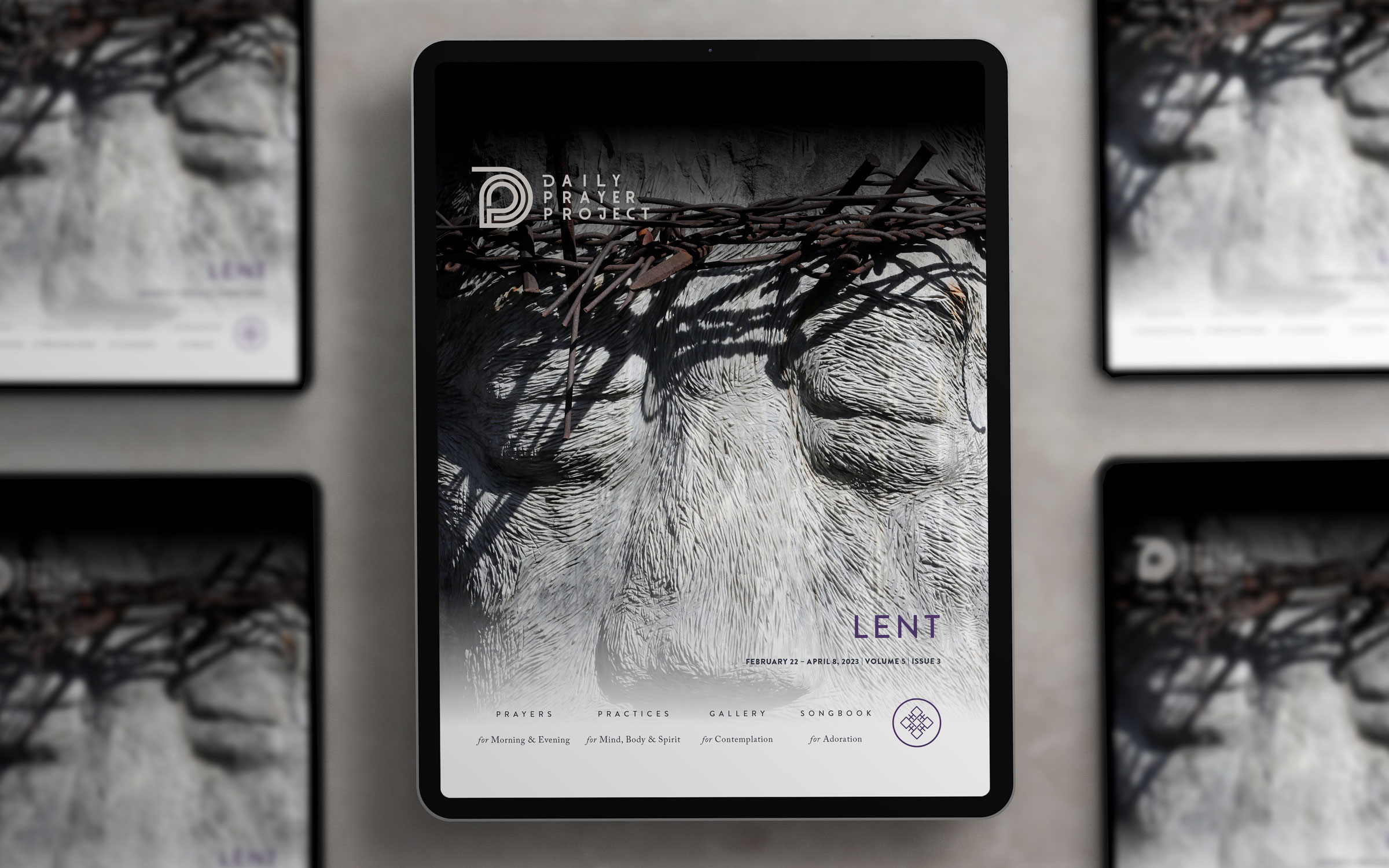
Daily Prayer Project, Lent 2023
The Daily Prayer Project’s Lent 2023 booklet, featuring scripture, prayers, practical essays, art, and music from diverse contributors, is available in print and digital formats.

As curator of the art on the cover and in the Gallery section, I discuss the marble sculpture Condemned to Death by Chang Dong Ho (장동호) (see more by the artist), the mixed-media piece Gathering Fragments 1 by C. F. John, the photograph Untitled #10, Flushing, NY from the Stranger Fruit series by Jon Henry, and the painted woodcarving Qwi:qwelstom (Halkomelem, a Coast Salish language, for “Balance and Harmony”) by Don Froese.

At 32:44–35:06, our theological editor, Rev. Russ Whitfield, discusses a theological method that has informed our work at the DPP called triperspectivalism (or multiperspectivalism), which says that we can enrich our perspective, limited on its own, by looking at things from different angles, especially those revealed to us by other people and cultures. For a snippet of the Herman Bavinck quote, see here. What Russ says is SO GOOD! I believe our prayerbooks stand out from other similar projects in that they are deliberately cross-cultural—not because it’s trendy, but because there is so much beauty and wisdom we are missing by not availing ourselves of the many resources of the global church. Our content is also cross-historical.

There are subscription options for individuals (you receive a print edition and a digital download link) and groups (digital access, with bulk-printing options). You can also buy a single copy, but it’s cheaper to purchase a monthly subscription and then cancel after you receive your edition if you don’t wish to continue. We publish six editions a year, each following the same format but filled with new content for the given season.

>> “Lent: Season of Repentance, Renewal . . . and Rebellion” with Esau McCaulley, For the Life of the World: Here Rev. Dr. Esau McCaulley—associate professor of New Testament at Wheaton College, contributing opinion writer for the New York Times, and award-winning author of Reading While Black—talks about the Christian practice of Lent as a collective wisdom passed down through generations of Jesus followers, as well as a spiritual rebellion against mainstream American culture, which has its own established rhythms that shape how we spend our money, when we feast, and what we celebrate.

McCaulley spent the first twenty-one years of his life in the Black Baptist church and the past twenty in a high-liturgical tradition, both of which have been formative for him. One thing he appreciates about liturgy (both the yearly calendar and the elements within a worship service), he says, is how it helps him more fully inhabit the story of Christ. He construes Lent as a season of repentance and grace; he points out the justice practices of Lent; he walks through a Christian understanding of death, and the beautiful practice of stripping the altars on Maundy Thursday; and he’s emphatic about how Lent is a guided season of pursuing the grace to find, or perhaps return to, yourself as God has called you to be. These ideas are expanded upon in his new book, Lent: The Season of Repentance and Renewal, from IVP’s Fullness of Time series.

+++

SONGS:

>> “Divino compañero del camino” (O Lord, Divine Companion): Written in 1964 by Antonio Rivera of Mexico, this popular Spanish-language song is performed here by Karina Moreno and Joseph Espinoza. It’s based on Luke 24:28–32, from the postresurrection story of the walk to and supper at Emmaus, but its pilgrimage aspect—the idea of Jesus as a companion on our life journey—makes it appropriate for Lent. [HT: The Daily Prayer Project]

>> “Yeshu Ji Mere Paap Kshama Kar Do” (Lord Jesus, Forgive My Sins): A Hindi song of confession with words by the late Shri Jalal Masih and music by his granddaughter, Mercy Sharon Masih. Mercy sings it here with her father, Hanook Masih. For an English translation, click the “CC” button. [HT: Global Christian Worship]

+++

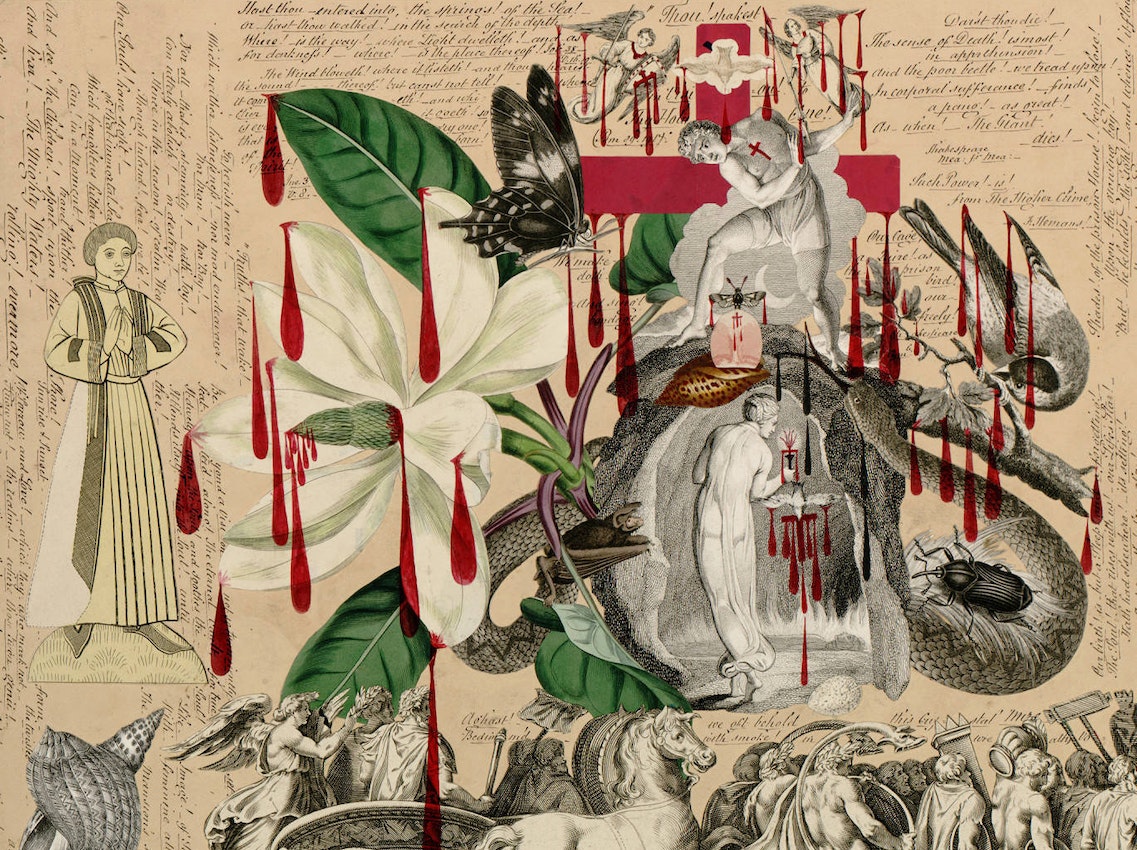
ARTICLE: “The Blood Collages of John Bingley Garland (ca. 1850–60),” Public Domain Review: Peruse the so-called Victorian Blood Book, an eccentricity made by the British politician and fishmonger John Bingley Garland as a wedding gift for his daughter Amy in 1854. It consists of forty-one collages whose sources are engravings by William Blake and various other religious artists, botanical and zoological illustrations, photographs of medieval tombs, and other images from nineteenth-century books, but with one distinguishing decorative addition by Garland’s hand: drops of blood in red India ink, presumably signifying the blood of Christ. The pages also bear extensive handwritten religious commentary.

Garland, John Bingley_Blood Book
Detail from a page of John Bingley Garland’s “Blood Book” (ca. 1850–60), featuring a cut-out from a reproduction of William Blake’s engraving The Soul exploring the recesses of the Grave.

The Blood Book transferred from the collection of novelist Evelyn Waugh to the Harry Ransom Center at the University of Texas at Austin upon Waugh’s death, and they identify it as “the single most curious object in the entire library.” Though modern eyes may see the collages as surreal or even grotesque, Garland’s descendants regarded them as nothing other than “a precious reminder of the love of family and Our Lord,” as they have written. The Harry Ransom Center has digitized the full book.

Roundup: Christianity in Africa, Zwingli’s plague hymn, biblical art database, and more

VISUAL MEDITATION: “At the Whipping Post” by Victoria Emily Jones: Last year the Museu de Arte de São Paulo (MASP) ran a major retrospective on Djanira da Motta e Silva, “a central artist in Brazilian mid-century modernism” (Rodrigo Moura). ArtWay’s editor asked me to choose a painting of hers to write about—I chose the one she submitted to the 1955 “Christ of Color” contest, showing Jesus as an enslaved African being scourged in the historic center of Salvador de Bahia, the first colonial capital of Brazil.

Djanira_Largo do Pelourinho, Salvador
Djanira da Motta e Silva (Brazilian, 1914–1979), Largo do Pelourinho, Salvador, or Cristo na coluna (Christ at the Column), 1955. Oil on canvas, 81 × 115 cm. Private collection, Rio de Janeiro, Brazil. Photo: Jaime Acioli.

+++

LECTURE: “Is Christianity a White Man’s Religion?” by Dr. Vince L. Bantu: I first encountered Vince Bantu in a Conversing (Fuller Studio) podcast episode on African American identity and the church. (He joined the Fuller faculty last year as assistant professor of church history and Black church studies.) In this video from January 2018, he returns to his alma mater, Wheaton College, to discuss the history of Christianity in Africa—which some people are surprised to learn predates colonialism. “To study ancient African history is to study Christianity. They go together,” he says. “If you want to study Ethiopian literature, . . . you’re going to be reading a whole bunch of Christian literature. Same thing in Nubian. Same thing in Coptic.” While the Anglo-Saxons were still worshipping Odin and Thor, Bantu says, Black Africans were building churches, establishing seminaries, and writing Christian theological treatises!

The talk starts at 11:34 and really kicks into gear at around 24:00. Q&A starts at 52:40 and includes discussion of a three-point spectrum of approaches to culture, mission as “cultural sanctification,” and internalized theological racism. Take note of Bantu’s response, at 1:09:35, to the question “What do we do with this information?”

“Christianity is and always has been a global religion,” Bantu reminds us. Unfortunately, people tend to associate it most with western Europe. That’s because Rome, the dominant culture for some time, essentially said, “Christianity belongs to us,” instituting a theological hegemony. The West proclaimed itself the guardian of the Christian faith, declaring heretical churches in other regions that didn’t express theology the same way they did, with no regard for differences in language and philosophical frameworks.

I appreciate how Bantu teaches Christian history in part through art and architecture, which are material witnesses to the faith and sometimes even modes of theology. He shows photos of churches and monasteries and their interior decoration. Most fascinating to me is a tenth-century wall painting he photographed at the Great Monastery of Saint Anthony in Old Dongola (present-day Sudan), a Nativity scene that shows Africans wearing animal crest masks and worshipping Christ with traditional instruments. (You can view some photos here. See also The Wall Paintings from the Monastery on Kom H in Dongola by Malgorzata Martens-Czarnecka, or the freely accessible essay by the same author, “The Christian Nubia and the Arabs.”)

Bantu is the author of A Multitude of Peoples: Engaging Ancient Christianity’s Global Identity from IVP Academic and the editor of Gospel Haymanot: A Constructive Theology and Critical Reflection on African and Diasporic Christianity, both released this year.

+++

SONGS:

“Azim ast name To Isa”: Nora Kirkland from Iran performs this Christian praise song in Farsi, English, and Greek. [HT: Global Christian Worship]

Great is your name, Lord Jesus Christ
Praise to your name, Lord Jesus Christ
Power to your name, Lord Jesus Christ
Praise to your name, exalted Jesus Christ

Hallelujah, hallelujah
Praise to your name, exalted Jesus

“I Am Thine (Plague Hymn)”: Made especially timely by the current COVID-19 pandemic, this hymn text was written in 1519 by Swiss Reformer Ulrich Zwingli while convalescing from the bubonic plague, having caught it ministering to others. This year Zac Hicks wrote a new melody for it, and it’s sung here by Leif Bondarenko. Released by Advent Birmingham.

+++

BIBLICAL ART DATABASE: Visual Midrash: “Visual Midrash is an online bilingual (Hebrew and English) collection of Bible art and commentary, sponsored by the TALI Education Fund in Israel. At present, the site contains more than 1100 art images relating to 33 different subjects from all three divisions of the Hebrew Bible – including such figures as Abraham, Jacob, Moses, David, the women of the Book of Judges, the scrolls of Ruth and Esther and much more. Among the images are objects from the Ancient Near East; frescoes from the ancient synagogue of Dura Europos; medieval illuminated manuscripts; paintings, sculptures, lithographs, and nearly 100 other art media from Michelangelo to Rembrandt to Chagall to contemporary artists.” I’ve had fun browsing! Below is just a small sampling of images from the site.

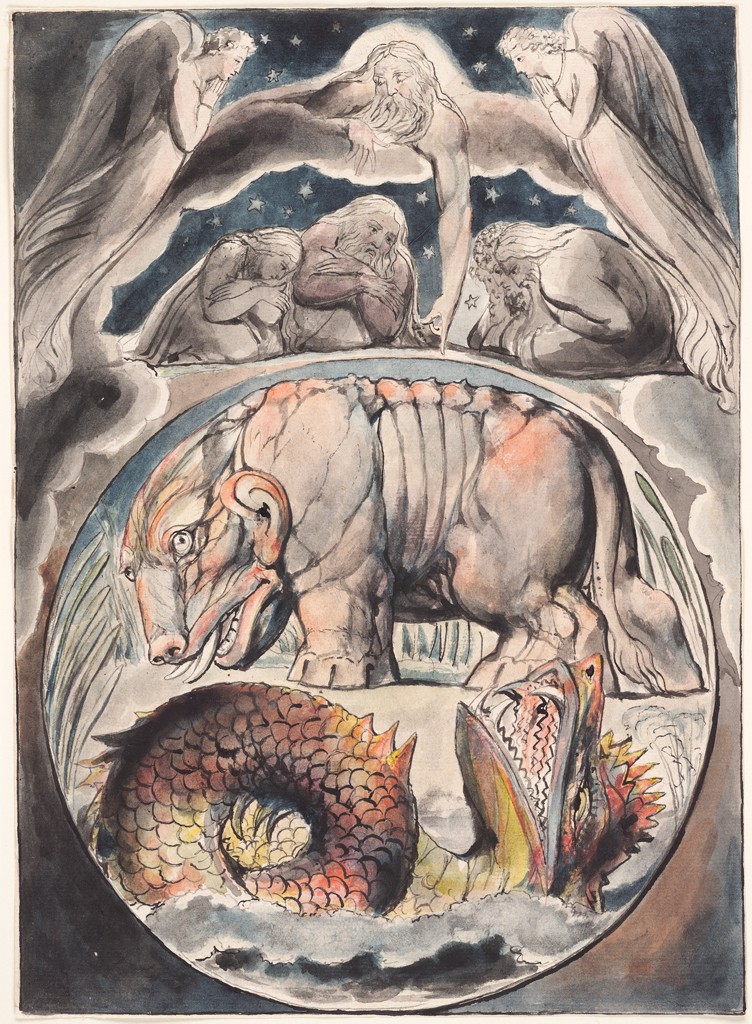
Blake, William_Behemoth and Leviathan
William Blake (British, 1757–1827), Behold Now Behemoth, Which I Made With Thee (The Book of Job) (Linnell set), 1821. Watercolor, black ink, and graphite on off-white antique laid paper, 27.5 × 20 cm. Harvard Art Museums/Fogg Museum, Cambridge, Massachusetts. [HT]

Mordecai Ardon (Israeli, 1896–1992), Sarah, 1947. Oil on canvas, 138 × 108 cm. Jewish National and University Library, Jerusalem.

The Finding of Moses (Dura-Europos Synagogue)
“The Finding of Moses,” wall painting made in 244 CE, from Dura-Europos Synagogue in Syria. Preserved at the National Museum of Syria, Damascus. [HT]

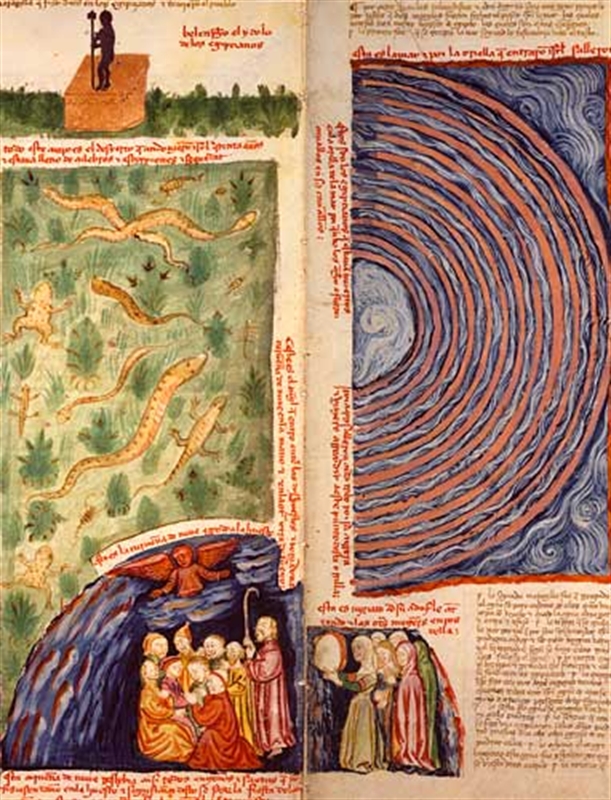
Crossing the Red Sea (Alba Bible)
“Crossing of the Red Sea,” Spain, 1430. Illumination from the Alba Bible (fol. 68v–69r), Liria Palace, Madrid.

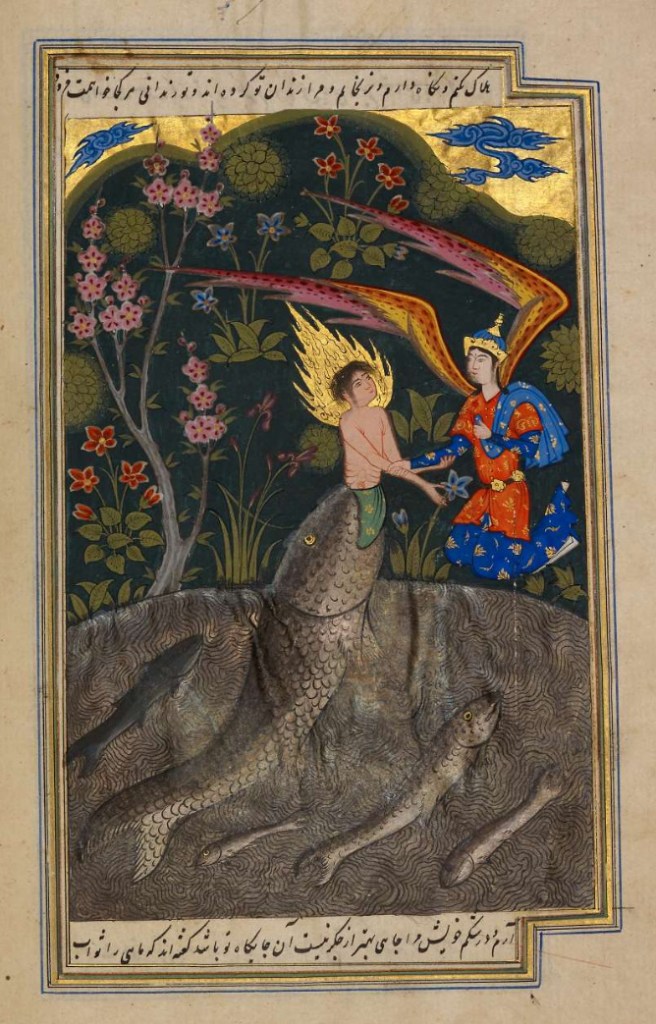
Jonah (Islamic)
“Jonah,” Iran, 1577. Illumination from the Qisas al Anbiya (Diez A Fol. 3, fol. 142v), Staatsbibliothek, Berlin. [HT]

The Dead Christ Supported by Angels: A Thematic Survey

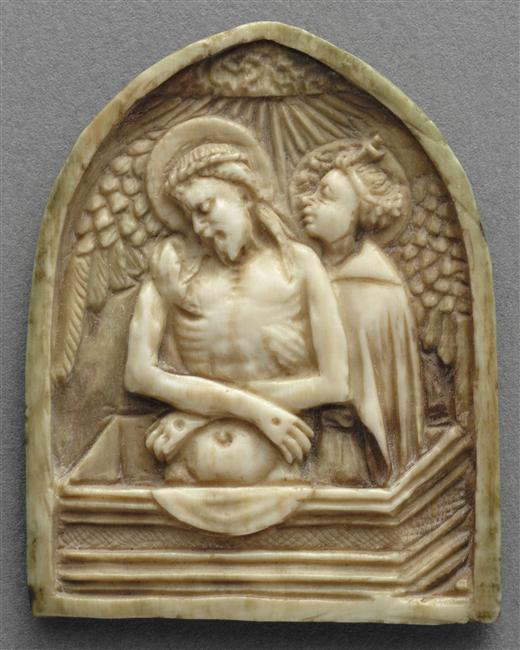
A type of “Man of Sorrows” image, the Dead Christ Supported by Angels is a devotional trope originating in the late Middle Ages. It typically shows a naked, half-length Christ standing up in a sarcophagus, his wounds prominently displayed so as to invite meditation on his suffering. One or more angels tend to him—they may embrace him, mourn his passing, unwrap his burial shroud (to give viewers a better look), display instruments of the passion, keep him propped up in the tomb, or, as we will see below, prepare to welcome him back to life.

(Related post: “Bill Viola’s Emergence as a Picture of the Resurrected Christ and the New Birth of Believers”)

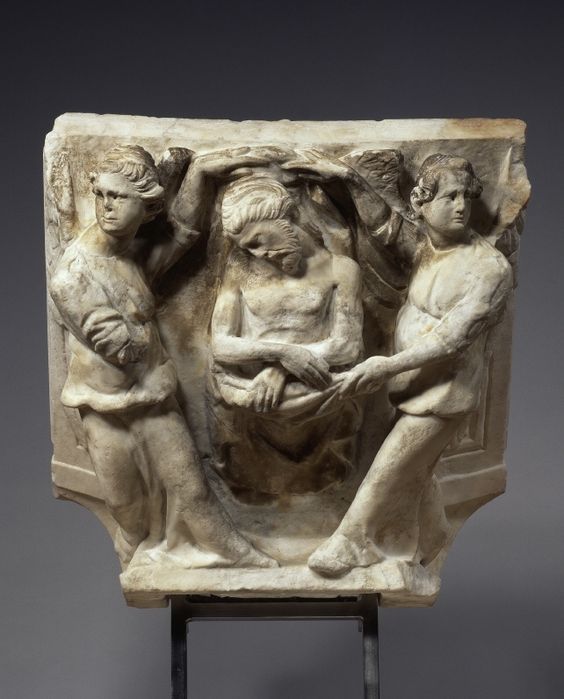
One of the earliest examples of this imagery is the marble relief at the Gemäldegalerie in Berlin. Originally a lectern adornment for the pulpit in Pisa’s cathedral, it shows two angels unveiling Christ’s body, presenting it to us like a eucharistic host. Their raised arms and slanted legs form a mandorla-like frame around him.

Angel Pieta by Giovanni Pisano
Giovanni Pisano (Italian, 1245/48–1314), Angel Pietà, 1300. Marble relief, 44 × 45 × 36 cm. Gemäldegalerie, Staatlichen Museen, Berlin, Germany.

Dead Christ Supported by Angel (ivory)
Pendant: Imago pietatis. Elephant ivory. Musée du Louvre, Paris. Photo: Jean-Gilles Berizzi/RMN-Grand Palais.

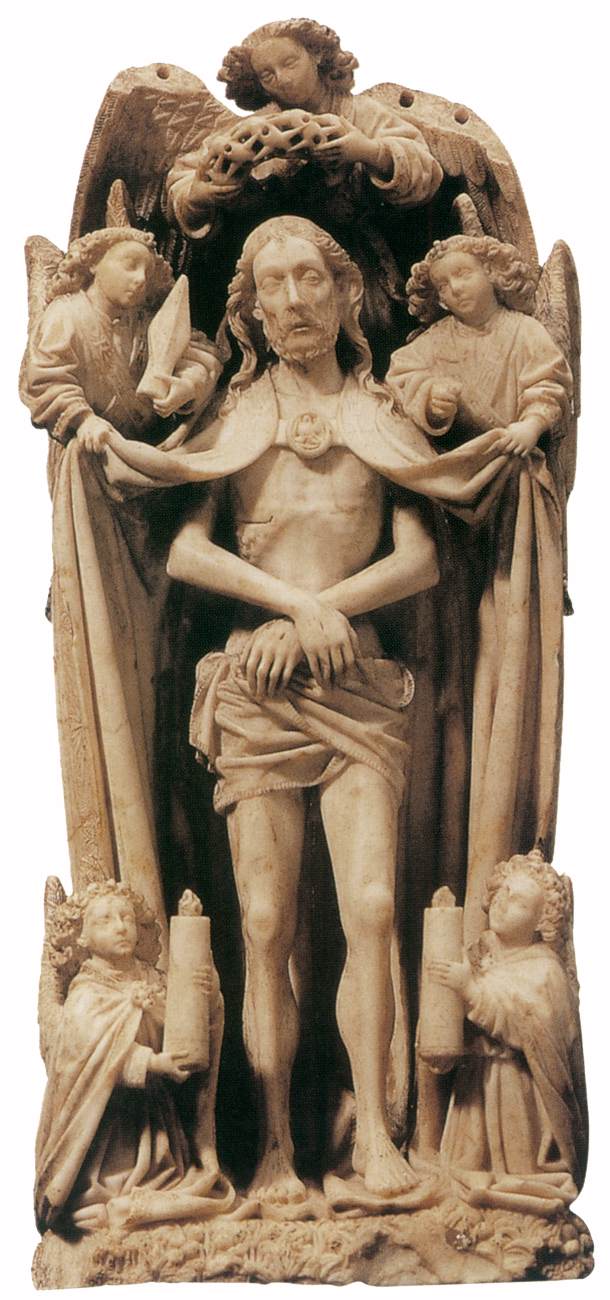
The fifteenth-century alabaster sculpture shown below was formerly partially painted, and the angels formerly wore diadems on their foreheads (one survives). “This is an immensely virtuoso carving for such a small scale,” writes art historian Kim W. Woods—notice the texture of the angels’ wings and hair, the lining of Christ’s ecclesiastical robe, and the plants at Christ’s feet. Notice, too, the intricately carved emblem on Christ’s brooch: a pelican pecking at her breast. Reputed to have fed her young with own blood, the pelican was a common medieval symbol of Christ’s sacrificial love.

Christ as Man of Sorrows (alabaster)
Christ as a Man of Sorrows, mid-15th century. Alabaster, 40 cm high. Museum Mayer van den Bergh, Antwerp, Belgium. Photo: Jean-Luc Elias/KIK-IRPA, Brussels.

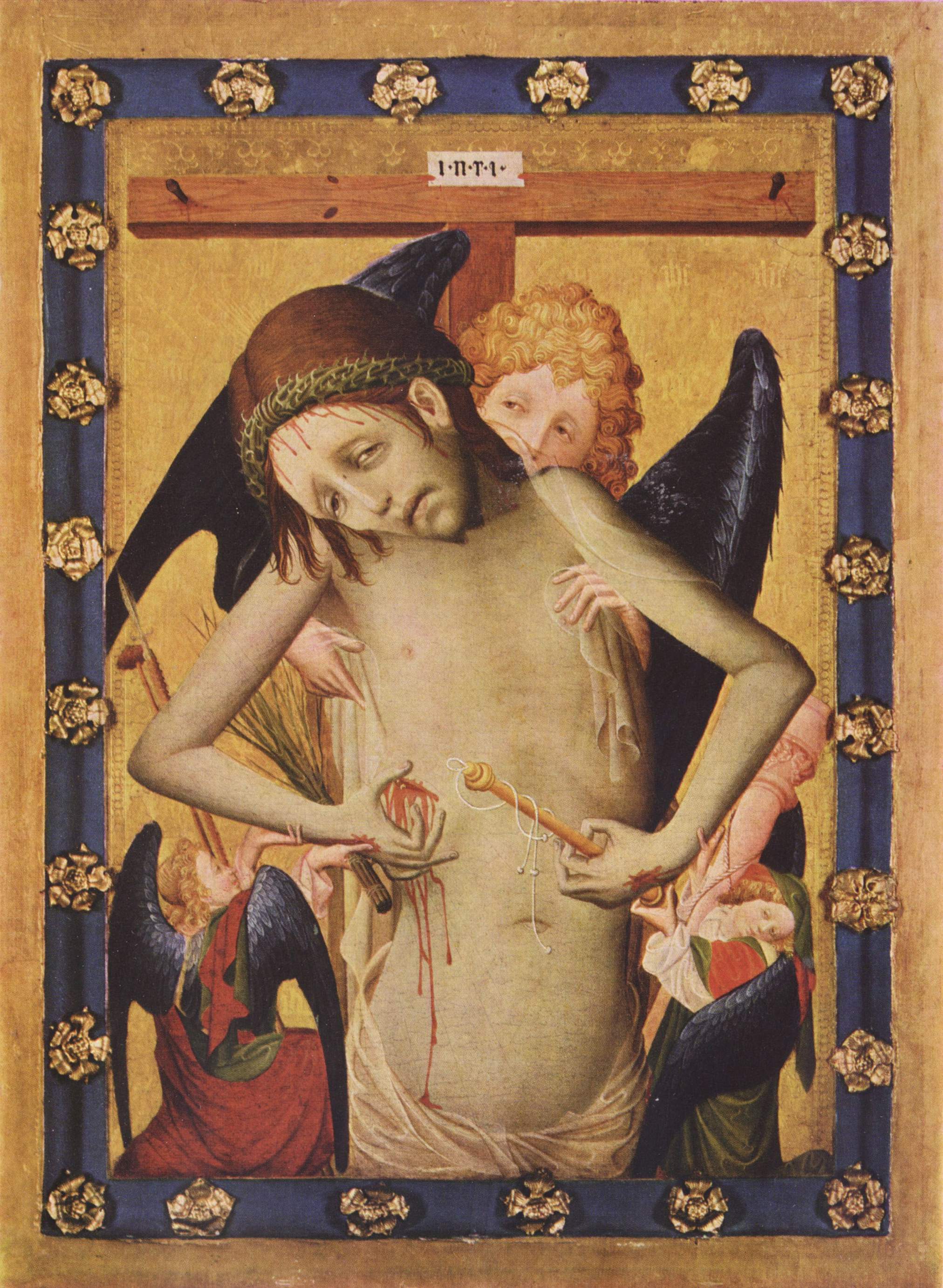
In the Leipzig Man of Sorrows by Master Francke, Christ and three angels stand in a shallow space in front of the cross. It’s unclear whether Christ is on the edge of death or has already crossed over. In his left hand he holds the scourge—or tries to (his hand is either weak and cramped with pain, if alive, or if dead, afflicted rigor mortis). His other hand gestures to his side wound, still wet with blood, as if, like Thomas, he’s about to probe it. Peeking up over Christ’s shoulder is a full-size angel, who tenderly drapes him with a diaphanous veil. At the bottom of the painting two smaller angels kneel on either side, the one holding the birch, the lance, and the sponge-topped reed, the other holding the pillar of flagellation; they both struggle to support the dead weight of Christ’s arms.

Man of Sorrows by Master Francke
Master Francke (German, 1380–1435), Man of Sorrows, ca. 1430. Tempera on oak, 42.5 × 31.3 cm. Museum der Bildenden Künste, Leipzig, Germany.

The angels at Christ’s waist in Master Francke’s Hamburg Man of Sorrows, instead of holding instruments of torture, hold a lily and a sword, symbols of the Last Judgment. (In visualizations of that event, Christ is often shown with a lily coming out of his right ear, signifying an “innocent” verdict for the faithful, and a sword coming out of his left ear, declaring guilty those who did not know him.) Three angels at the top remove the cheap, mock kingly garment the Romans had thrown on him to replace it with his due: a finely embroidered robe befitting a true king.

Man of Sorrows by Master Francke
Master Francke (German, ca. 1380–ca. 1435/40), Man of Sorrows, ca. 1435. Tempera on oakwood, 92 × 67 cm. Hamburger Kunsthalle, Hamburg, Germany.

Continue reading “The Dead Christ Supported by Angels: A Thematic Survey”