The law of growth is rest. We must be content in winter to wait patiently through the long bleak season in which we experience nothing whatever of the sweetness or realization of the Divine Presence, believing the truth, that these seasons which seem to be the most empty are the most pregnant with life. It is in them that the Christ-life is growing in us, laying hold of our soil with strong roots and thrust deeper and deeper, drawing down the blessed rain of mercy and the sun of Eternal Love through our darkness and heaviness and hardness, to irrigate and warm those roots. . . .
The seed must rest in the earth. We must allow the Christ-life to grow in us in rest. Our whole being must fold upon Christ’s rest in us, as the earth folds upon the seed.
Sir Henry Raeburn (Scottish, 1756–1823), Reverend Robert Walker Skating on Duddingston Loch, aka The Skating Minister, ca. 1795. Oil on canvas, 76.2 × 63.5 cm. National Galleries of Scotland, Edinburgh. Robert Walker (1755–1808) was senior minister at the Canongate Kirk, a prominent abolitionist, and a member of the Edinburgh Skating Society.
        Portrait in oil, Sir Henry Raeburn, c. 1795

I’d like to think it’s late Saturday afternoon, sky on fire,
sermon finished, and he’s happy to be skating
alone, the village children gathered in for early supper and bed.
Then again, this might be a method of composing
just shy of dancing’s pleasure.

Dressed in black skates with red laces,
black leggings and coat, wide-brimmed black top hat
tipped back from flushed cheeks and pointed nose,
he cuts a fine figure against the green ice,
one leg swept up behind him, arms folded across his chest.

Drawn, it seems, by his steady gaze, does he lean
toward thoughts of the heaven he hopes for,
or the house ahead and his supper?
He’ll stay out there as long as he can.
This poem is from Grip, Give and Sway by Kathleen A. Wakefield (Los Angeles: Silver Birch, 2016).
Kathleen A. Wakefield (born 1954) is the author of two books of poetry: the prize-winning Notations on the Visible World (Anhinga, 2000) and Grip, Give and Sway (Silver Birch, 2016). She was a recipient of the University of Rochester Lillian Fairchild Award and has received grants from the New York State Foundation for the Arts, the Constance Saltonstall Foundation, and Mount Holyoke College. She taught creative writing at the Eastman School of Music and the University of Rochester and has worked as a poet-in-the-schools. She is also a singer, mainly of sacred and classical music.
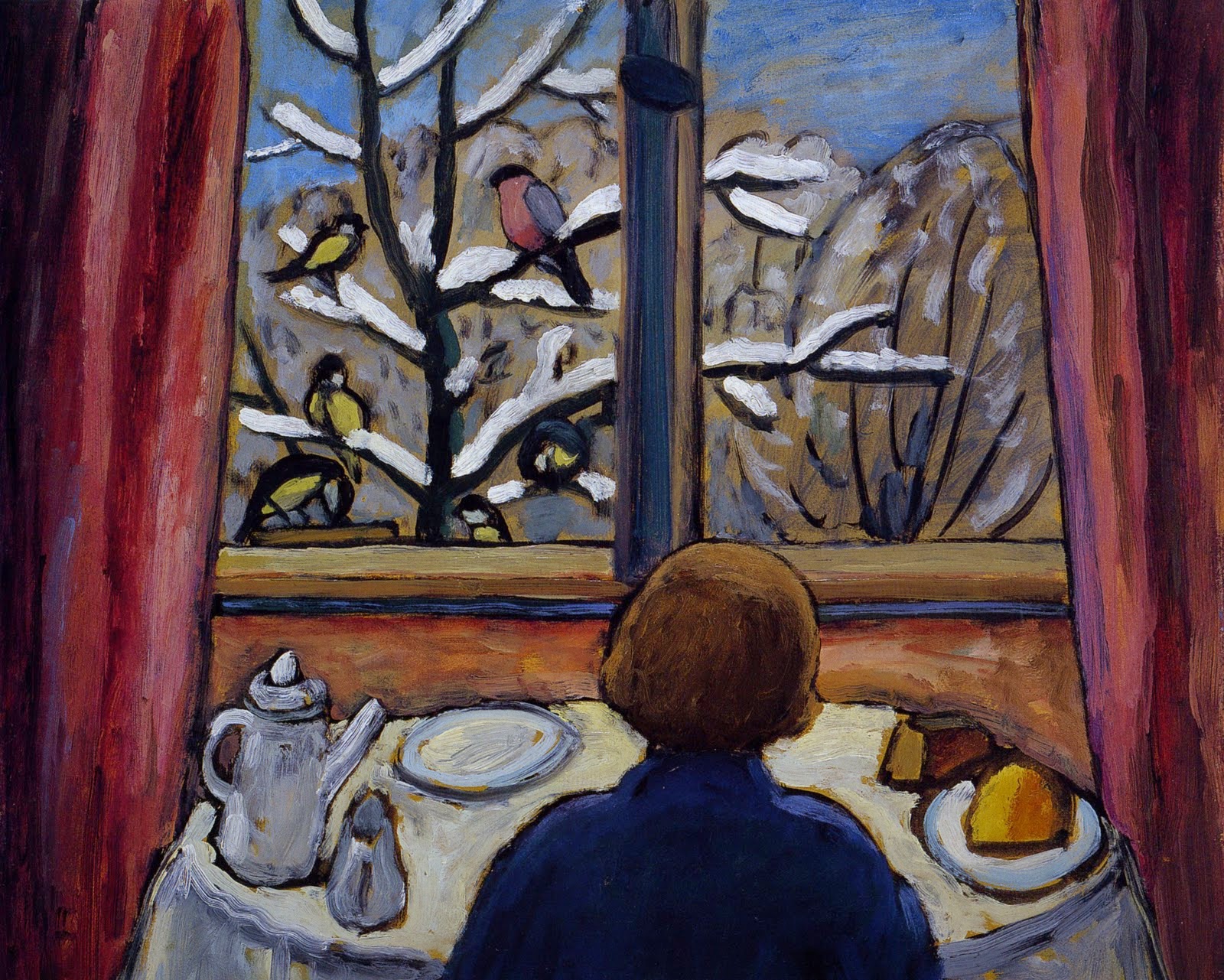
Gabriele Münter (German, 1877–1962), Breakfast of the Birds, 1934. Oil on board, 18 × 21 3/4 in. National Museum of Women in the Arts, Washington, DC.
I love to rise ere gleams the tardy light,
Winter’s pale dawn; and as warm fires illume,
And cheerful tapers shine around the room,
Through misty windows bend my musing sight,
Where, round the dusky lawn, the mansions white,
With shutters closed, peer faintly through the gloom
That slow recedes; while yon gray spires assume,
Rising from their dark pile, an added height
By indistinctness given—then to decree
The grateful thoughts to God, ere they unfold
To friendship, or the Muse, or seek with glee
Wisdom’s rich page. O hours more worth than gold,
By whose blest use we lengthen life, and, free
From drear decays of age, outlive the old!
Anna Seward (1747–1809), nicknamed the Swan of Lichfield, was a British Romantic poet who wrote elegies, odes, ballads, sonnets, and the well-received verse-novel Louisa (1784). Active in Lichfield’s literary community, she benefitted from her clergyman father’s progressive views on female education. She was a prodigious correspondent and was seen as an authority on English literature by contemporaries such as Samuel Johnson, Robert Southey, and Sir Walter Scott, the latter of whom edited her posthumously published Poetical Works in three volumes (1810).
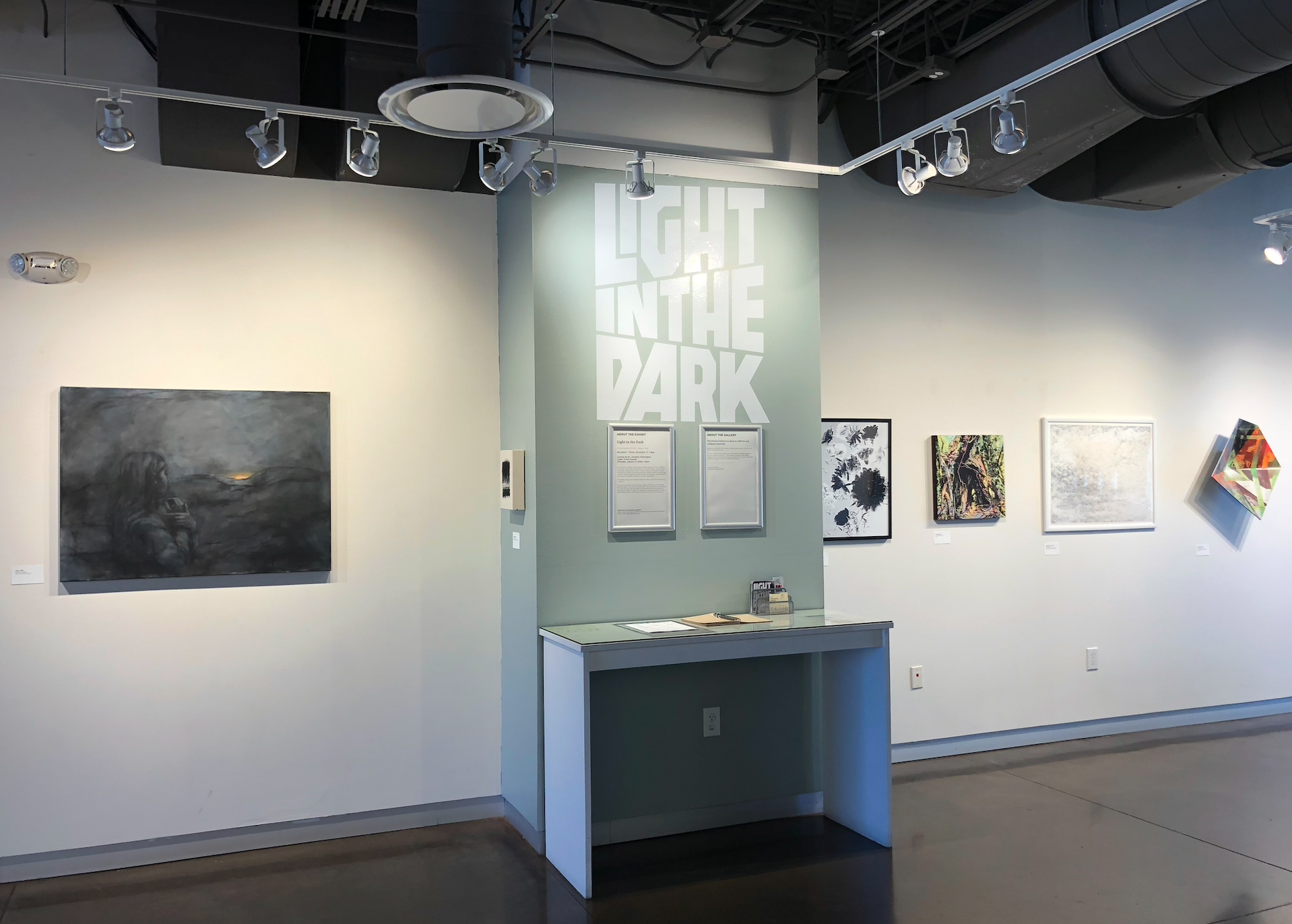
>> Light in the Dark, Sojourn Church Midtown, Louisville, Kentucky, November 17, 2023–January 7, 2024: Organized by Sojourn Arts, this juried exhibition features work by twenty-four artists from throughout the United States. It explores contrasts between light and dark, a powerful artistic as well as biblical theme with strong connections to the Christmas story. A complementary lecture on “Light in the Gospels” by Dr. Jonathan Pennington will take place on January 11, 2024.
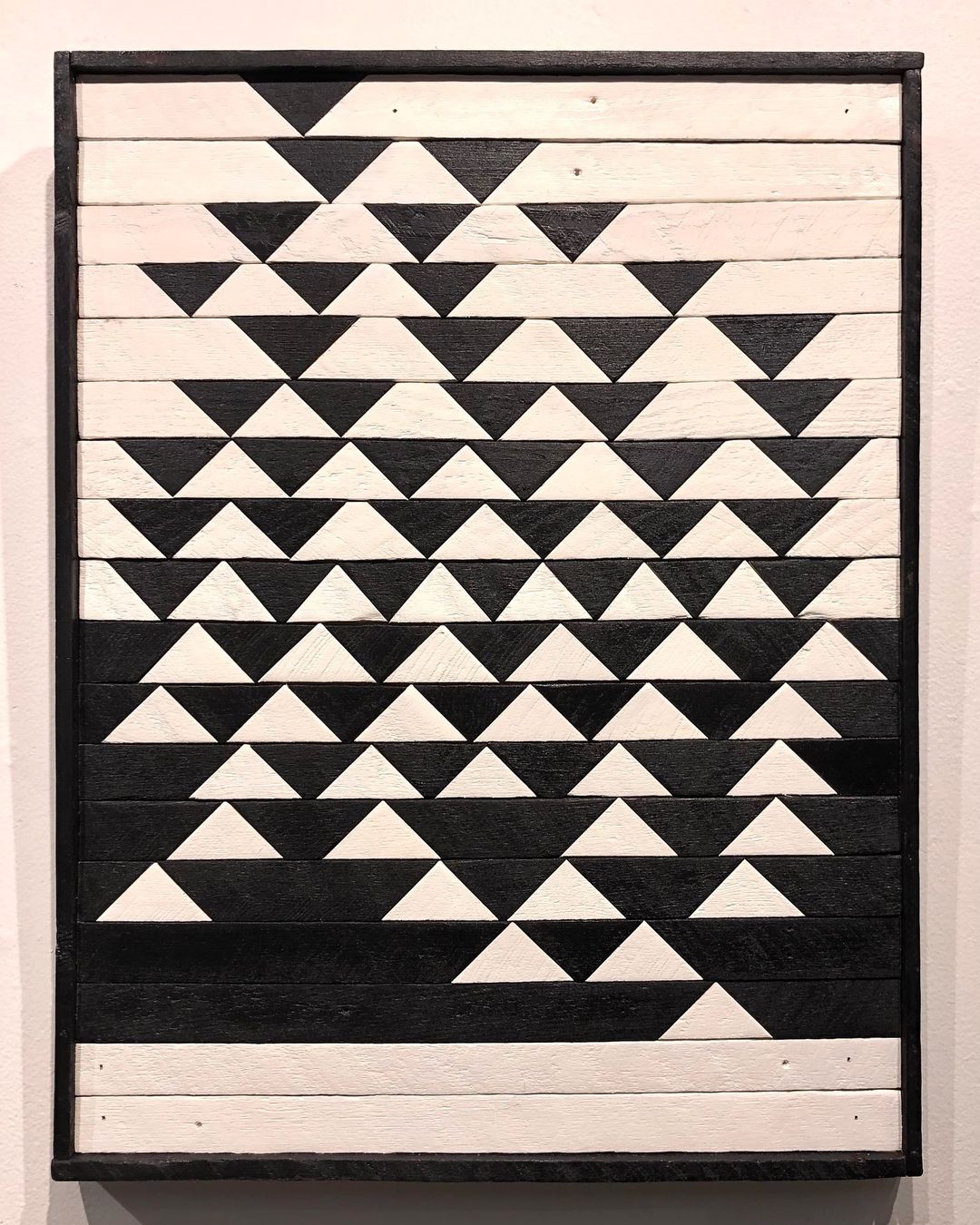
Brandon Hochhalter, The Incredible Power of Light, 2023. Reclaimed lath wood from homes in Old Louisville, 18 × 24 × 1 in. [artist’s website]
>> Wilson Abbey Advent Windows, 935 W. Wilson Ave., Chicago, December 1, 2023–January 6, 2024: A business under the umbrella of Jesus People USA, Wilson Abbey in uptown Chicago is a neighborhood gathering place for coffee, art shows, workshops, theater, dance, film screenings, and live music. Every December since 2016, they have installed a three-story-tall Advent calendar in their windows to be enjoyed from the streets, with one new artwork revealed each day from December 1 to 24. Directed by the building manager, Karl Sullivan, the project commissions local artists to contribute a painting, photograph, or other graphic work, and this year there are twenty-three participating artists. It will be a brand-new series of images, all on the theme “The Soul Felt Its Worth”—which, Sullivan told me, will “explore the idea of the Christ child coming to earth as a promise of justice and care for those who are seen by God, showcasing people groups who may not be seen, or whom we may not want to see because their problems are bigger than us.”
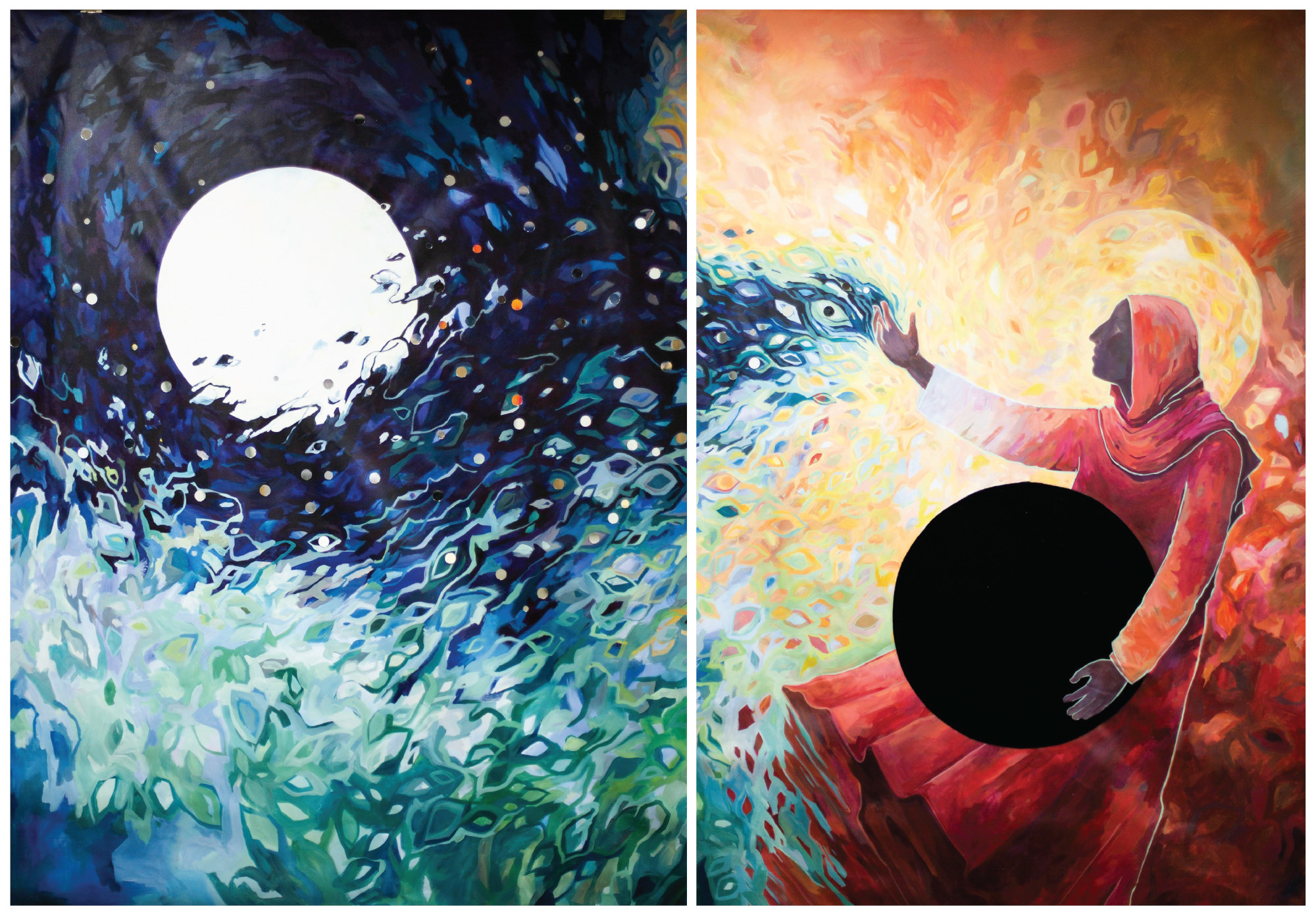
Below are two of the paintings from a previous iteration of the project, which together form an Annunciation scene. The drone video that follows was shot in 2020 by Mike Angelo Rivera.
Stop by 935 West Wilson Avenue in Chicago to see the progressively illuminated windows throughout the month of December (the full display will be up from December 24 to January 6), or follow along on Facebook or Instagram @wilsonabbeywindows. What a unique gift to the city! A fun way to engage the community.
+++
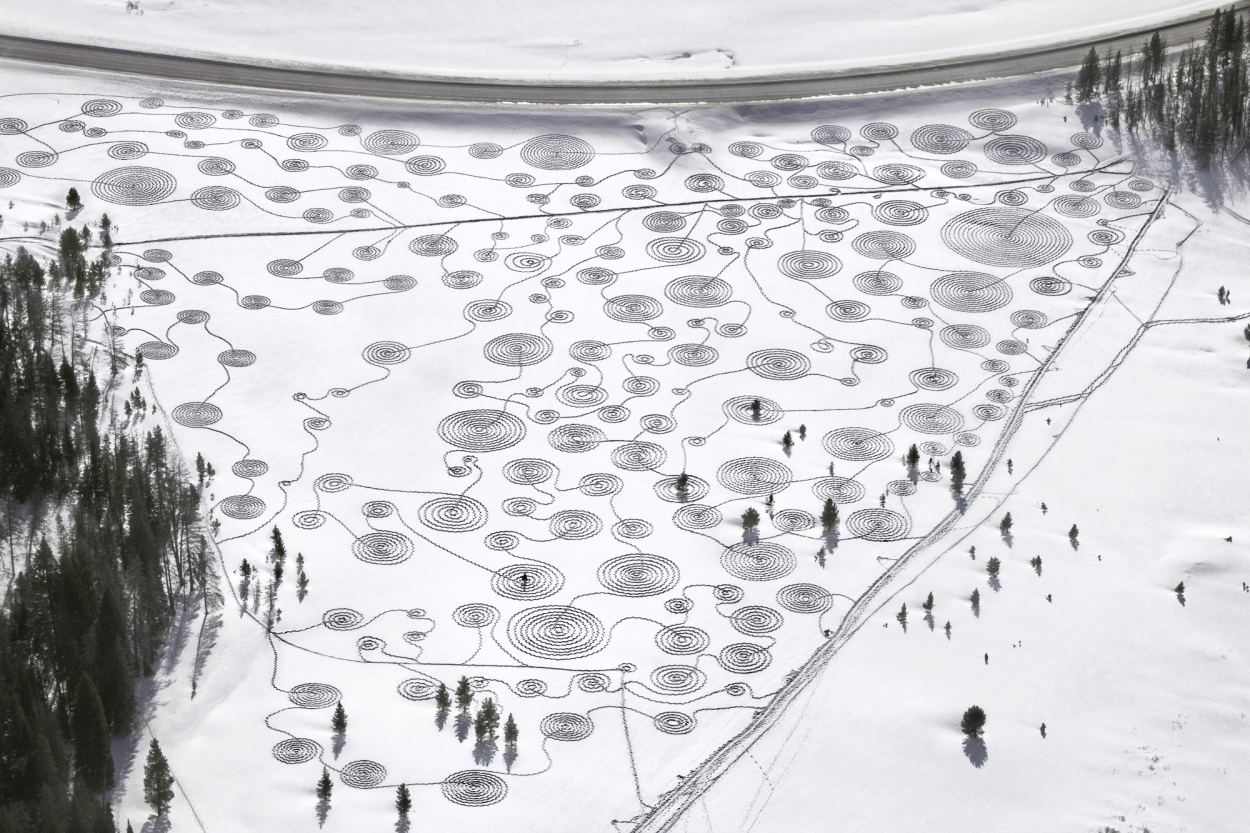
LAND ART: Snow Drawings by Sonja Hinrichsen: German-born, San Francisco–based artist Sonja Hinrichsen creates large-scale, ephemeral “snow drawings” in wintry locations around the world with the help of local volunteers who don snowshoes and track through the snow in patterns. She then photographs the land art from a helicopter or ski lift. These are amazing! Here’s a video by Cedar Beauregard of a drawing in progress at Rabbit Ears Pass, Colorado:
Snow Drawing by Sonja Hinrichsen, Rabbit Ears Pass, Colorado, 2012
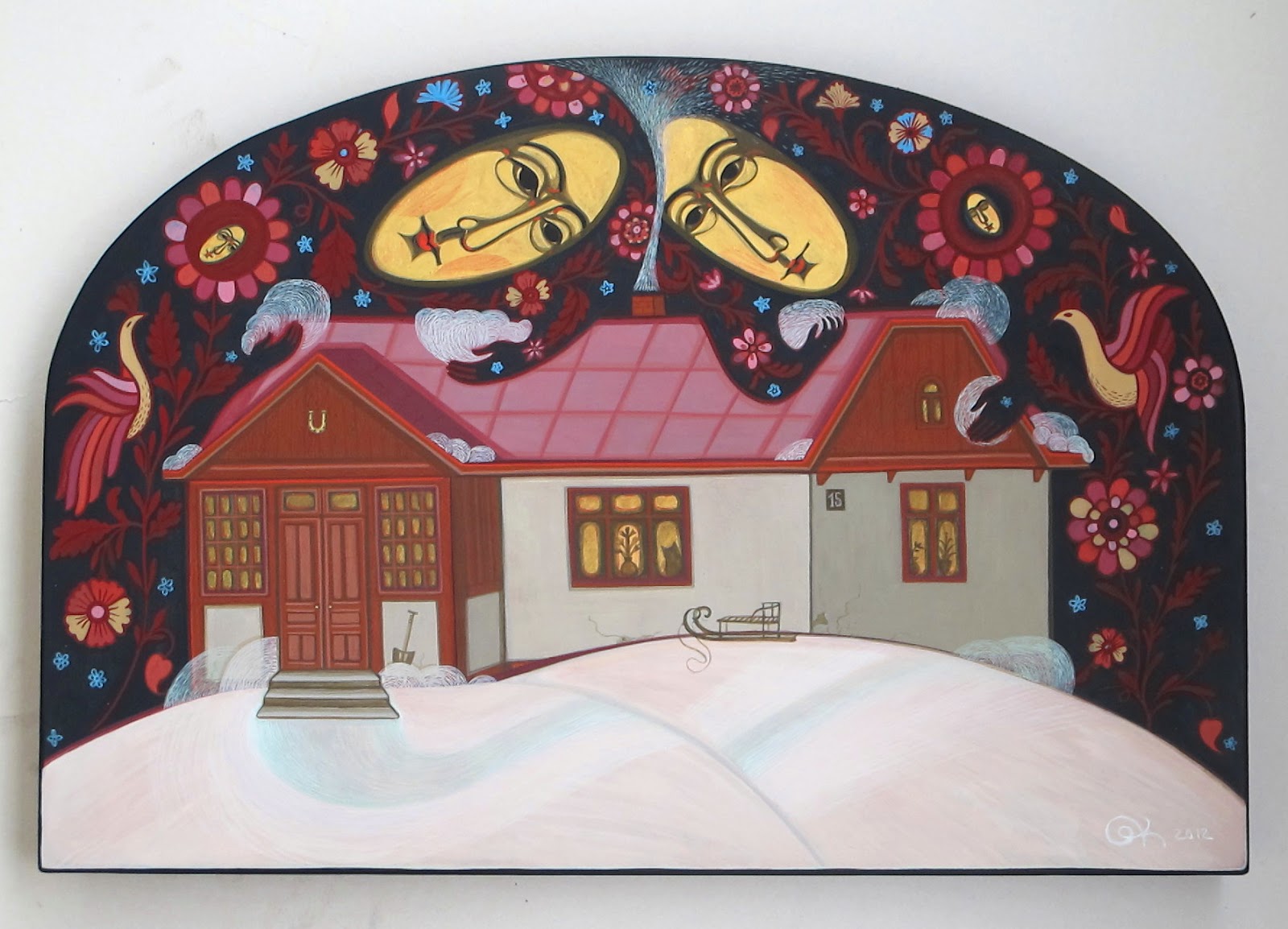
Olya Kravchenko (Ukrainian, 1985–), Home, 2012. Egg tempera on gessoed board, 29 × 39.9 cm.
This painting shows a cottage on a snowy hillside at night. Inside, a fire is lit in the hearth, casting a warm glow and sending smoke rising up the chimney. There’s a cat in the window and a sled on the lawn.
On all sides, the sky is populated by a mystical swirl of birds and flowery tendrils and angelic beings. Two of those angels, represented by large golden heads, hold wisps of snow in their hands and embrace the house, offering a protective presence.
Sadly, this cozy winter idyll is elusive for many this year, not least those in Ukraine, where this painting comes from. Many Ukrainians have had to flee their homes to evade the encroaching Russian troops. Others are dealing with the trauma of having lost family members in the war, or the fear of having loved ones on the front line.
LISTEN: “Jul, Jul, Strålande Jul” (Christmas, Christmas, Glorious Christmas) | Words by Edvard Evers, 1921 | Music by Gustaf Nordqvist, 1921 | Performed by Zero8 on A Zero8 Christmas, 2011 (YouTube: 2016)
Jul, jul, strålande jul, glans över vita skogar, himmelens kronor med gnistrande ljus, glimmande bågar i alla Guds hus, psalm som är sjungen från tid till tid, eviga längtan till ljus och frid! Jul, jul, strålande jul, glans över vita skogar!
Kom, kom, signade jul! Sänk dina vita vingar, över stridernas blod och larm, över all suckan ur människobarm, över de släkten som gå till ro, över de ungas dagande bo! Kom, kom, signade jul, sänk dina vita vingar!
Christmas, Christmas, glorious Christmas: shine over white forests, heavenly crowns with sparkling lights, glimmering arcs in the houses of God, hymns that are sung throughout the ages, eternal longing for light and peace! Christmas, Christmas, glorious Christmas, shine over white forests!
Come, come, blessed Christmas: lower your white wings, over the battlefield’s blood and cry, over the sighs from the bosoms of men, over the loved ones who’ve gone to their rest, over the daybreak of newborn life! Come, come, blessed Christmas: lower your white wings!
“Jul, Jul, Strålande Jul” is one of the most widely sung Swedish Christmas songs. It personifies Christmas as a luminous winged being, asks it to descend over our wooded neighborhoods and over our songs and our longings, dispensing blessing; to extinguish our wars and raging and spread its comforts over our anxieties and losses; and to cradle the new lives that have been born this year, reminders of innocence and signs of hope for a future.
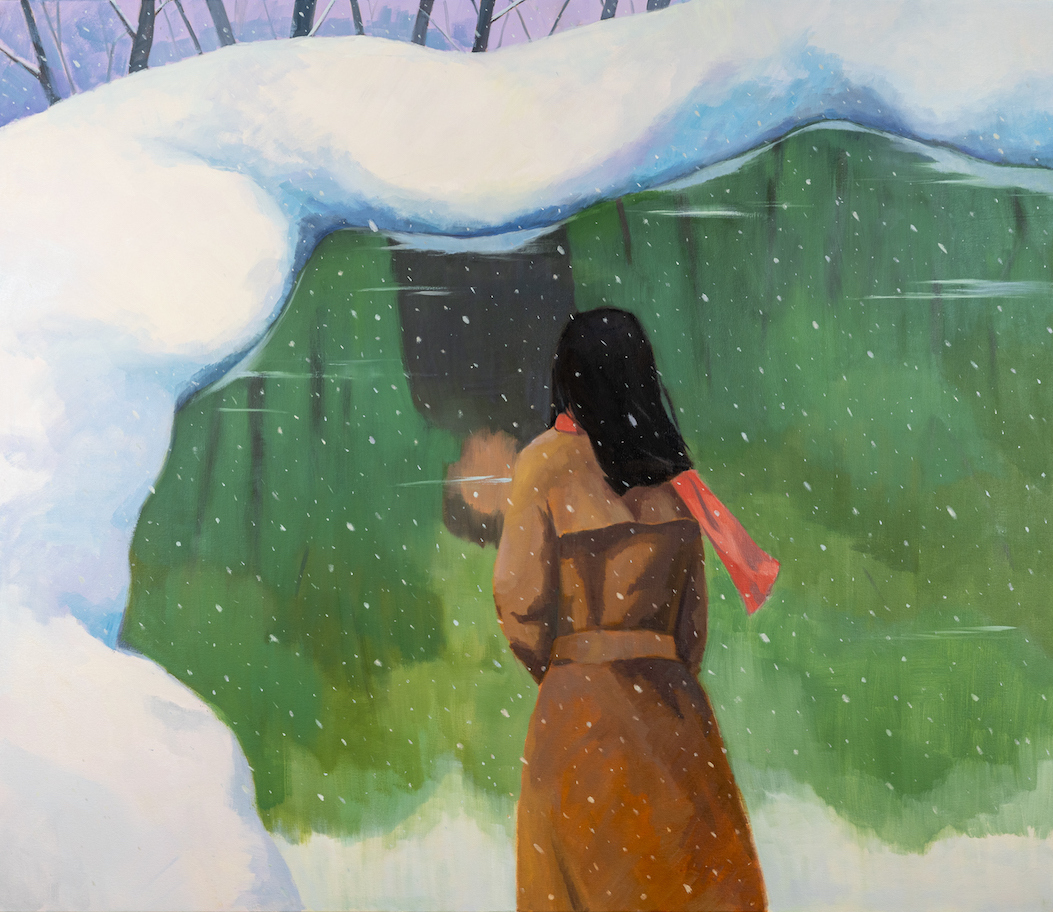
Yuri Yuan (Chinese American, 1996–), Norwegian Wood, 2020. Oil on canvas, 63 × 73 in.
This painting by New York–based artist Yuri Yuan shows a woman in a belted brown trench coat, her back to us, standing at the edge of a frozen pond. A small gust of snowy wind whips her hair and scarf. Though her face isn’t visible, she appears to be deep in thought.
Reflected on the pond’s surface is a man dressed in black. We don’t see his physical form, and his features are indistinguishable in the mirroring ice. Who is he? Does he wish to speak to the woman? Does he come with news, or an invitation, perhaps? Or simply to wait with her in silence?
There’s a mystic quality to the image that’s heightened by the incongruity between the environment and its reflection. In the upper left, the trees are barren and dusted with the white of winter, and indeed the woman is dressed for the cold. And yet in the trees’ reflection in the pond, they are in full foliage, leafy green, as if it were summer.
It’s as if two worlds are converging here in this wood. Or the woman foresees, with the eyes of her spirit, a lushness that has not yet come to pass.
Notice how the snowbanks piled up along the water’s edge could almost double as clouds, particularly in the bottom left, where the white mass meets the sky’s reflection. The heavens and the earth becoming one.
I chose this image to kick off the Advent season (which begins tomorrow) because it captures the sense of longing that the church leans into most especially during these four weeks, but also the sense of promise, the possibility, that’s just as characteristic of the season. In the eschatological reality that Israel’s prophets foresaw, the barren becomes verdant and the dead come to life. “The wilderness and the dry land shall be glad; the desert shall rejoice and blossom” (Isa. 35:1).
Strangely, Norwegian Wood is a painting of both absence and presence, distance and nearness.
If you like, imagine Yuan’s mystery man as God coming close—which is what the Incarnation is: God coming closer than close!
What invitation might God have for you this Advent? What heartache from the past year, or even further back, do you need to bear to the Healer? What hopes do you need to speak out loud?
We wait, we hope We yearn, prepare For who or how or what or where? Maybe the changing of the tide Maybe the turning of someone’s eye Maybe the falling of the snow Only heaven knows What happens when God comes close
We wait, we hope We yearn, prepare For who or how or what or where? Maybe the healing of a heart Maybe reunion of a drift apart Maybe a child’s coming home Only heaven knows What happens when God comes close
We wait, we hope We yearn, prepare For who or how or what or where? Maybe the song, a place to belong Maybe some faith, just a touch of grace Maybe love, it’s rarely what we think of Only heaven knows What happens when God comes close
This is the first post in a daily series that will extend to January 6. You are welcome to subscribe via email or RSS, but posts are optimized for viewing on a web browser. (And note that Gmail sends WordPress posts to your Social tab, unless you create a filter to tell it otherwise.) Links will be shared on Facebook and Twitter.
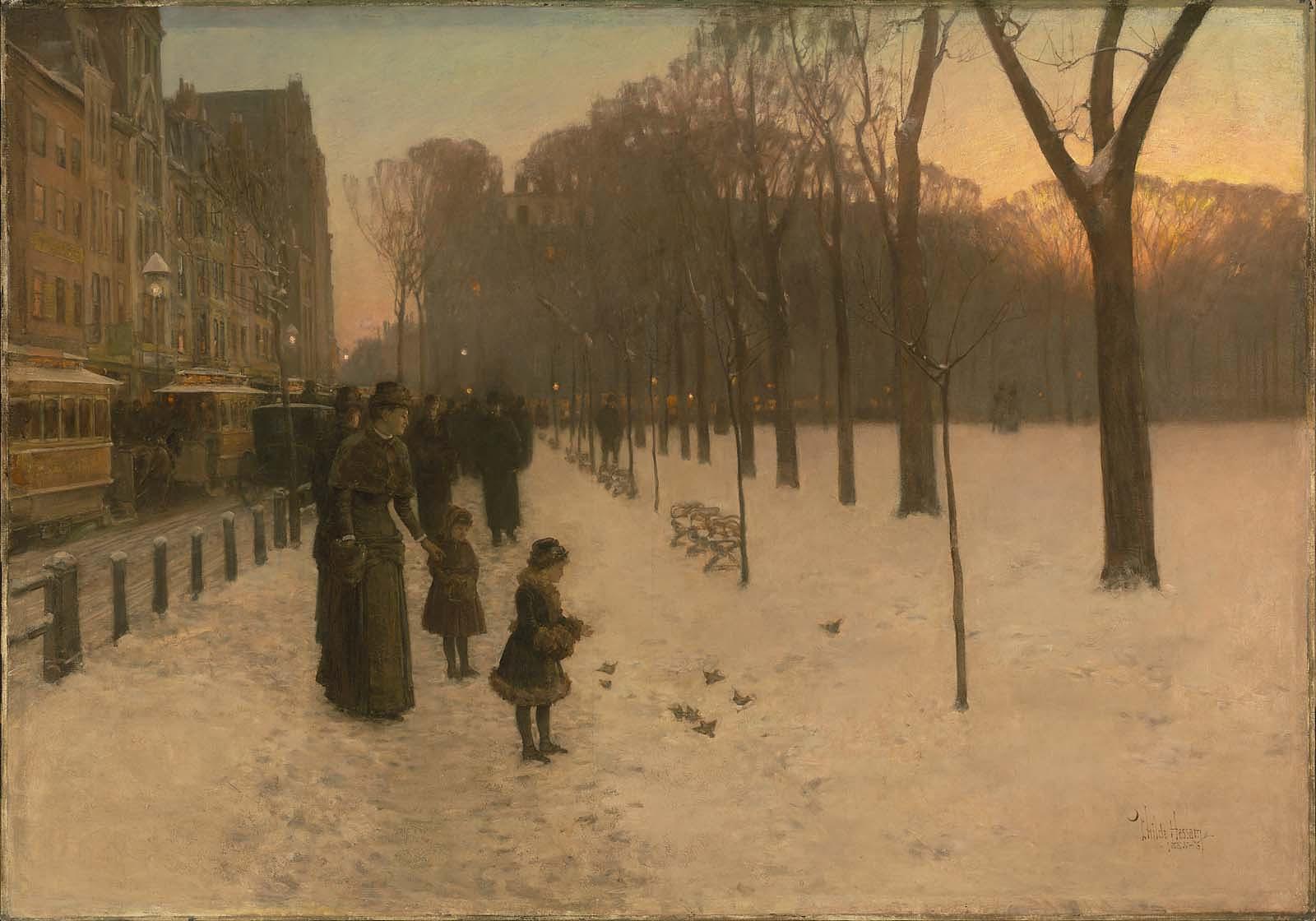
LOOK: At Dusk (Boston Common at Twilight) by Childe Hassam
Childe Hassam (American, 1859–1935), At Dusk (Boston Common at Twilight), 1885–86. Oil on canvas, 42 × 60 in. (106.9 × 152.4 cm). Museum of Fine Arts, Boston.
LISTEN: “Psalm 25” by Poor Bishop Hooper, 2020 [free download]
Nobody who waits for you will see disgrace Teach me all your righteous paths Make known your ways to me, Lord
Lead me by your truth, my God And teach me now I’ll wait for you the whole day long You are the God of my salvation
You’ve shown your love from ages past It existed from antiquity through history Forgotten of my sinful youth For your goodness, God My eyes are always on you
Jesse and Leah Roberts, whose musical alias is Poor Bishop Hooper, adapted Psalm 25:3–7, 15 last year as part of their EveryPsalm project, an initiative to release one original psalm-based song every Wednesday. They are currently up to Psalm 100.
I’ve paired the song with a painting by turn-of-the-century American Impressionist Childe Hassam, of a rosy dusk on the outskirts of the central park in downtown Boston. The sun is descending behind the elm trees, the gaslights have been lit, and the ground is blanketed in snow. On Tremont Street on the left, trolley cars and carriages wheel busily past, while on the adjacent walkway a mother and her two young daughters have stopped to feed the birds.
Moodwise, the painting and song complement each other, the twinkling of Roberts’s piano corresponding to the play of pink light on Hassam’s canvas—and both bespeaking God’s goodness. I present the image here as an invitation to, like this family, find moments of quiet enjoyment and reflection amid the bustle of December.
The scene evokes warm memories for me, as my husband and I, then newlyweds, walked this path every Sunday to church for the five years we lived in Boston. Ten minutes from Park Street Station to the hotel where our congregation met, crunching through the snow in our insulated boots in wintertime, the natural sights and sounds of the Common preparing us for worship.
For each day of the first week of Advent I will publish one art-and-song pairing as an invitation for seasonal reflection.
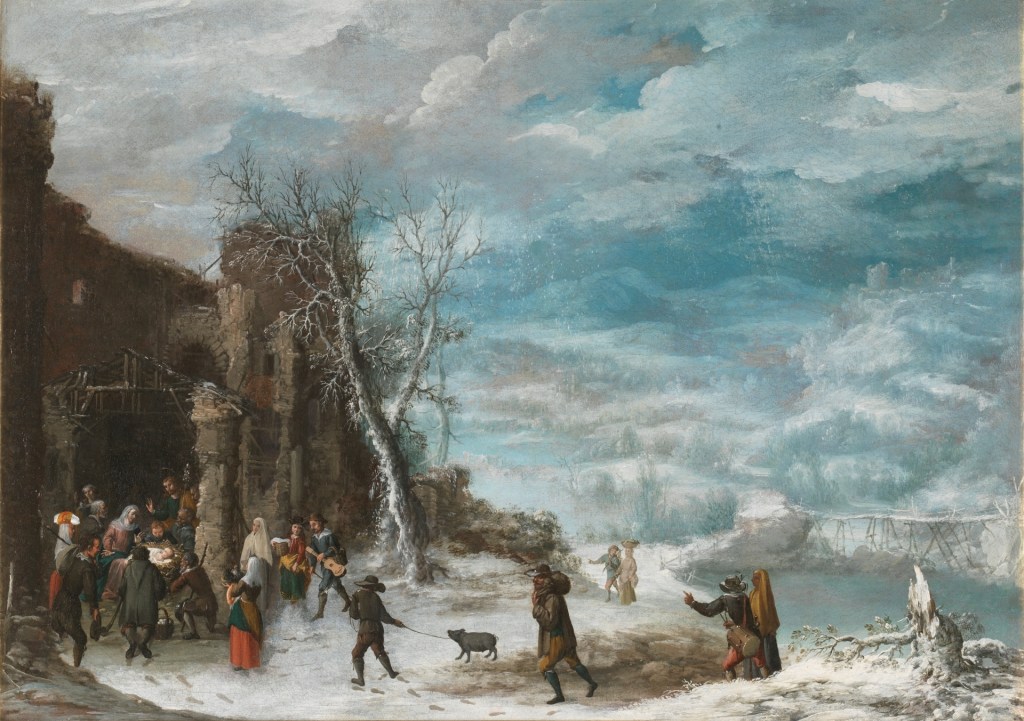
LOOK: Francisco Collantes (Spanish, 1599–1656), Winter Landscape with the Adoration of the Shepherds, 1630–50. Oil on canvas, 72.2 × 105.7 cm. Museo del Prado, Madrid. (Click on image to zoom in.)
O blessed Mary and dearest Joseph Allow me to journey with you To Bethlehem I am a lowly pilgrim making my way To the center of history The birth of Christ the Lord With unspeakable awe and expectant wonder I long to behold I long to behold I long to behold The promised Messiah Time will stand still forever Divided by the entry Of the Creator into his creation
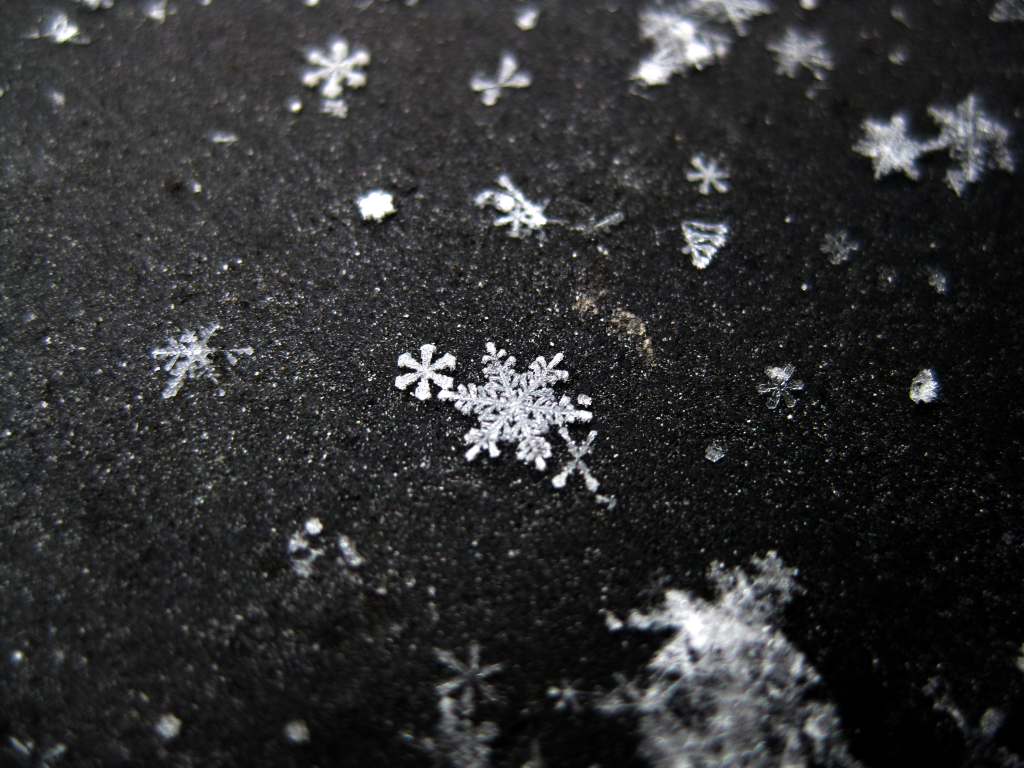
What heart could have thought you?—
Past our devisal
(O filigree petal!)
Fashioned so purely,
Fragilely, surely,
From what Paradisal
Imagineless metal,
Too costly for cost?
Who hammered you, wrought you,
From argentine vapor?—
“God was my shaper.
Passing surmisal,
He hammered, He wrought me,
From curled silver vapor,
To lust of His mind—
Thou could’st not have thought me!
So purely, so palely,
Tinily, surely,
Mightily, frailly,
Insculped and embossed,
With His hammer of wind,
And His graver of frost.”
This poem was originally published in New Poems by Francis Thompson (London, 1897) and is now in the public domain.



 Art & Theology